MEA launches mobile app, offers free aircon cleaning services to first 100 customers
Dec 01. 2020
By THE NATION
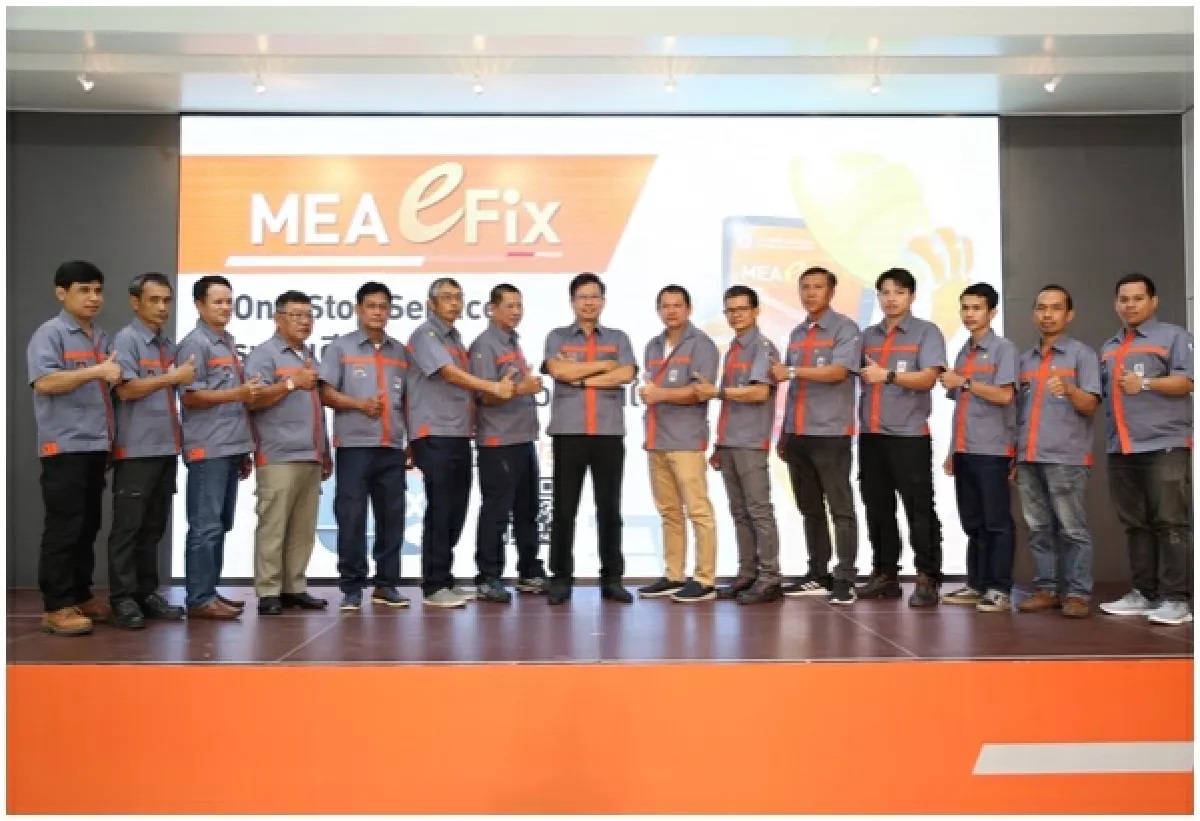
The Metropolitan Electricity Authority (MEA) has launched its newest service “MEA e-Fix” mobile application that provides installation and maintenance of electrical appliances by professionals.
“All technicians under the campaign have undergone extensive MEA training to ensure efficient and safe installation and fixing of electrical appliances to customers in MEA’s responsible areas, which include Bangkok, Nonthaburi and Samut Prakarn,” MEA deputy director-general and spokesman Jaturong Suriyassin said.
“The MEA e-Fix covers five types of electrical services: lighting system, wall socket installation, water heater installation, door buzzer installation and electrical switch box.
“To use the services, users can download and install the application, choose the type of work, provide details on points of installation with photos, then input the address and your convenient date,” he added.
“We accept payment via credit card and offer three months warranty on our jobs. Furthermore, the first 100 customers of MEA e-Fix will be offered free air-conditioner cleaning service [one unit per customer].”
To download the application, follow this link http://onelink.to/rzrf65. For more information, contact MEA Call Centre at 1130, Line: MEA Connect and Twitter: @mea_news
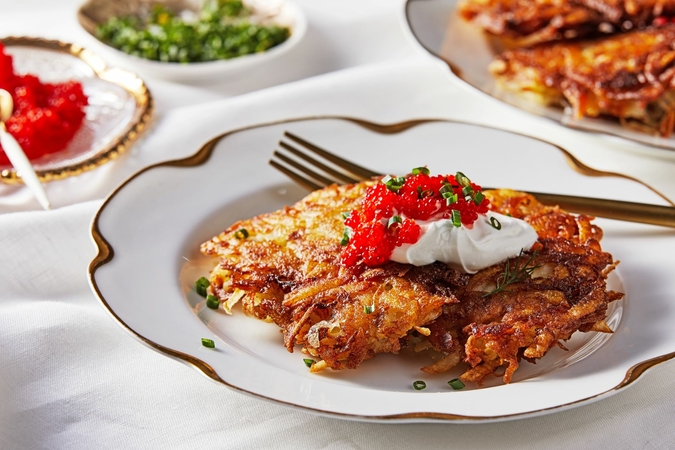
This crisp, classic potato latke recipe delivers a satisfying, celebratory crunch
Dec 01. 2020
By The Washington Post Olga Massov
I love latkes so much, I named my dog after them.
That’s not the punchline to a joke. When we got our Labrador retriever puppy in November 2019, we took one look at her pale yellow coat and named her Latke. And last Hanukkah, we even tried photographing Latke with latkes, but being true to her Labrador self, she ate them before we could snap a single frame.
So, latkes are something I’ve obsessed over since I was a kid, begging my mom to make them for me year-round. As an adult, I’ve made all kinds: with potatoes and with other vegetables, coarsely shredded and finely grated, fried and baked, with all manner of seasonings, spins and techniques.
But for me, nothing beats a crispy, lacy classic potato latke with few ingredients.
Latkes are akin to a good pair of jeans: quotidian and humble enough for weeknight dinners, festive and elevated for a dress-up occasion. Making them reminds of the Before Times when I threw latke parties – basically an excuse to eat as many potato pancakes as stomachs would allow, with or without various accoutrements, from simple sour cream and applesauce to decadent caviar. (And, obviously, bubbles to go with it all.)
This year, rather than making mountains of latkes, I’ll scale down for our family of three, but I still plan to throw a latke party. Finding joy and merriment where one can is one of 2020’s great lessons.
Most classic potato latke fans fall into two camps: those who like dense, finely grated ones shaped like hockey pucks and those who want coarsely shredded ones with lacy, crispy frilly bits and a bit of a disheveled look about them. I stand firmly in that latter camp.
To me a great latke is a decidedly crispy one, the kind that almost shatters against your teeth with a satisfying crunch. In the center, there’s a bit of softer potato as well. Like a great cookie, a great latke needs both – the crispy and the chewy – to be heavenly.
My latke recipe is simple and not unlike many out there: potatoes, a little onion, eggs and flour. I season the mixture with a generous helping of salt (don’t be afraid to use a generous hand here – the potatoes can handle it) and a bit of ground black pepper. Then I add my “secret” ingredient, which is potato starch. More starch and less liquid equals a crispier (and thus tastier) latke.
The idea to add extra starch occurred to me one day while patting dry chicken wings, which I was about to coat in cornstarch and then fry until crispy. What if, I thought, I did the same with latkes? Get rid of excess moisture and up the starch content for crispiness beyond compare.
I never looked back.
While the recipe is elementary and pantry-friendly, it’s important to start with the right kind of potato. Russets, packed with starch and relatively low in moisture, are ideal.
Once they’re shredded, it is important to drain the potatoes of as much water as possible – more liquid means a mushier latke. I like to wrap my grated potatoes in a cheesecloth bundle and then twist, twist, twist and squeeze, squeeze, squeeze. I drain that excess liquid into a bowl, which I let sit for a bit while I mix in the other ingredients. Once the starch in the drained liquid settles on the bottom, I carefully pour off the liquid and scrape the thick, chalklike layer of starch into the potato mixture. To answer the siren-call of promised crunch, I add an additional tablespoon of potato starch (though cornstarch will do in a pinch) to the mixture.
Scale and get a printer-friendly version of the recipe here.
And then, I fry.
This Hanukkah, we will skip the decadent accoutrements, as they feel wrong against the backdrop of such a difficult year. We’ll forgo the caviar and the bubbles, and instead keep it simple, with plenty of sour cream and applesauce.
And as we light the menorah candles, we will wish for more light and joy in the upcoming year, looking forward to the time when we can see our loved ones and hug one another.
– – –
Latkes
Total time: 50 minutes / 4 – 6 servings
These straightforward classic latkes customary for Hanukkah meals have one trick up their sleeve: extra potato starch. Draining the extra liquid out of the shredded potatoes and letting the starch in that liquid settle to the bottom, plus sneaking in more potato starch guarantees the crispiest latkes ever. Applesauce and/or sour cream are traditional accompaniments, but if you’re feeling festive, salmon roe or even caviar (with creme fraiche) are not out of the question.
Neutral oil, such as vegetable or canola, for frying
Applesauce, for serving (optional)
Sour cream or creme fraiche, for serving (optional)
Lox, for serving (optional)
Salmon roe, for serving (optional)
Fresh dill fronds and finely chopped fresh chives, for garnish (optional)
DIRECTIONS
Position a rack in the middle of the oven and preheat to 200 degrees. Place a wire rack inside a large, rimmed baking sheet.
Using a food processor fitted with coarse grating attachment, or the large holes of a box grater, grate the potatoes. Transfer to a large piece of folded cheesecloth set in a medium bowl. Twist into a bundle and gently but firmly squeeze out excess liquid into the bowl. (You may need to do this in batches.)
Empty the potatoes into a large bowl. Let the liquid sit undisturbed while you prepare the latke mixture.
Place a large, heavy skillet, preferably cast-iron, over medium heat and warm while you mix the latke mixture.
Add the onion, eggs, flour, potato starch, salt and pepper to the potatoes. Gently tilt the bowl with the potato liquid to drain out the water; you should see a white layer of starch at the bottom. Scrape the starch into the bowl with the potatoes and gently mix all the ingredients to combine.
Add enough oil to come 1/4 inch up the sides of the skillet and gently swirl the oil around – when the oil gently ripples across the surface, it is hot enough for frying.
Working in batches, spoon between 1/4 and 1/3 cup potato mixture per latke into the skillet; you should be able to fit 4 to 5 latkes at a time. Fry the latkes until golden brown on the bottom, 2 to 3 minutes per side, then, using a thin metal spatula, gently flip the latkes. (Your first batch might take up to 4 minutes per side, but as the pan gets hotter, the subsequent batches will go faster. When you see the frilly ends of the latke turn golden brown, it’s time to flip.)
Transfer the latkes to the prepared baking sheet; place the sheet in the oven to keep the latkes warm. Repeat with the remaining potato mixture, adding more oil as needed; you may need to adjust the heat with subsequent batches if the latkes start to brown too quickly. As the potato mixture sits, liquid may pool at the bottom of the bowl; be sure to scoop the mixture, draining away any water before adding to the skillet.
Transfer the latkes to a large platter and serve warm, with your choice of accompaniments, such as applesauce, sour cream, lox, salmon roe and/or dill and chives, if desired.
For many people, a holiday’s not a holiday unless they can bring their best friend along.
But if that best friend happens to be furry, there could be a problem. Most hotels, resorts and accommodation in Thailand don’t allow animals. You don’t want to leave them at home alone with no one to feed them, or burden the people next door with their care.
However, there’s no need to despair. Next to buying a comfy cave for your pet, there are plenty of other options to give them a relaxing change of scenery. Here’s a few of the best pet-friendly destinations the country has to offer.
1.Gingerbread House
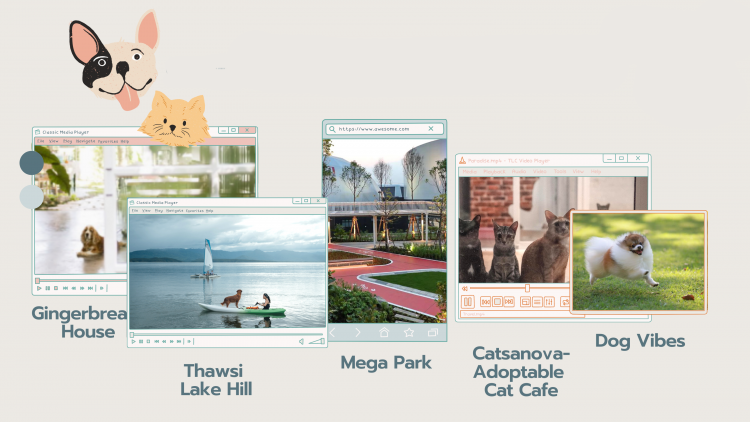
Describing itself as a pet-lover’s resort, the Gingerbread House sits just south of Khao Yai National Park and a couple of hours drive from Bangkok. Accommodation and restaurants have an eco-friendly design and fairy-tale atmosphere thanks to the Hansel and Gretel theme. Overnight guests can take advantage of the pet-sitting service for dogs and cats. Or you can just visit for a meal and take your dogs for a swim at the pool by the restaurant. A pet grooming service is also available, along with natural beauty spots perfect for selfies with your pampered pooch or pussy cat.
This luxury Kanchanaburi resort surrounded by nature has a Bali-like atmosphere, with a majestic lake and mountains where you and your four-legged friend can roam free. One room accommodates up to two pets without additional charge. Hiking trails, pedalboats and kayaks offer pets and their owners an action-packed but relaxing holiday.
Southeast Bangkok hides a paradise for health-conscious pet lovers. Megapark @ MegaBangna has seven zones specially built to have fun with your animals – including a pet gym. Each zone has an individual theme, while the surrounding mall is a pet-friendly zone with plenty of photo opportunities.
Catsanova is a non-profit Bangkok cafe where rescue cats are the star of the show. Come in for a cuddle, and if you find your friend-for-life you can take him/her home with you. The café and pet hotel also posts pics of adoptable cats online. Currently there are about 27 fabulous furballs available to forever homes.
A large community of pet lovers has created this “back to nature” concept in the heart of the city at Ekkamai 22. Dog Vibes is the largest park for pooches in the city, featuring over 3,200 square metres of real grass and a variety of activities. All breeds of four-legged friend can have fun and learn new skills.
For gifts that keep on giving, try retailers that offer one-for-one deals or make financial donations
ShoppingDec 01. 2020Bombas socks. Bombas has donated more than 40 million socks and T-shirts to the homeless community.
By The Washington Post Laura Daily
Savvy shoppers love the acronym BOGO, because it means “buy one, get one” free. But BOGO also spells stretching your buying power when it stands for “buy one, give one.” So, you might want to consider holiday (or any occasion) gifts that give to others.
You’ve probably heard of shoe retailer Toms. Since 2006, for every pair of shoes the company sells, it gives a new pair to a child in need. This one-for-one model inspired other businesses to do the same. Some donate products, others a significant portion, if not all, of their sales to nonprofits and those in need.
In researching this story, I put out a call for examples, and I was overwhelmed by retailers large and small promising to give back in some fashion with every purchase. But ensuring that a perfect gift for your BFF truly keeps on giving long after it has been unwrapped may take cutting through the marketing hype and reading the fine print.
For advice, I turned to Kevin Scally, chief relationship officer for Charity Navigator, which independently evaluates and rates 160,000 nonprofits. “People want to do good when buying a product, so they naturally gravitate to companies promising to do so. The task for the consumer is understanding how much of the purchase goes to the cause,” he says.
When a company says it donates one for one, the answer is clear. When it says “a percentage of profits,” “a portion of proceeds” or “a percentage of sales,” it’s murkier. For example: Company A says 10 percent of sales are donated. That means for every $100 in sales, it donates $10. Company B says 10 percent of profits/proceeds are donated. That means for every $100 in sales, the company subtracts expenses, then donates 10 percent of whatever is left.
School and office supplies by Yoobi.
Bottom line: Look for transparency. Scally says good questions to consider are: Where is the money or product going? At a glance, is it clear whom a business is supporting? Is there a charity named, or does it say “to help a cause”? Is there information on the seller’s website that articulates and validates its claims? Although you may not be able to vet small businesses, you can use Charity Navigator to quickly check out many nonprofits to see if they use their money efficiently and effectively.
Once you’re satisfied with the answers, you can start shopping. Here are gifts that give, no matter the season or reason. This is in no way a complete list; I’m digging out of 300-plus suggestions, and there are many more out there.
That said, I did find some great gifts that give back. Those brands that don’t use the one-for-one model pass along a significant chunk of change, enough that I would feel confident buying from them. If nothing else, I hope you’ll find inspiration to check out similar “giving” retailers in your community.
Socks.
Super-comfy socks make the perfect stocking stuffer. Bombas is at the forefront of the one-for-one movement. For every item purchased – the company added T-shirts to its line in 2019 – Bombas gives a specially designed item (reinforced seams, antimicrobial treatments to reduce bacteria and darker colors to minimize visible wear) to those at risk. More than 40 million socks and T-shirts have been donated.
Soap.
This may be the year your loved ones truly appreciate being gifted luxurious soap, shampoo or hand lotion. For every Soapbox product you purchase, the company donates a bar of soap to someone in need through food pantries, clinics and homeless shelters. By the end of 2020, Soapbox will have donated some 20 million bars to needy communities.
Blankets.
Sackcloth & Ashes blankets ($69 to $129), each a near work of art, are woven from 100 percent recycled materials and an eco-friendly wool blend. Through the campaign Blanket the United States, for every blanket sold, the company donates a blanket to a homeless shelter in the buyer’s ZIP code. The company’s goal is to donate 1 million blankets by 2024.
Aprons.
BlueCut’s limited edition Planting Change apron ($75 for an adult size, $48 in kid sizes) features California-based artist Alexandra Bowman’s illustration of people growing and harvesting crops to sustain themselves and the community. Each apron purchased provides at least five Line aprons to Black-owned restaurants. Since October, nearly 500 aprons have been donated.
Pottery painting kits.
Creative children may be a bit more appreciative knowing that receiving a pottery painting kit (figurines, paint, brushes and sealer, $32 and up) means other kids can be artistic, too. Pottery Awesomeness’s A Kit for You = A Kit for Two donates a kit of art therapy supplies to hospitalized kids. Donations go to Children’s National Hospital in D.C., with plans to expand nationally.
Eyewear.
Warby Parker’s one-for-one program is widely known, though there have been changes since the pandemic. A newer brand, Bold Dots, which launched earlier this year, sells contemporary, unisex eyewear ($135 and up). For every pair sold, the brand donates a pair of eyewear and funds for an eye exam to a person in rural India. In less than nine months, the company has donated more than 600 frames, optical lenses and eye exams. Founder Akshar Patel hopes to increase the donation to two for one in 2021.
School supplies.
Yoobi offers colorful (and glittery) school and office supplies, including pencil cases that double as makeup pouches and an eye-shaped wire board. For each item bought – either online or at stores such as Target or Kohl’s – Yoobi donates a school supply to students in need nationwide; more than 74.4 million school supplies have been donated since 2014.
Activewear.
For every item sold by Madi Apparel, it donates a new pair of underwear to women in need. Why underwear? It tops the list of urgent needs for nearly every domestic violence and homeless shelter, yet these organizations rarely receive new underwear; most donations are of used clothes. More than 6,500 pairs of underwear have been given across different countries.
Totes and bags.
Celebrities such as Priyanka Chopra Jonas, Nick Jonas, Martha Stewart and Pierce Brosnan have supported Feed, best known for its canvas, cotton and burlap bags. Founded by Lauren Bush Lauren, Feed helps provide school meals – more than 100 million and counting – around the world through each purchase. Products are labeled to represent the number of meals given. For example, the Feed 10 Bag ($28) provides 10 meals to children in need. Feed has also added home goods to its collection.
Backpacks.
The water-resistant Adventurist Classic backpack ($65) is a great gift for students and hikers alike. For every backpack sold, Adventurist Backpack Co. provides 25 meals to families in need across the country. It partners with Feeding America and has donated more than 150,000 meals.
Greeting cards.
Whether you buy a pack of these bread-shaped greeting cards or attach one to a gift, Food for Thoughts donates the cash equivalent of one peanut butter and jelly sandwich to hunger-fighting organizations. Bricks-and-mortar retailers can designate a local food pantry to be the recipient. Check out the Celebrating You line ($3.25) with its uplifting messages.
Sunglasses.
Online-only retailer Shady Rays provides 10 meals to fight hunger for every pair of sunglasses sold. More than 10 million meals have been donated through Feeding America, and as its sales have expanded worldwide, Shady Rays is partnering with the Global FoodBanking Network to provide the same per-order donations to fight hunger internationally.
Comfort clothing.
Two visually impaired brothers donate 100 percent of profits ($750,000 so far) from their clothing line, Two Blind Brothers, to fund research to find a cure for retinal eye disease. You can buy ultrasoft hoodies, polos and T-shirts online, but customers can also “shop blind” and buy mystery boxes. The company handpicks the collections. You pick the price point and receive a package with something it promises you’ll love or you can return it, no questions asked. Boxes are changed out every two to three weeks.
Night lights.
Jasco may be best known for selling home security and lighting products. But its collectible night lights ($6.99 and up) for children’s rooms are a big hit – come on, everyone needs the Mandalorian and the Child keeping watch. Regardless of what product you purchase, 50 percent of the net profit goes to a nonprofit cause (food, water, shelter or disaster relief) of your choice, designated at checkout through the Give Your Way program.
National park-themed goods.
When you buy a Tour the Parks enamelware dish set ($80), a Parks Project gift box ($60) or any of the other apparel and home items from Parks Project, money goes toward a conservation program to help protect our national parks. (The product description tells you which program.) Parks Project keeps a ticker on its website’s homepage to show how much has been donated – more than $1.1 million to date.
—
Daily specializes in consumer advocacy and travel strategies. Find her at dailywriter.net.
Netflix recently launched the Wannatalkaboutit.com website to offer help on several issues, such as sexual violence, abuse, mental health, self-harm and suicide to name a few. The site is available in 26 languages and help is provided in conjunction with 150 organisations from 45 countries.
Thailand’s version features Pavena Foundation for Children and Women, an organisation committed to helping victims of abuse, including rape, harassment, assault, and human trafficking, as well as Samaritans of Thailand, which runs a suicide help line.
Pavena Hongsakul, founder and president of the Pavena Foundation, said: “Netflix has partnered with the foundation to help solve issues that viewers may be facing including rape, assault, abuse, human trafficking, and forced prostitution, within and outside Thailand. With 22 years of experience and over 140,000 cases, Pavena Foundation will continue fighting for justice, and if you are experiencing any of these issues and want to talk to someone, don’t hesitate to call our 1134 hotline or drop us a message on Facebook.”
Trakarn Chensy, chairman of Samaritans of Thailand, said: “Samaritans of Thailand is honoured to partner with Netflix. Watching films with heavy content – be it violence or tragedy – may affect a viewers’ feelings. If you are upset and need someone to talk to, feel free to reach out to Samaritans of Thailand. Our volunteers are happy to listen and accept everyone unconditionally.”
Bela Bajaria, chief of Netflix global TV division, said: “Entertainment can have a profound impact on people, sparking conversations that are sometimes tough, whether it’s about mental health, sexual orientation or sexual violence. It’s why creators and Netflix often work with independent experts to ensure our stories are authentic, and that we offer members support if they need it. If you’re struggling, or you know someone who is, remember there’s always help out there. As these experts have taught us, it helps to talk about it.”
It’s OK if you weren’t paying attention to gadgets in 2020. Here are the best ones you missed.
Dec 01. 2020These googly eyes we put on the newest smart speakers of 2020 are a friendly reminder that they’re both music players and surveillance devices. Shown here clockwise from the upper left are the Google Nest Audio, Amazon Echo 4, Apple HomePod mini and Amazon Echo Dot 4.. MUST CREDIT: Washington Post photo by Geoffrey Fowler
By The Washington Post · Geoffrey A. Fowler
Alexa got plump. The HomePod sprouted babies. Electric bikes are suddenly sexy.
While 2020 kept you busy fighting a pandemic or fretting about the election, gadgets have had a life of their own.
Consider this a cheat sheet to this season’s buzziest and best new electronics. I’ve been testing a dozen smart speakers, nine smartphones, four TV dongles and three e-bikes in my Washington Post gadget lab – now also known as my living room. I blew a fuse only once.
2020 has had enough bad news, so this list covers only gadgets that impressed. It’s not necessarily the stuff you see most advertised – like the fib about faster 5G phones – that made the best impression.
All of the major smart speakers got an audible upgrade this year, with one exception. There’s once again a new iPhone sized to slip into skinny jeans. And I’ve actually gotten catcalls zipping around (stop laughing) on my pandemic commuting solution, the sleek VanMoof S3 e-bike.
A word of warning about one notable release I didn’t get a chance to test: Apple’s new MacBook Air. It uses a new kind of chip that promises better battery life but requires a rewrite or translation software for older apps.
Now bring on my gadgets.
– – –
Serious sound
Smart speakers that talk just turned 5, and you can actually hear them maturing. This year, all three of the biggest brands finally offer room-filling sound for just $100.
Of course, picking a smart speaker is about more than just sound. You’re also investing in an artificial intelligence tribe, of sorts – a voice operating system to fetch answers, operate your home and potentially violate your privacy. This year, Amazon, Google and Apple have gotten a bit better as home assistants, too.
Amazon Echo 4 and Echo Dot 4
If I had $100 to spend on a speaker, it would go to the new Echo 4. Amazon replaced its old tube-shaped Echos with a plump orb the size of a cantaloupe. Pop music sounds more muscular – and on instrumental songs, the dynamic range is wide enough that you can pick out the different instruments.
(Amazon CEO Jeff Bezos owns The Washington Post, but I review all tech with the same critical eye. Or, in this case, without even looking: I tested sound quality with a blindfold.)
I promised to focus on the positive, but I’d be derelict if I didn’t mention one stinker: Amazon’s smaller orb speaker, the new $50 Echo Dot 4. About the size of an apple, its sound took two steps back from the Echo Dot 3. The good news is you can get the last generation on sale for as little as $19.
Just remember: Echos are also invasive data collection devices. After haranguing by privacy advocates like me, Amazon just added an option – if you know to go turn it on – to not store recordings of you.
Google Nest Audio
Google’s $100 Nest Audio speaker sounds almost as good as the Echo 4, just missing a bit of the bass. But it’s leagues less muddy than the original air-freshener-shaped Google Home speaker it replaces. With a rounded, vertical shape it looks stylish, though I find its lack of physical buttons for volume and play/pause frustrating – they’re hidden underneath its cloth exterior.
Google’s talking Assistant still feels the most capable. It even lets you choose different default voices, and the robot version of comedian Issa Rae makes me smile every time. I also like that Google’s default privacy setting is to not keep recordings from your home.
Apple HomePod mini
The original HomePod was a rare miss by Apple: overpriced at $350 and not the brightest student in the smart speaker class. But there’s a whole lot Apple got right in this new $100 baby-sized pod. While it just looks like a fancy fruit in a foam wrapper, it packs remarkable sound – nearly as good as speakers twice its size. If anything, it might have just a bit too much bass.
The mini is also smarter than the original HomePod. If you’re listening to a song on your headphones, just tap your iPhone on the HomePod and the music will move to there. Apple is more paranoid about privacy than Amazon or Google, though that means the HomePod mini isn’t as widely capable in the smart home – it still can’t operate things like the most popular doorbells and thermostats. And alas, you can voice control music from Apple Music and select other partners, but still not Spotify.
In this night mode photo, the iPhone 12 Pro Max’s larger sensor was able to grab the shot more quickly, resulting in a slightly sharper image. MUST CREDIT: Washington Post photo by Geoffrey Fowler
iPhones are no longer one size fits all
Forget 5G. But as I wrote in my iPhone 12 review, there are other reasons to like this year’s crop of phones from Apple. One is that there are more varieties than ever, including one actually designed for the ergonomics of the human hand – and another targeting photographers.
iPhone 12 mini
Don’t let the cute name throw you. This $700 (and up) iPhone does almost everything the latest iPhone 12 can but squeezes it into a package that’s a hair shorter than an old iPhone 6, 7 or 8. And unlike those older models, you get a much more usable phone, because Apple nipped and tucked the unused areas on the front to fit in 5.4 inches of screen (measured on the diagonal). Even people who don’t think of themselves as having small hands will appreciate how easy this phone is to stuff into a pocket.
Just one warning: The smaller size also means less space for battery. Apple claims the 12 mini can last for 10 hours of streamed video, one hour less than the regular 12. However, a product teardown by iFixit found the mini’s battery measures just 8.57 Wh – 20 percent less than in the regular 12. I’ve seen it eat through half of its battery in hours of occasional filming and sharing video.
iPhone 12 Pro Max
Apple’s supersized iPhone Pro Max, already larger than a “king” sized chocolate bar, got even taller this year. If no amount of iPhone is too much, then you’ll love the $1,100 (and up) 12 Pro Max’s now 6.7-inch screen, measured on the diagonal.
But for many, the Max in this phone’s name actually refers to its camera. Unlike the rest of the 12 and 12 Pro line, this model features a larger sensor to gather more light in dark situations. And its optical zoom that can go a wee bit further to bring your scene closer. I tested the 12 Pro and 12 Pro Max side by side in difficult lowlight scenes and could feel how the Max captured the same shot in less exposure time, reducing the chance of blur. And you can spot differences in the final photos – if you look under a microscope. Only picky photographers will care.
The budget-friendly Roku Streambar comes with both a soundbar to improve your TVs audio and a 4K streaming media player. MUST CREDIT: Roku handout
Fixing TV
Pandemic times have left us with a lot more time to watch TV. The technology in big screens hit a plateau with 4K ultra-HD resolution and HDR (short for high-dynamic range tones). But there are still some good new ideas to improve the overall experience.
Roku Streambar
Roku’s $130 Streambar is a two-in-one upgrade. First, it fixes the most common problem with most TVs: terrible sound. Today’s flat-screen TVs don’t have space for decent speakers. The Streambar is a compact sound bar, which combines four speakers into one strip to give you a room-filling sound. It can also boost the clarity of speech and level out crazy-loud commercials.
Second, the Streambar also plugs into your TV’s HDMI to turn it into a Roku streaming device, letting you access streaming services and search for movies and shows with your voice. While Roku’s interface, built around apps you install, is more dated than its competitors, it’s simple and just works. The price is right; I just wish Roku wasn’t in the business of tracking what we watch to target ads.
Chromecast with Google TV
With the new $50 Chromecast, Google has taken a fresh stab at organizing the hot mess of watching TV. With streaming apps multiplying like bunnies, how does anyone keep track of which show is where?
The Chromecast with Google TV updates Google’s beloved original streaming device, which you controlled with a phone, by adding a remote control and a whole new interface built around Google’s smarts. To get the most out of this experience, you need to go all in on streaming, including switching from cable to Google’s $65 per month YouTube TV (used by about 3 million people for live channels and DVR in the cloud). After you log in to all your services, you can search for whatever you want to watch – either from live TV or on-demand apps – by using your voice. Google also keeps track of what you watch and makes recommendations right up front, regardless of which service it comes from.
Google hasn’t totally cracked it: The new Chromecast’s search and recommendations aren’t equally smart about all app sources – it too often directed me to YouTube for clips instead of the apps where I had paid for access for shows. It’s also missing streaming services including Apple TV Plus.
– – –
See and be seen
VanMoof S3 and X3 e-bikes
I don’t own any Lycra pants. That’s my way of saying I’m not a bike guy. But the pandemic made me rethink getting around town. The $2,000 VanMoof S3 (and the smaller X3) looks like an ordinary bicycle, but is supercharged in and out. A motor kicks in when you pedal to help you get where you need to go – giving you just enough exercise to not have to break a sweat. My favorite part is a button on the handlebar you can press for an extra boost. When you get home, plug it in for a range of 37 to 93 miles (depending on hills).
Strangers stop and comment on its slick looking design, whereas many other e-bikes in this price range give off a dork vibe. It connects to a phone app that you can use to lock and unlock it, log your rides or even track down a stolen bike with its built-in GPS.
GoPro Hero9 Black
The original tiny action camera got some key upgrades in the $400 Hero9 that will appeal for vacation-video heroes and social media stars alike. First, the video quality is stellar: It now has a 23.6 megapixel sensor (about twice any recent iPhone). And while you’re on the move, the Hero9 uses a new kind of software smoothing to make your shots look like you were using a Hollywood Steadicam.
My favorite part: GoPro added a screen to the front of the camera (in addition to the one on the back) to help you frame your selfies. Now you can be both behind the camera and in front of it at the same time. It’s a huge help in framing your TikTok shots. Learning to dance is still on you, though.
Dec 01. 2020In collaboration with the state-owned electricity company’s local branch, PLN IUD Bali, the Bali Transportation Office, PT Pegadaian, Astra Honda Motor and Panasonic, Grab on Nov. 26 launched 30 electric motorcycles (EMs) and seven public electric vehicle battery swap stations (SPBKLU) in the island province. (Courtesy of/Grab)
By MUSTHOFID THE JAKARTA POST/ANN
Land transportation that relies on clean energy is the dream of many environmentally conscious leaders, and electric vehicles (EVs) are becoming an increasingly popular alternative for their potential contributions to a pollution-free environment.
To accelerate the development and adoption of EVs in Indonesia, President Joko “Jokowi” Widodo has issued Presidential Regulation (Perpres) No. 55, 2019 on electric vehicles.
Several governors, including Bali Governor I Wayan Koster, have also envisioned the development of clean energy and the adoption of battery-powered vehicles.
But realizing the country’s dream is not as simple as many might think, because it requires investment as well as competence, experience and resources from third parties.
This means that collaboration with different stakeholders is key to the success of the program.
This is where Grab, Southeast Asia’s leading super app, comes in to reaffirm its long-standing commitment to advance Indonesia, especially following the launch of EVs in Bali.
In collaboration with the state-owned electricity company’s local branch, PLN UID Bali, the Bali Transportation Office, PT Pegadaian, Astra Honda Motor and Panasonic, Grab on Nov. 26 launched 30 electric motorcycles (EMs) and seven public electric vehicle battery swap stations (SPBKLU) in the island province.
Grab Indonesia stated that the EM launch was intended to support Bali Gubernatorial Regulation Nos. 45 and 48 of 2019 on green energy and the use of Battery Electric Vehicles (BEVs) to develop a clean Bali through eco-friendly road vehicles.
The launch of EMs also aligns with the super app’s GrabForGood mission on developing pivotal sectors in Indonesia.
One of these sectors is transportation and the development of an EV-based public transit network for the next generation. In launching the electric motorcycles in Bali, Grab has become the first company to operate more than 5,000 EVs in Indonesia.
Main driver of EV development
Grab Indonesia managing director Neneng Goenadi elucidated the company’s commitment to become the main driver of EV development in the country.
“To support the government’s mission in cutting down carbon emissions by up to 29 percent in 2030, we launched an EV ecosystem road map in Indonesia in 2019. Today, we are proud that we were able to expand our outreach to Bali. Providing EVs and SPBKLUs on the ‘Island of the Gods’ supports the establishment of an eco-friendly and efficient traffic and land transportation system,” said Neneng.
“Through collaboration with a number of parties such as PLN and Pegadaian, we extend our gratitude to the local administration and relevant offices in Bali which share similar vision in advancing the development of electricity-powered transportation in Indonesia,” she continued.
Meanwhile, Bali Governor I Wayan Koster hailed Grab’s use of EVs in the province. “I am very pleased to see the launch of the EVs, which implements Bali’s development vision and supports the ‘Nangun Sat Kheti Loka Bali’ policy,” he said.
“Gubernatorial Regulation numbers 45 and 48 of 2019 on clean energy and the use of battery-powered vehicles was formulated with respect to Bali’s local wisdoms. Maintaining harmony between Bali’s [natural environment], people and culture is important for us. [Maintaining] a clean environment must be connected to the efforts to create a pollution-free environment. This relates to clean energy, starting from power plants to daily [activities] and facilities,” Koster stressed.
“Looking ahead, we will build eco-friendly, new and renewable power plants. I hope that the presence of the electric motorcycles will increasingly support a clean and pollution-free environment in Bali.”
PLN UID Bali General Manager Adi Priyanto expressed his enthusiasm for collaborating with Grab in encouraging the development of a BEV ecosystem toward national energy sustainability.
“Cooperation in the accelerated [development] of electric vehicles is highly appropriate and strategic. PLN and Grab have the competence, experience and resources to work together to support the electric vehicle penetration program in Indonesia, which is more economical [and] environmentally friendly. We share the same vision for modern civilization. Thank you, Grab, for supporting this program,” said Adi.
The head of Pegadaian Denpasar Regional Office VII, Nuril Islamiah, said that he was also proud to be part of the program.
“This collaboration is in line with […] our mission to build a more diverse business that can be enjoyed by more people. We hope that this cooperation can help advance various local sectors in Bali, especially in the EV field,” he said.
National EV Ecosystem
Grab’s engagement with EV ecosystem development started in August 2019, when the company took part in EV development studies with the Industry Ministry. One of these studies was in Bali and focused on technical performance and customer acceptance, as well as industrial and social impacts, and aimed to formulate a policy for the development of electric vehicles.
In December 2019, Grab and the Office of the Maritime Affairs and Investment Coordinating Minister released the “Electric Vehicle Ecosystem Roadmap” with an aim to accelerate the adoption of EVs in Indonesia and to create a more environmentally friendly transit network.
This was followed by the January 2020 launch of the GrabCar Elektrik service at Soekarno-Hatta International Airport, with the support of South Korean auto giant Hyundai.
To date, Grab has collaborated with Hyundai, Kymco, VIAR and SELIS to provide its fleet of more than 5,000 electric cars, motorcycles, bicycles and scooters across the archipelago.
An internal survey Grab conducted in September showed that 70 percent of Grab’s EV driver-partners said that the technology had increased their income because of reduced fuel costs.
“Southeast Research and the CSIS, at the beginning of last year, showed that Grab had contributed Rp 889 billion to the Bali provincial economy through our technology,” said Neneng. “These joint efforts are in line with GrabForGood’s commitment to accelerating digital infrastructure development in Indonesia, and will help us come up with solutions that offer efficiency in transportation costs and encourage more people to use EVs.”
“In the future, we want to be the main driving force in initiating joint collaboration and building partnerships with the government and a variety of sectors,” she said.
Myanmar to sell 50% of gas to Thailand, 20% to China this year
Dec 01. 2020Yadana Natural Gas Project (Photo-MOEE)
By Eleven Media/ANN
Myanmar has expected to sell 50 percent of natural gas produced from offshore projects to Thailand and 20 percent to China while the remaining 30 percent is set for domestic sale, according to the 2020-2021 State budget data.
In the domestic gas consumption, 85.9 percent will be electricity generation, 5.3 percent for CNG production, four percent for fertilizer production and 4.8 percent for other sectors.
Eighty percent of income from oil and gas comes from offshore projects and new projects are not yet in a position to operate on a commercial scale, according to the budget data.
With falling global oil prices due to the Covid-19 pandemic, Myanmar is due to sell gas from Yadana, Yetagon and Zawtika offshore projects to Thailand at a price of US$6 per 1 MMBTU and gas from Shwe offshore project to China at a price of US$5.29 per 1 MMBTU in the current 2020-2021 fiscal year.
In the 2019-2020 FY, 23,663.16 million kilowatts of electricity were generated—11,618.21 from natural gas and 9,366.35 from hydropower, the Central Statistics Organization quoted the Ministry of Electricity and Energy.
S. Korea’s economy grows faster than estimated at 2.1% in Q3: BOK
Dec 01. 2020This file photo, taken June 4, shows stacks of import-export cargo containers at South Korea’s largest seaport in Busan, 450 kilometers southeast of Seoul. (Yonhap)
By The Korea Herald/ANN
South Korea’s economy expanded at a faster-than-estimated pace in the third quarter on the back of a modest recovery in exports amid the coronavirus pandemic, central bank data showed Tuesday.
The country’s real gross domestic product (GDP) grew 2.1 percent in the July-September period from the previous quarter, according to the data from the Bank of Korea (BOK).
The reading marks a slight increase from an earlier estimate of a 1.9 percent on-quarter expansion estimated in October and compares with a 3.2 percent contraction in the second quarter, the data showed.
It also marks the fastest expansion in 11 years and the first positive growth in three quarters.
Exports jumped 16 percent on-quarter in the third quarter, helped by rising global demand for semiconductors and automobiles, the BOK said.
Facility investment rose 8.1 percent on-quarter in the third quarter, led by the growth of investment in transportation equipment and machinery.
Government consumption edged up 0.2 percent, while construction investment fell 7.3 percent, the BOK said.
Weaker consumer spending, which stayed flat in the third quarter, was the biggest drag on the momentum of an economic recovery, according to the data.
From a year earlier, the nation’s economy shrank 1.1 percent in the third quarter, compared with a 2.7 percent on-year contraction in the previous quarter.
Last week, the BOK held its policy rate unchanged at a record low of 0.5 percent, while slightly revising up this year’s economic outlook.
Driven by signs of a gradual recovery in exports, the BOK revised up this year’s economic growth outlook to a 1.1 percent contraction, compared with a previous forecast of a 1.3 percent retreat.
Park Sung-bin, a BOK official, told reporters that the central bank raised the third-quarter growth rate because industrial output in September was better than expected.
South Korea could meet this year’s growth target if the economy expands at a pace of 0.4 percent to 0.8 percent in the fourth quarter, Park said.
However, a recent wave of coronavirus infections is expected to have a negative impact on private consumption, Park said. (Yonhap)
Japan, Kuwait to ink agreement on joint stockpiling of oil for S.E. Asia
Dec 01. 2020
By The Yomiuri Shimbun/The Japan News/ANN
The government plans to conclude an agreement with Kuwait to jointly stockpile oil for Southeast Asia in Japan.
This new framework will enable the government to provide emergency supplies for both Japan and Southeast Asia, which has a weak stockpiling system, in case of a sharp drop in oil supplies. The move is aimed at supporting the Japanese manufacturing industry’s supply chains in Asia.
The Economy, Trade and Industry Ministry will soon reach an agreement with Kuwait’s state-run oil company on the joint stockpiling of oil. It will be Japan’s third such arrangement, following Saudi Arabia and Abu Dhabi of the United Arab Emirates, and the first emergency supply framework for Asia.
The Japanese government will supply about 500,000 kiloliters of storage tanks at Eneos’ Kiire base in Kagoshima Prefecture. This is equivalent to 1.5 days of domestic consumption in Japan, or more than 10 days’ consumption in Southeast Asian countries.
At normal times, Kuwait’s state-run oil company will use the facility as an export base for Asian countries. Japan will be given priority for oil supplies in case of an emergency, and will also be able to assist Asian countries.
Demand for crude oil has been declining due to the global trend toward decarbonization and the economic stagnation caused by the spread of the novel coronavirus. For the time being, however, oil is indispensable for the manufacturing industry.
The spread of the coronavirus has also exposed the risk of supply networks being disrupted. Many countries in Asia, where Japanese manufacturing bases are expanding, have insufficient stockpiles. The government plans to use the facility to help Japanese companies maintain their economic activities even if crude oil supplies are cut off due to unforeseen circumstances, such as war or terrorism.
Japan imports about 15 million kiloliters of crude oil a year from Kuwait, its fourth-largest source after Saudi Arabia, the UAE and Qatar.



 Bombas socks. Bombas has donated more than 40 million socks and T-shirts to the homeless community.

 These googly eyes we put on the newest smart speakers of 2020 are a friendly reminder that they’re both music players and surveillance devices. Shown here clockwise from the upper left are the Google Nest Audio, Amazon Echo 4, Apple HomePod mini and Amazon Echo Dot 4.. MUST CREDIT: Washington Post photo by Geoffrey Fowler

 In collaboration with the state-owned electricity company’s local branch, PLN IUD Bali, the Bali Transportation Office, PT Pegadaian, Astra Honda Motor and Panasonic, Grab on Nov. 26 launched 30 electric motorcycles (EMs) and seven public electric vehicle battery swap stations (SPBKLU) in the island province. (Courtesy of/Grab)
  Yadana Natural Gas Project (Photo-MOEE)
  This file photo, taken June 4, shows stacks of import-export cargo containers at South Korea’s largest seaport in Busan, 450 kilometers southeast of Seoul. (Yonhap)
  SootinClaimon.Com