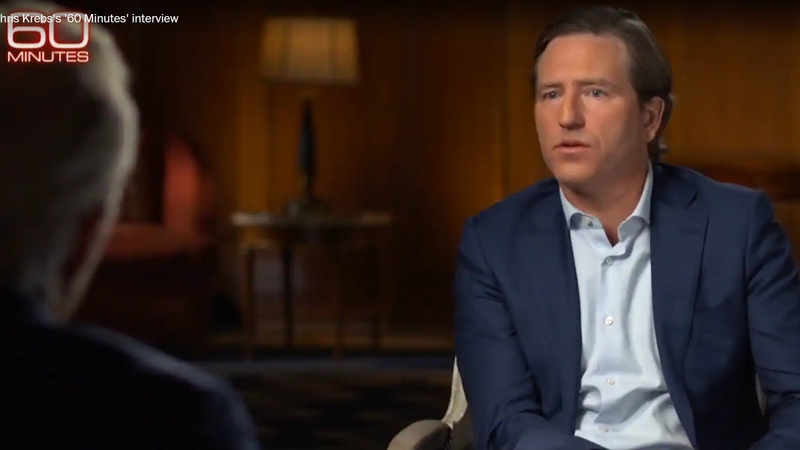
In his first interview after President Donald Trump fired him from his post leading the Department of Homeland Security’s effort to help to secure the election, Christopher Krebs reaffirmed on Sunday that there was no evidence of voter fraud and the integrity of the election had not been compromised.
“There is no foreign power that is flipping votes. There’s no domestic actor flipping votes. I did it right. We did it right,” Krebs told CBS News’s Scott Pelley on “60 Minutes.” “This was a secure election.”
Trump vehemently disagreed, turning to his Twitter feed late Sunday to excoriate Krebs and the news program, and reassert his unfounded claims that the election he lost was “probably our least secure EVER!”
“NO WAY WE LOST THIS ELECTION!” tweeted Trump, again without evidence, in another claim marked as “disputed” on Twitter.
Krebs, a Republican who joined DHS in 2017 as a senior counselor to then-Secretary John Kelly, was confirmed in 2018 as undersecretary for the National Protection and Programs Directorate, later rebranded to the Cybersecurity and Infrastructure Security Agency (CISA).
Krebs seemingly fell out of Trump’s good graces earlier this month when CISA released a joint statement with the coordinating council of state and local federal government entities in charge of protecting elections that rejected the president’s claims and called the election “the most secure in American history.”
Five days later, on Nov. 17, Krebs, like many other government officials over the past four years, learned he was terminated from one of the president’s tweets.
During his interview with “60 Minutes,” Krebs spoke frankly about the effect the president’s rhetoric has had on state elections officials. He specifically mentioned secretaries of state in Pennsylvania, Michigan, Nevada and Arizona, all women, who are “under attack from all sides, and they’re defending democracy,” Krebs said.
“Look at Secretary [Brad] Raffensperger in Georgia, lifelong Republican,” Krebs said. “He put country before party in his holding a free and fair election in that state. There are some real heroes out there. There are some real patriots.”
Krebs also quashed the false assertions made by the president and his team, which included claims that Venezuela hacked voting machines and that votes are being tabulated in foreign countries. “I don’t understand this claim,” Krebs said. “All votes in the United States of America are counted in the United States of America. Period.”
“The American people should have 100% confidence in their vote,” he added.
Much of the segment focused on Krebs’s desire to reassure the public that election was secure, telling Pelley that his department had spent more than three years preparing for every possible scenario of meddling from a foreign adversary. Specifically hoping to avoid a repeat of Russia’s interference in the 2016 election, one of the key measures was the use of paper ballots, he said.
“Paper ballots give you the ability to audit, to go back and check the tape and make sure that you got the count right,” Krebs said. “And that’s really one of the keys to success for a secure 2020 election. Ninety-five percent of the ballots cast in the 2020 election had a paper record associated with it. Compared to 2016, about 82 percent.”
The paper ballots also helped prove that the votes in Georgia were not hacked by a “malicious algorithm,” he said. Trump’s demand for a hand recount further proved Krebs’s point, showing that the votes that were tabulated by machines were consistent with the hand recount results.
Krebs said those results definitively debunk the president’s false claims that election vendors were hacked and their software and systems were compromised.
“It’s nonsense,” he said.
The Trump campaign did not immediately respond to a request for comment.
At one point, the interview got more personal when Pelley asked Krebs about his sudden ousting. Krebs said that while he was not surprised by the president’s move to fire him, he was disappointed in how it all unfolded.
“It’s not how I wanted to go out,” he said, dolefully. “I love that team. And I didn’t get a chance to say goodbye, so that’s what I’m most upset about.”
The former government official also expressed his worries that the actions by Trump and personal attorney Rudolph W. Giuliani were undermining the democratic process. Giuliani has held several news conferences spewing conspiracy theories. On Sunday morning, Trump spoke to Maria Bartiromo on Fox News’s “Sunday Morning Futures,” unchallenged for 45 minutes about his unfounded claims of the election being “rigged” and “a fraud.”
For Krebs, he worries these actions could cause irreparable harm.
“What it was actively doing was undermining democracy,” Krebs said. “And that’s dangerous.”
InternationalDec 01. 2020An election worker sorts through ballots during a recount of Milwaukee County results at the Wisconsin Center on Nov. 20, 2020. MUST CREDIT: Photo for The Washington Post by Taylor Glascock
By The Washington Post · Rosalind S. Helderman, Amy Gardner · NATIONAL, POLITICS
WASHINGTON – The recount of presidential ballots in Wisconsin’s two largest counties reconfirmed Sunday that Joe Biden defeated President Donald Trump in the key swing state by more than 20,000 votes, the latest example of the president’s flailing efforts to undo the election results.
The completion of the recount – which the Trump campaign had requested – added to a pileup of defeats for the president as he continues to attack Biden’s national victory, claiming without evidence that widespread fraud tainted the results. His campaign has vowed to appeal to the U.S. Supreme Court, though it has yet to do so, while suffering losses nearly every day in state and federal courts.
After the completion of the recount in Wisconsin’s Milwaukee County on Friday and Dane County on Sunday, there was little change in the final breakdown of the more than 800,000 ballots that had been cast in the two jurisdictions. In the end, Biden’s lead over Trump in the state grew by 87 votes.
Under Wisconsin law, Trump was required to foot the bill – meaning his campaign paid $3 million, only to see Biden widen his margin.
With the recount concluded, the president is rapidly running out of opportunities to try to slow Biden’s march to the presidency.
Four of the six states where Trump has questioned the results have certified their vote tallies. His efforts to stop Michigan officials from finalizing the vote there this month ran aground. A hand recount of ballots in Georgia confirmed Biden’s win in that state. A second recount there is expected to conclude Wednesday, and Georgia election officials do not expect it to significantly change Biden’s approximately 12,000-vote margin.
Meanwhile, two new court decisions in Pennsylvania late last week rejected the Trump campaign’s attempts to halt the vote count in that state, the latest in a series of forceful judicial opinions that have tossed out claims by the president and his allies across the country.
The last key vote certifications could come Monday, when Arizona is set to finalize its results, along with Wisconsin, which announced Sunday that it would complete its state canvass then.
Republicans, including the three who sit on Wisconsin’s six-member election commission, may attempt to delay certification. However, under state law, the chair of the commission – currently a Democrat – has the authority to finalize the results.
The president and his legal advisers have said they still plan to fight in court in an attempt to prevent Wisconsin from moving forward.
“The Wisconsin recount is not about finding mistakes in the count, it is about finding people who have voted illegally, and that case will be brought after the recount is over, on Monday or Tuesday,” Trump tweeted Saturday. “We have found many illegal votes. Stay tuned!”
Trump campaign legal adviser Jenna Ellis claimed without evidence in a statement Sunday that the recounts had “revealed serious issues regarding the legality of ballots cast.”
“As we have said from the very beginning, we want every legal vote, and only legal votes to be counted, and we will continue to uphold our promise to the American people to fight for a free and fair election,” she said.
Danielle Melfi, the Wisconsin director of the Biden campaign, said in a statement that local boards of canvassers had “resoundingly rejected – often on a bipartisan basis – the Trump campaign’s baseless attempts to disenfranchise hundreds of thousands of Wisconsinites who simply followed the law when they voted. And despite repeated incendiary accusations, there was no evidence of fraud whatsoever.”
Even if the Trump campaign were to pull out a surprise courtroom win – which legal experts said is unlikely – it would do little to change the outcome of the White House race, which Biden won with 306 electoral votes. The electoral college will meet on Dec. 14 to formalize his victory.
Trump escalated his false claims about the election during a telephone interview with Fox News on Sunday, alleging that Democrats had orchestrated a “big, massive dump” of hundreds of thousands of illegal votes in the election.
The president made it clear that he would never accept his loss and is contemplating the appointment of a special counsel to investigate the election, though that decision would fall to Attorney General William Barr.
“My mind will not change in six months,” Trump told host Maria Bartiromo on Fox News’s “Sunday Morning Futures.” “There was tremendous cheating here.”
But he faces diminishing avenues to make such claims.
After a three-judge panel of the U.S. Court of Appeals for the 3rd Circuit resoundingly rejected the Trump campaign’s attempts to undo the certification of the Pennsylvania vote last week, Ellis vowed that the campaign would take the case to the Supreme Court.
However, the 3rd Circuit decision involved only a technical question about whether the Trump campaign could amend its lawsuit. And the categorical nature of the ruling by a panel of three Republican-nominated judges – written by a judge nominated by Trump – did not bode well for the campaign’s chances.
On Sunday, Trump acknowledged that he may not succeed in getting the country’s high court to weigh in.
“The problem is, it’s hard to get into the Supreme Court,” he said on Fox News. “I have got the best Supreme Court advocates, lawyers, that want to argue the case, if it gets there. But they said it’s very hard to get a case up there. Can you imagine? Donald Trump, president of the United States, files a case, and I probably can’t get a case, even with – and we have tremendous proof.”
In fact, the Trump’s campaign’s path to the nation’s highest court has been made more difficult by just how little evidence it has offered to lower-level courts of voting irregularities, drawing repeated rebukes from judges.
In Wisconsin, the president’s campaign sought to use the recount process to invalidate tens of thousands of otherwise legal ballots. Among other things, Trump’s lawyers argued that a form signed by voters who cast a ballot during in-person voting before Election Day was insufficient under state law. They said all those ballots – totaling about 180,000 votes in the two counties – should be tossed out.
They also complained about a practice in place since 2016 that allows election officials to fix tiny errors on the certification envelopes of some mail-in ballots, as well as rules in place since 2011 that allow some people to declare themselves “indefinitely confined” due to age or disability and vote without showing a photo ID.
Local officials in each county rejected the Trump campaign arguments and included the ballots in the recount.
In announcing Dane County’s results Sunday, Clerk Scott McDonell told reporters that he saw Trump’s tweet as “a clear admission to the fact that there was no fraud found here,” but instead an acknowledgment that the Trump campaign’s concerns amounted to “objections to policies.”
He said the process should “reassure” the public about the accuracy of the count, but said he found it “disturbing” that the Trump campaign had targeted only two Democratic counties for practices in place across Wisconsin.
Two conservative groups filed lawsuits last week, asking the Wisconsin Supreme Court to consider challenges to the recount process. The seven-member elected court has not yet said whether it will agree to hear the cases; Republicans have a 4-to-3 majority on the court. The Trump campaign is not a party to either suit.
Legal experts have said the arguments advanced by the Trump campaign during the recount were thin. They also said that even if judges were to conclude that some practices by Wisconsin clerks were technically flawed, they would be extremely unlikely to throw out tens of thousands of ballots cast by voters who did nothing wrong other than follow rules, as directed by election officials.
Further undermining the Trump campaign’s argument, experts said, is the fact that it raised only objections in two predominantly Democratic counties.
The practices that Trump lawyers criticized are in place statewide and have been in place for years, including before to the 2016 election – which Trump won and did not contest.
Their arguments would not invalidate only Biden votes. Documents prepared as part of the Dane County recount showed that the Trump campaign’s own lead attorney in Wisconsin, James Troupis, had voted early and in person. He essentially argued that his own vote was illegal and should not be counted. Troupis did not respond to requests for comment.
“This whole strategy is so shortsighted. It’s so self-destructive in the long term,” said James Wigderson, a conservative activist and editor of the website RightWisconsin, who did not vote for Trump.
He said the GOP gambit sent a strong message to voters of color that the Republican Party believes their votes are less valid than those cast in White suburbs and rural areas. “Republicans should be outraged by this,” he said.
Under Wisconsin law, Trump was allowed to request the recount because Biden’s margin of victory – about 0.6% – was less than 1%. However, Trump’s campaign was required to pay for the recount because Biden’s margin was more than 0.25%. Trump could have requested a full statewide recount, at a cost of nearly $8 million. Instead, his campaign opted to pay less for a narrower recount in the state’s two most Democratic-leaning counties.
“This recount demonstrated what we already know: that elections in Milwaukee County are fair, transparent, accurate and secure,” County Clerk George Christenson said as the county election commission voted to certify its results Friday. “We have once again demonstrated good government in Wisconsin.”
The recount required dozens of election employees to work for more than 12 hours a day since Nov. 20, taking off only Thanksgiving Day. Officials in both counties took over local convention centers to allow workers to spread out, erected plexiglass shields, and instructed workers and observers alike to wear masks.
Still, election officials worried that employees could have been exposed to the coronavirus while conducting a process they had asserted from the start was exceptionally unlikely to change the state’s results, given Biden’s margin of victory.
“I’m very concerned,” Christenson said in an interview.
He noted that there among the 300 people who gathered at a convention center each day for the recount was a poll worker who was pregnant. A member of the local elections commission, who had to be at the site full time to adjudicate challenges raised by the Trump campaign, is 73 years old and has a heart condition, he said.
In other states, a few scattered legal efforts are still underway. In Nevada, the Trump campaign has filed a formal election contest under a state law that allows a losing candidate to challenge the results of an election based on illegal votes cast or official malfeasance. The campaign has asked a judge to declare Trump the winner or annul the election, which would mean neither candidate would receive the state’s six electoral votes.
To prevail, Trump’s lawyers would have to show enough voting irregularities to cast doubt on Biden’s win of more than 33,000 votes. That seems unlikely, given that judges have rejected Republicans’ previous allegations of wrongdoing and fraud – some of which are repeated in the Trump election challenge.
Nevada law allows the Trump campaign to conduct depositions as part of the challenge.
In Arizona, state Republican Party Chairwoman Kelli Ward has said she intends to file an election contest in that state after the results are certified Monday.
Ward has asked a judge to allow her to begin examining mail ballots, claiming that the signature verification process allowed fraudulent votes to be counted. A hearing is scheduled for Monday.
Arizona Republicans are planning to host Trump campaign lawyers Ellis and Rudy Giuliani on Monday in what they are calling a “fact-finding hearing” on election fraud.
The Trump campaign has billed the meeting as a hearing held by the state legislature. In fact it is a meeting of members of the legislature at a Hyatt Regency in Phoenix – much like a similar press event held in Gettysburg, Pa., last week, during which Giuliani and Ellis repeated numerous unfounded claims of fraud.
Republican Attorney General Mark Brnovich has defended the integrity of the state’s election. He and GOP Gov. Doug Ducey are expected to be present at the certification of results Monday.
By Syndication Washington Post, Bloomberg · Viren Vaghela
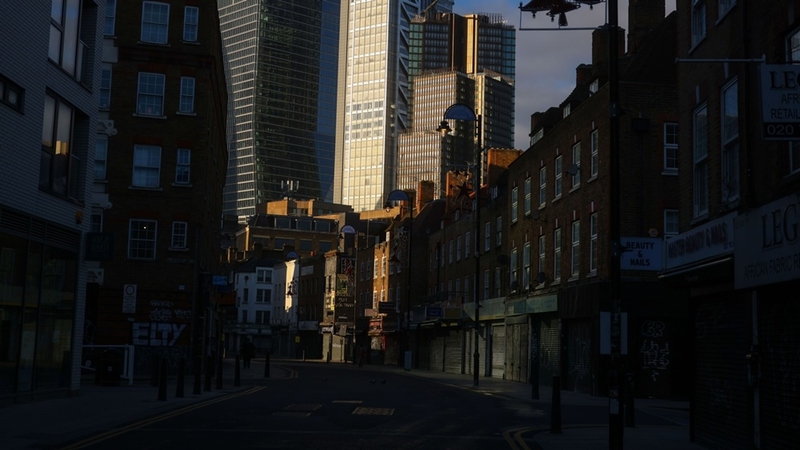
The golden age of the City of London began with a big bang. It’s ending with a whimper.
Fears that the finance powerhouse that emerged from Margaret Thatcher’s 1986 deregulation — known as the Big Bang — will gradually be dismantled have deepened with a recent flurry of announcements about some business heading to the European Union as Britain enters the last month of the Brexit transition period without a financial-services deal in sight.
The latest shift came Monday when London Stock Exchange Group Plc’s stock trading platform Turquoise Europe goes live in Amsterdam. It joins other trading venues like Cboe Europe and Aquis Exchange Plc setting up shop on the continent as part of their no-deal Brexit plans, a contrast with the late 1980s, which ushered in a period where London became the place to be for equities trading.
“The City of London has been thrown to the lions,” said Alasdair Haynes, chief executive officer at Aquis, adding that the U.K. could lose even more stock trading than it expects if giant U.S. asset managers like BlackRock Inc. decide to trade in Paris and Amsterdam.
Last week, Goldman Sachs Group Inc., said it had applied to French regulators to open its SIGMA X Europe stock platform in Paris from Jan 4. Goldman partner Elizabeth Martin said that she expects most of the $10 billion (8.6 billion euros) a day in London-based European share trading to shift to the bloc.
Aquis has already established a platform in the French capital. It went live with more than 1,700 European shares earlier this month. Other trading venues like Liquidnet have outposts in Dublin to ensure they can service clients.
“We are expecting a big bang on Jan. 4,” said David Howson president of Cboe Europe, the largest of London’s stock trading platforms, which opened its own venue in the Dutch capital last year. “The industry has never had to move this much flow overnight.”
It’s not just stock dealing that’s shifting. Brussels disappointed London swap traders last week when its markets regulator said that derivatives need to change hands on EU-based platforms from January. That means trillions of dollars of trades are at risk of being transacted outside of the U.K.
The bloc has already made a land grab for London’s euro swaps clearing business, urging its banks to accelerate a shift to Europe. Deutsche Boerse AG’s Eurex Clearing has built up a 19% share of the business over recent years although it is dwarfed by London’s market share.
In recent weeks, Goldman and JPMorgan Chase & Co. have indicated that between them more than 300 staff will move to continental cities. Goldman is shifting as much as $60 billion in assets to Frankfurt, while JPMorgan is moving about $230 billion to the German city.
Consultancy EY said in a new report Monday that only 10% of big financial services firms are planning to establish or expand operations in the U.K. in the coming year, discouraged by the uncertainties of Brexit and the covid-19 pandemic. That’s down from 45% in April.
EY said in a report last month that the 7,500 roles and 1.2 trillion pounds ($1.6 trillion) in assets that have moved already may just be the beginning. It expects further shifts in personnel and assets once the U.K.’s transition period officially ends.
That bodes ill for the U.K., where finance employs more than one million people, makes up about 7% of the economy and accounts for more than a 10th of all tax revenue. Despite that, the industry has garnered little of the attention bestowed on fishing, which makes up just 0.1% of the U.K. economy, in the protracted Brexit negotiations.
To be sure, London’s long-standing advantages of the English language and legal system and a deep talent pool mean it won’t be overtaken anytime soon. And a last-minute agreement with the EU on financial services could still happen.
The LSE said it would call off its plan for Turquoise Europe if the European Union declared that Britain can host trading services for EU shares, part of a process known as equivalence. Such an agreement remains a possibility.
But time is running out. And without an agreement London’s status as Europe’s financial hub will no longer be in its hands.
“The kingmakers here will be the Americans,” Aquis CEO Haynes said. “There’s no guarantee they will still trade in London. They will follow the liquidity.”
OPEC faces seismic demand split as cartel plots next move
InternationalDec 01. 2020Security personnel stand in front of the media ahead of the 177th Organization of Petroleum Exporting Countries (OPEC) meeting in Vienna on Dec. 5, 2019. Ministers gather virtually this year. MUST CREDIT: Bloomberg photo by Stefan Wermuth
By Syndication Washington Post, Bloomberg · Javier Blas
As OPEC+ ministers gather virtually this week, the city that traditionally hosts their meetings will be locked down. Vienna’s Christmas markets will be closed, the famous Ringstrasse boulevard silent. For oil ministers, the scene should urge caution.
Oil pumping jacks in a Rosneft Oil Co. oil field near Sokolovka village in the Udmurt Republic, Russia, on Nov. 20, 2020. The flaring coronavirus outbreak will be a key issue for OPEC+ when it meets at the end of the month to decide on whether to delay a planned easing of cuts early next year. MUST CREDIT: Bloomberg photo by Andrey Rudakov
But while the Austrian capital provides a dramatic example of how the second wave of the pandemic is shutting down economies in Europe and the U.S., the global picture is more nuanced.
In Asia, the situation is almost the opposite to that of Vienna. The streets in India were full during the recent celebration of Diwali; China’s Golden Week holiday saw millions take cars, trains and even planes to visit relatives across the country.
The east-west divide is an added conundrum for OPEC+, which on Monday and Tuesday needs to decide whether to delay a production increase slated for January — and if so, for how long. Informal talks on Sunday failed to yield an agreement.
As well as the geographical split, there’s another crucial divide in the global oil market: while gasoline and diesel demand have recovered to about 90% of their normal level, consumption of jet fuel languishes at about 50%.
“The size of the shock and the unevenness of its impacts imply a recovery process which is far from smooth,” said Bassam Fattouh, the head of the Oxford Institute for Energy Studies.
In private, OPEC+ delegates talk about the imbalance in the recovery, both geographically and between refined products. Increasingly too, they talk about another segmentation: crude oil quality. The market for the denser more sulfurous crude, called heavy-sour, is tight, mostly due to production cuts from Saudi Arabia, Russia and other big producers. But the market for so-called light-sweet is glutted, in part because Libyan barrels have come back to the market after a cease-fire, and European refiners are consuming less North Sea crude.
All those factors make the deliberations of OPEC+ ministers trickier. And they have just one blunt tool at their disposal: raising or cutting overall production. OPEC+ nations do not target gasoline or jet-fuel production, but just crude.
There’s also a geographical handicap: most of their oil goes to Asia, where demand is strong, rather than Europe and America, where it’s weaker. That means they can do little to address the glut where it matters. Even the quality is a problem: OPEC pumps mostly heavy-sour crude, and can do relatively little to trim the excess of light-sweet crude.
There is some consolation. While the recovery in oil demand that started in May stuttered in October and November as the second wave took hold, it wasn’t the same hit to the market as earlier this year. The lockdowns in Europe aren’t as severe as the first wave, and demand in Asia is surging — not just in China, but also in India, Japan and South Korea.
High frequency data for road usage shows a decline in early November of about 30% from pre-Covid levels, compared to nearly 70% in late March and early April, according to an index compiled by Bloomberg News. The most recent data suggests that road fuel demand bottomed out around Nov. 15, and has been recovering since. With European nations easing lockdowns in the run-up to Christmas, demand is likely to recover further.
Pieced together, this all means the market isn’t as bad as it looked just a few weeks ago. Oil prices are reflecting the more positive tone: Brent crude has rallied well above $45 a barrel, and the shape of the curve has flipped, with nearby contracts trading at a premium to later ones. That dynamic, known as backwardation and traditionally a bullish signal, means that demand is running above supply.
The physical market, where actual barrels change hands, is also showing signs of strength: the favorite crude varieties of Chinese refiners are commanding rising premiums. Take ESPO crude of Russia, a grade that Chinese independent refiners, known as teapots, like to buy. In the most recent tenders, it has changed hands at $2.85 a barrel above its benchmark, up from 55 cents in mid-October.
Beyond the next quarter, the outlook improves further.
Many are already hopeful about the impact of virus vaccines on oil demand. If they are right, by midyear, when OPEC is likely to be meeting again, the streets of Vienna will be once again full of tourists, often perplexed to see oil ministers followed by packs of television cameras across the Austrian capital. The cartel is tentatively planning to hold its biannual international oil seminar, a two-day festival of the industry, at the Imperial Hofburg Palace in June 2021.
“Vaccine efficacy and availability point to a large enough recovery in oil demand next year to allow OPEC to achieve both a rebalancing of excess inventories as well as increase production sharply,” said Damien Courvalin, oil analyst at Goldman Sachs Group Inc.
For now though, OPEC+ still has work to do. If the cartel wants to keep draining inventories accumulated earlier this year, it needs to keep the market in deficit, rather than simply balance supply and demand. With Libyan output surging back, OPEC’s own economists believe that global inventories would increase by about 200,000 barrels a day during the first quarter of 2021 if the group increases output as scheduled in January. If it delays the hike by three months, then stocks would instead drain by about 1.7 million barrels a day between January and March, a similar amount to what it expects in the fourth quarter of 2020.
“The job is far from done,” said Gordon Gray, global head of oil and gas equity research at HSBC Holdings Plc.
By Syndication Washington Post, Bloomberg · Tim Ross, Alex Morales
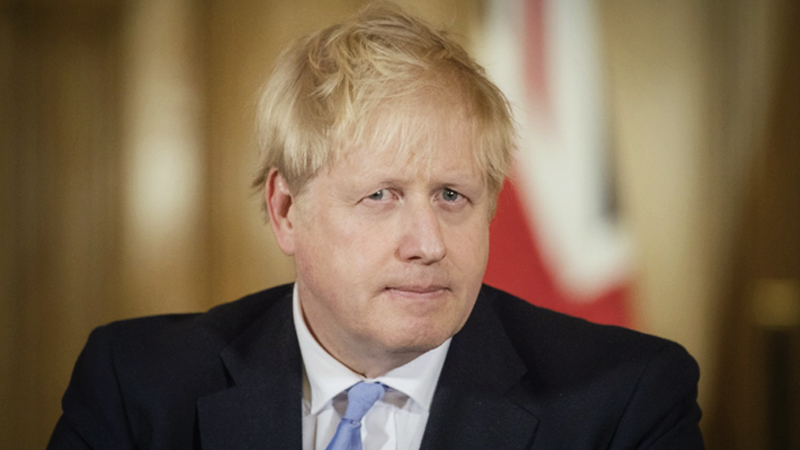
Boris Johnson is battling to convince Conservative Party colleagues to back plans to keep most of England under strict pandemic controls when the national lockdown ends this week.
Ministers on Monday will publish analysis of the health, economic and social impacts of the pandemic and the measures taken to suppress the disease, before a scheduled vote on Tuesday over England’s return to a three-tier system of coronavirus restrictions to replace the lockdown on Dec. 2.
With reports that as many as 100 Conservatives may rebel in the vote because they say the new rules are too tough, Johnson at the weekend wrote to his critics promising concessions in an attempt to persuade them to support him. He warned that a third national lockdown may be required if the country fails to bring the coronavirus under control.
“The prime minister and other ministers will be working very hard to reassure them about the steps that we are taking,” Environment Secretary George Eustice told Sky News on Monday. “There’s great frustration with the emergency measures we’ve had to take to deal with this pandemic.”
If 100 Tories rebel, it would deliver a damaging political blow to the premier and could even cause his plans to fail. But while the main opposition Labour Party have yet to say how its MPs will be asked to vote, indications from members of the shadow cabinet are that they’ll rescue the prime minister from defeat by supporting his measures.
On Sunday, Shadow Transport Secretary Jim McMahon told Times Radio it would be “illogical” to vote against the new tiered system because then the country would be left without any pandemic restrictions given England’s current lockdown expires by law on Dec. 2.
“We’ve always supported sensible public health restrictions and of course we will put that first again tomorrow,” Shadow Education Secretary Kate Green told Sky News. She said she hopes Johnson “will be able to give us all the reassurances that we need today to make the right decision for the public and keep everyone safe.”
The prime minister intends to put most of England in the top two tiers of curbs from Dec. 2 to suppress the virus further before loosening the rules in time for families to meet at Christmas. The rules will be reviewed every two weeks, with the first coming on Dec. 16.
But his strategy of locking down England twice and now keeping the hospitality industry under tight restrictions has put him at odds with many in his own party, who fear the economic damage of lost jobs and failed businesses risks outweighing the benefits to health. Many have complained about the inconsistency of the new tiered system, lumping areas of low infection under tough restrictions along with places with high prevalence.
After Cabinet minister Michael Gove wrote in the Times newspaper all hospitals in England would face being overwhelmed if MPs block the new restrictions, former minister Mark Harper told Gove to prove it.
“If he genuinely thinks that hospitals would be overwhelmed, then show us the modeling and the evidence that he sees,” Harper said in an interview with Times Radio. “I simply don’t know whether it’s true.”
In his letter, Johnson appealed to members of Parliament to back the regulations, promising the rules would expire on Feb. 3 under a “sunset” clause and saying MPs would get another vote on whether to extend the restrictions to the end of March.
“Disagreement on approach is natural, and I hope you recognize that the government is seeking as far as possible to listen to criticism and respond positively to constructive proposals,” Johnson wrote in his letter to Tory MPs. “I do believe that the strategy set out is a balanced approach, which helps protect the NHS from being overwhelmed, keeps children attending school, and lets the economy open up in a safe way, and the best way forward.”
Officials are also working to develop a national mass testing program to replace the need for self-isolation, Johnson said.
Meanwhile, the government announced 20 million pounds ($27 million) will be allocated to boost medicine manufacturing, to encourage companies to build new factories and adopt new technologies. Johnson will launch the Medicines and Diagnostic Manufacturing Transformation Fund on a visit to North Wales on Monday.
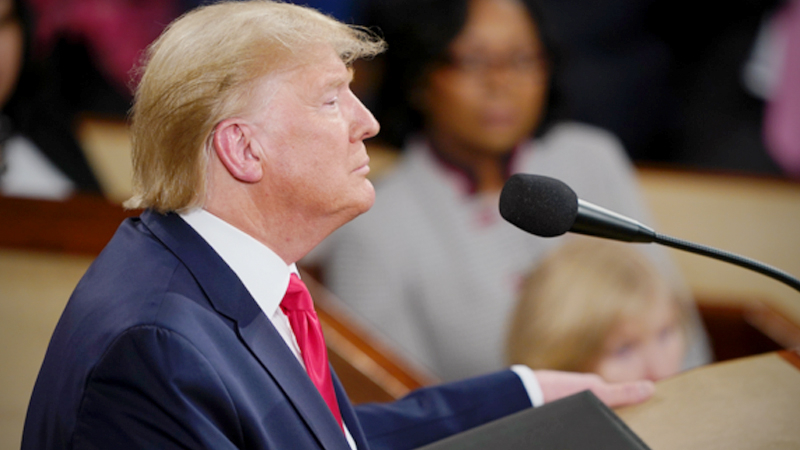
WASHINGTON – Some Supreme Court justices on Monday seemed skeptical of President Donald Trump’s claim that he has the authority to exclude undocumented immigrants from population totals when deciding congressional reapportionment. But they also wondered whether a definitive answer is needed now.
Chief Justice John Roberts was among those questioning whether the court should wait to see whether the Census Bureau, under the direction of Commerce Secretary Wilbur Ross, can even produce useful numbers about the undocumented population. Or whether the numbers the government can produce will make a difference when deciding the size of each state’s congressional delegation.
Acting Solicitor General Jeffrey Wall said during Monday’s arguments that it was unclear what the department can produce in the remaining month before its report to the president is due. The Supreme Court said over the summer that the administration could not ask a citizenship question on the census form.
Wall said it was more likely the president would try to eliminate subsets of the undocumented based on existing administrative records, but it was unclear how successful that process would be.
Roberts said that counseled caution.
“We don’t know what the secretary is going to do. We don’t know what the president is going to do. We don’t know how many aliens will be excluded. We don’t know what the effect of that would be on apportionment,” Roberts said. “All these questions would be resolved if we wait until the apportionment takes place. So why aren’t we better advised to do that?”
Even though the court had granted the case on an expedited schedule to reach a decision before Jan. 1, Justice Samuel Alito seemed to agree with the chief justice.
“It could be that we are dealing with a possibility that is quite important,” he said. “It could be that this is much ado about very little. It depends on what the Census Bureau and the Department of Commerce are able to do.”
Lawyers for states protesting Trump’s intentions and organizations who say they would be hurt by the change said a slight delay might give the justices more insight, but making them wait until after the president has decided the size of each state’s congressional district would be too much.
They said the court could decide now that the president simply does not have the authority to exclude those residing in the country on April 1, when the census began, even if they are undocumented.
“The Constitution and laws provide that House seats should be allocated on the basis of total population,” said New York Solicitor General Barbara Underwood, a Democrat. “The framers wanted a system that could not easily be manipulated. So they decided to count just the persons living in each state. The policy here would for the first time in this nation’s history reject that choice.”
Wall acknowledged that no other president has ever taken such a position. But he said the president had the authority to eliminate at least some people who were in the country illegally.
He ran into trouble even with some conservative justices on that assertion, including from Justice Amy Coney Barrett.
“A lot of the historical evidence and long-standing practice really cuts against your position,” Barrett told Wall. “And, you know, there’s evidence that in the founding era, an inhabitant was a dweller who lives or resides in a place.”
American Civil Liberties Union lawyer Dale Ho said some undocumented aliens have lived in the country for years and easily are categorized as inhabitants of the state.
Ho cited an amicus brief that said undocumented immigrants pay $20 billion in federal taxes.
“Eighty percent are essential workers. One in four are homeowners and pay property taxes,” Ho said. “They’re our neighbors, our co-workers, and our family members. They are usual residents under any plausible definition of that term.”
Three lower courts have ruled against Trump, and a fourth said the time was not ripe for a decision on the question’s merits.
The administration is hurrying to finish the count and submit the reapportionment report to Congress before President-elect Joe Biden is inaugurated Jan. 20.
Wall told the justices it was “very unlikely” that the administration could identify all of the more than 10 million people estimated to be illegally living in the country.
He said it is now trying identify categories of people – those awaiting deportation, for instance, or held in detention – who might be excluded. But Wall said it was unknown at this point whether those categories would amount to enough to change how the congressional seats should be allocated.
No one disputes that eliminating the undocumented would shift representation from some more diverse states with large immigrant populations to states where the population is more White.
A Pew Research Center study this summer found that if the country’s undocumented immigrants were excluded from apportionment, California, Florida and Texas would end up with one fewer seat each and Minnesota, Ohio and Alabama would end up with one more each, compared with what they would have gotten with no adjustments.
Some of the court’s liberal justices seemed skeptical of Wall’s assertion that everything was too speculative at this point for the court to act.
Justice Elena Kagan said the administration has been working on the project for some time and could have enough documentation to remove up to 5 million people from the count.
Justice Stephen Breyer disputed whether Trump could legally exclude any substantial number, referring to the Constitution’s command that the census count “all persons” and that those numbers be used for reapportionment.
In a July memorandum, Trump told Ross to submit both the census report and a report to be used for apportionment that, to the extent possible, cut out undocumented people.
The lower court decision at issue, from a three-judge panel in New York, restricted Ross from including the second number. But Roberts said that seemed like a “gag order” on a president’s subordinate.
The census report is to be submitted to the president by the end of the year. It is up to the president then to inform Congress within one week of the opening of its next session how its 435 seats are to be allocated. The House clerk then has 15 days to inform the states of the number of representatives to which each is entitled.
By Syndication Washington Post, Bloomberg · Thomas Seal
Britain will ban the installation of 5G equipment from China’s Huawei Technologies Co. by the end of next September.
The restriction, first reported by Bloomberg last Monday, is part of an “initial” $333 million (250 million-pound) package of measures brought in to diversify Britain’s wireless supply chain announced by the Department for Digital, Culture, Media and Sport. The stricter rules may also help fend off a challenge from lawmakers in the ruling Conservative Party seeking even tighter restrictions on the Chinese network equipment maker.
British ministers announced in July that Shenzhen-based Huawei would be banned from Britain’s next-generation mobile networks in 2027, with purchases barred from January 2021. To comply with those rules, phone companies would have had to stop adding Huawei components eventually, but the new ban may accelerate their plans to overhaul systems. Maintaining existing equipment will be allowed.
The crackdown followed a U.S. push for allies to exclude Huawei on the grounds it was an unacceptable security threat, which the company denies. In January, British officials said Huawei could play a limited role with manageable risks. They since reversed that stance and backed a ban following U.S. sanctions introduced in May, saying the American squeeze on Huawei’s silicon supply chain meant its security could no longer be guaranteed.
Telecommunications carriers like BT Group Plc will now be reliant on a duopoly of Nokia Oyj and Ericsson AB, and those Nordic companies have already won big contracts in the wake of the Huawei ban. To help cut that dependency, the government will start a National Telecoms Lab by 2022 to research security and increase compatibility between vendors, as well as fund trials with potential challengers like Japan’s NEC Corp. to make it easier for competitors to enter the market. Setting out a path to phase out older 2G and 3G technology would also speed up the diversification process, according to the government’s statement.
Carriers will be banned from outsourcing service management to Huawei from April 2021 apart from in limited circumstances, the government said. A consultation on rules for the fixed broadband network is also underway.
The U.K. will consider commercial incentives to help operators diversify, according to the 5G supply chain strategy published Monday. Officials will work with “like-minded countries” to stimulate demand, as the U.K. only accounts for 2% of vendors’ global revenue, it added.
The Nokia and Ericsson duopoly “represents an intolerable resilience risk and absent intervention it is unlikely that the market will diversify,” so “measures will need to be taken to address barriers to entry such as aggressive commercial practices, closed interfaces and control over standards setting bodies,” said the statement.
The study said the global ‘radio access network’ market for crucial equipment like antennas is 80% made up by Nokia, Ericsson and Huawei, with another 11% sold by China’s ZTE Corp, another vendor deemed “high-risk” by the U.K., and 5% by Korea’s Samsung Electronics Co Ltd. The document name-checked new potential alternatives including NEC, Fujitsu Ltd, Parallel Wireless Inc and Mavenir Systems Inc.
The nation’s weekly unemployment statistics have been plagued by backlogs, fraud and inconsistent data reporting state by state, making them a seriously flawed measurement that has likely overstated the number of individuals claiming unemployment during the pandemic, according to a federal report released Monday.
The Government Accountability Office (GAO), the nonpartisan auditing agency that works for Congress, was unsparing about the problems with unemployment statistics, as part of a lengthy report that looked at the country’s response to the coronavirus.
In particular, unemployment numbers have likely been inflated due to issues with backlogs that have plagued many state unemployment systems, according to the GAO report.
The Labor Department doesn’t actually count each person who is claiming jobless benefits every week. Historically, the agency has used the states’ tally of ongoing continued claims as a stand-in for the number of people receiving unemployment benefits at any given time. And each week of unemployment is counted as a separate continued claim, the GAO noted.
Before the pandemic, this was a fine approximation. But due to the massive level of backlogs, as well as the ability for some workers to file claims retroactively, this has resulted in a significant number of inflated claims during the pandemic, the GAO said.
The data reporting problems are a symptom of the larger dysfunction that has coursed through badly swamped state unemployment agencies this year. Those issues have manifested in high levels of fraudulent claims, delays and denials for hundreds of thousands of legitimate claimants, and other problems that slowed the delivery financial aid for many people in need, particularly during the early months of the crisis.
And they are not without consequences: Unemployment claims have served as a weekly indicator for analysts and policymakers about the health of the labor market and the broader economy as a whole.
“We need to know what happened so we can shore up these systems and this doesn’t ever happen again,” said the Economic Policy Institute’s Heidi Shierholz, a former chief economist for the Department of Labor. “We have chosen to disinvest in these programs for decades and this is what you get from that.”
The weekly report on unemployment insurance has also relied on inconsistent reporting of data from states in the Pandemic Unemployment Assistance program – the jobless benefit program Congress created for gig and self-employed workers, which has further complicated week-to-week comparisons of the data.
For example, in a sample of 20 states, the number of continued claims submitted in the PUA program through June 27 was nearly 20 million more than the total number of people who had submitted an initial claim, the GAO found.
Other quirks have complicated the process.
In California, due to the way the state’s unemployment system works in two week increments, the number of continued claims may be more than twice the number of actual people submitting claims, the GAO said, citing an analysis by the California Policy Lab.
“To understand the supportive role UI and PUA benefits are playing in the economy during the pandemic, reliable data are needed on both the number of new claimants each week and the number of continuing claimants who are relying on program benefits,” the GAO report said. “Without an accurate accounting of the number of individuals who are relying on these benefits in as close to real time as possible, policymakers may be challenged to respond to the crisis at hand.”
The GAO also found problems with the PUA program that went beyond statistics.
A majority of states paid PUA claimants the minimum allowable benefit instead of the full amount they were eligible for, meaning that many households fell below the poverty line after the supplemental $600 a week in unemployment insurance expired over the summer.
The GAO also noted that fraud, particularly in the PUA program, may also be inflating some states’ counts.
In a response to the GAO included in the report, the Department of Labor said it planned to clarify its future unemployment releases to note that the number of continual claims does not accurately estimate the number of people claiming benefits.
By Syndication Washington Post, Bloomberg · Ewa Krukowska
Europe plans to impose stricter environmental requirements for batteries as it begins a radical economic overhaul set to boost electric vehicles and clean energy.
The European Union will aim at setting a global standard in the fast-growing market when it proposes next month regulations to ensure all batteries marketed in the region are greener throughout their life cycle.
“In our assessment, the EU will become the second-biggest global market for batteries,” EU Environment Commissioner Virginijus Sinkevicius said in an interview. “The number of batteries placed on the EU market and their importance will only grow in the coming years. Their sustainability should not lag behind.”
The EU has already invested billions in its Battery Alliance project to compete with Asia, currently Europe’s only provider of EV batteries. The region’s battery market value will reach 250 billion euros ($300 billion) by 2025, with production capacity able to meet auto industry demand, according to European Commission estimated.
Germany and France, home to major car manufacturers, are leading the push to roll out a European battery industry. Last year, the EU approved 3.2 billion euros in aid for a project spanning seven nations and including industrial giants such as BASF SE and carmakers BMW AG and PSA Group.
To make batteries greener, the EU will require more responsible sourcing of raw materials, using clean energy in production, cutting the share of hazardous substances, boosting energy efficiency and improving their durability, according to Sinkevicius. The new rules will affect batteries manufactured in the 27-nation bloc and brought from abroad, he said.
“The new framework should apply to all types of batteries and all kinds of battery chemistry, whether sold apart or contained in products,” Sinkevicius said. “It will ensure that various battery types are subject to similar but differentiated obligations.”
The increasingly electric future of the region is part of the Green Deal, a sweeping strategy that will affect each corner of the economy. To meets its goal of zeroing-out greenhouse gases by 2050, the EU needs to cut emissions from transport by 90%.
Europe’s growing EV market is starting to lure battery makers. China’s SVolt Energy Technology Co. said this month it will join Contemporary Amperex Technology Ltd. in opening a factory in Germany, while Tesla Inc. supplier Panasonic Corp. may start up a battery business in Norway.
BMW said earlier this month that each of its German plants will produce at least one fully electric vehicle by the end of 2022.
By Syndication Washington Post, Bloomberg · Ryan Beene
U.S. air travelers rose to the most in more than eight months as fliers brushed aside the advice of public health officials to avoid trips around the Thanksgiving holiday.
Passengers at domestic airport checkpoints totaled 1,176,091 on Sunday, the U.S. Transportation Security Administration said Monday. That’s the most since March, when the coronavirus pandemic gutted travel demand.
The uptick in airline travel came even as public health officials and state leaders urged people to stay home and limit holiday gatherings to prevent a further surge in covid-19 cases. Anthony Fauci, director of the National Institute of Allergy and Infectious Diseases, before the holiday said that people should “think twice” about traveling.
Despite the increase, Sunday’s passenger total was only 41% of last year’s level. Before the holiday week, travelers in November had been at about 35% of 2019 levels.
American Airlines Group Inc., United Airlines Holdings Inc. and Southwest Airlines Co. had warned before Thanksgiving that bookings were softening with news of growing infections, hospitalizations and deaths due to covid-19.
A Standard & Poor’s index of major U.S. airlines fell 1.8% at 11:21 a.m., paced by American’s 4.3% drop to $14.33.
Driving was also off last week, with U.S. gasoline demand falling more than 25% compared with year-earlier levels, according to GasBuddy.

 An election worker sorts through ballots during a recount of Milwaukee County results at the Wisconsin Center on Nov. 20, 2020. MUST CREDIT: Photo for The Washington Post by Taylor Glascock

 Security personnel stand in front of the media ahead of the 177th Organization of Petroleum Exporting Countries (OPEC) meeting in Vienna on Dec. 5, 2019. Ministers gather virtually this year. MUST CREDIT: Bloomberg photo by Stefan Wermuth




 SootinClaimon.Com