The record-shattering 2020 Atlantic hurricane season is over, but the scars it left remain #SootinClaimon.Com

#SootinClaimon.Com : ขอบคุณแหล่งข้อมูล : หนังสือพิมพ์ The Nation.

The record-shattering 2020 Atlantic hurricane season is over, but the scars it left remain (nationthailand.com)

The record-shattering 2020 Atlantic hurricane season is over, but the scars it left remain

InternationalDec 01. 2020

By The Washington Post · Matthew Cappucci

After six months of fury, tens of billions of dollars in damage, hundreds of fatalities and 30 named storms, the jam-packed and record-filled 2020 Atlantic hurricane season is, on paper at least, coming to an end. The season is defined as a stretch from June 1 to Nov. 30, and while Mother Nature doesn’t respect calendars, tropical activity has largely flatlined. Only one unnamed system is present near Madeira Island in the far northeast Atlantic, while the remainder of the ocean basin is virtually silent.

The season was the busiest on record in the Atlantic, with 30 named storms. At least half a dozen of them are expected to be billion-dollar disasters when the damage is finally tabulated, while hundreds died in the barrage of tempests, particularly in Central America.

Forecasters had been calling for an “extremely active” hurricane season as early as late July into August, when it became apparent that atmospheric and oceanic conditions would line up to crank out an assembly line of storms. But no one expected the season to be this hyperactive, with 2020 becoming the fifth consecutive above-average season in a row in terms of storm activity.

Here’s how the 2020 Atlantic hurricane season stacks up overall:

– 30 named storms. The average is 12; no prior season had produced more than 28. The Greek Alphabet was tapped into for storm naming for only the second time on record, and was utilized beginning more than seven weeks ahead of the previous record pace seen during 2005.

– Thirteen hurricanes, and six major hurricanes. More than a dozen of this year’s systems reached hurricane strength, with sustained winds of 74 mph or greater. A typical year sees closer to six hurricanes, with only one or two Category 3 or greater “major” hurricanes. Only 2005 had more hurricanes in a season, with 15 forming.

– Most U.S. landfalls on record. Twelve named storms made landfall on U.S. soil, including five in Louisiana. Two of those landfalls were within 15 miles of each other.

– Ten rapidly-intensifying storms. Rapid intensification describes a tropical storm or hurricane that strengthens by 35 mph or more in 24 hours. Ten storms did this, tying a record set in 1995. Several storms intensified at rates unprecedented for the time of year or location.

– Latest-forming Category 5 on record. Hurricane Iota became a Category 5 storm in the western Caribbean on November 16. Iota marked only the second time on record that a Category 5 had formed in the Atlantic in November, the only other occasion being the Cuba Hurricane of 1932.

– 73% more “active” than normal. A season’s activity isn’t measured by just the number of them that formed. There’s also a measure called ACE, or Accumulated Cyclone Energy, which incorporates the intensity and longevity of each of a season’s tropical storms and hurricanes. This season has racked nearly 180 ACE units to date, compared to an average of 104.

– The 2020 season also featured two double-whammies, one of which appears entirely unprecedented in roughly 150 years of Atlantic hurricane bookkeeping.

– Hurricanes Eta and Iota both struck near Puerto Cabezas, Nicaragua only fifteen miles apart and within a span of two weeks, bringing Category 4 impacts to the coast and feet of rain to parts of Central America.

– Similarly, Category 4 Hurricane Laura ravaged Lake Charles, Louisiana in late August, while Delta then brought winds of near 100 mph barely six weeks later in early October.

Meteorologists across the industry were tasked with keeping track of frequent, simultaneous storms spinning across the ocean in rapid succession. Nowhere was this truer than at the National Hurricane Center in Miami, where forecasters issued hundreds of advisories covering every storm, all while working in a coronavirus-restricted environment.

“It was a remarkable season, certainly the busiest season in terms of impacts and number of storms since I’ve been there,” said Michael Brennan, branch chief of the Hurricane Center’s hurricane specialist unit, who started there in 2008. “Basically everybody along the entire East and Gulf coast got affected in some way. There were watches and warnings up from Texas to Maine,” he said in an interview.

He described the season as “relentless.”

Among the most challenging elements, he said, was the number of storms that developed and intensified as they neared shore. That, coupled with the high frequency of rapid intensification that characterized storms this season, made forecasting and warning vulnerable coastal residents difficult.

“Fourteen storms required watches and warnings on the first advisory we issued,” explained Brennan. “Right off the bat we had to tell people they could have hazardous conditions.”

He contrasted this season’s storms to Hurricane Irma, which spent more than a week in 2017 barreling westwards across the open Atlantic nearing peak strength before lashing the Windward Islands.

“We had a lot of [rapid intensification] near land in the watch/warning timeframe,” said Brennan. “You look at something like [Hurricane] Delta, those types of rapid fluctuations in intensity are difficult to even observe and make sense of in real time. Trying to forecast them is really tough.”

Hurricane intensity forecasts still lag behind track forecasts in their accuracy.

While the storms may have dissipated, the damage they left behind remain etched in the landscape in peoples’ lives. Steve Bowen, a meteorologist and the head of disaster insight at Aon, says that the damage could tally in the tens of billions of dollars.

“From an economic loss perspective, the 2020 Atlantic Hurricane Season was costly, very impactful, and will require a multi-year recovery effort in several hard-hit areas,” wrote Bowen in an email. “Preliminary estimates show $41 billion in tropical cyclone losses across the entire Atlantic basin; of which $37 billion occurred on the U.S. mainland.”

Despite the costly price tag, it could have been a lot worse.

“This [year’s damage cost is] much lower than peak years in 2017 ($307 billion) and 2005 ($238 billion),” Bowen wrote, alluding to seasons that included Harvey, Irma, Maria, Katrina, Rita and Wilma, for example.

“It’s hard for most of us to associate the 2020 Atlantic season with the word ‘lucky’, but given the record-setting volume of landfalls, most major coastal U.S. metro areas came away generally unscathed,” Bowen said.

Not everyone was so lucky though. In Lake Charles, Louisiana, piles of debris still line city streets, with blue tarps covering roofs pried from homes during the twin tempests. Ben Terry, a meteorologist at KPLC-TV, says his community is still working to heal.

“It was unbelievable,” said Terry, reminiscing on the season in an interview. “[Hurricane] Laura was something that you just really couldn’t imagine, and then Delta [hit] just six weeks later as we were getting into recovery.”

Terry’s home was destroyed by Hurricane Laura, while the 400-foot tower at his television station collapsed and crushed part of the studio. Following the storm, he was forced to stay with a friend and work out of an affiliated station and studio in Baton Rouge, returning home shortly before Delta struck the beleaguered community.

“It made it very tough,” said Terry. “It would have been very easy just to pack up and leave when you lose everything and your house. But when you’re a meteorologist, you’re on TV, you have to be strong and tell the public you’ll get through this. And at the end of the day, you have to deal with the same thing everyone else is dealing with.”

Encountering Delta just over a month after Laura was an unwelcome dose of déjà vu for Terry and Lake Charles. He found himself asking “is this real?”

“Delta was coming in as a stronger storm, and it was surreal to think this could possibly happen again,” recalled Terry. “It was like, “this can’t happen, the track’s going to change,” and ultimately it came ashore thirteen miles east of where Laura made landfall.”

The road to recovery for Lake Charles will be long and arduous, coming as parts of Central America are reeling from their back-to-back storms and several Caribbean Islands pick up the pieces of their communities as well.

Four French police officers charged with brutal beating of Black music producer #SootinClaimon.Com

#SootinClaimon.Com : ขอบคุณแหล่งข้อมูล : หนังสือพิมพ์ The Nation.

Four French police officers charged with brutal beating of Black music producer (nationthailand.com)

Four French police officers charged with brutal beating of Black music producer

InternationalDec 01. 2020

By The Washington Post
James McAuley

PARIS – Four French police officers were charged Monday with assaulting a Black music producer last week, an episode captured on video footage that has stunned the French public and shaken the government.

Michel Zecler, the 41-year-old music producer, claims that the officers repeatedly insulted him as they beat him and that they also used a clear racial epithet while they did so. The officers denied that charge during their interrogation, Paris prosecutor Rémy Heitz told reporters Sunday.

The footage of Zecler, first released Thursday by the French news outlet Loopsider, stunned a nation that was already debating a controversial provision in a new security law that would ban recording police on active duty. The release of the footage followed an earlier incident Thursday in which a Paris police officer was shown on camera beating Afghan refugees as authorities cleared out a migrant camp in central Paris.

President Emmanuel Macron said in a Facebook post Friday that the images of Zecler’s beating “shame us,” and he urged the French government to devise new protocols that would “reaffirm the link of confidence that should naturally exist between the French and those who protect them.”

“I want to understand why I have been assaulted by people who were wearing a police uniform. I want justice actually, because I believe in the justice of my country,” Zecler said in an interview with the Associated Press. He added that he suffered injuries to his head, legs and forearms.

Three of the officers involved in the incident have been charged with “intentional violence by a person in public authority,” as well with falsifying statements that documented the incident. The fourth officer has been charged only with “intentional violence.” Two of the four have been granted conditional release.

Amid mounting criticism from the public in the wake of these incidents, the French government appeared willing to change the controversial provision that would ban filming police, in theory to protect them from harm.

Prime Minister Jean Castex said Friday that the provision, still pending approval from the French Senate, would be revised.

Lawmakers request new GAO studies on pandemic’s effect on the aviation industry #SootinClaimon.Com

#SootinClaimon.Com : ขอบคุณแหล่งข้อมูล : หนังสือพิมพ์ The Nation.

Lawmakers request new GAO studies on pandemic’s effect on the aviation industry (nationthailand.com)

Lawmakers request new GAO studies on pandemic’s effect on the aviation industry

InternationalDec 01. 2020

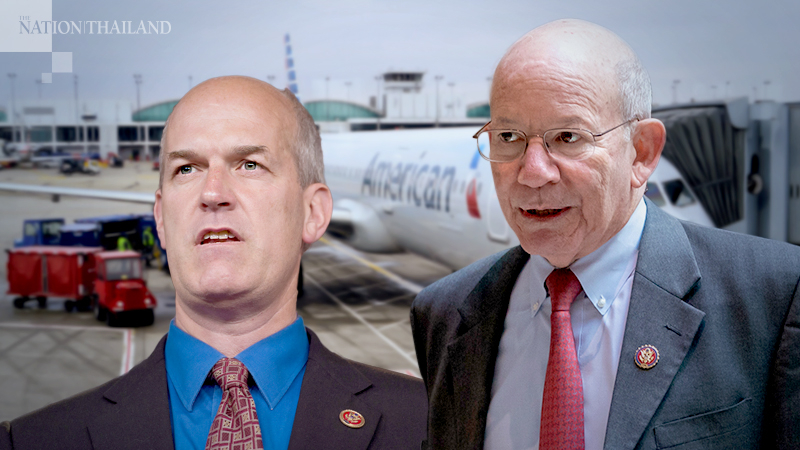
Left: Rick Larsen, Wash, Right: Peter A. DeFazio

Left: Rick Larsen, Wash, Right: Peter A. DeFazio

By The Washington Post
Lori Aratani

Two top Democrats on the House Committee on Transportation and Infrastructure have requested that the Government Accountability Office conduct studies examining the risk of air travel during a public health crisis.

Reps. Peter A. DeFazio, Ore., chairman of the committee, and Rick Larsen, Wash., chairman of the aviation subcommittee, said the work is needed to better understand how disease can spread through air travel and what strategies can be put in place to control that spread.

The aviation industry has been among the hardest-hit by the pandemic, which has grounded tens of thousands of flights and reduced passenger traffic to a trickle. The International Air Transport Association recently estimated that airlines will suffer a net loss of $118.5 billion in 2020, up from a previous estimate of $84.2 billion.

DeFazio and Larsen said that they are aware of the pandemic’s effect on the industry but that the risks of air travel at such a time cannot be ignored.

“Unfortunately, these losses do not negate the fact that air travel, more than any other mode of transportation, has the greatest potential to carry this disease from one part of the world to another,” they wrote in a letter this month to Gene Dorado, comptroller of the United States. The pair said that until a vaccine is widely available, “reducing the spread of COVID-19 through air travel and revitalizing the U.S. airline industry will depend in large part on a better understanding of how diseases, particularly those that are airborne, spread through air travel and identifying technologies and practices that can help mitigate disease transmission.”

The lawmakers requested that the GAO conduct three studies: one that examines research by government, academics and the airline industry on disease transmission via air travel; another that looks at the roles and responsibilities of local, state and federal authorities as well as those of airports, airlines and their contractors; and a third that assesses the measures the industry has put in place in response to the coronavirus.

“This report should provide lessons learned by aviation regulators and stakeholders that could assist with preparedness planning; identify successful disease mitigation strategies, including operational practices and technologies; and recommend any changes to current laws, regulation, and industry practices,” the lawmakers said.

DeFazio and Larsen have asked that the first study be completed within nine months.

The three reports will expand on previous GAO work assessing whether the aviation industry is prepared to deal with a global disease outbreak. In 2015, the GAO issued a report calling on the Transportation Department to take the lead in developing a national plan for dealing with an outbreak, but such a plan was never developed, in part because agencies could not agree on which one should take the lead.

Australia heat wave breaks records in Sydney, escalates fire danger across wide area #SootinClaimon.Com

#SootinClaimon.Com : ขอบคุณแหล่งข้อมูล : หนังสือพิมพ์ The Nation.

Australia heat wave breaks records in Sydney, escalates fire danger across wide area (nationthailand.com)

Australia heat wave breaks records in Sydney, escalates fire danger across wide area

InternationalDec 01. 2020

By The Washington Post
Andrew Freedman

In a development ominously similar to the events that led to 2019-2020′s devastating wildfires, millions of Australians are sweltering through a record-shattering heat wave that has set off hundreds of wildfires in New South Wales, Victoria and Queensland.

The heat has been more notable than the bush fires at this point, with Sydney seeing back-to-back days with temperatures exceeding 104 degrees (40 Celsius) over the weekend, a feat that had not been accomplished before during November in 160 years of record-keeping.

Sydney also saw its hottest November night on record, with the temperature dropping to just 77.5 degrees (25.3 Celsius) on Sunday. In the afternoon, the temperature reached 108.7 degrees (42.6 Celsius) as fire danger reached extreme levels in southeastern New South Wales.

Typically, Australia’s hottest weather comes during January, which is the height of the summer in the Southern Hemisphere.

The ongoing heat wave is forecast to continue through at least midweek across New South Wales and Queensland, according to Dean Narramore, a meteorologist at the Australian Bureau of Meteorology.

Narramore said the heat is expected to peak in southeastern Queensland and northeastern New South Wales on Wednesday, with temperatures up to 32 degrees (18 Celsius) above average for this time of year. Temperatures in inland areas are expected to soar above 113 degrees (45 Celsius).

“While bursts of heat and heat waves are normal for this time of year, what’s making this burst of heat exceptional is temperatures up to 18 degrees above average and many locations breaking records,” Narramore said in a video posted on the bureau’s website.

Numerous additional temperature records are still expected to fall during this event.

A few locations set spring records over the weekend, including Andamooka in South Australia, which reached 118.4 degrees (48 Celsius), according to Ben Domensino of the private Australian weather company Weatherzone.

Heat waves like this one can rapidly dry out vegetation, elevating wildfire risk.

Australia saw massive bush fires last year, but that does not preclude big fires from occurring this season. Shane Fitzsimmons, New South Wales’s Commissioner of Resilience and the former Rural Fire Service commissioner, told the Sydney Morning Herald that most of the state is still prone to bush fires.

“We’ve still got more than 90% of the state that’s susceptible to fire,” he said. Of the heat wave and smattering of wildfires, Fitzsimmons added: “It was an ominous weekend, an ominous sign for the weeks and months ahead.”

Last season’s bush fires were so severe they lofted particles high into the stratosphere, with smoke circling the globe several times. Studies have likened the blazes to simulating the mushroom cloud effects of a nuclear blast.

Heat waves and more severe and longer-lasting wildfires are two of the expected consequences for Australia of human-caused climate change. A recent report from the BOM found that Australia’s climate has warmed an average of 2.6 degrees (1.44 Celsius) since 1910, “leading to an increase in the frequency of extreme heat events.”

That report also found that there has been an uptick in “extreme fire weather,” which refers to days when high winds, hot temperatures and dry conditions overlap, as well as a lengthening of the fire season. This is especially the case in southern Australia, the report found.

SSO to provide financial assistance to axed Dhara Dhevi Hotel employees #SootinClaimon.Com

#SootinClaimon.Com : ขอบคุณแหล่งข้อมูล : หนังสือพิมพ์ The Nation.

SSO to provide financial assistance to axed Dhara Dhevi Hotel employees (nationthailand.com)

SSO to provide financial assistance to axed Dhara Dhevi Hotel employees

NationalDec 01. 2020

By THE NATION

The Chiang Mai office of the Social Security Office (SSO) has been asked to look into the laying off of 258 employees of Dhara Dhevi Hotel in Chiang Mai, which announced bankruptcy in November.

SSO secretary-general Thossaphol Kritwongwiman, said, “We will make sure that the terminated employees receive their benefits in case of loss of jobs as guaranteed by social security.”

The hotel had announced its temporary closure due to the Covid-19 pandemic in May and October.

Earlier, some 200 employees of the hotel had filed petitions with the governor of Chiang Mai and the Chiang Mai Provincial Labour Protection and Welfare Office several times that the management had postponed the reopening of the hotel and the payment of staff salaries.

“Initially, they will be entitled to 70 per cent of their wages for 200 days since the day they were terminated.

“As for employees who had applied to receive children subsidy while they were working at the hotel, they should apply to be an insurer after they were terminated under Section 39 of Social Security Act, which will entitle them to Bt600 subsidy per month per child until they are six years old,” he added.

“Affected employees who are over 55 years old can apply for elderly benefits, which include either a bonus or pension depending on their contribution to the Social Security Fund.”

Related Story: Dhara Dhevi Hotel ceases operations in Chiang Mai

Cancer institute warns people against blindly believing internet posts on herbal cure #SootinClaimon.Com

#SootinClaimon.Com : ขอบคุณแหล่งข้อมูล : หนังสือพิมพ์ The Nation.

Cancer institute warns people against blindly believing internet posts on herbal cure (nationthailand.com)

Cancer institute warns people against blindly believing internet posts on herbal cure

NationalDec 01. 2020Photo: www.สมุนไพรไทย.comPhoto: http://www.สมุนไพรไทย.com 

By THE NATION

The National Cancer Institute has warned people not to believe or share news or internet posts that claim a herb called Khao Thong (Houttuynia cordata), also known as heart leaf or fish leaf, can help cure cancer.

“Khao Thong is a Thai traditional herb in the Saururaceae family, which is rich in anti-oxidants of the polyphenol group such as flavonoid and chlorogenic acid,” said Department of Medical Services director-general Dr Somsak Akksilp. “However, there is no conclusive study proving that it is effective in treating cancer in humans.”

Dr Jida Rojanamethin, director of the National Cancer Institute, added that people should not believe shared internet posts without checking the facts first.

“Misunderstanding could lead to health risks or reduced chance of success when receiving standardised treatment,” he said.

“Although this herb is good for your health, one should also eat the five food groups proportionately as well as avoid cancer risk factors such as smoking and drinking.”

For more information, visit National Cancer Institute at www.nci.go.th or Department of Medical Services at www.dms.go.th

Heavy rains in the South raise risk of flash floods #SootinClaimon.Com

#SootinClaimon.Com : ขอบคุณแหล่งข้อมูล : หนังสือพิมพ์ The Nation.

Heavy rains in the South raise risk of flash floods (nationthailand.com)

Heavy rains in the South raise risk of flash floods

NationalDec 01. 2020

By THE NATION

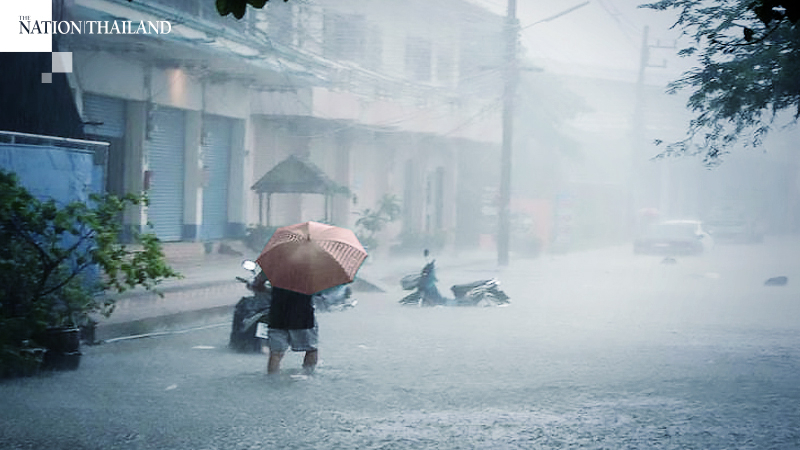
The strong northeast monsoon prevails over the Gulf and the South bringing isolated heavy to very heavy rain in the South, the Thailand Meteorological Department said on Tuesday.

People should beware of the severe conditions that may cause flash floods and water runoffs, the department warned.

Meanwhile a rather strong high-pressure system covers upper Thailand and the South China Sea, causing cool to cold weather and strong winds in upper Thailand.

Waves in the Gulf will likely rise about two metres high and above three metres high during thundershowers. All ships should proceed with caution and keep off thundershowers, while small boats should keep ashore until December 4, the department said.

The weather forecast for the next 24 hours:

North: Cool to cold weather with strong winds; minimum temperature 13-20 degrees, maximum 29-33°C; temperature on hilltops is likely to drop to 5-12°C.

Northeast: Cool to cold weather with strong winds and isolated light rain; minimum temperature 15-20°C, maximum 29-30°C; temperature on hilltops is likely to drop to 9-16°C.

Central: Cool weather with strong winds and isolated light rain; minimum temperature 21-22°C, maximum 31-33°C.

East: Partly cloudy with isolated light rain; minimum temperature 21-24°C, maximum 28-32°C; waves a metre high and 1-2 metres off shore.

South (east coast): Mostly cloudy with thundershowers in 60 per cent of the areas and isolated heavy to very heavy rain; minimum temperature 22-24°C, maximum 29-32°C; waves two metres high and over three metres during thundershowers.

South (west coast): Mostly cloudy with thundershowers in 40 per cent of the areas and isolated heavy rain; minimum temperature 22-24°C, maximum 30-32°C; waves 1-2 metres high and two metres during thundershowers.

Bangkok and surrounding areas: Partly cloudy with strong winds and isolated light rain; minimum temperature 23-24°C, maximum 31-34°C.

Cabinet mulls extra Bt28.7bn for rice farmers after price plummets #SootinClaimon.Com

#SootinClaimon.Com : ขอบคุณแหล่งข้อมูล : หนังสือพิมพ์ The Nation.

Cabinet mulls extra Bt28.7bn for rice farmers after price plummets (nationthailand.com)

Cabinet mulls extra Bt28.7bn for rice farmers after price plummets

NationalDec 01. 2020

By THE NATION

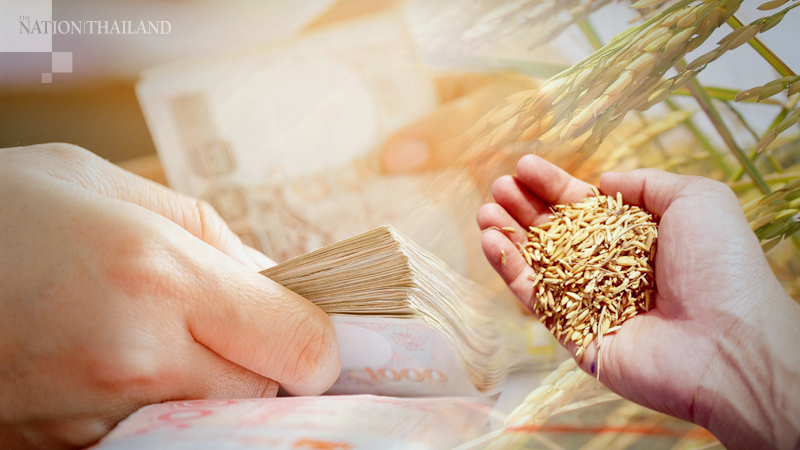
The National Rice Policy Committee on Monday approved raising the budget for the rice farmers’ income guarantee scheme by Bt28.711 billion, to Bt46.807 billion.

The budget will be used to help farmers at a time when the price of rice had dropped sharply, said government spokeswoman Ratchada Thanadirek.

The new budget will now be proposed to the Cabinet.

The programme and its financial details were prepared by the Commerce Ministry and Bank for Agriculture and Agricultural Cooperatives.

Meanwhile the Interior Ministry has been tasked with monitoring transparency of budget dispersal to farmers.

Sudarat quits opposition Pheu Thai Party #SootinClaimon.Com

#SootinClaimon.Com : ขอบคุณแหล่งข้อมูล : หนังสือพิมพ์ The Nation.

Sudarat quits opposition Pheu Thai Party (nationthailand.com)

Sudarat quits opposition Pheu Thai Party

NationalNov 30. 2020Sudarat KeyuraphanSudarat Keyuraphan 

By The Nation

Sudarat Keyuraphan reportedly quit Pheu Thai Party on Monday effective immediately.

In September she had given up her post as party chief strategist, and said she would continue pushing for charter amendments as its member.

New Zealand offers re-run of virtual education showcase for parents, students who missed first event #SootinClaimon.Com

#SootinClaimon.Com : ขอบคุณแหล่งข้อมูล : หนังสือพิมพ์ The Nation.

New Zealand offers re-run of virtual education showcase for parents, students who missed first event (nationthailand.com)

New Zealand offers re-run of virtual education showcase for parents, students who missed first event

NationalNov 30. 2020Chortip Pramoolpol, ENZ’s market manager for ThailandChortip Pramoolpol, ENZ’s market manager for Thailand 

By The Nation

The New Zealand Embassy’s Education New Zealand (ENZ) is re-running its virtual showcase, which ended on Saturday, to help parents further explore New Zealand’s education system and available scholarships.

The re-run, also titled New Zealand Virtual Showcase, offers Thai parents and students more time to explore international study options. New Zealand is known for its safe and welcoming society as well as a strong education system designed to prepare graduates in a rapidly changing world.

“Though the live [online] showcase ended on Saturday, the portal is still open for everyone to explore our education resources. If you missed out on any sessions at our live event, you can explore the showcase in our own time and catch-up on what you missed,” said Chortip Pramoolpol, ENZ’s market manager for Thailand.

“You can also learn more about our education providers, watch their videos, download brochures and scholarship programmes. Listen to the ‘Skills for the Future’ masterclass with Prof Guy Littlefair from Auckland University of Technology to gain an insight on how to be competitive in a rapidly changing digital world.”

The showcase will only be available until December 13, and viewers can enter the portal as many times as they like. To revisit the portal, visitors can either login using their existing login details or register to gain access at www.studyinnewzealand.govt.nz/th/nzfair/.

Chortip said last year, more than 3,600 Thai students were studying in New Zealand.

While the desirability of New Zealand as an education destination for Thai students has not diminished in the times of Covid, there is also a growing recognition and awareness in Thailand that New Zealand’s response to Covid-19 has been robust.

“We are conscious that we need to adjust strategies quickly to respond to fluid developments and a new reality of global border restrictions and other disruptions to international mobility,” added Chortip.

“We have therefore initiated many online activities including our education showcase, webinars and masterclasses to continue profiling New Zealand in this market. However, all these activities are intended for future planning purposes, not immediate travel. “We look forward to a time when we can again welcome new Thai students and visitors to our shores.”

One of the key highlights in the education showcase is the launch of a joint business foundation course between the University of Otago and Rajamangala University of Technology Thanyaburi to offer a hybrid programme whereby 30 per cent of the course will be physically taught at the Thai-New Zealand Centre in Thailand and 70 per cent online with academics from the University of Otago.