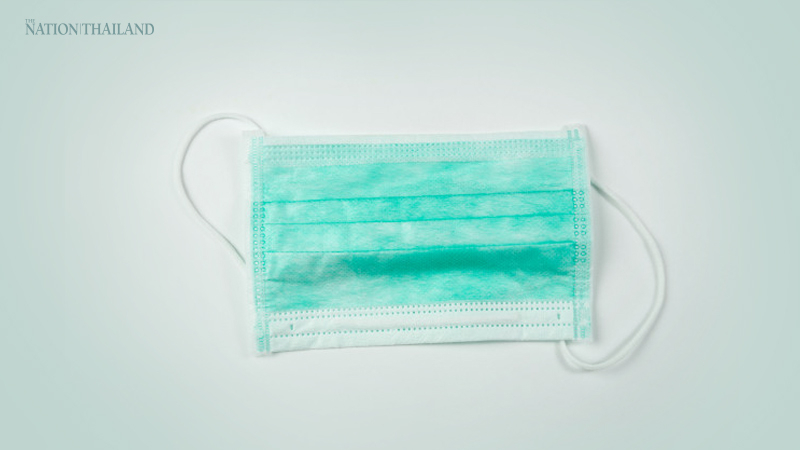
Phuket has been hit by a shortage of face masks after one local was diagnosed with Covid-19 in this new wave of infections.
Several social media users have posted complaints about the shortage and the fact that the price of masks has suddenly shot up.
On Thursday, the owner of a pharmacy in Muang district said many customers had showed up to purchase masks but he had none in stock.
“Suppliers are refusing to take new orders, saying all their stock in hand has already been bought up. They say they will be ready for new orders in January,” he said.
The Phuket Tourist Association said it has visited some six pharmacies in the province and none had masks in stock.
On Wednesday, Phuket governor Narong Woonsiew said this shortage of medical masks was a problem that had to be solved immediately. He said his office has received complaints on this issue and he has ordered an investigation.
A man who secretly managed to record video under women’s skirts has been arrested, admitting that his action was “the result of childhood trauma”.
A man who secretly managed to record video under women’s skirts has been arrested, admitting that his action was “the result of childhood trauma”.
On December 17, police began hunting a man who visited various universities and schools in Bangkok to take videos of female students’ underwear to publish on the Internet.
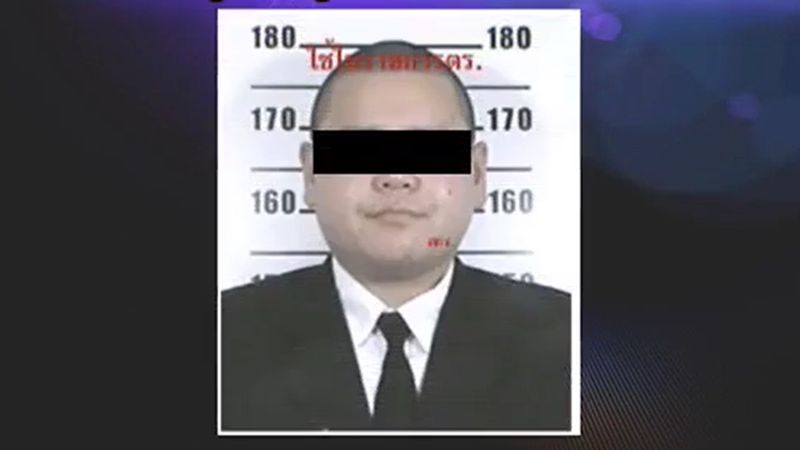
The man, identified as Pathompong, 28, allegedly recorded 1,000 videos and was eventually arrested on December 18.
He confessed that he took them from December 14 to 16 and then posted them on his Facebook page, which went on to receive as many as 10,000 views.
“Interested” individuals later resorted to sharing techniques via Telegram on how to go about filming women’s underwear in public.
Pathompong claimed women bullied him since he was a child and has a record of mental issues.
He will face charges of harassing underage girls, publishing obscene content, causing disturbance or bringing shame to others and violating the Computer Crimes Act.
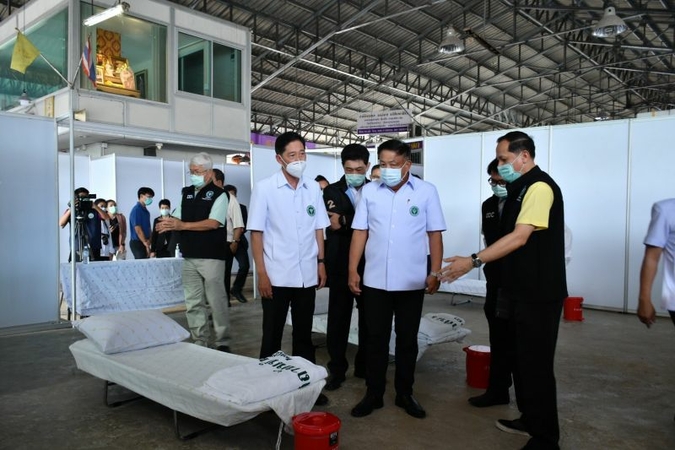
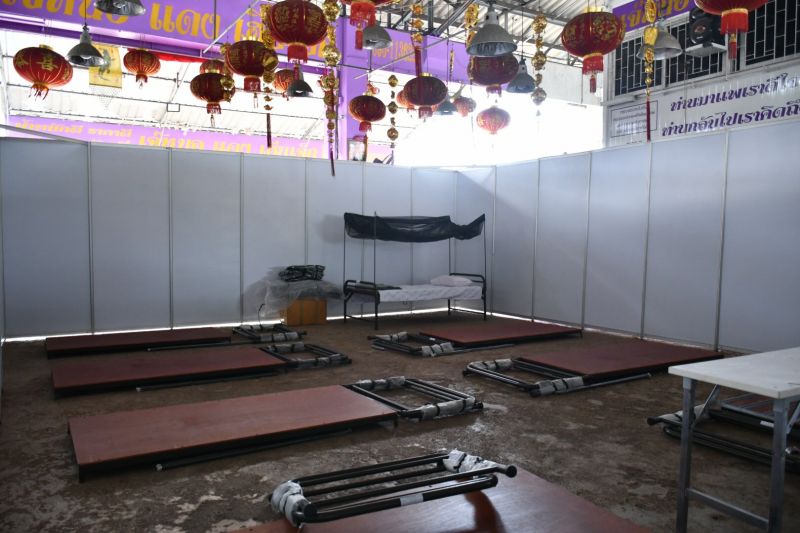
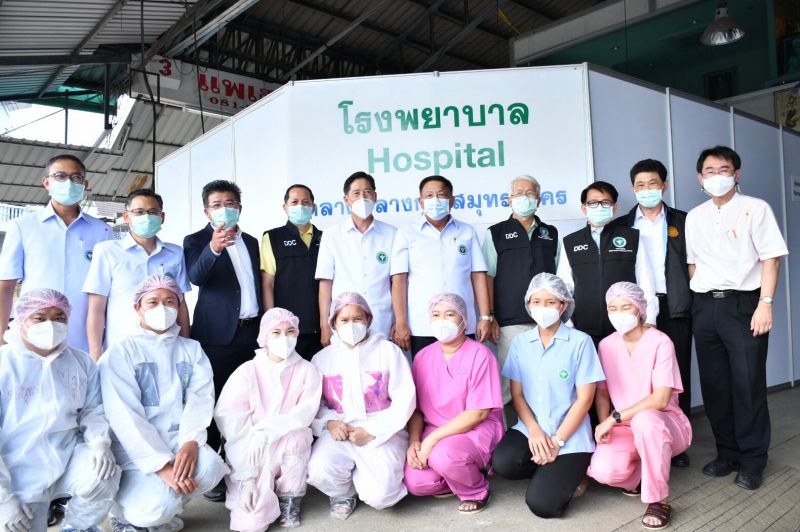
A field hospital in Samut Sakhon’s Central Shrimp Market is ready to treat migrant workers infected with Covid-19.
The field hospital was set up to take care of infected people with initial minor symptoms, or asymptomatic patients, and also provides treatment for common diseases, as well as imparts advice on family planning, birth control and mental health.
Those infected with Covid-19 won’t need to visit a full-fledged hospital because the field hospital has a regular team of doctors and nurses. But if a patient’s symptoms are severe, he/she will be referred to hospital.
The Bamrasnaradura Infectious Diseases Institute,The Department of Disease Control and the Department of Health Services Support helped design and are managing the engineering system, air filter and waste disposal system at the field hospital.
The hospital’s service area is divided into three zones – a red zone being the dormitory area, an orange zone being the waiting area for treatment and screening, and a green zone, which is an operation area.
The hospital is equipped with 30 beds and more are to be added. With support by the Army, at least 75 patients have been treated at this field hospital.
Public Health Ministry permanent secretary Dr Kiattiphum Wongrajit said the outbreak has now entered the second week.
The shrimp market is classified as a Cluster Quarantine area in order to prevent travel and more infections.
The field hospital also has a team of migrant workers health volunteers to help communicate and educate people about health at the accommodation. In addition, a Mental Health Crisis Assessment and Treatment Team has also been deployed.
Food and alcohol gel have been distributed to migrant workers.
“We have given them information [about Covid-19] and they clearly understand and are cooperating, abiding by good hygiene and social distancing. They are also helping monitor whether any workers try to flee and will report to officers before such people spread the risk,” Dr Kiattiphum said.
Udon Thani province has found its first Covid-19 case, a seafood vendor who travelled to Samut Sakhon province to buy produce.
An official announcement on Wednesday stated that the province has now heightened preventive measures after the 30-year-old man tested positive.
His wife and two sons have been quarantined at Udon Thani hospital and other relatives are also under 14-day quarantine.
He went with his wife to Samut Sakhon on December 10 and was tested for Covid-19 on December 22.
As many as 500-800 people who might have made contact with him and his family are being screened.
Two locations, including a market in Non Sung sub-district which he visited, were closed, while the schools his sons attended have also been shut until January 8.
The Thai Meteorological Department has warned 10 southern provinces to be cautious about heavy rain and high waves on Thursday and tomorrow, December 25.
A depression in the South China Sea is expected to move across to Thailand on Thursday, while a northeast monsoon is coming to the Gulf of Thailand, increasing rains in the South.
The 10 provinces are Chumphon, Surat Thani, Nakhon Si Thammarat, Phatthalung, Songkhla, Pattani, Yala, Narathiwat, Ranong and Phang Nga.
The rain can generate flash floods in the areas near the mountains and the rivers, the department said.
It warned people who live in those areas to be careful and monitor the situation via website www.tmd.go.th, or call hotline 1182.
Laos has temporarily banned the import of fresh and frozen seafood from Thailand after a new wave of Covid-19 infections erupted from Samut Sakhon’s seafood market.
Laos’s Industry and Commerce Ministry made the decision on Wednesday to prevent the spread of coronavirus in the country.
The new measure is temporary and will stay in effect until both countries can confirm the products are safe and coronavirus-free.
Laos has increased awareness of the Covid-19 situation in Thailand and prepared a host of quarantine sites since Tuesday.
The Thai currency is likely to move between 30.10 and 30.30 on Thursday, predicted Jitipol Puksamatanan, senior director of the chief investment office at SCB Securities.
On Wednesday night, financial markets fluctuated over the state of Brexit and after US President Donald Trump found fault with a fresh US stimulus package. However, the S&P and Stoxx 600 indexes rose by 0.07 and 0.98 per cent, respectively.
Meanwhile, there were 803,000 initial US jobless claims announced this week, better than some observers’ expectations. Also, durable goods orders increased by 0.9 per cent in November.
The US Ten-Year Treasury yield rose by 3 basis points to 0.95 per cent, while the dollar weakened by 0.4 per cent compared to other main currencies with high risk, such as the New Zealand and Australian dollars.
Jitipol said the baht has “almost not been affected” by the result of the Monetary Policy Committee meeting on Wednesday. However, Thailand’s Ten-Year Treasury yield was at 1.13 per cent, the lowest point since April, reflecting investors’ concern about a new wave of Covid-19 in the country, he added.
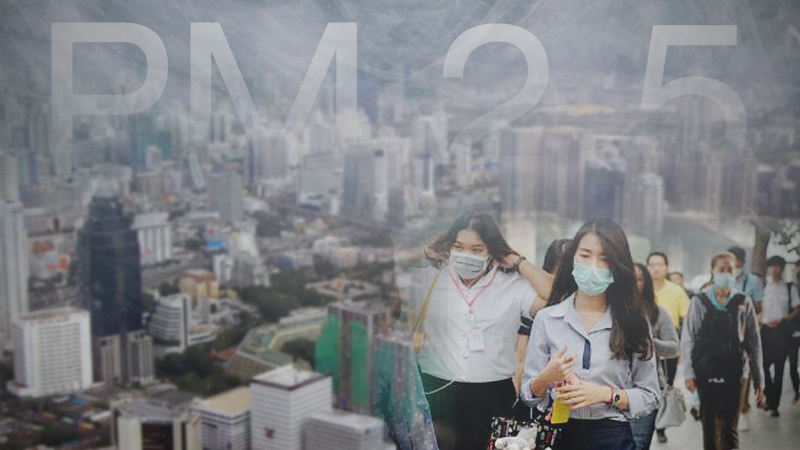
Air pollution in 14 areas around Bangkok and its vicinity once again hit dangerous levels on Thursday morning, with PM2.5 readings coming in at 34 to 57 micrograms per cubic metre (μg/m3), the Pollution Control Department reported.
Thailand’s standard for safe levels of PM2.5 (particles less than 2.5 micrometres in diameter) is 50 μg/m3.
A year-end review by Singapore-based Blackbox Research highlights 10 key trends that were fast-tracked by the pandemic and will define 2021 and beyond.
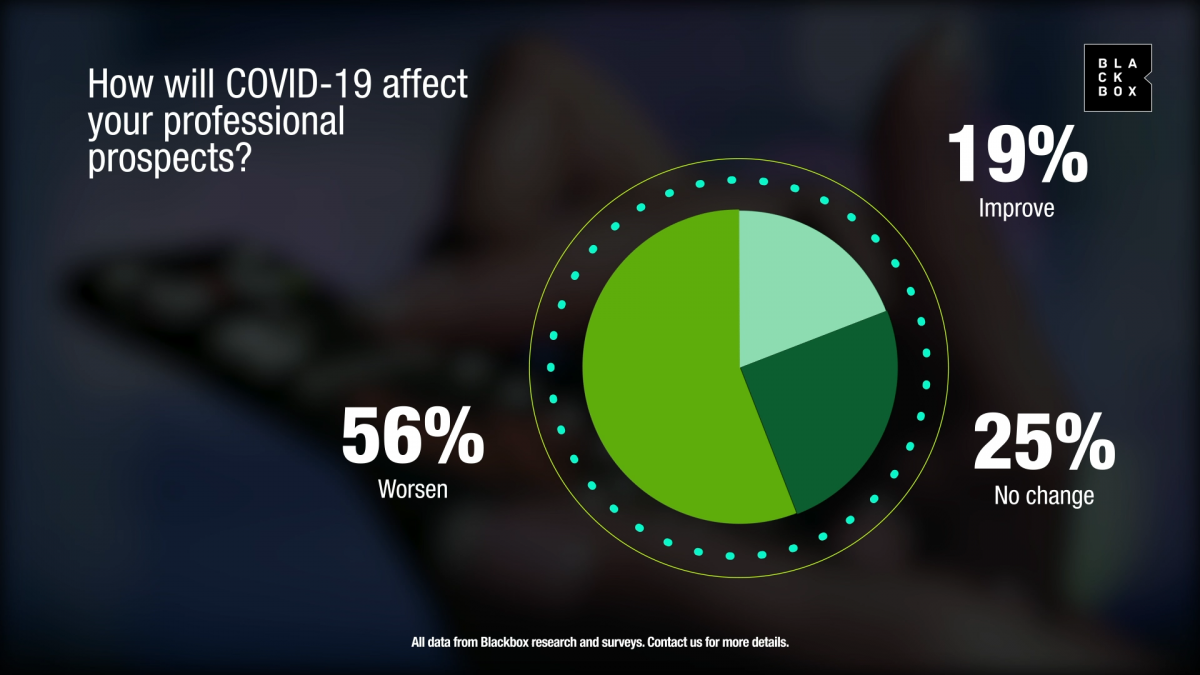
Across areas such as consumption, work, finance, society, and health, the review identifies a growing desire for ownership and control in these uncertain times.
Key trends include the decline of the public’s trust in institutions, new and diverse work dynamics, and the ineluctable digitalisation of financial services.
1. E-commerce exploded, but the experience falls short for new shoppers. Satisfaction levels were consistently low, calling e-commerce players to drastically improve user experiences.
2. Shopping is now “click-and-mortar”, as modern retail blurs the digital divide. Consumers are growing impervious to binary channel segmentations, making it less about where a purchase journey begins and more about what drives a purchasing decision.
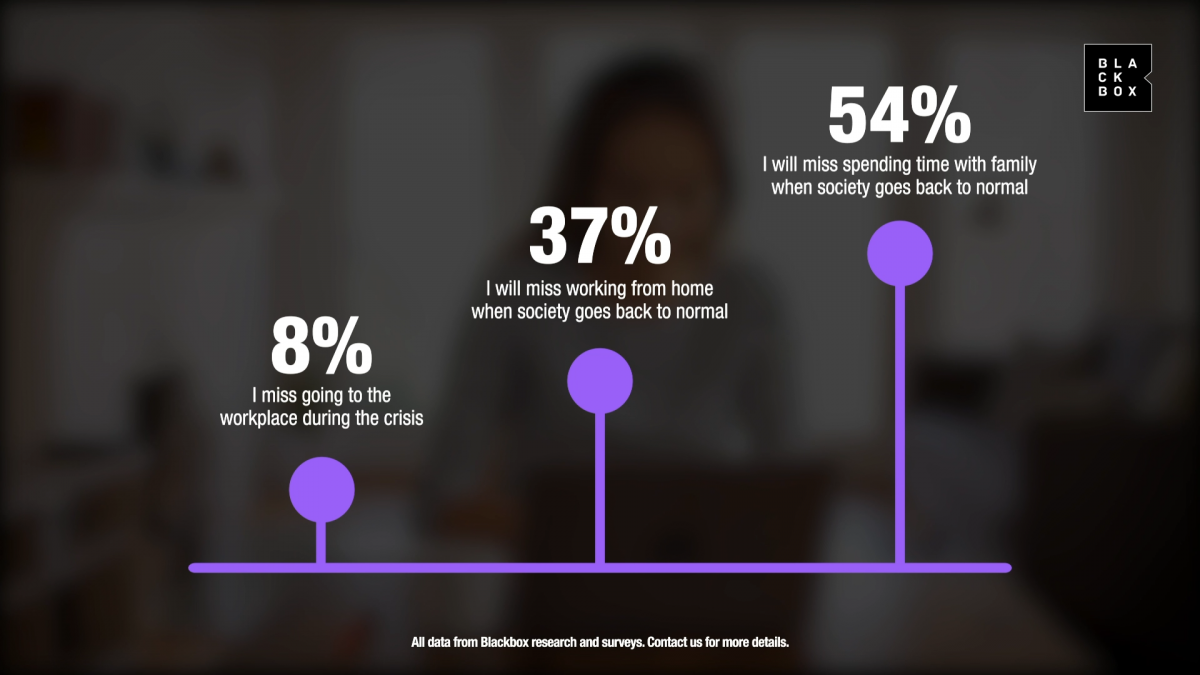
3. “Work from home” will become “work from anywhere”. Working from home has become a key business continuity mechanism, redefining notions of workspace, collaboration, and productivity.
4. Full-time work and career progression – what do they mean anymore? The pandemic is shifting labour dynamics in major ways, and that technology-driven innovation will play a major role in the future of workplace dynamics.
5. Neo-banking is now on the horizon, not beyond it. The pandemic took fintech start-ups from the fringes of finance to mainstream name recognition.
6. The financial advisor gets the app treatment. The pandemic has accelerated the rise of digital platforms for everything from financial advice to retirement planning.
7. Health and well-being get up close and personal. The lockdowns are opening people’s eyes to health tech, driving them to spend more money on health-related products and services.
8. Global anxiety hits the roof thanks to creeping germaphobia. The pandemic has turned many people into anxious germophobes – leading to record-breaking sales of cleaning and disinfecting products, as well as transforming the way we greet, mingle, and interact with one another.
9. Many large institutions failed the litmus test for leadership. The pandemic revealed the limitations of many respected institutions, while people valued essential workers and frontline officials who dealt with the pandemic up-close.
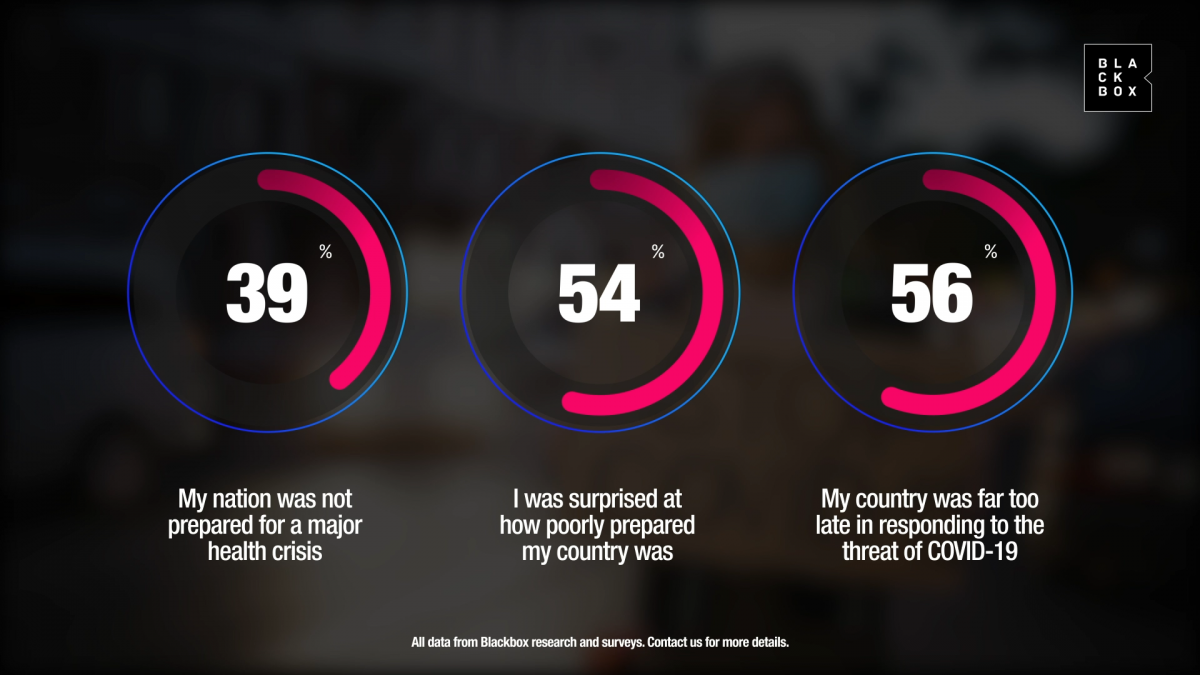
10. Rise of the Asian resilience model in crisis management. Asia-Pacific nations applauded their country’s handling of the crisis, while disappointment and resentment grew in Europe and the Americas.
David Black, founder and CEO of Blackbox Research, highlights the growing need for people to take greater ownership and control of everything from consumption, work, and finance to health and governance.
“The data shows that there is a marked desire for a greater sense of agency in these difficult times. People have changed the way they look after their own health, approach personal finance, navigate workplace dynamics, or even relate to governments and institutions. This has accelerated a lot of the technology, innovation, and mindset changes that we were not expecting to converge until a few years from now.”
THREE TRENDS TO NOTE IN 2021
Society: Public distrust in institutions will continue if they fail to act
The pandemic revealed the limitations of many respected institutions, from the World Health Organisation (WHO) to national governments and Fortune 500 companies. Most notably, data from Blackbox Research shows that 31 per cent of people felt that the WHO performed below expectations, and 36 per cent expressed the same sentiment towards the United Nations.
The data also reveals that people valued essential workers and frontline officials who dealt with the pandemic up-close – suggesting that organisations can overcome the trust gap by walking the talk, breaking away from superficial messaging, and by taking swift, tangible action.
Work: ‘Work from home’ to become ‘work from anywhere’
The lockdown has turned working from home from an occasional perk to a key business continuity mechanism – pushing businesses to redefine their notions of workspace, collaboration, and productivity. Data from Blackbox Research found that nine in 10 workers are not rushing to resume office life, having fully adapted to working remotely.
Beyond discussions on the new Zoom economy and how future home design will give rise to workspace planning, the rise of flexible work arrangements will have wider repercussions. Indeed, employers now have the ability to hire well beyond the cities in which they operate, making remote locations much more attractive than big cities where talent, taxes, and real estate are infamously expensive.
Finance: Future of banking is not just digital, it’s ‘digital-only’
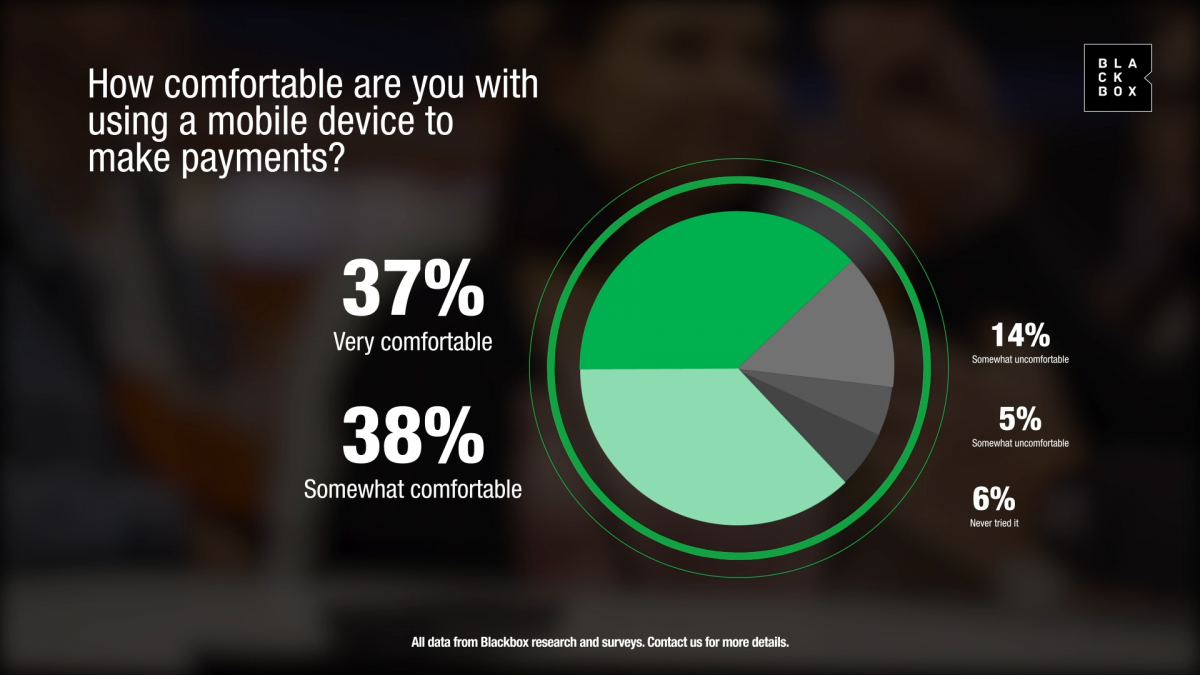
The pandemic has accelerated the rise of digital platforms for everything from financial advice to retirement planning – shaking up the advisory industry as a whole. Blackbox data reveals a 6 to 8 per cent growth in the use of digital financial services platforms, suggesting that people may be hedging against future crises by taking more control over their finances.
In the next few years, financial advisors will need to step up their game by offering tailored, user-friendly, and automated digital services that make them stand out in the new world of online advice.
“The pandemic’s most enduring impact will be its role as catalyst and accelerant,” says David Black. “As this year comes to a close, there is a sense of hope and opportunity – however tenuous – that comes with the dawning of 2021. It is up to us to figure out how we can build ourselves back up to not only survive, but thrive, in the new normal.”
“In order to emerge from the crisis stronger and more resilient, everyone – citizens, communities, businesses, and governments – needs to understand and anticipate the new dynamics that the pandemic has set in motion. We will explore this and other topics in our January webinar, which will cover what is to come for 2021 and how we can be prepared.”
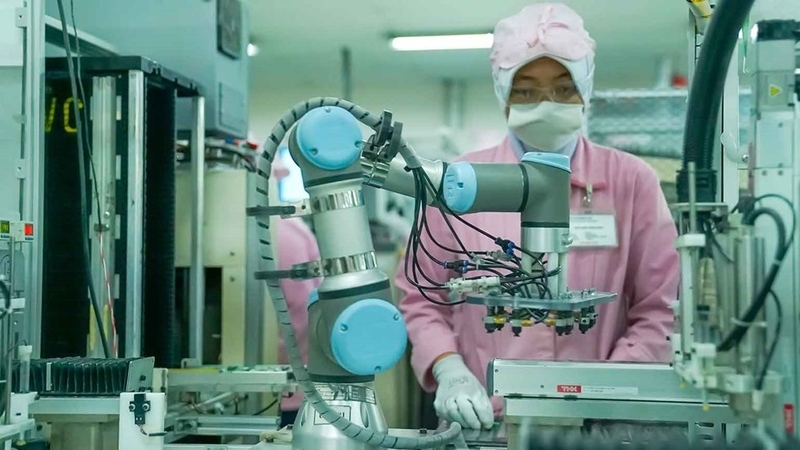
A Cabinet meeting on December 22 acknowledged the progress in the plan to develop robotics and automation across a variety of key sectors presented by the Industry Ministry, government deputy spokeswoman Ratchada Thanadirek said on Wednesday.
“The plan had been proposed by the Industry Ministry in early 2018. In the past three years there has been approximately Bt167 billion of investment in robotics and automation in key industries including food manufacturing, electrical and electronics, automotive and petrochemicals,” she said.
“Up to 92 business operators have invested Bt13.98 billion in upgrading their manufacturing facilities to use robots and automation systems.
“The added progress includes the establishment of a Sustainable Manufacturing Centre in the Eastern Economic Corridor and the Centre of Robotics Excellence [CoRE], with the aim to expand cooperation in robotics and automation among 15 related agencies including the Thai-German Institute, the Electrical and Electronics Institute, Chulalongkorn University and Chiang Mai University,” Ratchada said.
“The ministry has also provided training to more than 2,000 system integrators in robotics and automation industries, 68 of whom have passed the CoRE certification test, 1,395 system engineers and 70 start-up companies, and has developed 185 prototype robots for industrial use,” she reported.
“The Industry Ministry has also drafted a regulation to exempt tax on imported parts and equipment for robotics and automation to promote related industries in Thailand,” she said.
In the progress report, the Industry Ministry also stipulated policies in driving robotics and automation forward with a focus on integrating the domestic supply chain of related industries, developing a specialised automation system for SMEs, and increasing the number of system integrators at the regional level.
“The ministry predicts that robotics and automation technology will witness increased usage in this Covid-19 situation as it can substitute human labour, especially in public health and service sectors,” she added.





.png)



 SootinClaimon.Com