Zipmex Secures More than 300M THB Investment from Media Giants, Plan B and MACO #SootinClaimon.Com

#SootinClaimon.Com : ขอบคุณแหล่งข้อมูล : หนังสือพิมพ์ The Nation.

https://www.nationthailand.com/business/40004797

Zipmex Secures More than 300M THB Investment from Media Giants, Plan B and MACO


Zipmex was the first digital assets company to launch OOH ads last year in August and recently in 3D on Plan B’s innovative Out of Home Screen in the heart of Bangkok this past month. Zipmex also took over Bangkok and various provinces in Thailand with over 80 screens for its first online celebration of Zipmex Day.

Zipmex, Asia’s fastest growing digital asset platform, secures investment from media giants Plan B Media Public Company Limited (BKK: PLANB), one of the largest and most innovative media company in Thailand, which specializes in out-of-home media and engagement marketing, and Master Ad Public Company Limited (BKK: MACO), one of the media leaders for billboards and street furniture with an extensive media footprint across SEA.

Both investors are bullish on the digital asset revolution and have decisively backed Zipmex, the leading platform in Thailand. This marks the first time in Southeast Asia for listed multinational media companies to tap into the digital asset trend as it is set to transform the realm of financial landscape and lifestyle. Since its launch, Zipmex has recorded over 100 billion Thai Baht in trading volume over the last 12 months and scaled to over 300 people. Its exchange token, Zipmex Token (ZMT), has seen an explosion in growth from 15 baht to 180 baht at the all time high. This investment will provide a partnership for ZMT to be integrated into the advertising ecosystem across multiple platforms with the vision of bringing the highest utility token in Thailand. This is part of a large fundraising round of global high profile investors that will be announced in the coming weeks. The investment and partnership will help Zipmex reach millions of customers across Thailand and South East Asia effectively.

ADVERTISEMENTx

Zipmex Secures More than 300M THB Investment from Media Giants,  Plan B and MACOZipmex Secures More than 300M THB Investment from Media Giants, Plan B and MACO

Apart from having an exchange and brokerage license in Thailand Zipmex, is also legally compliant in Indonesia, Singapore, and Australia. The platform has expanded its offerings to include earn and spend products and has recently launched ZipWorld (redemption of lifestyle products and services using crypto) and will soon be launching Z-Launchpool (early access to new investment tokens).

Zipmex has also recently armed up its blockchain capabilities as it leads the investment round into Atato, the region’s leading blockchain technology company, that serves South-East Asia’s financial institutions in their build out blockchain-powered digital assets solutions. For media companies, blockchain technology has industry-wide applications which can transform the way content is created, consumed and protected. As an industry that places a premium on protecting and monetizing intellectual property, it does not come as a surprise that Plan B and MACO have joined forces to invest in the most regulatory compliant digital assets platform in the region. Plan B is the leading provider of out-of-home media advertising services with a variety of innovative platforms and strong engagement marketing business including sports marketing, artist management, and gaming in Thailand and Master Ad Public Company Limited (“MACO”) together have one of the most comprehensive coverage of over 2,000 venues. The investments from both media firms represent confidence and trust in digital assets and the growth that digital assets will have on society.

Given the excitement around the many ways that Zipmex is thinking about building out its ecosystem beyond finance, this fundraise definitely provides positive momentum for their businesses and their new investor’s industry as a whole. Zipmex also took over Bangkok and various provinces in Thailand with over 80 screens for its first TVC in celebration of Zipmex Day, while viewers of the recent Tokyo Olympics would have seen Zipmex across their screens at home.

As for Zipmex, this synergy is set to widen the ecosystem powered by its native token, ZMT (Zipmex Token). ZMT provides holders with increased yield opportunities with their earn program, ZipUp, which currently provides up to 7% APY on USDC (USD-denominated stablecoin). ZMT holders will also earn additional benefits within the Zipmex ecosystem, including reduced fees, upgraded payment rewards, allocation of new tokens being listed on the company’s exchange, in-game rewards, as well as access to its upcoming global NFT platform. Additionally, this collaboration allows Zipmex to increase its brand awareness to wider audiences and makes crypto more accessible for everyone. The exchange’s trading volume for the first half of the year for Zipmex was over THB 62 billion, whereby business from the Thai instance accounts for over half and is expected to grow. This represents a 2,540% increase from the same time last year. The exchange is set to grow by 310% in trading volume for the remainder of 2021.

Dr. Akalarp Yimwilai, Chief Executive Officer and Co-Founder of Zipmex Thailand, is convinced that 2021 is the year of digital assets. Last year, Zipmex successfully raised more than US$ 6 million in funding led by Jump Capital, an American investment firm with portfolio companies including TradingView, a cloud-based charting and social-networking software for both beginner and advanced active investment traders.

“Zipmex has taken on an important role in facilitating transactions via crypto as well as increasing the use cases and utilizing crypto in our daily lives. We continue to expand to other products in order to bridge the gap between finance and lifestyle. We are extremely honored in the trust Plan B, and MACO has placed such an important trust in us,” Dr. Akalarp Yimwilai, Co-Founder and CEO of Zipmex Thailand.

“We believe Zipmex has one of the most promising teams of talent in the industry. They have a clear vision to ignite this digital asset revolution and have strong execution capabilities demonstrated by a solid track record since their launch. We look forward to supporting their growth with our network of integrated media and content portfolio. The digital asset space provides many opportunities for us to strengthen our ecosystem in the engagement marketing space including sports, artist management, and gaming. We are confident that this investment and partnership will secure Plan B’s vision to be a leader in innovation.” Pinijsorn Luechaikajohnpan, PhD, Managing Director of Plan B Media Public Company Limited (“Plan B”)

Other large corporations have also seen potential in partnerships with Zipmex. Earlier in February this year, Zipmex announced its payment partnership with Major Cineplex and Rapidz as well as Renazzo Motor Co., Ltd (“Renazzo Motor”), the official Lamborghini distributor in Thailand and WasuthaGroup, the first distributor of Tesla and one of the most popular and well-recognized distributors of luxury cars. Real estate companies such as One.Six Development (an MQDC Joint Venture) and Chaopraya Mahanakorn Plc. (CMC Group) are also involved in the payment program called ZipSpend. More recently, The Brooker Group, a publicly listed financial consultancy and capital management company which acts as an independent advisor to leading private sector clients have also partnered with Zipmex and provide employees with the option to receive salary and bonuses in digital assets in the future.

Published : August 17, 2021

THAI Announces Six-Month Operational Performance Results for 2021 during its Business Rehabilitation #SootinClaimon.Com

#SootinClaimon.Com : ขอบคุณแหล่งข้อมูล : หนังสือพิมพ์ The Nation.

https://www.nationthailand.com/business/40004749

THAI Announces Six-Month Operational Performance Results for 2021 during its Business Rehabilitation


As of June 30, 2021, total assets of THAI and its subsidiaries were THB 168,582 million, a decrease of THB 40,715 million (19.5%) from December 31, 2020. Total liabilities were THB 285,066 million, a decrease by THB 52,896 million (15.7%) from December 31, 2020.

Thai Airways International Public Company Limited (THAI), announces consolidated financial statements for the first six months in 2021. THAI and its subsidiaries reported the operating loss of THB 14,335 million. The total revenue was 10,220 million, lower than last year’s THB 30,273 or 74.8%. A decrease in both passenger and cargo revenue was THB 30,486 million (84.2%) and a decrease of THB 1,417 million (35.5%) was from other services. Moreover, other incomes have increased to THB 1,630 million. Total expenses amounted to THB 24,555 million which was THB 34,246 million (58.2%) lower than the previous year, mainly due to the variable operating expenses. However, THAI and its subsidiaries had one-time transactions with net profit totalled THB 25,889 million consisting of profits following the Rehabilitation Plan such as profit from debt restructuring, sale of shares in its subsidiaries and adjustment of aircraft lease capital. Consequently, THAI and its subsidiaries reported THB 11,121 million of net profit. Profit attributable to owners of the parent company amounted to THB 11,125 million. Profit per share was THB 5.10.

As of June 30, 2021, total assets of THAI and its subsidiaries were THB 168,582 million, a decrease of THB 40,715 million (19.5%) from December 31, 2020. Total liabilities were THB 285,066 million, a decrease by THB 52,896 million (15.7%) from December 31, 2020. The shareholders’ equity of THAI and its subsidiaries amounted to THB -116,484 million, a negative decrease from December 31, 2020, amounting to THB 12,181 million.

Under the Business Rehabilitation plan, THAI is operating to resolve and improve its business structure as well as to generate revenue from non-air businesses and continually reduce expenses such as restructuring and downsizing the organization and cutting down operating costs in other areas. THAI aims to maintain financial liquidity and seek for new loans until the airline industry situation resumes to its normal operation.

Published : August 16, 2021

China okays longan shipments from 56 exporters #SootinClaimon.Com

#SootinClaimon.Com : ขอบคุณแหล่งข้อมูล : หนังสือพิมพ์ The Nation.

https://www.nationthailand.com/business/40004842

China okays longan shipments from 56 exporters


China has agreed to buy longan from 56 Thai exporters provided they strictly follow set procedures of cleaning the fruit.

The country had initially banned longan imports from 75 Thai exporters because the fruit was found covered in mealybugs. Of the exporters, 66 had been banned in November last year and nine in March this year.

Deputy Agriculture and Cooperatives Minister Mananya Thaiset thanked China for the decision and hoped Thai exporters will improve their procedures in line with China’s requirements.

ADVERTISEMENTx

China okays longan shipments from 56 exportersChina okays longan shipments from 56 exporters“The Department of Agriculture will ensure exporters follow the measures set by China to prevent a recurrence of these problems in the future,” she said.

Published : August 18, 2021

By : The Nation

Rise in Covid-19 cases, anti-govt protests to pressure SET Index #SootinClaimon.Com

#SootinClaimon.Com : ขอบคุณแหล่งข้อมูล : หนังสือพิมพ์ The Nation.

https://www.nationthailand.com/business/40004837

Rise in Covid-19 cases, anti-govt protests to pressure SET Index


The Stock Exchange of Thailand (SET) Index rose by 6.25 points or 0.40 per cent to 1,550.47 on Wednesday morning.

Krungsri Securities forecast the day’s index would fluctuate between 1,535 and 1,550 points amid signs of a technical rebound and mass buy-ups of shares that gained positive sentiment.

However, it said the index would be under pressure from a rise in Covid-19 cases both in Thailand and abroad as well as ongoing anti-government protests in the country.

ADVERTISEMENTx

It recommended selective buying of the following companies’ shares as an investment strategy:

▪︎ Hana, KCE, TU, CPF, GFPT, Asian, EPG and NER, which benefit from a weakening baht.

▪︎ PSL and TTA, which would benefit from a rise in the freight rate.

▪︎ BCH, CHG, BDMS, Advanc, Intuch, BGrim, GPSC and CKP, which are able to escape the impact from market volatility.

The SET Index closed at 1,544.22 on Tuesday, up 12.98 points or 0.85 per cent. Transactions totalled THB83.14 billion with an index high of 1,545.95 and a low of 1,533.32.

Published : August 18, 2021

By : The Nation

Gold price dips in opening trade #SootinClaimon.Com

#SootinClaimon.Com : ขอบคุณแหล่งข้อมูล : หนังสือพิมพ์ The Nation.

https://www.nationthailand.com/business/40004840

Gold price dips in opening trade


The price of gold in Thailand dropped by THB150 in morning trade on Wednesday.

AGold Traders Association report at 9.29am showed the buying price of a gold bar was THB28,000 per baht weight and selling price THB28,100, while gold ornaments cost THB27,500.24 and THB28,600, respectively.


At close on Tuesday, the buying price of a gold bar was THB28,150 per baht weight and selling price THB28,250, while gold ornaments cost THB27,636.68 and THB28,750, respectively.


The spot gold price on Wednesday morning was moving around US$1,789 (THB59,323) per ounce after Comex gold at close on Tuesday dropped by $2 to $1,788.80 per ounce amid pressure from appreciation of the US dollar and sales of the precious metal as a safe-haven asset after US industrial production numbers showed strong growth in July.

ADVERTISEMENTx

The Hong Kong gold price meanwhile dropped by HK$50 to $16,600 (THB70,685) per tael, the Chinese Gold and Silver Exchange Society reported.

Published : August 18, 2021

By : The Nation

Baht likely to weaken amid Covid-19 crisis, rising dollar: market strategist #SootinClaimon.Com

#SootinClaimon.Com : ขอบคุณแหล่งข้อมูล : หนังสือพิมพ์ The Nation.

https://www.nationthailand.com/business/40004833

Baht likely to weaken amid Covid-19 crisis, rising dollar: market strategist


The baht opened at 33.36 to the US dollar on Wednesday, weakening from Tuesday’s closing rate of 33.27.

The Thai currency is likely to move between 33.25 and 33.40 during the day, Krungthai Bank market strategist Poon Panichpibool said.

He said the baht was likely to fluctuate and weaken due to the Covid-19 crisis and the rising dollar.

He expected the US currency to receive support in the short term from demand for safe-haven assets due to the Covid-19 situation worldwide. But this would happen only if the situation in the US worsens.

A factor that could affect support for the dollar is the Federal Reserve’s decision to reduce quantitative easing this year, Poon pointed out.

ADVERTISEMENTx

Poon said the baht’s resistance level would be 33.50 to the dollar, as exporters continued to sell the US currency.

If the situation in Thailand gets worse, along with the strengthening of the dollar, the baht could weaken past this resistance level, Poon added.

Published : August 18, 2021

By : The Nation

After a year without rowdy tourists, European cities want to keep it that way #SootinClaimon.Com

#SootinClaimon.Com : ขอบคุณแหล่งข้อมูล : หนังสือพิมพ์ The Nation.

https://www.nationthailand.com/business/40004813

After a year without rowdy tourists, European cities want to keep it that way

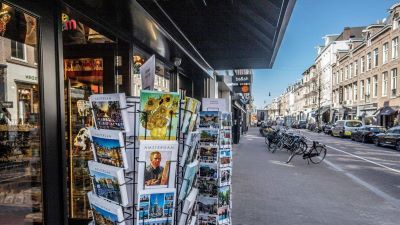
On a warm Friday night in July, the sun seemed to linger behind Amsterdams low, 16th century skyline. In the red light district, the crush of tourists that was common before the pandemic had long since vanished, making it easy for a delivery worker to cycle past a handful of gawkers around the old towns notorious storefronts.

While six German men in matching T-shirts ignored signs warning of a €95 ($112) fine as they swilled beers on a nearby footbridge, they were the exception. Mostly, only small groups of sedate strollers were about on this midsummer evening.

Centuries before its more lurid attractions took hold, Amsterdam was already a tourist draw. As far back as 1345, when a communion wafer at a local church apparently proved indestructible, pilgrims flocked to see the miracle host. In modern times, decidedly less spiritual activities have drawn millions to the city’s quaint, canal-lined quarters. And the noise, garbage and violence followed.

The city was already scrambling to find ways to restrain the tourist trade before the coronavirus struck. Hefty fines for public drinking, tight restrictions on short-term rentals and outright bans on certain types of shops were implemented. But more visitors kept coming. By 2019, their numbers approached 9 million-more than 10 per resident.

Then it all stopped. For months, tourists where nowhere to be found as borders were sealed tight. Later, as infection waves receded, only a trickle returned. Overall, Amsterdam’s commercial establishments have seen almost 25% fewer visitors since Covid-19 first arrived.

ADVERTISEMENTx

After a year without rowdy tourists, European cities want to keep it that wayAfter a year without rowdy tourists, European cities want to keep it that way

Even in the red light district, the lack of drunken revelers remains apparent despite many restrictions having been lifted. ​​​Locals wander wide-eyed through a part of town they rarely visit, amazed at its architectural beauty. Among city officials, this tiny silver lining to a global health catastrophe planted a seed. While Amsterdam arguably needs tourism to survive, maybe this once-in-a-century pandemic could be used to remake how the city embraces it.

As it turned out, local officials in other tourist hotspots across Europe had the same idea.

Cities across the continent want to mold visits into shapes less onerous for residents, and perhaps more lucrative for business. Optimally, a virtuous circle can be created where loud partiers are supplanted by museum-goers with more money to spend-or so the thinking goes.

Call it curated tourism.

ADVERTISEMENT

“We met with representatives from Amsterdam, Barcelona and Florence during the pandemic, and all of us were thinking the same thing,” said Hana Třeštíková, Prague’s councilor of tourism. “Before Covid, over-tourism had become almost unbearable, and Covid gave a pause to try and make some changes in what our cities represent, how we promote ourselves and how we must focus on quality of visits-not quantity.”

Not so long ago, these cities marketed themselves to everyone. But Amsterdam’s widely available cannabis and legal prostitution, Barcelona’s urban beaches and Prague’s famous beer halls increasingly attracted tourists who brought what Geerte Udo, director of amsterdam&partners, diplomatically called “negative effects.”

When much of Europe shut down last year, the medieval center of Amsterdam-a UNESCO World Heritage Site-took on “a breathtaking beauty,” said Udo, whose nonprofit serves as a civic booster. The emptiness also revealed how few locals actually live there, she said. “You feel it’s not more than a theater backdrop.”

But the pandemic also made clear how important tourist euros are to the livelihood of these cities. About 13% of Barcelona’s economy and 11% of Amsterdam’s jobs can be tied to visitors.

Lénia Marques, assistant professor of cultural organization and management at Erasmus University in Rotterdam, said cities are thinking, “‘who is the tourist we’re inviting?’ Do we want this mass needing more hotels, or do we seek tourists more interested in our culture, a tourist who will appreciate more of what we have-and be able to spend more?'”

ADVERTISEMENT

In recent years, Prague’s tourist problem started to resemble Amsterdam’s, Třeštíková said. The Czech capital was getting 8 million visitors a year, almost doubling between 2012 and 2019. And like Amsterdam, most headed to the same neighborhoods, she said. In Prague’s case, they clog the Old Town Square and Charles Bridge.

“The city center is not a residential locality anymore, Třeštíková said. “There are not many apartments, and those are largely occupied by expats or converted to hotels and short-term rentals. We need to focus on what residents need and show a city that’s not a film set but alive with people from Prague.”

But reshaping a city’s tourist trade is harder than just changing marketing firms. Třeštíková said the biggest factors behind “low-quality” visits aren’t in the city’s control. The cost of tickets on budget airlines, the number of Airbnb units and even the price of beer can only be changed at the national level, she said.

A spokesperson for the Czech Ministry of Regional Development acknowledged that taxes on alcohol and air travel are determined by Parliament, but noted Prague’s city council can submit legislative proposals. A bill from the city that would provide municipalities with more power to regulate short-term rentals is currently under consideration, he said.

Situated in the most-visited part of the second most-visited country in the world (after France), Barcelona faces a unique challenge when it comes to transforming tourism. While the Spanish city’s “negative effects” are less extreme than those endured by Amsterdam or Prague, Xavier Marcé, councilor for tourism and creative industries, said he wants to attract tourists interested in more than just its seaside location.

“When I visit New York, I am interested in what New Yorkers do,” he said. “It’s much better to have a tourist model linked to culture or science, because it means that there is a connection with the resident.”

Toward this end, Barcelona designed a network of bus stops to spread visitors more evenly around the city while also freezing new licenses for short-term rentals-the abuse of which has been a key cause of over-tourism, Marcé said.

Airbnb advertises “apartments, but they don’t check the legal status of those apartments,” Marcé said. “It’s when we let them know that the apartment is illegal when they remove it immediately.” Andreu Castellano, an Airbnb spokesperson, said the company has worked with Barcelona officials since 2018 to drop operators “who don’t respect the rules.” He added that “more than 7,000 bad actors have been removed as a result.”

In Italy, some Venetians want to do the opposite of what Barcelona is trying. “Spread out tourism? That’s worse,” said Melissa Conn, director of the nonprofit Save Venice. Conn said she prefers visitors stick to Piazza San Marco so residents can have the rest of the city to themselves. Save Venice Vice President Alberto Nardi agreed, but warned that tourism is critical to the city’s survival. The owner of a jewelry shop on the piazza, Nardi said Venice’s population has been declining, its cost of living rising and non-tourism jobs vanishing.

Venice must “develop businesses that are different from tourism,” Nardi said.

For cities looking to change who comes calling, any effort requires an advertising campaign. Amsterdam has launched such an effort, spending €160,000 to “stimulate desired behavior” by tourists-namely by attracting different ones. Deputy Mayor for Economic Affairs Victor Everhardt announced the initiative in June, which includes ads geared to urban residents in nearby countries such as France, Belgium and the U.K.

“We’re focusing on people who have interest in culture in the broadest sense of the word,” he said. “We try to persuade them to visit all these other beautiful parts of the city.”

Even before Covid, Prague officials hired an agency that sought to persuade tourists “to come for more than two nights.” During the short-lived summer 2020 reopening, the city introduced “Prague Unlocked,” a campaign aimed at a Czech audience, since foreign travelers were still rare. It was a success. Usually just 15% of Prague’s tourists are domestic (compared with 20% in Vienna and almost 50% in Paris). But in 2020, the number of Czech visitors rose by 16%, with many staying in three- and four-star hotels, Třeštíková said.

Then there’s the other side of the equation. Udo of amsterdam&partners said her group is lobbying the Dutch government to impose a minimum price on plane tickets, while others want to ban Airbnb from the city altogether. Barcelona last month instituted a new tax on stays in tourist establishments that goes to the municipal government. It could raise as much as €16.5 million annually with the revenue used to promote less-visited neighborhoods, such as Poblenou and Gràcia.

Technology is also being leveraged to redirect tourist flows. “Amsterdam works with phone companies to know how many people are in certain areas, then they can take measures to stop more people coming in,” said Marques of Erasmus University. As areas become too crowded, visitors will receive a text message with an offer for an attraction in a different part of town. If things get really bad, stanchions will be erected to stop more people from entering and overcrowded area, she said.

But any plan that risks cutting tourist dollars-even for a short time-is likely to run into trouble with businesses already deeply hurt by the pandemic. For curated tourism to have a chance, said Barcelona’s Marcé, a city’s hospitality sector must be on board.

“Barcelona’s hospitality sector is very strong,” he said. “You can’t suddenly say there will be half as many tourists.”

Published : August 18, 2021

By : Syndication Washington Post, Bloomberg · Paul Tullis

Yuan global use faces test as Xi reforms rattle markets #SootinClaimon.Com

#SootinClaimon.Com : ขอบคุณแหล่งข้อมูล : หนังสือพิมพ์ The Nation.

https://www.nationthailand.com/business/40004812

Yuan global use faces test as Xi reforms rattle markets


The Chinese yuan has been making inroads in the world of cross-border payments in recent years, but a pair of data points due this week will reveal whether the countrys sudden industry crackdowns have dented international trust in the currency.

The Society for Worldwide Interbank Financial Telecommunication, also known as Swift, and China’s foreign-exchange regulator will both announce figures this week that together paint a picture of the yuan’s role in international trade and investment. Previous data through June showed a steady increase in its use but that was before a regulatory crackdown escalated in July.

The authorities scaled up their anti-monopoly attacks against the nation’s largest technology companies, banned profits in the after-school tutoring industry, and launched a critique of online gaming. The unexpected onslaught pummeled stocks and bonds, and fueled concern global investors will trim back yuan assets in their portfolios and step back from adopting the use of yuan in international trade.

“The outflows last month could have dented renminbi usage,” said Xing Zhaopeng, senior China strategist at Australia & New Zealand Banking Group Ltd., using the official name for the yuan. At the same time, “the renminbi’s share in global payments should still reach a new high before year-end as index inclusion brings new inflows and China adopts more renminbi usage in trade,” he said.

ADVERTISEMENTx

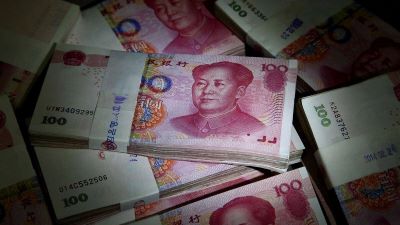
The share of yuan payments via Swift increased to 2.46% in June, just under the peak reached in March that was the highest level since a shock devaluation in August 2015. The percentage of cross-border transactions that were conducted in the currency increased to 42.3% in the same month, close to January’s record high of 43.8%, according to Bloomberg calculations based on data from the State Administration of Foreign Exchange.

Since the devaluation, China has since worked to revive the yuan’s popularity, urging greater use of the currency in trade and easing exchange-rate controls and intervention. A rapid flood of capital flowing into its markets has helped too. The yuan has advanced 6.9% over the past 12 months, the third-best performing major currencies tracked by Bloomberg, trailing only the South African rand and the Mexican peso.

Global funds boosted holdings of Chinese government bonds to a record in July despite that month’s market turmoil, and inflows are expected to continue as some of the securities will be included in FTSE Russell’s flagship global index this October. About 30% of central banks are planning to increase exposure to the yuan in the next 12 to 24 months, three times the proportion reported last year, according to a survey by Official Monetary and Financial Institutions Forum, a London-based think tank.

“Although China’s crackdown may not be over, global demand for its Treasurys may be intact,” said Stephen Chiu, Asia currency and rates strategist at Bloomberg Intelligence. “The allure of China’s Treasuries may not be hurt by such local, idiosyncratic events given their relatively high yields compared to the bonds of other major governments.”

Proof of the yuan’s increasing adoption is emerging across a broad swath of industries, notably commodities.

While the dollar remains the key currency for the trade of raw materials, more firms are turning to the yuan to cater to clients based in China, which is the world’s largest importer of commodities. Rio Tinto, the world’s biggest iron-ore producer, says it has conducted 12 seaborne transactions in yuan within the past two years. Vale SA, the second-biggest miner, conducts spot sales at Chinese ports in the domestic currency.

International foreign-exchange services firm Ebury says yuan use is rising across its client base. Payments into China using the currency increased by 20% in the past year, Sydney-based corporate dealer Patrick Idquival said. The shift has been so pronounced the company set up a desk for “renminbi relations.”

Though yuan internationalization has been growing, there’s a long way to go as the currency’s share of global payments via Swift and central bank reserves still pales in comparison to the greenback.

“The improvements in secondary liquidity for both the yuan and Chinese securities including bonds and equities have made it a much better investment currency,” said Becky Liu, head of China macro strategy at Standard Chartered in Hong Kong. “We need more breakthrough of renminbi-denominated pricing of commodities in the next stage.”

Published : August 18, 2021

By : Syndication Washington Post, Bloomberg

Microsoft invests in Rubrik, partners to protect customers from ransomware #SootinClaimon.Com

#SootinClaimon.Com : ขอบคุณแหล่งข้อมูล : หนังสือพิมพ์ The Nation.

https://www.nationthailand.com/business/40004811

Microsoft invests in Rubrik, partners to protect customers from ransomware


Microsoft is investing in software startup Rubrik Inc. and the two companies will combine on products that will help customers hit by ransomware recover their critical data without paying hackers.

The companies declined to specify the size of the investment. The funding totaled in the low tens of millions and valued Rubrik at about $4 billion, according to a person familiar with the matter, who asked not to be identified discussing private terms. Rubrik was started with the idea of modernizing the market for data-backup software, taking on a previous generation of vendors like EMC, now part of Dell Technologies, and Veritas, now owned by the Carlyle Group.

The two companies will jointly sell software based on Microsoft’s Azure cloud to prevent, find and recover from ransomware attacks. The products also make sure backup copies of customer data and cloud software haven’t been compromised by the hackers, said Rubrik Chief Executive Officer and Co-Founder Bipul Sinha. The companies currently share 2,000 customers.

“When an attacker tells you they have control to the keys to your data and you can’t get it back without paying a ransom, this allows us to have an alternative source for that data in real time to be able to bring that company back to operational control,” Tyler Bryson, a Microsoft vice president, said in an interview. “There’s a lot of backup solutions out there, but even those are vulnerable to having been compromised. If you didn’t design with the modern cloud architecture in mind, you may find you’ve just recovered to something already compromised.”

ADVERTISEMENTx

A spate of damaging ransomware attacks have occurred this year in which a hacker takes over networks and demands payment in order for a company or government agency to regain its data and control of its systems. In July, Miami-based Kaseya Ltd. was targeted. Because Kaseya provides software to managed service providers, who in turn offer information technology services to small- and medium-sized companies, the attackers were able to spread the infection to 1,500 businesses. The notorious ransomware gang REvil claimed credit and asked for $70 million to unlock the computers it infected. The attack followed others against Colonial Pipeline Co. and meatpacker JBS.

Ransomware attacks have accelerated during the pandemic as more companies use the cloud and their own corporate networks to deal with workforces split between home and an office, Sinha said. Microsoft and Rubrik have been working on combined products for a few years, but the need has become more critical.

“If somebody makes a mistake like clicking on an offer for a free cruise and ransomware gets in, we have the full assessment and mitigation solution,” he said. “What we are saying is you don’t have to pay the bad guys.”

Rubrik, founded in 2014, has raised a total of $553 million. The company’s last funding round was in 2019 at a valuation of $3.3 billion. Among the early investors was Microsoft board member and former chairman John Thompson. Thompson is also a Rubrik director.

Published : August 18, 2021

By : Syndication Washington Post, Bloomberg · Dina Bass

China port congestion worsens as Ningbo shuts for seventh day #SootinClaimon.Com

#SootinClaimon.Com : ขอบคุณแหล่งข้อมูล : หนังสือพิมพ์ The Nation.

https://www.nationthailand.com/business/40004809

China port congestion worsens as Ningbo shuts for seventh day


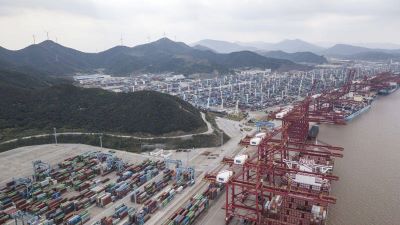
The partial closure of the worlds third-busiest container port is worsening congestion at other major Chinese ports, as ships divert away from Ningbo amid uncertainty over how long virus control measures in the city will last.

In nearby Shanghai and in Hong Kong, congestion is once again increasing after dropping due to the reopening of Yantian port in Shenzhen, which shut in May for a seperate outbreak. The number of container ships anchored off Xiamen on China’s southeast coast rose to 24 from 6 at the start of the month, according to shipping data compiled by Bloomberg.

The Meishan terminal at Ningbo port was shut last week after a dock worker became infected with the delta variant of Covid-19. The terminal accounts for about a quarter of the port’s capacity, and it was still closed Tuesday, according to a worker in the press office, who declined to give their name or any other information.

The world’s biggest shipping lines including AP Moller-Maersk and CMA CGM are skipping Ningbo port after the closure, according to Simon Heaney, senior manager of container research at Drewry Shipping Consultants Ltd. The companies prefer to divert shipments to other ports rather than wait outside Ningbo for an unknown length of time while the Covid-19 outbreak continues, he said.

Some other ships are willing to wait, with 141 ships at a shared anchorage for the Shanghai and Ningbo ports Tuesday, 60 more than the median number from April to August.

“We hear the backlog is getting bigger and the congestion is getting worse,” said Dawn Tiura, CEO of logistics industry association Sourcing Industry Group. “The disruption across ports is absolutely related. If you are buying goods that originate or move through China, you need to increase lead times or find another source of supply.”

The shipping industry has been plagued by disruptions this year that have created delays in global shipping chains and driven freight rates to record highs. Snarls have ranged from a mega-ship stuck in the Suez Canal in March to virus outbreaks in Southeast Asia and China reducing productivity at ports.

The backlog has stretched across the Pacific Ocean to Long Beach port in Los Angeles, where more than 30 ships were waiting to get into port to offload, Bloomberg’s data shows. Elsewhere in Southeast Asia, anchored ships off Vietnam’s two largest ports rose to six above the median.

“Most ports are already experiencing congestion or delays, so any additional and uncatered for volumes will heap on more pressure,” said Drewry’s Heaney.

Published : August 18, 2021

By : Syndication Washington Post, Bloomberg · Kevin Varley, Ann Koh