Malaysia opposition hails good beginning with new premier #SootinClaimon.Com

#SootinClaimon.Com : ขอบคุณแหล่งข้อมูล : หนังสือพิมพ์ The Nation.

https://www.nationthailand.com/international/40005276

Malaysia opposition hails good beginning with new premier


Malaysia Prime Minister Ismail Sabri Yaakobs meeting with opposition leaders on Wednesday left Anwar Ibrahim positive about working with the new government to heal the nation thats seen change of three administrations since 2018.
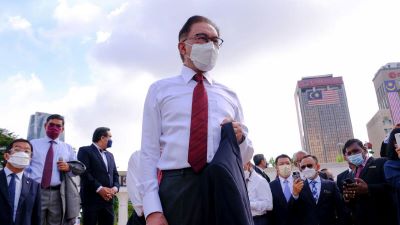
The meeting, which lasted over an hour at the premier’s office, was focused on finding common ground to best handle the Covid crisis, save lives and revive the economy, according to a joint statement signed by Ismail and the three leaders of the opposition Pakatan Harapan coalition Anwar, Lim Guan Eng and Mohamad Sabu.

“This was a good beginning for us to present more effective ways to manage Covid, and pro-people programs focused toward the problems of the poor and unemployed,” Anwar told reporters in Putrajaya after the meeting.

“If the situation is like this and there are pro-people programs, we will not complicate matters,” Anwar said when asked what position Pakatan Harapan would take should a confidence vote be tabled in parliament.

ADVERTISEMENTx

Malaysia’s king on Friday named Ismail as the country’s third prime minister in just 18 months, after determining that he had the support of 114 of the nation’s 220 lawmakers. The slim majority may be put to the test once parliament reconvenes next month.

The meeting suggests Malaysia may see some semblance of political stability return. The main stocks index, which touched a nine-month low on Aug. 4, capped its biggest two-gain since November on Wednesday.

The leaders came to an agreement on strengthening the role of parliament as an institution that provides checks and balances to the executive, according to the joint statement from the premier and opposition leaders. The four also agreed on the importance of the judiciary’s independence, institutional reform, and good governance.

Ismail’s appointment was a blow for Anwar, who was also a frontrunner for the top job. He had a deal to succeed Mahathir Mohamad as prime minister following a surprise 2018 election win by what was once the opposition. But that never happened, with Mahathir’s resignation in early 2020 kicking off instability that has gripped the country ever since.

Anwar said that he thanked Ismail for meeting them, given the hostile stance Ismail’s party held toward the opposition leader and Lim’s Democratic Action Party. “He replied that it was done in the spirit of the king’s decree that we work together,” said Anwar.

Ismail was sworn into office Saturday, marking the United Malays National Organisation’s return to the country’s top post after just three years on the periphery.

UMNO ruled Malaysia since independence from Britain in 1957 before it was ousted in 2018 in part due to the multibillion-dollar corruption scandal involving state fund 1MDB. UMNO was briefly relegated to the opposition, but returned to the ruling coalition last year under the previous administration.

The opposition Pakatan Harapan coalition earlier Wednesday said they would consider Ismail’s offer to be a part of the National Recovery Council, which oversees the exit plan from the pandemic, and a committee to manage Covid.

Published : August 26, 2021

U.S. child COVID-19 cases reach levels not seen since winter surge: report #SootinClaimon.Com

#SootinClaimon.Com : ขอบคุณแหล่งข้อมูล : หนังสือพิมพ์ The Nation.

https://www.nationthailand.com/international/40005275

U.S. child COVID-19 cases reach levels not seen since winter surge: report


More than 180,000 child COVID-19 cases were added the past week, reaching levels of the previous winter surge of 2020-2021, according to a report.

The child COVID-19 cases in the United States reached levels not seen since the winter surge, said the latest report from the American Academy of Pediatrics and the Children’s Hospital Association.

ADVERTISEMENTx

As of Aug. 19, over 4.59 million children have tested positive for COVID-19 since the onset of the pandemic, said the report.

More than 180,000 cases were added the past week, reaching levels of the previous winter surge of 2020-2021, it said.

After declining in early summer, child cases have increased exponentially, with over a four-fold increase the past month, rising from about 38,000 cases the week ending July 22 to 180,000 the past week.

According to the report, at this time, it appears that severe illness due to COVID-19 is uncommon among children.

However, there is an urgent need to collect more data on longer-term impacts of the pandemic on children, including ways the virus may harm the long-term physical health of infected children, as well as its emotional and mental health effects, it said.

Published : August 26, 2021

Japan expands virus emergency to 70% of population on Covid surge #SootinClaimon.Com

#SootinClaimon.Com : ขอบคุณแหล่งข้อมูล : หนังสือพิมพ์ The Nation.

https://www.nationthailand.com/international/40005274

Japan expands virus emergency to 70% of population on Covid surge


Japanese Prime Minister Yoshihide Suga expanded a state of emergency to eight more areas and cover more than 70% of the population as a delta-variant fueled surge sends Covid-19 cases to records and puts strains on the medical system.

Suga said Wednesday the eight areas that include the northern island of Hokkaido and the central industrial prefecture of Aichi would be placed under a state of emergency from Friday that runs until Sept. 12. When the expansion takes effect, 21 areas that make up 79% of Japan’s economy will be under a state of emergency, including the Tokyo and Osaka metro regions.

“In most areas, we are seeing an unprecedented surge in new cases,” Suga told a news conference. “The highly infectious delta variant is spreading and it’s becoming even more difficult to contain.”

ADVERTISEMENTx

The move comes as Japan hosts the Paralympics and before Suga faces a leadership vote in his ruling Liberal Democratic Party expected for next month. Public support for Suga has fallen to record lows and any major stumbles in virus management that erode support in the LDP and further sour public sentiment could have him join a long line of short-serving premiers — ahead of a general election that must be held by November.

The states of emergency, which have few legal teeth, have become less effective in changing people’s behavior over time. Many bars and restaurants are ignoring instructions to close early and stop serving alcohol, despite the threat of fines.

Suga said implementing a lockdown would be difficult under Japan’s legal system. He also said he would decide this week to use 1.4 trillion yen ($12.7 billion) in reserves on items including vaccines, medication and subsidies.

There are no penalties for individuals who disobey instructions to stay at home, so many have continued their normal routines — something that has mitigated the damage to the economy.

Japan managed to avoid a recession last quarter largely because shoppers shrugged off government warnings on the virus, but activity levels in Tokyo are still far lower than in New York and London, according to Apple Mobility Trends data. Japan found about 21,500 new virus cases Tuesday.

While Japan has been closing the gap among other Group of Seven nations for vaccinations, its rate for fully inoculated ranked last among the countries at about 43% of the population. Canada is at 66% and the U.S. is at 52%. Suga told the news conference Japan has secured enough vaccines for third shots for individuals from next year.

Published : August 26, 2021

U.S. defense secretary orders mandatory vaccination for active-duty, reserve troops #SootinClaimon.Com

#SootinClaimon.Com : ขอบคุณแหล่งข้อมูล : หนังสือพิมพ์ The Nation.

https://www.nationthailand.com/international/40005272

U.S. defense secretary orders mandatory vaccination for active-duty, reserve troops


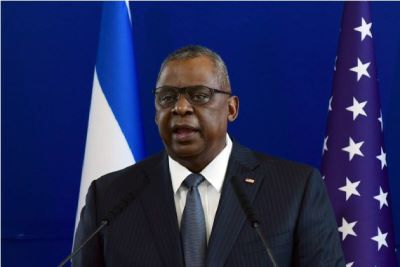
Pentagon spokesman John Kirby said that 68 percent of all active-duty troops were fully vaccinated, and “just over 76 percent have at least one dose.”

U.S. Defense Secretary Lloyd Austin has ordered mandatory vaccination for all active-duty and reserve members of the military, but has not given an exact deadline for the implementation, according to a Pentagon memo dated Tuesday.

ADVERTISEMENTx

In the memo, Austin directed the secretaries of the military departments to “immediately” begin full vaccination of all members of the armed forces on active duty or in the reserve, including the National Guard, who are not fully vaccinated against COVID-19.

Only vaccines that are fully authorized by the Food and Drug Administration (FDA) will be used in the mandatory inoculation campaign, according to Austin. For now, only the Pfizer-BioNTech vaccine has met that standard, after they gained full approval from the FDA on Monday.

Troops who voluntarily received a two-shot regimen or a single-dose vaccine are considered fully vaccinated, Austin said.

The Pentagon chief didn’t give an exact deadline for service members to complete their vaccination, requiring instead that service branch secretaries “impose ambitious timelines for implementation” and “report regularly on vaccination completion.”

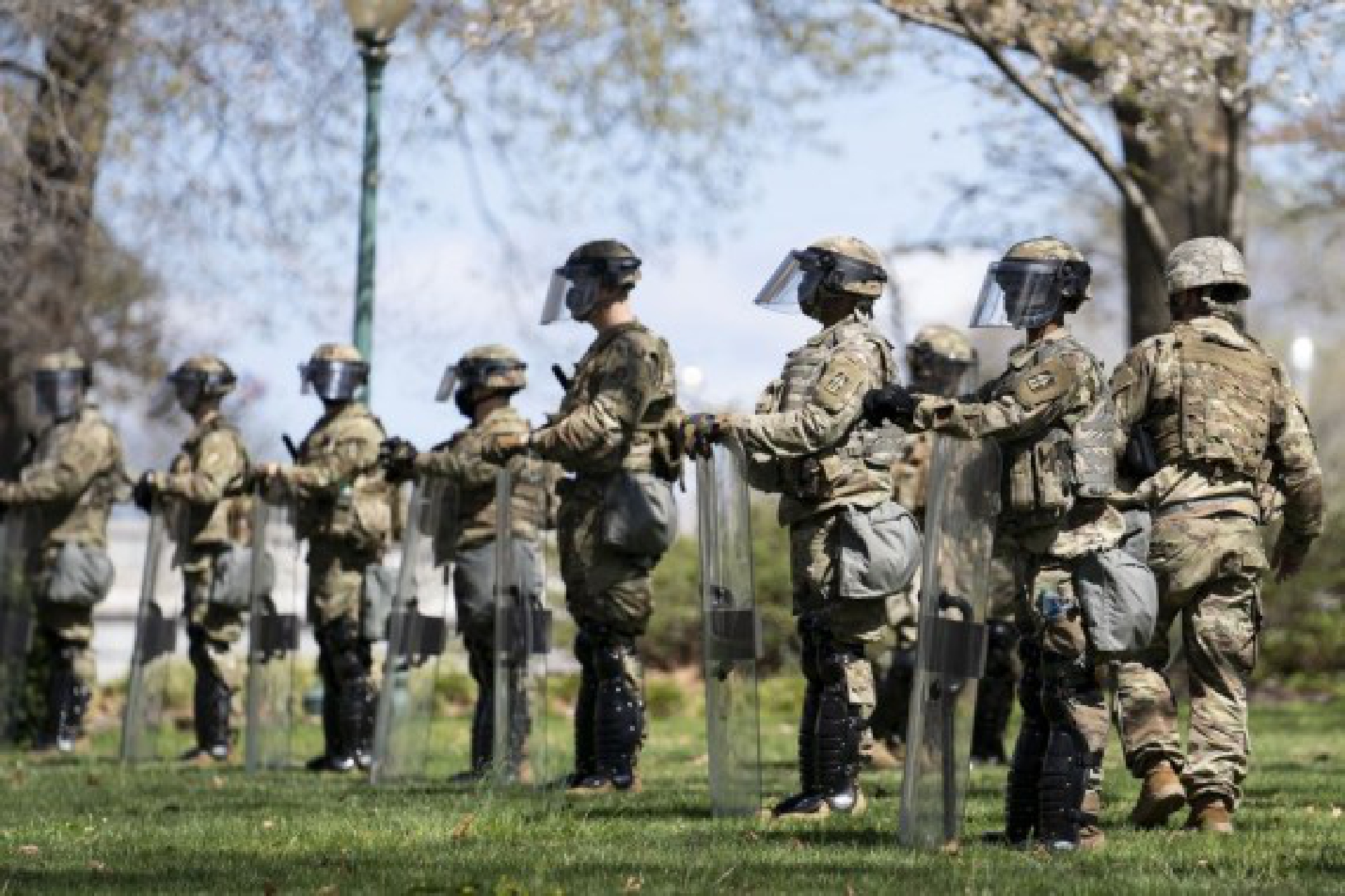
U.S. National Guard members stand guard in front of the U.S. Capitol building in Washington, D.C., the United States, on April 2, 2021. U.S. National Guard members stand guard in front of the U.S. Capitol building in Washington, D.C., the United States, on April 2, 2021.
According to the Pentagon, there are more than 1.3 million active-duty troops and close to 800,000 in the Guard and Reserve. As of Wednesday, nearly 1.1 million active-duty, Guard and Reserve service members are fully vaccinated, and more than 247,000 more are partially vaccinated, Defense Department’s data showed.

Pentagon spokesman John Kirby told a press conference Wednesday that 68 percent of all active-duty troops were fully vaccinated, and “just over 76 percent have at least one dose.”

However, vaccination rates vary widely among different branches of service, according to Kirby, with the Navy having the highest full vaccination rate, at 73 percent, and the Army sitting on the lowest, at only 40 percent. 

Published : August 26, 2021

Russia to host about 1,000 Afghans: official #SootinClaimon.Com

#SootinClaimon.Com : ขอบคุณแหล่งข้อมูล : หนังสือพิมพ์ The Nation.

https://www.nationthailand.com/international/40005271

Russia to host about 1,000 Afghans: official


The Russian authorities have allowed the entry of certain categories of Afghan citizens.

Moscow will assist the arrival of around 1,000 Afghans to Russia, particularly those holding Russian citizenship or other documents, head of the Russian Center for Afghan Diasporas said Wednesday.

ADVERTISEMENTx

The Russian authorities have allowed the entry of certain categories of Afghan citizens, as there are thousands wishing to come to Russia, Ghulam Mohammad Jalal was quoted by the RIA Novosti news agency as saying.

The first category is people with Russian citizenship, and the second is students who study in Russia but now are in Afghanistan, and the third is persons with Russian work permit and appropriate visa, and the fourth is residence permit owners, the official said.

These groups have already contacted the Russian Embassy in Afghanistan and they will fly to Russia as soon as the airport is open, he added.

Published : August 26, 2021

Harris, in Vietnam, gets a dose of Chinas challenge to the U.S. #SootinClaimon.Com

#SootinClaimon.Com : ขอบคุณแหล่งข้อมูล : หนังสือพิมพ์ The Nation.

https://www.nationthailand.com/international/40005268

Harris, in Vietnam, gets a dose of Chinas challenge to the U.S.


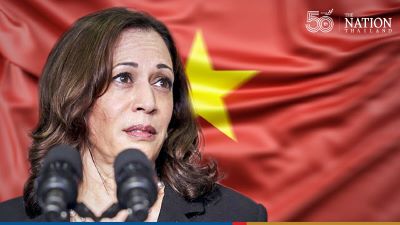
Vice President Kamala Harris, on her second international trip in the role, got a taste of the intensifying rivalry between the United States and China as she flew into Vietnam – a former U.S. adversary wary of Beijings growing dominance and now courted by Washington.

Harris was en route Wednesday to announce, among other things, a donation of 1 million coronavirus vaccine doses to the pandemic-hit country. But a three-hour delay to her schedule handed China a window of opportunity.

Beijing quickly sent its envoy in Hanoi to meet with Vietnam’s prime minister and pledged a donation of 2 million vaccine doses, undercutting the subsequent U.S. announcement. Prime Minister Pham Minh Chinh, thanking the envoy, said his country “does not ally with one country to fight against another,” according to state media.

The incident underscored the challenges facing the Biden administration as Harris has made her way through Southeast Asia this week, along with Chinese sensitivity about her visit. Washington’s agenda does not always align with that of governments in the region, which face a diplomatic high-wire act in balancing the competing interests of the United States and China – the latter being Vietnam’s top trading partner.

“Beijing likes to remind Hanoi who of the two giants is closer to it,” said Huong Le Thu, a senior analyst at the Australian Strategic Policy Institute.

ADVERTISEMENTx

Hanging over a trip intended to demonstrate a U.S. pivot to the Indo-Pacific has been the chaotic collapse of the Western-backed government in Afghanistan and resulting questions about Washington’s commitment to its allies. China has seized on the turmoil to taunt the United States and label it an unreliable partner. But Beijing is also wary of American overtures to Vietnam, a fast-growing nation of 100 million with which it has competing territorial claims in the South China Sea.

Though Vietnam wants the United States to be stronger in resisting China’s militarization of the disputed waterway, some in Vietnam’s leadership would be hesitant to be seen as part of a Washington-led effort simply to counter their giant neighbor, Le Thu said.

For the second day in a row, Harris accused China of aggression in the South China Sea. Speaking at a bilateral meeting in Hanoi with Nguyen Xuan Phuc, Vietnam’s president, Harris said there was a need to “raise the pressure” on Beijing’s actions “and to challenge its bullying and excessive maritime claims.”

Chinese Foreign Ministry spokesman Wang Wenbin, responding a question about Washington’s support for Vietnam in the South China Sea, said the United States “arbitrarily launched military intervention in Afghanistan, Iraq and Syria, while claiming to defend the interests of smaller countries.”

“I think it would be much more credible if the U.S. said it was trying to maintain its hegemony and uphold its own interests,” he said.

ADVERTISEMENT

Several countries claim overlapping territory in the resource-rich waters, a decades-long source of tension. An international tribunal in 2016 rejected Beijing’s claims to an area demarcated by a nine-dash line, but China has asserted control by building up runways and other military installations on disputed islands, prompting an outcry from its neighbors.

The United States has contested the Chinese claims through freedom-of-navigation naval operations, noting the need to safeguard the billions of dollars in trade that flows through shipping lanes that connect East Asia with the Indian Ocean.

The vice president also spoke about upgrading the relationship between Vietnam and the United States to a “strategic partnership” and announced the donation of coronavirus vaccine doses, which she said would begin to arrive in the next 24 hours. She also laid flowers at a memorial in Hanoi to the late Sen. John McCain, who as a Navy pilot was shot down and captured by North Vietnamese forces during the Vietnam War.

In engagements across Singapore and Vietnam this week, Harris has pledged her country’s commitment to the Indo-Pacific, which she labeled a “top priority” for the Biden administration. Analysts have seen her trip, particularly against the unfolding chaos in Afghanistan, as a way to prove the administration is refocusing on the region and on a broader strategy of countering China.

“Most partners across the region are happy to see the United States end its forever wars in the Middle East and finally prioritize Asia in the way that it has said it should for over a decade,” said Greg Poling, a senior fellow for Southeast Asia at the Center for Strategic and International Studies. “Overall, it is likely to be a net positive for the administration, which it desperately needs right now.”

ADVERTISEMENT

Speaking in Singapore on Tuesday, Harris said Beijing “continues to coerce, to intimidate, and to make claims to the vast majority of the South China Sea” and “undermine the rules-based order.”

Beijing hit back, noting – as Harris has – that countries in Southeast Asia do not want to be drawn into U.S.-China tensions and do not want to take sides. An editorial in the state-run China Daily said senior American officials who have visited the region want to “create a chasm” between China and Southeast Asian nations. The Global Times, also state-run, gloated that China’s vaccine donation came before Harris’s announcement.

Beijing’s donation was made to the Vietnamese military, while the U.S. donation – bringing the total doses pledged so far to 6 million – is for the population at large.

After operating a successful containment strategy, Vietnam has faced a surge in coronavirus cases in recent weeks because of the more virulent delta variant. Ho Chi Minh City, the commercial hub, is under a strict lockdown enforced by the military. Soldiers are delivering food to residents.

Harris’s arrival in Hanoi was delayed after the U.S. Embassy in Vietnam said it had detected a “possible anomalous health incident” in the city, a phrase that Washington uses to describe the Havana Syndrome. This refers to mysterious illnesses that have plagued dozens of U.S. government personnel, including diplomats at the U.S. Embassy in Havana in 2016.

Published : August 26, 2021

Taliban takeover could drive covid crisis in Afghanistan as vaccinations plummet, U.N. warns #SootinClaimon.Com

#SootinClaimon.Com : ขอบคุณแหล่งข้อมูล : หนังสือพิมพ์ The Nation.

https://www.nationthailand.com/blogs/international/40005267

Taliban takeover could drive covid crisis in Afghanistan as vaccinations plummet, U.N. warns


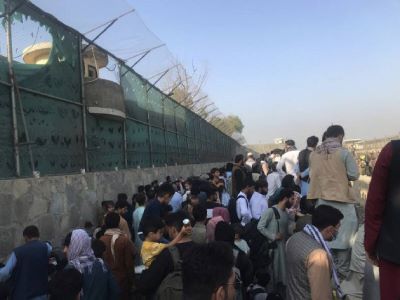
As thousands of Afghans flee the Taliban takeover, thronging the Kabul airport and huddling in camps, aid agencies are warning that the overcrowded conditions could bring a new surge in coronavirus cases. The turmoil, the United Nations said this week, has already hindered its ability to respond.

The compounding health and security crises come as the county’s already struggling health care system reels under the weight of conflict, supply shortages exacerbated by the chokepoint at Kabul airport, widespread displacement and a long-standing lack of resources.

Since the Taliban seized power on Aug. 15, coronavirus testing and vaccinations have plummeted, while plans to boost oxygen supply and ICU capacity at hospitals have also been paused, according to the World Health Organization’s representative in Afghanistan.

Immunizations fell 80% last week in the days following the Taliban victory, a spokesperson for UNICEF, the U.N. children’s agency, said Wednesday. In the week beginning Aug. 15, just 30,500 people were vaccinated across 23 provinces – down from 134,600 people inoculated in all 34 provinces the week before, the agency said.

ADVERTISEMENTx

In an email, the spokesperson attributed the drop to people prioritizing “their safety and security first,” but also warned that more than 2 million coronavirus vaccine doses now in Afghanistan are set to expire in the coming months.

Less than 5% of Afghanistan’s population is fully vaccinated, the WHO said in a statement Tuesday. The agency also tracked a 77% decline in virus testing in both public and private laboratories last week compared to the week before.

According to UNICEF, 30,500 people were vaccinated in 23 provinces

From 15 – 19 Aug, 30,500 people were reached with COVID 19 vaccines in 23 provinces of a total of 34. By comparison, from 8-12 Aug, 134,600 people were reached with COVID 19 vaccines in 30 provinces.

“Vaccination numbers have fallen off and we’re only documenting a small number of cases each day – the surveillance system to detect new cases has also declined,” Rick Brennan, WHO emergency director for the Eastern Mediterranean region, which includes Afghanistan, said in an interview Tuesday.

ADVERTISEMENT

Hundreds of thousands of people were displaced by the fighting between the Taliban and government forces in recent weeks, Brennan said.

“A lot of them have been gathering in overcrowded settings,” he said. “And clearly covid is not the big priority for most Afghans right now.”

Even before the militants’ lighting return to national power, however, Afghan authorities had struggled with the virus, hamstrung in part by a skeptical public and a health-care system battered by war.

Afghanistan has reported 152,000 total cases and more than 7,000 deaths since the pandemic began. But as recently as last month, only 700,000 coronavirus tests had been administered for a population of more than 40 million people, according to the U.N.’s Office for the Coordination of Humanitarian Affairs.

Thirty-five labs were open for coronavirus testing in late July, OCHA said, just as the Taliban stepped up their offensive. None of the facilities are capable of screening for new variants – but overseas testing confirmed the presence of more contagious virus variants such as alpha and delta, which has burned through unvaccinated communities everywhere from India to Israel to Russia and the United States.

ADVERTISEMENT

Earlier this summer, in June and July, Afghanistan suffered its worst pandemic surge yet, registering record numbers of cases and deaths.

In recent weeks, infections appeared to subside but now aid workers are worried about a new spike in cases, citing a growing number of displaced people showing symptoms of covid-19.

“We are concerned that a new spike among displaced people could lead to further transmission across cities,” the WHO said. “This will place an enormous burden on the health system, which is struggling to cope with escalating trauma and emergency cases.”

Now, aid agencies must navigate Taliban rule. And there are questions about whether the group will support widespread coronavirus vaccinations after openly opposing some polio immunization campaigns in the past.

“Despite the Taliban’s history of disrupting public health and education efforts, the group has taken the threat of the Covid-19 pandemic seriously,” Roshni Kapur, a research analyst at the Institute of South Asian Studies at the National University of Singapore, wrote in April. “It has emphasized the provision of public health services as part of a wider effort to reduce the spread of the virus and number of fatalities.”

The WHO’s Brennan said that his staff had “heard nothing yet that would suggest that they would stand in the way of any of our major health activities.”

The biggest concern, he said, was making sure that both female health-care workers and patients were still showing up at clinics. About 40% of those vaccinated against the coronavirus are women, he said. The Taliban generally support severe restrictions for women in public life.

“What we’re hearing from our monitoring on a daily basis is that there’s been a bit of a fall-off in the attendance of women at the health clinics,” Brennan said. It remains to be seen whether this is just a blip or if this is going to be sustained. But women’s access to health care is directly relevant to our ability to control covid well.”

Published : August 26, 2021

Embattled WHO virus origins team says window closing for probe #SootinClaimon.Com

#SootinClaimon.Com : ขอบคุณแหล่งข้อมูล : หนังสือพิมพ์ The Nation.

https://www.nationthailand.com/international/40005266

Embattled WHO virus origins team says window closing for probe


An embattled group of scientists charged by the World Health Organization with studying the origins of the coronavirus pandemic is pleading for support of its work, saying a new approach that includes a focus on the lab-leak hypothesis would take too long to gather fading evidence.

The researchers, writing in the journal Nature, defended their initial efforts and said a second phase is essential to get clear answers about how the pathogen emerged. The planned work includes efforts to find evidence of the virus before it was detected in Wuhan in December 2019, as well as surveys of wildlife that could have harbored the pathogen.

“The window of opportunity for conducting this crucial inquiry is closing fast: any delay will render some of the studies biologically impossible,” they wrote, speaking out for the first time after months of controversy. “Understanding the origins of a devastating pandemic is a global priority, grounded in science.”

The independent international researchers came in for harsh criticism after they published a joint report with colleagues from China in March laying out a suite of potential paths SARS-CoV-2 could have taken before infecting humans. The most prevalent complaint was that they didn’t thoroughly address the potential that it could have leaked from a nearby lab, something they said they acknowledged even though it wasn’t part of their original remit.

“We had limited time on the ground in Wuhan and a limited mandate,” according to the article authored by 11 of the public health experts who took part in the month-long mission to the city where the virus was first detected. “This initial study was not expected to provide definitive answers to the origin of SARS-CoV-2. Rather, phase 1 was always intended to form the foundation of a longer process of scientific investigation that could last for months or years.”

ADVERTISEMENTx

They also addressed other criticisms leveled at the report, denying that they had been pressured by China to include that frozen food was a potential pathway. “Some of the public discourse around the report probably originates from miscommunication and misunderstanding about the nature of the work,” they wrote.

The experts reiterated that their view is that the currently available data do not support giving the lab leak theory the same weight as the theory that the virus emerged from an intermediate host.

The furor that met the first report and continuing tensions between the U.S. and China make the chances of continuing WHO-led investigation in China or other countries increasingly faint. Last month, China said it would not put further resources into any probe that included the lab-leak theory, which White House Press Secretary Jen Psaki assailed as “stonewalling” and “irresponsible.”

President Joe Biden ordered his intelligence agencies to probe the situation earlier this year. The still-classified investigation didn’t come to any firm conclusions on the origins of the virus, according to the Washington Post.

WHO officials said additional studies are already underway, if not by the same group of scientists. The agency has always expected that there would be many missions and long-term collaboration, with different teams working on a variety of topics, said Maria Van Kerkhove, the WHO’s technical lead officer on Covid.

ADVERTISEMENT

“The SARS-CoV-2 work doesn’t stop,” she said in an interview with Bloomberg on Tuesday. “The report published in March outlined very clearly dozens of studies that need to be carried out immediately,” she said. “We understand from our Chinese colleagues that a number of those studies are underway already.”

The original group pushed back against having their work be taken over by another committee, such as the one proposed in the wake of the criticism by the WHO called an International Scientific Advisory Group for Origins of Novel Pathogens, or SAGO. While such a committee is essential for routine investigations of outbreaks in the future, relying on it to delve deeper into the cause of Covid-19 would delay the effort by months to disastrous effect, they wrote.

Biological evidence, including antibodies that humans produce during infections, are likely to fade with time, they wrote. Chinese wildlife farms that employed millions of people and supplied live animals to markets in Chinese cities are already closed and their animals dispersed or destroyed, making it hard to find evidence of early spillover to humans.

“Crucially, the window is rapidly closing on the biological feasibility of conducting the critical trace-back of people and animals inside and outside China,” they wrote. “We call on the scientific community and country leaders to join forces to expedite the phase 2 studies detailed here, while there is still time.”

The WHO’s Van Kerkhove said the SAGO committee would build off the earlier work, and fold in other recent publications on topics ranging from animal susceptibility to surveys of viruses in bat species and wastewater.

ADVERTISEMENT

The Nature article was signed by all but one member of the team, which is comprised of people from various nations and scientific fields including several who received death threats following the publication of the report. The one member who did not sign was Peter Ben Embarek, a food-safety scientist at the WHO in Geneva who led the effort. He declined to comment.

Published : August 26, 2021

Asia Album: center Pakistan via border crossings #SootinClaimon.Com

#SootinClaimon.Com : ขอบคุณแหล่งข้อมูล : หนังสือพิมพ์ The Nation.

https://www.nationthailand.com/international/40005233

Asia Album: center Pakistan via border crossings


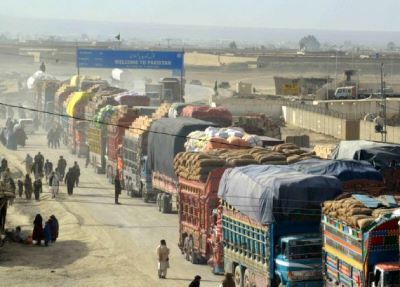
Afghans have entered Pakistan through border crossings in southwest Pakistans Chaman and northwest Khyber Pakhtunkhwa provinces Torkham.

Pakistan has issued visas to 4,000 people including the Afghan cricket team, foreigners and Afghan nationals over the last few days, Pakistani Interior Minister Sheikh Rasheed told media on Monday.

ADVERTISEMENTx

Photo taken with mobile phone on Aug. 22, 2021 shows trucks waiting to cross border at a border crossing point between Pakistan and Afghanistan, in southwest PakistanPhoto taken with mobile phone on Aug. 22, 2021 shows trucks waiting to cross border at a border crossing point between Pakistan and Afghanistan, in southwest Pakistan

Photo taken with mobile phone on Aug. 22, 2021 shows trucks waiting to cross border at a border crossing point between Pakistan and Afghanistan, in southwest Pakistan’s Chaman.

Photo taken with mobile phone on Aug. 22, 2021 shows people crossing border at a border crossing point between Pakistan and Afghanistan, in southwest PakistanPhoto taken with mobile phone on Aug. 22, 2021 shows people crossing border at a border crossing point between Pakistan and Afghanistan, in southwest Pakistan

Photo taken with mobile phone on Aug. 22, 2021 shows people crossing border at a border crossing point between Pakistan and Afghanistan, in southwest Pakistan’s Chaman. 

Photo taken in northwestern PakistanPhoto taken in northwestern Pakistan

Photo taken in northwestern Pakistan’s Torkham on Aug. 22, 2021 shows a truck waiting to cross the border at a border crossing between Pakistan and Afghanistan. 

Published : August 25, 2021

By : xinhua

Bidens approval rating down to lowest point amid COVID-19 resurgence, failure in Afghanistan: poll #SootinClaimon.Com

#SootinClaimon.Com : ขอบคุณแหล่งข้อมูล : หนังสือพิมพ์ The Nation.

https://www.nationthailand.com/international/40005231

Bidens approval rating down to lowest point amid COVID-19 resurgence, failure in Afghanistan: poll


A recent NBC poll found 53 percent of Americans approve of Bidens performance on battling COVID-19, a 16-point drop from the April poll. Meanwhile, only 25 percent of the respondents this month said they approve of Bidens handling of the withdrawal from Afghanistan.

 U.S. President Joe Biden’s approval rating has fallen to the lowest point in his seven-month presidency, amid the rise in U.S. COVID-19 cases and the chaotic military withdrawal from Afghanistan, according to a new poll by U.S. broadcaster NBC.

ADVERTISEMENTx

The poll, conducted from Aug. 14 to 17 and released on Sunday, found 49 percent of respondents approve of Biden’s job performance — sliding below 50 percent for the first time, while 48 percent disapprove.

An NBC poll in April found 53 percent of Americans approved of Biden’s job performance. Other polls last week also found Biden’s approval rating slipping, with a CBS survey putting it at 50 percent, Ipsos 46 percent, and YouGov 44 percent.

For his handling of the campaign against COVID-19, the mid-August NBC poll found 53 percent of Americans approve of his performance, a 16-point drop from the April poll.

Only 25 percent of the respondents this month said they approve of Biden’s handling of the withdrawal from Afghanistan, which was quickly taken over by the Taliban.

Biden’s grade for the economy has also fallen, as 47 percent approve of his handling of the economy, down from 52 percent in April, the poll showed. 

Published : August 25, 2021

By : xinhua