Korea mulls ‘living with COVID-19’ after reaching 70% vaccine target
Public health officials and political leaders in South Korea are teasing the possibility of adopting a new exit plan of “living with COVID-19” in a couple of months’ time, when the country expects to reach its target vaccination rate of 70 percent.
Jeong Eun-kyeong, the Korea Disease Control and Prevention Agency’s commissioner, told a Monday meeting of the parliamentary Health and Welfare Committee that around October, the country may be able to switch to a new strategy of minimizing mitigation measures and allowing more “normal” to return.
She added that the prerequisite for moving on was a full vaccination rate of 70 percent.
“When the vaccination is high enough to suppress deaths and hospitalizations, and the spread of the virus is kept under control through efficient testing and contact tracing, then it can be possible,” she said.
Last week, the Ministry of Health and Welfare said preparations for a more social distancing-free life could take place after the Chuseok holiday, which falls Sept. 18-22, by which time more than 70 percent of the population will have received at least one dose of a vaccine.
The Moon Jae-in administration aims to give 70 percent of the 51 million people in Korea at least one dose before Chuseok, and then get to a full vaccination rate of over 70 percent by October.
The push to get back to normal has been gaining steam lately, with more politicians advocating the move. Moon’s former prime minister-turned-Democratic Party presidential candidate Lee Nak-yon said Monday it was “time for a change in paradigm in pandemic response.” “We should move on from managing all cases to managing just the severe cases,” he said.
Minister of SMEs Kwon Chil-seung likewise said Tuesday that social distancing was “not sustainable” and “in need of a change” in order to protect small businesses.
The fourth surge in infections has placed Greater Seoul under the most stringent tier of social distancing — which bans social gatherings of more than two people past 6 p.m. and shuts down food outlets and other risky places at night — since the first week of July.
A recent report out of Seoul National University’s preventive medicine department suggested the measures currently in place have been ineffective in containing the latest surge. The weekslong intensive social distancing, the report said, was not leading to decline in movement.
“Korea’s pandemic control strategy has relied on people willingly following safety steps, without imposing a lockdown or travel restriction. But the compliance appears to be waning,” said Dr. Jung Ki-suck, former chief of the Korea Centers for Disease Control and Prevention.
“Korea is around the same size as the US state of Indiana. People can easily travel to cities where the rules are more lenient,” he pointed out. “The same intensity of restrictions should be implemented outside Seoul.”
Amid the hopes of more freedoms, the number of COVID-19 patients requiring critical care reached 420 on Monday — the highest since the government began keeping statistics in March of last year.
By Monday’s end there were 67 patients with COVID-19 who were put on extracorporeal membrane oxygenation, or ECMO — the final stage of life support, reserved for the sickest patients — up from the previous day’s 61.
Respiratory disease specialist Dr. Park Sung-hoon at Hallym University Medical Center’s ECMO center said that since July he had seen more and more younger patients come in.
“Before this summer outbreak, the patients who ended up on life support were elderly. Now, all of the eight patients on ECMO at our center are in their 40s and 50s,” he said. “They are the age group that is yet to be vaccinated.”
Son Young-rae, spokesperson for the Ministry of Health and Welfare, told reporters Monday that the latest surge in infections was becoming a “pandemic of the unvaccinated.”
“I urge you to get vaccinated,” he said, although most people who haven’t gotten vaccinated in Korea remain not yet eligible.
Five out of eight COVID-19 deaths in patients in their 20s in Korea occurred in the last three weeks. All five had existing medical conditions and none had received a vaccine, said Lee Sang-won of the national health agency’s contact tracing team, because they were not eligible for one.
The vaccination efforts in August mainly focused on delivering the first doses to people in their 50s. For people under 50, their turn for a vaccine comes later this week.
According to official statistics, 93 percent of some 61,000 patients who were diagnosed between May and July were not vaccinated. Among the around 1,400 patients who fell critically or fatally sick during the same period, 99 percent were not vaccinated, and about half of them were younger than 60.
Dr. Jerome Kim, director general of the International Vaccine Institute, based in Seoul, said the hurdle facing Korea in vaccination progress was supplies, not hesitancy.
“(Vaccine hesitancy) is not a problem in Korea, where people actually want to be vaccinated that the reservation system crashes, because so many people are signing up,” he said. “Korean parents are really good at vaccinating kids, and Korea has health care resources that are up to the task.”
Kim added that delta, which is also considered the dominant strain in Korea, changed the number of people that need to be vaccinated. The estimated threshold now “may need to be 80 percent or higher,” he said.
The government said the full vaccination timeline could be moved up depending on the vaccine supply situation. As more deliveries arrive, the gap between the first and second Pfizer and Moderna shots — which are recommended to be given three and four weeks apart, respetively — could be shortened from the current six weeks.
Roughly 7 million doses of the Moderna vaccine are due to arrive in Korea within two weeks, according to the government announcement, with 450,000 more doses of the same vaccine to be supplied from Romania.
By Monday afternoon’s count, a combined 10 million doses of vaccines from AstraZeneca, Pfizer, Moderna and Johnson & Johnson were left in the country.
Over the month of August, Korea has administered an average of 239,838 vaccine doses daily. To date 51 percent of the Korean population has received at least one dose of a vaccine while 23 percent are fully vaccinated.
In the past week, the number of new cases confirmed each day has averaged 1,777. Since the pandemic began, a total of 239,287 people have been infected, of whom 2,228 died.
Over four million peoples receive Covid-19 vaccines in Myanmar: MOHS
YANGON—-The Ministry of Health and Sports (MOHS) reported that over four million peoples already have been vaccinated against Covid-19 vaccine in Myanmar as being of August 21st.
With the aim to prevent measures against deadly Coronavirus, Myanmar begins Covid-19 vaccination program in relevant States and Regions.
Totaling 4,456,857 peoples were given the vaccines across the country.
In Myanmar, three million of Sinopharm and Sinovac jabs had been arrived from China in July. Moreover, more three million of jabs will be arrived in August, according to the MOHS.
Currently, Myanmar purchased four million of Covid vaccines so also China donated two million of Covid jabs and two million of Covid-19 vaccines being purchased from Russia will be arrived in near soon.
Although Covishield jabs being purchased from India will be arriving in Myanmar, India temporarily bans on export of its vaccines.
The MOHS also urged 50% population which is above 18 years old to vaccinate against Covid-19. Moreover, MOHS warned the citizens to follow the COvid-19 guide lines.
Currently, the People’s Liberation Army of the People’s Republic of China together with Myanmar embassy staffs in Beijing donated 400,000 Covid-19 jabs and medical supplies to Myanmar.
US offers to host Apec meeting in 2023: Kamala Harris
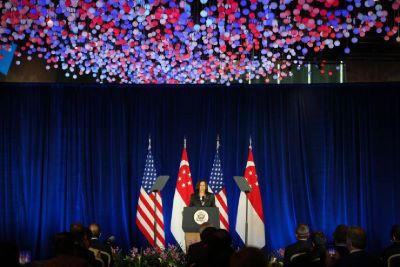
SINGAPORE – The United States has offered to host the Asia-Pacific Economic Cooperation (Apec) in 2023, recognising the large and dynamic market of South-east Asia and its importance to America.
America’s economic outlook is a critical part of advancing an optimistic vision of its partnership with the region, said US Vice-President Kamala Harris on Tuesday (Aug 24).
In a policy speech hosted by the Lee Kuan Yew School of Public Policy and the US Embassy in Singapore at Gardens by the Bay, Ms Harris said the US economy is growing faster than it has in nearly 40 years, and wages and employment rates in the country are rising.
“We believe that our growth should not stop at the water’s edge, but it can and will also benefit our partners. Our economy shares so much with South-east Asia, from supply chains to a steady flow of two-way trade,” she said, noting that collectively, South-east Asian nations represent the US’ fourth-largest export market, and trade with the region supports more than 600,000 American jobs.
She said the world is now more interconnected and interdependent, and nations must be more willing to take on challenges and create opportunities together.
The US’ partnerships will be grounded in candour, openness, inclusiveness, shared interests and mutual benefit, and it will pursue a free and open Indo-Pacific that promotes its interests and those of its partners and allies, she added.
“In addition to deepening close bilateral relations, we will also work multilaterally through longstanding institutions like Asean, which remains central to this region’s architecture. We will also work with new results-oriented groups like the Quad and the US-Mekong partnership.
“I believe that when the history of the 21st century is written, much of it will be centred right here in the Indo-Pacific. Our intention is to strengthen our partnerships and reinforce our shared vision… In doing so, there should be no doubt – we have enduring interests in this region, and we have enduring commitments as well.”
Moving on to the issue of security, Ms Harris reiterated the US’ security commitment to the region and its vision of freedom of navigation.
Freedom of navigation is vital to the livelihoods of millions who depend on trade that flows through sea lanes each day. Yet, China, she said, continues to “coerce” and “intimidate”, and make claims to the vast majority of the South China Sea.
“These unlawful claims have been rejected by the 2016 arbitral tribunal decision, and Beijing’s actions continue to undermine the rules-based order and threaten the sovereignty of nations.
“The US stands with our allies and partners in the face of these threats.”
ADVERTISEMENTx
She added that the US’ engagement of South-east Asia and the Indo-Pacific is not directed against any one country, nor is it designed to make anyone choose between countries.
The Quadrilateral Security Dialogue, also known as the Quad, is a strategic dialogue between the US, Japan, Australia and India.
The US-Mekong partnership, which was launched in 2020 and builds on the Lower Mekong Initiative, seeks to enhance cooperation among the governments of the US, Cambodia, Laos, Myanmar, Thailand and Vietnam.
In her speech, Ms Harris also stressed the US’ interest in strengthening global health security and leading with values, such as a respect for human rights at home and abroad.
In this regard, she expressed deep alarm at the military coup in Myanmar and condemned the use of violent repression.
“We are committed to supporting the people there as they work to return their nation to the path of democracy, and we do hope that nations throughout the Indo-Pacific will join us in that effort,” she said.
Since the military junta seized power in Myanmar in February, it has – under pressure from fellow Asean members – agreed to accept a special envoy from the group to mediate the crisis.
Singapore’s Foreign Minister Vivian Balakrishnan indicated in a recent interview that the 10-member group would consider it progress if the special envoy – Brunei’s Second Foreign Minister Erywan Yusof – could make his inaugural trip to Myanmar before Asean’s November summit.
Concluding her speech, Ms Harris said she hoped that years from now, everyone could look back on this moment and say that this was when the region joined together to realise a better future, and took action to improve the lives of its people.
“I hope that we will be able to point to our partnerships between the US and Singapore, between the US and South-east Asia and throughout the Indo-Pacific, as the partnerships that made this shared vision of the future possible.”
Following the speech and panel discussion, the Vice-President hosted a round-table discussion with Singapore’s Trade and Industry Minister Gan Kim Yong and private sector leaders on the importance of supply chain resilience, the value of cooperation with allies and partners on supply chains, and the impact that supply chains have on American families.
She stressed the interconnectedness of countries and the importance of preventing and ending supply chain shortages.
This followed from her meeting with Prime Minister Lee Hsien Loong on Monday, when they announced a supply chain dialogue that would bring together government and business leaders.
Ms Harris left for Vietnam on Tuesday evening for the second leg of her trip.
HK proposes film censorship bill to ward off national security risks
HONG KONG – Hong Kong’s government planned to introduce an amendment bill on film censorship to the Legislative Council (LegCo) in September to ward off national security risks.
In a statement issued on Tuesday, the government said the legislation aims to enhance the film censorship regulatory framework and ensure the effective fulfillment of duty to safeguard national security as required by the National Security Law for Hong Kong, which was implemented in the financial hub a year ago.
The Film Censorship (Amendment) Bill, approved by the Chief Executive in Council on Tuesday, also aims to prevent and suppress acts or activities that may endanger national security.
The government proposed to set out explicitly that a censor should consider whether the exhibition of a film would be contrary to the interests of national security, so as to provide clear statutory backing for a censor to give due consideration to national security when making film decisions.
It proposed to give the chief secretary for administration the right to direct the Film Censorship Authority to revoke any approval or exemption if a film doesn’t comply with the interests of national security.
The government also recommended heavier penalties for showing films that have not been approved. Those who violate the law could be sentenced to three years imprisonment and fined HK$1 million ($128,400).
The bill will be gazetted on Friday and is expected to be tabled at the LegCo on Sept 1 for first and second readings.
In June this year, the government amended guidelines for censors under the Film Censorship Ordinance to provide them with clearer guidelines on film examination and classification following the National Security Law’s implementation on July 1, 2020.
Athletes assemble in Tokyo as Paralympics commence
The 2020 Tokyo Paralympic Games began Tuesday night with the opening ceremony at the National Stadium.
Atotal of 539 events in 22 para sports will take place over the 12-day period from Wednesday to Sept. 5.
According to the International Paralympic Committee, a total of 161 countries and regions, plus the Refugee Paralympic Team, are participating. This is the second-largest number after the 2012 London Paralympics, in which 164 countries and regions participated.
About 4,500 para athletes are expected to compete. As of Sunday, Japan’s team comprised 254 people, its highest number ever.
People related to Afghanistan, which withdrew from the Paralympics due to the fraught domestic situation in that country, participated in the opening ceremony bearing the Afghan flag.
“We’ve always said the Tokyo Games won’t be successful unless the Paralympics are a success,” Seiko Hashimoto, president of the Tokyo Organizing Committee of the Olympic and Paralympic Games, said at a press conference Monday.
Hashimoto stressed that thorough measures would be taken against the coronavirus. “We’ll do everything we can, so the public can feel safe and secure,” she said.
IPC President Andrew Parsons said: “One of the questions I am asked very often is, ‘Can we have safe Games?’ and the answer is yes, we would not be here if we did not believe we could deliver safe Games.”
■ Raising awareness
Para sports organizations are putting their all into the Tokyo Paralympics, hoping to use these Games to promote their respective sports.
“I want to see an event open to everyone,” Hidetaka Sugimura, a leading player on the Japanese boccia team, said about his dream of organizing an event in which anyone can participate.
Japan won the first silver medal in boccia at the Rio de Janeiro Games in 2016. In this sport, para athletes throw balls toward a white target ball.
“It can be enjoyed by everyone, regardless of gender, age or degree of disability,” said Sugimura, 39. He is aiming to win a gold medal to further promote the sport and realize an event in which all sorts of people can participate.
Japan will make its first appearance in blind soccer at the Tokyo Games. Japan’s blind soccer para athletes will wear the same jersey as the men’s U-24 team and the Nadeshiko Japan women’s team, as a symbol of unity between the Olympics and Paralympics.
Team Japan aims to win at least a bronze medal — finishing better than the Japanese men’s team at the Olympics, which finished fourth — to help gain public recognition for blind soccer.
The sport requires verbal communication skills to support team members, and this element is being utilized in corporate training programs. In 2012, the Japan Blind Football Association started full-fledged efforts to assist education programs at companies, and has received many applications from a wide range of businesses.
The association wants to widen the scope of such activities with a strong finish at the Paralympics.
Asia Album: Evacuation underway at Kabul airport in Afghanistan
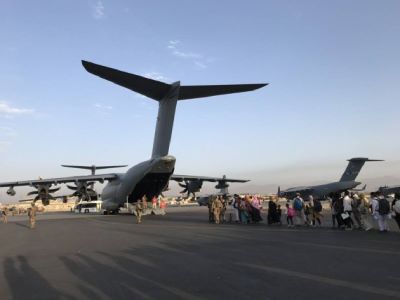
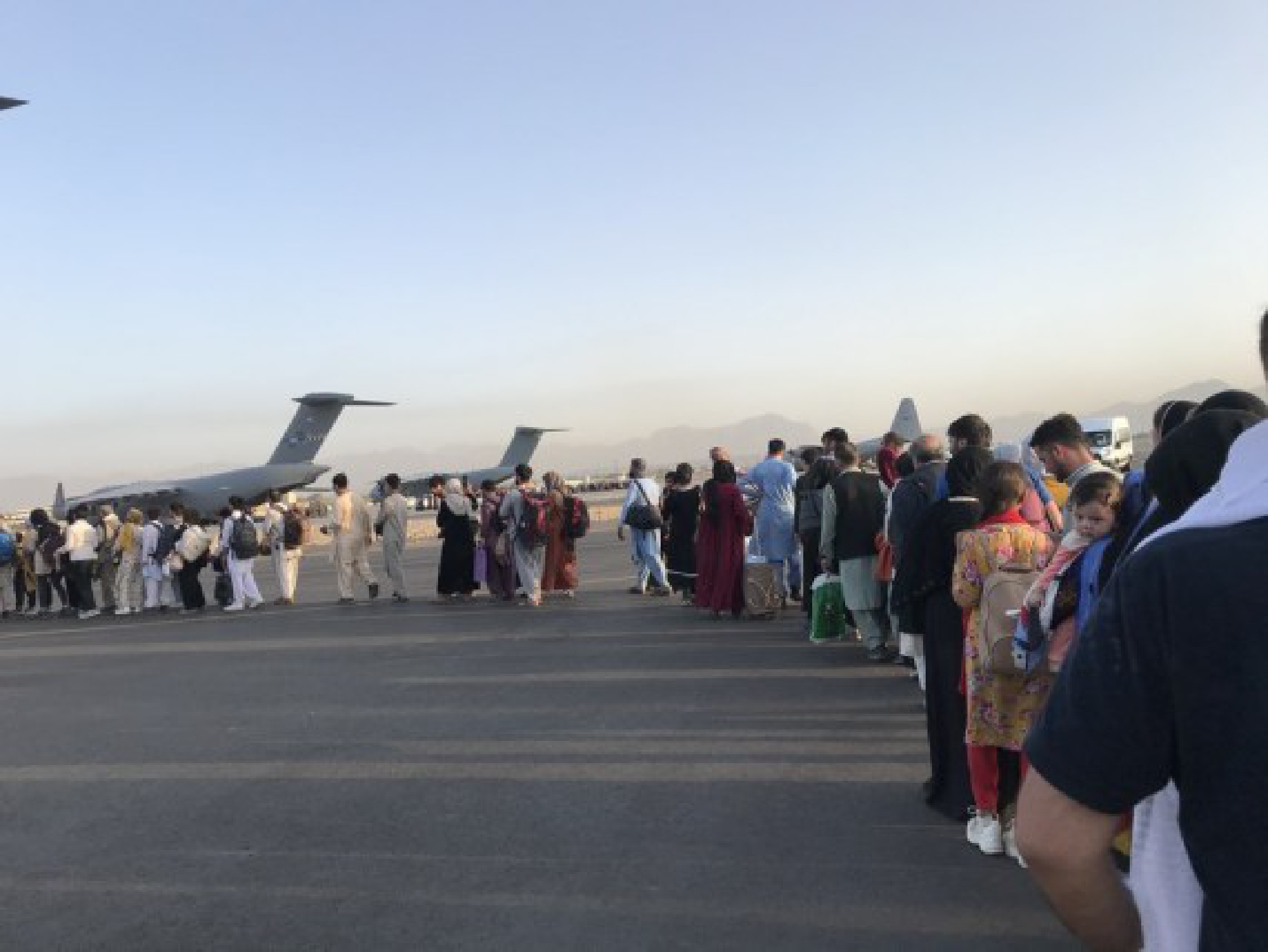
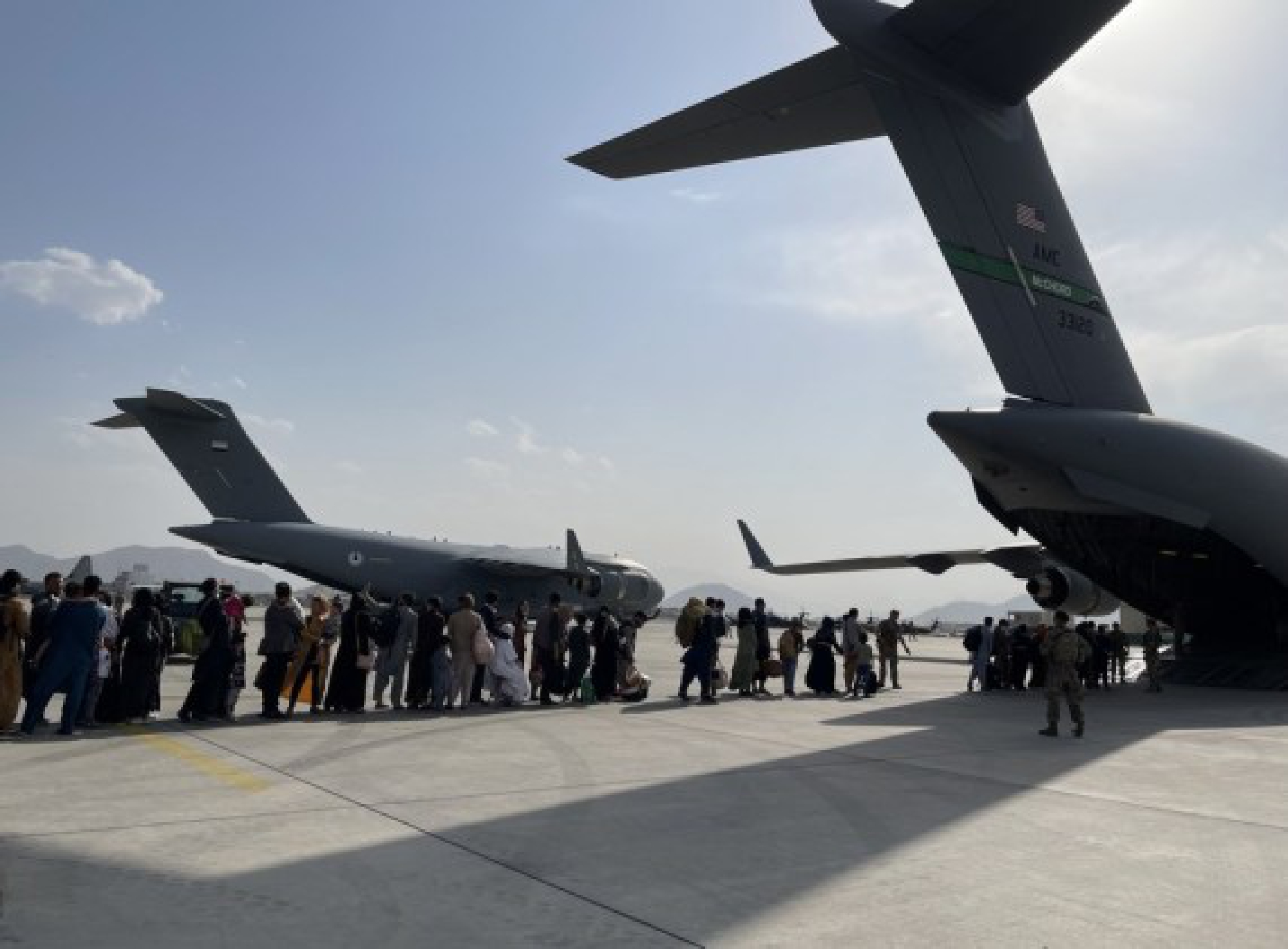
Military aircraft from countries including Germany and the United States have been evacuating people at the Hamid Karzai International Airport after the Taliban took control of the Afghan capital on Aug. 15.
Taliban spokesman Zabihullah Mujahid on Tuesday said the United States should withdraw all troops and contractors before Aug. 31 deadline from Afghanistan, and no extension for the ongoing evacuation process would be possible.
ADVERTISEMENTx
People queue up to board a military aircraft of Germany and leave Kabul at Kabul airport, Afghanistan, Aug. 24, 2021.
People queue up to board a military aircraft of Germany and leave Kabul at Kabul airport, Afghanistan, Aug. 24, 2021.
People queue up to board a military aircraft of the United States and leave Kabul at Kabul airport, Afghanistan, Aug. 22, 2021.
People queue up to board a military aircraft of the United States and leave Kabul at Kabul airport, Afghanistan, Aug. 22, 2021.
People take a military aircraft of Germany to leave Kabul, Afghanistan, Aug. 24, 2021.
People take a military aircraft of Germany to leave Kabul, Afghanistan, Aug. 24, 2021.
People queue up to board a military aircraft of Germany and leave Kabul at Kabul airport, Afghanistan, Aug. 24, 2021.
People queue up to board a military aircraft of Germany and leave Kabul at Kabul airport, Afghanistan, Aug. 24, 2021.
The West has failed Afghanistan, says Spanish Defense Minister
Spains Minister of Defense Margarita Robles said there was “no doubt” the West had “failed the Afghan people.”
The minister also lamented the attitude of U.S. President Joe Biden, who continues to insist that American troops will leave Kabul on Aug. 31.
ADVERTISEMENTx
Spain’s Minister of Defense Margarita Robles said on Wednesday there was “no doubt” the West had “failed the Afghan people,” as Spain and other western powers struggle to evacuate as many people from Kabul following the Taliban takeover.
A steady stream of aircraft carrying refugees has been arriving at the Spanish Air Force base at Torrejon de Ardoz in recent days, but despite the efforts of Spanish troops who “are putting their lives at risk,” Robles admitted “a lot of people are going to be left behind.”
The Defense Minister explained that the Spanish troops in Kabul were restricted by the fact they could not act beyond the airport.
She also lamented the attitude of U.S. President Joe Biden, who continues to insist that American troops will leave Kabul on Aug. 31.
“We won’t be able to get any more people out, and we are aware of the human drama … We will be there as long as necessary,” said Robles.




 People queue up to board a military aircraft of Germany and leave Kabul at Kabul airport, Afghanistan, Aug. 24, 2021.
 People queue up to board a military aircraft of the United States and leave Kabul at Kabul airport, Afghanistan, Aug. 22, 2021.
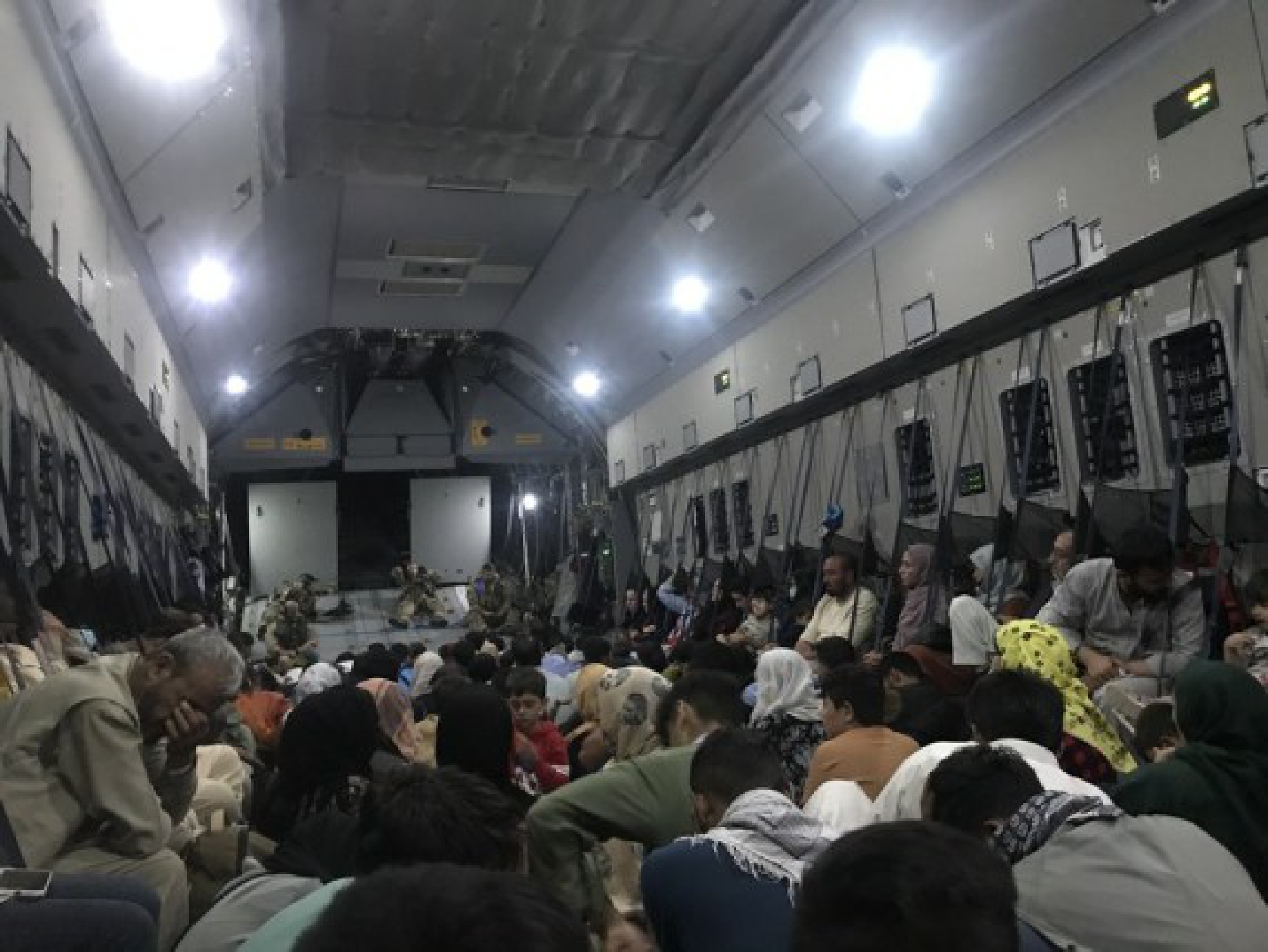 People take a military aircraft of Germany to leave Kabul, Afghanistan, Aug. 24, 2021.
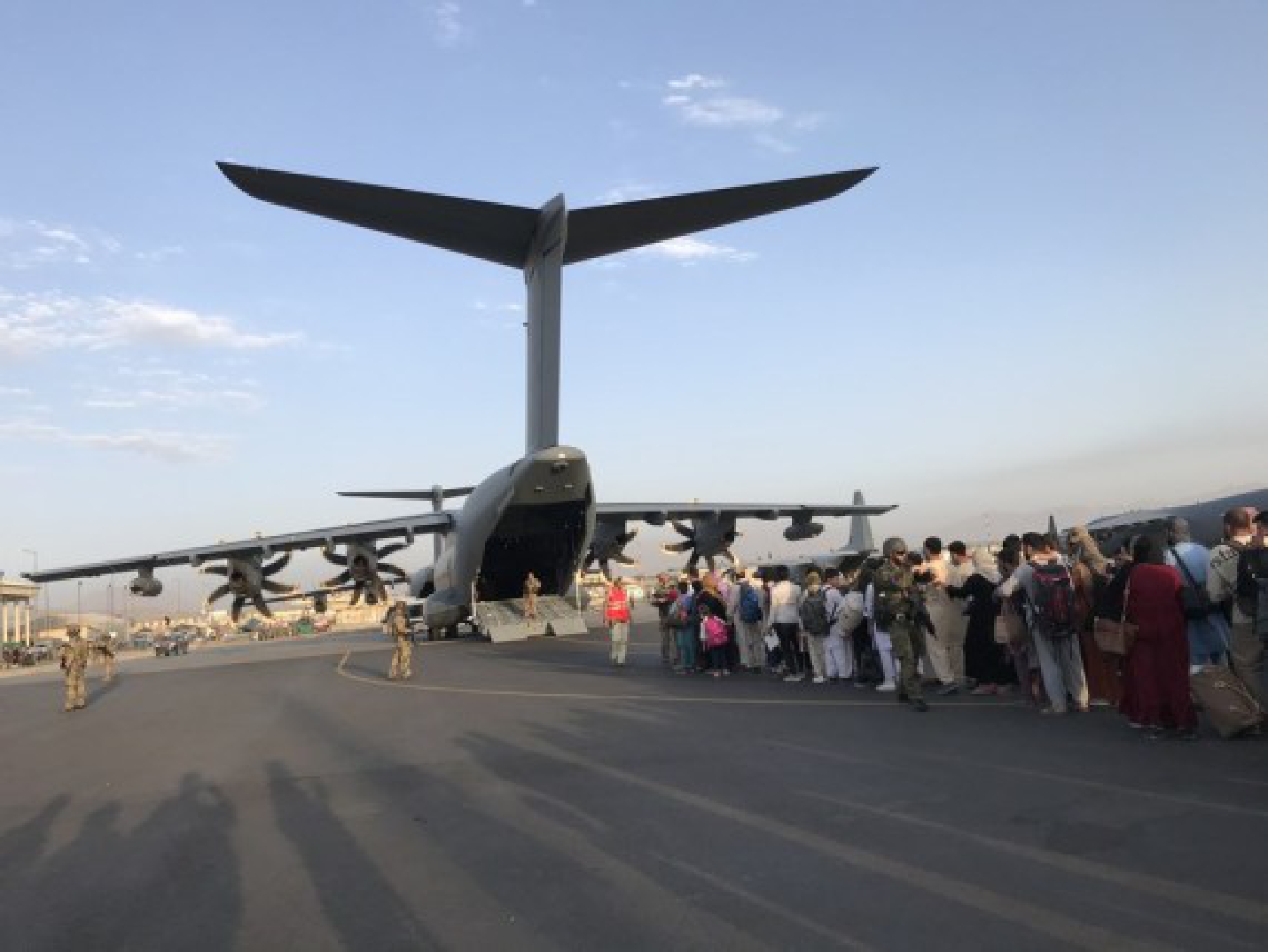 People queue up to board a military aircraft of Germany and leave Kabul at Kabul airport, Afghanistan, Aug. 24, 2021.
 SootinClaimon.Com