เมืองโบราณถูก “เพลิงอวกาศ” ระเบิดจนหลอมเหลว #SootinClaimon.Com

#SootinClaimon.Com : ขอบคุณแหล่งข้อมูล : หนังสือพิมพ์โพสต์ทูเดย์

https://www.posttoday.com/world/664090

วันที่ 26 ก.ย. 2564 เวลา 13:49 น.เมืองโบราณถูก "เพลิงอวกาศ" ระเบิดจนหลอมเหลวการทำลายล้างเมืองโบราณจากการระเบิดของหินจากอวกาศอาจเป็นต้นเค้าของจากเรื่องราวการทำลายล้างในพระคัมภีร์ไบเบิล

นักวิจัยพบว่า ภัยพิบัติที่ทำลายเมืองทัลล์ เอล-ฮัมมัม (Tall el-Hammam) ซึ่งเป็นเมืองยุคสำริดในหุบเขาจอร์แดน เกิดขึ้นจากดาวหางหรืออุกกาบาตที่พุ่งเข้าใส่เมือง และคาดว่าเกิดขึ้นประมาณ 1,650 ปีก่อนคริสตศักราช

ทัลล์ เอล-ฮัมมัม เป็นโบราณสถานในจอร์แดน ตั้งอยู่ทางตะวันออกของหุบเขาจอร์แดนตอนล่างใกล้กับปากแม่น้ำจอร์แดน ไซต์โบราณสถานดังกล่าวมีซากโบราณสถานมากมายตั้งแต่ยุคทองแดง (ราว 5000 ปีก่อนคริสตศักราช) จนถึงยุคเหล็ก (1200 – 550 ปีก่อนคริสตศักราช)

นักโบราณคดีบางคนเชื่อว่าเมืองแห่งนี้คือเมืองโซดอมและกอมมอราห์ที่ปรากฏในคัมภีร์ไบเบิล (บางครั้งเรียกว่าเมืองโสโดมและเมืองโกโมราห์) และเป็นสองเมืองที่พระเจ้าทำลายเพราะความชั่วร้ายของผู้คน โดยเมืองนี้ตั้งอยู่ในหุบเขาแม่น้ำจอร์แดนตอนใต้ประมาณ 14 กิโลเมตร (9 ไมล์) ทางตะวันออกเฉียงเหนือของทะเลเดดซี

ที่ผ่านมา มีผู้เชื่อว่าเมืองแห่งนี้คือเมืองโสโดมและเมืองโกโมราห์คัมภีร์ไบเบิล เช่น สตีเวน คอลลินส์ ( Steven Collins)เป็นผู้กำกับการขุดค้นซึ่งเริ่มในปี 2006 เขาเป็นศาสตราจารย์ชาวอเมริกันที่วิทยาลัยโบราณคดีและคณบดีผู้บริหารมหาวิทยาลัยทรินิตี้ เซาธ์เวสต์ ที่ไม่ได้รับการรับรอง ตั้งอยู่ในเมืองอัลบูเคอร์คี รัฐนิวเม็กซิโก มหาวิทยาลัยทรินิตี้ เซาธ์เวสต์เน้นที่การเชื่อถือคัมภีร์ไบเบิลเป็นพิเศษ

สาเหตุที่สตีเวน คอลลินส์เชื่อเมืองทัลล์ เอล-ฮัมมัมคือเมืองโสโดมและเมืองโกโมราห์ ก็เพราะจากการสืบค้นทางโบราณคดีนี้พบซากเมืองที่มีป้อมปราการซึ่งถูกทำลายไปประมาณ 1850–1650 ปีก่อนคริสตศักราช

เมื่อปี 2016 มีรายงานว่านักฟิสิกส์ดาราศาสตร์ มัลคอล์ม เลอคอมต์ (Malcolm LeCompte) ได้ระบุหลักฐานที่สนับสนุน “การระเบิดของวัตถุจากจักรวาล” ที่ร้อนมากพอที่จะละลายเหล็กได้ซึ่งเกิดขึ้นที่ไซต์ทัลล์ เอล-ฮัมมัมในจอร์แดนเมื่อประมาณ 3,700 ปีก่อน เลอคอมต์สังเกตเห็นความคล้ายคลึงกันในรูปแบบความเสียหายแบบเดียวกันนี้ในรัสเซียจากเหตุการณ์ภัยพิบัติที่การระเบิดที่ตุงกุสคาเมื่อเดือนมิถุนายน 1908 เลอคอมต์ ซึ่งเป็นผลมาจากการระเบิดของดาวตกทางอากาศ ดังนั้น เรื่องราวในพระคัมภีร์เกี่ยวกับการทำลายเมืองโสโดมอาจเมีสาเหตุมาจากอุกกาบาตที่ระเบิดในอากาศ

ปัจจุบันซากของทัลล์ เอล-ฮัมมัมยังปรากฏอาคารอิฐโคลนสูงขนาดตึก 5 ชั้น ตลอดหลายปีที่ผ่านมา นักโบราณคดีที่ตรวจสอบซากปรักหักพังของโครงสร้างได้พบหลักฐานของเหตุการณ์ที่อุณหภูมิสูงและการทำลายล้างอย่างกะทันหัน เช่น ชิ้นส่วนเครื่องปั้นดินเผาที่หลอมละลายด้านนอกแต่ภายในไม่ได้ถูกแตะต้อง

ล่าสุด นักวิจัยได้ตีพิมพ์การศึกษาในวารสาร Nature Scientific Reports ตรวจสอบสาเหตุที่เป็นไปได้ของการทำลายล้างตามบันทึกทางโบราณคดี นักวิจัยสรุปว่าการสู้รบ ไฟไหม้ ภูเขาไฟระเบิด หรือแผ่นดินไหวไม่น่าจะเป็นต้นเหตุ เนื่องจากเหตุการณ์เหล่านี้ไม่สามารถก่อให้เกิดความร้อนที่รุนแรงพอที่จะทำให้เกิดการละลายของวัตถุต่างๆ ที่ค้นพบในซากเมือง

ดังนั้นจึงเหลือความเป็นไปได้คืออุกกาบาตที่พุ่งเข้าใส่เมืองจนเกิดความร้อนรุนแรง อย่างไรก็ตาม เนื่องจากผู้เชี่ยวชาญไม่พบหลุมอุกกาบาตที่ทัลล์ เอล-ฮัมมัม พวกเขาจึงสันนิษฐานว่าการทำลายล้างเกิดขึ้นจากจากการระเบิดทางอากาศที่เกิดขึ้นเมื่ออุกกาบาตหรือดาวหางเดินทางผ่านชั้นบรรยากาศด้วยความเร็วสูง ไม่ใช่การตกกระแทกเข้าใส่พื้นโลก

คริสโตเฟอร์ อาร์. มัวร์ (Christopher R. Moore) ผู้เขียนร่วมศึกษาด้านการศึกษา นักโบราณคดีแห่งมหาวิทยาลัยเซาท์แคโรไลนา เขียนว่า อุกกาบาตหรือดาวหางจะระเบิดได้สูงกว่าเมืองประมาณ 2.5 ไมล์ ซึ่งมีพลังมากกว่าระเบิดปรมาณูที่ใช้ในฮิโรชิมา 1,000 เท่า

ไม่กี่วินาทีหลังจากการระเบิด คลื่นกระแทกเข้าซัดทำลายเมืองด้วยความเร็วประมาณ 740 ไมล์ต่อชั่วโมง ซึ่งเร็วกว่าพายุทอร์นาโดที่เลวร้ายที่สุดที่เคยบันทึกไว้ อาคารของเมืองเหลือแต่ฐานรากและซากปรักหักพัง ดละเป็นผลให้เกิดการปลอมละลลายของวัตถุต่างๆ ที่พบในไซต์โบราณคดี

นักโบราณคดียังค้นพบเกลือที่มีความเข้มข้นสูงในชั้นดินของยุคสมัยที่เกิดทำลายล้าง ซึ่งอาจมาจากผลกระทบของการระเบิดที่มีต่อทะเลเดดซีหรือชายฝั่งทะเลเดดซีที่เป็นทะลสาบมีความเค็มสูงที่สุดในโลก การระเบิดอาจทำให้เกลือกระจายไปทั่วพื้นที่ อาจก่อให้เกิดดินที่มีความเค็มสูง ซึ่งทำให้พืชไม่สามารถเติบโตได้ และส่งผลให้เมืองต่างๆ ตามหุบเขาจอร์แดนตอนล่างถูกละทิ้งไปเป็นเวลาหลายศตวรรษ

ภาพจาก Deg777 (wikipedia.org)

แกะรอยจีนล้างบางคริปโต จะส่งผลสะเทือนแค่ไหน #SootinClaimon.Com

#SootinClaimon.Com : ขอบคุณแหล่งข้อมูล : หนังสือพิมพ์โพสต์ทูเดย์

https://www.posttoday.com/world/664083

วันที่ 26 ก.ย. 2564 เวลา 11:59 น.แกะรอยจีนล้างบางคริปโต จะส่งผลสะเทือนแค่ไหนมีอะไรใหม่ในการปราบปราม crypto ของจีน? หลังการประกาศให้ crypto เป็นสิ่งผิดกฎหมาย

หน่วยงานกำกับดูแลที่มีอำนาจมากที่สุดของจีนได้เพิ่มการปราบปรามคริปโตเคอร์เรนซี่ (cryptocurrencies) ของประเทศด้วยการห้ามทำธุรกรรมคริปโตและการขุดคริปโตทั้งหมด

การเคลื่อนไหวดังกล่าวส่งผลให้ Bitcoin และเหรียญสำคัญอื่นๆ มีมูลค่าลดลง รวมถึงการกดดันหุ้นที่เกี่ยวข้องกับคริปโตและบล็อคเชน (blockchain)

จีนมีมาตรการอะไรใหม่

หน่วยงานของจีน 10 แห่ง รวมทั้งธนาคารกลางและการธนาคาร หลักทรัพย์ และหน่วยงานกำกับดูแลการแลกเปลี่ยนเงินตราต่างประเทศ ได้ให้คำมั่นว่าจะทำงานร่วมกันเพื่อขจัดกิจกรรมคริปโตเคอร์เรนซี่ที่ “ผิดกฎหมาย”

ในขณะที่จีนได้ใช้กฎเกณฑ์ที่เข้มงวดมากขึ้นเกี่ยวกับสกุลเงินเสมือนมาโดยตลอด แต่ตอนนี้ได้สั่งให้กิจกรรมทั้งหมดที่เกี่ยวข้องกับคริปโตเคอร์เรนซี่ กับผิดกฎหมายและส่งสัญญาณแสดงเจตนาถึงแผนที่จะบังคับใช้กฎที่เข้มงวดยิ่งขึ้น

ธนาคารประชาชนแห่งประเทศจีนกลางของจีน (PBOC) กล่าวว่าการอำนวยความสะดวกในการซื้อขายสกุลเงินดิจิทัลเป็นสิ่งผิดกฎหมาย และมีแผนลงโทษอย่างรุนแรงต่อผู้ที่กระทำการดังกล่าว รวมถึงผู้ที่ทำงานในแพลตฟอร์มในต่างประเทศจากภายในประเทศจีน

สภาพัฒนาและปฏิรูปแห่งชาติ (NDRC) กล่าวว่าจะเปิดตัวการปราบปรามการขุดคริปโตเคอร์เรนซี่ทั่วประเทศ โดยเป็นความพยายามกวาดล้างเซคเตอร์นี้ทั้งหมด

เกิดอะไรขึ้นก่อนหน้า?

ประเทศจีนไม่ยอมรับคริปโตเคอร์เรนซี่เป็นเงินที่ถูกกฎหมาย และระบบธนาคารไม่ยอมรับคริปโตเคอร์เรนซี่หรือให้บริการที่เกี่ยวข้อง

ในปี 2013 รัฐบาลกำหนด bitcoin เป็นสินค้าเสมือนจริง และกล่าวว่าบุคคลได้รับอนุญาตให้เข้าร่วมการค้าออนไลน์ได้อย่างอิสระ

อย่างไรก็ตาม ต่อมาในปีนั้น หน่วยงานกำกับดูแลด้านการเงิน ซึ่งรวมถึง PBOC ได้สั่งห้ามธนาคารและบริษัทชำระเงินไม่ให้ให้บริการที่เกี่ยวข้องกับ bitcoin

ในเดือนกันยายน 2017 จีนสั่งห้ามการเสนอขายเหรียญเริ่มต้น (ICO) เพื่อปกป้องนักลงทุนและลดความเสี่ยงทางการเงิน

กฎ ICO ยังห้ามแพลตฟอร์มการซื้อขายสกุลเงินดิจิทัลจากการแปลงสกุลเงินตามกฎหมายเป็นสกุลเงินดิจิทัลและในทางกลับกัน

ข้อจำกัดดังกล่าวทำให้แพลตฟอร์มการซื้อขายส่วนใหญ่ปิดตัวลงโดยมีการย้ายออกจากประเทศไปเทรดแบบออฟชอร์จำนวนมาก

กฎ ICO ยังห้ามบริษัทการเงินและบริษัทชำระเงินไม่ให้ให้บริการ ICO และสกุลเงินดิจิทัล รวมถึงการเปิดบัญชี การลงทะเบียน การซื้อขาย การหักบัญชี และการชำระบัญชี

ภายในเดือนกรกฎาคม 2018 แพลตฟอร์มการซื้อขายสกุลเงินเสมือน 88 แห่งและแพลตฟอร์ม ICO จำนวน 85 แห่งได้ถอนตัวออกจากตลาดแล้ว PBOC กล่าว

เหตุใดจึงทำให้กฎเกณฑ์เข้มงวดขึ้น

ราคาที่พุ่งสูงขึ้นอย่างมากใน bitcoin และเหรียญอื่นๆ ในปีที่ผ่านมาได้ฟื้นการซื้อขายสกุลเงินดิจิตอลในประเทศจีน โดยนักลงทุนหาแนวทางเทรดให้สอดคล้องกับแนวปฏิบัติตามกฎระเบียบที่มีอยู่ แต่เรื่องนี้เกิดขึ้นในขณะที่จีนกำลังพยายามพัฒนาสกุลเงินดิจิทัลอย่างเป็นทางการ กลายเป็นประเทศเศรษฐกิจหลักกลุ่มแรกที่พัฒนาเงินจิทัลของตนเอง

เมื่อต้นปีนี้ หน่วยงานกำกับดูแลของจีนได้เข้มงวดกับข้อจำกัดที่ห้ามสถาบันการเงินและบริษัทชำระเงินจากการให้บริการที่เกี่ยวข้องกับสกุลเงินดิจิทัล คำสั่งหนึ่งกล่าวว่าการซื้อขาย bitcoin เพื่อเก็งกำไรฟื้นตัวขึ้นมาและกำลังละเมิด “ความปลอดภัยของทรัพย์สินของผู้คนและขัดขวางความสงบเรียบร้อยทางเศรษฐกิจและการเงินตามปกติ”

นักลงทุนชาวจีนจำนวนมากกำลังซื้อขายบนแพลตฟอร์มที่เป็นบริษัทแลกเปลี่ยนของจีนที่ย้ายไปต่างประเทศ รวมถึง Huobi และ OKEx ในขณะเดียวกัน ตลาดซื้อขายสกุลเงินดิจิทัลแบบโดยตรงของ (over-the-counter) จีนก็กลับมาคึกคักอีกครั้ง ในขณะที่กลุ่มคริปโตเคอร์เรนซี่ในโซเชียลมีเดียได้ฟื้นคืนชีพขึ้นมาอีกด้วย

บริษัทแลกเปลี่ยนเน้นประเทศจีนซึ่งรวมถึง Binance และ MXC ทำให้บุคคลชาวจีนสามารถเปิดบัญชีออนไลน์ได้ ซึ่งเป็นกระบวนการที่ใช้เวลาเพียงไม่กี่นาที พวกเขายังอำนวยความสะดวกในข้อตกลงแบบ peer-to-peer ในตลาด OTC ที่ช่วยแปลงหยวนจีนเป็นคริปโตเคอร์เรนซี่

ธุรกรรมดังกล่าวทำผ่านธนาคารหรือช่องทางการชำระเงินออนไลน์ เช่น Alipay หรือ WeChat Pay โดยองค์กรเหล่านี้จะสัญญาว่าจะดำเนินการตรวจสอบสถานะลูกค้าและตั้งค่าระบบการตรวจสอบที่กำหนดเป้าหมายไปยังเว็บไซต์และบัญชีที่สำคัญเพื่อตรวจจับธุรกรรมที่เกี่ยวข้องกับคริปโตเคอร์เรนซี่ที่ผิดกฎหมาย

นักลงทุนรายย่อยยังซื้อ “พลังประมวลผล” จากผู้ขุดคริปโตเคอร์เรนซี่ซึ่งออกแบบแผนการลงทุนต่างๆ ที่ให้ผลตอบแทนที่รวดเร็วและเต็มไม้เต็มมือมากขึ้น

ผลกระทบของการปราบปรามคืออะไร?

ในขณะที่คริปโตเคอร์เรนซี่ร่วงลงในวันศุกร์ การร่วงลงนั้นเด่นชัดน้อยกว่าที่เห็นในเดือนพฤษภาคม เมื่อสภาแห่งรัฐหรือคณะรัฐมนตรีของจีน ให้คำมั่นว่าจะปราบปรามการขุด bitcoin

ตลาดจะจับตาว่าจีนสามารถค้นหาและลงโทษแพลตฟอร์มและผู้ฝ่าฝืนกฎได้หรือไม่

นักวิเคราะห์บางคนกล่าวว่าพิจารณาจากสิ่งที่เคยเกิดขึ้นในจีน นักลงทุนที่แน่วแน่ยังคงมีแนวโน้มที่จะหาวิธีในการซื้อขายจนได้

“ในขณะที่เทรดเดอร์รายย่อยในจีนอาจไม่สามารถเข้าถึงแพลตฟอร์มการแลกเปลี่ยนออนไลน์ที่ตอนนี้ผิดกฎหมายได้อีกต่อไป แต่กองทุนคริปโตอาจสามารถย้ายการจัดการกองทุนของพวกเขาไปต่างประเทศได้” Ganesh Viswanath Natraj ผู้ช่วยศาสตราจารย์ด้านการเงินที่ Warwick Business School กล่าวกับ Reuters

Photo by STR / AFP

สิงคโปร์ต้านไม่ไหวยอดพุ่งกระฉูด สั่ง WFH อีกรอบ #SootinClaimon.Com

#SootinClaimon.Com : ขอบคุณแหล่งข้อมูล : หนังสือพิมพ์โพสต์ทูเดย์

https://www.posttoday.com/world/664073

วันที่ 26 ก.ย. 2564 เวลา 10:02 น.สิงคโปร์ต้านไม่ไหวยอดพุ่งกระฉูด สั่ง WFH อีกรอบการอยู่ร่วมกับโควิดของสิงคโปร์ดูท่าจะไปไม่รอดหลังยอดติดเชื้อพุ่งเร็วจนต้องสั่งใช้มาตรการควบคุมทางสังคมอีกครั้ง

กระทรวงสาธารณสุขสิงคโปร์มีประาศว่าพนักงานที่สามารถทำงานจากที่บ้านได้ หรือ WFH ก็ควรจะทำงานที่บ้านต่อไป ตามที่รัฐบาลได้ประกาศมาตรการควบคุมการระบาดของโลกอีกครั้ง จากการายงานของ The Strait Times

โดยมาตรการดังกล่าวจะมีผลบังคับใช้ตั้งแต่วันจันทร์ที่จะถึงนี้ (27 ก.ย.) ถึง 24 ต.ค. ในระหว่างนี้ จะมีการระงับการอนุญาติให้หยุดทำงานจากที่บ้านเป็นการชั่วคราว ซึ่งคำสั่งดังกล่าวเพิ่งประกาศใช้เมื่อต้นเดือนนี้ และการชุมนุมทางสังคมในสถานที่ทำงานจะยังคงไม่ได้รับอนุญาต

นอกจากนี้ กระทรวงสาธารณสุข ยังระบุในถ้อยแถลงว่า ไม่ควรมีการสั่งให้พนักงานเดินทางไปทำงานสับเปลี่ยนหมุนเวียนกันในออฟฟิศต่างๆ

ทั้งนี้ สิงคโปร์รายงานผู้ป่วยโควิด-19 จำนวน 1,443 รายเมื่อวันที่ 25 ก.ย. เทียบกับผู้ติดเชื้อ 1,650 รายในวันก่อนหน้า

Photo by Roslan RAHMAN / AFP

ผลทดลอง ‘วัคซีนจีน’ ตัวใหม่ ต้านโควิด-19 และเดลตา #SootinClaimon.Com

#SootinClaimon.Com : ขอบคุณแหล่งข้อมูล : หนังสือพิมพ์โพสต์ทูเดย์

https://www.posttoday.com/world/664070

วันที่ 26 ก.ย. 2564 เวลา 09:43 น.ผลทดลอง ‘วัคซีนจีน’ ตัวใหม่ ต้านโควิด-19 และเดลตาบริษัทจีนจะเสนอข้อมูลการทดลองดังกล่าวเพื่อขออนุมัติแบบมีเงื่อนไขกับองค์การอนามัยโลก (WHO) รวมถึงฝ่ายกำกับดูแลที่เกี่ยวข้องในจีนและยุโรปในช่วงไตรมาส 4 ของปี 2021
ปักกิ่ง, 25 ก.ย. (ซินหัว) — เมื่อไม่นานนี้ สำนักข่าวรอยเตอร์สรายงานว่าวัคซีนป้องกันโรคติดเชื้อไวรัสโคโรนาสายพันธุ์ใหม่ (โควิด-19) ตัวใหม่ ซึ่งพัฒนาโดยโคลเวอร์ ไบโอฟาร์มาซูติคัลส์ (Clover Biopharmaceuticals) ของจีน มีประสิทธิภาพป้องกันโรคโควิด-19 ราวร้อยละ 67 และเชื้อไวรัสฯ ชนิดกลายพันธุ์ สายพันธุ์เดลตา ราวร้อยละ 79 ในการทดลองทางคลินิกขนานใหญ่

รายงานข่าวของรอยเตอร์สเมื่อวันพุธ (22 ก.ย.) อ้างอิงแถลงการณ์จากโคลเวอร์ฯ ระบุว่าวัคซีนตัวดังกล่าวมีประสิทธิภาพป้องกันโรคโควิด-19 ราวร้อยละ 67 ในทุกระดับอาการ และเชื้อไวรัสฯ ชนิดกลายพันธุ์ สายพันธุ์เดลตา ราวร้อยละ 79 ในการทดลองขนาดใหญ่

นอกจากนั้นวัคซีนตัวดังกล่าวมีประสิทธิภาพป้องกันอาการป่วยปานกลางถึงรุนแรงราวร้อยละ 83.7 มีประสิทธิภาพป้องกันอาการป่วยปานกลางถึงรุนแรงราวร้อยละ 81.7 ในผู้ติดเชื้อไวรัสฯ สายพันธุ์เดลตา และมีประสิทธิภาพร้อยเปอร์เซ็นต์ในการป้องกันการเข้าโรงพยาบาลและอาการป่วยรุนแรงจากโรคโควิด-19

รายงานข่าวเสริมว่าบริษัทจีนจะเสนอข้อมูลการทดลองดังกล่าวเพื่อขออนุมัติแบบมีเงื่อนไขกับองค์การอนามัยโลก (WHO) รวมถึงฝ่ายกำกับดูแลที่เกี่ยวข้องในจีนและยุโรปในช่วงไตรมาส 4 ของปี 2021

ทั้งนี้ เว็บไซต์ของโคลเวอร์ฯ ระบุว่าการทดลองขนาดใหญ่ดำเนินการกับผู้เข้าร่วมวัยผู้ใหญ่และผู้สูงอายุจาก 31 พื้นที่ใน 5 ประเทศ ได้แก่ ฟิลิปปินส์ บราซิล โคลอมเบีย แอฟริกาใต้ และเบลเยียม จำนวนมากกว่า 30,000 คน

เนื้อหาข่าวและภาพด้วยความรวมมือกับสำนักข่าวซินหัว

[Japan] Efforts to recycle EV batteries spreading #SootinClaimon.Com
#SootinClaimon.Com : ขอบคุณแหล่งข้อมูล : หนังสือพิมพ์ The Nation.

https://www.nationthailand.com/international/40006685


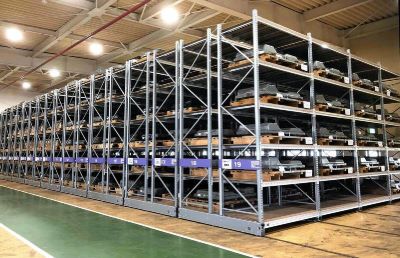
The recycling of high-capacity batteries used in electric vehicles is gaining traction as a business opportunity, because they can still be used for other purposes even after they have degraded and can no longer power a vehicle.

As Nissan Motor Co. and Mitsubishi Motors Corp. started mass-producing EVs more than 10 years ago, battery replacement cycles have already started to kick in. Now, a growing number of companies from other industries are getting into the business of recycling or repurposing these expensive components.

■ High performance

The Forest Country Club, a golf course in Shizuoka Prefecture, has 11 electric golf carts running on used EV batteries.

Compared to new lead-acid batteries, used EV batteries have a second lifespan of five to six years, which is about three times longer, and they also consume less electricity.

“The initial cost of used EV batteries is expensive, but in terms of maintenance costs, it is inexpensive. We would like to promote the use of the batteries in the future,” said an official of Kawashima Group that operates the golf course.

Seven-Eleven Japan Co. has deployed storage batteries made from second-hand batteries at its 11 outlets in Kanagawa Prefecture as part of a verification trial. Electricity generated by solar panels is stored in the batteries during the day and used in the stores at night.

“[We will verify the effectiveness of this system] as part of our decarbonization efforts,” a spokesperson for the company said.

[Japan] Efforts to recycle EV batteries spreading[Japan] Efforts to recycle EV batteries spreading
East Japan Railway Co. is also conducting a verification trial to see how used EV batteries can be converted into a power source for railway crossings during power outages.

ADVERTISEMENT

Lithium-ion batteries used for EVs and plug-in hybrid vehicles (PHVs) eventually require replacement, as the cruising radius deteriorates after about 10 years of use.

However, these EV batteries — which have a capacity several times that of ordinary household storage batteries — can still be used even after they have deteriorated to the point where they can no longer be used to power a vehicle.

■ Various applications

Nissan’s Leaf EV, launched in 2010, has sold more than 500,000 units in total, meaning there will be around that many more used batteries to deal with in the future. Batteries account for a major portion of an EV’s price.

Nissan and Sumitomo Corp. have jointly set up 4R Energy Corp. to reuse EV batteries. The company collects used EV batteries in Japan and overseas and decides where to reuse them according to the degree of their deterioration.

4R Energy President Eiji Makino is eager to expand the business, saying, “The expansion of the used battery market should lead to the spread of EVs.”

The company plans to roughly triple its current capacity to process about 1,500 used EV batteries.

Mitsubishi Motors, for its part, began collecting batteries used in PHVs and recycling them as storage batteries at its plants last fiscal year.

Eneos Holdings, Inc. will start a trial for recycling used batteries for use as household storage batteries and street lighting in fiscal 2022.

Major trading companies also see the reuse of EV batteries as being a business opportunity.

Itochu Corp. has started a business to convert used lithium-ion batteries for EV taxis and buses in China into storage batteries for factories and distribution centers in Japan and overseas.

The company aims to achieve annual sales of about ¥10 billion by fiscal 2026.

In 2019, Mitsui & Co. also established an operating company jointly with Renault SA of France and other companies, and started a service to reuse batteries as storage batteries for power-related companies in Germany.

There is also a movement to recycle used batteries as a source of minerals.

Envision AESC Group, a Chinese affiliated company that produces batteries for EVs, will start a business to extract rare metals such as nickel and cobalt from used batteries, and then reuse them as resources.

Published : September 27, 2021

Covid-19 plays havoc with airport reopening plans in Asia #SootinClaimon.Com

#SootinClaimon.Com : ขอบคุณแหล่งข้อมูล : หนังสือพิมพ์ The Nation.

https://www.nationthailand.com/international/40006684


SEOUL – Things were looking up for the aviation sector in Asia in the middle of this year.

As soon as the number of Covid-19 infections started to stabilise against rising vaccination rates, South Korea announced it would seek to create travel bubbles with other countries in a bid to revive tourism.

Airlines and booking sites expected a surge in demand from vaccinated travellers, and duty-free shops prepared to reopen.

South Korean officials said the plans could be rolled out as early as July, They were just as eager to see foreign tourist arrivals bounce back to pre-pandemic levels of nearly 3 million a month – up from just 127,090 in June.

Budget carrier Jeju Air announced the resumption of flights to Saipan and Guam, both of which were popular destinations for beach vacationers.

But all hope for air travel in South Korea was dashed as quickly as it was raised as Covid-19 returned with a vengeance, with a new wave involving the more infectious Delta variant of the coronavirus. The surge in infections came amid a shortage of vaccines.

The same scenario was repeated elsewhere in Asia, with air hubs pushing back reopening plans as governments struggled to contain the virus just as things were getting better.

ADVERTISEMENT

Tourist arrivals tumbled to record lows everywhere and only cargo volumes helped lift some air hubs.

Reopening, many realised, was not just about reviving flights, but also accepting that there is a trade-off – restoring connectivity comes with the prospect of rising case numbers, although vaccination mitigates the risk of serious infections.

Malaysia’s north-western island Langkawi welcomed its first planeload of fully vaccinated travellers on Sept 16, as 159 people from the capital Kuala Lumpur landed to begin their first vacation after months of lockdown in the country.

Langkawi is now aiming for 400,000 visitors by the end of year, hoping they will spend some RM165 million (S$53 million).

Foreign tourists are not allowed yet, even though Langkawi International Airport and Kuala Lumpur International Airport were jointly named the world’s No. 1 airports for the second quarter of the year by the Airports Council International (ACI).

Meanwhile, Thailand reopened its two most popular resort islands, Phuket and Koh Samui, in early July, allowing fully vaccinated international tourists to visit without serving mandatory quarantine.

Similar larger plans for the whole country, however, have been delayed by a struggle with the Delta variant, which coursed through the population early this year amid a sluggish vaccination programme.

Thai Prime Minister Prayut Chan-o-cha has vowed to reopen the country by next month despite the fact that only about a quarter of the population is fully vaccinated at present.

The state-owned Airports of Thailand (AOT) has been badly hit by the pandemic, with revenue plunging by 87.7 per cent in the nine months to June 30.

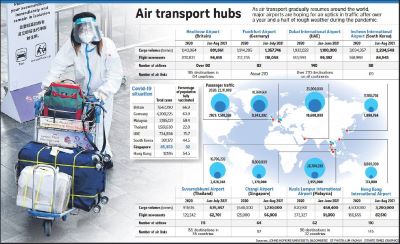
Before the pandemic hit, the main Suvarnabhumi airport in Bangkok served 53.5 million international passengers in 2019. It handled a mere 527,411 in the first seven months of the year.

Hong Kong International Airport (HKIA) is also a pale shadow of the heady days before Covid-19 struck.

Passenger traffic at the airport has fallen from 75.1 million in the 2018/19 financial year to 60.9 million in 2019/20 and 800,000 in 2020/21. In tandem, revenue plunged from HK$19.5 billion (S$3.4 billion) to HK$17.1 billion and HK$5.3 billion.

Mr Shukor Yusof, head of aviation consultancy Endau Analytics, told The Straits Times that Hong Kong’s position as an aviation and financial hub has declined significantly over the past two years, triggered by the street protests in the territory and exacerbated by Covid-19.

“The zero-Covid stance it is pushing is not realistic, in my view. The situation is compounded by Cathay Pacific’s decline as a top airline,” he said.

He added that the pandemic would leave irreparable damage all over the world but more so to places reluctant to adjust and balance the risks with the reopening of the marketplace.

“The damage is ongoing and will accumulate as long as Hong Kong steadfastly stays shut,” he said.

Aviation analyst Brendan Sobie said the revival of international air hubs “is a question of which countries are reopening faster, not which airports are reopening faster”.

“If you look at Bangkok particularly, it’s a lot of inbound traffic, so it completely hinges on the reopening of borders,” he told ST.

“So if Thailand opens up the borders faster and tourists come to Thailand sooner – even though they have a lower vaccination rate than Singapore – obviously, the traffic will recover faster in Bangkok than in Singapore.”

The fortunes of an air hub are also tied to its geographic location, said Mr Sobie.

He noted that the international airport in Dubai has a lot more traffic now because it is a transit hub for connections to markets that have already reopened, such as Europe, Middle East and Africa.

“Right now, Singapore is not really able to connect any two markets that are open,” he said. “Neither is Bangkok or Hong Kong, because they all rely on countries that haven’t reopened yet.”

Dubai International Airport (DXB) is expecting robust growth in the second half of this year, after clocking 10.6 million travellers in the first half.

The latest ACI figures establish DXB as the world’s busiest airport for international passengers after it retained the title for the seventh consecutive year for annual traffic in 2020. DXB currently has nearly twice the passenger traffic as the next busiest international hub in the Middle East.

Mr Paul Griffiths, the CEO of Dubai Airports, said the outlook for 2021 in terms of passenger numbers “looks very promising”, with major international events such as the rescheduled Dubai Expo 2020 and Dubai Airshow 2021 lined up in the months ahead.

“In anticipation of the robust recovery of global air travel, we started the second half on a high note by reopening Terminal 1 and Concourse D – the home terminal for our 60 international carriers – after 15 months of hibernation, to accommodate the seasonal rush of travellers over the summer holidays,” he added.

Mr Griffiths was also upbeat about the campaign to safely relax restrictions on global air travel.

An industry player in Hong Kong told ST the situation remains fluid, so recovery would be uneven, adding that reopening would be gradual and based on regions that carriers preferred.

South Korea’s Incheon International Airport could edge ahead of the competition “if the Koreans take calculated risks”, said Mr Shukor.

How fast the main airline at an air hub would be able to restore its services and capacities would determine the air hub’s recovery if all regional borders reopened at the same time, Mr Sobie pointed out.

Changi Airport’s recovery would be tied to the fortunes of Singapore Airlines, for example.

But he cautioned that the choice of airports do not really figure high in travellers’ priorities. They are more concerned about the attractiveness of a destination.

“It becomes more of an issue of competition between airlines, and also an issue of competition between destinations,” he said.

By Chang May Choon/The Straits Times

Published : September 27, 2021

India, other G-4 countries call for UNSC expansion #SootinClaimon.Com

#SootinClaimon.Com : ขอบคุณแหล่งข้อมูล : หนังสือพิมพ์ The Nation.

https://www.nationthailand.com/international/40006683


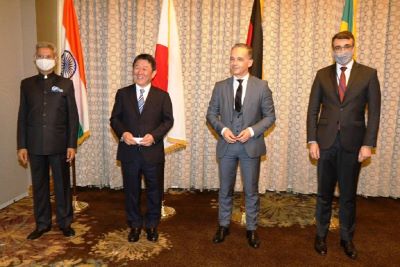
India and the other G-4 nations have strongly pitched for an expansion of the UN Security Council in both permanent and non-permanent categories to enable the body to effectively deal with the ever-complex and evolving challenges to the maintenance of international peace and security.

The G-4 nations, which also include Japan, Germany and Brazil, support each other’s candidature for inclusion in the UNSC.

External Affairs Minister S Jaishankar participated in a G-4 meeting in New York last evening on the margins of the UN General Assembly along with Foreign Minister of Brazil Carlos Alberto Franco Franca, Foreign Minister of Germany Heiko Maas and Minister for Foreign Affairs of Japan Motegi Toshimitsu.

A statement issued by the Ministry of External Affairs (MEA) today said the four foreign ministers underlined the urgency of reforming the UNSC in order to make it more legitimate, effective and representative by reflecting the reality of the contemporary world, including developing countries and major contributors, the G4 Ministerial Joint Press Statement said.

They expressed their strong determination to work towards launching text-based negotiations without further delay in the Inter-Governmental Negotiations (IGN), on the basis of a single document, with a view to its adoption in the General Assembly.

The ministers instructed their delegations to the UN to support the efforts of the President of the 76th General Assembly Abdulla Shahid and the IGN chairs and to identify ways to develop a single consolidated text as a basis for a draft resolution.

The four ministers also decided to intensify dialogue with all interested member states, including other reform-minded countries and groups, in order to seek concrete outcomes in a definite time frame.

The G-4 ministers, reviewing the work of the 75th session of the UNGA, welcomed that the Assembly reflected in its decision the commitment of all heads of state and government to instil new life in the discussions on the reform of the UNSC, as mentioned in the Declaration on the commemoration of the 75th anniversary of the UN.

ADVERTISEMENT

Published : September 27, 2021

Korea to take greater steps toward normal from October #SootinClaimon.Com

#SootinClaimon.Com : ขอบคุณแหล่งข้อมูล : หนังสือพิมพ์ The Nation.

https://www.nationthailand.com/international/40006682


South Korea will begin to move past restrictive COVID-19 measures and return to normality in about a month’s time, Prime Minister Kim Boo-kyum said Sunday.

Speaking with provincial and municipal broadcasters, Kim pointed to late October as when life can begin to return to normal in Korea — a shift in pandemic control strategy also described as “living with COVID-19.”

“About 80 percent of adults aged 18 and above are expected to become fully vaccinated before October ends, by which time normal life can resume in stages,” he said. The adult vaccination rate of 80 percent would “give the virus less space to roam,” he added.

Citing damage to the economy, he said it was “hard to ask small businesses to put up with pandemic-related restrictions any longer.”

According to the prime minister, how Korea would go about normal is twofold: by extending eligibility to groups so far not covered by the vaccination campaign — minors and pregnant women — and expanding at-home care for patients with mild illness to reduce the burden on health care systems.

He hinted that the plan for vaccinations for the rest of the year, to be unveiled in detail Monday afternoon, also included an extra round of “booster” vaccinations for older people and front-line health care workers. Soon, the gap between two doses of Pfizer and Moderna vaccines, which are currently administered six weeks apart, will be shortened as well, he said.

The prime minister blamed the Chuseok holiday weekend, which lasted until Wednesday, for cases rising at record-setting levels in the past few days.

“The holiday is taking a serious toll on the COVID-19 situation,” he said. 

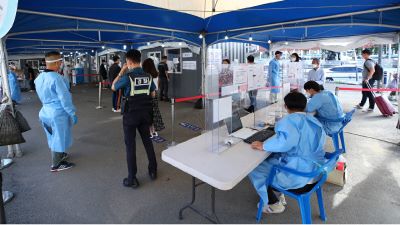
After seeing a new all-time high of 3,272 cases Saturday, replacing the record of 2,431 cases set the day before, Korea announced 2,771 more cases Sunday — the second-highest one-day total.

But the streak of record-shattering days may not be Chuseok’s doing, according to Dr. Jung Ki-suck, who headed the Korea Centers for Disease Control and Prevention in 2016-17. Given COVID-19’s average incubation period of five to seven days, the post-Chuseok surge has probably not begun yet, he said.

“Cases linked to Chuseok are likely not yet reflected in the numbers,” he said, explaining that the warning signs of “a surge upon a surge” were already there before the holiday could make an impact. 

Despite testing performed per day dropping by nearly half to about 70,000 to 80,000 during the five-day weekend, there was no decline in cases, with the positivity rate in the period doubling to 2 percent.

ADVERTISEMENT

He said cases were being traced to places “usually where you’d expect an outbreak would take place, like saunas, bars and other nightlife facilities.”

“Korea is now at a phase where it’s looking to lift, rather than tighten, public health interventions, according to government announcements,” he said, “which means that control of the spread will be more heavily reliant on vaccinations.”

On easing back into normalcy, he pointed out that throughout its course of the pandemic, Korea “never really had to sacrifice normal life too much” compared to other countries such as Australia, which is “undergoing a lockdown over a 100-something daily cases.”

“The closest thing we had to a lockdown was a nighttime curfew for high-risk businesses,” he said.

When Korea was counting an average of about 1,700 cases a day in the weeks leading up to Chuseok, intensive care beds across the country were half full, he warned. By that calculation, a couple of weeks of more than 3,000 cases could fill up beds for patients with severe or critical COVID-19.

As of 5 p.m. Saturday, 48 percent of all ICU beds for COVID-19 patients were occupied. In Seoul, which accounts for the majority of Korea’s cases, the occupancy rate was higher at 54 percent.

Infectious disease specialist Dr. Eom Joong-sik at Gachon University Medical Center in Incheon, neighboring Seoul, said people’s compliance with social distancing began to noticeably wane about a month ago, when talks of returning to normal began to surface among political circles and government officials.

“Having normal after Chuseok was widely promoted too early, when barely 40 percent of the population were fully vaccinated,” he said. The “communication mishap” caused people “to let their guards down,” when “the messaging for more caution should have been sustained to motivate people to continue to practice social distancing.”

The good news was that the incidence of severe cases among people in their 70s and older, to whom vaccines were distributed early on, remained relatively low, said Eom, whose hospital saw an onslaught of younger patients in August. Many of the patients ending up at hospitals recently were in their 40s to 60s — age groups that vaccines had taken longer, or are just getting to reach.

“As more people across demographics become fully immunized against COVID-19, we could expect a similar decline in hospitalizations,” he said.

In an emergency news briefing organized Saturday, the national health protection agency’s commissioner, Jeong Eun-kyeong, said health care capacities had room to cope with 2,500 to 3,000 cases occurring each day for another week or two.

After restrictions were eased earlier this month to permit families to gather over Chuseok, overall movements had increased, she said, and that based on the trends in health data, the number of cases could continue to hover above 3,000 a day this week.

She said whether to ease restrictions next month as planned depended on how much of the population was protected with vaccines by then.

The pressing task at the moment was lessening the caseload, she said, asking those who traveled for the holiday to get tested regardless of an absence of symptoms and cancel plans at least for the next two weeks.

“There’s no way around it but to follow the same safety precautions of wearing face masks, keeping indoor spaces well-ventilated, avoiding crowds and washing hands frequently,” she said.

By Saturday’s end, 74 percent of 51 million people in Korea had received at least one dose of a vaccine while 45 percent had been fully vaccinated, seven months since the vaccine campaign began in February.

By Kim Arin/The Korea Herald

Published : September 27, 2021

Vietnam strives to return to new normal by September 30, shifts away from Zero COVID strategy: PM #SootinClaimon.Com

#SootinClaimon.Com : ขอบคุณแหล่งข้อมูล : หนังสือพิมพ์ The Nation.

https://www.nationthailand.com/international/40006681


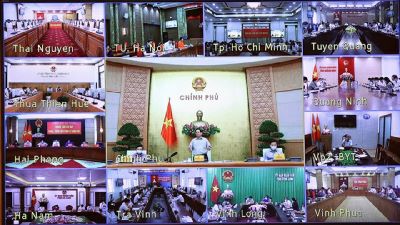
HÀ NỘI — Prime Minister Phạm Minh Chính said the National Steering Committee for COVID-19 Prevention and Control has agreed to change the strategy policy from “Zero COVID” to “Safe and flexible adaptation and effective control of the COVID-19 pandemic”, striving to bring the country back to a new normal by the end of September.

He made the statement at the committee’s meeting on Saturday, held to review the leadership, direction, implementation of measures to prevent and control the pandemic in the past; analysing results, limitations, causes in pandemic prevention and control.

Speaking at the online meeting between the Steering Committee and officials from 10,400 communes, wards and townships, 705 districts, and 63 cities and provinces nationwide, the PM noted that so far, COVID-19 has been gradually controlled in the majority of localities, but complicated developments continue.

A report from the Steering Committee at the meeting said that, from the beginning of the fourth wave of the pandemic to September 24, the whole country recorded 734,000 cases, while 503,000 people have recovered (69 per cent), and more than 18,000 deaths were reported.

Last week there were 72,236 new cases, down 9.7 per cent compared to the previous week and the number of deaths in the week decreased by 12.1 per cent compared to the previous week. Currently, there are 16 out of 63 provinces and cities that have gone 14 days without any new infections.  

In 23 localities implementing social distancing measures, the pandemic situation is gradually being controlled; the number of cases in the last seven days decreased by 9.8 per cent compared to the same previous period.

Regarding vaccinations, as of September 24, 2021, the whole country had administered 37.6 million doses, with more than 30 million people receiving first shots and 7.5 million people getting two shots, while about 14 million more vaccine doses will continue to be administered. 

ADVERTISEMENT

At the meeting, leaders of ministries, sectors and localities shared their experiences in pandemic prevention and control, especially in directing, organising, coordinating and implementing social distancing, screening, rapid testing, F0 classification, care and treatment.

They also discussed the temporary plan for “Safely and flexibly adaptation and effective control of the COVID-19 pandemic” in the spirit of striving to implement pandemic control and socio-economic development at the same time.

While lauding localities’ efforts in the pandemic fight, PM Chính also pointed to shortcomings in the field, including the ineffective implementation of directions in some localities, particularly at grassroots level, slow testing progress and inefficiency in conducting support policies for pandemic-hit groups.

He noted that localities should not stay relaxed and be negligent when the pandemic is just controlled at a very basic level, and they must be consistent and persistent in leadership and direction, but apply anti-pandemic measures flexibly based on specific condition of each locality.

He asked localities to strengthen decentralisation in pandemic prevention and control activities, with communes, wards and townships as “fortresses” and people as “warriors” in the fight. They should speed up vaccinations, especially targeting those in high-risk areas, he said.

PM Chính also urged ministries, sectors and localities to quickly design measures to restore production while continuing to ensure safety.

He assigned the Ministry of Health to gather ideas and build criteria on safely, flexibly adapting to and effectively controlling COVID-19, along with detailed guidelines on its implementation.

Ministries, sectors and localities should immediately set up their task forces for socio-economic recovery and development headed by their top leaders, and build plans for economic recovery in accordance with their own situation, the Government leader requested.

He also asked for the revision of regulations on entry-exit control, giving optimal conditions for foreign experts to enter the country to work.

It is necessary to study regulations on the recognition of “vaccine passports”, he stressed.

The PM assigned the Ministry of Education and Training and the Ministry of Information and Communications (MIC) to coordinate with localities to ensure telecoms services and computers for students studying online. The MIC was requested to quickly develop an app used for all COVID-19 prevention and control activities.

PM Chính also underlined the need for ministries, sectors and localities to give timely and effective support to pandemic-hit groups in a transparent manner, honouring individuals and organisations with outstanding contributions in pandemic prevention and control, and strictly handling violations.

Earlier in a meeting on Thursday, Chính stressed that instructions for fighting the pandemic in the future should go in tandem with inspection and supervision, and reiterated the principles that health care plays the central role; economy serves as the foundation; data, science and technology are the key; political and social stability is essential; and vaccines, treatment drugs and public awareness are the prerequisites. — VNS

Published : September 27, 2021

Kabul intl airport now ready for intl flights: official #SootinClaimon.Com

#SootinClaimon.Com : ขอบคุณแหล่งข้อมูล : หนังสือพิมพ์ The Nation.

https://www.nationthailand.com/international/40006687


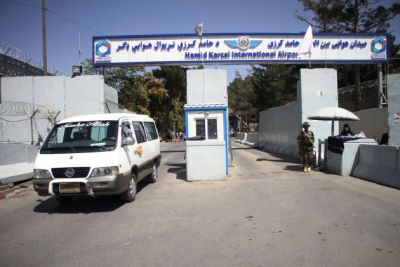
The Kabul International Airport is now fully operational for international flights and all airliners can resume airlifts, the Ministry of Foreign Affairs of the Taliban caretaker government announced.

The Kabul International Airport is now fully operational for international flights and all airliners can resume airlifts, spokesman of Ministry of Foreign Affairs of the Taliban caretaker government announced on Sunday.

“As the problems at Kabul International Airport have been resolved and the airport is fully operational for domestic and international flights, the Islamic Emirate of Afghanistan assures all airlines of its full cooperation and expects all airlines and countries that had previously flown to Kabul to resume their flights as before,” spokesman Abdul Qahar Balkhi said in a statement.

ADVERTISEMENT

The Ministry of Foreign Affairs once again assures full cooperation on its part in conducting flights more than 40 days after Taliban takeover, he added.
 

Related Stories

The Kabul airport was damaged with its many facilities destroyed during the withdrawal of U.S.-led forces and American nationals on Aug. 31.

Airport authorities confirmed that the Kabul airport has received planes carrying humanitarian assistance from Qatar, Bahrain, the United Arab Emirates, Uzbekistan, Kazakhstan and Pakistan as well as a number of commercial flights from Pakistan, Iran and Qatar in recent weeks despite long suspension in the flights since mid-last month.

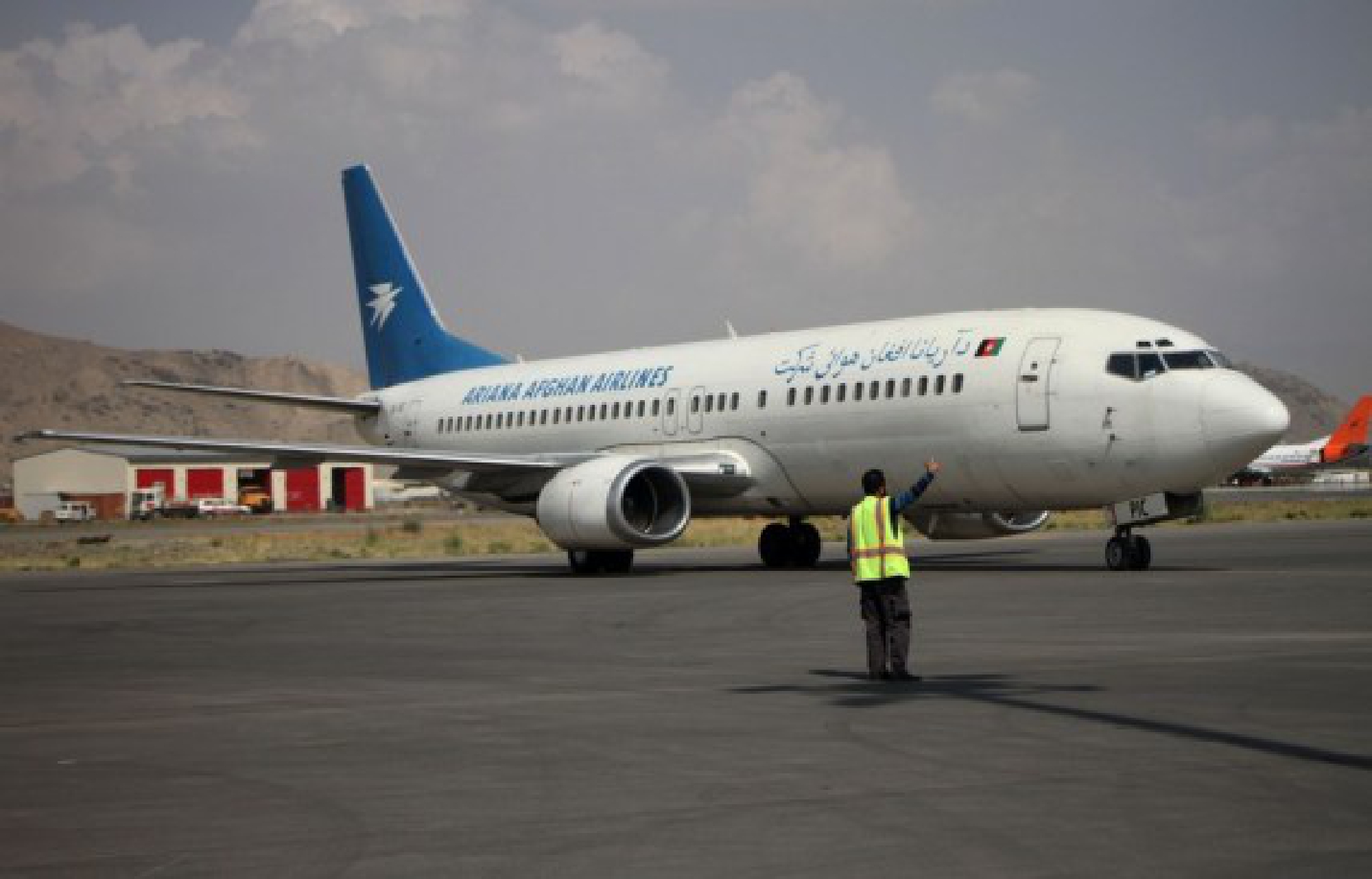
Photo taken on Sept. 20, 2021 shows a plane at the Kabul International Airport in Kabul, capital of Afghanistan. (Photo by Saifurahman Safi/Xinhua)Photo taken on Sept. 20, 2021 shows a plane at the Kabul International Airport in Kabul, capital of Afghanistan. (Photo by Saifurahman Safi/Xinhua)

Published : September 27, 2021