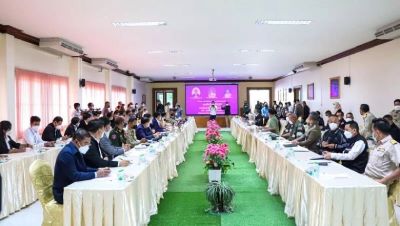
The governors of Battambang and Pailin province met with their counterpart from Thailands Chanthaburi province to discuss reopening the border to allow legally permitted Cambodian migrant workers to return to work, according to the Battamabang provincial administration.
The meeting was attended by Battambang provincial governor Sok Lou, Pailin governor Ban Sreymom and Chanthaburi provincial governor Suthee Thongyam.
They talked about facilitating the commuting procedures for Cambodians who are still working in Chanthaburi province despite the pandemic.
The Battambang provincial administration said that the Thai authorities will reopen the border checkpoints between Chanthaburi and Battambang for lawfully employed migrant workers soon.
They said that workers will only get permission to work in Thailand if they have already been fully vaccinated with two doses and tested they’ve tested negative for Covid-19. They must also undergo quarantine and have to undergo quarantine in Thailand.
Workers who are unsure of their employment status should contact their employers as they are responsible for the workers once they are in Thailand.
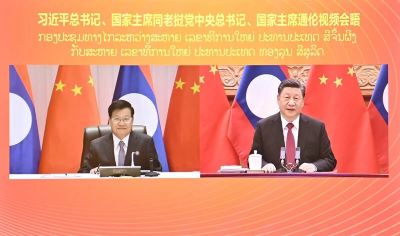
President Xi Jinping, who is also general secretary of the Communist Party of China Central Committee, met with Thongloun Sisoulith, general secretary of the Lao Peoples Revolutionary Party Central Committee and Lao president, via video link on Friday.
The two leaders also jointly witnessed the opening of the China-Laos Railway in a virtual ceremony.
The first train bound for China left on Friday afternoon after the railway was put into operation.
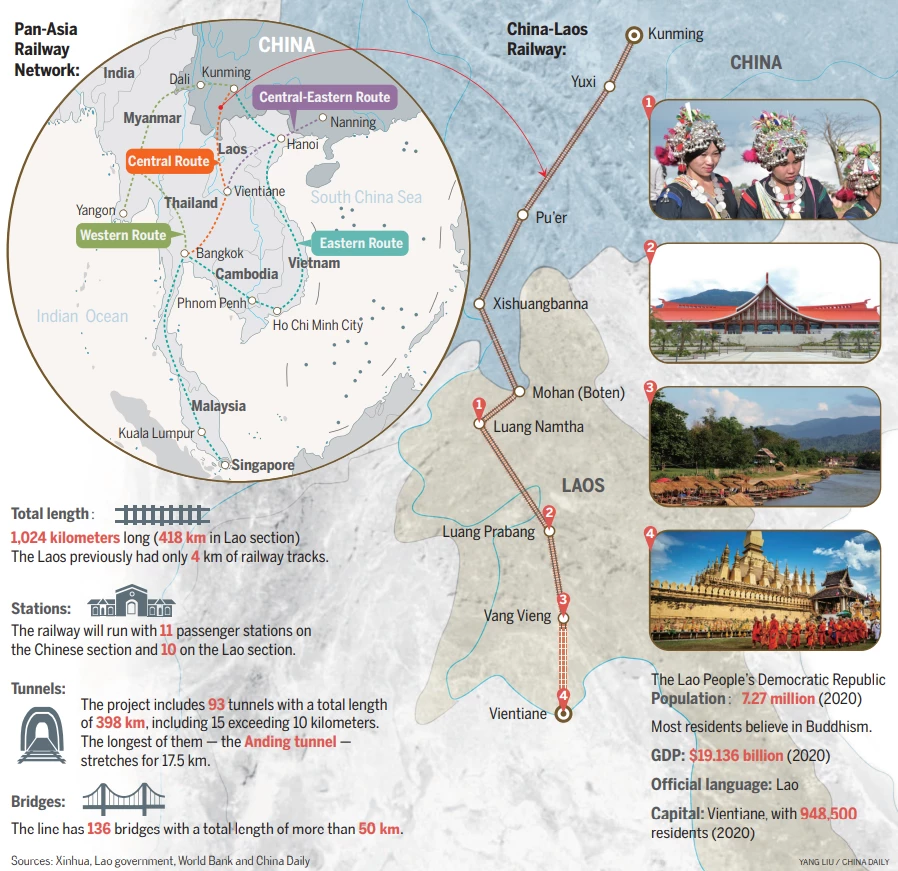
The China-Laos Railway is a docking project between the China-proposed Belt and Road Initiative and Laos’ strategy to convert itself from a landlocked country to a land-linked hub.
It will bring new opportunities and provide huge momentum in strengthening Laos’ economy. The train route will connect the Chinese city of Kunming to the Lao capital Vientiane, with grand plans for high-speed rail to ultimately snake down through Thailand and Malaysia to Singapore.
Amid worries over the omicron variant of COVID-19, Korean testing kit makers showed confidence in their equipment’s ability to detect the new virus variant, pushing up their stock prices again.
GreenCross Medical Science said Friday that the effectiveness of its COVID-19 testing kit has been confirmed for the new omicron variant as well.
In order to assess the validity of the result from its testing equipment, GCMS conducted the ‘in-silico’ experiment, which refers to a type of analysis performed through computer simulation.
The company said the analysis confirmed that the gene sequence of the omicron variant did not affect the target area of its testing kit, meaning that it can pick up whether the person is infected regardless of the variant.
After the announcement was made on Friday, the company’s stock price began to surge. The stock closed at 7,720 won ($6.53), up 9.5 percent from the closing price the previous day.
A day earlier, Boditech Med also said that the company completed the evaluation of its COVID-19 testing kit product’s effectiveness on the omicron variant.
The company explained that most of virus variants are taking place in the spike protein, which is located on the outside of the virus. But as Boditech Med’s testing kits mostly target the nucleocapsid protein that is placed on the inside of the virus surface, their equipment to confirm the COVID-19 infection is not hindered by the new variant, it added.
“Outside of the testing kits already being sold, we are in the process of developing a testing kit that can determine the infection of the omicron variant with one test,” a Boditech Med official said.
Seegene’s virus diagnostic reagent can detect the omicron variant, the company said Wednesday.
The diagnostic reagent targets four COVID-19 virus genes and five variant genes, the company explained, and of the genes that the omicron variant contains, three kinds can be spotted by Seegene’s product. If those three variant genes are found, the case can be presumed to be an omicron variant infection, it added.
“Considering the speed of the spread and the danger of the virus, this omicron variant has a chance to take away our everyday life again. Because of this, proactively diagnosing the variant in the early stages of the spread is more important now,” said Chun Jong-yoon, CEO of Seegene, in a press release.
“Our (diagnostic reagent) will help each country’s government quickly sort out people who are possibly infected with the omicron variant and take control.”
The omicron variant is the fifth virus designated as a “variant of concern” by the World Health Organization, following the alpha, beta, gamma and delta variants. According to the WHO, the new virus variant was reported in 23 countries across the world as of Wednesday.
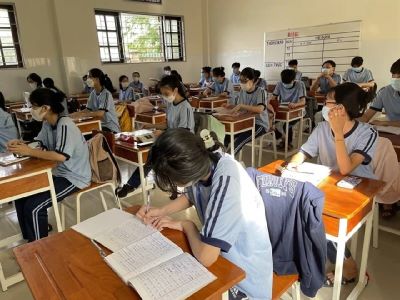
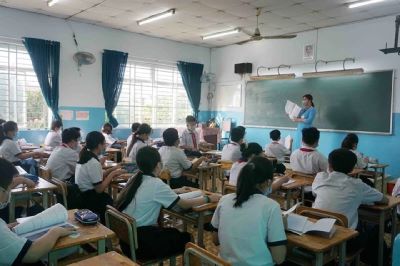
HCM CITY – Secondary and high school students in HCM City will have 12 to 30 in-person lessons per week, depending on COVID-19 risk levels, when the city allows schools to reopen.
According to the city Department of Education and Training, students attending schools in areas of low risk would have no more than 30 in-person lessons per week, while extra classes will be held online.
Under the plan, schools in areas of medium risk would teach no more than 18 in-person lessons per week. These lessons will mainly be from the main curriculum and for tutoring purposes to make up for past online lessons. Students in the sixth, ninth and 12th grades in medium-risk areas will be allocated more in-person lessons, but no more than 24 per week.
Schools in high-risk areas can only attend up to 12 in-person lessons per week, and cannot hold other school events. Students in the sixth, ninth and 12th grades in these areas can have up to six more weekly lessons.
Schools in “very high” risk areas will have online classes only.
Students living in other provinces who cannot return to HCM City, who have underlying health problems, or are under quarantine will continue online classes or through another medium such as television.
Secondary and high schools have been asked to evaluate their online teaching during the past semester, and be prepared to organise tutoring classes when students return to school.
Schools must also discuss pandemic safety measures with parents and submit plans to city districts’ and Thủ Đức City’s pandemic prevention and control steering committees by December 5.
The city will begin a pilot school reopening period of two weeks beginning on December 13 when students from the first, ninth and 12th grades will be allowed to return to school. Five-year-old children will be permitted to attend kindergarten on December 20.
Students in other grades will gradually be allowed to return to schools beginning on January 3.
Meanwhile, Thạnh An island commune in Cần Giờ District, which allowed students from some grades to attend school on October 20, will welcome back students at all levels on December 13.
Exams for the first semester for all schools will be held from January 10-22.
As of the end of November, more than 598,000 children aged 12 to 17 in HCM City have been fully vaccinated. – VNS
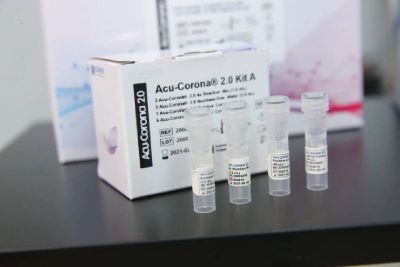
SINGAPORE – The battle to fend off the new Omicron coronavirus variant has got a boost from polymerase chain reaction (PCR) test kits developed by home-grown medical technology firm Acumen Diagnostics.
Its two PCR test kits – Acu-Corona 2.0 and Acu-Corona Duplex – which can detect the Delta variant, can also identify the Omicron strain. These kits are already in use.
It was reported on Thursday (Dec 2) that two imported Covid-19 cases have preliminarily tested positive for the Omicron variant in Singapore.
The Acu-Corona 2.0 test targets two Covid-19 genes – RdRp and E – that are present in both the Omicron and Delta variants.
Meanwhile, the Acu-Corona Duplex test targets the E gene and S gene. The portion of the S gene targeted by the test does not contain any of the 32 mutations in the Omicron variant, hence it can detect the variant without any loss of sensitivity.
Omicron has a large number of gene mutations that have not been reported in a single viral variant before. So far, scientists have seen 32 mutations in the spike gene of Omicron, whereas there are nine mutations in Delta’s spike gene, and this gives them reason to believe that Omicron may have fairly different characteristics from previous variants.
The spike protein is an important part of the virus that allows it to bind to human cells and facilitate infection of the cells. So a change in the spike protein may change the ability of the virus to infect cells and cause adverse effects.
Acumen Diagnostics said on Friday that since the kits are manufactured locally, they can be deployed quickly and cost about half the price of imported ones.
The firm currently operates two laboratories that can process 7,000 diagnostic tests daily.
Dr Ong Siew Hwa, Acumen Diagnostics’ chief executive officer and chief scientist, said: “With PCR tests remaining the gold standard to detect Covid-19, Acumen Diagnostics remains well positioned to help Singapore tackle this new challenge posed by the virus.”
Acumen Diagnostics is not the only firm whose existing kits are capable of detecting Omicron.
Biotech firm MiRXES, which is currently using its Fortitude 2.1 Covid-19 PCR kit in Singapore, has also said the kit can detect all Sars-CoV-2 variants of concern identified so far, including Delta and Omicron.
Local biotech company BioAcumen Global also said the new variant does not affect the detection capability of its existing kit, the BioA SARS-CoV-2 Real-Time RT-PCR kit v2.0.
All these kits detect both Delta and Omicron, but are not able to distinguish between the two. To confirm if a positive Covid-19 case has been infected by the Omicron variant, gene sequencing is necessary.
A preliminary study by South African scientists published on Thursday suggests that the Omicron variant is three times more likely to cause reinfections compared with the Delta or Beta strain.
The spread of Omicron has upset the reopening of travel in many countries.
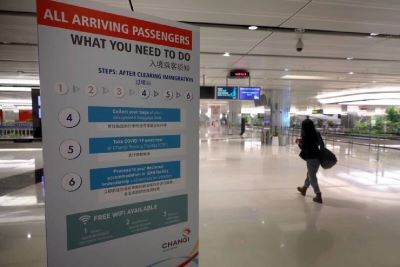
In Singapore, tighter border measures took effect from 11.59pm on Thursday, and three planned vaccinated travel lanes for Qatar, Saudi Arabia and the United Arab Emirates have been postponed indefinitely.
Malaysia has temporarily banned the entry of travellers from countries that have reported the Omicron variant or are considered high-risk. The travel ban so far applies to eight African countries, including South Africa, Zimbabwe, Mozambique and Malawi, but this could be extended to other places where the variant has been detected.
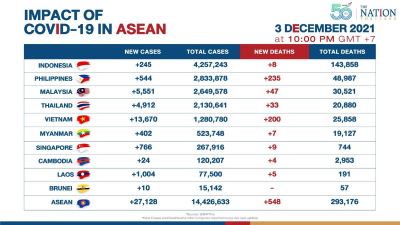
The number of Covid-19 cases crossed 14.4 million across Southeast Asia, with 27,128 new cases reported on Friday (December 3). New deaths are at 548, bringing accumulated Covid-19 deaths in Asean to 293,176.
Singapore’s medical technology firm Acumen Diagnostics announced on Friday that its two PCR test kits – Acu-Corona 2.0 and Acu-Corona Duplex – which can detect the Delta variant, can also identify the Omicron strain. The firm said that since the kits are manufactured locally, they can be deployed quickly and cost about half the price of imported ones. The firm currently operates two laboratories that can process 7,000 diagnostic tests daily.
Vietnam’s Department of Education and Training has said that secondary and high school students in HCM City will have 12 to 30 in-person lessons per week, depending on Covid-19 risk levels, when the city allows schools to reopen. Students attending schools in areas of low risk would have no more than 30 in-person lessons per week, while extra classes will be held online.
HCM CITY — The HCM City People’s Committee will begin a pilot school reopening period on December 13.
Under the plan, students from the first, ninth and 12th grade can return to school on December 13, while five-year-old children can go to kindergarten on December 20.
The city will allow Thạnh An Kindergarten, the Thạnh An Primary School, and the Thạnh An Secondary and High School to welcome back students at all levels on December 13.
Schools must discuss pandemic safety measures with parents and submit plans to city districts’ and Thủ Đức City’s pandemic prevention and control steering committees by December 5. They must also offer training on pandemic prevention and control to all teachers and staff.
The pandemic prevention and control steering committees are responsible for checking and supervising pandemic safety measures at schools.
The Department of Education and Training and Department of Health have been asked to submit an evaluation of the school reopening to the city People’s Committee after the two-week pilot period. This is being done to prepare for all-level students to return to school on January 3.
The schools with good facilities and safety assurance will have priority to open in-class learning soon, while students and teachers from very high-risk areas must be tested for SARS-CoV-2 following the Ministry of Health’s guidelines.
According to the level of risk, the city will choose between online or direct learning for high school students on a weekly basis. Its announcement will be released on Monday mornings.
The People’s Committees of Thủ Đức City and districts are responsible for the selection of online or direct learning for the other schools, based on each locality’s level of risk.
Phan Hoàng Thu Anh, a student at the city-based Vietnam Australia International School, said: “I am eager and excited at return to school soon. My class has only 16 students. All of us are fully vaccinated. So we believe we will maintain the 5K protocol at school.”
Her teacher, Nguyễn Thành Luân, said: “The school and teachers are preparing pandemic prevention and control measures to ensure safety for students when they come back to school.” — VNS
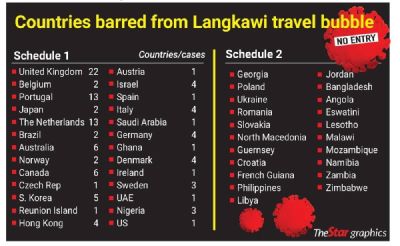
PETALING JAYA: Travellers from a number of countries are temporarily barred from taking part in the Langkawi international travel bubble programme following the detection of cases involving the Omicron variant (see graphic).
This comes as Singapore reported the discovery of two cases of the Omicron variant in the island republic.
The ban also applies to those with a history of having travelled to these countries in the last 14 days. These countries are under the First Schedule, which will be updated daily.
Travellers from countries in the Second Schedule, which are countries at high risk of the Omicron variant but have yet to report any cases, as well as those with a history of travelling within 14 days, are also not allowed to take part in the bubble.
The list of countries in the Second Schedule will be updated weekly.
In a statement, Health director-general Tan Sri Dr Noor Hisham Abdullah said residents of Langkawi, involving both Malaysians and those with long-term visit passes from these countries and with a history of travel to these countries within 14 days, could only enter via Kuala Lumpur International Airport.
“They are also required to undergo 14 days’ quarantine at designated centres before being allowed on to Langkawi. Direct flights to Langkawi are not allowed,” he said.
He added that the ministry was also carrying out a risk analysis based on a set of criteria of countries before they were allowed to take part in the international travel bubble.
“Among the criteria are Covid-19 incidences and immunisation coverage,” he said.
Yesterday, there were 5,806 new Covid-19 cases reported, including 11 imported cases, while the infectivity level is at 0.95. Perlis has the highest infectivity level at 1.09.
Dr Noor Hisham said Malaysian authorities were monitoring the situation in Singapore.
He added that additional testing to detect the presence of the new variant would also be increased, on top of arrival and pre-departure testing.
“We are monitoring the situation closely and increasing additional testing as announced.
“For those who are high risk, we will do the genomic sequencing test,” he said.
The Straits Times reported that two imported Covid-19 cases have preliminarily tested positive for the Omicron variant in Singapore yesterday,
It said both cases were isolated upon arrival in Singapore on Wednesday, and had not interacted in the community.
“There is currently no evidence of any community transmission from these cases,” said the republic’s Health Ministry.
Both cases arrived from Johannesburg on board a Singapore Airlines flight, the paper said.
In Johor Baru, Mentri Besar Datuk Hasni Mohammad said Malaysia and Singapore would need between two weeks and one month to decide whether there was a need for a more appropriate standard operating procedure (SOP) for the land Vaccinated Travel Lane (VTL-Land) following the emergence of the Omicron variant.
He said the time frame was needed by the two sides to determine the effects and position of Omicron.
“But at the same time, the VTL-Land will continue,” he said after the launch of the JohorPay app and Johor Project Monitoring System yesterday.
Hasni also attended the audience granted by Johor Ruler Sultan Ibrahim Ibni Almarhum Sultan Iskandar to Singapore Foreign Minister Dr Vivian Balakrishnan.
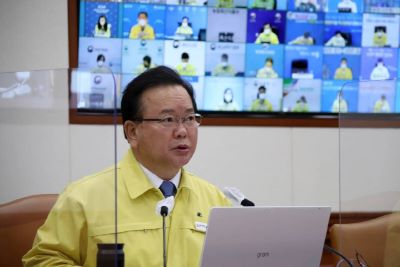
South Korea will limit private gatherings to six people in the capital area and eight in other regions for four weeks starting next week, Prime Minister Kim Boo-kyum said Friday, reversing an easing of distancing rules adopted under the “living with COVID-19” scheme last month.
Kim announced the new measure during a meeting of the Central Disaster and Safety Countermeasures Headquarters amid a surge in COVID-19 infections in the country and heightened fears of the more contagious omicron variant.
Currently the cap is 10 people in the capital area and 12 in other regions.
Kim also said most public facilities, including restaurants and cafes, will be added to the list of businesses requiring proof of vaccination or a negative test for entry.
The government will allow a one-week grace period before enforcing the so-called vaccine pass system at the additional facilities.
The list currently comprises karaoke establishments, public bathhouses, indoor gyms, bars and nightclubs, horse racing and track cycling courses, and casinos.
The vaccine pass system will apply to teenagers starting next February after more of them are vaccinated.
“The government will focus on firmly reinforcing the dike (against COVID-19) for the next four weeks,” Kim said during the meeting.
“Even after today, the government will regularly assess all antivirus conditions and, if necessary, take swift measures to strengthen the antivirus campaign at any time,” he added.
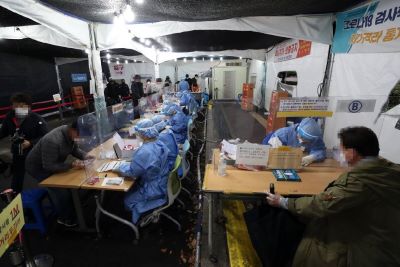
South Korea has seen new cases above 5,000 for the past two days in a record high since the pandemic began early last year.
Critical cases have also hit above 700, leading to shortages of hospital beds and putting additional strain on the health care system.
The emergence of the omicron variant has added to concerns, with six people confirmed to have been infected with the new variant as of Thursday.
Kim urged senior citizens to get their booster vaccine shot and teenagers to receive their regular doses, saying vaccines are the best safeguard against the disease.
He also asked businesses to have employees work from home as much as possible until the end of the year.
Starting Friday, December will be designated as the government’s “special antivirus inspection period” in an effort to contain the virus.
Additional details of the new measures will be announced in a press briefing later Friday. (Yonhap)
SINGAPORE – Two imported Covid-19 cases have preliminarily tested positive for the Omicron variant on Thursday (Dec 2), the Ministry of Health (MOH) said.
Both cases were isolated upon arrival in Singapore on Wednesday, and had no interaction with anyone in the community.
“There is currently no evidence of any community transmission from these cases,” said MOH in a statement on Thursday.
The ministry added that both cases are currently recovering in isolation wards at the National Centre for Infectious Diseases. They are fully vaccinated, and have mild symptoms of cough and scratchy throat.
Both cases arrived from Johannesburg on board Singapore Airlines flight SQ479 on Wednesday.
The first case is a 44-year-old Singapore permanent resident who was travelling from Mozambique and transited in Johannesburg.
He had tested negative for Covid-19 in his pre-departure test in Mozambique on Nov 29.
The second case is a 41-year-old Singaporean woman who travelled from South Africa.
She had tested negative for Covid-19 in her pre-departure test in Johannesburg on Nov 29.
“They had undergone a polymerase chain reaction (PCR) test upon arrival in Singapore and were immediately conveyed to a stay-home notice (SHN) dedicated facility to be isolated while awaiting their test results,” said MOH.
Their PCR test results revealed the presence of S-gene Target Failure, which may be associated with the Omicron variant, the ministry added.
MOH said the National Public Health Laboratory is conducting whole genome sequencing to confirm if the two cases had indeed contracted the Omicron variant.
The remaining 19 passengers on the same flight have tested negative for Covid-19, said MOH, adding that contact tracing is ongoing.
All 19 were quarantined at designated facilities upon arrival and did a PCR test.
They will have to do another PCR test when their 10-day SHN is over.
Other close contacts will also be placed on 10-day quarantine and undergo PCR tests at the start and end of their quarantine, said MOH.
“All patients suspected or confirmed to be infected with the Omicron variant will be sent to NCID for isolation and clinical management. Home recovery will not apply,” the ministry added.