China, Russia may update investment deal

#SootinClaimon.Com : ขอบคุณแหล่งข้อมูล : หนังสือพิมพ์ The Nation.

https://www.nationthailand.com/international/40009561


Nations agree to continuously expand high-quality growth of bilateral trade
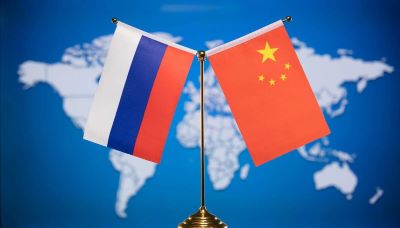
China and Russia are looking into the feasibility of updating their bilateral investment treaty, which was signed in 2006 and took effect in 2009, to provide better institutional support for the two nations’ investment cooperation, the Ministry of Commerce said on Thursday.

Shu Jueting, a spokeswoman for the ministry, made the remark during a news briefing when being asked about a recent meeting via video link between Premier Li Keqiang and Russian Prime Minister Mikhail Mishustin, which was the 26th regular exchange between Chinese and Russian heads of government.

“While fully recognizing the achievements in China-Russia economic and trade relations this year and the upward momentum of bilateral pragmatic cooperation in various areas, the two sides have reached multiple consensuses in furthering cooperation to give new impetus to the China-Russia comprehensive and strategic partnership of coordination in the new era,” Shu said.

Trade between China and Russia is on a fast growth track this year, despite a 2.9 percent decline on a yearly basis in 2020. Their bilateral trade in goods reached more than $115.6 billion in the first 10 months of this year, up 30.9 percent year-on-year, compared with $107.77 billion for the whole of 2020, according to customs statistics.

China’s outbound direct investment in Russia surged 39.1 percent year-on-year in the January-October period, according to the ministry.

Shu said the two sides have agreed to continuously expand the high-quality development of bilateral trade, make new breakthroughs in investment and major project cooperation, deepen industrial and supply chain cooperation, advance cooperation in emerging areas and comprehensively strengthen cooperation on multilateralism.

China will join hands with Russia to fully implement the important consensus that was reached, give further play to the cooperation mechanisms between the two governments and further promote bilateral economic and trade relations and pragmatic cooperation in various fields, to strengthen and deepen the comprehensive and strategic partnership of coordination between the two nations in the new era, she added.

Zhang Jianping, head of the Center for Regional Economic Cooperation at the Chinese Academy of International Trade and Economic Cooperation in Beijing, said that economic and trade ties between China and Russia are well poised to strengthen, with greater potential considering their large populations and economies.

Their strong economic complementarity also points to brighter cooperation prospects, he said.

“Russia’s comparative advantages in sectors such as nuclear energy, aviation, aerospace, agriculture, energy and natural resources match well with China’s needs for economic growth at a time of high-quality development,” Zhang said.

“Upgrading their investment treaty, which was signed years ago under conditions that have changed, will bolster bilateral investment and promote the integration and cooperation of global supply and industrial chains,” he added.

The ministry and its Russian counterpart have joined forces to complete a road map on high-quality development in goods and services trade, and are aiming to increase bilateral trade to $200 billion.

They have also agreed to promote development in cross-border e-commerce and trade in services, improve trade facilitation, expand market access for agricultural products, improve the use of expo platforms and actively implement the trade and economic cooperation agreement between China and the Eurasia Economic Union.

Cooperation has also been progressing between China and Russia on major strategic projects in fields such as nuclear energy, aviation and aerospace. The two nations are in active negotiations on an intergovernmental agreement on cooperation in constructing an international lunar research station, according to Shu.

They will also strengthen coordination on policies, industries and projects, and deepen upstream and downstream cooperation in sectors including energy and minerals, agriculture and forestry, and industrial manufacturing and telecommunication to enhance infrastructure interconnection and the integration of industrial and supply chains.

The two nations will also further cooperation in fields such as technological innovation and multilateralism.

Published : December 03, 2021

By : China Daily
[Malaysia] ‘Travel ban is temporary’

#SootinClaimon.Com : ขอบคุณแหล่งข้อมูล : หนังสือพิมพ์ The Nation.

https://www.nationthailand.com/international/40009521


PETALING JAYA: As reports emerge of the Covid-19 Omicron variant spreading globally, the government will be assessing the situation daily and broadening travel restrictions.

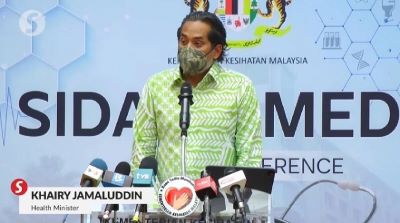
Health Minister Khairy Jamaluddin said Malawi has been added to the list of countries under temporary travel restrictions as of Dec 1. Other countries currently on the list are South Africa, Botswana, Eswatini, Lesotho, Mozambique, Namibia and Zimbabwe.

The temporary travel restriction only applies to non-Malaysians from these countries. Malaysians and those holding long-term passes, including permanent residency status, spouse visa, MM2H, and residence passes, will not be barred from entry.

However, they will be required to undergo a compulsory 14-day quarantine regardless of their vaccination status, he said.

“They will also need to undergo a RT-PCR test 72 hours before flying and after arriving at the international travel gates and on the 10th day of quarantine.

“A risk assessment will be conducted on the 14th day and the quarantine period will be extended if there are symptoms,” he said.

Malaysians will also not be allowed to travel to the countries on the list and entry of international students and foreign workers from these countries will be postponed.

Khairy said the countries were placed on the list based on whether the Omicron coronavirus variant spread from an imported case or community transmission.

“We also looked at the country’s vaccination rate and whether there was a risk of high transmission in a short time.

“If the vaccination rate is low and the community spread is wide, then the ministry’s risk assessment is to put the country on the list, but if the transmission is due to imported cases and is low, and the country has a high vaccination rate, then we will not add it to the list,” he said during yesterday’s press conference.

This assessment will be reviewed daily by the ministry, he said, adding that the steps are taken as a precautionary measure and not to punish the countries on the list.

“The ministry will also prepare a list of countries recognised as ‘at high risk of Omicron variant infections’ for distribution to relevant agencies on a daily basis,” he said.

He pointed out that this was only a temporary measure until more information is available about the variant.

“If we find that it is not a threat to public health then we will loosen the restrictions once again.

“This is in line with the World Health Organisation’s (WHO) recommendation not to overreact to the variant of concern and to respond in a proportionate manner and to continue to share information while updating measures,” he said.

When asked if the government would also impose temporary travel restrictions on the United Kingdom, Belgium, Netherlands and Australia following reports of suspected community transmissions of the Omicron variant, Khairy said the government still needs more information before completing a risk assessment.

Published : December 02, 2021

By : The Star

2nd omicron case detected in Japan

#SootinClaimon.Com : ขอบคุณแหล่งข้อมูล : หนังสือพิมพ์ The Nation.

https://www.nationthailand.com/international/40009520


A man who arrived in Japan from Peru was confirmed to be infected with the omicron variant of the novel coronavirus, Chief Cabinet Secretary Hirokazu Matsuno said at a press conference on Wednesday.

2nd omicron case detected in Japan

It is the second case of the variant confirmed in Japan.

The man, who is in his 20s, tested positive for coronavirus on arrival in Japan. The National Institute of Infectious Diseases confirmed he was infected with the variant after conducting a genome analysis.

Japan’s first omicron case was detected on Tuesday in a diplomat who arrived in Japan from Namibia.

Published : December 02, 2021

By : The Japan News

South Korea finds first cases of omicron

#SootinClaimon.Com : ขอบคุณแหล่งข้อมูล : หนังสือพิมพ์ The Nation.

https://www.nationthailand.com/international/40009519


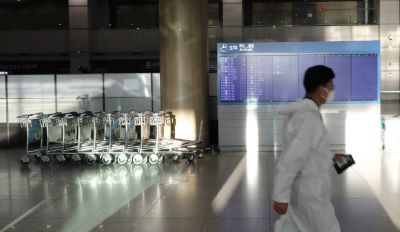
South Korea has discovered its first cases of COVID-19’s omicron variant, the Korea Disease Control and Prevention Agency said Wednesday evening.

The first cases of the omicron variant were confirmed in a couple in their 40s who recently traveled to Nigeria and a man in his 30s whom they met after returning.

The couple returned to Korea on Nov. 24 after staying in Nigeria from Nov. 14 through 23. Their PCR tests, taken on the day of their arrival, came back positive the next day.

As both were fully vaccinated, they were exempted from post-travel quarantine and had at least a day to roam freely in Incheon, where they live.

The couple’s teenage son also tested positive since. His omicron test results are still pending.

Later the same evening the agency said a further two cases were identified, also among recent travelers to Nigeria, bringing the total number of known cases to five.

The two women in their 50s visited Nigeria from Nov. 13 to 22. They tested positive Nov. 24, a day after returning. Neither were vaccinated.

So far all of the patients confirmed with omicron have shown mild symptoms, the agency said.

The agency said in an emergency announcement Tuesday evening that it was examining the four cases for possible infection with omicron after one of the samples tested positive for “variant that isn’t delta.”

Eight people who have come into contact with the couple are being tested, in addition to the 45 passengers who were aboard the same flight.

The agency is also investigating contacts of Japan’s first omicron infection, a diplomat from Namibia, who arrived at the Japanese capital’s Narita airport after a layover at Incheon Airport in Korea.

On Tuesday the agency and concerned ministries formed a task force dedicated to responding to the new variant.

Korea announced on Saturday it was barring foreign arrivals from eight southern African countries — South Africa, Botswana, Zimbabwe, Namibia, Lesotho, Eswatini, Mozambique and Malawi — and that it would be sending samples of all overseas arrivals who tested positive for sequencing as precautionary measures against omicron.

By Kim Arin

Published : December 02, 2021

By : The Korea Herald

Covid-19 vaccination status checks begin at Singapore libraries

#SootinClaimon.Com : ขอบคุณแหล่งข้อมูล : หนังสือพิมพ์ The Nation.

https://www.nationthailand.com/international/40009518


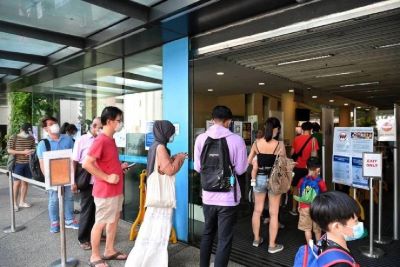
SINGAPORE – Queues formed outside libraries on Wednesday (Dec 1) – the first day that vaccination-differentiated safe management measures kicked in at these locations.

When The Straits Times visited Bishan Public Library at 10am, a counter had been set up at the entrance for staff to check the inoculation status of patrons.

A queue of 20 visitors had formed, with most in line having already scanned the QR codes outside the library.

This meant that once the library opened at 10am, they were able to present their SafeEntry green passes to staff showing that they are fully vaccinated or have a cleared Covid-19 test status.

On Nov 20, a multi-ministry task force on Covid-19 announced the expansion of vaccination-differentiated safe management measures to more venues to reduce the risk of transmission of the virus.

Only fully inoculated individuals, recovered Covid-19 patients, those who are medically ineligible or children aged 12 and below are allowed in settings where such measures apply.

In response to queries from ST, the National Library Board (NLB) said: “We do not require that (these children) be accompanied by an adult, but encourage parents to ensure that their children comply with all safe management measures.”

One of the first patrons in line at the Bishan library was a housewife, who wanted to be known only as Mrs Chan, and her 11-year-old daughter Binnie.

When asked about the new rules and how they affect her child who is unable to be vaccinated as she is below 12, Mrs Chan said: “I usually do a group check-in for my daughter. I’m not sure if they will have further checks at the library but we’ve brought along her ez-link card just in case.”

The card indicates her year of birth.

Binnie, a Primary 5 pupil at Kuo Chuan Presbyterian Primary School, has been visiting the library with her mother three to four times a week since she was a two-year-old.

Mrs Chan said: “The school holidays started last week. With Covid-19, we’ve been staying home most of the time so it’s good she can go to the library and read.”

Retired tech consultant Chua Ming Soo, 77, said he feels reassured by the roll-out of the new measures.

Mr Chua, who was reading Chinese-language papers at the multimedia station at the Toa Payoh Public Library, said: “At a library, people touch everything, from the lift buttons to the newspapers. Now there is Omicron, it’s even more dangerous. Nobody knows how severe the symptoms (for the new variant) are.”

When ST visited Sengkang Public Library at 11am, patrons similarly waited in line to enter. Student Roanne Pong, 13, who is fully vaccinated, said: “I think the measures are okay as long as they keep infections low and save lives.”

For the month of December, unvaccinated individuals will still be able to visit libraries but need to show a negative pre-event test result. But from Jan 1, this will cease.

This means that those who are unvaccinated can borrow books only by making a reservation and collecting their items at standalone and regional libraries.

The NLB said last week that the bookdrops and reservation lockers are located outside the libraries and are accessible without entry.

The need for a safe outlet for the public to stay active and renew social bonds has also seen the People’s Association (PA) pilot the resumption of selected classes and activities for fully vaccinated seniors aged 60 and above, since Nov 1.

The task force on Nov 20 said: “Drawing on lessons from these pilots, we will resume more of such activities in a safe manner in the coming weeks.”

These activities will likely include active ageing programmes by the Health Promotion Board and National Silver Academy.

The PA has also implemented vaccination-differentiated measures for bookings of facilities in community clubs/centres from Nov 22.

But unvaccinated residents can still access transient services such as financial aid at its community clubs and centres, PA told ST.

Madam Lim Swee Khim, 54, said she felt safer with the measures.

The IT professional said: “Personally, I’m not that affected… since I’m fully vaccinated. However, I do feel safer if everyone is fully vaccinated in an indoor space since there’s a lower chance of people being infected.”

By Jessie Lim and Gena Soh

Published : December 02, 2021

By : The Straits Times

China sticks to its strategy in COVID-19 response: official

#SootinClaimon.Com : ขอบคุณแหล่งข้อมูล : หนังสือพิมพ์ The Nation.

https://www.nationthailand.com/international/40009517


BEIJING — A health official has emphasized the importance of committing to the current strategy in China to clear COVID-19 infections in a timely manner as highly contagious variants of the virus continue to rage around the world.

Since mid-October, the latest COVID-19 resurgence in China has spread to more than 20 provincial-level regions. Most regions managed to contain the outbreak within an incubation period of about 14 days, said Ma Xiaowei, head of the National Health Commission, in a recent interview with Xinhua.

“We have been thinking, especially during the process of coping with the spread of the Delta variant, how to control the epidemic with more effective measures, lower costs and at faster speeds to minimize its impact on economic and social development and people’s lives,” Ma said.

He added that the government has also noticed that the epidemic response in some countries, which have not implemented strict epidemic control measures, has not been satisfactory. There have been relapses that severely impacted people’s lives, health and the economy and society overall.

As a result, China has been focusing on improving epidemic prevention and early detection, he noted.

Aiming to contain an outbreak within an incubation period, relevant agencies have been making full use of the “golden period,” the first 24 hours of a discovered case, to find those who were in close contact, isolate potentially infected individuals before the virus spreads, or before the infected person can transmit the virus, Ma said. He hailed the strategy as an essential procedure for China’s fight against COVID-19.

The tracing results showed that all the local clustered cases in the latest resurgence in China originated from overseas, Ma said.

Given the loopholes exposed, the government has asked local authorities to strictly remain on guard against imported cases, enhance epidemic response capacity in key areas, step up the management of activities in industries like tourism, and continue to promote mass vaccination and the research and development of related testing reagents.

“China’s practices in fighting COVID-19 show that effectively containing the virus, in a country with a population of more than 1.4 billion, is its biggest contribution to the international anti-pandemic fight,” Ma said. 

Published : December 02, 2021

By : China Daily

Korea’s daily case count exceeds 5,000 for first time

#SootinClaimon.Com : ขอบคุณแหล่งข้อมูล : หนังสือพิมพ์ The Nation.

https://www.nationthailand.com/international/40009476


South Korea on Wednesday counted more than 5,000 new cases of COVID-19 for the first time since the outbreak started. The previous record was set Nov. 24 with 4,115 cases. The Korea Disease Control and Prevention Agencys situation report showed 5,122 cases and 34 deaths were found in the last 24 hours.

The new high comes a month after the country eased most pandemic restrictions upon entering first of its three-stage return to normal scheme on Nov. 1.

The number of patients with severe or critical COVID-19 also reached a record high of 723. In and around Seoul nearly 90 percent of critical care beds were occupied by Tuesday afternoon, according to the update from the Ministry of Health and Welfare, which oversees COVID-19 bed assignments.

As beds become scarce, the government announced Monday that home isolation will be the default care arrangement for all COVID-19 patients.

So far 452,350 people here have been infected with COVID-19, of whom 3,658 have died, according to official statistics.

By Kim Arin

Published : December 01, 2021

By : The Korea Herald

Learning from past mistakes, Japan aims preemptive strike at omicron

#SootinClaimon.Com : ขอบคุณแหล่งข้อมูล : หนังสือพิมพ์ The Nation.

https://www.nationthailand.com/international/40009475


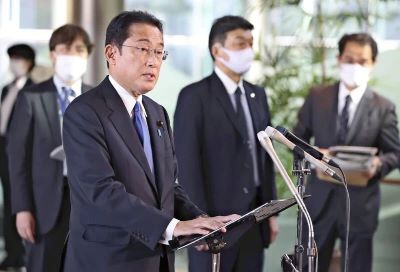
Learning from the insufficient response to the coronavirus crisis by the cabinets of former prime ministers Shinzo Abe and Yoshihide Suga, the government is aiming to make a preemptive strike against the new omicron variant by banning all nonresident foreigners from entering Japan in principle.

Although there are many unclear factors about the new variant, including how infectious it is, Prime Minister Fumio Kishida based his decision on the assumption of a worst-case scenario.

When Kishida announced at the Prime Minister’s Office on Monday that border control measures would be tightened, he said emphatically, “I’m ready to accept all criticism that I’m being too cautious about the omicron variant, even though its impact is still unknown.”

Following announcements on Thursday that the new variant has been detected in South Africa and other countries, the Japanese government said Friday that returning Japanese nationals and reentering foreign residents who had recently been to any of six countries, including South Africa, would have to quarantine at government-designated facilities for 10 days.

According to an aide to the prime minister, the action was taken before the World Health Organization designated the omicron variant as a variant of concern because stock prices were falling around the world, and the government decided a swift response was necessary.

Cases of coronavirus infection have been falling in Japan, so the government allowed — at the request of domestic business circles — some new arrivals of nonresident foreigners from Nov. 8, including short-term business visitors and foreign students and technical interns. Certain conditions had to be fulfilled, including the submission of plans describing their activities in Japan.

Kishida decided quickly to stop the entry of nonresident foreigners this time because he wanted to draw on the lessons learned from the Abe and Suga cabinets.

In the early days of the virus’ spread, the United States denied entry to foreign nationals who had traveled anywhere in China. In contrast, the then Abe Cabinet barred only foreign travelers who had been to China’s Hubei Province, a response that was criticized as inadequate.

In spite of the spread of coronavirus variants, the then Suga Cabinet did not quickly suspend the flow of businesspeople between Japan and 11 other countries and regions, sending its approval rating down.

Masahisa Sato, director of the Foreign Affairs Division of the ruling Liberal Democratic Party, has criticized the Suga Cabinet’s response to the pandemic. Sato told reporters on Monday, “Compared with earlier measures against the pandemic, the Kishida Cabinet has been promptly responding to the coronavirus.”

The prime minister intends to deal flexibly with coronavirus control measures from now on. However, if the government continues to take strict measures in this regard, that could hinder economic activities that had been headed toward normalization.

Although the government has drawn up a strategy to ease border control measures toward the year-end and New Year season, and to facilitate preparations for accepting foreign tourists, it will likely be forced to review that plan.

■ Go To resumption eyed

Kishida met Monday with Kenichiro Yamanishi, chairman of the Japan Travel and Tourism Association, and others. At that gathering, the prime minister said he wanted to consider resuming the government-initiated Go To Travel campaign to help the domestic tourist industry, which has been suspended since the end of last year, during the year-end and New year period.

Kishida indicated he would make a cautious decision based on the spread of the omicron variant.

Regarding quarantine measures for people going to and coming from abroad, Kishida said, “I want to consider what strict border control measures should be taken, working from a careful evaluation of the new variant.”

Published : December 01, 2021

By : The Japan News

[Malaysia] Omicron puts endemic phase on hold

#SootinClaimon.Com : ขอบคุณแหล่งข้อมูล : หนังสือพิมพ์ The Nation.

https://www.nationthailand.com/international/40009474


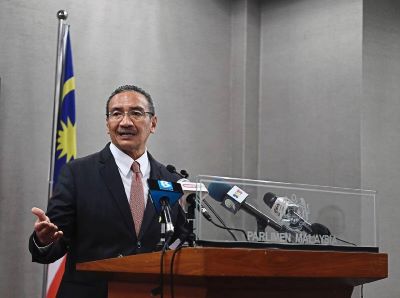
KUALA LUMPUR: Malaysia is putting on hold its transition to the endemic phase of Covid-19 due to uncertainties brought about by the recent emergence of the Omicron variant, says Defence Minister Datuk Seri Hishammuddin Hussein.

He said this was decided by the Cabinet after the Covid-19 Quartet Ministers meeting yesterday.

“Most importantly, for now, the Quartet meeting decided to temporarily put our efforts to transition to the endemic stage on pause until we know more about the Omicron variant,” he told a press conference in Parliament yesterday.

He said the Omicron variant was discussed at length at the meeting, adding that another wave of Covid-19 cases could put Malaysia’s pandemic progress at risk.

“If we don’t monitor Omicron closely, then how are we supposed to deal with it?” he added.

Hishammuddin also said Putrajaya was monitoring countries where Omicron had spread and that the situation was fluid at the moment.

However, he gave his assurance that there would be no changes to the country’s international pilot tourism programme in Langkawi.

Hishammuddin said domestic travel was addressed together with Transport Minister Datuk Seri Dr Wee Ka Siong and representatives from the Tourism, Arts and Culture Ministry.

“They are considering other tourism bubble locations after Langkawi,” he added.

Regarding the Langkawi bubble as a success, he said there would be an announcement soon by the Tourism, Arts and Culture Ministry along with Prime Minister Datuk Seri Ismail Sabri Yaakob.

Hishammuddin also said the travel ban on seven African countries – South Africa, Botswana, Lesotho, Mozambique, Namibia, Zimbabwe and Eswatini – was not based on geopolitics but on health.

“I believe these African countries understand that it isn’t about diplomacy or geopolitics, but health.

“We don’t want to jeopardise our progress for the last one and a half years with irresponsible decisions,” he said.

Hishammuddin added that after the launch of the Vaccinated Travel Lane (VTL) between Malaysia and Singapore, the government was considering opening up other similar routes to Kuching, Penang and Langkawi.

“I have asked all sides to continue discussions with the countries concerned, but we will not make a decision until we know the real impact of Omicron.

“I hope everyone in our country will remain vigilant and doesn’t take risks,” Hishammuddin added.

On Ismail Sabri’s first official visit as premier to Singapore on Monday, he said he hoped to create more travel channels like the green travel bubble with Australia, New Zealand, Japan, South Korea, Thailand and certain provinces in China where Covid-19 was under control.

For now, the VTL initiative, which allows quarantine-free travel, is only for fully vaccinated individuals who are citizens, permanent residents and long-term pass holders of Malaysia and Singapore.

Hishammuddin also said the government would impose stricter border controls on countries where the new variant was prevalent.

Published : December 01, 2021

By : The Star

Singapore tightens border measures, halts further easing of social measures over Omicron variant fears

#SootinClaimon.Com : ขอบคุณแหล่งข้อมูล : หนังสือพิมพ์ The Nation.

https://www.nationthailand.com/international/40009473


SINGAPORE – The relaxation of social measures will be paused, and travellers entering Singapore will face stricter rules from 11.59pm on Thursday (Dec 2), as the country acts to buy time amid the spread of the new Omicron Covid-19 variant around the world.

The moves come as Singapore works to assess the implications of the new Covid-19 variant that has already spread to at least 16 countries, after the variant was identified in South Africa last week.

The Ministry of Health (MOH) said on Tuesday that no cases of Omicron have been detected locally, adding that the pre-emptive measures will help to reduce the risk of importing the virus.

Commenting on the moves during a press conference held by the multi-ministry task force on Covid-19, Health Minister Ong Ye Kung said: “This is a prudent thing to do for now when we are faced with a major uncertainty.”

Singapore has just emerged from a stabilisation phase and has been relaxing social measures, such as allowing more people to dine together in restaurants and hawker centres and also increasing group limits for gatherings.

While the current measures will not be dialed back for now, the task force said it will hold off on further relaxation. 

MOH also said that anyone in Singapore confirmed or suspected to be infected with the Omicron variant will not be allowed to undergo home recovery, and will have to be taken to the National Centre for Infectious Diseases for isolation.

Close contacts of these cases will undergo a 10-day quarantine at designated facilities, and take polymerase chain reaction (PCR) tests at the start and end of their quarantine. 

“We are introducing a set of measures that serves as a strong yet reasonable response to the new variant to protect our local community,” said MOH. “We will continue to monitor and evaluate data on the Omicron variant as it emerges and adjust our border and domestic measures accordingly.”

MOH also announced the tightening of border measures that will take effect from 11.59pm on Thursday.

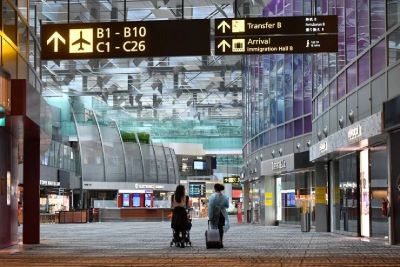
First, air travellers arriving on the quarantine-free Vaccinated Travel Lane (VTL) scheme will have to undergo supervised, self-administered antigen rapid tests (ARTs) at a Quick Test Centre on day three and day seven of their arrival. 

Currently, these travellers are allowed to enter without having to undergo quarantine under the scheme, and have to take a Covid-19 swab test only prior to their departure for Singapore, and after arrival here. 

Second, all air travellers entering, transferring or transiting through Singapore must have tested negative in a pre-departure test within two days of leaving for Singapore. 

Currently, travellers from Hong Kong, Macau, China and Taiwan are not required to take pre-departure tests, and  need to take a Covid-19 swab test only upon arrival. These places are in Category I of MOH’s risk classification framework, which means they have the lowest risk of Covid-19 infections. 

Third, all travellers must take a Covid-19 polymerase chain reaction (PCR) test on arrival. This will affect non-VTL travellers entering Singapore who are not from Hong Kong, Macau, China and Taiwan. Currently, they do not have to take a test upon arrival, but have to be tested before the end of their stay-home notice period. 

Travellers must self-isolate at home, in a hotel room or at a designated stay-home notice facility – depending on where they came from – while waiting for their on-arrival test result.

MOH said that it will also conduct a one-time PCR testing exercise for surveillance purposes, for travellers who arrived in Singapore between Nov 12 and 27, and had been to the countries or regions affected by Omicron in the 14 days before their arrival.

These travellers have been notified of their scheduled test time and venue, said MOH, asking for the understanding and cooperation of affected travellers for the testing exercise.

Meanwhile, after the upcoming VTLs with Thailand, Cambodia, Fiji, Maldives, Sri Lanka and Turkey start around the middle of December, no more VTLs will be launched.

MOH had also earlier announced that three other planned VTLs for Qatar, Saudi Arabia and the United Arab Emirates have been postponed indefinitely. This is done as a precautionary measure to reduce the risks of importing the Omicron variant to Singapore, said MOH.

News of the Omicron variant, which is assessed by the World Health Organisation to have a “very high” global risk, has in the past two days triggered Japan and Israel to announce plans to close their borders to foreigners.

The variant has many more mutations than the Delta variant and has sparked concerns among health authorities worldwide, though the impact of the mutations is still being investigated by scientists.

MOH said Singapore needs to buy time to learn more about the variant as some of the mutations found in the variant’s genome, previously found in other variants, were known to enhance transmissibility and reduce vaccine efficacy.

“In terms of vaccine efficacy, early data suggests that current vaccines should remain effective against severe disease and death. However, more studies are needed to understand the actual impact of this variant on our existing countermeasures, including vaccines and treatments,” MOH added.

MOH noted that there has been a rapid increase in the proportion of cases that are infected by the Omicron variant in South Africa. It also said more countries have reported cases over the last few days, suggesting that the variant has spread globally.

It added that Singapore’s community would have some protection against this new variant.

At the press conference on Tuesday, Trade and Industry Minister Gan Kim Yong, who co-chairs the Covid-19 multi-ministry task force, said: “Very little is known yet about this variant with regard to its transmissibility and severity, and how effective vaccines are against it.

“We are closely monitoring the situation, and scientists around the world are working on it.”

These tightened restrictions will be in place for four weeks. They will be reviewed or extended if necessary, said MOH. 

MOH also said that from Thursday, it will go back to rostering weekly routine PCR tests for airport and other front-line workers at the borders who may come into contact with travellers from places affected by the Omicron variant. This replaces the current routine ART tests that such workers have to go through. 

MOH said a PCR-based test will help detect not just Covid-19, but the Omicron variant, in a timely manner. 

Aircrew serving flights from countries with Omicron cases will be subjected to an on-arrival PCR test, and post-arrival PCR tests on day three and day seven following each flight. 

All other airport and border front-line workers will continue with routine ARTs. Those who have recovered from a Covid-19 infection will also have to undergo regular Covid-19 testing as well. 

MOH said that as an added precaution, those with a positive ART result will have to go for a confirmatory PCR test.

By Toh Ting Wei

Published : December 01, 2021

By : The Straits Times