Singapores new Covid-19 workplace rules challenging, say business leaders #SootinClaimon.Com

#SootinClaimon.Com : ขอบคุณแหล่งข้อมูล : หนังสือพิมพ์ The Nation.

https://www.nationthailand.com/international/40005906

Singapores new Covid-19 workplace rules challenging, say business leaders


SINGAPORE – Business leaders have expressed concerns over the new Covid-19 workplace management rules which, they say, could impact operations if fresh infections force their staff to work from home.
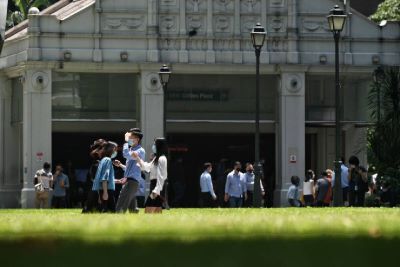
Some said that the rules could be disruptive, particularly in the face of a manpower crunch.

On Tuesday, the Ministry of Manpower issued an updated advisory on workplace management to curb the spread of Covid-19. Under the new guidelines, companies must implement a snap 14-day work-from-home (WFH) regimen if an employee tests positive for Covid-19 and was at the workplace in the last seven days. There will also be regular testing for staff who work onsite.

While these new measures are needed to stem the rise of community cases, they will also take a toll on businesses, experts said.

Singapore National Employers’ Federation executive director Sim Gim Guan said: “The need to implement a snap 14-day WFH arrangement can be quite challenging because that is going to require a lot of communication, and could also be disruptive. So, companies and employees alike need to be a lot more agile and resilient.”

Chipmakers are feeling the heat, said Mr Ang Wee Seng, Singapore Semiconductor Industry Association’s executive director.

“The industry is already facing a manpower crunch due to the shutting down of borders and expansion of many companies. This will definitely (add) further pressure. Companies will need to manage their work hours carefully so as to mitigate the risk of a wide outbreak within the company.”

However, companies can continue split-team arrangements. For instance, if someone from Team A is infected and the team has to work from home, those who are from Team B and need to work on site may do so.

Randstad Singapore managing director Jaya Dass added: “Business leaders need to create an internal taskforce to revise or create new standard operating procedures and communicate them transparently to the workforce.”

Meanwhile, Singapore Manufacturing Federation president Douglas Foo said manufacturing firms are adapting and remaining resilient despite challenges.

“The business continuity plans that companies have put in place in the factories such as split teams and staggered working hours have helped ensure operations continue moving even with manpower constraints,” he said, adding that automation and Industry 4.0 technologies have also lightened the load on the workforce.

A spokesman for the Public Service Division said the public service will align its guidelines to be in tandem with the latest workplace safe management measures.

He added that it is working towards greater work flexibility, with hybrid work becoming more common where possible.

“We leverage on teleconferencing to ensure business continuity and safe management,” he said.

Mr Devadas K, chief executive of management consultancy firm Future-Moves Group, said that the snap 14-day WFH requirement is an understandable precaution, though in the longer term, such a requirement could be disruptive and a cause of frustration to businesses.

But after a year of the pandemic, FastJobs general manager Lim Huishan noted that many firms should already have WFH arrangements in place, so they just have to activate the plans when needed.

Mr Kurt Wee, president of the Association of Small and Medium Enterprises, added that ultimately, firms just want to get through the crisis in a sustainable manner, rather than triggering a lockdown.

Mr Yap Shih Chia, executive vice-president of corporate development, strategy and new businesses at environmental services firm Chye Thiam Maintenance, said: “We are confident that we can apply the new guidelines for our corporate services. But for the project sites where workers are deployed, this is something that still needed to be reviewed.”

He added that work-from-home is not an option for his front-line essential staff.

Meanwhile, most staff at Prudential Singapore are still working from home, and they have the equipment needed to connect remotely. This means they can easily transition to a snap work-from-home arrangement, the firm said.

Singapore Business Federation chief executive Lam Yi Young noted: “Notwithstanding, businesses should review their contingency plans to ensure they are ready to implement the snap work-from-home arrangement once required, including how to communicate with employees.”

By Sue-Ann Tan and Cheryl Tan/The Straits Times

Published : September 09, 2021
HCM City allows food and drink takeaway services, reopens IT stores #SootinClaimon.Com

#SootinClaimon.Com : ขอบคุณแหล่งข้อมูล : หนังสือพิมพ์ The Nation.

https://www.nationthailand.com/international/40005905

HCM City allows food and drink takeaway services, reopens IT stores


HÀ NỘI — HCM City People’s Committee late Wednesday issued a new decision on COVID-19 prevention and control measures as the city continues to stay under the restrictive Directive 16 with outbreaks still not properly controlled yet.

After two months of complete shutdowns to deal with COVID-19 outbreaks, restaurants and other food and drink services can now resume delivery of takeaway orders, between 6am-6pm every day.

The southern city, currently the COVID-19 epicentre of the country, will allow postal service providers, telecommunications, IT devices and equipment and office stationery vendors to reopen, also within the same time frame and also only for delivery orders. The decision is made as millions of students in the city are starting the new school year via online learning.

All places must have household business/business licences issued by relevant authorities, must register with district (or Thủ Đức City) authorities to obtain travel permits, and follow the three on-site model (eat, rest, sleep in place).

Workers at these businesses must have received at least one dose of COVID-19 vaccine and be tested for COVID-19 every two days (using rapid antigen method for each individual, or pooled samples of three persons).

Supermarkets, convenience stores and food stores are allowed to open. Shippers can operate within the perimeter of a single district or Thủ Đức City.

Establishments producing and trading in pharmaceutical materials, drugs, medical equipment and medical supplies are allowed to operate from 6am to 9pm daily to meet public needs.

The people’s committees of District 7 and Củ Chi District, considered to have the COVID-19 situation under control, can establish plans to allow their residents to go shopping for food and essentials once a week. The plan must be reported to the municipal People’s Committee before September 11.

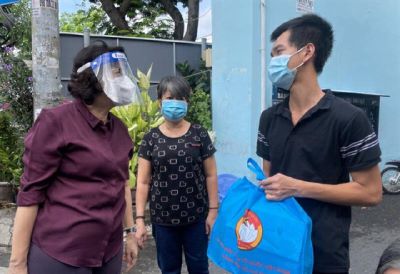
Currently, residents in HCM City are not allowed to go outside for food and essentials amid worsening outbreaks, with their food orders delivered by local authorities, military personnel, volunteers, and more recently, e-commerce platform shippers.

Under today’s decision, two wholesale markets Bình Điền and Hóc Môn will be used as transhipment venues for agricultural produce and food – in addition to Thủ Đức wholesale market – to ensure supplies for the city’s residents at a reasonable price. — VNS

Published : September 09, 2021

Korea’s race to vaccinate 70% of population with first dose nears finish line #SootinClaimon.Com

#SootinClaimon.Com : ขอบคุณแหล่งข้อมูล : หนังสือพิมพ์ The Nation.

https://www.nationthailand.com/international/40005903

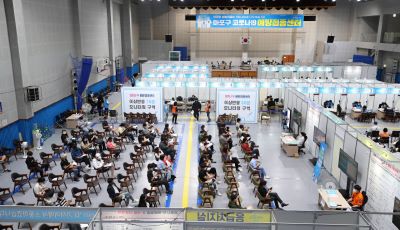
Korea’s race to vaccinate 70% of population with first dose nears finish line


The race for vaccinating 36 million people or 70 percent of the Korean population with one dose of a COVID-19 vaccine by Chuseok, beginning in less than two weeks, is nearing its end. By Monday’s end, more than 30 million people here had been at least partly vaccinated.

The upcoming Chuseok marks the first major national holiday after the vaccine program kicked off in February, with the government seeking to permit more social distancing-free family gatherings and celebrations.

The government is mulling a “phased return to normalcy” after passing the vaccine milestone.

Speaking at Tuesday’s government COVID-19 response meeting, Vice Minister of Health Kang Do-tae said that by the end of next four weeks of “intensive” social distancing, Korea may be able to move on to a more normal life, assisted by a wide vaccine coverage.

“The next four weeks will be a turning point for Korea,” he said.

The vice minister said the addition of 1.3 million Moderna doses was “more than the initially negotiated amount,” and said the boost in supplies is “expected to expedite Korea’s push for getting to the vaccine goal before Chuseok comes around.”

But the rush to deliver as many first doses as possible is met with concerns that not enough will remain for second doses, as it is not clear whether deliveries will arrive as planned next month or the rest of this month.

On exhausting current supplies for handing out first doses, Hong Jeong-ik, heading the national COVID-19 vaccination planning committee, said last week Korea did not have contingency plans for supplies falling short by the time first-dose recipients are due their seconds.

Despite high hopes pinned on the 70 percent first-dose rate to be a “turning point” in Korea’s pandemic, expert views are less optimistic.

Dr. Paik Soon-young, Catholic University of Korea’s emeritus professor of virology, said first-dose vaccination “means almost nothing” in the face of variants. “Only full vaccination (receiving all of the prescribed doses by a vaccine regimen) should count as vaccination,” he said.

Ahead of the weekend Korea confirmed its first cases of the more nascent and lesser known mu variant, which Paik described as having “significant mutations in the spike protein” that may render the virus more vaccine-resistant. Delta, which is known to somewhat weaken vaccine effectiveness, was already the dominant strain in Korea.

Jeong Eun-kyeong, overseeing COVID-19 vaccinations as the national disease control agency’s chief, offered a reality check with her assessment that even with the partial vaccination rate of 70 percent, significant freedoms won’t be viable. She says Korea will need to fully vaccinate 80 percent of adults aged 18 and up before any further easing in restrictions.

“That may be achievable around the end of October,” she told the National Assembly on Tuesday.

Korea on Tuesday set a new record in the number of COVID-19 vaccinations given out in a day. In the latest 24-hour period, a total of 1,374,038 doses of COVID-19 vaccines were administered, of which 741,052 were first doses, according to the Korea Disease Control and Prevention Agency. Tuesday’s feat marks a huge jump from the one-day average of 321,407 doses seen the previous week.

Over the first seven days of September, Korea counted an average of 1,708 cases each day. There were 25,819 people with “active cases” remaining in isolation as of Monday afternoon. The pandemic left a total of 263,374 people infected here, among whom 2,330 died.

By Kim Arin

Published : September 09, 2021

Japan to establish national training centers for ‘urban sports’ #SootinClaimon.Com

#SootinClaimon.Com : ขอบคุณแหล่งข้อมูล : หนังสือพิมพ์ The Nation.

https://www.nationthailand.com/international/40005902

Japan to establish national training centers for ‘urban sports’


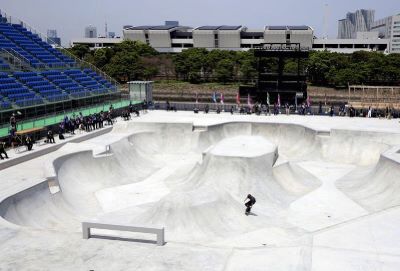
The Japan Sports Agency has decided to establish national training centers (NTCs) for skateboarding, sport climbing, surfing and BMX freestyle park, which have drawn increased attention following Japanese athletes’ success at the Tokyo Olympics, The Yomiuri Shimbun has learned.

Utilizing a system in which existing facilities nationwide can be designated and supported as NTCs, the agency will proceed with the selection of target facilities. It aims to start operations next spring.

Japanese athletes performed well in these four new sports, which made their Olympic debut at the Tokyo Games. Yuto Horigome, 22, won the gold medal in men’s street skateboarding and Momiji Nishiya, 14, won the gold medal in the women’s competition. Kanoa Igarashi, 23, took the silver medal in men’s surfing.

These sports will also be part of the 2024 Paris Olympics.

After examining candidate facilities selected by each sporting organization, the agency will designate them as NTCs based on the quality of their training environment and how convenient it is for athletes to gather there from around the nation. The agency will subsidize the rent for the facilities, personnel costs for medical staff, and equipment costs.

The agency has appropriated ¥1 billion in its budgetary requests for fiscal 2022, which includes operating expenses for other sports facilities that have already been designated.

According to officials of the relevant sports organizations, candidate locations include Ariake Urban Sports Park in Koto Ward, Tokyo, the main venue for skateboarding at the Olympics; and the Surf Stadium Shizunami in Makinohara, Shizuoka Prefecture, which hosted a pre-Olympic training camp for the U.S. surfing team.

These “urban sports” are rapidly gaining in popularity, especially among young people, and facilities dedicated to them are springing up one after another overseas. However, there are few places in Japan to assemble leading athletes and help them develop, forcing individual athletes to rely on their own ingenuity.

“We want to prepare facilities where we can continue to work on strengthening the athletes, and contribute to the development of young people,” an official of the agency said.

Published : September 09, 2021

China to provide millions worth of supplies to Afghanistan #SootinClaimon.Com

#SootinClaimon.Com : ขอบคุณแหล่งข้อมูล : หนังสือพิมพ์ The Nation.

https://www.nationthailand.com/international/40005901

China to provide millions worth of supplies to Afghanistan


BEIJING – China has decided to urgently provide 200 million yuan (US$30.96 million) worth of grains, winter supplies, vaccines, and medicines to Afghanistan according to the needs of the Afghan people.

China to provide millions worth of supplies to Afghanistan

Chinese State Councilor and Foreign Minister Wang Yi made the announcement on Wednesday when attending the first meeting of foreign ministers of Afghanistan’s neighboring countries in Beijing via video link.

Wang said China has decided to donate 3 million vaccine doses to the Afghan people in the first batch. China is also ready to provide more anti-epidemic and emergency materials to Afghanistan under the China-South Asian Countries Emergency Supplies Reserve. 

Meanwhile, a Foreign Ministry spokesperson said China attaches importance to the Taliban’s announcement of the formation of a caretaker government in Afghanistan and some important personnel arrangements.

According to reports, the Taliban announced on Tuesday night the formation of Afghanistan’s caretaker government, with Mullah Hassan Akhund appointed as the acting prime minister.

“This has ended the more than three weeks of anarchy in Afghanistan and is a necessary step toward Afghanistan’s restoration of order and post-war reconstruction,” spokesperson Wang Wenbin told a press briefing.

China’s position on the Afghanistan issue is consistent and clear, said Wang, adding that China upholds a policy of non-interference, respects Afghanistan’s sovereign independence and territorial integrity, and supports the Afghan people in choosing a development path that suits their national conditions.

Wang said China hopes that Afghanistan will build a broad-based and inclusive political framework, adopt moderate and prudent domestic and foreign policies, fight firmly against terrorism of all kinds and establish friendly relations with all countries, particularly with neighbouring countries.

China stands ready to maintain communication with Afghanistan’s new government and leaders, and hopes that the new government will broadly absorb opinions from Afghan ethnic groups and parties, and meet the Afghan people’s aspirations and the expectations of the international community, Wang said.

Published : September 09, 2021

HCM City to spend $351.2 mil on social relief #SootinClaimon.Com

#SootinClaimon.Com : ขอบคุณแหล่งข้อมูล : หนังสือพิมพ์ The Nation.

https://www.nationthailand.com/international/40005858

HCM City to spend $351.2 mil on social relief


HCM CITY – HCM City has proposed spending nearly VNĐ8 trillion (US$351.2 million) to support people in need for two months to help them overcome COVID-19-related difficulties, Phan Văn Mãi, chairman of the city People’s Committee, has said.

The city will offer financial aid worth VNĐ750,000 (US$32.9) for each eligible resident per month after September 15. The package will cover September and October.

Mãi said the city had around 2 million struggling households with a total of 5.3 million residents in need of social relief.

More financial aid would be offered in the future if needed.

Districts and departments have been asked to compile lists of people in need of this package. The compilation should be completed by September 15 so that the package can be launched the next day.

The money will be sent directly to their bank accounts.

HCM City has launched many relief packages to support locals and businesses struggling with the COVID-19 pandemic, and has vowed to make future ones more easily accessible.

The most recent social relief covered about one million self-employed people and 1.3 million struggling households which received VNĐ1.5 million (US$65.7) in cash and gifts.

HCM City is Việt Nam’s COVID-19 epicentre with over 258,000 cases found. Millions have lost jobs or had their incomes greatly reduced. – VNS

Published : September 08, 2021

Disabled volunteers also play role in success of Paralympics #SootinClaimon.Com

#SootinClaimon.Com : ขอบคุณแหล่งข้อมูล : หนังสือพิมพ์ The Nation.

https://www.nationthailand.com/international/40005857

Disabled volunteers also play role in success of Paralympics


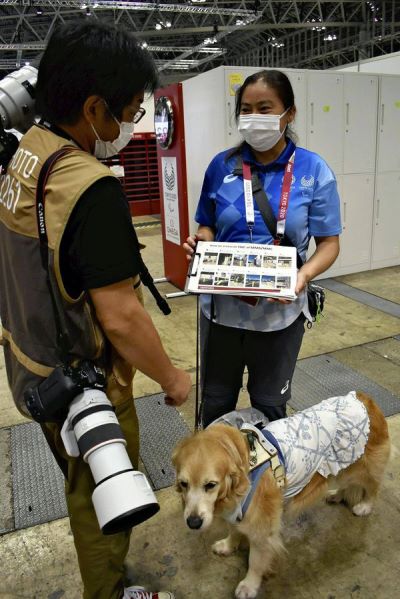
As media members covering sitting volleyball approached the media reception desk at Makuhari Messe in Chiba City last month, they encountered Shino Chiba — and her guide dog, a golden retriever named Nana.

Speaking from the other side of a plastic sheet, Chiba instructed them to leave their PCR samples.

Chiba, 41, was among the many disabled people who served as volunteers for the Tokyo Paralympics, which came to a close on Sunday. They hope their efforts for the Games will lead to the realization of a more inclusive society.

Chiba is from Katori, Chiba Prefecture. She was 20 and taking correspondence university classes when she was diagnosed with retinitis pigmentosa, an intractable disease that causes gradual loss of sight. It was the same disease that afflicted her mother, who uses a white cane. “I can’t believe this happened to me,” she thought.

She went through a life-changing experience 1½ years later, when she casually decided to become a volunteer for a local marathon. The race was also open to people with disabilities, and Chiba watched as volunteers cheered on wheelchair racers as they battled to finish. Her eyesight was not as weak as it is now, and the scene inspired her to find a way to make a difference.

She got a job as a nursing care assistant, and decided to resume swimming, her favorite sport. She not only competed in meets, but also volunteered at more than 50 competitions.

“It gave me renewed awareness that no matter what the disability, there is definitely something one can do,” Chiba said. “I hope the Tokyo Paralympics will help more people accept that disabilities are individual traits, and lead to more disabled people advancing in society.”

■ Meaning of support

Hideaki Nagamine, who guided athletes and staff at Ariake Arena in Tokyo’s Koto Ward, the venue for wheelchair basketball, is a former player himself.

Nagamine, 30, currently a company employee living in Tokyo’s Taito Ward, has been disabled since birth. Growing up in Koriyama, Fukushima Prefecture, he became a member of the local wheelchair basketball club team that produced Akira Toyoshima, 32, the Japan team captain at the Tokyo Paralympics.

Nagamine quit the sport at age 20, and when Tokyo was selected as the host of the 2020 Games in 2013, he applied for the first time to be a volunteer with the aim of “doing anything I can.”

During the Games, he guided foreign athletes to restrooms and the dining area, and encouraged them by giving them origami made by volunteers. A member of the championship U.S. team personally thanked him and let Nagamine touch his gold medal.

“When I was a player, I naturally received support, but I realized for the first time that there are many people providing that support behind the scenes,” Nagamine said. “I’m going to keep volunteering. I want to help increase participation by people with disabilities.”

By Azusa Nakazono and Kazuki Sato / Yomiuri Shimbun Staff Writers

Published : September 08, 2021

Hyundai Motor vows to make hydrogen cars as cheap as EVs #SootinClaimon.Com
#SootinClaimon.Com : ขอบคุณแหล่งข้อมูล : หนังสือพิมพ์ The Nation.

https://www.nationthailand.com/international/40005856

Hyundai Motor vows to make hydrogen cars as cheap as EVs


Chairman Chung Euisun promises hydrogen for everyone, everything and everywhere

Hyundai Motor Group on Tuesday unveiled a new hydrogen vision that includes plans to make hydrogen vehicles as cheap as electric vehicles within 10 years.

During “Hydrogen Wave,” the automaker’s first global hydrogen event, Hyundai Motor Group Chairman Chung Euisun laid out his 20-year vision for hydrogen fuel cells and hydrogen mobility.

“Hyundai Motor envisions a future society where hydrogen energy is available for everyone, everything and everywhere. I have no doubt that hydrogen will bring revolutionary changes for humankind,” the chairman said.

To accelerate the transition to a hydrogen society, the auto group, which both Hyundai Motor and Kia belong to, will employ hydrogen fuel cells in all of its new commercial car models by 2028, he said.

Between now and then, the automaker will equip its new models either with hydrogen fuel cells or batteries.

At the event, Chung showcased prototypes of third-generation 100-kilowatt and 200-kilowatt fuel cells that he said would be available in the market starting in 2023.

Hyundai Motor vows to make hydrogen cars as cheap as EVsHyundai Motor vows to make hydrogen cars as cheap as EVs

According to Hyundai Motor, the 100-kilowatt fuel cells are 20 percent to 30 percent smaller than second-generation fuel cells mounted on the Nexo, the carmaker’s hydrogen-powered SUV. The 200-kilowatt fuel cells, though similar in size to Nexo fuel cells, offer an output capacity that is 100 percent greater.

“We will cut the price of third-generation fuel cells by more than 50 percent from the current level. By 2030, they will be cheaper and allow hydrogen vehicles to become as cheap as electric vehicles,” a Hyundai Motor official said.

The fuel cells will be mounted on a “flat” system just 25 centimeters thick, easy to install on the roof or the bottom of a vehicle. Potential applications include trams, trains, ships and air taxis, the tycoon added.

During the event, which was held virtually, Chung also introduced the e-Bogie as an example of how the automaker’s fuel cell and self-driving technologies could create synergy. 

Powered by hydrogen fuel cells, the e-Bogie is a four-wheeled trailer drone that can be loaded with containers. On a single charge, the autonomous robot will be able to travel 1,000 kilometers, something no EV can do.

With the e-Bogie, Hyundai Motor aims to take the initiative in the global light commercial vehicle market, where 7 million unit sales are projected per year by 2030.

In addition, Hyundai Motor debuted its hydrogen-powered sports car, the Vision FK, letting the world know of its ambition to challenge passenger EVs. Able to go from zero to 100 kilometers per hour in less than four seconds, the Vision FK offers a maximum driving range of 600 kilometers.

In keeping with the vision to provide hydrogen everywhere by 2040, Chung showcased a portable hydrogen charging station as a solution to the nation’s weak hydrogen infrastructure.

The H Moving Station, a giant truck equipped with hydrogen chargers, can travel anywhere and provide refueling services in areas with limited hydrogen charging stations.

During a Q&A session, Kim Sae-hoon, executive vice president and head of the fuel cell center at Hyundai Motor, suggested that small ships would be one of the first sectors where fuel cells would be used outside the automotive industry.

“Fuel cells have difficulties in dissipating the heat, because they operate at 70-80 degrees Celsius. So we always have a problem of cooling. I met a lot of (ship) companies and asked about how they dissipate heat. They say, ‘Don’t worry. We have a lot of seawater and river water,’” Kim said.

Asked when Hyundai Motor expects to achieve operating profit in the hydrogen business, Kim said, “I hope it happens by 2040.”

As to when the Xcient — a heavy-duty truck that Hyundai Motor has so far exported only to Switzerland — will be available in the Korean market, Chung said domestic mass production would kick off in the first half of next year.

Hyundai Motor will display its cutting-edge hydrogen technologies at the H2 Mobility+Energy Show, which will be held from Wednesday to Saturday at the country’s largest convention center, Kintex, northwest of Seoul in Goyang, Gyeonggi Province.

According to the Hydrogen Council, a global CEO-led initiative of leading energy, transport, industry and investment companies, hydrogen energy will account for 18 percent of global energy demand by 2050, with a market worth $2.5 trillion. The popularization of hydrogen energy will also help cut carbon emissions by more than 6 billion tons a year while creating over 30 million new jobs.

By Kim Byung-wook

Published : September 08, 2021

Sinopharm gets nod to test drug for COVID-19 #SootinClaimon.Com

#SootinClaimon.Com : ขอบคุณแหล่งข้อมูล : หนังสือพิมพ์ The Nation.

https://www.nationthailand.com/international/40005855

Sinopharm gets nod to test drug for COVID-19


Chinese drugmaker Sinopharm has gained approval to launch clinical trials of a COVID-19 drug based on human immunoglobulin derived from vaccinated people, the company said recently.

The drug is the world’s first COVID-19 therapy that uses plasma containing rich amounts of antibodies to fight off the novel coronavirus, and it adds to the company’s expanding portfolio of medical products targeting the disease, including four vaccines that have already been rolled out or are being researched.

The experimental medication is being developed by Beijing Tiantan Biological Products, administered by China National Biotech Group, a Sinopharm subsidiary. It obtained clinical trial approval from the National Medical Products Administration on Aug 30.

Zhu Jingjin, a senior official of China National Biotech Group, said the experimental medication uses plasma from healthy people who are fully immunized with inactivated vaccines, and contains high levels of neutralizing antibodies.

“The drug can have therapeutic effects on people with moderate or severe illnesses,” he told China Central Television during an exhibition in Beijing on Saturday.

Zhu added that the drug has completed preclinical studies and animals tests, and has demonstrated marked efficacy in relieving the symptoms and damage caused by the virus in animal tests.

The new drug is based on a promising treatment used during the COVID-19 epidemic, according to the company. At the height of the domestic outbreak early last year, China began infusing patients with convalescent plasma of people who had recovered from the disease.

The National Health Commission said in February last year that the therapy had yielded positive outcomes in safety and efficacy, and it was officially added to a national diagnosis and treatment guideline the same month.

As the virus has been brought under control in China, leading to a sharp drop in patients able to donate the convalescent blood needed to make the medication, increasing numbers of fully vaccinated people in the country have helped guarantee supplies of raw materials, according to Chen Kun, another senior official at China National Biotech Group.

In an interview with Global Times, Chen said the drug has been given to patients during recent sporadic local outbreaks and has also shown efficacy against emerging variants. However, he also noted that when and whether the drug can be approved for market use remains uncertain.

“The international norm is that the first stage of clinical trials for a new drug might take seven to eight years, and it is hard to discern how long it will take for us to complete all three phases of human trials,” he said, adding that the accelerated approval procedures for COVID-19 vaccines had raised some hope.

Published : September 08, 2021

Panic buying grips Yangon after shadow government in Myanmar declares peoples defensive war #SootinClaimon.Com

#SootinClaimon.Com : ขอบคุณแหล่งข้อมูล : หนังสือพิมพ์ The Nation.

https://www.nationthailand.com/international/40005853

Panic buying grips Yangon after shadow government in Myanmar declares peoples defensive war


BANGKOK – Long queues formed at supermarkets and petrol stations in Yangon on Tuesday (Sept 7) shortly after Myanmars shadow government declared a “peoples defensive war” against the junta.

In a video message broadcast online in the morning, the National Unity Government’s (NUG) acting president, Mr Duwa Lashi La, warned civil servants against going to the office, and urged people to avoid unnecessary travel and stock up on their medications and daily necessities.

He called on anti-junta armed resistance groups to quell junta forces in their respective areas, and also for Myanmar’s ethnic armed organisations to “immediately attack” the junta through various methods.

“I believe that our neighbouring countries, Asean countries, the United Nations and all other countries around the world understand that we do it out of necessity,” he said.

In a separate statement, the NUG declared a state of emergency that would end only when a civilian government was restored to power.

The announcement triggered panic buying in Yangon, with people loading up on rice, cooking oil, dried food and medicine.

Meanwhile, long queues of vehicles formed outside petrol stations as motorists rushed to secure fuel, checks by The Straits Times showed.

The NUG’s declaration comes just a week before the United Nations General Assembly meeting in New York, where it is vying with the junta to be recognised as the legitimate representative of Myanmar.

The NUG comprises parliamentarians ousted by the Feb 1 military coup as well as allied civil society activists and intellectuals. Both the NUG and the Myanmar junta have denounced the other as terrorists.

Asean is arranging humanitarian aid for Myanmar after the bloc appointed Brunei’s Second Foreign Minister, Mr Erywan Yusof, as its special envoy to try to facilitate political dialogue.

Over the weekend, he revealed a proposal for a four-month ceasefire in Myanmar to ensure the safety of humanitarian workers delivering aid. This idea was not opposed by the junta, he told reporters, adding that it was also communicated indirectly to parties opposed to the coup.

It is not clear whether NUG’s declaration on Tuesday will trigger a surge in armed clashes.

Over 170 localised, semi-autonomous “people’s defence forces” (PDFs) have been staging guerilla-style attacks on troops and police officers over the past few months. Some PDFs have also killed alleged junta informers and civilian ward administrators working under the junta.

The NUG first mentioned a “D-Day” in June, but had been coy about spelling out exactly what it meant before Tuesday.

In a separate announcement on Tuesday, it urged resistance fighters to abide by a code of conduct that includes compensating civilians for the use of their properties during emergencies and not killing or torturing captives.

Analysts say that an armed uprising against the junta cannot succeed without support from Myanmar’s numerous ethnic armed groups. Yet the most powerful of these, like the United Wa State Army and the Arakan Army, have so far stayed above the fray.

The junta led by Senior General Min Aung Hlaing has killed over 1,000 people and imprisoned over 6,000 since the coup, according to the Assistance Association of Political Prisoners. The military seized power after alleging that the November 2020 election, in which the National League for Democracy government emerged victorious, was fraudulent. The junta has invoked a state of emergency which Gen Min Aung Hlaing says will be lifted by August 2023.

In what it said was an effort to combat Covid-19, the junta has declared public holidays since July. Government offices have been shut too.

Additional reporting by Kyaw Za

Published : September 08, 2021