Mandatory self-testing for migrant workers in Singapore dorms from Sept 13 #SootinClaimon.Com

#SootinClaimon.Com : ขอบคุณแหล่งข้อมูล : หนังสือพิมพ์ The Nation.

https://www.nationthailand.com/international/40005805

Mandatory self-testing for migrant workers in Singapore dorms from Sept 13


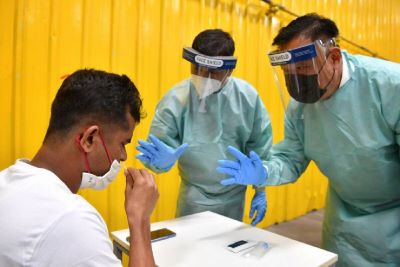
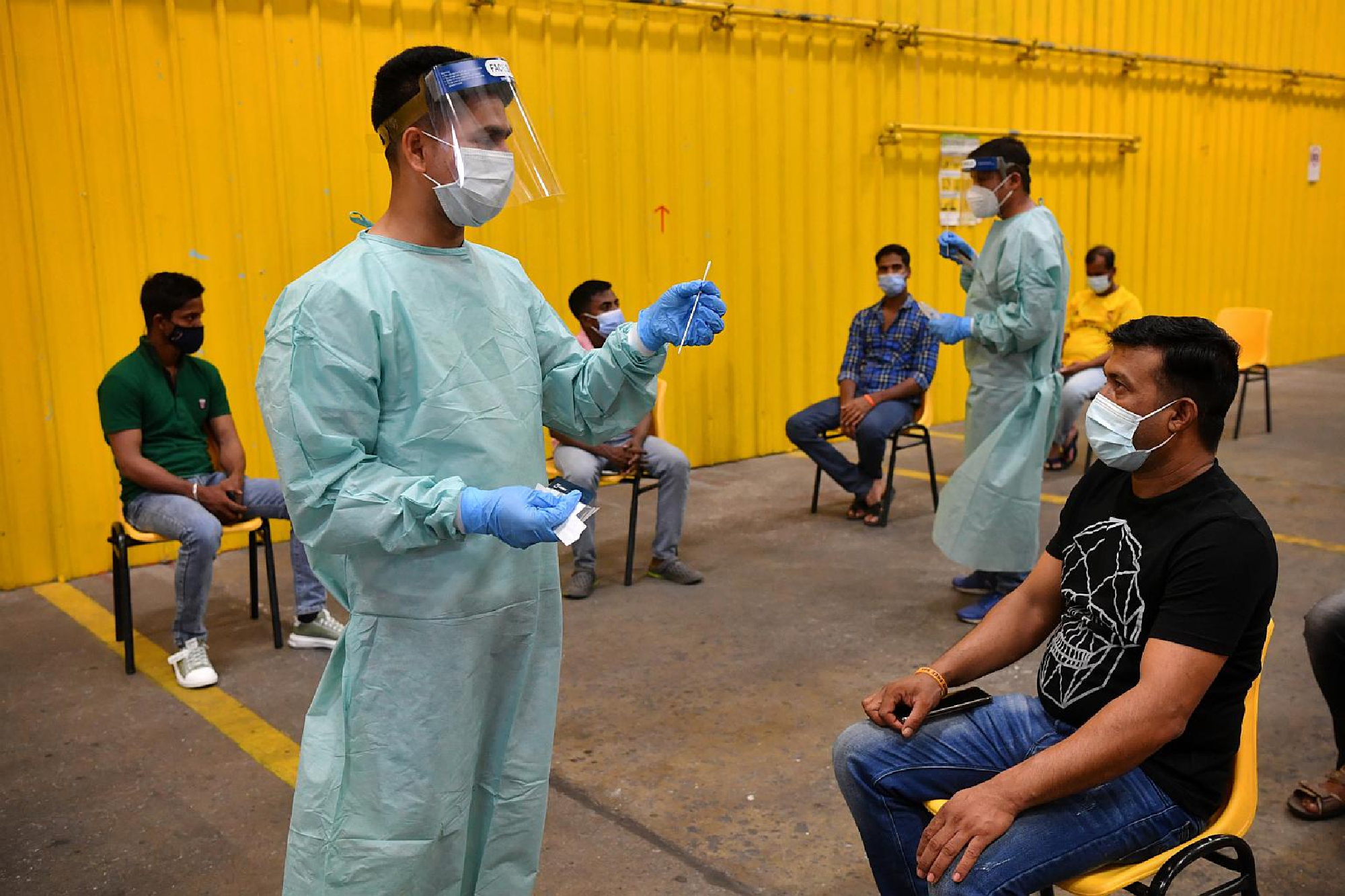
SINGAPORE – From next Monday (Sept 13), all migrant workers living in dormitories here will need to test themselves for Covid-19 regularly using antigen rapid test (ART) kits.
This is in line with a broader push to encourage more people to carry out self-testing, and could signal the long-awaited lifting of movement curbs that have kept workers largely confined to their dorms.

The new mandatory self-testing regimen is on top of the existing rostered routine testing (RRT) that the workers are subjected to every seven or 14 days, the Ministry of Manpower (MOM) said in an advisory to employers on Aug 27.

MOM said testing and detecting Covid-19 cases quickly remain critical to preventing potential infections from spreading widely in migrant worker dorms.

ARTs are more convenient, comfortable, and give faster results than the polymerase chain reaction tests used for RRT, MOM said.

Under the new regimen, workers who are swabbed every seven days must test themselves three days after each RRT appointment.

This applies to both vaccinated and unvaccinated workers.

For workers who are swabbed every 14 days, those who are vaccinated must test themselves seven days after each RRT appointment, and those unvaccinated must test themselves on the third, seventh and 11th day after each RRT date.

Workers can carry out the self-tests in their rooms at their own convenience, but must be supervised by MOM’s Forward Assurance and Support Teams, the dorm operator or a designated worker in charge of the room. They must then submit their test result using the FWMOMCare application.

Workers are also required to take a video of themselves doing the ART, and must keep the video in their phones for seven days.

Random checks will be conducted, and action will be taken if workers fail to test themselves as required or do not conduct the tests properly, MOM said.

Since Aug 30, workers have been able to collect their ART kits after completing their most recent RRT.

From Thursday (Sept 9), they will receive their self-testing schedules and be notified of their test dates.

The ART kits will be fully subsidised by the Government until further notice.
Mandatory self-testing for migrant workers in Singapore dorms from Sept 13Mandatory self-testing for migrant workers in Singapore dorms from Sept 13

Dorm operators said MOM has been helping to train workers over the past two weeks to use the ART.

Mr Kong Chee Min, chief executive of Centurion Corporation, which manages eight dorms under the Westlite brand, said his firm supports the new measure, and has more than 85 staff who are qualified to supervise the tests.

All dorm residents have been taught to use the ART at least once, and almost every room has a worker who is trained to be a supervisor.

“While it is more demanding for operators to coordinate and manage, it is not too onerous once the workers get used to it,” he said.

Mr Johnathan Cheah, managing director of S11 Dormitories, agreed: “All parties involved understand the importance of self-testing as Singapore prepares for the endemic stage of Covid-19.”

Associate Professor Jeremy Lim of the National University of Singapore’s Saw Swee Hock School of Public Health said the new self-testing regimen is a small price to pay if it is tied to a larger plan to allow migrant workers into the community.

He and other infectious disease experts have said that the high vaccination rate among dorm residents – more than nine in 10 are fully vaccinated – makes it hard to justify restricting their movements.

This is especially given the impact that prolonged confinement has had on mental health.

Manpower Minister Tan See Leng said last week that his ministry has plans to loosen these restrictions.

The only thing left is to find a “safe window”, he said.

At Wee Chwee Huat Scaffolding and Construction, which has a factory-converted dorm in Woodlands, eight workers have been trained to use the ART and will guide the company’s 150-plus workers until all are able to do the tests properly.

The firm’s managing director Edward Wee, 62, said he is prepared to factor the cost of ART kits into the firm’s business expenses if he has to pay for them in the long run.

The cost of a Covid-19 outbreak in the dorm is far greater, he said.

Migrant workers interviewed said they are used to getting swabbed and the ART kits are easy to use once they get the hang of it.

Logistics coordinator Asaduzzaman, 35, prefers the ART as there have been technical issues at the RRT centres that have led to long waits for test results. He said: “We can do (the test) and easily get the result… It is a good thing for us.”

Published : September 07, 2021

Duterte lacks sense of urgency in COVID-19 response – Robredo #SootinClaimon.Com

#SootinClaimon.Com : ขอบคุณแหล่งข้อมูล : หนังสือพิมพ์ The Nation.

https://www.nationthailand.com/international/40005804

Duterte lacks sense of urgency in COVID-19 response – Robredo


MANILA, Philippines — If his weekly, late-night presidential addresses are any indication, President Rodrigo Duterte appears to lack a sense of urgency and attention to the details in the country’s pandemic response, Vice President Leni Robredo said on Monday.

Robredo made the statement in a rare direct criticism of the chief executive who had repeatedly sidelined and dismissed her recommendations.

Specifically, she said the president’s last two addresses — both of which were spent disparaging the Commission on Audit (COA) and Senators Panfilo Lacson and Richard Gordon, as well as coming to the defense of Health Secretary Francisco Duque III and his former economic adviser Michael Yang — “were really quite frustrating,” she added in an interview with ANC’s “Headstart.”

“We’re in the middle of a pandemic where you need all hands on deck and yet the greater part of those conferences were spent berating our senators and COA,” she said.

‘Blanket authority’

Last week, Robredo admitted to having been tempted to ask for “blanket authority” to take charge of the country’s pandemic response, which she has repeatedly slammed as directionless and ineffective.

If she had her way, Robredo said she would have redirected available funds to the healthcare system. Unfortunately, “I am not privy to what is happening at the top so I don’t know what the exact problem is.”

“The government keeps saying we have no money and yet we keep seeing COA reports saying so much are not being utilized,” she noted. “There seems to be a disconnect at the top [but] all the more reason to need someone on top of all this.”

Manila City Mayor Francisco “Isko Moreno” Domagoso, for his part, on Monday hit the national government for spending billions on face shields, saying the money should have gone instead to stocking up COVID-19 medicines.

Depleted stocks of meds

But since August, hospitals have been sounding the alarm on the depleting stocks of tocilizumab and remdesivir as the number of infections continued to rise. (See related story on Page A2.)The DOH said a global shortage of investigational drugs to treat severe COVID infection might last until the end of the year.

“My appeal to this government agency [is to] buy remdesivir. Buy tocilizumab. Not just face shields.

These are what the people need,” Domagoso said Monday at the groundbreaking of a city housing project.

“We were surprised [that the government] spent billions and billions [of pesos] on face shields. It’s not even backed by science,” he added.

Published : September 07, 2021

China to further open up capital market #SootinClaimon.Com

#SootinClaimon.Com : ขอบคุณแหล่งข้อมูล : หนังสือพิมพ์ The Nation.

https://www.nationthailand.com/international/40005803

China to further open up capital market


China is considering launching a new round of capital market opening-up measures while seeking closer international cooperation in supervising overseas-listed Chinese companies, the head of the countrys top securities regulator said on Monday.

“We will provide more equitable, efficient and convenient services for overseas institutions and investors to participate in China’s capital market,” said Yi Huiman, chairman of the China Securities Regulatory Commission.

Yi said the CSRC is working on measures to increase the securities that are eligible for connect programs between mainland and Hong Kong exchanges, expand and improve the Shanghai-London Stock Connect, make more commodity and financial futures products available to foreign investors, and facilitate the recognition of international practitioners’ qualifications.

The commission is also striving for greater progress in international regulatory cooperation regarding the supervision of overseas-listed Chinese companies, cross-border audit oversight and the enforcement of laws and regulations, Yi said.

Global financial hubs “should not become platforms and tools for governments to suppress and sanction other countries”, Yi said, adding that any “zero-sum game” mindset should be forgone, as global financial communities have become intertwined with common interests.

Yi made the remarks via video link at the opening of the 60th World Federation of Exchanges General Assembly & Annual Meeting, during which leaders from 91 global securities and futures exchanges and clearing institutions will discuss major issues of the industry. The meeting, hosted by the Shenzhen Stock Exchange, will last through Thursday.

His remarks also came amid a dispute between China and the United States surrounding the oversight of audit work for US-listed Chinese companies, as well as China’s continuous reform and opening-up of the capital market.

President Xi Jinping announced on Thursday that China will set up a stock exchange in Beijing and build it into a major base for serving innovative small and medium-sized enterprises.

Meanwhile, the Hong Kong exchange will launch its first A-share index futures product on Oct 18, providing a new risk management tool for global investors trading in A shares.

The commission will take the new exchange’s launch as a chance to build a comprehensive set of arrangements to support SMEs, Yi said.

He added that the CSRC will remain vigilant against any risks of asset bubbles created by the circulation of liquidity within the financial system diverting funds from the real economy.

Wang Jianjun, chairman of the Shenzhen Stock Exchange, said at the meeting that the registration-based public offering reform that took effect last year on ChiNext, a Shenzhen board heavy with growth enterprises, has encouraged innovative enterprises to get listed and has funneled more resources into technological innovation.

More than 180 enterprises have floated shares on ChiNext since the reform took effect, up from 52 in all of 2019, Wang said.

The exchange has also pressed ahead with high-level opening-up, having signed memorandums of understanding with 52 global exchanges and market institutions, he added.

Meng Lei, an A-share strategist at UBS Securities, said the recent policy signals of capital market opening-up have reassured global investors after market fluctuations.

China’s A-share market ended in an upbeat note on Monday, with the benchmark Shanghai Composite Index up 1.12 percent to 3,621.86 points, the highest closing level in three months.

Published : September 07, 2021

N. Korea’s trade with China plunges 82% on-year amid pandemic: unification minister #SootinClaimon.Com

#SootinClaimon.Com : ขอบคุณแหล่งข้อมูล : หนังสือพิมพ์ The Nation.

https://www.nationthailand.com/international/40005802

N. Korea’s trade with China plunges 82% on-year amid pandemic: unification minister


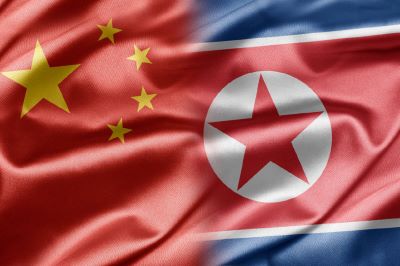
North Koreas trade with China plunged 82.1 percent on-year amid prolonged border closures due to the coronavirus pandemic, the unification minister said Tuesday.

Minister Lee In-young made the remarks during a plenary session of the foreign affairs and unification committee at the National Assembly, saying that the North is focused on addressing internal challenges, including protracted sanctions, the COVID-19 pandemic and recent flood damage.

The North’s trade with China from January to July this year stood at around $86.66 million, 82.1 percent of the trade during the same period last year.

The figure is also less than one-fifteenth of the trade before the coronavirus pandemic, Lee said.

“As the inflow of grain and other necessities dropped sharply from the decrease in North Korea-China trade, it is faced with continued instability in supply and demand in rice, food and medicine,” he said.

He added that the North is currently building a quarantine facility in the border area to expand the inflow of goods from outside.

North Korea has claimed to be coronavirus-free but has taken relatively swift and tough measures against the pandemic, such as imposing strict border controls since early last year.

During the session, Lee also said that his ministry will continue efforts for the early resumption of inter-Korean dialogue and seek ways to engage the North in nuclear talks in consultation with the United States. (Yonhap)

Published : September 07, 2021

Taliban paint over mural of revered Japanese aid leader in Kabul #SootinClaimon.Com

#SootinClaimon.Com : ขอบคุณแหล่งข้อมูล : หนังสือพิมพ์ The Nation.

https://www.nationthailand.com/international/40005801

Taliban paint over mural of revered Japanese aid leader in Kabul


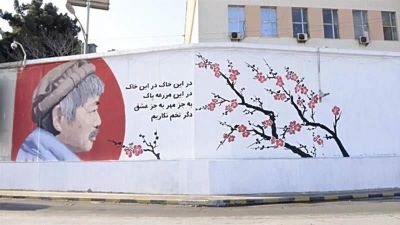
TEHRAN — A mural on a wall in Kabul of Tetsu Nakamura, the Japanese doctor who engaged in humanitarian aid activities in Afghanistan until being killed by an armed group in 2019, was painted over on Sunday, according to the local art group which produced the mural.

The elimination of the mural was ordered by the Taliban, the Islamic militant group that recently seized power in the country, it was confirmed by Kabul-based ArtLords.

Nakamura was the field representative of the Peshawar-kai, a Japanese nongovernmental organization that engaged in such aid activities as building irrigation facilities in Afghanistan. He was 73 when he was shot to death by armed militants.

After his death, more than 200 volunteers painted the mural of Nakamura on a wall on a street in central Kabul in commemoration of his distinguished service.

According to ArtLords cofounder Omaid Sharifi, the painting of Nakamura’s face and a poem written beside it were covered over with whitewash. Black letters celebrating Afghanistan’s “independence” were written on the space.

Sharifi called the incident regrettable in an interview with The Yomiuri Shimbun, and said the Taliban gave no reason for their action.

It seems that before establishing a government, the Taliban aim to make a show of their victory over the United States to the citizens of Kabul.

It is unclear whether the Taliban were aware it was a mural of Nakamura before painting over it.

Published : September 07, 2021

E-commerce platforms resume delivery in HCM City as ban is lifted in red zones #SootinClaimon.Com

#SootinClaimon.Com : ขอบคุณแหล่งข้อมูล : หนังสือพิมพ์ The Nation.

https://www.nationthailand.com/international/40005761

E-commerce platforms resume delivery in HCM City as ban is lifted in red zones


HCM CITY – E-commerce platforms have resumed deliveries in HCM City and some of the city’s extremely high risk areas (red zones) since August 30, a week after they were banned.

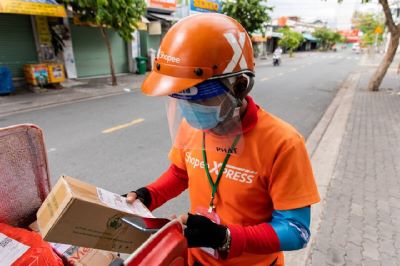
Shopee told Việt Nam News: “Following the instructions allowing shippers to resume operations under certain conditions, Shopee has swiftly co-ordinated with our shipping partners to increase the number of delivery people and provide them with safety kits.”

It has also quickly increased the number of workers at sorting warehouses to complete the orders, it said.

Periodic disinfection of the warehouses are strictly followed in close co-ordination with local health authorities.

Trần Tuấn Anh, director of Shopee Vietnam, said: “We have ensured compliance with all applicable regulatory measures during this period to enable easy access to essential products for our users. Shopee is always committed to adapting to the situation and ensure our users’ demand is met, and continues to take part in the supply chain of foods and other essential goods.”

To resume shipping in red zones, Shopee said it is collaborating with delivery partners to constantly equip riders with traffic guidelines and vaccination certificates.

Also, its delivery persons are required to strictly comply with the Government’s 5K preventive measures and contactless delivery, it said.

Another e-commerce platform, Lazada Vietnam, also said it has resumed shipping since August 30.

It told Việt Nam News that it has delivered thousands of orders, and the number is expected to increase in the coming days.

It has focused on expanding the supply of goods and ensuring the safety of employees, partners and customers like providing drivers with quick test kits and helping them get vaccinated, it said.

Through September it is offering a discount of up to 50 per cent to customers in Hà Nội, HCM City, Long An, Bình Dương and Đồng Nai.

James Dong, general director of Lazada Vietnam and Thailand, said: “The application of social distancing has contributed significantly to the prevention of the epidemic, but also caused the delivery of goods to take a long time, greatly affecting consumers, manufacturers and suppliers.

“Therefore, we greatly appreciate the decision of the Government and the authorities in allowing the delivery staff to resume work again at this time.

“As an e-commerce platform connecting people’s shopping needs with business partners and sellers, Lazada will continue to make efforts to expand product supply and develop human resource to join hands with the Government and the community to fight the epidemic.”

Other platforms like Tiki and Sendo said they are actively working on resuming operations in HCM City’s red zones.

Sendo has yet to resume delivery but said it would announce resumption soon.

TikiNOW Smart Logistics, Tiki’s delivery subsidiary, is in the process of resumption of operations and said it would announce details when completing plans.

Recently, due to the social distancing measures in HCM City, deliveries by e-commerce platforms have been slow, especially after they were banned in the eight red zones of Thủ Đức City and the districts of Gò Vấp, Bình Tân, Bình Thạnh, Districts 12 and 8, Bình Chánh and Hóc Môn.

Many consumers said they have had to wait for delivery of orders for a very long time, often for more than a month, and so they are pleased with resumption of shipping.

Đỗ Phạm Hồng Minh of District 7 said despite not living in a red zone, he faces many difficulties in buying essential goods.

“I ordered washing soap on an online platform. It has been a month, but I have not received the product.

“The resumption of delivery services is really very good news for HCM City’s residents, especially those living in red zones.”

A woman in Gò Vấp District who asked not to be named, said the information about the resumption of delivery services in the previously banned areas made her very happy especially with the new school year starting soon.

“For weeks I tried to buy notebooks and other school items for my children but failed. I live in a red zone and so it is even more difficult. Now shipping services are resuming… really good news for me and my children.”

The city People’s Committee’s decision to allow resumption of delivery services all over the city is part of efforts to ensure the supply of food and other essential goods amid the social distancing.

To resume operations, delivery persons need to be vaccinated against COVID-19 and carry a negative COVID-19 test report. – VNS

Published : September 06, 2021

NK’s vaccine refusal may be due to side effects, efficacy concerns #SootinClaimon.Com

#SootinClaimon.Com : ขอบคุณแหล่งข้อมูล : หนังสือพิมพ์ The Nation.

https://www.nationthailand.com/international/40005760

NK’s vaccine refusal may be due to side effects, efficacy concerns


North Korea has turned down some million doses of COVID-19 vaccines, which may be largely out of concerns about side-effects as well as mistrust over the vaccine efficacy, pundits have said.

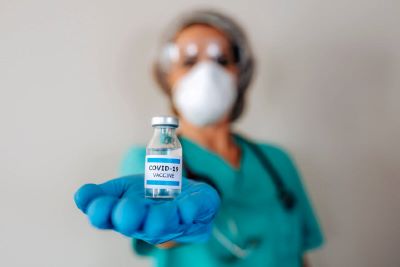
The reclusive regime recently rejected about 3 million doses of China’s Sinovac Biotech vaccine, and asked for them to be sent to other severely affected countries instead, according to the UNICEF, which is in charge of distributing doses on behalf of the COVAX facility — a multinational program that provides vaccines to lower-income countries.

North Korea was also supposed to receive 2 million doses of AstraZeneca shots via the COVAX scheme, but the regime rejected them in July apparently over side effect concerns, according to the Institute for National Security Strategy, a think tank run by South Korea’s spy agency.

Nagi Shafik, the former project manager for the World Health Organization office in Pyongyang, echoed a similar view that the regime’s hesitance to accept vaccines may be due to reports of rare complications and efficacy concerns, according to the South China Morning Post.

“It may sound strange, but when trying to understand, I think perhaps they are concerned about the possible side effects of the AstraZeneca vaccine,” Shakif told the SCMP. “As for the Sinovac, perhaps they think, like many other countries in the world, it is not efficient enough.”

The INSS also said that North appears reluctant on Chinese vaccines as it views the shots to be not as effective and safe, while it is more optimistic about Russia’s vaccine, Sputnik V.

The North, however, has been waging a tougher anti-epidemic steps more recently, with Kim warning of “prolonged” coronavirus measures, indicating the country is not ready to lift its strict lockdown anytime soon.

“Tightening epidemic prevention is the task of paramount importance which must not be loosened even a moment under the present situation,“ North Korean leader Kim Jong-un said during a politburo meeting Thursday, according to the Korea Central News Agency.

While Kim stressed the need to accept advanced anti-epidemic technology, he called for the need to fight the pandemic in “our style.”

Pyongyang continues to claim it has had zero coronavirus infections, but observers say an outbreak there cannot be ruled out, given its exchanges and trade with neighboring China. But since the onset of the pandemic, the North has imposed the strictest quarantine measures of any nation, shutting down its borders and suspending international trade to prevent the spread of the virus.

Thae Yong-ho, a former North Korean diplomat-turned-defector and now an opposition lawmaker, said Saturday the North doesn’t find it “appealing” on obtaining vaccines from foreign countries.

“North Korea is a country ruled by the supreme leader, which means the supreme leader has to be at the center of saving North Koreans from crisis,” Thae said in a public statement. “If the country overcame a crisis with the support from the outside, the authority of the supreme leader could crumble.”

He added that the North’s currently touting to be coronavirus-free could serve as a good opportunity to solidify authority of Kim inside the country.

“COVID-19 is a crisis to the North, but at the same time serves as a good opportunity to strengthen its internal control system,” he said, noting the border lockdown has blocked information flow and transfer of goods from outside.

Published : September 06, 2021

Japan expressway operator develops technology to project signs on roads #SootinClaimon.Com

#SootinClaimon.Com : ขอบคุณแหล่งข้อมูล : หนังสือพิมพ์ The Nation.

https://www.nationthailand.com/international/40005758

Japan expressway operator develops technology to project signs on roads


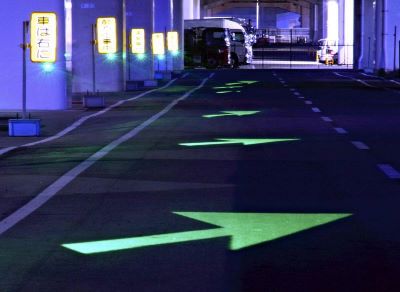
The Hanshin Expressway Group and Dai Nippon Printing Co. have jointly developed a lighting technology that projects arrows on roads to inform drivers of lane restrictions in an easy-to-understand manner.

The Osaka-based Hanshin Expressway Group plans to test the system at a site operated by the company by the end of this fiscal year, after coordinating with the police and other related organizations.

The new technology utilizes Tokyo-based Dai Nippon Printing’s compact lighting devices that can brightly project arrows and other marks onto road surfaces. The device is about the size of a flashlight, easy to carry and can be attached to a roadside sign.

One advantage of the lighting system is that it is movable. The system can also reduce the burden on workers by decreasing the number of materials required at work sites, such as display boards, compared to conventional methods.

Drivers at night are generally slow to notice signs indicating construction work on expressways and sometimes cause accidents, according to Hanshin Expressway.

“We can improve safety for both drivers and workers [with the new system],” said an official from Hanshin Expressway Engineering Co., a member of the Hanshin Expressway Group that developed the technology.

Published : September 06, 2021

USDP says 253 party members, family members and party supporters were murdered in 7 months #SootinClaimon.Com

#SootinClaimon.Com : ขอบคุณแหล่งข้อมูล : หนังสือพิมพ์ The Nation.

https://www.nationthailand.com/international/40005757

USDP says 253 party members, family members and party supporters were murdered in 7 months


A total of 253 Union Solidarity and Development Party (USDP) members, their family members and party supporters have been killed over the past seven months, the party said in a statement released on September 3.

They were killed for no apparent reason, and there were also a lot of others who were murdered—members of other parties, security forces, civil servants and public members.

Since having lost the power to form a government due to its unlawful acts including inaccurate voter lists in the multiparty democracy general election held on November 8, 2020, the National League for Democracy (NLD) is opposing the ruling government working in accord with the law in various ways, it pointed out.   

They are committing acts every day such as holding protests, creating chaos, pressuring some civil servants to join the civil disobedience movement and disturbing the administrative mechanism by forming the Committee Representing Pyidaungsu Hluttaw (CRPH) with former MPs from the NLD, the National Unity Committee (NUG) and People’s Defence Force (PDF).

Moreover, holding illegal arms, they are threatening or killing opposition party members, military supporters, security forces, administrative personnel, civil servants, monks and non-supporters and vandalizing private- and State-owned buildings, property, roads, bridges and monasteries, the statement said.

During the Covid-19 crisis, mobs in the streets created by the NLD and CRPH encouraged the virus spread and carried out bomb attacks on quarantine centers, hospitals and vaccination centers. And such intent to cause virus infection amounts to terrorizing entire global humanity.  

All those wishing to live in peace and within the framework of law and the USDP launched a signature campaign on the US-based Change.org website in opposition to the acts of the CRPH, NUG and PDF. But, the website was taken down when 46,270 signatures had been collected. But another online campaign was organized again and over 2.4 million signatures had been collected till September 2, the statement added.

The collected signatures, photo and video evidence on killings and other evidence will be sent to local and foreign relevant departments. The USDP will continue its efforts to end the acts of terrorism, the statement concluded.

Published : September 06, 2021

CPC sets path to common prosperity #SootinClaimon.Com

#SootinClaimon.Com : ขอบคุณแหล่งข้อมูล : หนังสือพิมพ์ The Nation.

https://www.nationthailand.com/international/40005755

CPC sets path to common prosperity


Agenda may usher in tax reforms, greater public spending, experts say

China’s top leadership has set in motion an agenda for the nation to attain common prosperity, a move analysts said could usher in broader reform in the nation’s tax system, heavier fiscal spending on public well-being and further expansion of middle-income groups.

More tangible progress toward common prosperity is one of the nation’s key long-term targets through 2035, when China is expected to achieve basic modernization. Ensuring common prosperity for everyone is also a crucial goal of the world’s second-largest economy as it endeavors to build a modern socialist country by the middle of this century-one of China’s two centenary goals.

On Aug 17, a meeting of the Central Committee for Financial and Economic Affairs, which was chaired by President Xi Jinping, outlined steps to promote common prosperity through high-quality growth, calling for a phased approach to reach the target.

Xi, who is also general secretary of the Communist Party of China Central Committee, underscored that common prosperity is an essential requirement for socialism and a key characteristic of the Chinese style of modernization.

Ma Guangyuan, an economist, said the meeting would go down in history, as it formally placed common prosperity on the agenda.

He noted that important gateways to common prosperity include the adjustment of overly high incomes through channels such as taxes, more help for low-income groups through the provision of stronger public benefits and the expansion of the middle-income group.

“Even though China is the world’s second-largest economy, its per capita GDP has just reached the global average. So the task of making the pie bigger remains daunting. Only with the pie becoming bigger, and with proper distribution, can we attain true common prosperity,” Ma said.

Han Wenxiu, executive vice-minister of the Office of the Central Committee for Financial and Economic Affairs, said at a news briefing in late August that China will continue to make the wealth pie bigger and ensure its proper distribution in working toward common prosperity.

He explained that common prosperity, which is not the equivalent of robbing the rich to pay the poor-allows for the existence of income gaps. The fundamental aim is to encourage wealth creation through hard work and innovation.

“We should avoid falling into the trap of welfarism, and we will not encourage those trying to get something for nothing or provide for lazybones,” he said, adding that it is important to give full weight to the difficulty and complexity of work in this regard.

The Aug 17 meeting marked the first time that Xi had convened a special meeting to deliberate on common prosperity, an issue he has given strong emphasis to for a long time.

Since the Party’s 18th National Congress in 2012, Xi has made strong appeals for common prosperity on numerous occasions, underlining the importance of sharing the benefits of growth with all people and pledging to lift the living standards of poor people.

The Third Plenary Session of the 18th CPC Central Committee in November 2013 pledged to “reform the income distribution system and promote common prosperity”.

In a speech delivered at a study session attended by provincial and ministerial-level officials in January, Xi expounded on his vision to achieve common prosperity, saying that it is not only an economic issue but also an issue that matters to the foundation of the Party’s governance.

“We can never allow a growing disparity between the rich and the poor, or the rich becoming richer and the poor becoming poorer. Nor shall we allow the existence of an impassable divide between the rich and the poor,” he said.

He stressed that work on this front cannot afford to be delayed, and the nation must take the initiative to solve problems such as the income gap and disparities between regions and between urban and rural areas.

” (We need to) give the people a concrete feeling that common prosperity is more than a slogan, but a fact that they can see, feel and experience,” he said.

As the nation completes its goal of building a moderately prosperous society in all respects and secures a complete victory in its fight against absolute poverty, enabling shared prosperity among all people has taken a more prominent position.

The nation is ready to adopt an action plan to promote common prosperity, according to a meeting of the Political Bureau of the CPC Central Committee in April.

Zhejiang, one of China’s most affluent provinces, has been designated a demonstration zone to explore new paths for common prosperity, accumulate experiences and serve as an example of the way the nation can tackle the problem of unbalanced and inadequate development.

Policymakers at the Aug 17 meeting laid out measures such as more inclusive and fair conditions to improve education levels and providing wealth creation opportunities for more people.

They highlighted the need to come up with stronger and more targeted steps in taxation, social security and payment transfers to boost the proportion of middle-income people in the population. The meeting also called for tailored measures to enable low-income earners to become middle-income earners, stronger measures to adjust excessively high incomes, protection of legal incomes and encouraging high-income individuals and businesses to contribute more to society.

Louis Kuijs, head of Asia economics at the Oxford Economics think tank, said the policymakers’ emphasis on common prosperity is likely to be pursued principally by scaling up the existing reform directions of public services, taxes, labor protection and regulation. “Common prosperity is about equality of opportunity, more and better access to basic public services, a fairer distribution of income, and encouragement of charity and donations,” he said.

Long-discussed reforms and changes, such as the introduction of a property tax, will now get new impetus, he said. “That would be welcome, as it could generate a stable income source for local governments,” Kuijs said.

Jia Kang, head of the China Academy of New Supply-Side Economics, said the nation should research and push forward income and property tax reforms to drive common prosperity.

Yao Yang, dean of the National School of Development at Peking University, said in an interview with the Paper that fairer income distribution is only part of the push for common prosperity.

To enable more people to become middle income-class, a key priority for the nation is to raise the level of education, he said, adding that the introduction of a property tax and capital gains tax will contribute to income adjustment.

“If we are to attain common prosperity, the top priority lies in education. To be more accurate, ensuring education equality is a key step,” he said.

Published : September 06, 2021