Vietnam prepares to welcome international visitors at selected destinations #SootinClaimon.Com

#SootinClaimon.Com : ขอบคุณแหล่งข้อมูล : หนังสือพิมพ์ The Nation.

https://www.nationthailand.com/international/40005993

Vietnam prepares to welcome international visitors at selected destinations


HCM CITY — In addition to previous plans to open Phú Quốc Island to international tourists, Hạ Long, Hội An, Nha Trang and Đà Lạt will also welcome tourists this year, under a plan developed by the Ministry of Culture, Sports and Tourism (MoCST).

The MoCST has issued a plan to stimulate travel demand, restore the tourism industry, and resume travel activities in late 2021 and early 2022 while ensuring the dual goals of disease prevention and control and socio-economic development.

It will create favourable conditions for domestic and international tourists who have valid vaccination travel certificates.

Phú Quốc in Kiên Giang Province will be the first locality to welcome international visitors in October, followed by Hạ Long in Quảng Ninh Province, Hội An in Quảng Nam Province, Nha Trang in Khánh Hoà Province and Đà Lạt in Lâm Đồng Province.

In addition to safety measures such as 5K rules and improving medical capacity to prevent the outbreak of COVID-19, the Ministry will prioritise COVID-19 vaccinations for local residents and employees in these tourism centres.

Existing tourism campaigns including “Vietnamese people traveling to Việt Nam” and “Safe and attractive local tourism” will continue, together with other programmes helping local businesses sell their tourism products at preferential prices.

Tourism products post-COVID-19 will be associated with sustainability, nature and healthcare, according to the plan. Night tourism and eco-tourism will be invested in and developed as well.

In order to start the stimulus programme, the tourism industry is expected to upgrade existing applications such as “Safe Việt Nam Tourism”, local medical declaration systems, vaccination certification systems and information systems about current tourist attractions.

The ministry has also proposed a preferential credit programme for business recovery activities and smooth employee payments. Relevant authorities are encouraged to advise local People’s Committees before rolling out the official campaigns.

Prime Minister Phạm Minh Chính had previously instructed authorities to pilot Phú Quốc as a safe destination for international tourists.

The Government plans to launch a pilot inbound tourism programme with an aim to lure 2-3 million foreign arrivals to Phú Quốc Island by the year end, according to the Prime Minister.

Addressing the cabinet meeting on Monday, PM Chính underscored that containing COVID-19 outbreak was now the highest priority while gradually reopening economic activities in safe areas.

He called for doubling efforts to get the COVID-19 pandemic under control by the end of the month but preventive measures needed to remain in place due to the shortage of vaccines.

According to Foreign Minister Bùi Thanh Sơn, head of the Government’s working group on COVID-19 vaccine diplomacy, Việt Nam had received 33 million doses of vaccines as of September 4 and the figure is expected to increase to around 50 million doses by the end of September.

As planned, on Thursday, the MoCST, together with the Việt Nam National Administration of Tourism (VNAT), discussed the detailed plan for Phú Quốc with the Kiên Giang Province People’s Committee. 

Chairman of the VNAT Nguyễn Trùng Khánh said the pilot plan to welcome international tourists to Phú Quốc had been sent to relevant ministries and agencies for comments.

Accordingly, Phú Quốc will experimentally open to receive foreign visitors for a period of six months, expected from October 2021. If necessary, the time will be adjusted appropriately, depending on the actual conditions.

International tourists subjected to the piloted programme are those who have a certificate of full vaccination against COVID-19 accepted by Vietnamese authorities with the duration of the second injection not later than 14 days and not more than 12 months before the time of entry.

They should also satisfy other requirements including a certificate of recovery from COVID-19 recognised by a Vietnamese authority.

The time since they were released from the hospital after treatment until the entry date must not exceed 12 months. They must be tested for SARS-CoV-2 by RT-PCR/RT-LAMP method within 72 hours before departure and be certified by the competent authority of the country conducting the test (written in the English language) with negative results.

They should have registered to participate in the package tour programme of a travel agency.

Khánh also requested the People’s Committee of Kiên Giang Province to coordinate with the Ministry of Health to complete two vaccinations against COVID-19 for people and workers in Phú Quốc City before implementing the pilot plan.

The MoCST will take prime responsibility and coordinate with related ministries and agencies in selecting international tourist markets from countries and territories during the time of the pilot.

Those markets should have high potential, safety, and quality in COVID-19 prevention and control, such as some regions in Northeast Asia, Europe, the United States, the Middle East and Australia. Foreign tourists can enter by air via charter flights or commercial flights.

Lâm Đồng welcomes visitors

A number of tourism activities have resumed in Lâm Đồng Province. The provincial People’s Committee requires all tourism accommodation establishments of two stars or more to host no more than two people per room and operate at a capacity not exceeding 50 per cent.

Locals are allowed to take part in some sports activities, but only up to 50 per cent of people compared to normal days can experience indoor sports services.

Barbers and beauty salons, along with dining services, are open at 50 per cent capacity. 

Checkpoints to prevent and control the COVID-19 outbreak within the province have been temporarily suspended. However, Lâm Đồng will continue to maintain checkpoints at the province’s gateways to neigbouring provinces to ensure the dual goals of disease prevention and control and socioeconomic development. VNS

Published : September 11, 2021

[Myanmar] Domestic fuel prices rise by 70 to 80 percent over the past seven months #SootinClaimon.Com

#SootinClaimon.Com : ขอบคุณแหล่งข้อมูล : หนังสือพิมพ์ The Nation.

[Myanmar] Domestic fuel prices rise by 70 to 80 percent over the past seven months


Domestic fuel prices have risen by 70 to 80 per cent, depending on the type, over the past seven months, and the price of octane 95 Ron is increased to K1,160 per liter, according to fuel stations.

The fuel prices of September 9 are as per following: K1,160 per liter for 95 Ron, K1,140 per liter for 92 Ron, K1,115 per liter for premium diesel and K1,110 per liter for diesel, according to fuel stations.

On February 2, the fuel prices are as per following:  K750 per liter for 95 Ron, K625 per liter for 92 Ron, K670 per liter for premium diesel and K660 per liter for diesel, according to figures released by the Myanmar Petroleum Trade Association (MPTA).

For more than seven months, the domestic fuel prices are increased by K410 per liter for 95 Ron, K515 per liter for 92 Ron (about 80 per cent), K445 per liter for premium diesel (about 70 per cent) and K450 per liter for diesel (about 70 per cent), respectively.

Myanmar imported around six million tonnes of fuel annually, according to the Ministry of Commerce.

In the first seven months of the current fiscal year, Myanmar imported just US$ 1.2 billion worth of 2.7 million tonnes of fuel, down more than one million tonnes from the same period last year, according to an official from the ministry.

In the first seven months of the current fiscal year, fuel imports fell by 1.002 million tonnes, reduced in value of US$ 663.347 million from a year earlier.

During that period, 1.66 million tonnes of diesel was imported, valued at US$ 721.173 million. It was down to more than 650,000 tonnes, down more than US$ 430 million from the same period last year.

Published : September 11, 2021
Korea, China may be part of expert group monitoring Fukushima water release #SootinClaimon.Com

#SootinClaimon.Com : ขอบคุณแหล่งข้อมูล : หนังสือพิมพ์ The Nation.

https://www.nationthailand.com/international/40005991

Korea, China may be part of expert group monitoring Fukushima water release


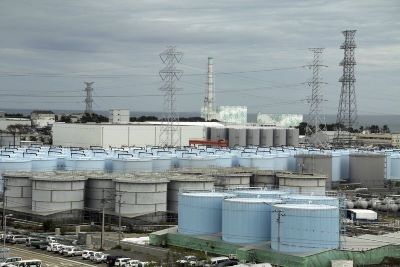
The International Atomic Energy Agency will send a group of experts, possibly including some from South Korea and China, to the wrecked Fukushima nuclear power plant in December to monitor the safety and transparency of Japan’s planned disposal of treated radioactive water, an official from the agency said Thursday.

Fishers in Japan and neighboring countries, including China and Korea, reacted angrily to the Japanese government’s decision in April to dump the 1.25 million tons of wastewater it has collected since the Fukushima Dai-ichi nuclear plant was crippled by a 2011 earthquake and tsunami. The release is set to start in the spring of 2023, and the procedure is expected to take several decades. 

In mind of the international community’s safety and transparency concerns, Japan requested the nuclear watchdog’s assistance to conduct reviews on the water treatment and discharge process, and to determine whether it meets safety standards. 

An IAEA team led by Lydie Evrard, head of the agency’s department of nuclear security, is in Japan through Friday to meet with Japanese officials to discuss details about the monitoring process and also to visit the Fukushima site. 

During a press conference in Japan, Evrad stressed that the IAEA is firmly committed to ensuring that the review is comprehensive and objective and that the results are conveyed to the international community. 

She added that the IAEA will dispatch an 11-member multinational team of experts to Fukushima in December for the review, which may include experts from Korea and China. 

The expert team will be asked to assess the water to be released and to evaluate the safety of the release process and the impact of its radiation on people and the environment, in accordance with IAEA safety standards. 

She stressed that her team will listen to “different concerns from various stakeholders,” saying the main objective of the review is to be objective and transparent with a science-based approach.

The Japanese government and the plant’s operator, Tokyo Electric Power Company Holdings, decided to go ahead with the release in April after years of heated debate and despite protests from neighboring countries. 

Japan said the decision was unavoidable, with storage space for the radioactive water expected to run out next summer. 

It insists the wastewater will be filtered and diluted to remove all radioactive substances except tritium, which it says is harmless to humans in small doses.

The decision, however, was met with fierce backlash from neighbors including Korea, China and Russia, as well as from the Japanese fishing industry and environmental activists around the world. Opponents say the sheer volume of water to be released could affect human health, food safety and the maritime environment. 

Last month, Korea expressed “strong regret” upon news reports that TEPCO planned to build an undersea tunnel to release the radioactive water from the power plant into the sea. 

Koo Yoon-cheol, head of the Office of Government Policy Coordination, condemned Japan for unilaterally pursuing its plan without any prior consultations with Seoul or seeking its consent. He called on Japan to “immediately halt” the disposal plan and to communicate sufficiently beforehand with neighboring countries. 


By Ahn Sung-mi

Published : September 11, 2021

Bhutan to achieve herd immunity by first week of October #SootinClaimon.Com

#SootinClaimon.Com : ขอบคุณแหล่งข้อมูล : หนังสือพิมพ์ The Nation.

https://www.nationthailand.com/international/40005990

Bhutan to achieve herd immunity by first week of October


Second dose for children to begin from September 14

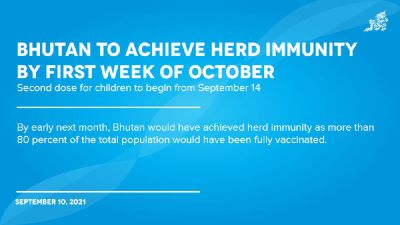
By early next month, Bhutan would have achieved herd immunity as more than 80 percent of the total population would have been fully vaccinated.

This would be possible following the complete immunisation (two doses) of some 60,000 children between the age of 12 and 17 years, which begins next week.

The health ministry will roll out the second round of vaccination for children in this age group between September 14 and 18. Simultaneously, the first dose of vaccine for children in this age group in the seven remaining dzongkhags would also begin.

A member of the National Immunisation Technical Advisory Group (NI-TAG), Dr Sonam Wangchuk said that with the arrival of 198,900 doses of Pfizer vaccine recently, the health ministry plans to fully vaccinate more than 59,700 children (12 to 17 years) in 13 dzongkhags and some 16,000 children in the remaining seven dzongkhags.

“Once we complete the vaccination programme, the overall vaccine coverage would be more than 80 percent,” he said, adding that the remaining 16,000 children would receive their second dose by the end of October.

Besides the 4,500 plus children in Phuentsholing and Samtse, who received the Pfizer vaccine in July, most of the eligible children have received the Moderna vaccine. However, this time, all eligible children will receive the Pfizer vaccine.

“Interchangeability between Pfizer and Moderna vaccine is recommended. People should not confuse this as mix-and-match because both the vaccines are mRNA type, manufactured by two different companies,” said Dr Sonam Wangchuk.

He said that vaccination for children would be conducted at the respective schools across all the dzongkhags.

Despite the holidays in Thimphu, Dr Sonam Wangchuk said that the coverage should not be hampered as most of the students would be vaccinated before the holidays — between September 14 and 15. “Should there be any additional students who had not received the vaccine then, we can continue after the holidays.”

The government spent over Nu 101.377 million to procure 198,900 doses of Pfizer vaccine earlier this week.

By Younten Tshedup/Kuensel

Published : September 11, 2021

Asean-China travel bubble for reviving economy #SootinClaimon.Com

#SootinClaimon.Com : ขอบคุณแหล่งข้อมูล : หนังสือพิมพ์ The Nation.

https://www.nationthailand.com/international/40005989

Asean-China travel bubble for reviving economy


NANNING: Malaysia has proposed a cross-border mechanism between Asean and China that introduces a travel bubble and quarantine arrangement to revive the economy.

Prime Minister Datuk Seri Ismail Sabri Yaakob said recognising the vaccination certificates issued by the countries was also another area for consideration.

“By removing unnecessary barriers to trade and by rolling back on new restrictive trade measures, we could place ourselves on a steady path for economic recovery and growth.

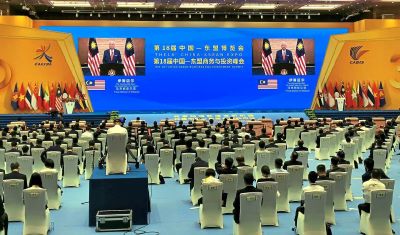
“As such, we will be in a much better position to revive not only the tourism industry but also our people-to-people connectivity,” he said in a pre-recorded speech at the opening of the 18th China-Asean Expo (CAExpo) and China-Asean Business and Investment Summit here yesterday.

“Cross-border travel bubble is vital for recovery. We have to strive to keep the supply chain connectivity uninterrupted and to facilitate the movement of essential goods and services.

“This is critical for small and medium enterprises (SMEs), which form the backbone of our economy,” he said.

Ismail Sabri also called for Asean and its partners to intensify open trade and investment while strengthening the Regional Comprehensive Economic Partnership (RCEP).

RCEP is a free trade agreement signed in November last year by the 10 Asean members, Australia, China, Japan, New Zealand and South Korea after eight years of negotiations.

“This has demonstrated that we are committed to the transnational supply chains and keeping markets open amid the ravages of a global pandemic.

“RCEP provides immense opportunities to bolster regional supply chains and for businesses to diversify production networks.

“As we transform adversity into opportunity, this agreement will serve as an integral tool that helps us navigate our regions towards recovery and future growth,” he added.

As this year marks the 30th anniversary of the establishment of dialogue relations between Asean and China, Ismail Sabri said he was heartened to see the relations gaining strength over the years.

In 2020, China remained Malaysia’s largest export destination for the 12th consecutive year, with a total value of US$37.92bil (RM157.3bil), contributing to 16.2% of the country’s total export.

The annual CAExpo is the main Chinese exhibition participated by the Malaysian business community.

This year, 58 Malaysian companies are showcasing their products at the four-day event until Sept 13. The number was greatly reduced by over 300% last year due to cross-border restrictions and controls brought on by the Covid-19 pandemic.

Published : September 11, 2021

Hun Sen pushes GMS to invest in digital base #SootinClaimon.Com

#SootinClaimon.Com : ขอบคุณแหล่งข้อมูล : หนังสือพิมพ์ The Nation.

https://www.nationthailand.com/international/40005953

Hun Sen pushes GMS to invest in digital base


Prime Minister Hun Sen urged all countries in the Greater Mekong Subregion (GMS) to push for the development of digital infrastructure in order to make the economies of the region more competitive globally.

The GMS consists of China – where the river’s waters originate – and the other countries which the Mekong flows through: Cambodia, Laos, Thailand, Myanmar and Vietnam.

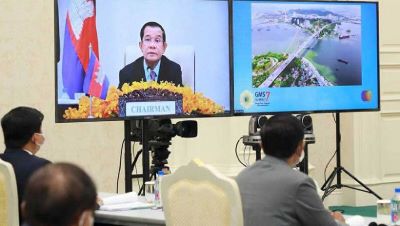
Hun Sen made the remarks as he chaired the seventh GMS conference on September 9, which was held virtually due to the pandemic. He said digital connectivity is at the core of cooperative efforts within the GMS.

He said digital infrastructure can ensure the effectiveness and sustainability of the socio-economy in the post-Covid-19 recovery context.

“Cambodia urges GMS members to focus on digital infrastructure development, economic integration and improving workforce skills in line with Industry 4.0 demands to keep the region competitive,” he said, referring to the Fourth Industrial Revolution.

Hun Sen also pushed for forward progress on the development of smart cities, the adoption of clean energy and greener logistics, the mobilisation of resources and finance,and increased partnership between the public and private sectors as a key mechanism to ease ongoing financial hardships.

“I believe that our common efforts [for economic growth] must be undertaken in a timely manner and done responsibly in order to ensure a smooth trade supply chain, increased investment, renewed tourism and good public health in the region,” he said.

Hun Sen also praised China for supplying Covid-19 vaccines to countries in the region. He also thanked other countries and the international community for providing vaccines to Cambodia, such as those donated through the World Health Organisation-led Covax Facility or directly via bilateral agreements.

“We have to [increase] the promotion of solidarity and mutual tolerance within a multilateral framework to ensure that we “build back better” our societies and economies post-pandemic,” he said.

In his closing remarks, Hun Sen said humanity is now feeling the painful consequences caused by climate change all over the globe through the predicted increase in severity of natural disasters, which has proven without question that what the world is facing is truly an emergency.

He also warned that GMS member states must guard against threats to global economic growth such as the emergence of unilaterally restrictive or protectionist trade policies.

“Now, more than ever, we must realise the crucial importance of cooperation and collaborative actions. The threats and challenges that we face have impacts that straddle and spill over our borders and therefore require joint solutions,” he said.

The GMS issued a jointed declaration on September 9 saying they were committed to maximum regional cooperation, noting that since 1992 the GMS have mobilised financial loans totalling $27.7 billion to support 109 investment projects and 230 technical assistance programmes across the region.

The GMS have also contributed to regional connectivity by constructing 12,000km of roads and nearly 700km of railways. It has contributed to the electricity supply with around 150,000 families given access to the grid via installation of power plants producing 3,000MW over 2,600km of power lines, according to the declaration.

By Ry Sochan/The Phnom Penh Post

Published : September 10, 2021

China’s Foreign Minister Wang Yi to visit Vietnam, vaccine assistance on the agenda #SootinClaimon.Com

#SootinClaimon.Com : ขอบคุณแหล่งข้อมูล : หนังสือพิมพ์ The Nation.

https://www.nationthailand.com/international/40005952

China’s Foreign Minister Wang Yi to visit Vietnam, vaccine assistance on the agenda


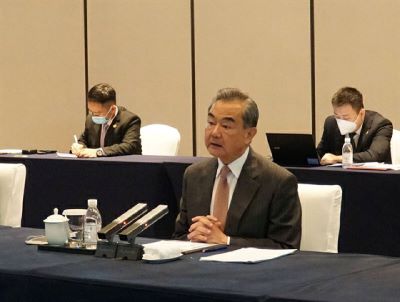
HÀ NỘI — Chinese State Councillor and Foreign Minister Wang Yi will visit Việt Nam from September 10-12, discussing cooperation in the COVID-19 fight and vaccine assistance.

The announcement was made by the deputy spokesperson of Vietnamese Ministry of Foreign Affairs Đoàn Khắc Việt at a press briefing on Thursday.

Within the visit, the Chinese minister will co-chair the meeting of the 13th Steering Committee for Việt Nam-China Bilateral Cooperation with Deputy Prime Minister Phạm Bình Minh, hold talks with Vietnamese Foreign Minister Bùi Thanh Sơn and pay courtesy calls on Vietnamese leaders, the spokesperson said.

At the steering committee meeting, the two sides will discuss measures to resolve existing issues and strengthen the relations between the two countries.

The two sides will also talk about COVID-19 prevention and control, vaccine assistance and supply of medical equipment, the spokesperson said. 

The visit, which is made upon the invitations of Việt Nam’s Deputy Prime Minister Phạm Bình Minh and Foreign Minister Bùi Thanh Sơn, aims to continue to strengthen the Việt Nam-China comprehensive strategic cooperative partnership for the interest of two countries’ people and for the peace, stability, cooperation and development of the region and the world, he said.

Meanwhile, Deputy Prime Minister Lê Văn Thành will attend and deliver remarks at the opening ceremony of the 18th China-ASEAN Expo and China-ASEAN Trade and Investment Summit held in China’s Nanning City on September 10 via video conference.

These are among the top 10 expos of China held annually since 2004. This year Việt Nam will participate the most extensively among ASEAN countries with 80 businesses attending in person and 200 businesses via video conference.

The participating businesses will introduce and promote signature products of Việt Nam including agricultural produce, food, woodworking products and consumer goods as well as promote the country’s investment environment and tourism. — VNS

Published : September 10, 2021

Reconnecting with Asean a key focus for Singapore as it recovers from pandemic, says Desmond Lee #SootinClaimon.Com

#SootinClaimon.Com : ขอบคุณแหล่งข้อมูล : หนังสือพิมพ์ The Nation.

https://www.nationthailand.com/international/40005951

Reconnecting with Asean a key focus for Singapore as it recovers from pandemic, says Desmond Lee


SINGAPORE – Reconnecting with its Asean neighbours will be a key focus for Singapore as it reopens its economy and recovers from the Covid-19 pandemic, said Minister for National Development Desmond Lee on Thursday (Sept 9).

He added that if people can travel in and out of Singapore safely, the country can reestablish its hub status and better serve the interests of Asean and Asia.

But the linkages should also extend to the digital realm, since rebuilding physical links will take time.

Mr Lee made the remarks at the Asean and Asia Forum, with the theme of “Seeking Recovery amid Covid-19: Regional Strategies and a Digital Future”.

Delivering the keynote speech at the event organised by the Singapore Institute of International Affairs, he noted that many sectors in Singapore had been affected by movement restrictions and border closures around the world.

Companies in the construction, marine and offshore engineering sectors found themselves unable to bring in foreign workers, and travel ground to a halt, for instance.

Mr Lee said reconnecting with the world is critical for a small and open economy like Singapore’s.

“Therefore, the first big step is to find safe means of reconnecting with our neighbours, while building resilience locally to cope with future disruptions that will surely come our way,” said the minister who co-chaired the Emerging Stronger Taskforce (EST) set up to chart Singapore’s economic recovery post Covid-19.

“If we can manage physical travel safely and become an oasis of hope during troubled times, we can better serve the interests of Asean and Asia,” he added.

Even as these physical links are being rebuilt, Singapore should also push ahead with digital connectivity with its neighbours, said Mr Lee.

He noted that this was the “best window” for Singapore to embed itself in the digital networks that have grown, with many people and businesses having been pushed online during the pandemic.

In this regard, Singapore’s reputation as a neutral, trusted broker may help, he said.

He cited the Alliance for Action on supply chain digitalisation, an industry-led coalition convened by the EST that set up the Singapore Trade Data Exchange, a common data infrastructure that facilitates the secure sharing of data between different parts of the supply chain.

In a separate speech, Senior Minister of State for Communications and Information Janil Puthucheary said Singapore and Asean would have to keep reinventing themselves to stay competitive amid digitalisation, which “brings the global market to our doorstep, but… also brings global competition”.

At the national level, past investments have helped to attract 80 per cent of the top 100 tech companies to set up shop here.

The next phase of investments in 5G technology, research, and up-to-date regulations are needed to help the country become one of the most digitally connected cities and among the best to do business, he added.

Amid these developments, it would also be important to reinforce partnerships, said Dr Janil.

“In a digital world with porous boundaries, we have to recognise that economic prosperity happens only when there is a belief that the world is not zero sum,” he added, noting Singapore’s partnership with Asean in areas such as data exchange across borders.

Mr Lee said that ultimately, Singapore will only be able to open up carefully and safely if as many people as possible get vaccinated.

Given the virulence of the new variants, it will be impossible for the world to maintain indefinite restrictions on society and economy, he added, noting Singapore’s push to work towards Covid-19 becoming endemic.

“We will open up at a controlled pace, making adjustments from time to time, so that the rate of transmission is managed without us having to return to heightened alert state,” he said, calling on people to encourage their friends and relatives to get vaccinated against Covid-19.

After his speech, Mr Lee was also asked about vaccination for children who are 12 years old and below.

He said Singapore would embark on vaccinating children only when the science has shown that it is safe to do so.

But he added that it was important to keep children safe in the meantime, while ensuring that they do not become a “lost generation”, deprived of the opportunity of a full education and development.

“A lot of stress and strains you see among young people, including children, that cause us to focus on the importance of mental wellness, arise from their feeling constrained, that somehow they haven’t quite got that full opportunity in school,” he said, noting this is why schools have restarted co-curricular activities to provide more opportunities for face-to-face interaction.

Mr Lee added that even the young people in Singapore who have been vaccinated, such as university students, were deeply concerned about the loss of opportunities to go on exchange programmes, and to travel and see the world.

“We have to be very mindful that even as we keep safe, and aspire to open up economically, we need to concern ourselves with the social aspects of this pandemic as well, such as opportunities for young people.”

By Tham Yuen-C/The Straits Times

Published : September 10, 2021

Xi: China to donate 100m more vaccines to developing nations #SootinClaimon.Com

#SootinClaimon.Com : ขอบคุณแหล่งข้อมูล : หนังสือพิมพ์ The Nation.

https://www.nationthailand.com/international/40005950

Xi: China to donate 100m more vaccines to developing nations


BEIJING – China will donate 100 million more doses of COVID-19 vaccines to developing countries within this year on top of a donation of US$100 million to COVAX, said Chinese President Xi Jinping on Thursday.

Xi made the announcement in Beijing while addressing the 13th BRICS summit via video link.

China will strive to provide a total of 2 billion doses of COVID-19 vaccines to the world by the end of this year, said Xi, noting that China, to date, has provided more than 1 billion doses of finished and bulk vaccines to over 100 countries and international organizations.

Xi also said at the summit that China will take over as the chair of BRICS and host the 14th BRICS summit next year.

China looks forward to working with BRICS partners to deepen cooperation in all areas and build a closer and more results-oriented partnership to meet common challenges and create a better future, Xi said.

Xi said that the BRICS countries have become an important force on the international stage to be reckoned with.

Over the past 15 years, the five countries have enhanced strategic communication and political trust in the spirit of openness, inclusiveness and equality, respected each other’s social system and development path, and explored a sound way for countries to interact with each other, Xi said.

While seeking synergy between their development policies and drawing on their complementarities, the five countries have made solid progress in various areas of cooperation in the spirit of pragmatism, innovation and win-win cooperation, and have forged ahead on the common journey of development, he added.

Xi said the five countries have supported multilateralism and taken part in global governance in the spirit of equity, justice, and mutual assistance.

“What has happened shows that come what may, we can make smooth, solid and sustained progress in BRICS cooperation as long as we pull our minds and our efforts,” he added.

Xi made five proposals for BRICS practical cooperation, adding that, under the current circumstances, it is important for BRICS countries to stay resolved, strengthen unity and further enhance the quality of practical cooperation

Xi proposed that BRICS strengthen public health cooperation in the spirit of solidarity; strengthen international cooperation on vaccines in the spirit of equitable access for all; strengthen economic cooperation in the spirit of mutual benefit; strengthen political and security cooperation in the spirit of fairness and justice; and strengthen people-to-people exchanges in the spirit of mutual learning.

Published : September 10, 2021

Afghanistan at risk of becoming terrorist haven, experts say #SootinClaimon.Com

#SootinClaimon.Com : ขอบคุณแหล่งข้อมูล : หนังสือพิมพ์ The Nation.

https://www.nationthailand.com/international/40005949

Afghanistan at risk of becoming terrorist haven, experts say


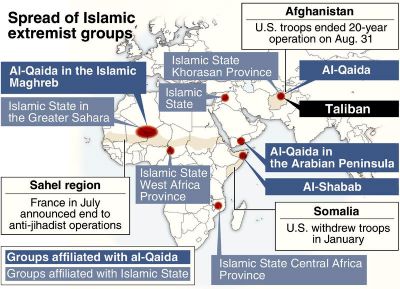
There are fears that groups affiliated with the international terrorist organization al-Qaida and the Islamic State (IS) militant group will increase their activities in Taliban-held Afghanistan and various parts of Africa.

Twenty years after the Sept. 11, 2001, terrorist attacks on the United States, international terrorism has been on the decline. The “fleeing” of the U.S. military, however, could give momentum to extremist ideas that have spread to various parts of the world.

“Afghanistan will become a haven for terrorists,” said Nabil Naeem, an Egyptian former member of al-Qaida, in an interview with The Yomiuri Shimbun on Sept. 2.

Naeem traveled to Afghanistan with the current al-Qaida leader, Ayman al-Zawahiri, and the two underwent military training together. Judging from his own experience, Naeem said extremist fighters on a watch list of U.S. and European security organizations are likely to gather in Afghanistan as a haven.

The Taliban has vowed to keep out international terrorism. However, the Haqqani network, the hardline element of the Taliban, is said to maintain military connections with al-Qaida. The suicide bombings near the international airport in Kabul on Aug. 26 exposed the Taliban’s inability to contain terrorism.

■ Reminiscence of Islamic State militant

The current situation in which people who follow Islamic extremist ideology are heading for Afghanistan is reminiscent of 2014, when the IS expanded its power in Iraq and Syria. About 30,000 people from 86 countries are said to have traveled to Iraq and Syria to join the IS.

The group at its height controlled an area from northern Syria through northern Iraq and established a system to govern the area based on its own interpretation of Islamic law. It was hostile to the United States and Europe and was deeply involved in international terrorism, including the 2015 attacks in Paris.

The 20-year U.S. war on terrorism weakened al-Qaida and the IS, and led to the death of charismatic leaders Osama Bin Laden and Abu Bakr al-Baghdadi.

However, the potential threat of international terrorism has not disappeared. Extremists have scattered around the world and continued their activities while “indigenizing” themselves in various regions.

■ The next struggle

On Aug. 31, the day the U.S. military completed its withdrawal from Afghanistan, al-Qaida issued a statement and called for preparations for the “next stage of the struggle” to “liberate” the Islamic world.

Certain regions in Africa, where al-Qaida and IS-affiliated groups are embedded, are of particular concern.

Islamic State West Africa Province (ISWAP) militants based in Nigeria attacked a town in the northeast of the country in late August, killing 17 people, including government solders and aid workers. In Somalia, the al-Qaida-affiliated Al-Shabab has recently carried out a series of suicide bombings and other attacks.

According to the Institute for Economics & Peace’s Global Terrorism Index, 41% of the terror attacks by the IS were concentrated in sub-Saharan Africa.

Prior to the pullout from Afghanistan, the U.S. military completed its withdrawal from Somalia in January. France also announced an end to its anti-extremist operations in the Sahel region.

African militant groups are currently focusing on overthrowing the rulers of the area and establishing an Islamic state, rather than waging international terrorism against the United States and European nations. Their primary targets are government troops and local residents.

However, Alexandre Marc, a nonresident senior fellow at the Brookings Institution in Washington, warned in an interview with The Yomiuri Shimbun that, without intervention by the United States and France, “jihadi insurrections” could quickly overrun major cities in Africa and become a global threat, possibly leading them to engage in international terrorism to assert their presence.

By Hiromi Uechi / Yomiuri Shimbun Correspondent

Published : September 10, 2021