South Korea, US, Japan agree to up cooperation over NK, pandemic #SootinClaimon.Com

#SootinClaimon.Com : ขอบคุณแหล่งข้อมูล : หนังสือพิมพ์ The Nation.

https://www.nationthailand.com/international/40003591

South Korea, US, Japan agree to up cooperation over NK, pandemic


South Korean, US and Japanese envoys on Wednesday stressed cooperation in their approach toward the complete denuclearization of the Korean Peninsula, and other global issues, including the COVID-19 pandemic and climate change.
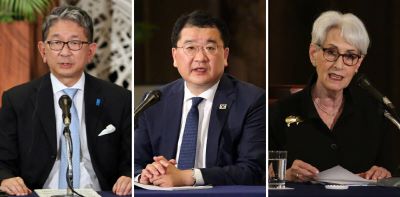
The three-way dialogue between First Vice Foreign Minister Choi Jong-kun and his US and Japanese counterparts, Wendy Sherman and Takeo Mori, respectively, was held in Japan, despite recent flare-up of tension between the two Asian neighbors.

During their talks, the three officials underscored tighter cooperation among the allies in dealing with North Korea’s nuclear problem.

“That close coordination sends a very critical message to North Korea in that we are together and shoulder-to-shoulder in our approach to this policy,” Sherman said during a joint press conference held after the talks with Choi and Mori.

Choi described the denuclearization of the Korean Peninsula as “a long game” which needs strategic coordination between the three countries.

“With Biden administration’s emphasis on diplomacy, North Korea’s response is very important,” said Choi.

Sherman said Washington was “ready” to engage with North Korea.

“The United States has made it clear that we are ready to engage with North Korea. They know that. We hope they will respond positively,” said Sherman. “But as my colleagues have said, we must exercise some patience, perhaps not too much but some.”

She raised hope that the North will understand that a “brighter future” for their country comes from engaging in discussions around denuclearization.

Washington has expressed that it is ready to meet with Pyongyang “anytime and anywhere without preconditions,” but the North has rebuffed US diplomatic overtures since President Joe Biden took office.

During the talks, the envoys also “committed to deepening trilateral cooperation to address the global challenges of the 21st century, including the climate crisis, pandemic response, and economic resilience and recovery,” State Department spokesman Ned Price said in a press release.

The statement said the officials also reiterated opposition to all activities that “undermine, destabilize, or threaten the rules-based international order and affirmed the need to maintain an inclusive, free and open Indo-Pacific region.

The three-way session in Tokyo marks the first vice-ministerial talks to take place between the three countries in four years. Launched in 2015, the trilateral meeting was held in the following two years, but halted during the Donald Trump administration.

The revival of the talks is seen as part of the efforts by the Biden administration to bolster three-way cooperation with its key Asian allies against China’s growing assertiveness and the nuclear-armed North Korea.
Seoul has been seeking to defuse diplomatic tensions with Tokyo, which are rooted in Japan’s 1910-45 colonial rule of the Korean Peninsula and have morphed into an ongoing economic feud.

As part of efforts to mend ties, President Moon Jae-in was seeking to visit Tokyo for the Olympics that may have included his first summit with Prime Minister Yoshihide Suga, but the plan was called off last minute.

In regards to the canceled summit, Choi said that Seoul and Tokyo agreed to continue efforts to address pending issues for a meeting to take place in the future.

He also said the three envoys agreed to hold the trilateral session on a regular basis.

Following the Japan visit, Sherman was to arrive in Seoul Wednesday for a three-day stay. While in Seoul, she will meet officials here and hold a strategic dialogue with Choi on Friday to discuss “bilateral and multilateral cooperation on shared priorities, including the climate crisis, pandemic relief and post-COVID-19 economic recovery,” according to the State Department.

Published : July 22, 2021

By : The Korea Herald/ANN
Some houses in Yangon raise yellow flags to ask for help #SootinClaimon.Com

#SootinClaimon.Com : ขอบคุณแหล่งข้อมูล : หนังสือพิมพ์ The Nation.

https://www.nationthailand.com/international/40003589

Some houses in Yangon raise yellow flags to ask for help


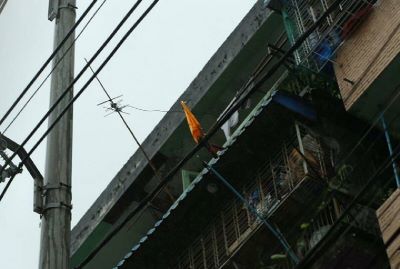
Some houses in townships in Yangon are raising yellow flags to ask for help as people in their homes have been infected with the COVID-19 virus, according to locals.

The infection rate is quick in COVID-19 third wave and some family members raised the flags to have medicines.

“I am grateful to people who help us. My husband is ill in previous day and me also. Only children are left. We cannot buy medicines so we raised flag to ask help to buy medicines. People bought medicines and gave us this morning,” said a family member who raised a flag in South Oakkalapa Township.

She continued that they asked for help to have medicines and people came to donate medicines soon after the flag is raised. The family is grateful for help.

People posted in social media recently that if someone infected with COVID-19 virus needs medicines and food, they should raise the yellow flag.

Some houses in Hlaing, South Oakkalapa and Tamwe townships are seen raise the yellow flags to ask help.

In addition, those who need help can call for help and get free delivery of food and medicine for less than Ks5,000, according to social media posts.

In Myanmar, COVID-19 tests have shown that mutations in the variants of concern, such as Alpha, Delta and variants of interest, Kappa, were found. According to the Ministry of Health and Sports, the mutated Alpha is characterized by a high rate of infection and a high rate of infection among family members who come into contact with the infected person.

Published : July 22, 2021

By : Eleven Media/ANN

[China] Subway passenger trapped by flood recalls ordeal #SootinClaimon.Com

#SootinClaimon.Com : ขอบคุณแหล่งข้อมูล : หนังสือพิมพ์ The Nation.

https://www.nationthailand.com/international/40003588

[China] Subway passenger trapped by flood recalls ordeal


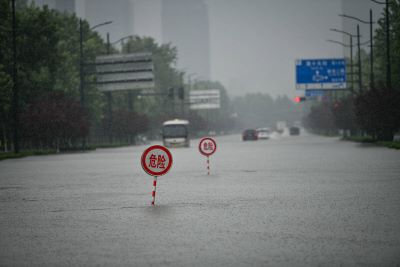
Many passengers were trapped on Tuesday in subway cars on Metro Line 5 in Zhengzhou, capital of Henan province, after heavy rainfall hit the city.

At least 12 were killed and five were hospitalized, according to the local government. By Wednesday morning, all remaining passengers had been rescued.

A woman who survived the ordeal told China Youth Daily her experience:

“I got on the subway to go home on Tuesday afternoon. At first, the train made emergency stops from time to time between stations. Some passengers were still boarding, so I did not think there were any serious problems.

“Then the train made another emergency stop between stations and got stuck there. I could see water rising, and it began to pour into the carriage.

“The train’s conductor instructed passengers to walk from the rear of the train to the front, because the front was on higher ground. He then opened the door and instructed everyone to walk along the pedestrian road.

“It was the first time I had heard of pedestrian roads in the subway. We followed his instructions, grabbed the railing and walked toward the station.

“The spot where the subway stopped was very close to the station, a little more than 200 meters. A small number of people walking in front of the group made it safely, but then the water came up fiercely from behind. Most people were unable to make it to the safe area and instead were forced to go back to the subway carriage, including me.

“The conductor then closed the door and began frequently contacting the subway staff. We waited for rescue.

“Everyone was trying hard to contact their families, friends and others for help. The water outside of the carriage kept rising; you could see it through the window. By around 9 pm, the rear part of the train was submerged. It was the scariest time.

“I stood in the middle of the group. The water level continued to rise, and eventually the level got to people’s chests and necks. Some started to cough, some were breathing heavily from a lack of oxygen, and some were shaking. The elderly, children and pregnant women became weaker from staying in the water for a long time.

“Because of the poor reception in the subway tunnel, I could not make phone calls. But the internet was working from time to time. I dared not to tell my parents that I had been trapped, so I only texted my cousins. I started to arrange affairs in case of my death.

“I could sense the fear around me in the carriage. There was some turmoil. Someone tried to smash the window, but other passengers stopped him.

“By the time rescuers showed up, the water was at a very high level outside the window. They broke the door and window in the front and pulled passengers out one by one. Pregnant women were rescued first, then children, then other women.

“We walked through the tunnel and finally arrived at the station. Once we got there, I saw many rescuers, medical professionals and subway employees. People were making phone calls. Beds and chairs were provided.

“I was trapped for about four hours. I did not go home. Instead, I stayed with a friend last night.”

Published : July 22, 2021

By : LUO WANGSHU/China Daily/ANN

Duterte can’t evade ICC, end treaty on his own – Supreme Court #SootinClaimon.Com

#SootinClaimon.Com : ขอบคุณแหล่งข้อมูล : หนังสือพิมพ์ The Nation.

https://www.nationthailand.com/international/40003587

Duterte can’t evade ICC, end treaty on his own – Supreme Court


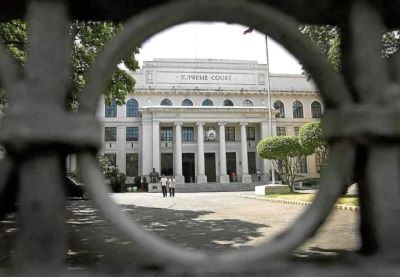
MANILA, Philippines — The Supreme Court has ruled that President Rodrigo Duterte cannot invoke the Philippines’ withdrawal from the Rome Statute to skirt the investigation by the prosecutor of the International Criminal Court (ICC) of charges that he committed crimes against humanity in the killings of thousands in his brutal war on drugs.

Voting unanimously, the 15-member tribunal also held that the President could not arbitrarily terminate international agreements without the concurrence of the Senate.

In a stinging rebuke of the position of Duterte and Malacañang, the high court ruled that as a state party the Philippines was bound to recognize the jurisdiction of the ICC and cooperate with its processes even after its withdrawal from the treaty that created the international court.

“Withdrawing from the Rome Statute does not discharge a state party from the obligations it has incurred as a member,” the court said in a 101-page decision authored by Associate Justice Marvic Leonen.

“Consequently, liability for the alleged summary killings and other atrocities committed in the course of the war on drugs is not nullified or negated here,” it said in its March 16 resolution, exactly three years after the government filed its notice of withdrawal from the treaty.

A copy of the decision was released to the media only on Wednesday.

No cooperation

The court pointed out that the country’s withdrawal became effective on March 17, 2019. This means that all acts committed by Duterte and other public officials up to that date were still within the ambit of the ICC’s jurisdiction.

The court said this was clearly spelled out in Article 127(2) of the Rome Statute, which the Philippines joined in November 2011.

“Even if it has deposited the instrument of withdrawal, it shall not be discharged from any criminal proceedings. Whatever process was already initiated before the [ICC] obliges the state party to cooperate,” it said.

Malacañang has said repeatedly that the president will not cooperate with the ICC probe since the Philippines had withdrawn from the Rome Statute.

Duterte on Saturday reiterated his own argument that the treaty had no legal effect because it was not published in the Official Gazette.

Presidential spokesperson Harry Roque had also argued that the country’s judicial system was working and therefore the president could not be prosecuted and tried in the ICC.

Bensouda move

Duterte ordered the country’s withdrawal from the agreement a month after then ICC Prosecutor Fatou Bensouda announced that she would start a preliminary examination of the complaints against him.

Before stepping down from her post last month, Bensouda had requested the ICC’s pretrial chamber to begin an official investigation of the allegations against Duterte.

Former ICC Judge Raul Pangalangan, the first Filipino to serve on the international tribunal, had also stated that the withdrawal was not an excuse for Duterte to disregard the ICC’s authority.

“Article 127 of the statute says that the court retains jurisdiction even after the withdrawal,” Pangalangan said in an online forum last month. “It retains jurisdiction over all crimes committed in its territory while it was still a member of the Rome Statute.”

The treaty states that a country’s withdrawal “shall not affect any cooperation with the [ICC] in connection with criminal investigations and proceedings in relation to which the withdrawing state had a duty to cooperate and which were commenced prior to the date on which the withdrawal became effective.”

Not absolute

The high court’s ruling was issued in connection with petitions filed by opposition senators led by Sen. Francis Pangilinan and two other groups questioning the legality of the president’s decision to withdraw from the treaty.

The court dismissed the petitions for being moot. It said it had no authority to invalidate the Philippines’ withdrawal from the treaty since it was already accepted and acknowledged by the United Nations, and that the government had met the requisites in annulling the agreement.

But the high court recognized the Senate’s authority in rescinding treaties it had previously approved, declaring that the president’s prerogative to unilaterally set aside an international agreement was “not absolute.”

“The President had no sole authority and the treaty negotiations were premised not only upon his or her own diplomatic powers, but on the specific investiture made by Congress,” the court said.

“In sum, at no point and under no circumstances does the President enjoy unbridled authority to withdraw from treaties or international agreements,” it declared.

Pangilinan and the other petitioners had argued that Duterte should have first sought the Senate’s concurrence before the Philippine government moved to withdraw from the treaty.

Published : July 22, 2021

By : Marlon Ramos – Reporter/Philippine Daily Inquirer/ANN

Vietnam Railways launches freight train service to Belgium #SootinClaimon.Com

#SootinClaimon.Com : ขอบคุณแหล่งข้อมูล : หนังสือพิมพ์ The Nation.

https://www.nationthailand.com/international/40003531

Vietnam Railways launches freight train service to Belgium


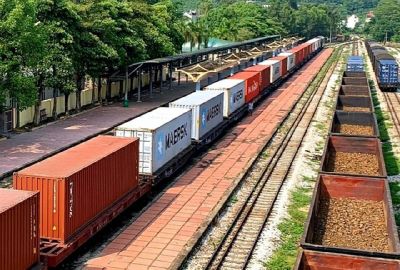
HÀ NỘI – Vietnam Railways (VNR) on July 20 added a new rail freight link from Việt Nam to Belgium, with the first train departing from Yên Viên station, Hà Nội, and expected to arrive at Liege City in Belgium.

Then, containers will be delivered to Rotterdam City (Netherlands) by lorries.

VNR said the train carried 23 containers with such goods as textile, leather and footwear.  During its journey, the train will stop at Zhenzhou City of China’s Henan Province and connect to the Asia-Europe train to reach its destination.

According to the corporation, this is the first container freight train operated by Rail Transport and Trade Joint Stock Company (Ratraco) in conjunction with transport firms from other countries providing logistics services to customers from Việt Nam to the target destination.

Currently, VNR is providing freight train services between Việt Nam and China and transiting to Russia, Europe, ASEAN and Central Asian countries. The firm provides full logistics services to customers.

Nguyễn Hoàng Thanh, deputy director-general of Ratraco, said that the successful organisation of the train from Việt Nam to Belgium would open up rail transport routes going deeper into Europe, in addition to the existing ones to Germany and Poland. 

“Currently, Ratraco and its European partner plan to organise eight trips per month departing from Việt Nam,” Thanh said, adding that the total estimated time for the entire journey is 25 to 27 days.

It is expected that the second train will depart from Yên Viên station on July 27 carrying electronic products and the third one on August 3, he said. 

In the context of the COVID-19 pandemic, international maritime transport is facing difficulties, rail service is being sought by many customers to transport goods from Việt Nam to China and from there on to Europe. 

With the advantage of an efficient international rail connection system and trains arriving at destination stations on time with reasonable costs, intermodal rail transport is thriving. VNA

Published : July 21, 2021

By : Viet Nam News/ANN

[Singapore] TraceTogether check-in to be mandatory at markets, food centres #SootinClaimon.Com

#SootinClaimon.Com : ขอบคุณแหล่งข้อมูล : หนังสือพิมพ์ The Nation.

https://www.nationthailand.com/international/40003530

[Singapore] TraceTogether check-in to be mandatory at markets, food centres


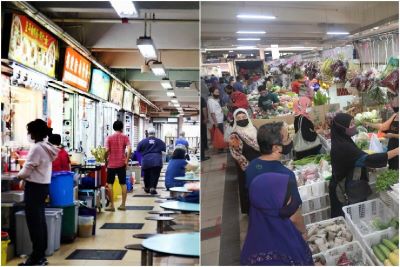
SINGAPORE – Visitors to wet markets and hawker centres will be required to check in with their TraceTogether app or token as part of tighter measures to stem Covid-19 infection, which has so far spread to 35 markets and food centres.

The cases at those places, linked to the Jurong Fishery Port cluster, continue to rise, said Health Minister Ong Ye Kung in a virtual press conference on Tuesday (July 20).

The Ministry of Health (MOH) confirmed 182 new cases of locally transmitted Covid-19 infection on Tuesday. Of these, 142 are linked to the Jurong Fishery Port cluster and 14 to the KTV cluster.

“So slightly higher than yesterday. So that’s the not-so-good part,” Mr Ong said.

But the silver lining is that the rate of growth has slowed and that a higher proportion of new cases would have been isolated before detection, he added.

In the coming weeks, TraceTogether-only SafeEntry and SafeEntry Gateway check-in requirements will be rolled out at all wet markets and hawker centres islandwide to help in contact tracing, MOH said on Tuesday.

The ministry urged all members of the public to comply with the check-in requirements and to carry their TraceTogether token or keep their TraceTogether app active to facilitate contact tracing.

Explaining the move, MOH said: “Wet markets and hawker centres are places frequently visited by members of the community and are also where many seniors tend to congregate.

“The potential for transmission is high, given the close proximity between individuals or mask-off activities, as evidenced by the recent clusters detected at these settings.”

Thus, there is a need to facilitate quicker contact tracing efforts so that potential transmission at these settings can be curbed, the ministry said.

Plans for SafeEntry check-in requirements were initially restricted to just markets with Covid-19 cases. 

MOH had said on Sunday that the National Environment Agency and town councils would progressively implement access control with interim fencing and mandatory SafeEntry check-in at markets where Covid-19 cases have been detected.

At Tuesday’s press conference, in response to a question on whether there would be a closure of all wet markets to curb Covid-19 transmission, Finance Minister Lawrence Wong said the closure of a market would funnel people towards other markets and cause crowding. 

“If we were to close all markets, again, where will people crowd? They may crowd at supermarkets. And if they crowd at supermarkets, will cryptic transmission happen there too? 

“So this has always been a challenge we’ve had with food outlets, particularly markets and supermarkets, because the concern that people may have is that there is going to be a shortage and therefore (they would feel they) must go out and buy.” 

Published : July 21, 2021

By : Toh Ting Wei/The Straits Times/ANN

[South Korea] PM urges labor group to cancel scheduled rallies amid virus flare-up #SootinClaimon.Com

#SootinClaimon.Com : ขอบคุณแหล่งข้อมูล : หนังสือพิมพ์ The Nation.

https://www.nationthailand.com/international/40003529

[South Korea] PM urges labor group to cancel scheduled rallies amid virus flare-up


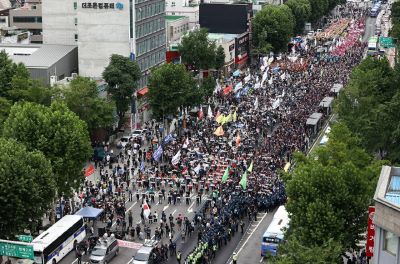
Prime Minister Kim Boo-kyum on Wednesday urged a major umbrella labor group to cancel its protests scheduled for later this week as authorities struggle to contain the countrys fast-spreading fourth COVID-19 wave.

The Korean Confederation of Trade Unions (KCTU) plans to stage two large rallies in Wonju, 140 kilometers southeast of Seoul, on Friday and a week later, with over 1,000 members reportedly planning to gather at the event slated for Friday.

The rallies were reportedly arranged to support a walkout of unionized workers of the National Health Insurance Service’s call center demanding for direct employment status. Wonju is currently under Level 2 social distancing guidelines and allows up to 99 people at public rallies.

The labor group has been under fire for hosting a large protest in downtown Seoul on July 3 attended by around 8,000 members in defiance of the government’s social distancing protocols. Police have booked 23 members for allegedly violating quarantine regulations.

In a daily Interagency meeting on the nation’s coronavirus response, Kim urged the KCTU to “cancel its large-scale rally plan,” adding that “there can be no exception when it comes to compliance with quarantine measures.”

Kim also pressed the KCTU to fully cooperate with the ongoing police investigation, saying that the group has been “passive” in submitting the list of participants at its rally earlier this month.

Three participants at the earlier KCTU rally were confirmed to have contracted the virus. The government issued an executive order mandating everyone who took part in the event be tested.

Kim predicted the latest virus crisis to escalate the most during the late July-early August summer vacation period, and underscored the need for the nation to “take a pause for a moment” to flatten the virus curve. (Yonhap)

Published : July 21, 2021

By : The Korea Herald/ANN
ADB revises growth outlook for developing countries as renewed outbreaks slow recovery #SootinClaimon.Com

#SootinClaimon.Com : ขอบคุณแหล่งข้อมูล : หนังสือพิมพ์ The Nation.

https://www.nationthailand.com/international/40003528

ADB revises growth outlook for developing countries as renewed outbreaks slow recovery


The Asian Development Bank (ADB) has adjusted its 2021 growth outlook for developing countries in the wake of renewed Covid-19 outbreaks, new virus variants, and an uneven vaccine rollout that has slowed recovery in some economies in the region.

ADB revises growth outlook for developing countries as renewed outbreaks slow recovery

In a supplement to the ‘Asian Development Outlook 2021’, released on Tuesday, ADB said recovery is underway in developing Asia, but the growth projection has been revised down slightly from 7.3 per cent in April to 7.2pc for 2021 following renewed virus outbreaks in some economies.

However, growth forecasts for the major advanced economies were unchanged, it said.

South Asia

The report noted that the adverse economic impact from new waves of the coronavirus that hit the region between March and June of this year was expected to be limited because both businesses and consumers were better able to adapt to the virus and restrictions than before.

“The GDP growth forecast for the subregion in 2021 is downgraded from 9.5pc in ADO 2021 to 8.9pc but upgraded for 2022 from 6.6pc to 7.0pc,” the report said.

Regarding Pakistan, the report stated: “The government of Pakistan estimated growth at 3.9pc in FY2021 (ended 30 June 2021), the improvement underpinned by strong growth in industry and services and steady remittance inflow.”

In India, early indicators showed that economic activity was quickly resuming after coronavirus-related restrictions in the country were eased, the supplement stated, adding that the growth projection — downgraded from 11.0pc to 10.0pc — reflects “large base effects”.

The ADB also raised the inflation forecast for the South Asian region from 5.5pc to 5.8pc which it said mainly reflected a higher forecast for India.

East Asia

Meanwhile, the ADB slightly upgraded the East Asian subregions’ growth forecast from 7.4pc to 7.5pc on the basis of its performance having outpaced expectations in the first quarter.

“Strong expansion in [China’s] industry and exports broadly aligns with ADO 2021 forecasts, as does gradual recovery in services … in the second half of 2021, fiscal policy is expected to safeguard a smooth transition to growth at a more sustainable rate in 2022.”

GDP growth forecasts for China remain unchanged at 8.1pc in 2021 and 5.5pc in 2022, the ADB said.

Other regions

The GDP growth forecast for Southeast Asia was also reduced from 4.4pc to 4.0pc, the ADB said, citing “mobility restrictions reimposed to combat a Covid-19 resurgence across the region”.

On the other hand, the growth projection for Central Asia was slightly revised upwards from 3.4pc to 3.6pc, reflecting an improved outlook for Armenia, Georgia, and Kazakhstan.

The ADB said the Pacific region was expected to grow more slowly (0.3pc) as compared to earlier projections of 1.4pc, noting however that travel bubbles would drive stronger economic recovery in the next fiscal year.

“Asia and the Pacific’s recovery from the Covid-19 pandemic continues, although the path remains precarious amid renewed outbreaks, new virus variants, and an uneven vaccine rollout,” ADB Chief Economist Yasuyuki Sawada said.

“On top of containment and vaccination measures, phased and strategic rejuvenation of economic activities — for instance, trade, manufacturing, and tourism — will be key to ensure that the recovery is green, inclusive, and resilient,” he said.

The Covid-19 pandemic remains the biggest risk to the outlook, as outbreaks continue in many economies, the ADB said.

Published : July 21, 2021

By : Amin Ahmed/DAWN/ANN

Shanghai gets policy boost to promote intl RMB use #SootinClaimon.Com

#SootinClaimon.Com : ขอบคุณแหล่งข้อมูล : หนังสือพิมพ์ The Nation.

https://www.nationthailand.com/international/40003527

Shanghai gets policy boost to promote intl RMB use


Chinese monetary authorities will support Shanghai to take a lead in the free use of renminbi and explore free capital inflow and outflow and free currency exchange in Shanghais Lingang Special Area, a central bank official said on Tuesday.

China will continue to support building Shanghai into an international financial center, with a focus on further improving the financial market, product, institutional and financial infrastructure systems to boost the allocation of global financial resources, said Wang Xin, director of research at the People’s Bank of China.

Wang said at a news conference in Beijing that the central bank will make a big push to build Shanghai into a key hub connecting the domestic and international markets, including supporting early and pilot implementation of Shanghai’s free use of renminbi and further facilitating the inflow and outflow of companies’ trade and investment in accordance with the principles of anti-money laundering, anti-terrorist financing and anti-tax avoidance.

Wang’s remarks came after China released a guideline last week to develop the Pudong New Area into a pioneer of socialist modernization.

Pudong New Area, which is Shanghai’s reform and opening-up showpiece, is set to pioneer China’s higher level of reform and opening-up and serve as a strategic link between the domestic and international markets, according to the document released by the Communist Party of China Central Committee and the State Council, China’s Cabinet.

Under the guideline, Pudong will further expand financial opening-up, promote the cross-border, two-way flow of renminbi, build an offshore financial system that matches Shanghai’s position as a world financial center, and support Pudong in developing offshore renminbi transactions so long as the risks are controllable.

At the Lujiazui Forum in mid-June in Shanghai, Huo Yingli, Party secretary of the China Foreign Exchange Trade System, said that while the currency is now often used in cross-border transactions, most of the transactions have been done in the financial market, with only 15 percent serving the real economy. In addition, the currency is most frequently used in China-related economic activities.

These scenarios are still far from the accepted description of free usage of renminbi. But Shanghai, which is the country’s financial center, can help to attain that goal, she said.

According to the guideline, an international financial asset trading platform should be set up in Pudong. Meanwhile, an infrastructure connection mechanism in Shanghai’s bond market should be built at a faster pace, which will be conducive to the overall opening-up of China’s bond market.

Such measures are of great importance to Shanghai, which aspires to become a yuan-denominated asset allocation center, said Li Feng, a professor at Shanghai Jiao Tong University’s Shanghai Advanced Institute of Finance.

Although China is the world’s second-largest bond market, overseas investors account for only 3 percent of bond investment in Shanghai, said Li.

“By elevating the international influence of various prices determined in Shanghai, yuan-denominated assets will be more widely accepted and influential worldwide. By making more renminbi assets available offshore, individual investors and institutions will be more willing to hold yuan-denominated assets, which in turn will advance the internationalization of the renminbi,” he added.

Yang Fan, chief strategist of CITIC Securities, said the Lingang Special Area, which was included in the China (Shanghai) Pilot Free Trade Zone in August 2019, will focus on cross-border capital management in accordance with the central government’s guideline. More efforts will be made to develop offshore renminbi trading in Lingang, helping Shanghai establish an offshore financial system that will be in line with the city’s role as a world financial center, said Yang.

Published : July 21, 2021

By : OUYANG SHIJIA and SHI JING/China Daily/ANN

Samsung Electronics unveils 1,000-inch commercial micro LED display #SootinClaimon.Com

#SootinClaimon.Com : ขอบคุณแหล่งข้อมูล : หนังสือพิมพ์ The Nation.

https://www.nationthailand.com/international/40003476

Samsung Electronics unveils 1,000-inch commercial micro LED display


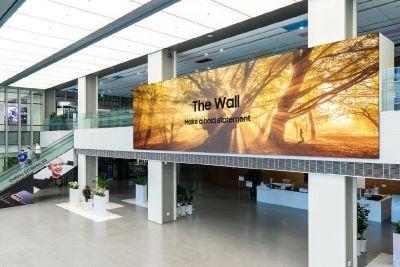
Samsung Electronics on Monday announced the global launch of a commercial version of its Micro LED display “The Wall” where customers can customize the size of the display even larger than 1,000 inches.

According to the South Korean tech giant, The Wall IWA, despite its vast size, supports high-definition images thanks to enhanced upscaling capabilities.

“The latest model is mounted with artificial intelligence processor chips each comprised of 16 neural networks that can digest input images into high-quality ones optimized to the size of the screen,” a company official said.

Samsung, strategically, refuses to call the Micro LED products “TVs.” It prefers to call them ”Micro LED screens” or “Micro LED displays.”

Though 50 percent thinner than previous models, The Wall IWA offers a more detailed expression of gradation, as the model utilizes diodes 40 percent smaller.

The Wall IWA also supports 8K screen resolution at 120Hz and offers a maximum 16K horizontal resolution.

The bezel-less TV can be put together with another one through a docking mechanism like Lego blocks instead of using cables, allowing an easy installation.

“Samsung Electronics will pioneer new market and change the paradigm of commercial display market,” said Hyesung Ha, Senior Vice President of Visual Display Business at Samsung Electronics.

The Wall IWA was awarded an eye comfort certification from TÜV Rheinland, a German technical test service and certification organization.

Samsung Electronics first launched its Micro LED display in 2018 under the brand named The Wall for commercial use. In March, the company began the sales of an 110-inch model for general customers at 170 million won ($148,000) to target the premium TV market. The launch of 99-inch, 88-inch and 77-inch models are scheduled within the year. The prices of the new models are expected to be above 100 million won.

A Micro LED TV uses micrometer-sized LED chips as singular pixels that can also self-illuminate, providing better resolution and higher clarity. But unlike organic light-emitting diode displays, it uses inorganic material that minimizes luminance decay concerns.

According to industry tracker Display Supply Chain Consultants, worldwide revenue from Micro LED TVs is expected to grow sharply in the upcoming years, rising from around $25 million this year to around $228 million by 2026.

Market researcher Omdia laid out a conservative outlook for the Micro LED TV market, estimating shipments of 1,000 this year, 30,000 in 2022, 167,000 in 2023, 933,000 in 2025 and 3.4 million in 2027.

Industry sources say that the number of orders for The Wall series stands at less than 100 due to the hefty price.

Despite the limited growth potential of the Micro LED market, Samsung Electronics is maintaining its two-track strategy focused on QLED and Micro LED TV to take initiative in the luxury TV market.

Published : July 20, 2021

By : Kim Byung-wook/The Korea Herald/ANN