Fitch gives thumbs up to Malaysia’s resilience #SootinClaimon.Com

#SootinClaimon.Com : ขอบคุณแหล่งข้อมูล : หนังสือพิมพ์ The Nation.

https://www.nationthailand.com/international/40003475

Fitch gives thumbs up to Malaysia’s resilience


KUALA LUMPUR: Fitch Ratings’ approval comes amid unprecedented credit rating pressures globally, where the three main credit rating agencies had issued 101 negative outlook positions as of end-2020, says Finance Minister Tengku Datuk Seri Zafrul Tengku Abdul Aziz.
“Malaysia’s rating affirmation is a testimony of the economy’s resilience amid an uncertain landscape, with good medium-term growth prospects and stable current account surplus supported by a diversified market and export offerings.

“Malaysia has consistently registered a current account surplus over the past two decades with its largest ever trade surplus of RM184.8bil in 2020, equivalent to 4.2% of the gross domestic product (GDP),” Tengku Zafrul said in a statement yesterday.

Fitch Ratings yesterday affirmed Malaysia’s long-term foreign-currency issuer default rating at BBB+ with a stable outlook.

The rating agency said the rating is premised upon prospects for strong and broad-based medium-term growth and persistent current account surpluses with a highly diversified export base.

It is balanced also with the high public debt, a low government revenue base and lingering political uncertainty, according to Fitch Ratings.

Commenting further, Tengku Zafrul said the country has also announced the National Recovery Plan (NRP) – a dynamic, flexible and forward-looking strategy that is guided by data and science.

“Premised on a whole-of-nation approach, the government will seek cooperation from industry experts, non-governmental organisations, community leaders and the general public in implementing the NRP,” he said.

“The NRP’s systematic approach is expected to strike a good balance between protecting lives, and safeguarding livelihood. Notably, since the NRP’s implementation on June 1, 2021, eight out of 14 states in Malaysia have recorded a significant decline in new cases, allowing them to shift to phase two over the past week, where more economic sectors and social activities are allowed under strict compliance to standard operating procedures,” he added.

He also said that the country’s key to an eventual economic recovery hinges upon a successful vaccination programme.

ADVERTISEMENT

“The National Covid-19 Immunisation Programme (PICK) continues to be ramped up to hasten economic recovery. Malaysia is currently one of the fastest nations in the world to administer vaccinations, with more than 400,000 doses daily.

“PICK is expected to boost the vaccination rate to 500,000 doses daily, while also aiming for 100% of the adult population in Selangor and Kuala Lumpur to be given at least one dose of the vaccine by Aug 1 under Operation Surge Capacity,” he said.

“Based on this fast-tracked approach, 100% of the adult population are expected to be fully inoculated by end-Oct 2021,” he noted.

Tengku Zafrul also pointed out that there would be other factors that will drive Malaysia’s economic recovery include improving external demand from major trading partners, and the implementation of infrastructure projects with high multiplier impact.

“Other supporting factors include Malaysia’s economic fundamentals, as well as its depth and breadth, enabling it to remain resilient even during difficult times. Notably, Fitch has acknowledged that Malaysia’s manufacturing sector and exports will continue to benefit from thriving global demand for the country’s products like electrical and electronics, crude oil and personal protective equipment,” he said.

ADVERTISEMENT

Meanwhile, Bernama reported Tengku Zafrul, in an interview with South China Morning Post, as saying that Malaysia’s fiscal deficit is expected to go up to between 6.5% and 7% of its GDP this year from the 6% targeted earlier, after factoring in the recent stimulus packages announced by the government.

He said the government is ready to expand fiscal space whenever necessary to support the economy and the people.

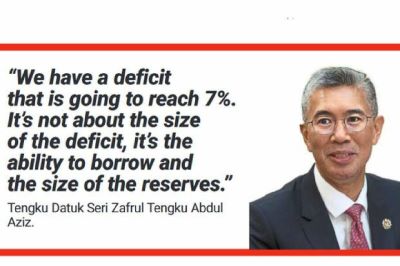
“We have a deficit that is going to reach 7%. It’s not about the size of the deficit, it’s the ability to borrow and the size of the reserves.

“Although Malaysia is A-rated, in terms of our fiscal reserves, we are smaller than many other A-rated countries.

“The only difference is that we have strong growth prospects,” Tengku Zafrul added in that interview.

Published : July 20, 2021

By : The Star/ANN
Sinopharm vaccine approved to treat children, teenagers #SootinClaimon.Com

#SootinClaimon.Com : ขอบคุณแหล่งข้อมูล : หนังสือพิมพ์ The Nation.

https://www.nationthailand.com/international/40003474

Sinopharm vaccine approved to treat children, teenagers


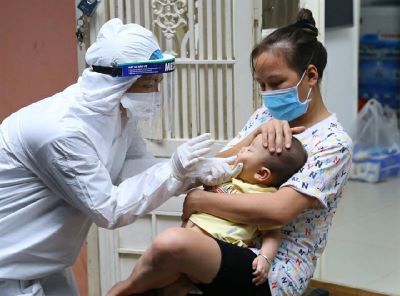
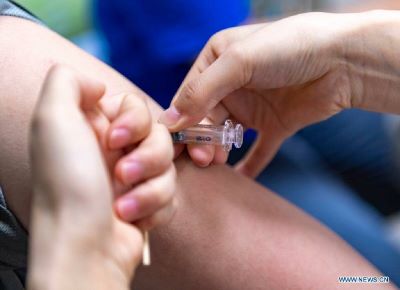
Sinopharms COVID-19 vaccine has been approved for emergency use for young people ages 3 to 17, after early and midstage clinical trials showed it is safe and can elicit strong immune responses in the age group, the company said in a recent statement.

The approval was granted by the Joint Prevention and Control Mechanism of the State Council, which was set up to deal with the COVID-19 pandemic.

It is the second domestic COVID-19 vaccine made available for children and teenagers in China. In June, Sinovac Biotech’s vaccine was authorized for emergency use for young people.

Sinopharm said in a statement released on Friday that it had completed the first and second stages of clinical trials in Henan province on people ages 3 to 17, which showed their vaccine was effective and safe.

All trial participants had generated antibodies to tackle the virus after receiving two doses. There were no significant differences in the strength of their immunity when compared with adult counterparts.

The vaccine showed good safety and no severe adverse effects had been recorded, the company said.

“We began clinical trials among adolescents by first testing 13- to 17-year-olds, then proceeding to 6-to 12-year-olds and 3- to 5-year-olds, so as to guarantee safety,” said Zhang Yuntao, chief scientist and vice-president of Sinopharm’s China National Biotech Group, during an interview with China National Radio.

The company said it also launched a study in Abu Dhabi in the United Arab Emirates on June 6, to evaluate the vaccine’s efficacy in a group of 900 people of different nationalities ages 3 to 17.

Vaccinating children and teens is essential to building an immunity barrier against the virus, Zhang said. Young people’s immune systems are still developing, so researchers are careful when involving them in clinical trials, he said.

Zhang said it will likely take another year for the vaccine to receive full market approval from the nation’s top drug regulator for use in younger people.

Sinovac also reported encouraging results from the first and second stage clinical trials of its vaccine on 552 people ages 3 to 17 in Hebei province, conducted from October to December.

Proved effective

According to results published in The Lancet medical journal in late June, its vaccine had elicited antibody responses in over 96 percent of trial participants, on par with the rate in trials involving adults.

Liu Peicheng, a spokesman for Sinovac, said the vaccines administered to children and teens are identical to those delivered to adults. “There is no need to take extra precautions when inoculating children,” he added.

Last week, several cities in the Guangxi Zhuang autonomous region and Fujian and Hebei provinces announced they will begin administering COVID-19 vaccines to teenagers ages 12 to 17, with some cities saying they will complete the inoculations by the end of September or October.

Since then, more than a dozen provincial-level regions have announced similar plans.

Beijing is taking surveys and rolling out publicity campaigns in preparation for the start of its vaccination program for teenagers after September, community workers told the newspaper Health Times.

Published : July 20, 2021

By : WANG XIAOYU/China Daily/ANN

Myanmar cemeteries overcrowded, volunteers overworked from deadly third wave of Covid-19 #SootinClaimon.Com

#SootinClaimon.Com : ขอบคุณแหล่งข้อมูล : หนังสือพิมพ์ The Nation.

https://www.nationthailand.com/international/40003473

Myanmar cemeteries overcrowded, volunteers overworked from deadly third wave of Covid-19


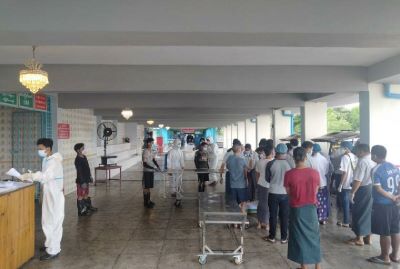
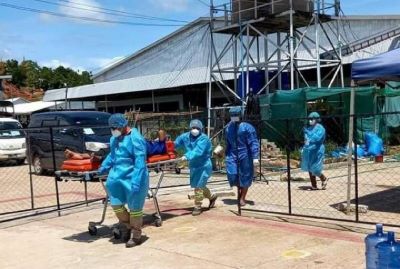
YANGON: As Myanmar suffers its deadliest surge in Covid-19 and its citizens suffer from massive shortages in oxygen, bodies pile up in its crematoriums.

“We have to transport around 20 to 30 bodies per day. Some days, we cannot even get them all,” said Ko Min Din from the Myittar Thingaha humanitarian group.

Ko Min Din says the large numbers of deaths during the third wave of Covid-19 means that groups like Myittar Thingaha are outstretched and overworked.

“We cannot afford any rest days. We pick up the body, get the death certificate, and send it to the cemetery. When it is our turn, we give it to the cemetery and we leave,” says Ko Min Din. 

The sheer number of deaths mean that such groups also have to cooperate with each other.

“Even if we are seeing less work at a certain moment, other groups will ask for help. We have to be in contact with at least another group: for instance, if we are picking up two or three bodies in East Dagon, we have to ask others for help. The help goes both ways,” says Ko Min Din. 

India and Indonesia

Myanmar’s neighbour India saw record numbers of Covid-19 cases and deaths during the past few months. 

According to a report from the VOA, places across India were burying the dead in mass graves alongside the river or even carry out mass cremations at parking lots as India seen a total of 750,000 deaths so far.  

“I’ve been here since 7am. There are at least 15 ambulances that are carrying two or three bodies each. The eight ambulances over there have been waiting since the morning,” quoted the VOA article.

A similar situation in Indonesia, regarded by most experts as the new Covid-19 epicenter.

BBC reports that firefighters now have to carry those that died at home, most of whom live on their own, from a lack of oxygen. 

BBC says that while such cases were limited to two or three bodies, there are now at least 20 such incidents since Indonesia started seeing a rising amount of Covid-19 cases in July. 

Third wave

The third wave of Covid-19 is undoubtedly much more brutal than the second one. 

The Ministry of Health and Sports (MOHS) had reported its finding of deadlier Covid-19 variants, such as the Alpha, Delta, and Kappa, in Myanmar since the middle of May. 

The MOHS had also warned that the variants were found to be much more infectious with one infection in a household would infect the other family members in the household.

Since then, the MOHS’s daily reports show that since early July, the number of new cases per day as well as deaths have only grown larger and has been regularly breaking previous records.

Lack of oxygen

The disparity between the supply and demand of oxygen is extremely apparent. 

Kale was one of the earliest examples within Myanmar.  Volunteer and civil organisations report that funerals have been taking place in every street.

Oxygen cylinders and other equipment were ordered from places such as Yangon, Mandalay and Monywa initially.

Later, Kale locals managed to pool together funds to set up an oxygen plant.  The plant, despite being able to pump out 78 units of 40 litre cylinders per day, started its operation on July 9,but had not been able to solve the demand in Kale.

Similarly, Yangon, the largest city in Myanmar, also started seeing the crippling demand for oxygen. Many groups that were previously able to sell or donate oxygen to those that needed it could no longer keep up. 

Factories within industrial zones such as those in South Dagon or Shwepyithar also could not fulfil the overwhelming demand.

“I’ve been waiting since morning. The 40 liter cylinders cannot be refilled anymore and only the 10 and 15 liter ones could be refilled. They say 40 liter refills can only resume tomorrow and for now, I will have to take whatever I can get,” said a person queuing up in front of an oxygen plant in South Dagon industrial zone.

Death from lack of oxygen

According to the WHO, around 80 percent of Covid-19 positive patients will suffer from mild symptoms with most of them not requiring hospitalization. However, around 15 percent of them will require oxygen support and the other 5 percent will need to be attached to ventilators. 

Volunteer, charity and civil groups within Yangon say that the demand for more oxygen and deaths as a result of not having access to oxygen have been climbing precipitously.

“There are many times where we take the patient in the car and have to go around town to look for oxygen,” said a volunteer.

The MOHS’s reports state that there were 1,435 deaths from July 1 to 17 from Covid-19.

This is a tremendous spike compared to the beginning of July where only a few dozen were dying each day. By July 13, over hundred people were dying each day.

According to volunteer workers, the actual numbers on ground could be much higher. 

“Yesterday, a father and son were both found dead at home. We were called up and informed by the sister of the son. According to her, they definitely were suffering from Covid-19,” said Ko Min Din. 

The sister in question lost contact with both and upon arrival at their home, found both her brother and father dead.

“There were no injuries. The son died sitting on the chair and the father had passed away on the bed,” said Ko Min Din.

Cemeteries are also now flooded with bodies and despite continuous work from the crematorium staff, bodies line up the hallways in the hundreds, waiting to be cremated.

“For today (July 17), we have to keep the body in the car. If it’s our turn, we reverse the car in and place the body on a shelf. So it doesn’t look too ugly but there is a long line of vehicles now,” said Ko Min Din.

He also speaks of difficulty of obtaining documentation and due process for the corpses.

“The authorization for the cemetery can only be obtained around 10am for us. We cannot go to the cemetery without it because the cemetery will only accept the body with that ticket. So by the time we get to the cemetery for the first time in the day, it is already past noon. There are at least 50 cars ahead of us already,” said a person in-charge of another charity organization. 

Ko Min Din also warns of the danger of more infections at the cemetery itself. 

“Some of the family members want to send the dead off. They are not wearing PPEs or other equipment like us. They will be easily infected. And instead of cremation, they should consider burying the dead. Right now, crematorium staff have to pile up bodies and then cremate two to three bodies at a time. The staff are also at risk of being infected. It will be better if the bodies are buried,” said Ko Min Din. 

As of this moment, there is no way to assess whether those dead bodies arriving at cemeteries across Yangon are from Covid-19 as most groups helping transport the bodies are not able to conduct tests.

However, what is for certain is that the deaths are happening, as proven by scores of volunteer workers scrambling around town to pick up dead bodies from homes.

The sights and sounds of a busy city that is Yangon has all but disappeared, replaced by the blaring sirens of ambulances and vehicles belonging to all charity group.

The streets of Yangon are empty while dead bodies are piling up in the its crematoriums.

Published : July 20, 2021

By : Zaw Min Naing/Eleven Media/ANN

US names four Chinese nationals in global hacking campaign #SootinClaimon.Com

#SootinClaimon.Com : ขอบคุณแหล่งข้อมูล : หนังสือพิมพ์ The Nation.

https://www.nationthailand.com/international/40003471

US names four Chinese nationals in global hacking campaign


WASHINGTON – The United States on Monday (July 19) accused China of using “contract hackers” in a pattern of irresponsible, disruptive and destabilising behaviour in cyberspace that posed a major threat to economic and national security in many countries.

Between 2011 and 2018, the campaign allegedly targeted victims in the United States, Austria, Cambodia, Canada, Germany, Indonesia, Malaysia, Norway, Saudi Arabia, South Africa, Switzerland and Britain, the Department of Justice (DOJ) said in its indictment.

Targeted industries included aviation, defence, education, government, health care, biopharmaceutical and maritime, the DOJ said.

Four Chinese nationals working with the Ministry of State Security (MSS) have been named in the indictment – charged with running a “global computer intrusion campaign targeting intellectual property and confidential business information, including infectious disease research”.

Three of the defendants were officers in the Hainan State Security Department (HSSD), a provincial arm of the MSS.

The indictment alleges that “Ding Xiaoyang, Cheng Qingmin, and Zhu Yunmin were HSSD officers responsible for coordinating, facilitating and managing computer hackers and linguists at Hainan Xiandun and other MSS front companies to conduct hacking for the benefit of China and its state-owned and sponsored instrumentalities”.

A fourth, Wu Shurong, was a computer hacker who, as part of his duties at Hainan Xiandun, “created malware, hacked into computer systems operated by foreign governments, companies and universities, and supervised other Hainan Xiandun hackers”.

The DOJ alleges that the defendants and the HSSD established a front company, Hainan Xiandun Technology Development Co, since disbanded, to operate out of Haikou in Hainan province.

The alleged MSS officers also “coordinated with staff and professors at various universities in Hainan and elsewhere in China to further the conspiracy’s goals”, it said.

“Stolen trade secrets and confidential business information included, among other things, sensitive technologies used for submersibles and autonomous vehicles, speciality chemical formulas, commercial aircraft servicing, proprietary genetic-sequencing technology and data, and foreign information to support China’s efforts to secure contracts for state-owned enterprises within the targeted country.”

The DOJ said the conspiracy also targeted infectious disease research related to Ebola, the Middle East respiratory syndrome, HIV/Aids, and other diseases at research institutes and universities.

Separately, Secretary of State Antony J. Blinken said in a statement on Monday morning that China’s Ministry of State Security (MSS) “has fostered an ecosystem of criminal contract hackers who carry out both state-sponsored activities and cybercrime for their own financial gain”.

He added: “The United States government, alongside our allies and partners, has formally confirmed that cyber actors affiliated with the MSS exploited vulnerabilities in Microsoft Exchange Server in a massive cyber-espionage operation that indiscriminately compromised thousands of computers and networks, mostly belonging to private sector victims.”

Briefing reporters earlier, a senior administration official said China’s hacking campaign was distinct from Russia’s in being state-sanctioned.

“On the Russian side… we sometimes see individuals moonlighting. And we see… some connections between Russian intelligence services and individuals. But… the MSS use of criminal contract hackers to conduct unsanctioned cyber operations globally is distinct,” the official said.

However, President Joe Biden told reporters during a press conference yesterday that the state may not itself be carrying out the hacking. “To the best of my knowledge… the Chinese government, not unlike the Russian government, is not doing this themselves but are protecting those who are doing it, maybe even accommodating them being able to do it.”

The senior official said concerns about the Microsoft incident and the broader malicious cyber activity had been raised with senior Chinese officials, but the US and its allies and partners were not ruling out further actions to hold China accountable.

“No one action can change China’s behaviour in cyberspace and neither can just one country acting on its own,” the official added. “We’re putting forward a common cyber approach with our allies and laying down clear expectations on how responsible nations behave in cyberspace.”

Australia’s Ministry for Foreign Affairs on Monday also said it was “seriously concerned about reports from our international partners that China’s Ministry of State Security is engaging contract hackers who have carried out cyber-enabled intellectual property theft for personal gain and to provide commercial advantage to the Chinese Government”.

In his statement, Mr Blinken said: “Responsible states do not indiscriminately compromise global network security nor knowingly harbour cyber criminals – let alone sponsor or collaborate with them.”

He added: “These contract hackers cost governments and businesses billions of dollars in stolen intellectual property, ransom payments, and cyber-security mitigation efforts, all while the MSS had them on its payroll.”

Published : July 20, 2021

By : Nirmal Ghosh/The Straits Times/ANN

[Japan] Refraining from phone use while walking hasn’t sunk into society #SootinClaimon.Com

#SootinClaimon.Com : ขอบคุณแหล่งข้อมูล : หนังสือพิมพ์ The Nation.

https://www.nationthailand.com/international/40003427

[Japan] Refraining from phone use while walking hasn’t sunk into society


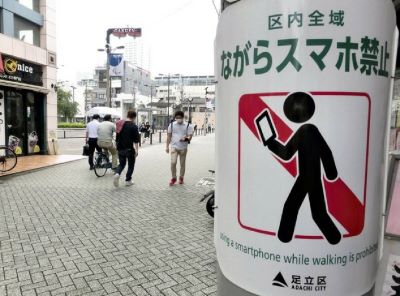
Six months have passed since an ordinance that bans using smartphones and other kinds of mobile phones while walking on streets or in parks went into force in Arakawa Ward, Tokyo. Similar ordinances were enforced in Yamato, Kanagawa Prefecture, and Adachi Ward, Tokyo, in July last year. As the city of Ikeda, Osaka Prefecture, followed suit on July 1, the move is spreading throughout the country.

However, the ordinances include no penalties, and efforts are focused simply on raising awareness. The question now is whether the ordinances can help reduce the use of phones while walking amid a growing number of accidents involving the practice.

Many people were seen walking around with smartphones on a recent day in a square lined with cafes and restaurants in front of JR Nippori Station in Arakawa Ward. A young woman was spotted walking around watching a video with earphones on her smartphone. There also was an elderly man stepping onto an escalator while searching for something online.

A 33-year-old woman working in the design business said she didn’t know about the ordinance. “I often walk around looking at a map app to find the place I want to go. Since it has become the norm, I can’t stop walking around while using my phone unless I get fined,” she said.

The ordinance, which went into effect in the ward in January, defines using a smartphone or other kind of mobile phone while walking or doing other things as “walking while staring at an image displayed on a smartphone or other device,” and states that such an act must not be committed in public places such as streets, parks and station plazas. It says, “One should not interfere with the passage through or use of public places by others when using a smartphone.”

The use of voice and other apps to assist the physically disabled in walking is excluded from the ban on the grounds of special circumstances.

The Honolulu city government in Hawaii bans pedestrians from looking at mobile phones while crossing the road, and it fines violators.

However, Isamu Chatani, chief of the ward’s community safety section, said: “If we set a penalty, we would have to constantly monitor pedestrians, which is not realistic. We rarely see people talking on the phone in the train these days even though there is no penalty for doing so, since people are becoming more aware that it is a breach of manners. It is important to take the time to make people aware of the problem of walking while playing with a smartphone, too.”

Operating a smartphone while driving a car or a bicycle is subject to penalties as it is prohibited under the Road Traffic Law and traffic rules set by prefectural governments. On the other hand, there is no law against walking while using a smartphone, although the practice has led to many accidents.

According to the Tokyo Fire Department, in the five years up to 2019, 177 people were taken to hospitals due to accidents related to using phones while walking. They included a case in which a person fell from a train station platform onto the tracks and injured their back. Another person fell and was injured after failing to notice a step.

In light of these situations, Yamato enforced the nation’s first ordinance to prevent people from using a phone while walking in July last year. According to the city, a survey conducted before the ordinance was in place showed 12.1% of pedestrians used a smartphone while walking. But the figure fell to 6.6% after the ordinance was enacted.

A city official said, “We believe people came to be widely aware of the issue as a result of our efforts to raise their awareness, such as posting posters in train stations and on public streets.”

Adachi Ward also enacted a similar ordinance. One feature of the ordinance is that it even prohibits talking on a phone while walking. A ward official said: “Some people say it’s too strict — but it can be dangerous if you become too focused on the conversation on the phone. We want people to stop when talking on the phone, too.”

Three major telecommunication companies — NTT Docomo, Inc., KDDI Corp. and SoftBank Corp. — in 2013 started providing an app that warns people when it detects them walking while using a phone. However, Softbank and KDDI both suspended the service in recent years, mainly because it was underused. Docomo offers the service only as a function of phones designed for children.

Katsumi Tokuda, a professor of barrier-free theory at the University of Tsukuba, said: “If accidents involving other people occur frequently, I think it would be a good idea to consider an ordinance with penalties for certain places where people’s lives can be at stake, such as train station platforms. It is important for local governments to raise awareness by calling for more specific measures, such as stopping at the side of the road or near a wall when using a smartphone, rather than simply repeating, ‘Don’t use your phone while walking.’”

Published : July 19, 2021

By : Yuri Ishihama and Mayumi Kamizono/The Japan News/ANN

Chinese govt to create circular economy for electric power batteries #SootinClaimon.Com

#SootinClaimon.Com : ขอบคุณแหล่งข้อมูล : หนังสือพิมพ์ The Nation.

https://www.nationthailand.com/international/40003426

Chinese govt to create circular economy for electric power batteries


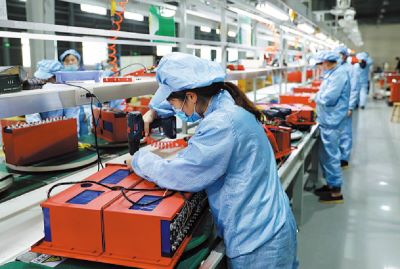
The Chinese government has released a plan to reduce the impact that batteries used in new energy vehicles have on the environment, as NEVs continue to grow in the automotive sector as a whole.

The plan focuses on how batteries’ remaining power is utilized after their primary use, as well as more effective recycling.

According to a five-year plan for developing the circular economy released by the National Development and Reform Commission earlier this month, China will step up building a traceability management system for NEV batteries.

More measures will be taken to encourage NEV manufacturers to set up recycling service networks by themselves or in cooperation with upstream and downstream industry players.

The plan highlights the role of echelon utilization of power batteries, which refers to the utilization of the remaining capacity of power batteries in other areas.

Industry insiders said this move will promote safety as well as greater commercial feasibility of the battery recycling industry.

If the heavy metals contained in power batteries are recycled improperly, it poses severe challenges to the environment, which is against the eco-friendly intention of NEVs, insiders said.

Roy Lu, a senior industry analyst at Gotion High-Tech, said it is time to recycle the first batch of NEV batteries after the market’s initial boom five to seven years ago.

“The sales of new energy vehicles have maintained high growth, so it’s imaginable that it will be a challenge for the industry,” Lu said.

The number of NEVs on China’s roads has been rising by 1 million annually for the past three years.

By the end of 2020, the country had 4.92 million NEVs on its roads, of which 4 million were electric cars. The China Association of Automobile Manufacturers estimates that NEV sales will surpass 2.4 million units this year.

Data from the China Automotive Technology and Research Center shows the country’s total of decommissioned power batteries reached some 200,000 metric tons by the end of last year, given the life span of power batteries is usually about six to eight years.

The center forecasts that decommissioned power batteries will reach 780,000 tons by 2025 and the power of the batteries needed to be recycled will reach 137.4 gigawatt-hours, or around 110 tons.

According to a report by Everbright Securities, the recycling of ternary and lithium-ion phosphate batteries will generate a market worth 100 billion yuan ($15.5 billion) by 2030.

With such development prospects, many battery recycling-related companies have emerged.

The statistics from QCC, an enterprise credit rating system, show that 9,435 power battery recycling-related companies were registered in the first half of this year, 26 times that of the same period in 2020.

There were a 2,579 related companies registered in 2020, up 253.3 percent year-on-year. There are currently 15,000 enterprises related to power battery recycling in China.

The power battery market nowadays is similar to the NEV market years ago, which shows a positive development trend but also needs more policy coordination and regulation to become more market-led, Lu said.

He said the industry should build a responsibility mechanism and cooperation standards covering raw materials for batteries, car companies, battery after-sales service and battery recycling.

Battery suppliers and carmakers have advantages in recycling batteries, he added, with high-quality battery enterprises having the corresponding upstream and downstream resources of the industry.

Car companies have the responsibility to establish a battery after-sales and recycling system. They have the ability to require raw materials, battery manufacturers and professional third parties to jointly build a standardized and environmentally friendly battery recycling system, Lu said.

Published : July 19, 2021

By : CAO YINGYING/China Daily/ANN

Hanoi: Non-essential businesses to close, people told to stay home starting tomorrow #SootinClaimon.Com

#SootinClaimon.Com : ขอบคุณแหล่งข้อมูล : หนังสือพิมพ์ The Nation.

https://www.nationthailand.com/international/40003425

Hanoi: Non-essential businesses to close, people told to stay home starting tomorrow


HÀ NỘI — Hà Nội’s authorities on Sunday announced more stringent social distancing measures that will take effect Monday to curb a spike in community cases.

In the latest dispatch signed by Hà Nội People’s Chairman Chu Ngọc Anh, citing huge risks of community transmission and following the lockdown order imposed on the entire southern region to deal with severe coronavirus outbreaks, people in the city are asked to stay at home and only go outside in necessary cases like business trips, working at essential businesses (State agencies, factories, essential shops and service providers), buy food and medicines, or emergencies such as medical issues, fire incidents or natural disasters, etc.

Masks are mandatory in public. People must maintain a distance of two metres in public, and must not congregate in groups larger than five outside of hospital, workplaces, or schools.

Online shopping is also encouraged.

Non-essential services and businesses are to be closed starting tomorrow.

The businesses and services that are still allowed to operate include: factories, production facilities, transport projects, construction sites, essential businesses or suppliers (food, medicines, utility, gas and oil, etc.), restaurants or food & drink establishments can only provide takeaway services, educational institutions, banks and treasuries along with bank-related and business supporting activities (such as notaries and attorney offices, registration offices, etc.), securities, postal offices, delivery services, import and export activities, medical examination and treatment, and funeral services.

People are asked to hold off from holding weddings and funeral services must not have more than 30 attendants and will face monitoring by the local health authorities.

People who visit these establishments must submit their health declaration forms using QR code via apps like Bluezone or nCOVI.

Production businesses, service establishments, and industrial zones must strictly observe COVID-19 prevention and control measures, have plans in place to respond when cases are detected at their facility, conduct COVID-19 risk assessment on a daily basis, and would be held accountable to local and municipal authorities.

For the agencies and offices of Hà Nội and the central Government based in Hà Nội, companies, enterprises and corporations (including foreign-invested companies) must develop arrangements, including working in shifts, to ensure 50 per cent of their staff working online.

Businesses and agencies should restrict direct contacts to the maximum and move to virtual format, the dispatch noted.

Malls, supermarkets, traditional markets, wholesale markets in the city are to ensure adequate supply of daily necessities for the local population, arrange stalls and reception procedures (from parking to entry) to reduce the number of customers in the same place at the same time, minimise close contacts and encourage online shopping and delivery.

Travel from Hà Nội to other cities and provinces and vice versa would be limited.

Chairman Chu Ngọc Anh requested the State agencies and businesses to work out plans that can ensure smooth, undisrupted transportation of goods and production materials. Vehicles carrying people from other provinces are allowed to pass through but are not allowed to stop to pick up and drop off passengers in the city.

Industrial parks or production plants with workers residing in Hà Nội or going to Hà Nội from other provinces and cities must register with local authorities (details on the number of workers and experts, their places of residence or accommodation, vehicles transporting them, etc.) and perform regular COVID-19 screening as per health authorities’ guidelines.

Drivers of trucks carrying goods from other localities must only stop at registered sites or gas stations, have negative COVID-19 tests (RT-PCR method) within the past three days, and report to local authorities on their entry and movements.

Public transport will be operated at 50 per cent capacity, while personal transport would be restricted.

The organisation of meetings and important political events of the central Government or Party in the city shall be decided by the Party Central Committee, the National Assembly, the Government and central agencies.

Hà Nội has recorded nearly 400 infections during the fourth wave of infections (since late April this year). Today alone, the capital city logged 37 new cases, including five in a family in Hoàng Mai District with currently unknown source of infections. — VNS

Published : July 19, 2021

By : Viet Nam News/ANN

Covid-19 positivity rate hits nearly 35% in Myanmar, 1,435 die in 17 days #SootinClaimon.Com

#SootinClaimon.Com : ขอบคุณแหล่งข้อมูล : หนังสือพิมพ์ The Nation.

https://www.nationthailand.com/international/40003424

Covid-19 positivity rate hits nearly 35% in Myanmar, 1,435 die in 17 days


Covid-19 positivity rate in Myanmar has reached nearly 35 percent with 1,435 deaths from July 1 to 17, according to the ministry of health and sports.

There were 13 deaths on July 1 that saw over 20 percent positivity rate, 17 deaths on July 2, 20 deaths on July 3, 35 deaths on July 4, 42 deaths on July 5, 52 deaths on July 6 and 57 deaths on July 7, 51 deaths on July 8, 64 deaths on July 9, 71 deaths on July 10, 82 deaths on July 11, 89 deaths on July 12, 109 deaths on July 13, 145 deaths on July 14, 165 deaths on July 15, 190 deaths on July 16 and 233 deaths on July 17 totalling 1,435 deaths within 17 days.

Currently, daily caseload is on the increase with 5,497 Covid-19 patients on July 17. Since May 27 the country has seen high positivity rate again with 96 cases on May 27, 72 cases on May 28, 40 cases on May 29, 45 cases on May 30 and 58 cases on May 31. In June, the number of daily cases reached 561 on June 15 and climbed to 1,580 on June 30. 

Then, the daily cases totalled 2,070 on July 1, 1,863 on July 2, 1,877 on July 3, 2,318 on July 4, 2,969 on July 5, 3,602 on July 6, 3,947 on July 7, 4,132 on July 8, 4,320 on July 9, 4,377 on July 10, 3,461 on July 11, 5,014 on July 12, 4,047 on July 13, 7,083 on July 14, 4,188 on July 15, 6,194 on July 16 and 5,497 on July 17, the ministry reported.

When it comes to daily positivity rate, there were 5.37 percent on May 27, 5.85 percent on May 28, 3.87 percent on on May 29, 4.9 percent on May 30 and 3.3 percent on May 31. In June, daily positivity rate reached seven percent and climbed to 19.9 percent on June 30.

Then, the daily positivity rate reached 21.89 percent on July 1, 20.4 percent on July 2, 20.7 percent on July 3, 22.34 percent on July 4, 26.93 percent on July 5, 28.07 percent on July 6, 26.89 percent on July 7, 27.68 percent on July 8, 27.43 percent on July 9, 28.93 percent on July 10, 34.21 percent on July 11, 34.74 percent on July 12, 34.63 percent on July 13, 33.17 percent on July 14, 37.92 percent on July 15 and 34.15 percent on July 16.

Myanmar has seen new variants of Covid-19 such as the Alpha and Delta which are variants of concern and the Kappa which is a variant of interest.

Since the first wave of the Covid-19 outbreak, Myanmar has reported 224,236 cases and 4,769 deaths. Of the reported cases, 158,969 patients have been discharged from hospital after their recovery. 

Published : July 19, 2021

By : Nyein Nyein Thu/Eleven Media/ANN

Fintech platforms become major banking tool for young Koreans: survey #SootinClaimon.Com

#SootinClaimon.Com : ขอบคุณแหล่งข้อมูล : หนังสือพิมพ์ The Nation.

https://www.nationthailand.com/international/40003423

Fintech platforms become major banking tool for young Koreans: survey


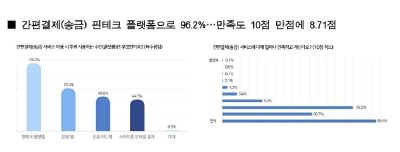
More than 90 percent of Koreans in their 20s and 30s use fintech platforms for money transfers instead of going to bank branches, a survey showed on July 12.

According to the survey conducted by the Korea Fintech Industry Association, about 96 percent of respondents said they use a financial technology platform developed by nonfinancial companies such as Kakao, Naver and Toss, while 60 percent said they use banking apps. The survey asked 2,000 people in their 20s and 30s who use payment services to gauge their preference and level of satisfaction. In addition to the fintech platforms and bank apps, 48.6 percent said they use credit card apps and 44 percent pay via services developed by IT giants Samsung and LG.

In terms of service satisfaction, they gave 8.71 out of 10, with 34.5 percent of the respondents awarding the full score.

“Fintech has promoted competition and innovation and resolved imbalances in information distribution and as a result, we are in a transitional period of power shift from financial companies to customers,” Ryu Young-joon, the chairman of KorFin said.

“I look forward to further improvement in financial consumers’ sovereignty in many ways through the revision of the Electronic Financial Transactions Act, which is the foundation law of digital finance in the future,” said Ryu, who is also the CEO of Kakao Pay.

The Electronic Financial Transactions Act allows mobile platforms, including online giant Naver and messenger app operator Kakao, and other financial institutions such as credit card companies to offer comprehensive payment and settlement services.

Published : July 19, 2021

By : Park Ga-young/The Korea Herald/ANN

Artist opens space to preserve and develop dó painting #SootinClaimon.Com

#SootinClaimon.Com : ขอบคุณแหล่งข้อมูล : หนังสือพิมพ์ The Nation.

https://www.nationthailand.com/international/40003393

Artist opens space to preserve and develop dó painting


HÀ NỘI — Artist Vũ Thái Bình has launched an art space in hopes of preserving the art of dó (poonah) painting in Hà Nội.

Entitled Dó Space, it will be a place for artists and fine arts lovers to gather and dive into traditional dó painting.

Dó paper has been used in Việt Nam since the 13th century for painting and writing.

The paper was used for the renowned Đông Hồ folklore paintings, calligraphy and documents. 

The paper comes from the bark of the poonah tree in northern provinces such as Yên Bái, Lào Cai, Thái Nguyên and Cao Bằng. 

Creating dó paper involves several complicated and precise processes, including selecting the material, soaking it in water, pounding and flattening the poonah pulp into paper and drying it inside the house. 

“Dó is an amazing material and a traditional symbol in modern society,” said Bình. “It is valuable to be honoured and preserved. But it is not easy to paint on dó paper because the thin material can tear easily.”

Bình, a graduate from the Hà Nội Academy of Theatre and Cinema’s Fine Arts Department, has achieved success with oil and acrylic painting.

He studied dó paper in 2013 while identifying his own style and was fascinated by the traditional material.

A dó painting by artist Vũ Thái Bình at Dó Space. — Photo coutersy of artistA dó painting by artist Vũ Thái Bình at Dó Space. — Photo coutersy of artist

He had his first solo exhibition in Hà Nội with dó paper making a milestone in his career in 2016. Early this year, he also displayed dó paintings at Việt Nam Museum of Fine Arts.

His skill of using watercolours has been recognised at solo and group exhibitions and at National Fine Arts Festival last year.

Located at 51 Hoàng Ngân Street, Nhân Chính Ward, Thanh Xuân District, Dó Space will help Bình have his own space for dó paper. It will open for all people who want to get to know more about dó painting. VNS

Published : July 18, 2021

By : Vietnam News / ANN