China’s annual growth forecast to be above 8%: Paper
China’s economy will continue to perform well, with the annual growth forecast above 8 percent, said 21st Century Business Herald, citing some institutes on Tuesday.
As the country’s economic activity continues to normalize and the economic recovery expands, the World Bank predicted China’s economic growth is expected to reach 8.5 percent on a yearly basis in 2021, instead of the 8.1 percent previously.
Moreover, the global economy will expand by 5.6 percent this year, and the figure in the US and the Eurozone will be 6.8 percent and 4.2 percent, respectively, according to the World Bank.
Thanks to China’s robust growth, the East Asia and the Pacific regions’ economic recovery will be strongest this year, and the country will contribute more than a quarter to global economic growth, the World Bank said.
China’s GDP will grow 8.2 percent in the second quarter of this year, said Liu Ligang, managing director and chief China economist at Citigroup. This year, the main drivers of China’s economic growth will be catch-up consumption, service sector recovery and manufacturing investment, Liu said.
Although the growth momentum will weaken in the second half of this year, Citigroup raised its full-year forecasts to exports, industrial production and real estate investment, Liu added.
As countries gradually reopen, the global economy will accelerate in the coming months, which will drive a recovery in income growth and re-hiring, Credit Suisse said.
Credit Suisse also predicted the global economy is expected to grow 5.9 percent this year, with China surging 8.2 percent, the US 6.9 percent and the Eurozone 4.2 percent
According to a research institute at the Bank of China, the country’s GDP growth will be 8.8 percent this year. However, with the gradual weakening of the base effect, the growth rate of major economic indicators will slow from a high level. The institute said China’s GDP growth will slow from 18.3 percent in the first quarter of this year to about 7.9 percent in the second quarter and 6.3 percent in the third quarter.
Standard Chartered gave a relative low prediction of 8 percent to China’s GDP growth in 2021.
Ding Shuang, chief economist for Greater China and North Asia at Standard Chartered Plc in Hong Kong, said the main problem in the country is the service sector, which has not reached the pre-epidemic growth rate.
21st Century Business Herald cited the institutes as saying that China’s CPI will be moderate throughout the year, and the indicator will not exceed the government’s 3 percent target.
The pressure of renminbi depreciation will increase in the second half of this year, but the trend will continue to fluctuate in both directions, the institutes said. Moreover the US dollar index is rising and the Federal Reserve has tightened its policies ahead of schedule, which also will put depreciation pressure on the renminbi.
The renminbi will not continue to appreciate in the short term, with the exchange rate of the yuan against the US dollar expected to be between 6.4 and 6.6 in the second half of this year, Ding said,
Supported by China’s economic fundamentals, the renminbi will remain a relatively strong currency for a long period of time, Ding added.
Singapore economy grows 14.3% in Q2, rebounding from worst of Covid-19 fallout: Flash data
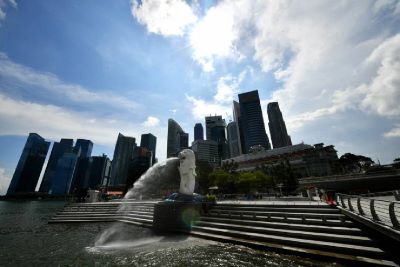
SINGAPORE – The Singapore economy grew at a record pace in the second quarter of 2021, due to the comparison with the same period last year when the Covid-19 pandemic plunged the economy into its worst recession.
Gross domestic product (GDP) expanded 14.3 per cent year on year in the April to June quarter, the Ministry of Trade and Industry (MTI) said on Wednesday (July 14).
The strong growth was largely due to the low base in the second quarter of last year, when GDP plunged by 13.3 per cent due to the circuit breaker measures implemented from April 7 to June 1, MTI said.
However, on a quarter-on-quarter seasonally-adjusted basis, the Singapore economy contracted by 2 per cent in the second quarter of this year, a reversal from the 3.1 per cent growth in the preceding quarter.
In absolute terms, GDP in the second quarter remained 0.9 per cent below its pre-pandemic level in the same period of 2019, MTI said.
The quarter-on-quarter dip in GDP was expected because of tightened Covid-19 restrictions during Singapore’s phase two (heightened alert), which stretched from May 16 to June 13.
Despite the latest curbs, economists have said Singapore’s recovery remains on track, driven by manufacturing and exports, sectors more immune to Covid-19 curbs.
The flash figures for the second quarter, however, are lower than the forecasts of economists polled by Bloomberg, who predicted year-on-year growth of 14.8 per cent and a quarter-on-quarter decline of 1.8 per cent.
MTI has maintained its full-year 2021 growth forecast of 4 per cent to 6 per cent, made first in November last year. The full-year forecast will be reviewed again next month.
Thanks to an accelerated pace of vaccination, private-sector economists last month raised Singapore’s 2021 growth forecast again to 6.5 per cent.
Singapore’s manufacturing output grew for a seventh consecutive month in May, increasing 30 per cent year-on-year – the biggest increase since November 2010.
Enterprise Singapore also in May said non-oil domestic exports are now expected to expand between 1 per cent and 3 per cent for the year, up from 0 per cent to 2 per cent.
The MTI data on Wednesday showed that the key manufacturing sector expanded by 18.5 per cent year-on-year in the second quarter, extending the 11.3 per cent growth in the previous three-month period.
Growth was supported by all clusters except for biomedical manufacturing . The electronics and precision engineering clusters continued to expand due to robust global demand for semiconductor and semiconductor equipment.
Still, on a quarter-on-quarter seasonally-adjusted basis, the manufacturing sector contracted by 1.8 per cent, a pullback from the 11.4 per cent expansion in the first quarter.
The construction sector expanded by 98.8 per cent on a year-on-year basis, a turnaround from the 23.1 per cent contraction in the first quarter. The sharp upturn was due to low base effects as last year’s circuit breaker measures had resulted in a stoppage of most construction activities in the second quarter of last year.
In absolute terms, the value-add of the sector remained 31.6 per cent below the level where it was before the pandemic in the second quarter of 2019.
On a quarter-on-quarter seasonally-adjusted basis, the construction sector shrank by 11 per cent in the second quarter of this year, a reversal from the 4.5 per cent growth in the previous quarter.
Across the service sectors – the wholesale and retail trade, and transportation and storage sectors grew by 9.3 per cent in the second quarter of this year, reversing the 1.7 per cent contraction in the previous quarter.
Meanwhile, the information and communications, finance and insurance and professional service sectors collectively expanded by 7.8 per cent, extending the 3.2 per cent growth in the first quarter.
The remaining group of service sectors – accommodation and food service, real estate, administrative and support service and other service sectors – expanded by 13.4 per cent, a turnaround from the previous quarter’s 3.8 per cent contraction.
Most sectors within the group grew on the back of a low base in the second quarter of last year due to the circuit breaker.
On the whole, the value-added of this group of sectors remained 11.8 per cent below its level in the second quarter of 2019.
[South Korea] New cases spike to fresh high of over 1,600, non-Seoul area also under toughened curbs
South Koreas daily virus cases hit yet another fresh high Wednesday as the country battles the fourth wave of the pandemic amid woes over rising delta variant cases and a slow vaccination process.
The country added 1,615 new COVID-19 cases, including 1,568 local infections, raising the total caseload to 171,911, according to the Korea Disease Control and Prevention Agency (KDCA).
The daily figures have stayed above 1,000 for eight consecutive days.
Concerns have grown here over a further uptick in new infections amid the fast spread of the more contagious delta variant and the summer season despite toughened virus curbs.
The greater Seoul area, home to half of the country’s 51.3 million population, has been under the toughest level of distancing since Monday.
The country added two more COVID-19 deaths, raising the death toll to 2,048. The fatality rate came to 1.19 percent.
Health authorities earlier warned that the daily virus cases may rise to the mid-2,000s in mid-August, before falling to as low as the 600s by the end of next month, should the fourth wave of the pandemic be brought under control.
As new cases in the greater Seoul area account for 80 percent of the daily caseload, the country implemented a semi-lockdown in the region that centers on banning gatherings of more than two people after 6 p.m.
Under the highest social distancing measures of Level 4, entertainment establishments, including nightclubs and bars, are ordered to shut down in the capital area, while restaurants are allowed to have dine-in customers only until 10 p.m.
Starting Thursday, most areas outside the greater Seoul area will be placed under the second-highest restrictions, in which gatherings of more than eight people are banned around the clock, according to health authorities. The ceilings, however, vary depending on provincial governments’ policies.
Non-capital regions have been under the lowest social distancing scheme with no ceiling on gatherings.
Restaurants are allowed to operate until midnight at Level 2.
Some regions, including the central administration city of Sejong, along with North and South Jeolla provinces, will be under Level 1 distancing.
But the country’s virus battle has been put on edge due to rising variant cases and soaring untraceable infections.
The more contagious delta strain of COVID-19 took up nearly 70 percent of newly identified variant cases last week.
Over the past two weeks, around 30.5 percent of the newly added patients had unknown transmission routes.
The spike in virus cases came as the country’s vaccination program has been slow since June due to a tight supply of jabs.
A total of 15.6 million people, or 30.6 percent of the country’s population, have received their first shots of COVID-19 vaccines, remaining almost unchanged from 29.8 percent tallied at end-June.
The KDCA said 6 million people have been fully vaccinated, accounting for 11.8 percent of the population.
South Korea said it has identified 103,151 cases of suspected side effects among people who have received the shots. Around 95 percent of them, however, were mild symptoms.
Of the newly confirmed domestic cases, 633 were from Seoul, 453 from the surrounding Gyeonggi Province and 93 from the western port city of Incheon.
The southeastern port city of Busan reported 62 cases, and Daegu added 52 new infections. South Gyeongsang Province found 87 new cases.
There were 47 additional imported cases.
Indonesia accounted for eight cases, followed by Cambodia with five patients. There were also four patients among arrivals from the United States.
The total number of people released from quarantine after making full recoveries was 155,491, up 739 from a day earlier.
The number of patients in critical condition came to 163, up 17 from the previous day.
South Korea carried out 11,008,859 COVID-19 tests so far, including 44,560 from the previous day. (Yonhap)
Myanmar has run out of oxygen to support rising no of Covid-19 patients as health crisis worsen
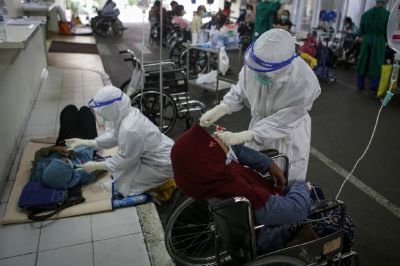
YANGON – The spread of Covid-19 variants has hit Myanmar hard with the number of official cases swelling towards 200,000 and 4,000 deaths and nationwide shortages of oxygen to treat severe patients.
July is the month health officials say the third Covid-19 wave has arrived in the country and much more infectious than the second. Laboratory tests show the presence of Alpha, Delta and Kappa variants, reported the The Ministry of Health and Information (MOHS).
The MOHS said Delta, even in comparison against another mutant variant Alpha, is 60 percent more infectious, especially among family members in close contacts, where most of the cases are detected.
The infection rate rose from 5.4 per cent late May to almost 20 per cent in June and hit 27.9 per cent on July 9. The number of deaths have also accelerated.
Myanmar has acquired two types of vaccines of the eight approved by the World Health Organisation (WHO) for emergency use. They are India-made Covishield and Chinese-made Sinopharm.
Myanmar has suffered from a halt in supply from India, the world’s largest vaccine making nation, which banned vaccine export because of swelling cases in the country. The supply from China has been limited only to 300,000 doses, enough for 150,000 people.
Just over 1.4 million people had received both doses of Covishield and 1.8 million just one dose. In term of population percentage it’s the lowest among Asean nations.
Asean has been discussing setting up a humanitarian corridor to aid Myanmar in the crisis but no progress has been reported.
According to Dr Khin Khin Gyi from the MOHS, the government is trying to immediately acquire 2 million doses of Russian-made Sputnik vaccine from the total target of 7 million. She also mentioned that 1 million doses of Sinopharm from China is also expected arrive in Myanmar in the second to third week of July.
MOHS has pledged to vaccinate half the population of Myanmar by the end of 2021.
More townships placed under lockdown
The stay-at-home order was issued at the end of May and has extended now to over 74 out of 330 townships throughout the nation as of July 13th. This includes 22 out of the 45 townships in Yangon Region, the most densely populated region in the country.
The plan of the MOHS and the Covid-19 Control Committee is to impose restrict movement from townships that were deemed viral hotspots into other, safer areas. A quarantine of 10 days will be imposed on those coming from stay-at-home townships even if Covid-19 tests are negative. While those not from stay-at-home townships do not need to undergo quarantine.
The high demand for oxygen
The severity of the cases has seen an overwhelming demand for oxygen –
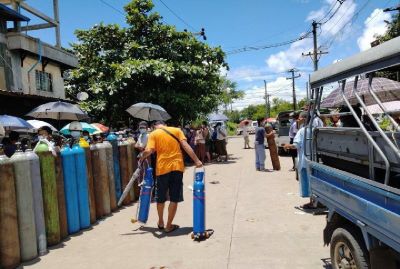
Kale Township in Sagaing Region is a striking example with local people and civil socities reporting increasing demand of oxygen by the day.
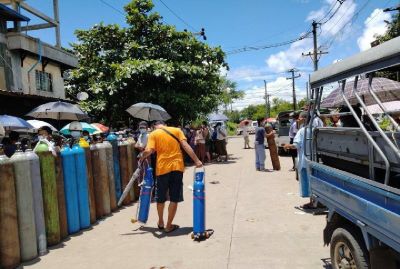
“We have to wait for the oxygen truck to arrives. There are so many cases that, even when the truck came, the supply quickly runs out,” said a Kale local.
When the initial brunt of the third wave ravaged Kale and local oxygen supply cannot keep up, oxygen had to be supplied from areas as far as Yangon or Mandalay.
Since then, Kale locals had managed to pool together their savings in order to try and obtain an oxygen distiller, which is able to pump out 78 cyclinders with 40 litre capacity per day since July 9.
“The pressure was relieved somewhat but the high demand is still there,” said a local.
Since the beginning of the outbreak, Kale had reported high death rate from Covid-19, with reports that “there are no streets without funeral homes” within the town itself.
Since then, the need for oxygen had spread to places such as Yangon Region.
“We cannot get enough. We have been going around to fill up with the one cyclinder that remains. I feel sorry for the people,” said a volunteer in Yangon.
This is a common occurrence in Yangon in recent days. There simply aren’t enough volunteers, civil socities, well-wishers or donors to keep up with the oxygen demand.
“We used to have over 20 oxygen cylinders. We have zero now. We have rented them all out. Some are past their due dates but we have to keep using them them,” said the volunteer.
Factories in South Dagon and Shwepyithar industrial zones had tried to meet the demand in vain.
“I’ve been waiting since the morning. We can no longer fill up 40 litre cylinders. Only 10 or 15 litre ones are okay. They say 40 litres will be available tomorrow. I have to take what I can get,” said a person queuing up to refill oxygen in South Dagon industrial zone.
How much are they?
The sudden surge in demand and failure to keep up with such demand, means that oxygen prices have also skyrocketed and giving birth to a black-market dealers.
A 40 litre oxygen cylinder used to cost around 180,000 Kyats but now 600,000 Kyats.
“Even at that price of 6 Lakhs, I cannot find any supply to buy,” said a person that tried but failed to purchase oxygen cylinders at more than triple their original prices.
“It is almost like buying smuggled items. We have to pay around 500,000 Kyats and even then, we have to buy one from here and another from there,” said another volunteer in Yangon Region.
However, refill services provided by some outlets had kept their greed in check, only charging around 5000 Kyats per refill.
“The prices remain the same. If I charge people more now, I am not fit to be called a human,” said an in-charge from an oxygen factory in South Dagon industrial zone.
Amidst the problems of oxygen supply and demand, there also are cases of deaths because patients or family members underestimated the need for oxygen in emergency.
“The oxygen level should be at least 94. If it gets lower than that, it might be difficult to breathe but oxygen supply must still be administered,” said another in-charge from a volunteer group.
Minister of Investment and Foreign Economic Relation Aung Naing Oo had said that due to the urgent demand, oxygen concentrate are now allowed to be imported without first needing FDA approval license.
“Due to rise in Covid-19 cases and large demand for oxygen, friends and business owners had asked me what will be done to facilitate import of Oxygen Concentrators. I would like to notify all here that respective ministries have done the following to facilitate import of Oxygen Concentrators. FDA approval will no longer be needed to import Oxygen Concentrators. There is also no need to apply for an import license at commerce/trade ministry. If imported product arrives here, 3 percent tax will not be needed to pay immediately but later,” said Aung Naing Oo on Facebook.
Where is the answer?
According to an official at the MOHS, the need to facilitate more oxygen supply into the country is of utmost importance.
Over 6,500 schools were reopened on June 1 for the 2021-2022 academic year but were forced to close, in a staggered fashion, in response to surging cases of Covid-19 which had seen several clusters at schools across Myanmar. Most have been temporarily shut down up to July 23.
Treatment at hospitals have been prioritized to give attention to the elderly and those with severe symptoms such as oxygen levels lower than 90 at Yangon General Hospital, North Oakkalapa Hospital and Phaung Gyi. Those with suspect cases of Covid-19 or those with lower symptoms are advised to seek treatment at nearby public health clinics and other healthcare departments.
The MOHS had said that Yoma Yeikthar Covid-19 Center had received 576 Covid positive patients with 1000 quarantined suspected cases. MCC Covid-19 center can only accept 250 positive patients. Inya Center in Mayangone Township can only accommodate up to around 500 patients.
The ministry had also said that Covid-19 tests can be taken at private hospitals with examples in Yangon Region being N Health, Pun Hlaing, Victoria, Aye, YAML Myanmar, Ar Yu, Bahosi, KBC, OSC and City Hospital.
Amidst the daunting task of attempting to control the Covid-19 outbreak, the matter of correctly introducing more life-saving oxygen supply into the country is the key puzzle to the question of how exactly to control the outbreak in the current situation.
[India] 3rd wave inevitable, IMA warns against super spreader gatherings amid pandemic
The Indian Medical Association (IMA) warned on Monday that the third wave of the Covid-19 pandemic is “inevitable” and “imminent” and alerted the state governments against allowing potential “super-spreader” events.
“With the global evidence available and the history of any pandemic, the third wave is inevitable and imminent,” the medical association said in a press release.
The top doctors’ body raised its specific concern over tourism activities, pilgrimages and other forms of mass congregations that have been permitted in several states amid the declining coronavirus second wave.
However, the apex association of medical doctors in the country suggested vaccination and Covid appropriate behaviour to mitigate the third wave.
The increase in vaccination coverage, along with strict adherence to the COVID-appropriate behaviour for a minimum of three months can mitigate the impact of a potential third wave, the association said.
“In many parts of the country, both government and public are complacent and engaged in mass gatherings without following Covid protocols. Tourist bonanza, pilgrimage travel, religious fervour all are needed but can wait for few more months. Opening up these rituals and enabling people without vaccination to go scot-free in these mass gatherings are potential super spreaders for the Covid third wave,” it warned.
IMA also pointed out that the onset of a brutal third wave would annul the minor economic gains that would be made for now by relaxing the COVID-related rules.
“The consequences of treating a patient with COVID in hospital and its impacts on the economy will be much better than the economic loss we suffer from avoiding such mass gathering,” it added.
IMA’s warning has come at a time when violations of safety norms have been reported in many tourist-centric states due to the influx of visitors.
Say goodbye to Gangnam Style, treadmill running for next 2 weeks
Some Level 4 distancing rules being called ‘illogical, nonsensical’
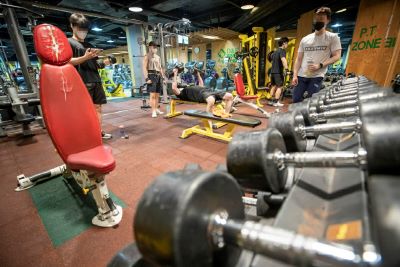
South Korea’s virus authorities are asking those in the Greater Seoul area to give up high-speed running on treadmills and fast dance music for group exercises in fitness clubs, as they worry that intense workouts could exacerbate the spread of COVID-19 during its most challenging wave to date.
The restrictions under the strictest level of the four-tier system now require many fitness clubs and users to revise their plans, or else face fines. The health authorities have also come under mounting public criticism over rules that people are calling “nonsensical” and “ridiculous.”
Starting Monday, Korea started enforcing the most restrictive social distancing measures in Seoul, Incheon and Gyeonggi Province for the next two weeks in an effort to overcome record daily COVID-19 case numbers.
Private gatherings of three or more are banned from 6 p.m. to 5 a.m. in these areas, and private gatherings of five or more are banned throughout the rest of the day. Violators face fines of up to 100,000 won ($87).
While the general intentions of such rules are acceptable to many, the public isn’t so sure whether some of the detailed clauses, especially those dealing with indoor sports facilities, are really helpful in curbing the spread of the virus.
Under Level 4 rules, taking showers within fitness club premises is prohibited and only a limited number of users are allowed in each area at a time.
At the same time, the running speed on treadmills is capped at 6 kilometers per hour. Music played at group exercise classes at fitness clubs cannot exceed 120 beats per minute.
That means some famous pop songs like “Gangnam Style,” 132 bpm, cannot be played.
“I don’t know what’s more to worry about these droplets when everyone wears masks without exception,” said Jang, a 32-year-old office worker based in Seoul who goes to the gym almost every day after work.
“They require us to wear face masks while working out, check temperature before entry and provide our phone numbers, and I have closely followed these rules every day, and now they want us to stop running and listen to ballads?”
Jang said many of his friends who also exercise at fitness clubs found these measures “illogical and excessive,” and they have discussed how to adjust their workout routines.
“Hardcore cardio has marked the start and end of my daily exercise routines, and now they want me to run slower, but they ask us to leave in two hours,” Jang added. “What do they want from us? Does the government want me to get fat and give up our lifestyle for the sake of these dumb rules?”
Authorities have defended the restrictions on fitness clubs, saying fast music and strenuous cardio exercises could generate more respiratory droplets and cause the virus to spread further.
“When you run faster, you spit out more respiratory droplets, so that’s why we are trying to restrict heavy cardio exercises,” Son Young-rae, spokesperson for the Ministry of Health and Welfare, said in a radio interview Monday.
“We also agreed on this (120 bpm) standard (with related groups) to transition strenuous aerobic exercises at fitness clubs to less-intense ones.”
While Son agreed that face masks are still effective in preventing the spread of respiratory droplets, he dismissed complaints that the additional rules are excessive. The delta variant is more transmissible and can spread through short, accidental contacts, Son said.
Members of the public have also hit out at potential loopholes, especially on the three-person limit on private gatherings after 6 p.m. The rules seem to state that three people cannot share a cab past 6 p.m., but the authorities said it depends on the situation.
If the three were going to the same private gathering together, it could be a violation, but if each were heading to different destinations, it could be allowed, they explained.
“Like this we should interpret each case by its own situation,” Son said in a press briefing with reporters Monday. “We cannot simply call out a taxi cab with three or more passengers as violating the rules.”
While the authorities emphasize that each violation will be examined in light of its own unique situation, many have cast doubt on how closely the guidelines will be followed. The government has long faced criticism for being vague and inconsistent, and for unfairly applying exemptions.
Yet the results of a poll released Monday indicate that the Level 4 social distancing rules are popular with the public.
According to a Realmeter survey of 500 people aged 18 or above conducted Friday, 71.9 percent of respondents said they positively viewed the government’s decision to implement Level 4 rules in the Greater Seoul area.
The survey results indicated that supporters of the ruling Democratic Party of Korea and those who consider themselves apolitically liberal are more in favor of the stiffest social distancing rules being in place.
Indonesia reports highest daily rise in COVID-19 infections
Indonesia reported a record daily high in coronavirus infections with 40,427 cases on Monday, data from the countrys COVID-19 task force showed.
It also reported 891 additional COVID-19 deaths, taking the total to 67,355. Indonesia has reported more than 2.5 million cases overall.
Earlier on Monday, Coordinating Maritime Affairs and Investment Minister Luhut Binsar Pandjaitan said that the country expects its COVID-19 cases to drop next week, citing reduced mobility after it imposed strict movement restrictions on July 3 on Java and Bali islands.
“With vaccination, enforcement of PPKM (Emergency), improved supplies of medicines, oxygen and hospital beds, we will see conditions get better,” Luhut told a press conference on Monday.
Indonesia has reported more than 30,000 infections on a daily basis since July 6. It has also reported the highest COVID-19 infections and deaths in Southeast Asia.
In the neighboring Malaysia, the number of Covid-19 cases dipped slightly to 8,574 on Monday, after several days with numbers crossing the 9,000 mark.
This brings the cumulative number of cases to 844,870, The Star reported.
Myanmar Suffering from a Deadly Third Wave and Skyrocketing Demand for Oxygen
Myanmar has been struck by a deadly third wave of Covid-19 in July. As the disease has spread across the crisis-torn nation, people scramble desperately to deal with widespread oxygen shortages.
High infection rate
The third wave is undeniably more terrible than its second iteration.
The Ministry of Health and Information (MOHS) had said in its reports that laboratory tests of Covid-19 positive cases show the presence of Alpha, Delta and Kappa variants.
The MOHS had said that Delta, even in comparsion against another mutant variant Alpha, is 60 percent more infectious, especially within the family that will usually be in close contact with the infected.
The number of new Covid-19 cases found daily also spiked starting around June, with almost everyday since seeing record breaking numbers of new cases and infection rate.
It started out at a rate of 5.37 percent on May 27 and ramping up quickly to 19.9 percent infection rate on June 30.
By July 9, it was already at 27.4 percent. With scores dying everyday, the amount of deaths since the outbreak is now at 351 people.
Vaccination progress
Myanmar currently has seen vaccination of two out of eight vaccine variants that the WHO had approved for emergency usage; India-made Covishield and Chinese-made Sinopharm.
The MOHS had said that India, due to its own rising cases of Covid-19, cannot supply the remainder of vaccines already purchased and vaccines from China is set to arrive but only in limited numbers of 300,000, which will only be enough for 150,000 people as it is a double-dose.
As per data from the health ministry, there are over 1.4 million people that had recieved both doses of Covishield and 1.8 million that had recieved only once.
According to Dr Khin Khin Gyi, an authority from the MOHS, the government is attempting to purchase 2 million doses of Russian-made Sputnik vaccine and that there is a plan to purchase up to 7 million more.
More townships placed put under stay-at-home order
The stay-at-home orders began to be issued at around end of May and had increased since then at a total of over 30 townships across the country put under the stay-at-home order.
The townships placed under the order until the June 10th, a date many expect to be extended much further, are the following; Chanmyae Tharzi, Aungmyay Tharzan, Chanaye Tharzan, Pyigyi Tagon, Maha Aung Myay and Pathein Gyi, Pyin Oo Lwin and Amarapura from Mandalay Region, Tharyawaddy, Minhla, Letpaden and Phyu in Bago Region, Tonzam, Tiddim, Phalam, Htantalan and Hakha in Chin State, Tamu and Homalin in Sagaing Region, Lashio, Naung Cho, Laukkai in Shan State, Pathein, Myaungmya and Tharpaung in Ayeyawaddy Region.
The plan of the MOHS and the Covid-19 control committee is to restrict movement from townships that were deemed viral hotspots into other, safer areas. A quarantine of 10 days will be imposed on those coming from stay-at-home townships if test results show to be negative, following extant procedures if they tested positive.
While those not from stay-at-home townships do not need to undergo quarantine, emergency restrictions may be imposed according to the situation, even for those that had already had their vaccinations..
Hmawbi, Mingalardon, Shwepyithar, Hlaingtharyar, Insein, North and South Oakkalapa, Mingalar Taungnyunt, Bahan Township and Mayangone townships, all from Yangon Region, were all recently added to the stay-at-home programs.
Myanmar Suffering from a Deadly Third Wave and Skyrocketing Demand for Oxygen
The high demand for oxygen
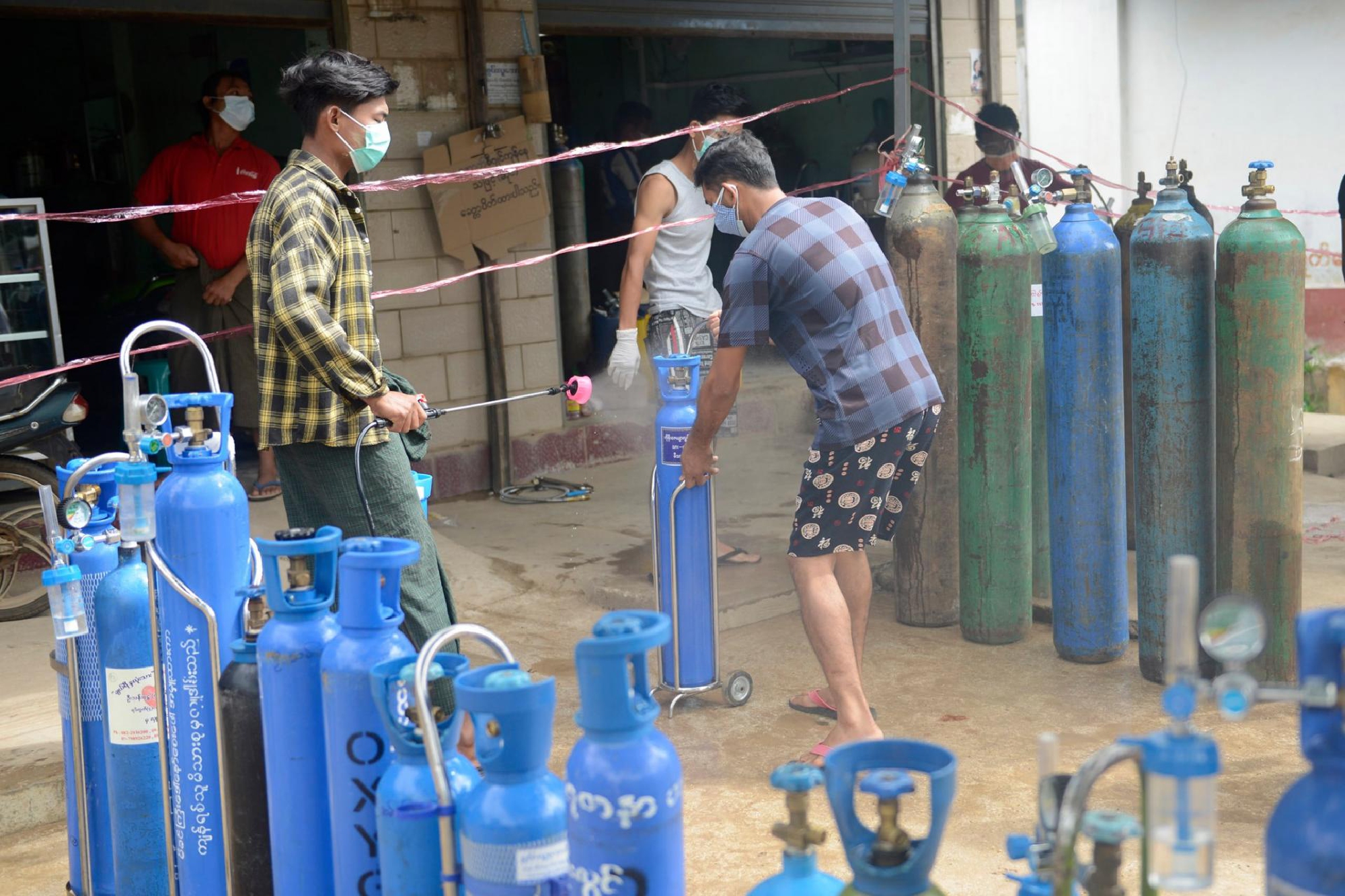
The most striking problem, at least up until now, is the lack of oxygen across the nation.
Kale Township in Sagaing Region is the prime example of such with locals and civil socities reporting that the demand for oxygen is only increasing by the day.
“We have to wait for the oxygen truck to arrive. There are so many that, even when the truck came, waited for their turn to refill but ran out,” said a Kale local.
ADVERTISEMENT
When the initial brunt of the third wave ravaged Kale and local oxygen supply cannot keep up, oxygen had to be supplied from areas as far as Yangon or Mandalay.
Since then, Kale locals had managed to pool together money and effort into obtaining an oxygen distiller, which is able to pump out 78 cyclinders with 40 litre capacity per day on July 9.
“The pressure was relieved somewhat but the demand is still there,” said a local.
Since the beginning of the outbreak, Kale had reported high amount of deaths from Covid-19, saying that there are no streets without funeral homes within the town itself.
Since then, the need for oxygen had spread to places such as Yangon Region.
ADVERTISEMENT
“We cannot get enough. We have been going around to fill up with the one cyclinder that remains. I feel sorry for the people,” said a person from a volunteer group in Yangon.
This is a common occurrence in Yangon in recent days. There simply aren’t enough volunteers, civil socities, well-wishers or donors to keep up with the demand.
“We used to have over 20 oxygen cylinders. We have zero now. We have rented them all out now. Some are past their due date but still keeping them so we have to ask for it back from them,” said the volunteer.
Factories in South Dagon and Shwepyithar industrial zones had tried to fulfill the demands but had yet to be able to satisfy the needs.
“I’ve been waiting since morning. We can no longer fill up 40 litre cylinders. ONly 10 or 15 litre ones are okay. They say 40 litres will be allowed tomorrow. I have to take what I can get,” said a person queuing up to refill oxygen in South Dagon industrial zone.
How much are they?
The sudden surge in demand and failure to keep up with such demand, means that prices have also skyrocketed and giving birth to a black market dealers.
A 40 litre oxygen cylinder went for around 180,000 Kyats while a 10 litre one used to cost around 80,000 Kyats.
But now, a 40 litre one clocks in at around 600,000 Kyats.
“Even at that price of 6 Lakhs, I cannot find any to purchase,” said a person that tried but failed to purchase oxygen cylinders at more than triple their original prices.
“It is almost like buying smuggled items. We have to pay around 500,000 Kyats and even then, we have to buy one from here and another from there,” said another volunteer in Yangon Region.
However, refill services provided by some had kept their greed in check, only charging around 5000 Kyats per refill.
“The prices remain the same. If I charge people more now, I am not fit to be called a human,” said an in-charge from an oxygen factory in South Dagon industrial zone.
Amidst the problems of oxygen supply and demand, there also are cases of deaths because patients or family members underestimated the need for oxygen in emergency.
“The oxygen level should be at least 94. If it gets lower than that, it might be difficult to breathe but oxygen supply must still be administered,” said another in-charge from a volunteer group.
Minister of Investment and Foreign Economic Relation Aung Naing Oo had said that due to the urgent demand, Oxygen Concentrators are now allowed to be imported without first needing FDA license.
“Due to rise in Covid-19 cases and large demand for oxygen, friends and business owners had asked me what will be done to facilitate import of Oxygen Concentrators. I would like to notify all here that respective ministries have done the following to facilitate import of Oxygen Concentrators. FDA approval will no longer be needed to import Oxygen Concentrators. There is also no need to apply for a import license at commerce/trade ministry. If imported product arrives here, 3 percent tax will not be needed to pay immediately but later as well as being allowed to immediately recieve the product,” said Aung Naing Oo on Facebook.
Where is the answer?
According to an official at the MOHS, the need to facilitate more oxygen supply into the country is of utmost importance.
Covid-19’s third wave had struck, killing more and more by the day across the whole country.
Over 6500 schools were reopened on June 1 for the 2021-2022 academic year but were forced to close, in a staggered fashion, in response to surging cases of Covid-19 which had seen several clusters at schools across Myanmar. Most have been temporarily shut down to the date of July 23, starting from July 9.
Treatment at hospitals have been prioritized to give attention to the elderly and those with severe symptoms such as oxygen levels lower than 90 at Yangon General Hospital, North Oakkalapa Hospital and Phaung Gyi. Those with suspect cases of Covid-19 or those with lower symptoms are advised to seek treatment at nearby public health clinics and other healthcare departments.
The MOHS had said that Yoma Yeikthar Covid-19 center had received 576 Covid positive patients with 1000 quarantined suspected cases. MCC Covid-19 center can only accept 250 positive patients. Inya Center in Mayangone Township can only accomodate up to around 500 patients.
The ministry had also said that Covid-19 tests can be taken at private hospitals with examples in Yangon Region being N Health, Pun Hlaing, Victoria, Aye, YAML Myanmar, Ar Yu, Bahosi, KBC, OSC and City Hospital.
Amidst the daunting task of attempting to control the Covid-19 outbreak, the matter of correctly introducing more life-saving oxygen supply into the country is the key puzzle onto of the question of how exactly to control the outbreak in the current situation.
US warns China: Attack on PH to trigger defense treaty
MANILA, Philippines — The United States on Monday reaffirmed its commitment to come to the Philippines’ defense, as it warned China anew that an attack on Philippine armed forces in the South China Sea would trigger the 1951 Mutual Defense Treaty between the United States and the Philippines.
US Secretary of State Antony Blinken made the comment in a written statement marking the fifth anniversary of a ruling by an arbitration court rejecting China’s sweeping territorial claims in the South China Sea.
“The United States reaffirms its July 13, 2020, policy regarding maritime claims in the South China Sea. We also reaffirm that an armed attack on Philippine armed forces, public vessels, or aircraft in the South China Sea would invoke US mutual defense commitments under Article IV of the 1951 US-Philippines Mutual Defense Treaty,” Blinken said.
“We call on the PRC [People’s Republic of China] to abide by its obligations under international law, cease its provocative behavior, and take steps to reassure the international community that it is committed to the rules-based maritime order that respects the rights of all countries, big and small,” he said further.
‘Sowing discord’
But Chinese Foreign Ministry spokesperson Zhao Lijian, in a statement issued by the Chinese Embassy in Manila on Monday night, called Blinken’s statement “extremely irresponsible.”
“The US statement disregards the historical merits and objective facts of the South China Sea issue, violates and distorts international law, and breaks the US government’s long-held public commitment of not taking a position on the South China Sea sovereignty issue,” said Zhao.
“It deliberately stokes disputes on territorial sovereignty and maritime rights and interests, sows discord among regional countries and undermines regional peace and stability. This is extremely irresponsible. China is strongly dissatisfied with and firmly opposed to the wrong act by the US side,” he added.
Dispute resolution
On July 12, 2016, the Permanent Court of Arbitration in the Hague, the Netherlands, ruled that China’s claims in the South China Sea had no basis in international law and that it had violated the Philippines’ sovereign right to fish and explore resources in the West Philippine Sea, waters within the country’s 370-kilometer exclusive economic zone.
The European Union’s delegation in the Philippines said on Twitter that it “reaffirmed the importance of maintaining and promoting peace, security, stability, safety, and the right of freedom of navigation in and overflight above the South China Sea, as well as the peaceful resolution of disputes, in accordance with international law, in particular UNCLOS (United Nations Convention on the Law of the Sea).”
Canada expressed concern over China’s “escalatory and destabilizing actions” in South and East China Seas.
PLA sends strong warning to US destroyer in South China Sea
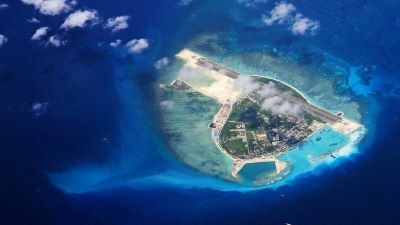
The Chinese military has dispatched units to warn off the United States guided missile destroyer, the USS Benfold, which trespassed into the territorial waters of Chinas Xisha Islands in the South China Sea on Monday.
Air Force senior colonel Tian Junli, the People’s Liberation Army Southern Theater Command spokesperson, said in a statement on Monday that the PLA strongly opposed these actions, and urged the US to immediately stop provocations and strictly control military activities.
Tian said that the Xisha Islands are Chinese territory, and actions by the US military have severely undermined China’s sovereignty and security, disrupted peace and stability in the South China Sea, and are in violation of international laws and principles of international relations.
“It is further irrefutable proof that the US is exercising naval hegemony to push for the militarization of the South China Sea. Facts have shown that the US is indeed a troublemaker in the region,” he said.
“The US will be responsible for the consequences of its actions,” he said, adding that the theater command will maintain on high alert and resolutely safeguard national sovereignty, as well as security and peace and stability in the region.
 Myanmar Suffering from a Deadly Third Wave and Skyrocketing Demand for Oxygen