Naver’s global webcomic biz on growth track #ศาสตร์เกษตรดินปุ๋ย

#ศาสตร์เกษตรดินปุ๋ย : ขอบคุณแหล่งข้อมูล : หนังสือพิมพ์ The Nation

https://www.nationthailand.com/business/30381025?utm_source=category&utm_medium=internal_referral

Naver’s global webcomic biz on growth track

Jan 24. 2020
(Naver)

(Naver)
By The Korea Herald/ANN

Naver Corp., South Korea’s top internet portal operator, is witnessing a growth in its webcomic business, which will eventually improve its earnings, industry sources said Friday.

Naver Webtoon, more commonly known as Line Webtoon in the United States, is home to a plethora of creator-owned content, ranging from romance to fantasy.

In particular, Naver Webtoon is showing marked growth in the United States after entering the market in 2014.

The number of its monthly active users, or MAUs, surpassed the 10 million mark in the US in November, nearly doubling from 2014.

Naver Webtoon recorded 60 million MAUs in the global market and is expected to bring in 600 billion won ($519 million) in content transactions this year.

Line Webtoon’s US content revenue grew to 13 billion won ($11.1 million) in the third quarter of 2019, up from 2 billion won in the first quarter, according to Naver’s corporate filing.

“Along with the steady two-digit growth in its ad business, we are expecting the webcomic operation to lead Naver’s content service business,” said Ju Young-hoon, an analyst at Eugene Investment & Securities.

“Naver already has about 60 million monthly users on a global level, meaning the webtoon operation can make inroads in the global market on its own,” Ju added.

With the growing global content revenue, he estimated Naver’s operating profit in 2020 to advance 47.1 percent to 1.03 trillion won, bouncing back from the previous year’s 26.2 percent fall.

Local brokerages continued to paint rosy pictures for Line Webtoon’s US revenue hike, citing the company’s fourth-quarter estimate by US market tracker Sensor Tower.

According to Sensor Tower data, Line Webtoon’s US downloads in the October-December period surged 61 percent on-year. The webtoon provider’s US operating profit reached 40 billion won, Sensor Tower estimated.

“In 2020, Naver’s webtoon has ample room for a value hike,” said Mirae Asset Daewoo analyst Park Jeong-yeob. “The US is a promising market, in terms of both content consumption and monthly active users.” (Yonhap)

5G milestone for SCG, AIS: Unmanned forklift run from 110km distant #ศาสตร์เกษตรดินปุ๋ย

#ศาสตร์เกษตรดินปุ๋ย : ขอบคุณแหล่งข้อมูล : หนังสือพิมพ์ The Nation

https://www.nationthailand.com/business/30381017?utm_source=category&utm_medium=internal_referral

5G milestone for SCG, AIS: Unmanned forklift run from 110km distant

Jan 24. 2020
By THE NATION

Advanced Info Service (AIS) and business conglomerate SCG have signed a pact on 5G research and development for multiple projects.

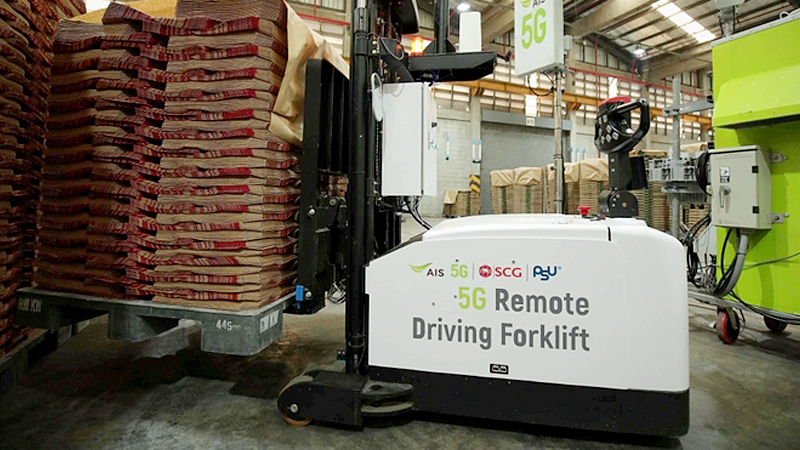
They and Prince of Songkhla University on Friday (January 24) demonstrated the use of 5G technology for industry in operating an unmanned forklift from 110 kilometres away.

The forklift was at an SCG plant in Saraburi, the operator at SCG headquarters in Bangkok, using the 2.6-gigahertz bandwidth of the AIS 5G network to hoist and move around material.

“This industrial test paves the way to increased productivity and safety and opportunities for staff training by remote,” the companies declared in a press release.

They intend to build a 5G ecosystem to enhance sustainable innovation and increase Thailand’s industrial competitiveness and quality of life.

The National Broadcasting and Telecommunications Commission will auction off four 5G spectra on February 16.

Wasit Wattanasap, head of National Network Operation and Support at of AIS, said the technology will “dramatically change the way we do things in Thailand”.

“Users will benefit in three ways: faster data speed, internet-of-things connectivity, and a stable and responsive network. Needless to say, developing a 5G ecosystem involves many players, including the government, companies and academics. Everyone has a part to play.”

Attapong Sathitmanothum, director – Mechanization Automation & Robotics (MARs) and Industry 4.0 at SCG, said his firm aimed to “improve work operations in various fields and business units, including cement and building materials, packaging and chemicals”.

“A working group in Mechanisation, Automation and Robotics [MARs] was established in 2016 to be a catalyst in levelling up the production process to create a ‘smart factory’.

“Investing more than Bt860 million during the first three quarters of 2019, SCG achieved predictive maintenance to notify us before a machine breaks down [‘smart maintenance’], use of robots in the laboratory [‘smart laboratory’], automated dispatching to deliver cement to customers automatically [‘smart dispatching’] and use of digital technology enabling data accessibility throughout the supply chain so that everyone can utilise the same data as a single, factual source, perform analytics to improve competitiveness and enhance responsiveness to customer needs.”

Attapong said 5G technology can strengthen SCG’s efficiency in many ways.

“Workers will be safer, especially with machinery in risky areas such as mines and confined spaces such as inside a cement kiln. Efficiency will be increased as the transmission of big data becomes easy.

“Several plants in different locations can send data to a control centre capable of managing information in real time. Customers will be more satisfied because logistics will become more effective.”

Associate Professor Dr Peerapong Teekasakul, director of Innovation Hub at Council of University Presidents of Thailand, noted that Prince of Songkhla University has, through its Institute of Research and Digital Innovation, been actively conducting research and development with the private and industry sectors.

“We co-study and co-test 5G technology in many dimensions, with the goals of building and preparing it for actual industrial use which, in turn, will increase competitiveness for Thai industry.”

Amazon seeks to force Pentagon to halt work on JEDI cloud computing contract #ศาสตร์เกษตรดินปุ๋ย

#ศาสตร์เกษตรดินปุ๋ย : ขอบคุณแหล่งข้อมูล : หนังสือพิมพ์ The Nation

https://www.nationthailand.com/business/30380987?utm_source=category&utm_medium=internal_referral

Amazon seeks to force Pentagon to halt work on JEDI cloud computing contract

Jan 24. 2020
President Trump greets Satya Nadella, chief executive officer of Microsoft, and Jeff Bezos, chief executive officer of Amazon, during an American Technology Council roundtable in 2017. MUST CREDIT: Washington Post photo by Jabin Botsford.

President Trump greets Satya Nadella, chief executive officer of Microsoft, and Jeff Bezos, chief executive officer of Amazon, during an American Technology Council roundtable in 2017. MUST CREDIT: Washington Post photo by Jabin Botsford.
By The Washington Post · Aaron Gregg

WASHINGTON – Amazon Web Services is seeking to force the Pentagon to halt work on a massive cloud-computing contract recently awarded to its biggest competitor, Microsoft, as it pursues allegations that President Donald Trump improperly meddled with defense funds to act on a grudge against Amazon founder Jeff Bezos.

The sealed motion was filed Wednesday as part of a bid protest in the U.S. Court of Federal Claims, which handles disputes over federal contracts.

In a statement, Amazon spokesman Drew Herdener said it is “common practice” to halt contract performance during a bid protest, and emphasized that his company supports the Defense Department’s technology initiatives.

“It’s important that the numerous evaluation errors and blatant political interference that impacted the JEDI award decision be reviewed,” Herdener said in a statement. “AWS is absolutely committed to supporting the DoD’s modernization efforts and to an expeditious legal process that resolves this matter as quickly as possible.”

Defense officials have said in recent weeks that they plan to move forward with the JEDI project despite the bid protest. They have said that the award followed all laws and regulations, and have insisted the decision-making process that led to Microsoft’s win was walled off from presidential influence.

“The Department of Defense will continue to fight to put this urgently-needed capability into the hands of our men and women in uniform as quickly and efficiently as possible,” Rachel VanJohnson, a spokeswoman for Defense Department’s cloud computing program office, said in an email.

“The department remains confident in the JEDI award,” VanJohnson added. “Our team’s duty and sole focus must remain on equipping our warfighters for an increasingly complex and challenging battlefield environment.”

Microsoft spokesman Bill Calder declined to comment.

The Joint Enterprise Defense Infrastructure, known as JEDI, is meant to create a powerful, centralized computing system operated by a single technology company. Last October Microsoft was awarded a contract worth up to $10 billion for the system, jilting Amazon, the cloud-computing market leader.

The award to Microsoft came soon after a high-profile intervention by Trump, who said he was acting on complaints from Amazon’s competitors. At issue in the case is whether the commander in chief’s involvement skewed the competition in Microsoft’s favor.

In its bid protest, Amazon pointed to what it called “unmistakable bias” and “political influence” in the government decision-making process that led to Microsoft’s win.

The company’s case has so far relied primarily on the president’s own public statements, including a February 2016 campaign rally in which he said Amazon would “have problems” if he were elected, citing Bezos’s ownership of The Washington Post.

Amazon’s protest is the fourth legal challenge the JEDI contract has faced; earlier ones caused the project to be delayed for more than a year while officials investigated various allegations against Amazon.

Amazon had long been considered the front-runner for the massive contract; it is the market leader and it remains the only company that can handle top-secret data. Many of Amazon’s advantages stem from a 2013 contract award that made it CIA’s primary cloud provider.

Software giant Oracle, which also wanted the contract but was eliminated in an earlier phase of the competition, protested the award long before bids were even submitted, assuming Amazon to be the front-runner. The company carried out a long-running campaign seeking to paint JEDI as a conspiracy by Amazon to set up a “ten-year DoD cloud monopoly,” as Oracle put it in one lobbying document.

In late July, the president said in a televised news conference that he had received “tremendous complaints” about the contract from Amazon’s competitors, specifically citing Oracle, Microsoft and IBM.

“Some of the greatest companies in the world are complaining about it, having to do with Amazon and the Department of Defense, and I will be asking them to look at it very closely to see what’s going on,” Trump said of the JEDI contract.

Soon afterward, he retweeted a link to a Fox News segment that called the contract the “Bezos Bailout.”

He separately asked Secretary of Defense Mark Esper to reexamine the Pentagon’s approach to the JEDI contract, citing concerns that the contract would go to Amazon, people familiar with the matter told The Post at the time.

Defense officials have said the decision-making process was walled off from the White House and followed all relevant laws and regulations. Dana Deasy, the Department of Defense chief information officer, said in a recent congressional hearing that there was a two-tracked process in which the officials who evaluated bids from Amazon and Microsoft were not in touch with the White House.

“I feel very confident that at no time were team members that actually took the source selection were influenced with any external, including the White House,” Deasy said, referring to an anonymous team of 50 cloud technology experts who evaluated bids.

In statements to the press, Defense Department spokespeople have emphasized that the president did not “order” the Pentagon to make any specific determinationleading up to the Microsoft award.

Goldman Sachs says it won’t take companies public without board diversity #ศาสตร์เกษตรดินปุ๋ย

#ศาสตร์เกษตรดินปุ๋ย : ขอบคุณแหล่งข้อมูล : หนังสือพิมพ์ The Nation

https://www.nationthailand.com/business/30380986?utm_source=category&utm_medium=internal_referral

Goldman Sachs says it won’t take companies public without board diversity

Jan 24. 2020
By The Washington Post · Jena McGregor 
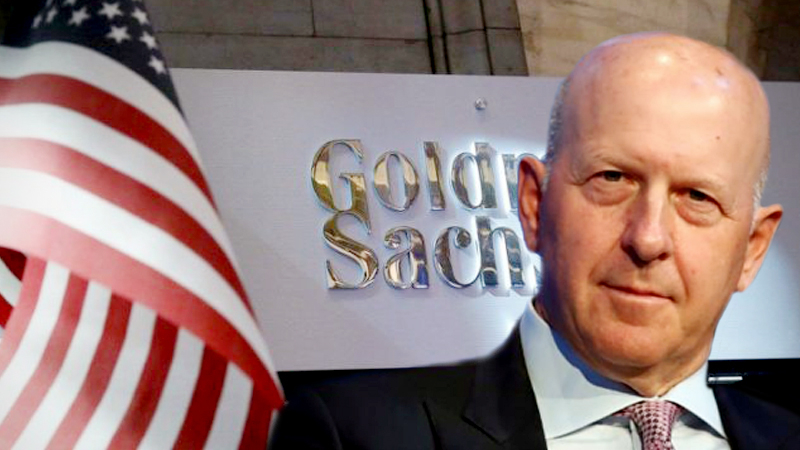
Goldman Sachs chief executive David Solomon said Thursday that the bank, one of the largest underwriters of initial public offerings, would not take companies public in the United States and Europe if they do not have at least one diverse board director, the latest move to push companies to increase the number of women and people of color in corporate boardrooms.

Speaking on CNBC, Solomon said the bank would implement the policy starting this summer and would have a “focus on women.” It plans to increase the number to two by 2021, he said.

“From a governance perspective, diversity on boards is a very, very important issue. We have been very, very focused on it. So we’re trying to find ways to encourage that,” Solomon said, noting that IPOs with a woman on the board had performed “significantly better” than those without. “We realize that this is a small step but a step in a direction of saying, ‘You know what? We think this is right.’ ”

In an email, Goldman spokeswoman Leslie Shribman said the policy will become effective June 30, “as we transition some existing clients to this target.” The policy would count a director as diverse if he or she is from traditionally underrepresented groups, including gender, race, ethnicity, sexual orientation or gender identity, Shribman said. She said the commitment will extend to companies where the bank’s private equity division has a controlling or majority stake.

Goldman Sachs’s 11-member board includes four women. Its lead director, Adebayo Ogunlesi, is black. Lakshmi Mittal, the Indian-born chief executive of ArcelorMittal, is also on the board.

Solomon did not mention any demands for increased diversity of a firm’s executive team. At Goldman Sachs, three of the nine executive officers listed on its website are women.

Goldman’s move comes amid increased investor scrutiny of board membership, with a particular focus on gender, from shareholder activists and institutional investors adding rules to their voting guidelines. BlackRock has said it expects to see at least two female directors on the companies in its portfolio, while State Street has said it plans to vote against nominating committee members on all-male boards.

As of July, no all-male boards were governing companies in the S&P 500 index. At the time, the percentage of women-held board seats in the S&P 500 was nearly 27%, according to data from ISS Analytics, the data arm of the proxy adviser Institutional Shareholder Services. A 2018 report from Deloitte and the Alliance for Board Diversity found that minority directors, male and female, make up 16% of Fortune 500 board seats.

But that figure is much lower among companies nearing initial public offerings. Without referencing the source, Solomon told CNBC that about 60 U.S. and European companies went public in the past two years without any female board members.

George Fleck, an executive recruiter who tracks board changes, said that since April, 18% of seats on IPO boards were held by women. Goldman’s move, Fleck said, “is a public acknowledgment that we need to add more qualified women to public company boards.”

Goldman Sachs has in the past underwritten high-profile IPOs such as Facebook and WeWork that later came under fire for their lack of female directors. In 2012, Facebook went public with no women on the board before adding chief operating officer Sheryl Sandberg. Last year, WeWork parent The We Company drew backlash for its lack of women on the board when it filed its IPO paperwork. It later added Frances Frei, a professor at Harvard University’s business school.

In the CNBC interview, Solomon said WeWork, which was bailed out by Japanese conglomerate SoftBank after a failed IPO, was “one of many data points that have led us over a number of months to talk about this, but . . . it wasn’t in the thought process as we debated it.”

Solomon also said Goldman Sachs would help companies find diverse candidates and put in a more formal process for identifying them. One “constraint” in adding women, he said, has been a “bias” toward putting existing chief executives or chief financial officers on boards. “If you put that hurdle there, then you’re eliminating an enormous number of women with decades of experience.”

Coca-Cola will continue making plastic bottles despite environmental concerns, company says #ศาสตร์เกษตรดินปุ๋ย

#ศาสตร์เกษตรดินปุ๋ย : ขอบคุณแหล่งข้อมูล : หนังสือพิมพ์ The Nation

https://www.nationthailand.com/business/30380985?utm_source=category&utm_medium=internal_referral

Coca-Cola will continue making plastic bottles despite environmental concerns, company says

Jan 24. 2020
By The Washington Post · Lateshia Beachum 
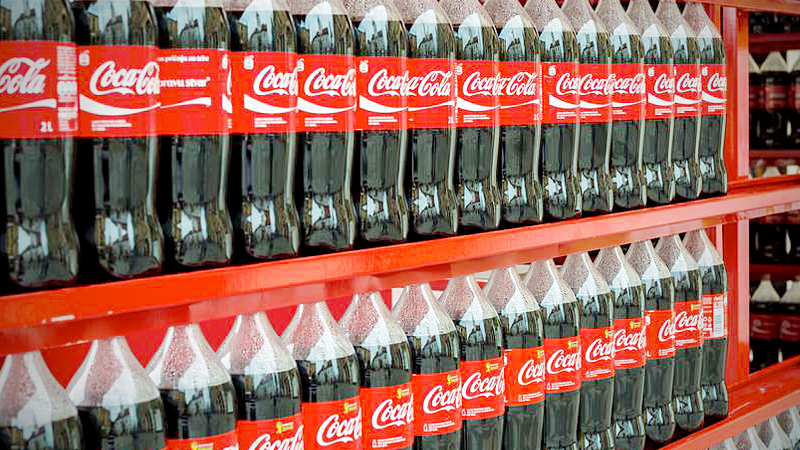
Coca-Cola is shaking off environmentalists’ calls to change its packaging, saying there is too much demand for the plastic bottles.

The soft drink giant’s head of sustainability, Bea Perez, told the BBC that consumers are fans of plastic-packaged drinks because they’re able to reseal their bubbles in lightweight packaging.

Doing away with plastic altogether for glass or aluminum would increase the business’s carbon footprint and weaken sales, she told the news outlet.

“So as we change our bottling infrastructure, move into recycling and innovate, we also have to show the consumer what the opportunities are. They will change with us,” she said.

The company recognizes that packaging waste is a growing problem and that it has a responsibility to help solve the problem, according to a statement from Coca-Cola.

“All packaging has a potential environmental impact, so it’s not as simple as saying one format is better than another,” according to a company representative.

Those statements don’t quite make sense to environmental activists who want the company to do more than committing to making its packaging 100% recyclable by 2025 and to make bottles with an average of 50% recycled material by 2030.

The company had the highest amount of plastic found along coasts, shorelines and parks, according to 2018 Break Free from Plastic study. PepsiCo, home of Coke’s rival, was right behind it, followed by Nestle.

Coca-Cola is holding its crown as the highest plastic-producing company, Break Free From Plastic’s corporate campaign coordinator, Emma Priestland, told The Washington Post.

Companies such as Coca-Cola should be figuring out a way to fix the single-use plastic item economy they created, she said, because that move would benefit their bottom line.

“We see big companies like Coke, PepsiCo, Nestle and Unilever talk about wanting to end plastic pollution, but the [solutions] they put forward rely on individual behavior change, and they rely on recycling,” she said.

A 2017 Sciences Advances study found that 9% of the world’s 6,300 megatons of plastic in 2015 had been recycled while 79% ended up in a landfill or somewhere else in the environment. Researchers said 12% of the plastic was incinerated.

Americans recycle and compost about 35.2% of waste in 2017, according to the latest figures from the United States Environmental Protection Agency. More than half of waste ended up in a landfill.

“We just can’t recycle the amount of plastic being produced,” Priestland said. “We don’t have the infrastructure to deal with quantity.”

Plastic can be recycled a limited number of times before it loses its quality, National Geographic reported, but glass and metal don’t lessen in value.

Recycling only delays the inevitable fate of plastic, Priestland said.

Coca-Cola’s claim that its customers can’t part with plastic bottles shows how out of touch the company is with environmental issues, according to a statement by Greenpeace USA plastics campaigner Kate Melges.

“The solution is for Coca-Cola and other consumer goods giants to fundamentally rethink how they’re bringing products to people, centering systems of reuse and package-free options,” she said. “As long as companies like Coke keep pushing the myth that their bottles are being turned into new bottles over and over again, we are never going to solve the plastic pollution crisis.”

The Coca-Cola company is missing the point of what activists truly desire, Priestland said: no plastic waste.

Norway has found a way to recycle 97% of its plastic bottles through its bottle deposit program, in which consumers are charged less than 50 cents.

Consumers can return the bottles to designated stores with machines that can issue a coupon. They also can received store and gas credit, according to Climate Action.

Plastic-bottle producers also benefit from the program by having their environmental taxes waived if they collectively recycle more than 95% of bottles, according to The Guardian.

About 40 countries have similar programs, the BBC reported. Other countries such as Scotland and England have either made plans to implement similar systems or approved studies to have one in place, according to the outlet.

Coca-Cola has introduced refillable water bottles and package-less solutions through its Dasani PureRefill and Freestyle machines that dispense a variety of flavored water or Coke options.

“Breaking away from plastic is the only way that we are going to solve this problem,” Priestland said.

Ex-Wells Fargo leaders face $59 million in fines , bans from U.S. banking over scandals #ศาสตร์เกษตรดินปุ๋ย

#ศาสตร์เกษตรดินปุ๋ย : ขอบคุณแหล่งข้อมูล : หนังสือพิมพ์ The Nation

https://www.nationthailand.com/business/30380984?utm_source=category&utm_medium=internal_referral

Ex-Wells Fargo leaders face $59 million in fines , bans from U.S. banking over scandals

Jan 24. 2020
A Wells Fargo & Co. bank branch in Rock Island, Ill, on Oct. 11, 2019. MUST CREDIT: Bloomberg photo by Daniel Acker.

A Wells Fargo & Co. bank branch in Rock Island, Ill, on Oct. 11, 2019. MUST CREDIT: Bloomberg photo by Daniel Acker.
By Syndication Washington Post, Bloomberg ·Hannah Levitt · BUSINESS, RETAIL 

A group of former Wells Fargo executives are facing almost $59 million in fines and bans from the U.S. banking industry over their roles in the firm’s scandals as regulators show more appetite to go after individuals.

Former Chief Executive Officer John Stumpf agreed to a $17.5 million penalty and an industry ban, according to an order Thursday from the Office of the Comptroller of the Currency. Carrie Tolstedt, who led Wells Fargo’s community bank for a decade, faces a penalty of as much as $25 million.

“The actions announced by the OCC today reinforce the agency’s expectations that management and employees of national banks and federal savings associations provide fair access to financial services, treat customers fairly and comply with applicable laws and regulations,” Comptroller of the Currency Joseph Otting said in a statement.

Wells Fargo tapped into public and political ire in 2016 with the revelation that bank employees opened millions of potentially fake accounts to meet sales goals. That and a slew of retail-banking issues that subsequently came to light have led to regulatory fallout that’s in many cases unprecedented for a major bank, including a growth cap from the Federal Reserve.

This is the first public step the OCC has taken against former executives related to Wells Fargo’s problems. Regulators received criticism from some corners over the fact that few individuals and no top executives were held accountable for crisis-era missteps that cost the banks billions in fines and penalties.

Regulatory actions against Wells Fargo have also included billions of dollars in fines and legal costs, and an order giving the OCC the right to remove some of the bank’s leaders. The Department of Justice and the Securities and Exchange Commission also have been investigating the lender’s issues.

The OCC and the Fed have both cited a wide-ranging pattern of abuses and lapses at Wells Fargo. The OCC drew scrutiny of its own as the firm’s main regulator throughout the scandals, prompting an internal review at the agency.

New limits on Huawei suppliers coming soon, Commerce’s Ross says #ศาสตร์เกษตรดินปุ๋ย

#ศาสตร์เกษตรดินปุ๋ย : ขอบคุณแหล่งข้อมูล : หนังสือพิมพ์ The Nation

https://www.nationthailand.com/business/30380981?utm_source=category&utm_medium=internal_referral

New limits on Huawei suppliers coming soon, Commerce’s Ross says

Jan 24. 2020
By Syndication Washington Post, Bloomberg · Jenny Leonard, Ian King 

Commerce Secretary Wilbur Ross said new rules are coming soon that will put more limits on U.S. companies supplying China’s telecommunications leader Huawei Technologies Co.

Huawei was blacklisted last year as a security threat by the administration of Trump administration.

That prevented many U.S. companies from selling to the Chinese company. However, some U.S. suppliers worked around the rules to continue sending some crucial electronic components to Huawei.

“They are works in progress that will come out near-term,” Ross said of the new restrictions, during an interview at the World Economic Forum in Davos, Switzerland. A Commerce Department spokesman said the department will make an announcement when it is ready.

Ross said the ultimate U.S. objective is not to cut Huawei off from all American supplies, but instead to protect national security. He added that restrictions on Huawei were not negotiated during phase one of the trade agreement with China. The next step in that broader process isn’t currently active, he said.

“As we stand right here, there’s no particular intent to negotiate it in phase two,” Ross said.

A further clampdown may jeopardize Huawei’s ability to continue making some of its biggest products. Chinese officials have threated retaliation against businesses that stop supporting the country’s largest technology company. Huawei has denied it helps the Chinese government gain illicit access to information and has said its equipment is secure.

Ross earlier said on Bloomberg TV that Huawei has been encouraging U.S. companies to flout the rules which is a “very dangerous practice and in the longer term is not going to be good for them.” The U.S. government is taking a close look at export control mechanisms after seeing how Huawei was able to continue to buy from American companies.

Some U.S. companies have kept selling to Huawei by citing rules that limit the U.S. government’s ability to restrict exports. De minimis provisions exempt certain products if companies can prove the majority of work done to create the items happens outside the U.S. The current threshold effectively kicks in when 75% of the work occurs overseas. The administration is debating raising this to 90%. The rule change is currently with the Office of Management and Budget and could be approved shortly, according to people familiar with the process.

A separate new regulation that governs the direct supply of products is under consideration by the Commerce Department and could make its way through the process in a matter of weeks, according to the people. That rule would apply to products that are designed in the U.S. but manufactured entirely overseas, said the people, who asked not to be identified discussing private deliberations.

Huawei is one of the world’s biggest purchasers of chips. U.S. semiconductor makers have argued that a complete clampdown is counterproductive as many of the parts Huawei needs can be bought from non-U.S. providers. The industry is also concerned that access to the Chinese market as a whole will be curtailed, a development that could hinder investment in research and development. The industry has made these arguments to Trump.

Expanding steel producer BlueScope starts up third facility #ศาสตร์เกษตรดินปุ๋ย

#ศาสตร์เกษตรดินปุ๋ย : ขอบคุณแหล่งข้อมูล : หนังสือพิมพ์ The Nation

https://www.nationthailand.com/business/30380970?utm_source=category&utm_medium=internal_referral

Expanding steel producer BlueScope starts up third facility

Jan 23. 2020
By THE NATION

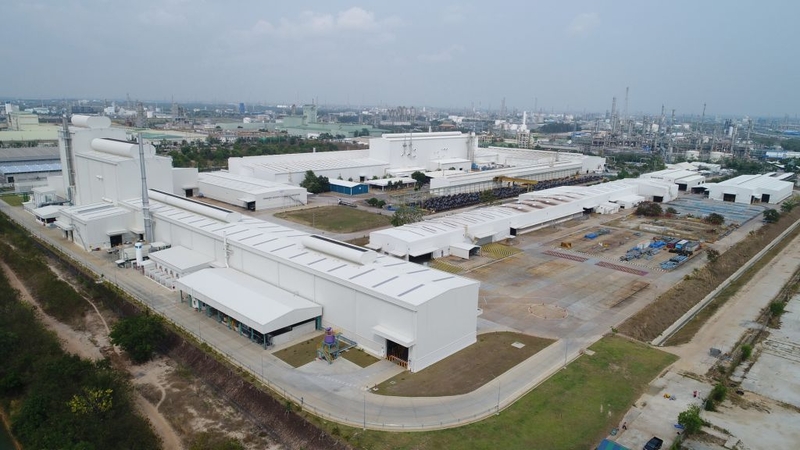
BlueScope, a manufacturer and distributor of high-quality steel, had invested more than Bt4 billion in a third production facility, aimed at expanding the production capacity of metallic coated steel and pre-painted coated steel to 160,000 tonnes a year.

The factory, which was inaugurated on Wednesday (January 22), will cater to the demand of residential projects in Thailand and Asean.

Charlie Elias, CEO of NS BlueScope (Asia and North America), said the third factory of BlueScope is situated at Map Ta Phut industrial estate in Rayong province, the same location as the first and second factories.

The new facility is a joint venture between NS BlueScope (Thailand) Company Limited, Nippon Steel Corporation Limited and Loxley Public Company Limited.

It has an production capacity of 160,000 tonnes per year. When combined with the two existing factories, BlueScope now has a total capacity of 580,000 tonnes per year, making it the largest producer of metallic coated steel and pre-painted coated steel in Asean.

“The new factory is equipped with most advanced production technology and machinery, enabling it to turn out high-quality coated steel items at a speed much faster than other facilities in Thailand and the Asean region. In addition, this factory is run under a environmentally-friendly process. The extended production capacity also adds to employment, in line with the government’s Thailand 4.0 initiative, Elias said.

He also revealed that BlueScope produced 372,000 tonnes of coated steel and pre-painted coated steel products between July 2018 and June 2019. With the opening of the new factory, annual sale is expected to reach 400,000 tonnes in the next 3 years.

BlueScope also plans to expand its shares in other segments, through launches of new product lines to meet specific demands.

INET brings Alibaba cloud services to Thailand #ศาสตร์เกษตรดินปุ๋ย

#ศาสตร์เกษตรดินปุ๋ย : ขอบคุณแหล่งข้อมูล : หนังสือพิมพ์ The Nation

https://www.nationthailand.com/business/30380947?utm_source=category&utm_medium=internal_referral

INET brings Alibaba cloud services to Thailand

Jan 23. 2020
Morragot Kulatumyotin of INET, third right, and Jordy Cao of Alibaba Cloud Intelligence, third left, signed the agreement appointing INET as the first Alibaba Cloud Service provider in Thailand.

Morragot Kulatumyotin of INET, third right, and Jordy Cao of Alibaba Cloud Intelligence, third left, signed the agreement appointing INET as the first Alibaba Cloud Service provider in Thailand.
By THE NATION

ICT services provider Internet Thailand Plc (INET) has formed a distribution partnership with Alibaba Cloud, the data-intelligence backbone of Alibaba Group.

INET’s services include consulting, planning, data management and international-standard cloud services based on its secure infrastructure and data centre.

“INET has been appointed as the first distributor for Alibaba Cloud in Thailand, with products for local resellers and customers in any industry,” said managing director Morragot Kulatumyotin.

“Customers will benefit from INET’s strong platform and specialised service professionals with local expertise as well as from Alibaba Cloud’s leading technology and industrial know-how. Both companies will also provide offline and online training and seminars to help Thai businesses better understand cloud products.”

Jordy Cao, general manager at Alibaba Cloud Intelligence for Malaysia and Thailand, noted a growing demand for scalable, robust and secure public cloud services in Thailand.

“Alibaba Cloud will keep working closely with local partners to provide tailored products and solutions to our customers, to further accelerate cloud adoption in Thailand and support them to win in the digital era.”

Dusit Foods unit takes majority stake in leading catering company in Vietnam #ศาสตร์เกษตรดินปุ๋ย

#ศาสตร์เกษตรดินปุ๋ย : ขอบคุณแหล่งข้อมูล : หนังสือพิมพ์ The Nation

https://www.nationthailand.com/business/30380921?utm_source=category&utm_medium=internal_referral

Dusit Foods unit takes majority stake in leading catering company in Vietnam

Jan 22. 2020
By THE NATION

Epicure Catering Company Limited has further expanded its presence in the region with the acquisition of a 51-per cent stake for Bt61.2 million in The Caterers Joint Stock Company (The Caterers), a leading catering company for schools and events in Vietnam. Epicure Catering is a subsidiary of Thailand’s Dusit Foods Co Ltd.

Established in 2006, The Caterers employs more than 700 full-time staff and provides over 15,000 fresh meals a day to over 36 leading international and bilingual schools in Vietnam. The company also caters for more than 640 private events per year.

There are approximately 120 international schools in Vietnam, of which 20 per cent outsource their catering, valued at Bt2 billion a year.

With rising demand for private lessons in the English language, driven by a burgeoning population, a substantial expat community in the country and government policies designed to encourage foreign investment in education, the number of international schools in Vietnam is expected to grow.

Operating as a subsidiary of Epicure Catering, The Caterers will now be under the umbrella of Dusit Foods Co Ltd, a wholly-owned subsidiary of Dusit International, one of Thailand’s leading hotel and property development companies.

The acquisition will serve to enhance Epicure’s standing as the leading provider of quality food services for the educational sector in Southeast Asia.

“We fully support the acquisition of The Caterers, which is perfectly aligned with Dusit Foods’ mission to invest in proven and profitable businesses, expand into high growth spaces, and positively serve our communities through the delivery of healthy, wholesome food products,” said Jate Sopitpongstorn, Managing Director of Dusit Foods.

“Synergising with Epicure Catering, The Caterers will be well-positioned to continue its domestic growth, cement its position as the leading catering company in Vietnam, and unlock value for all stakeholders.”

Trevor Allen, Managing Director of Epicure Catering, said: “The acquisition of The Caterers brings with it enormous potential for the growth and development of the company’s services in Vietnam. And by leveraging our own experience and expertise in catering for leading international schools in Thailand, Vietnam, and Cambodia, we aim to drive expansion of The Caterers and deliver consistent revenue streams for long-term shareholder value, and build on these strong foundations to establish market leadership for our company in Southeast Asia”.