Bitcoin bond plan sends El Salvadors dollar debt diving #SootinClaimon.Com

#SootinClaimon.Com : ขอบคุณแหล่งข้อมูล : หนังสือพิมพ์ The Nation.

https://www.nationthailand.com/business/40009175


Plans for a $1 billion bitcoin bond in El Salvador sent the nations dollar-denominated bonds to an all-time low.
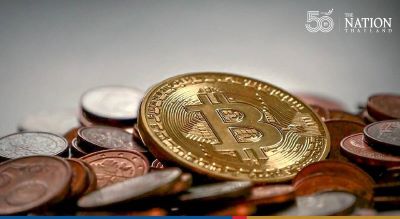
El Salvador’s dollar denominated notes due in 2050 slumped to 63.4 cents on the U.S. dollar on Tuesday, the lowest on record. The Central American country’s debt has been among the world’s worst performers so far this week as investors consider whether President Nayib Bukele’s plan to sell sovereign bitcoin bonds closes the door on a deal with the International Monetary Fund.

El Salvador’s progress with the IMF has soured since May, when Bukele’s party took over the assembly and fired five top judges and the attorney general. His policies, including the adoption of Bitcoin as legal tender, have been repeatedly criticized by the multilateral lender.

“This announcement cements the ‘anything-but-the-IMF’ path,” said Nathalie Marshik, a Stifel Nicolaus & Co. managing director. Bonds are falling “as the market reassesses possible recovery value lower on unpredictability of policies.”

The nation’s debt is trading in distressed territory, with investors now demanding 1,202 basis points in extra yield to hold El Salvador’s dollar bonds over U.S. Treasurys, according to JPMorgan Chase data. While the plan to sell new, tokenized bonds could offer the government some breathing room, it also adds to uncertainties and potential risks.

For Siobhan Morden, head of Latin America fixed income strategy at Amherst Pierpont Securities, the announcement of the bitcoin bond is a sign that the nation is doubling down on its own funding and growth.

“Innovative financing is not in itself a solution,” she wrote in a note Monday.

The nation’s next big payment to external creditors isn’t due until January 2023. The $1 billion in the tokenized bonds could give the government a respite, as talks with the IMF for a $1.3 billion loan were downgraded to an annual Article IV review that concluded before the offering was announced Nov. 20. The team will look into analyzing developments in the coming months, IMF mission chief for El Salvador Alina Carare said through a spokesperson in response to written questions on Monday.

“Given bitcoin’s high price volatility, its use as a legal tender entails significant risks to consumer protection, financial integrity, and financial stability,” according to the IMF’s statement on the 2021 Article IV Mission, which was published Monday. “Its use also gives rise to fiscal contingent liabilities.”

Bukele tweeted in response to the IMF’s statement, saying that while the government doesn’t agree with some of the points made in the review, like on bitcoin’s adoption, the organization’s analysis of the country is “interesting,” pointing to growth forecasts and his government’s handling of Covid, among other things.

The proposed 10-year tokenized bitcoin bond is expected to pay 6.5% annually, with an added dividend of 50% of any bitcoin gains once El Salvador has recouped its original investment, according to Blockstream Corp. Chief Strategy Officer Samson Mow, who announced the plan on stage with Bukele during a bitcoin conference. Those dividends will either be paid in dollars or the cryptocurrency Tether, a so-called stablecoin meant to be a dollar proxy, he said.

As soon as legislation is in place allowing the new bond, the nation will release a prospectus, Mow said. For now, the biggest challenge is how little is known.

For the bitcoin crowd, it may be a more risk-averse bet, said Carlos de Sousa, a portfolio manager at Vontobel Asset Management in Zurich. The 50% dividend the bond plans to pay if the price of the crypto currency rises may look appealing if investors aren’t penalized for any bitcoin weakening — but it’s too soon to know without a prospectus, he said.

“If you have too much money on bitcoin and you’d like to de-risk, this instrument, conditional that you can only share gains and not losses, gives you a 25% upside but no bitcoin downside, of course, at the cost of El Salvador’s default risk,” he said. “But since it’s for retail investors, maybe the sovereign default risk is not something they’re focused on.”

There’s a chance the bond may even win over pockets of investment on Wall Street.

“Institutional investors tend to overlook certain risks as long as they meet their goals for returns,” said Luis Gonzali, co-head of investments at Franklin Templeton Mexico. “‘I can’t buy bitcoin, but I can buy junk.’ It’s a way to get around mandates in their funds. Technically, you’re not buying bitcoin, just junk.”

The note would mark a new way for governments to borrow externally and could bring more retail investors into the emerging-market debt space.

“The money will come in,” Mow said during an interview on Bloomberg Television Monday, when asked whether institutional investors will be prohibited from buying the securities. Mow said he has already talked to a potential buyer who wanted to purchase as much as $20 million of the issue.

For many, the 6.5% coupon wouldn’t be enough to compensate for the risks associated with El Salvador, assuming the bonds price at or near par, said Jared Lou, a money manager at William Blair in New York.

“It seems like a desperation move, showing Bukele is moving away from Western institutions,” said Lou. The existing bonds will continue to make new lows, but “the market is a bit broken now.”

Published : November 24, 2021

Markets wrap: Stocks rise amid gains in cyclicals; techs fall #SootinClaimon.Com

#SootinClaimon.Com : ขอบคุณแหล่งข้อมูล : หนังสือพิมพ์ The Nation.

https://www.nationthailand.com/business/40009174


U.S. shares rose on back of gains in cyclicals, while the technology sector extended losses as rising Treasury yields damped the outlook for growth stocks.

The S&P 500 ended the day higher, after swinging between gains and losses in the last hour of trading. Energy and financial stocks led the advance. The tech-heavy Nasdaq 100 slid, building on Monday’s last-hour selloff. The Treasury curve steepened, with the 10-year yield rising to near a one-month high. A currency crisis deepened in Turkey, with the lira weakening past 13 per U.S. dollar. Zoom Video Communications Inc. tumbled on signs of slowing growth.

Traders pruned bets for a dovish-for-longer Federal Reserve after Jerome Powell was selected for a second term. The chair himself sought to strike a balance in his policy approach, saying the central bank would use tools at its disposal to support the economy as well as to prevent inflation from becoming entrenched.

“Looking at the market today, obviously things that are sensitive to rates” are moving, Jerry Braakman, chief investment officer of First American Trust in Santa Ana, California, said by phone. “Tech is showing a little bit of weakness, financials are showing strength. That’s reflective of that move in the yield curve.”

Despite recent declines, U.S. stocks have been trading near records, giving rise to concerns about valuations as investors weigh prospects for growth amid rising inflation and a persistent pandemic.

“The market is still overbought and needs to digest some of the recent gains,” Sam Stovall, chief investment strategist at CFRA Research, said by phone.

The dollar traded at its highest level since September 2020. The Japanese yen fell past 115 per dollar for the first time since 2017.

Fed Bank of Atlanta President Raphael Bostic said Monday the U.S. central bank may need to speed up the removal of monetary stimulus and allow for an earlier-than-planned increase in interest rates.

Turkey’s lira sank the most in the world, reaching yet another record low, after President Recep Tayyip Erdogan defended his pursuit of lower interest rates to boost economic growth and job creation. His unorthodox view that higher rates fuel inflation has sent the currency down for nine successive years, spurring a 43% plunge in 2021 alone.

Zoom Video dropped as analysts including from Citigroup Inc. said slowing incremental growth and the lowest new-customer additions in three years were concerning. Urban Outfitters Inc. is down 9.4% as supply-chain disruptions and pressure from higher costs weighed on third-quarter results.

Oil climbed as a landmark plan from consumer countries to tap their strategic oil reserves was less severe than markets expected. While the headline size of the U.S. release is large, a significant chunk of the crude will be borrowed — to be returned later — leaving traders expecting tighter balances down the line. The U.S. will release 50 million barrels of crude from its strategic reserves in concert with China, Japan, India and South Korea and the U.K.

Here are some key events this week:

– Reserve Bank of New Zealand rate decision Wednesday

– U.S. FOMC minutes, consumer income, wholesale inventories, new home sales, GDP, initial jobless claims, U.S. durable goods, University of Michigan consumer sentiment. All Wednesday

– Bank of Korea policy decision Thursday

– U.S. Thanksgiving Day: U.S. equity, bond markets closed Thursday

– Bank of England Governor Andrew Bailey speaks with Mohamed El Erian at a Cambridge Union event. Thursday

Some of the main moves in markets:

– – –

– The S&P 500 rose 0.2% as of 4 p.m. New York time

– The Nasdaq 100 fell 0.5%

– The Dow Jones industrial average rose 0.5%

– The MSCI World index fell 0.2%

– – –

– The Bloomberg Dollar Spot index was little changed

– The euro rose 0.1% to $1.1249

– The British pound fell 0.1% to $1.3380

– The Japanese yen fell 0.2% to 115.15 per dollar

– – –

– The yield on 10-year Treasuries advanced six basis points to 1.68%

– Germany’s 10-year yield advanced eight basis points to -0.22%

– Britain’s 10-year yield advanced six basis points to 1.00%

– – –

– West Texas Intermediate crude rose 2.6% to $78.74 a barrel

– Gold futures fell 0.8% to $1,794.50 an ounce

Published : November 24, 2021

By : Bloomberg

Thailand’s medical industry rides demand surge brought by pandemic, aged population #SootinClaimon.Com

#SootinClaimon.Com : ขอบคุณแหล่งข้อมูล : หนังสือพิมพ์ The Nation.

https://www.nationthailand.com/blogs/business/40009168


Medical devices and the medical services industry can easily be made part of Thailand’s S-curve growth engine, Industry Minister Suriya Jungrungruankit said on Tuesday.

He pointed out that Thailand has exported 22.2 per cent more medical devices in the first nine months of this year or an increase of 25 billion baht against the same period last year.

This is thanks to technological advances and innovations in the medical industry as well as the Covid-19 pandemic. The fact that Thailand has turned into an aged society also plays a part in the expansion of the industry.

Suriya has assigned the Office of Industrial Economics to come up with an industry development plan for the Cabinet to consider as soon as possible.

Published : November 23, 2021

By : THE NATION

SET falls after rising in the previous day #SootinClaimon.Com

https://www.nationthailand.com/business/40009164


The Stock Exchange of Thailand (SET) Index closed at 1,646.42 on Tuesday, down 3.12 points or 0.19 per cent. Transactions totalled 90.22 billion baht with an index high of 1,654.49 and a low of 1,644.02.

The index fell after rising by 4.48 points or 0.27 per cent on Monday.

The 10 stocks with the highest trade value today were KBANK, TRUE, ADVANC, CPALL, BANPU, SCB, PTT, EA, TU and BAM.

Other Asian indices were down with one exception:

  • China’s Shanghai SE Composite closed at 3,589.09, up 7.01 points or 0.20 per cent, while the Shenzhen SE Component closed at 14,905.13, down 55.52 points or 0.37 per cent.
  • Hong Kong’s Hang Seng Index closed at 24,651.58, down 299.76 points or 1.20 per cent.
  • South Korea’s KOSPI Index closed at 2,997.33, down 15.92 points or 0.53 per cent.
  • Taiwan’s TAIEX Index closed at 17,666.12, down 137.42 points or 0.77 per cent.

Japan’s Nikkei Index was closed for Labour Thanksgiving Day.

Related stories:

Published : November 23, 2021

By : THE NATION

Investors snap up baht as soon as it hit 33 to the dollar #SootinClaimon.Com

#SootinClaimon.Com : ขอบคุณแหล่งข้อมูล : หนังสือพิมพ์ The Nation.

https://www.nationthailand.com/business/40009149


The baht opened at 33.05 to the US dollar on Tuesday, weakening from Monday’s closing rate of 32.88.

The Thai currency is likely to move between 32.85 and 33.05 to the greenback during the day, Krungthai Bank market strategist Poon Panichpibool predicted.

Poon said that the baht might strengthen as foreign investors are buying Thai stocks and short-term bonds.

He believed that foreign investors are investing in the baht while exporters are waiting to sell the dollar after the baht reached 33 to the dollar, which will cause the baht to not weaken much.

However, the baht might fluctuate from the dollar’s trend and the gold sell-offs. The gold price that dropped to the key support level of 1,800 dollars per ounce might cause investors to buy on dips. These investments will cause the baht to weaken.

Related News

Baht weakens as investors wait for new US Fed chief to be named this week

Baht may appreciate if stronger UK pound pulls down the dollar

Baht strengthens amid market worries over inflation

Published : November 23, 2021

By : THE NATION

Gold prices crash as Biden taps Jerome Powell for second term as Fed chair #SootinClaimon.Com

#SootinClaimon.Com : ขอบคุณแหล่งข้อมูล : หนังสือพิมพ์ The Nation.

https://www.nationthailand.com/business/40009148


The price of gold slumped by THB400 in morning trade on Tuesday.

A9.24am report from the Gold Traders Association showed the buying price of gold bar at THB28,250 per baht weight and selling price at THB28,350, while the buying and selling price of gold ornaments is THB27,742.80 and THB28,850, respectively.

At close on Monday, the buying price of gold bar was THB28,650 per baht weight and selling price THB28,750, while gold ornaments were THB28,136.96 and THB29,250, respectively.

The spot gold price on Tuesday morning was moving around US$1,809 (THB59,841) per ounce after Comex gold at close on Tuesday crashed by $45.3 to $1,806.3 per ounce, recorded the worst single-day decline since August 6, due to pressure from the appreciation of the US dollar and the rebound in US government bond yields after President Joe Biden nominated Jerome Powell as the Federal Reserve’s chair for a second term.

Related news:

The price of gold in Hong Kong, meanwhile, dropped heavily by HK$340 to $16,810 (THB71,349) per tael, the Chinese Gold and Silver Exchange Society reported.

Published : November 23, 2021

By : THE NATION

SET rises in the morning trade #SootinClaimon.Com

#SootinClaimon.Com : ขอบคุณแหล่งข้อมูล : หนังสือพิมพ์ The Nation.

https://www.nationthailand.com/business/40009146


The Stock Exchange of Thailand (SET) Index rose by 3.27 points or 0.20 per cent to 1,652.81 on Tuesday morning.

The volume of total transactions was 5.88 billion baht with an index high of 1,654.06 and a low of 1,651.08 in opening trade.

CGS-CIMB Securities Head of Retail Research Kitichan Sirisukarcha forecast the day’s index would move sideways despite foreign investors buying back shares.

He said the index gained positive sentiment from rising oil price after Opec+ signalled it would adjust oil production plan if the US and partner countries reduce their oil reserves, plus a 6.6 per cent rise in coal price.

“In addition, the US stock market gained positive sentiment after US President Joe Biden proposed Jerome Powell to be Federal Reserve Chairman for the second term,” he said.

He also advised investors to follow economic data of major countries which will be gradually released.

The 10 stocks with the highest trade value were UBE, EA, BANPU, PTT, TRUE, AOT, DTAC, KBANK, SCB and SUPER.

The SET Index closed at 1,649.54 on Monday, up 4.48 points or 0.27 per cent. Transactions totalled 94.48 billion baht with an index high of 1,653.33 and a low of 1,645.09.

Published : November 23, 2021

By : THE NATION

Biden taps Jerome Powell for second term as Fed chair, signaling continuity at central bank #SootinClaimon.Com

#SootinClaimon.Com : ขอบคุณแหล่งข้อมูล : หนังสือพิมพ์ The Nation.

https://www.nationthailand.com/business/40009135


WASHINGTON – During his first term as Federal Reserve Chair, Jerome Powell faced blistering political pressure and an enormous economic crisis. He has confronted an ethics scandal within the central bank and the steepest inflation in more than 30 years.

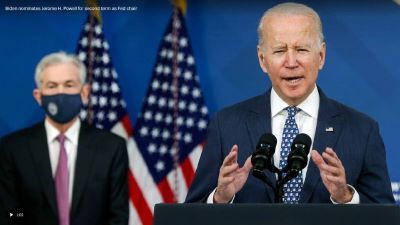
Despite all that, or perhaps because of it, President Joe Biden on Monday asked the 68-year-old Fed chairman to serve another four-year term. Democrats and Republicans gleefully offered their support.

Powell somehow emerged stronger than ever from the economic, domestic and political convulsions of 2020. He steered the Fed through wild stock market swings, enormous labor market fluctuations and multiple waves of the coronavirus. Biden’s confidence in Powell reflects both a White House that wants continuity and a Fed chair who has emerged as predictable in an economy that is anything but.

“Why am I not picking fresh blood or taking the Fed in a different direction?” Biden said in remarks on Monday. “Put directly, at this moment of both enormous potential and enormous uncertainty for our economy, we need stability and independence at the Federal Reserve. Jay has proven the independence that I value.”

The challenge ahead is a hefty one. The Fed is looking to encourage more employment, unwind its pandemic-era stimulus and prevent inflation from becoming a permanent feature of the economy. By many measures, the head winds of this moment – rising prices, a great reassessment of work in America, global supply chain backlogs – hardly resemble the trials of the 2020 pandemic recession. This has created a new set of challenges for Powell and his Fed colleagues.

“Before covid, [Powell] did a nice job of bringing the economy to a soft landing with low unemployment in 2019,” said Ben Bernanke, who served as Fed chair during the Bush and Obama administrations. “He was very effective in rebuilding the Fed’s relations with Congress and keeping legislators and the public informed about what the Fed was doing. He managed the pressure from President Trump extremely well. If covid had never happened, it would have been a very solid performance. And then covid came.”

รูปภาพนี้มี Alt แอตทริบิวต์เป็นค่าว่าง ชื่อไฟล์คือ lppnyuvahk4imqq7o6m3.jpg

In keeping Powell, Biden also said he planned to elevate Fed governor Lael Brainard, the central bank’s only Democrat, to become the Fed’s new vice chair. Brainard emerged as the main alternative to Powell for the Fed’s top job, in part because of her broad influence on a range of issues, including monetary policy, climate change and banking regulation. She is also a highly-respected PhD economist with years of policymaking experience. If confirmed by the Senate, Powell and Brainard would lead the Fed together.

Precedent might suggest Powell was going to be reappointed all along. For decades, new administrations have reappointed sitting Fed chairs, especially because the Fed is supposed to be insulated from the White House and Washington’s political churn.

But that tradition was bucked in 2017 when Donald Trump said replaced then-Fed Chair Janet Yellen and tapped Powell, who was put on the Fed board by former president Obama. But Trump quickly turned on Powell, lambasting him throughout 2018, 2019 and 2020, and alleging that Powell was not doing enough to lower interest rates and make the economy run hot ahead of the president’s reelection.

“My only question is, who is our bigger enemy, Jay Powell or Chairman Xi?” Trump tweeted following one of Powell’s major policy speeches in 2019.

Powell did not budge under the pressure. Meanwhile, Trump is still fuming. At lunch at the Trump International Beach Resort in Florida about two weeks ago, Trump told others that Powell cost him the 2020 presidential election, according to Steve Moore, a conservative policy analyst who was one of a handful of people at the meeting.

“He was really railing against Powell and said he had undermined everything he was trying to do with tight monetary policy in the last few years of his presidency,” said Moore, who was appointed by Trump to the central bank board but withdrew amid scrutiny of his past remarks about women.

Moore said Trump complained that Powell was one of the worst appointments during his presidency. Yet economists and lawmakers from both parties give Powell tremendous credit for his leadership of the Fed during the pandemic. In late March 2020, he led the Fed as it offered tremendous financial support for the economy, a decision that arrested a stock-market free fall and helped stem a wave of layoffs and corporate closures.

Plus, there was never an organized campaign against Powell. If anything, his most vocal opponents came from progressive groups and lawmakers who argued Powell was too lax on banking regulation and climate issues.

In 2020, the coronavirus pandemic dealt a catastrophic blow to the economy, with 20 million people abruptly losing their jobs in April and wide swaths of the global economy effectively shutting down. The Fed responded with full force, slashing interest rates and deploying a range of tools to rescue the financial system. The Fed chairman worked closely with members of Congress from both parties to explain his decision making, helping him earn credibility with lawmakers who were looking to understand the Fed during a time of extreme uncertainty.

Powell also worked well with Trump’s treasury secretary, Steve Mnuchin, despite a public clash late last year over emergency lending programs propped up through the Cares Act.

Throughout the pandemic, Powell found himself aligned with many of the Biden administration’s views. Powell repeatedly urged Congress not to withdraw stimulus aid too quickly, especially since fiscal policy could target more vulnerable households and struggling pockets of the economy.

Earlier this year, Powell batted away concerns that the Biden administration’s $1.9 trillion stimulus package would cause runaway inflation. He has also put a strong emphasis on full employment – especially for communities of color and other groups that have historically been among the last to benefit from a tight labor market.

Perhaps none of that history, though, could have prepared Powell for one of the Fed’s biggest scandals in years. In September, two Fed regional bank presidents – Robert Kaplan and Eric Rosengren – exited their posts amid intense scrutiny over their stock-trading behavior during the pandemic.

Those activities spurred an independent investigation by the Fed’s inspector general over whether the actions violated ethics rules and the law. The Fed’s public perception also took a massive blow, with Powell saying that the Fed’s guidelines around financial activity were “now clearly seen as not adequate to the task of really sustaining the public’s trust in us.”

“No one on the [Fed’s policy committee] is happy to be – to be in this situation,” Powell said in September.

A few weeks later, the Fed announced a major tightening of its rules overseeing the personal financial activities of top officials. The inspector general investigation is ongoing.

Ultimately, the stocktrading incidents, and Powell’s own financial disclosures, did little to rattle support for Powell himself. After Biden’s announcement on Monday, Republican and Democrat lawmakers praised Powell’s renomination, including the top-ranking officials on the Senate Banking Committee, which vets Fed nominees before a vote of the full Senate. So far, three progressive senators – Elizabeth Warren, D-Mass., Sheldon Whitehouse, D-R.I., and Jeff Merkley, D-Ore. – opposed Powell getting a second term.

Warren first came out against Powell in September, calling him a “dangerous man” for the Fed’s moves to gradually ease rules on Wall Street.

“So far you’ve been lucky,” Warren told Powell during a Senate Banking Committee hearing.

Powell sat quietly, waiting for his next questions.

Published : November 23, 2021

By : The Washington Post

U.S. stocks sink into close on rout in tech shares #SootinClaimon.Com

#SootinClaimon.Com : ขอบคุณแหล่งข้อมูล : หนังสือพิมพ์ The Nation.

https://www.nationthailand.com/business/40009133


A final-hour selloff in tech shares sent U.S. stocks to a second straight loss, while Treasuries retreated following President Joe Bidens nomination of Jerome Powell to head the Federal Reserve for a second term. The dollar climbed.

U.S. stocks sink into close on rout in tech shares

The S&P 500 turned lower in the final hour of trading, while the Nasdaq 100 dropped more than 1%. The broader index had spent all of the session higher before a sell-off in tech shares popular among hedge funds dragged it lower for the day. Peloton Interactive Inc. and Docusign Inc. slid at least 5.5%. Farfetch and Snowflake drove a basket of software and internet companies that have yet to earn any money down more than 5%.

“I don’t know why the tape collapsed late but the market has rallied so much, so quickly, a retracement has to happen at some point. This could be the start,” said Mike Zigmont, head of trading and research at Harvest Volatility Management.

The Powell nomination had dominated market sentiment for much of the day before the big about-face in equities. The yield on two-year bonds jumped toward 0.6%. The U.S. swaps market is now pricing a full 25 basis point rate hike into the June Fed meeting, with a second increase seen for next November. The dollar climbed, while gold slumped more than 2% and oil gained.

Biden had been considering between Powell and Lael Brainard, who he nominated to move up to vice chair. The Powell choice comes amid growing concern the U.S. central bank may fall behind the curve in combating sticky inflation. Consumer-price growth is surging at the fastest pace in decades and expectations for price growth are at the highest since 2013.

“The whole point is it doesn’t change anything — the same issues are on his plate now, which is are they going to be right that the pop in inflation is going to be transitory and if not, what do they do about it?” David Donabedian, chief investment officer of CIBC Private Wealth Management, said by phone. “The choice about Powell’s renomination is all about continuity.”

Shares got a lift overnight from a flurry of potential deals. Vonage Holdings Corp. jumped more than 20% as Ericsson agreed to buy it. Telecom Italia SpA surged 30% in Europe after KKR & Co. bid for it.

“We’re kicking off a busier-than-you-may-think Thanksgiving week in rebound mode,” said Chris Larkin, managing director of trading at E*Trade Financial. “And while the short trading week historically is considered sleepier than others, keep in mind that over the past 15 years the U.S. stock market has tended to gain more ground the month after Thanksgiving than the month before it. So coupled with a busy economic calendar and more retail earnings, traders may have good reason to stay tuned in to the market this week.”

U.S. stocks are trading near record levels, outpacing the rest of the world, as investors see few alternatives amid rising inflation and a persistent pandemic that undermines global recovery. Concerns about high valuations and the potential for the economy to run too hot on the back of loose monetary and fiscal policies have interrupted, but not stopped the rally.

Oil kept gains on speculation that OPEC and its allies may adjust plans to raise production if the U.S. releases crude reserves in coordination with other nations. Delegates said that even the modest output increase they have penciled in may now be re-evaluated when the group meets next week.

Here are some key events this week:

–Eurozone, U.S. PMI data Tuesday

–Reserve Bank of New Zealand rate decision Wednesday

–U.S. FOMC minutes, consumer income, wholesale inventories, new home sales, GDP, initial jobless claims, U.S. durable goods, University of Michigan consumer sentiment. All Wednesday

–Bank of Korea policy decision Thursday

–U.S. Thanksgiving Day: U.S. equity, bond markets closed Thursday

–Bank of England Governor Andrew Bailey speaks with Mohamed El Erian at a Cambridge Union event. Thursday

Some of the main moves in markets:

Stocks

–The S&P 500 fell 0.3% as of 4:03 p.m. New York time

–The Nasdaq 100 fell 1.2%

–The Dow Jones Industrial Average was little changed

–The MSCI World index fell 0.6%

Currencies

–The Bloomberg Dollar Spot Index rose 0.4%

–The euro fell 0.5% to $1.1236

–The British pound fell 0.5% to $1.3389

–The Japanese yen fell 0.8% to 114.86 per dollar

Bonds

–The yield on 10-year Treasuries advanced seven basis points to 1.62%

–Germany’s 10-year yield advanced four basis points to -0.30%

–Britain’s 10-year yield advanced five basis points to 0.93%

Commodities

–West Texas Intermediate crude rose 0.5% to $76.31 a barrel

–Gold futures fell 2.5% to $1,807.90 an ounce

Published : November 23, 2021

By : Bloomberg

U.K. mortgage lender offers rare 40-year deal at a fixed rate #SootinClaimon.Com

#SootinClaimon.Com : ขอบคุณแหล่งข้อมูล : หนังสือพิมพ์ The Nation.

https://www.nationthailand.com/business/40009131


With inflation accelerating and the Bank of England set to hike interest rates, a U.K. mortgage lender is offering homebuyers one less thing to worry about.

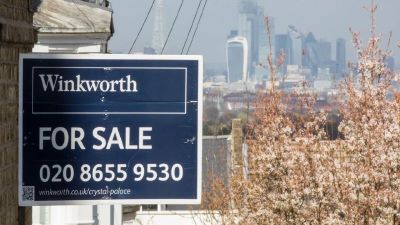
Kensington Mortgages is launching a fixed-rate loan of up to 40 years, meaning a borrower would pay the same amount each month regardless of what happens to interest rates. It’s offering mortgage terms from 11 to 40 years, with pensions insurance specialist Rothesay Life providing the finance.

The deal is unusual for the U.K., where customers are encouraged to re-mortgage every few years for a better rate. The market in ultra-long fixed rate mortgages is still relatively new, and fixed-rate products have proved the most popular type of home loan for years. Demand is commonly for periods of less than five years.

The move follows expectations that the era of record-low interest rates is coming to an end. Investors are betting the Bank of England will raise the benchmark cost of borrowing from 0.1% as early as next month.

“Nothing lasts forever, and it looks very likely that we will see a succession of interest-rate hikes and we may begin to slowly approach again an historical average,” said Mark Arnold, CEO at Kensington Mortgages. “A fixed-for-term mortgage — already very popular in some parts of continental Europe – is likely to become increasingly attractive in a rate-rising environment.”

The BOE is planning a move to keep inflation in check and prevent a cost-of-living squeeze from bedding down into a spiral of increasing prices and wages.

Inflation is forecast to hit 5% by the spring, more than double the BOE target. While a surge in natural gas and electricity accounts for much of that, there’s been a broad increase in the cost of goods, and a labor shortage is driving up pay while the government plans a major tax increase in April.

Banks are responding with ways to ensure consumers can stabilize their finances. Earlier this year, online broker and lender Habito launched a fixed-rate mortgage with a maximum term of 40 years, starting at 2.99%. That deal was for those with a 40% down payment. The cost rose to 4.65% for the longest term deals.

At Kensington Mortgages, rates for 30-year loans will start at 2.9% with a 40% deposit, and 3.77% for new buyers borrowing 95% of the value of the property. Rates for shorter mortgage terms are lower.

Published : November 23, 2021

By : Bloomberg