Thailand’s rate of unemployment has soared due to the Covid-19 fallout, with 870,000 people or 2.25 per cent of the working-age population left jobless, Danucha Pichayanan, secretary-general of the National Economic and Social Development Council (NESDC) said on Monday.
NESDC found that 3.63 per cent of the unemployed were those who had completed higher education, followed by vocational certificate holders at 3.16 per cent. Most of the unemployed are those who hold degrees in general fields like business administration and marketing. These graduates are likely to remain unemployed for a prolonged period due to limited economic expansion.
Meanwhile, youngsters aged 15-19 had the highest unemployment rate at 9.74 per cent, followed by 8.35 per cent of those in the 20-24 age range. This indicates the continuing impact of the pandemic, which has forced businesses to lay off workers.
There are also few jobs waiting at the entry-level for new graduates, as many businesses are monitoring the situation before they start recruiting again.
Overall, 37.7 million people in Thailand are still employed, marking a drop of 0.6 per cent from last year. However, the job scene in the agricultural sector picked up in the third quarter, with 12.7 million people getting jobs thanks to the start of the rice-planting season. This marks an increase of 1 per cent from the same period last year.
Meanwhile, the non-farming payroll has dropped 1.3 per cent, with lockdowns, controls on business hours and closure of workers’ camps bringing the construction and hotel/restaurant sectors down by 7.3 per cent and 9.3 per cent, respectively.
However, some jobs are still being created in the manufacturing, wholesale/retail and logistics/storage sectors, which grew by 2.1, 0.2 and 4.6 per cent, respectively.
Separately, nearly 900,000 people have temporarily lost their source of income, up from 470,000 people in the same period last year.
Five factors may affect the job scene soon, namely:
• Relaxation of epidemic control measures, reopening the country to foreign tourists and economic recovery
• Measures to help farmers suffering from the impact of floods
• An increase in the cost of living due to high oil prices
• Loss of skills owing to prolonged unemployment
• Assistance for the self-employed who are insured under Article 40 of the Social Security Act.
The Stock Exchange of Thailand (SET) Index closed at 1,649.54 on Monday, up 4.48 points or 0.27 per cent. Transactions totalled 94.48 billion baht with an index high of 1,653.33 and a low of 1,645.09.
The index slightly rose after falling by 5.96 points or 0.36 per cent on Friday, thanks to positive news of Charoen Pokphand (CP) Group and Telenor Group agreement to explore the creation of a new telecom-tech company.
The 10 stocks with the highest trade value today were TRUE, ADVANC, DTAC, PTT, CPALL, INTUCH, EA, KBANK, GPSC and PTTEP.
Other Asian indices were mixed:
Japan’s Nikkei Index closed at 29,774.11, up 28.24 points or 0.095 per cent.
China’s Shanghai SE Composite closed at 3,582.08, up 21.71 points or 0.61 per cent, while the Shenzhen SE Component closed at 14,960.66, up 208.17 points or 1.41 per cent.
Hong Kong’s Hang Seng Index closed at 24,951.34, down 98.63 points or 0.39 per cent.
South Korea’s KOSPI Index closed at 3,013.25, up 42.23 points or 1.42 per cent.
Taiwan’s TAIEX Index closed at 17,803.54, down 14.77 points or 0.083 per cent.
Thai household debt in the second quarter of this year has risen to 14.27 trillion baht or 89.3 per cent of the GDP, the National Economic and Social Development Council (NESDC) confirmed on Monday.
This increase has placed Thailand in 12th place among 70 countries globally and fifth in Asia.
Danucha Pichayanan, NESDC secretary-general, said Thailand’s household debt against the GDP had risen to 14.27 trillion baht from 14.14 trillion baht in the first quarter, which worked out to 90.6 per cent of the GDP.
He attributed this increase in household debts to more loans being taken for real-estate purchase, personal consumption and business operation.
“Household debt is likely to rise further as the economy has not fully recovered yet and the flood crisis is forcing families to take more loans to repair their homes and replace appliances. They also need money for consumption,” he said.
He added that the financial sector should pay special attention to three factors, namely non-performing loans, debt-relief measures and rising informal debt.
“According to a survey, informal debt in the first half of this year stood at 85 billion baht, up 1.5 times compared to 56 billion baht in 2019, showing that some households are facing a liquidity shortage,” he added.
The baht opened at 32.81 to the US dollar on Monday, weakening from the previous closing of 32.76.
The Thai currency is likely to move between 32.55 and 33.00 to the greenback during the day, Krungthai Bank market strategist Poon Panichpibool predicted.
Poon said that the baht is likely to fluctuate while the dollar might strengthen if the market worries about the inflation and Covid-19 situation in Europe. The dollar might go down if Lael Brainard is picked as a new US Federal Reserve’s chairman which the market expects the Fed will not use tight monetary policy soon.
Moreover, the gold price that fell down might cause investors to buy on dips and pressure the baht to weaken. However, the baht will not strengthen much because foreign investors are waiting to buy Thai stocks and short-term bonds.
The key resistance level for the baht would be at 33 to the dollar, which is the level at which exporters might sell the US currency.
The baht’s key support level would be from 32.55 to 32.60, the level some importers are waiting for so they can buy dollars, he added.
The dollar strengthen in the last week because the market was worried about the new Covid-19 wave in Europe.
In the next week, the market is waiting for the next Fed chairman who will decide the monetary policy. The market will also keep an eye on world economic data especially the Purchasing Managers’ Index.
The price of gold in Thailand on Monday morning was unchanged from Saturdays one-time trading price announcement.
AGold Traders Association report at 9.28am said the buying price of a gold bar was THB28,650 per baht weight and selling price THB28,750, while the buying and selling price of gold ornaments is THB28,136.96 and THB29,250, respectively.
The spot gold price on Monday morning hovered around US$1,846 (THB60,659) per ounce after Comex gold at close on Friday dropped by $9.8 to $1,851.6 per ounce. This was the lowest level in more than a week due to pressure from the sharp fall in oil prices and the appreciation of the US dollar that rose to its highest level in about 16 months.
The Stock Exchange of Thailand (SET) Index rose by 2.51 points or 0.15 per cent to 1,647.57 on Monday morning.
The volume of total transactions was 5.18 billion baht with an index high of 1,649.20 and a low of 1,646.72 in opening trade.
The 10 stocks with the highest trade value were TRUE, ADVANC, DTAC, PTT, DIF, CBG, EA, AOT, GPSC and CPF.
The SET Index closed at 1,645.06 on Friday, down 5.96 points or 0.36 per cent. Transactions totalled 102.89 billion baht with an index high of 1,656.27 and a low of 1,641.52.
The National Broadcasting and Telecommunications Commission (NBTC) has invited representatives from two mobile operators to explain a move by their parent companies to pursue a merger.
Asource revealed on Sunday that representatives of Total Access Communication Plc (Dtac) will meet with NBTC on Monday (November 22) while the meeting with True Corporation Plc was scheduled on the following day.
“The meetings aim to discuss the possibility of the two companies’ merger and its impact to the country’s telecommunication industry, as well as potential market domination issues,” said the source.
Dtac’s parent firm Telenor has confirmed earlier that it is discussing with True’s parent Charoen Pokphand (CP) Group about the possibility of a merger between Dtac and True.
According to NBTC’s merger rules and regulations, the two operators will have to inform NBTC 90 days before their merger occurs.
Dtac currently has a total of 19.3 million mobile subscriptions while True is operating 32 million subscriptions under the brand TrueMove H. If the merger deal is success the two will have a combined subscriptions of 51.3 million, while the other operator, AIS, has 43.65 million mobile subscriptions.
Dtac also has over 90,000 base stations, or radio towers, while True has over 12,000 base stations.
Texas, already home to the most vulnerable power grid in the U.S., is about to be hit by a surge in demand for electricity thats twice the size of Austins.
An army of cryptocurrency miners heading to the state for its cheap power and laissez-faire regulation is forecast to send demand soaring by as much as 5,000 megawatts over the next two years. The crypto migration to Texas has been building for months, but the sheer volume of power those miners will need – two times more than the capital city of almost 1 million people consumed in all of 2020 – is only now becoming clear.
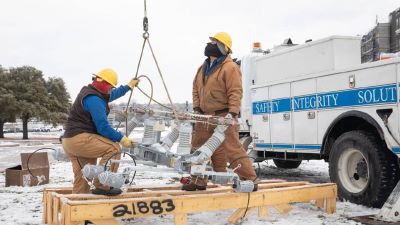
The boom comes as the electrical system is already under strain from an expanding population and robust economy. Even before the new demand comes online, the state’s grid has proven to be lethally unreliable. Catastrophic blackouts in February plunged millions into darkness for days, and, ultimately, led to at least 210 deaths.
Proponents like Sen. Ted Cruz and Gov. Greg Abbott, both Republicans, say crypto miners are ultimately good for the grid, since they say the miners can soak up excess clean power and, when needed, can voluntarily throttle back in seconds to help avert blackouts. But it raises the question of what these miners will do when the state’s electricity demand inevitably outstrips supply: Will they adhere to an honor system of curtailing their power use, especially when the bitcoin price is itself so high, or will it mean even more pressure on an overwhelmed grid?
“There’s nobody looking at the scale of potential investment in crypto and its energy demand over the next couple of years and trying to account for that in some sort of strategic plan,” said Adrian Shelley, director of the Texas office of the consumer advocacy and lobbying group Public Citizen, which has sharply criticized the vulnerabilities of the state’s unregulated power market.
Here’s what you need to know about Texas, cryptocurrency and the power grid.
– Why Texas? Texas is rolling out the red carpet for crypto miners as onetime leader China has banned the industry. Mining for crypto requires massive amounts of power, complicating Beijing’s efforts to curb greenhouse-gas emissions and shore up energy supplies ahead of the winter.
Miners setting up shop in the Lone Star State can often count on a 10-year tax abatement, sales tax credits and workforce training from the state, depending on where they are located and how many jobs they add. Even without formal incentives, the cheap power prices and the state’s hands-off policy toward business is often enough of a lure.
The pitch is working: The grid operator Electric Reliability Council of Texas, or Ercot, will account for about 20% of the Bitcoin network globally by the end of 2022, up from 8% to 10% today, according to Lee Bratcher, president of the Texas Blockchain council. Right now, Ercot has somewhere between 500 and 1,000 megawatts of mining capacity, out of about 2,000 nationwide. The state grid will add another 3,000 to 5,000 megawatts of mining demand by the end of 2023, he said.
While it’s likely the grid will have enough total capacity to meet the surge in demand, the even bigger question at play is reliability and whether there will be enough power when demand is at peaks and supply is vulnerable, according to Moody’s analyst Toby Shea.
“Texas has been very business friendly and Ercot is one of the largest deregulated energy grids in the world,” said Dave Perrill, chief executive officer of mining-infrastructure company Compute North. His company had been planning to build more mining capacity across the U.S. in 2023, but it bumped that up to 2022 because there’s so much demand.
All nine U.S. and Canadian power grids have miners on them, but Texas now has the most, said Gregg Dixon, CEO of Voltus Inc., which helps large consumers procure power and provides demand-response services to U.S. crypto miners. Chinese nationals are behind a lot of that boom, he said.
“They come in and write $100 million checks on the spot,” he said.
Meanwhile, the Texas grid has come under strain as the population expanded by more than 4 million over the past decade to almost 30 million, part of a boom that created one of the fastest growing economies in the U.S. Austin is the state’s fourth-largest city, home to a little more than 3% of Texas residents.
– Why it could be bad for the grid. While Ercot forecasts several thousand megawatts of mining demand will be added to the grid, the grid operator said it didn’t have any estimates for how much demand is currently coming from miners. It doesn’t know how much will be tacked onto its peak demand forecast, either, or how many companies will opt to curtail voluntarily in a disaster. Ercot is supposed to keep extra supplies handy-at least 13.75% more than that forecasted peak-to help avert blackouts in a cold snap or heat wave.
Forecasting supply and demand was already getting more difficult across U.S. grids. Extreme storms driven by climate change have disrupted supplies, and more electricity now comes from intermittent wind and solar. The rise of electric vehicles also makes it harder to predict where and when they will plug in. Adding to that, mining “is an enormous variable load,” said Tom Deitrich, CEO of Itron Inc., which provides utilities with demand-response capabilities.
Taken together, that means the grid could have the wrong amount of power right when the state needs it the most. Mismatched priorities in the Texas energy sector and a massive miss in power demand forecasts in February ended in catastrophe: millions of people in the dark, more than $20 billion in damages and calls to overhaul the state’s energy sector.
“The impact of bitcoin mining is only going to increase peak demand, so it increases stress on the grid,” said Ben Hertz-Shargel, global head of Grid Edge, a division of energy consultant Wood Mackenzie. “In times of scarcity, like in February of this year, bitcoin mining could have an unhelpful contribution to net load.”
Critics also say the sheer amount of new mining demand could raise power costs for average consumers, though no one has been able to quantify how much prices could rise. When Plattsburgh in upstate New York attracted crypto miners, it found they initially used up all the spare cheap hydro power, resulting in higher costs across the city; it ultimately had to put in place tariffs for miners to keep everyone else’s costs down.
“They turned the switch on and all of the sudden, we realize-Holy smokes!-where did this electricity usage come from?” said Mayor Christopher Rosenquest.
Another overlooked part of mining: Its energy intensity will continue to rise because the system is designed to make it harder to mine each incremental coin. Miners are evolving from small “mom and pops” adding connections to their basements to massive servers racked in large air-conditioned warehouses, using increasingly more power.
Ed Hirs, an energy fellow at the University of Houston, warns that Texas and crypto aren’t a good match.
“Who is the beneficiary of Bitcoin mining? It doesn’t provide employment, doesn’t pay taxes,” he said. “There are some social welfare issues here that I think a lot of people will tend to ignore until there is a crisis.”
– Why it could be good for the grid. The crypto industry’s pitch for why it makes sense in Texas is simple: It’s good for the energy transition and the environment. Miners say they will drive a surge of new wind and solar development by signing long-term contracts, accelerating the state’s transition away from coal. And mining operations can act as a balancing force by soaking up excess clean power that would otherwise be wasted. Elon Musk has said Tesla would allow transactions in bitcoin again once the mining is done with more clean energy.
Unlike a factory or oil refinery, crypto miners can cut their electricity usage within seconds to ease tight grid conditions. The mining industry likes to draw parallels to battery storage technology that can kick in when needed.
Crypto mining is “a very special kind of demand; it can curtail very quickly,” said Carrie Bivens, a former operations manager for the state grid who now serves as the independent market monitor with Potomac Economics. “By the same token, if that load never existed at all, there wouldn’t be a need to curtail.”
Some miners are voluntarily opting into programs where they get paid to sell power back to the grid during high-demand periods-both a benefit for the greater good and their own cashflows. For instance, if a miner had contracted power for $50 a megawatt-hour, it could have sold that power back back to the grid for $9,000 during the February crisis and pocketed the difference.
A 300-megawatt mining site in Rockdale, in central Texas, that Riot Blockchain Inc. bought earlier this year, called Whinstone, is one of two facilities so far that have signed up for Ercot’s “controllable load resource” program that pays a premium to industrial users that will allow the grid operator to automatically reduce or increase their power usage when needed. The other in the program is Compute North’s 50-megawatt facility in Big Spring, in western Texas.
On a recent weekend, Ercot ordered the Whinstone site to decrease usage on back-to-back days after two plants went offline. “Our machines’ power danced, ramped up and down based on what Ercot told our software to do, and what it did is it helped stabilize the grid while other generation came on,” said Chad Everett Harris, CEO of the facility. Harris said it voluntarily shut down on Feb. 11 as temperatures plunged across Texas, three days before Ercot started cutting of power to save the grid.
In fact, miners realize most of their appeal right now is their ability to do good-curtail output to help the grid even at the risk of their own profits-otherwise they lose the argument that they’re aiding energy transition, Dixon of Voltus said. That’s why he thinks companies will do the right thing, unregulated or not.
“It is the elephant in the room,” he said. “And if they violate it, they destroy themselves.”
Representatives from Thailand, Laos and China held a tripartite meeting via video conferencing on Friday to discuss the construction of a dual-track railway link between the three countries.
Attending were Transport Ministry’s deputy permanent secretary Sorapong Paitoonphong and officials from other transport-related agencies like the Department of Rail Transport (DRT) and State Railway of Thailand (SRT).
At the meeting, Thailand and Laos discussed the construction of a new railway bridge from Nong Khai to Vientiane, though the two countries have yet to reach a conclusion on feasibility, design and construction.
The meeting also agreed on the setting up of two working groups, one focusing on the business side of things and another on the technical side.
The DRT deputy director and SRT deputy governor will join the technical working group, while the SRT chief construction engineer will join the business group.
Another tripartite meeting will be held in January.
Thailand gross domestic product (GDP) is expected to rise by 3.5 per cent to 4.5 per cent next year on economic recovery, Finance Minister Arkhom Termpittayapaisith said during the Thai Chamber of Commerces seminar on Saturday.
He predicted that Thailand GDP would rise by 1.2 per cent to 1.3 per cent this year in response to tourism recovery as the country GDP in the first nine months had risen by 1.3 per cent.
He also expected the country GDP next year would rise by 3.5 per cent to 4.5 per cent as people would spend more money.
“The number of tourists visiting Thailand would be no more than 6 million people this year, but everything would be better next year, such as tourism, domestic travel and supports from government and private sectors,” he said.
Arkhom said the country economy next year would recover from expansion in export and tourism, as well as the ministry’s financial measures, such as increasing liquidity, relieving debt burden, and increasing ways to help debtors.
“However, the government has planned to restructure the economy to cope with challenges on country development in the future, including middle-income trap, competitiveness, unbalanced growth, poverty, inequality, ageing society, climate change and fiscal burden,” he added.