The Stock Exchange of Thailand (SET) Index rose by 8.28 points or 0.51 per cent to 1,642.00 on Friday morning, witnessing a high of 1,644.16 and a low of 1,640.73 in opening trade.
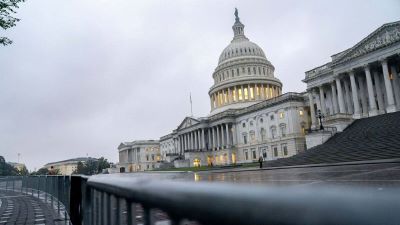
Krungsri Securities expected the day’s index would rise to between 1,640 and 1,645 points after the US Senate had reached an agreement to extend debt limit until December, enabling Washington to cope with risks of default payments.
It added that the index also gained positive sentiment from the decline in US jobless claims, rising oil price and hopes over Thailand reopening.
ADVERTISEMENT
It also recommended buying of the following companies’ shares as an investment strategy:
▪︎ PTT, PTTEP, TOP, PTTGC, SPRC, BCP and IVL, which benefit from rising oil price
▪︎ AOT, KBank, SCB, CPN, CRC, HMPro, AAV, BA, MINT, Amata, WHA and Major, which benefit from the country reopening.
▪︎ Hana, KCE, TU, Asian and NER, which benefit from weakening baht.
The SET Index closed at 1,633.72 on Thursday, up 14.24 points or 0.88 per cent. Transactions totalled 100.94 billion baht with an index high of 1,637.82 and a low of 1,624.59.
WASHINGTON – Senate Democratic and Republican leaders said Thursday morning they had clinched a short-term deal to raise the countrys debt ceiling, setting Congress on track to avert a government default on its debts in roughly 11 days.
Majority Leader Chuck Schumer, D-N.Y., announced the truce during a brief statement on the Senate floor, noting the agreement would permit the country to continue borrowing unimpeded into early December. Schumer said that chamber leaders now “hope we can get this done as soon as today,” though a vote could slip until potentially this weekend.
The potential resolution came after a tense few weeks of fighting, which saw Democrats try repeatedly to suspend the country’s debt ceiling – only to falter at the hands of GOP lawmakers. Senate Minority Leader Mitch McConnell, R-Ky., led the blockade as part of the party’s broader opposition toward President Joe Biden’s spending agenda, including a still-forming, up-to $3.5 trillion package that GOP lawmakers vehemently oppose.
ADVERTISEMENT
But McConnell backed down somewhat late Wednesday, offering Democrats a temporary break. Hammered out overnight, the plan would raise the debt ceiling by $480 billion, which is expected to fund federal borrowing until December 3, according to a Senate aide familiar with the agreement who requested anonymity to describe it.
Schumer and McConnell still must shepherd their deal through the chamber, a process that exposed potential cracks in their strategy by midday Thursday. A number of GOP lawmakers appeared reticent to supply the support needed to proceed to a final vote, prompting Sen. John Thune, R-S.D., the party’s leading vote counter, to acknowledge to reporters that the vote is “not an easy one to whip.”
“In the end, we’ll be there,” Thune said. “But it’ll be a painful birthing process.”
A successful vote in the Senate, followed soon by the House, would avert a financial crisis with only days to spare ahead of the original October 18 deadline. Absent action by that date, the U.S. government would have faced an unprecedented struggle to fulfill its own financial obligations – including paying Social Security to seniors, providing tax benefits to families with children, or offering benefits to troops and veterans.
But the short-term deal also threatens to defer a bigger, more vicious battle between Democrats and Republicans until the waning hours of the year. The new, expected debt ceiling deadline comes on the same day that funding for the federal government is set to expire. That means Congress must act by December 3 to stave off default and prevent a federal shutdown, two urgent tasks that carry significant political and economic consequences in the case of failure.
For now, at least, the agreement over the debt ceiling spares Washington from what experts broadly saw as a financial doomsday that could have rattled markets globally and plunged the United States into a new recession. Biden in recent days had pressured Congress to act, blasting Republicans from obstructing a long-term increase to the borrowing cap while huddling with the nation’s business leaders to further make the case for swift action.
To that end, markets appeared to reward news of the Senate deal, with the Dow Jones industrial average surging more than 500 points by midday. The uptick only served to confirm the stakes in Washington’s latest fiscal stalemate, which earlier in the week raised the prospect that the U.S. could suffer a credit downgrade.
The debt ceiling allows the government to borrow money to pay its bills, since the country spends more than it collects through tax revenue. Raising the cap is a necessity that in the past had been a bipartisan affair: Democrats even joined with Republicans to address the issue repeatedly under former president Donald Trump, who added $8 trillion to the debt during his time in office.
But Republicans over the past nine months have turned it into a political cudgel as they labor to fight back against Biden’s economic initiatives. The crux of the GOP opposition is a still-forming proposal to overhaul federal education, health care, immigration and climate laws, while raising taxes on wealthy Americans and corporations. Even though Democrats say the package is financed in full, Republicans argue it would add to the deficit even beyond the 10-year scope of the plan – prompting them to withhold their support for an increase to the debt ceiling.
“I do not support the Democrats’ [spending] package and I do not support raising the debt limit to make that level of spending possible,” said Sen. Lindsey Graham, R-S.C., the top Republican on the chamber’s budget committee, in a statement late Wednesday.
The Republicans’ opposition has frustrated Schumer and his fellow Democrats for weeks, who repeatedly pointed out that the debt ceiling covered past spending, including bipartisan initiatives to respond to the coronavirus pandemic last year. But their entreaties failed to loosen the GOP blockade until McConnell offered a roughly two-month extension after meeting with his conference Wednesday.
The deal they championed a day later could carry federal borrowing until December 3, but the deadline is only a rough estimate, according to Shai Akabas, the director of economic policy at the Bipartisan Policy Center. He said it ultimately is going to vary depending on how much the country spends and brings in through tax collection, which has been difficult to predict in recent months given the coronavirus pandemic.
“Nobody can know exactly how long that is going to last,” Akabas said, though he expressed a measure of confidence it could at least carry the country until early in December.
Eventually, though, the country is going to reach its borrowing cap and approach the precipice of a default – warranting another intervention on Capitol Hill. That risks reigniting the same battle that had pushed the Senate only 11 days away from what Biden has described as a “meteor” crashing into the U.S. economy.
Entering the fight, McConnell has maintained an insistence that Republicans are not going to provide the 10 votes Democrats need to advance a longer-term measure to address the debt ceiling in the narrowly divided chamber, where most legislation requires 60 votes to advance. Instead, he has said Democrats must use reconciliation, a budgetary process that will allow them to move a proposal raising the borrowing cap on their own – a move that the party has rejected.
Schumer has refused to take that route, which he has described as “risky” because it could take too long to complete, putting the country at greater risk for default. Privately, Democrats also acknowledge that reconciliation could open them up to uncomfortable political votes and attacks, especially because it requires them to raise the debt ceiling by a specific amount rather than suspending it outright.
In a sign of the fight to come, McConnell took to the floor Thursday to herald their deal as a way to “spare the American people any near-term crisis.” But he also repeated they must use reconciliation, unleashing renewed attacks on Democrats for their “reckless taxing and spending spree” in the process.
U.S. equities rose on Thursday, bolstered by progress on U.S. debt-ceiling talks and easing concerns about Europes energy crunch.
The S&P 500 climbed as much as 1.5% before nearly halving gains on China’s plans to tighten its supervision over technology companies. The advance was led by the materials and consumer discretionary sectors, extending a three-day rally to 2.3%. The yield on the U.S. 10-year Treasury note climbed to 1.57%, the highest since June.
“We’ve had a 24-hour stretch where we’ve pulled back from a few of the key risk drivers that have been concerning markets,” said Giorgio Caputo, senior portfolio manager at J O Hambro Capital Management.
ADVERTISEMENT
Markets have been buffeted in the past month by worries about an energy crisis, elevated inflation, reduced stimulus and slower growth. However, the prospect of a short-term U.S. debt limit extension is easing concern over political bickering. Natural gas prices were also lower on Thursday after signals Russia may increase supplies to Europe.
“The volatility we’ve seen in the markets here this week – where we’re up one day, down the next – is really a reflection of the news cycles and the different news that we’ve been receiving,” Chris Gaffney, president of world markets at TIAA Bank, said by phone.
Up next, all eyes will be on Friday’s U.S. nonfarm payrolls, which may shed light on the the Federal Reserve’s timeline to cut bond purchases. There is growing optimism the report will show the kind of “decent” jobs growth Federal Reserve Chair Jerome Powell said he wants. U.S. initial jobless claims fell more than expected last week and ADP employment figures beat expectations for September.
“Both really reflect that the job market is strengthening and that people are getting back to work,” Gaffney said of the latest employment data. “That certainly bodes well for the markets going forward in that the more people that are working, the more spending can occur as people get back to work.”
Oil reversed losses after the U.S. Energy Department said it has no plans to tap oil reserves. The dollar was little changed. Gold fell.
Here are some events to watch this week:
– Reserve Bank of India monetary policy decision on Friday
– The U.S. Labor Department releases unemployment and job creation data Friday
Some of the main moves in markets:
– – –
– The S&P 500 rose 0.8% as of 4 p.m. New York time
– The Nasdaq 100 rose 0.9%
– The Dow Jones industrial average rose 1%
– The MSCI World index rose 1.1%
– – –
– The Bloomberg Dollar Spot index was little changed
– The euro was little changed at $1.1554
– The British pound rose 0.3% to $1.3617
– The Japanese yen fell 0.2% to 111.60 per dollar
– – –
– The yield on 10-year Treasuries advanced five basis points to 1.57%
– Germany’s 10-year yield was little changed at -0.19%
– Britain’s 10-year yield was little changed at 1.08%
– – –
– West Texas Intermediate crude rose 1.8% to $78.85 a barrel
The Stock Exchange of Thailand (SET) Index closed at 1,633.72 on Thursday, up 14.24 points or 0.88 per cent. Transactions totalled 100.94 billion baht with an index high of 1,637.82 and a low of 1,624.59.
The index rose after falling by 0.29 per cent on Wednesday.
In the morning session, Krungsri Securities predicted the day’s index would fluctuate between 1,610 and 1,630 points despite positive news of the US would extend a debt limit until December.
ADVERTISEMENT
It added that the index also gained positive sentiment from hopes over the country reopening after domestic Covid-19 cases have declined.
However, the volatility in fund flow and falling oil price after the US oil storage had risen beyond expectation would pressure the index,” Krungsri Securities said.
The 10 stocks with the highest trade value today were KBANK, BANPU, SVT, TRUE, SCB, PTT, BBL, PTTEP, GUNKUL and GULF.
Other Asian indices were on the rise: Japan’s Nikkei Index closed at 27,678.21, up 149.34 points or 0.54 per cent. Hong Kong’s Hang Seng Index closed at 24,701.73, up 735.24 points or 3.07 per cent. South Korea’s KOSPI Index closed at 2,959.46, up 51.15 points or 1.76 per cent. Taiwan’s TAIEX Index closed at 16,713.86, up 320.70 points or 1.96 per cent.
China’s Shanghai SE Composite and Shenzhen SE Component Indices were closed for National Day.
The baht opened at 33.83 to the US dollar on Thursday, strengthen from Wednesday’s closing rate of 33.92.
The Thai currency is likely to move between 33.75 and 33.90 during the day, Krungthai Bank market strategist Poon Panichpibool predicted.
Poon said the baht would continue fluctuating against the greenback. Also, he said, the flow of foreign funds has slowed down because foreign investors are waiting for an improvement in the market before spending on Thai stocks.
ADVERTISEMENT
The baht will strengthen if the Asian market opens for more risk. The baht will not strengthen much because investors are waiting for the Nonfarm Payrolls (NFP) report.
The baht’s key support level would at 33.70, the level some importers are waiting for so they can buy dollars, he added.
Poon added that the currency market might fluctuate heavily at first but investors are open to more risks because the private-sector employment was better than expected. According to ADP, private-sector employment in September increased for 570,000 positions.
Moreover, the marker was supported by the US debt ceiling negotiation to raise the debt ceiling for two months. The US Congress must raise the debt ceiling before October 18 to avoid default.
The price of gold rose by THB100 in morning trade on Thursday.
AGold Traders Association report at 9.25am said the buying price of a gold bar was THB28,100 per baht weight and selling price THB28,200, while the buying and selling price of gold ornaments is THB27,591.20 and THB28,700, respectively.
At close on Wednesday, the buying price of a gold bar was THB28,000 per baht weight and selling price THB28,100, while gold ornaments were THB27,500.24 and THB28,600, respectively.
ADVERTISEMENT
The spot gold price on Thursday morning hovered around US$1,761 (THB59,575) per ounce after Comex gold at close on Wednesday rose slightly by 90 cents to $1,761.8 per ounce due to a slowdown in the US bond yields, while the market is keeping an eye on the announcement of US non-farm payrolls on Friday.
The Stock Exchange of Thailand (SET) Index rose by 8.30 points or 0.51 per cent to 1,627.78 on Thursday morning, witnessing a high of 1,628.66 and a low of 1,624.59 in opening trade.
Krungsri Securities predicted the day’s index would fluctuate between 1,610 and 1,630 points despite positive news of the US would extend a debt limit until December.
It added that the index also gained positive sentiment from hopes over the country reopening after domestic Covid-19 cases have declined.
ADVERTISEMENT
However, the volatility in fund flow and falling oil price after the US oil storage had risen beyond expectation would pressure the index,” Krungsri Securities said.
It also recommended buying of the following companies’ shares as an investment strategy:
▪︎ AOT, KBank, SCB, CPN, CRC, HMPro, AAV, BA, MINT, Amata, WHA and Major, which benefit from the country reopening.
▪︎ TOP SPRC BCP, which benefit from rising gross refining margin.
▪︎ Hana, KCE, TU, Asian and NER, which benefit from weakening baht.
The SET Index closed at 1,619.48 on Wednesday, down 4.76 points or 0.29 per cent. Transactions totalled 97.65 billion baht with an index high of 1,631.81 and a low of 1,617.24.
Travel during Chinas “Golden Week” national vacation was down by a third on pre-pandemic levels, suggesting government measures to contain sporadic coronavirus outbreaks are weighing on tourism and spending in the worlds second-largest economy.
The number of trips taken on China’s road, rail and other transport networks on Tuesday was 33.8% below levels seen in 2019, with travel consistently a third below pre-pandemic levels for each of the first five days of the holiday, according to the transport ministry. Compared with 2020, daily trips were more than 5% lower.
To achieve its Covid Zero goals, China has used strict measures of quarantine and business closures to stamp out imported clusters of the delta-variant of the coronavirus that emerged from late July. Officials advised against unnecessary travel and gatherings over the Golden Week holiday, which began Oct. 1, citing the risk of further outbreaks.
ADVERTISEMENT
The seven-day break is China’s most important annual holiday after the Lunar New Year and traditionally a time for tourism trips.
The virus restrictions are hurting consumer spending at a time when electricity shortages caused by high coal prices led to factory shutdowns and tough government policies to control the housing market weigh on property investment. Multiple economists have recently downgraded their forecasts for economic growth for this year.
“Recent Covid outbreaks are also still weighing on domestic spending and this pressure is likely to linger for longer,” Louis Kuijs, head of Asia economics at Oxford Economics, wrote in a note. He downgraded his estimate for China’s growth in the fourth quarter to 3.6% year-on-year from 5% previously, citing the continued impact of property curbs as the main factor.
Citigroup analysts said while leisure travel is showing signs of recovery, the rebound in tourism revenue may lag because of shorter trips, younger tourists and discounted products.
Cinema box office sales climbed during the holidays, a sign that consumers may be spending more on leisure activities closer to their places of residence even as they travel less.
Ticket sales over the first five days of the vacation were 3 billion yuan ($465 million), compared with 2.7 billion yuan in 2020, according to ticketing company Maoyan. Sales were driven by the success of “Battle at Lake Changjin” a patriotic film about the Korean War. Those sales were still below 2019 levels, when moviegoers spent 3.25 billion yuan over the first five days of the holiday.
China is expected to release more detailed spending data over the period at the end of the vacation on Thursday.
Asian buyers are paying top dollar for a variety of fuels that can be fed into steam boilers or power turbines as they seek alternatives to increasingly pricey natural gas.
The electricity crisis is roiling energy markets from Europe to Asia, with fuels that can be used for heating or power generation such as propane, diesel and fuel oil in high demand. Goldman Sachs Group Inc. predicts the crunch will drive greater consumption of crude later this year, while China has ordered state-owned firms to secure energy supplies for winter at all costs.
In Asia, prices of propane — an oil product that’s typically used for cooking or making plastics — have surged to the highest since at least 2016, while fuel oil recently almost doubled from a year earlier. Refiners are getting a boost from the crisis, with profits from converting oil into diesel at the highest since January 2020, before the pandemic eviscerated demand.
ADVERTISEMENT
The power crunch has been caused by surging prices for electricity feedstocks like coal and liquefied natural gas. The cost of the super-chilled fuel in Asia has jumped to a record, although that hasn’t discouraged China from buying in its pursuit of energy security. Saudi Aramco estimates the gas crisis has already increased oil demand by around 500,000 barrels a day, while Goldman sees consumption climbing even higher.
Tighter supplies of liquefied petroleum gas — which includes propane and butane — have contributed to higher prices. U.S. shipments to Asia plunged more than 30% in September from a month earlier to the lowest level since February, said Serena Huang, Asia lead analyst at Vortexa Ltd. Top LPG supplier Saudi Arabia has also hiked prices to the highest in seven years.
“LPG purchases from Asian importers will likely pick up ahead of winter,” said Sam Sng, a senior analyst at industry consultant FGE. Inventories in Japan are “fairly low,” while demand for blending LPG with LNG will increase in South Korea over the next few months, he added.
Fuel oil inventories are also dwindling. Typically used to power ships or as an emergency backstop for natural gas, stockpiles at the storage hub of Singapore have shrunk to the lowest level in two years. Pakistan and Bangladesh have been key buyers in the region, snapping up supplies to replace costlier LNG, which has helped to underpin improving margins for making fuel oil.
South Asia will generate about 85,000-to-90,000 barrels a day of incremental fuel oil demand from October through to March 2022, mostly from the power generation sector, according to Sandra Octavia, an analyst at Energy Aspects Ltd. Japan — the epicenter of a fuel oil buying frenzy last winter — is likely better prepared with its energy supplies this year, however.
Stockpiling for winter heating is also boosting kerosene demand, said Victor Shum, vice president of energy consulting for IHS Markit. The overall demand surge may boost Singapore benchmark complex refining margins by about $3.10 a barrel in the fourth quarter, from a year earlier, he added.
China’s diesel consumption surged last winter as factories rushed to install portable generators to ensure plants remained open during power shortages, and that trend is likely to continue this year. Demand in Europe has soared, widening the price gap with Asia, while Indian exports of the fuel have jumped to the highest level in four months.
Stocks whipsawed in heavy trading as Republicans were poised to offer Democrats a way to end the debt limit impasse.
The S&P 500 and Nasdaq 100 both gained, erasing earlier losses of more than 1%, after Senate Minority Leader Mitch McConnell said he planned to offer a short-term debt ceiling increase that would last into December.
The turbulence comes as the benchmark S&P 500 has logged four straight days of 1% moves amid a growing list of concerns including the debt ceiling and inflation amid surging energy prices. European equities also halved losses as natural gas prices — up as much as 40% at one point — turned lower after Russia’s President Vladimir Putin said the country is ready to help.
ADVERTISEMENT
“With the latest news that Republicans are willing to come to the table and negotiate an extension, equities (and yields) have rallied back,” Anna Han, a Wells Fargo Securities strategist, said in an email. “It’s certainly not all peachy, but it does bring short-term relief to one of the various macro risks we have been watching.”
The yield on the U.S. 10-year Treasury note was little changed as investors considered the U.S. economic outlook. ADP employment data beat analyst expectations ahead of Friday’s U.S. non-farm payrolls, cementing predictions the Federal Reserve will taper stimulus next month. A strong U.S. jobs report could assuage worries about ongoing hiring challenges. However, the market remains volatile on concerns elevated inflation may persist longer than the central bank expects, especially in the face of an energy crunch this winter.
“To be sure, the beat on private payroll numbers is a positive but there’s no shortage of catalysts out there that could move the market,” said Mike Loewengart, managing director of investment strategy at E*Trade Financial, adding that positive labor data could prompt the Fed to tighten policy at a quicker pace. “But the fact that hiring is up, shouldn’t be discounted. It’s definitely a good thing in terms of recovery.”
If job gains in the ADP data does translate to Friday’s report, analysts expect the Fed to announce taper plans for its asset-purchase program in early November. Fed Chair Jerome H. Powell said he was looking for “decent” job growth.
“We’re in quite a different labor market in that for many sectors there is a shortage of workers,” said Peter Boockvar, chief investment officer at Bleakley Advisory Group. “Hopefully we’re in the midst of seeing more labor supply with kids back in school, covid under control and the end of the extra unemployment benefits.”
Crude oil in New York fell, the dollar was stronger against major peers, and Bitcoin jumped above $54,000.
Some of the main moves in markets:
Stocks
The S&P 500 rose 0.4% as of 4 p.m. EDT
The Nasdaq 100 rose 0.6%
The Dow Jones industrial average rose 0.3%
The MSCI World index was little changed
Currencies
The Bloomberg Dollar Spot Index rose 0.2%
The euro fell 0.3% to $1.1558
The British pound fell 0.3% to $1.3588
The Japanese yen was little changed at 111.39 per dollar
Bonds
The yield on 10-year Treasurys was little changed at 1.52%
Germany’s 10-year yield was little changed at -0.18%
Britain’s 10-year yield declined one basis point to 1.07%
Commodities
West Texas Intermediate crude fell 2.4% to $77.06 a barrel