The Stock Exchange of Thailand (SET) Index closed at 1,619.48 on Wednesday, down 4.76 points or 0.29 per cent. Transactions totalled 97.65 billion baht with an index high of 1,631.81 and a low of 1,617.24.
The index fell after rising by 0.60 per cent on Tuesday and 0.58 per cent on Monday.
In the morning session, Krungsri Securities expected the day’s index would rise to between 1,630 and 1,635 points on rising oil and coal prices in response to China’s power crisis.
ADVERTISEMENT
It added that the index also gained positive sentiment from hopes over the country reopening after domestic Covid-19 cases continued to decline, plus ongoing development of Molnupiravir anti-coronavirus pill.
However, the index would be under pressure in the short term due to uncertainty over the US Federal Reserve signalling it would taper its quantitative easing and raise the interest rate sooner than expected,” Krungsri Securities said.
The 10 stocks with the highest trade value today were BANPU, SVT, TRUE, SCC, KBANK, GUNKUL, PTT, GULF, IVL and CPALL.
Other Asian indices were on the fall: Japan’s Nikkei Index closed at 27,528.87, down 293.25 points or 1.05 per cent. Hong Kong’s Hang Seng Index closed at 23,966.49, down 137.66 points or 0.57 per cent. South Korea’s KOSPI Index closed at 2,908.31, down 53.86 points or 1.82 per cent. Taiwan’s TAIEX Index closed at 16,393.16, down 67.59 points or 0.41 per cent.
China’s Shanghai SE Composite and Shenzhen SE Component Indices were closed for National Day.
The price of gold rose by THB100 in morning trade on Wednesday.
A9.29am report from the Gold Traders Association showed the buying price of gold bar at THB28,100 per baht weight and selling price at THB28,200, while the buying and selling price of gold ornaments is THB27,591.20 and THB28,700, respectively.
At close on Tuesday, the buying price of gold bar was THB28,000 per baht weight and selling price THB28,100, while gold ornaments were THB27,500.24 and THB28,600, respectively.
ADVERTISEMENT
The spot gold price on Wednesday morning was hovering around US$1,758 (THB59,561) per ounce after Comex gold at close on Tuesday dropped by $6.7 to $1,760.9 per ounce. This was the first day of decline in four business days due to pressure from the appreciation of the US dollar and the rise in the US government bond yields
The Stock Exchange of Thailand (SET) Index rose by 0.88 points or 0.05 per cent to 1,623.36 on Wednesday morning, witnessing a high of 1,629.83 and a low of 1,622.51 in opening trade.
Krungsri Securities expected the day’s index would rise to between 1,630 and 1,635 points on rising oil and coal prices in response to China’s power crisis.
It added that the index also gained positive sentiment from hopes over the country reopening after domestic Covid-19 cases continued to decline, plus ongoing development of Molnupiravir anti-coronavirus pill.
ADVERTISEMENT
However, the index would be under pressure in the short term due to uncertainty over the US Federal Reserve signalling it would taper its quantitative easing and raise the interest rate sooner than expected,” Krungsri Securities said.
It also recommended buying of the following companies’ shares as an investment strategy:
▪︎ PTT, PTTEP, TOP, PTTGC, SPRC and IVL, which benefit from rising oil price.
▪︎ Banpu and Lanna, which benefit from rising coal price.
▪︎ AOT, KBank, SCB, CPN, CRC, HMPro, AAV, BA, MINT, Amata, WHA and Major, which benefit from the country reopening.
The SET Index closed at 1,624.24 on Tuesday, up 9.76 points or 0.60 per cent. Transactions totalled 88.96 billion baht with an index high of 1,626.44 and a low of 1,611.42.
The baht opened at 33.83 to the US dollar on Wednesday, weakening from Tuesday’s closing rate of 33.76.
The Thai currency is likely to move between 33.75 and 33.90 during the day, Krungthai Bank market strategist Poon Panichpibool predicted.
Poon said that the baht might weaken further while the dollar strengthens if the results of US economic data especially the ADP National Employment Report turn out than expected. The market speculated that the nonfarm payroll employment report on Friday will also be better than expected.
ADVERTISEMENT
The baht is also supported by the gold price increasing which causes investors to sell.
However, the baht will not strengthen clearly soon in the short term.
Poon added that the baht might test the key resistance level of 34.00 to the dollar until the market is ready to take more risks and invest in Thai assets.
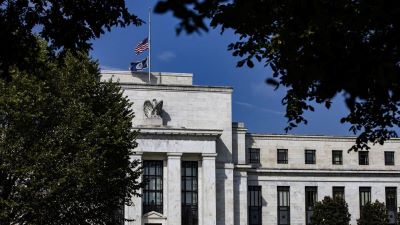
The dollar is entering the crypto age, and the U.S. government is poised to give its clearest signal yet on how that will happen.
The guidance will come through a trio of pending reports related to public and private efforts to digitize the world’s global reserve currency. First, the Federal Reserve Board will release a paper as soon as this month on the U.S. payments system that’s expected to provide direction on whether the country should issue a so-called central bank digital currency. Soon after, the Fed Bank of Boston will publish long-awaited research and open-source computer code on technology that could underpin a digital dollar. Finally, the President’s Working Group on Financial Markets is set to issue policy recommendations on how to regulate stablecoins, which are in effect digital dollars created by private companies.
When put together, the three reports will provide a road map for the broader financial community on how the Fed and Biden administration see the dollar’s crypto future playing out, the extent to which they embrace adoption of a digital currency and the guardrails they may see as necessary to protect individuals and investors in what’s now a largely unregulated corner of the market. What was once seen as a distant project has taken on an increased sense of urgency as the value of digital assets has exploded to about $2 trillion and other countries, such as China, move forward rapidly with plans for their own sovereign digital currencies.
ADVERTISEMENT
“This has gone from, ‘It’s an interesting idea,’ a few years ago to, ‘We need to have a pilot project,'” said Josh Lipsky, director of the Atlantic Council’s GeoEconomics Center, of a Fed-issued digital dollar.
The Fed Board’s paper is expected to focus on the U.S. payments system as well as the potential prospects of a Fed-issued digital currency. Over the past several months, U.S. central bankers have been divided over whether creating a digital dollar is wise, with Fed Vice Chair for Supervision Randal Quarles describing its benefits as “unclear” and its risks “significant and concrete.”
Proponents of creating central bank digital currencies, or CBDCs, say they can speed up payments, reduce their cost, and increase access to the financial system for the underbanked. There are also risks, though. A group of world central banks including the Fed, the Bank of England, and the European Central Bank last week issued a report warning that CBDCs could exacerbate bank runs by making it easier for depositors to clear out their cash during a crisis.
The ultimate issuance of a CBDC would take years and the Fed would prefer Congress to pass legislation authorizing its issuance, Fed Chair Jerome Powell has said.
The second paper, from the Boston Fed, could begin to set technological standards that would be important not just for the rollout of a U.S. digital currency, but for others already being developed around the world, said the Atlantic Council’s Lipsky.
Integration with the U.S. payments system is crucial to most countries’ economies, which means any guidance the Fed gives on what to do about privacy tradeoffs and other attributes could end up molding foreign efforts, Lipsky said.
While an official U.S. digital currency — if it happens — will take years to come about, a cadre of private companies, including Tether International Ltd. and Circle Internet Financial Inc., have launched their own versions, with tokens in circulation now worth more than $120 billion. That trend is what will be addressed by the third paper, which will be released by the President’s Working Group on Financial Markets, a collection of the leaders of U.S. agencies including the Fed and the U.S. Treasury Department.
Federal officials have expressed concern that the reserves of some stablecoins are invested in assets such as corporate bonds and related securities that could experience severe stress if investors were to lose confidence and attempt to cash in their stablecoins all at once. Powell and Securities and Exchange Commission Chair Gary Gensler have likened the coins to money market funds, which also seek to maintain a value of one dollar but during times of stress have sometimes failed.
The report is expected to recommend banklike regulation for stablecoin providers and for Congress to pass a bill establishing a new, limited type of charter to allow crypto banks to manage stablecoins as deposits, said a senior official involved with the report.
Such regulation could limit what stablecoin providers can do with their reserves, potentially constraining their profits in the name of greater investor protection. Some U.S. stablecoin companies such as Circle and Paxos Trust Company either plan to seek or already have a certain type of bank charter. In contrast, Tether — the issuer of the largest U.S. dollar stablecoin — has thus far chosen to try to avoid U.S. regulation and closes its platform to most U.S. customers.
Treasury officials briefed congressional staffers on their work as recently as last week and said they were targeting the release of their report for the coming weeks, said a person familiar with the briefing.
The Fed would have an “enormous competitive advantage” over private tokens if it launches its own digital dollar, Barclays Plc said in a September research report analyzing the case for a U.S. digital currency.
“Together with regulations, a Fed CBDC could crowd out private issue crypto,” the Barclays report said.
French President Emmanuel Macron must soon make the biggest decision for years to come on the makeup of the European Central Banks policymakers: whether to reappoint the Bank of France governor.
Francois Villeroy de Galhau’s six-year term expires at the end of October, and the head of state could determine as soon as this week if he should get another stint. Alternatively, Macron — who already reshaped the ECB by successfully pushing to appoint the first female president, Christine Lagarde — might opt to revamp it even further.
With Villeroy, 62, holding the seat granted to the euro area’s second-biggest economy at the Governing Council, the decision on his future is arguably the most significant before 2026, when governments must choose a successor to Vice President Luis de Guindos.
ADVERTISEMENT
The case to reappoint Villeroy is that he has established himself as a safe pair of hands in France, and a distinctive and influential voice at the ECB. Taking the bolder option of a new governor has its attractions too, not least before a presidential election for an incumbent who took office on an anti-establishment ticket, and who might be keen to burnish that credential.
“The default option and the path of least resistance would be to have Villeroy for the second term,” said Frederik Ducrozet, an economist at Banque Pictet in Geneva who, as a student, attended classes taught by Villeroy at Sciences Po in Paris. “That was the case in the past, if you didn’t make any obvious mistakes.”
The Bank of France and Macron’s office declined to comment on the potential reappointment.
Villeroy, a former chief operating officer at BNP Paribas, was selected by Francois Hollande, the French president Macron served under and then forsook to run for his own election in 2017.
Rather than reappoint a male veteran of France’s bureaucracy, who is also the scion of a porcelain manufacturing dynasty, Macron could pick a woman such as OECD Chief Economist Laurence Boone, who succeeded him as an economic adviser to Hollande. She would then be the only female national governor in the 19-member euro area.
France has no shortage of other esteemed economists, including Benoit Coeure, a former ECB Executive Board member who now heads the innovation hub at the Bank for International Settlements. Macron recently appointed him to review the government’s fiscal stimulus.
Villeroy, a Strasbourg-born German speaker, has fashioned a distinctive voice for France at the ECB, one he says is rooted in pragmatism rather than a hawkish or dovish camp.
Villeroy has been largely supportive of Macron’s domestic agenda, crediting the president’s overhauls of labor laws with faster hiring, and encouraging his efforts to improve training and education. On fiscal affairs meanwhile, the governor has been less critical of French deficits than predecessors.
He has even held up his record of modernizing the two-century-old Bank of France as an example to follow as the French state responds to frustrations in public consultations after the Yellow Vest protests.
Villeroy says his overhaul increased services, cut costs, and maintained a nationwide presence while reducing headcount from more than 12,000 when he arrived in 2015 to some 9,500 last year, fewer than Germany’s Bundesbank.
“We are making what citizens asked for in the Great Debate of 2019: a skilled public service close to the people, which is high performing and accessible,” Villeroy claimed in his 2021 book entitled Rediscovering Confidence in the Economy. “It’s possible, and that’s good news.”
Stocks rebounded from Mondays rout and Treasuries fell as investors assessed the state of the economy before a key payroll report Friday.
The S&P 500 and Nasdaq 100 gained — led by advances in megacap tech names — while the 10-year yield spiked to 1.53%. Investors are anxiously awaiting the latest labor market data for a signal on the Federal Reserve’s next move. An ISM reading on the U.S. services sector activity came in better than expected Tuesday, likely keeping the Fed on track to announce a pullback in bond-buying.
The gains helped ease concerns of a market correction as the S&P 500 rose back above its 100-day moving average. A wall of worry has been building amid elevated inflation, fading recovery indicators, a spreading energy crisis, and U.S. political bickering. The Nasdaq 100’s gain came after a measure of its relative strength fell to the lowest since March.
ADVERTISEMENT
“While some parts of the stock market have declined more than others, we still have a ways to go before reaching an actual correction in the major stock indexes,” said David Bahnsen, chief investment officer at Newport Beach, California-based wealth management firm The Bahnsen Group. “It is impossible to get overly worried about these incredibly modest market declines, which are mostly concentrated in highly overpriced technology stocks.”
The S&P 500 information technology sector is down about 6% from a high in August as rising inflation and Treasury yields have prompted a rotation out of high-growth companies trading at a premium. Meanwhile, the energy sector is up 17% from a low in September as Europe braces for a winter energy crunch. European natural gas contracts soared on Tuesday to an unprecedented 114 euros per megawatt-hour, compared with 15.49 euros in February. Crude oil in New York also gained for a fourth day.
“I think we’re going to most likely continue this pattern of pretty rapid sector shifts,” said Liz Ann Sonders, chief investment strategist at Charles Schwab. “You’ve got these rotational corrections that have been happening under the surface, and yes, the deterioration has been more significant recently in the Nasdaq, but throughout the course of this year, you’ve seen various periods where breadth deterioration was more severe in areas like the Nasdaq or small cap.”
The latest Fed commentary ahead of the U.S. nonfarm-payrolls data came on Monday from St. Louis Fed President James Bullard who said elevated price pressures may be changing the mentality of businesses and consumers by making them more accustomed to higher inflation.
“The non-farm payrolls report will be released on Friday and will give us a sense of how the Delta variant has impacted the employment environment,” said Lauren Goodwin, economist and portfolio strategist at New York Life Investments. “We don’t expect the report to have a meaningful market impact; covid-19 cases are also on the decline again, and Federal Reserve communication points to reducing their market support as long as the report is ‘decent.'”
The dollar rose, rebounding from a three-day sell-off. Bitcoin extended a rally, surpassing the $50,000 mark. And equities in Europe and Hong Kong rose, while those in Japan fell.
For more market analysis, read our MLIV blog.
Some of the main moves in markets:
Stocks
– The S&P 500 rose 1.1% as of 4:01 p.m. EDT
– The Nasdaq 100 rose 1.4%
– The Dow Jones industrial average rose 0.9%
– The MSCI World index rose 0.7%
Currencies
– The Bloomberg Dollar Spot Index rose 0.2%
– The euro fell 0.2% to $1.1599
– The British pound rose 0.1% to $1.3625
– The Japanese yen fell 0.5% to 111.46 per dollar
Bonds
– The yield on 10-year Treasurys advanced five basis points to 1.53%
– Germany’s 10-year yield advanced three basis points to -0.19%
– Britain’s 10-year yield advanced seven basis points to 1.08%
Commodities
– West Texas Intermediate crude rose 2.1% to $79.22 a barrel
A Cabinet meeting on Tuesday has approved the establishment of six new special economic zones in the Eastern Economic Corridor (EEC), said deputy government spokeswoman Ratchada Thanadirek.
“The move was proposed by EEC Policy Committee with an aim to utilize available areas in the EEC of 15,836 rai for industrial and trading purposes,” she said. “The project will cover the areas of 5,458 rai and use a budget of Bt300.77 billion over the period of ten years (2021-2030).”
The new special economic zones are:
Rojana Laem Chabang Industrial Estate, Chonburi province (698 rai). It is expected to support modern automotive, smart electronic, aviation and logistics industries.
Rojana Nong Yai Industrial Estate, Chonburi province (1,501 rai). It is expected to support modern automotive, smart electronic, aviation and logistics industries.
Asia Clean Industrial Estate, Chonburi province (978 rai). It is expected to support modern automotive, smart electronic, agricultural and biotechnological industries.
Egco Industrial Estate, Rayong province (421 rai). It is expected to support modern automotive, robotics, digital, aviation and logistics industries.
WHA Industrial Estate, Rayong province (1,498 rai). It is expected to support modern automotive, robotics, aviation and logistics industries.
Banchang Digital Innovation and High Technology Centre, Rayong province (519 rai).
The Cabinet also approved the motion to increase the areas of Thammasat University EECmd Centre, a special economic zone that serves as a medical hub in Chonburi province by 18 rai, bringing the total areas of the centre to 585 rai.
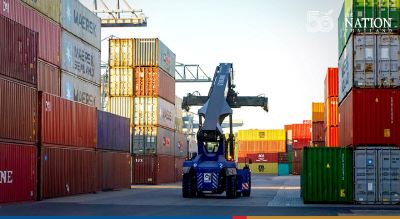
With the economies of most major trading partners like the US, China, European Union and Japan showing signs of recovery, the Thai National Shippers’ Council (TNSC) believes exports will grow by 12 per cent in the last quarter.
TNSC chairman Chaichan Charoensuk said if the Covid-19 outbreak can be controlled then Thailand can expect to earn up to US$22 billion from exports in the last three months of the year.
However, he warned export growth may be affected if the authorities are unable to contain the virus and fully inoculate at least 50 million people by yearend.
Another obstacle is the rising freight rate, which may remain high until the end of 2022 especially for shipments to the EU and US. Also, additional costs such as peak season surcharge (PSS) may affect the cost of goods, as will the shortage of containers and storage space.
The Stock Exchange of Thailand (SET) Index closed at 1,624.24 on Tuesday, up 9.76 points or 0.60 per cent. Transactions totalled 88.96 billion baht with an index high of 1,626.44 and a low of 1,611.42.
The index rose for the second day running after rising almost 1 per cent on Monday.
In the morning session, Krungsri Securities predicted the day’s index would fluctuate between 1,605 and 1,625 points despite rising oil price after the Opec+ panel recommended proceeding with gradual supply hikes.
ADVERTISEMENT
It added that the index also gained positive sentiment from rising coal price and hopes over Thailand reopening after the domestic Covid-19 cases continued to decline.
“However, uncertainty over higher inflation that would trigger the US Federal Reserve to taper its quantitative easing and raise the interest rate sooner than expected would pressure the index’s fund flow,” Krungsri Securities said.
The 10 stocks with the highest trade value today were SVT, KBANK, AOT, TRUE, GULF, BANPU, GUNKUL, CPALL, PTTEP and PTT.
Other Asian indices were mixed: Japan’s Nikkei Index closed at 27,822.12, down 622.77 points or 2.19 per cent. Hong Kong’s Hang Seng Index closed at 24,104.15, up 67.78 points or 0.28 per cent. South Korea’s KOSPI Index closed at 2,962.17, down 57.01 points or 1.89 per cent. Taiwan’s TAIEX Index closed at 16,460.75, up 52.40 points or 0.32 per cent.
China’s Shanghai SE Composite and Shenzhen SE Component Indices were closed for National Day.