
U.S. considers cutting trade with China’s biggest semiconductor manufacturer #ศาสตร์เกษตรดินปุ๋ย

#ศาสตร์เกษตรดินปุ๋ย : ขอบคุณแหล่งข้อมูล : หนังสือพิมพ์ The Nation.

U.S. considers cutting trade with China’s biggest semiconductor manufacturer

EconSep 06. 2020
By The Washington Post · Jeanne Whalen · NATIONAL, BUSINESS, WORLD, TECHNOLOGY, POLITICS, ASIA-PACIFIC 
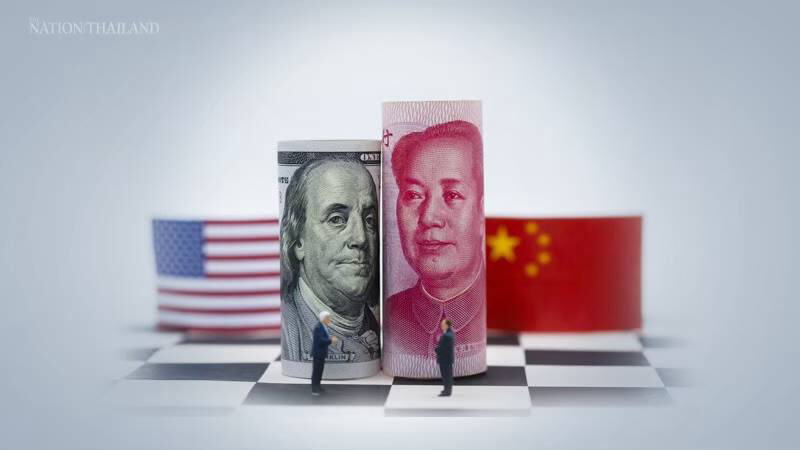
WASHINGTON – The Trump administration is considering adding China’s largest semiconductor manufacturer to a trade blacklist, in another sign of heightening U.S.-China technology tensions.

The Defense Department said it is working with other agencies to determine whether the “actions” of Semiconductor Manufacturing International Corporation, or SMIC, warrant adding the company to the so-called Entity List, which would block U.S. companies from selling SMIC technology without a license.

“Such an action would ensure that all exports to SMIC would undergo a more comprehensive review,” Pentagon spokeswoman Sue Gough said by email Saturday, confirming an earlier report by Reuters.

Gough declined to comment on the reasons for the review. The Pentagon in the past has warned that China’s efforts to develop corporate strength in technologies including semiconductors would be likely to benefit the People’s Liberation Army.

A report last month by SOS International, a defense contractor in Reston, Va., said that SMIC has a variety of ties to China’s defense sector, including an ongoing relationship with CETC, a state-owned developer of military electronics. SMIC has helped CETC test new manufacturing technologies, and has used CETC technologies in its own manufacturing, according to the report, details of which were earlier reported by The Wall Street Journal. SOS also said Chinese military researchers have disclosed in research papers using SMIC technology to manufacture chips.

SMIC officials didn’t respond immediately to a request for comment.

The Entity List, overseen by the Commerce Department, has become a favorite Trump administration tool to crack down on China and now includes more than 300 Chinese entities.

The Trump administration has previously used it against Chinese telecom company Huawei, against entities engaged in alleged human rights violations in China’s Xinjiang region, and most recently against Chinese companies allegedly involved in building controversial islands in the South China Sea.

Founded in 2000 in Shanghai, SMIC ranks among the top five semiconductor manufacturers in the world, according to a report from the United States International Trade Commission, or USITC.

Industry experts say SMIC’s technology lags behind that of chip manufacturers in Taiwan and the United States, but Beijing is pouring billions into the industry to help SMIC and other Chinese companies catch up.

SMIC has enjoyed generous government financial support, including low-interest loans, tax breaks and investments to help build manufacturing facilities, the Organization for Economic Cooperation and Development in Paris said in a report last year.

Western industry experts say that China’s semiconductor companies, while growing, are still reliant on some U.S. technology, including software and manufacturing equipment needed to make chips.

SMIC started as a private company, but state ownership has steadily grown over time, to more than 45% of SMIC stock as of 2018, according to the OECD report.

SMIC’s shares used to trade on the New York Stock Exchange, but the company removed its stock from the NYSE last year. The shares now trade on the Shanghai and Hong Kong exchanges.

In 2018, the U.S. added a different Chinese chip maker, Fujian Jinhua Integrated Circuit Company, to the Entity List, saying it posed a “significant risk of becoming involved in activities that are contrary to the national security interests of the United States.”

Around the same time, the U.S. accused state-owned Fujian Jinhua of stealing commercial secrets from U.S. semiconductor company Micron.

A federal indictment alleged that Fujian Jinhua was part of a conspiracy to use Micron employees in Taiwan to steal sensitive data related to the design and production of so-called DRAM chips, which are used by the defense industry. The Chinese company denied the allegations.

In blacklisting the company, the Commerce Department said Fujian Jinhua’s plans to manufacture DRAM chips threatened “the long term economic viability of U.S. suppliers of these essential components of U.S. military systems.”

Surge in gold export makes up for overall slump in demand for gems and jewellery #ศาสตร์เกษตรดินปุ๋ย

#ศาสตร์เกษตรดินปุ๋ย : ขอบคุณแหล่งข้อมูล : หนังสือพิมพ์ The Nation.

Surge in gold export makes up for overall slump in demand for gems and jewellery

EconSep 05. 2020Sumed Prasongpongchai, deputy director of the Gem and Jewellery Institute of Thailand (Public Organisation)Sumed Prasongpongchai, deputy director of the Gem and Jewellery Institute of Thailand (Public Organisation) 

By The Nation

Thai export of gems and jewellery in the first seven months of this year rose 33.73 per cent compared to last year, bouyed by the demand for gold, Sumed Prasongpongchai, deputy director of the Gem and Jewellery Institute of Thailand (Public Organisation), said.

The export accounted for US$12.069 billion, or 9.06 per cent, of the country’s total exports.

However, excluding gold, the export of gems and jewellery during the period dropped 41.87 per cent to $2.576 billion.

Gold export in the period skyrocketed 106.72 per cent to $9.492 billion, accounting for 78.65 per cent of the total gems and jewellery exports. During the period the global demand for gold surged, as people rushed to seek the safe-haven asset during the economic crisis.

Export of silver and gold ornaments dropped 8.29 per cent and 45.18 per cent, respectively.

He added that worries of a second wave of the Covid-19 outbreak and the strengthening baht remain risk factors for gems and jewellery exports.

Gold price falls from strong US nonfarm payrolls #ศาสตร์เกษตรดินปุ๋ย

#ศาสตร์เกษตรดินปุ๋ย : ขอบคุณแหล่งข้อมูล : หนังสือพิมพ์ The Nation.

Gold price falls from strong US nonfarm payrolls

EconSep 05. 2020

By The Nation

The price of gold dropped by Bt100 per baht weight in morning trade on Saturday (September 5), the Gold Traders Association reported.

As of 9.32am, the buying price of a gold bar was Bt28,600 per baht weight and selling price Bt28,700, while gold ornaments were priced at Bt28,091.42 and Bt29,200, respectively.

At close on Friday (September 4), the buying price of a gold bar was Bt28,700 per baht weight and selling price Bt28,800 while gold ornaments were priced at Bt28,182.44 and Bt29,300, respectively.

The Comex (Commodity Exchange) gold price to be delivered in December dropped by US$3.5, or 0.18 per cent, closing at $1,934.3 (Bt60,736.36) per ounce on Friday. The price dropped by 2.1 per cent this week.

Gold closed in negative territory due to mass sell-offs of the precious metal after the US showed strong nonfarm payrolls.

Big Tech slump drags stocks to 2-week low #ศาสตร์เกษตรดินปุ๋ย

#ศาสตร์เกษตรดินปุ๋ย : ขอบคุณแหล่งข้อมูล : หนังสือพิมพ์ The Nation.

Big Tech slump drags stocks to 2-week low

EconSep 05. 2020

By Syndication Washington Post, Bloomberg · Claire Ballentine, Vildana Hajric · BUSINESS

U.S. stocks bounced back from a sharp sell-off but still closed at a two-week low as megacap tech shares sold off.

Losses for Amazon.com, Microsoft Corp. and Facebook Inc. pushed the tech-heavy Nasdaq 100 down more than 5% at one point, though it pared those declines to just over 1% as the day wore on and investors spotted bargains. Gains in financial shares limited losses in the S&P 500 Index, which ended the week down 2.3% at the lowest level since Aug. 21.

Treasury yields jumped while the dollar slipped. Oil fell below $40 a barrel to reach the lowest since late June.

The worst of Friday’s stock sell-off appeared to stem from concern that the recent run-up in tech shares wasn’t tied to broad investor sentiment, but instead was driven by outsize options trades from one firm. The Financial Times reported that SoftBank bought billions of dollars in tech derivatives before the rout that began Thursday.

Traders are seeking to find an appropriate valuation for tech stocks and gauge the health of the U.S. economy as the coronavirus pandemic rages on after having killed more than 180,000 Americans. While the industry is generating blockbuster profits during the stay-at-home lockdowns, there’s also evidence that highflying names have become overheated.

“It’s those crowded names that were over-owned that are being sold again,” said Dan Russo, chief market strategist at Chaikin Analytics. “It’s the lofty valuations, the stocks just were stretched.”

Elsewhere, emerging-market stocks fell for a third day. European shares slumped. Asian shares dropped, with Australia’s benchmark recording the biggest decline since May.

Here are the latest market moves:

Stocks

– The S&P 500 Index fell 0.8% at 4 p.m. EDT.

– The Nasdaq 100 Index fell 1.3%.

– The Stoxx Europe 600 Index fell 1.1%.

– The MSCI Asia Pacific Index dropped 1.2%.

Currencies

– The Bloomberg Dollar Spot Index fell 0.1%.

– The euro was little changed at $1.1847.

– The Japanese yen was little changed at 106.21 per dollar.

Bonds

– The yield on 10-year Treasurys increased eight basis points to 0.71%.

– Germany’s 10-year yield rose two basis points to -0.48%.

– Britain’s 10-year yield climbed three basis points to 0.26%.

Commodities

– West Texas Intermediate crude fell 4.5% to $39.51 a barrel.

– Gold rose 0.2% to $1,935.23 an ounce.

– Silver rose 1.3% to $26.93 per ounce.

Tech sell-off seen as removal of froth, not a warning sign #ศาสตร์เกษตรดินปุ๋ย

#ศาสตร์เกษตรดินปุ๋ย : ขอบคุณแหล่งข้อมูล : หนังสือพิมพ์ The Nation.

Tech sell-off seen as removal of froth, not a warning sign

EconSep 04. 2020

By Syndication Washington Post, Bloomberg · Joanna Ossinger · BUSINESS

The technology sell-off was speculative excess coming off a hot market, rather than the beginning of a broader pullback.

That’s the consensus view of investors and strategists after Thursday’s 5.2% plunge in the Nasdaq 100 Index, the worst since March.

With the pandemic continuing to rage and a vaccine likely months away, bulls say there are plenty of good reasons why technology shares can be supported at current levels, despite lofty valuations.

“Yes, today was a bad day. Ripe for profit-taking, but even with the 3% to 5% drop markets are still at impressive levels,” said Larry Peruzzi, director of international trading at Mischler Financial. The monthly jobs report — a key data point amid Covid times — comes out Friday morning U.S. time and that “could restart the rally” if it’s much better than expected, he said.

Volumes and engagement might be lower ahead of the Labor Day holiday in the U.S., which will keep markets closed on Monday, he noted.

“Many market narratives have focused on the low put/call ratios on some key big-cap tech and tech index levels as a sign of complacency,” said Michael Purves, CEO of Tallbacken Capital Advisors LLC. “But while these put-call ratios reflect a bullish frenzy, Apple and Tesla being key examples, they don’t necessarily have to portend some enormous market vulnerability.”

“Under-protected trending assets can have widespread implications that can bleed over into all assets — the financial crisis of 2008 being an extreme example of this condition,” he said. “But the data suggests that put buying has been robust, just not as robust as the call buying has been.”

Stifel Nicolaus & Co.’s head of institutional equity strategy, Barry Bannister, offers a case for further gains in valuations — though he warned the path is fraught.

“The current market level is pivotal: the cyclically adjusted price-to-earnings multiple of the S&P 500 is knocking at the doorstep of the same point at which CAPE broke out in the last two years of the most powerful bull markets of the past century, the late 1920s and late 1990s,” he said.

“If CAPE does break out, the building (and inevitable bursting) of a bubble could make the market a ‘greater fool game’ challenge in the near-term and a modest return vehicle longer term,” he added. “The mega-bull case: Combinations of equity risk premium and 10-year TIPS produce much higher S&P 500 fair values.”

“When it comes to the tech sector and the other online giants that have gained so much in the last few months, there could be profit taking as we head toward the U.S. presidential election in November,” said JPMorgan Asset Management strategist Kerry Craig. “Negative headlines on potential regulatory and tax changes are likely to add to investor unease in a market with elevated valuations.

“However, this is unlikely to be a repeat of the tech wreck of the late 1990s, given how much the market and sector have changed,” he added.

“While tech sector valuations are elevated, we are also mindful of the earnings and revenue potential in the coming years from areas like cloud computing and artificial intelligence, as well as how many of these companies will benefit from the shifts in corporate attitudes toward physical workplaces,” he said.

Still, other strategists pointed to areas that continued to concern them.

“If more positive announcements regarding a viable and effective vaccine are forthcoming, as expected, selling in technology could continue as funds raised will be allocated across the sectors most closely associated with the other side of the pandemic,” said Quincy Krosby, chief market strategist at Prudential Financial Inc.

Rising volatility and correlation could trip markets, according to Olivier D’Assier, head of applied research for Asia-Pacific at Qontigo GmbH.

“There is a lot of short-term liquidity in the market now because of all the quantitative easing programs, but this liquidity has a low risk tolerance,” he said. “If volatility rises and correlation takes away their ability to construct a well-diversified portfolio, they will pull it out of equities and back into liquid, safe, Treasury bonds.”

“Our view is that this sell-off centered on tech stocks has mostly to do with buying fatigue setting in, and that it represents a spontaneous adjustment in response to how the market’s giddiness caused a heavy concentration of buying to be directed at certain popular stocks,” wrote Masanari Takada, cross-asset strategist at Nomura Holdings Inc. in a note.

“It may be that a bullish narrative built around what the post-pandemic world might look like is distorting not only stock prices, but also the earnings forecasts that supposedly justify those stock prices.”

U.S. jobless rate declined to 8.4% in August, extending rebound #ศาสตร์เกษตรดินปุ๋ย

#ศาสตร์เกษตรดินปุ๋ย : ขอบคุณแหล่งข้อมูล : หนังสือพิมพ์ The Nation.

U.S. jobless rate declined to 8.4% in August, extending rebound

EconSep 04. 2020

By Syndication Washington Post, Bloomberg · Reade Pickert · BUSINESS 
The U.S. labor-market rebound extended for a fourth month in August, offering hope that the economy can continue to recover despite a persistent pandemic and Washington’s standoff over further government aid to jobless Americans and small businesses.

Non-farm payrolls increased by 1.37 million, including the hiring of 238,000 temporary Census workers, according to a Labor Department report Friday. The unemployment rate fell by more than expected, by almost 2 percentage points, to 8.4%.

Yields on 10-year Treasurys rose after the report, while U.S. stock futures reversed losses and the dollar fluctuated.

The median estimates in a Bloomberg survey of economists called for a 1.35 million gain in non-farm payrolls and an unemployment rate of 9.8%.

The data signal progress in the labor market is continuing though at a more moderate pace since the initial bounceback in hiring, with payrolls remaining about 11.5 million below the pre-pandemic level. The pace of further gains likely hinges on whether America improves control of coronavirus infections, as well as an end to the stalemate in Congress over another stimulus package.

The payroll figures showed broad-based gains across industries. Retail added about 249,000 jobs, more than in the prior month, while professional business services increased by 197,000 and transportation and warehousing was up about 78,000.

But the gains in leisure and hospitality businesses, such as restaurants, that had driven prior months cooled significantly in August with a rise of 174,000, compared with 621,000 in July.

The much better-than-expected improvement in the jobless rate spanned demographic groups, though White and Hispanic Americans saw larger declines in the rate compared with Asian and Black Americans.

The gender gap also narrowed. Among adult women, the unemployment rate fell 2.1 percentage points to 8.4%, compared with a 1.4-point drop among men, to 8%.

Economy adds 1.4 million jobs in August, unemployment rate below 10% for first time since the pandemic took hold #ศาสตร์เกษตรดินปุ๋ย

#ศาสตร์เกษตรดินปุ๋ย : ขอบคุณแหล่งข้อมูล : หนังสือพิมพ์ The Nation.

Economy adds 1.4 million jobs in August, unemployment rate below 10% for first time since the pandemic took hold

EconSep 04. 2020

By The Washington Post · Eli Rosenberg · NATIONAL, BUSINESS, US-GLOBAL-MARKETS 
WASHINGTON – The U.S. economy added 1.4 million jobs in August, sending the unemployment rate below 10% for the first time since the pandemic began, a glimmer of good news as the pandemic continues its march across the country.

The unemployment rate fell to 8.4%. 

Analysts had expected job gains of around that amount, as the economy has shown signs of rebounding from the economic carnage left by closures aimed to stem the spread of the coronavirus.

The report is likely to influence the political debate about whether to reauthorize more aid for businesses and the unemployed, when Congress returns from its recess this month. It could also play a central role in the presidential race.

Economists say that they are still concerned about the job market’s long term prospects because of the expiration if some of the aid programs passed by Congress in the Spring.

Exim Bank launches scheme to help businesses with post-Covid-19 recovery #ศาสตร์เกษตรดินปุ๋ย

#ศาสตร์เกษตรดินปุ๋ย : ขอบคุณแหล่งข้อมูล : หนังสือพิมพ์ The Nation.

Exim Bank launches scheme to help businesses with post-Covid-19 recovery

EconSep 04. 2020

By The Nation

The Export-Import Bank of Thailand (Exim Thailand) has launched a business rehabilitation scheme for specific clients, by using its “support-relax-extend-sustain” approach.

Exim Thailand president Pisit Serewiwattana said that the persistence of Covid-19 across the world had hindered economic activities in almost all sectors. The International Monetary Fund and World Bank have predicted global GDP contraction of 4.9 per cent and 5.2 per cent in 2020 respectively, the highest contraction in more than 90 years.

Such drastic global economic contraction has dampened Thai export, particularly that of small and medium enterprises (SMEs), which are normally vulnerable to surrounding uncertainties and crises, as reflected in SMEs’ export value shrinkage of 17.9 per cent in the first six months of 2020, which was higher than a 7.1 per cent shrinkage in total Thai export value in the same period of the previous year.

Exim Thailand therefore has launched “Post-Covid-19 Business Rehabilitation for Entrepreneurs Scheme” to assist, support and take care of four groups of clients based on their requirements. They are:

▪︎Entrepreneurs with growth prospects:

Exim Thailand will “support” them to ensure their liquidity adequacy and consistent loan repayment capability.

▪︎Entrepreneurs with decline in revenues but continuity in business operation:

Exim Thailand will “relax” loan conditions to enable them to fully settle debts or request new credit facilities.

▪︎Entrepreneurs requiring extension of loan repayment period:

Exim Thailand will “extend” loan repayment period or partially restructure principal and interest payment for them pending their post-crisis recovery.

▪︎Entrepreneurs with shortage of liquidity for business operation:

Exim Thailand will “sustain” their businesses by way of debt restructuring for them, which will help slow down non-performing loan.

Exim Thailand’s clients may apply for extension of loan repayment period, change in loan conditions to suit their business operation, and additional credit lines from August 3 until December 31, 2021.

He added that Exim Thailand had kept itself abreast with the Covid-19 situation and itself found that over 20 per cent of its clients earlier granted suspension of principal and interest payment for up to six months since February 2020 have yet to be able to make instalment payment of principal and interest. They would like the bank to relax loan conditions and extend the loan repayment period.

Some of them can further operate their businesses but additional capital is needed, while others still lack liquidity for their continued operation. Exim Thailand said it was ready to fulfil their liquidity requirement and carry out debt restructuring for them as required.

Several factors may pull down SET Index next week, analysts say #ศาสตร์เกษตรดินปุ๋ย

#ศาสตร์เกษตรดินปุ๋ย : ขอบคุณแหล่งข้อมูล : หนังสือพิมพ์ The Nation.

Several factors may pull down SET Index next week, analysts say

EconSep 04. 2020

By The Nation

Investors have been advised to keep an eye on the domestic political situation, additional economic stimulus measures, Covid-19 situation and tensions between US and China as it could affect the Stock Exchange of Thailand (SET) Index next week.

The SET Index on Thursday (September 3) closed at 1,311.95, down 0.86 per cent from the previous week, while total transactions stood at Bt49.165 billion, down 8.59 per cent from the previous week.

Meanwhile, the Market for Alternative Investment (mai) closed at 312.95, up 0.70 per cent from the previous week.

An analyst at Kasikorn Securities said the index fell at the start of the week due to foreign investors’ mass sell-offs in stocks, especially of banks and energy groups, after the MSCI cut investments in Thai shares from August 31 and uncertainty followed domestic political unrest.

“The index then rebounded in the middle of this week from economic stimulus measures, especially measures to stimulate spending before falling later in the week due to mass sell-offs to reduce risks before a long holiday, while investors were closely following the situation between US and China, as well as the political situation in Thailand,” the analyst said.

Next week, the analyst said he expects the index’s support line to be between 1,285 and 1,300 and the resistance line between 1,325 and 1,335.

“We recommend following the domestic political situation, additional economic stimulus measures, Covid-19 situation and tensions between US and China,” he said.

“Internationally, we advise following US consumer and producer price indices in August, the European Central Bank’s meeting, Japan and Europe’s second-quarter gross domestic product and China’s economic data in August.”

Thai gold price rises despite fall in US price #ศาสตร์เกษตรดินปุ๋ย

#ศาสตร์เกษตรดินปุ๋ย : ขอบคุณแหล่งข้อมูล : หนังสือพิมพ์ The Nation.

Thai gold price rises despite fall in US price

EconSep 04. 2020

By The Nation

The price of gold rose by Bt100 per baht weight in morning trade on Friday (September 4), the Gold Traders Association reported.

As of 9.29am, the buying price of a gold bar was Bt28,750 per baht weight and selling price Bt28,850, while gold ornaments were priced at Bt28,227.92 and Bt29,350, respectively.

At close on Thursday (September 3), the buying price of a gold bar was Bt28,650 per baht weight and selling price Bt28,750 while gold ornaments were priced at Bt28,136.96 and Bt29,250, respectively.

The Comex (Commodity Exchange) gold price to be delivered in December dropped by US$6.9, or 0.35 per cent, closing at $1,937.8 (Bt60,841.28) per ounce yesterday.

Gold price closed in negative territory due to mass sell-offs of the precious metal after the US showed strong economic data and Wall Street saw a sharp fall.