Phuket hotels ‘need immediate help to survive upcoming high season’ #ศาสตร์เกษตรดินปุ๋ย

#ศาสตร์เกษตรดินปุ๋ย : ขอบคุณแหล่งข้อมูล : หนังสือพิมพ์ The Nation.

Phuket hotels ‘need immediate help to survive upcoming high season’

EconSep 08. 2020Anthony Lark, President of the Phuket Hotels Association that represents 78 hotels in Phuket Anthony Lark, President of the Phuket Hotels Association that represents 78 hotels in Phuket 

By The Nation

Phuket’s hotel industry is reaching breaking point and the government needs to step in and offer serious economic support to help it survive the upcoming high season, industry leaders said.

Despite plans to reopen the island to international travellers under the “Phuket Model”, reality is biting back as hotels are unable to sustain operating viability based on domestic tourism.

According to the Airports of Thailand (AOT), arrivals have dropped 65 per cent year on year in the first seven months of this year.

What is clear is that the 86,000 rooms in Phuket’s registered accommodation establishments cannot realistically break-even or even be cash-flow positive with only domestic demand. This realistically could set the scene for 50,000 job losses in the hotel sector this year if there’s no support forth coming or international visitors are not allowed in.

One of the green shoots is the government’s Alternative Local State Quarantine (ALSQ) programme, for which more than 60 properties have applied. While this scheme is meant to emulate the ASQ programme in Bangkok, it will not help unless the government ensures the return of international travellers. Though this may take months to materialise.

Anthony Lark, president of the 78-property strong Phuket Hotels Association, said: “The math simply doesn’t work with single-digit occupancies being reported. No amount of induced local demand can prevent the continued loss of jobs and rapidly eroding financial crisis for owners and operators. We strongly advocate a safe, pragmatic, and strategic reopening for foreign travellers.”

Data recently released by hospitality consulting group C9 Hotelworks also showed that 69 per cent of hotel development plans in the pipeline have been delayed or put on hold.

As of the end of 2019, there were 1,758 licensed accommodation establishments on the island, while today incoming projects stand at 58 hotels or just a 19 per cent increase in supply with 16,476 additional rooms planned.

“Thailand’s failure to relaunch overseas tourism creates a dangerously perilous scenario for Phuket’s hospitality industry,” said C9 Hotelworks managing director Bill Barnett.

“The domino financial impact is not only on hotels and the expanded tourism sector, but it suffocates the development pipeline. This will negatively trigger the erosion of jobs in construction, real estate, retail and ultimately be manifested in consumer credit defaults. The situation is bad, and likely to get worse, as operating hotels remain incur losses day in and day out.”

While a stark warning was issued last week by the Bank of Thailand (BOT) over the potential disruption to the tourism-dependent country, Phuket faces an even bigger challenge in the upcoming high season.

“Any reopening plan must not only be well planned but has to win the hearts and minds of the Thai people to see any chance of success. While the island may hold the keys to the Kingdom in leading a restoration of tourism, the more critical issue is how hotels can fight for their lives in the current state of limbo,” Barnett said.

“Firstly, greater proactive dialogue between the public and private sector has to be undertaken. We can’t simply say we are now in unknown territory forever. Steps must be taken and a single voice formed,” Lark added.

“Secondly, the central has to look at interim measures to assist hotels with short-term operating bridge loans to weather the storm and retain jobs. Tourism is a human endeavour and without protecting and nurturing our Thai workforce there will be no recovery.”

Exports plunge over 11% this July #ศาสตร์เกษตรดินปุ๋ย

#ศาสตร์เกษตรดินปุ๋ย : ขอบคุณแหล่งข้อมูล : หนังสือพิมพ์ The Nation.

Exports plunge over 11% this July

EconSep 08. 2020

By The Nation

Thailand’s exports in July this year dropped 11.37 per cent year on year to US$18.82 billion, while imports plunged 26.38 per cent year on year to $15.48 billion, the Thai National Shippers’ Council chairperson Ghanyapad Tantipipatpong said.

Exports in the first seven months of this year dipped 7.72 per cent year on year to $133.16 billion, while imports contracted 14.69 per cent year on year to $119.118 billion.

The council has maintained its export forecast of minus 10 per cent this year on the assumption that the baht’s exchange rate will remain at around Bt31.5 per US dollar.

Host of borrowers struggling from Covid-19 fallout apply for second debt-relief scheme #ศาสตร์เกษตรดินปุ๋ย

#ศาสตร์เกษตรดินปุ๋ย : ขอบคุณแหล่งข้อมูล : หนังสือพิมพ์ The Nation.

Host of borrowers struggling from Covid-19 fallout apply for second debt-relief scheme

EconSep 08. 2020Ronadol Numnonda, BOT deputy governorRonadol Numnonda, BOT deputy governor 

By The Nation

The Bank of Thailand (BOT) said some 85 per cent of retail debtors struggling in the fallout of Covid-19 have applied for the second-phase of debt relief, while Kasikornbank projects 60 to 70 per cent of debtors will be able to start repaying their debts once the subsidy wraps up.

Ronadol Numnonda, BOT deputy governor, said many businesses have been hit hard by the Covid-19 outbreak, especially tourism-related services such as hotels, airlines and car-rent companies, which are unlikely to rebuild any time soon as the arrival of 40 million tourists is a thing of the past. 

He said that there is an oversupply in tourism-related industries, adding that the government and private sector need to find solutions to support and remodel these businesses and restructure their debts. 

Financial institutions, namely commercial banks as well as specialised and non-banking financial institutions, have implemented several rescue packages for their debtors. 

As of the end of July, up to Bt7.2 trillion has been spent on providing financial relief to 12.52 million borrowers. Of this, Bt4.25 trillion was provided by commercial banks and non-banking entities to ease the burden for 6.12 million borrowers. 

Financial relief includes debt moratorium, debt restructuring, interest rate cuts, refinancing and new soft loans.

State-run banks, meanwhile, provided support to 6.41 million borrowers holding debts worth a total of Bt2.94 trillion.

As of July 15, more corporate clients applied for financial relief, up about 0.15 per cent from the previous period, while 0.7 per cent fewer small businesses sought help.

Support worth Bt1.63 trillion was provided to 5.74 million retail debtors, marking a slight drop from applicants in the first phase. 

Now that banks and non-banking institutions are also offering financial support in the second phase, 85 per cent of old debtors and 15 per cent of new ones have applied for help. 

Most of the retail debtors who received support in the first phase and were able to start servicing their debt again were engaged in hire-purchase schemes, he said. 

Surat Leelataviwat, vice executive president at Kasikornbank, said the bank has helped 98,000 corporate clients whose loans are worth Bt600 billion. The second phase of financial support will run until the end of October, and Kasikornbank estimates that 60 to 70 per cent of these borrowers will resume their debt repayment. 

However, borrowers in the hotel and tour businesses will continue to need help as the industry has yet to return to normal. 

Kasikornbank has provided debt relief to 600,000 retail borrowers whose debt totals Bt190 billion. It expects some 70 per cent of them to be able to resume payments. 

Pikul Srimahan, senior vice president at Siam Commercial Bank, said the bank has provided support worth Bt800 billion, or 39 per cent of its total loans. This support includes debt moratorium, debt rescheduling and soft loans with 2 per cent per annum interest rate.

Kitiya Srisanit, chief of Krungsri Bank’s Krungsri Auto Group, said many businesses are gradually recovering from the Covid-19 fallout, adding that the bank has restructured or suspended the debts of 650,000 borrowers.

Meanwhile, 4.2 million consumer loan account holders participated in the first-phase of the debt-relief scheme and as of July 1, 10,000 applied for additional support. 

Separately, Krung Thai Bank has provided support to 200,000 clients so far, and believes another 2,500 corporate clients with a combined debt worth Bt150 billion may seek financial relief in the second phase.

Logistics industry decelerates under Covid-19 impact #ศาสตร์เกษตรดินปุ๋ย

#ศาสตร์เกษตรดินปุ๋ย : ขอบคุณแหล่งข้อมูล : หนังสือพิมพ์ The Nation.

Logistics industry decelerates under Covid-19 impact

EconSep 08. 2020

By The Nation

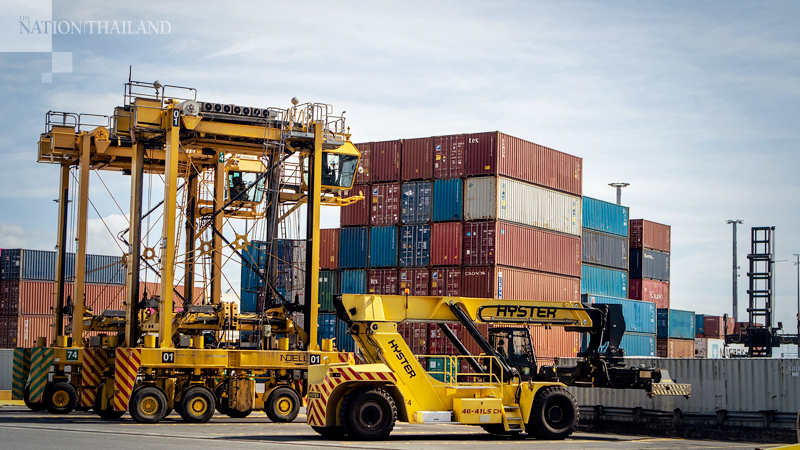
The logistics industry is expected to contract 10 per cent this year due to the economic downturn caused by the Covid-19 pandemic outbreak, the Thai Transportation and Logistics Association (TTLA) said.

TTLA chairman Chumpol Saichua added that usually the industry expanded every year in line with economic growth. The sector accounts for 14 per cent, or Bt2 trillion, of the country’s gross domestic product of Bt16 trillion.

Around 80 per cent of the country’s logistics system is land transport, 10 per cent waterway transport, 2 per cent track based and the rest aviation.

He added that the government should provide soft loans to the sector, as many of the operators are hardly able to access loans.

He said that now express delivery service is seeing a boom because of increasing online shopping. Most of the players in the express delivery service are foreign companies.

BOT says banks not doing enough to lower charges, loan conditions #ศาสตร์เกษตรดินปุ๋ย

#ศาสตร์เกษตรดินปุ๋ย : ขอบคุณแหล่งข้อมูล : หนังสือพิมพ์ The Nation.

BOT says banks not doing enough to lower charges, loan conditions

EconSep 08. 2020

By The Nation

The Bank of Thailand (BOT) wants commercial banks to respond to its relief measure by cutting their customer fees and easing loan conditions.

The central bank is monitoring how banks respond after it allowed them to reduce their contribution to the Financial Institutions Development Fund (FIDF), said Ronadol Numnonda, deputy governor at the Bank of Thailand.

Banks were recently permitted to halve their FIDF contributions from 0.46 to 0.23 per cent of their deposit base for two years, this year and next year.

“The central bank is interested in whether banks share this gain with customers, and we found that some banks still have room to do more,” Ronadol said.

The BOT has asked commercial banks to submit plans on how they will respond to their contribution reduction, for instance by cutting fees for cash payment, cutting interest rates, or reducing other charges for consumers, he said. Income from such fees contributes significantly to bank revenue, he pointed out.

“Banks have not yet fully transferred this cost-reduction gain to customers,” said Ronadol.

He added that banks have maintained resilience despite the Covid-19 impact, with an average BIS adequacy capital ratio of 19.2 per cent, compared with the minimum requirement of 8 per cent. The average ratio of reserves to non-performing assets is also high, at 144 per cent.

And in contrast in contrast to the 1997 financial crisis when people panicked and withdrew money, the current virus-hit economy has seen people depositing more money with banks, Ronadol said.

The BOT recently asked banks to conduct stress tests for their businesses over the next three years based on the projected 8.1 per cent economic contraction this year and a worst-case scenario of 12 per cent.

Meanwhile the BOT is seeking to speed up the Bt500-billion soft loan scheme for small and medium sized enterprises, since only Bt110 billion has been lent out so far. 

The BOT wants banks to lend more to existing debtors whose collateral value is much higher than their loans. Debtors who have borrowed money at a loan-to-value (LTV) ratio of 60 to 70 per cent should be able to access to soft loans, he said. Banks must explain why this group of debtors were not accessing soft loans, he added.

“Is it because the economy is recovering, so they don’t need more loans? Or because they don’t want to pay the 2 per cent interest rate?”, he asked.

The BOT wants to know in depth about this issue and banks are expected to explain within one or two weeks, he added.

Johnson warns E.U. not to expect compromise on trade talks #ศาสตร์เกษตรดินปุ๋ย

#ศาสตร์เกษตรดินปุ๋ย : ขอบคุณแหล่งข้อมูล : หนังสือพิมพ์ The Nation.

Johnson warns E.U. not to expect compromise on trade talks

EconSep 07. 2020Boris Johnson. MUST CREDIT: Bloomberg photo by Simon DawsonBoris Johnson. MUST CREDIT: Bloomberg photo by Simon Dawson 

By Syndication Washington Post, Bloomberg · Stuart Biggs · WORLD, EUROPE 

Boris Johnson will tell the European Union he’s prepared to walk away from trade talks rather than compromise on what he regards as a core principle of Brexit, and the feeling has grown on both sides that a breakthrough will prove impossible when negotiations resume in London this week.

The British prime minister will on Monday set the Oct. 15 European Council meeting as the deadline for a deal. And he’ll say the U.K. is prepared to end the Brexit transition period without one, if necessary, at year’s end – a scenario he’ll describe as a “good outcome,” his office said in an emailed statement.

“There is still an agreement to be had,” Johnson will say, pledging that his government will work hard through September and urging the bloc to “rethink” its positions. “But we cannot and will not compromise on the fundamentals of what it means to be an independent country to get it.”

A European diplomat, who spoke on the condition of anonymity according to policy, said informal consultations ahead of this week’s talks yielded no shift in positions. A second diplomat said the view in Brussels is that there’s a fight between Brexit realists and Brexit ideologues in the British government, and it’s uncertain which side will prevail.

Meanwhile a spokesperson confirmed that the government is “considering fall-back options” in case it cannot resolve “outstanding issues” in the Brexit withdrawal agreement related to Northern Ireland.

The Financial Times reported that a planned internal market bill to ensure smooth trade between the four U.K. nations will override key parts of the withdrawal agreement on state aid and Northern Ireland customs – a move people familiar with the plans told the newspaper will undermine prospects of a trade deal.

The U.K. will revert to trading with its biggest market on terms set by the World Trade Organization if there’s no agreement in place by Dec. 31. That means the return of certain tariffs and quotas, as well as extra paperwork for businesses. Though the British government describes that as an “Australia-style” agreement, it’s an outcome feared by British businesses who warn of severe disruptions to vital just-in-time supply chains.

– – –

On Monday, Johnson will say that in the absence of a deal, the U.K. will be “ready to find sensible accommodations on practical issues,” including aviation, haulage, and scientific cooperation, according to his office.

The two sides have been at an impasse for months over state aid and fisheries. The European Union is seeking to keep the access its fisherman currently have to U.K. waters to protect jobs and coastal communities, while Britain wants reduced access for E.U. boats and to make it conditional on regular negotiations.

On state aid, or “level-playing-field regulations,” Johnson’s government wants the freedom to chart its own course, while the European Union is demanding to know what the British government plans to ensure fair competition.

Negotiators have scheduled eight-hours of talks on both issues this week, according to an agenda published on Friday.

On Sunday, Foreign Secretary Dominic Raab accused the bloc of trying to undermine the U.K.’s Brexit decision by keeping it bound to the rules of the European Union’s single market.

– – –

“This week is an important moment for the E.U. to really effectively recognize that those two points of principles are not something we can just haggle away – they are the very reasons we are leaving the E.U.,” Raab told Sky News. He said the issue of state aid is a “point of principle” for the U.K. rather than an indication the government is preparing major interventions.

“I don’t think the E.U. should be worried about that,” he said.

There’s pessimism in Brussels about the prospects of a breakthrough, and for now, Brexit isn’t on the agenda of the Sept. 24 E.U. summit.

Michel Barnier, the bloc’s top negotiator, said last week that he was “worried” and “disappointed” by the current state of the talks, saying Britain would need to shift its position to reach an agreement.

The European Union also responded to reports in the British media that Barnier is being sidelined in an attempt to push forward a trade agreement, calling them “unfounded rumors.”

“Whoever wants to engage with the EU on Brexit needs to engage with Michel Barnier,” Sebastian Fischer, a Brussels-based spokesman for the German government, whose country holds the EU presidency, said in a tweet over the weekend.

The two sides are at loggerheads on how to negotiate, with the European Union demanding progress on all issues and the United Kingdom seeking initial agreements on less contentious points to build momentum toward a final deal.

– – –

But ahead of the meetings, the United Kingdom’s chief negotiator, David Frost, warned that his side would “not blink,” and contrasted Johnson’s steadfast approach with that of his direct predecessor, Theresa May. British officials have also repeatedly complained about the European Union’s position.

“A lot of what we are trying to do this year is to get them to realize that we mean what we say and they should take our position seriously,” Frost said in an interview with The Mail on Sunday.

The standoff comes amid warnings from British businesses, particularly the haulage industry, about the United Kingdom’s ability to mitigate disruption at ports.

Raab told the BBC on Sunday that earlier planning for a no-deal Brexit and the measures put in place during the coronavirus pandemic have put the United Kingdom “in a much stronger place” to handle the risks. “But we’d much rather have a deal with the E.U.”

Factory owners hiking pay to lure workers even with high jobless rate #ศาสตร์เกษตรดินปุ๋ย

#ศาสตร์เกษตรดินปุ๋ย : ขอบคุณแหล่งข้อมูล : หนังสือพิมพ์ The Nation.

Factory owners hiking pay to lure workers even with high jobless rate

EconSep 07. 2020In a Chicago suburb, e-commerce retailer Jim Tuchler is trying to beat competitors by boosting starting pay to $14.25 an hour from $12, plus offering bonus pay for sticking around. CREDIT: Bloomberg photo by Olivia ObinemeIn a Chicago suburb, e-commerce retailer Jim Tuchler is trying to beat competitors by boosting starting pay to $14.25 an hour from $12, plus offering bonus pay for sticking around. CREDIT: Bloomberg photo by Olivia Obineme 

By Syndication Washington Post, Bloomberg · Michael Sasso · BUSINESS, US-GLOBAL-MARKETS, CAREER-WORKPLACE 
As the economy picks up, America’s warehouse and factory owners increasingly find they can’t fill jobs without boosting meager wages.

E-commerce is driving a surge of orders, with U.S. manufacturing expanding in August at its fastest pace since late 2018. That has employers racing to bulk up staff to keep production rolling and satisfy demand.

“Ultimately it’s going to be a permanent change that these lower-end workers are going to get more money,” said Mike Skordeles, an economist with SunTrust Banks Inc. People won’t relocate or travel great distances for a low-paid job, so wages will have to rise, he said.

Jobs numbers released Friday, ahead of the long Labor Day weekend to celebrate American workers, showed that while the unemployment rate dropped more than expected – to 8.4% – millions are still without work.

In a Chicago suburb, e-commerce retailer Jim Tuchler expected the pandemic would at least bring a little relief in the competition for talent at his firm, Gifts For You. He immediately needs 10 more workers to help engrave and ship personalized gifts.

He previously just aimed to match market wages but this year he’s trying to beat competitors by boosting starting pay to $14.25 an hour from $12, plus offering bonus pay for sticking around.

Pay increases are surfacing against a bleak backdrop. While joblessness has fallen from its April peak above 14%, it’s still at a high level.

“It just doesn’t make sense,” said Richard Wahlquist, chief executive of the trade group American Staffing Association. “It’s an employment market like no one in our industry has ever seen.”

The labor-shortage paradox comes even as manufacturing employment is still down around 720,000 workers since before the pandemic started in February, said Chad Moutray, chief economist at the National Association of Manufacturers.

It suggests the ample supply of available labor hasn’t necessarily cured the nation’s skills gap, where workers don’t have the qualifications employers need, and the pandemic probably will speed up the use of robotics that’s already under way, Moutray said.

Online retailer CJ Pony Parts in Harrisburg, Pennsylvania, tries to fulfill orders from Ford Mustang and Jeep fanatics the same day it receives them. A shortage of workers, though, is keeping it from hitting its goal by 40% some days, said President Mike Large.

“You’ve got every temp agency on speed dial and no one shows up,” he said.

For now, staffing firm Hire Dynamics, based in a north Atlanta suburb, has orders to fill more open jobs than at anytime in its history, Chief Executive Officer Billy Milam said. Many of his clients have introduced $2-an-hour pandemic bonuses on top of the usual $12 wage, with one offering a $5-an-hour hike for a short period to recruit workers.

Milam’s firm recently put up a tent outside its strip mall storefront to host “drive-up” job fairs. Potential employees afraid of contracting Covid-19 could apply without leaving their cars.

The pay hikes at many warehouses and factories around the country track with broader, recent figures showing wages are rising the most in low- and middle-income jobs.

On Sept. 2, the Federal Reserve’s Beige Book survey reported that “firms continued to experience difficulty finding necessary labor, a matter compounded by day care availability, as well as uncertainty over the coming school year and jobless benefits.”

The federal government’s weekly $600 stipend for jobless workers at the outset of the pandemic is a sore spot for many manufacturing and staffing executives, who insist it has thwarted their hiring efforts. The benefit expired July 31, although President Donald Trump last month signed an executive order that provides an extra $300 to most recipients and some states have begun paying out the additional sum.

Another factor impacting available labor is the large number of furloughed employees expecting to be called back to their former jobs.

In August, 45% of the jobless considered their status short-term, far higher than the about 15% who ordinarily consider their unemployment temporary, said Jed Kolko, chief economist at jobs site Indeed.

Still, some workers stand ready to sign on if the money is right.

Haley Marketing, a consultant to the staffing industry, recently studied warehouse jobs in eastern Pennsylvania and found that applicants responded to high pay even during the pandemic. Jobs paying $12-$14 an hour received 45% fewer applicants from May to July than they did during the same period last year, but positions paying $17 an hour got 25% more response from a year ago.

This may not be best time to launch bids on petrol-based: energy minister #ศาสตร์เกษตรดินปุ๋ย

#ศาสตร์เกษตรดินปุ๋ย : ขอบคุณแหล่งข้อมูล : หนังสือพิมพ์ The Nation.

This may not be best time to launch bids on petrol-based: energy minister

EconSep 07. 2020

By The Nation

Energy Minister Supattanapong Punmeechaow has called on the Department of Mineral Fuels to see when it will be the best time to hold a new round of bidding for the exploration of petrol and concession on production, a source said.

Since the department plans to call the bids this year, the minister said he doubts if many potential bidders will join, given the low global demand of oil and low price of crude oil.

The minister believes it will be better to launch the bids once the global price of oil picks up, the source added.

The department had initially planned to announce the bid in April this year.

Thailand has not put petrol-related concessions up for bidding for the past 13 years.

Resumption of tourism between China and Thailand ‘not happening any time soon’ #ศาสตร์เกษตรดินปุ๋ย

#ศาสตร์เกษตรดินปุ๋ย : ขอบคุณแหล่งข้อมูล : หนังสือพิมพ์ The Nation.

Resumption of tourism between China and Thailand ‘not happening any time soon’

EconSep 07. 2020 Yang Xin, minister counsellor and deputy chief of mission at the Embassy of the People’s Republic of China to ThailandYang Xin, minister counsellor and deputy chief of mission at the Embassy of the People’s Republic of China to Thailand 

By The Nation

A senior official of the Chinese embassy in Bangkok has ruled out early reopening of tourism between China and Thailand, as the two countries are not ready to open the sector.

China has been recently reopening for domestic tourism, but has not yet welcomed foreign tourists, or urged Chinese people to travel abroad, said Yang Xin, minister counsellor and deputy chief of mission at the Embassy of the People’s Republic of China to Thailand.

Even Chinese tourists want to visit Thailand, but Thailand is unlikely to open for foreign tourists, he said in an exclusive interview to Nation Multimedia Group.

The Thai government has not yet reopened the tourism sector, as it was still worried about potential import of new Covid-19 cases. The government only plans to allow first 200 long-stay tourists to enter the country next month. About 10 million Chinese tourists visited Thailand annually in recent years out of some 40 million every year.

Yang said that China was currently reopening travel for business persons who could apply for fast lane clearance when they enter China for doing business. Foreign business persons are not subject to 14-day quarantine but they can visit only limited places essential for their business activities.

He said the Chinese government has managed to control the Covid-19 outbreak and now schools nationwide have been reopened after they were closed for eight months.

China this year has not set a target for economic growth but would focus on job creation and people’s living standards, he said.

The government has implemented many stimulus packages to support people and businesses especially small and medium-sized enterprises, said Yang.

Regarding Hong Kong, Yang said that the special administrative region had returned to stability following the enforcing of the security law. He reiterated that China wants to maintain the one country, two systems principle,  but foreign interference was trying to create a two-country system.

Brokerage firms seek cut in trading fees #ศาสตร์เกษตรดินปุ๋ย

#ศาสตร์เกษตรดินปุ๋ย : ขอบคุณแหล่งข้อมูล : หนังสือพิมพ์ The Nation.

Brokerage firms seek cut in trading fees

EconSep 07. 2020

By The Nation

Brokerage firms in stock and futures exchange markets have urged the Securities and Exchange Commission (SEC) to cut trading fees in the capital market to help their businesses.

SEC held a meeting with brokerage firms’ top management in the stocks and futures exchange markets at the end of August to hear their comments on operating securities business, mitigate difficulties to increase flexibility, and set up guidelines to support business in the future.

The brokerage firms’ top management urged SEC secretary-general Ruenvadee Suwanmongkol to review trading fee calculations in the capital market because the SEC and the Stock Exchange of Thailand (SET)’s trading fees are currently high, increasing the cost burden for securities businesses.

“We believe that they want the SEC to cut trading fees when investors make transactions in stock and futures exchange markets as trading fees are currently high compared to commission fees that have continued to drop, resulting in losses for brokerage firms even though the trading volume is likely to rise,” Ruenvadee said.

“If we cut trading fees, it would alleviate the burden for brokerage firms and boost their performance, while it would encourage them to provide knowledge to investors.”

She added that high trading fees could also be due to brokerage firms having to pay fees to both the SEC and SET.

Meanwhile, Somchai Kanjanapetcharat, KGI Securities (Thailand)’s senior managing director of retail equity business, said the SEC would change trading fee collection in the Thailand Futures Exchange market to monthly payment, while earlier the SEC collected fees when investors made transactions. He added that trading fees from transactions in the stock market would be collected when investors made transactions as before.

“We believe that the SEC move would increase the cost for brokerage firms because the firms would increase commission fees to be in line with the rise in trading fees,” he said.

“If possible, we would like the SEC to cut trading fees because brokerage firms are currently bearing a lot of expenses.”