The Bank of Thailand is considering relaxing conditions for its Bt500-billion programme of soft loans for small and medium-sized enterprises (SMEs), said a source familiar with the matter.
The move by the central bank is in response to complaints that tight conditions were preventing SMEs from taking the soft loans, which are being allocated via commercial banks.
Under the new plan, the central bank will offer Bt100 billion in loans at 0.01 per cent interest to banks, to relend to SMEs at an interest rate of 2 per cent over three years.
The loans should help firms keep their workers for at least six months. Banks will send the money directly to the bank accounts of SME workers, each of whom will get about Bt10,000 a month. The SMEs will also get a 12-month grace period on the principal payment. The central bank is expected to distribute Bt60 billion in three-year loans aimed at retaining workers. The remaining Bt40 billion will go on three-year loans to support companies’ working capital. To boost liquidity, each SME will receive about 70 per cent of its average 3-month revenue.
Firms taking employment loans will be required to keep at least 80 per cent of their workers. The loans are expected to help 40,000 SMEs to keep about 1 million workers, said the source.
Banks may also allow some firms to repay the interest with retail vouchers which can be redistributed to bank customers. The employment loan is similar to Kasikornbank’s loan scheme to help companies retain their employees during the pandemic.
Moreover, the central bank will also invite the Thai Credit Guarantee Corp to provide insurance for soft loans of more than two years’ term, the informed source added.
The central bank earlier revealed it was revising soft loan conditions, but did not elaborate. The Bt500-billion soft loan package launched in April but so far a smaller-than-expected Bt100 billion of the loans have been approved.
The Stock Exchange of Thailand (SET) Index closed at 1,359.65 today (July 23), up 2.61 points or 0.19 per cent. Total transactions amounted to Bt70.233 billion with an index high of 1,363.90 and a low of 1,348.92.
In the morning session, a stock analyst at Krungsri Securities expected the index to fluctuate between 1,350 and 1,365 due to lack of new positive sentiments to stimulate investment.
“The index will be under pressure from US-China tensions after the US ordered China to close its consulate in Houston within 72 hours to protect American intellectual property, while China will close the US consulate in Wuhan in retaliation,” the analyst said.
“Also pressuring the index is the increasing number of new Covid-19 cases, especially in the US where there are about 70,000 new infections per day.”
The analyst added that the index would rebound due to mass buy-ups of stocks in companies whose second-quarter performance will improve.
The 10 stocks with the highest trade value today were GULF, STA, CPALL, CPF, BGRIM, PTT, PTTEP, KBANK, AOT and SAWAD.
As of 4.30pm, the price of crude oil rose by US$0.39 or 0.93 per cent to $42.29 per barrel, while gold rose by $16.70 or 0.90 per cent, to $1,881.80 per ounce.
Other Asian indices were mixed:
China’s Shang Hai SE Composite Index closed at 3,325.11, down 6.75 points, or 0.20 per cent, while the Shenzhen SE Component Index closed at 13,661.50, up 4.47 points, or 0.033 per cent.
Hong Kong’s Hang Seng Index closed at 25,263, up 205.06 points, or 0.82 per cent.
South Korea’s KOSPI Index closed at 2,216.19, down 12.47 points, or 0.56 per cent.
Taiwan’s TAIEX Index closed at 12,413.04, down 60.23 points, or 0.48 per cent.
Japan’s Nikkei Index was closed for the four-day holiday weekend.
The Stock Exchange of Thailand (SET) Index rose by 0.96 points, or 0.07 per cent, to 1,358 in the morning session on Thursday (July 23).
A stock analyst at Krungsri Securities expected the index to fluctuate between 1,350 and 1,365 due to a lack of new positive sentiments to stimulate investment.
“The index would be under pressure from the conflict between US and China after the US ordered China to close its consulate in Houston within 72 hours to protect American intellectual property and personal information, while China will close the US consulate in Wuhan to counter the US move as well,” the analyst said.
“Besides, the increasing number of Covid-19 cases, especially in the US that increased by approximately 70,000 people per day would pressure the index.”
The analyst added that the index would rebound from mass buy-ups in stocks whose second-quarter performance will improve.
He recommended that investors buy:
▪︎ Food and electronics stocks that benefit from the weakening baht, such as TU, CPF, GFPT, TFG, ASIAN, KCE, DELTA, HANA and SVI.
▪︎ Stocks whose second-quarter performance will improve, such as TOP, PTTGC, SPRC, SCC, BGRIM, CKP, CPF, TU, TASCO, STA, STGT, SPALI, AP, PRM, PTL, AJ, STARK, CBG and TQM.
▪︎ Energy stocks that benefit from rising crude oil price, such as PTT, PTTEP, TOP, PTTGC, IRPC, SPRC and IVL.
The SET Index closed on Wednesday (July 22) at 1,357.04, down 19.96 points or 1.45 per cent. Total transactions amounted to Bt63.863 billion with an index high of 1,382.29 and a low of 1,356.86.
The price of gold rose by Bt150 per baht weight in morning trade on Thursday (July 23), the Gold Traders Association reported.
As of 9.30am, the buying price of a gold bar was Bt27,750 per baht weight and selling price Bt27,850, while gold ornaments cost Bt27,257.68 and Bt28,350, respectively.
At close on Wednesday (July 22), the buying price of a gold bar was Bt27,600 per baht weight and selling price Bt27,700, while gold ornaments cost Bt27,106.08 and Bt28,200, respectively.
The COMEX (Commodity Exchange) gold price to be delivered in August rose by US$21.2, or 1.15 per cent, to US$1,865.1 (Bt58,986) per ounce at close on Wednesday, the highest since September 2011.
Uncertainty following tensions between the US and China and the weakening dollar have caused investors to buy gold as a safe-haven asset.
Chinese Gold and Silver Exchange Society said that Hong Kong gold price rose by HK$200, opening at $17,320 (US$2,234.40 or Bt70,748) per tael Thursday morning.
The Civil Aviation Authority of Thailand (CAAT) has predicted that the aviation business will recover during the high tourist season, especially when international flights allow the return of Chinese tourists, even as domestic flights are on a positive trend.
Overall, the impact of the Covid-19 has caused all airlines to lose about 70 per cent of passengers because of the reduced travel demand. Airlines must also comply with social distancing measures by leaving one seat empty between passengers, said CAAT director-general Chula Sukmanop.
The CAAT estimates that in the fourth quarter of the year, airlines will see recovery duing the high season. Also, if there is no second outbreak of Covid-19, international travel should begin at the end of the year which will enable recovery of the aviation business.
“Many airlines are now focusing on increasing domestic flights and opening new flight paths to new markets. If the end of the year tourist season can return to normal, overall Thai aviation this year is likely to recover,” said Chula
He said international visitors may have a chance to return to Thailand and the first will be an Asian group, such as South Korea, Japan and China, especially from China who are currently unable to travel abroad. If the Covid-19 situation is resolved and Thailand can open the country for the travellers, he believes the Chinese will be the first group of potential tourists returning to Thailand with high purchasing power as the economy in China is not much affected by Covid-19.
During the week July 12-18, the number of international passengers was 13,422, a 5.7-per-cent decrease from the previous week while there were 845 international flights, an increase of 6 per cent.
Domestic passenger volume during the said period was 510,505 people, down 5.7 per cent as it was a normal working week after a long break. However, the number of domestic passengers during the third week of July is likely to increase when compared to the number during the week before the long holiday. This is in line with the increasing number of domestic flights –5,680 flights, an increase of 2.6 per cent — from the previous week’s 5,535 flights, as more airlines are operating on domestic routes.
International air freight volume in the third week of July was 13,673 tons, an increase of 11.3 per cent from the previous week in line with the domestic air freight volume of 409 tons, up by 7.3 per cent from the previous week.
By Syndication Washington Post, Bloomberg · Amena Saad, Sarah Ponczek · BUSINESS, US-GLOBAL-MARKETS
U.S. stocks rose for a fourth day as investor optimism over the likelihood for a new spending bill and potential coronavirus vaccines outweighed concern about an escalation of tensions with China. The dollar weakened to the lowest level since March.
The S&P 500 jumped to a five-month high, with utilities, real estate and industrial shares leading the gains. Trump administration officials are said to be discussing a short-term extension of unemployment insurance before the benefits lapse. Futures had retreated overnight on news that the U.S. ordered China’s Houston consulate to quickly close. Shares of Microsoft slumped and Tesla surged after the companies released earnings following the close of regular trading.
“You are going to have that volatility, but people are looking through a lot of it,” said Victoria Fernandez, chief market strategist for Crossmark Global Investments. “People are doing that now for just about everything.”
Progress on combating the virus’s impact also contributed to sentiment. Pfizer shares rallied after saying the government ordered up to 600 million doses of its vaccine candidate against covid-19, the disease caused by the novel coronavirus. Treasuries were little changed, while silver continued its tear, climbing to the highest level in almost seven years.
Fresh Sino-U.S. tension including new charges of Chinese hacking had added to potential risks weighing on investors who recently drove global equities to a five-month high. After the success of a European rescue package this week, Senate Republicans and the Trump administration are struggling to reach consensus on another stimulus plan.
“I’m more concerned going into the August-September period: what’s going to then be the next catalyst to take the broader market higher,” Andrew Sheets, a cross-asset strategist at Morgan Stanley, said on Bloomberg TV. It’s going to be “a tougher period for stocks,” he said.
Earnings remained in focus. Texas Instruments dropped after urging caution. Snap tumbled after a miss on its user-growth targets.
Elsewhere, oil in New York dropped from a four-month high on signs of a surprise gain in U.S. crude stockpiles.
– – –
Here are some key events coming up:
– Quarterly earnings gather steam, with reports due from Blackstone , Roche, Intel, Unilever, Canadian Pacific, Daimler, Hyundai and Mattel.
– U.S. weekly jobless claims come Thursday.
– – –
These are the main moves in markets:
Stocks
– The S&P 500 index increased 0.6%, to 3,276.08, at close, the highest in five months.
– The Dow Jones industrial average advanced 0.6%, to 27,005.66, the highest in six weeks on the biggest gain in a week.
– The Nasdaq composite index climbed 0.2%, to 10,706.13.
– The Stoxx Europe 600 index decreased 0.9%, to 373.44, the biggest dip in four weeks.
Currencies
– The Bloomberg Dollar Spot index decreased 0.3%, to 1,191.97, the lowest in more than 19 weeks.
– The euro gained 0.4%, to $1.1574, the strongest in about 21 months.
– The Japanese yen dropped 0.4%, to 107.20 per dollar, the largest dip in four weeks.
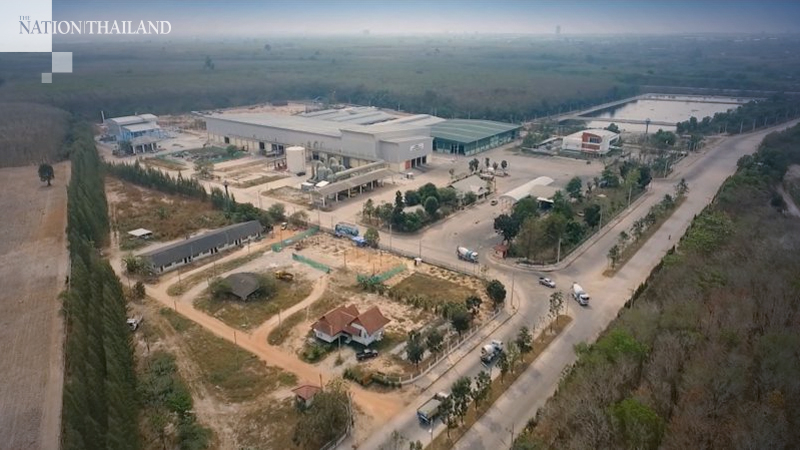
The Rayong provincial administration organisation is expected to complete the 10-megawatt waste-fuelled power plant within next year, the organisation’s head Piya Pitutecha said.
Construction of the plant began last year.
Rayong authorities will begin constructing the second plant next year, which is expected to be completed in 2022, after which construction of the third plant will begin and that is estimated to be completed in 2023.
All three plants will be able to treat 1,500 tonnes of waste daily and have a combined power-generation capacity of 30MW.
The organisation has teamed up with PTT Plc subsidiary Global Power Synergy Plc for the project.
Thailand’s rice exports in the first half of this year dropped 32 per cent year on year to 3.14 million tonnes, worth US$2.2 billion, said Thai Rice Exporters Association president Charoen Laothamatas on Wednesday.
He attributed the decline to drought conditions as well as the Covid-19 pandemic, which has disrupted customers’ purchasing power in export markets.
Another factor is the strengthening baht which has affected the competitiveness of Thai rice exports.
Thai rice exporters have also faced tougher competition from China’s exporters, who have already secured some of Thailand’s share of the South African market.
Charoen added that China can offer cheaper rice as well as more varieties and higher yield per rai.
The association recently revised down its forecast for rice exports this year from 7.5 million tonnes to 6.5 million tonnes – the lowest target for the past 20 years.
The current surge in gold prices recalls the last gold rush in 2009 to 2011, when the price skyrocketed from $1,000 to $1,920 per ounce as central banks worldwide fought the global economic crisis with stimulus measures.
This time, the rise in gold prices since 2019 is being driven by five factors:
Weak economies: Central banks are easing monetary policy to stimulate their economies. The resulting liquidity injections and interest rate cuts have caused investors to switch from government bonds with declining yields to gold.
Tensions between countries: Uncertainty following tensions between the US and China in 2019 and between US and Iraq at the start of 2020 caused investors to seek “safe haven” assets that maintain value during market volatility.
Covid-19 outbreak: This unexpected factor boosted the gold price to over $1,600 per ounce at the beginning of this year. Meanwhile, it caused the global economy to shrink further, forcing central banks to inject more liquidity into the economic system.
Recently, the European Central Bank (ECB) injected €750 billion into the economic system as part of recovery efforts, triggering fears of inflation.
Weakened dollar: When the dollar as a major world currency weakens, the price of gold will increase to compensate for the decline in currency value. The dollar is weakening because US public debt has increased continuously, sparking concern that the US may not able to repay the mounting debt.
Increasing gold demand: Investment funds and central banks decided to hold more gold as a “safe haven” asset.
Recently, SPDR Gold Trust, the largest gold fund, increased its holding by 0.7 per cent to 1,219.75 tonnes. Meanwhile Russia’s central bank has bought over $40 billion in gold over the past five years, building a huge gold reserve of $120 billion.
Thailand could be a loser due to Covid-19, deglobalisation: Tisco analyst
EconJul 23. 2020Head of Tisco’s economic strategy unit Komsorn Prakobphol
By Wichit Chaitrong The Nation
In an exclusive interview with The Nation, Komsorn Prakobphol advises investors to also closely monitor the US election and key business risks
Thailand may be a loser in this Covid-19 era amid deglobalisation, a Tisco analyst told The Nation in an exclusive interview, as he advised investors to also keep a hawk’s eye on the US election, which is among the four key risks.
The US will hold its presidential election in November and investors are keenly watching the latest developments. Democratic candidate Joe Biden is presently ahead of President Donald Trump in opinion polls.
Trump has implemented business-friendly policies such as tax cuts. But Biden is campaigning for higher tax rates, the head of Tisco’s economic strategy unit Komsorn Prakobphol noted during the exclusive interview.
Trump is cutting income tax for the top bracket to 37 per cent and corporate tax to 21 per cent. Biden is expected to revert to the pre-2017 tax cuts level of up to 39.6 per cent for individuals earning more than $400,000 (Bt12.6 million) and a corporate tax of 28 per cent.
A latest opinion poll also suggests the Democrats will control both lower and upper Houses instead of just the lower House at present.
“Should that happen, it would give Biden a full mandate to implement his tax hike policy,” Komsorn said.
Higher corporate tax would eat into company profits and, in turn, affect their share prices.
He said the tension between the US and China will continue even if Biden is elected the new US president. Biden will pursue a similar strategy to former president Barack Obama, such as creating a free trade zone without China, while he is even expected to take tougher action against Beijing than Obama did.
Another major risk is a second wave of Covid-19 infections.
While the number of new cases is creating a fresh record almost every day worldwide and especially in the United States, US stocks are still on a rising trend. New daily cases in the US in early July were more than 60,000, up from about 30,000 in April. But the present fatality rate of between 700 and 800 a day has dropped from over 2,000 in late March and early April.
“Investors are paying more attention to the sharp fall in the death rate, given advancing virus therapy and positive vaccine trial results,” Komsorn said.
Weaker-than-expected economic recovery is also another key risk for investors, he said, adding that a large number of workers have been laid off worldwide, while rehiring could be slower than expected.
“Large economies such as the US and China would be able to steer their economies out of trouble, but smaller ones such as Thailand would find it very difficult,” he warned.
Thailand which depends largely on export markets will suffer from a slower recovery as export markets shrink. Moreover Vietnam, equipped with many free trade agreements, is biting into Thailand’s global market share.
Tisco forecast that the Thai economy will contract sharply by 6.4 per cent this year.
Thailand’s manufacturing sector is also a laggard, producing low-tech products. Meanwhile, South Korea and Taiwan will benefit from the advent of 5G technology, he said.
Komsorn proposed asset allocation themes based on global mega-trends.
Firstly, income inequity has been widening. Capitalists and business leaders benefited greatly from globalisation as they moved their production bases out of advanced economies to emerging countries such as China. But workers in advanced countries have lost jobs or were forced to take lower-wage jobs, leading to Brexit and the election of Trump, who took the nationalistic path, campaigning for “America First”.
Now, Covid-19 has worsened income inequality. Central banks around the globe are injecting money into the market via quantitative easing (QE) measures to shore up their economies. The resulting huge liquidity in the market is making share prices recover quickly and greatly benefiting investors, although a large number of workers worldwide have been laid off due slowing economies.
For example, the US Federal Reserve has gone in for massive QE, estimated to be $3 trillion in a matter of just a few months compared to similar accumulated amounts over the past 10 years, Komsorn pointed out.
Income inequality will be a time-bomb, he warned.
“There is also inequality between generations. Youth are revolting against older generations, as we have seen in the climate change campaign led by teenager Greta Thunberg. New generations tend to elect politicians who propose higher tax rates and generous social welfare. But faced with high debts, many governments will find it very difficult to implement generous social welfares programmes,” he said.
In these circumstances, investors are advised to also hold gold as a hedge against risks, Komsorn said.
The reversal of globalisation, or deglobalisation, will lead many manufacturers to relocate their factories back to their home countries. Since advanced economies have a limited working force, factories will install more robots and go in for increased automation.
In this situation, emerging economies like Thailand would be the losers, he said.
The coronavirus pandemic may also change consumer behaviour: many people might stop going to shopping malls in a post-pandemic situation as they become used to online shopping and social distancing caused by the virus, Komsorn added.



 File photo


 Head of Tisco’s economic strategy unit Komsorn Prakobphol
