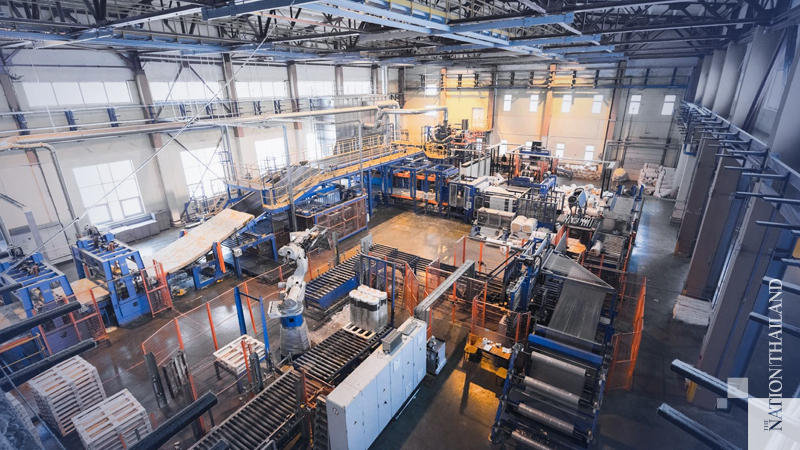
The State Railway of Thailand has hired a consultant to conduct a feasibility study on the plan to build Phase 2 of the high-speed rail system linking three international airports, said SRT Special Project chief and construction engineer Sucheep Sooksawang.
Phase 2 covers the 190-kilometre Rayong-Chantaburi-Trat extension, he said, after a market-sounding event for the project on Friday. Representatives from around 200 local and foreign private companies attended the event.
The study will be completed next month and submitted to the Cabinet next year. The SRT will then draw up a public-private investment plan in 2022 before calling for constructors’ bids in 2024.
The SRT has three options for investment.
Under the first, a private company would invest in the construction, train system, trains, operation and maintenance, while the SRT would allocate land plots.
Under the second, a private company would invest in the train system, trains, operation and maintenance, while the SRT allocates land and takes care of construction.
Under the third option, a private company would be responsible for operation and maintenance, with the SRT taking care of the rest.
The project is reportedly expected to cost Bt101.7 billion.
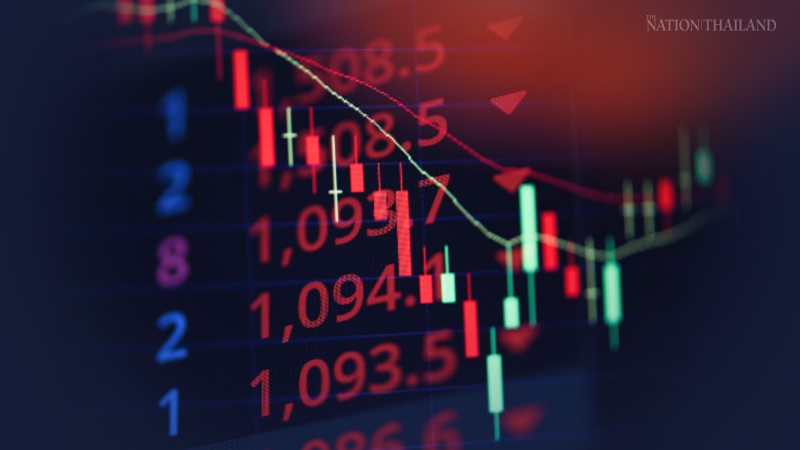
The Stock Exchange of Thailand (SET) Index closed at 1,340.92 today (July 24), down 18.73 points or 1.38 per cent. Total transactions amounted to Bt46.529 billion with an index high of 1,350.93 and a low of 1,337.21.
The SET and stock markets around the world fell instantly after China ordered the US to close its consulate in Chengdu in retaliation for the US shutting down the Chinese consulate in Houston.
In the morning session, a Krungsri Securities stock analyst expected the index to fall to between 1,350 and 1,355 before rebounding.
“Despite the US easing its lockdown restrictions, unemployment claims in the country have risen to 1.4 million, up more than a million over 18 weeks of consecutive rises,” he said.
“Meanwhile, investors have sold off their stocks to reduce risks before the four-day holiday due to uncertainty as the US economy continues to slowdown and the number of Covid-19 cases there continues rising.”
However, the analyst said the index should rebound due to mass buy-ups of stocks in companies showing improved second quarter performance, and on hopes that the US will issue economic stimulus measures worth $1 trillion.
The 10 SET stocks with the highest trade value today were GULF, PTT, STA, SAWAD, CPALL, CPF, AOT, PTTEP, ACE, and MINT.
As of 4.30pm, the price of crude oil rose by US$0.38 or 0.93 per cent to $41.45 per barrel, while gold rose by $3.40 or 0.18 per cent, to $1,893.40 per ounce.
Other Asian indices were on the fall:
China’s Shang Hai SE Composite Index closed at 3,196.77, down 128.34 points, or 3.86 per cent, while the Shenzhen SE Component Index closed at 12,935.70, down 725.80 points, or 5.31 per cent.
Hong Kong’s Hang Seng Index closed at 24,705.33, down 557.67 points, or 2.21 per cent.
South Korea’s KOSPI Index closed at 2,200.44, down 15.75 points, or 0.71 per cent.
Taiwan’s TAIEX Index closed at 12,304.04, down 109 points, or 0.88 per cent.
Japan’s Nikkei Index was closed for the four-day holiday weekend.
Thai exports in June dropped 23.17 per cent year on year to US$16.44 billion, the third straight fall in three months since April, according to the Commerce Ministry’s Trade Policy and Strategy Office.
Meanwhile imports dropped 18.05 per cent year on year to $14.834 billion, resulting in a trade surplus of $1.610 billion (Bt51.16 billion).
Exports in the first six months dipped 7.09 per cent to $144.34 billion.
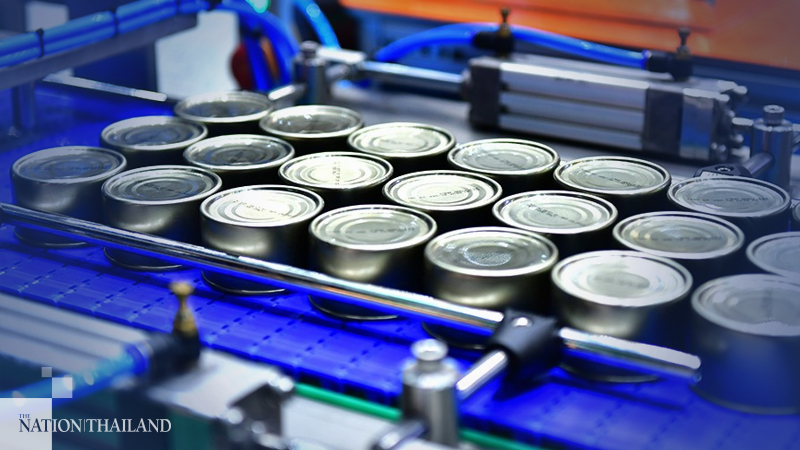
In June, exports of Thai farm and food products expanded under the Covid-19 outbreak, with demand high for canned seafood, processed food, frozen chicken, non-alcoholic drinks, pet feed, frozen vegetables and fruits.
Thai exports to certain markets in June expanded, however, including to China (for the third consecutive month), Ireland, Poland, Denmark and the United Arab Emirates.
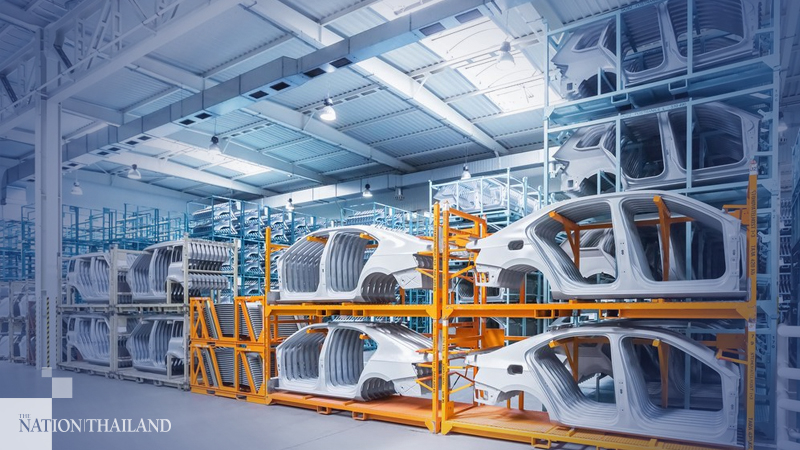
Auto production contracted by 43.14 per cent in the first half of the year compared to the same period in 2019 but the Federation of Thai Industries (FTI) is confident of the situation improving in the second half.
Production for the whole year is expected to contract by 30-35 per cent year on year,
FTI spokesman Surapong Paisitpatanapong said. The production data included domestic sales and exports of cars and motorcycles.
Automobile production in June 2020 totalled 71,704 units, down by 58.52 per cent compared with the same period last year as it was mostly for domestic sales than for export, Surapong said However, production in May increased by 27.96 per cent month on month since most of the automotive industry operators had reopened and factories had resumed production.
Auto production during the first six months of this year totalled 606,132 units down by 43.14 per cent year on year. One-tonne pickup trucks accounted for 368,562 units, equal to 60.81 per cent of total production.
Motorcycle production in June was 89,799 units, down by 56.09 per cent compared to the same period last year. Total motorcycle production in the first six months of this year was 877,447 units, down by 30.28 per cent.
Domestic car sales in June totalled 58,013 units, down by 32.6 per cent compared to the same period last year but up from May by 43.53 per cent. Domestic sales have increased since the government relaxed the lockdown and offered aid to those affected by Covid-19. Sales in the first six months totalled 328,604 vehicles, down 37.3 per cent year on year.
Motorcycle sales in June were 125,028 units, down by 16.87 per cent year on year but up from May by 28.43 per cent. Overall, sapes during the first six months of the year totalled 731,979 units, down by 18.1 per cent compared to the same period last year.
The situation of vehicle production and sales has improved, Surapong said. The FTI estimates that throughout the year, the Thai automotive industry will have lower overall production, sales and exports, less than 50 per cent from the previous year, and contract by 30-35 per cent if the Covid-19 situation, both in Thailand and abroad, is controlled.
Several listed companies aimed to launch initial public offerings (IPOs) by the fourth quarter of this year, the Stock Exchange of Thailand (SET) said.
Manpong Senanarong, SET’s senior executive vice president, said the Securities and Exchange Commission (SEC) has allowed up to 17 companies listed on the SET and the Market for Alternative Investment (MAI) to launch IPOs, adding that 14 listed companies were waiting for the SEC’s approval to launch their IPOs.
“Normally, listed companies will request IPOs during the fourth quarter of every year because they have to report the second-quarter performance to the SEC first,” he said. “If the government is able to contain the spread of Covid-19, more listed companies would request IPO launches.”
Meanwhile, Worachat Thuaycharoen, managing director at Finnex Advisory, acting as financial adviser of Silicon Craft Technology (SICT), said the SICT would list on the MAI on July 30 this year after launching 100 million IPO shares at Bt1.38 per share from July 21 to 23. The SICT’s performance in the past 12 months (April 1, 2019 to March 31, 2020), gave it a price to earnings of 14.66 times.
“Several investors have subscribed to the SICT’s shares because it is the first deep technology company that will be listed on the Thai stock market,” he said. “SICT runs a microchip research and development business in which 100 per cent of the company’s sales came from foreign countries.”
He added that I&I Group, a digital and technology consulting company will launch 25 million IPO shares and list on the MAI by the end of this year or the beginning of the next year.
The price of gold rose by Bt50 per baht weight in the morning trade today (July 24), the Gold Traders Association reported.
As of 9.29am, the buying price of a gold bar was Bt28,100 per baht weight and selling price Bt28,200, while gold ornaments cost Bt27,591.20 and Bt28,700, respectively.
At close on Thursday (July 23), the buying price of a gold bar was Bt28,050 per baht weight and selling price Bt28,150, while gold ornaments cost Bt27,545.72 and Bt28,650, respectively.
The Comex (Commodity Exchange) gold price to be delivered in August rose by US$24.9 or 1.34 per cent to US$1,890 (Bt60,004) per ounce at yesterday’s close.
The gold price still closed at the highest level in nine years as investors are still buying gold as a safe-haven asset amid uncertainty following US-China tensions and the Covid-19 pandemic.
The Stock Exchange of Thailand (SET) Index fell 11.23 points, or by 0.83 per cent to 1,348.42 during the morning session on Friday (July 24), with a Krungsri Securities stock analyst saying he expected the index to fall to between 1,350 and 1,355 before rebounding.
“Despite the US easing lockdown restrictions, the number of unemployment claims in the country has risen to 1.4 million, rising by more than a million people for 18 consecutive weeks,” he said.
“Meanwhile, investors have sold off their stocks to reduce risks before the four-day holiday due to uncertainty as the US economy continues to slowdown and the number of Covid-19 cases there continue rising.”
However, the analyst said the index should rebound from mass buy-ups of stocks whose second quarter performance showed improvement, as well as over hope that the US will issue economic stimulus measures worth $1 trillion.
He recommended that investors buy:
– Food and electronic stocks that benefit from the weakening baht, such as CPF, GFPT, TU, TFG, ASIAN, KCE, DELTA, HANA and SVI.
– Stocks that have shown improved second-quarter performance, such as TOP, PTTGC, SPRC, SCC, BGRIM, CKP, CPF, TU, TASCO, STA, STGT, SPALI, AP, PRM, PTL, AJ, STARK, CBG and TQM.
The index closed on Thursday (July 23) at 1,360, up 3 points or 0.19 per cent. Total transactions amounted to Bt70 billion.
The SET index still faces volatility from the US-China tensions after a Chinese consulate was closed in Houston within 72 hours to allegedly protect American intellectual property. In retaliation, China will close the US consulate in Wuhan.
Foreign investors made net sales in stocks worth Bt2.054 billion and net buys in bonds worth Bt860 million. There were 5,147 net short Thailand Futures Exchanges contracts.
By Syndication Washington Post, Bloomberg · Vildana Hajric, Claire Ballentine · BUSINESS, US-GLOBAL-MARKETS
U.S. stocks reached their lowest level in a week after an unexpected rise in jobless claims rekindled concern that the economic recovery has stalled. The dollar weakened, and Treasuries rose.
The S&P 500 Index slipped from a four-month high, led by losses in technology firms and companies that make non-essential consumer goods. The Nasdaq 100 index dropped to a two-week low and turned lower for the week, erasing Monday’s rally that was the biggest since April. Twitter jumped after daily-user growth surged, but Alphabet, Amazon and Apple each lost more than 3%. Microsoft slumped after cloud growth slowed. Tesla slid even after results beat estimates.
The first uptick in jobless claims since March comes as Congress negotiates a new relief package for millions of Americans who are set to lose enhanced benefits at the end of the month. Other worrying signs of economic slowing added to concern that the growth in some areas will stall.
“The recovery is in place, but the labor market is really, really fragile,” said Gene Goldman, chief investment officer at Cetera Financial Group. “That’s going to weight on the markets and it’s going to weigh on consumers for a long time.”
The 10-year Treasury yield fell to 0.58%, while Bloomberg’s dollar index weakened for a fifth straight day. Crude slumped, while precious metals continued their torrid run of gains that have taken gold and silver prices to multiyear highs.
In Europe, the Stoxx 600 index increased on gains in carmakers and consumer products, led by Unilever’s jump after sales fell less than expected. The yield on Italy’s benchmark bonds fell below 1% for the first time since March amid euphoria over the Europe Union’s pandemic recovery package.
Positive signals emerging from an earnings season that is expected to be historically weak had been driving investors into risk assets. An increase in U.S.-China tensions and a resurgence in the virus across large swaths of America deadened some of that optimism.
“Whenever the markets get to a point where there’s something just around the corner that they’re very focused on, that is when they sort of stop – whether they were trending higher or trending lower – they sort of start to trend sideways, but get choppy intra-day and start reacting more or less to headlines,” said Shawn Cruz, senior manager of trader strategy at TD Ameritrade.
– – –
These are the main moves in markets:
Stocks
– The S&P 500 index fell 1.2%, to 3,235, as of 4 p.m. New York time, the first retreat of the week.
– The Dow Jones industrial average fell 1.3%.
– The Nasdaq Composite Index declined 2.3%.
– The Stoxx Europe 600 Index closed up 0.1%.
Currencies
– The Bloomberg Dollar Spot index lost 0.1%.
– The euro rose 0.2%, to $1.1593, reaching the strongest in more than 21 months on its fifth consecutive advance.
– The Japanese yen added 0.3% to 106.84 per dollar.
Bonds
– The yield on 10-year Treasuries fell one basis point, to 0.58%, the lowest in three months.
– Germany’s 10-year yield increased two basis points, to -0.48%.
– Britain’s 10-year yield was at 0.12%, the lowest on record.
Commodities
– West Texas Intermediate crude dipped 1.6%, to $41.24 a barrel.
– Gold futures strengthened 1%, to $1,882 an ounce, reaching the highest in about nine years on its fifth consecutive advance.
Bualuang Securities, a subsidiary of Bangkok Bank, is advising investors to look abroad in order to manage risk and achieve higher returns than are available in the Thai stock market.
Chaiyaporn Nompitakcharoen, deputy managing director of Bualuang Securities’ Non-Institutional Broking Group, said the Stock Exchange of Thailand (SET) now has a limited upside, adding that investors should consider alternative stocks not available on the SET, such as shares in e-commerce, software, and healthcare businesses.
“The company is cooperating with overseas partners to enable investors to invest in places such as the US, Vietnam, and Hong Kong stock markets,” he said. “Aside from selective investments, investors can also make themed investments or invest in the Exchange Traded Fund [ETF].”
He expects the Thai stock market in the second half of this year to move between 1,280 and 1,450 points amid the economic slowdown, slow tourism recovery, and decline in listed companies’ profits.
“By the end of this year, we expect the SET Index to be at 1,360, but we believe it will be more than three years before the index recovers to its pre-Covid-19 level of 1,520.”
He recommended investors spread risks by incorporating 40 per cent in bonds or currency markets, 12 per cent in gold, 7 per cent in the Real Estate Investment Trust (REIT) and property funds, 10 per cent in the Thai stock market, and 31 per cent in foreign stock markets.
Meanwhile, Santi Thananiran, chief investment officer at BBL Asset Management (BBLAM), said he was confident the Thai stock market had a limited upside and downside, adding that the market would recover in 2021 but not above 2018 levels.
“Returns of up to 7 per cent can be expected from the SET if the Thai economy expands by up to 4 per cent,” he said.
“However, the Thai stock market is still under pressure from listed companies facing economic-cycle risks, such as banks’ policies, fuel prices, and changes in technology.”
He recommended investing in technology, healthcare, and Chinese stocks, while spreading investment in line with personal objectives and risk levels.
“For those who can tolerate risks and aim to invest for more than 10 years, we advise investing 75 per cent in Thai and foreign stocks and the other 25 per cent in bonds, REIT, property funds, basic infrastructure, and gold,” he said. “They should focus on investment in the long term and buy assets when prices are cheap, but they should not take profit in the short term.”
He added that aside from spreading investment, investors must plan their moves well since liquidity was important to escape impacts of the Covid-19 outbreak and economic slowdown.
Though the Thai Industries Sentiment Index (TISI) has risen for the second consecutive month following the easing of more Covid-19 lockdown measures, businesses have started worrying about the state of local politics, chairman of the Federation of Thai Industries (FTI) said on Thursday (July 23).
In June, TISI stood at 80, up from 78.4 in May, and businesses were able to resume operations after the third and fourth phase of easing restrictions. Many border checkpoints have also reopened to facilitate trade with neighbouring countries, while the low number of new infections in June has boosted confidence among manufacturers.
However, FTI chairman Supant Mongkolsuthree said many industries are more concerned about the state of local politics, appreciation of the baht, oil prices and lending interest rates, instead of the global economic recovery.
Prime Minister Prayut Chan-o-cha is currently reshuffling his Cabinet now that several ministers have stepped down. At the same time, student activists have intensified their campaign, demanding that Prayut dissolve Parliament, have the Constitution rewritten and for his government to stop intimidating people.
For the next three months, TISI is expected to hover at 90.1, down from the previous estimate of 91.5, because businesses are worried about local buyers’ low purchasing power, fragile economy and the threat of a second wave of Covid-19 infections.
Hence, they are proposing that the government launch extra stimulus measures and encourage state agencies to purchase goods produced by local factories, the Thai Credit Guarantee Corp to guarantee more loans and the government to offer incentives to foreign investors, especially those wanting to invest in the Eastern Economic Corridor.