The Transport Ministry has asked Airports of Thailand (AOT) to deliver feasibility studies on second airports to serve Phuket and Chiang Mai by next year. The AOT is ready to invest more than Bt120 billion in the airports, confident construction will be warranted by growing travel demand.
Chaiwat Thongkamkoon, Transport Ministry Permanent Secretary, said the ministry in June instructed the AOT to hire consultants for the feasibility studies.
Chula Sukmanop, director of the Civil Aviation Authority of Thailand (CAAT), said its study of Thailand’s airport master plan found that new airports should be developed in Phang Nga province to support Phuket and in Lamphun province to support Chiang Mai.
The AOT expects construction costs for both airports will be around Bt120 billion – Bt70 billion for the second Phuket airport and Bt54 billion-Bt60 billion for the second Chiang Mai airport.
The area earmarked for Phuket Airport 2 is located in Khok Kloi subdistrict, Takua Thung district, Phang Nga province. An area of 7,000 rai will be requisitioned from its 10 major landowners who must be compensated for 200-300 land title deeds.
Chiang Mai Airport 2 will be located in Huai Yab subdistrict, Ban Thi district, Lamphun province where the terminal and runway will be built on 5,000 land plots.
Several securities companies have cut listed companies’ earnings per share (EPS) and second-quarter profit forecasts this year due to the Covid-19 impact on the economy.
Tisco Securities’ senior strategist Apichat Poobunjirdkul said the company has cut listed companies’ EPS to Bt61.1 per share from Bt67 per share in May, the lowest in 10 years, adding that listed companies’ EPS was Bt53.4 per share during the hamburger crisis.
“We expect listed companies’ second-quarter performance to drop the most as their net profit would drop over 40 per cent year on year due to the Covid-19 pandemic that has caused the global economic slowdown,” he said.
He said the second-quarter profit of 43 listed companies in the SET50 Index is expected to be Bt93.3 billion, down 39 per cent year on year as lockdown measures had caused an impact on various industries, especially the tourism industry businesses, such as airports, airlines, hotels, public transportation and department stores.
“Listed companies’ second-quarter performance announcement would cause market volatility in the short term because the profit forecast in the first half of this year accounted for 37 per cent of the profit forecast this year,” he said. “However, listed companies’ profit would increase during the second half of this year in response to the easing of the lockdown and economic stimulus measures.”
He added that listed companies’ third-quarter profit would grow over 30 per cent quarter on quarter.
Sunthorn Thongthip, a senior director at Kasikorn Securities, said there is a chance that listed companies’ EPS this year will drop from the current forecast of Bt64 to Bt65 per share due to the decline in number of tourists, adding that listed companies’ EPS next year is expected to be at Bt85 per share.
“The number of tourists this year would be lower than expected because the second Covid-19 wave has caused many countries to delay reopening,” he said.
Nuttachart Mekmasin, assistant managing director at Trinity Securities’ research department, said listed companies’ second-quarter performance would not cause much impact on investment because the market had already responded to this factor.
“Investors should focus on listed companies’ third-quarter performance rather than on the second-quarter because the index rose over 20 per cent from the lowest point so far,” he said. “However, the index would face severe correction if listed companies’ third-quarter performance is lower than expected.”
Chaiyaporn Nompitakcharoen, deputy managing director of Bualuang Securities’ non-institutional broking group, said listed companies’ second-quarter profit will drop by 40 per cent year on year to the lowest point in response to countries’ lockdown due to the Covid-19 pandemic, adding that listed companies’ performance is expected to recover during the third and fourth quarters of this year and will return to normal at the end of 2021.
“Stocks whose profit will rise gradually are food export, packaging, and consumer finance stocks, while stocks whose performance will recover by the second half of this year are restaurant, petrochemical, fuel and oil refinery stocks,” he said. “Stocks whose performance will recover slowly are electric appliances, automotive parts, service, and commercial bank stocks which may recover by the end of this year or the beginning of the next year.”
However, he added that listed companies’ profit forecast this year would be cut further from the current expected drop of 25 per cent year on year as commercial banks’ second-quarter performance was lower than expected.
By Syndication Washington Post, Bloomberg · Alex Longley · BUSINESS, US-GLOBAL-MARKETS
Oil slipped to near $41 as investors weighed worsening relations between Washington and Beijing alongside flare-ups in coronavirus outbreaks across the world.
Futures in New York edged lower after a 1.7% gain last week. Chinese authorities took over the U.S. consulate in Chengdu on Monday as tit-for-tat tensions continue to simmer between Beijing and the U.S. At the same time, second waves of the pandemic are popping up from Spain to China, casting new potential clouds over the demand outlook, though the surge in cases in the U.S. was easing.
The most notable market moves in recent days have come in the shape of the oil futures curve. Brent’s prompt spread is trading in its largest contango structure since May, a sign of oversupply, while contracts based on the value of Russian and North Sea crude were both weaker last week. Its the latest signal that the market’s re-balancing appears to have taken a pause for breath in recent sessions.
Crude has been trading in a tight range near $40 a barrel since early June after its rapid recovery from lows in April petered out as many countries struggled to bring the virus under control. A drop in the dollar has also supported prices this month, although investors are bracing for fresh supply from the OPEC+ alliance when it relaxes its output curbs from August.
“On the one hand, the risks of a less robust recovery of demand due to coronavirus, and the political tensions between the US and China, are weighing on prices,” said Commerzbank analyst Carsten Fritsch. “On the other, prices are finding support from the weak U.S. dollar and hopes of further corona aid.”
The pace of the recovery in global oil demand is set to slow to below 1 million barrels a day from August through December, Goldman Sachs Group analysts wrote in a report. That stalling return is likely to leave crude prices range bound in the second half of the year, they said.
There is also evidence North American crude production may be starting to recover. U.S. output rose for the first time since March in the week through July 17 after correcting for the impact of Tropical Storm Cristobal, which tore through the Gulf of Mexico in June, while Baker Hughes data released Friday showed the first expansion in drilling in American fields in four months.
By Syndication Washington Post, Bloomberg · Joanna Ossinger · BUSINESS
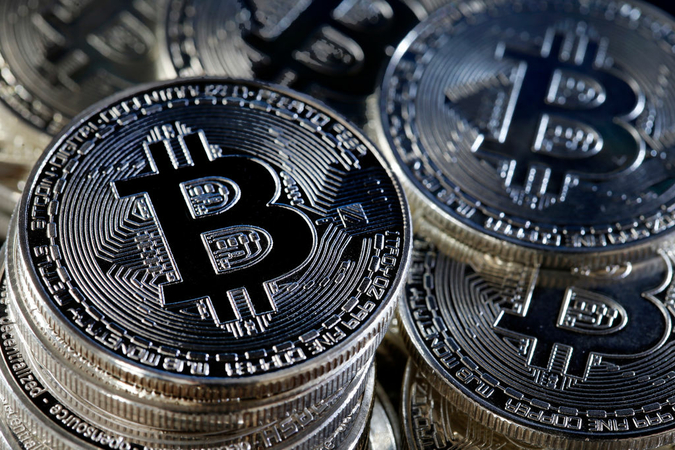
Bitcoin rose above $10,000 for the first time in more than six weeks as the largest cryptocurrency breaks its recent trading range with risk assets rallying.
The digital token spiked around 6 a.m. EDT Sunday, rising as high as $10,169, according to pricing compiled by Bloomberg. The gains quickly fizzled, initially, then the coin rallied again later, climbing as high as $10,335.
Bitcoin, which crypto fans have often touted as “digital gold,” is in favor as the yellow metal nears record levels, concerns rise about the health of the world economy and the dollar falls. Also, last week, the U.S. Office of the Comptroller of the Currency said American banks can provide custody services for customers’ crypto assets, which could help boost the asset class’s appeal with some investors.
The cryptocurrency had been hovering near its 50-day moving average for weeks before pulling above it in the past couple of days.
“We remain positive on the overall precise structure for Bitcoin and do expect it push through $10,000-$10,500 as part of its longer term bullish technical profile,” said Rob Sluymer, technical strategist at Fundstrat Global Advisors LLC. Even so, that range “remains a resistance band that Bitcoin will need to break above to signal its next move to resistance at $13,800.”
If the largest cryptocurrency can take out the $10,500 level, it could catapult much higher and test this year’s high, technical indicators suggest. At the same time, another technical gauge is indicating Bitcoin might see a pullback as its 14 Day RSI is nearing 80, far above the 70 level that indicates overbought and is near the level that killed Bitcoin’s last run in early May.
Bitcoin has enjoyed above-average flows this year, and those flows are relatively high versus their five-year average when compared with those of exchange traded funds in other asset classes, according to a report from JPMorgan Chase & Co. strategist John Normand on Friday.
By Syndication Washington Post, Bloomberg · Ranjeetha Pakiam, Justina Vasquez, Elena Mazneva · BUSINESS, US-GLOBAL-MARKETS
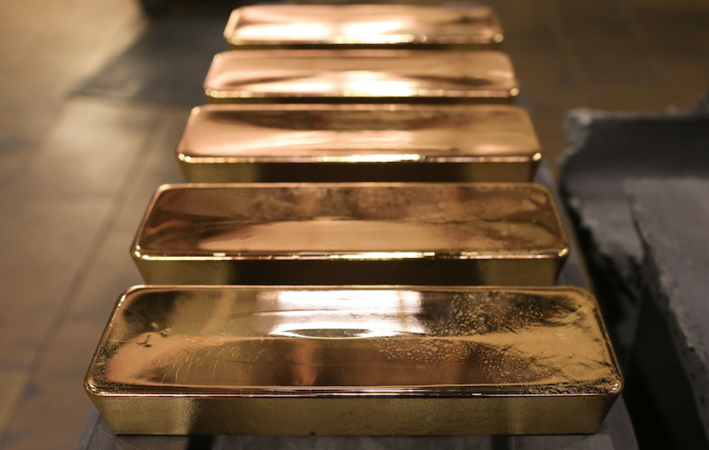
Gold’s unrelenting march higher shows no signs of slowing after a plunge in the dollar swept prices past the previous high set in 2011 and put the metal on track for even bigger gains.
Bullion’s surge came as a gauge of the U.S. currency sank to the lowest in more than a year, the latest in a long line of bullish factors — including negative real rates in the U.S. and bets the Federal Reserve will keep policy accommodative when it meets this week — that are pushing prices ever higher.
With the world facing an extended period of unprecedented economic and political turmoil, gold’s now got $2,000 in its sights. Some in the market suggest the haven could rise even beyond that.
Nascent signs of gold’s record-breaking ascent began to show in mid-2019, when the Fed signaled a readiness to cut interest rates as uncertainty — primarily about the impact of the U.S.’s trade battles — clouded its outlook. The rally gathered pace in early 2020 as geopolitical tensions rose and the coronavirus outbreak hurt growth worldwide, pushing governments and central banks to unleash vast amounts of stimulus, and sending real interest rates slumping further into negative territory.
“Strong gains are inevitable as we enter a period much like the post-GFC environment, where gold prices soared to record levels as a result of copious amounts of Fed money being pumped into the financial system,” said Gavin Wendt, senior resource analyst at MineLife. A weak dollar and negative real rates are providing further impetus. Gold may consolidate before setting its sights on $2,000 and above in coming weeks, he said.
Investment demand has been unrelenting. Holdings in gold-backed exchange-traded funds have beaten all-time highs nearly every month since late last year and inflows this year have topped the record annual total set in 2009. The additions make up roughly one-fifth of expected mine supply for the year, according to research group Metals Focus.
Gold’s been drawing investors even as equities climbed — with the exception of a sharp selloff in March as traders liquidated bullion holdings to cover losses in other markets — and it’s U.S. bonds that have been the key metric to watch. The metal is serving as an attractive hedge as yields on Treasuries that strip out the effects of inflation fall below zero.
The environment has even raised the specter of stagflation, a rare combination of sluggish growth and rising inflation that erodes the value of fixed-income investments. In the U.S., investor expectations for annual inflation over the next decade, as measured by a bond-market metric known as breakevens, have moved higher the past four months after plunging in March.
Inflation also plays an important role in looking at prices in an historical context. Spot gold traded as high as $1,945.26 on Monday, topping its previous record by more than $20. Spot silver jumped as much as 8.1% to $24.6031 an ounce, the highest since 2013.
When adjusted for inflation, bullion remains lower than its 2011 high and far below the historic peak in 1980, in the wake of the second oil price shock.
It’s not just price moves that are proving historic. The virus shined a spotlight on a traditionally overlooked corner of the market: logistics. A chaotic period in March saw extreme distortions between London and New York gold prices due to an unprecedented snarl in the movement of physical metal, with the grounding of flights and refinery shutdowns sparking concerns about a shortage of bullion available in New York in time to deliver against Comex futures.
That crisis eased — there was enough gold — but the dislocation prompted CME Group Inc., which owns Comex, to announce that it would offer a new futures contract with expanded delivery options that included 400-ounce bars, which is the size accepted in London. It later said traders will be able to deliver gold in London vaults against the new contract.
Next up for investors and a possible fillip for gold, is this week’s Fed meeting July 28-29, where officials are expected to keep interest rates near zero and debate a possible shift in its strategy.
The meeting may be a platform for a strong message that change is coming, opening up the possibility for more unconventional policies further down the line, according to Chris Weston, head of research at Pepperstone Group. “If we think about real yields and what the Fed is doing, it just suggests to me that it’s a matter of time before real yields continue to trend lower and gold goes higher,” he said.
The Fed’s path forward will be closely watched. From December 2008 to June 2011, the Fed bought $2.3 trillion of debt and held borrowing costs near zero percent in a bid to shore up growth, helping send bullion to a record in September 2011.
Forecasts for further gains have been building even before gold’s most recent breakthrough. Bank of America . has stuck with its April forecast for $3,000 gold over the next 18 months. UBS Group sees prices reaching $2,000 by end-September, global chief investment officer Mark Haefele wrote in a note Monday. The group has added the metal to its “most preferred asset list.”
“You simply couldn’t pick a more perfect storm of events which would allow for gold to perform,” said Steve Dunn, head of ETFs at Aberdeen Standard Investments. “With low interest rate policies, negative real rates, super accommodative monetary policy, huge amounts of global fiscal spending, a weaker dollar, escalating U.S.-China tensions and no clear end in sight for the coronavirus pandemic, all of the parts of the equation are coming together.”
Rayong’s administration is working on putting in place an effective waste and waste-water disposal system before the Eastern Economic Corridor (EEC) is fully developed and brings in an influx of people.
Piya Pitutecha, chief of Rayong’s Provincial Administrative Organisation, said his team was working in collaboration with PTT’s Global Power Synergy Co (GPSC) to build a comprehensive waste-disposal centre, which will cover approximately 429 rai and overlap Nam Khok, Thapma, Map Kha and Nong Taphan subdistricts. He said a proper waste-disposal set up was necessary as the EEC will soon start attracting both industrial and business investments, which will result in a boost in population and huge amounts of waste.
The planned integrated waste-disposal centre will comprise waste-separation plants, which will then be shifted to power-generating incinerators that can eliminate 500 tonnes of waste daily and produce 10 megawatts of electricity. Construction of this plant began last year and is scheduled to be completed in 2021.
Once this is complete, a second and third waste incinerator will be built in the same area, with the second started in 2021 and completed in 2022 and third started in 2022 and finished in 2023.
Once all three incinerators are operating, they will be able to eliminate up to 1,500 tonnes of waste daily and generate a total of 30MW of power.
GPSC will be investing in the incinerators, and revenue from the electricity generated will cut down the cost of waste-disposal by Bt400 per tonne – the biggest saving compared to other waste-disposal systems.
This system will be able to handle waste generated from the growth of EEC for at least 20 years, including the more than a million tonnes of waste in Rayong’s landfills.
“Since this is a public-private joint venture, it will encourage the government to push the project forward quickly. It also makes it possible for refuse in Rayong province to be dealt with in a complete and sustainable manner that is in line with international standards, which means there will be no foul odour or pollution and this system can be a model for other provinces to follow,” Piya said.
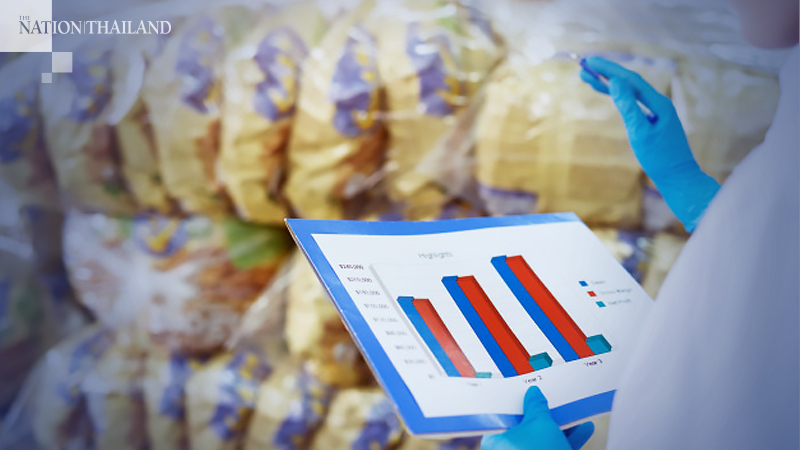
Thai food exports are picking up as many countries are accelerating imports amid quarantine conditions, the Department of International Trade Promotion said.
Somdet Susomboon, director-general of the department, however added that overall Thai exports have not expanded much due to the Covid-19 impact which caused a global economic slowdown and affected trading partners.
Thai food exports have grown more than 20 per cent. Fresh, chilled, frozen chicken, canned and processed seafood, including ready-to-eat food, and foods that contain herbs are in high demand.
Canadian consumers are showing interest in immunity-boosting foods, and foods that give digestion a boost, offering opportunities for foods made from Thai herbs, fermented foods using local wisdom, such as fish sauce and fermented fish to expand the market more, he said.
This is consistent with a report from the Office of Foreign Trade Promotion in Toronto, Canada, which states that Canadian consumers are currently more attentive to healthcare, are turning to eat healthy foods, exercise, and give importance to nutritional benefits, such as eating foods that help prevent and strengthen the immune system. The office advised food manufacturers to pay more attention to products that help enhance immunity, label the products as immunity supplement or as helping strengthen immunity.
Meanwhile, a Canadian study found that supplements and functional food products will grow by 30 per cent per year from now. Canadian consumers now believe fermented foods help the digestive system, especially yoghurt, kimchi, miso, etc., including foods that contain herbs that have attributes to strengthen immunity are seeing increased sales.
“It is an opportunity for Thai herbs, tropical fruits and vegetables such as andrographis paniculata, triphala, Indian gooseberry, belleric myrobalan, and Thai samos, which are herb groups that help boost immunity and antioxidants, and can be used to produce functional foods including rice berry which is rich in minerals and various nutrients,” said the director.
The popularity of fermented products offers an opportunity for Thai fish sauce and fermented fish makers, but manufacturers and exporters should research in-depth about the nutritional benefits that are more than basic nutrients.
By Syndication Washington Post, Bloomberg · Steven Frank, Vivien Lou Chen, Elena Mazneva · BUSINESS, US-GLOBAL-MARKETS
It’s easy to forget now but there was a time early on in the pandemic when the price of gold was in freefall.
It was a curious thing, what with the virus sparking a collapse in the global economy, and it would prove in time to be one of the great head-fakes in the recent history of financial markets. For the pandemic of 2020 would soon show itself to be the driving force behind one of the most ferocious rallies the gold market has ever seen. At the close of trading in New York on Friday, bullion had spiraled to $1,902.02 an ounce, some 30% higher than the low it hit in March and just 1% off a record high set back in 2011.
The virus has unleashed a torrent of forces that are conspiring to fuel relentless demand for the perceived safety from turmoil that gold provides. There’s the fear of further government-ordered lockdowns; and politicians’ decision to push through unprecedented stimulus packages; and central bankers’ decision to print money faster than they ever have before to finance that spending; and the plunge in inflation-adjusted bond yields into negative territory in the U.S.; and the dollar’s sudden decline against the euro and yen.
All these things, when taken together, have even triggered concern in some financial circles that stagflation — a rare combination of sluggish growth and rising inflation that erodes the value of fixed-income investments — could take hold across parts of the developed world.
In the U.S., where the virus is still raging and the economic recovery is stalling, this debate is growing louder. Investor expectations for annual inflation over the next decade, as measured by a bond-market metric known as breakevens, have moved higher the past four months after plunging in March. On Friday, they hit 1.5%. And while that remains below pre-pandemic levels and below the Federal Reserve’s own 2% target, it is almost a full percentage point higher than the 0.59% yield that benchmark 10-year Treasury bonds pay.
The main driver behind gold’s latest rally “has been real rates that continue to plummet and don’t show signs of easing anytime soon,” Edward Moya, a senior market analyst at Oanda Corp., said by phone. Gold is also drawing investors “concerned that stagflation will win out and will likely warrant even further accommodation from the Fed.”
U.S. bond markets have been a driving force behind the rush to gold, which is serving as an attractive hedge as yields on Treasuries that strip out the effects of inflation fall below zero. Investors are looking for safe havens that won’t lose value.
The mania for gold right now has trickled down to Main Street. Retail investors have helped put ETF holdings backed by gold on track for an 18th straight weekly gain, the longest streak since 2006. Meanwhile, gold posted its seventh weekly gain on Friday, and analysts don’t expect the increases to end anytime soon.
“When interest rates are zero or near zero, then gold is an attractive medium to have because you don’t have to worry about not getting interest on your gold,” Mark Mobius, co-founder at Mobius Capital Partners, said in a Bloomberg TV interview. “I would be buying now and continue to buy.”
Analysts have been predicting huge upside for gold for several months. In April, Bank of America Corp. raised its 18-month gold-price target to $3,000 an ounce.
“The global pandemic is providing a sustained boost to gold,” Francisco Blanch, BofA’s head of commodities and derivatives research, said Friday, citing impacts including falling real rates, growing inequality and declining productivity. “Moreover, as China’s GDP quickly converges to U.S. levels helped by the widening gap in Covid-19 cases, a tectonic geopolitical shift could unfold, further supporting the case for our $3,000 target over the next 18 months.”
Gold Rally May Extend Into 2021 on Strong Fundamentals: BI Focus
Bank of America’s bold prediction was made after gold prices initially dropped in March as investors sought cash to cover losses on riskier assets. Prices quickly recovered after a surprise cut to the Fed’s benchmark rate and signs that the economic toll of the coronavirus would lead to massive stimulus efforts from global governments and central banks.
This isn’t the first time gold has gotten help from central bank stimulus programs. From December 2008 to June 2011, the Fed bought $2.3 trillion of debt and held borrowing costs near zero percent in a bid to shore up growth, helping send bullion to a record $1,921.17 in September 2011.
The crisis a decade ago was all about banks, said Afshin Nabavi, head of trading at Swiss refiner and dealer MKS PAMP Group, who nows sees gold “pointing towards $2,000.”
“This time, to be honest, I do not see the end of the tunnel,” he said, at least until U.S. elections in November.
Experts have advised investors to keep an eye on international factors such as US-China tensions, listed companies’ second-quarter performance, and the upcoming US Federal Reserve (Fed) meeting, as these could affect the Stock Exchange of Thailand (SET) Index and the gold price next week.
The SET Index on Friday (July 24) closed at 1,340.92, down 18.73 points or 1.38 per cent, with total transactions of Bt46.529 billion.
A stock analyst at Trinity Securities expected the index next week to fluctuate in a narrow range between 1,300 and 1,380 due to a flare-up of tensions between the US and China, and listed companies reporting their second-quarter performance.
“Also, we advise investors to follow the Fed meeting from July 28 to 29 as the [US central bank] will issue additional financial measures to stimulate the economy,” the analyst said.
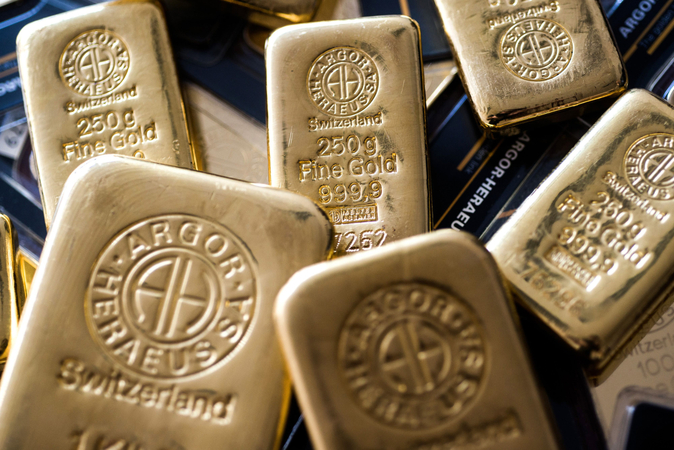
The price of gold on Friday stood at US$1,893.68 per ounce, while the price in Thailand was Bt28,400 per baht weight.
A gold analyst at YLG Bullion International advised investors to buy gold for short-term speculation.
“If the gold price does not drop below the support level of between $1,883 and $1,878 per ounce, the price will rise to the resistance level between $1,898 and $1,911 per ounce,” the analyst said.
“If the price does not rise over the resistance level, investors who cannot tolerate risks can gradually sell some gold to take profits.”
Five banks get BOT okay to use facial recognition technology
EconJul 25. 2020Bank of Thailand’s assistant governor Siritida Panomwon Na Ayudhya
By The Nation
The central bank issued guidelines on July 22 on using biometric technology, including facial recognition, for use in financial services, and five banks have put the KYC (know-your-client) procedure in place for the opening of accounts.
Bank of Thailand’s assistant governor Siritida Panomwon Na Ayudhya said on Friday (July 24) that 14 banks and non-banking financial institutions have applied to use the biometric technology as a KYC tool for identity verification.
So far, five bank – Kasikornbank, Bangkok Bank, Krungsri, TMB and CIMB Thailand – have been given the green light as they have successfully passed the experiment in a regulatory sandbox, she said. Now all five banks use facial recognition technology for their services, meaning clients can open bank accounts using a mobile phone app or ATM machine without having to go to the bank in person.
As many as 5 million accounts have been opened so far using the facial-recognition technology, which fits perfectly in the “new normal” brought on by the Covid-19 pandemic.
According to the central bank’s guidelines on biometric technology, service providers must implement six measures:
1. They must put in place policy and regulations on using the technology,
2. Gather users’ information and ensure it is secure,
3. Accurately assess the client using biometrics;
4. Meet international standards in protecting users’ information;
5. Protect users and educate them about the technology;
6. Put in place operational risk management and ensure continuous service.
In the initial phase, banks will apply the biometric technology to their own customers, while in the second phase, the central bank will allow cross-verification of users’ identity among financial service providers, Siritida added.






 Bank of Thailand’s assistant governor Siritida Panomwon Na Ayudhya
