Wall Street is being hunted by futures cops for government leaks

#ศาสตร์เกษตรดินปุ๋ย : ขอบคุณแหล่งข้อมูล : หนังสือพิมพ์ The Nation

https://www.nationthailand.com/business/30379380?utm_source=category&utm_medium=internal_referral

Wall Street is being hunted by futures cops for government leaks

Dec 13. 2019
A Wall Street street sign hangs in front of the New York Stock Exchange in New York on May 25, 2018. MUST CREDIT: Bloomberg photo by Michael Nagle.

A Wall Street street sign hangs in front of the New York Stock Exchange in New York on May 25, 2018. MUST CREDIT: Bloomberg photo by Michael Nagle.
By Syndication Washington Post, Bloomberg ·Matt Robinson, Ben Bain 

742 Viewed

U.S. regulators are digging into a topic that has been the talk of Wall Street and Washington ever since a controversial Vanity Fair article suggested investors made billions of dollars trading ahead of market-moving news: Are government leaks fueling big profits in the futures market?

For months, the Commodity Futures Trading Commission has been quietly ramping up efforts to hunt for suspicious transactions by using technology to pore through reams of market data, said three people familiar with the matter who asked not to be named because the examination isn’t public. The goal is to assess whether some traders are getting a heads up before the release of key economic statistics or federal agencies’ policy announcements.

The CFTC began the push well before the Vanity Fair story ran in October. Upon reviewing the trades highlighted in the piece, the agency was unconvinced and couldn’t substantiate its insinuations of wrongdoing, said two of the people. The Securities and Exchange Commission reached a similar conclusion, one of the people said.

Still, watchdogs acknowledge that the article spotlighted an issue that risks undermining investor confidence: The futures market hasn’t been policed for insider trading nearly as much as the stock market has.

In theory, that could make the derivatives ideal for traders to take advantage of illicit tips that precede big moves for currencies, oil prices or even broad equity indexes. And news out of Washington, including reports on monthly job growth and President Donald Trump’s tweets, is known to trigger some of the wildest swings in futures markets.

CFTC and SEC officials declined to comment on the Vanity Fair article. But CFTC Enforcement Director Jamie McDonald was adamant that regulators have stepped up their data-crunching to boost market surveillance.

“The early returns on our investments in data analytics have been positive,” he said in a statement. “We expect the longer-term impact of our efforts to be even more substantial, as we continue to prioritize detecting and prosecuting misconduct that can undermine the integrity of our markets, like the various forms of insider trading prohibited in the derivatives and commodities markets.”

Concern that futures traders might be profiting from inside information prompted lawmakers to include a provision known as the Eddie Murphy rule in the 2010 Dodd-Frank Act. The regulation for the first time made it illegal for investors to engage in the type of scheme depicted in the famed 1980s movie “Trading Places,” in which characters played by Murphy and Dan Aykroyd used a leaked government crop report to make millions betting on orange juice futures.

“There’s much more behavior that is prohibited under the new law,” said Geoffrey Aronow, a law partner at Sidley Austin and former head of enforcement at the CFTC. “The new law is a bigger hammer for the CFTC to bring insider trading cases. It’s an incredibly broad provision.”

Yet in the decade since Congress approved Dodd-Frank, there’s little evidence that the CFTC has made much use of the Eddie Murphy rule beyond a smattering of cases. For example, the CFTC accused a broker last year of sharing customers’ confidential investments in energy contracts with a friend and using the friend’s account to make trades.

McDonald, a former federal prosecutor who joined the CFTC in 2017, has made an effort to prioritize insider trading, announcing last year that the agency had formed a specialized task force.

The CFTC now faces more pressure to show results, particularly in ensuring that government leaks aren’t giving some traders an edge. After Vanity Fair published its story, a dozen Democratic lawmakers demanded that the agency, the SEC and criminal authorities investigate the “disturbing reports of suspicious trading in our futures and equities markets” described in the article.

The Oct. 16 piece dubbed the transactions “Trump Chaos Trades” because they were all made shortly before market-moving news — some of which involved public statements by the U.S. president. The story cited unnamed traders speculating that inside information played a role in five perfectly-timed transactions involving S&P 500 e-mini futures that netted gains of as much as $1.8 billion.

Wall Street widely panned the article. The piece attributed billions of dollars worth of transactions to a single bad actor or group of cheaters, a premise that industry insiders said was an implausible reading of trading data.

CME Group Chief Executive Officer Terry Duffy, who runs the exchange where the trades purportedly took place, called the story “nonsensical.” Other critics said comments by public figures such as Trump frequently move markets so someone looking for suspicious timing is almost guaranteed to find it.

The story’s author, William D. Cohan, said his article was based on traders with decades of experience alerting him to suspicious transactions.

“I reported what traders were telling me,” he said in an email. “I am pleased the regulators looked into it and I am ecstatic they didn’t find anything.”

Democrats have previously expressed concern that Trump or his aides might be inappropriately sharing market-moving information.

Last year, three senators including Democratic presidential candidate Elizabeth Warren asked the SEC and CFTC to investigate whether there were unusual transactions tied to a June 2018 incident when Trump drove markets higher by tweeting that he was “looking forward” to the jobs report about an hour before its release. At lawmakers’ behest, regulators looked into the matter and didn’t bring a case, according to two people familiar with the matter.

Merkel faces revolt over Huawei as lawmakers seek full ban

#ศาสตร์เกษตรดินปุ๋ย : ขอบคุณแหล่งข้อมูล : หนังสือพิมพ์ The Nation

https://www.nationthailand.com/business/30379377?utm_source=category&utm_medium=internal_referral

Merkel faces revolt over Huawei as lawmakers seek full ban

Dec 13. 2019
German Chancellor Angela Merkel is facing a potential revolt in parliament.(File Photo)

German Chancellor Angela Merkel is facing a potential revolt in parliament.(File Photo)
By Syndication Washington Post, Bloomberg · Patrick Donahue 

680 Viewed

German Chancellor Angela Merkel is facing a potential revolt in parliament by lawmakers seeking to override her China policy and effectively ban equipment supplier Huawei Technologies Co. from the country’s fifth-generation wireless network.

A bill drafted by lawmakers in Merkel’s ruling coalition stipulates that German authorities should be able to exclude “untrustworthy” 5G equipment vendors from “core as well as peripheral networks.” That goes beyond previous calls that sought to ban the Chinese firm from the more sensitive core network alone.

The effort in the Bundestag, Germany’s lower house of parliament, is a major challenge to Merkel’s attempts at balancing security considerations over 5G with Germany’s delicate economic ties with China. Hawks in her government, including German intelligence agencies and the Interior Ministry, have warned that Huawei’s ties to the government in Beijing pose a security risk.

While the draft doesn’t explicitly name Huawei, it’s tailored to the Chinese company and comes after months of debate about 5G security. Huawei has repeatedly denied allegations over potential espionage and sabotage.

The draft legislation obtained by Bloomberg News says that security guidelines set out by Merkel’s government, which include a certification process and a declaration of trustworthiness, don’t go far enough. The political and legal systems in a vendor’s country of origin must also be taken into account, the draft says in a direct allusion to China.

While negotiators haggle over a final draft, the stringent security standards set by lawmakers in Merkel’s Christian Democratic Union-led bloc and in the Social Democratic party illustrate the momentum building against the Shenzhen-based technology giant. CDU lawmakers approved a motion at a party convention last month calling for further restrictions.

Calling 5G technology Germany’s “digital nervous system,” lawmakers said that Europe already possessed two companies that represent an alternative to “state subsidized” competitors posing a threat — a reference to Finland’s Nokia Oyj and Sweden’s Ericsson AB.

“It is thus in Germany’s own interest to rely on European solutions with respect to the 5G network expansion and to cultivate European champions,” the draft said.

Excluding Huawei from the peripheral network — and not just the more sensitive core — would create headaches for Germany’s telecom companies, who have warned that banning the vendor would delay the county’s 5G build-out and make it more expensive.

Telefonica’s German unit, which operates the country’s second-largest wireless network, earlier this week said Wednesday it picked Huawei and Nokia to take an equal role in supplying its 5G network upgrade.

The Merkel government had proposed a compromise that imposes partial restrictions that Telecom executives were prepared to accept as long as the Chinese vendor had access to less sensitive parts.

But the lawmakers’ proposal would even go beyond a recommendation by Merkel’s spy chief, Bruno Kahl, the head of the Federal Intelligence Service. While Huawei is too dependent on the Chinese Communist Party and “can’t be fully trusted,” Kahl said in October, “there may be areas where a participation doesn’t have to be excluded.”

Lagarde marks ECB policy debut with optimistic note for economy

#ศาสตร์เกษตรดินปุ๋ย : ขอบคุณแหล่งข้อมูล : หนังสือพิมพ์ The Nation

https://www.nationthailand.com/business/30379376?utm_source=category&utm_medium=internal_referral

Lagarde marks ECB policy debut with optimistic note for economy

Dec 13. 2019
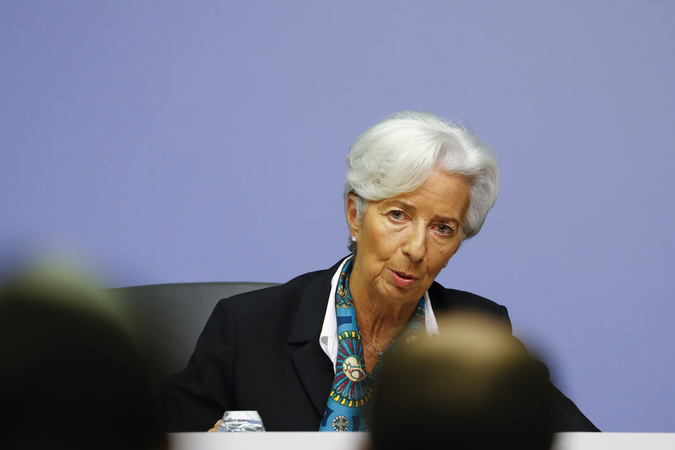
Christine Lagarde, president of the European Central Bank, speaks during the central bank's rate decision news conference in Frankfurt, Germany, on Dec. 12, 2019. MUST CREDIT: Bloomberg photo by Alex Kraus.

Christine Lagarde, president of the European Central Bank, speaks during the central bank’s rate decision news conference in Frankfurt, Germany, on Dec. 12, 2019. MUST CREDIT: Bloomberg photo by Alex Kraus.
By Syndication Washington Post, Bloomberg · Paul Gordon, Piotr Skolimowski

611 Viewed

Christine Lagarde said the euro zone’s economic slowdown is showing tentative signs of bottoming out after her first policy meeting as president of the European Central Bank, in comments that suggested further interest-rate cuts are unlikely any time soon.


“There are some initial signs of stabilization in the growth slowdown and of a mild increase in underlying inflation,” she told reporters on Thursday. “The risks surrounding the euro-area growth outlook, related to geopolitical factors, rising protectionism and vulnerabilities in emerging markets, remain tilted to the downside, but have become somewhat less pronounced.”

The euro jumped as high as $1.1154 before paring gains to trade up 0.1% at $1.1141 at 3:21 p.m. Frankfurt time.

Still, Lagarde unveiled updated economic forecasts that show the outlook remains muted for now. Growth will be 1.1% next year — a slight revision lower — and 1.4% in 2021, the bank predicted. The first outlook for 2022 showed an expansion of 1.4% that year. Inflation is seen at 1.6% in 2022 — still below the goal of just under 2%.

The Governing Council earlier held its deposit rate at a record-low minus 0.5%, and bond purchases at 20 billion euros ($22 billion) a month, sticking to a controversial package unveiled in September.

Yet pressed on whether the ECB needs to take further action, Lagarde said that “we are very aware of the side effects” of negative rates and called on governments to help out with fiscal stimulus and structural reforms. “It would be very welcome to have other policies join the monetary policy in order to support the reduction of slack.”

The president also pledged the central bank’s first strategic review since 2003, giving it an opportunity to assess whether the inflation goal needs to be adjusted. On Thursday, she said such a review is “overdue” and she aims to start it in January, completing it before the end of the year.

It needs to be “comprehensive” and include consultation with members of the European Parliament, the academic community and representatives of civil society, she said. She added that there is no “preconceived landing zone” but it will address challenges including climate change, technology, and rising inequality.

She expressed disappointment that the European Union was unable to agree this week on a set of standards for defining green investments, which would have been “extremely helpful” for the ECB in her ambition to contribute to combating global warming. That’s a “call to find an agreement,” she said.

Lagarde’s broad plans have worried some officials, who fear being diverted from their primary mandate of restoring price stability. Inflation has averaged just 1.2% so far in 2019, despite years of unprecedented and often contentious stimulus.

While some economic indicators have suggested lately that the bloc’s slowdown might be easing, Germany remains embroiled in its worst manufacturing slump in a decade, and the U.S.-China trade war and Brexit have continued to weigh on growth. Lagarde said the latest signs are that U.S.-China talks are “heading in a better direction.”

She also signaled that she’ll take a far broader view of the ECB’s mission, saying she wants to “explore each and every corner” of the institution’s operations to “better respond to serving euro-area citizens” as well as delivering on the price-stability mandate.

Aramco closes just below $2 trillion goal in second-day gain

#ศาสตร์เกษตรดินปุ๋ย : ขอบคุณแหล่งข้อมูล : หนังสือพิมพ์ The Nation

https://www.nationthailand.com/business/30379373?utm_source=category&utm_medium=internal_referral

Aramco closes just below $2 trillion goal in second-day gain

Dec 13. 2019
Mohammed bin Salman, Saudi Arabia's deputy crown prince, during a bilateral meeting with then-U.K. Prime Minister Theresa May in Riyadh, Saudi Arabia, on April 4, 2017. MUST CREDIT: Bloomberg photo by Simon Dawson.

Mohammed bin Salman, Saudi Arabia’s deputy crown prince, during a bilateral meeting with then-U.K. Prime Minister Theresa May in Riyadh, Saudi Arabia, on April 4, 2017. MUST CREDIT: Bloomberg photo by Simon Dawson.
By Syndication Washington Post, Bloomberg · Filipe Pacheco

557 Viewed

Saudi Aramco shares rose for a second day, but the oil giant failed to hold on to the $2 trillion valuation that Crown Prince Mohammed bin Salman had long targeted.

The stock climbed 4.6% to close at 36.80 riyals in Riyadh, finishing at $1.96 trillion. Aramco earlier rose as much as 10%, the daily limit, in trading of 418 million shares, up from 31.6 million Wednesday.

The gain, which follows a 10% surge on Wednesday, reflects the kingdom’s efforts to engineer a successful start to trading after international investors balked at the price in the initial public offering. Saudi Arabia encouraged local individuals to purchase and hold the stock through cheap loans and a bonus-share plan, while pushing wealthy families and regional allies to buy as well.

The offering consisted of only 1.5% of Aramco’s stock, so that investors who didn’t get allocated shares in the IPO had to buy in the secondary market.

“We were expecting this IPO to be a blockbuster, and the performance in the past two days shows that was the case,” said Vijay Valecha, chief investment officer at Century Financial Consultancy in Dubai, who has high-net-worth individuals from the Gulf among his clients. “From the appetite we see for the stock, there is room for it to climb another 10% to 18% next week.”

Aramco raised $25.6 billion in the deal, selling shares at 32 riyals each and overtaking Microsoft and Apple as the most valuable listed company.

The IPO has become synonymous with the crown prince and his efforts to reshape the economy of the world’s biggest oil exporter. But his insistence on the $2 trillion valuation deterred international investors, many of whom said the stock was too expensive given governance and geopolitical concerns.

Analysts at Sanford C. Bernstein & Co. said after the first trading day that it’s already time to cash out. In a Bloomberg survey last month, global money managers put Aramco’s fair value at between $1.2 trillion and $1.5 trillion.

While hitting the target may vindicate Saudi officials, it could complicate any plans to sell part of Aramco’s shares abroad as originally envisaged by Prince Mohammed in 2016, when he said a dual listing could raise as much as $100 billion. Saudi officials met in recent weeks with international investors to sound them out on a possible listing of Aramco’s shares in Asia, the Wall Street Journal reported Wednesday.

Still, the IPO — touted as part of a blueprint for life after oil for the kingdom — is a watershed moment for a business that’s bankrolled Saudi Arabia and its rulers for decades.

The debut was cheered by Saudi and Gulf investors, who see the stock price supported by Aramco’s guaranteed dividends, buying by index-tracking funds and the fact that the region doesn’t have any other listed major oil companies.

Aramco’s “$2 trillion valuation is justified due to secured dividend streams,” Arqaam Capital analysts including Rita Guindy and Jaap Meijer wrote in a report on Wednesday in which they initiated coverage with a buy recommendation and price target of 39.20 riyals.

Arqaam expects a gradual increase of 2% annually in the dividend, potentially being topped up by a special payout of $20 billion in the next three years.

Federal Reserve predicts no interest rate cuts in 2020, ignoring Trump’s calls to boost the economy

#ศาสตร์เกษตรดินปุ๋ย : ขอบคุณแหล่งข้อมูล : หนังสือพิมพ์ The Nation

https://www.nationthailand.com/business/30379340?utm_source=category&utm_medium=internal_referral

Federal Reserve predicts no interest rate cuts in 2020, ignoring Trump’s calls to boost the economy

Dec 12. 2019
The Federal Reserve's chairman, Jerome Powell

The Federal Reserve’s chairman, Jerome Powell
By The Washington Post · Heather Long

1,344 Viewed

WASHINGTON – The Federal Reserve hit the pause button Wednesday, deciding to leave interest rates unchanged for now and signaling no plans to cut in 2020. President Donald Trump has repeatedly urged the Fed to slash rates, but the central banks says the U.S. economy is in a good place and does not need an extra boost.

The Fed lowered the interest rate in July, September and October in an effort to calm recession fears on Wall Street and counter the negative impact of Trump’s trade war. The benchmark U.S. interest rate is just shy of 1.75 percent, down from nearly 2.5 percent a year ago.

A lower interest rate makes it cheaper to borrow money to buy a home and car or to start a business. It also means savers get less in monthly interest on the money they keep in savings accounts at banks. Many retirees have complained the Fed is hurting them by keeping rates down, but Fed Chair Jerome Powell has said his top goal is ensuring that the recovery, which is now in its 11th year, keeps going.

“We expect moderate growth to continue,” Powell said in a news conference Wednesday. “We reduced [interest rates] by three-quarters of a percentage point. This shift has helped support the economy and has kept the economy on track.”

Fed leaders predict the economy will grow 2 percent next year, a downgrade from 2.2 percent growth this year and 2.9 percent in 2018.

For months, the Fed has stressed there were many “head winds” and “uncertainties” about the economic outlook, but there is no longer any mention of that in the official statement, an indication that the central bank thinks the economy is stronger now than it was over the summer.

“Do-nothing Congress, and now do-nothing Federal Reserve,” said Chris Rupkey, chief financial economist at MUFG Bank. “Looks like policy is stuck in neutral here at 1.75 percent without a recession or inflation, neither of which are very likely anytime soon.”

Trump has blasted the Fed for allegedly keeping interest rates too high, calling central bank officials “boneheads.” He has urged them to cut rates to zero, effectively allowing people and businesses to borrow money free. But Wall Street investors and most economists think the Fed will stay on hold for months to come. Investors are penciling in one more rate cut before the election, probably in July or September.

Powell left the door open to changing interest rates in 2020, but he stressed there is a high bar for moving rates up or down.

“We’re going to do what we think is the right thing for the economy,” Powell said. If there is a “material reassessment of our outlook, we would respond accordingly.”

Economists say the Fed’s actions kept the economy on track despite head winds from weak global growth and Trump’s trade war.

Recession fears peaked in August when the “yield curve” inverted – a warning sign that typically occurs a year or two before a recession takes hold. But the yield curve has returned to normal, and the chance of recession has fallen from about 50 percent in August to below 25 percent now, according to most analysts.

Stocks are now back at record highs. Unemployment is at a half-century low, inflation remains tame, and the economy continues to grow at a healthy pace around 2 percent, with little chance of a recession. Wall Street is also hopeful that Trump will not enact any more tariffs.

As the economic outlook has improved for 2020, Trump has lessened his attacks on the Fed. He tweeted (or retweeted) 43 times about the Fed ahead of the central bank’s September meeting. He reduced that to five times ahead of the Fed’s October meeting and nine times ahead of Wednesday’s meeting.

The Fed’s policy-setting committee will holds its next meeting Jan. 28-29, less than a week before the Iowa caucuses begin the primary process to select the Democratic presidential nominee.

Sen. Bernie Sanders, I-Vt., is the only candidate seeking the Democratic nomination who agrees with Trump that interest rates are too high. Most Democrats do not think it is appropriate for the president to weigh in on monetary policy, which is supposed to be independent of politics.

“The big news was that the vote was unanimous for the first time in five meetings. This signals a higher level of comfort with the state of the economy,” said Tendayi Kapfidze, chief economist at LendingTree.

Stocks rise, dollar falls on ‘accommodative’ Fed

#ศาสตร์เกษตรดินปุ๋ย : ขอบคุณแหล่งข้อมูล : หนังสือพิมพ์ The Nation

https://www.nationthailand.com/business/30379338?utm_source=category&utm_medium=internal_referral

Stocks rise, dollar falls on ‘accommodative’ Fed

Dec 12. 2019
By Syndication Washington Post, Bloomberg · Sarah Ponczek, Vildana Hajric

1,131 Viewed

U.S. stocks rose with Treasuries, while the dollar fell after the Federal Reserve left interest rates unchanged and its chairman signaled it would keep policy “somewhat accommodative.”

The S&P 500 halted a two-day slide as the central bank’s decision fueled bets that the bar for an increase in rates remains high even as economic growth is steady. The 10-year Treasury rate fell below 1.8%.

The Fed, in its first unanimous vote since May, said it will continue to monitor the implications of data for the economic outlook “including global developments and muted inflation pressures.” Fed Chairman Jerome Powell said the central bank will keep rates where they are unless there’s a meaningful change in the outlook.

“It’s ‘steady as she goes’ from the Fed today,” said Jason Pride, chief investment officer of private wealth at Glenmede Trust. “This accommodative stance should provide a measure of support for risk assets heading into the new year.”

Equity gains had been muted throughout the session as investors kept an eye out for trade headlines. The Dow Jones industrial average was little changed amid more trouble for Boeing’s Max plane and Home Depot’s weak forecast. Crude slipped after U.S. inventory data was released.

With the world’s top two economies still wrangling over an interim deal, Thursday may bring news as President Donald Trump is expected to talk to his trade team about china, according to people familiar with the talks.

– – –

Here are some other key events to watch:

– Brazil’s central bank also decides on interest rate.

– The next European Central Bank policy meeting is on Thursday.

– The U.K. holds a general election Thursday.

– – –

And these are the main market moves:

Stocks

The S&P 500 index gained 0.3% at 4 p.m. New York time.

The Nasdaq composite index advanced 0.6%.

The Dow Jones Industrial Average was up 0.1%.

The MSCI All-Country World Index climbed 0.4%.

Currencies

The Bloomberg Dollar Spot Index fell 0.4%.

The Japanese yen rose 0.2% to 108.55 per dollar.

The euro added 0.3% to $1.1131.

Bonds

The yield on two-year Treasuries lost three basis points to 1.62%.

The yield on 10-year Treasuries fell five basis points to 1.79%.

Germany’s 10-year yield declined two basis points to -0.32%.

Commodities

West Texas Intermediate crude fell 0.7% to $58.84 a barrel.

Gold futures advanced 0.8% to $1,479.50 an ounce.

Brent crude gained lost 1.1% to $63.62 a barrel.

Tax relief approved for govt housing scheme

#ศาสตร์เกษตรดินปุ๋ย : ขอบคุณแหล่งข้อมูล : หนังสือพิมพ์ The Nation

https://www.nationthailand.com/business/30379318?utm_source=category&utm_medium=internal_referral

Tax relief approved for govt housing scheme

Dec 12. 2019
Government Spokeswoman Narumon Pinyosinwat

Government Spokeswoman Narumon Pinyosinwat
By THE NATION

700 Viewed

The Cabinet on December 11 approved the waiver of personal income tax on Bt50,000 cash rebate people will gain from the “Baan Dee Mee Down” government housing purchase campaign.

Government Spokeswoman Narumon Pinyosinwat said that this means those who will get the Bt50,000 cash rebate from the campaign would not have to take the amount into calculation for tax payment.

The Cabinet announced this campaign last month to reduce home-purchase costs.

To be eligible, the buyer must have a monthly salary not exceeding Bt100,000 and included in the Revenue Department’s tax database of around 100,000 individuals under this category.

The campaign will end on March 31, 2020.

According to Finance Ministry spokesman Lavaron Sangsnit, the number of people registering for the privilege in the Baan Dee Mee Down project yesterday (December 11) was 40,906. Wednesday was the first day of registration.

Early this month the Cabinet approved the Finance Ministry’s proposed regulations to waive personal income taxon the financial privilege given to registered consumers, under the government’s economic stimulus package “Eat, Shop, Spend”.

This means the Bt1,000 handout and the ‘cash-back’ amount will not come into calculation for tax payment.

Economy to pick up on state enterprises’ investment

#ศาสตร์เกษตรดินปุ๋ย : ขอบคุณแหล่งข้อมูล : หนังสือพิมพ์ The Nation

https://www.nationthailand.com/business/30379320?utm_source=category&utm_medium=internal_referral

Economy to pick up on state enterprises’ investment

Dec 12. 2019
By THE NATION

813 Viewed

State enterprises’ investment of around Bt100 billion in the current quarter will spur the local economy, said Finance Minister Uttama Savanayana yesterday (December 11) at an event hosted by Thansettakit newspaper.

He said that the Thai economy would not enter into a recession and could continue its growth momentum. The ministry has forecast a 3-per cent growth next year.

He added that state enterprises had been told to accelerate budget spending in the last quarter.

If needed be, the government is ready to introduce additional stimulus packages next year, he said.

The Prayut Chan-o-cha administration has launched stimulus packages for many sectors, from real estate to tourism.

He said  the key factor in boosting the economy was to raise the confidence of consumers and investors.

In a related matter, S&P Global Ratings on December 11 revised its outlook on Thailand’s sovereign credit rating to positive from stable.

At the same time, it affirmed its ‘BBB+’ long-term and ‘A-2’ short-term foreign currency sovereign credit ratings, and its ‘A-‘ long-term and ‘A-2’ short-term local currency ratings on Thailand.

ECB policymakers said to discuss central bank digital currency

#ศาสตร์เกษตรดินปุ๋ย : ขอบคุณแหล่งข้อมูล : หนังสือพิมพ์ The Nation

https://www.nationthailand.com/business/30379328?utm_source=category&utm_medium=internal_referral

ECB policymakers said to discuss central bank digital currency

Dec 12. 2019
The stars of the European Union (EU) sit on banners flying outside the European Central Bank (ECB) headquarters in Frankfurt, Germany, on Nov. 27, 2019. MUST CREDIT: Bloomberg photo by Peter Juelich.

The stars of the European Union (EU) sit on banners flying outside the European Central Bank (ECB) headquarters in Frankfurt, Germany, on Nov. 27, 2019. MUST CREDIT: Bloomberg photo by Peter Juelich.
By Syndication Washington Post, Bloomberg · Jana Randow, Paul Gordon, Carolynn Look 

856 Viewed

European Central Bank policymakers meeting in Frankfurt this week will discuss the prospect of launching their own digital currency, according to euro-zone officials familiar with the matter.

Governing Council members expect to talk about the topic informally at dinner on Wednesday, a day before their policy meeting under new President Christine Lagarde, the people said, asking not to be named as such deliberations are private. An ECB spokesman declined to comment.

While there’s no expectation of an imminent decision, the symbolism of the debate on the eve of Lagarde’s first interest-rate decision shows how far she is willing to shake up the ECB by embracing modern-day challenges, as she has with climate change. It’s another signal that her upcoming strategic review could augur a radical overhaul of the two-decade-old institution.

Lagarde has long argued that central banks should consider the merits of issuing their own digital currency. In her previous job as head of the International Monetary Fund, she said it could support public goals such as financial inclusion, consumer protection and payment privacy.

The idea has gained momentum in recent years, spurred in part by the rise of cryptocurrencies such as Bitcoin. Facebook Inc.’s plans this year for a global digital currency sparked a backlash among governments, but also fueled the debate that public authorities risk being left behind as consumers turn to private-sector initiatives that skirt the traditional banking system.

The ECB said last week that it’ll develop its own digital currency if the private sector can’t make cross-border payments faster and cheaper, arguing that technological innovation is quickly transforming how retail payments are made. In a document prepared for the European Parliament, the central bank said it is analyzing the situation and will be ready to respond if needed.

The People’s Bank of China is already working on a digital currency and the Bank for International Settlements, a hub for monetary cooperation, published a survey this year showing most central banks are considering the implications of doing so. BIS head Agustin Carstens said last week that they “have a responsibility to be at the cutting edge of the debate.”

Bank of England Governor Mark Carney has gone so far as to suggest that a global central bank digital currency might one day replace the dollar as the international reserve currency.

Still, there’s also plenty of skepticism. U.S. Treasury Secretary Steven Mnuchin said only last week that he and Federal Reserve Chairman Jerome Powell don’t see a need to create a Fed digital currency for at least the next five years. Powell previously told a lawmaker that the Fed is studying the costs and benefits of such a move.

Within the euro zone, the Dutch central bank carried out two cryptocurrency experiments in 2015, finding that drawbacks included industry fragmentation and self-interest among financial incumbents. In 2016, Germany’s Bundesbank and the stock exchange tested blockchain — the technology underlying cryptocurrencies — for transferring and settling securities and cash, concluding that the process was too expensive and slow.

Bundesbank President Jens Weidmann has said there is no need for a central bank digital currency for the broad public. He warned it could even weaken financial stability, as people might cause a bank run in a crisis by rapidly shifting their cash to the safer home of a central-bank account.

Thai sovereign credit rating raised to positive

#ศาสตร์เกษตรดินปุ๋ย : ขอบคุณแหล่งข้อมูล : หนังสือพิมพ์ The Nation

https://www.nationthailand.com/business/30379319?utm_source=category&utm_medium=internal_referral

Thai sovereign credit rating raised to positive

Dec 11. 2019
By THE NATION1,081 Viewed

S&P Global Ratings revised its outlook on Thailand’s sovereign credit rating to positive from stable.

It also affirmed our ‘BBB+’ long-term and ‘A-2’ short-term foreign currency sovereign credit ratings, and its ‘A-‘ long-term and ‘A-2’ short-term local currency ratings on Thailand, according to its statement issued on Wednesday.

Its transfer and convertibility assessment remains ‘A’.

The positive outlook reflects its assessment that political uncertainty in Thailand has begun to ease with the return of an elected government.

With progress in implementing national reforms and strategy plans, it believes policy continuity and political stability will improve.

It may raise the rating over the next 24 months if there are clearer signs the key political players are committed to the current political framework and that abrupt and unexpected political changes become unlikely.

In this scenario, it expects the government will continue to implement key reforms and strategies according to national plans, despite the complexities of operating in a multiparty parliamentary democracy.

It could revise the outlook to stable if pressure on the current political process builds substantially, resulting in increasing social tensions and uncertainty that raise the likelihood of abrupt political changes.

In addition, if growth is persistently weaker than what it has currently forecast, it could also revise the outlook to stable.