Thai GDP growth forecast for 2019 slashed further

#ศาสตร์เกษตรดินปุ๋ย : ขอบคุณแหล่งข้อมูล : หนังสือพิมพ์ The Nation

https://www.nationthailand.com/business/30379227?utm_source=category&utm_medium=internal_referral

Thai GDP growth forecast for 2019 slashed further

Dec 09. 2019
By THE NATION

2,573 Viewed

Kasikorn Research Centre has revised downward its gross domestic product (GDP) forecast for 2019 to 2.5 per cent and projected that the Thai economy may grow 2.7 per cent in 2020.

The centre revealed the forecast at its seminar on “Business Outlook amid Numerous Challenges in 2020” on Monday (December 9).

Meanwhile, Thai businesses may face numerous downside risks including the baht’s appreciation, drought and minimum wage hike, it added.

Nattaporn Triratanasirikul, KResearch assistant managing director, said that KResearch’s downward economic growth revision for 2019 to 2.5 per cent from 2.8 per cent can be attributed to lacklustre export performance which has been caused by the protracted trade war and the stronger baht, less-than-expected overall investment and delay in the enactment of the budget expenditure bill for FY2020.

“For 2020, GDP is projected to grow 2.7 per cent (within a projected range of 2.5-3.0 per cent). We hope that the economy will be mainly driven by the push for the draft bill on budget expenditure for FY2020 and disbursement acceleration.”

However, as the political uncertainty at home may prompt a delay in the injection of a new budget into the economic system, which will affect private sector confidence, GDP may see growth of 2.5 per cent or less, which is at the lower end of KResearch’s projection range.

Meanwhile, exports may continue to shrink due to deceleration in Thailand’s major export markets, the US-China trade war which is unlikely to be resolved anytime soon as well as the baht’s relentless rise, especially amid the expectation of another rate cut by the Fed next year which will put greater pressure on the US dollar.

Thai commercial banks are expected to brace for four challenges, especially limited loan growth in line with the overall economic sentiment.

The loan growth next year is expected to stay unchanged at 3.5 per cent. Non-performing loans may increase from 2019, while the banks’ fees are likely to grow no more than 1-2 per cent and there may be additional impacts from the government’s policies.

Additionally, downward trend of the interest rates and the government’s signals to commercial banks to help their customers will affect an adjustment of lending and deposit interest rates, which will in turn pressure net interest margin (NIM).

Kevalin Wangpichayasuk, assistant managing director, KResearch, said other business sectors would face tough questions as well.

First of all, the expected stronger baht in 2020, when compared to the 2019 average, will not only affect the export sector but also lead to a shrinkage or reduction of the manufacturing output and possible job losses. Based on preliminary estimations, over 30,000 jobs in the manufacturing sector will be affected after almost 100,000 jobs disappeared in 2019.

Meanwhile, the drought in 2020 is forecast to be more severe than in 2019 as the water levels in various dams in Thailand have dropped drastically since the beginning of this year.

The drought may result in a contraction in the gross domestic product of the agricultural sector and farmers’ income. It remains to be seen whether the drought next year will record another historically severe condition as seen in 2015-16. The outlook should be clearer in the first 3-4 months of 2020 when it will become known whether Thailand will experience a long dry season next year.

Regarding the latest daily minimum wage rise, although its impact on 2020 inflation will likely be limited, it may present a challenge to the business sector.

An average increase in the daily minimum wage of approximately Bt5 will cause average labour cost to rise by another 0.3 per cent while the agricultural business will be adversely affected by the stronger baht, drought and rising labour costs.

This may force the government to introduce specific policies to aid this sector.

Meanwhile, the property sector has not recovered yet because there are around 200,000 accumulated unsold residential units in the market, which is too high for property developers to clear within a short period of time.

Among the businesses that continue to thrive is tourism. Although international tourist arrivals to Thailand are projected to grow at a slower pace of approximately 2-3 per cent in 2020, declining from a prior estimate of about 4 per cent in 2019, some inbound tourism markets, including China, Asean and India, as well as domestic tourism will likely help create travel-related business opportunities in Thailand.

The government may continue to promote or introduce tourism stimulus measures as one of the tools to boost the Thai economy in 2020 because tourism accounts for as much as 18 per cent of GDP.
Corporate bonds reach record high

#ศาสตร์เกษตรดินปุ๋ย : ขอบคุณแหล่งข้อมูล : หนังสือพิมพ์ The Nation

https://www.nationthailand.com/business/30379149?utm_source=category&utm_medium=internal_referral

Corporate bonds reach record high

Dec 09. 2019
By THE NATION

953 Viewed

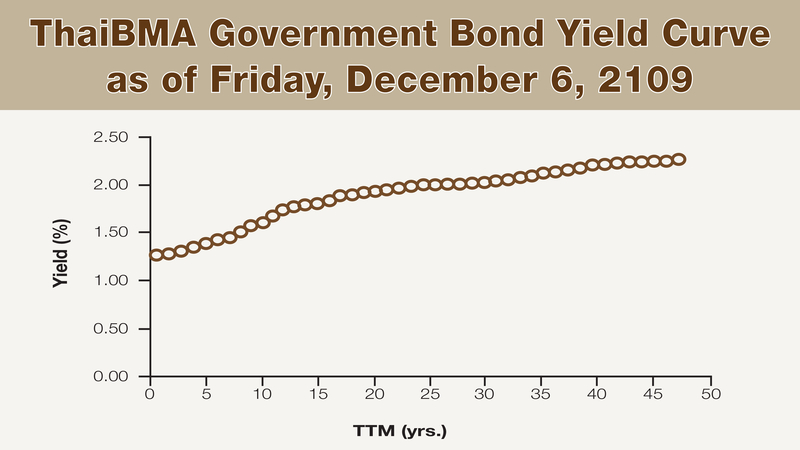
The issuance of corporate bonds with maturity of over one year from early this year through mid-November has already hit a record high of Bt1 trillion, according to The Thai Bond Market Association (ThaiBMA).

TBMA senior executive vice-president Ariya Tiranaprakij said that the value was well over the association’s expectations.

One reason is that companies rushed to take advantage of the low interest to issue bonds to refinance the short term loans that they had taken out to finance their business takeovers.

The top five industries issuing the bonds during this period were real estate developers with an issuance worth Bt144 billion, followed by finance companies at Bt133 billion, banks Bt124 billion, ICT Bt115 billion, and food Bt89 billion.

Most of the issuances were made in the second half of this year, especially in perpetual bonds.

The association expects to see a lower value of Bt800 million in corporate bond issuance in 2020, due partially to the new stricter rules of the Securities and Exchange Commission on corporate bond trading.

The value of the bonds due next year is worth Bt622 billion.

California’s fintech startups are invading New York

#ศาสตร์เกษตรดินปุ๋ย : ขอบคุณแหล่งข้อมูล : หนังสือพิมพ์ The Nation

https://www.nationthailand.com/business/30379203?utm_source=category&utm_medium=internal_referral

California’s fintech startups are invading New York

Dec 08. 2019
A view from 68th floor of 3 World Trade Center building in New York on May. 22, 2018. MUST CREDIT: Bloomberg photo by Jeenah Moon.

A view from 68th floor of 3 World Trade Center building in New York on May. 22, 2018. MUST CREDIT: Bloomberg photo by Jeenah Moon.
By Syndication Washington Post, Bloomberg · Julie Verhage

1,470 Viewed

When two Irish brothers started Stripe Inc. together in 2010, there was little question about where they should put their headquarters. It had to be California.

Now, though, Stripe is leaving the metropolitan tech mecca, awash in tech talent and investor cash, and is in the process of moving its main office about 10 miles to neighboring South San Francisco. What’s more, the company-whose $35 billion valuation makes it one of the world’s most valuable startups-is currently building up its staff in another state altogether: New York.

In September, Stripe opened an office near Wall Street the company told Bloomberg, and plans to add several hundred employees there in the coming years. The startup’s planned New York growth is on track to outpace its headquarters’.

The city has long been a hub for finance, and more recently for tech. “New York is a global leader,” said David Singleton, Stripe’s chief technology officer. “It’s just an important market for entrepreneurialism and startups.”

Stripe is one of many Bay Area-based fintech companies now building up a New York presence. Plaid Technologies Inc., which connects various apps to customers’ bank accounts, has relocated or hired more than 100 people in the city over the last year, or about a quarter of its staff. Affirm Inc., the lending startup founded by former PayPal Holdings Inc. co-founder Max Levchin, also recently opened up a Manhattan office that has about 50 employees, the company said. And Brex Inc., the business credit card startup most recently valued at $2.6 billion, has permanently relocated its chief financial officer to Midtown, according to a person familiar with the matter who asked not to be identified discussing information that’s not yet public.

In some ways, the moves are natural for tech startups with financial ambitions. Despite the growing success of fintech upstarts hailing from San Francisco, Wall Street institutions remain on top of the financial world, and New York offers an appealing pool of potential hires. Uber Technologies Inc., for example, announced the creation of a new unit called Uber Money in October, and will be shopping for fintech talent in and around Manhattan, according to a CNBC report. At Affirm, the company’s New York employees’ resumes are littered with names like Morgan Stanley and Goldman Sachs.

Often, financial technology companies that are just getting started set up shop in San Francisco to be close to tech workers with experience designing products at big companies, said Mark Goldberg, a partner at Index Ventures. San Francisco’s resident tech giant include Uber, Lyft, Twitter and Airbnb. But “what they don’t understand is the industry,” he said, adding that eventually, many fintech companies look eastward for hiring. “What I think happens is that companies that start on the West Coast end up recognizing that they want to compliment that DNA with capital market expertise, and with people that have been in and around banks.”

Meanwhile, tech epicenter San Francisco has become less hospitable for some companies. Last year, voters passed a new tax on businesses that will go to fund homelessness relief efforts, and taxes financial services companies at a higher rate than other types of businesses. Stripe’s decision to leave the city was widely regarded by local officials as related to the passage of the new tax. The company, which strongly opposed the measure, denied that taxes were a major factor in the decision to move.

Stripe instead pointed to the limited office space in San Francisco. The city’s asking prices for commercial rent, which are the highest in the nation, climbed 7% over the last year to record levels in the third quarter, according to real estate firm Cushman & Wakefield. And adding to the region’s woes: In recent months fires caused widespread power outages in homes around the Bay Area.

Still, none of fintech unicorns Bloomberg spoke to have plans to move their headquarters away from the West Coast. Stripe, while hiring a few hundred people in New York, currently has more than 1,000 employees in Silicon Valley. Affirm’s San Francisco office is many times larger than its Manhattan outpost. And New York-based financial services startups tend to have stubbornly lower valuations than their high-flying West Coast counterparts.

For Plaid, New York is a homecoming of sorts. The startup left the city in 2013 after winning TechCrunch’s Disrupt New York Hackathon, and, seeking proximity to engineers and investors, moved its headquarters to San Francisco. “Us coming back and building a really big presence is a strong signal for NYC tech, which has made huge strides in terms of client base, talent, and funding,” said Charley Ma, Plaid’s New York City growth manager, who moved from the West Coast for the job last fall. Plaid’s chief executive officer, however, will remain in San Francisco.

India’s exit from trade deal negotiations moves closer to reality

#ศาสตร์เกษตรดินปุ๋ย : ขอบคุณแหล่งข้อมูล : หนังสือพิมพ์ The Nation

https://www.nationthailand.com/business/30379199?utm_source=category&utm_medium=internal_referral

India’s exit from trade deal negotiations moves closer to reality

Dec 08. 2019
Pool photo / The Yomiuri Shimbun
A meeting of RCEP leaders in Bangkok on Nov. 4, at which India announced its intention to withdraw from the regional trade deal.

Pool photo / The Yomiuri Shimbun A meeting of RCEP leaders in Bangkok on Nov. 4, at which India announced its intention to withdraw from the regional trade deal.
By Syndication Washington Post, The Japan News-Yomiuri

35 Viewed

The withdrawal of India from the negotiations for the Regional Comprehensive Economic Partnership free trade deal (RCEP), which has involved the participation of 16 countries, including Japan, China, South Korea and members of the Association of Southeast Asian Nations (ASEAN), is seemingly coming closer to reality.

Japan intends to continue efforts to persuade India to remain in the initial 16-country framework for the agreement of the regional trade talks. However, as there is still strong opposition to the RCEP within India, it remains to be seen whether the negotiations will go smoothly.

At a news conference after a Cabinet meeting on Friday, Economy, Trade and Industry Minister Hiroshi Kajiyama said that he would visit India from Tuesday to Wednesday.

In addition, he stated, “[Japan] will seriously discuss the matter together with India to aim for the signing [of the RCEP] within 2020,” indicating that he will aim to persuade India to take concerted action with other negotiating countries.

Prime Minister Shinzo Abe also plans to visit India from Dec. 15 to 17. Abe likely will urge India to return to the negotiating table.

India’s announcement of its exit from the RCEP took place at the leaders’ meeting for the deal in Bangkok on Nov. 4. Initially, there was a view among the other participating countries that the withdrawal announcement was a tactic to gain a negotiating advantage for India. But since then, the Indian government has been making comments to justify the country’s exit from the RCEP, strengthening its stance of not hesitating to actually withdraw.

A source close to the Thai government said, “We came to gradually feel how serious India is [about exiting the RCEP].”

In India, there is strong fear that if the RCEP is realized, a high volume of low-priced industrial and other products would flow into India from China, and India’s domestic industries could suffer.

At the leaders’ meeting, Indian Prime Minister Narendra Modi was said to have stated that under the current circumstances, the RCEP could put Indian companies and consumers at a disadvantage, and that Mahatma Gandhi (1869-1948) would not have allowed India to join the RCEP.

Since the day following India’s withdrawal announcement, there have been a large number of voices from local newspapers and organizations in India applauding the announcement. They include one from English-language Indian paper The Economic Times, stating that the prime minister was protecting India. According to local newspapers and other sources, opposition to the RCEP still continues in India.

Japan sees the participation of India as indispensable for the RCEP because India is a huge market with a population of more than 1.3 billion people, and it is expected to see future economic growth. An increasingly urgent concern for Japan is that without India, China could enhance its relative influence.

Meanwhile, India is said to strongly seek the introduction of safeguards to prevent a sudden increase in the volume of imported products as a condition for the country to participate in the RCEP. It is said that India is taking such a step with China in mind, a stance that likely sets India apart from the other negotiating countries.

In addition, through the RCEP negotiations, India asks others to create an environment in which high-quality Indian human resources in the information technology sector will be able to succeed overseas. As the main workplaces for these Indian workers will be English-speaking countries, such as RCEP participants Australia and New Zealand, a Japanese government official said that Japan’s leverage is limited.

Under such circumstances, China and some ASEAN countries began to take a stance of accepting the RCEP coming into effect with just 15 participating countries, without India.

It is said that the negotiation schedule from now on has yet to be decided. The Japanese government is concerned about the future of the negotiations, as a government official said that if nothing is done, Japan could find itself as one of the minority countries that wish to stick to the 16-country framework.

– – –

RCEP

A large-scale economic cooperation framework for which negotiations started in 2013. There are 16 negotiating countries – Japan, India, the 10 ASEAN countries, China, South Korea, Australia and New Zealand. The 16 countries account for half of the global population and about 30% of global trade value.

Proposed Cambodian FTA with Eurasian Economic Union would diversify export market

#ศาสตร์เกษตรดินปุ๋ย : ขอบคุณแหล่งข้อมูล : หนังสือพิมพ์ The Nation

https://www.nationthailand.com/business/30379186?utm_source=category&utm_medium=internal_referral

Proposed Cambodian FTA with Eurasian Economic Union would diversify export market

Dec 07. 2019
The Kingdom’s garment and footwear sectors would gain a new market if an FTA is signed, Garment Manufacturers Association in Cambodia secretary-general Ken Loo said on Thursday. POST PIX

The Kingdom’s garment and footwear sectors would gain a new market if an FTA is signed, Garment Manufacturers Association in Cambodia secretary-general Ken Loo said on Thursday. POST PIX
By Thou Vireak
The Phnom Penh Post

1,167 Viewed

As the government moves to a Free Trade Agreement (FTA) with the Eurasian Economic Union (EAEU), garment and rice industry insiders expect the new trade corridor to diversify the Kingdom’s export market.

The Ministry of Commerce on Wednesday released a report on the results of its assessment of a potential FTA deal between Cambodia and the EAEU.

Garment Manufacturers Association in Cambodia secretary-general Ken Loo told The Post on Thursday that the Kingdom’s garment and footwear sectors would gain a new market if an FTA is signed.

“We will have duty-free access to exports, but we don’t know when we’ll reach the FTA. That is all I can say,” he said.

Cambodia Rice Federation vice-president Chan Sokheang said the agreement will boost the competitiveness of the Kingdom’s export-rice processing industry among its neighbours.

“Our export market will grow further and will not rely on just the European and Chinese markets. We have to open up more markets.

“Today, our premium varieties of rice are in very fierce competition with those of our neighbouring countries. The agreement will allow us to boost our competitiveness,” he said.

Speaking at the report launch ceremony, Minister of Commerce Pan Sorasak said the benefits of the FTA noted in the study include industrial diversification and expansion of financial services, transport, digital economy and agricultural services.

“An FTA will enable the two parties to increase economic cooperation, trade in goods, services and investment.

“We expect to increase trade and investment opportunities and mutual investment. Cambodia can increase its garments and textiles exports, agricultural products and other goods,” he said.

The EAEU is an economic bloc covering Eastern Europe and comprises five countries – Armenia, Belarus, Kazakhstan, Kyrgyzstan and Russia. The bloc has a combined population of 176 million and posted a gross domestic product of $2.5 trillion in 2016, Sorasak said.

Last month, Prime Minister Hun Sen discussed the agreement with Russian Prime Minister Dmitry Medvedev during the 14th East Asia Summit in Thailand.

Speaking at the Asean Business and Investment Summit last month, Medvedev said as the EAEU had signed an FTA deal with Vietnam in 2015 and with Singapore on October 1, it is currently in talks with “other partners in Asean” about possible FTAs as well, Singapore’s The Straits Times reported.

He also called for joint efforts with Asean to tackle monopolies by high-tech companies to allow a “healthy competition and the introduction of new promising ideas”, The Straits Times said.

Ministry of Commerce secretary of state Tek Reth Kamrong told reporters in March that the EAEU has provided tariff-free access for 46 Cambodian made products for three years due to the Kingdom’s Least Developed Countries (LDC) classification.

Though preferential status will last until Cambodia has graduated from its LDC rank, Reth Kamrong said the negotiation for an FTA deal with the bloc is a good initiative.

EAEU tariff preferences granted to Cambodian goods include rice, silk, textiles, meat, vegetables and coffee.

Garment, textile and footwear industry exports rose 13.18 per cent year-on-year during the first nine months of this year to more than $7.973 billion, data from the General Department of Customs and Excise shows.

Energy Regulatory Commission to look at price for charging EVs

#ศาสตร์เกษตรดินปุ๋ย : ขอบคุณแหล่งข้อมูล : หนังสือพิมพ์ The Nation

https://www.nationthailand.com/business/30379169?utm_source=category&utm_medium=internal_referral

Energy Regulatory Commission to look at price for charging EVs

Dec 07. 2019
By THE NATION

1,326 Viewed

The Office of the Energy Regulatory Commission (ERC) will conduct a study on the appropriate fee for an electric car charging service at charging stations.

This is in response to an order issued by the Energy Policy Administration Committee on December 4.

ERC deputy secretary-general Khomgrich Tantravanich explained that charging station operators were keen for the government to set new and higher fee rates to make their business more commercially viable as currently only a small number of electric vehicles (EV) are using the service.

The operators have proposed that the government determine the higher rate to make it worthwhile for them to continue business expansion, he added.

The current rate is based on a time of use (TOU) basis, which sees the charging fee varying according to the peak time from 9am to 10pm on weekdays to the off-peak time after 10pm on weekdays and during weekends.

The charging fee at peak time and off peak is Bt4.10 per unit and Bt2.60 per unit, respectively.

The administration committee has also approved the ERC’s proposal to solve the problem of 14 renewable power plants which failed to start operation on the commercial dates due to uncontrolled factors.

The ERC proposed that the administration committee put off the dates of the commercial operations for these plants on a case-by case-basis. This proposal will also need approval from the National Energy Policy Committee.

These renewable power plants have a total capacity of 300 megawatts. Construction is almost complete on most of them but several will not probably not be finished until 2021. One reason for the delay has been cited as the time needed to reach an understanding with communities where the plants will be located.

If they fail to start operation on time, their licences will be terminated.

Committees, panel set up to regulate airport link project, power plants

#ศาสตร์เกษตรดินปุ๋ย : ขอบคุณแหล่งข้อมูล : หนังสือพิมพ์ The Nation

https://www.nationthailand.com/business/30379151?utm_source=category&utm_medium=internal_referral

Committees, panel set up to regulate airport link project, power plants

Dec 07. 2019
Credit : EEC Office

Credit : EEC Office
By THE NATION

943 Viewed

The Eastern Economic Corridor Policy Committee on Friday (December 6) gave the nod to the establishment of a committee to regulate the high-speed train project linking three international airports.

A second new committee will also be set up to manage the contract for this project, Kanit Sangsubhan, the committee’s secretary general, said, adding that this was in line with the proposals of the EEC management panel chaired by Finance Minister Uttama Savanayana.

On October 24, the State Railway of Thailand (SRT) and Eastern High-Speed Rail Linking Three Airports Co., Ltd, led by Charoen Pokphand Holding and strategic alliances, signed a Public Private Partnership (PPP) deal to develop the high-speed rail linking Don Mueang, Suvarnabhumi and U-Tapao airports.

The EEC committee also appointed a panel to study and draw up the plan to establish the waste-driven power plants in the EEC and the power purchase plan. The panel consists of representatives from the Interior Ministry, Energy Ministry, PTT Global Power Synergy (GPSC). It will have to submit the progress of the study within next three months.

The plants are expected to be completely set up in next few years.

Rise in minimum daily wage deemed acceptable

#ศาสตร์เกษตรดินปุ๋ย : ขอบคุณแหล่งข้อมูล : หนังสือพิมพ์ The Nation

https://www.nationthailand.com/business/30379154?utm_source=category&utm_medium=internal_referral

Rise in minimum daily wage deemed acceptable

Dec 07. 2019
Thanawat Pholwichai, director of the Centre for Economic and Business Forecasting of the University of the Thai Chamber of Commerce

Thanawat Pholwichai, director of the Centre for Economic and Business Forecasting of the University of the Thai Chamber of Commerce
By THE NATION

867 Viewed

The rise in daily minimum wage announced yesterday (December 6) was set at an appropriate rate, said Thanawat Pholwichai, director of the Centre for Economic and Business Forecasting of the University of the Thai Chamber of Commerce.

He estimated that the hikewould see business operators paying an additional Bt30 billion in wages a year to labourers.

From this point of view, the rate is acceptable and not too high, he said, adding that it was speculated earlier that the daily minimum wage would increase by between Bt10 and Bt15.

The National Wage Committee announced today (December 6) that it will raise the minimum wage by Bt6 in nine provinces and Bt5 for others.

The committee will propose the new wage for Cabinet approval as soon as possible as it intended the increase to take effect on January 1, 2020. Supant Mongkolsuthree, chairman of the Federation of Thai Industries (FTI), said he believes the industrial sector could cope with the new rate in spite of the ongoing economic deceleration.

The hike, he said, would mostly affect SMEs and the farm sector as they are labour-intensive sectors while major industrial firms could adapt by deploying automation/robotics system.

Germany boosts electric-car incentives to stimulate demand

#ศาสตร์เกษตรดินปุ๋ย : ขอบคุณแหล่งข้อมูล : หนังสือพิมพ์ The Nation

https://www.nationthailand.com/business/30379164?utm_source=category&utm_medium=internal_referral

Germany boosts electric-car incentives to stimulate demand

Dec 07. 2019
Angela Merkel visits the VW ID.3 electric car factory in Zwickau, Germany MUST CREDIT: Bloomberg photo by Krisztian Bocsi

Angela Merkel visits the VW ID.3 electric car factory in Zwickau, Germany MUST CREDIT: Bloomberg photo by Krisztian Bocsi
By Syndication Washington Post, Bloomberg · Iain Rogers, Arne Delfs

911 Viewed

Chancellor Angela Merkel’s government and German automakers agreed to increase cash incentives for electric cars, intensifying an effort to move away from the combustion engine and reduce harmful emissions.

A so-called environment bonus will jump by 50% to as much as 6,000 euros ($6,680) per electric vehicle and the auto industry will continue to cover half the cost, Merkel’s chief spokesman, Steffen Seibert, said in a statement. The changes will take effect this month and run through 2025, according to Bernhard Mattes, president of Germany’s VDA auto lobby.

“It will therefore be possible to provide support for another 650,000 to 700,000 electric vehicles,” Seibert said. The measures were agreed Monday evening in Berlin between Merkel and officials from automakers, parts suppliers and labor unions, including the chief executives of Volkswagen AG, BMW AG and Daimler AG.

The accord came a day after Merkel visited a revamped VW electric-car plant in Zwickau, eastern Germany. The chancellor has come under fire for failing to make more progress in curbing greenhouse-gas emissions, while VW — the world’s biggest carmaker — has invested billions in the shift to electric vehicles.

Merkel’s Climate Protection Program 2030, unveiled in September, targets as many as 10 million electric cars on German roads by that year, a goal that most automotive experts say is unrealistic even with generous subsidies. As of the start of the year, there were about 420,000 electric and hybrid-electric vehicles in a national fleet of 47 million, according to the the University of Duisburg-Essen’s Center for Automotive Research.

Merkel called the challenges facing the industry “a paradigm shift in mobility that has never been realized in automotive history.”

Germany is closing in on Norway for European leadership with sales of almost 53,000 all-electric cars this year, according to the KBA, or federal motor transport authority. Per-capita it remains far behind the smaller country, and it’s still unclear how many German customers will ultimately switch to electric cars in a country with a rich automotive heritage centered on combustion engines.

Subsidies make a difference because higher costs for development and batteries drive up the price of an electric car. VW’s ID.3, for example, will start at just under 30,000 euros ($33,200 U.S.), while the least-expensive version of the new combustion-powered Golf will be sold for less than 20,000 euros.

The government’s push to promote electric cars includes boosting the number of public charging stations to 50,000 within two years, Seibert said. Automakers will help fund 15,000 of the stations by 2022. BMW has said it will install 4,100 charging points at its German locations by 2021, with about half being open to the public.

“I see this as an absolute chance to now increase demand, which will be good for us,” Klaus Rosenfeld, chief executive officer of German automotive supplier Schaeffler AG, said in an interview Tuesday.

“Anything that helps to achieve this mobility transformation, to increase consumer demand, is good for us, so in that sense we welcome the decision made today,” he added.

Merkel said in a podcast Sunday that the government’s focus is on promoting electric vehicles, but that it’s also open to hydrogen technology. It wants 1 million charging stations to be in place by 2030, she said.

Merkel’s $60 billion climate package failed to restore her reputation as a champion of the environment. Critics branded the measures, such as extra taxes on flights, as insufficient for a “climate emergency,” while economists criticized carbon price proposals as too shy an approach to spur emissions cuts.

Big industry and some union leaders slammed Germany’s go-it-alone approach, saying it would harm jobs and businesses.

Ferdinand Dudenhoeffer, the director of Center for Automotive Research, estimates a tally of about 5 million all-electric and hybrid car registrations by 2030. Reaching that level would be an achievement, he said in September.

Germany gets glimmer of hope as firms say worst may be over

#ศาสตร์เกษตรดินปุ๋ย : ขอบคุณแหล่งข้อมูล : หนังสือพิมพ์ The Nation

https://www.nationthailand.com/business/30379163?utm_source=category&utm_medium=internal_referral

Germany gets glimmer of hope as firms say worst may be over

Dec 06. 2019
By Syndication Washington Post, Bloomberg · Yuko Takeo878 Viewed

German business expectations improved in October from a decade low, a cautious sign that Europe’s largest economy may have stopped deteriorating at the start of the fourth quarter.

The figures from the Ifo Institute offer a glimmer of hope a day after a survey showed manufacturing still stuck in a slump and industry employment falling at the fastest pace in almost 10 years. Germany’s economy is forecast to have slipped into a technical recession in the third quarter, though economists see a return to modest growth at the end of the year.

Ifo said Friday its business climate indicator was unchanged in October, and the expectations measure rose more than economists forecast to a three-month high.

The euro rose 0.1% to $1.1117. German 10-year bond yields, which have been pushed far below zero this year on concern about the economy, climbed 2 basis points to minus 0.38%.

The report is a rare piece of encouraging news for the export-reliant economy, which is taking hits on multiple fronts, from a global slowdown amid trade tensions to upheaval in its key auto industry. Purchasing Managers’ Indexes show manufacturing mired in a deep slump, though the latest figures also showed that a decline in demand has eased somewhat.

The country’s struggles are also weighing on the euro zone, where the European Central Bank stepped up monetary stimulus last month by cutting interest rates further below zero and reviving asset purchases. In his final press conference on Thursday, President Mario Draghi highlighted how the euro-area services sector is now showing signs of negative contagion.

While the downturn has amplified calls for governments to add fiscal stimulus, in Germany imminent action appears unlikely.

Chancellor Angela Merkel has said the problem isn’t a shortage of money for investment, and there are sufficient projects in the pipeline. A government spokeswoman said Friday that Germany is sticking to its balanced-budget policy and sees no need for a spending program to boost the economy — a worrying sign for Christine Lagarde, who takes over the ECB presidency following Draghi’s exit this month.