BoT urges banks to make service fees fairer, raise data privacy standards

ศาสตร์เกษตรดินปุ๋ย : ขอบคุณแหล่งข้อมูล : หนังสือพิมพ์ The Nation

https://www.nationthailand.com/business/30378766?utm_source=category&utm_medium=internal_referral

BoT urges banks to make service fees fairer, raise data privacy standards

Nov 26. 2019
Thanyanit Niyomkarn

Thanyanit Niyomkarn
By The Nation
Wichit Chaitrong

1,605 Viewed

Thais are receiving fairer financial services compared to three years ago, the Bank of Thailand said, urging banks to make service fees fairer, raise data privacy standards when using customer information, and curb “annoying” product offerings. Promoting fair market conduct is part of BoT’s three-year strategic plan (2017-2019), said Thanyanit Niyomkarn, assistant governor, Supervision Group 2.

“Receiving fair financial services is regarded as a basic right for all Thais. Overall, Thais are receiving fairer financial services compared to three years ago, while financial service providers pay more attention and give greater importance to fair market conduct,” she said.

“The work in the area of market conduct has progressed somewhat, particularly building a robust supervisory system, which requires conducting intensive multi-approach examinations and real punitive measures against violators, promoting proper product information disclosure to enable consumers to make informed decisions, product and service comparison to enhance competition, leading to fairer fees and better services, as well as raising public financial literacy and awareness against potential financial scams. Insurance cross-selling has also been curbed considerably,” Thanyanit said.

“Nonetheless, there are areas in need of further improvements, which will be our focus. Chief among these include making financial service fees fairer, raising the standard for using customer information, and curbing annoying product offerings. Debt restructuring is another area of focus given challenging prospects of the economy and the country’s relatively high household debt. This part of work will be driven through the Debt Clinic Programme for credit cards and unsecured personal loans. SME debt restructuring together with preventing bad debts will also be a priority area for debt restructuring,” she added.

The central bank has requested all financial service providers to raise work standards. It requires their boards of directors and senior management to place greater importance and attention on fair market conduct, product development and client segmentation, remuneration schemes, sales process, communication and training, data privacy, complaint handling, and having a business continuity plan in place.

There has been progress in various areas. For example, the practice of cross-selling insurance products bundled with housing loans decreased drastically from 67 per cent in 2017 to 7 per cent in 2018, along with the number of complaints filed with BoT. Preventing annoying sales of financial products is another area in which BoT has worked closely with its partners. As an example, a “Gun Guan” mobile application has been developed by the National Broadcasting and Telecommunications Commission, which features the functionality to block unwanted incoming calls, including those from annoying sales and illegal debt collection.

The central bank requires SPs to provide product information in a transparent and easy-to-understand manner. For example, SPs must provide a product catalogue through which clients are informed of alternatives serving their needs without selling pressure, a sales sheet displaying key terms and warnings, and product contracts containing fair terms and conditions. At the same time, invoices and receipts must clearly display details for all items.

The bank aims to use comparative information disclosure to drive fairer market conduct in the future.

As for solving card-debts, the central bank has launched a debt restructuring programme with the multiple-creditor NPL scheme and has recently extended this to include single-creditor cases. By early 2020 the programme will become broader to include cases in court.

Solving SME debts is another crucial task for the bank, given the importance of the SME sector in the economy. Besides, debt resolution in the past focused mainly on bad debts or NPLs. This time, efforts are geared towards assisting borrowers who are still servicing their loans, to prevent these from deteriorating into bad debts.

New measures out to boost economic growth

ศาสตร์เกษตรดินปุ๋ย : ขอบคุณแหล่งข้อมูล : หนังสือพิมพ์ The Nation

https://www.nationthailand.com/business/30378767?utm_source=category&utm_medium=internal_referral

New measures out to boost economic growth

Nov 26. 2019
Finance Minister Uttama Savanayana, centre

Finance Minister Uttama Savanayana, centre
By THE NATION

1,690 Viewed

The Cabinet today (November 26) approved three new stimulus packages to prop up the softening economy, said Finance Minister Uttama Savanayana, adding that the measures aim to support small farmers, SMEs and property developers.

Uttama expects the new measures to generate Bt80 billion to the economic system, which would in turn lift GDP growth to 2.6 per cent this year.

The first package targets grassroot economy under the 2020 fiscal budget.

1.1 The government will allocate Bt14.348 billion to village funds for upgrading the infrastructure of villages, town communities as well as employment promotion. The eligible village funds are graded from A to C, totalling 71,742. Each village fund will get a maximum of Bt200,000.

1.2 The Bank for Agriculture and Agricultural Cooperatives (BAAC) will provide Bt50 billion to village funds, general public, community financial institutes, agricultural co-operatives, community enterprises, and farmers for operation expenses and to be used as revolving fund.

The loan will carry 0.01 per cent interest rate per annum for the first three years. After that it will be subject to BAAC rate. The campaign will run from on December 1, 2019 to November 30, 2022.

1.3 The village funds will grant debt moratorium to members under criteria to be set by the funds respectively.

2. The second package will help farmers reduce harvesting cost and improve rice quality.

Farmers, registered with the Department of Agriculture Extension this year, will be provided with financial aid for harvesting and rice quality improvement at Bt500 per rai or not exceeding Bt10,000 per household. Lands eligible for this programme is limited to not exceeding 20 rai per household.

3. The third package “Good House with down payment” aims to reducehome-purchase costs. The government will offer a cash-back of Bt50,000 per buyer on the down payment.

To be eligible, the buyer must have a monthly salary not exceeding Bt100,000 and included in the Revenue Department’s tax database of around 100,000 individuals under this category.

The campaign will start tomorrow (November 27) and end on March 31, 2020.

Foreigners allowed to change visa status while in Vietnam: NA

ศาสตร์เกษตรดินปุ๋ย : ขอบคุณแหล่งข้อมูล : หนังสือพิมพ์ The Nation

https://www.nationthailand.com/business/30378756?utm_source=category&utm_medium=internal_referral

Foreigners allowed to change visa status while in Vietnam: NA

Nov 26. 2019
National Assembly deputies vote on amendments to the immigration law on Monday. VNA/VNS Photo

National Assembly deputies vote on amendments to the immigration law on Monday. VNA/VNS Photo
By Viet Nam News

3,437 Viewed

Hanoi— The National Assembly (NA) on Monday voted for amendments to the immigration law, for the first time allowing visitors to change their visa status and prolong their stays in Vietnam without having to fly out of the country.

The amendment was approved by an overwhelming 83.6 per cent for the Law on Entry, Exit, Transit and Residence of Foreigners.

The law will come into effect on July 1 next year, allowing visitors to apply to change their visas under a number of circumstances.

Visitors who can prove they are investors or representatives of foreign organisations that make legal investments in Vietnam will be allowed to have their purpose of visit switched during their stay in the country.

Family members of invitees will also enjoy the same advantage.

Foreign workers who receive job offers in Vietnam or enter the country on e-visas will be able to change their visa status as long as they have a work permit or confirmation they are eligible for a work permit.

These amendments mark a huge change in policy, as foreign guests currently have to fly out of the country if they want to renew their visas.

Vo Trong Viet, chairman of the NA Committee on National Defence and Security, said the amendments would make it easier for foreigners to stay in Vietnam to learn about the market, and look for jobs and investment opportunities without wasting time and money on immigration procedures.

“The regulation is open but also strict about monitoring foreigners living in Vietnam. Not all tourists that visit Vietnam can apply for a change of purpose given the particular conditions (for a visa switch),” he told the NA.

The NA on Monday also passed the Law on Amendments and Supplements to the Law on Cadres and Civil Servants and the Law on Public Employees, along with the Law on Amendments and Supplements to Article 3 of the Law on Management and Use of Weapons, Explosives and Combat Gear. — VNS

US stocks rise to records amid China, deals optimism

ศาสตร์เกษตรดินปุ๋ย : ขอบคุณแหล่งข้อมูล : หนังสือพิมพ์ The Nation

https://www.nationthailand.com/business/30378748?utm_source=category&utm_medium=internal_referral

US stocks rise to records amid China, deals optimism

Nov 26. 2019
By Syndication Washington Post, Bloomberg · Claire Ballentine, Vildana Hajric231 Viewed

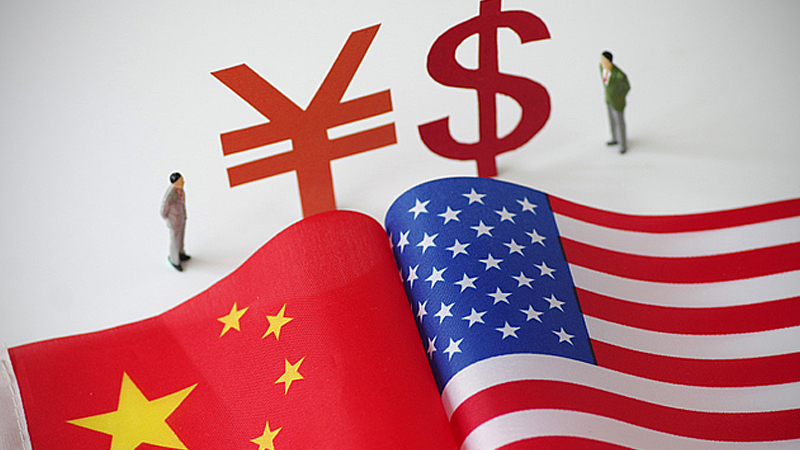
U.S. equities closed at records amid optimism over China trade relations and a fresh wave of merger and acquisition activity. The dollar strengthened.

The S&P 500, Dow Jones Industrial Average and Nasdaq Composite indexes reached all-time highs after China said over the weekend that it will tighten intellectual property rules, a move aimed at boosting the chances of a trade deal between the two largest economies. Tech shares led the gains. Charles Schwab Corp. agreed to buy TD Ameritrade Holding Corp., while LVMH purchased U.S. jeweler Tiffany & Co.

“I don’t think we would be seeing these types of deals if the outlook for markets and the economy weren’t favorable,” said Adam Phillips, director of portfolio strategy for EP Wealth Advisors. “This is one additional piece we can look at to see the outlook for markets is a positive one.”

The Stoxx Europe 600 index advanced, with all 19 industry sectors closing in the green. Equities climbed across Asia, led by those in Hong Kong, where local elections brought a landslide victory to pro-democracy candidates. The dollar gained versus the euro and yen.

While doubts about the rally remain and haven investments such as bonds seem well-supported, stocks globally are approaching a third month of gains. The S&P 500 index is building on an advance from Friday, when President Donald Trump said he was “very close” to a trade pact with Chinese President Xi Jinping, even as Treasuries hold on to most of their two-week surge.

“Markets are relatively optimistic about a phase one trade deal happening, but obviously there’s more uncertainty until President Trump and President Xi sit down and sign something more formal,” said Yung-Yu Ma, chief investment strategist at BMO Wealth Management.

Elsewhere, China was planning a record sale of sovereign bonds in dollars, with a potential $6 billion offering, according to people familiar with the discussions. West Texas-grade oil futures drifted higher. Bitcoin dropped as much as 11% before paring the decline.

Here are some key events coming up this week:

–Federal Reserve Chairman Jerome Powell speaks on Monday at the Greater Providence Chamber of Commerce annual dinner in Providence, Rhode Island.

–Alibaba starts trading in Hong Kong on Tuesday.

–Reserve Bank of Australia Governor Philip Lowe will give a speech on unconventional monetary policy on Tuesday evening in Sydney.

–U.S. consumer spending data is due Wednesday, along with GDP, jobless claims and durable goods.

–The U.S. celebrates Thanksgiving on Thursday, when equity and bond markets will be shut.

–The Bank of Korea sets policy on Friday.

These are the main moves in markets:

Stocks

–The S&P 500 index advanced 0.75% to close at 3,133.64, the highest on record with the largest gain in more than a week.

–The Dow Jones Industrial Average advanced 0.7% to 28,065.39, the highest on record with the biggest gain in more than a week.

–The Nasdaq Composite index surged 1.3% to 8,632.49, the highest on record with the largest jump in more than six weeks.

–The MSCI All-Country World index advanced 0.7% to 547.17, the highest in 22 months on the biggest gain in more than a week.

Currencies

–The Bloomberg Dollar Spot index was little changed at 1,207.43, hitting the highest in six weeks with its fifth straight advance.

–The euro fell 0.1% to $1.1011, the weakest in more than a week.

–The Japanese yen depreciated 0.3% to 108.94 per dollar, the weakest in almost two weeks on the largest fall in more than a week.

–The British pound jumped 0.5% to $1.2902, the first advance in a week and the biggest increase in two weeks.

Bonds

–The yield on two-year Treasuries declined one basis point to 1.62%.

–The yield on 10-year Treasuries dipped one basis point to 1.76%.

–Germany’s 10-year yield climbed one basis point to -0.35%.

–Britain’s 10-year yield fell one basis point to 0.696%, the lowest in more than three weeks.

Commodities

–Gold depreciated 0.5% to $1,454.95 an ounce, the weakest in more than 16 weeks.

–West Texas Intermediate crude advanced 0.4% to $57.98 a barrel.

–Copper gained 0.1% to $2.66 a pound.

Finance Ministry to submit latest economic stimulus package to Cabinet

ศาสตร์เกษตรดินปุ๋ย : ขอบคุณแหล่งข้อมูล : หนังสือพิมพ์ The Nation

https://www.nationthailand.com/business/30378742?utm_source=category&utm_medium=internal_referral

Finance Ministry to submit latest economic stimulus package to Cabinet

Nov 26. 2019
Minister Uttama Savanayana will on Tuesday (November 26) submit to the Cabinet the latest economic package to boost the economy.

Minister Uttama Savanayana will on Tuesday (November 26) submit to the Cabinet the latest economic package to boost the economy.
By Wichit Chaitrong
The Nation

1,230 Viewed

The Finance Ministry will on Tuesday (November 26) submit to the Cabinet its latest economic package to boost the economy, Minister Uttama Savanayana said.

The new package follows the scheme on consumption and tourism, known as “Eat, Shop, Spend”, which the government has been implementing.

Uttama’s announcement comes as the economy suffers slower growth – it grew just 2.4 per cent in the third quarter.

The package will cover four key areas.

The government wants to stimulate spending upcountry, the finance minister said. The package will also aim to boost investment in provincial areas via village and community funds, he added.

Additionally, the government will support people who want to own homes, he said.

Farmers will also receive subsidies for expenses on harvesting rice, Uttama said.

“The package will boost the economy in the fourth quarter and in the long term,” he said.

Moreover, it will help the Thai economy to be immune to external uncertainties, he noted.

Uttama was optimistic that the package would encourage banks to lend more to support businesses.

Stocks climb to records amid China, deals optimism

ศาสตร์เกษตรดินปุ๋ย : ขอบคุณแหล่งข้อมูล : หนังสือพิมพ์ The Nation

https://www.nationthailand.com/business/30378744?utm_source=category&utm_medium=internal_referral

Stocks climb to records amid China, deals optimism

Nov 26. 2019
By Syndication Washington Post, Bloomberg · Claire Ballentine, Vildana Hajric

1,064 Viewed

U.S. equities climbed to records on optimism over China trade relations and a fresh wave of merger and acquisition activity. The dollar was mixed.

The S&P 500 and Nasdaq Composite Indexes climbed to all-time highs after China said it will tighten intellectual property rules, a move aimed at boosting the chances of a trade deal between the two largest economies. Charles Schwab Corp. agreed to buy TD Ameritrade Holding Corp., while LVMH purchased U.S. jeweler Tiffany & Co.

“The market’s momentum is compelling more M&A activity,” said David Sowerby, managing director at Ancora Advisors. “That’s a validation of the momentum being favorable, that companies are doing deals and acquisitions.”

The Stoxx Europe 600 Index advanced, with all 19 industry sectors in the green. Equities climbed across Asia, led by those in Hong Kong, where local elections brought a landslide victory to pro-democracy candidates. The dollar was mixed against most of its major peers and weakened versus the British pound.

While doubts about the rally remain and haven investments such as bonds seem well-supported, stocks globally are approaching a third month of gains. The S&P 500 Index is building on an advance from Friday, when President Donald Trump said he was “very close” to a trade pact, even as Treasuries hold on to most of their two-week surge.

“Markets are relatively optimistic about a phase one trade deal happening, but obviously there’s more uncertainty until President Trump and President Xi sit down and sign something more formal,” said Yung-Yu Ma, chief investment strategist at BMO Wealth Management.

Elsewhere, China was planning a record sale of sovereign bonds in dollars, with a potential $6 billion offering, according to people familiar with the discussions. West Texas-grade oil futures drifted. Bitcoin dropped as much as 11% before paring the decline.

These are the main moves in markets:

Stocks:

– The S&P 500 Index advanced 0.7% to 3,130.67 as of 10:44 a.m. New York time, the highest on record with the largest gain in more than a week.

– The Dow Jones Industrial Average advanced 0.5% to 28,018.94, the highest in a week on the biggest gain in more than a week.

– The Nasdaq Composite Index surged 1.2% to 8,620.67, the highest on record with the largest jump in almost six weeks.

– The MSCI All-Country World Index advanced 0.7% to 546.95, the highest in 22 months on the biggest gain in more than a week.

Currencies:

– The Bloomberg Dollar Spot Index was little changed at 1,207.20, hitting the highest in six weeks with its fifth straight advance.

– The euro fell 0.1% to $1.1014, the weakest in more than a week.

– The Japanese yen depreciated 0.2% to 108.89 per dollar, the weakest in almost two weeks on the largest fall in more than a week.

– The British pound jumped 0.5% to $1.2902, the first advance in a week and the biggest increase in two weeks.

Bonds:

– The yield on two-year Treasuries fell one basis point to 1.62%.

– The yield on 10-year Treasuries decreased one basis point to 1.76%.

– Germany’s 10-year yield gained one basis point to -0.35%.

– Britain’s 10-year yield dipped one basis point to 0.691%, the lowest in more than three weeks.

Commodities:

– Gold depreciated 0.2% to $1,458.76 an ounce, the weakest in almost two weeks.

– West Texas Intermediate crude decreased 0.3% to $57.59 a barrel.

– Copper was little changed at $2.66 a pound.

NESDC outlines social situation in Q3/2019

ศาสตร์เกษตรดินปุ๋ย : ขอบคุณแหล่งข้อมูล : หนังสือพิมพ์ The Nation

https://www.nationthailand.com/business/30378740?utm_source=category&utm_medium=internal_referral

NESDC outlines social situation in Q3/2019

Nov 25. 2019
By THE NATION880 Viewed

The National Economic and Social Development Council (NESDC) has released its official report on Thailand’s social situation in the third quarter of 2019, of which key issues included low unemployment rate, a slowdown in growth of household debt, a decrease in diseases under surveillance, and a decrease in road traffic accidents.

However, there were still some major issues requiring close monitoring. including a decline in employment, an increase in alcoholic beverage and cigarette expenditures, and an increase in criminal cases due to increasing narcotic usage.

Little impact on labour market

In Q3/2019, the employment decreased by 2.1 per cent year-over-year. Employment in agricultural sector decreased by 1.8 per cent which was a continuous decline for the third quarter from inclement weather.

Employment in non-agricultural sectors also decreased by 2.3 per cent due to the economic slowdown and the decline of exports.

Economic sectors that recorded lower employments included manufacturing sector, wholesale/retail and construction, down by 5.2, 4.1, and 2.2 per cent respectively.

Meanwhile, employments in hotel/restaurant and transportation/storage sectors increased by 3.1 and 1 per cent respectively as a result of the higher number of tourists.

Overall labor wages slightly increased to Bt14,334/month while the average wage for private sector was equal to Bt12,847/month, accounting for increases of 1.8 and 2.5 per cent respectively.

When deducting inflation at 0.6 per cent, the real wages of the private sector increased by 1.9 per cent. Labour productivity (Gross domestic product per worker) had a value of Bt69,329 per person, an increase of 4.6 per cent.

Meanwhile, the unemployment rate stood at 1.04 per cent or 0.394 million people, slightly increased by 5.5 per cent year-over-year.

The increase was mainly attributed to the economic slowdown and inclement weather.

Unemployment increased for those who have worked before and those who have never worked, by 8.4 and 3 per cent respectively, partly due to the season when new graduates entered the labour market.

When considering unemployment according to education level, it was found that those who completed bachelor degree had the highest unemployment rate at 2.15 per cent, followed by vocational graduates, high vocational graduates, lower secondary school graduates, upper secondary school graduates, and primary school or lower graduates.

The employment trends in Q4/2019 show that the economic slowdown has not shown much impact on the labour market. By looking at the Labour Force Survey in October 2019, the unemployment rate is still low at 0.9 per cent or equivalent to 0.355 million unemployed.

Although the total labour force and employment decreased by 1.7 and 1.6 per cent respectively, it was because they were those moving out of the labor force, especially the elderly and houseworkers who enter the labor force occasionally.

It was found that there were 19.2 million people who were outside the labour force and it was increased by 5.1 per cent.

In addition, the structure of the Thai labour market is flexible, with workers who are laid off in the formal system able to easily move to work in the informal sector, especially by moving to the agricultural sector.

However, there are signs of effects of the economic slowdown which must be followed up closely:

1. The number of unemployment benefit applicants has continuously increased. At the end of Q3/2019, they accounted for 1.72 hundred thousand persons or 1.5 per cent of the total number of insured persons under Section 33, the highest since the economic crisis in 2009 which recorded 2.2 per cent of all insured persons.

2. Domestic and foreign orders declined. The business index in domestic orders declined continuously for the 11th consecutive month while foreign orders continued to decrease for the sixth quarter, which may affect employment in the export-goods manufacturing industry.

3. A reduction of working overtime: the number of employed persons over 50 hours decreased by 7.9 per cent in Q3/2019 which is a continuous decline since Q4/2016 onwards.

4. Firms requesting to use Section 75 in accordance with the 1998 Labour Protection Act, as amended 2008 (as a measure that allows companies to temporarily stop work by paying a minimum wage to employees more than 75 percent of wages): By Q3/2019, there were 48,015 affected workers from 93 firms nationwide, divided into 21,297 people who were affected by partial business closures and 26,718 people who were affected by complete business closures.

Issues in focus

1. Closely monitoring the employment termination situation and monitoring of workers receiving compensation for termination of employment as specified by law. Affected workers should be facilitated such as organising labour markets, promoting job applications and job opportunities.

2. Implementing measures to alleviate the effects that may occur on labor such as:

• Asking for cooperation from firms in order to delay layoffs, such as reducing working hours/days, or pausing firm operations in accordance with Article 75. Voluntary resignation with employment termination should be the last resort.

Household debt

Total household debt in Q2/2019 amounted to Bt13.08 trillion, expanding by 5.8 per cent, which decelerated from 6.3 per cent in the previous quarter. It accounted for 78.7 per cent of the GDP due to the economy in Q2 decelerating faster than household debt.

When considered by each category, it was found that housing loans grew by 7.8 per cent, decelerated from 9.1 percent in the previous quarter. Likewise, loans for automobiles slowed down by 10.2 percent from 11.4 percent.

Loans for other personal consumption increased continually, grew by 11.8 per cent compared to 11.3 per cent in the previous quarter as a result of the expansion of both credit card loans and other personal loans.

The overall credit quality is within the surveillance criteria since many credit types have increased risks. The non-performing loan (NPL) outstanding amount of commercial banks in the Q3/2019 was Bt133,254 million, an increase of 12.2 per cent from the same period last year, representing 2.81 per cent of total loans.

The NPL ratio of housing loans stood at 3.49 per cent, up from 3.34 per cent in the previous quarter. For car loans, the NPL ratio increased to 1.86 per cent from 1.82 per cent in the previous quarter.

NPL ratio of credit card loans was 2.65 per cent compared to 2.48 per cent in the previous quarter while the NPL ratio of other personal loans stood at 2.36 per cent, down from 2.42 per cent.

Draft ready for community power plants project

ศาสตร์เกษตรดินปุ๋ย : ขอบคุณแหล่งข้อมูล : หนังสือพิมพ์ The Nation

https://www.nationthailand.com/business/30378732?utm_source=category&utm_medium=internal_referral

Draft ready for community power plants project

Nov 25. 2019
Energy Minister Sontirat Sontijrawong

Energy Minister Sontirat Sontijrawong
By THE NATION

1,169 Viewed

Energy Minister Sontirat Sontijrawong said today (November 25) that the Department of Alternative Energy Development and Efficiency had finished drafting the rules for establishing and co-investing in the community power plants.

The details will soon be submitted to the Energy Policy Administration Committee and the National Energy Policy Council.

He added that the project had received enthusiastic interest from local administrative organisations and private companies.

The community plants will come in the format of very small power plants (VSPP) with generation capacity of 10 megawatts each, costing Bt100 million per MW. The ministry targets a total of 1,000 MW.

He added that the project was expected to generate at least Bt100 billion into the grassroot economic system.

Construction is expected to commence in 2022, Sontirat said.

Musk touts 187,000 Cybertruck orders two days after reveal

ศาสตร์เกษตรดินปุ๋ย : ขอบคุณแหล่งข้อมูล : หนังสือพิมพ์ The Nation

https://www.nationthailand.com/business/30378709?utm_source=category&utm_medium=internal_referral

Musk touts 187,000 Cybertruck orders two days after reveal

Nov 25. 2019
Tesla Chief Executive Officer Elon Musk said orders for the Cybertruck have climbed to 187,000 even after two windows unexpectedly shattered in Thursday's big reveal.
Photo credit: Tesla

Tesla Chief Executive Officer Elon Musk said orders for the Cybertruck have climbed to 187,000 even after two windows unexpectedly shattered in Thursday’s big reveal. Photo credit: Tesla
By Syndication Washington Post/Bloomberg · Dana Hull · BUSINESS

392 Viewed

Tesla Chief Executive Officer Elon Musk said orders for the Cybertruck have climbed to 187,000 even after two windows unexpectedly shattered in Thursday’s big reveal.

File Photo:Tesla Debuts Its New Crossover SUV Model, Tesla X  FREMONT, CA - SEPTEMBER 29: Tesla CEO Elon Musk steps out of the new Tesla Model X during an event to launch the company's new crossover SUV on September 29, 2015 in Fremont, California. After several production delays, Elon Mush officially launched the much anticipated Tesla Model X Crossover SUV. The (Photo by Justin Sullivan/Getty Images)

File Photo:Tesla Debuts Its New Crossover SUV Model, Tesla X FREMONT, CA – SEPTEMBER 29: Tesla CEO Elon Musk steps out of the new Tesla Model X during an event to launch the company’s new crossover SUV on September 29, 2015 in Fremont, California. After several production delays, Elon Mush officially launched the much anticipated Tesla Model X Crossover SUV. The (Photo by Justin Sullivan/Getty Images)

The electric-car maker has a history of unveiling future products to throngs of excited customers, taking deposits, and then delivering years later. Two years ago, Tesla showed off a Semi truck and a next generation Roadster sports car, but neither vehicle is in production yet. This spring, Musk unveiled the Model Y crossover; that vehicle is slated to begin production next summer.

The orders, an increase from a 146,000 figure that Musk announced in a Tweet on Saturday, underscores the hard-to-resist nature of announcing deposits, even when they are fully refundable and may never be converted into actual sales.

Tesla’s reservation list has long been a source of intrigue for investors, analysts, journalists, fans and skeptics of the company, as it’s often used as a proxy for demand. Musk’s tweet breaks with the recent practice at Tesla, which has stopped giving reservation figures on its quarterly earnings calls, saying the metric wasn’t relevant.

“We don’t want to comment on the granularity of deposits – again, people just read too much into those,” Musk said on Tesla’s first-quarter earnings call in April, when asked about the Model Y.

Tesla’s website allows customers to order the truck for a fully refundable $100, and says they can complete their configuration “as production nears in late 2021.” Musk said in a tweet Saturday that 42% had ordered the dual-motor option, which starts at $49,900, while 41% have ordered the $69,900 triple-motor option, production of which is expected to begin in late 2022. Just 17% ordered the single-motor version, which begins at $39,900.

The $100 deposit for the Cybertruck is far cheaper than the $1,000 that was required to reserve a Model 3 sedan.

“Reservations are not relevant for us,” former Chief Financial Officer Deepak Ahuja said in January, during the company’s 2018 fourth-quarter earnings call. “Now we do have a large reservations backlog still, which tells us that a lot of customers are still waiting for those cars. But I don’t think it’s appropriate to share the reservations number.”

Tesla never released an order or reservation figure for the Model Y. The company had $665 million in customer deposits as of Sept. 30, according to a regulatory filing.

In a demonstration of the truck’s toughness, long-time Tesla lead designer Franz von Holzhausen whacked the Cybertruck’s stainless steel door with a mallet, showing that it couldn’t be dented. But when he threw a metallic ball at the driver side front window, it shattered.

The crowd gasped. “Oh my f—ing god,” said Musk. “Maybe that was a little too hard.”

So von Holzhausen tried a second, softer throw – this time targeting the truck’s rear window – only to see that shatter as well.

It wasn’t immediately clear who supplied the glass or if Tesla made what it called “Armor Glass” completely in-house. Tesla entered the glass technology business back in 2016, and has an internal group known as Tesla Glass.

Musk said his team threw the same steel ball at the window several times before the event and didn’t even scratch the glass. Late Friday, he tweeted out a short video of von Holzhausen that has been viewed more than 6 million times.

The angular, futuristic design and the shattering glass generated enormous publicity for Tesla and its truck, but shares tumbled 6.1% to $333.04 Friday, the sharpest decline in almost two months.

Finance Ministry mulls tax incentives for longer-term investment: source

ศาสตร์เกษตรดินปุ๋ย : ขอบคุณแหล่งข้อมูล : หนังสือพิมพ์ The Nation

https://www.nationthailand.com/business/30378704?utm_source=category&utm_medium=internal_referral

Finance Ministry mulls tax incentives for longer-term investment: source

Nov 25. 2019
By Wichit Chaitrong
The Nation

1,302 Viewed

The Finance Ministry will decide on Monday (November 25) on tax incentives for long-term equity investment.

Ministry officials will meet with representatives of the Revenue Department and Securities and Exchange Commission (SEC) to resolve whether to renew incentives for investors in long-term equity funds (LTFs), given than tax deductions under the scheme will cease at the end of the year.

“The Revenue Department and SEC have different ideas about how to promote long-term investment,” an informed source said on condition of anonymity.

The SEC wants to promote more investment in the Stock Exchange of Thailand, while the Revenue Department wants to promote investments extending least 10 years, the source said.

Investors in LTFs are currently required to stay in for at least five years, but the department regards the term as too brief.

Finance Minister Uttama Savanayana has asked the Fiscal Policy Office to present options, said the source, and it “is likely to agree with the Revenue Department”.

Tax deductions under LTF conditions amount to as much as 15 per cent of income, but are limited to Bt500,000 per individual taxpayer.

Officials will also discuss whether to maintain that limit or halve it.

Critics say the incentives benefit only high-income people, who can afford to invest more.

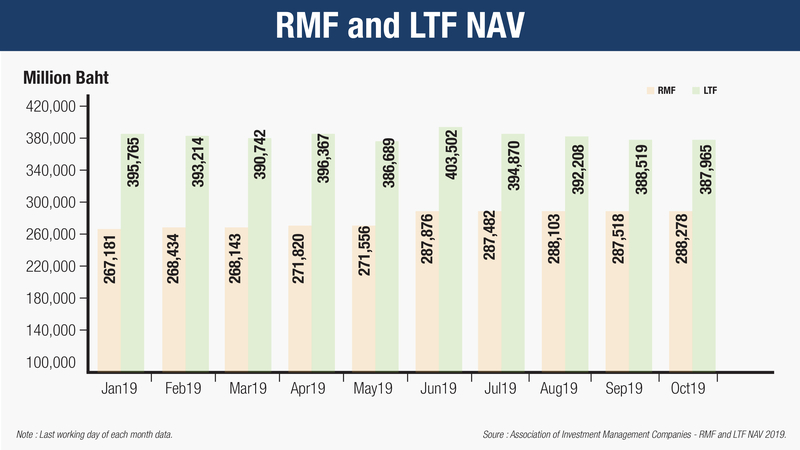
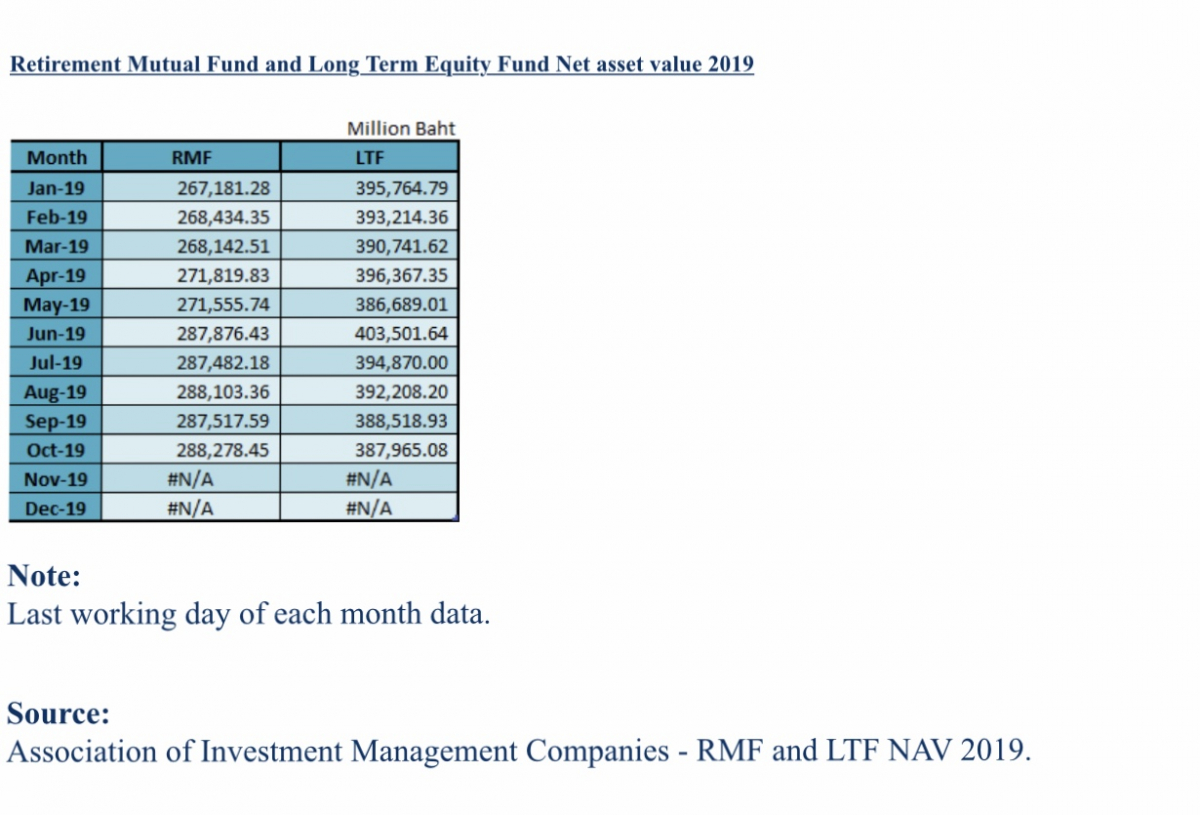
The net asset value of LTFs was Bt387.9 billion as of October 19, compared to Bt395.7 billion January.

Vorapol Socatiyanurak, former secretary-general of the SEC, has meanwhile said he agrees that the term of investment should be as much as 10 years, believing it would encourage long-term investment.

The longer period would also encourage people to save for their retirement, something most workers do not do, even as the average age of the population is rapidly rising, Vorapol noted.

A survey by the SET found that 62 per cent of workers age 40-60 established savings plan too late in life to assure them of basic necessities in old age.