B Grimm to issue debentures, ‘green-shoe’ options to raise capital

ศาสตร์เกษตรดินปุ๋ย : ขอบคุณแหล่งข้อมูล : หนังสือพิมพ์ The Nation

https://www.nationthailand.com/business/30377166

B Grimm to issue debentures, ‘green-shoe’ options to raise capital

Oct 07. 2019
By THE NATION

1,267 Viewed

B Grimm to issue debentures, ‘green-shoe’ options to raise capital B Grimm Power PCL (BGRIM), a leading private power producer in Thailand, is preparing to issue Bt6 billion worth of subordinated perpetual debentures and Bt2 billion “green-shoe” options from November 19 to 21, with a coupon of 5 per cent per annum for the first five years.

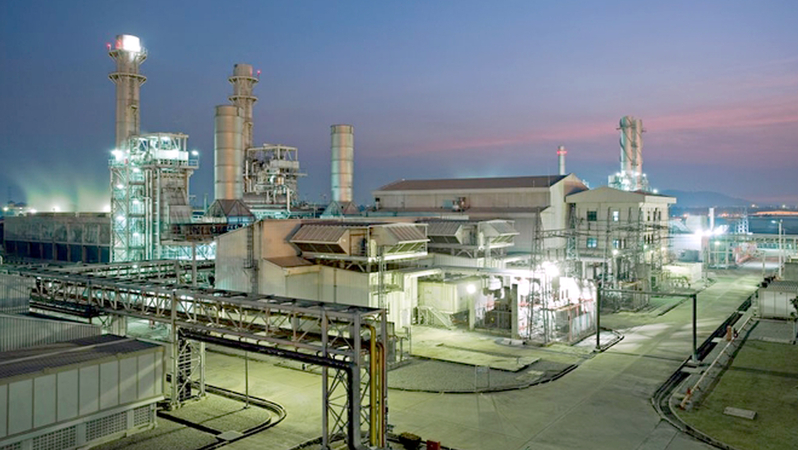
TRIS has given the company an “A” rating with “Stable” outlook and an issue rating of “BBB+” with “Stable” outlook. B Grimm has appointed Bangkok Bank, Krungthai Bank, KASIKORNBANK, Siam Commercial Bank, Phatra Securities and Asia Plus Securities to arrange the issuance. Preeyanart Soontornwata, B Grimm’s president, said the company had recently applied to the Stock Exchange Commission of Thailand to seek approval to offer its first subordinated perpetual debentures worth Bt6 billion, with Bt2 billion of green-shoe options. The key purpose of the issuance is to boost capital for upcoming expansion opportunities. “B Grimm has been beating investors’ expectation since its IPO in 2017, with its ability to develop and operate private power plants of all types, both inside and outside the country. We have expanded from 30 power projects with 1,646MW installed capacity to 45 projects with 2,892MW installed capacity in the course of just two years. We have also commenced two solar-power plants in Vietnam of 257MW and 420MW installed capacity, which are seen as the largest solar-power projects in Asean, in addition to a hydro-power plant in Laos. Now we are exploring investment opportunities in South Korea, Malaysia, Cambodia and the Philippines,” Preeyanart said. BGRIM is one of the core businesses under the B.Grimm Group, which has been leading and pioneering Thailand’s infrastructure development for over 140 years. With its businesses focused on electricity generation, B Grimm has been operating in Thailand for more than 20 years. Approximately 75 per cent of its power plant projects are based domestically, while 25 per cent are overseas. It aims to expand its power production capacity to 5,000MW by 2022.

Adopt economies of intelligence or fall behind, Thai industry warned

ศาสตร์เกษตรดินปุ๋ย : ขอบคุณแหล่งข้อมูล : หนังสือพิมพ์ The Nation

https://www.nationthailand.com/business/30377149

Adopt economies of intelligence or fall behind, Thai industry warned

Oct 07. 2019
By Nophakhun Limsamarnphun
The Nation

157 Viewed

Thailand’s manufacturing sector will lag behind unless it takes steps to embrace the emerging economies of intelligence for which data and the capacity to synthesize contents are key success factors.

According to Robert Parker, a senior executive of IDC, a global provider of market intelligence and other services, about 50 per cent of the world’s businesses will be digital by 2022, while worldwide growth in digital and related investment is estimated to be 17.5 per cent per year.

Speaking at Dassault Systemes’ 3D Experience conference in Shanghai, China, last month, Parker suggested that this will lead to a new era of cyber-physical manufacturing using AI (artificial intelligence), IoT (Internet of Things) and other digital tools on a large scale.

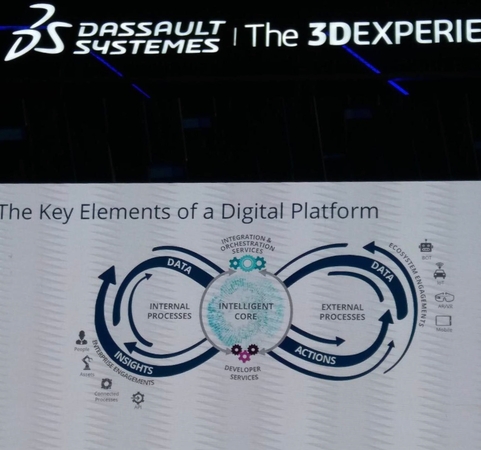
The key elements of a new digital platform will have an intelligent core driven by data, insights and actions in both internal and external processes. People, connected machines, robots, IoT, AR/VR and other mobile devices will work together for the integration and orchestration of services to drive manufacturing in the new eco-system.

The new eco-system also connects customers with smart factories for mass-customisation of products, real-time orders to factory floors and digital-twin product manufacturing and service, with a feedback loop in an AI-driven product design process.

According to Parker, the new industrial platform and economies of intelligence represent a significant shift from the economies of scale as pioneered by Henry Ford about 100 years ago to the economies of scope (GM), and later economies of learning (Toyota).

As a result, the post-Industrial 4.0 era will be driven by the value of massive data as well as an organisation’s capacity to learn and synthesize the contents.

Guillaume Vendroux, CEO of Dassault Systemes’ Delmia brand, said at the same conference that the top agenda for the global manufacturing sector is to reduce carbon footprint for a more sustainable planet with more products in harmony with nature.

This means operation optimization, better planning, cross-border collaboration, reduction of wastes, agility, speed, and maximization of value creation for a better profit.

Michael Larson, a top executive at ABB, said the new generation of factories will be more flexible with human workers working alongside robots safely and efficiently to further boost productivity.

He also noted that 50 per cent of the global demand is forecast to shift to Asia around 2030 when electric vehicle (EV) transformation, product individualization, shorter product life- cycles, and regionalization of supply chain will likely play the leading role.

Mark Chen, a senior executive of Huawei, said the Chinese telecom and tech giant is positioned to take advantage of the emerging industrial internet, with its cloud 2.0 platform facilitating AI and 5G (fifth-generation cellular) in smart production for small and big manufacturers.

This will boost productivity as well as product quality and lead to products as a service like software as a service (Saas).

The process will be gradual, creating an intelligent supply chain, logistic, flexible production and operation optimization using big data.

Albert Pozo, chief digital officer of commercial catering firm SATS, said a good example of manufacturing in the age of experience is the inflight catering business in which digital-twin tech is used to create a virtual kitchen for the best practice in the industry, covering food excellence, chefs’ know- how and other key features.

Digital twins are also used in 3D visualization for remote technical consultation. A new Shanghai factory setup can benefit from the skills of US-based experts using a 3D visualization technology with AR/VR devices.

Sensors, RFID, and Wifi equipment are also used in the new generation of factories and connected machines in an eco-system of data-rich network and apps.

Dassault Systemes also showcased its Solidworks brand in Bangkok last week, with highlights from two users of its products, namely, Brainworks and Institute of Field Robotics at King Mongkut University of Technology Thonburi.

Steven Chiu, senior sales manager for Asean and Asia Pacific South of Dassault Systemes said, the cyber-physical age for manufacturing is set to make big impacts worldwide.

This will allow mass customization for production of cars and trucks, for example, on the cloud platform with multiple apps for collaboration. Designers, engineers and other experts can work together on the platform in real time across borders as if they were in the same room.

In Thailand, Chatchai Pholmoon of Brainworks said the Thai firm uses the 3D Experience platform for special tool designing and customization for customers such as those needing robotic hands in the manufacturing of automotive parts and bathroom accessories.

For example, one automatic machine can be designed to produce 7 different models of an accessory for mass-customisation of products.

He said the Thai food and beverage industry also has a growing demand for special robots and a gripping system to automate its food production system.

Wuttichai Visarnkuna of Institute of Field Robotics said Solidworks’ software has been used to design a bomb and human detection robot for a Thai military unit responsible for countering terrorism in southern Thailand.

Softening economy to dampen banks’ net profit in Q3

ศาสตร์เกษตรดินปุ๋ย : ขอบคุณแหล่งข้อมูล : หนังสือพิมพ์ The Nation

https://www.nationthailand.com/business/30377081

Softening economy to dampen banks’ net profit in Q3

Oct 07. 2019
By THE NATION

664 Viewed

Eight commercial banks are expected to report a decline in total net profit in the third quarter amid a softening economy, according to Apichat Poobunjirdkul, senior strategist at TISCO Securities Co Ltd.

The banks will likely see their combined net profit falling 4 per cent year on year to Bt50.156 billion in the quarter. The eight posted high net profits in the same period last year.

When excluding special items, their financial performance in the period is expected to be flat or a slight growth.

The ratio of non-performing loans is estimated at 3.66 per cent of total loans, versus 3.64 per cent in the second quarter of the year.

Tourism minister pushes for cuts in tariffs on branded products to boost tourist spending

ศาสตร์เกษตรดินปุ๋ย : ขอบคุณแหล่งข้อมูล : หนังสือพิมพ์ The Nation

https://www.nationthailand.com/business/30377138

Tourism minister pushes for cuts in tariffs on branded products to boost tourist spending

Oct 07. 2019
Tourism and Sports Minister Phiphat Ratchakitprakarn

Tourism and Sports Minister Phiphat Ratchakitprakarn
By Wichit Chaitrong
The Nation

1,474 Viewed

The minister for tourism wants cuts in tariffs on well-known brands to attract more tourists. Tourism and Sports Minister Phiphat Ratchakitprakarn said the ministry was preparing new measures to promote tourism.

The new package would be announced after October 10, he told a group of reporters. He hinted at the impending measures after the ministry offered Bt100 tickets for domestic travel as a supplement to the Eat, Shop and Spend scheme.

He said he would consult the Finance Ministry on whether it could cut tariffs, some as high as about 40 per cent, on brand-name products.

“I do not want Thai people to go abroad for shopping brand-name products, which results in money leaking out of the domestic economy,” he said. “If Thai travellers could buy brand-name products here at reasonable prices, then that money would be injected into the local economy,” he said.

Moreover, foreign tourists who visit Thailand would spend more here if they could buy brand-name products at cheaper prices than at present, he said.

Meanwhile, Lavaron Sangsnit, director-general at the Fiscal Policy Office of the Finance Ministry told The Nation that there were several factors to take into account before the government decides to cut taxes. The average tariff rate on luxury brands is about 30 per cent, he said.

He said the issue had been discussed many times in the past, and Thai retailers also wanted the government to cut tariff rates.

The government did cut the tariff rate by 15 per cent 10 years ago, but it did not have much of an effect on the prices of luxury goods. The prices of branded products such as leather bags dropped by only 5 per cent, he revealed.

He pointed out that brand-name owners may implement a different price strategy for different countries or economies. For example, in Asia they apparently designate Hong Kong as the place for the cheapest price of luxury goods followed by Singapore, he said.

Lavaron, however, admitted that these things might change. “So we need to look into the tax matter from many angles, and new factors,” he said.

The tourism minister also wants medical tourists to go for treatments out of Bangkok to potential provinces such as Hat Yai in Songkhla in the South.

He said Thailand is lucky as, despite the decline in medical tourists from the Middle East, there had been a rise in medical tourists in recent times from Cambodia, Laos, Myanmar and Vietnam.

The government agencies will also try to bid for big events, such as international conferences and trade exhibitions to be held in the country. He said his ministry plans to organise a global e-sport event next year in order to help Thai youth get experience of the new sports. A marathon running event for new couples who want to spend their wedding or honeymoon in Thailand on Valentine’s day will also be held, he said.

Tourist attraction events related to local folklore, legends or history will be held all year round in 77 provinces next year, he revealed.

He said he would discuss with the Interior Minister about the streamlining of immigration procedures in order to provide more convenience.

The government also wanted to send a strong message to tourists that it would make serious efforts to reduce plastic waste and tackle air pollution, he said. He added that the ministry would next year try to keep the number of tourist arrivals the same as this year, as the global economic slowdown and trade tensions have adversely impacted tourism.

While almost all economic indicators in August pointed to the economy slowing down, the number of foreign tourists continued to be on the rise, according to the Bank of Thailand

Some 38.2 million foreign tourists visited Thailand last year, up 7.3 per cent from the previous year. The number of tourist arrivals in the first eight months (January to August) this year were 26.6 million, up 2.8 per cent year on year, according to the central bank.

Growth in fuel consumption said to be in line with projected GDP increase

ศาสตร์เกษตรดินปุ๋ย : ขอบคุณแหล่งข้อมูล : หนังสือพิมพ์ The Nation

https://www.nationthailand.com/business/30377084

Growth in fuel consumption said to be in line with projected GDP increase

Oct 05. 2019
By THE NATION

525 Viewed

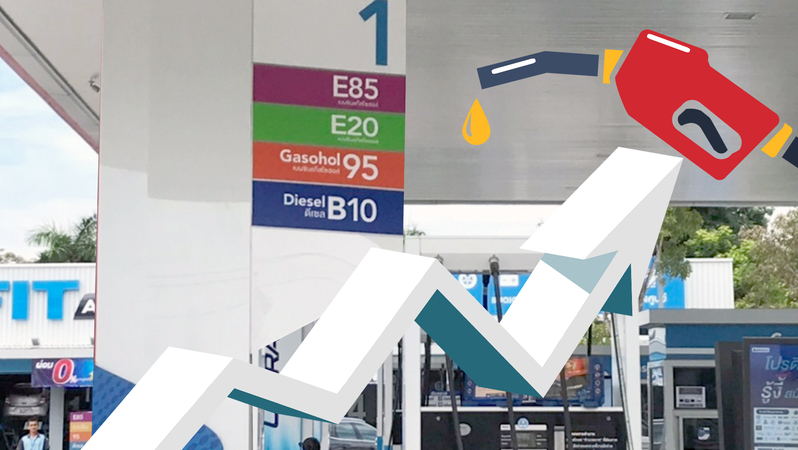
Based on the Department of Energy Business’s estimates, the consumption of fuel in Thailand is expected to rise 4 per cent this year mainly because the drop in the price of refined oil has increased the use of automobiles.

This growth in consumption is in line with the Office of National Economics and Social Development Council’s forecast of 3 per cent growth of the gross domestic product this year, Nantika Thangsuphanich, the department’s director-general, said.

The consumption of benzene this year is expected to hit 32.19 million litres daily, recording a 3.7-per-cent increase year on year, while diesel consumption should hit 71.68 million litres a day, rising 7.6 per cent year on year.

The consumption of fuel by natural gas vehicles (NGV) is expected to be 5.58 million kilograms a day, down 8.5 per cent year on year, while liquefied petroleum gas (LPG) consumption has been projected at 16.95 million kg per day, down 5.1 per cent year on year. Meanwhile, consumption of jet fuel is expected to hit 20.48 million litres daily, up 6.7 per cent year on year.

The department is currently following up on and evaluating the consumption of diesel and asked oil retailers to boost the sale of B10 diesel since October 1. The department wants B10 diesel to be available at petrol stations across the nation by March 2020, and hopes the consumption of this fuel will hit 57 million litres daily. It also hopes the consumption of B20 diesel to reach 5 million litres a day, B7 diesel 5 million litres daily and B100 to be 7 million litres daily.

The department will also talk to oil traders and refinery groups about the possibility of stopping the use of certain types of benzene, though Nantika did not specify the types.

Thai consumers currently use nine types of fuel, five of which are benzene and four diesel.

She added that terminating the use of one type of benzene will require the taking into account of many factors that could affect refineries. The discussion with oil traders and refineries is expected to be wrapped up in the next couple of months.

Nantika also said that whether the use of Gasohol 91 is stopped depends on the department’s ongoing evaluation of the impact it has on old-fashioned motorcycles.

Banks’ credit growth seen tumbling through 2019

ศาสตร์เกษตรดินปุ๋ย : ขอบคุณแหล่งข้อมูล : หนังสือพิมพ์ The Nation

https://www.nationthailand.com/business/30377070

Banks’ credit growth seen tumbling through 2019

Oct 05. 2019
By The Nation

472 Viewed

The Kasikorn Research Centre has lowered its forecast for 2019 commercial bank credit growth from 4.5 per cent, valued at Bt13 trillion, to 4 per cent, valued at Bt12.9 trillion.

Despite credit expanding by 4.2 per cent and Bt12.6 million in the second quarter, it said this week, growth tends to decline in the third and final quarters.

With the national economy grinding down, private enterprises including SMEs require less credit, it noted.

Meanwhile corporations with multiple affiliates are supported by investments in bonds, which cost less than the interest on loans. There are currently long-term bonds in corporate hands worth a combined Bt900 billion to Bt1 trillion.

Business loans are expected to shrink by 2.5 per cent this year, well under the previous forecast of 3 per cent.

But the centre still expects retail loans to expand by 6.5 per cent for the full year.

It believes hire-purchase loans will drop to 8 per cent from the 10.2 per cent seen in the second quarter.

House loans will shrink to 4 per cent from 7.8, credit-card loans to 7 per cent from 9.5, and personal loans to 10.5 per cent from 12.1.

Uttama hails EEC as model for future projects

ศาสตร์เกษตรดินปุ๋ย : ขอบคุณแหล่งข้อมูล : หนังสือพิมพ์ The Nation

https://www.nationthailand.com/business/30377071

Uttama hails EEC as model for future projects

Oct 04. 2019
 Finance Minister Uttama Savanayana

Finance Minister Uttama Savanayana
By THE NATION

903 Viewed

The Eastern Economic Corridor (EEC) will serve as a model for the development of similar zones in terms of the infrastructure and human resources, Finance Minister Uttama Savanayana said on Friday (October 4).

He was speaking at the seminar “EEC Next: Aeropolis and Logistic Hub of Asean” hosted by Krungthep Turakij in Rayong.

Uttama said the government has pushed many key projects for the EEC, which would boost investor confidence.

MoU signed to boost Thai-Myanmar border trade

ศาสตร์เกษตรดินปุ๋ย : ขอบคุณแหล่งข้อมูล : หนังสือพิมพ์ The Nation

https://www.nationthailand.com/business/30377044

MoU signed to boost Thai-Myanmar border trade

Oct 04. 2019
By The Nation

816 Viewed

Commerce Minister Jurin Laksanawisit said his ministry will be coordinating between businesses in Thailand and Myanmar to strengthen border trade and boost bilateral ties.

Myanmar and Thailand also signed a memorandum of understanding (MoU) ton October 1 to boost the transfer of goods across the second Thai-Myanmar Friendship Bridge, which Jurin said should be turned into a permanent crossing point between the two countries by October 30, pending Cabinet approval.

The bridge over Moei River connects Tak’s Mae Sot district and Myawaddy in Myanmar.

As for border businesses asking for the bridge to be kept open until midnight, he said the Foreign Ministry will have discuss this option with its counterpart in Myanmar.

He also said that merchants have asked for the border markets in Prachuap Khiri Khan, Mae Hong Son and Kanchanaburi to be improved, adding that this option also needs to be discussed between both sides.

According to the Department of Foreign Trade, border trade between Thailand and Myanmar over the first eight months of 2019 was valued at Bt133.86 billion, marking an increase of 4.73 per cent from the same period last year. However, exports were only worth Bt68.9 billion, down by 4.1 per cent, while imports accounted for Bt64.9 billion, up 16.08 billion.

Thailand mainly exports diesel and refined oil, capital goods, construction tools and machinery to Myanmar.

Thaworn to meet top THAI execs to discuss airline’s future

ศาสตร์เกษตรดินปุ๋ย : ขอบคุณแหล่งข้อมูล : หนังสือพิมพ์ The Nation

https://www.nationthailand.com/business/30377047

Thaworn to meet top THAI execs to discuss airline’s future

Oct 04. 2019
Thaworn

Thaworn
By THE NATION

753 Viewed

Deputy Transport Minister Thaworn Senniam will convene a meeting with Thai Airways International (THAI) on October 10 to look for ways to clear the national carrier’s accumulated losses.

The minister, who will be meeting the airline’s chairman Ekniti Nitithanprapas and some top executives, said they will discuss the THAI’s existing rehabilitation plan, which he doesn’t believe will help the carrier make a turnaround.

Thaworn said this rehabilitation plan has been implemented for a while now, but there is still no sign of the losses easing.

In fact, he said, he is worried THAI will experience a loss of Bt10 billion this year.

Hence, he believes THAI will first have to revise the rehab plan and come up with a revised version within three months.

If the airline insists on using the existing plan, related persons will have to be responsible if something goes wrong with THAI in the future, he said.

Separately, Thaworn said the budget carrier Thai AirAsia is seeking government support in many areas, including getting airports to adopt a facial-recognition system for check in and the expansion of runways at the Mae Sot and Betong airports.

Thaworn said he has already set up a public-private panel to study the possibility of introducing a facial-recognition based check-in system and expects a report on this by the end of the month. The time period for the study will be extended by 15 days if it’s not ready and the system can be tested at one airport within this year.

Thai banks can meet new requirements for financial report

ศาสตร์เกษตรดินปุ๋ย : ขอบคุณแหล่งข้อมูล : หนังสือพิมพ์ The Nation

https://www.nationthailand.com/business/30377049

Thai banks can meet new requirements for financial report

Oct 04. 2019
Yuphin

Yuphin
By The Nation

1,653 Viewed

The Bank of Thailand is confident that commercial banks and private financial institutions can comply with the upcoming accounting rules on financial report, known as Thai Financial Reporting Standard (TFRS9), said Yuphin Ruangrit, the central bank’s director of financial institutions business and accounting policy office.

The TFRS9 will take effect in January next year.

The central bank currently require banks to keep a reserve against incurred loss, but under the new financial reporting standard, banks and other financial institutions will be required to provide loan reserve against expected loss. The TFRS9 is based on the concept of forward-looking information.

The 2008 subprime mortgage crisis in the US had resulted in many financial institutions going bust and the International Accounting Standard (IASB) had to develop new accouting rules, in a bid to prevent the crisis from happening again. The new rules of IFRS9 were adopted in 2013.

The Bank of Thailand has worked with the Federation of Accounting Professions and private auditors in adopting the IFRS9 in Thailand. The central bank is confident of banks’ compliance after conducting a parallel run on loan reserve calculation, Yuphin said.

Thai banks, on average, have high loan reserve at 110 per cent to 150 per cent of doubtful debts.

An impact on banks is that their net interest rate margin may be wider as they could count expected interest income promised by bad-debt borrowers.

The new accounting rules will be applied to state-owned banks in 2025, she added.