BAAC earmarks Bt5 bn for farmers to grow trees

ศาสตร์เกษตรดินปุ๋ย : ขอบคุณแหล่งข้อมูล : หนังสือพิมพ์ The Nation

https://www.nationthailand.com/business/30376800

BAAC earmarks Bt5 bn for farmers to grow trees

Sep 27. 2019
Prasit Techati

Prasit Techati
By Kunanon Kanjanatecha
The Nation

1,131 Viewed

Apirom Sukprasert, president of the Bank for Agriculture and Agricultural Cooperatives (BAAC), said the bank is launching a brand-new loan allowing farmers to earn from planting trees in a move to boost their quality of life as well as preserve the environment.

The project will target 800 square kilometres and 50,000 farmers who can participate in the “Planting Trees to Make an Income” project, which encourages farmers to plant trees for reforestation. Each farmer will be provided a loan of Bt100,000 from the Bt5 billion allocated for the scheme.

Participants will be given loans at a minimum retail rate of 6.875 per cent per year. For the first three years the rate will be minus 3 per cent, for the fourth to the sixth year the rate will be minus 2 per cent and minus 1 per cent in the last two years. Loans will only be available until July 31, 2021 and can be taken for no more than 15 years.

Prasit Techati, a BAAC customer development officer in Nan province, said the aim of the project is to have locals preserve forests especially those upstream in the northern provinces of Chiang Mai, Chiang Rai and Nan.

Forests provide locals with more products from different types of plants and more species of trees to use and sell. By planting trees and harvesting them, farmers can make their incomes more sustainable than by just focusing on mono crops like corn and sugarcane.

Provinces in the North like Nan have been suffering from deforestation as locals have been cutting down trees to expand farming areas. This project aims to help locals co-exist peacefully with forests.

Legalising ride-hailing services a god-send to economy, study shows

ศาสตร์เกษตรดินปุ๋ย : ขอบคุณแหล่งข้อมูล : หนังสือพิมพ์ The Nation

https://www.nationthailand.com/business/30376790

Legalising ride-hailing services a god-send to economy, study shows

Sep 26. 2019
Dr Suthikorn Kingkaew

Dr Suthikorn Kingkaew
By THE NATION

824 Viewed

Ride-hailing services contributed Bt21 billion to the Thai economy last year, a contribution that is expected to reach Bt120 billion by 2025, according to a study conducted by Thammasat Consulting Networking and Coaching Centre (CONC Thammasat).

CONC Thammasat said on Thursday (September 26) that the study focused on the role ride-hailing services have played in driving the country’s economy and the necessity of developing sustainable guidelines and regulations. The study also provided five key actionable guidelines and best practices for the government to consider as it works towards legalising ride-hailing services by March 2020.

Dr Suthikorn Kingkaew, director of CONC Thammasat which comes under the university’s Faculty of Commerce and Accounting, said ride-hailing services have changed the way people move – not just in Thailand, but also around the world. It has naturally become more popular in today’s digital age, where mobile and internet penetration is high, and people are more receptive to using technology to make their travel hassle free.

Thailand’s urban population is expected to grow from 50 per cent to 73 per cent in the next 30 years, which means people’s need for accessible, seamless and safe transportation will continue to rise. Hence, it is time for the government to legalise the industry and integrate it with the public transportation ecosystem.

The ride-hailing industry currently accounts for 6 per cent of Thailand’s ground transport sector’s GDP, and once it is legalised, it is expected to account for 20 to 25 per cent of the industry, contributing Bt120 billion by 2025.

In 2018, an estimated 2.4 million passengers per month were served by the ride-hailing industry and this is expected to rise to 11 million passengers per month by 2025. The number of drivers providing services in this industry is also forecast to rise from 105,000 per month in 2018 to about 590,000 per month by 2025, which means more people will be given access to new income earning opportunities.

“Our research shows that Thais want the service to be legalised, so they have greater peace of mind,” Suthikorn said. According to public polls, 95 per cent of respondents want the ride-hailing industry to be legalised, while 77 per cent want the action to be taken immediately.

Thailand is one of the last three countries in Southeast Asia which has yet to legalise the industry.

“The government recognises the benefits that ride-hailing will bring to people’s daily lives and sees how the service can complement the entire public transport system. The next crucial step will be to develop fair and sound regulations that safeguard public interests and yet allow innovation to thrive,” he said.

Findings from CONC Thammasat’s study quantified the economic and social impact ride-hailing services have on Thailand, reflecting opinions from 2,000 passengers and drivers collected in public polls conducted from August to September.

Most passengers said ride-hailing services has made their daily commute more convenient and given them greater peace of mind due to higher safety standards.

o 92% agreed that ride-hailing service is safer than other alternatives;

o 95% said ride-hailing services connect them easily to other modes of transportation;

o 77% say booking a ride through ride-hailing apps reduces their waiting time;

o 86% said ride-hailing services allowed them to spend more time on work or other activities during the ride.

Drivers, meanwhile, found ride-hailing services as a new stream of income that provided them with greater financial independence.

o 60% of private car drivers surveyed were either unemployed or retired before they found an opportunity to earn through ride-hailing services;

o 99% of taxi drivers said that the ride-hailing service gives them more passengers and helps them earn above the amount they get from being flagged down;

o 94% said the additional income has given them greater financial independence and helped them clear their debts.

Social Sector

Apart from offering greater convenience to passengers, ride-hailing services have also raised the bar for safety in Thailand through live location tracking and sharing GPS data, offering SOS assistance by linking up with the police through the app and other technological advances such as facial recognition and telematics that aim to protect the driver and passenger.

Economy

Ride-hailing services have directly contributed Bt21 billion to the Thai economy in 2018, not including the positive knock-on effect on the wider economy as it improves drivers’ livelihoods and boosts their spending power as consumers.

Tourism Sector

Tourists are increasingly relying on ride-hailing services, as 75 per cent of foreign visitors travel in small groups or solo, as the proportion of large groups has fallen to 25 per cent. Ride-hailing apps also help bridge the language barrier through in-app chat translation features and eliminate people’s frustration of having to haggle with drivers by displaying the price upfront before the ride is booked.

CONC Thammasat, meanwhile, has also come up with five key guidelines and best practices to help the government develop a regulatory framework for the industry:

1) Setting up basic standards to ensure the safety of passengers and drivers by:

o Introducing advance safety technology features, including real-time location tracking via GPS, in-app emergency button connected to the police, telematics to ensure driving safety;

o Driver and passenger verification through technology like facial recognition;

o Offering a channel for the easy reporting of safety issues during or after a ride and providing 24/7 customer support;

o Providing accident insurance for drivers and passengers on every trip.

2) Setting high service standards for drivers, with safety as top priority:

o Conducting stringent background checks on drivers, including checking for criminal records, before they are allowed to provide the service;

o Putting in place a clear code of conduct for drivers;

o Putting drivers through road-safety training;

o Putting all private cars through necessary safety checks.

3) Service providers must be ready to deliver high service standards in order to operate on a national scale:

o The app and back-end technology systems must be stable and reliable at all times to deal with customer volume and any business expansion;

o There must be a sufficient supply of drivers to meet the demand of passengers at a national level;

o Service providers must provide in-app chat translation and have the app supported in different languages;

o Service providers must offer a variety of payment options, including cash, debit and credit cards;

4) Fair and equitable pricing driven by market forces to balance demand and supply

o Fares should be calculated on a dynamic pricing model which represents real-time demand and supply, and also considers externalities such as weather and traffic conditions;

o The fare must be displayed upfront so passengers can make an informed decision before accepting the ride;

o Pricing must balance the needs of drivers and passengers based on the free-market dynamics of demand and supply, thereby allowing drivers to earn sustainable incomes at fares that are reasonable and acceptable to passengers.

5) Setting basic requirements for service providers with plans to make them a critical part of Thailand’s future transport infrastructure.

o Must be a legally registered company in Thailand

o Majority of the shareholders in the company should be Thai

o Must pay local taxes

o Must have enough capital to support business operations such as ensuring drivers earn a sustainable income and expanding into every major city in Thailand.

“Ride-hailing is a crucial jigsaw to complete the public transportation ecosystem in Thailand. Looking from the lens of the larger benefits to the country, all players in the industry should stay open to this inevitable trend that has brought immense benefits to the economy and society.

“Ultimately, it’s consumers that matter the most, and all players should aim to stay relevant and adapt to the changing needs of today’s mobile users. More importantly, ride-hailing brings huge troves of data which were previously non-existent with traditional transportation modes.

“The potential of analysing this big data to solve traffic congestion issues, prevent safety incidents and develop smart mobility solutions yields immense rewards for the nation in the long term,” concluded Suthikorn.

Brexit, US-China trade war high on agenda of War Room session

ศาสตร์เกษตรดินปุ๋ย : ขอบคุณแหล่งข้อมูล : หนังสือพิมพ์ The Nation

https://www.nationthailand.com/business/30376791

Brexit, US-China trade war high on agenda of War Room session

Sep 26. 2019
Photo credit: BBC

Photo credit: BBC
By THE NATION

718 Viewed

The Commerce Ministry will discuss two key issues at the next War Room session scheduled for October 7

The Commerce Ministry will discuss two key issues at the next War Room session scheduled for October 7 — the China-US trade war and Brexit — a senior official said on Thursday. 

The situation in the US is very volatile, as impeachment investigations are set to be launched against President Donald Trump, Pimchanok Vankorpon, director-general of the Trade Policy and Strategy Office under the Commerce Ministry, said on Thursday.

Pimchanok Vankorpon, director-general, of the Trade Policy and Strategy Office under the Commerce Ministry

Pimchanok Vankorpon, director-general, of the Trade Policy and Strategy Office under the Commerce Ministry

She explained that regardless of the outcome, the move for impeachment had already begun to unsettle the economic policies of the country making the War Room discussion about the trade war issue vital.

Regarding Brexit, she said the earlier discussions on the issue took place the better it would be for Thailand to brace for the impact although the deadline on a final decision by the UK about leaving the European Union had been extended to October 31.

The Commerce Ministry’s War Room was set up in August, as a solution to prepare the government to deal with global economic situations.

Chinese arrivals pick up thanks to visa-on-arrival fee waiver

ศาสตร์เกษตรดินปุ๋ย : ขอบคุณแหล่งข้อมูล : หนังสือพิมพ์ The Nation

https://www.nationthailand.com/business/30376785

Chinese arrivals pick up thanks to visa-on-arrival fee waiver

Sep 26. 2019
By THE NATION

370 Viewed

The number of Chinese arrivals to Thailand is expected to hit 10.8 million to 10.99 million this year, representing a growth of between 2.6 and 4.4 per cent from last year, the Kasikorn Research Centre said.

As per figures from the Tourism and Sports Ministry, up to 1 million Chinese arrivals were recorded in August alone.

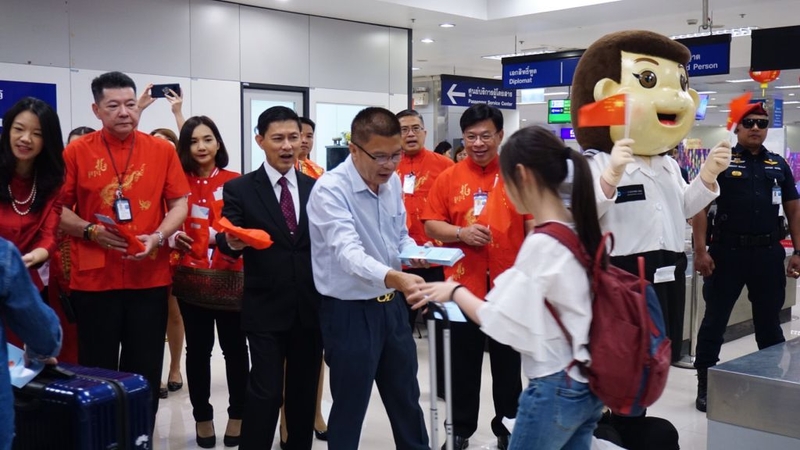
One of the contributing factors to the increase in tourists is the extension of the waiver on visa-on-arrival fees to April next year. The current waiver covering visitors from 18 countries and one economic zone, including India and China, is set to expire in October.

The research house also put the rise in arrivals to the ongoing unrest in Hong Kong, which is forcing holidaymakers from China to change their destination.

In the first eight months of this year, 7.7 million Chinese tourists arrived in Thailand, down only 0.8 per cent when compared to the same period last year.

KResearch said Thailand’s tourism industry should maintain its recovery for the rest of the year thanks to the visa-on-arrival fee waiver and China’s long national-day holiday from October 1 to 7. As many as 240,000 Chinese people are expected to arrive in Thailand during the national day break, up 18 per cent from the same period last year.

However, maintaining the growth in Chinese arrivals may prove to be challenging next year due to unfavourable economic conditions in China and the drop in the value of yuan. Besides, Thailand is also facing tough competition from other countries in wooing Chinese tourists.

According to the Fiscal Policy Office, the number of tourist arrivals to Thailand in August stood at 3.47 million, up 7.4 per cent year on year. The number of Chinese arrivals to Thailand in the same month expanded 18.9 per cent year on year, while Indian arrivals expanded 32.4 per cent.

Related story: Chinese pick Japan, Thailand for Golden Week holidays pick Japan, Thailand for Golden Week holidays

China ready to improve strategic economic partnership: Jurin

ศาสตร์เกษตรดินปุ๋ย : ขอบคุณแหล่งข้อมูล : หนังสือพิมพ์ The Nation

https://www.nationthailand.com/business/30376764

China ready to improve strategic economic partnership: Jurin

Sep 26. 2019
By The Nation

571 Viewed

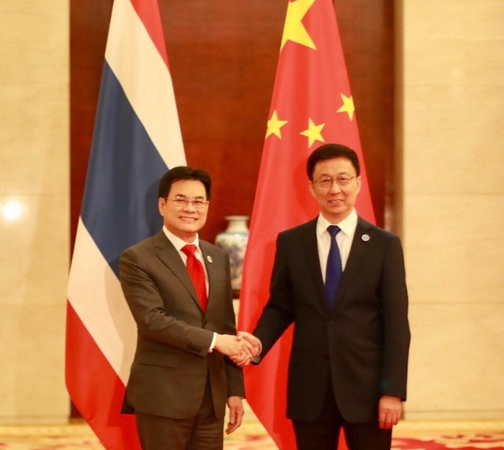
Deputy Prime Minister and Commerce Minister Jurin Laksanawisit last week met with the deputy premier of China to improve the two countries’ strategic economic partnership through a focus on greater cooperation and increasing trade in agricultural products from Thailand.

When the Deputy PM met Han Zheng on September 20, his China counterparty congratulated hi on his new position and Thailand’s work as this year’s chairman of Asean. Jurin in turn expressed his admiration for The Belt and Road Initiative (BRI), a global development strategy of the Chinese government.

Both deputies also discussed trade in agricultural goods. Jurin asked China to speed up purchases of Thai rice and rubber in line with a memorandum of understanding between the nations, while thanking China for loosening inspection measures on fruit and frozen chicken from Thailand.

Thailand’s Director-General of the Department of Trade Negotiations, Auramon Supthaweethum, said that Xi Jinping, the China President, will fly to Thailand this November to attend the Asean-China Summit, while Thai officials will bring businessmen to join the China International Import Export (CIIE) trade fair at Shanghai.

in 2018, Thai-China trade was valued $80.2 billion. Major Thai exports included plastics pellets, rubber, rubber processed products, fresh and frozen fruit, chemicals, computers and parts, and cassava. Major imported products included machinery, electrical machinery, home appliances, iron, steel and car parts.

Major fitness fair planned for Singapore

ศาสตร์เกษตรดินปุ๋ย : ขอบคุณแหล่งข้อมูล : หนังสือพิมพ์ The Nation

https://www.nationthailand.com/business/30376747

Major fitness fair planned for Singapore

Sep 26. 2019
By The Nation193 Viewed

The first FIBO Southeast Asia (FIBO SEA) gets underway next year, as brands, manufacturers, distributors, licensors, intermediaries, buyers and trainers from the Southeast Asian and international fitness industry getting together in Singapore from September 24 to 26.

“As a global brand, we provide access to the most dynamic and important fitness markets worldwide,” says Hans-Joachim Erbel, chief executive of Reed Exhibitions Deutschland GmbH, the organiser of FIBO in Germany, adding: “Southeast Asia is one of the fastest growing regions in our industry and holds a vast potential for our exhibitors.  We will be bringing together key markets including Indonesia, Malaysia, Vietnam and Thailand with Singapore. The demand for fitness offerings is increasing, not least on account of a growing middle class, tourism and rising health awareness.

The Southeast Asia region is expected to grow at a yearly average of 5.2 per cent from 2018 to 2022 and to become the fourth largest single market in the world by 2030 — putting it behind only the US, China, and the European Union (EU). According to Ernst & Young (EY), Asean is in a “demographic sweet spot” with a youthful workforce and generous consumer base of more than 659 million people. Unlike more mature Asian countries, the region’s working population surpasses its older dependents, spurring economic expansion, generous consumer and investment spending and wealth accumulation. The fitness market in this region generated combined revenue of US$1.5 billion with the membership penetration rate in Singapore growing to 5.8 per cent between 2014 and 2018, and expected to hit 6.4 per cent annually by 2023. The rest of the markets in the region include Thailand (membership penetration rate of 0.5 per cent), Indonesia (0.18 per cent), Philippines (0.53 per cent), Malaysia (1.04 per cent), and Vietnam (0.50 per cent).

“FIBO Southeast Asia is positioned as the strategic business platform for international brands to serve the growing fitness and wellness community in this region. With Singapore’s international appeal as a green and sustainable city, strategic location and easy access to high-growth markets in Southeast Asia, the trade exhibition and conference will be the place to be seen at this annual industry gathering,” says Michelle Lim, managing director of Reed Exhibitions Singapore, Indonesia and Malaysia.

MPC cuts growth estimate to just 2.8%

ศาสตร์เกษตรดินปุ๋ย : ขอบคุณแหล่งข้อมูล : หนังสือพิมพ์ The Nation

https://www.nationthailand.com/business/30376733

MPC cuts growth estimate to just 2.8%

Sep 26. 2019
Titanun

Titanun
By THE NATION

1,334 Viewed

The Monetary Policy Committee on Wednesday (September 25) reduced its forecast for economic growth this year from 3.3 to 2.8 per cent and for next year from 3.7 to 3.3 per cent.

“This is the fourth adjustment since last year,” said its secretary, Titanun Mallikamas. “In June 2018 the committee estimated GDP growth at 4.2 per cent, and then later adjusted it to 3.8, 3.3 and 2.8 per cent, for a total 1.4-per-cent decrease from the original estimate.”

He said the committee based its latest decision on the economy expanding at a slower rate than expected, especially in the export sector.

“We previously predicted exports to hold at 0 per cent but then had to adjust that to minus-1 per cent due to the stronger baht. The slowdown in exports is starting to affect domestic demand and private investment, while reduced employment is lowering domestic consumption as well.”

The committee also revised its projection for import expansion from 0.3 to minus-3.6 per cent and for public investment from 3.8 to 2.5 per cent.

“Other factors were foreign trade disputes, the decline in tourism, rising household debt and the effects of natural disasters,” Titanun said.

“The government’s economic stimulus packages have helped maintain GDP at this level. Without those, it would have gone down even lower.”

The committee, however, increased its estimate for the current account from US$29.1 billion to $34.2 billion in 2019 and from $26.3 billion to $30.4 billion in 2020.

“This was due to increased gold exports thanks to spiking gold prices,” Titanun said.

The downward revisions elsewhere, though, made it clear that the committee is somewhat more pessimistic about the economy than the Asian Development Bank, which on Wednesday lowered its GDP forecast for 2019 from 3.9 to 3 per cent.

ADB seeks co-financing of Thai projects

ศาสตร์เกษตรดินปุ๋ย : ขอบคุณแหล่งข้อมูล : หนังสือพิมพ์ The Nation

https://www.nationthailand.com/business/30376740

ADB seeks co-financing of Thai projects

Sep 26. 2019
Hideaki Iwasaki

Hideaki Iwasaki
By Wichit Chaitrong
The Nation

1,262 Viewed

The Asian Development Bank (ADB) is looking to co-financing deals of mass transit, double-track rail and renewal energy projects with the Thai companies, said Hideaki Iwasaki, the bank’s country director in the Kingdom.

He said Thai government is in a strong fiscal position and has not borrowed much from the ADB.

However, The ADB has provided loans to private companies in recent years, citing co-financing of the yellow and pink mass transit lines in Bangkok.

The bank is keen on co-financing mass transit projects in Bangkok.

Although Thailand has started investing in double-track rail projects, the bank can still provide financial support to some sections of the systems, he said.

Renewal energy such as solar and wind power is also an area ADB has supported financially as it promotes sustainable development, he said.

The bank has helped local institutions raise funds by issuing green bonds.

It has also provided financial support for the construction of highways in Roi Et and the road from Sakon Nakhon to Nakhon Phanom.

“The ADB is now focusing on climate change and road safety in Thailand,” Iwasaki said.

It is also currently working with the Civil Aviation Authority of Thailand (CAAT) on improving the management of 29 regional airports in small cities.

It has conducted a study on the matter, he added.

TCEB shifts focus on 4Ms to rock global MICE market

ศาสตร์เกษตรดินปุ๋ย : ขอบคุณแหล่งข้อมูล : หนังสือพิมพ์ The Nation

https://www.nationthailand.com/business/30376727

TCEB shifts focus on 4Ms to rock global MICE market

Sep 25. 2019
By THE NATION

502 Viewed

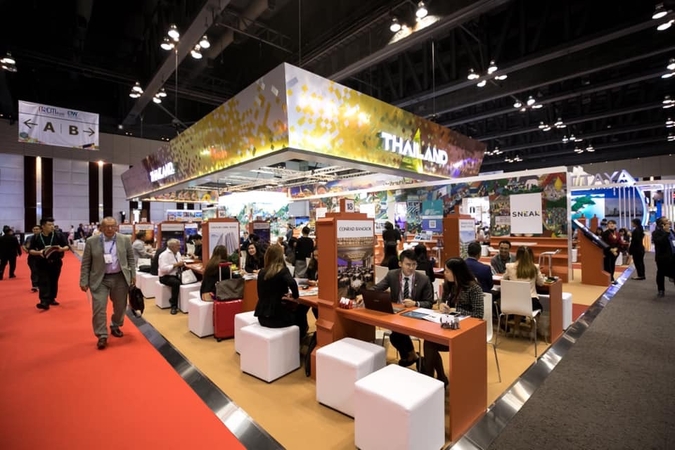
The Thailand Convention and Exhibition Bureau (TCEB) is moving fast to rock the global MICE market by spotlighting on the 4Ms – meet now, meet mega, meet smart and meet sustainable – at the IT&CMA and CTW Asia-Pacific forum in Bangkok. This move is expected to generate Bt57 billion next year.

TCEB has also joined with entrepreneurs in five cities to turn them into environmentally sustainable MICE cities by cutting down waste volume by 50 per cent.

Meanwhile, the so-called 4Ms promotions designed by TCEB will include meetings being taken to potential cities (Meet Now); large-sized meetings (Meet Mega); meetings group that conform with the Thailand 4.0 policy (Meet Smart); and meetings that include sustainable activities (Meet Sustainable). These groups will also be offered extra privileges, including a special MICE lane at the airport, cultural performances, souvenirs and supporting budget of up to Bt1 million.

Chiruit Isarangkun Na Ayuthaya, TCEB president, said the bureau is focusing on national competitiveness and plans to make MICE part of the national agenda.

“The world is changing at an ultra-fast pace owing to digital technology, trade wars, economic depression, inflation and natural disasters. These have inevitably affected economy, politics and society. To expedite MICE to achieve goals, it is therefore necessary to seek collaboration on both national and international levels. We can expect our operations to yield maximum efficiency with lowest costs, while also remaining competitive and surviving with sustainability,” he said.

TCEB is highlighting its marketing strategies during the annual MICE trade show – the IT&CMA and CTW Asia-Pacific forum, which wraps up on September 26.

Though TCEB’s primary markets for meetings and incentives (MI) will remain the Asean+6 countries, namely China, Japan, India, South Korea, Australia and New Zealand, and the US as well as Europe as a secondary market, it is also eyeing countries in Eastern Europe.

In 2020, TCEB expects 1.39 million MICE travellers in Thailand, generating Bt105.6 billion in revenue. The number of MICE travellers from the meetings and incentives market has been estimated to be 762,000, generating revenue of Bt57 billion.

Chiruit added that apart from the goal to enhance Thailand’s image as a great destination for international events and moves to boost MICE ecosystems in Bangkok, Pattaya, Phuket, Chiang Mai and Khon Kaen, TCEB also plans to collaborate on four dimensions. The collaborations will be based on the development of knowledge through training; promotion of venues of MICE organisers; providing support for sustainable events and for MICE venues to achieve sustainable standards; and monitoring and evaluation of tangible sustainability of MICE businesses.

TCEB’s first campaign with the five MICE cities is “Zero Plastic Events”, with the aim to cut down the use of plastic bottles used at MICE events from 17.34 million to 8.67 million within a year. The campaign will include the use of glass bottles during short meetings that last one or two days; using reusable bottles for longer meetings that can be taken back as a souvenir; or providing water coolers with drinking glasses. Plastic and paper glasses will be banned.

“If the operation goes as well as planned, the number of plastic bottles will be reduced as estimated, which will be equivalent to 638 tonnes of carbon dioxide or equal to planting 70,226 trees. Costs can also be lowered by Bt30 billion. TCEB is confident that this collaboration is another milestone of unification towards bringing Thai MICE towards sustainability and enabling Thai MICE to meet standards and recognition as Asia’s leading MICE destination,” Chiruit added.

Govt revenues, outlay jump in fiscal 2019

ศาสตร์เกษตรดินปุ๋ย : ขอบคุณแหล่งข้อมูล : หนังสือพิมพ์ The Nation

https://www.nationthailand.com/business/30376725

Govt revenues, outlay jump in fiscal 2019

Sep 25. 2019
By The Nation

620 Viewed

General government fiscal revenue was Bt2.617 trillion in the first nine months of fiscal 2019 (October-June), an increase of 6.6 per cent and Bt162.2 billion over the same period last year.

Officials credited the hike mainly to increased revenue from income- and consumption-based taxes and remittances from state-owned enterprises (Bt105 billion) and extra-budgetary funds (Bt53.3 billion).

General government expenditure for the same nine months was Bt2.745 trillion, a jump of 5.7 per cent and Bt149.2 billion from last year.

The overall balance ended up Bt127.066 billion in deficit, representing 0.8 per cent of GDP.

Conversely, the consolidated general government primary balance, which excludes interest payments to reflect the substantive performance and direction of fiscal policy, was Bt13.357 billion in surplus, or 0.1 per cent of GDP.