ADB drops Thai growth forecast to 3%

ศาสตร์เกษตรดินปุ๋ย : ขอบคุณแหล่งข้อมูล : หนังสือพิมพ์ The Nation

https://www.nationthailand.com/business/30376722

ADB drops Thai growth forecast to 3%
Sep 25. 2019
By Wichit Chaitrong
The Nation

880 Viewed

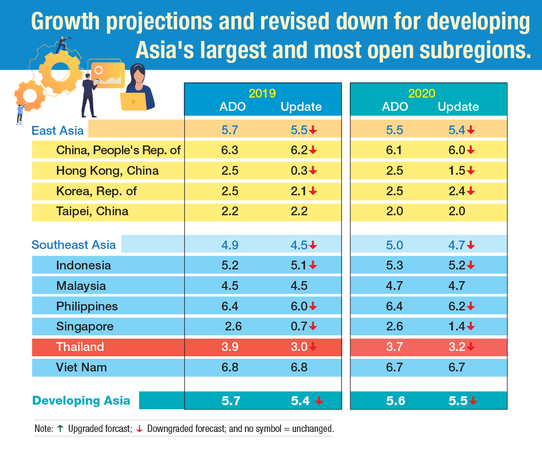
The Asian Development Bank has lowered its growth forecast for the Thai economy to 3 per cent but is optimistic that conditions will improve next year.

Principal economist Thiam Hee Ng said in Bangkok on Wednesday (September 25) that the downgrade from 3.9 per cent stemmed from the global economic slowdown, the US-China trade dispute and the strong baht.

Worried monetary panel holds policy at 1.5%
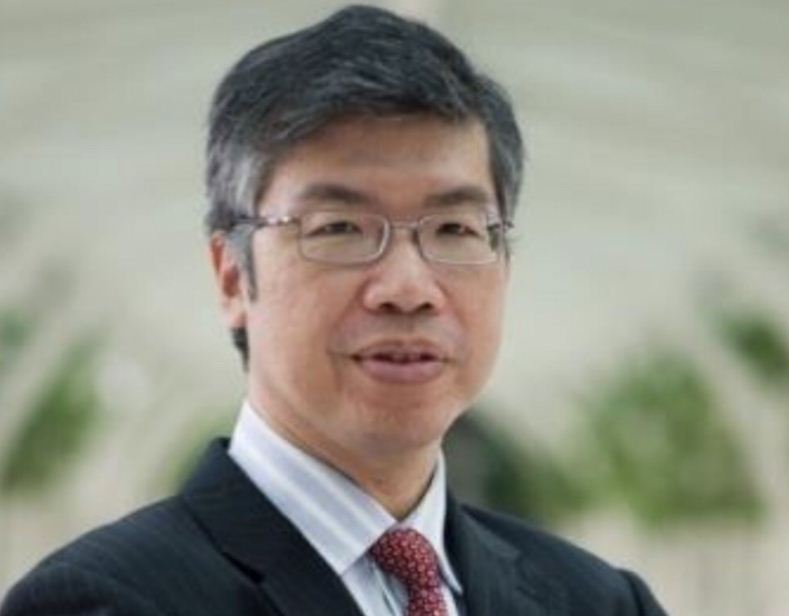
Thiam Hee Ng

Thiam Hee Ng

He said the bank foresaw a slightly higher growth rate at 3.2 per cent next year, due largely to infrastructure investment in the Eastern Economic Corridor, but was conscious of the risk in any delays in the investment.

Among positive indicators the bank considered were substantial interest among foreigners in investment incentives and the Board of Investment’s report of more foreign direct investment in the pipeline.

Chinese and Japanese manufacturers are planning to relocate their production bases in Thailand and elsewhere in Southeast Asia to avoid higher tariff rates imposed on Chinese goods by the US government.

But Hee Ng warned that the trade tensions would continue to hamper the global economy overall and have an impact on Thai exports and tourism.

“The super-strong baht partly weighed down exports and also caused slower growth among tourist arrivals in the first half of the year,” he noted.

The baht has appreciated not only against US dollar but also other currencies.

A rate cut by the central bank would likely do little to weaken the baht, he said. Investors see the Thai economy as a safe haven due to a large current-account surplus and significant foreign reserves.
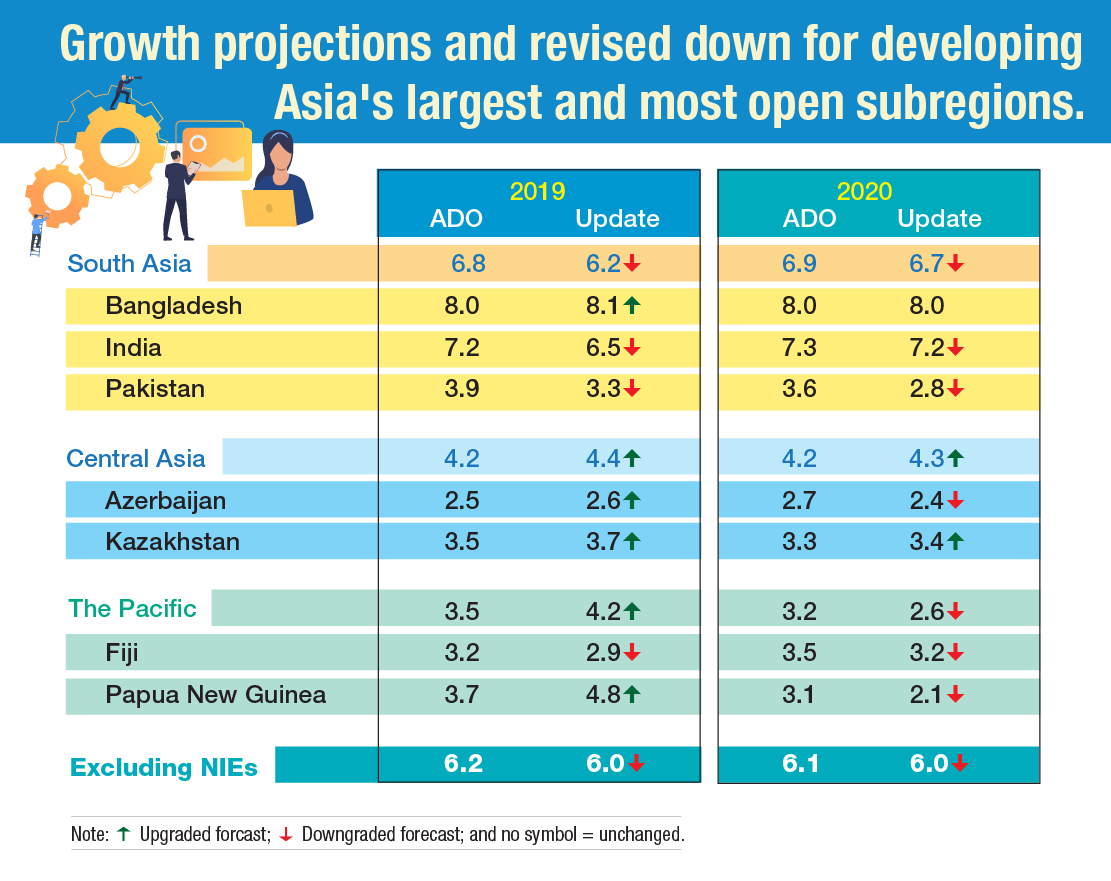
The ADB also revised downward its forecast for Asia’s growth as a whole to 5.4 per cent this year and 5.5 per cent next.

It cited slower growth in China, India and other economies in the region, as well as uncertainty stemming from escalating trade tensions and Brexit.

Worried monetary panel holds policy at 1.5%

ศาสตร์เกษตรดินปุ๋ย : ขอบคุณแหล่งข้อมูล : หนังสือพิมพ์ The Nation

https://www.nationthailand.com/business/30376718

Worried monetary panel holds policy at 1.5%

Sep 25. 2019
Titanun

Titanun
By The Nation

503 Viewed

The Monetary Policy Committee voted unanimously on Wednesday (September 25) to maintain the policy rate at 1.5 per cent, its secretary said.

MPC’s secretary Titanun Mallikamas said the committee agreed that economic expansion is slower than expected due to a decline in exports and its knock-on effect on domestic demand.

ADB drops Thai growth forecast to 3%

Headline inflation is now projected to be under the lower bounds of the targeted figure, although overall financial conditions remained “accommodative”, Titanun said.

Financial stability risks had already been addressed to some extent, though there remained pockets of risks that warranted monitoring.

The committee decided an accommodative policy rate would contribute to continued economic growth and help raise headline inflation closer to its target.

Merchandise exports contracted more than expected due to weaker economies among Thailand’s trading partners and global trade in general.

Tourism is also growing more slowly than anticipated.

Private consumption is expected to slow further despite fiscal stimulus measures because of declining household income and employment, particularly among export-related manufacturing firms, elevated household debt and the impacts of natural disasters.

Private investment is also seen wavering, but a rise in foreign companies relocating their production bases here and in public-private partnership infrastructure projects is shoring it up.

Public expenditure has slowed owing partially to delays in state-owned enterprise investment projects.

Titanun said the committee would monitor external risks from intensifying trade tensions and the economic outlook of China and other advanced economies that could affect domestic demand.

He said core inflation was expected to moderate due to subdued demand-pull inflationary pressures, but the committee felt structural changes contributed to more persistent inflation than in the past, such as the expansion of e-commerce, rising price competition and technological development reducing production costs.

It also expects headline inflation to increase towards target in 2020 in line with economic expansion.

There is ample liquidity in the financial system. Real interest rates remained at a low level. Government bond yields declined. These allowed financing by the private sector to continue expanding.

However, loans extended to both businesses and consumers will exhibit slower growth, Titanun said. The committee expressed concern over the baht’s appreciation against trading partners’ currencies, which could affect the economy to a larger degree amid overseas uncertainties. It plans to closely monitor exchange rates and capital flows and consider implementing additional measures if necessary.

The committee found that implemented macroprudential measures had to some extent curbed vulnerabilities in the financial system, but vigilance was needed regarding search-for-yield behaviour that could result in risks being under-priced, debt accumulation and debt serviceability of households and SMEs, and growth in assets held by saving cooperatives.

The committee acknowledged that, despite using policy tools as appropriate, the Thai economy would continue to face structural problems affecting competitiveness and economic growth.

Jurin, business executives, line up business agreements on India trip

ศาสตร์เกษตรดินปุ๋ย : ขอบคุณแหล่งข้อมูล : หนังสือพิมพ์ The Nation

https://www.nationthailand.com/business/30376711

Jurin, business executives, line up business agreements on India trip

Sep 25. 2019
Deputy Prime Minister and Minister of Commerce Jurin Laksanawisit

Deputy Prime Minister and Minister of Commerce Jurin Laksanawisit
By The Nation

617 Viewed

Commerce Ministry staff and chief executives of private companies are on a five-day trade trip to Mumbai and Chennai, India to drum up business, led by Deputy Prime Minister and Minister of Commerce Jurin Laksanawisit.

“The primary aim of this visit is to negotiate new business networks between Thai private sector and Indian entrepreneurs, and to preside over the signing ceremony of a memorandum of understating (MoU) between several Thai and Indian business operators,” Jurin said on Wednesday of the September 24-28 junket.

The MoUs will cover five key businesses, said Jurin, including rubber, rubberwood, tapioca flour, construction materials, and logistic services, and will help Thai entrepreneurs penetrate Indian markets.

The deputy PM will also preside over the signing of an MoU between the Department of International Trade Promotion and Bigbasket, India’s grocery delivery application, so that Thai products could be sold in India through the app.

“In addition to the MoU signing, Thai and Indian entrepreneurs will take part in series of seminars to discuss business opportunities across different sectors, such as furniture manufacturing and construction materials,” he added.

In 2018, trade value between Thailand and India grew 20 per cent over the previous year. Thailand’s major export products to India include chemicals, plastic beads, gems and jewellery, cars and automotive equipment, air conditioners, iron and steel, copper, and computer components.

Jurin opens Thai-India business-matching seminar in Mumbai

Commerce Minister Jurin Laksanavisit presided over a business-matching seminar in Mumbai on Wednesday (September 25), saying he was pleased to have visited India in an official capacity for a second time.

In his opening speech, he said that though other countries are being adversely affected by the China-US trade war, which is nowhere close to coming to an end, the Indian economy has barely felt the effect due to strong domestic consumption. India’s population stands at more than 1.3 billion.

The meeting also saw the signing of several memoranda of understanding, namely an MoU between Thai and Indian rubberwood firms, an MoU between the Thai and India business councils and global link companies to support SME businesses and an MoU between the two business councils and the Mumbai Industries Association.

Jurin also announced a cooperation between the Thailand Department of International Trade Promotion and BigBasket, an online grocery store in India, to place Thai products on the BigBasket website.

He said the Indian market has expanded and developed its facilities to support new investment from Thailand thanks to good logistics and distribution networks as well as construction and design services. Jurin said he believes companies from both sides will work well together to ensure a bright future for the Thailand-India trade market.

Gov’t promotes new ‘Q’ mark assuring quality food products

ศาสตร์เกษตรดินปุ๋ย : ขอบคุณแหล่งข้อมูล : หนังสือพิมพ์ The Nation

https://www.nationthailand.com/business/30376707

Gov’t promotes new ‘Q’ mark assuring quality food products

Sep 25. 2019
By THE NATION452 Viewed

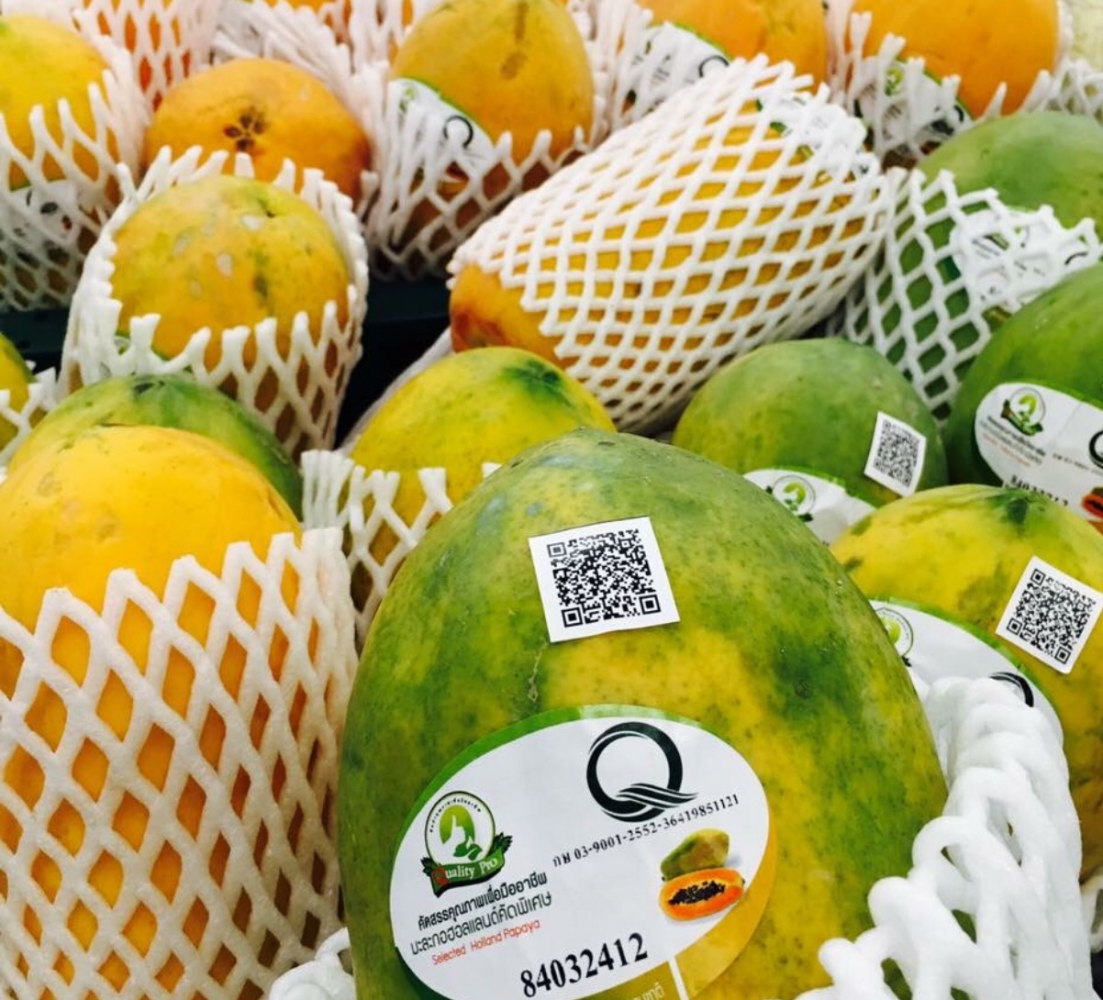
A “Q” mark for raising customer’s awareness about food safety and chemical contamination is being promoted by the government’s food standards bureau, as it aims to increase distributing channels in both domestic and international markets.

Wittawat Sarasalin, deputy secretary-general of the National Bureau of Agricultural Commodity and Food Standards (ACFS), on Wednesday said that the Ministry of Agriculture and Cooperatives is attempting to improve the quality of food and agricultural products in both domestic and international market. The effort is to bring them in line with the food safety standards required by customers around the world who are paying increased attention to “health-friendly” products.

Working toward accredited agricultural and food product standards, examinations and certification under international practices, ACFS recently organised a campaign to raise the public awareness through a “Q” symbol. The aim is to create a positive image for and acceptance of the “Q” brand among entrepreneurs and customers.

“The “Q” is intended as a food safety mark certified by ACFS to assure customers they can trust that the product is safe and clean under the agriculture product standard act BE 2551, that ensures that the source of origin, food components and processing method meet the safety standard,” Wittawat said.

“We want to ensure customers have a good choice for selecting clean and safe food, which can eliminate food poisoning, as well as provide a good incentive for farmers and entrepreneurs to produce clean food that is also free from chemical contamination.”

ACFS has worked with modern trade companies such as TOP, Big C, The Mall, Macro and other fresh markets to garner their support for products bearing the “Q” logo, and ensure a significant channel for customers to choose and buy products meeting the safety standard.

Currently, two kinds of accredited agricultural product standards – products meeting the compulsory standard and those meeting a non-compulsory standard. Farmers, entrepreneurs, importers and exporters must meet the standard to earn the legitimacy that comes with certification.

The compulsory standard has covered six criteria related to smoked fresh fruit with sulphur dioxide, the acceptable amount of Alpha toxin in peanuts, good practice for producing frozen durian, good practice for collecting raw milk, and good practice in white shrimp farming to ensure no disease.

Under the agriculture product standard act BE 2551, 322 announcements have been declared, including 177 cases of product standards, 158 cases of manufacturing standards and 47 cases of data standards, among others.

Wittawat said that any entrepreneur carrying the “Q” mark branding must ensure that their guard is not lowered and that the product quality is maintained. Officials will make random checks, he said. If the firm fails to follow the safety standard, the right to use the “Q” mark will be revoked. Meanwhile, customers should select products with the “Q” logo, which will be easily seen on packaging along with details that include the name of the entrepreneur who checks the standard, the code of the certified agriculture product standard as well as the code and name of the person involved in the certification.

Customers will be able to check the source of Q-certified agricultural products. In the event of a problem, they have the right to access information about the product and public announcements will be made when faulty products are removed from the shelf. A person convicted of falsifying the mark faces three years in prison, or a Bt300,000 fine, or both.

SET, SEC offer ‘one-stop’ service

ศาสตร์เกษตรดินปุ๋ย : ขอบคุณแหล่งข้อมูล : หนังสือพิมพ์ The Nation

https://www.nationthailand.com/business/30376689

SET, SEC offer ‘one-stop’ service

Sep 25. 2019
By The Nation

302 Viewed

The Stock Exchange of Thailand (SET) has joined with the Securities and Exchange Commission (SEC) in unveiling the new “One-Stop Service” project, an initiative that is part of SET’s “Creating Partnership Platform to Drive Inclusive Growth” strategy to provide a full range of services to listed firms and those interested in mobilizing funds and financial advisors.

The end-to-end platform offers advice spanning fundraising to regulations quality development, in order to effectively facilitate convenience, and eliminate overlaps.

“The SEC is committed to developing and sharpening the Thai capital market’s competitive edge. The One-Stop Service is among the projects stemming from an integrated undertaking between the SEC and SET made at the joint meeting on June 1, 2019 in which the SEC promised to push any mutually agreed project for swift action to facilitate fundraising for listed companies and potential issuers, reduce overlaps and contact burdens concerning regulatory compliance,” SEC Secretary-General Ruenvadee Suwanmongkol said. “For the One-Stop Service project, we have outlined our co-working plan and set up an advisory team to make sure that it will substantially contribute to our mutual goal of increasing service efficiency and developing a sustainable capital market.”

SET President Pakorn Peetathawatchai added that with the support and cooperation from the SEC in driving the Thai capital market development, SET would prioritse working for the benefit of market participants. “We have come up with this One-Stop Service to efficiently and effectively provide advice concerning fundraising, financial advisers in compliance with post-listing rules set by both the SET and the SEC, as well as quality development to benefit listed companies, pre-IPO firms, and financial advisers. From now on, the current listed companies and potentials wishing to raise fund through the stock market can contact SET’s relationship manager of each sector. This new platform will combine and balance both advanced tech and human touch. Moreover, the answering service regarding fundraising and regulations is also available,” he said.

This one-stop service kicked off yesterday (September 24). In addition, SET continuously improves service efficiency for listed companies through the SET Link system that gathers information, regulations, practice guidelines, announcements and activities related to listed companies.

Port authority eyes expanding shipping routes from Ranong

ศาสตร์เกษตรดินปุ๋ย : ขอบคุณแหล่งข้อมูล : หนังสือพิมพ์ The Nation

https://www.nationthailand.com/business/30376667

Port authority eyes expanding shipping routes from Ranong

Sep 25. 2019
Photo credit: Port Authority of Thailand

Photo credit: Port Authority of Thailand
By THE NATION

613 Viewed

The Port Authority of Thailand is getting ready to study the plan to develop shipping routes linking Ranong port with countries in South and Southeast Asia.

The move is to promote trade expansion between Thailand and other BIMSTEC nations, namely Bangladesh, Bhutan, India, Nepal, Sri Lanka and Myanmar.

Ranong governor Chatuphot Piyamputtra told Thansettakit newspaper that the port authorities have chosen three ports to connect with the Ranong port initially, namely Chittagong in Bangladesh, Chennai in India and Colombo in Sri Lanka. The state port authority will negotiate the possible link up and believes the routes will be ready for ships next year.

In March, the Cabinet approved plans to upgrade the Ranong port’s capacity by building a third terminal. With the new terminal, its capacity will rise from 78,000 TEU (twenty-foot equivalent unit) to between 500,000 and 600,000 TEU per year. Construction of the new terminal will kick off next year and should be completed by 2022.

Ranong will also be developed as a trading gateway for the west of Thailand as part of the Southern Economic Corridor. Under this project, the Ranong port capacity will be upgraded to serve ships of up to 12,000 deadweight tonnage (DWT).

The trading value between Thailand and South Asian countries in 2018 was Bt523.7 billion, of which Bt352.255 billion was the value of exports from Thailand.

On a by-country basis, the value of Thailand’s trade with India stood at Bt402.5 billion, with Bangladesh at Bt40.340 billion and with Sri Lanka at Bt16.9 billion.

Cabinet okays Bt894 bn worth of public debt for 2020

ศาสตร์เกษตรดินปุ๋ย : ขอบคุณแหล่งข้อมูล : หนังสือพิมพ์ The Nation

https://www.nationthailand.com/business/30376678

Cabinet okays Bt894 bn worth of public debt for 2020

Sep 25. 2019
By The Nation

1,428 Viewed

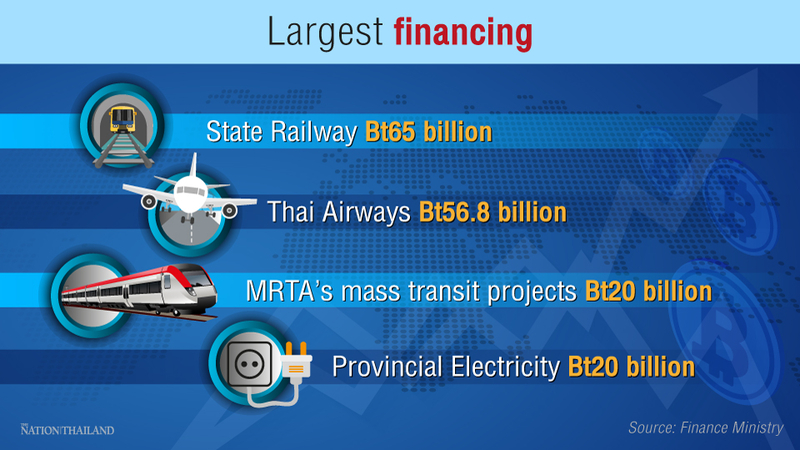
The Cabinet on Tuesday (September 24) approved a planned public debt worth Bt894 billion for fiscal 2020, with the largest sums being injected into the State Railway of Thailand, which will be getting Bt65 billion, and Bt56.8 billion earmarked for cash-strapped Thai Airways International.

Ratchada Thanadirek, deputy government spokesperson, said the Cabinet also approved plans for the management of existing debts worth Bt831.2 billion and debt-repayment plan of Bt398.4 billion. The plans were proposed by Finance Minister Uttama Savanayana.

The new public debt will help push the public debt to gross domestic product ratio slightly up to 42.76 per cent from 41.45 per cent in fiscal 2019. Debt to revenue ratio is projected to be 18.48 per cent, well below the limited target of 35 per cent.

Meanwhile, foreign debt is 2.86 per cent of total debt, well below the limited target of 10 per cent thanks to prudent management. As of July, public debt was worth Bt6.9 trillion or 41.45 per cent of the GDP.

Of the new debts, Bt748.88 billion will be owed by the government, while state enterprises will owe a total of Bt145.1 billion.

The government has had to borrow to boost its liquidity and finance its economic stimulus packages as well as cover investment in infrastructure. The government will borrow Bt570 billion domestically to finance budget deficits in fiscal 2020 and will borrow foreign funds equivalent to Bt3.5 billion to finance development projects.

In order to help state enterprises get cheap funding, the government will lend money it has borrowed to key state agencies. For instance, the State Railway of Thailand will get loans from the government to finance its nine investment projects worth Bt65 billion, while the Mass Rapid Transit Authority of Thailand will get loans worth Bt20 billion from the government to finance its mass-transit projects in Bangkok.

Of the 13 state enterprises that will borrow a combined Bt145.1 billion, Thai Airways is taking a large chunk of Bt56.8 billion to purchase new airplanes and to boost its liquidity, while the Provincial Electricity Authority is borrowing Bt20 billion to finance its investments, the National Housing Authority is taking Bt4 billion and the Provincial Waterworks Authority Bt6 billion.

The Bt3.2-trillion budget bill for fiscal 2020 is scheduled to be deliberated in Parliament on October 17 for the first reading, with the second and third readings are scheduled to be held between January 18 and 29. The funds are expected to be disbursed in late January. In Thailand, the fiscal year usually starts in October.

Company registrations drop 8 % in August

ศาสตร์เกษตรดินปุ๋ย : ขอบคุณแหล่งข้อมูล : หนังสือพิมพ์ The Nation

https://www.nationthailand.com/business/30376672

Company registrations drop 8 % in August

Sep 24. 2019
 Sorada Lertharpachit, Deputy Director-General of  the Department of Business Development

Sorada Lertharpachit, Deputy Director-General of the Department of Business Development
By THE NATION

658 Viewed

A total of 5,973 companies were registered in August, down 8 per cent from July and 7 per cent year-on-year, said Sorada Lertharpachit, Deputy Director-General of the Department of Business Development.

Of the newly registered businesses, companies in the fields of  construction, real estate, and restaurant top the list while their combined capital stood at Bt17.172 billion, falling 25 per cent from July  and 26 per cent year on year.

Meanwhile, 1,755 companies with Bt28.933 billion in total registered capital went out of businesses in August, an increase of 10 per cent from July but a decrease of 1 per cent year on year. They were again led by companies in the construction, real estate, and restaurant businesses.

The total number of new businesses registered from January to August of 2019 sat at  50,654, up 1 per cent year on year. They had Bt157.794 billion in total capital, down 18 per cent year on year.

Businesses that had collapsed during the eight-month period stood at 10,016, up 3 per cent year on year. They had a total capital of Bt59.548 billion, up 7 per cent year on year.

Sorada said the number of  new registrations tends to grow, encouraged by the government’s economic stimulus and continued promotion of the tourism sector and private investment.

Experts sum up keys to branding success, sustainability

ศาสตร์เกษตรดินปุ๋ย : ขอบคุณแหล่งข้อมูล : หนังสือพิมพ์ The Nation

https://www.nationthailand.com/business/30376656

Experts sum up keys to branding success, sustainability

Sep 24. 2019
By THE NATION

659 Viewed

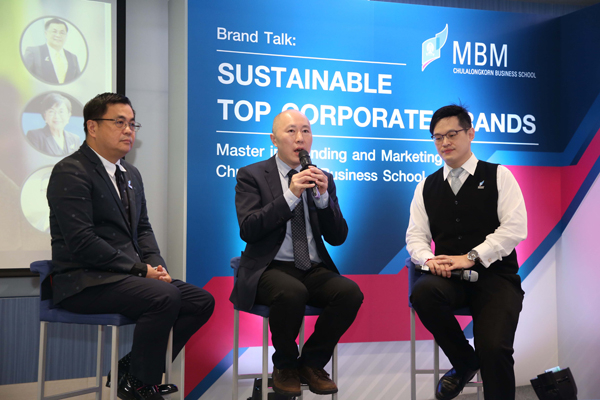
The Master in Branding and Marketing (MBM) programme of Chulalongkorn University’s Chulalongkorn Business School (CBS) recently organised a talk on Sustainable Top Corporate Brands by Dr Vincent Mak of Cambridge Judge Business School of the University of Cambridge and Asst Prof Dr Wilert Puriwat, Dean of Chulalongkorn Business School, at the university’s premises.

Dr Vincent Mak described a company’s brand as a kind of ‘nudge’ for consumer purchasing behaviours. “Whereas in the past, brands were like the consumer’s master, but today they must act as a servant. They should allow customers to create their own experiences and lives”.

Mak argued that it is, in fact, the customers who “own” the brand, and who decide what it is in terms of its image. Therefore, companies should “…establish their brand characters by not establishing them.”

Meanwhile, Dr Wilert of Chulalongkorn Business School advised executives to develop an insight of customers by focusing on their future needs and fulfilling those needs even before the customers realise them.

“It is important to continue changing the brand dynamically… people are addicted to seeing new things,” he said. He also pointed out that engaging the new generation is key, and that executives need to “change the methodology to grab them”. He added that “the world still belongs to humans” and “the human touch is still needed to effectively engage coming-of-age customers. So emotional and social values are keys to success and sustainability.”

As for the key challenges brands and organisations face in achieving sustainability, Mak advised  maintaining “moral intelligence” through CSR activities which, despite being an expense for companies, would help build emotional and moral values.

Puriwat concluded that companies not only need IQ and EQ to survive beyond the digital era but DQ (Digital Quotient) and SQ (Social Quotient) as well.

From now,  he added: “We should disrupt the disruptor … fight back and not wait to be disrupted. Setting the goal first… keeping the brand dynamic… reaching people both on-and offline… and keeping the brand unique are all crucial to achieving brand success and sustainability. The world is continually evolving, and brands must keep up with the changes in order to achieve success”.

SET, Clearstream join to ease international investor access to Thai fund market

ศาสตร์เกษตรดินปุ๋ย : ขอบคุณแหล่งข้อมูล : หนังสือพิมพ์ The Nation

https://www.nationthailand.com/business/30376627

SET, Clearstream join to ease international investor access to Thai fund market

Sep 24. 2019
By The Nation

278 Viewed

The Stock Exchange of Thailand (SET) and Clearstream Banking SA, an international central securities depository, have joined to enable cross-border funds transactions. 

The new linkage between SET’s mutual fund platform FundConnext and Clearstream’s global fund processing platform Vestima enables international investors to access the Thai fund market. As of August 2019, the Thai mutual fund market encloses assets under management at Bt4.01 trillion. In return, Thai investors have access to more than 190,000 investment funds from close to 50 jurisdictions worldwide via Vestima.

The linkage of the two platforms is operated via SWIFT’s standard messaging format ISO 20022. Cash will flow through Standard Chartered Bank (Thai) Plc.

Pakorn Peetathawatchai, SET’s President, said: “The linkage enhances fully automated capabilities for cross-border investment fund distribution between Thailand and the world. As the first implementations of ISO 20022 in Thailand, FundConnext is committed to providing the world and Thailand’s investment communities with lower cost, ease of access and more efficient services.”

Bernard Tancré, the head of investment funds services at Clearstream, said, “Adding order routing, asset servicing and settlement services for Thai domestic investment funds to our portfolio perfectly fits our Asia funds strategy. The connection between Clearstream’s Vestima and SET’s FundConnext will enhance access to Thai and international funds for domestic and global market participants.”

Lisa O’Connor, the managing director of capital markets and standards, APAC, SWIFT, said, “For more than 10 years, ISO 20022 has been widely adopted as a standard for funds distribution and processing as it allows for interoperability, richer data and straight-through processing. We are delighted that Clearstream and The Stock Exchange of Thailand decided to leverage ISO 20022 and SWIFTNet capabilities to design their link and we strongly believe it will bring benefits to all their investors.”

Plakorn Wanglee, the president and CEO for Thailand and representative offices at Standard Chartered Bank (Thai) said: “We are pleased to partner with SET and Clearstream in further developing the FundConnext platform, which will enhance the cross-border mutual fund subscription and redemption flow. With our global innovation and network and the strength of all partners, the synergy will pave way for the meaningful growth of Thailand’s mutual fund industry.”