Economic ministers back proposed ‘Thailand Plus’ stimuli

ศาสตร์เกษตรดินปุ๋ย : ขอบคุณแหล่งข้อมูล : หนังสือพิมพ์ The Nation

https://www.nationthailand.com/business/30375915

Economic ministers back proposed ‘Thailand Plus’ stimuli
Sep 06. 2019
By THE NATION

484 Viewed

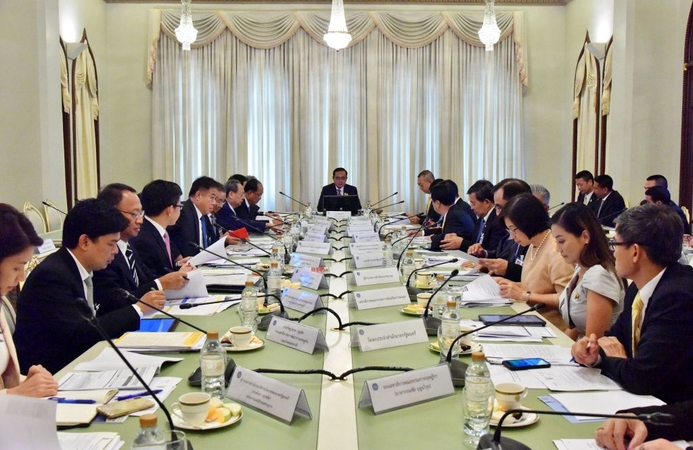
The council of economic ministers on Friday (September 6) endorsed packages proposed by the Board of Investment (BoI) to stimulate economic growth and attract more foreign investment.

Council secretary Kobsak Pootrakool said the “Thailand Plus” packages would seek to encourage foreign investors seeking to relocate production bases to Thailand amid international trade wars.

Kobsak noted that foreign direct investment in Thailand dropped from US$15 billion in 2013 to $1.04 billion last year.

The BoI proposes to halve corporate income tax for five years on projects undertaken anywhere in Thailand that bring in at least Bt1 billion in 2021, with applications required by next year.

The prime minister would establish and chair an investment steering panel to help investors overcome any obstacles as a one-stop service.

The BoI would be authorised to approve foreign investments on projects where no tax credit is sought, regardless of the business’ size, a move aimed at quickly meeting the needs of companies wishing to relocate to Thailand.

Fiscal measures would be in place allowing foreign companies tax deductions for training personnel in advanced technology this year and next.

To promote the ease of doing business, the Commerce Ministry would revise legislation deemed obstructive to investment from targeted businesses. The BoI and other state agencies would speed data integration for added convenience in the investment process.

And rules governing visas and work permits for foreign skilled workforces would be revised.

The council also asked the Commerce Ministry to determine before year’s end whether Thailand should join the Comprehensive and Progressive Agreement for Trans-Pacific Partnership (CPTPP).

The Finance Ministry would meanwhile introduce additional measures allowing companies that invest in automated systems to deduct more expenses this year and next.


Prayut calls on Asean members to strengthen their economies

ศาสตร์เกษตรดินปุ๋ย : ขอบคุณแหล่งข้อมูล : หนังสือพิมพ์ The Nation

https://www.nationthailand.com/business/30375908

Prayut calls on Asean members to strengthen their economies

Sep 06. 2019
Prime Minister General Prayut Chan-o-cha

Prime Minister General Prayut Chan-o-cha
By THE NATION

509 Viewed

Prime Minister General Prayut Chan-o-cha on Friday (September 6) called on all Asean members to join forces to move their economies forward so they can overcome ongoing trade wars.

He made this remark in an opening speech at the 51st Asean Economic Ministers Meeting, which runs from September 5 to 10 in Bangkok.

Prayut also said he expects the negotiations on the Regional Comprehensive Economic Partnership (RCEP) to be completed this year and signed next year.

RCEP is a proposed free trade agreement between the 10 Asean member states and its six free-trade partners, namely China, Japan, India, South Korea, Australia and New Zealand.

He added that Thailand, which is chairing Asean this year, is ready to work with other members of the grouping to strengthen the Asean community so it can deal with the fast-changing world of technology as well as meet challenges presented by global trade and a rising awareness of ecological conservation.

Axiata, Telenor call off merger due to complexities involved

ศาสตร์เกษตรดินปุ๋ย : ขอบคุณแหล่งข้อมูล : หนังสือพิมพ์ The Nation

https://www.nationthailand.com/business/30375907

Axiata, Telenor call off merger due to complexities involved

Sep 06. 2019
By The Star

705 Viewed

KUALA LUMPUR: The merger of Asian operations between Axiata Group Bhd and Norway’s Telenor SA has been called off, confirming an earlier StarBiz report that the deal was hitting a brick wall.

Axiata and Telenor’s Digi.com said in separate filings with the stock exchange that both parties have mutually agreed to end discussions over a non-cash combination of their telecom and infrastructure assets in Asia. 

“Over the last four months, both Parties have been working on due diligence and finalising transaction agreements to be completed within the third quarter of 2019. 

“Due to some complexities involved in the proposed transaction, the Parties have mutually agreed to end the discussions,” said Axiata. 

However, both parties acknowledged the “strong strategic rationale” of the proposed transaction and do not rule out a possible future transaction. 

It also said the parties do not intend to provide further comments. 

Trading in the shares of Axiata and Digi was suspended at midday. 

In the statement to Bursa Malaysia, Axiata’s chairman Tan Sri Ghazzali Sheikh Abdul Khalid said, “The board acknowledges the strong strategic rationale of the proposed transaction and is equally cognizant of the level of complexity of such a deal that extends across nine countries and 14 major entities.” 

“Regardless of the expressed synergies of the merger, we are confident that the termination of the proposed transaction does not affect the group in achieving its Digital Champion ambitions.” 

“On behalf of the Board of Axiata, we are grateful for the support of the Government of Malaysia, our investors and all of our employees during this process.” 

In a separate statement, Digi’s said its board was informed by Telenor ASA (Telenor), the parent company of Digi’s largest shareholder, Telenor Asia Pte Ltd, that Telenor and Axiata have agreed to end discussions on the Proposed Transaction. 

“The board has been informed that over the last four months, both parties have been working on due diligence and finalising transaction agreements to be completed within the third quarter of 2019. 

“Due to some complexities involved in the proposed transaction, the parties have mutually agreed to end the discussions. Both parties still acknowledge the strong strategic rationale of the proposed transaction,” it said. 

StarBiz had earlier reported all indications point to the mega-merger being called off. 

Apart from the sheer complexity of the deal, which involves 14 entities across nine countries, the stumbling blocks surround commercial issues, national and staff interests, and Indonesia’s reluctance to give its blessings, as it sees Norway as being part of the European Union’s (EU) pressure on palm oil imports. Without Indonesia as part of the enlarged group, the odds of the deal materialising are basically zero. 

“Both parties are trying their level best, as the merger would take them beyond their existing boundaries to create an Asian powerhouse. But the sheer complexity and the very long list of outstanding items surrounding commercial, national and staff interest make it terribly challenging. 

“Some items on the list can be modified, some others are not agreeable to both parties, and the deal-breaker items are still hanging. So, with so many items still outstanding, they may just not want to drag on any longer and merger talks may have been halted. They may just call it off,” said an industry executive with knowledge of the deal.  

https://www.thestar.com.my/business/business-news/2019/09/06/axiata-digi-halt-trading-proposed-merger-deal-off

BOT caps single lending by state institutions

ศาสตร์เกษตรดินปุ๋ย : ขอบคุณแหล่งข้อมูล : หนังสือพิมพ์ The Nation

https://www.nationthailand.com/business/30375900

BOT caps single lending by state institutions

Sep 06. 2019
By THE NATION

455 Viewed

The Bank of Thailand (BOT) has issued 30 regulations on the operations of specialised financial institutions, including state-owned banks and agencies .

The rules, effective October 1, mainly aim to ensure capital and liquidity adequacy at these institutions which in turn would boost confidence on the part of their clients.

One of the rules caps single lending or loan offering by state banks to major customers, hence their lending will not be tilted towards any individual.

It also limits lending by Government Savings Bank, the Bank for Agriculture and Agricultural Cooperatives (BAAC), GH Bank, and Small and Medium Enterprise Development Bank of Thailand to any single client to a maximum of 15 per cent of their individual capital.

The same rule applies to loans from Export-Import Bank of Thailand (EXIM Thailand) and Secondary Mortgage Corporation, capping their single lending at not more than 25 per cent of their individual capital.

Many foreign companies move factories to Vietnam: Savills

ศาสตร์เกษตรดินปุ๋ย : ขอบคุณแหล่งข้อมูล : หนังสือพิมพ์ The Nation

https://www.nationthailand.com/business/30375895

Many foreign companies move factories to Vietnam: Savills

Sep 06. 2019
Many companies are moving their factories from other countries to Vietnam, showing the potential for strong development of industrial real estate. — Photo courtesy of Savills

Many companies are moving their factories from other countries to Vietnam, showing the potential for strong development of industrial real estate. — Photo courtesy of Savills
By Viet Nam News
Asia News Network
HCM CITY

986 Viewed

Many companies are shifting their factories to Vietnam, underlining the potential for the strong development of industrial real estate. Savills Vietnam made the statement at a conference on September 4 in HCM City where it released its white paper on Vietnam’s industrial real estate in the first half of this year.

They included many factories from China operating mainly in the fields of electronics, textiles, footwear and spare parts production, such as Hanwha, Yokowo, Shuafu, Goertek, Foxcom, Lenovo, Nintendo, Sharp, Kyocera and Oasis, according to the report.

“Although occupancy in key provinces grew year on year, available land coupled with an array of upcoming projects has seen foreign companies significantly increasing investment in Vietnam,” John Campbell, senior consultant at Savills Vietnam Industrial Services said.

“Manufacturers are showing interest in the Central Regions while developers are actively converting agricultural land to industrial usage, guaranteeing additional supply.”

The industrial sector is growing strongly with a tenfold increase in foreign direct investment (FDI) over the last decade. Good land supply is facilitating incoming manufacturing projects and the rise of rental options with ready-built factories (RBF) and built-to-suit (BTS) solutions. Vietnam must be more selective with projects to move up the value chain, improve competitiveness and ensure sustainable growth, the White Paper noted.

Low labour costs and government incentives, particularly preferential tax rates, will continue to be critical drivers of FDI. However, to maintain the transition to higher-value industries, Vietnam must focus on the quality rather than the number of investments.

By enabling the latest production technologies and increasing workforce training, the government is actively easing qualms around viability, labour shortages and rising costs for a more transparent business environment.

According to Savills Vietnam, the US-China trade war, additional investment and new free trade agreements have all had a positive effect on Vietnam’s industrial sector.

The Comprehensive and Progressive Agreement for Trans-Pacific Partnership (CPTPP) came into force in January while the EU Vietnam Free Trade Agreement (EVFTA) was signed in June. These historic and ambitious agreements will eliminate 99 per cent of customs duties and have raised interest in industrial property.

Regional Comprehensive and Economic Partnership (RCEP) negotiations are underway and expected to be finalised at the end of 2019. The agreement will increase cooperation between ASEAN countries and the six Asia-Pacific states with existing free trade agreements.

In the first quarter of this year, about 326 industrial zones were established, with a total area of 95,500 ha. Of this number, 251 industrial zones are under operation with an area of 60,900ha, accounting for 74 per cent of the total, while 75 industrial parks are under construction, compensation and site clearance on a total area of 29,300 ha, according to Savills Vietnam.

Gem and jewellery exports up 29 per cent this year

ศาสตร์เกษตรดินปุ๋ย : ขอบคุณแหล่งข้อมูล : หนังสือพิมพ์ The Nation

https://www.nationthailand.com/business/30375878

Gem and jewellery exports up 29 per cent this year

Sep 06. 2019
By The Nation

742 Viewed

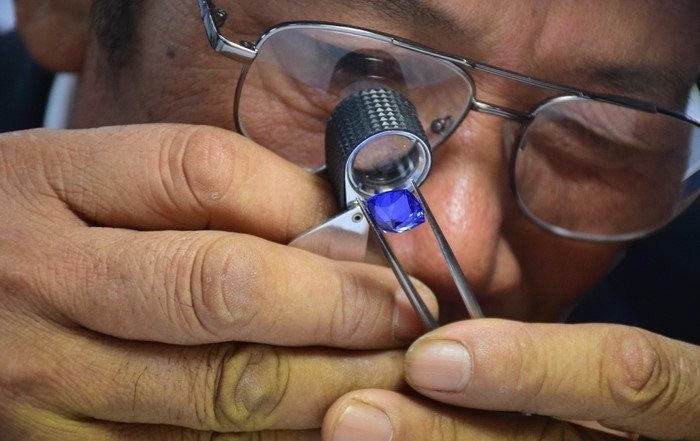
The Gem and Jewelry Institute of Thailand (GIT) says the export value of gems and jewellery grew by 29 per cent in the past seven months despite a swarm of international trade conflicts and public protests in Hong Kong, a key hub for the sector.

GIT director Duangkamol Jiambutr on 5 September put the value of exports from January to July at US$9 billion or Bt283 billion, a 29.29-per-cent increase year on year.

Gold exports led the climb, rising in value 72.67 per cent, matching the global gold price.

The price of gold increased to $1,412.98 per ounce in July.

Amid trade disputes involving the United States, China, the European Union and Iran, investors continue to see gold as a safe bet and trading has steadily increased.

Thailand’s top export market for gems and jewellery is Switzerland with 56 per cent of total export value, followed by Singapore and Cambodia.

The value of Thai jewellery exports among other Southeast Asian countries soared 108.28 per cent in those same seven months, with Singapore taking an 82 per cent share of the offerings, up 178 per cent from the same period last year.

The export value stemming from demand in India rose 91.01 per cent, mainly in raw materials and semi-finished products.

However, exports to Hong Kong decreased by 6.7 per cent, the EU by 10.5 per cent, the Middle East by 2 per cent, Japan by 7.6 per cent, Mainland China by 10.5 per cent, Pacific Island countries by 25 per cent, and Russian and its commonwealth by nearly 77 per cent.

Duangkamol said Thai gem and jewellery exports benefited from Washington’s imposition of tariffs on Chinese products including jewellery, opening the door to the US market wider for Thailand.

He said Thailand must nevertheless carefully monitor tensions between the US and Iran, the Hong Kong protests and the effects of the baht’s appreciation.

AOT to seek bids for duty-free concession at Don Mueang later this year

ศาสตร์เกษตรดินปุ๋ย : ขอบคุณแหล่งข้อมูล : หนังสือพิมพ์ The Nation

https://www.nationthailand.com/business/30375877

AOT to seek bids for duty-free concession at Don Mueang later this year

Sep 06. 2019
By THE NATION

696 Viewed

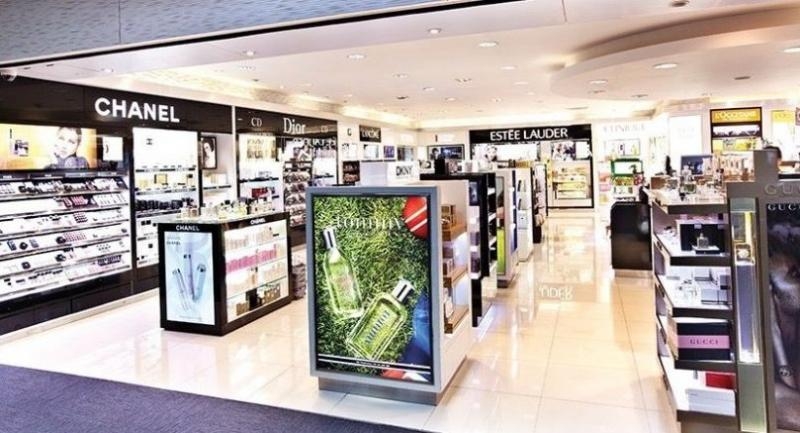
The Airports of Thailand (AOT) is expected to launch the bidding for duty-free shops at Don Mueang International Airport later this year.

Nitinai Sirismatthakarn, AOT president, said on Thursday (September 5) that AOT should have the terms of reference (TOR) for the bids ready later this year, and once this round of bidding is completed, it will seek bids for operating the duty-free pickup counter service at Suvarnabhumi International Airport before mid-next year.

Wichai Bunyu, AOT’s senior executive vice president for business development and marketing, said the TOR draft for duty-free shops at Don Mueang Airport should be ready for submission to AOT’s revenue panel next month. The current concession for duty-free shops comes to an end in September 2022.

The winning bidder of the Don Mueang duty-free concession will be awarded the right to operate shops in a space not exceeding 4,000 square metres, of which around 2,000sqm will be in the existing passenger building and the rest in the new building.

This concession will not include the right to run duty-free pickup counters.

Wichai said he expects the bids to run duty-free pickup counters at Don Mueang Airport to take place mid-next year.

Current concessions for duty-free pickup counters at Suvarnabhumi and Don Mueang airports expire at the end of September 2021 and 2022 respectively.

Thailand fares badly in business digitalisation: UNCTAD

ศาสตร์เกษตรดินปุ๋ย : ขอบคุณแหล่งข้อมูล : หนังสือพิมพ์ The Nation

https://www.nationthailand.com/business/30375882

Thailand fares badly in business digitalisation: UNCTAD

Sep 06. 2019
By Wichit Chaitrong
The Nation

934 Viewed

Singapore and South Korea top the charts when it comes to companies receiving orders online, the Digital Economy Report 2019 released by the United Nations Conference on Trade and Development (UNCTAD) shows.

According to the report launched a few days ago, more than 60 per cent of small firms and close to 80 per cent of large firms in Singapore received orders over the internet last year.

Thailand, however, is close to the bottom of the chart, with less than 10 per cent of small firms and only about 20 per cent of large firms receiving online orders in the same year. Even Indonesia did better in comparison.

The report suggests that in most developing countries, there is considerable scope in reaping benefits from digitalisation in other parts of the economy apart from just the digital sector. Significant productivity gains have been observed once companies in the traditional sector opt for digitalisation in their production and management processes. One study estimates that as much as 15 per cent of the digital economy in 12 large developing and developed countries originates from the traditional sector.

The report also notes that there is evidence to suggest that the extent of benefits from digitalisation depends on pre-existing economic and social structures as well as critical-mass effects. As a result, those with higher income tend to benefit more than countries with low income.

“Digitalisation and rise of the platform economy are greatly transforming the way firms connect to others, whether they are buyers, suppliers, peers or supporting institutions at home and aboard,” says the report.

Most micro and small firms are generally far behind large ones in using information and communications technology (ICT), the report says, which proves to be a significant barrier to their effective integration to global value chains that are becoming increasingly reliant on digital solutions.

Globally, it is observed that a lower proportion of small enterprise make use of the internet than large companies, and even fewer enterprises generally engage in complex online tasks. For instance, companies are more likely to go online to obtain information about goods and services rather than to sell products online, which requires adapting their business model to the online world.

In countries where ICT is widely available, the proportion of enterprises performing more complex online tasks tends to be higher, the UNCTAD report says.

Govt to consider BoI scheme to boost human resources, woo foreign investment

ศาสตร์เกษตรดินปุ๋ย : ขอบคุณแหล่งข้อมูล : หนังสือพิมพ์ The Nation

https://www.nationthailand.com/business/30375875

Govt to consider BoI scheme to boost human resources, woo foreign investment

Sep 05. 2019
By THE NATION

782 Viewed

The council of economic ministers will consider on Friday (September 6) a proposal put forward by the Board of Investment (BoI) to develop human resources and offer incentives to foreign investors, Deputy Prime Minister Somkid Jatusripitak said on Thursday.

He was speaking at a seminar on the country’s economy hosted by the Thammasat Economics Association.

One of the BoI packages will focus on wooing digital business, while other will focus on wooing foreign firms to set up personnel-training centres in Thailand under the partnership with the local institutes. He added that many multinational firms have spoken to him about plans to expand investment in Thailand, which they regard as an Asean investment hub. The minister has also called on coalition parties to join forces to help materialise the government’s policies.

Somkid also said that the government is working hard on widening online access via schemes such as the internet village project and is promoting the rollout of advanced telecom technology as well as artificial intelligence and 5G technology. Hence, he said, it is time for companies to adopt advanced technology to reinforce their operations.

In his speech, he also explained that Thailand has to depend more on the local economy to reduce its exposure to external risks and volatility, adding that he believes the economy will expand in the fourth quarter thanks to the government’s recently launched stimulus packages.

Toyota pressed on sale of EVs in Thailand

ศาสตร์เกษตรดินปุ๋ย : ขอบคุณแหล่งข้อมูล : หนังสือพิมพ์ The Nation

https://www.nationthailand.com/business/30375873

Toyota pressed on sale of EVs in Thailand

Sep 05. 2019
(Photo credit: Royal Thai Government's website)

(Photo credit: Royal Thai Government’s website)
By Kingsley Wijayasinha
THE NATION

494 Viewed

The government has urged Toyota, the world’s largest auto producer, to start sale of EVs (electric vehicles) in Thailand as soon as possible, despite experts’ view that it would take much longer than expected.

Toyota officials, led by Asia Pacific president Susumu Matsuda, met with deputy Prime Minister Somkid Jatusripitak on September 4 and confirmed Thailand’s status as a key production hub of the automaker.

Somkid said Toyota had invested in hybrid vehicle production here, in order to create an economy of scale for the future.

“We have told Toyota to speed up the launch EVs in Thailand in line with the country’s goal of becoming a production and export hub for electric vehicles,” he said.

Toyota currently has four EV models that should go on sale in Thailand, rather than the conventional hybrids, he said.

“Toyota may want to maximise profits from previous investments before adjusting (its product lineup), but we have told them to make a swift decision because the new generation of Thai motorists prefers EVs to vehicles powered by combustion engines,” Somkid said.

Somkid did not mention a timeframe, but industry experts have expressed doubts that Toyota would speed up its plan for EVs in Thailand, or even go a step up with PHEVs (Plugin Hybrid Electric Vehicles). as was the case with several European luxury car makers.

“Toyota is a very big company and large delivery of each model is required,” said an industry source. “Small volume models have been taken off the market before. For Toyota to start offering PHEVs or EVs in Thailand, there must be a significant demand and this will take at least 5-10 years.”

Toyota EVs that will welcome visitors at the 2020 Tokyo Olympics.

Somkid also asked Toyota to consider developing the Thai workers’ skills, particularly in engineering and automotive technologies.

“We have collaborated with leading companies including Google and Huawei. Toyota’s participation in human resources development in Thailand will be rewarded with additional privileges from the Thai government. Also, it will further strengthen our bond with Japan,” he said, adding that Thailand could also serve as Toyota’s human resources centre for CLMV countries.

The Japanese automaker currently assembles hybrid vehicles in Thailand with the Camry and newly-launched Corolla coming in hybrid versions.

Toyota officials said hybrids have three major components – traction motor, battery management system and drive control unit. It wants the Thai government to look into battery-production costs as EVs require a large number of batteries.

The government is also interested in working with Toyota on smart farming. The Japanese automaker has already done much research and development in this field for the benefits of Thai farmers.