Asean banks lacking in response to climate, environmental changes: WWF report

ศาสตร์เกษตรดินปุ๋ย : ขอบคุณแหล่งข้อมูล : หนังสือพิมพ์ The Nation

https://www.nationthailand.com/business/30375094

Asean banks lacking in response to climate, environmental changes: WWF report
Aug 21. 2019
By The Nation

164 Viewed

Asean is facing existential threats such as climate change and environmental degradation, which could potentially lead to financial instability and social unrest, according to the 2019 sustainable Banking Assessment (SUSBA) by the Worldwide Fund for Nature (WWF).

The study found that the 35 Asean banks assessed were not responding fast enough to these threats, based on the level integration of environmental, social and governance (ESGO) factors, as measured by a framework covering six aspects (purpose, policies, processes, people, products and portfolio).

The report said that humanity stands on the edge of a precipice, as evidenced by the 2018 Intergovernmental Panel on Climate Change (IPCC) report that concluded that states have 12 years left to limit global warming to 1.5 degrees Celsius and prevent a climate crisis.

The number of heat waves hitting Europe and Asia-Pacific in recent months is also a testament that climate change is already disrupting daily lives and business operations, said the WWF report. “Unfortunately, the Asean economy remains highly dependent on fossil fuels, which contribute significantly to greenhouse gas emissions. Ninety-one per cent of the banks assessed continue to finance new coal fired power plants and are therefore fuelling the fire.”

The report said coal is not the only problem. Rampant deforestation has exacerbated climate change and caused biodiversity loss, which threatens food security by disrupting essential ecosystem services such as soil fertility maintenance and pollination, it said.

The recent IPCC special report on land use and climate emphasises that sustainable land management alongside rapid decarbonisation of the energy system are critical to meet the 1.5 degree Celsius goal of the Paris Agreement.

“SUSBA finds that only 9 per cent of banks have no-deforestation policies, despite being home to some of the world’s deforestation hotspots in Greater Mekong, Sumatra and Borneo.

“Southeast Asia is suffering from manifestations of climate change in the form of water-related disasters – from crops and manufacturing facilities being destroyed by floods in Thailand, to Malaysia’s water resources projected to reduce by 20-25 per cent from 2025 to 2030, to major coastal cities like Jakarta being susceptible to sea level rise. Asean banks remain highly exposed, with just 17 per cent of banks recognising water risks, while none require clients to conduct water risk assessments,” it said.

Multiple stakeholders are already sensing the urgency to tackle these issues, the report noted.

Regulators understand the threat to financial stability and are responding. By the end of the year, seven banking associations or regulators in Asean will have issued sustainable banking guidelines. Further, central banks of Malaysia, Singapore and Thailand have joined the Network for Greening the Financial System (NGFS) established to enhance the ability of the financial system to manage climate risks and mobilise capital for sustainable development. The NGFS is recommending central banks and supervisors better integrate climate-related risks into financial stability monitoring. Banks will increasingly be expected to test their resilience of their loan books to climate risks and report the results to their regulators.

Some 374 financial institutions representing US$118 trillion of assets have endorsed the Task Force on Climate-related Financial Disclosures (TCFD), which has specific recommendations for financial institutions on their climate disclosures. Asean banks have not made much progress to meet these expectations, with only three banks developing a strategy to manage climate-related risks or conducting climate-risk assessment.

Investors are increasingly engaging with banks on their management of climate and environmental risks. Alistair Thompson, Director of First State Investments (Singapore) said, “The WWF Sustainable Banking assessment has proven to be a valuable tool for us in Asean. It allows us to track where progress is being made, or not, and the areas in which investors like ourselves can push for improvement. We have used it to engage in areas such as Thermal Coal and Palm Oil.”

SUSBA found that of the 35 banks assessed, only four banks from Singapore and Thailand had fulfilled at least half of the indicators and 51 per cent of the banks fulfilled less than a quarter of the indicators. However, there is still progress with 74 per cent of the banks making some improvement compared to last year. In particular, the three Singapore banks have demonstrated leadership by prohibiting the financing of new coal-fired power plants and implementing “no deforestation” commitments. The uneven playing field undermines the region’s response to these impending threats as unsustainable activities continue to be financed, the report said.

“The prosperity of Asean’s economies is underpinned by the bedrock of natural capital which provides climate and air quality regulation as well as food and freshwater production. These are the basic necessities for our societies to thrive. Asean’s economies are very much interdependent, which magnifies the effects of climate change and environmental destruction. To ensure that the people of Asean have a secure future, ASEAN banks must be the lifeblood of sustainable development,” said Jeanne Stampe, WWF’s Head of Asia Sustainable Finance.

Asean banks are also leaving money on the table by not actively supporting the urgently needed transition to a low carbon and sustainable economy. A DBS and UNEPFI study estimated the demand for green investment to be US$3 trillion from 2016 to 2030 in sectors such as infrastructure, renewable energy, energy efficiency, food, agriculture and land use. While 51 per cent of banks that offer green financial products have mostly focused on renewable energy, there remains a huge financing gap in the other sectors.

“Encouragingly, some banks understand there is no time to lose and are laying the foundations for good governance of ESG issues. Fifty-seven per cent of Asean banks have senior management oversight of ESG issues, nearly half of which have additional responsibilities over climate-related risks and opportunities,” the report said. “However, this needs to be translated down to sector policies based on science-based standards to ensure robust management of material ESG risks.” Resources such as Asia Sustainable Finance Initiative (ASFI), a multi-stakeholder platform, can support banks with cutting-edge sustainable finance tools and capacity building, it said.

“Banks need to work together on a pre-competitive basis to create a resilient financial sector that can support the region’s sustainable development needs and boost livelihoods. The Association of Banks in Singapore (ABS) has been facilitating peer-to-peer learning in cooperation with WWF to catalyse the transition throughout Asean,” according to the report.

Ong-Ang Ai Boon, director of ABS, said, “Banks in Singapore have been advancing their ESG integration and capacity building efforts following the issuance of the ABS Responsible Finance Guidelines in 2015 and are continuing to improve their practices. We are glad this progress is reflected in these SUSBA results and look forward to continue sharing our experience with our counterparts in the Asean region.”

Japanese Chamber sees shortage of industrial workers, workers with English

ศาสตร์เกษตรดินปุ๋ย : ขอบคุณแหล่งข้อมูล : หนังสือพิมพ์ The Nation

https://www.nationthailand.com/business/30375093

Japanese Chamber sees shortage of industrial workers, workers with English

Aug 21. 2019
By The Nation

121 Viewed

The Japanese Chamber of Commerce in Bangkok wants the Industry Ministry to tackle the issue of an inadequate number of workers for factories and the lack of workers’ communication skills in English, Industry Minister Suriya Juangroongruangkit said on Tuesday.

Suriya said Shinji Nakano, the president of the JCC, recently met with him to air concerns about obstacles to the development of Thailand’s industry under the Thailand 4.0 policy.

Suriya said Nakano saw that Thailand could not provide a sufficient workforces for the various industries and that workers could not communicate in English. The JCC president also expressed concern about the daily minimum wage in Thailand, which is higher than other Asean countries.

Suriya said the Industry Ministry would consult with other agencies about measures to address the industrial labour shortage and to feed English speaking workers industry. His ministry will consult with the Undergraduate Education, Research, Science and Innovation Ministry, Education Ministry, the Labour Ministry and the Federation of Thai Industries.

Suriya said the JCC represents 12 large corporations in Japan that command 75 per cent of Japan’s economic value.

He said the JCC president expressed concern over the inadequate labour supply because Japanese firms want to invest in the Eastern Economic Corridor project.

Suriya said Japanese firms also want to expand investment in Thailand as a contingency plan to cope with possible negative impacts from the on-going trade war between China and the United States.

The JCC president also suggested that the Industry Ministry create a good atmosphere for investment, such as shortening the process for issuing licences for factories and holding seminars or meetings for Japanese firms to exchange business data with the Thai government.

Suriya said the Industry Ministry also planned a roadshow on industrial opportunity in the Kingdom by visiting Vietnam on August 30 and September 1, and Japan in early October.

He said executives of the Board of Investment would accompany the ministry’s representatives on the road show.

Taiwan, Thailand sign seven MOUs on industrial cooperation

ศาสตร์เกษตรดินปุ๋ย : ขอบคุณแหล่งข้อมูล : หนังสือพิมพ์ The Nation

https://www.nationthailand.com/business/30375092

Taiwan, Thailand sign seven MOUs on industrial cooperation

Aug 21. 2019
By Lu Hsin-hui and Chi Jo-yao
The China Post/Asia News Network

133 Viewed

Taiwan’s Chinese National Federation of Industries signed seven memorandums of understanding (MOU) with the Federation of Thai Industries (FTI) in Bangkok on Tuesday to create new opportunities for cooperation across various industries.

At the annual Thailand-Taiwan Industrial Collaboration Summit, Taiwan Vice Economics Minister Lin Chuan-neng said the MOUs will increase the willingness of Taiwanese businesses to work with Thai companies in the food, textile, machinery, unmanned aerial vehicle and “smart city” sectors.

According to the vice minister, the MOUs could give Taiwan and Thailand a big advantage and help the two countries get more orders amid the ongoing trade war between the U.S. and China.

FTI Chairman Supant Mongkolsuthree said at the summit that Thailand welcomes Taiwanese companies to invest in the country’s Eastern Economic Corridor, which is aimed at helping Thailand emerge as an industrial powerhouse.

Thanachart Bank cuts overdraft, retail rates

ศาสตร์เกษตรดินปุ๋ย : ขอบคุณแหล่งข้อมูล : หนังสือพิมพ์ The Nation

https://www.nationthailand.com/business/30375087

Thanachart Bank cuts overdraft, retail rates

Aug 21. 2019
By The Nation

210 Viewed

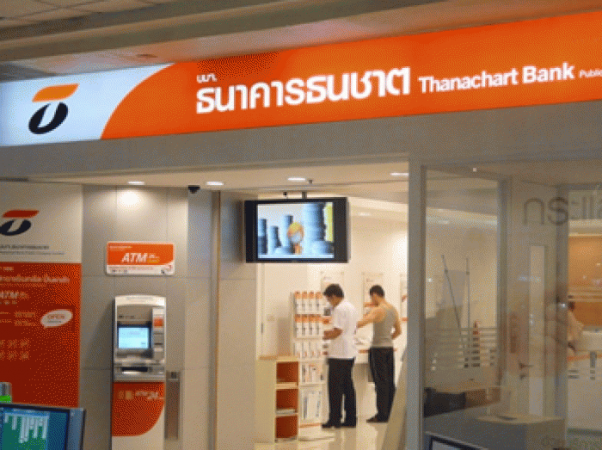
Thanachart Bank Plc will today (August 21) cut its minimum overdraft rate or MOR, and its minimum retail rate or MRR, by 0.25 per cent effective, according to the bank release on Tuesday.

Following the interest rate cut, the bank’s MOR will be reduce from 7.425 per cent to 7.175 per cent, and the MRR from 7.75 per cent to 7.5 per cent.

The interest rate cut at this time will reduce financial cost for small and medium enterprises and support the country’s economic growth, the bank said.

Cabinet nods to Bt316-bn stimulus measures

ศาสตร์เกษตรดินปุ๋ย : ขอบคุณแหล่งข้อมูล : หนังสือพิมพ์ The Nation

https://www.nationthailand.com/business/30375072

Cabinet nods to Bt316-bn stimulus measures

Aug 20. 2019
Uttama Savanayana

Uttama Savanayana
By THE NATION

489 Viewed

The Cabinet approved economic stimulus packages totaling Bt316-billion at a meeting today, said Finance Minister Uttama Savanayana.

The measures are expected to boost economic growth by 0.55 per cent to keep the country’s GDP growth target for 2019 at 3 per cent.

Among the packages approved included those aiming to ease the living conditions of 14.6 million state welfare card holders .

Under the scheme, the government will hand out additional cash of Bt500 per person per month to the card holders between now and end of September.

Elderly citizens, who are card holders, will be given an additional Bt500 per person per month.

Card holders with children, from infants to 6-year old,  will be given an additional Bt300 per month as financial support between now and end of next month.

The Cabinet also approved measures aimed at boosting domestic consumption and investment. including the  “Taste, Shop, Use” scheme, which will see a cash handout of Bt1,000 each to the  e-wallet of the eligible people to cover the expense of travel outside their home towns. The Finance Ministry will soon commence the registration process.

An eligible person must be at least 18-year old on the date of registration. Another measure is the 15 per cent cash rebate on their travel and food expense as well as purchases of local products. The rebate is capped at of Bt4,500 per person.

According to a Finance Ministry’s statement on Tuesday, the purchases of  such products and services abovementioned have to be done via Krungthai Bank’s e-banking application Paotang  at shops installed with the Thung Ngern Pracha Rat (Pracha Rat money bag) application.

Other approved measures were aimed at easing the plight of farmers suffering from drought,  such as cutting the loan interest rate to a certain level for farmers who are clients of the Bank for Agriculture and Agricultural Cooperatives (BAAC) in the drought-hit provinces.

The bank will also grant emergency loans of Bt50,000 per person to these farmers under a Bt50 billion budget. The bank will waive interestrate in the first year before charging an minimum retail rate (MRR) of 7 per cent in the following years.

It will also provide loans for damage recovery at Bt500,000 per person at the MRR-2 rate under a Bt50 billion budget.

Boost to infrastructure stressed in ways to grow Thai tourism

ศาสตร์เกษตรดินปุ๋ย : ขอบคุณแหล่งข้อมูล : หนังสือพิมพ์ The Nation

https://www.nationthailand.com/business/30375062

Boost to infrastructure stressed in ways to grow Thai tourism

Aug 20. 2019
By The Nation

585 Viewed

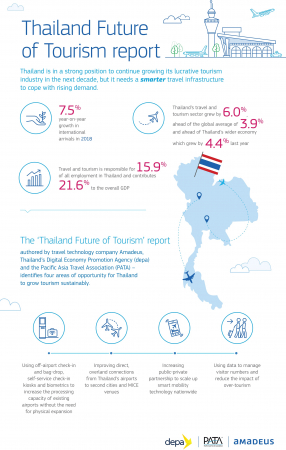
Thailand must thrash out a master plan to modernise its travel and tourism infrastructure for continuous growth in its tourism revenue in the next decade, according to report released today(August 20) by travel technology company Amadeus in partnership with Thailand’s Digital Economy Promotion Agency (depa) and the Pacific Asia Travel Association (PATA).

Thailand’s travel and tourism sector grew by 6 per cent last year.

However, according to the ‘Thailand Towards 2030: Future of Travel & Tourism’ report, a number of the country’s airports are approaching capacity and popular destinations are starting to show the impact of ‘over’ tourism, both of which could limit the rate of future tourism growth if not urgently addressed.

The report identifies four key priority areas for Thailand in the next decade – increasing airport capacity; improving inter-modal air-to-city links; scaling up public-private partnerships to improve the efficiency of inner-city transport networks; and reducing ‘over’ tourism – all of which will depend on the adoption of smart technologies.

Thailand received a record 38.27 million tourists in 2018 and Thailand’s Tourism Ministry expects that number to be even higher in 2019, driven partly by rising incomes across the Asia Pacific region.    However, the ‘Thailand Towards 2030: Future of Travel & Tourism’ report warns that, in addition to planned physical expansions, the country’s airports will also need to change how passengers move through the terminal in order to increase their capacities and fully profit from this opportunity in the next decade.

“If tourism continues to grow at its current rate, I would expect Thailand’s airports to hit capacity even sooner than is currently forecast. Physical expansion is helping to ease some of the strain, but smart technology will also be vital to increase the number of passengers that Thailand’s airports can accommodate in the near future,” said Dr Mario Hardy, Chief Executive Officer, PATA.

The report identifies self-serve check-in kiosks, automated bag-drop and use of biometrics for passenger identification as technologies that could significantly increase the efficiency of passenger movements. It also advises that off-airport check-in and bag-drop services – which use cloud technology to allow passengers to check into their flight and even deposit their luggage outside the terminal building – should be considered by Thailand’s busiest airports.

The report identifies the MICE (Meetings, Incentives, Conferences and Exhibitions) market – and the related trend of ‘leisure’ travel, where visitors coming for business extend their stay for leisure – as two significant opportunities for Thailand to diversify its tourism revenue in the next decade.

As well as developing direct rail connections between airport and conference centre to accelerate growth of the  MICE industry in emerging hot spots such as Khon Kaen, Pattaya, Chiang Mai, Phuket and Chiang Rai, the report advises that MICE destinations should also try to dovetail their rail and air schedules with typical conference start and finish times to encourage growth of the leisure market too.

Report co-author Simon Akeroyd, Vice President Corporate Strategy & Business Development, Amadeus and co-author of the report , also recommends that Thailand’s MICE destinations need technologies that support a seamless travel experience to effectively compete internationally.

“Ease and speed of travel will become major differentiators among the region’s MICE hot spots in the near future, so these cities need to invest in technologies that are designed for convenience – such as having off-airport check-in and bag-drop facilities at conference venues themselves. The technology needs to be best-in-class because Thailand is competing with MICE destinations across the region, not just domestically,” he said.

Smart mobility solutions – where data and technology are integrated to improve the efficiency of population movements around a city – are another priority area identified by the ‘Thailand Towards 2030: Future of Travel & Tourism’ report to reduce congestion and pollution in Thailand’s cities, and ultimately make them more attractive to both tourists and business investment.

“Smart mobility is still in its infancy in Thailand, but its potential to improve inner-city travel is enormous,” said Amadeus’ Simon Akeroyd. “Using transport data to inform travel management systems such as traffic lights in real-time, or to inform how ‘sharing economy’ services like Grab and Get are deployed, are just two significant applications. But this won’t be possible without greater public-private sector partnerships.”

According to the report, one major challenge is that Thailand’s public sector doesn’t currently know which companies to partner with, while private firms, especially smaller businesses, start-ups and overseas investors, often don’t know how to engage. Thus, third-party advisers may be important in bringing key players together.

depa identifies access to capital as another barrier in Thailand and recommends that cities will need to form ‘City Development Companies’ with private sector partners in the future – to better bid for funding and to formalise the nature of their partnership.

“Right now, we’re only just scratching the surface of what’s possible with smart mobility. More provinces need to follow the City Development Company model being piloted by Phuket, Chiang Mai and Khon Kaen to access vital funding and plan for the long term,” said Pracha Asawateera, Vice President Southern District Office, Digital Economy Promotion Agency.

The final priority identified by the report is the need for more action to be taken to protect Thailand’s tourist hot spots from the risks of ‘over’ tourism.

Amadeus, depa and PATA agree that giving tourism boards, local authorities and hospitality businesses access to accurate data for real-time analysis and predictive modelling will be integral to managing tourism in a more sustainable way in the future but, like smart mobility, this is still in its infancy in Thailand too.

“The data exists, but Thailand’s tourism industry isn’t quite there yet in using it effectively to manage peak periods. Education on how to interpret and use the data will be just as important as access. Done well, the potential is for the data to be used not only to control tourist numbers, but also to inform everything from ticket prices to infrastructure investments and long-term tourism policies,” said PATA’s Dr Mario Hardy

BAAC brings down its MRR, MOR to ease burden on farmers, SMEs

ศาสตร์เกษตรดินปุ๋ย : ขอบคุณแหล่งข้อมูล : หนังสือพิมพ์ The Nation

https://www.nationthailand.com/business/30375055

BAAC brings down its MRR, MOR to ease burden on farmers, SMEs

Aug 20. 2019
Apirom

Apirom
By The Nation

531 Viewed

The Bank for Agriculture and Agricultural Cooperatives (BAAC) has cut its minimum retail rate (MRR) by 0.125 per cent and its minimum overdraft rate (MOR) by 0.25 per cent from August 20 onwards, the bank’s president Apirom Sukprasert said.

He said BAAC’s Asset Liability Management Committee had met on August 19 to make a decision on bringing MRR down to 6.875 per cent from 7 per cent and also MOR to 6.875 per cent from 7.125 per cent. This was in response to the central bank’s decision to cut its policy rate earlier this month.

“The reduction in interest rates will reduce the financial burden on farmers and small and medium-enterprises and help them manage their cashflow better,” he said.

Suriya says study on land reclamation plan needs six months

ศาสตร์เกษตรดินปุ๋ย : ขอบคุณแหล่งข้อมูล : หนังสือพิมพ์ The Nation

https://www.nationthailand.com/business/30375021

Suriya says study on land reclamation plan needs six months

Aug 20. 2019
Suriya Juanroongruangkit

Suriya Juanroongruangkit
By The Nation

168 Viewed

Industry Minister Suriya Juanroongruangkit said a study on his plan to reclaim 3,000 rai of land from the sea at the Laem Chabang deep seaport in Chon Buri province would take six months.

Suriya said the Petroleum Institute of Thailand would take about six months to complete the study.

Suriya was speaking to reporters while he was visiting the Industrial Estate Authority of Thailand on Monday. He said he would soon sign a contract to hire the petroleum institute to study the plan to reclaim 3,000 rai of land from the sea near the Laem Chabang deep seaport.

He said the move was not aimed at just allowing Exxon Mobil Crop to invest Bt330 billion in Thailand but also prepare Thai and foreign investors to invest in the port.

“Now, Exxon Mobil has an oil distillery near the Laem Chabang port in Si Racha district. They want to invest more and they want another 1,000 rai of land. The land on the shore near their initial investment site has all been occupied so we have to consider the land reclamation option,” Suriya said.

“So, I think we must look ahead to plan not just facilitate investment by Exxon Mobil.”

The minister said the study would be done comprehensively on both the environmental and economic impacts.

“If the study does not back the plan, it will be halted immediately,” Suriya said.

Environmentalists have cried foul, saying the massive land reclamation would severely affect the sea ecological system.

On the opposition by environmentalists, Suriya said if the study found the project would benefit the country, create jobs and expand the economy, he would go ahead with the project.

“We won’t do it for free because we will collect land-lease fee from investors,” Suriya added.

Somjin Philuek, governor of the Industrial Estate Authority of Thailand, said if the project were approved, her authority would be in charge of land reclamation. She said the authority would first wait to see the results of the study by the petroleum institute.

DIT proceeds with project to control price of medicines

ศาสตร์เกษตรดินปุ๋ย : ขอบคุณแหล่งข้อมูล : หนังสือพิมพ์ The Nation

https://www.nationthailand.com/business/30375008

DIT proceeds with project to control price of medicines

Aug 20. 2019
By THE NATION

536 Viewed

The Department of Internal Trade (DIT) will proceed with its project to control the price of medicines at private hospitals now that it has received their price lists. Hospitals selling medicines above the median price set by the department will face fines and/or imprisonment.

Also, since August 16, every hospital has been required to print out QR codes so patients can compare prices.

Prayoth Benyasut, the department’s deputy director-general, said private hospitals, manufacturers, importers and dealers provided the department with their price lists on July 31, and DIT has used this data to set a price for each item, which will be made accessible to customers.

Previously, patients could not compare prices and were overcharged as private hospitals used to add additional costs such as the pharmacist’s salary and the cost of maintaining the medicine department.

“If hospitals are not able to explain why a medicine is overpriced, they will be fined Bt140,000 or be imprisoned for seven years, or face both a jail term and fine,” Prayoth said.

DIT will release a list of pharmacies on its official website, www.dit.go.th, so people can have their prescriptions filled there, though this option is still being considered by the Pharmacy Council of Thailand.

The department has also sent its agents to check if private hospitals are displaying the QR codes. People can also check the price of drugs on the www.hospitals.dit.go.thwebsite.

Private hospitals will also be required to follow the Joint Standing Committee on Commerce, Industry and Banking’s notification on regulations on drugs, medical supplies and medical services, which insists that patients be provided with estimated costs before they are admitted to hospital.

Hospitals are also required to provide patients with prescriptions that have clear information and instruction.

Meanwhile, DIT said it will summon 20 private hospitals to testify after they failed to meet the July 31 deadline to provide their price lists. If they don’t show up, they will face three months in jail and/or fined Bt5,000. Those who have failed to provide complete data will be fined Bt2,000, while those that have failed to respond to the deadline will be fined Bt20,000 and/or imprisoned for a year.

Foreign investment more than doubles in first half, as BoI gets 758 new projects

ศาสตร์เกษตรดินปุ๋ย : ขอบคุณแหล่งข้อมูล : หนังสือพิมพ์ The Nation

https://www.nationthailand.com/business/30375013

Foreign investment more than doubles in first half, as BoI gets 758 new projects

Aug 20. 2019
Duangjai Asawachintachit

Duangjai Asawachintachit
By THE NATION

642 Viewed

Duangjai Asawachintachit, secretary-general of the Board of Investment (BoI), said 758 projects were submitted in the first six months of the year for investment promotion, recording a 7 per cent increase from the same period last year when 707 projects were submitted.

Of the projects seeking investment, 57 per cent are industrial companies valued at a total of Bt131 billion. The highest number of applicants are electrical appliance manufacturers, followed by carmakers, agriculture and food-processing businesses.

Meanwhile, in the first half of the year, foreign investors have spent Bt147 billion on 468 projects, 109 per cent more than Bt70 billion invested in the same period last year.

Japanese investors top the list with Bt42 billion, followed by China at Bt24 billion, Switzerland at Bt11 billion, Singapore Bt7.6 billion, and Hong Kong Bt7.3 billion.

Duangjai said BoI’s investment promotion was in line with the Thailand 4.0 investment plan. The board has approved investment promotion for 717 projects, which will create 43,878 jobs and promote the use of local materials worth Bt236 billion and earn up to Bt337 billion in exports.