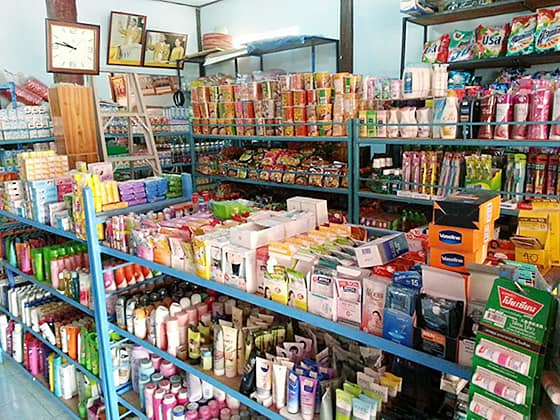
Encouraging signs emerge amid high economic risks: NESDC

ศาสตร์เกษตรดินปุ๋ย : ขอบคุณแหล่งข้อมูล : หนังสือพิมพ์ The Nation

https://www.nationthailand.com/business/30375009

Encouraging signs emerge amid high economic risks: NESDC
Aug 20. 2019
By WICHIT CHAITRONG
THE NATION

721 Viewed

The National Economic and Social Development Council (NESDC) has revised down its forecast of this year’s economic growth to 3 per cent, following a slowdown in activities in the first half. Growth in the second quarter stood at 2.3 per cent, a near five-year low, or the past 19 quarters.

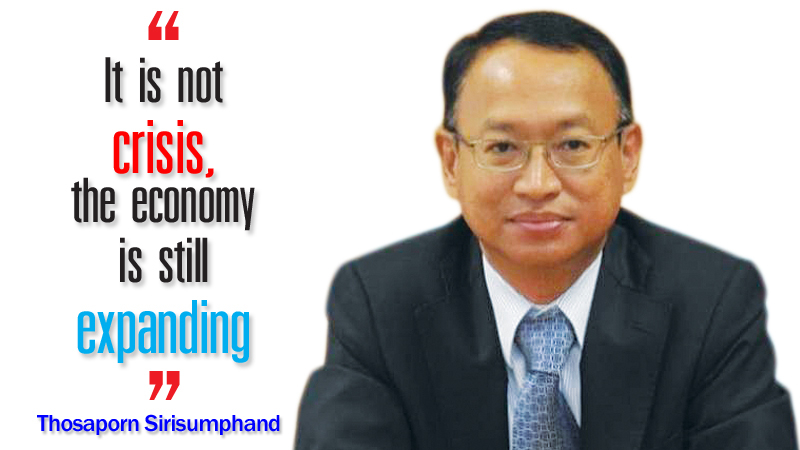
“It is not crisis, the economy is still expanding ,” secretary general of the NESDC Thosaporn Sirisumphand, told a press conference yesterday.

Contraction of exports, lower growth in foreign tourist arrivals, weakening private investment and delay of budget disbursement all attributed to the lower growth in the second quarter, according to the state think tank.

The NESDC has revised downward its projection of this year’s economic growth to 3 per cent, or to a range of between 2.7-3.2 per cent, compared to an earlier estimate of 3.3-3.8 per cent.

Key assumptions have also been changed to reflect latest economic condition globally and domestically, according to the NESDC.

Export values in dollar term this year is expected to contract by 1.2 per cent following a contraction of 4 per cent and 4.1 per cent in the first and second quarter from the impact of the ongoing trade war between the United States and China, said deputy secretary general Wichayayuth Boonchit.

Previously, the NESDC forecast export growth at 2.2 per cent for 2019.

The four-per cent contraction of exports in the first half of the year had largely weakened the economy, he said.

Meanwhile, private investment expanded at a slow pace of 3.7 per cent from an earlier estimate of 4.5 per cent. The export contraction led to slower capacity utilisation, affecting private investment.

Public investment is expected to slow to 4 per cent from the previous estimation of 4.5 per cent, largely due to the delay in the formation of the new government after the May election.

The NESDC, however, was optimistic about household consumption, keeping its previous forecast of 4.2 per cent. Public consumption is also predicted to stay at its previous estimate of 2.2 per cent as government spending to support lower income groups would in turn support household consumption.

The number of Chinese tourist arrivals has yet to recover from the 8.8 per cent contraction in the third quarter of last year . Chinese tourist arrivals in the fourth quarter last year, first quarter and second quarter this year decreased by 10 per cent, 1.7 per cent and 8.2 per cent respectively.

Slower growth of Chinese economy and weakening of yuan currency were the major causes, he said.

“The NESDC miscalculated that more Chinese would have visited Thailand due its proximity, but instead they travelled to neighbouring countries such as Japan, South Korea, Taiwan, Hong Kong and Macau,” Wichayayuth said.

Major risks are on horizontal.

The euro-zone economy may lead the world into recession as Germany suffered economic contraction of 0.1 per cent in the second quarter, Italy zero per cent and a flat growth of 0.2 per cent in France.

The International Monetary Fund has revised its global growth projection to 3.3 per cent from 3.6 per cent and it could be lower if euro-zone economies face a sharper downturn, it warned. World trade growth is expected to slow to 3.4 per cent from 3.6 per cent estimated previously.

The euro zone could also face trade restriction on car and parts exports to US while Italy may see political problems. And if Britain ended up with a no-deal Brexit, it would multiply economic problems for the region, he warned.

The Chinese economy is sensitive to capital outflows while slower growth and weakening yuan currency have worried consumers and investors.

In Japan, the economy remains on an expansion trajectory. But if the US imposes trade restriction on Japanese autos, it could have an impact. Moreover, Japan plans to increase consumption tax rate later this year.

The impact of drought on the Thai economy is a serious issue as fresh water reserve remains at a lower level of 13 billion cubic metres as of August 15.

However, there are some encouraging signs which could cushion the weakening economy, he said.

Due to trade diversion, investors have started to relocate their factories out of China and importers are seeking imports from new sources, in fear of high tariff rates imposed by the US government omn Chinese imports.

“Judging by more applications for BOI tax privileges in the second quarter, we expect a rise in new investment in Thailand in line with a 8-9 per cent expansion of factory construction this year,” said Wichayayuth.

Prices of some farm products have risen, including Hom Mali fragrant rice, pork, meat and durian. The price index of farm product in the second quarter turned to positive for the first time in nine quarters, suggesting a rise in farmers’ income, he said.

The government stimulus package, to be approved by the Cabinet today (August 20), will also help boost the Thai economy. Moreover, the new government is expected to accelerate public investment in the rest of the year, he added.

Meanwhile, Don Nakornthab, senior director of economic and policy department at Bank of Thailand said the central bank cut policy rate in the latest meeting of Monetary Policy Committee to 1.5 per cent due to slower economic growth.

Looking forward, the Thai economy faces several risk factors including further impact from the US-China trade war, uncertainty of central bank policies in many countries and consistency of budget disbursement and economic policies implemented by the Thai government, he added.

Kasikorn Research Centre told the government to look at the labour market, saying that should external factors deteriorate it would further impact Thai exports, sending a wave of repercussion on the labour market and private consumption.

The research house maintains its growth projection at 3.1 per cent, but warned of risks which could lead to a range of 2.9-3.3 per cent.

It also said the stronger baht in the second quarter had eroded competitiveness of Thai exports, especially industries depending on input of local raw materials such as processed farm products.

Tourism minister to push lifting visa requirements for Indians, Chinese

ศาสตร์เกษตรดินปุ๋ย : ขอบคุณแหล่งข้อมูล : หนังสือพิมพ์ The Nation

https://www.nationthailand.com/business/30375014

Tourism minister to push lifting visa requirements for Indians, Chinese

Aug 19. 2019
Phiphat Ratchakitprakarn

Phiphat Ratchakitprakarn
By THE NATION

506 Viewed

Tourism and Sports Minister Phiphat Ratchakitprakarn said he will proceed with proposing visa-free entry to Chinese and Indian travellers to the Cabinet on August 20, even though Deputy Defence Minister Prawit Wongsuwan and Foreign Minister Don Pramudwinai have voiced concerns that this will affect national security.

“I have faith in Thai police. Even if the Cabinet does not approve the proposal of visa-exempt entry, criminals will still come to Thailand and get caught. The finance minister agreed with the measure on August 16, and I will propose it to the Cabinet today [August 20] to seek a final solution,” Phiphat said.

The move to boost tourism in the country includes two main measures, namely allowing Chinese and Indian tourists to enter Thailand without requiring a visa from November 1 to October 31, 2020 and exempting visa-on-arrival fees for 19 countries, with the exception of Chinese and Indian passport holders.

Another measure proposed by the finance minister is to give tourists a gift of Bt1,000, in addition to three extra measures, namely the Bt100 eat-shop-travel project, 15 per cent discount at a limit of Bt30,000 for tourists on food, hotel and travel, and a special week-day tourism plan.

Phiphat also said he will have an informal discussion with Prime Minister General Prayut Chan-o-cha and related ministries on extending the closing time for entertainment venues in some zones to 4am. However, Phiphat said he has asked the Tourism Authority of Thailand to study this measure first.

Industry chief agrees with Exxon Mobil’s plan for plant expansion

ศาสตร์เกษตรดินปุ๋ย : ขอบคุณแหล่งข้อมูล : หนังสือพิมพ์ The Nation

https://www.nationthailand.com/business/30375007

Industry chief agrees with Exxon Mobil’s plan for plant expansion

Aug 19. 2019
Suriya Juangroongruangkit

Suriya Juangroongruangkit
By THE NATION

486 Viewed

After assigning policies to the Industrial Estate Authority of Thailand (IEAT), Industry Minister Suriya Juangroongruangkit revealed that the ministry is studying the allocation of land to support the investment of Exxon Mobil Corporation in the expanded petrochemical project at Laem Chabang port.

“The investment in this project is estimated at Bt330 billion,” he said. “However, the entire area of Laem Chabang Industrial Estate is occupied, so we have to look for new land.”

The minister further explained that Exxon Mobil proposed to fill the sea near their existing refinery in Laem Chabang, since the new petrochemical factory will need a supply of raw material from the refinery, so putting them close to each other would help reduce transports cost.

“The ministry and IEAT have agreed to reclaim 3,000 rai of land near Laem Chabang port,” he said. “Half or 1,500 rai will be allocated to Exxon Mobil’s new factory, while the rest will be reserved for future industrial estate development projects to be carried out by the IEAT.”

The Ministry of Industry has already tasked the Petroleum Institute of Thailand with studying the project’s feasibility and environmental impact. The study started in August and is expected to take six months.

Suriya said that if the study proves that the project is worth the investment while posing no serious threats to the environment, land reclamation should begin as soon as possible. “The ministry is weighing the pros and cons of this project carefully,” he said. “When finished, this project will help boost the economy, create more jobs, and promote the transfer of high technology from foreign partners. Meanwhile, the land filling technology nowadays is highly advanced and creates very little environmental impact, as we can see in many industrial countries such as Japan, Singapore and Hong Kong.”

Thai law dictates that all land reclamation projects must be carried out by government agencies, therefore IEAT will be responsible for the reclamation process, a while private joint-venture may be formed to increase efficiency.

Finance minister certain new stimulus will boost economy by 0.55 per cent

ศาสตร์เกษตรดินปุ๋ย : ขอบคุณแหล่งข้อมูล : หนังสือพิมพ์ The Nation

https://www.nationthailand.com/business/30375006

Finance minister certain new stimulus will boost economy by 0.55 per cent

Aug 19. 2019
Uttama Savanayana

Uttama Savanayana
By THE NATION

372 Viewed

Finance Minister Uttama Savanayana said he is confident that the planned stimulus measures will boost the country’s economy by 0.55 per cent during the rest of this year.

He said the National Economic and Social Development Council (NESDC) report on the gross domestic product (GDP) in the second quarter showed growth in line with his ministry’s forecast, which is a why new stimulus measures are necessary. He added that the new measures, which will cost the government Bt310 billion, will boost the GDP by 0.55 to 0.56 per cent.

“According to the NESDC, the GDP expanded 2.3 per cent in the second quarter compared to the previous quarter’s growth of 2.8 per cent. This indicates a slower growth in Thai economy due to the state of the world economy. If these measures are not applied, the full-year growth may be lower than 3 per cent,” he said.

Uttama will submit a draft of the economic stimulus measures and management plans using the Bt310 billion budget to the Cabinet on August 20. Once they are approved by the Cabinet, some measures will be implemented this month.

Commerce Ministry considers opening trading gateways in four provinces

ศาสตร์เกษตรดินปุ๋ย : ขอบคุณแหล่งข้อมูล : หนังสือพิมพ์ The Nation

https://www.nationthailand.com/business/30375003

Commerce Ministry considers opening trading gateways in four provinces

Aug 19. 2019
Weerasak Wangsuphakijkosol

Weerasak Wangsuphakijkosol
By THE NATION

313 Viewed

Deputy Commerce Minister Weerasak Wangsuphakijkosol revealed on August 16 that the ministry was planning to initiate a trade project named “Nakorn Chaiburin Northeast Gateway to Global Communities”.

He spoke after leading a meeting with three subsidiary agencies namely the Department of Trade Negotiations, Department of Business Development and Department of Intellectual Property as well as local entrepreneurs from Nakhon Ratchasima.

The said project aims to work with Cambodia to open trading gateways in four provinces.

“These provinces are Nakhon Ratchasima, Chaiyaphum, Buri Ram and Surin as the name Nakorn Chaiburin suggests,” he said.

Weerasak added that he has told the Department of Trade Negotiations to collaborate with the Thailand-Cambodia Joint Trade Committee to design policies that promote cooperation between the two countries and ease trade restrictions.

“For instance, we plan to upgrade the temporarily permitted area on Buri Ram border into a permanent trading gateway, which will not only expand opportunities along the border, but also attract more tourists to visit nearby provinces,” he said.

The deputy minister also added that the project will help expand markets for key agricultural products such as rice, mango, pineapple, corn and pomelo, as well as unique handcrafts such as Pakthongchai silk.

“I am confident that the Nakorn Chaiburin project will bring our products to one of the most promising free-trade zones in the world, as trade value between Thailand and Cambodia is estimated to reach US$15 billion [Bt462.5 billion] by 2020,” Weerasak said.

Traditional retailers urged to get ‘smart’

ศาสตร์เกษตรดินปุ๋ย : ขอบคุณแหล่งข้อมูล : หนังสือพิมพ์ The Nation

https://www.nationthailand.com/business/30375002

Traditional retailers urged to get ‘smart’

Aug 19. 2019
By THE NATION

355 Viewed

Deputy Commerce Minister Weerasak Wangsupakitkosol on Monday ordered the Department of Business Development to raise the number of traditional retail shops being transformed into smart retail stores to 10,000 by the end of next year.

Weerasak was speaking after visiting operators of traditional retail and wholesale shops in Nakhon Ratchasima.

“Our discussions with traditional retail and wholesale operators revealed that most of them lack a good management system. Their displays are a mess and it is quite difficult for buyers to find the product they are looking for. They also lack a stock-check system, which may result in overstocking of goods and many of them going past their shelf life. More importantly, most traditional retailers and wholesalers are not able to organise promotions that can attract shoppers,” he said.

Weerasak said that by participating in the ministry’s Smart Cho Huay programme, which is designed to transform traditional retail shops into smart retailers, store owners will see their monthly sales increase by between 10 per cent and 15 per cent on average thanks to use of new technology. The system makes it easier for individual shoppers to find their preferred products and enhances stock management. They are also able to join with major suppliers to host promotion campaigns, which will attract more shoppers to the store.

“I have ordered the Department of Business Development to assess the problems and obstacles faced by traditional retailers, suggest measures to support them and submit these to me as soon as possible. We will focus on cooperation between government and the private sector to make the transformation more effective under the network of business partners. It will help traditional retailers and wholesalers move forwards sustainably. I believe that we can actually transform 10,000 traditional retail stores into smart retailers by the end of 2020,” said Weerasak.

“I’m confident that traditional retail shops will remain part of Thai society and not be just a place to buy and sell goods but also serve as a centre for exchange of information among people in that village. It will be a retail venue that helps out by allowing villagers to take home products and pay the next day. This is the generosity culture of the community that cannot be offered by modern convenience stores,” he added.

Govt Housing Bank’s home loans of less than Bt3m with interest rates lower than 3%

ศาสตร์เกษตรดินปุ๋ย : ขอบคุณแหล่งข้อมูล : หนังสือพิมพ์ The Nation

https://www.nationthailand.com/business/30374998

Govt Housing Bank’s home loans of less than Bt3m with interest rates lower than 3%

Aug 19. 2019
By THE NATION

297 Viewed

From mid-September, the Government Housing Bank (GHB) will begin offering soft loans to people wanting to purchase new homes priced at less than Bt3 million.

The loans, at the interest rate of between 2.99 and 3 per cent, will be available to customers regardless of their salary, GHB managing director Chatchai Sirilai said on August 19.

The interest could be further reduced to 2.55-2.75 per cent per year based on the stimulus packages the government is expected to launch in the coming months, he added.

GHM has allocated around Bt1 trillion for these soft loans and is expecting twice that amount in revenue. Chatchai said GHB was aiming to spend up to Bt18 billion per month on loans for the rest of the year. It gave out loans worth a total of Bt17 billon in the month of July.

Of the loans GHM has given out so far, 4.86 per cent are non-performing loans, which Chatchai said was satisfactory, adding that the bank was planning to write-off Bt12 billion in NPLs over eight months from now.

Meanwhile, the GHB lottery-linked savings account offering fixed returns of 1.4 per cent has been overbooked, with subscription hitting Bt47 billion, well beyond the target of Bt27 billion. As a result, a new lottery-linked savings will be launched with a sale target of Bt10 billion.

New economic stimulation plan discussed

ศาสตร์เกษตรดินปุ๋ย : ขอบคุณแหล่งข้อมูล : หนังสือพิมพ์ The Nation

https://www.nationthailand.com/business/30374994

New economic stimulation plan discussed

Aug 19. 2019
Uttama Savanayana

Uttama Savanayana
By The Nation

237 Viewed

Talking about the new economic stimulation plan that includes drought relief measures and agricultural financial support, Finance Minister Uttama Savanayana said on Monday that the Bank for Agriculture and Agricultural Cooperatives (BAAC) would apply the relief measures around the end of August.

The Finance Ministry plans to aid farmers in paying back loans by providing new loans and subsidies. This will be done by compensating 4 million rice growers by Bt500 to Bt800 per rai up to a total of 15 rai. The total capital required for this scheme will be Bt57 billion. Those affected by drought will also be able to take out a Bt500,000 emergency loan with the government without any interest for the first year, The total capital available for this scheme stands at Bt55 billion.

To stimulate tourism, the government will give away Bt1,000 to 10 million people as a personal personal budget. The measure will be applied in the second week of September. The handouts will be transferred to state welfare card during August and September. People who are interested in the campaign have to register first

Uttama added that Don Pramudwinai, Foreign Affairs Minister, disagreed with the proposed relaxation of visas for Chinese and Indian tourists. This would be further discussed in the cabinet meeting on August 20.

The Finance Ministry is also in discussions with the Interior ministry on measures to effectively stimulate local economies.

Guaranteed price for palm oil to go for govt approval

ศาสตร์เกษตรดินปุ๋ย : ขอบคุณแหล่งข้อมูล : หนังสือพิมพ์ The Nation

https://www.nationthailand.com/business/30374992

Guaranteed price for palm oil to go for govt approval

Aug 19. 2019
Jurin Laksanawisit

Jurin Laksanawisit
By The Nation

217 Viewed

The National Oil Palm Policy Committee has approved a guaranteed price for palm oil of Bt4 per kilogram for growers with not more than 25 rai and will submit the guarantee to the cabinet for approval within two weeks, deputy prime minister and commerce minister Jurin Laksanawisit said after the meeting on Monday.

It is expected 300,000 palm oil farmers will join the programme, he said.

He added that the committee led by deputy prime minister Gen Prawit Wongsuwan met on Monday and Prawit asked that the motion approved by the committee be submitted to the cabinet before August 27.

Once approved, farmers wanting to join the programme can register with the Agricultural Extension Department of the Agriculture and Cooperatives Ministry. The committee will pay the difference between the market price and guarantee price to the farmers through Bank of Agriculture and Agricultural Cooperatives or BAAC every three months.

“We cannot give the budget for this programme as it will depend on how many farmers join and the market price at the time the programme becomes effective. This will be discussed at the cabinet level for further approval,” Jurin said.

Meanwhile, the committee also approved other measures to improve palm oil price including enforcing the use of B10 grade biodiesel in the transportation sector by the end of 2019. The Electricity Generating Authority of Thailand (EGAT) is continuing to buy crude palm oil to produce electricity at Bang Pakong Power Plant under the quota approved by the Cabinet of about 130,000 tonnes.

The committee put in place measures to manage the palm oil stock nationwide by installing meters in palm oil depots to provide accurate palm oil data. At the same time, it is coordinating with security officials to oversee the smuggling of palm oil from foreign countries and punish palm oil smugglers. Once implemented, the additional measures agreed by the meeting should support the price of palm oil, which currently stands at Bt2 per kilogram.

GDP to fall to below 3 per cent, TMB Analytics confirms

ศาสตร์เกษตรดินปุ๋ย : ขอบคุณแหล่งข้อมูล : หนังสือพิมพ์ The Nation

https://www.nationthailand.com/business/30374989

GDP to fall to below 3 per cent, TMB Analytics confirms

Aug 19. 2019
Naris

Naris
By The Nation

209 Viewed

TMB Analytics has revised the country’s GDP downwards from 3 per cent to 2.7 per cent following a higher than expected drop in the economy in the first half of this year, Analytics’ head Naris Sathapholdeja said on Monday.

He added that although the government will introduce measures to boost the economy during the next few months, the country is feeling the effects of the trade war between the US and China, which is directly impacting exports. This is forecast to continue and has impacted the global supply chain.

The International Monetary Fund of IMF also forecasts that global trade for 2019 will drop from 3.4 per cent to 2.5 per cent and will affect all export markets. The appreciation of the baht is also having an effect.

“It is impossible to improve the country’s exports for the rest of this year,” he said.

He added that the country’s tourism sector is also showing lower than expected growth going from over seven per cent to just two per cent or 39.1 million tourists. This follows the baht appreciating against the Yuan by up to 10 per cent, sending Chinese tourists to Japan and South Korea instead.

Meanwhile, government investments this year have also slowed as it awaits approval for the 2020 fiscal budget 2020 by the House of Representatives in late October.

The private sector is delaying investment too and this is forecast to rise by only 1.8 per cent as most still enjoy sufficient production capacity and do not need to expand at this time.

Domestic consumption is expected to grow 3.8 per cent following the government’s stimulus package but is still lower than the first half of this year when it reached 4.9 per cent. This is matched by national household debt, which has risen to Bt13 trillion.

Naris forecasts that the Bank of Thailand, which cut the policy interest rate by 0.25 per cent last month, will be forced to make another cut to manage the value of the baht.