
Thai women lead Asean peers in top management

ศาสตร์เกษตรดินปุ๋ย : ขอบคุณแหล่งข้อมูล : หนังสือพิมพ์ The Nation

http://www.nationmultimedia.com/detail/Economy/30365376

Melea Cruz
Melea Cruz

Thai women lead Asean peers in top management

Economy March 08, 2019 01:00

By   THE NATION

2,411 Viewed

THAILAND is performing better than its Asean peers in the proportion of women in top management, with a third of positions for chief executives and managing directors being held by them, a survey shows.

The Asean rate for women at this level is 21 per cent, according the results of the survey, released by Grant Thornton International yesterday. Thailand’s rate of 33 per cent is more than double the global average of 15 per cent.

Outside of CEOs and managing directors, companies in Thailand also feature women in other key roles. The next highest percentages of women in senior positions are chief finance officers (26 per cent), chief operating officers (17 per cent) and chief marketing officers (16 per cent).

Melea Cruz, a partner at Grant Thornton in Thailand, put the survey results in perspective. “While these figures fall short of the equal outcomes that we all want to see, they continue to show that the business community is outperforming the political system here in Thailand.

“There are currently no female cabinet ministers at all, and women make up just 5 per cent of parliament. It will be interesting to see whether the recent cultural shift on this issue has an effect on the coming elections.”

The research also shows that the number of women in senior management positions is rising, both globally and within regions. Asean, in particular, has outperformed the global average in several indicators, with 94 per cent of companies across the region now reporting at least one woman in a senior management |role, compared to 87 per cent worldwide.

Based on a Grant Thornton International survey of nearly 5,000 CEOs, managing directors, chairs and other senior leaders worldwide, the data in this year’s survey offers a snapshot of the state of progress for women in the workforce. The survey also explores some of the actions taken by businesses to move towards a more even gender balance among their leadership teams.

The three most common actions taken by businesses in Thailand involved creating an inclusive culture (37 per cent), enabling flexible working (28 per cent), and reviewing recruitment approaches (22 per cent). Setting gender quotas, rewarding progress towards targets, and mentoring were among several other options pursued by respondents. Fully 13 per cent, however, reported taking no action to improve the gender balance within their organisations.

For women in leadership positions, several barriers to progress were commonly cited. These included 31 per cent of female respondents reporting that they were limited by their caring responsibilities outside work. Nearly 29 per cent had trouble finding enough time alongside core job responsibilities, and 24 per cent mentioned a lack of access to networking opportunities.

With women’s issues now discussed prominently in culture and media, due in large part to the MeToo movement, businesses in many countries are beginning to pay closer attention to addressing gender imbalances within the workplace. Beyond simply improving their company image, these equality initiatives can also redound to the benefit of the businesses themselves.

Melea explained some of these advantages.

“In addition to gender diversity being the right thing to do, it is right for business.

“There is compelling evidence of the relationship between diversity of thought and innovation, leading to enhanced business performance.” she said. “Moreover, women and men have different backgrounds and experiences, which lead to different perspectives on everything from strategy to execution.

“It isn’t just talent that increases when companies begin putting women in the boardroom. It’s the diversity of viewpoints and ideas that can show the way forward.”

The Grant Thornton International Business Report (IBR) is a survey of listed and privately held businesses. Launched in 1992, the IBR now provides insight into the views of more than 10,000 businesses across 35 economies.

Volatility and opportunity in the Year of the Pig

ศาสตร์เกษตรดินปุ๋ย : ขอบคุณแหล่งข้อมูล : หนังสือพิมพ์ The Nation

http://www.nationmultimedia.com/detail/Economy/30365379

x

Volatility and opportunity in the Year of the Pig

Economy March 08, 2019 01:00

By   SPECIAL TO THE NATION

IN ASIA, pigs are seen as a symbol of prosperity. So based on this, one would naturally think that 2019 should bring with it a positive outlook.

Interestingly, the last two “Years of the Pig – 1995 and 2007” – unfolded very differently.

December 1994 saw the birth of the internet, the beginning of the dot.com boom and one of the most pronounced bull markets in history. In contrast, no one needs reminding of the global financial crisis, which started unfolding in the spring of 2007 and resulted in the worst bear market investors had seen in decades.

So it doesn’t look like history is anything to go by in this case. Being in the Year of the Pig could be positive, or not. To me, 2019 will likely be a volatile year, but the good news is – volatility means opportunity.

A look back at 2018

After a relatively strong 2017 characterised by synchronised global growth, 2018 was a rough ride and hard to anticipate.

It started with markets reacting to US-China trade tensions, headlines like tech juggernaut Apple hitting USD1 trillion in market cap (a first for any US corporation), and yet – like most equities – it tumbled a bit. That’s how markets work – they ebb and flow.

Take for instance the S&P Index, which tracks the 500 largest US corporations. It grew 22 per cent in 2017 but lost 4 per cent last year.

Volatile times ahead

With macro and political uncertainties surrounding broader trade protectionism and Brexit lingering, volatility is likely to be a constant companion in 2019. Despite these challenges, fundamental indicators look solid and recession risk is modest in our view. However, we’re unlikely to see high single-digit to double-digit growth again as China, the second largest world economy, is transforming from high growth to quality growth.

China outlook

China is undergoing a transition from investment-led to consumption-led growth. This means increasing domestic demand is expected to continue fuelling China’s economic engine.

The government has also demonstrated the continued opening up of capital markets such as the expansion of onshore equity and bond markets. This sets the stage for foreign investors to increasingly tap into the Chinese economy.

Our economic outlook for China remains positive in 2019. Government policies to stimulate growth look robust, with greater focus on stabilising the economy. An increased emphasis on |more quality, sustainable growth bodes |well for long-term investors.

Bull, bear or balanced?

People born in the Year of the Pig are considered to be realistic. So following a realistic approach, valuations of Chinese assets seem very reasonable now compared to where they were a year ago.

Now if you wish to tap into the China growth opportunity but are cautious of volatility, you could consider a diversified multi-asset approach that combines Chinese equities and bonds in a single portfolio.

This way, you could capture the full opportunity set that China offers while balancing growth and stability.

To me it’s not that much about being bullish or bearish. It’s about accessing China in a way that suits your risk appetite.

If you wish to have a smoother investment ride, then a balanced approach can help you achieve this and, as a result, you could enhance your risk-adjusted return.

Plan, plan and then plan some more

Regardless of where or what you intend to invest in, at the end of the day, the most important thing is to have an investment plan.

Investors who identify the right strategy for their circumstances and take steps to protect their portfolios from short-term bouts of volatility will stand a better chance of coming out as winners in 2019.

As far as Asian investors are concerned, the diversification of investments remains crucial. More than ever, investors stand to gain by broadening their horizons beyond domestic markets or single asset classes. And remember: don’t just focus on the returns, but also |consider the risk that you take to get that return.

I hope the Year of the Pig brings you prosperity and happiness.

Contributed by PUNEET CHADDHA, chief executive officer & head, Southeast Asia, HSBC Global Asset Management

Public warned on investing in HashBX

ศาสตร์เกษตรดินปุ๋ย : ขอบคุณแหล่งข้อมูล : หนังสือพิมพ์ The Nation

http://www.nationmultimedia.com/detail/Economy/30365380

x

Public warned on  investing in HashBX

Economy March 08, 2019 01:00

By The Nation

The Securities and Exchange Commission of Thailand (SEC) is advising the public to be cautious about any solicitation related to investment in HashBX Global Co Ltd.

With reference to the news of persons reporting to the police regarding their investment with HashBX, the SEC has received complaints from the investors and found additional information. The SEC is gathering more facts in this matter and coordinating with relevant agencies to consider whether any act is subject to supervision under the Emergency Decree on Digital Asset Businesses B.E. 2561 (2018) or other laws enforced by the SEC. In the meantime, investors are strongly advised to be careful with any solicitation to invest with the company because HashBX has not obtained an approval to operate a digital asset business from the Ministry of Finance, nor has it ever filed an application for an initial coin offering (ICO) with the SEC, according to the SEC release yesterday.

The interested public should be aware of possible risks involved in digital asset investment and contact a licensed digital asset business operator only in case of deciding to invest in digital assets. It should be noted that so far no ICO issuer has been approved, and no application or a registration statement has been filed with the SEC. In case of tips of suspicious acts, please call SEC Help Centre at 1207 for further investigation in due course.

Japan bank reaffirms high-speed rail backing

ศาสตร์เกษตรดินปุ๋ย : ขอบคุณแหล่งข้อมูล : หนังสือพิมพ์ The Nation

http://www.nationmultimedia.com/detail/Economy/30365390

x

Japan bank reaffirms high-speed rail backing

Economy March 08, 2019 01:00

By   THE NATION

2,490 Viewed

THE Japan Bank for International Cooperation (JBIC) has reassured Thailand of its commitment to supporting a Bt224-billion high-speed railway project that will connect the country’s three main airports.

The pledge came after JBIC governor Tadashi Maeda had discussions with Prime Minister Prayut Chan-o-cha and Deputy Prime Minister Somkid Jatusripitak on progress with the project at Government House yesterday.

Somkid said the JBIC had insisted on following through with its financial backing for the project against the backdrop of Chinese-Japanese cooperation in support of massive investment in countries in the region, including with the showcase Eastern Economic Corridor (EEC).

The high-speed railway – the biggest infrastructure works for the EEC – will connect the Don Mueang and Suvarnbhumi international airports with the U-Tapao facility in Rayong province.

After the talks yesterday, the JBIC will engage in further discussions on the project.

A committee has begun negotiations with a private consortium – the Charoen Pokphand Group and its partners, which won the bid for this project – and that process is due to be finalised on March 19.

The JBIC is said to be ready to extend its support to a smart city project in Chachoengsao province and to Thai small and medium-sized enterprises for improved production capabilities. More discussions with government agencies will be held.

Weerachon Sukhondhapatipak, deputy spokesperson for the Prime Minister’s Office, said that during the discussions, JBIC had told of its progress in pushing through projects under the EEC. Businesses in Japan and China are said to be highly interested in investing in the high-speed railway.

With Thailand acting as chair of Asean this year, Japan is also ready to support Asean development and establish subregional cooperation, such as with the Ayeyawady-Chao Phraya-Mekong Economic Cooperation Strategy (ACMECS) and with the Cambodia, Laos, Myanmar and Vietnam (CLMV) subregion.

Prayut said the Thai government also supports the high-speed rail project and that the EEC will become a centre of manufacturing, adding that Japan is the biggest foreign investor in the zone.

“Earlier, Japan has collaborated well in projects, such as for the establishment of education institutes in Thailand and education institutes and research centres are expected to set up branches in Thailand and the EEC,” he said.

Shake-up urged for bus network to improve transport integration

ศาสตร์เกษตรดินปุ๋ย : ขอบคุณแหล่งข้อมูล : หนังสือพิมพ์ The Nation

http://www.nationmultimedia.com/detail/Economy/30365391

x

Shake-up urged for bus network to improve transport integration

Economy March 08, 2019 01:00

By PHUWIT LIMVIPHUWAT
THE NATION

WITH the Skytrain network under expansion, the next step for transforming Bangkok into a smart city with so-called smart mobility is to better integrate bus services with the rail system, a senior transport planner said.

To achieve this, city’s public buses and their route connections need to be improved, said Chayatan Phromsorn, deputy director general of the Office of Transport and Traffic Policy and Planning (OTP), under the Ministry of Transport.

“There are currently four Skytrain lines in operation throughout the city, covering a total of 120 kilometres, with seven additional lines under construction, which will cover up to 173 kilometres,” said Chayatan.

He was speaking yesterday at a seminar entitled “Transforming Thailand, Opening the Door to Economic Innovation”, which was organised by Thansettakij newspaper.

The four Skytrain lines have seen varying levels of traffic per day, from 740,000 passengers on the Green Line (Sukhumvit Line) to 50,000 on the Purple Line (Ratchadham Line), Chayatan said.

Among the Skytrain lines under development is the Red Line, which connects Bang Sue to Rangsit and Bang Sue to Taling Chan. The 26-kilometre Bang Sue-Rangsit route is 79 per cent complete, while the 15-kilometre Bang Sue-Taling Chan route has been completed. The Red Line is expected to open in 2020 and is expected to carry 300,000 passengers a day.

The Dark Blue Line, which connects Hua Lamphong to Bang Khae and Bang Sue to Tha Phra, is 95 per cent complete. The Hua Lamphong-Bang Khae route is expected to open this year, while the Bang Sue-Tha Phra route is planned to open in 2020. The Dark Blue Line is predicted to see some 490,000 travellers a day once fully opened, according to Chayatan.

“Now that these projects are in the wings, the next stage for improving Bangkok’s transportation infrastructure is to focus on the various feeders, the means by which the public can travel from their households to the Skytrain stations, and from the stations to their workplace or leisure destinations,” he said, adding that these developments are needed to tackle the capital’s traffic congestion and resulting air pollution.

Chayatan said the quality of Bangkok’s public buses is poor and they are relatively disconnected to other modes of transport. The buses should also function as feeders to connect local areas to the Skytrain stations and get more cars off the roads.

“Acting as feeders, the routes of public buses can be shortened, further reducing traffic and air pollution. From the shorter routes, buses can also have smaller sizes and the prospect of having electric buses throughout the city will become more achievable,” he said.

Manoj Lohatepanont, director of Chulalongkorn University’s Transportation Institute, said: “Bangkok covers around 1,600 square kilometres. When compared to the area that the Skytrain lines will cover, it is clear that expanding Skytrain routes alone is insufficient.

“The role of feeders will become crucial to improving the quality of Bangkok’s public transportation system.”

xxxxxxxxxxxxxxxxxxxxxxx

Manoj, who was also at the seminar, shared Chayatan’s concerns on the state of the city’s buses, labelling them as dirty, slow and not timely. These failings encouraged car use with ever worsening traffic and air pollution.

He suggested that, as in South Korea, public buses should be colour coded according to their roles. For example, buses that act as feeders to Skytrain stations, buses that run from the outer area of the city into the inner area, and those that run on elevated highways should have differentiated colour coding.

AIR FREIGHT SLUMPS

ศาสตร์เกษตรดินปุ๋ย : ขอบคุณแหล่งข้อมูล : หนังสือพิมพ์ The Nation

http://www.nationmultimedia.com/detail/Economy/30365395

x

AIR FREIGHT SLUMPS

Economy March 08, 2019 01:00

By The Nation

The International Air Transport Association (IATA) said demand in global air freight markets, measured in freight tonne kilometres, decreased 1.8 per cent in January from the year-earlier month. It was the worst performance in three years.

“This is a worsening of a weakening trend that started in mid-2018, said Alexandre de Juniac, IATA’s director general and CEO.

‘Unless protectionist measures and trade tensions diminish there is little prospect of a quick rebound.”

POWER BILL REPRIEVE

ศาสตร์เกษตรดินปุ๋ย : ขอบคุณแหล่งข้อมูล : หนังสือพิมพ์ The Nation

http://www.nationmultimedia.com/detail/Economy/30365398

x

POWER BILL REPRIEVE

Economy March 08, 2019 01:00

By The Nation

The Energy Regulator Commission wIll mantain the electricity price at Bt3.6396 per unit between May and August to help reduce the people’s cost of living, said Narupat Amornkosit, secretary-general of the commission yesterday.

“We will utilise a Bt4.57 billion investment budget that has been delayed,” she saId.

Bangkok hosts borderless youth conference

ศาสตร์เกษตรดินปุ๋ย : ขอบคุณแหล่งข้อมูล : หนังสือพิมพ์ The Nation

http://www.nationmultimedia.com/detail/Economy/30365388

Bangkok hosts borderless youth conference

Breaking News March 07, 2019 18:11

By The Nation

2,090 Viewed

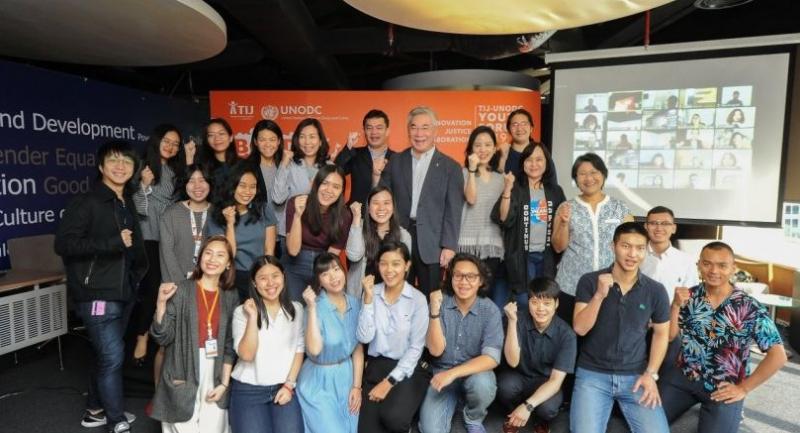
“Design Across Borders” is a technology developed to lay the seeds of empathy and understanding, analytical thinking and problem-solving skills.

The innovation assists young people from different cultures in addressing three specific issues laid out by the Thailand Institute of Justice (TIJ) and United Nations Office on Drugs and Crimes (UNODC) in the Borderless Youth Forum, conducted from March 2-3.

The issues are social reintegration for ex-prisoners, gender-based violence and access to justice for vulnerable peoples.

Prof Kittipong Kittayarak, executive director of TIJ, said: “TIJ is confident that youths are the hope of a better future for society. They are integral in building the rule of law and sustainable development. Which is why we’ve invited youths from many countries to join in solving social problems concerning the justice system through Design Thinking at the world’s first Borderless Youth Forum. Technology is allowing us to reach across borders and build a sustainable network.”

From 14 countries, 162 young members of the Design Across Borders programme developed by Stanford School to share experiences, brainstorm ideas, consult with experts and develop solutions for the three issues given, with regards to their national contexts.

The program is developed by Glen Fajardo of Stanford School, who led the discussions between the 162 young people from TIJ’s Bangkok headquarters. According to Fajado, the essence of Design Across Borders is “helping people be creative together when they are far apart and different cultural contexts”. In this, he stressed the importance of not just brainstorming ideas and finding solutions, but also to “build empathy and understanding”.

A Thai youth participated in the forum, Chanyanuch Butsayaturt, said: “Being a part of this seminar is one of the best experiences for me. To meet with people from so many countries who all share the same interests. Just looking into their eyes and it’s apparent how passionate they are about these issues. Talking to them, you can feel their energy, and that help to fire up our own energy. Also, the seminar enabled us to talk to the experts, which is a rare opportunity whether online or in person.”

The findings from the Borderless Youth Forum will be presented at the 6th Asia-Pacific Forum on Sustainable Development organized by UNESCAP March 27-29 in Bangkok.

Adfest focuses on ‘TMRRW.TDAY’

ศาสตร์เกษตรดินปุ๋ย : ขอบคุณแหล่งข้อมูล : หนังสือพิมพ์ The Nation

http://www.nationmultimedia.com/detail/Economy/30365356

Adfest focuses on ‘TMRRW.TDAY’

Breaking News March 07, 2019 10:57

By The Nation

Adfest 2019 – the 22nd edition of Asia’s celebrated regional creative festival – will be held under the concept of “TMRRW.TDAY” to showcase the creativity that bridges the present and the future, event organisers said in a press release on Wednesday.

Vinit Suraphongchai, chairman of the organising committee for Adfest, was joined by the Asia Pacific Advertising Association, the Department of International Trade Promotion, Ministry of Commerce, and the Advertising Association of Thailand in a press conference held recently to announce the concept.

A special Adfest Talk was also held under the same theme as a platform for the exchange of perspectives, experiences, and recommendations from veteran marketers and creators, all with outstanding track records in marketing communications on a national level, to shine a spotlight on current circumstances in the creative industries.

The talk session was joined by four top-tier talents in the field, including Siwat Chawareewong, Chief Executive Officer of GroupM Thailand; Dr. Siraya Kongsompong, Senior Consultant for SEAC (Southeast Asia Center); Kittipong Veerataecha, Chief Branding and Communications Officer of True Corporation PCL; and Wanna Swuddigul, Vice President and Chief Marketing Officer of Thai Samsung Electronics Co., Ltd. The 2019 festival has received 2,500 creative submissions across 19 categories from the entire region, and more than 1,300 participants from around Asia and the world are expected to arrive for the event at Royal Cliff Hotels Group in Pattaya, Chonburi on March 20-23, 2019.

Vinit Suraphongchai, chairman of the organising committee for Adfest, described the festival as the region’s most prestigious competition and a center of capability development for the creative industries. Now a pride of Thailand, Adfest highlights Thailand’s incredible talent, reputation, and stature in the region’s creative landscape while also serving as a driving force for the development of the Thai creative industries.

Adfest’s goal is to provide a space for knowledge exchange and a meeting of old friends and new while also elevating the standard of creativity across Asia Pacific and the Middle East.

Through the expression of each country and region’s distinctive cultural identities, each creative work can stand out from the pack in today’s fast-moving world as modern creators strive to cope with ever-shifting communication channels and demanding competition on the international stage.

Vinit said: “Adfest will continue to promote creativity that breaks old boundaries and blaze a trail for innovation. This creative force is the element that makes ADFEST stand out from other advertising awards, allowing the festival to blossom into one of the strongest regional platforms for thinkers, creators, and media producers in the world.

“This year, ADFEST is taking things to another level with its ‘TMRRW.TDAY’ theme, which focuses on the connection between the present and the future. Changes in our world today have pushed every person, every person, and every industry forward to embrace change, develop new values, and tackle complex challenges with skills and technologies, and creativity in the workforce is now key to unlocking the capacity to innovate for the future. As I have said previously, creativity is the beating heart that every company in every industry needs to cope and thrive with change.”

Held in Pattaya, Adfest will feature a creative competition with 19 distinct categories – including new addition ‘eCommerce Lotus’ as a response to the growth of the online retail market. Creator talks, meanwhile, will continue to serve up valuable knowledge and sparks of inspiration from world-renowned marketers and advertisers. Last but not least, an awards ceremony will crown winners of the creative competition.

Italy rolls out welcome mat for region’s tourists

ศาสตร์เกษตรดินปุ๋ย : ขอบคุณแหล่งข้อมูล : หนังสือพิมพ์ The Nation

http://www.nationmultimedia.com/detail/Economy/30365319

Bastianelli: Tourism from Asia is increasing faster than that of the total tourism demand, because of the major increase in long-haul tourism markets in Italy with respect to its neighbours.

Italy rolls out welcome mat for region’s tourists

Economy March 07, 2019 01:00

By JINTANA PANYAARVUDH
THE NATION

5,300 Viewed

THAILAND is emerging as a potential high-growth market for tourism to Italy, underpinned by that country’s opening of promotional office in Bangkok that has activated a new antenna for luring Thai visitors as well as those from elsewhere in Southeast Asia.

The office, which was opened late last year, is operated by the Italian National Tourist Board (ENIT), which is responsible for the promoting tourism to Italy from around the world.

“The new Bangkok office plays a very important role, as the first the Italian hub in Southeast Asia with the task of promoting Italy and its destinations throughout this portion of the tourism market in this part of the world,” Giovanni Bastianelli, Enit executive director, told The Nation in an interview.

As Southeast Asia’s tourism demand for destinations worldwide is growing, it is a fundamental task for Italian regions to have a point of reference in such a growing market, said Bastianelli, who pointed to Italy’s status as a world-renowned top tourist destination.

Apart from Thailand, the Bangkok office is responsible for promoting tourism in the newer source markets of Vietnam and Myanmar, along with Malaysia, as visitors from these countries are increasingly heading to Europe, said Bastianelli.

“Since countries in this region make up an emerging market for the Italian tourism sector, it is still necessary to develop a correct and stronger brand positioning in order to reach the best target for Italian destinations, and namely the more affluent segment, as well as millennials and multi-generational family groups,” he added.

Enit’s marketing strategy is based on global campaigns to promote knowledge of Italy and its locations among travellers while providing information on tourism offerings and products.

Tourism promotion for Italy would be oriented towards “some strategic cross-cutting musts: sustainability, accessibility for all and digital implementation”, he said.

According to Bastianelli, tourism from Asia is increasing faster than that of the total tourism demand, because of the major increase in long-haul tourism markets in Italy with respect to its neighbours, he said.

Italy experienced a boom in tourism from Asian travellers in 2017, especially from Thailand.

The number of Thai arrivals in Italy increased almost 90 per cent over the past three years, from 18,000 in 2014 to 33,700 in 2017, according to Bastianelli.

In 2017, there were more than 254,400 nights spent in Italy by tourists from Thailand, he said.

Compared with 2016, these flows depict a growing trend regarding every variable of tourism. The number of nights spent increased 47.6 per cent, with a 7.4 per cent increase in expenditure that reached 21.7 million euros, Bastianelli said.

Alongside the increase in the number of Thai visitors to Italy, inflows from the rest of Asia also rose in 2017.

China is the biggest source market when it comes to Italian accommodation figures, with over 3 million arrivals for growth of 15 per cent; nights spent in accommodation touched 5 million, increasing 12.4 per cent.

Reaching 996,000, arrivals from South Korea increased by 14 per cent, and the nights spent totalled 1.8 million, up by 14.6 per cent.

The 933,000 tourist arrivals from Japan generated almost 2 per cent more nights than in 2016.

The other Asian countries totalled over 1 million arrivals and 2.4 million nights spent, an increase of 1.1 per cent.

As for this year, Enit expects the number of tourists from Asia to be relatively flat compared with last year, Bastianelli said.

“It means we are still growing from 2016 in international arrivals. Overall, there has been a 5 per cent increase in airport arrivals from foreign airports over the last two years (2018 and 2017),” he said.