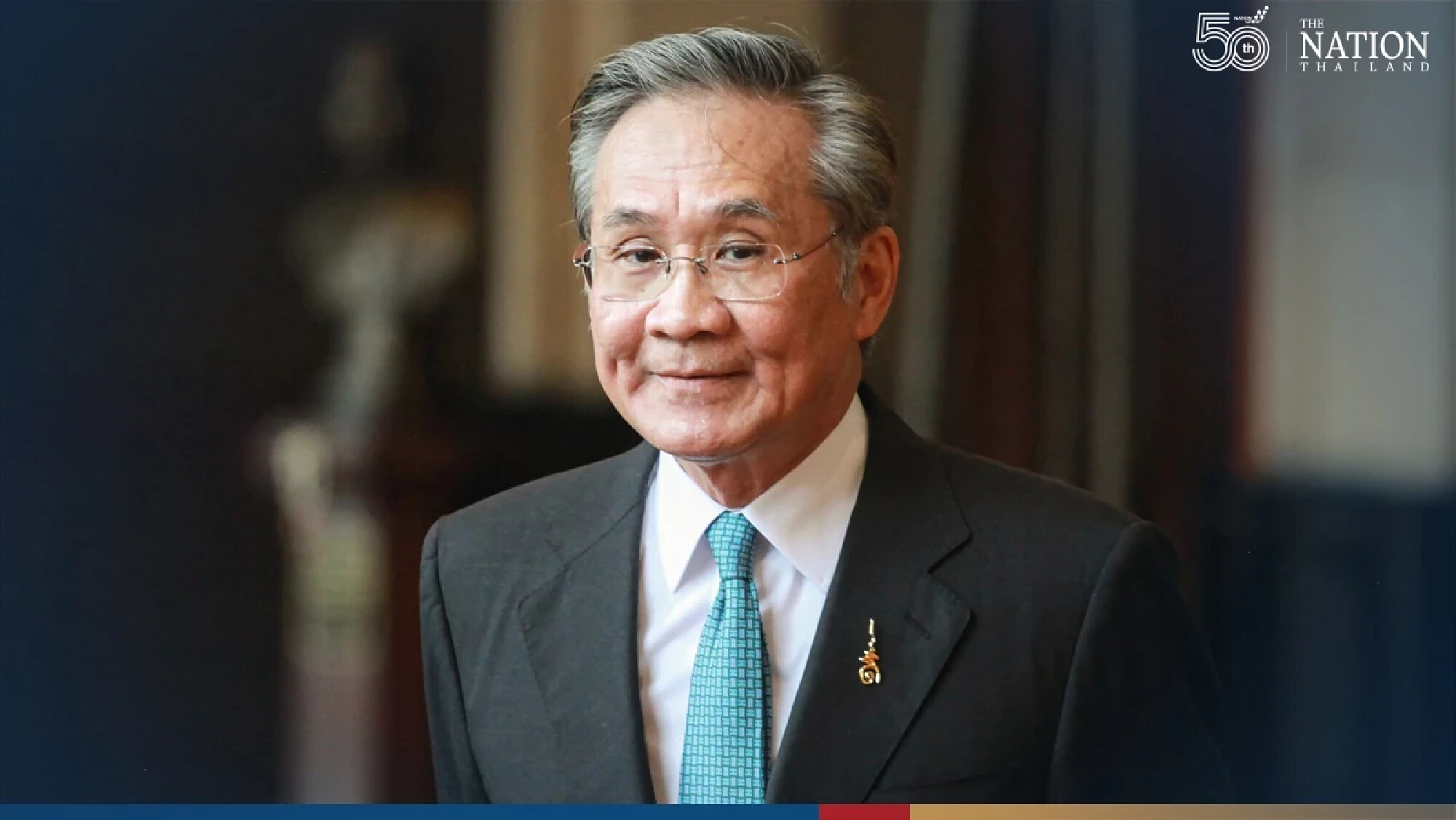
Deputy Prime Minister and Minister of Foreign Affairs Don Pramudwinai will participate in the 55th Asean Ministerial Meeting and Related Meetings on August 2-6 in Phnom Penh, Cambodia. Foreign ministers and representatives from 39 countries and organisations are expected to participate in this important annual gathering.
The Asean Foreign Ministers will discuss ways to advance Asean Community building that is people-centred and address common challenges under the theme “Asean A.C.T.: Addressing Challenges Together” and priorities under Cambodia’s Asean chairmanship this year, as well as the importance of upholding ASEAN centrality and solidarity amidst the regional and global uncertainties and challenges.
The Asean Foreign Ministers will follow-up on the implementation of the Five-Point Consensus agreed by Asean Leaders on April 24, 2021, and make preparations for the upcoming 40th and 41st Asean Summit and Related Summits in November 2022, as well as exchange views on important regional and international issues, particularly those arising from the Covid-19 pandemic and tensions around the world, and push forward tangible cooperation with dialogue partners in various ministerial meetings concerned.
In addition, Don will co-chair Asean-Japan Ministerial Meeting with Yoshimasa Hayashi, Minister of Foreign Affairs of Japan, as Country Coordinator for Asean-Japan Relations (2021-2024), to prepare for the 50th anniversary of the Asean-Japan Relations next year.
The deputy PM will use this opportunity to promote cooperation on the Bio-Circular-Green Economy Model (BCG), to support comprehensive recovery from the Covid-19 pandemic, as well as to support multilateralism and regional cooperation to address regional and global challenges.
If we look back over the past four decades since the first case of HIV was diagnosed, we cannot miss the stark writing on the wall: had the whole world depended only on the rich nations, then we would have miserably failed to deliver antiretroviral therapy to over 28.7 million people.
It will also become amply clear how vital remains the central driving force of key affected communities as well as the Global South in making medicines affordable and accessible. Rich nations have spurred health innovations indeed. But it is the people most at risk of HIV and the countries in the Global South that have made the dream partially come true of making these scientific breakthroughs reach those who are most in need.
With 101 months left to end Aids by 2030, countries globally have to ensure 100% people living with HIV know their status, 100% of them are receiving lifesaving antiretroviral therapy along with full spectrum of HIV care cascade, and are virally suppressed. In addition, 100% of people should have full access to HIV combination prevention options so that we can deliver on zero new case targets. “We do not have to wait till 2030, we already have the tools and approaches which science has proven that they work. We have to implement what we know works,” said Dr Ishwar Gilada, Governing Council member of International Aids Society (IAS) and President of Aids Society of India (ASI) – a national network of HIV medical experts and researchers. Dr Gilada was chairing a press conference hosted by ASI and Organized Medicine Academic Guild of India at the 24th International Aids Conference (Aids 2022) in Montreal, Canada.
92% HIV medicines globally come from India
“Currently 92% of lifesaving antiretroviral therapy for people living with HIV worldwide comes from Indian generic manufacturers. Compared to the price of these medicines in the Global North, credit goes to most affected communities and Indian generic medicine manufacturers who have made medicines affordable. Most of the generic antiretroviral medicines cost 1% or less when compared to the cost of the same in rich nations. For example, best available three-in-one medicine was costing USD 10,452 per patient per year, but lowest quoted cost from Indian generic manufacturers is USD 69, which is merely 0.7% of international cost. Likewise, cost of treatment of those infected with hepatitis C virus was USD 84,000 for three months therapy, but Indian manufacturers have brought down the cost to as low as USD 215 – which is less than 0.3% of international cost,” added Dr Gilada.
If we are to scale up lifesaving medicines along with full spectrum of HIV care services, particularly in low and middle-income countries, role of countries in the Global South, such as India, is pivotal.
Agrees Dr Beatriz Grinsztejn, President-Elect of International Aids Society (IAS): “India as one of the biggest producers of generic medicine, has been able to develop, produce, and export generic antiretroviral treatments which are key for scaling up access to these medicines.” She strongly advocated for boosting South-South cooperation on health.
Inequalities determining trajectory of HIV epidemic in the Global South
“Scale up of antiretroviral therapy has improved over the years as well as access to HIV services, however it is also fundamental to ensure the quality and sustainability of the programmes which are being implemented,” added Dr Grinsztejn. “Countries in the Global South have many issues in common as inequalities are still determining the trajectory of HIV epidemic in low and middle-income countries.”
Dr Beatriz said “There are compelling factors that demand reassessments of policy frameworks for emerging South-South cooperation. A framework which is holistic and aims for generating health-driven research and development, will strike a balance between promoting and protecting the right to access of medicines.”
Bridge the gap between “what we know,” and “what we do”
Dr Ann Duerr, Scientific Affairs Director, HIV Vaccine Trials Network (HVTN), and Professor, Vaccine and Infectious Disease Division, Fred Hutch, Seattle, USA expressed concern on latest UNAIDS global Aids update shared at Aids 2022. In 2021, every 2-3 minutes an adolescent girl or young woman was infected with HIV and every minute we lost a life to Aids.
Dr Ann Duerr said: “It is high time that we redouble our efforts globally. We need to increase implementation of what we know works. This includes increasing HIV treatments, and also increasing the preventive measures such as pre-exposure prophylaxis (PrEP) along with full range of combination prevention options, especially among populations at risk.”
She strongly called upon India to help boost implementation science, which addresses the gap between “what we know” and “what we do.” “By closing these gaps, we can redouble our efforts to fight the global epidemic of HIV infection,” she added.
Commendable progress but challenges remain
Dr Glory Alexander, who is the founder of ASHA Foundation in India and elected as Vice President of Aids Society of India (ASI), is also a part of the Aids 2022 organizing committee. She said that “over the years, we have been able to reduce the number of new HIV infections by about 37% since 2010, and decreased Aids-related deaths by 66% since 2010 in India. That is huge achievement and was possible largely due to scale up of antiretroviral therapy.”
However, “among the key populations, HIV seroprevalence continues to remain very high – between 1.5% to 6.25% (compared to general population where HIV incidence is around 0.21%). This needs to be reduced before we can even think of achieving #endAIDS targets. Along with scaling up HIV care services we also have to reduce inequities, failing which it will be very difficult to reach out to the targets of 100-100-100 by 2030” said Dr Glory Alexander to CNS (Citizen News Service).
Dr Glory’s concern regarding high HIV rate among key populations is also echoed by the United Nations joint programme on HIV/Aids (UNAIDS). According to the UNAIDS, the risk of acquiring HIV is 35 times higher among people who inject drugs than adults who do not inject drugs; 30 times higher for female sex workers than adult women; 28 times higher among gay men and other men who have sex with men than adult men; and 14 times higher for transgender women than adult women.
Dr Ishwar Gilada rightly pointed out that it is not ‘Global North vs Global South’, but a call for reimagining the fight to end Aids based on principles of solidarity, equity, and social justice. While Global North currently leads on health innovations, it is no less vital to ensure that these scientific breakthroughs reach the most-in-need people globally without any delay (or without any barriers like cost).
Bobby Ramakant – CNS (Citizen News Service)
(Bobby Ramakant is a World Health Organization (WHO) Director General’s WNTD Awardee 2008 and part of editorial of CNS (Citizen News Service). Follow him on Twitter @BobbyRamakant or visit http://www.bit.ly/BobbyRamakant)
Chinese State-owned oil and gas giant China National Offshore Oil Corp (CNOOC) has tapped commercial flows of oil and gas from a shale exploration well in the South China Sea, the first successfully drilled shale oil well offshore.
The country’s first offshore shale oil exploration well Weiye-1, located at the southwestern trough of the Beibu Gulf Basin in the South China Sea, recorded daily production of 20 cubic meters of oil and 1,589 cubic meters of natural gas, CNOOC said on Thursday in a release.
The Beibu Gulf Basin holds around 1.2 billion metric tons of prospective shale oil resources with broad prospects for future exploration, it said.
Shale oil is an unconventional product derived from oil shale rock fragments.
Domestic oil giants, including CNOOC, China Petrochemical Corp and China National Petroleum Corp-the country’s largest oil and gas producer and supplier-are all making greater efforts to tap shale deposits despite their geological challenges and higher costs, amid government calls to boost domestic energy supply diversity and security.
Hundreds of fans of the iconic TV show, The Golden Girls now have the chance to dine in the foursome’s kitchen. Or at least, the next best thing.
Apop-up restaurant’s opened up in Beverly Hills, California, with iconic parts of the famous girls’ home lovingly recreated.
Dozens of fans lined up outside ahead of the first seating at the sell-out experience on Saturday, eager to get a glimpse inside.
“This is the main attraction. This is the primo of the pop up”, explains Derek Berry from Bucket Listers, the organisers, as he shows Reuters around a replica of the famous kitchen.
“So, of course, you’re looking at the very famous Golden Girl set here. No details missed.. The garlic clove, the calendar, the cake molds. Of course, this painting, we couldn’t just do any old painting. We had to have the exact one, the yellow phone, the exact amount of cabinets. Those little details were so important. The Golden Girls fan knows what they’re looking for, and if we didn’t really put that extra effort in. I don’t think it would have went this far, so no detail was spared. We really made sure we recreated it.”
Among the attractions, a bar dedicated to Shady Pines – the nursing home which burned down, leading to the arrival of acerbic Sophia, mother of Dorothy and played by the late Estelle Getty. Man-eater Blanche’s bedroom has also been recreated – complete with the iconic wallpaper instantly recognisable to fans:
“This is a classic moment. I think it’s one of the most famous moments of the entire show. It wasn’t necessarily in like every episode, but it’s so synonymous. When you see these banana leaves and this pattern, you go. “All right, that’s Golden Girls” adds Berry.
“This is wonderful. I love it. I love the set, Blanche’s room, the lanai. It’s wonderful” says diner, Joanne Minor, 59, who has travelled from Scottsdale, Arizona with her three sisters. “I’m definitely Dorothy” she says as her sister, Debra Reed, 63, jumps in: “I’m Blanche! How could you not want to come here? We’re golden girls. We’re all sisters. We had to come. We are fans for a long, long time.”
Just meters away sits Maria Triana with her husband Pablo who she converted to a fan:
“I’ve been watching Golden Girls since I was actually a little girl. And then when we started dating, I got him into it one day on a trip” she tells Reuters, with Pablo adding: “Yeah, I thought it was.. Because I watch Married with Children. I’m thinking it’s not as good. Six episodes later on. I go “You keep that on. Want to keep going.”
Bucket List says the event sold out almost immediately and it’s looking to extend until the Los Angeles run until the end of the year. The experience is also planning to move to Chicago, New York, San Francisco and, of course, Miami, where the show was set.
The Golden Girls ran for seven years from 1985 for almost 200 episodes. The final remaining cast member, Betty White, who played dippy Rose, passed away in 2021.
Residents of Houston, Texas surrendered more than 700 guns to police in exchange for compensation during a gun buyback program on Saturday, according to the Houston mayor’s office.
Aline of cars stretching more than 3.2 kilometres (2 miles) led to Wheeler Avenue Baptist Church, where Houston police officers removed guns from vehicle trunks and in total, drivers were given nearly $100,000 in gift cards valued at $50 for a nonfunctioning gun; $100 for a rifle or shotgun; $150 for a handgun; and $200 for a fully automatic rifle.
The public was permitted to submit guns anonymously, although police did research each firearm to check if it was stolen or connected to a crime.
Wadie Spikes and his wife Bridgette had three guns to give away: a bolt-action rifle, a 12-gauge shotgun and a semi-automatic rifle. Spikes said he was afraid the guns, which are family heirlooms, might fall into the wrong hands
“If you got guns laying around your house, and they not locked up and somebody breaks into your house, they’re gonna get the guns that are not locked up, that’s easy,” Spikes said.
The event was hosted by Houston Mayor Sylvester Turner and Harris County Precinct 1 Commissioner Rodney Ellis. Turner said roughly 2,500 guns have been stolen from vehicles in Houston since the start of 2022.
David Gibson, an environmental geologist who brought several handguns, said the theft was a serious concern.
“You’re not really getting rid of guns that people are probably gonna use, you’re getting rid of guns that could be stolen and then used by a criminal,” Gibson said. “So when you look at it that way, I think it’s a great idea.”
During a press conference Saturday, Turner said the overwhelming turnout would mean more gun buyback events in the future.
The program is funded by $1 million from President Joe Biden’s American Rescue Plan Act of 2021. Houston’s gun buyback program is part of greater public safety by Turner initiative called One Safe Houston, in which $53 million in federal funds is invested in violent crime prevention.
A single winning ticket for a Mega Millions lottery jackpot of $1.337 billion, the second-largest in US history, was sold in Illinois, state’s lottery director Harold Mays said on Saturday.
The ticket was sold at the Speedway fuel and convenience store on East Touhy Avenue in Des Plaines, Illinois, a Chicago suburb.
Going into the draw on Friday night, the jackpot was estimated at $1.28 billion, but swelled as people piled in to try their luck.
The still-to-be-identified holder of the winning ticket, which would have cost $2 to buy, matched all six numbers.
They have the choice of a lump-sum payment of $780.5 million or an annual payout over 30 years.
Most winners go for the lump sum, which comes with a hefty tax bill, according to the Mega Millions website.
The winning numbers for the jackpot, which had been rolling since it was last won at $20 million in Tennessee on April 15, were 13, 36, 45, 57 and 67, plus the mega ball 14.
Officials said this is the largest jackpot ever won in the state of Illinois and the second largest in the 20-year history of the game, topped only by the $1.537 billion won in South Carolina in October 2018.
The latest Mega Millions lottery was held in 45 states, Washington, D.C., and the U.S. Virgin Islands.
Half of the proceeds from the sale of each Mega Millions ticket remains in the state where the ticket was sold; the money supports lottery beneficiaries, such as education or public employee pensions, and retailer commissions.
Retailers get a 1.0% selling bonus for the winning ticket, capped at $500,000, according to Harold Mays, director of the Illinois Department of the Lottery.
US President Joe Biden said he was “feeling fine” after testing positive for Covid-19 again on Saturday. In a video statement posted to Twitter, showing Biden standing on a White House balcony with his dog Commander by his side, the 79-year old leader said he had tested positive on Saturday morning.
“Tested positive (for Covid-19) this morning, going to be working from home for the next couple of days, and I’m feeling fine, everything’s good,” he said.
Biden, who emerged from Covid isolation on Wednesday after initially testing positive on July 21, will now return to strict isolation and will cancel planned trips to his home in Wilmington and work trip in Michigan, the White House said. Biden held public events on Wednesday and Thursday, but none on Friday.
The forced isolation comes as the White House was hoping to celebrate some recent legislative victories to help boost Biden’s slumping poll ratings.
Biden had planned the Michigan trip to tout Thursday’s passage of legislation to boost the U.S. semiconductor chips industry.
Biden’s positive test is believed to be a “rebound” experienced by some Covid patients who take the anti-viral drug Paxlovid, according to White House physician Dr Kevin O’Connor.
Paxlovid is an antiviral medication from Pfizer Inc PFE.N that is used to treat high-risk patients, such as older patients.
A small but significant percentage of people who take Paxlovid will suffer a relapse or a rebound that occurs days after the five-day treatment course has ended, studies have shown.
White House officials had previously suggested a rebound case of Covid was unlikely, based on reports of cases around the country. However, Biden continued to be tested and monitored.
A White House official said contact tracing efforts were underway on Saturday after Biden’s positive Covid-19 test.
National Institute of Allergy and Infectious Diseases Director Dr Anthony Fauci also experienced rebound Covid-19. His symptoms got worse when they returned after treatment, and his doctors prescribed another course of Paxlovid.
O’Connor said Biden tested negative for the last four days, and there is no plan to reinitiate treatment given his lack of symptoms.
Biden previously described his experience with Covid as mild, saying he was able to continue working while in isolation and attributed his relative ease with the disease to vaccines and other treatments.
O’Connor had previously said Biden would be tested regularly to watch for a potential “rebound” Covid-19 case, which can be experienced by some patients who have been treated with Paxlovid, the drug the president received.
The 2nd China International Consumer Products Expo (Hainan Expo) opened its doors on July 26 in Haikou City, the capital of southern China’s Hainan Province. Drawing in over 2,800 brands representing over 60 countries,
This year’s Hainan Expo aims to be an expo of firsts, with many exhibitors making their first showing and a number of products debuting over the coming days. Over 100 thousand visitors have attended the expo over the past two days.
Since opening, visitors have jostled to get a look at the high-end consumer goods and one-off designs on display from both Chinese domestic and international companies. Dell launched new offerings for each of its laptop ranges. The environmentally conscious Chinese jeweller GAONAS displayed a unique piece “The Miner’s Tear” which reflects the Expo themes of environmental protection and sustainable development.
France, this year’s guest-of-honour country, brought close to fifty enterprises and 250 brands -ranging from skincare, beauty and fashion to fine French wines and gourmet offerings - to the Expo, making it the country with the largest number of exhibitors after China.
On opening day, L’Oreal launched Hainan tourist retail operations with two of its major brands, Prada Fragrance and Takami. Together with its partners, it also published the “Action Guide for Household Chemicals Industry to Promote Sustainable Consumption”, the first guide of its kind in China. Haikou Global Boutique Duty-Free City and fashion label Karl Lagerfeld signed a strategic cooperation agreement.
A total of 74 events were held on opening day, most notably the 2nd Global Consumer Innovation and Duty-Free and Tourism Retail Conference and 25 separate events by the Global Consumer Forum. Over 20 consumer reports from various professional research and consulting firms on various industries were released. Meanwhile, the 2nd Hainan Expo Fashion Week opened and 48 product launches took place.
The China International Consumer Products Expo is China’s only such exposition and is also the largest in the Asia-Pacific region. Since the first Expo held over a year ago, Hainan has stepped up the pace in syncing its duty-free market with international standards in terms of product variety, brands and price. Hainan’s offshore duty-free market saw rapid growth over 2021, with sales exceeding RMB60 billion (USD8.9 billion).
Hainan Expo has become an important window for companies outside China to learn more about the Hainan Free Trade Port, the world’s largest free trade port, which has attracted an increasing number of international firms to set up operations within its borders. The last Expo saw Richemont, Taikoo and Pernod Ricard announce their plans to establish bases in Hainan. This year, France’s LVMH and US business analytics heavyweight Dun & Bradstreet declared their intentions to follow suit, with LVMH due to set up a regional tourism retail supply center.
Apec is forging ahead on its effort to advance regional economic integration by future-proofing regional travel and boosting sustainability goals in a bid to dampen the impact of continued economic pressure coming from lingering supply chain disruptions, inflation and food insecurity.
Addressing the region’s business leaders at the Apec Business Advisory Council meeting held in Ha Long Bay in Viet Nam, Thani Thongphakdi, Permanent Secretary for Foreign Affairs of Thailand and 2022 Chair of the Apec Senior Officials emphasized member economies’ commitment to facilitating trade and investment in the region and addressing the economic crisis.
“On our priority to strengthen regional economic integration, we made good progress in moving forward the conversation on the Free Trade Area of the Asia-Pacific or FTAAP,” Thani added.
“We took on board the private sector’s recommendations and agreed to develop a multi-year workplan, on which we look forward to further collaborating with Apec business leaders to advance the FTAAP agenda,” Thani further explained. The work plan will focus on digitalization, inclusive growth, sustainability, trade and investment, as well as trade response to the pandemic.
Reconnecting the region remains high on the agenda as tourism and travel is a key economic drivers for recovery. Thailand, the host of Apec 2022, drives Apec’s work on safe passage this year.
“Although the world is heading towards more open border policies, with travel restrictive measures like quarantine, vaccination and testing requirements subsiding, many restrictions still remain,” Thani added.
“Member economies agreed on a number of initiatives that focus on the interoperability of vaccination certificates and a one-stop information platform for travellers,” he continued. “We also discussed a number of other initiatives including on exploring health technologies, accelerating travel of air and maritime crews and enhancing business mobility.”
Trade ministers welcomed the Voluntary Principles for the Interoperability of Vaccination Certificates in the Apec Region, agreed upon during their meeting in Bangkok on 21 to 22 May, which demonstrates members’ readiness to harmonize the different vaccination certificates system.
“We will work to ensure that cross-border travel within Apec remains resilient and crisis-proof, especially as we explore how Apec can take advantage of the vast digital solutions and drives structural changes to improve regional travel for a more resilient and more responsive future,” Thani explained.
Member economies are also considering the Bangkok Goals for the Bio-Circular-Green (BCG) Economy, which will outline the measures to achieve ambitious sustainability objectives, including carbon neutrality and net zero greenhouse gas emissions, sustainable trade and investment, environmental conservation and resource efficiency toward zero waste.
“The Bangkok Goals will include recommendations and identify available enablers that will help accelerate our effort to achieve these objectives,” Thani added.
“The recommendations and inputs provided by the region’s business community are crucial for ensuring that Apec’s work is in line with the challenges on the ground,” Dr Rebecca Sta Maria, APEC Secretariat’s Executive Director added.
“In addressing persistent economic pressure and navigating a post-pandemic world, we need to look at communiques differently and focus on outcomes that promote economic developments, and at the same time recognize the tensions and differences between member economies,” Sta Maria concluded. “We should carry through lessons we learned in the pandemic to make lives easier for people going forward.”
Indigenous peoples are among those in Canada where disproportionately high numbers of new HIV infections occur. Indigenous women are even more represented in those living with HIV.
While Canada hosts the world’s largest AIDS conference (24th International AIDS Conference – AIDS 2022) in Montreal, it is facing the heat from human rights activists who say its funding for HIV has remained fixed at around Canadian dollars 73 million per year since 2008, while the number of people living with HIV in Canada has gone up by 25%. Though the demand for HIV services has risen but funding shortfall has forced many community-based initiatives to shut down.
A new report, In Danger, launched by UNAIDS just ahead of AIDS 2022, records marked inequalities within and between countries, including racial inequalities, that are stalling progress to end AIDS by 2030. Also, HIV acquisition rates are higher in indigenous communities than in non-indigenous communities in Canada, Australia and USA.
Doris Peltier, Community Engagement Coordinator with the Feast Centre for Indigenous STBBI Research (STBBI stands for sexually transmitted blood-borne infections), at McMaster University in Hamilton, Canada, who is among the plenary speakers for AIDS 2022, was in an exclusive conversation with CNS Executive Director Shobha Shukla. Doris has been very actively involved with the Indigenous HIV movement in Canada for almost two decades.
Stigma lurks
“When it comes to HIV and AIDS, the biggest social barrier is stigma. We still have stigma in our First Nations communities and in our Inuit communities. People still believe in some of the myths associated with HIV and so there is still a lot of educating the community that needs to happen,’ said Doris.
She added: “The other big structural barrier is that funding has been incrementally reduced in the last 10 years. All around the world HIV exceptionalism has always been where people are giving priority to HIV and then the funding started to shift and HIV was no longer a priority – despite the fact that we still have many people in our indigenous community testing positive and just when we felt like we were having some successes then the funding got pulled back.”
Globally every country should have ensured that at least 90% of persons living with HIV know their status, 90% of them are receiving lifesaving antiretroviral therapy, and 90% of them remain virally suppressed. Ensuring undetectable viral load translates into untransmittable (undetectable equals untransmittable) is vital if we are to end AIDS by 2030.
Canada made remarkable progress towards 90-90-90 goals by 2020 but those who were not diagnosed, or diagnosed with HIV but not receiving treatment, or those receiving treatment but not virally suppressed, are likely to come from the most marginalized sections of its population – including indigenous peoples. Those most at risk like indigenous peoples must be reached first.
Racial inequity
“Another big structural barrier in our response to HIV in indigenous communities in Canada lies within the healthcare system itself. We are quite often dealing with structural racism within healthcare settings. So a lot of people are reluctant to access services within healthcare systems. This is yet another deterrent to achieving the global goals,” said Doris.
It is not just HIV services that become inaccessible for indigenous peoples due to these barriers but TB services as well.
“Access to treatment for HIV and TB is another issue that has not been addressed at the national level despite the fact that TB is quite high, especially in the northern region. TB has now trickled into little pockets within the urban settings and so we are only now responding to it,” said Doris.
Holistic response to HIV
“The response of indigenous people to disease, including HIV, is holistic. When I was explaining the 90-90-90 global goals to one of my elders, he told me that ‘these goals only address the physical part of the disease, and not the mental, emotional and spiritual side of the human being, and that our aim seems to be successful only in terms of the numbers. I agree with him because we quite often forget the emotional, spiritual and mental side of persons living with HIV or those with TB. We are only interested in the success that numbers tell us,” remarked Doris Peltier.
Covid-19 has brought this to light. Doris explained that “When the pandemic happened globally, the systems responded to the physical side of it. So they developed the vaccine, which was good. But a lot of people suffered because of the lockdown and the mental health issues resulting from being locked down have not been dealt with yet. Many of the people living with HIV are homeless, which makes survival all the more difficult. Social determinants of health are very multi-layered.”
The Indigenous Services Canada responded to CNS and told us that, “Budgets 2017 and 2018 announced Canadian dollars 640 million over 10 years to address Inuit Nunangat housing needs.”
Speaking on the theme of AIDS 2022, “re-engage and follow the science”, Doris Peltier said: “The theme of the conference is very relevant. I would equate science to our understanding of indigenous knowledge which evolves continuously and there is always something new that it uncovers, just like science which keeps on evolving with new research uncovering something new. And as indigenous people, we feel that the personal experiences that people bring to the table in the form of stories are very important. They form qualitative research which is as important and relevant as quantitative research. So it is very relevant to re-engage with science. And we have to address things in a holistic manner keeping the whole person in mind and not just the physical aspect of the disease.”
Indigenous peoples and TB elimination targets
We at CNS (Citizen News Service) reached out to Indigenous Services Canada, which responded: “The Government of Canada has supported Inuit Tapiriit Kanatami through the Inuit Public Health Task Group in the development of the TB Elimination Framework. Funding for TB elimination is allocated to the four Regional Inuit Organizations and the Framework has guided the four Inuit Nunangat regions in developing their own Action Plans, tailored to regional strengths and needs to enhance public health programmes. These regional plans will build capacity within communities to enable earlier diagnosis and treatment of active TB disease and latent TB infection, increase awareness and understanding of TB, and address stigma.”
Indigenous Services Canada further said that it supports and promotes access to equitable, culturally-appropriate testing and treatment for TB and that the Canadian government is committed to eliminating TB across Canada, including in Inuit Nunangat, as well as improving the social and economic factors that contribute to the spread of the disease, including stigma, housing, nutrition and poverty.
Shobha Shukla – CNS (Citizen News Service)
Shobha Shukla is the award-winning founding Managing Editor and Executive Director of CNS (Citizen News Service) and is a feminist, health and development justice advocate.
She is a former senior Physics faculty of prestigious Loreto Convent College and current Coordinator of Asia Pacific Regional Media Alliance for Health and Development (APCAT Media).