British Foreign Secretary Liz Truss, the bookmakers’ favourite to succeed Prime Minister Boris Johnson in a Conservative Party leadership election, said on Thursday she would not impose further windfall taxes on oil and gas companies.
“Idon’t believe in windfall taxes because they put off future investment,” Truss said when asked in a hustings event for party members if it was time for another windfall tax after Shell reported record profits on Thursday.
Speaking at the event in Leeds in northern England, Truss said windfall taxes send out the wrong message about Britain being open for business.
“What we should be doing is encouraging Shell and other companies to invest in the UK because we need to get our productivity up.”
A very wide range of issues were covered at the event, and the other leadership contender Rishi Sunak was taken to task by a party member who suggested he had “stabbed [Boris Johnson] in the back” by resigning as Chancellor.
“Why did I resign? It was a very difficult decision. It wasn’t one I took lightly and you’re right I am very grateful to the PM for giving me the job of Chancellor. But as you also saw over the past two and a half years I gave my everything to that job,” Sunak said.
The two candidates’ radical differences on the economy once again featured prominently in the wide-ranging debate, with Sunak saying: “What I won’t do is embark on a spree borrowing tens and tens of billions of pounds of unfunded promises and put them on the country’s credit card and pass them on to our children and our grandchildren to pick up the tab. That’s not right, that’s not responsible, and that’s certainly not Conservative.”
By contrast, Truss promised tax cuts, telling the audience: “What I would do as your Prime Minister is I would launch a plan for economic growth – first of all reversing the increases in National Insurance that we promised not to do in our manifesto. I’d have a moratorium on the Green Levy to save people money on their fuel bills. And I’d also keep corporation tax low so we can attract investment into our towns and cities across Yorkshire and across the whole of our great country.”
While the world was locked indoors during the pandemic, UK-based Indian mechanical engineer, Ashok Aliseril Thamarakshan made the best use of his time and built an airplane.
Thamarakshan, 38, who is also a private pilot, dreamt of engineering a personal aircraft to take his family on trips and feared flying rental planes which he said are usually old and unsafe to fly.
The mechanical engineer who works for Ford Motor Company in Essex said he had initially planned to order an aircraft kit and build it with his colleagues in his home but the 2020 lockdown left him with no choice but to complete it on his own.
“There was a plan that some of my work colleagues will help out with the build but in the end, because of lockdown that couldn’t happen and I ended up doing most of the work myself,” Thamarakshan said.
Named after his youngest daughter Diya, the metallic red-coloured ‘G-Diya’ can carry up to four people including the pilot and reach about 250 km (155 miles) in an hour.
After getting clearance to fly, Thamarakshan flew across four European countries with his friends and has also gone on a trip with his family of four.
“The aircraft is just purely for recreational purposes. So it is purely…there was no commercial incentive or I didn’t do it for that sort of purpose,” Thamarakshan said.
Thamarakshan built his aircraft at a cost of $225,790.
A finished skeleton of a Gorgosaurus dinosaur that roamed the earth 77 million years ago was sold for $6.1 million at Sotheby’s in New York on Thursday, making it one of the most valuable dinosaur skeletons ever sold at auction.
The skeleton measures are nearly 10 feet tall and 22 feet long.
“The estimate is $5 to $8 million,” said Cassandra Hatton, Sotheby’s Senior Vice President and Global Head of the Science and Popular Culture Department, in advance of the sale. “Recently the market for dinosaurs – it seems so funny to say this, the market is really hot for dinosaurs, and we’ve seen some really strong prices. But we have had a lot of rare specimens. This is probably the rarest.”
The skeleton was found in 2018 in the Judith River Formation in Montana. It was preserved due to the sediments of the river ecosystem.
“Because it was found in the U.S., that means we can actually sell it, and that is part of what makes this dinosaur so rare,” Hatton said. “There’s only been a handful of specimens that have been found. They’re all in museums. This is the only one that’s in commerce.”
The Gorgosaurus is a close relative of the Tyrannosaurus rex, but slightly smaller in size. A typical adult male could weigh up to two tons.
The White House characterized U.S. President Joe Biden’s call with Chinese leader Xi Jinping on Thursday as “straight-forward” after China’s foreign ministry reported that Xi warned Biden against playing with fire over Taiwan.
The warning is highlighting Beijing’s concerns about a possible visit to the Chinese-claimed island by U.S. House of Representatives Speaker Nancy Pelosi.
Biden told Xi that U.S. policy on Taiwan had not changed and that Washington strongly opposes unilateral efforts to change the status quo or undermine peace and stability across the Taiwan Strait, the White House said, referring to the 100-mile-wide body of water separating the island from the mainland.
Biden had stressed the importance of maintaining open lines of communication on Taiwan and the two also discussed areas of cooperation, including climate change, health security and counter-narcotics.
Beijing has issued escalating warnings about repercussions should Pelosi – a Democrat like Biden – visit Taiwan, which says it is facing increasing Chinese military and economic threats. A visit by the House speaker would be a dramatic, though not unprecedented, show of U.S. support for the island, and some analysts worry such a move at a time of fraught ties could spur a major crisis and even unintended clashes. China has given few clues to specific responses it might make if Pelosi, a long-time critic of Beijing, particularly on human rights issues, makes the trip, which she has yet to confirm.
Washington follows a “one-China policy” that recognizes Beijing, not Taipei, diplomatically. But it is obliged by U.S. law to provide the democratically governed island with the means to defend itself, and pressure has mounted in Congress for more explicit support.
The presidents’ call lasted over two hours. U.S. officials had said it would have a broad agenda, including Russia’s invasion of Ukraine, which China has yet to condemn.
Meanwhile, China state media reported that Xi and Biden had a candid communication and exchange on China-U.S. relations and issues of mutual interest.
Xi pointed out that in the world today, the trends of turbulence and transformation are evolving, and deficits in development and security are looming large.
Faced with a world of change and disorder, the international community and the people around the world expect China and the U.S. to take the lead in upholding world peace and security and in promoting global development and prosperity, he said, noting that this is the responsibility of China and the U.S. as two major countries.
Xi underscored that to approach and define China-U.S. relations in terms of strategic competition and view China as the primary rival and the most serious long-term challenge would be misperceiving China-U.S. relations and misreading China’s development and would mislead the people of the two countries and the international community.
The two sides need to maintain communication at all levels and make good use of existing channels to promote bilateral cooperation. Xi said.
Recognizing the many challenges facing the global economy, Xi stressed the need for China and the U.S. to maintain communication on such important issues as coordinating macroeconomic policies, keeping global industrial and supply chains stable, and protecting global energy and food security.
Attempts at decoupling or severing supply chains in defiance of underlying laws would not help boost the U.S. economy, Xi said, adding that they would only make the world economy more vulnerable.
He said that the two sides need to work for deescalation of regional hotspots, help rid the world of COVID-19 as early as possible, reduce the risk of stagflation and recession, and uphold the international system centring on the UN and the international order underpinned by international law.
Xi elaborated on China’s principled position on the Taiwan question.
He highlighted that the historical ins and outs of the Taiwan question are crystal clear, and so are the fact and status quo that both sides of the Taiwan Strait belong to one and same China.
Noting that the three Sino-U.S. joint communiques embody the political commitments made by the two sides, and the one-China principle is the political foundation for China-U.S. relations, Xi stressed that China firmly opposes separatist moves toward “Taiwan independence” and interference by external forces, and never allows any room for “Taiwan independence” forces in whatever form.
The position of the Chinese government and people on the Taiwan question is consistent, and resolutely safeguarding China’s national sovereignty and territorial integrity is the firm will of the more than 1.4 billion Chinese people, Xi said, adding that the public opinion cannot be defied, and those who play with fire will perish by it. It is hoped that the U.S. will be clear-eyed about this, Xi said.
He stressed that the U.S. should honour the one-China principle and implement the three joint communiques both in word and in deed.
Biden said that the world is at a critical moment, and U.S.-China cooperation benefits not only the two peoples but also people of all countries.
He said that the U.S. hopes to keep an open line of communication with China to enhance mutual understanding and avoid misperception and miscalculation, and will work with China where the interests of the two countries align and, at the same time, properly manage differences.
He reiterated that the one-China policy of the U.S. has not changed and will not change and that the U.S. does not support “Taiwan independence”.
The two presidents exchanged views on issues including the Ukraine crisis. President Xi reiterated China’s principled position.
Both presidents viewed their call as candid and in-depth. They agreed to stay in touch and instructed the two teams to keep up communication and cooperation.
Dozens of former Republican and Democratic officials will announce on Thursday a new national political third party to appeal to the millions of voters who say they are dismayed with America’s two-party system.
The new party, called Forward, will initially be co-chaired by former Democratic presidential candidate Andrew Yang and Christine Todd Whitman, the former Republican governor of New Jersey, with the hope of becoming a viable alternative to the Republican and Democratic parties that dominate U.S. politics, founding members told Reuters.
Party leaders will hold a series of events in two dozen cities this fall to roll out its platform and attract support, host an official launch in Houston on Sept. 24, and its first national convention in a major U.S. city next summer.
The new party is being formed by a merger on Thursday of three political groups that have recently formed as a reaction to America’s increasingly polarized and gridlocked political system, and with polls showing two-thirds of Americans favouring a third party, a record number.
The merger involves the Renew America Movement, formed in 2021 by dozens of former officials in the Republican administrations of Ronald Reagan, George H.W. Bush, George W. Bush and Trump; the Forward Party, founded by Yang, who left the Democratic Party in 2021 and became an independent; and the Serve America Movement, a group of Democrats, Republicans and independents founded by former Republican congressman David Jolly.
Leaders of the new party told Reuters they are in talks with “multiple” current Republican and Democratic members of Congress about defecting to Forward, but declined to give exact numbers or names.
Third parties in America’s two-party system have often been tried and have failed. Occasionally they can impact a presidential election. Many believe Ralph Nader’s Green Party siphoned off enough votes from Democratic presidential candidate Al Gore in the 2000 presidential election to allow Republican George W. Bush to win the White House.
It is unclear how the new Forward party might impact either party’s electoral prospects, in such a deeply polarized country. Analysts are sceptical that it can succeed.
Forward aims to gain party registration and ballot access in 30 states by the end of 2023 and in all 50 states by late 2024, in time for the 2024 presidential and congressional elections. It aims to field candidates for local races, such as school board and city council, in state houses, the U.S. Congress and all the way up to the presidential level.
In an interview, Yang said the party will start with an existing budget of approximately $5 million, has donors lined up, and a grassroots membership between the three merged groups numbering in the hundreds of thousands. The goal is to raise $50 million in the next 18 months.
“We are starting in a very strong financial position. Financial support will not be a problem,” Yang said.
Another person involved in the creation of Forward, Miles Taylor – a former Homeland Security official in the administration of former Republican President Donald Trump – said the idea was to give voters “a viable, credible national third party.”
Taylor said the essential platform of the party was simple: finding practical political solutions that were not rooted in extremist Left or Right ideologies.
Taylor acknowledged that third parties had failed in the past, but said: “The fundamentals have changed. When other third-party movements have emerged in the past it’s largely been inside a system where the American people aren’t asking for an alternative. The difference here is we are seeing a historic number of Americans saying they want one.”
The group says it has put together a “kitchen cabinet” of advisors, including Jim Glassman, a former undersecretary of state under George W. Bush, and Eric Grossman, a senior member of Morgan Stanley.
Stu Rothenberg, a veteran non-partisan political analyst, said: “I’ve seen this movie before. It’s easy to talk about establishing a third party but almost impossible to do so. The two major political parties start with huge advantages, including fifty state parties built over decades.”
Rothenberg pointed out that third-party presidential candidates like John Anderson in 1980 and Ross Perot in 1992 and 1996 flamed out, failing to build a true third party that became a factor in national politics.
Rothenberg added: “Of course, these are strange times. The leaders of the two major parties – Joe Biden and Donald Trump – are unpopular, and the parties seem to be moving to the ideological fringes. That could make this that rare moment when voters really are looking for an alternative and a real third party – just don’t bet on that happening.”
The United States has made “a substantial offer” to Moscow to bring home U.S. citizens detained in Russia, U.S. Secretary of State Antony Blinken said on Wednesday, adding that he would be pressing his Russian counterpart in a planned conversation in the coming days to respond to the offer.
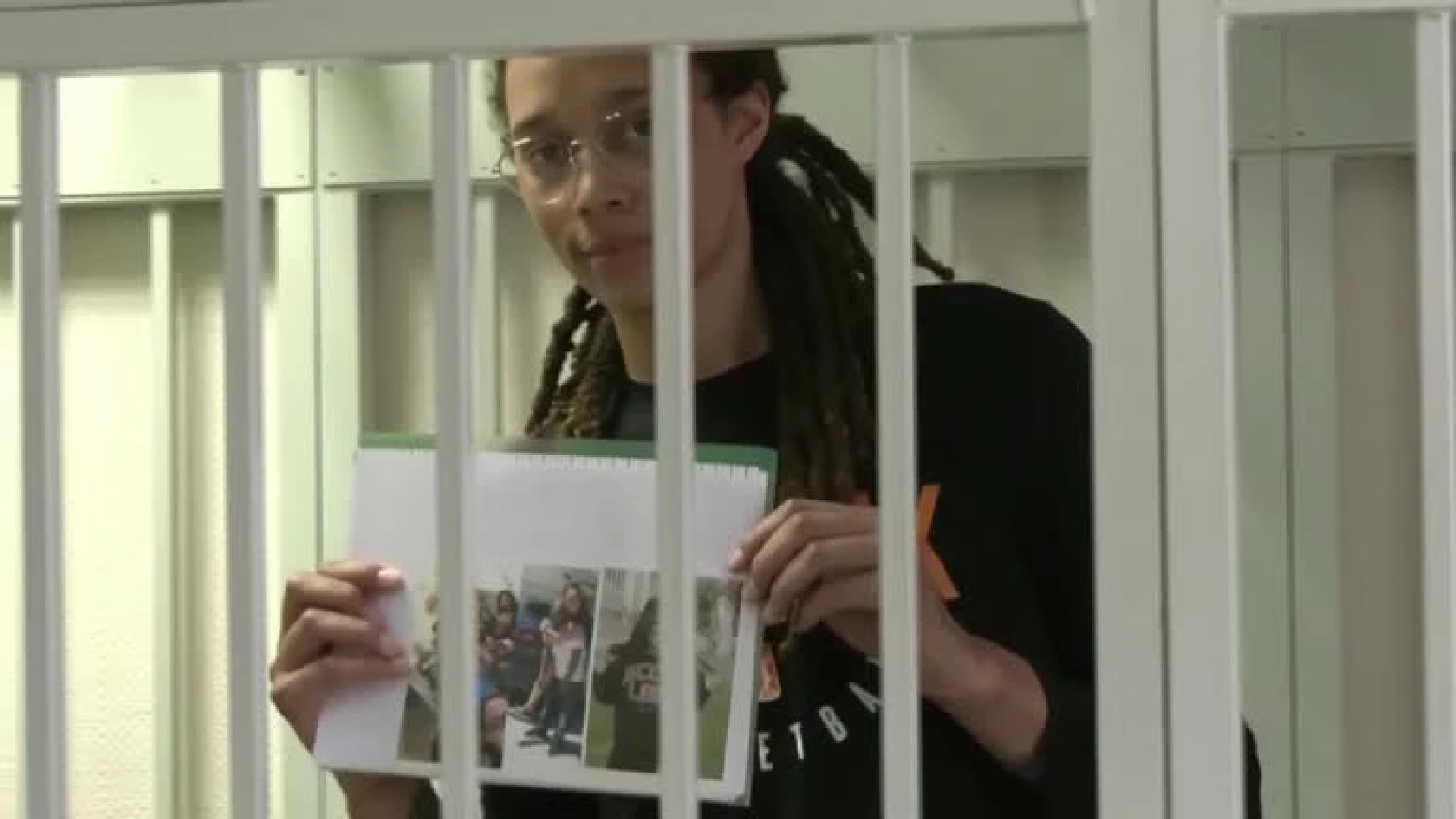
Speaking at a news conference at the U.S. State Department, Blinken said Washington offered Moscow a deal to bring home WNBA star Brittney Griner and former U.S. Marine Paul Whelan weeks ago and that he hoped to advance the process when he speaks with Lavrov.
“We put a substantial proposal on the table weeks ago to facilitate their release. Our governments have communicated repeatedly and directly on that proposal. And I’ll use the conversation to follow up personally and I hope move us toward a resolution,” Blinken said.
He declined to say what the United States was offering in return. CNN reported that Washington was willing to exchange Russian arms dealer Viktor Bout, who is serving a prison sentence in the United States, as part of a deal to secure the release of the two Americans.
The proposal comes amid growing pressure on U.S. President Joe Biden from families of detainees, most recently in the case of two-time Olympic medalist Griner, who has been held in Russia since February and is on trial on drug charges.
Whelan was sentenced in 2020 to 16 years in prison in Russia, accused of spying. He denied spying and said he was set up in a sting operation. Washington demanded his release.
The plight of American detainees has gained visibility after Griner’s arrest and the recent release of former U.S. Marine Trevor Reed in a prisoner swap with Russia at a time when U.S. relations with Moscow are at their worst in decades over Russia’s invasion of Ukraine.
Four people protesting against a United Nations peacekeeping mission were killed on Wednesday in the Congolese city of Uvira when troops fired shots which hit an electric cable that fell on them, Congolese officials said.
At least 12 civilians were killed on Tuesday in protests against the mission in eastern Democratic Republic of Congo, known as Monusco, which protesters accuse of failing to protect them from militia violence. One U.N. soldier and two U.N. police were also killed.
The protests had mostly fizzled out on Wednesday in the cities of Goma and Butembo but had spread to Uvira, in South Kivu province, where crowds threw rocks at a Monusco compound.
“There was an isolated demonstration in Uvira. We had a tragedy because of the fall of an electric cable… indirectly related to the protest,” South Kivu governor Theo Ngwabidje Kasi told Reuters.
“I have asked for investigations to know if the bullet was fired by Monusco or by our [security] forces,” he said, adding that preliminary information suggested it had come from within the Monusco base.
Calm had been restored by mid-afternoon, he added.
Deputy U.N. Congo envoy Khassim Diagne on Wednesday said a “normal fragility” had returned with pockets of insecurity.
“We do not have any evidence that Monusco troops were firing at civilians, he told journalists in New York, adding that the U.N. would work with Congolese authorities to investigate civilian deaths.
A Reuters reporter saw U.N. peacekeepers shoot dead two protesters in Goma on Tuesday.
The U.N. mission – which includes civilians, police and military personnel – has around 12,400 troops in the country and costs more than $1 billion per year. It has been in the process of gradually withdrawing from the area for several years.
The U.N. children’s agency said on Wednesday that many children had been manipulated into joining the protests and were exposed to violence.
“Unicef condemns the instrumentalization of children for political purposes and calls on authorities, members of civil society and parents to keep children away from protests in order to protect them,” said Grant Leaity, Unicef representative in the DRC, in a statement.
U.N. peacekeeping chief Jean-Pierre Lacroix is due to arrive in Congo’s capital Kinshasa on Friday and will also visit Goma, Diagne said.
Monusco took over from an earlier U.N. operation in Democratic Republic of the Congo in 2010 with the aim of protecting civilians and supporting the government in its stabilization efforts as clashes between Congo’s army and the M23 rebel group have displaced thousands.
A faction of the youth wing of President Felix Tshisekedi’s UDPS ruling party had earlier called for protests, demanding the immediate withdrawal of the U.N. peacekeepers over what it described as their ineffectiveness.
US stocks rallied on Wednesday led by Nasdaq after the Federal Reserve raised its benchmark overnight interest rate by three-quarters of a percentage point and comments by Federal Reserve Chairman Jerome Powell reassured investors.
Powell said in a news conference following the Fed announcement that he did not believe the U.S. economy is currently in a recession but that it is softening and the path for the Fed to avoid a recession continues to narrow.
“I don’t think the economy is in recession right now,” Powell said following the central bank’s latest two-day policy meeting. But officials do believe the economy needs a period of below-potential growth to create sufficient slack to lower inflation.
He also said the lack of clear visibility into the future of the economy means the U.S. central bank can provide reliable guidance about where its policy is headed only on a “meeting-by-meeting” basis.
The Fed action comes on top of a 75 basis points hike last month and smaller moves in May and March, in an effort by the Fed to cool inflation.
Wednesday’s hike was widely anticipated by investors.
“Basically, what the market did not want to see was the Fed tightening and raising by 100 basis points. So, we saw 75 basis-points. And kind of is in lockstep with what the market wants to see. And I think the market got a little bit of a relief there from the Fed today.” said George Cipolloni, portfolio manager at Penn Mutual Asset Management.
The news added to gains from upbeat quarterly reports from Microsoft Corp and Alphabet Inc that lifted sentiment about the earnings season
The S&P 500 gained 102.56 points, or 2.62%, to end at 4,023.61 points, while the Nasdaq Composite gained 469.85 points, or 4.06%, to 12,032.42.
The Dow Jones Industrial Average rose 436.05 points, or 1.37%, to 32,197.59.
Aimed at strengthening the pipeline of future female talent, the Women of the Future Awards Southeast Asia returns. Nominations Now Open for Movement Celebrating and Nurturing Emerging Female Leaders of Southeast Asia
Nominations are now open at awards.womenofthefuture.co.uk/seasia/ for the fifth annual Women of the Future Awards Southeast Asia, the first movement uniquely created to celebrate and showcase the emerging female talent across the region.
Originally founded in the UK over a decade ago by Pinky Lilani to acknowledge and showcase the inspirational young female stars of today and tomorrow, the Women of the Future Awards Southeast Asia returns for the fifth consecutive year with headline sponsor, NTT Ltd on board for the second consecutive year.
The Women of the Future Awards Southeast Asia is just one part of the Women of the Future Programme, a vibrant and impactful community that connects leaders across all industries on a global scale. Its many initiatives seek to burst open the female leadership pipeline, celebrating success but also creating a collaborative global community that can share expertise, facilitate collaboration, and amplify the impact of each leader’s work.
The Women of the Future Awards Southeast Asia will be held at the Voco Hotel on Orchard Road Singapore on November 23, 2022.
Pinky Lilani, Founder, Women of the Future (WOF) Programme said: “We are thrilled to hold these Awards for the fifth year running. The last two years have been incredibly challenging years and it is our hope that we can hold these awards in person for the first time since 2022. The first four Awards have delighted us with the depth of female talent across Southeast Asia who are as passionate, inspiring and purposeful as they are gifted. We look forward to unearthing the region’s future leaders who will have a huge impact on their communities and who will help to shape a kinder, more collaborative future for all.”
The 12 categories for the Awards are:
Arts & Culture Business Community & Public Service Entrepreneur ESG (Environmental Social Governance Media & Communications Property, Construction & Infrastructure Professions Science, Technology and Digital Social Entrepreneur Sport (new category) Mentor (open to men and women of all ages)
Of the 12 Awards categories, 11 are open to women aged 35 or under. The Mentor category is open to both males and females of all ages and recognises active mentors and champions behind the success of emerging female talent in the region.
Shortlisted candidates of each category will gain access to many different opportunities, including the WOF network— a global and collaborative network of women who support and inspire each other to further professional and personal success.
HOW TO NOMINATE
If you believe that you or somebody you know deserves one of the Awards, then simply complete the online nomination form here: awards.womenofthefuture.co.uk/seasia/
Candidates must be aged 35 or under on December 31, 2022 and must be citizens and residents of one of the following countries:
Brunei Cambodia Indonesia Laos Malaysia Myanmar Philippines Singapore Thailand Timor Leste Vietnam
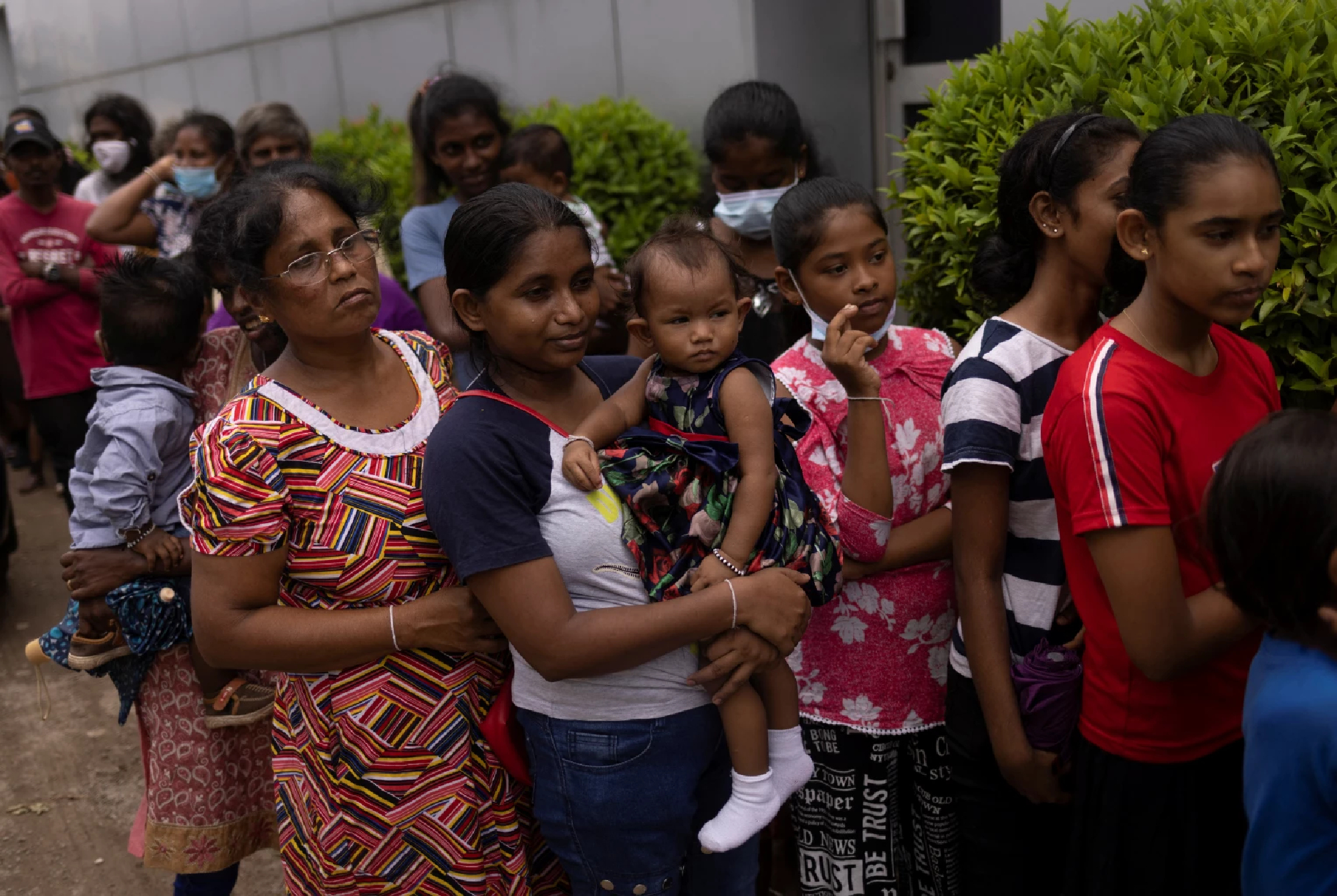
With no fuel and no money to buy food, there aren’t many places to go for hungry Sri Lankans – except for a local soup kitchen.
Before meal times, a queue of hungry residents snakes around the corner of the building in Colombo where the kitchen is located, eagerly waiting for a free vegetarian meal.
“My children are my future, because of them I am standing here doing all this. If I don’t do something for them (if I don’t feed them) then they will curse me. My life’s aim is to give them a better future. I am here to feed my children,” said Indrani, a mother of seven, while standing in a massive queue outside of a soup kitchen at a local church.
The country’s worst economic crisis since independence from Britain in 1948 has driven up the price of a kilo (2.2 lbs) of rice from just 90 rupees ($0.25) to 250 rupees ($0.70) in the last few months, Indrani says. An acute fuel shortage has not only forced cars off the road but people are now unable to cook even if they have food supplies, as cooking gas is scarce.
“Hunger is common for everyone. It doesn’t matter who you are, if you are hungry, you are in need. So, the community kitchen concept is open for anyone who is hungry to come and eat,” said Akila Alles the chief operating officer of the Bethany Christian Life Centre.
Alles’ nonprofit has set up soup kitchens, locally referred to as “community kitchens,” at 12 of its churches and has been serving some 1,500 people daily since June.
In a makeshift kitchen a short distance from Sri Lanka’s parliament, two dozen volunteers boil rice, dice onions and scrape the flesh from coconuts, cooking over open wood fires.
Donations have come from as far as China and Vietnam, with a Buddhist monk dropping off a large donation of rice at the church. But Alles says the lack of fuel is also having an impact on volunteers. Plenty are willing to help, but they can’t get to the community kitchens due to a lack of transportation.
Months of anti-government protests that came to a head earlier this month after thousands stormed government buildings, bringing down former president Gotabaya Rajapaksa, have crossed religious and ethnic lines in the diverse country. Catholic nuns and Buddhist monks have been a regular site at protests, and communities have worked together to manage the growing humanitarian need.
“We can’t imagine how desperate some people are. They are crying and come here asking for food, saying they are very hungry,” said Irani, one of the volunteer cooks, boiling potatoes in a massive pot over firewood.
Alles says they plan to continue with the kitchens until the end of August and will re-assess their plans based on the prevailing situation.