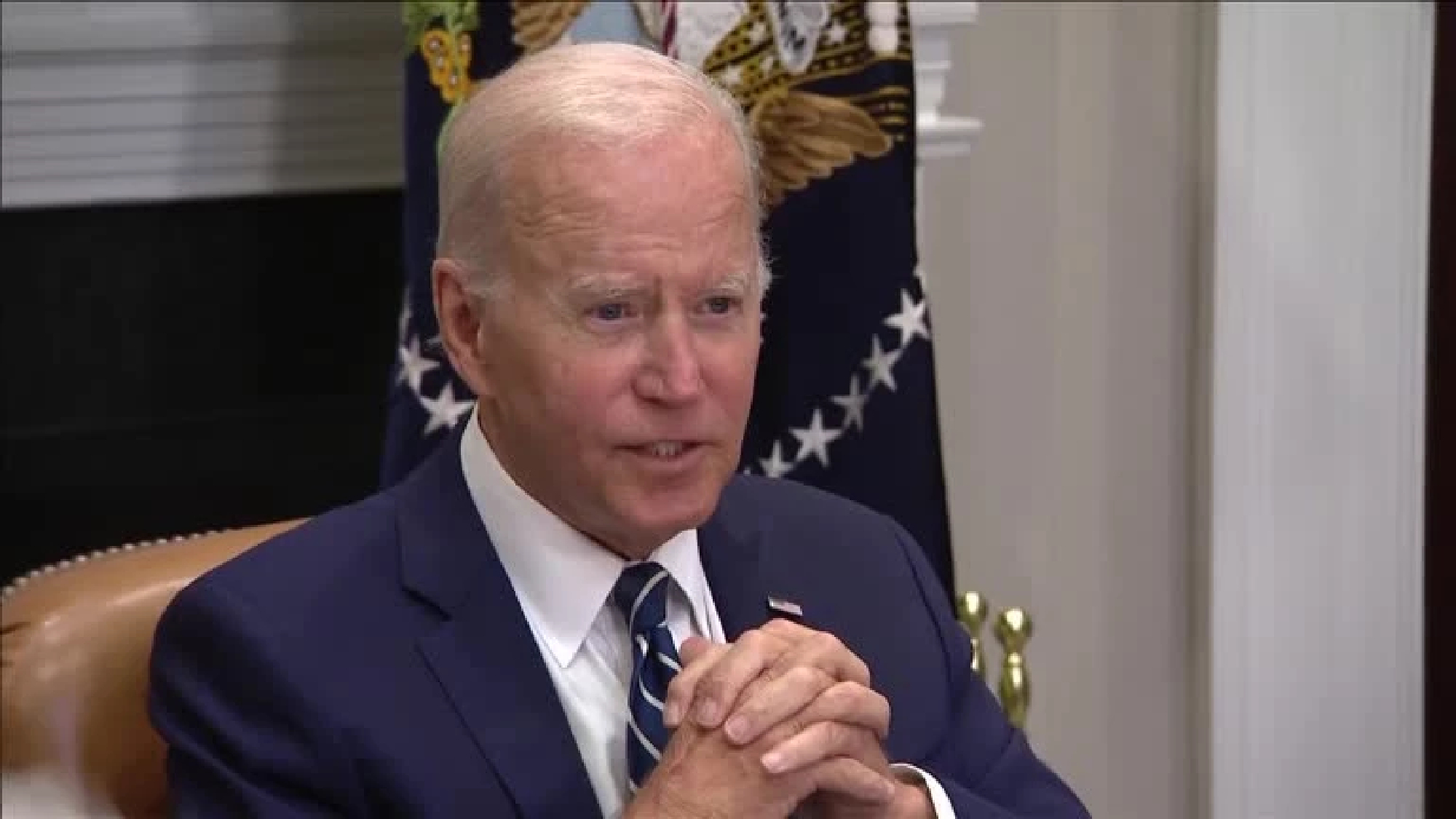
The United States aims to raise $200 billion in private and public funds over five years to fund needed infrastructure in developing countries under a G7 initiative aimed at countering China’s multitrillion-dollar Belt and Road project, U.S. President Joe Biden said at the G7 on Sunday.
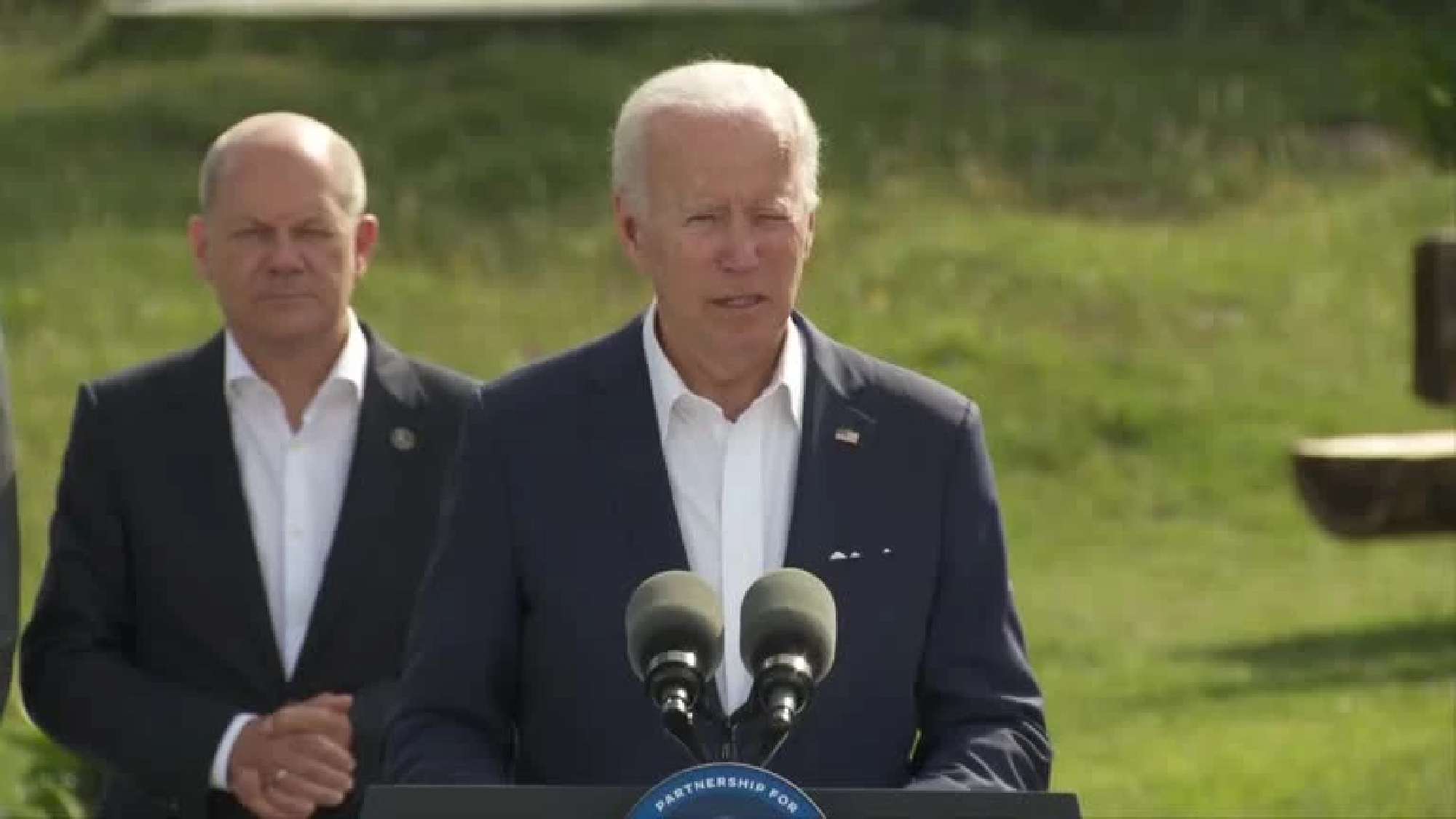
Biden unveiled the plans, flanked by other Group of Seven leaders, some of whom have already unveiled their own separate initiatives, at their annual gathering being held this year in southern Germany.
Increasingly worried about China, G7 leaders first floated plans for the project last year, and are formally launching it now under a fresh title, “Partnership for Global Infrastructure and Investment” while dropping the moniker “Build Back Better World” first coined by Biden during his presidential campaign.
Biden unveiled several specific projects at a G7 side event, joined by leaders from Britain, Germany, Japan, the European Union and Canada, vowing to focus on projects that help tackle climate change as well as improve global health, gender equity and digital infrastructure.
The funds would be raised through grants and federal funds, and by leveraging private-sector investments, Biden said, adding that hundreds of billions of additional dollars could come from multilateral development banks, development finance institutions, sovereign wealth funds and others.
China’s Belt and Road Initiative (BRI) scheme, which Chinese President Xi Jinping launched in 2013, involves development and investment initiatives in over 100 countries, with a range of projects including railways, ports and highways.
On Sunday evening the G7 leaders gathered for the last working session of the day at the secluded Castle Elmau in the south of Germany. Throughout the day leaders have demonstrated and praised the unity of the group. They announced to mobilise 600 billion dollars from the G7 by 2027 for infrastructure and sustainable development initiatives and stressed they wanted “to show the world that democracies, when they work together, provide the single best path to deliver results for our people and people all over the world”, as President of EU Commission, Ursula von der Leyen said earlier in the day.
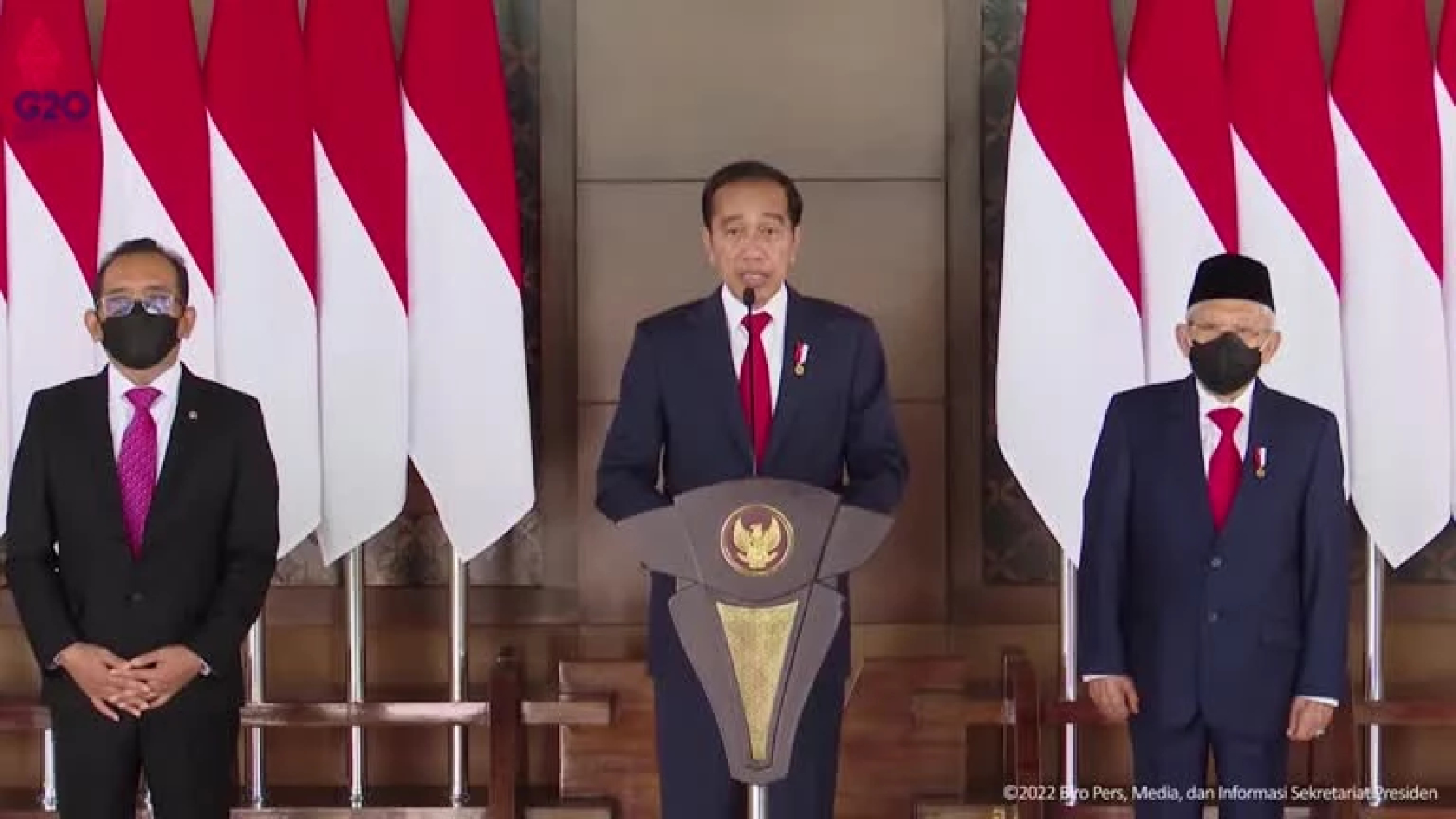
Indonesian President Joko Widodo said on Sunday he will urge his Russian and Ukrainian counterparts to open room for dialogue during a peace-building mission to the countries because “war has to stop and the global food chains need to be reactivated”.
Speaking before leaving to attend the G7 summit in Germany, where Widodo was invited as the G20 rotating president, he said he will also urge Russia’s Vladimir Putin to order an immediate ceasefire.
Widodo said he will travel to both Ukraine and Russia, without providing specific details of his trip.
The conflict has caused major disruption to supply chains, stoking a food and energy crisis that has seen inflation soar in many countries, some of which have imposed export curbs to preserve domestic supplies.
Former U.S. President Donald Trump celebrated on Saturday the U.S. Supreme Court decision overturning the half-century-old Roe v. Wade precedent that recognized women’s constitutional right to abortion.
Speaking at a rally in Illinois, Trump called the decision a “victory for the Constitution, a victory for the rule of law and above all, a victory for life.”
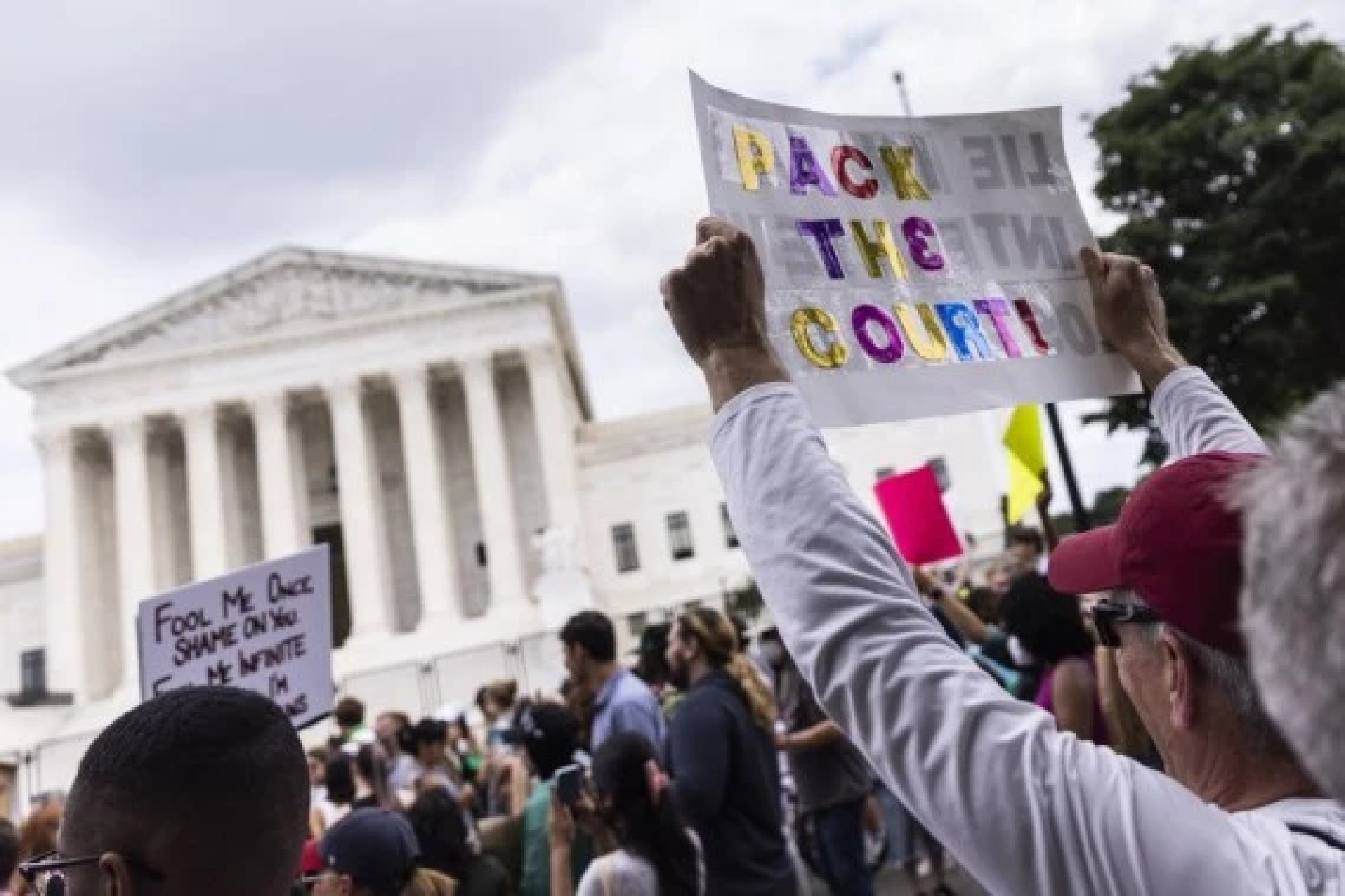
Trump’s comments came as hundreds of protesters descended on the U.S. Supreme Court to denounce the ruling.
The sweeping ruling by the court, with a 6-3 conservative majority, was set to alter American life, with nearly half the states considered certain or likely to ban abortion.
Conservative Justice Clarence Thomas suggested the court’s reasoning could also lead it to reconsider past rulings protecting the right to contraception, legalizing gay marriage nationwide, and invalidating state laws banning gay sex.
For Christian conservatives who had long fought to overturn Roe, Friday’s ruling was a cherished win and in part the result of a long campaign for installing anti-abortion justices to the top court. The ruling had the support of all three justices appointed by Trump.
Hundreds of protesters descended on the U.S. Supreme Court on Saturday to denounce the justices’ decision to overturn the half-century-old Roe v. Wade precedent that recognized women’s constitutional right to abortion
As the day progressed, the number of demonstrators outside the Supreme Court increased substantially. The fenced-off area in front of the high court was filled largely with those demanding abortion rights.
President Joe Biden, who had harsh words on Friday for the Supreme Court’s decision, said on Saturday that the White House will monitor how states enforce bans, with administration officials having already signaled they plan to fight attempts to prohibit a pill used for medication abortion.
The White House said it also would challenge any efforts by states to restrict women’s ability to travel out of their home state to seek an abortion.
Russia will supply Belarus with Iskander-M missile systems within a few months, Russian President Vladimir Putin told a televised meeting with Belarusian President Alexander Lukashenko on Saturday.
At the meeting, held in St Petersburg, Lukashenko told Putin that Belarus was concerned by the “aggressive,” “confrontational” and “repulsive” policies of its neighbours Lithuania and Poland.
He asked Putin to help Belarus mount a “symmetrical response” to what he said were nuclear-armed flights by the U.S.-led NATO alliance near Belarus’s borders.
In particular, he asked for help to make Belarus’s military aircraft nuclear-capable.
Putin said he saw no need at present for a symmetrical response, but that Belarus’s Russian-built Su-25 jets could if necessary be upgraded in Russian factories.
He did, however, promise to supply the Iskander-M, a mobile guided missile system codenamed “SS-26 Stone” by NATO, which replaced the Soviet “Scud.” Its two guided missiles have a range of up to 500 km (300 miles) and can carry conventional or nuclear warheads.
Tensions between Russia and the West have soared since Moscow sent troops into Ukraine four months ago, alleging among other things that NATO planned to admit Ukraine and use it as a platform to threaten Russia.
Russia’s move has not only triggered a barrage of Western sanctions but also prompted Sweden and Russia’s northern neighbor Finland to apply to join the Western alliance.
In the past week, Lithuania in particular has infuriated Russia by blocking the transit of goods subject to European sanctions traveling across its territory from Russia, through Belarus, to Russia’s Baltic exclave of Kaliningrad.
Russia has termed it a “blockade,” but Lithuania says it affects only 1% of the normal goods transit on the route, and that passenger traffic is unaffected.
Thais know spirit houses as shrines to the sacred beings that watch over buildings or places while also bringing fortune and happiness. However, at Disney World in Florida, the spirit house has become a birdhouse.
Thai visitors who take the Maharajah Jungle Trek at Disney’s World’s Animal Kingdom theme park will recognise the familiar object right away, despite its new disguise.
People have speculated that the “Imagineer” who designed Disney World must have travelled the world collecting objects to decorate the park, including the Thai spirit house.
The Maharajah Jungle Trek is an Asia-themed attraction where visitors get to encounter several species of rare bird and also the Sumatran tiger, which is critically endangered and almost extinct.
People who want to visit this amusement park should be aware that the opening hours change during the year. In summer, the park is open every day from 10.30am to 8.30pm but in winter it closes earlier at around 4-5pm.
With Roe falling, more than two dozen states in the United States – primarily in the south and midwest – are expected to tighten abortion access, with “trigger bans” set to take effect automatically.
The U.S. Supreme Court on Friday overturned Roe v. Wade, a landmark decision that established a constitutional right to abortion in the nation nearly 50 years ago.
“Roe was egregiously wrong from the start,” Justice Samuel Alito wrote in his majority opinion. “Its reasoning was exceptionally weak, and the decision has had damaging consequences.”
“It is time to heed the Constitution and return the issue of abortion to the people’s elected representatives,” the conservative suggested.
The court’s three liberal justices dissented, saying that with Friday’s ruling, “many millions of American women” have lost a fundamental constitutional protection.
The ruling came after the Supreme Court had considered an appeal case involving a Mississippi law banning all abortions over 15 weeks gestational age except in certain circumstances.
Crowds on both sides of abortion rights are gathering near the U.S. Supreme Court on Capitol Hill with presence of riot police.
Protesters gather outside the U.S. Supreme Court in Washington, D.C., the United States, on June 24, 2022. (Photo by Aaron Schwartz/Xinhua)
“Protesters are allowed to peacefully demonstrate, however they must follow the officer’s instructions so that everyone stays safe,” the Capitol Police tweeted.
With Roe falling, more than two dozen states in the United States – primarily in the south and midwest – are expected to tighten abortion access, with “trigger bans” set to take effect automatically.
In a response, U.S. President Joe Biden said it’s “a sad day” for the nation and the Supreme Court, which is “literally taking America back 150 years.”
“Now with Roe gone, let’s be very clear: the health and life of women in this nation are now at risk,” Biden added.
Protesters gather outside the U.S. Supreme Court in Washington, D.C., the United States, on June 24, 2022. (Photo by Aaron Schwartz/Xinhua)
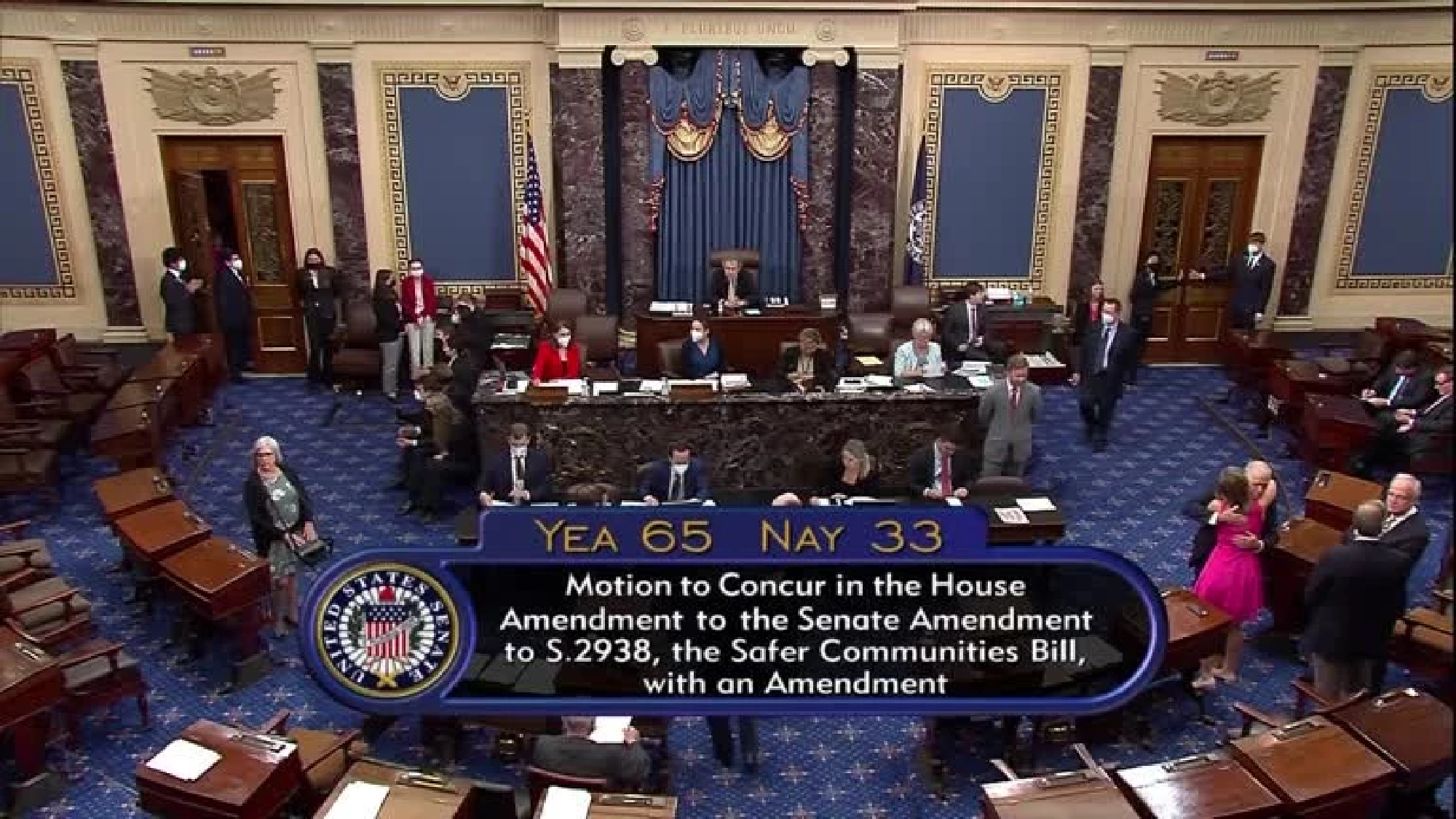
A bipartisan package of modest gun safety measures passed the U.S. Senate late on Thursday (June 23) even as the Supreme Court broadly expanded gun rights by ruling Americans have a constitutional right to carry handguns in public for self-defence.
The landmark court ruling and Senate action on gun safety illustrates the deep divide over firearms in the United States, weeks after mass shootings in Uvalde, Texas, and Buffalo, New York, killed more than 30 people, including 19 children. Read full story
The Senate bill, approved in a 65-33 vote, is the first significant gun control legislation to pass in three decades, in a country with the highest gun ownership per capita in the world and the highest number of mass shootings annually among wealthy nations.
“This bipartisan legislation will help protect Americans. Kids in schools and communities will be safer because of it,” President Joe Biden said following the vote. “The House of Representatives should promptly vote on this bipartisan bill and send it to my desk.”
The bill, which supporters say will save lives, is modest – its most important restraint on gun ownership would tighten background checks for would-be gun purchasers convicted of domestic violence or significant crimes as juveniles.
Republicans refused to compromise on more sweeping gun control measures favoured by Democrats including Biden, such as a ban on assault-style rifles or high-capacity magazines.
“This is not a cure-all for the ways gun violence affects our nation, but it is a long-overdue step in the right direction,” Democratic Senate Majority Leader Chuck Schumer said on the floor ahead of the vote.
In the Senate vote late on Thursday, 15 Republicans joined all 50 Democrats in voting for the bill.
Republican backers of the new gun safety bill said that the measure does not erode the rights of law-abiding gun owners, who are among their most ardent constituents.
“Passing good public policy and supporting the Constitution are not mutually exclusive,” said Republican senator from Texas, John Cornyn, the lead Republican negotiator on the bill who was booed last week as he discussed its contents during a speech before a Republican Party convention in his home state of Texas.
Democratic House Speaker Nancy Pelosi applauded the bill’s passage and said in a statement it would advance in the House on Friday (June 24), with a vote coming as soon as possible.
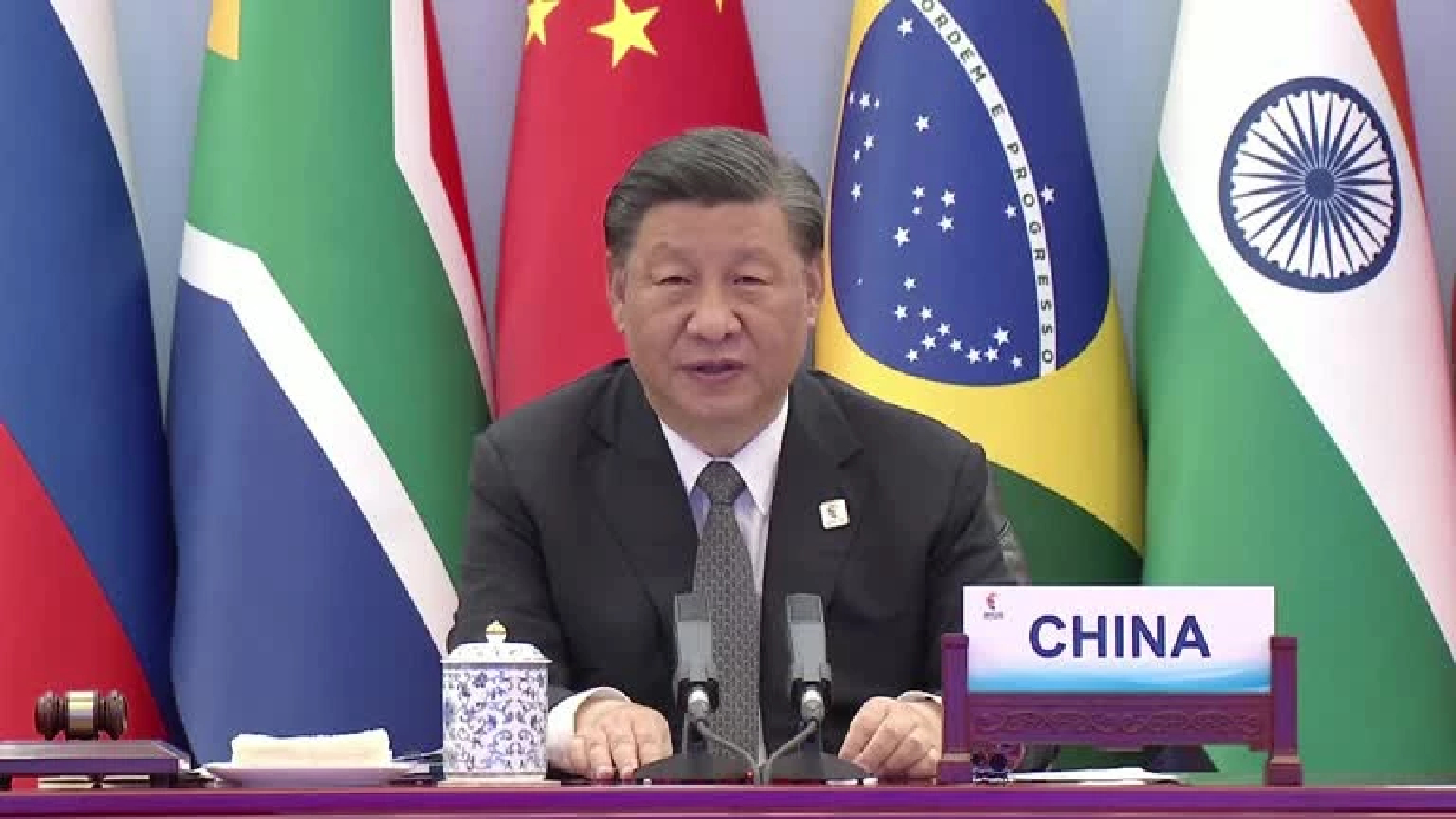
Chinese President Xi Jinping on Thursday called on BRICS countries to foster a high-quality partnership as they embark on a new journey of cooperation.
Xi made the remarks while hosting the 14th BRICS Summit in Beijing via video link on Thursday evening.
Other leaders of BRICS countries – South African President Cyril Ramaphosa, Brazilian President Jair Bolsonaro, Russian President Vladimir Putin, and Indian Prime Minister Narendra Modi – were present at the summit.
The summit started at around 20:00 Beijing time after the five leaders took a virtual group photo.
In his welcoming speech, President Xi noted that in the face of formidable and complex circumstances over the past year, BRICS countries have embraced the BRICS spirit of openness, inclusiveness and win-win cooperation, while enhancing solidarity and coordination to jointly tackle the challenges.
He added that the BRICS mechanism has demonstrated resilience and vitality and BRICS cooperation has achieved sound progress and results.
Xi highlighted that this Summit is held at a critical juncture in the shaping of the future course of humanity.
BRICS countries, as important emerging markets and major developing countries, need to act with a sense of responsibility, speak out for equity and justice, remain firm in the conviction that they will defeat the pandemic, pool strength for economic recovery, advocate sustainable development, jointly contribute wisdom and ideas to the high-quality development of BRICS cooperation, and bring positive, stabilizing and constructive strength to the world, said the Chinese President.
Xi then delivered a speech titled “Fostering High-quality Partnership and Embarking on a New Journey of BRICS Cooperation”.
Xi said the world today is living through accelerating changes unseen in a century and the continued spread of the COVID-19 pandemic, which confront humanity with unprecedented challenges.
Over the past 16 years, the giant ship of BRICS has sailed forward tenaciously against raging torrents and storms. And riding the wind and cleaving the waves, it has embarked on a righteous course of mutual support and win-win cooperation, Xi said.
Standing at the crossroads of history, BRICS countries should both look back at the journey they have traveled and keep in mind why they established BRICS in the first place, and look forward to a shared future of a more comprehensive, close, practical and inclusive high-quality partnership to jointly embark on a new journey of BRICS cooperation, said Xi.
First, Xi said, BRICS countries need to uphold solidarity and safeguard world peace and tranquility.
Certain countries, in attempts to expand military alliances to pursue absolute security, have coerced others to pick sides and created confrontation, Xi said, adding that they are seeking unilateral dominance at the expense of others’ rights and interests.
Should these dangerous trends be allowed to continue, the world will become even more volatile, Xi said.
BRICS countries should support each other on issues concerning their respective core interests, practice true multilateralism, uphold justice, fairness and unity, and oppose hegemony, bullying and division, Xi said.
Xi said China is willing to work with BRICS members to promote the effective implementation of the Global Security Initiative to contribute to global stability.
Second, Xi called on BRICS countries to uphold cooperation to boost development and jointly tackle risks and challenges.
The combined impacts of the COVID-19 pandemic and the Ukraine crisis cast a shadow over the development of countries worldwide, with emerging markets and developing countries bearing the brunt, said Xi.
He called on BRICS countries to make full use of new platforms to boost connectivity of their industrial and supply chains, and jointly address challenges in areas such as poverty reduction, agriculture, energy and logistics.
Xi expressed support for the steady admission of new members to the New Development Bank, underscoring efforts to improve the mechanism of Contingent Reserve Arrangement so as to reinforce the financial safety net and firewall.
He also stressed the need to advance BRICS cooperation in cross-border payment and credit rating, as well as further facilitation of trade, investment and financing.
China stands ready to work with BRICS partners to add more substance to the Global Development Initiative (GDI), re-energize the implementation of the UN’s 2030 Agenda for Sustainable Development, build a global community of development, and contribute to stronger, greener and healthier global development, Xi said.
Third, Xi said BRICS countries need to uphold the pioneering spirit and innovation and unleash the potential and vitality of cooperation.
Attempts to obstruct the innovation and development of other countries and retain their own hegemonic status through technology monopoly, blockades and barriers are destined to fail, Xi said.
Xi stressed efforts to improve global technological governance to allow more people to access technological achievements.
He highlighted progress in efforts to blaze a new path for synergizing the five countries’ industrial policies this year, including the accelerated development of the BRICS Partnership on New Industrial Revolution Innovation Center launched in Xiamen of east China’s Fujian Province. He also mentioned the Digital Economy Partnership Framework, and the Initiative for Cooperation on Digitalization of Manufacturing agreed among the group.
Moves have also been taken to build a talent pool to enhance cooperation on innovation and entrepreneurship, noted Xi.
Fourth, Xi called on BRICS countries to uphold openness and inclusiveness and pool collective wisdom and strength.
BRICS countries do not form a closed club or an exclusive “clique.” Rather, they are members of a family and partners for win-win cooperation, Xi said.
Over the past five years, the “BRICS Plus” approach has set a fine example for emerging markets and developing countries to advance South-South cooperation and gain strength through unity, Xi said.
Under the new circumstances, it is all the more important for BRICS countries to pursue development with open doors and boost cooperation with open arms, Xi said.
Xi added that the expansion process of the BRICS cooperation mechanism should be pushed forward to allow like-minded partners to join the big BRICS family at an early date, pointing out that new vitality will be injected into BRICS cooperation and the representativeness and influence of BRICS will be increased.
“As representatives of emerging markets and developing countries, we must make the right decision and take responsible actions at this critical juncture of history. What we do will have a significant impact on the world. Let us stay united, pool strength and forge ahead to build a community with a shared future for mankind and jointly create a bright future for humanity,” said Xi.
The leaders attending the summit thanked China for hosting this event and the efforts it made for promoting BRICS cooperation.
They believed that facing international uncertainties, BRICS countries should strengthen solidarity, carry forward the BRICS spirit, consolidate strategic partnership and jointly respond to various challenges so that BRICS cooperation can reach a new level and play a bigger role in international affairs.
Under the theme of “Foster High-quality BRICS Partnership, Usher in a New Era for Global Development”, leaders of the five countries held in-depth exchange of views on BRICS cooperation in various sectors and major issues of common concern and reached important consensus.
They agreed on the need to stay committed to multilateralism, work for greater democracy in global governance, safeguard fairness and justice, and inject stability and positive energy into the turbulent international landscape.
They agreed on the need to jointly respond to COVID-19, give full play to such mechanisms as the BRICS Vaccine Research and Development Center, promote fair and equitable distribution of vaccines, and enhance preparedness in the face of public health crises.
They agreed on the need to deepen practical economic cooperation, firmly defend the multilateral trading system, work to foster an open world economy, oppose unilateral sanctions and “long-arm jurisdiction”, strengthen cooperation in such fields as digital economy, technological innovation, industrial and supply chains, food and energy security, and jointly promote world economic recovery.
They agreed on the need to promote shared global development, give priority to addressing the most pressing needs of developing countries, eradicate poverty and hunger, address the challenge posed by climate change together, expand the application of such technologies as aerospace and big data in the field of development, accelerate the implementation of the UN’s 2030 Agenda for Sustainable Development, and make BRICS contribution to jointly ushering in a new era of global development.
They agreed on the need to strengthen people-to-people and cultural exchange and mutual learning and forge more signature projects in various sectors including think tanks, political parties, media and sports.
They also agreed on the need to pursue “BRICS Plus” cooperation at more levels, in broader areas and within a greater scope, and actively advance the BRICS membership expansion process.
The 14th BRICS Summit Beijing Declaration was adopted and released at the event.
The BRICS leaders were also briefed by representatives of relevant BRICS cooperation mechanisms on their work.
The five BRICS countries account for about a quarter of the world economy and over 40 percent of the global population.
European leaders on Thursday granted Ukraine the much-coveted status of official candidate to join their 27-nation union, in a bold geopolitical move hailed by Ukraine and the EU itself as a “historic decision”
Although it could take Ukraine more than a decade to eventually join the European Union, the decision to officially accept it as a candidate is a symbolic step that signals the bloc’s intention to reach deep into the former Soviet Union.
Russia’s invasion of Ukraine prompted Kyiv to formally apply for candidate status, and the EU to approve it unusually quickly.
Neighbouring Moldova was also granted candidate status while Georgia was told it would get the same once it has fulfilled more conditions.
The bloc’s leaders stressed these countries will have much “homework” to do, and the EU itself will need to change how it works to be able to cope with yet another extension of the club.
“I am convinced that they (Ukraine and Moldova) will move as swiftly as possible and work as hard as possible to implement the necessary reforms,” EU Commission chief Ursula von der Leyen told a news conference.
The move, which also sees Moldova being granted candidate status, kick-starts the EU’s most ambitious expansion since it welcomed Eastern European states after the Cold War.
Behind the triumphant rhetoric on granting Ukraine and Moldova candidate status, there is concern within the EU about how the bloc can remain coherent as it continues to enlarge.
French President Emmanuel Macron reacted to the Commission’s decision not to recommend giving the candidate status to Georgia, saying he remained hopeful Tbilisi could conduct the reforms requested by the EU executive.
“I think that political unity must be built around this will and that reforms should be conducted. It is within reach,” he said.
The Commission said on June 17 the Caucasian country needed to meet certain conditions before it can be granted the status of European Union membership candidate.
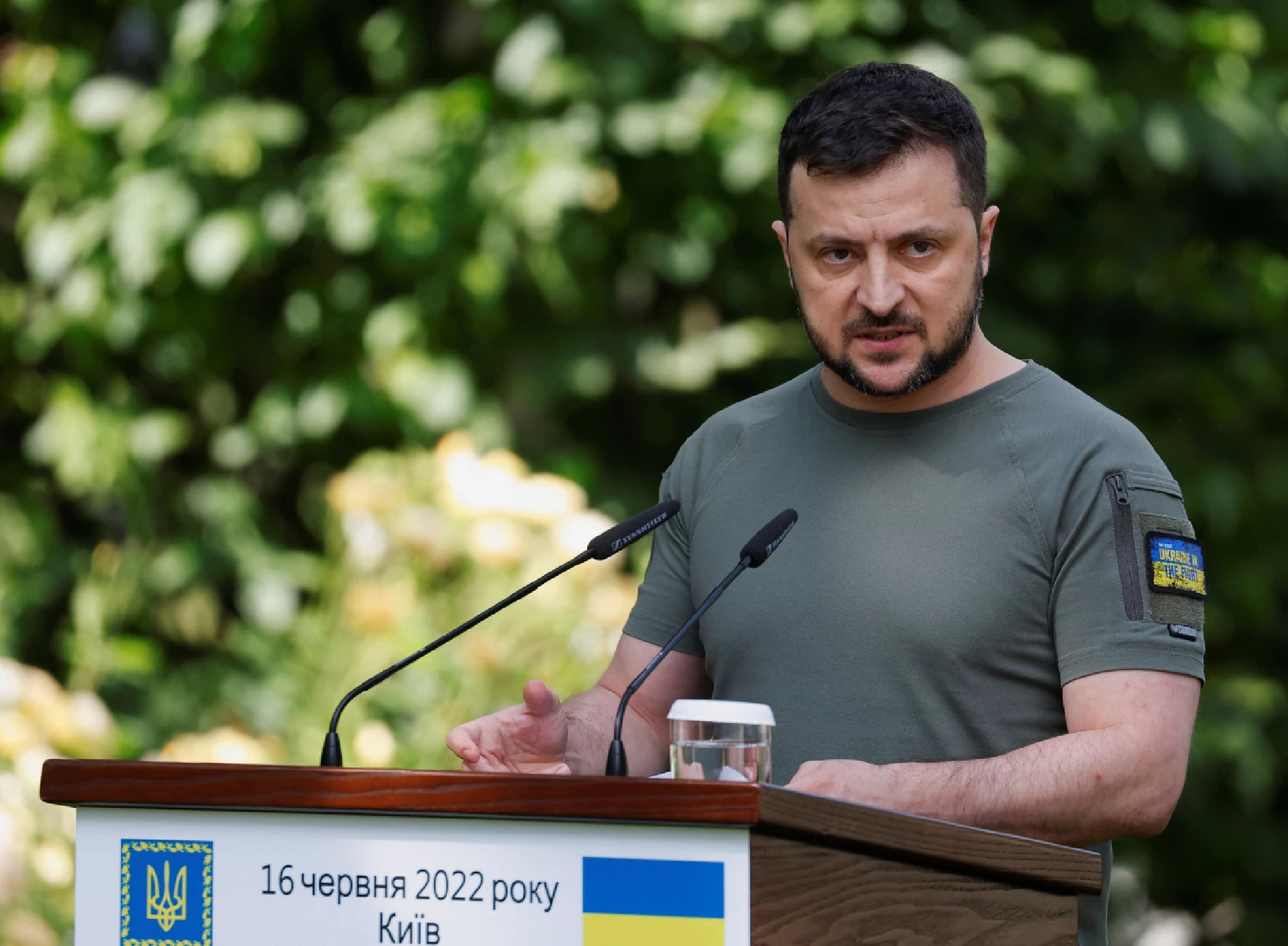
President Volodymyr Zelenskiy on Thursday declared the EU’s move to accept Ukraine as a candidate for accession as a victory and promised not to rest until Russia’s defeat and full membership had been secured.
“This is a victory,” a smiling Zelenskiy said in a brief video posted released by his office, noting Ukraine had waited 30 years for this moment.
“We can defeat the enemy, rebuild Ukraine, join the EU, and then we can rest,” he said in a low voice.
“Or perhaps we won’t rest at all – our children would take offence. But without any doubt, we will win.”
Andriy Yermak, Zelenskiy’s chief of staff, said Kyiv would quickly implement the plan needed for accession talks to begin.
But a summit of European Union and Balkan leaders failed on Thursday to break a deadlock over a stalled EU membership bid by North Macedonia and Albania.
Separate from the Ukraine decision later on Thursday, the leaders of the six Balkan countries of Albania, Bosnia, Kosovo, Montenegro, North Macedonia and Serbia expressed disillusion that negotiations have not started or are stalled, years after being promised eventual EU membership.
“What has happened is a serious blow to the credibility (of) the European Union,” Dimitar Kovacevski, North Macedonia’s prime minister, told a news conference following the Balkan-EU summit, referring to the lack of progress.
At the summit, the EU restated its promise made almost two decades ago to give the Balkan countries membership once they enacted deep economic, judicial and political reforms.
But EU member Bulgaria’s veto has remained in place since 2020 when it blocked accession talks with North Macedonia over a dispute relating to history and language. Albania is also being held back because the EU has linked its progress to that of North Macedonia.
Albanian Prime Minister Edi Rama said that was a “disgrace” and also accused EU leaders of “impotence” for failing to pressure Sofia into making concessions.
“Watching this European Union be incapable to liberate two hostages, like Albania and North Macedonia, from Bulgaria. It doesn’t make a good impression and in this regard, yes, it was a historic day, but historic in the negative sense,” Rama told reporters.
“Let’s say the truth. Bulgaria is a disgrace, but it’s not simply Bulgaria. The reason is the crooked spirit of the enlargement is totally crooked spirit. And Bulgaria is its most stunning expression. The enlargement spirit has gone from a shared vision of an entire community to the kidnapping vehicle of individual member states,” Rama added.
However, Bulgarian Prime Minister Kiril Petkov, who represented his country despite losing a confidence vote on Wednesday, said he hoped for support for North Macedonia in the Bulgarian parliament soon, without giving more details.
Balkan citizens have long dreamed of joining the EU after the ethnic wars of the 1990s, as Yugoslavia disintegrated.
But northern countries such as France and the Netherlands have stalled the EU’s “enlargement” process, fearing a repeat of the rushed accession of Romania and Bulgaria in 2007 and the poorly managed migration of eastern European workers to Britain that turned many Britons against the EU.
The U.S. Supreme Court on Thursday declared for the first time that the U.S. Constitution protects an individual’s right to carry a handgun in public for self-defence, handing a landmark victory to gun rights advocates in a nation deeply divided over how to address firearms violence.
The 6-3 ruling, with the court’s conservative justices in the majority and liberal justices in dissent, struck down New York state’s limits on carrying concealed handguns outside the home. The court found that the law, enacted in 1913, violated a person’s right to “keep and bear arms” under the U.S. Constitution’s Second Amendment.
The ruling, authored by Justice Clarence Thomas, declared that the Constitution protects “an individual’s right to carry a handgun for self-defence outside the home.”
Thomas added: “We know of no other constitutional right that an individual may exercise only after demonstrating to government officers some special need.”
The justices overturned a lower court ruling throwing out a challenge to the law by two gun owners and the New York affiliate of the National Rifle Association, an influential gun rights group closely aligned with Republicans.
The ruling could undermine similar restrictions in other states and imperil other types of state and local firearms restrictions nationwide.
Gun rights, held dear by many Americans and promised by the country’s 18th-century founders, are a contentious issue in a nation with high levels of firearms violence including numerous mass shootings.
The United States has experienced hundreds of deaths from dozens of mass shootings in recent years. Just in recent weeks, 19 children and two teachers were killed on May 24 at an elementary school in Uvalde, Texas, and 10 people were slain on May 14 at a grocery store in Buffalo, New York.
President Joe Biden, who has called gun violence a national embarrassment, called the ruling a ‘bad decision’ at the White House.
“I am disappointed in the Supreme Court gun decision,” Biden said. “I think it’s a bad decision. I think it’s not reasoned accurately, but I’m disappointed.”
New York Governor Kathy Hochul at a news conference called the U.S. Supreme Court’s ruling on concealed handguns “reprehensible” and “frightful in its scope”.
“We don’t need more guns on our streets. We’re already dealing with a major gun violence crisis. We don’t need to add more fuel to this fire,” she said. “Today, the Supreme Court is sending us backwards in our efforts to protect families and prevent gun violence.”
The Governor added that the ruling “could place millions of New Yorkers in harm’s way. And this is at a time when we’re still mourning the loss of lives.”
New York City Mayor Eric Adams said officials will review licensing policies and how sensitive locations are defined,
“We cannot allow New York to become the wild, wild west,” Adams said. “We will work together to limit the risk this decision will create once it is implemented.”
New York City Council made an announcement on measures it hopes can protect New York City from a drastic increase in the proliferation of guns being carried in public spaces.
“Our proposed solution encourages the state to tailor a law that accounts for New York City’s high population density as a factor in establishing specific parameters for the designation of sensitive areas where legal firearms are prohibited from being carried by members of the public,” said New York City Council speaker Adrienne Adams. “Given the high density that characterizes most of New York City, we need to significantly limit the harm that this court decision could otherwise have in making our streets more reflective of an environment typical of the Wild West, one where concealed gun carrying is the norm all around us.”
Adams said the resolution urges the state legislation to designate hospitals and medical facilities, parks and parks department facilities, government buildings and facilities, public and private education buildings and facilities, child care facilities, places of worship, cemeteries, financial institutions, theatres, establishments where alcohol is served, libraries, homeless shelters, mass transit systems and the courts as sensitive areas where illegal firearms would be prohibited within 1000 feet.
Under the New York law’s “proper cause” requirement, applicants seeking unrestricted concealed carry permits must convince the state firearms licensing officers of an actual, rather than speculative, need for self-defence. Officials could also grant licenses restricted to certain activities, such as hunting or target practice.
The ruling said that New York’s concealed firearm regime is at odds with the text and history of the Second Amendment and how gun rights were protected throughout U.S. history.
New Yorkers called the Supreme Court’s gun ruling “dangerous” and “nuts.”
“It’s going to be chaos,” said Aimee Baptiste, outside of the New York Public Library in the Midtown Manhattan neighbourhood of New York City.
“I think they’re a little bit deaf to what’s going on in the world right now,” said Justin Cole. “It used to be that Supreme Court decisions came out and they had people who just thought about what the law was. And it wasn’t very divided ideologically. It’s kind of scary to think about what’s next.”
“The only way for things to actually reform and change is if there are more protocols for people to get guns,” said Nancy Charriez. “I think there is a need for the Second Amendment, but I think there need to be more regulations on how and when people get them.”
David Hogg, a survivor of the 2018 Parkland, Florida, high school shooting and a gun-control activist, believes the declaration by the U.S. Supreme Court stating that the U.S. Constitution protects an individual’s right to carry a handgun in public for self-defence is a win for ‘bad guys with guns and the gun industry.’
“No, I don’t think this is a win for Second Amendment lovers. I think this is a win for the gun industry. I support the Second Amendment. I’ve been shooting guns since I was in fourth grade… this grotesque misinterpretation of the Second Amendment that is only meant to sell more guns instead of promoting a well-regulated militia,” Hogg told Reuters.
Hogg is adamant when it comes to the consequences of the court ruling: “This will lead to more shootings. This will kill young people. It will kill old people. And it will endanger people’s lives, including the lives of those on the Supreme Court.”
“It’s heartbreaking that this happened so close to Uvalde,” Hogg said.











 Protesters gather outside the U.S. Supreme Court in Washington, D.C., the United States, on June 24, 2022. (Photo by Aaron Schwartz/Xinhua)
 Protesters gather outside the U.S. Supreme Court in Washington, D.C., the United States, on June 24, 2022. (Photo by Aaron Schwartz/Xinhua)