Chinese scientists are establishing a meteorological monitoring station at an altitude of 8,800 meters on Mount Qomolangma, on the China-Nepal border.
The 13 members of the scientific research team started the trek towards an 8,300-meter base camp on Mount Qomolangma from a 7,028-meter camp on Tuesday morning and reached the camp in the afternoon. They went on the last section of the arduous journey up on Wednesday morning.
At about 11:00 on Wednesday, the team reached the location for setting up the weather station.
If the station is established successfully, it will replace the one at an altitude of 8,430 meters set up by the British and U.S. scientists on the south side of the mountain in 2019, to be the world’s highest of its kind, according to the Institute of Tibetan Plateau Research (ITP), Chinese Academy of Sciences.
Including the highest, eight elevation gradient meteorological stations will be set up on Mount Qomolangma, one of the main tasks in China’s new comprehensive scientific expedition on the world’s highest peak at the height of 8,848.86 meters.
Three meteorological stations were established at 7,028 meters, 7,790 meters and 8,300 meters, respectively, earlier this year on the north side of the mountain, bringing the total number of operational weather stations between the altitudes between 5,200 meters and 8,300 meters to seven. Last year, four stations at sea levels of 6,500 meters, 5,800 meters, 5,400 meters and 5,200 meters were set up.
The new comprehensive scientific expedition on Mount Qomolangma is part of China’s second scientific research survey on the Qinghai-Tibet Plateau, which started in 2017.
The eight stations will collect the wind speed and wind direction data, as well as relative humidity on the north side of Qomolangma, and the elevation gradient meteorological station system is of great significance for monitoring the melting glaciers and mountain snow at the high altitudes.
The expedition team will also set up glacier radar and measure the thickness of snow and ice at the summit of the mountain.
The U.S. Supreme Court on Tuesday (May 3) confirmed that a draft ruling indicating the court may overturn the 1973 Roe v. Wade decision that legalized abortion nationwide was authentic, as Democrats scrambled to respond to the news and President Joe Biden vowed to try to protect abortion rights.
The court in a news release said that it will launch an investigation of how the draft was leaked to the news outlet Politico. It added that the document – authored by conservative Justice Samuel Alito – does not represent “the final position of any member” of the high court.
Legal experts reacted to news of the leak with surprise.
“For the 20th, the 21st Century, it is unprecedented. For the 20th century, it’s unprecedented,” said Georgia State University, College of Law, Professor of Law, Eric Segall.
The abortion ruling, due by the end of June, would be the court’s biggest since former President Donald Trump succeeded in naming three conservative justices to the court – Neil Gorsuch, Brett Kavanaugh and Amy Coney Barrett.
Based on Alito’s opinion, the court would find that the Roe v. Wade decision that allowed abortions performed before a fetus would be viable outside the womb – between 24 and 28 weeks of pregnancy – was wrongly decided because the Constitution makes no specific mention of abortion rights.
“The mood and tenor of the draft opinion suggest they’re on their road to finding that a fetus has constitutionally protected rights, which would stop blue states or Congress from ever protecting abortion rights,” Segall said. “That’s something that some progressives have been cautioning about for a very long time. I never thought that was going to happen, at least in the next ten years or so. Now, I am not at all sure.”
“This says you can’t you can’t rely on having a federal right that says our federal Constitution protects me and gives me as part of my do as a citizen, the right to decide whether or not to have another child, and the consequence is that every state will have to decide whether they want to criminalize abortion or not,” said Carol Sanger, Professor of Law at Columbia Law School.
Abortion is one of the most divisive issues in U.S. politics and has been for nearly a half-century. A 2021 Pew Research Center poll found that 59% of U.S. adults believed it should be legal in all or most cases, while 39% thought it should be illegal in most or all cases.
In the absence of federal action, states have passed a raft of abortion-related laws. Republican-led states have moved swiftly, with new restrictions passed this year in six states. Three Democratic-led states this year have passed measures intended to protect abortion rights.
U.S. President Joe Biden said he had been told that a leaked decision was a “real draft,” and warned that a whole range of rights was at stake.
Biden told reporters the rationale in the leaked document was concerning but said he was not prepared now to make a judgment on whether the filibuster should be overturned to codify Roe v. Wade.
“If this decision holds, it’s quite a radical decision,” he said before leaving for a visit to Alabama. “It goes far beyond the concern of whether or not there is a right to choose. It goes to other basic rights.”
Vice President Kamala Harris said that the potential Supreme Court decision represents an attack on women and lashed out at Republicans for “weaponizing” the issue, offering a first glimpse of how the White House might use the battle for abortion rights to energize voters in the upcoming midterm elections.
“If the court overturns Roe v. Wade, it will be a direct assault on freedom,” Harris, a Democrat, told attendees at a gala hosted by Emily’s List, an organization which works to get abortion-rights Democrats elected to office.
The Harris speech was planned before the leak of the ruling but has taken on added meaning.
Harris is a natural choice for the Biden administration to raise the issue on the midterm campaign trail if the Supreme Court adopts a version of the draft opinion and throws away five decades of federal protection of abortion rights.
Republicans are expected to take control of the House of Representatives and perhaps the Senate after the midterm elections in November, but Democrats are now seeking to use the abortion issue to energize voters. Democrats now hold a narrow majority in both chambers.
Nearly two-thirds of Americans said they are more likely to back candidates who support the right to abortion in the November midterm elections, according to a Reuters/Ipsos poll conducted on Tuesday.
The vice president has long championed women’s health, particularly related to abortion rights.
On Tuesday she said the last 24 hours have made it clear where Democrats and Republicans stand.
“Some Republican leaders are trying to weaponize the use of the law against women. How dare they. How dare they tell a woman what she can and cannot do with her own body. How dare they try to stop her from determining her future. How dare they try to deny women their rights and their freedoms,” Harris said.
In Washington, hundreds of abortion rights activists gathered outside the Supreme Court building.
Supporters of abortion rights chanted “off our bodies” and “abortion is healthcare.”
Some moderate Republicans were also dismayed but social conservatives were delighted even as they voiced anger that the opinion was leaked.
Chanting “Pro-life is a lie. Babies never choose to die” and beating drums, opponents of abortion rights outnumbered advocates.
Democrats at the state and federal level and abortion rights activists looked for some way to head off the sweeping social change long sought by Republicans and religious conservatives.
Washington state politicians and dozens of demonstrators gathered at Kerry Park in Seattle to express their opposition to a leaked draft decision.
“Washington state is a pro-choice state and we’re going to fight like hell to keep Washington a pro-choice state. That’s why we’re here today,” said Washington state Governor Jay Inslee.
“This radical majority of the Supreme Court has no respect for precedent, has no respect for women, and the freedoms that now two generations of people have grown up believing are settled law,” said U.S. congresswoman Pramila Jayapal. “Let’s be clear that we cannot trust the Supreme Court on any decision we thought was settled.”
“This draft opinion, as outrageous and extreme it is, does not outlaw abortion and thanks to our voter-approved initiative here in Washington state, abortion is still legal here,” said Attorney General Bob Ferguson at the rally.
More than a hundred New Yorkers came out to protest. The rally, held in Lower Manhattan, was joined by similar demonstrations nationwide in Seattle, Washington DC and other sites.
In New York, they chanted, “We won’t go back,” and, “My body my choice.”
“We are here today, to show resistance, to tell the world that we can’t do business as usual while this country, this government, more and more every day fascist, tells us that they can be inside our body,” said Viva Ruiz, an Ecuadorian American who lives in New York.
“They are not looking out for the best interest of women around the world,” New York resident, Wendy Frank said. “They can go and shove it.”
Mass rallies were planned by abortion-rights advocates in cities across the country on Tuesday, including Atlanta, Chicago, Los Angeles, and Philadelphia.
Senate Democrats will put forward a bill that will codify abortion rights into law this week, with a vote taking place next week, Senate Majority Leader Chuck Schumer said at a weekly press conference on Tuesday.
The announcement comes after a leaked draft decision showed a majority of the country’s top court would vote to overturn Roe v. Wade, the legal precedent ensuring abortion access for Americans.
“If the report is accurate, the decision would be an abomination, an abomination – one of the worst ever in modern history,” Schumer told reporters on the steps of the U.S. Capitol.
Following the leak of the draft U.S. Supreme Court decision to strike down Roe v. Wade abortion protections, Senate Republican Leader Mitch McConnell on Tuesday called for an investigation of the leak.
“I hope that the leaker, who is extremely likely to be found, given the limited number of people who can access early drafts of opinions, will be dealt with as severely as the law may allow,” McConnell said.
Indian financial consultant Waqar Khan has seen his income drop by about a fifth since the coronavirus pandemic began and when his younger son’s private school raised fees by 10% this year, he had no choice but to move him to the state system.
Living with his three children in a small house in the capital, New Delhi, the 45-year-old can no longer afford private school fees for his 10-year-old son. He moved his older son into a state school in early 2021.
Khan told Reuters he had no option, adding that rising education costs had come on top of a nearly 25% jump in household expenses including transport, food and clothing in the last two years.
Khan is among millions of Indian parents who have moved children from private to state education since 2020, or from elite private schools to cheaper ones. In 2021, four million children switched from private to state according to government estimates, more than 4% of the total of around 90 million in private schools.
That is a reversal of a trend that has swept India over the last two decades, as more and more families opted for private education in a bid to give their children an advantage in an increasingly competitive job market.
And while the initial upheaval was caused by the COVID-19 pandemic, inflationary pressures mean that fewer families with children in private schools can afford to keep them there.
For the fast-growing middle class, the appeal of lessons held in English and better teaching is huge.
Enrolment in private schools skyrocketed to over 35% of students from around 9% in 1993, and nearly 50% of households spend nearly 20% of their earnings on children’s education, according to government and industry estimates.
The private sector covers a wide range of schools, from those costing a few dollars a month to several hundred, and so serves lower- and middle-income families as well as the wealthy.
A large number of private schools have raised fees and other charges by more than 15% this year, said Aparajita Gautam, president of the Delhi Parents Association, adding that some had delayed doing so during the worst of the pandemic.
On top of basic fees, transport companies that ferry children to and from school have raised prices by more than 15% this month in Delhi and some other states to cover rising costs of salaries and fuel bills, parents’ associations said.
Schools have defended the hike in fees. Sudha Acharya, head of the National Progressive Schools’ Conference and principal at ITL Public School, sympathised with the parents who can no longer afford school fees but said the schools were also faced with rising costs.
“Without increasing school fees again maintaining quality is a little difficult,” she said.
A 2021 report by the Delhi-based Centre Square Foundation, a consultancy, found that a majority of 450,000 private schools in India, 70% of which charged up to 1,000 rupees ($13) a month per student, faced financial losses of 20-50% during the pandemic.
Some resorted to cutting teachers’ salaries as many parents defaulted, and thousands of schools, particularly those catering to lower-income families, closed down, according to school associations and state authorities.
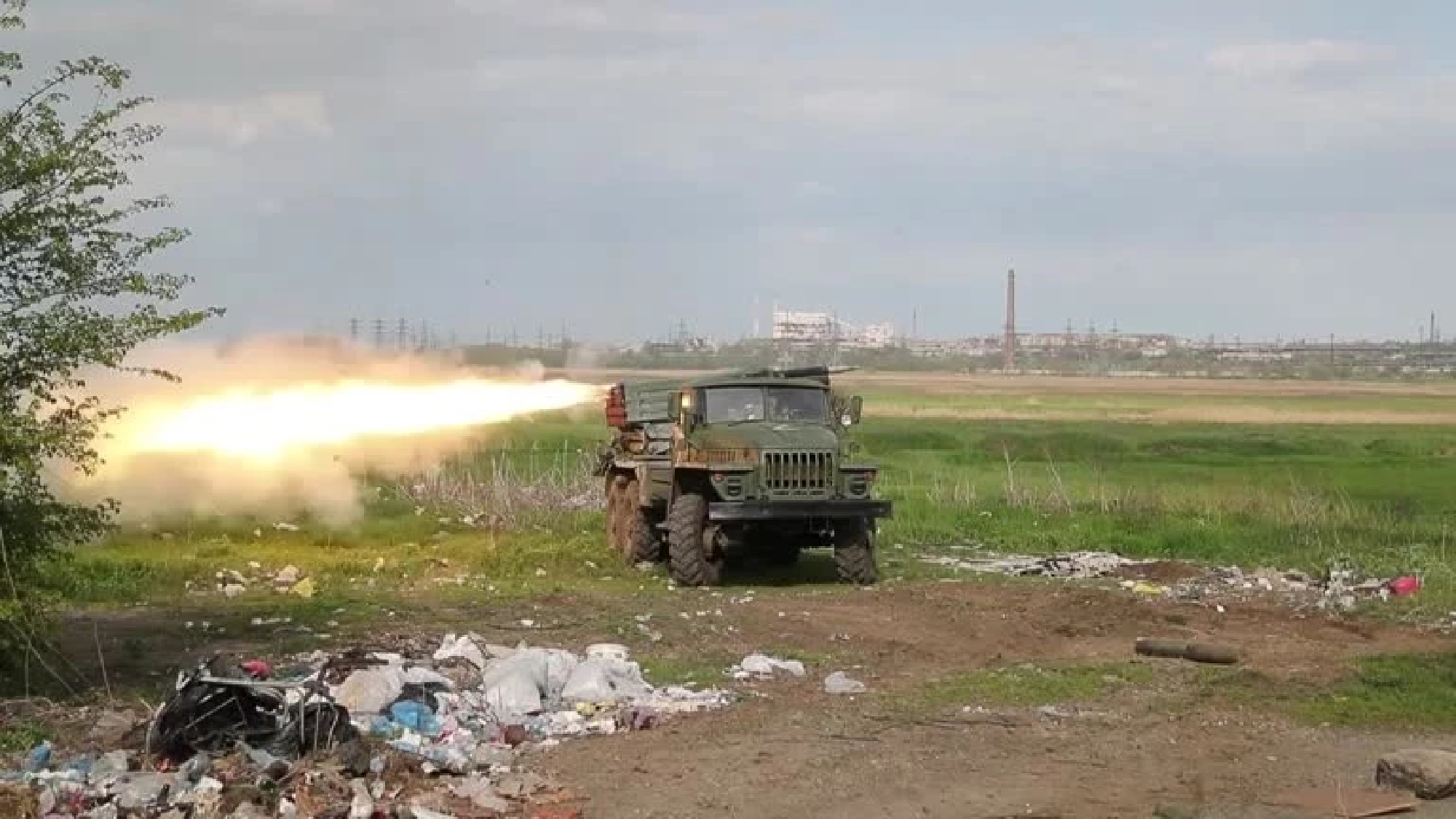
Russian forces and pro-Russian separatists resumed on Monday (May 2) the shelling of the Azovstal industrial complex after several dozens of civilians were evacuated from the site.
The footage filmed by Reuters showed a cloud of thick black smoke rising from the destroyed steel plant after shelling.
Azovstal is located in the Sea of Azov port city that has been devastated by weeks of Russian shelling and has served as a refuge for both civilians and a dwindling number of Ukrainian troops as Moscow has claimed control of Mariupol.
Azovstal remains the last stronghold of the Ukrainian forces in the city, with many soldiers and civilians reported hiding inside its bomb shelters.
The Russian army said 126 people had left Mariupol in safe convoys over Saturday (April 30) and Sunday (May 1) from the steelworks and other districts for separatist-controlled Donetsk.
Of these 57 opted to stay in that area, while the others had decided to leave for Ukrainian-held parts, it said.
Outside the Azovstal factory, where the fighting has stopped, residents of Mariupol try to figure out what to do next.
Many of them, like Tatyana Bushlanova, have their houses destroyed or heavily damaged.
Buslahnova said she would have left Mariupol, but is not sure she would be provided with a new place to live in.
“I don’t know how to stay here during winter. We don’t have a roof, don’t have windows. Everything is very complicated,” she said.
Archaeologists from the APSARA National Authority (ANA) have discovered pieces of the 12th century Apsara, or fairy carvings, at the causeway of the Angkor Thom temple’s Takav Gate in the Angkor Archaeological Park in northwest Cambodia’s Siem Reap province.
Archaeologists have discovered pieces of the 12th century Apsara, or fairy carvings, in the Angkor Archaeological Park in northwest Cambodia’s Siem Reap province, the APSARA National Authority (ANA) said in a statement on Monday.
The stone carvings were spotted in the northern wall of the causeway of the Angkor Thom temple’s Takav Gate, where the archaeologists were clearing vegetation and removing soil from the lower structure during restoration.
Archaeologist Kim Seng Pheakdey said the pieces of stones with Apsara carvings and other decorative sculptures were used as the northern wall of the causeway.
“These Apsara carvings are similar to the Apsara on the pillars of the Bayon Temple, while other stone carvings have the same shape as the ones that decorated the structure of the Takav Gate,” she said.
Undated photo shows an Apsara carving found recently at the causeway of the Angkor Thom temple
Pheakdey said the Bayon-style Apsara carvings might have been built simultaneously with the Takav Gate and the Bayon Temple during the late 12th century and early 13th century.
She said archaeologists will do the excavation in the next step to find Deva statues that had fallen into the moat in the north of the causeway in order to restore them back to their original positions.
The Takav Gate is one of the five gates of the Angkor Thom, which was built in the late 12th century by King Jayavarman VII.
Angkor Thom is one of the key temples in the 401-square km Angkor Archaeological Park, which was inscribed on the World Heritage List of the United Nations Educational, Scientific and Cultural Organization (UNESCO) in 1992.
Using Moscow’s proposed scheme for foreign companies to pay for gas by enabling Russia to convert their payments into rubles would breach European Union sanctions, the bloc’s energy policy chief said on Monday (May 2).
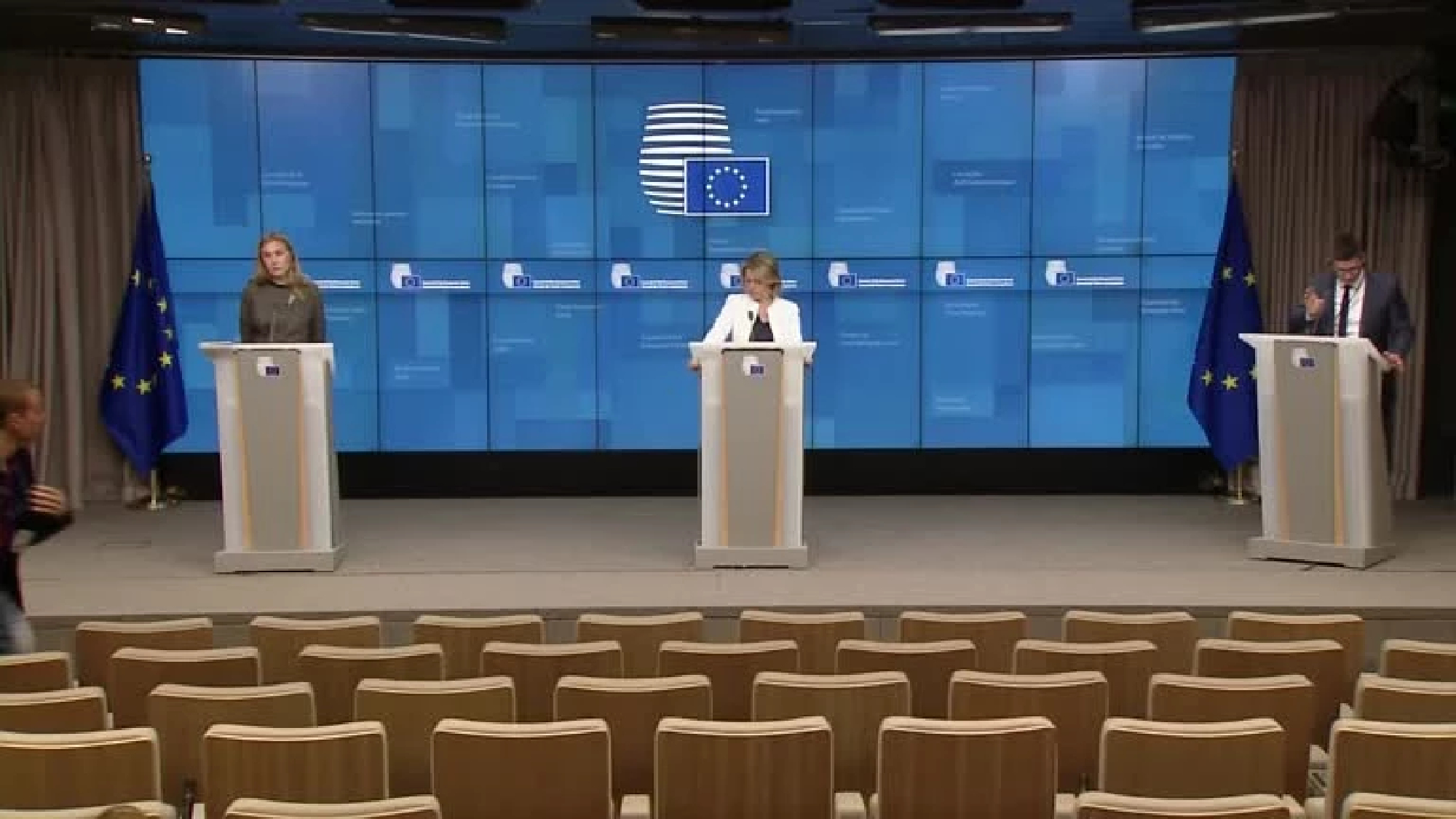
“Paying rubles through the conversion mechanism managed by the Russian public authorities and a second dedicated account in Gazprombank is a violation of the sanctions and cannot be accepted,” EU energy commissioner Kadri Simson told a news conference after a meeting of EU energy ministers in Brussels.
The Estonian member of the EU executive added that there was “no immediate risk for Europe’s security of supply” after Russia cut gas supply to Bulgaria and Poland last week for refusing to comply with its payment scheme.
Moscow has said foreign gas buyers must deposit euros or dollars into an account at privately-owned Russian bank Gazprombank, which would convert them into rubles.
French Environment Minister, Barbara Pompili, whose country currently chairs the Council of the European Union, said a regional task force would be set up to deal with the energy situation in the two former Warsaw Pact members.
“Russia’s unilateral decision only reinforces the need to reduce our fossil fuel imports from Russia as has been recorded at the summit of heads of state and government in Versailles,” the French minister said.
The comments came as the European Commission is expected to propose the sixth package of EU sanctions this week against Russia over its invasion of Ukraine, including an embargo on buying Russian oil – a measure that would deprive Moscow of a large revenue stream, but that has so far divided EU countries.
Russia supplies 40% of EU gas and 26% of its oil imports.
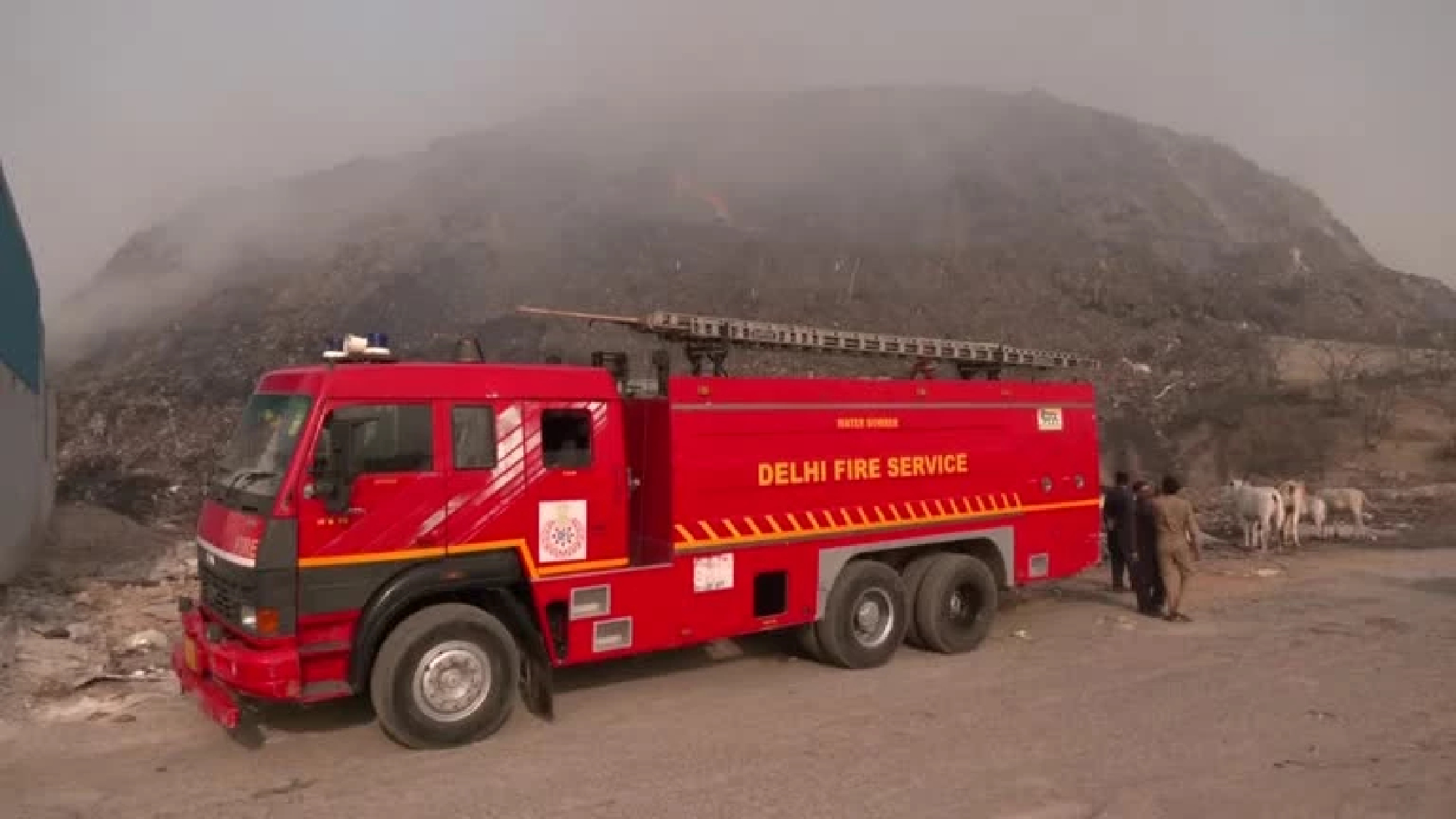
New Delhi residents are demanding action from the government on Monday (May 2) over a fire at a landfill site on the northwestern edge of the city that has been burning for days and causing dense smoke in the area.
Firefighters have struggled to extinguish the blaze that broke out on Tuesday (April 26) at the Bhalswa landfill site.
Dense plumes of smoke have been rising from the site causing difficulties to the people living nearby.
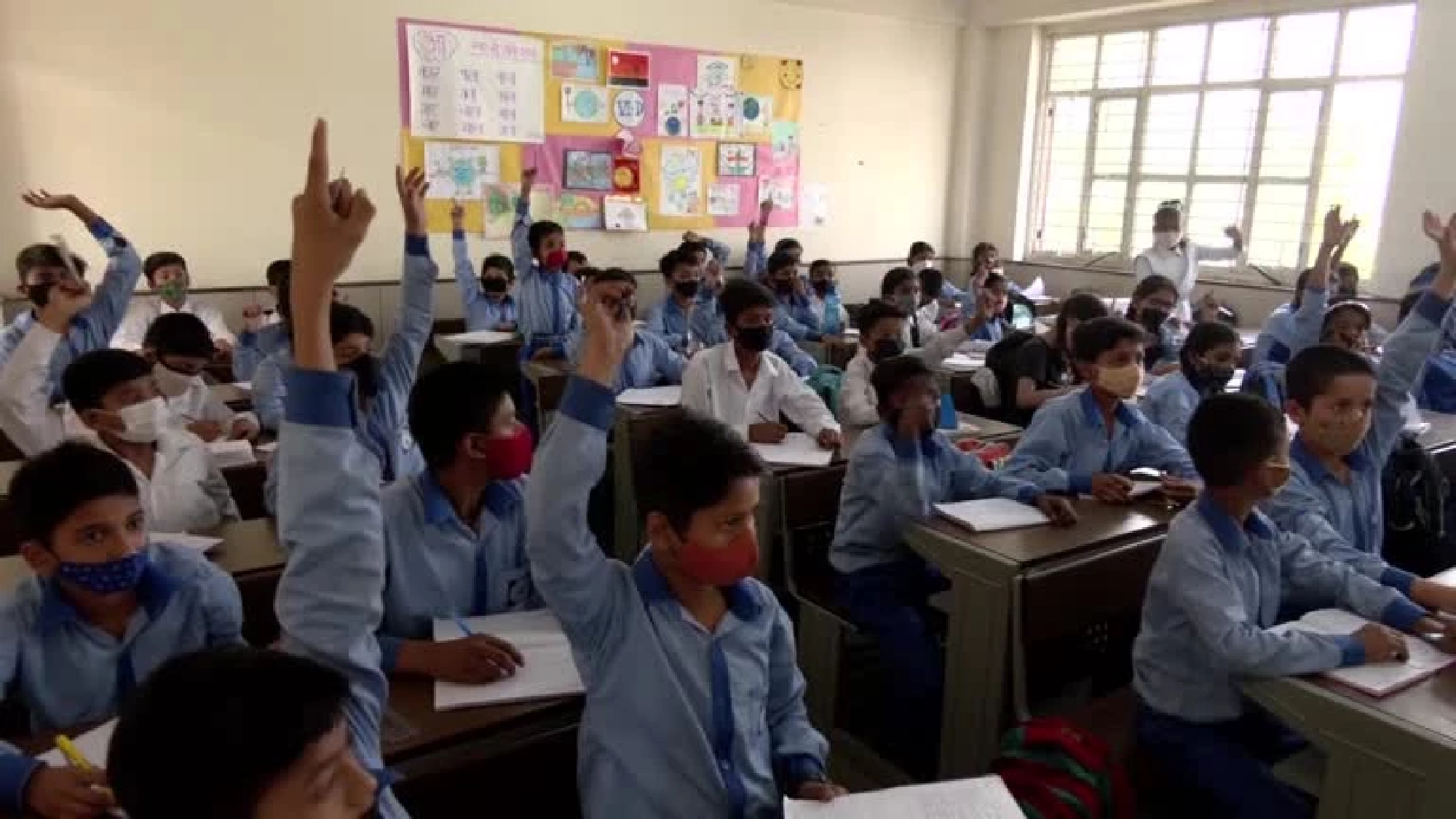
Fumes from the burning waste forced a nearby school to close. Many of the pupils’ parents work as trash pickers at the site.
“The smoke is causing pollution and we are feeling an irritation in the throat and our eyes are burning…The government should take some concrete steps so that the poor people who are living here do not suffer,” said local resident Suraj.
In New Delhi, temperatures have soared past 40 degrees Celsius (104 degrees Fahrenheit) for several days, and are forecast to linger around 44 C in the coming days with peak summer heat still to come before the cooling monsoon rains arrive in June.
Fires in the national capital’s filthy dump yards also contribute to the toxic air that people living in the world’s most polluted capital have to breathe.
Emmanuel Macron’s victory can guarantee that France and the European Union will retain close ties with Thailand and Asean, some political observers believe.
Macron won a second term as president on April 24, and judging by policies in his first tenure, France and the rest of the EU can be expected to continue attaching importance to the region for the next five years.
When Macron was first elected in 2017, he showed significant interest in the Indo-Pacific area. He announced his Indo-Pacific Strategy during his Garden Island speech in Sydney in 2018.
Soon after he launched the initiative, the Netherlands, Germany and other EU countries announced their own Indo-Pacific plans.
France is chairing the EU Council for the first half of this year and it is believed that Macron will use this opportunity to step up EU policies on the Indo-Pacific region.
France is also seen as trying to boost Europe’s influence in the Indo-Pacific region as a third option to the United States and China, who have been fighting for dominance in the area.
The 10-nation-strong Association of Southeast Asian Nations (Asean) forged close ties with France during Macron’s first tenure, as he considered Asean a key pillar of his Indo-Pacific Strategy.
Bilateral ties were further bolstered when France was given the status of “development partner of Asean on September 9, 2020.
Thailand, meanwhile, has maintained strong ties with France for a long while and both countries are now preparing to upgrade it to a strategic partnership in 2024, the observers said.
With Macron’s re-election, Thailand, which is already a key Indo-Pacific partner with the US, maybe in the spotlight as the three superpowers race for dominance in the region, the observers added.
Civilians were evacuated on Sunday (May 1) from the bunkers of Mariupol’s Azovstal steelworks after the United Nations and the International Red Cross led a deal to ease the ordeal of the most destructive siege of the war in Ukraine.
Russian forces pummeled the port city for nearly two months, turning Mariupol into a wasteland with an unknown death toll and thousands trying to survive without water, sanitation or food.
The city is under Russian control but some fighters and civilians have sheltered underground in the Azovstal works – a vast Soviet-era plant founded under Josef Stalin and designed with a labyrinth of bunkers and tunnels to withstand attack.
A Reuters photographer saw dozens of civilians arriving on Sunday at a temporary accommodation centre. The United Nations later said that an operation to evacuate people from the steelworks had been underway since Friday (April 27).
The “U.N. confirms that a safe passage operation is ongoing in Azovstal steel plant, in coordination with the ICRC (International Committee of the Red Cross) and the parties to the conflict,” U.N. spokesperson Saviano Abreu said.
The convoy had travelled 230 kilometres (143 miles) to reach the steelworks, the ICRC said.
The Reuters photographer saw civilians arriving in the village of Bezimenne in an area of Donetsk under the control of Russia-backed separatists around 30 km (20 miles) east of Mariupol.
They were receiving refreshments and care after weeks of suffering.
Young children were among those evacuated from the plant – where people cowered underground, huddling together under blankets in the plant’s bunkers and tunnels as the shelling tore their city apart.
The first group of 100 evacuees will arrive in the Ukrainian-controlled city of Zaporizhzhia on Monday (May 2) President Volodymyr Zelenskiy tweeted.
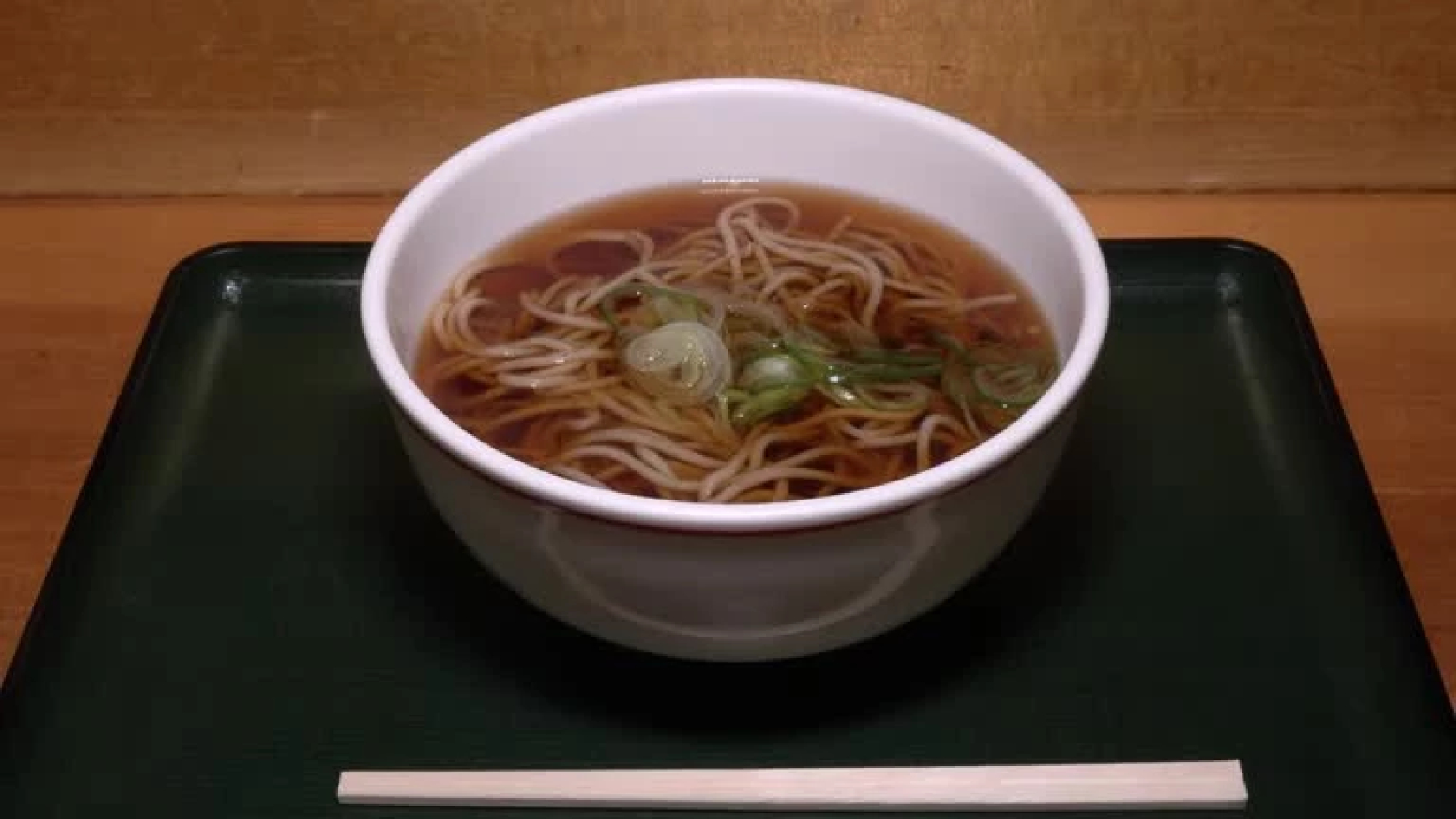
Ryu Ishihara will soon be raising prices on his inexpensive bowls of soba noodles for the first time in nearly a decade, as rising costs and Russia’s invasion of Ukraine take an unlikely toll – on Japan’s beloved “soba” or buckwheat noodles.
Though seen as one of the most quintessential of Japanese foods – even eaten on New Year’s Eve for good luck – a good part of the buckwheat that goes into the noodles comes from Russia, the world’s top buckwheat producer.
Russian buckwheat can still be imported for now, but instability and shipping disruptions have hampered procurement. That has added to the pain for soba noodle shop owners like Ishihara who are already suffering a global surge in commodity prices. The yen’s plunge has sent prices climbing and soy sauce, flour, the vegetables used for tempura toppings and even the fish used for the broth have all risen in cost.
“The (buckwheat) suppliers did all they could but this time the situation is so bad there’s no way to avoid raising prices. There are items I’ll have to raise by 10 to 15 per cent, ” said the bespectacled Ishihara, 55, in his narrow shop with steaming vats of water behind him.
Soba is famous as a cheap meal served cold or hot, often slurped quickly by workers and students in narrow shops that may cut costs by doing without seats. Their low-calorie count and nutritious vitamin and mineral content make them healthy too.
Ishihara’s prices run from 290 yen (2.30 USD) up to 500 yen (3.90 USD), with add-ons like tempura and sets with rice costing more.
Despite soba’s iconic status, Japan in 2020 produced only 42% of its buckwheat needs, according to the Japan Soba Association. The gap is filled by imports, with Russia the third-largest source of buckwheat in 2018, according to the Agriculture Ministry.
In 2021 Russia rose to second, displacing China, and up until February, it was number one. Then it invaded Ukraine, sending commodities prices surging and Japan’s yen currency plunging to a 20-year low. On top of that, sanctions and crackdowns on the Russian banking system – which have frozen Moscow out of international finance, have made it more difficult for some buckwheat buyers to settle accounts.
The result has been headaches for buckwheat importers and millers like Hua Yue, chief of the purchasing department for Nikkoku Seifun Co Ltd in Matsumoto, a city in the traditional buckwheat noodle-producing area of Nagano. Her company imports buckwheat seeds from Russia, as well as other nations including China.
She says shipping delays have also made supplies tight and Russian buckwheat prices have risen 30 per cent over the last six months. But should Russian supplies decrease further, Hua says she plans to source from China, the world’s second buckwheat producer.
Back at the soba noodle stand, Ishihara’s faithful customers, such as Keidai Fukuhara who comes twice a week, shrug off the prospect of higher prices.
But even they may have their limits.
“It depends on how often I will come but I hope the price stays around 500 yen (3.90USD),” the 27-year-old office worker said.