Inflation has risen sharply in recent months and is likely to remain high in the near-term, mainly driven by the price of energy, she explained.
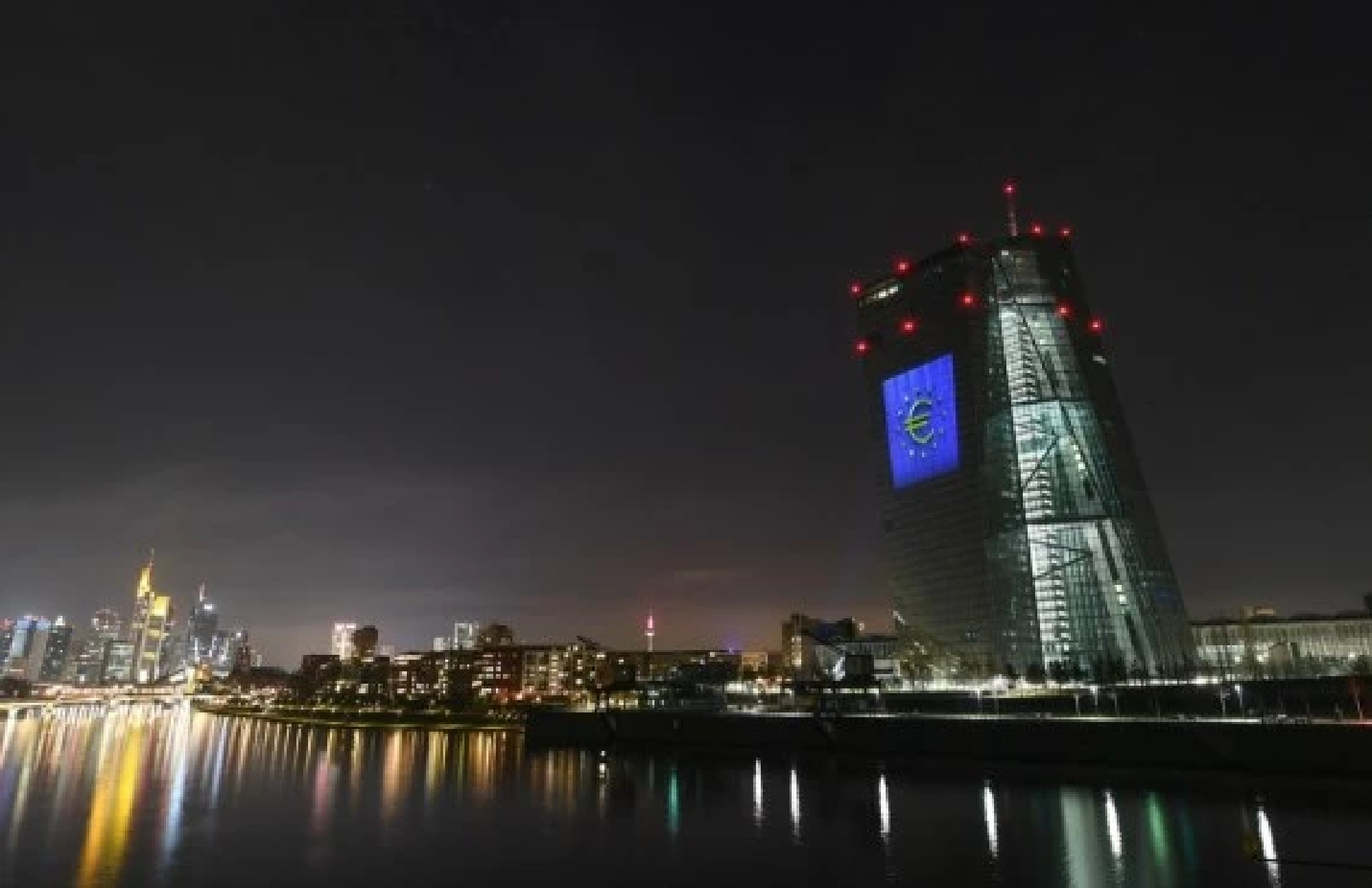
Inflation in the euro area is likely to remain elevated for longer than previously expected, but will decline in the course of this year, European Central Bank (ECB) president Christine Lagarde said on Monday.
“Compared with our expectations in December, risks to the inflation outlook are tilted to the upside, particularly in the near-term,” said Lagarde while addressing a hearing of the European Parliament’s Committee on Economic and Monetary Affairs.
“If price pressures feed through into higher-than-anticipated wage rises or the economy returns more quickly to full capacity, inflation could turn out to be higher,” she warned.
She stressed that recent data confirms a moderation in the momentum of growth due to the spread of the Omicron variant. Measures imposed to deal with Omicron have dampened activity, particularly in consumer services such as travel, tourism, hospitality and entertainment.
Quarterly growth in the eurozone slowed to 0.3 percent in the final quarter of 2021, but nonetheless, this still allowed for the gross domestic product (GDP) to recover to its pre-pandemic level.
European Central Bank (ECB) President Christine Lagarde speaks during a press conference at the ECB headquarters in Frankfurt, Germany, Oct. 28, 2021. (Xinhua/Lu Yang)
The current pandemic surge and related restrictions are likely to continue to negatively impact growth earlier this year, Lagarde said. Supply bottlenecks and high energy costs are also expected to dampen economic activity in the short term.
Inflation has risen sharply in recent months and is likely to remain high in the near-term, mainly driven by the price of energy, she explained.
“Energy prices continue to be the main reason for the elevated rate of inflation. Their direct impact accounted for over half of headline inflation in January, and energy costs are also pushing up prices across many sectors. Food prices have also increased, owing to seasonal factors, elevated transportation costs and the higher price of fertilizers. In addition, price rises have become more widespread, with the prices of a large number of goods and services having increased markedly,” she said.
Valdis Dombrovskis, European Commission (EC) Executive Vice President for an Economy that Works for People, also said the surge in energy prices was “a serious concern,” mentioning the impact it is having on the most vulnerable households and small and medium-sized enterprises (SMEs).
Dombrovskis confirmed Lagarde’s statement that inflation is now expected to remain elevated, adding that price pressures are having an impact on people’s purchasing power and growth. “It is important that the spike in inflation does not become entrenched,” he said.
— “We need to consider in all seriousness how to take steps to improve the design and implementation of the council sanctions to minimize their adverse impact.” — “There was a serious shortage of food and the conditions for medical care leave much to be desired (following sanctions imposed on the DPRK).” — “Unilateral sanctions, often in the glorified name of implementing council sanctions, have caused great disasters and chaos, not only putting the UN on the receiving end of the blame when it shouldn’t be, but also undermining the authority and effectiveness of the council sanctions themselves.”
AChinese envoy on Monday urged the UN Security Council to adopt a prudent and responsible approach to sanctions while raising the issues of sanctions imposed on the Democratic People’s Republic of Korea (DPRK) and unilateral sanctions.
“It has been China’s consistent position that while all UN member states have the obligation to implement in good faith the sanctions authorized by the council, the council should take a prudent and responsible approach to sanctions,” Zhang Jun, China’s permanent representative to the United Nations, told the Security Council debate on “general issues relating to sanctions: preventing their humanitarian and unintended consequences.”
“For over 20 years, there has been a trend of expansion of the council sanctions regime, whose adverse humanitarian – and livelihood – related impact cannot be brushed aside and has increasingly caused disruptions to the normalcy of economic and social activities of the general public and third countries,” said the envoy.
“We need to consider in all seriousness how to take steps to improve the design and implementation of the council sanctions to minimize their adverse impact,” added Zhang.
According to the ambassador, sanctions are meant to create enabling conditions for a political solution. “They are not a substitute for diplomatic efforts. The council should keep in check the impulse to resort too readily to sanctions or the threat of sanctions, and should give precedence to non-compulsory measures such as good offices, mediation and negotiation.”
Zhang Jun, China
On sanctions mechanisms, the envoy said that it is important to design sanctions mechanisms that dovetail precisely with the core issues at hand and the desired objectives.
“The intensity and the scope of compulsory measures should be carefully calibrated with clearly and unequivocally articulated provisions to minimize collateral damage. Humanitarian assistance should not be construed as a violation of Security Council sanctions,” he said.
Zhang stressed that member states must faithfully implement the council sanctions. “Neither should they subtract a value from the formula by cutting corners, nor should they add a value to the formula by giving themselves too much license in interpretation and over-compliance.”
“The Security Council should closely monitor and comprehensively assess the humanitarian, economic and social impact of sanctions,” said the ambassador, adding that “transparent, standardized and actionable exemption provisions should be established.”
Photo provided by the Korean Central News Agency (KCNA) on Oct. 12, 2021 shows a defense development exhibition held to mark the 76th founding anniversary of the ruling Workers
Zhang pointed out that as a basic principle, Security Council sanctions “should not be open-ended,” noting that “a sunset clause” should be introduced into all new sanctions mechanisms going forward.
Referring to the council’s sanctions committees, the ambassador underscored that the committees “must be selected against the highest professional standards consistently and in line with the principles of diversity and equitable geographical distribution.”
From 2000 to 2016, the Security Council had an Informal Working Group on General Issues of Sanctions, which “did useful work” to help fine tune and improve the council sanctions. Zhang said that China proposes that the Security Council “re-establish a working group on general issues of sanctions tasked with a comprehensive review of the adverse humanitarian and other impacts of Council sanctions and issue specific recommendations for improvement.”
Talking about the sanctions imposed on the DPRK, Zhang said that “Resolution 2397 has brought about serious humanitarian consequences since its adoption,” noting that the import of humanitarian livelihood goods such as agricultural machinery, medical equipment and water purification pipes has been severely restricted.
“There was a serious shortage of food and the conditions for medical care leave much to be desired. The experts of the 1718 committee have reported on these issues on many occasions,” he added.
Hundreds of people participate in a rally against the six-decade U.S. embargo in Havana, Cuba, Aug. 5, 2021. (Photo by Joaquin Hernandez/Xinhua)
The ambassador said that China and Russia co-sponsored a draft resolution on the DPRK in the Security Council last October, aiming to eliminate the humanitarian and livelihood impact of sanctions and create enabling conditions for resuming dialogue and consultation and supporting political solution.
“Regrettably, however, a scant few council members chose to refuse to discuss this draft resolution. China once again calls on those members not to evade the issue, and to participate in the consultations on the draft resolution in a responsible and positive manner,” said the envoy.
Turning to unilateral sanctions, Zhang said that “we should be all the more cognizant of the harm of unilateral sanctions imposed by certain countries,” adding that “unilateral sanctions, often in the glorified name of implementing council sanctions, have caused great disasters and chaos, not only putting the UN on the receiving end of the blame when it shouldn’t be, but also undermining the authority and effectiveness of the council sanctions themselves.”
The ambassador stressed that unilateral sanctions are extremely harmful, but it is a matter of concern that a few countries have not only failed to rein in their unilateral sanctions. “On the contrary, they have been flinging them about left, right and center, in a frenzy so much so that they seem to be addicted to them.”
“We have seen that unilateral sanctions imposed in the various names have thrown a spanner in the works of economic and social development and scientific and technological progress of the targeted countries, created an aggravated humanitarian crisis, violated the basic rights of civilians, including women, children, and caused great damage to the harmony and stability of international relations,” he said.
Zhang further pointed out that unilateral sanctions have even affected the payment of UN assessed contributions and the participation of targeted countries in the work of the UN.
“We hereby solemnly urge the countries concerned to immediately cease and desist from unilateral sanctions, and to stem the severe consequences of unilateral sanctions. We call on the international community to join hands to come together to resist such unlawful acts,” he said.
President Joe Biden said that if Russian tanks and troops cross the border and enter Ukraine, “there will be no longer Nord Stream 2.”
U.S. President Joe Biden reaffirmed Monday that a joint gas pipeline project between Germany and Russia won’t advance if Russia invades Ukraine, stopping short of explaining how it will be achieved if Germany has reservations for that decision as a deterrence against Moscow.
With visiting German Chancellor Olaf Scholz standing next to him, Biden told a press conference at the White House that if Russian tanks and troops cross the border and enter Ukraine, “there will be no longer Nord Stream 2,” referring to the now-finished pipeline delivering natural gas from Russia to Germany that bypasses Ukraine.
“We will bring an end to it,” the president said of the pipeline that is not yet operational.
Asked how the United States will manage to prevent gas from flowing in the pipeline since the project is under Germany’s control, Biden didn’t elaborate, only saying he can “promise” that Washington “will be able to do that.”
Scholz, for his part, repeatedly avoided directly mentioning Nord Stream 2, although it appeared that the pipeline was one of the subjects that most concerned reporters during the press conference.
German Chancellor Olaf Scholz delivers his first government statement at the Reichstag building in Berlin Dec. 15, 2021, after he was elected as the new federal chancellor Dec. 8. (Xinhua/Shan Yuqi)
“We will be united,” the chancellor said, speaking in English as if he wanted to give Americans reassurance. “We will act together. And we will take all the necessary steps, and all the necessary steps will be done by all of us together.”
Biden and Scholz — whose ongoing visit in the United States is his first since assuming the chancellorship in December — were both trying to exhibit the unwavering unity between Washington and Berlin vis-a-vis the handling of the ongoing crisis on Ukraine’s borders.
There has been a great deal of frustration expressed by U.S. media and lawmakers on Capitol Hill about Germany’s decision not to aid Ukraine with lethal weapons, as well as what they perceived as the lack of clarity from Berlin on whether to turn off Nord Stream 2.
“There’s no need for him to win back trust. He has the complete trust of the United States,” Biden said in defense of Scholz as the chancellor was challenged by a reporter to rethink whether Germany’s decision will make it less of a reliable ally of the United States.
Stressing that the transatlantic partnership with the United States is “one of the permanent pillars of German policy,” Scholz said his country has done its part both in terms of strengthening the North Atlantic Treaty Organization’s military might and with regard to providing financial assistance to Ukraine.
Further dispelling concerns over Germany’s dependence on Russian gas supply, Scholz said his government has been taking measures to accelerate the transition into a clean energy-based economy, noting that one quarter of the total energy that Germany now relies on is generated by gas, “and only part of that gas comes from Russia – big part comes from Norway or The Netherlands.”
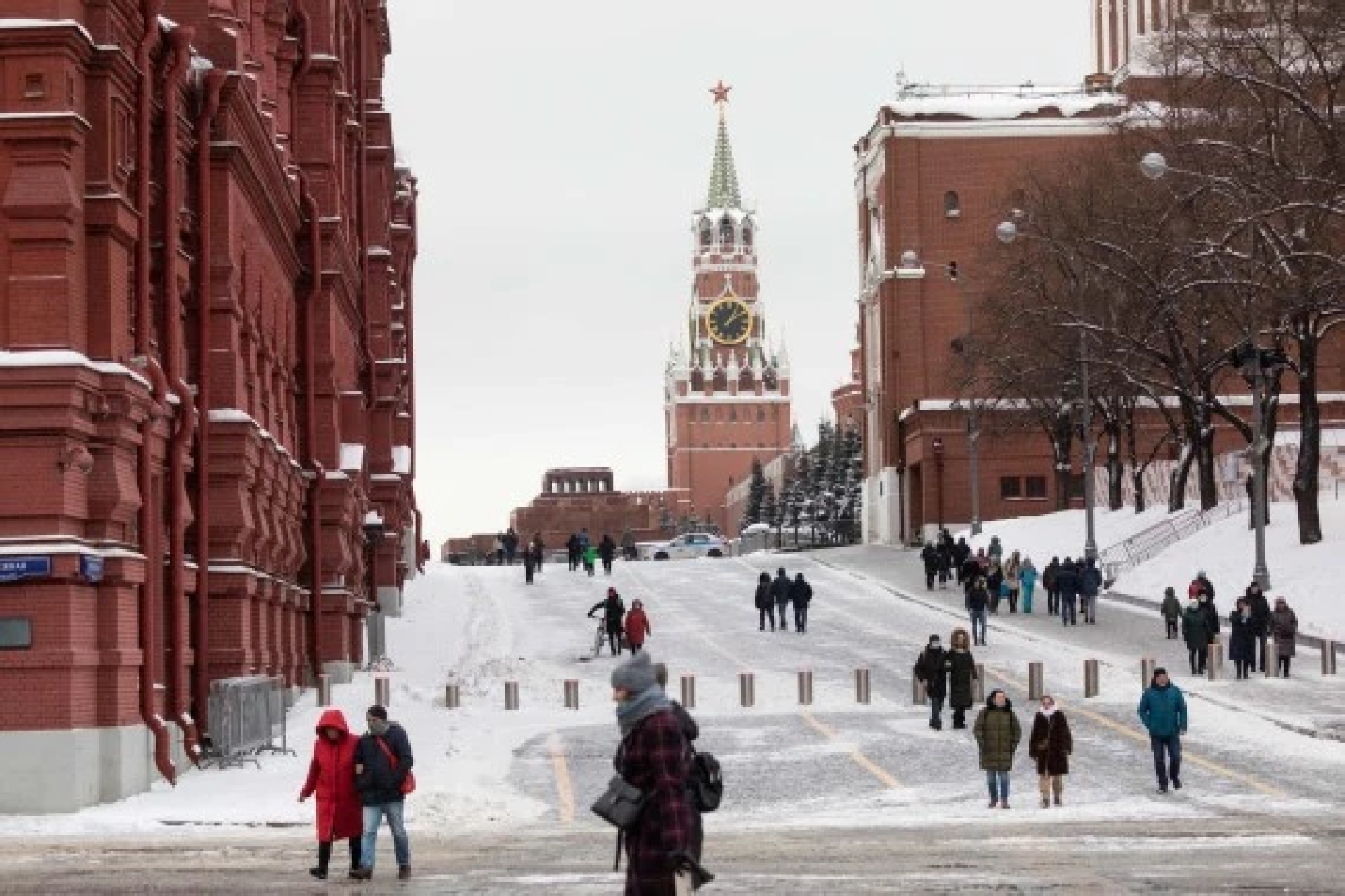
Russia’s core concerns on security were ignored by the United States and NATO, Putin said.
Russian President Vladimir Putin met with visiting French President Emmanuel Macron on Monday to discuss the Ukrainian crisis and the security issue in Europe.
The meeting was businesslike and useful, Putin said at a joint press conference with Macron following their hours-long talks in the Kremlin.
Russia’s core concerns on security were ignored by the United States and the North Atlantic Treaty Organization (NATO), while the military alliance attempts to lecture Russia on where and how to place its armed forces, Putin said.
He told Macron that Kiev refuses to comply with the 2015 Minsk agreements on a peaceful settlement of the Ukrainian issue and even aims to dismantle the deals.
Putin reiterated Russia’s opposition to NATO’s eastwards expansion.
During the briefing, Macron said that he believes there is still an opportunity to find a peaceful path for Europe, where new mechanisms are needed to ensure security and existing pacts should be preserved at the same time.
He said that there is no alternative to a political solution to the Ukrainian crisis and the Minsk agreements remain the basis of it.
As for Moscow-proposed security guarantees between Russia and the U.S.-led NATO, Macron said that negotiations should continue, although it won’t be easy to reach a consensus.
Putin and Macron agreed to talk over phone after the latter’s visit to Kiev on Tuesday.
Painting the walls, refurbishing dark bedrooms, and providing new furniture — a home renovation program in China is assisting children from low-income families to live a better life.
CHANGSHA, Feb. 6 (Xinhua) — Last summer, a painting made by nine-year-old Lele (pseudonym) drew the attention of Chen Yi, a volunteer for the housing renovation program in Liling City, central China’s Hunan Province.
A clean desk, a bright lamp, and a large bed are depicted in the painting. “This is my ideal room,” Lele told Chen while pointing to his picture.
Chen and his teammates then visited Lele’s home and discovered that he lived in an old, 50-square-meter house with his parents and two grandmothers. Most of his family members suffer from illnesses and rely on his father, who picks up odd jobs to support the entire family.
“Our first thought at that time was that we must help Lele by creating a good environment for him to live and study,” said Chen.
So the local committee of the Communist Youth League of China (CYLC) decided to help Lele through the renovation program. Following a discussion with Lele’s family, a group of merchants and volunteers teamed up to improve the boy’s bedroom.
After decorating the room, installing doors and windows, and laying down floor coverings, Lele moved into his new bedroom before the start of the Chinese Lunar New Year this month. He said he was thrilled to finally have his own space.
“My favourite part after the makeover is the closet,” said Lele. It was not convenient for him to play at home before, but now he can hide in the closet and play hide-and-seek with his father.
“It always takes him a long time to find me!” Lele said with a smile.
Fourteen-year-old Mei (pseudonym) has been living with her grandparents since her parents died. The introverted girl always keeps her head down and does not talk much.
Local volunteers learned of her predicament a few years ago and, have since, provided her with financial assistance and care.
“The volunteer uncles and aunts often came to see me. Once, they asked me if I wanted a new room.” Mei recounted that because her room was dark and wet, she rarely stayed in it and always slept with her grandmother.
At the end of 2021, Mei’s room was included in the renovation project.
“Before the project was implemented, the volunteers talked to me many times for my opinions,” said Mei.
“While the room was being restored, I couldn’t wait to visit each day after school. I was extremely eager about how it would turn out,” Mei said.
“Providing a clean, comfortable bedroom can significantly improve children’s health and well-being, as well as provide a significant boost to the family,” said Hu Xiaoqing, the secretary of the Liling Municipal Committee of the CYLC.
In 2021, the CYLC committees at all levels in Hunan raised some 16 million yuan (about 2.5 million U.S. dollars) of funds and materials, which were used to renovate 579 rooms for disadvantaged children.
For 14-year-old Yue (pseudonym) from Zhuzhou city in Hunan, the remodelling for her bedroom planted a seed in her heart and allowed her hopes for the future to flourish.
The death of Yue’s father and the illness of her mother dealt her a terrible blow. She was gloomy and once felt that she had slipped into a bog of misfortune that she could not escape.
“Sometimes, I even felt the goal of getting into senior high school was unreachable,” Yue said.
However, thanks to the program, Yue now enjoys a clean, welcoming area at home. She uses her new bedroom not only as a place to study and read but also as a studio to practice painting — her favourite hobby.
“I felt as if someone had assisted me in transforming the agony I endured into sweetness,” said Yue.
She then recalled the night she moved into the bedroom for the first time. “I was so delighted that I couldn’t sleep,” she said of the outpouring of compassion she received from strangers.
“I want to work harder to live up to the expectations of those who helped me,” Yue added.
The level of herd immunity in the country stood at 64.1 percent, the data showed.
Russia confirmed 180,071 new COVID-19 cases in the past 24 hours, the highest daily rise to date, taking the nationwide tally to 12,810,118, the official monitoring and response center said Sunday.
The nationwide death toll increased by 661 to 335,414, while the number of recoveries increased by 59,583 to 10,569,271.
Meanwhile, Moscow, Russia’s worst-hit region, reported 18,856 new cases, taking its total to 2,495,891.
Around 85 million Russian citizens had received at least one dose of vaccines and over 80 million had been fully vaccinated, according to data released on Friday.
The level of herd immunity in the country stood at 64.1 percent, the data showed.
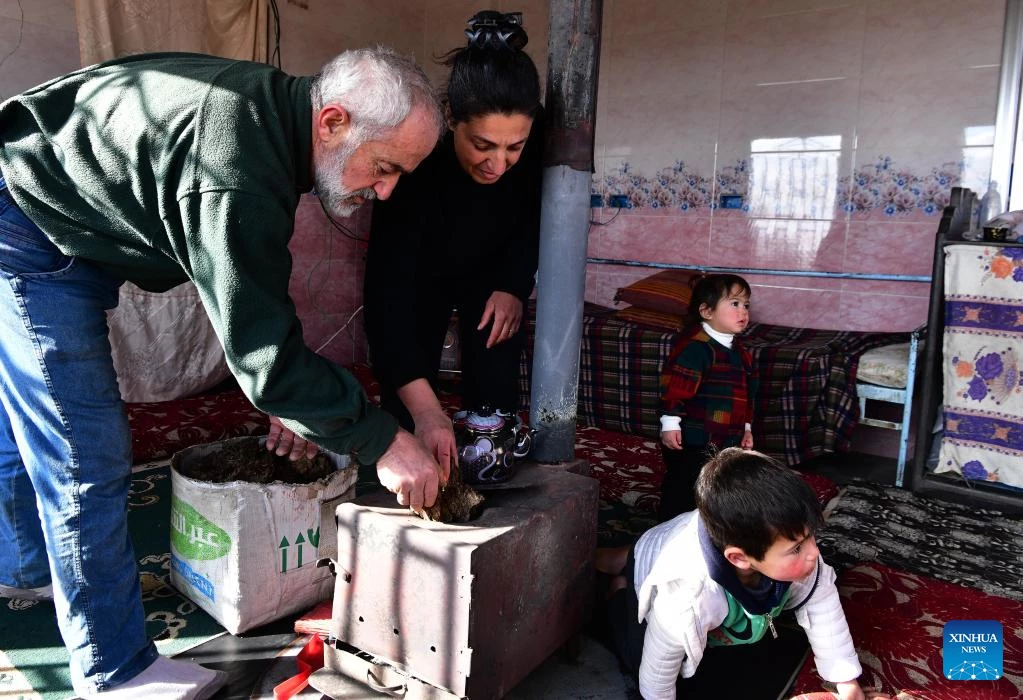
As heating fuel has become out of reach for many Syrians because of the U.S. economic sanctions and its control over key oil fields in the country, farmers in the southern province of Sweida now resort to cow dung as an alternative to survive the harsh winter.
SWEIDA, Syria, Feb. 4 — In the town of Shannireh in the countryside of Sweida, 53-year-old Al-Muthana Hasan al-Shoufi is one of those who had to make the change.
At the barn behind his house, al-Shoufi collected the dung from underneath the cow and then put it in a metal stroller. Batch after batch, the dung was then delivered to a large space behind the barn to dry off in the sun, before being cut into manageable blocks and shoved into a stove inside the house.
Al-Muthana Hasan al-Shoufi, 53, and his family use cow dung as heating fuel in Sweida, Syria, on Jan. 23, 2022. As heating fuel has become out of reach for many Syrians because of the U.S. economic sanctions and its control over key oil fields in the country, farmers in the southern province of Sweida now resort to cow dung as an alternative to survive the harsh winter.(Photo by Ammar Safarjalani/Xinhua)
Thanks to the cow dung, his wife can heat the stove and cook for the whole family. Besides the mealtime, the family members sometimes gather around the stove to enjoy the warmth and wait for their hot tea or coffee.
“Almost since the beginning of the crisis, we have started using the cow dung in winter for heating and other household needs, such as hot water and cooking,” al-Shoufi told Xinhua.
The sturdy man said the cow dung was something his ancestors had used and now has come in handy amid the soaring fuel prices and insufficient electricity at home.
Al-Shoufi also sells cow dung to other people who don’t own cows. But for relatives, it is offered free of charge.
“I have a daughter who majored in pharmaceutics and graduated this year. If I had bought the heating fuel, I would not have helped her complete the study,” he said, adding his other two children are also college students and hence “everything saved can help the children finish their higher education.”
Even if the fuel becomes available in the future, he would still use the cow dung as it is “eco-friendly and comparatively cheaper,” the Syrian man noted.
The fuel shortage following the Syrian war has compelled people to find alternatives, including olive pomace, firewood, pistachio shells, and other natural resources.
The Syrian government has repeatedly blamed unilateral U.S. sanctions for the deterioration in the livelihood of the Syrian people. In July 2021, the price of subsidized fuel was raised by 177.7 percent. According to the government’s statement, the hike was due to the surging global fuel prices and Western sanctions.
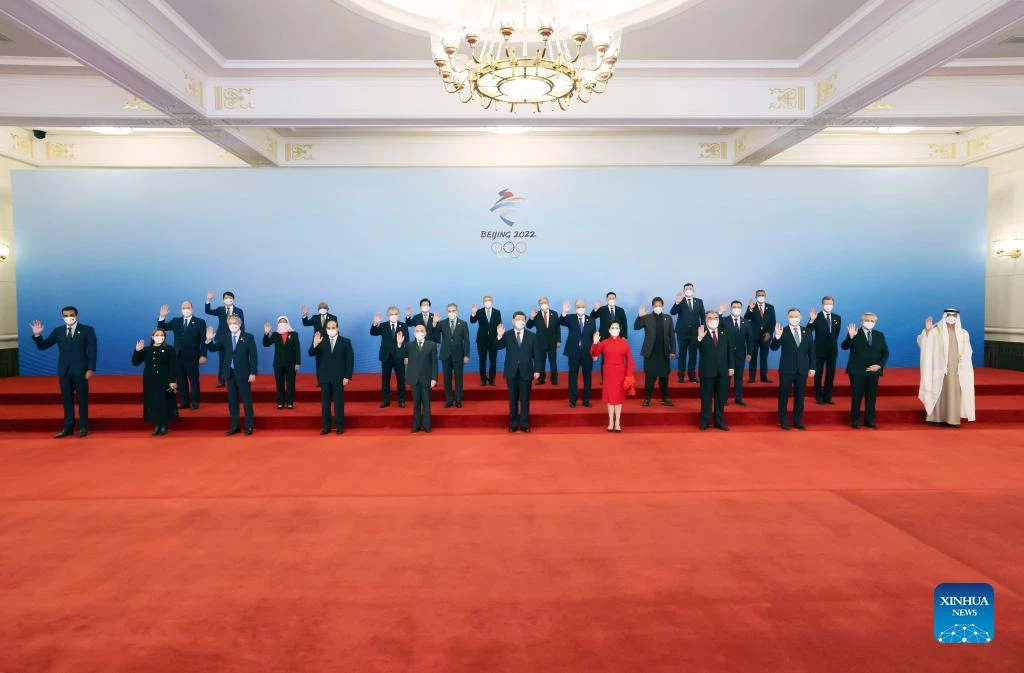
Chinese President Xi Jinping and his wife Peng Liyuan hosted a banquet at the Great Hall of the People Saturday noon to welcome distinguished guests from around the world who attended the opening ceremony of the Beijing 2022 Olympic Winter Games.
BEIJING, Feb. 5 — Giving a toast at the beginning of the banquet, Xi, on behalf of the Chinese government and people, extended a warm welcome to all the distinguished guests traveling to China and attending the Games, and sincerely thanked all governments, peoples and international organizations that care about and support the Beijing Olympic Winter Games.
Chinese President Xi Jinping and his wife Peng Liyuan pose for a group photo with distinguished guests from around the world who attended the opening ceremony of the Beijing 2022 Olympic Winter Games, at the Great Hall of the People in Beijing, capital of China, Feb. 5, 2022. (Xinhua/Xie Huanchi)
In his speech, Xi noted that China, committed to organizing a green, inclusive, open, and clean Games has made every effort to counter the impact of COVID-19, earnestly fulfilled its solemn pledge to the international community, and ensured the smooth opening of the Beijing Olympic Winter Games as scheduled.
He said that China has achieved the goal of engaging 300 million Chinese in sport on snow and ice and made a new contribution to the cause of Olympism worldwide.
The Olympic Movement has carried humanity’s aspirations for peace, solidarity, and progress since ancient times, Xi said.
“We shall keep in mind the original aspiration of the Olympic Movement and jointly uphold world peace,” Xi said, calling for upholding mutual respect and equality and working together for a world of durable peace.
“We shall promote the spirit of the Olympic Movement and meet the common challenges facing the international community through solidarity,” he said, highlighting the need to practice true multilateralism and work together to build an international family of harmony and cooperation.
Chinese President Xi Jinping and his wife Peng Liyuan host a banquet to welcome distinguished guests from around the world who attended the opening ceremony of the Beijing 2022 Olympic Winter Games, at the Great Hall of the People in Beijing, capital of China, Feb. 5, 2022. (Xinhua/Shen Hong)
He also called for staying true to humanity’s common values of peace, development, equity, justice, democracy, and freedom, promoting exchanges and mutual learning between civilizations, and working together to build a community with a shared future for mankind.
Noting that the tiger is a symbol of strength, courage, and fearlessness, Xi wished all Olympic athletes excellent performance with the strength of the tiger.
“I am confident that with the joint efforts of us all, Beijing 2022 will surely go down in history as a streamlined, safe and splendid Olympic Games,” Xi said.
President of the International Olympic Committee Thomas Bach and United Nations Secretary-General Antonio Guterres also made speeches at the banquet, saying that they will never forget the extraordinary and splendid opening ceremony of the Beijing 2022 Olympic Winter Games.
They said that China has fulfilled the goal to engage 300 million people in winter sports ahead of schedule, which will permanently change the pattern of world ice and snow sports and benefit both China and the world.
Uniting the world through peaceful and healthy competition is the mission of the Olympic Movement, which should also become the goal of all countries, they said.
They hoped that the international community should take the Beijing Winter Olympics as an opportunity to rise above differences and work together for a shared and better future.
Senior Chinese leaders including Wang Huning and Han Zheng also attended the banquet.
Chancellor of the Exchequer Rishi Sunak announced on Thursday a plan worth around 9 billion British pounds (12.25 billion U.S. dollars) to help the country’s households with the surging cost of living.
LONDON, Feb. 3 (Xinhua) — After the United Kingdom’s (UK) energy regulator announced that the energy price cap will increase by half from this April, Chancellor of the Exchequer Rishi Sunak announced on Thursday a plan worth around 9 billion British pounds (12.25 billion U.S. dollars) to help the country’s households with the surging cost of living.
Driven by a record rise in global gas prices over the past six months, with wholesale prices quadrupling in the last year alone, the cap will jump from the current 1,277 pounds to 1,971 pounds per year for about 22 million customers, the country’s Office of Gas and Electricity Markets (Ofgem) said in a press release on Thursday.
“Right now, I know the number one issue on people’s minds is the rising cost of living,” Sunak said in a statement afterward. “Without government action, this would be incredibly tough for millions of hardworking families.”
According to the plan, this year all domestic electricity customers will receive an upfront discount on their bills worth 200 pounds, and energy suppliers will apply the discount on people’s bills from October.
The government will also give people a 150-pound Council Tax rebate, paid in April, to help with the cost of energy. This will benefit around 80 percent of all homes in the country.
The actions provide 350 pounds in total, just more than half the cap increase of 693 pounds, and the government will help around 28 million households this year, Sunak said, noting that the plan is worth around 9 billion pounds in total.
Ofgem reviews the cap twice a year, in April and October. In October 2021, the regulator increased the cap for the period between October 2021 and March 2022 by 12 percent, to 1,277 pounds, compared to the previous period.
The cap stops energy companies from making excessive profits and ensures that customers pay no more than a fair price for their energy, Ofgem said on Thursday, adding that it allows energy companies to pass on all reasonable costs to customers, including increases in the cost of buying gas.
Following Sunak’s statement, however, the actions have come under fire for they are considered to fall short of what is needed to root out the problem.
“By opting for near-universal support over targeted help for low-income families at the heart of the current cost of living crisis, the number of families in fuel stress is still set to double,” said Adam Corlett, principal economist at the Resolution Foundation, an independent think tank.
Caroline Abrahams, charity director at Age UK, a British charity for older people, said they support “simply does not go far enough,” noting that it will still leave many of the pensioners facing energy costs surging by an extra several hundred pounds that they cannot afford to pay.
British businesses also expressed disappointment of being left out. “While assistance for households is welcome, businesses will be dismayed at the lack of support for those firms also struggling with their energy bills,” said Hannah Essex, co-executive director of the British Chambers of Commerce.
“Smaller firms are particularly exposed as they have neither the protections nor financial support provided to households, nor do they have the negotiating power of larger businesses,” Essex added.
While the energy crunch has become a global phenomenon this winter, the UK is among the most vulnerable as it is a net importer of natural gas. Amid the price surge, 26 energy suppliers collapsed in 2021.
With a combination of factors, including colder weather, increasing global demand, falling gas supplies, and outages of key infrastructure, the crisis is feared to continue. The energy market “suggests that high gas prices will be here for the next 18 months to two years,” Chris O’Shea, chief executive of British Gas owner Centrica, told the BBC in January.
To cushion the shock, many solutions are under consideration by the government, such as a windfall tax on the North Sea oil and gas companies, which have enjoyed a bonanza due to surging gas prices, or a temporary reduction to the five percent value-added tax (VAT) rate on energy bills, which is mainly supported by the Labour Party. Nevertheless, they all face controversies.
In the Thursday statement, Sunak dismissed the idea of tax reduction. The policy, he said, “would disproportionately benefit wealthier households. There would also be no guarantee that suppliers would pass on the discounts to all customers.” (1 British pound = 1.36 U.S. dollar)
President Biden said Thursday that ISIS leader Ibrahim al-Hashimi al-Qurayshi blew himself up as U.S. special forces conducted a pre-dawn raid against him in northern Syria — and that all Americans returned safely from the operation.
Good morning. Last night, operating on my orders, the United States military forces successfully removed a major terrorist threat to the world: the global leader of ISIS, known as Hajji Abdullah ( Abu Ibrahim al-Hashimi al-Qurashi ).
He took over as the leader of ISIS in 2019 after the United States counterterrorism operation killed al-Baghdadi.
Since then, ISIS has directed terrorist operations targeting Americans, our Allies and our partners, and countless civilians in the Middle East, Africa, and South Asia.
Hajji Abdullah oversaw the spread of ISIS-affiliated terrorist groups around the world after savaging communities and murdering innocents.
He was responsible for the recent brutal attack on a prison in northeast Syria holding ISIS fighters, which was swiftly addressed by our brave partners in the Syrian Democratic Forces.
He was the driving force behind the genocide of the Yazidi people in northwestern Iraq in 2014.
We all remember the gut-wrenching stories: mass slaughters that wiped out entire villages, thousands of women and young girls sold into slavery, rape used as a weapon of war.
And thanks to the bravery of our troops, this horrible terrorist leader is no more.
Our forces carried out the operation with their signature preparation and precision, and I directed the Department of Defense to take every precaution possible to minimize civilian casualties.
Knowing that this terrorist had chosen to surround himself with families, including children, we made a choice to pursue a special forces raid, at a much greater risk than our — to our own people, rather than targeting him with an airstrike. We made this choice to minimize civilian casualties.
Our team is still compiling their report, but we do know that as our troops approached to capture the terrorist, in a final act of desperate cowardice, he — with no regard to the lives of his own family or others in the building, chose to blow himself up — not just with a vest, but to blow up that third floor rather than face justice for the crimes he has committed, taking several members of his family with him just as his predecessor did.
I’m grateful for the immense courage and skill and determination of our U.S. forces who skillfully executed this incredibly challenging mission.
The members of our military are the solid-steel backbone of this nation, ready to fly into danger at a moment’s notice to keep our country and the American people safe, as well as our Allies.
U.S. Secretary of Defense Lloyd Austin and Chairman of the Joint Chiefs of Staff Mark Milley observe the raid that killed al-Qurashi from the Pentagon
And I’m also grateful to the families of our service members. You serve right alongside your — these soldiers and sailors, Marines, special forces — the loved ones, giving them the strength and support they need to do what they do.
To our service members and their families: We are forever grateful for what you do for us, and we owe you a debt. Thank you.
We’re also aided by the essential partnership of the Syrian Democratic Forces.
I want to commend our dedicated intelligence community, the Department of Defense, and members of our national security team throughout the government whose meticulous and tireless work over the course of many months ensured that this mission succeeded.
This operation is a testament to America’s reach and capability to take out terrorist threats no matter where they try to hide anywhere in the world.
I’m determined to protect the American people from terrorist threats, and I will take decisive action to protect this country.
And we’ll continue working with our close allies and partners — the Syrian Democratic Forces; the Iraqi Security Forces, including the Kurdish Peshmerga; and the more than 80 members of the global coalition — to keep pressure on ISIS, to protect our homeland.
We remain vigilant. We remain prepared.
Last night’s operation took a major terrorist leader off the battlefield. And it sent a strong message to terrorists around the world: We will come after you and find you.
Once again, today, we continue our unceasing effort to keep the American people safe and to strengthen the security of our Allies and partners around the world.
I want to thank you all. And may God bless you. And may God protect our troops.
I’m heading off to New York right now; I’m late. And I thank you for your time. Appreciate it.

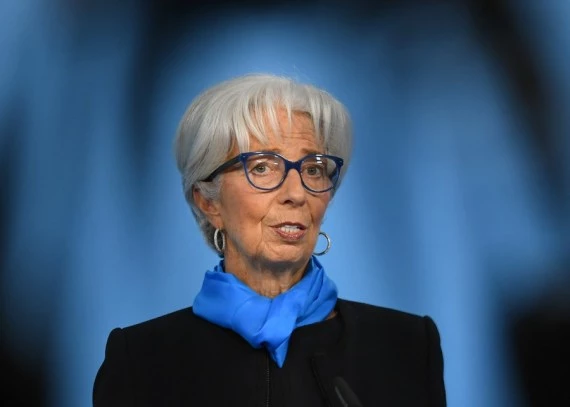 European Central Bank (ECB) President Christine Lagarde speaks during a press conference at the ECB headquarters in Frankfurt, Germany, Oct. 28, 2021. (Xinhua/Lu Yang)
 Hundreds of people participate in a rally against the six-decade U.S. embargo in Havana, Cuba, Aug. 5, 2021. (Photo by Joaquin Hernandez/Xinhua)
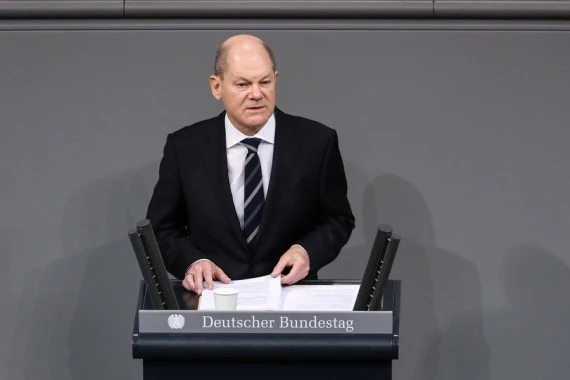 German Chancellor Olaf Scholz delivers his first government statement at the Reichstag building in Berlin Dec. 15, 2021, after he was elected as the new federal chancellor Dec. 8. (Xinhua/Shan Yuqi)



 Al-Muthana Hasan al-Shoufi, 53, and his family use cow dung as heating fuel in Sweida, Syria, on Jan. 23, 2022. As heating fuel has become out of reach for many Syrians because of the U.S. economic sanctions and its control over key oil fields in the country, farmers in the southern province of Sweida now resort to cow dung as an alternative to survive the harsh winter.(Photo by Ammar Safarjalani/Xinhua)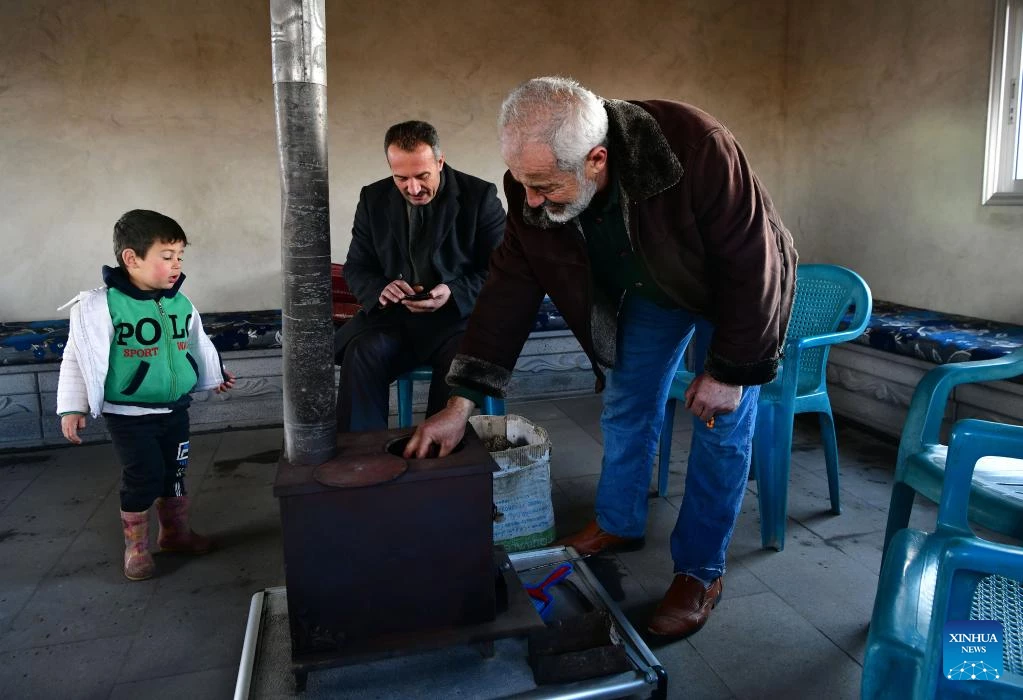

 Chinese President Xi Jinping and his wife Peng Liyuan pose for a group photo with distinguished guests from around the world who attended the opening ceremony of the Beijing 2022 Olympic Winter Games, at the Great Hall of the People in Beijing, capital of China, Feb. 5, 2022. (Xinhua/Xie Huanchi)
 Chinese President Xi Jinping and his wife Peng Liyuan host a banquet to welcome distinguished guests from around the world who attended the opening ceremony of the Beijing 2022 Olympic Winter Games, at the Great Hall of the People in Beijing, capital of China, Feb. 5, 2022. (Xinhua/Shen Hong)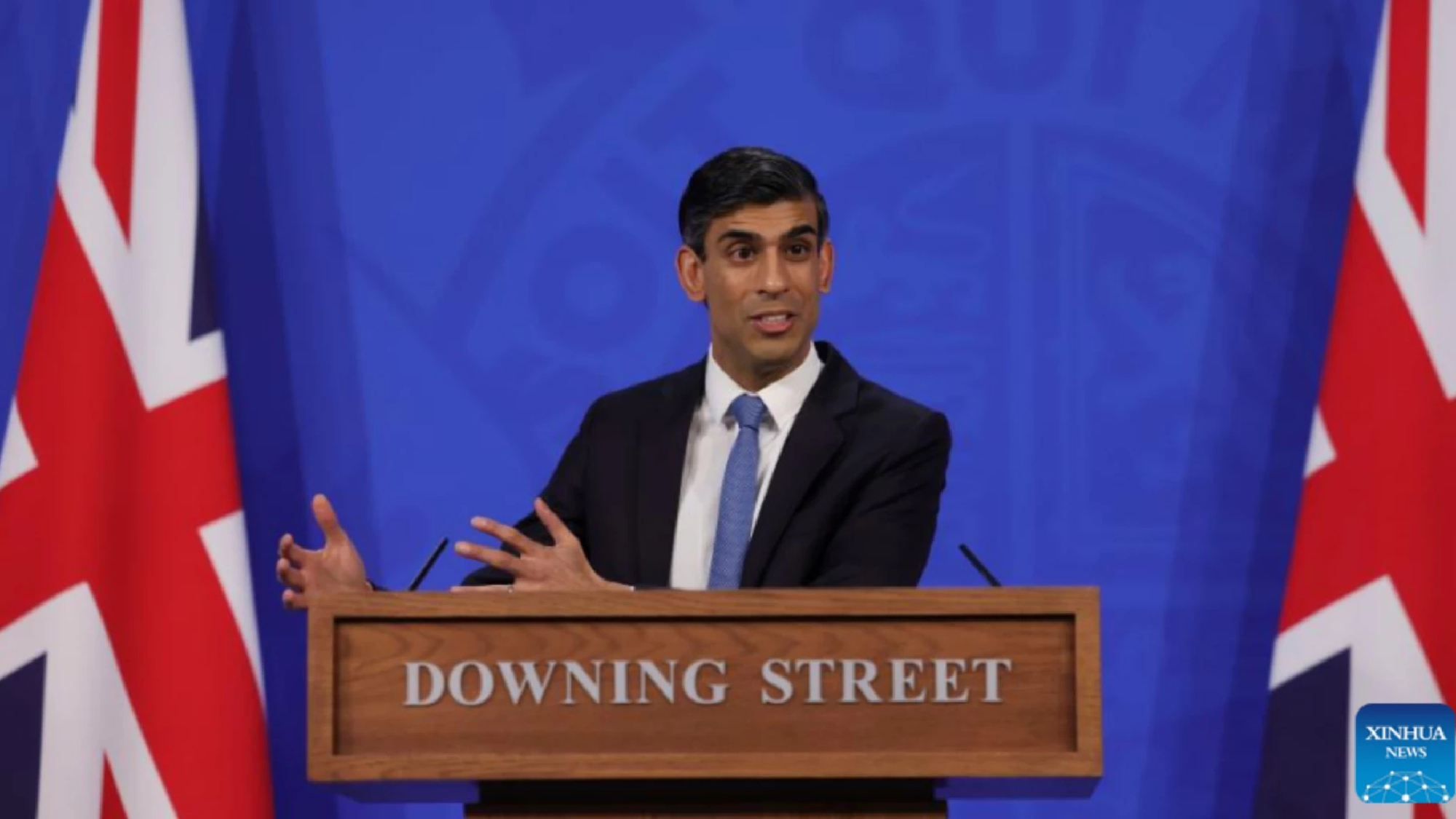

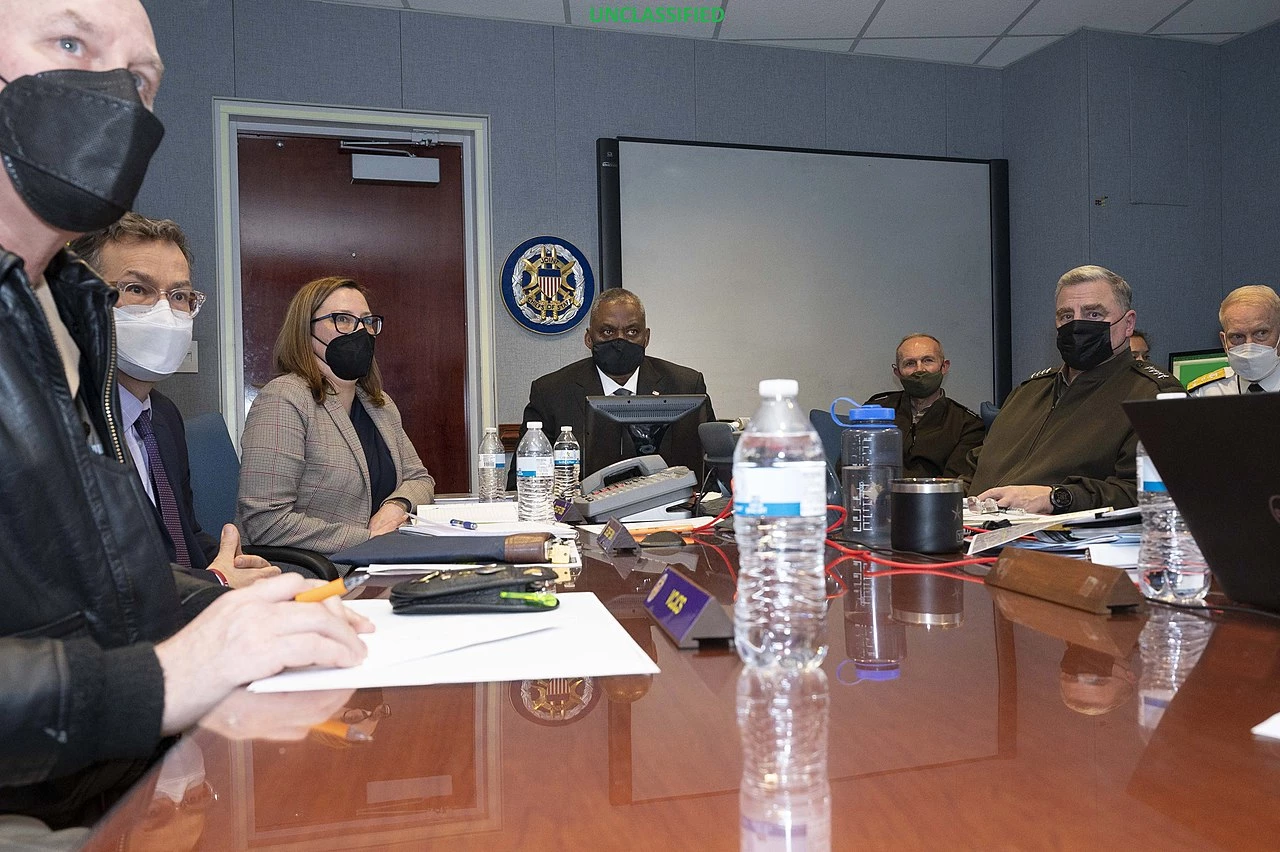 U.S. Secretary of Defense Lloyd Austin and Chairman of the Joint Chiefs of Staff Mark Milley observe the raid that killed al-Qurashi from the Pentagon
