Eighty-five percent of people in Singapore eligible for coronavirus vaccines are fully vaccinated, and 18% have received booster shots.
But the Singaporean government said Monday that it will no longer cover the medical costs of people “unvaccinated by choice,” who make up the bulk of remaining new covid-19 cases and hospitalizations in the city-state.
“Currently, unvaccinated persons make up a sizable majority of those who require intensive inpatient care, and disproportionately contribute to the strain on our health care resources,” the Ministry of Health said in a statement Monday.
“Covid-19 patients who are unvaccinated by choice may still tap on regular health care financing arrangements to pay for their bills where applicable,” the ministry added.
The government now foots the bill for any Singaporean citizen, permanent resident and holder of a long-term work pass who is sick with covid-19, unless they tested positive shortly after returning from overseas.
“This was to avoid financial considerations adding to public uncertainty and concern when covid-19 was an emergent and unfamiliar disease,” the Health Ministry said in its statement.
“Until the covid-19 situation is more stable,” it added, it will continue to cover related medical costs for those who are vaccinated, as well as for those still not eligible: children 12 and under and people with certain medical conditions. Partially vaccinated people in Singapore will be covered until Dec. 31.
Singapore is considered to have one of the world’s the best health care systems. A 2017 study in the leading medical journal the Lancet found that Singapore ranked first among 188 countries in efforts to meet health-related sustainable development goals set by the United Nations for 2030.
The Singaporean model, however, depends heavily on privatized medical services, meaning that the unvaccinated may already have coverage if they become sick with covid-19. In the United States, for example, about one-third of health care spending is private, while in Singapore it’s the opposite, according to an analysis by the New York Times.
Moreover, workers in Singapore are mandated to put a portion of their salaries away in health savings accounts, which employees are also required to contribute to based on varying criteria.
Under this system, bills for the unvaccinated will still be “highly supported and highly subsidized,” Health Minister Ong Ye Kung told a news conference Monday, Yahoo News reported.
“Hospitals really much prefer not to have to bill these patients at all,” Ong said. “But we have to send this important signal to urge everyone to get vaccinated if you are eligible.”
Singapore recorded some 91,000 new coronavirus infections over the last 28 days, 98.7% of which were asymptomatic or mild cases, according to the Health Ministry.
As of Nov. 7, 1,725 people were hospitalized with the virus. Of those, according to the Health Ministry, 301 have required oxygen, 62 are under close monitoring in the intensive care unit, and 67 are critically ill and intubated. That has put Singapore’s current ICU use rate at 68.5%.
“While this is still manageable by stretching our health care manpower, we must not let down our guard and must avoid a resurgence of cases that could once again threaten to overwhelm our health care system,” the Health Ministry said Monday.
Early in the pandemic, Singapore relied on extensive surveillance, contact tracing and strict movement restrictions to keep virus cases low. The heavily surveilled city-state has since begun easing some virus-related restrictions.
The seasons are strange now in Beverly Longids home of Cordillera, in the Philippines. The crops dont ripen at the usual times. The sun beats down hotter than ever before. The springs she always relied on for water have run dry.
Human-caused climate change has taken so much from her people, said Longid, a member of the Indigenous Igorot community. Land from farmers. Food from children’s mouths. Centuries-old rituals are no longer possible because the natural cycles they depend on are gone.
“We hardly contributed to the problem,” Longid said. “But it is us developing nations, us Indigenous people, who bear the brunt of the impacts.”
Funding for “loss and damage” – unavoidable, irreversible harms caused by climate change – has long been a rallying cry of civil society groups and vulnerable nations at international climate talks. But as rising seas, devastating heat waves and shifting seasons claim more lives and livelihoods in parts of the world, the issue has become more of a sticking point than ever at the COP26 negotiations in Glasgow, Scotland.
“This is actually one of the biggest shortcomings in this process,” said Mohamed Adow, director of the Kenya-based think tank Power Shift Africa. “We have clarity on the global goal to limit warming. But we don’t have a comparable target . . . to help the world deal with some of the inevitable impacts of climate change.”
A 2020 report from the Geneva-based International Federation of Red Cross and Red Crescent Societies found that extreme weather and climate-related disasters killed more than 410,000 people in the previous decade, mostly in lower-income countries.
Other research has estimated that annual loss-and-damage financial needs in developing countries could hit $290 billion to $580 billion a year by 2030.
Current levels of humanitarian funding – which must be allocated to survivors of earthquakes, volcanic eruptions and violent conflicts, as well as climate crises – are less than one-tenth of that.
People from hard-hit low-income communities say they are now paying the price for the wealthy world’s choices: Of the planet-warming pollution in the atmosphere, more than half was emitted by people in the United States and the European Union.
“We all know cumulative emissions,” said Harjeet Singh, a New Delhi-based senior policy adviser for Climate Action Network International. “We all know who gained most from industrialization.”
Countries whose wealth was built on industries that polluted the atmosphere, Singh said, “should have stepped up and said, ‘Yes we take that responsibility to act.’ “
But while the richest nations long ago promised to set aside $100 billion a year to help vulnerable countries adapt to climate change and mitigate future warming – a promise they still have yet to fully meet – they have so far been unwilling to embrace more funding for the irreversible damage already taking place.
“The finance for loss and damage is really missing,” said Sandeep Chamling Rai, senior adviser for adaptation at the World Wildlife Fund.
So far, the main international mechanism for addressing loss and damage has been a website for sharing expertise and resources around climate risks. In 2019, nations also agreed to set up a technical assistance program, known as the Santiago Network – though it doesn’t yet have staff or funding.
“We need to be honest,” said Yamide Dagnet, director of climate negotiations at the World Resources Institute. “At a time of despair, as we have seen this year . . . a website is not sufficient.”
Rich nations have traditionally feared that opening the door to compensation for climate impacts they largely caused could lead to massive and unending financial commitments.
Under the landmark Paris climate accord in 2015, developed countries notably agreed to language that acknowledged the “importance of averting, minimizing and addressing loss and damage associated with the adverse effects of climate change.” But they also insisted on including another clause, noting that the Paris agreement “does not involve or provide a basis for any liability or compensation.”
Even in wealthy countries that typically pride themselves on having an open wallet for international aid, such as Germany, the prospect of adding a bill for loss and damage drew a skeptical response.
“We are not exactly sure what ‘loss and damage’ means. How you can define it compared to other climate finance topics?” said Jürgen Zattler, director general of the German Ministry for Economic Cooperation and Development.
“We are still very much in the dark here,” he said. “This is an important topic, but I do not believe that we should find quick-and-easy-fix solutions to these issues.”
He said Germany had asked the Organization for Economic Cooperation and Development to study the issue.
But advocates for loss-and-damage funding say it’s a separate issue from mitigation and adaptation, the current targets of most climate finance. Mitigation aims to avoid future greenhouse gas emissions, not address the climate impacts already underway. And some disasters will be unavoidable, no matter how much communities adapt.
“It’s destroying our communities. It’s killing our people,” said Jo Dodds, president of the Australian advocacy group Bushfire Survivors for Climate Action.
In 2018, a bush fire cut through her small town, destroying 69 homes. These days, Australia’s fire season extends for most of the year, reigniting survivors’ trauma and choking the skies with smoke.
“It’s not a single event anymore,” Dodds said of that and similar disasters around the world. “It’s a lifestyle of catastrophe.”
When catastrophe strikes in wealthy countries, those nations are able to provide support to citizens who have been harmed. After the 2018 bush fires, the Australian government set up a fund of over $1 billion to help fire-ravaged communities. Victims of record-setting flash floods in Germany this summer are eligible for millions of dollars in relief, and still more funding for rebuilding infrastructure.
Singh said requiring developing countries to curb emissions even as they cope with deadly climate impacts is like asking someone whose house is on fire to donate more funds to the fire brigade.
“If I put myself in the shoes of a finance minister, what am I going to do when my people are suffering? Am I going to build a solar farm?” he said. “No.”
“First, help people recover, provide relief, make sure they are prepared for future disasters,” he added. “Only then will we be spending less on loss and damage and have more financial capacity and resources and attention to actually meet our mitigation goals.”
At the U.N. summit in Glasgow, activists see some signs of progress.
Last week, Scottish First Minister Nicola Sturgeon pledged 1 million pounds (about $1,355,000) to the Climate Justice Resilience Fund for addressing loss and damage. It was the first time an industrialized nation committed to pay for climate harms incurred by developing countries.
The 61 countries of what’s known as the “High Ambition Coalition” – a group that now includes the United States – released a statement recognizing the need for more resources to address the issue. And hundreds of banks, insurers, pension funds and investment firms also committed to shifting trillions of dollars away from polluting activities and directing some of those funds toward developing economies.
“These are important signals that give a view of how the world is changing,” said María Laura Rojas Valejo, director of the Colombian advocacy group Transforma. “But it’s not enough.”
The issue has become even more salient during the coronavirus pandemic, which has left many developing countries deeply in debt and unable to pay for basic services, let alone major climate investments.
Real financial support for loss and damage, Rojas Valejo added, could also help rebuild trust between nations that has been fractured by the widening chasm in global vaccine access.
“Finance is the glue of this process,” she said.
The issue has become unavoidable, and has gotten perhaps more attention during COP26 than at many other past climate summits. Rai says it increasingly will be impossible to ignore.
“At 1.1 [Celsius] temperature rise, loss and damage is hitting not only developing countries but also the developed world,” he said. “Loss and damage is real. It is happening. We cannot really run away from it. So we need to act now.”
Some 604 days after the Trump administration shut U.S. borders, a majority of international travelers are once again welcome.
For those returning after a long hiatus, a few things may be different: the president, the hotel and restaurant landscapes, and the documentation required at the airport, which now includes proof of approved vaccination against Covid-19. But where they’re going largely remains the same.
According to data from Travelport, a global technology company that powers travel bookings for hundreds of airlines and thousands of hotels worldwide, flight bookings to and within the U.S. have already reached 70% of their pre-pandemic levels. That’s a hopeful sign for the quick recovery of the U.S. travel economy, which, according to the U.S. Travel Association, represents $233 billion annually and suffered weekly losses of $1.5 billion in spending from Canadians, Europeans, and Britons alone during the border closure period.
The top-booked destinations, in order, per Travelport’s data for November are New York, Miami, Orlando, Los Angeles, and San Francisco, a list that will deliver few surprises. The city receiving the most diverse array of visitors, however, is Las Vegas, which appears in many permutations on the list of top 100 routes booked between foreign countries and the U.S. (People are visiting Sin City from the U.K., Canada, Ireland, Germany, and Mexico.)
More interesting, perhaps, is where they’re coming from. (By and large, Brits are most eager to get back to U.S. cities, but the answers to that question change depending on the destination.) Here’s a short guide to who’s going where, and what they may need to know upon arrival.
– – –
–New York
The city is expected to be the top winter holiday destination, according to surveys from a wide range of travel companies – thanks, in part, to the fact that the lights are (finally) back on Broadway. Expect a busy Christmas season, and little room for social distancing.
Who’s going: The U.K. (18% of visitors), Canada (6%), and Mexico (5%) are the top three inbound markets.
Good to know: Rockefeller Center, once visited by tourists just for its big Christmas tree and skating rink, is now doubling as one of the most exciting restaurant neighborhoods – a change few locals saw coming.
–Miami
Some would say the Magic City looked a little too Miami Vice throughout the pandemic; the city was one of the most popular places for Americans to decamp from cold winters amid lockdowns, and it took on increased popularity for its relative normalcy, even when case counts were dire. Next month brings Art Basel and all its related social events – likely the perfect opportunity to pretend the pandemic never happened at all.
Who’s going: Argentina (14%), the U.K. (10%), and Brazil (8%) are the top three inbound markets.
Good to know: The city has seen more marquee restaurant openings than practically any other in the world – largely imports of big names from around the world. But if you’re unsure about indoor Covid safety, the newly popular Fever app and website lists open-air events and activities like candlelight concerts or “flyboarding” with water-powered jet packs that send you hovering over the ocean.
–Orlando
With Walt Disney World celebrating its 50th anniversary, the parks are in full swing. Our guide to its little-known luxury services brings out the real Disney magic.
Who’s going: The U.K. (46%), Brazil (10%), and Canada (8%) are the top three inbound markets.
Good to know: The Swan Reserve hotel has just opened its doors inside Walt Disney World, making it possibly the fanciest place to stay in the parks. It has six pools and 22 restaurants, including an outpost of New York favorite Il Mulino; because it’s part of Marriott’s Autograph Collection, you can also book it with points.
–Los Angeles
A nearly $40 million L.A. Arts Recovery Fund led by the J. Paul Getty trust is working to get hard-hit institutions back on their feet, though it also helps that iconic venues like the Hollywood Bowl are once again running at 100% occupancy. A projected $1 billion in tourism revenues for November and December 2021 will help. Getting here is proving expensive; data from Hopper shows that flights to L.A. are 33% costlier than in 2019, while average U.S. airfares are down 7%, compared to 2019 prices.
Who’s going: Mexico (15%), Canada (9%), and the U.K. (8%) are the top three inbound markets.
Good to know: After a series of delays, the Academy Museum of Motion Pictures opened on Sept. 30. The $482 million museum complex, designed by Renzo Piano and located adjacent to the Los Angeles County Museum of Art (Lacma), is filled with iconic costumes and props from films such as The Wizard of Oz and E.T.; there’s also a temporary exhibition on view featuring the works of legendary Japanese filmmaker Hayao Miyazaki.
–San Francisco
Municipal programs called Slow Streets and Shared Spaces have helped create a relative abundance of car-free, outdoor public spaces throughout the city – beyond the typical outdoor dining setups – and the tech execs that left during lockdowns have largely returned to find a city that’s investing heavily in outdoor festivals, murals, and al fresco performing arts.
Who’s going: The U.K. (14%), India (10%), and Mexico (9%) are the top three inbound markets.
Good to know: As of October, only 25% of San Francisco workers were back in the office, signaling a slower return to normalcy. That has also applied to restaurants, many of which waited to reopen until summer or fall of this year. Chez Panisse will remain closed through 2022, but most everything else has come back – including a handful of new spots such as Automat, an all-day, bread-centric concept that began as a series of pandemic and kid-friendly pop-ups.
Law enforcement agencies have arrested five people allegedly associated with the prolific ransomware group REvil, which was behind this years devastating cyberattacks on Kaseya and JBS.
Romanian authorities arrested two alleged affiliates of the group on Nov. 4, according to a statement released on Monday by European law enforcement agency Europol. A further three arrests of REvil suspects were made earlier this year, Europol said.
The alleged hackers are suspected of involvement in about 5,000 ransomware infections and received about $580,000 (500,000 euros) in ransom payments. Many ransomware gangs offer their malware to others, called affiliates, who then send it out to infect victims, in what is known as ransomware-as-a-service.
“REvil,” short for “Ransomware-Evil,” is known as one of the world’s most prolific ransomware gangs. The group is accused of staging several attacks this year against major companies and organizations, including Brazilian meat supplier JBS and Miami-based technology company Kaseya. JBS paid an $11 million ransom, while Kaseya said it declined to pay the hackers.
Europol said that law enforcement agencies had identified the alleged affiliates of REvil after seizing infrastructure used by the group and carrying out investigative methods such as wiretapping.
In addition to the REvil arrests, Europol said that law enforcement agencies also this year apprehended two alleged affiliates of GandCrab, another prolific ransomware group.
The arrests revealed on Monday were made as part of an international investigation named GoldDust, which involved law enforcement agencies from 17 countries, including the U.S., U.K., France and Germany.
“This represents historic collective action between 17 countries to prosecute members of this cybercrime cartel,” said Tom Kellermann, who heads cybersecurity strategy for VMware. “Operation GoldDust has had a meaningful impact in disrupting their activities. These groups are now forced to play defense.”
But he added: “Destructive cyberattacks will continue and will become more systemic. Collective action between like-minded countries must be enhanced, and forfeiture of digital currencies connected to cybercrime conspiracies must be expanded.”
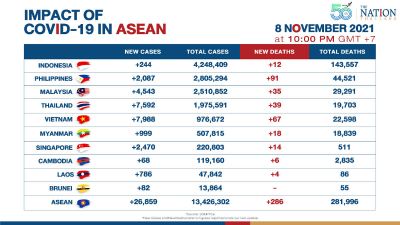
The number of Covid-19 cases crossed 13.42 million across Southeast Asia, with 26,859 new cases reported on Monday (November 8), lower than Sunday’s tally at 27,556. New deaths are at 286, decreasing from Sunday’s number of 410. Total Covid-19 deaths in Asean are now at 281,996.
Philippine authority announced that face shields are no longer mandatory in Manila City except in medical facilities. The city was downgraded to Covid-19 Alert Level 2 since November 5 due to decreasing case counts, but total bed and intensive care utilization rates are increasing. The Philippines reported 2,087 new cases and 91 deaths on Monday, bringing cumulative cases in the country to 2,805,294 patients and total 44,521 deaths.
After completing the goal of immunising 50 percent of the adult population, the Government of Laos is working to raise this rate to at least 70 percent by the end of this year, in order to quickly reopen the country, recover the economy and adapt to the pandemic. The government also expected that several million doses of Covid-19 vaccine will be delivered to Laos in the near future.
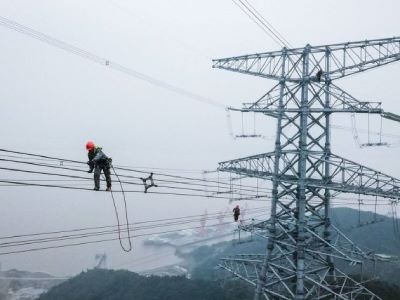
The State Grid Corporation of China on Sunday said that the supply and demand of power in areas operated by the company have returned to normal.
The thermal coal inventory in the company’s operating area has rebounded to 99.32 million tonnes, while the available days of consumption has risen to 20, said the company.
The scale of power curbs and the electricity gap have been significantly reduced, it said, adding that, as of Saturday, the power supply to some factories with high energy consumption and high pollution in certain provinces was still being limited.
The grid will face an “overall tight balance of power with gaps in partial areas” this winter and coming spring as the country faces a power-consumption peak and the drought season for hydropower.
The State Grid will increase and stabilize the power supply by tapping the potential of all kinds of resources, while closely tracking the thermal coal and gas supply, and coordinating power transmission across different regions to ensure the safety of the grid, said Meng Haijun, spokesperson with the State Grid.
The company will strive to ensure the power supply for households, public services and key customers, Meng said.
The State Grid will also implement electricity price reform by incorporating all coal-fired power into the electricity market in an orderly manner and enlarging the floating band of the market-based electricity transaction prices, according to Meng.
The State Grid is the world’s largest utility and ranked second in the Fortune Global 500 in 2021. It supplies power to a population of over 1.1 billion, with its service area covering 88 percent of Chinese territory.
“This truly is a national mission. If we all come together and play our part, we can get through this challenging winter, avoid a return to restrictions and enjoy Christmas,” said senior UK health official, urging people to get vaccinated with COVID-19 booster or flu vaccine.
Another 30,305 people in Britain have tested positive for COVID-19, bringing the total number of coronavirus cases in the country to 9,301,909, according to official figures released Sunday.
The country also reported a further 62 coronavirus-related deaths. The total number of coronavirus-related deaths in Britain now stands at 141,805. These figures only include the deaths of people who died within 28 days of their first positive test.
There are currently 9,160 patients in hospital with COVID-19.
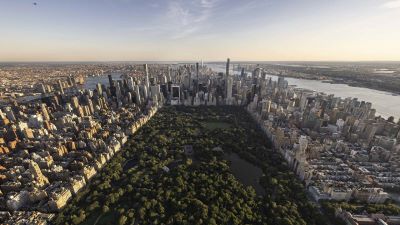
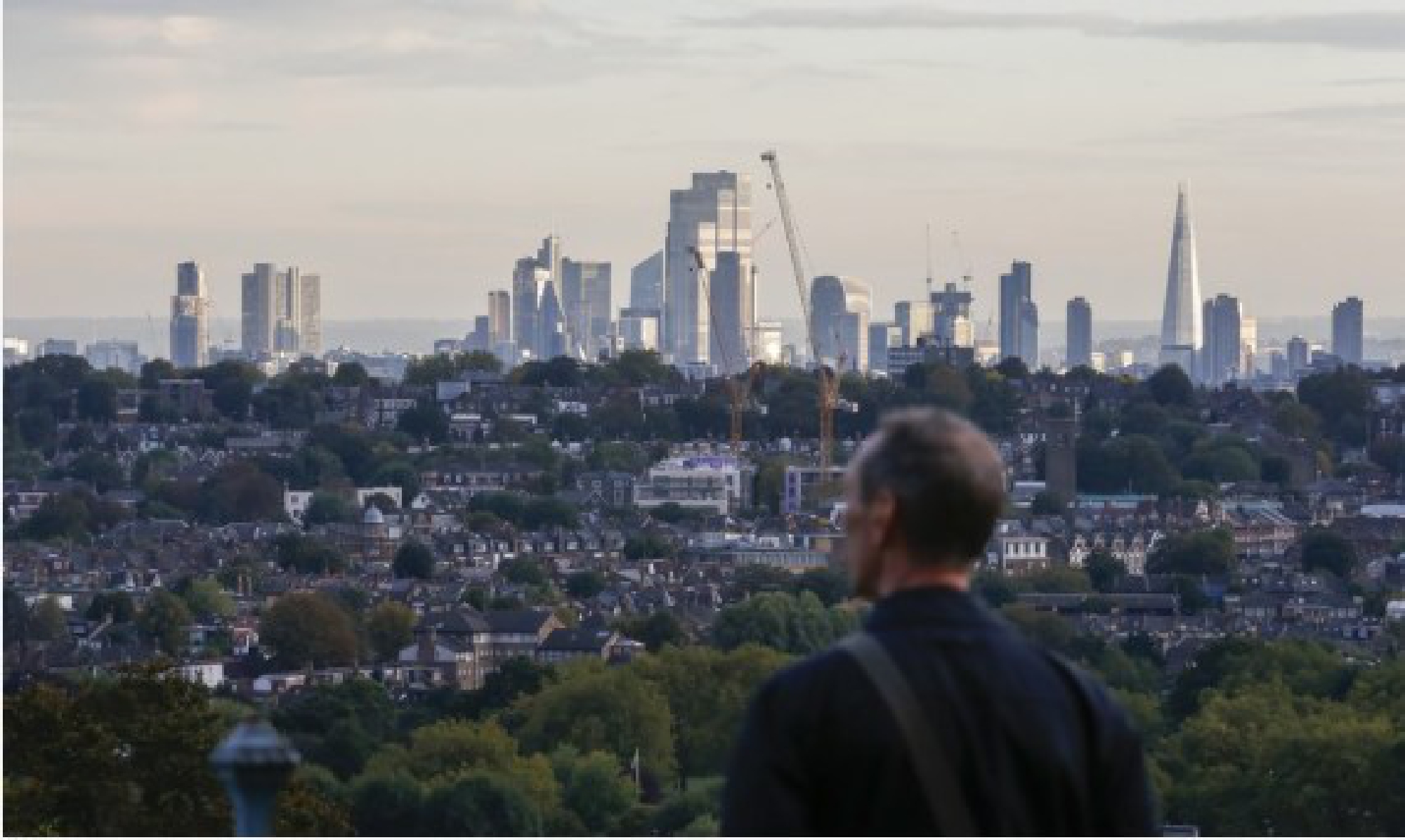
A man looks over the city from a highland in London, Britain, Oct. 17, 2021. (Xinhua/Han Yan)
The latest data came as almost 10 million people in the UK have received their booster vaccines, with three million extra invites being sent next week, according to Britain’s Department of Health and Social Care.
“I strongly urge everybody who is eligible for a COVID-19 booster or flu vaccine to take up the offer as soon as you can,” Britain’s Health and Social Care Secretary Sajid Javid said.
“This truly is a national mission. If we all come together and play our part, we can get through this challenging winter, avoid a return to restrictions and enjoy Christmas,” Javid added.
The latest evidence from Scientific Advisory Group for Emergencies (SAGE) shows that protection against symptomatic disease falls from 65 percent, up to three months after the second dose, to 45 percent six months after the second dose for the Oxford/AstraZeneca vaccine, and from 90 percent to 65 percent for the Pfizer/BioNTech vaccine.
Protection against hospitalization falls from 95 percent to 75 percent for Oxford/AstraZeneca and 99 percent to 90 percent for Pfizer/BioNTech.
More than 87 percent of people aged 12 and over in Britain have had their first dose of vaccine and more than 79 percent have received both doses, the latest figures showed. Meanwhile, more than 17 percent have received booster jabs, or third doses of a coronavirus vaccine.
To bring life back to normal, countries such as Britain, China, Germany, Russia and the United States have been racing against time to roll out coronavirus vaccines.
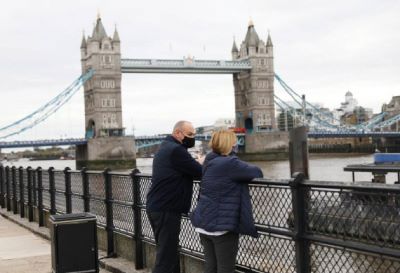
People walk past a rapid COVID-19 testing center in London, Britain, Aug. 30, 2021. (Photo by Ray Tang/Xinhua)
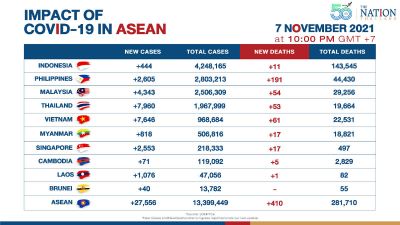
The number of Covid-19 cases crossed 13.39 million across Southeast Asia, with 27,556 new cases reported on Sunday (November 7), lower than Saturday’s tally at 28,813. New deaths are at 410, increasing from Saturday’s number of 386. Total Covid-19 deaths in Asean are now at 281,710.
Vietnam’s Ministry of Health announced that a trial for Covid-19 drug molnupiravir developed by U.S. pharmaceutical firm Merck in Vietnam saw no fatalities. The trial was conducted in 22 cities and provinces and showed the drug is safe and effective in reducing viral load, infectivity and treatment time. The ministry has also approved 39 businesses to produce the drug, and authorities are working with Merck so it could be approved as soon as possible.
The developer of MySejahtera, Malaysia’s Covid-19 tracing application, has issued an apology after it was discovered that several random users were issued with incorrect Covid-19 statuses in their personal application.
Taking to Twitter, MySejahtera responded to angry users who took their complaints on social media after finding themselves being identified as a Person Under Surveillance (PUS) for Covid-19 and placed under Home Surveillance Order (HSO) quarantine, despite they have no history of travel or contact with confirmed patients in the past 14 days. The developer added that the issue has been fixed.
KANAZAWA, Japan – A snow crab auctioned for a celebratory price of 5 million yen at a wholesale market in Kanazawa on Saturday to kick off the start of fishing season for the winter delicacy.
The uncommonly pricey specimen, weighing 1.88 kilograms with a shell width of 15.6 centimeters, also became the first certified under the “Kagayaki” brand, newly created by the Ishikawa prefectural fisheries cooperative association to denote the highest quality of crab caught in the prefecture.
The winning bidder was Hyakurakuso, which operates inns in Kanazawa and elsewhere.
“We hope people all over the country can get to know the great appeal of Ishikawa’s crabs,” said an official.
MOSCOW – For about an hour last week, people in the Central Asian country of Uzbekistan got a taste of life without social media.
The messaging app Telegram, especially popular in former Soviet republics, was blocked along with Facebook, Instagram, YouTube and others on Wednesday over a new law demanding local storage of data.
Social media users were furious, and the government quickly backtracked. In a message posted, fittingly on Telegram, the president’s spokesman said the actions of the country’s Internet regulator were “ill thought out.” Access to social networks was soon restored.
But the incident reflects a trend among Central Asian countries testing how far they can go to restrict internet freedoms.Their fight with Big Tech comes as Central Asian governments increasingly balk at Western influence and instead take their cues from powers such as China, which is investing heavily in the region.
Central Asia is also following the playbook of traditional ally Russia on internet controls.
Like Moscow – as its own censorship efforts are ramping up – the Central Asian countries are having to tread carefully for fear of public backlash. Russia has routinely fined tech giants for refusing to remove what the country has branded banned content, but officials have so far been hesitant to fully blacklist popular networks such as YouTube.
One such Russian effort, an attempted block of Telegram, ultimately ended in embarrassment for the Kremlin. The service continued to work, and prominent government officials were among the people still using it. In March, Russia’s internet regulator opted for a slowdown of Twitter, but the stakes were lower because Twitter isn’t popular in Russia.
According to the internet freedom scores from Freedom House, a pro-democracy think tank, both Uzbekistan and Kazakhstan are considered “not free.” Two other Central Asian countries, Tajikistan and Turkmenistan, are not ranked at all, but Freedom House pointed out that both have used “wholesale blackouts” of news portals and social media platforms to suppress potential anti-government chatter. Only Kyrgyzstan, among the former Soviet republics in Central Asia, is ranked “partly free” for internet openness.
“The rules of the game are largely set by Moscow,” said Arkady Dubnov, a political analyst and expert on Central Asia.
“The goals are also common: to prevent the existing vertical of power from being shaken, which, as the Russian leadership believes, can be achieved mainly among young people through the extremely popular social networks and messengers,” he added.
In September, Apple and Google removed an opposition voting app from their online stores in Russia, just as balloting began in the parliamentary election.
The app, built by associates of jailed opposition leader Alexei Navalny, was intended to help Russian voters opposed to President Vladimir Putin cast ballots in a way that would prevent splitting opposition support and handing victory to Putin. But Roskomnadzor, the Russian censorship agency, accused Apple and Google of meddling in Russia’s political affairs by allowing voters to download the app and demanded that it be removed from their online stores.
Russian authorities were able to pressure the companies by threatening to prosecute their local employees.
Digital rights activists in Kazakhstan feared the country was trying to copy that method when the parliament’s ruling party in September pushed a draft law that would require foreign tech companies to set up local offices or risk being blocked.
Though the bill was framed as a child-protection measure and a way to curb cyberbullying, activists depict it as an effort to limit free speech and silence criticism of the government.
“Unfortunately, we are between two Big Brothers,” said Ruslan Dairbekov, director of the Digital Rights Center in Almaty, Kazakhstan.
“From one brother, China, there is the export of technologies, like digital surveillance tools. And from the other brother, Russia, which is a big, huge actor in our region, there is the export of legal approaches. It’s like a model.”
More than 10,000 people have signed a petition that said Kazakhstan’s law “would damage Kazakhstan’s international reputation and undermine the country’s sociopolitical development.”
Then last week, the Kazakh government published what it said was a “joint statement” with Facebook “to cooperate closely on harmful content.” The Kazakhstan statement further said Facebook, now known as Meta, had given Kazakh authorities “direct and exclusive access to Facebook’s ‘Content Reporting System’ which can help the government report content that may violate Facebook’s global content policy and the local laws of Kazakhstan.”
But that statement was apparently released independent of Facebook. Meta spokesman Ben McConaghy said in an email that the company has “a dedicated online channel for governments around the world to report content to us that they believe violates local law.”
“We follow a consistent global process to assess individual requests – independent from any government – in line with Facebook’s policies, local laws and international human rights standards,” he added. “This process is the same in Kazakhstan as it is for other countries around the world.”
Dairbekov said the public’s negative reaction to the bill as well as the government hailing its deal with Facebook – confusion notwithstanding – could doom the draft law.
In Uzbekistan, President Shavkat Mirziyoyev in January approved legislation that mandated tech companies store Uzbek users’ personal data in the country.
That prompted the country’s internet regulator to block Telegram last week. The law was a copycat from Russia, which first used it as a basis for fining Google more than $40,000 in July.
Though Uzbekistan previously restricted access to Skype, Twitter, TikTok and Russian social media VKontakte, blocking those sites didn’t spark the same outcry as the interruption to Telegram’s service. In a country of about 34 million, Telegram is used by 18 million people, according to Madina Tursonova, a media lawyer.
Mirziyoyev’s press secretary said in a statement on Telegram that the head of Uzbekistan’s internet regulator was fired for “erroneous and uncoordinated actions.”
But while Uzbekistan appeared to enter an era of more openness in society after the death of totalitarian leader Islam Karimov in 2016, Tursonova said that “the situation with freedom of speech and media in Uzbekistan is assessed as difficult.”
“These actions by the authorities have raised doubts about the truthfulness of the government and presidential statements that the internet and social networks will not be blocked,” she added.



 A man looks over the city from a highland in London, Britain, Oct. 17, 2021. (Xinhua/Han Yan)
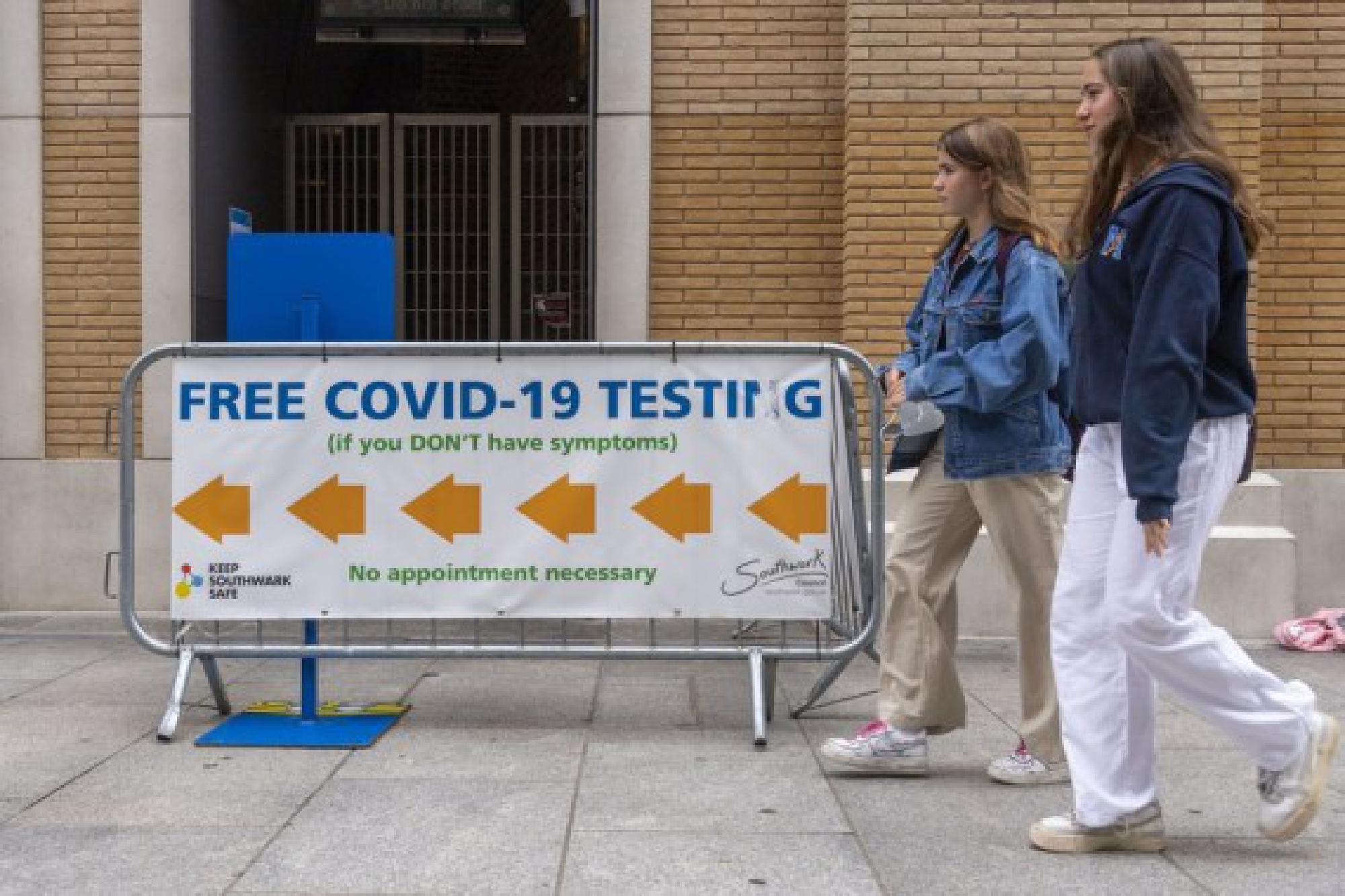 People walk past a rapid COVID-19 testing center in London, Britain, Aug. 30, 2021. (Photo by Ray Tang/Xinhua)