The U.S. is finally reopening its land border to Canadians – but Canadas rules are likely to deter many #SootinClaimon.Com

#SootinClaimon.Com : ขอบคุณแหล่งข้อมูล : หนังสือพิมพ์ The Nation.

https://www.nationthailand.com/international/40008529


The Canadians are coming. And Christine Tiger, for one, is excited.

The U.S. is finally reopening its land border to Canadians - but Canadas rules are likely to deter many

On Monday, for the first time in more than 19 months, fully vaccinated Canadians will be allowed to cross the U.S. land border for such nonessential purposes as tourism or family visits.

Tiger, a manager at the Thousand Islands Winery in Alexandria Bay, N.Y., noted their absence last month during Canada’s Thanksgiving. The holiday once inspired a surge of visitors to cross the border to slurp wine slushies. But for the second consecutive year, their travel was impeded by pandemic border restrictions.

“We can’t wait,” she said. “We’re looking forward to seeing them again.”

But although the reopening is being cheered in the tightknit communities that straddle the 5,500-mile border – and by the Canadian snowbirds who prefer to drive South to warmer climes – few are expecting an immediate flood of tourists.

That’s in part because those entering Canada – including Canadians returning from even the briefest of visits on the American side – must present a negative coronavirus molecular test result within 72 hours of arrival. Lawmakers, businesses and residents say the costly requirement – some tests are $200 – will deter the day-trippers, shoppers and families for which their economies have yearned.

“It’s exciting, but we’re also realistic,” said Corey Fram, the director of tourism for the Thousand Islands International Tourism Council. “We know there’s going to be a bump in southbound traffic,” he said, “but we know it’s going to be limited. It’s not where we want to be just yet.”

Drew Dilkens, the mayor of Windsor, Ontario, across the river from Detroit, told a local radio station last month that the testing requirement would dissuade the kind of short cross-border trips that are common there, for celebrating a family birthday or watching a Detroit Lions game.

“If you just want to head over for a funeral or to visit someone in the hospital, the expectation is you’re going to have to pay $200 to have a PCR test to return to Canada,” he said. “I think for most that’s going to be a deal killer.”

Canada and the United States closed their land border to nonessential travel in March 2020. Trade and the movement of essential workers continued. The curbs strained personal relationships, hit the tourism industry and upended life in border communities in ways large and small.

Canadians initially backed the restrictions as they watched the cases of covid-19 surge south of the border. But as one month turned to six and then 12, pressure mounted among some lawmakers, business groups and residents in both countries to begin relaxing the controls.

Canada welcomed fully vaccinated Americans in August. But the United States declined to reciprocate, a decision that deepened frustration, particularly in communities reliant on day-trippers, shoppers or tourism. (The United States always allowed Canadians to enter by air for nonessential travel.)

Land traffic into Canada this year is higher than it was in 2020 but remains below pre-pandemic levels.

In 2019, about 15 million tourists visited Canada from the United States, according to Statistics Canada. They made up two-thirds of Canada’s tourist arrivals. Most traveled by car.

From Aug. 9, when Canada began allowing fully vaccinated Americans to cross its land border, to Oct. 24, the most recent date for which data is available, there were an average of roughly 167,500 noncommercial crossings per week, according to the Canada Border Services Agency. That’s 15 percent of the average volume over the same period in 2019.

“Even though we did in early August open up the borders to American visitors … we definitely did not see any huge impact or a real change,” said Bill Stewart, the executive director of the 1000 Islands Chamber of Commerce in Gananoque, Ontario.

Many of the Americans who have crossed have been people with relatives or cottages in Canada, he said; far fewer have been day-trippers. He attributed this primarily to the testing requirement but also said some people might have firmed up their holiday plans well before Canada announced it was easing the curbs on its side.

Heidi Linckh, co-owner of the 1000 Islands Tower in Lansdowne, Ontario, said the 400-foot-tall tourist attraction has not been flooded with American visitors. The structure, an observation tower, has been closed for the season.

“We did not have any day-trip visitors and only a couple of regular tourists,” Linckh said. “It seemed the majority came to reunite with family or [check] on their Canadian properties.”

Some business groups and lawmakers have urged Canada to drop the test requirement. Rep. Brian Higgins, D-N.Y., co-chairman of the congressional Northern Border Caucus, is among them.

“In border communities such as western New York and southern Ontario, the local economies depend on the free flow of goods and people across the border, often multiple times per day,” he wrote in an Oct. 29 letter to Kirsten Hillman, Canada’s ambassador to the United States. “The expectation that fully vaccinated Canadians and Americans will be able to afford multiple tests per week for the indefinite future to go about their business ignores the economic reality.”

Theresa Tam, Canada’s chief public health officer, said last week that the testing requirement is being looked at “quite carefully.”

Some officials have worried that the prolonged curbs at the border could have longer-lasting impacts on travel patterns that will be difficult to unwind. They point to controls imposed after the attacks of Sept. 11, 2001. Passenger traffic at the land border has not fully recovered from those restrictions.

“The risk we have is that people will change their habits,” Jean Charest, a former deputy prime minister and former Québec premier, said at an event hosted by the Canada Institute at the Wilson Center in Washington last month. “There’s going to be a consequence, and there’s going to be … some scars, and some of it could have been avoided.”

Charest was part of a task force assembled by the think tank, with another former deputy prime minister and former governors of border states. The panel released a report recommending that the next time a pandemic strikes, their countries should aim to manage risks at the border, not try to eliminate them altogether.

“It is clear to us that the border restrictions were instituted in a good-faith effort to protect the public,” the panel said in its report. “Yet the existence of a significant number of people affected acutely by these restrictions is clear as well. The border … is too diverse for a ‘one-size-fits-all’ policy to be sustainable over time.”

Fram, of the Thousand Islands International Tourism Council, is looking forward to seeing more Ontario license plates.

“I never would have believed back in March of 2020 that we’d still be here,” he said.

Published : November 08, 2021

By : The Washington Post
COP26 climate summit shifts from pomp and promises to difficult negotiations #SootinClaimon.Com

#SootinClaimon.Com : ขอบคุณแหล่งข้อมูล : หนังสือพิมพ์ The Nation.

https://www.nationthailand.com/international/40008528


GLASGOW, Scotland – The pomp and promises that marked the initial days of the COP26 climate conference here are giving way to the difficult task of hammering out an agreement on what nations will actually do together to combat global warming – and how.

COP26 climate summit shifts from pomp and promises to difficult negotiations

As the second and final week of the most-watched international climate summit in years begins, delegates face familiar but vexing problems about how the world can agree on policies to deal with widespread deforestation, warming temperatures, rising seas and other dimensions of global climate change at stake. Central to all that is the allocation of hundreds of billions of dollars.

COP26 President Alok Sharma, striving to make Glasgow a success, urged delegates that it was “the time to shift the mode of work” and enter “a more political, high-level phase of the conference.”

Last week was a preview of sorts. But the presidents and prime ministers have long since come and gone. The streets that only a day ago echoed with the chants of protesters, marching by the thousands through a cold November rain to demand climate action, sat mostly calm and quiet on Sunday. The lines at security checkpoints and coffee stands have vanished. Prince William, by all accounts, has left the building.

In coming days, by contrast, negotiators from nearly 200 countries will haggle over every word in every line of an agreement that could shape how nations report progress on cutting greenhouse gas emissions, how global carbon markets function, and how the rich countries of the world deliver on promises to help more vulnerable nations.

Perhaps this year more than ever, the delegates debating in private conference rooms along the River Clyde know their decisions will be scrutinized by the activists who have descended on Glasgow in recent days, as well as people around the world who have seen their lives and livelihoods upended as the planet warms.

“As the negotiators huddle in smaller groups trying to thrash out agreement on technical issues and specific words, so the world outside the negotiating rooms will become more and more frustrated if they fear an agreement that doesn’t represent the urgency young people feel and match the anxiety that climate policy experts feel,” Rachel Kyte, dean of the Fletcher School at Tufts University, said in an email. “The next week will be tense, but has to be productive.”

The beginning of this year’s United Nations climate talks offered a chance for scores of world leaders to unfurl a litany of long-term promises.

There was the new coalition of nations working to halt deforestation, another to curb the powerful greenhouse gas methane, and still another promising to stop spending tax dollars to fund overseas fossil fuel projects. Financial giants, meanwhile, pledged to use their monetary might to help the world hit net-zero emissions by the middle of the century.

At the same time, the presidents of major emitting nations such as China and Russia skipped out on Glasgow and offered little in the way of new climate plans. And the promises that nations submitted in the lead-up to the summit fell short of the most ambitious goal of the Paris agreement: limiting Earth’s warming to no more than 1.5 degrees Celsius (2.7 degrees Fahrenheit) above preindustrial levels.

By now, the parallel universe that exists inside and outside of the climate summit has been well documented.

Inside: A week dominated by pronouncements and assurances that true progress is being made, that the world is inching toward a less-dark future. Outside: Accusations that leaders are again failing to act and are offering empty promises.

The chasm between the two was captured by protesters carrying posters with activist Greta Thunberg’s three-word summary of the proceedings: “Blah, blah, blah.” Asad Rehman, one of the lead organizers of the massive climate justice protests in Glasgow on Saturday, slammed the U.N. meeting as a “conference of polluters.”

Inside on the same day, Sharma was noting how merely months ago, pledges to reach “net zero” in coming decades existed for only about 30% of the global economy. Today, that number is close to 90%. “By any measure, that is progress,” he said.

But beyond blanket assessments about whether COP26 is succeeding or failing lie thorny issues that have tripped up negotiators at these talks for years – and that they will have to overcome to shape an agreement all nations are willing to embrace.

The Paris accord set key thresholds of warming that world leaders agreed not to cross, most important the 1.5 Celsius (2.7 Fahrenheit) target. It also created a voluntary framework to translate those lofty goals into practical policies.

But the framework still has unfinished parts. The Paris agreement said country reports on climate must be more transparent. It established a detailed but incomplete set of rules to make sure that carbon markets function fairly. And it promised that rich nations pony up at least $100 billion annually in financing to help poorer countries cope with catastrophic impacts and build greener economies – a pledge that has not yet been fully met.

“We’ve been discussing a whole range of these issues for six years without resolution,” Sharma said. “And I think that shows you how challenging this is.”

Agreeing on the specifics of how to make each of those and other elements work in the real world will define how much COP26 actually accomplishes.

“It is tense right now. People are having to take tough decisions, as they should,” Archie Young, the lead U.K. negotiator, said Saturday, adding, “I think it is really important that we recognize the hard work that goes into the importance of some of that technical work.”

U.S. climate envoy John F. Kerry, for one, remains an optimist. He has said he supports activists pushing leaders to do more, and shares their frustration. But he also sees the usefulness in the lumbering and sometimes messy climate talks, where countries large and small have a voice.

“The alternative is you don’t say anything, you don’t do anything. You don’t have any promises. You don’t have any commitments,” he told reporters Friday. “And you’re sitting there just waiting for the deluge. So we’re doing what democracies and the democratic process in the global multilateral system does, which is bring people together and find a way forward.”

Malik Amin Aslam, a federal minister and special assistant on climate to Pakistan’s prime minister, praised the 77-year-old Kerry’s “passion,” but said that “the average age of decision-makers is 60. We’re talking about 2060, 2070 [targets] and none of these guys is going to be around. The people affected are the ones out on the streets. They’re the ones whose lives are at stake.”

He compared the recent promises to hit net-zero emissions targets between 2050 and 2070 to a bit of dark humor circulating the conference. It describes a 73-year-old man who is hailed for setting “an ambitious target” to quit drinking within the next 30 years.

Unfortunately, the Pakistani envoy said, “climate change is not a joke.”

Firm language around financial support was missing from a list of priorities the COP presidency sent out to negotiators Sunday. Developing nations have long called on their wealthy counterparts to compensate hard-hit communities for what’s known as “loss and damage” – the lives, livelihoods, homes and infrastructure irreversibly harmed by climate effects. Yet the priorities document contains minimal references to the issue, and richer countries could block efforts to include it in the final agreement.

“If we don’t have some processes, some solutions, on how to get finance for loss and damage, that would not be seen as a success,” Yamide Dagnet, director of climate negotiations at the World Resources Institute (WRI), told reporters Sunday. “It would be unlikely that vulnerable countries would be happy with the outcome.”

Dagnet’s colleague David Waskow, director of WRI’s International Climate Initiative, also worried about the relatively modest pledges put forward by major polluters such as China and Russia. Technically, these nations won’t have to boost their ambitions until 2025, the next official “ratcheting up” deadline under the Paris agreement. But by then it may be too late to keep the ambitious 1.5 goal within reach.

“This is an important gap,” he said.

Farhana Yamin, a prominent climate lawyer and longtime adviser to developing and vulnerable nations who has attended numerous COP summits, said negotiators in the coming week must find a way to back up all the recent promises with concrete rules.

“I think overpromising and underdelivering is fatal to law, to international law,” she said on a panel Saturday evening. “We were supposed to have peaked emissions in 2020 and now in 2030 they’re not peaking, even after all the pledges and support are in. So this is the credibility gap, and it is vast. Pretending that is not the case is the reality gap.”

The reality gap must close in coming days, she added. “Because in the real world, people are really suffering.”

Although COP26 will not reach the overarching goal to meet the most ambitious Paris goal – to “keep 1.5 alive,” as many leaders and protesters alike have said – there are signs that the curve is beginning to bend in a positive direction.

On Thursday, the Paris-based International Energy Agency (IEA) reported that new national emissions reduction pledges, combined with other commitments made last week, could give humanity an even chance of limiting warming to 1.8 degrees Celsius (3.2 degrees Fahrenheit).

That level of temperature rise would still have catastrophic consequences, scientists say. But it is the first time global climate commitments have put the Paris target of holding warming “well below 2 degrees Celsius” within humanity’s reach.

That is, if the world actually follows through.

That’s what the second week of the U.N. climate conference must be about, said Corinne Le Quéré, a climate scientist at the University of East Anglia. Whatever agreement negotiators reach will determine whether the IEA analysis represents a realistic scenario for the future, or just another fantasy about what could have been.

“Really, it’s about the level of detail they’re able to put behind the promises,” Le Quéré said. “It’s going to be, I’m afraid, a bit more boring.”

“But this what the COPs are really about,” she added, “Sorting out the details.”

Published : November 08, 2021

By : The Washington Post
Patience, persistence pay off as Biden brings infrastructure package across finish line #SootinClaimon.Com

#SootinClaimon.Com : ขอบคุณแหล่งข้อมูล : หนังสือพิมพ์ The Nation.

https://www.nationthailand.com/international/40008520


WASHINGTON – Less than 10 months after taking office and several days after his party suffered a stinging defeat in the Virginia governors race, President Joe Biden achieved one of his goals: a bipartisan agreement that would make major investments in all 50 states for years to come.

Shortly before midnight on Friday, when the House passed the bill 228-206 with the backing of more than 10 Republicans, Biden’s slumping political fortunes appeared to suddenly change. After seeing his poll numbers slide for weeks, he had suddenly fulfilled a core campaign promise and notched a major victory after months of legislative gridlock.

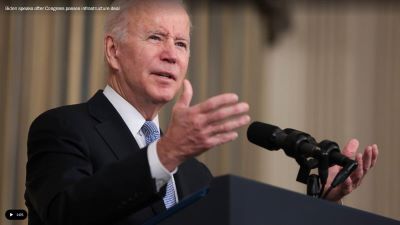
“I don’t think it’s an exaggeration to suggest that we took a monumental step forward as a nation,” Biden said Saturday morning at the White House, flanked by Vice President Kamala Harris. “We did something long overdue, that has long been talked about in Washington, but never actually done.”

Biden called the bill a “once in a generation” investment that would create millions of jobs and improve America’s economic standing.

รูปภาพนี้มี Alt แอตทริบิวต์เป็นค่าว่าง ชื่อไฟล์คือ 9i7wnu2oeqldsefmkfl0.jpg

Biden said the measure included the most significant investment in roads and bridges in 70 years; the most significant investment in passenger rail in 50 years; and the most significant investment in public transit in history. Biden said he and Harris would have a formal signing ceremony for the measure “soon,” citing the desire for those who worked on the legislation to be able to attend.

“For all you at home who feel left behind and forgotten in an economy that’s changing so rapidly – this bill is for you,” Biden said. “The vast majority of the thousands of jobs that will be created do not require a college degree.”

“This is a blue collar blueprint to rebuild America, and it’s long overdue.”

Biden also said both the House and Senate would approve a separate climate and social spending package but did not specify a deadline. He also declined to comment on whether the centrist lawmakers who primarily supported the infrastructure package had committed to supporting that broader $2 trillion piece of legislation that has pitted centrist Democrats against liberals for months. Biden said he would not comment on private conversations.

Those hurdles await. On Saturday, he seemed to bask in the hurdle he had just cleared. The roughly $1.2 trillion infrastructure bill – which includes $550 billion in new spending – will soon go to his desk for signature, and he said Saturday he would invite Democrats and Republicans to a ceremony so they could have the moment together.

The Senate first passed the infrastructure bill in August with a 69-30 vote, a rare moment of bipartisanship, the type of partnership he had committed to during the 2020 campaign. The measure had languished in the House for several months as liberal lawmakers sought to use their leverage over the plan to advance Biden’s larger climate and social spending bill, but Democrats reached a deal late Friday night to proceed.

The breakthrough followed a brutal election night for Democrats on Tuesday, and a summer in which the White House was roiled by the messy withdrawal from Afghanistan and the surging coronavirus delta variant.

But with the bill’s passage, Biden has achieved milestones that his predecessors only reached for. He pulled U.S. troops out of Afghanistan, ending America’s longest war, something President Donald Trump and President Barack Obama had hoped to do. And he will soon sign an infrastructure package that Trump had promised but never built the political coalition to achieve.

Once law, the infrastructure package would be the second major legislative achievement of Biden’s presidency, following the March stimulus law. But unlike that measure, the infrastructure package enjoyed broad bipartisan support, winning even the backing of Senate Minority Leader Mitch McConnell, R-Ky. The stimulus plan was also aimed at addressing current problems in the U.S. economy, while the infrastructure plan is aimed at more lasting change.

Biden had tried to encourage a bipartisan approach to the bill for months, hoping it would serve as a model for other initiatives.

Some key authors of the bill, such as Sens. Kyrsten Sinema, D-Ariz., and Rob Portman, R-Ohio, sought to break through partisan gridlock and deliver a package that liberals and conservatives would support. They were able to design the bill in a way that won the backing of business groups and labor unions without financing everything through big tax increases.

Past Democratic and Republican administrations have failed to secure such infrastructure legislation despite growing calls for action from labor leaders, the business community, and experts alarmed by the nation’s degrading public works systems. Trump had long talked about passing a massive infrastructure package, but his advisers never coalesced around a strategy and “Infrastructure Week” became a running joke among his aides. As those efforts languished, domestic infrastructure problems grew, with the United States eventually ranking behind a dozen other developed countries, raising concerns about safety and the nation’s economic competitiveness.

“It’s a game-changer for the country: The first comprehensive infrastructure plan we’ve had since Dwight D. Eisenhower created the interstate highway system” in the 1950s, said Ed Rendell, a Biden supporter and former Democratic governor of Pennsylvania. “It will be a big shot in the arm.”

Biden gave lawmakers space to cut the deal, hosting Democrats and Republicans to the White House over the summer as negotiations intensified. He sought to pay for the new projects with higher taxes. When lawmakers balked, he said he was open to other ideas. The bill that passed the Senate in August stayed intact over the past three months. But it remained dormant while House Democrats fought over other parts of their party’s agenda. Biden’s poll numbers slid over that span as the bill remained tied up and questions were raised about whether it would ever become law.

Americans would begin feeling the impact of the infrastructure legislation in two to three months, as funding gets prepared for projects to start, Biden said on Saturday.

Transportation Secretary Pete Buttigieg told CNN on Saturday that the money would quickly help fund projects for safety on roads as well as state highway and other transportation projects. He said funding for electric vehicle charging stations and other brand new programs created by the legislation could take longer.

Franklin Delano Roosevelt was known for the “The New Deal” and Theodore Roosevelt was known for “The Square Deal” but Biden’s agenda represents “The Big Deal,” Buttigieg said.

“The work begins right away but it will go on for years to come,” Buttigieg said.

Biden unveiled an approximately $2 trillion jobs plan this spring that became the core the infrastructure proposal, as well as another $2 trillion proposal focused on education, climate, and parts of the safety net that Democrats are still debating in Congress.

Major legislative obstacles to both packages slowed their progress, and for months Washington has been consumed by gridlock and tense negotiations that stretched on for days and generated negative publicity for the administration.

Many congressional aides were initially skeptical of Biden’s insistence on a bipartisan infrastructure bill, believing that Republican lawmakers would never coalesce around a deal with the White House. And many Republicans did ultimately reject the measure, alleging it would amount to wasteful spending. But 19 Republicans joined 50 Democrats in backing the bill during the August vote. And more than 10 Republicans in the House helped shepherd the bill into law Friday night.

Many of the Republicans who supported the measure were motivated by a mixture of support for the underlying policies and a desire to show that they could work with Biden productively if the White House chose to pursue measures in a bipartisan way.

“Passing major legislation in good faith shows that Democrats don’t need to get rid of getting the filibuster, because Republicans will operate in good faith when there’s an area for compromise – that was part of the calculation for working with the president,” said Donald Schneider, who served as chief economist to Republicans on the House Ways and Means Committee.

Nonpartisan estimates have found the legislation will add more than $250 billion to the deficit over 10 years, as it relies on a series of revenue gimmicks due to GOP aversion to raising taxes on the wealthy and the White House’s refusal to raise taxes on Americans earning under $400,000 per year.

Liberal economists say the measure only partially addresses the nation’s economic needs and that the White House must be committed to doing far more. Darrick Hamilton, an economist at the New School, said Biden’s presidency would be “inadequate and incomplete” if he only passes the bipartisan infrastructure bill. Biden’s plans to enact universal prekindergarten, measures to combat climate change, and other welfare expansions remain tied up in both the House and Senate, with no clear resolution at hand.

“If this is all we end up with, then it’s a missed opportunity and more of the same,” Hamilton said. “it’s definitely not enough.”

Still, the White House will welcome the passage of even part of their agenda. Biden’s approval rating has slipped steadily for months as the administration was caught flat-footed by the resurgence of the pandemic, unexpected inflation, and crises abroad. But on Friday, White House aides saw reason to believe their fortunes could be turning – with signs of the virus receding, the economy posting its best jobs data in months on Friday, and progress emerging on long-stalled parts of the president’s economic agenda.

Rendell, the former governor of Pennsylvania, urged the administration to send senior officials to every significant infrastructure groundbreaking across the country next year. He said every congressional Democrats should hammer the following message: “President Trump could not do infrastructure for years with a Republican Congress, but President Biden delivered the biggest infrastructure package since Eisenhower.”

Published : November 07, 2021

By : The Washington Post

Inside with diplomats and carbon counters, outside with protesters and their manure #SootinClaimon.Com

#SootinClaimon.Com : ขอบคุณแหล่งข้อมูล : หนังสือพิมพ์ The Nation.

https://www.nationthailand.com/international/40008519


GLASGOW, Scotland – They say the last best chance to save the planet is happening here, in a bland cavernous conference center, where indigenous leaders in feather headdresses brush past Prince Charles, and Wall Street money huddles with green hydrogen nerds.

Inside the global climate summit known as COP26? The vibe is pandemic meets the annual meeting of the World Geophysical Society. There’s virtue signaling, greenwashing and speeches in sometimes half-empty halls.

The pledges came fast and furious this past week. About all the great things that will happen in 2030 or 2050 or 2070.

Meanwhile, in the backrooms, the planet’s actuarial accountants were toting up how many more gigatons of carbon dioxide equivalents we can emit before the polar ice caps melt.

Outside? There were 100,000 people in the streets of Glasgow on Saturday, marching through the wind and rain.

It’s called “dreich,” according to Tamara Colchester, 35, of London. “It’s like a grim, drizzly day,” she said. “Specifically in Scotland.”

Costumes and creative signs abounded: one man on stilts was bedecked in blue fabric and cloth sea creatures. Children held up a long piece of fabric meant to look like a caterpillar.

Alice Francis and Malcom Strong, from southwest Scotland, arrived pushing a homemade “bulls— cart,” complete with a trash bin, rake and real manure from their horse, Dougal, back home

Strong, a woodworker, was particularly angered by what he deemed problematic forestry practices in Britain. Humanity – and specifically Britain’s Conservative government – needs to clean up its mess, he said.

But hey, the negotiations are going well. U.S. climate envoy John Kerry is cautiously optimistic.

But hey, the talks are a failure. Swedish superstar activist Greta Thunberg thinks COP is a con.

Inside the summit, masks. Negotiators drinking carbon-neutral coffee in sustainable blue coffee cups.

Outside the summit, the comedic actor Rainn Wilson paid to have a melting iceberg shipped to Glasgow from Greenland. Little kids waved signs echoing Thunberg’s disdainful refrain, “blah, blah, blah.”

What does COP26 feel like? Depends.

After four years largely in absentia under president Donald Trump, the United States has reestablished a foothold at the conference under President Joe Biden.

Like hand sanitizer, Kerry has been omnipresent. The old climate warrior said he’d never been to an environmental summit with “a greater sense of urgency” and “a greater sense of focus.”

Kerry has been coming to these shows since the first “Earth Summit” in Rio de Janeiro in 1992.

Hana Kidy, an economic liaison with the Liberian delegation, is at her first COP.

“It feels awesome,” she said. “It feels overwhelming. It feels intense. Mostly intense.”

Intense, but also not that intense?

British Prime Minister Boris Johnson told the summit it was “one minute to midnight.” But he appeared to have time to take a short nap on camera. President Biden may have been resting his eyes, too.

There have been long lines to get into the Blue Zone, the secure guts of the summit. You need a negative coronavirus test. The security guards check, usually.

At the star-studded beginning of the week, Indian Prime Minister Narendra Modi’s entourage was everywhere, rushing back and forth past the Scottish Larder and Grab & Go, where participants could purchase overpriced egg mayonnaise sandwiches.

Prince Charles moved more slowly, and with a smaller posse. Prince William had no posse at all – or if he did, it was very discreet.

Chinese President Xi Jinping and Russian President Vladimir Putin are no-shows – which means both fewer potential spoilers and lower expectations for what the summit might accomplish.

Actor and climate activist Leonardo DiCaprio wouldn’t miss it, though. He flew commercial to Glasgow, in coach.

Al Gore was in the house, too. The former vice president told the summit that satellites will serve as the new “neighborhood watch” to monitor compliance with emissions pledges.

Over beers, Ukrainian gas representatives pitched their products to Japanese firms. Titans of industry lurked behind closed doors.

Bill Gates sat in a meeting room, hosting one journalist, then another, some of whom asked questions that made his leg tap impatiently.

NATO Secretary General Jens Stoltenberg stood by himself, waiting for his team to locate a BBC reporter who had promised to be tall but was actually shorter.

The Indonesian pavilion served a steady stream of hors d’oeuvres. The Australians had the best coffee. Or so our WhatsApp feed said.

In the rain a few blocks away, tens of thousands thronged into Kelvingrove Park. Friends had to shout to hear each other over the chants and songs and wind.

Hermione Spriggs, 33, reveled in the sodden chaos. “It’s lovely being part of being part of this big blob of humans,” she said.

Spriggs, who runs tracking and foraging workshops in her native Yorkshire, was decked out in a costume made of netting woven with leaves and native grasses. Only her face was visible through the mass of green.

When she’s out in nature, she said, the outfit helps her blend in.

“And it helps us stand out at a protest,” she said.

As she walked through the park with similarly-dressed Colchester, strangers kept stopping them to take photos. The women vamped and laughed.

But at a climate protest, even two foragers clad in clothing made of leaves can find kindred spirits.

Derick MacKinnon, a 39-year-old musician from the Scottish highlands, handed them a concert flier made of biodegradable paper embedded with wildflower seeds.

“Oh how lovely,” Spriggs cooed, tucking the flier into her costume.

“I’m moved by the way people are gathering here,” Colchester said. “People are meeting who wouldn’t otherwise meet. We’re all here for a common purpose. Weathering the weather together.”

The virus is still in the game. Britain is facing a surge in covid. Several conference-goers have been overheard muttering beneath their masks about the potential for a “super spreader” event of global proportions.

But COP26 President Alok Sharma revealed that case rates at the conference are “significantly below” rates among the general public in Scotland. That was supposed to be reassuring.

The menus at food stands in the conference hall list the carbon footprint of each item. For the carbon-conscious, a Scottish delicacy called “haggis, neeps and tatties” will set you back 3.4 kilograms of carbon dioxide equivalent, while the vegetarian version will ease your eco-guilt with only 0.6 kilograms.

At the center of the conference venue, countries and organizations have their own pavilions, where they highlight their efforts to cut emissions and the challenges they face.

The pop-up hosted by Egypt, the largest oil producer in Africa outside the Organization of Petroleum Exporting Countries, features a towering green replica of a windmill.

At the pavilion hosted by Tuvalu, an independent island nation midway between Hawaii and Australia, attendees gaped at a striking art installation. It depicts three polar bears wearing life preserver vests, standing on an iceberg, while a penguin hangs with a noose around its neck, a victim of despair.

The artist, Vincent Huang, said his work is a metaphor for the people of Tuvalu, who are responsible for “almost zero carbon emissions” but who face an existential threat from sea-level rise, which could make their country uninhabitable in 100 years.

“Like the penguin and the polar bear, they didn’t do anything wrong,” Huang said in an interview. “This is an injustice.”

Entering the conference on Friday, Indigenous leaders from Brazil were instructed to remove their feather headdresses and place them in gray plastic bins before passing through metal detectors. The colorful feathers crumpled against the stiff corners of the bins, as the leaders walked uncertainly through the beeping machines. The items in adjacent bins included designer handbags belonging to a coterie of European diplomats.

On the other side of security, Simone Vidal da Silva stood out amid a crowd of journalists and diplomats in black suits. Decked in a vibrant green headdress, yellow-and-blue feather earrings, and red face paint, da Silva said she came to Glasgow to tell the world about the importance of protecting the Amazon rainforest.

“It is important not only for the Indigenous people in those territories, but for all of humanity,” da Silva said through a translator. She spoke quickly and urgently, using her hands to punctuate her words and to gesture at the seeming absurdity of the conference around her.

Asked whether she trusted the pronouncements of Brazilian President Jair Bolsonaro, another no-show, who has presided over the destruction of roughly 10,000 square miles of the Amazon rainforest, da Silva said world leaders have made promises that “are lies for us. They don’t exist in the real world.”

Published : November 07, 2021

By : The Washington Post

Fuel tanker explosion kills at least 98 in Sierra Leone #SootinClaimon.Com

#SootinClaimon.Com : ขอบคุณแหล่งข้อมูล : หนังสือพิมพ์ The Nation.

https://www.nationthailand.com/international/40008517


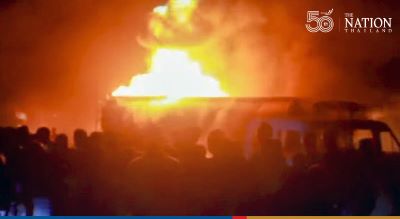
DAKAR, Senegal – A fuel tanker exploded on the outskirts of Sierra Leones seaside capital late Friday, killing at least 98 people and wounding dozens of others in one of the deadliest accidents the West African nation has endured in years.

The tanker burst into flames at a busy intersection after colliding with a truck in Freetown’s suburb of Wellington, turning the night sky orange, photos and video show.

“I’ve never seen something like this before in all my years of practice as a surgeon,” said Mustapha Kabba, head of Connaught Hospital, the city’s largest medical center. “We have a lot of severe injuries. A lot of burns. A lot of corpses.”

Practically every doctor in the area rushed to the hospital and treated victims through the night, he said. By Saturday, medical workers were scrambling to find enough IV fluids, antibiotics and other essentials for soothing burns. Family members gathered outside, waiting for news about loved ones.

At least 92 people were injured in the blast, Mayor Yvonne Aki-Sawyerr wrote on her Facebook page, adding, “The video and photo footage making rounds on social media are harrowing.”

People had crowded around the crash to collect leaking fuel when the tanker blew up, witnesses said. Anything spilled was viewed as wasteful in a community where many struggled to afford gas. The wreck didn’t seem dangerous until it burst into flames.

“There are dead bodies all around,” one witness, Jusu Jaka Yormah, told reporters at the site, who shared a recording of his account in a WhatsApp voice message. “There are people screaming, people burning alive.”

Nearby cars and buildings quickly caught fire.

“The firefighters came, but there was nothing they could do by then,” Yormah said. “The blaze was so much. There was nothing they could do to contain the inferno.”

Officials initially said a bus was involved in the accident but clarified on Saturday that the tanker hit a truck carrying granite stones as it pulled into a gas station.

“Both drivers came out of their vehicles and warned community residents to stay off the scene,” Sierra Leone’s National Disaster Management Agency wrote in a statement, but people kept scooping up the gas in makeshift containers.

The death toll is likely to rise, officials warned, as more bodies are recovered from the debris.

The nation’s president, who was in Scotland on Saturday for the U.N. climate summit, tweeted an image of people standing around the smoking wreckage.

“My profound sympathies with families who have lost loved ones,” President Julius Maada Bio wrote, “and those who have been maimed as a result.”

The accident happened about 10 miles east of the site of another major disaster, some noted: the Sugarloaf mountain mudslide, the deadliest in Sierra Leone’s history, which claimed more than 1,000 lives in 2017 and destroyed thousands of homes.

Similar tanker blasts have killed hundreds of people in African countries in recent years – usually involving victims trying to bottle the leaking fuel. A pair of 2019 explosions in Niger and Tanzania, for instance, killed at least 165 people combined, and a similar calamity in Kenya this summer killed 13.

Published : November 07, 2021

By : The Washington Post

Hungry in Glasgow? The COP26 menu comes carbon counted. #SootinClaimon.Com

#SootinClaimon.Com : ขอบคุณแหล่งข้อมูล : หนังสือพิมพ์ The Nation.

https://www.nationthailand.com/international/40008516


GLASGOW, Scotland – The COP26 climate conference has cooked up its own breed of food critics. Forget the taste. Its all about the carbon footprint.

And the menu in Glasgow is getting skewered for the apparent carbon trail some dishes have left behind.

How do people know? It’s right there where you order. Listed next to choices of meat, dairy and fish – and vegetarian and vegan options – is the carbon footprint figure of each meal.

Want a Scottish beef burger? It’s unclear what that will set you back calorie-wise. And who’s to say if you’ll get darting glares from vegans dining nearby. But the burger had been calculated to have a 3.9kg Co2e rating (more on the numbers in a second). That’s much higher than, say, the Scottish beetroot and broccoli salad (0.2) or braised turkey meatball pasta (0.9). The “Haggis, Neeps & Tatties” – ‘neeps’ and ‘tatties’ are ‘turnips’ and ‘potatoes’ and haggis is, well, a lot of things – which gets a rating of 3.4.

The campaign group Animal Rebellion said that serving meat and dairy products at a climate summit was tantamount to “serving cigarettes at a lung cancer conference.”

Some of the delegates poring over menus right before suppertime on a recent day were alarmed by the choices.

“I was shocked when I came here and saw all these,” said Peter Odrich, 20, a delegate from Germany, who was referring to the meat options. He was eyeballing a menu at the “fish and chips” stand, and opted for the tempura broccoli, the only vegetarian option on that particular menu, which also had the lowest carbon footprint.

To calculate each meal’s carbon footprint, the food suppliers at the climate summit partnered with Swedish startup Klimato, which helps restaurants calculate and communicate climate impacts on their food.

The carbon footprint of a food product takes into account greenhouse gas emissions from every stage of the food production process – from cultivation and farming, to processing and transportation, Klimato states. The group assesses emissions related to each stage of the food product’s “life cycle,” and takes into account country and local market data to then spit out a final emissions total.

“Low” carbon footprint foods emit 0.1 to 0.5 carbon dioxide equivalent (CO2e) per kilogram. “High” carbon footprint foods exceed 1.6 kg CO2e. The average meal Britain is “high.”

Food is a big deal in the global effort to tackle climate change. The food industry accounts for a whopping third of global emissions, according to the United Nations.

Some of the delegates pouring over the menus wondered if the inclusion of Scottish beef burgers was – deliberately or not – a cunning move by the British organizers to showcase how different dishes have a different impact.

“I can’t quite tell if they are making a point by doing that,” Rohan Mehar, 38, who works for the University of Tokyo. “There might be a long game I’m not aware of. Or, have they really thought this through?”

“Does it make people think when they see these figures? Is the audience here more affected by having a beef burger on the menu that is clearly worse than plant-based options,” he added. “That might make them change their minds based on seeing those things.”

Did it change his mind? As a vegan, he was always going to go for the plant-based option anyway.

Still, he did have questions about the menu he was reading that showed that haddock fish cakes (1.0) had a seemingly similar rating than tempura broccoli (0.8).

“Don’t you need, uh, maritime equipment to get the fish?” he asked. “I was expecting it to be higher.”

Cop26’s catering and hospitality partner, Levy UK + Ireland, says that their menus are low carbon, using in-season and mostly local produce – 95 percent is sourced in Britain – with many suppliers within 100 miles of Glasgow. Forty percent of the dishes are fully plant-based, almost 60 percent vegetarian, and the majority fall into the “low” carbon output level, organizers said.

Anna Maria Kleymeyer, a climate lawyer who has been to every COP since 2006, said that there are far more vegetarian options on the menu than ever before, and she couldn’t remember organizers ever before publicizing the carbon content of the food.

She was sitting at a pavilion booth called “The Methane Moment” that had a number of statistics on panel boards, including this humdinger one next to a picture of a herd of cattle: “Methane from livestock accounts for nearly 30 percent of global methane pollution.”

She said her personal view was that “any environmental organization or group when hosting a meeting should make food 100 percent plant-based, walk the walk. Let people have choice in their private life but if you’re going to host a meeting and the options exist, do it,” she said.

Others poring over the menus were skeptical what they saw.

Inigo Gurruchaga, 65, a London correspondent for the Spanish newspaper El Correo, took a break from filing dispatches to mull over options for dinner. He was tempted by the vegetarian haggis, but since that stall was closed, he was investigating the “pizza and pasta” stall.

“Do we have the real number to get at braised turkey meatballs?” he said. “How do they make that calculation? Do you measure the growing up of the turkey? And the ingredients of the balls?”

He said that there was only one number on the menu – and indeed at the whole conference – that he had confidence in.

Pointing at a menu, he said, “The price is the only number I believe.”

Published : November 07, 2021

By : The Washington Post

Asean reported over 28,000 Covid-19 cases on Saturday #SootinClaimon.Com

#SootinClaimon.Com : ขอบคุณแหล่งข้อมูล : หนังสือพิมพ์ The Nation.

https://www.nationthailand.com/international/40008501


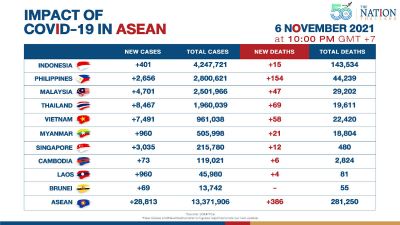
Southeast Asia witnessed a rise in new Covid-19 infections and a decline in deaths on Saturday (November 6), collated data showed.

Asean countries reported 28,813 infections and 386 deaths on Saturday compared to 27,454 and 525 respectively on Friday.

– Cambodia Ministry of Health has approved the Covaxin Covid-19 vaccine for emergency use on people aged 18 years or above.

This move came after the World Health Organisation approved the vaccine on November 3.

The vaccine is produced by Bharat Biotech, a pharmaceutical firm based in the Indian state of Telangana.

– Laos Ministry of Labour and Social Welfare is putting its effort to solve Covid-19 impact on businesses and investment projects, especially cooperation with job centres and private sector.

In 2021, the number of unemployed in Laos was totalled 496,000, of which 439,082 were domestic unemployed and 56,918 were immigrants. Meanwhile, the unemployment rate in the country has risen by 21.8 per cent.

Published : November 07, 2021

By : THE NATION

Jobless Yemenis live off motorbike taxis to survive war #SootinClaimon.Com

#SootinClaimon.Com : ขอบคุณแหล่งข้อมูล : หนังสือพิมพ์ The Nation.

https://www.nationthailand.com/international/40008499


Thousands in Yemen have turned to motorbike taxis after the years-long civil war has deprived them of jobs, land, and homes and pushed the country to the brink of starvation. “There isnt much choice in the war,” a local motorbike taxi driver laments.

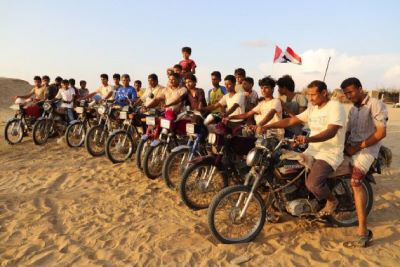
Thousands of Yemenis have turned to motorbike taxis to make a living after the years-long war has deprived them of jobs, land, and homes.

Amid soaring prices and the ongoing fuel crisis caused by the war, motorbike taxis have attracted Yemeni passengers increasingly in the context of traffic congestion across the Yemeni cities due to low fuel consumption, cheap fare, speed as well as agility manoeuvers during peak hours.

In the Yemeni Red Sea city of Midi, displaced Ali Faidi chose to work as a motorbike taxi driver to feed his five children after he lost his home and farm in the prolonged civil war.

“I sold my wife’s jewellery and bought a motorbike to feed my family,” Faidi told Xinhua.

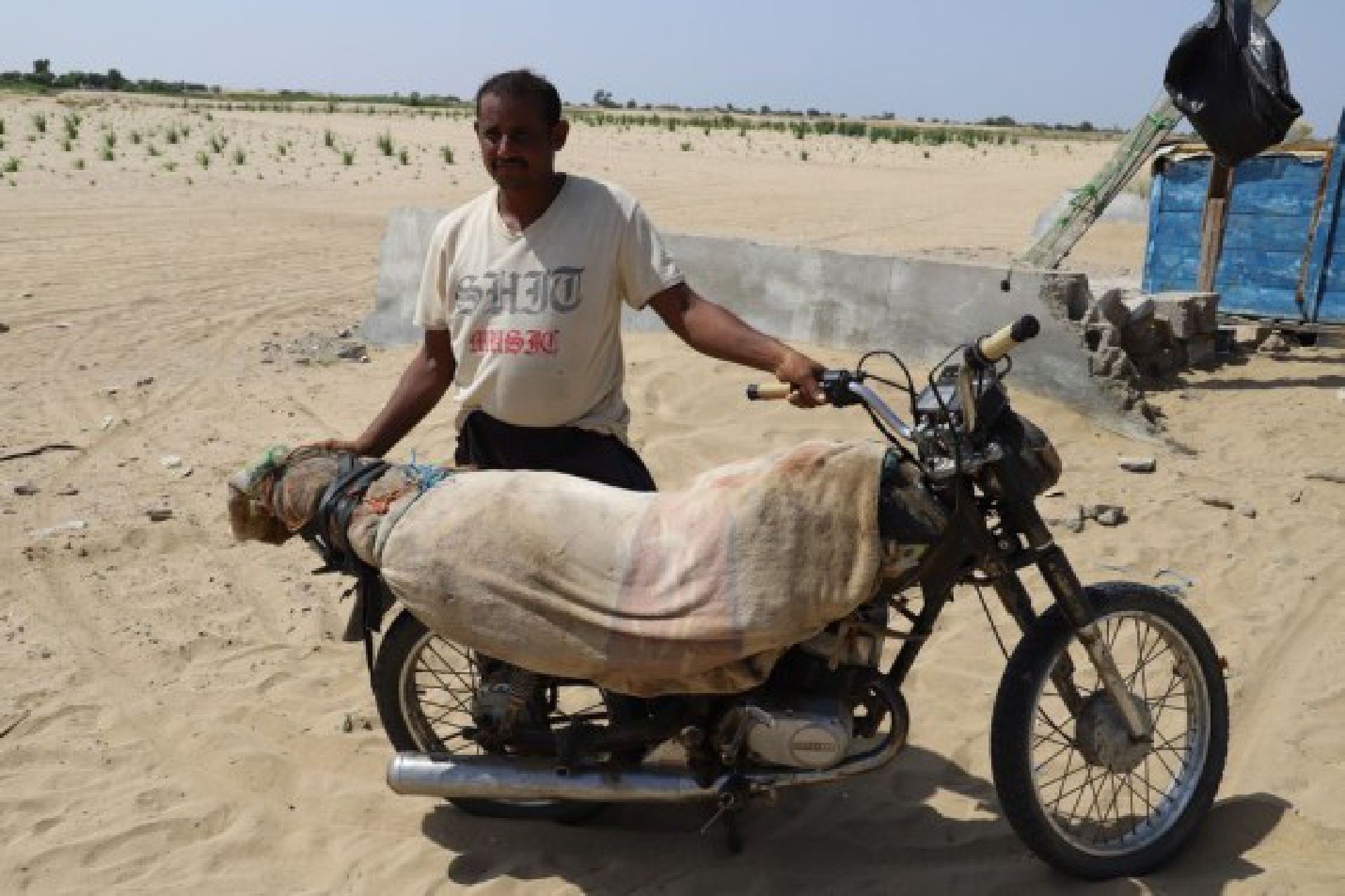
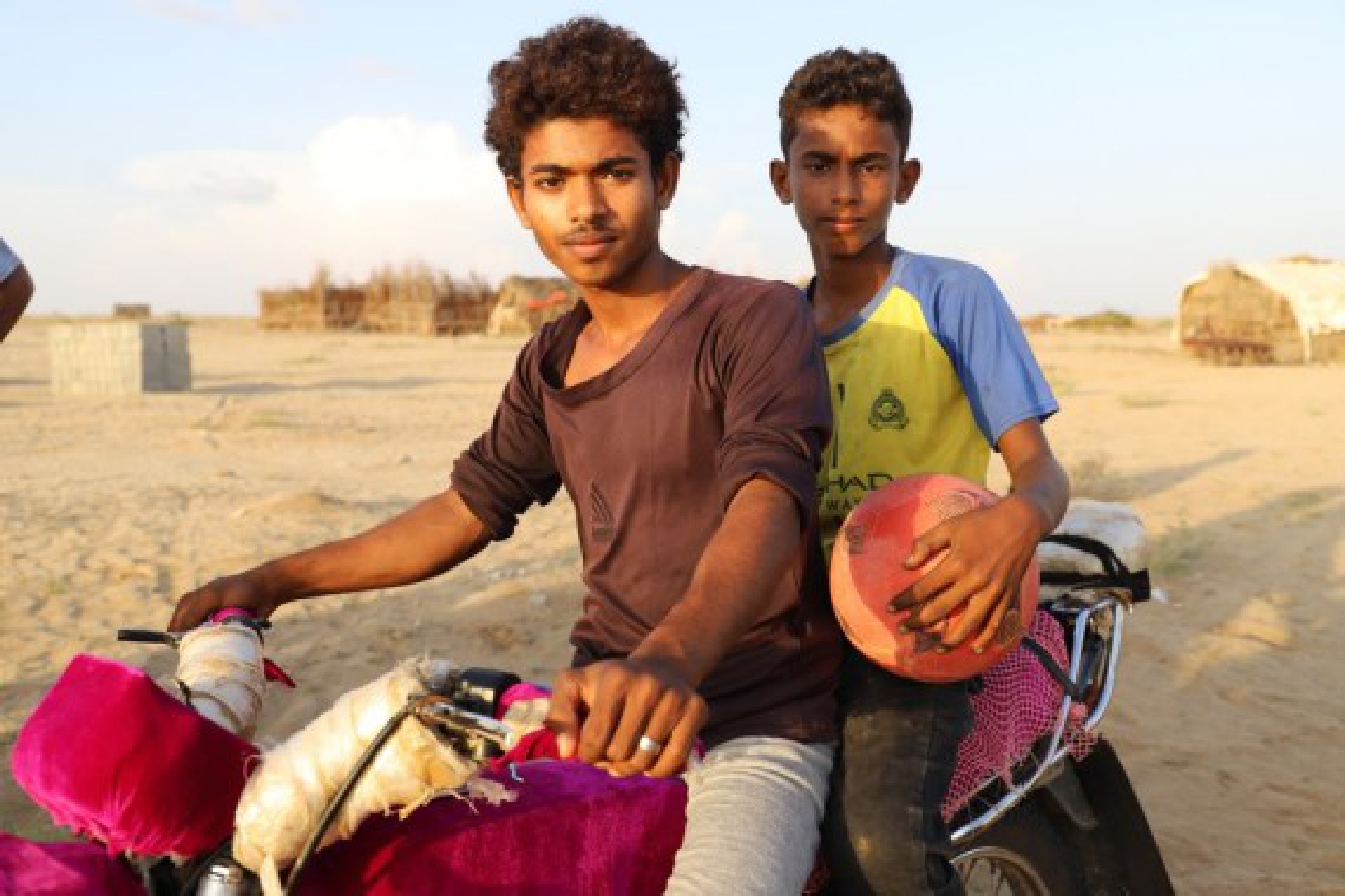
A Yemeni man stands beside his motorcycle on Nov. 5, 2021 in Hajjah Province, northern Yemen. (Photo by Mohammed Al-Wafi/Xinhua)A Yemeni man stands beside his motorcycle on Nov. 5, 2021 in Hajjah Province, northern Yemen. (Photo by Mohammed Al-Wafi/Xinhua)
The 27-year-old father recalled that “I decided to get into this business after we fled the battle that destroyed our homes, shops, and farms in our village in Haradh district four years ago … we lost everything.”

“This work is hard and dangerous, and sometimes I don’t earn enough money to buy milk for my little girl,” he said while staring at his right hand’s index finger which was injured in a traffic accident.

Despite daily accidents reported in local media, motorcyclists across the country do not wear helmets or other safety equipment.

Mohamed Taher, a resident in the city, said he always takes a motorbike taxi to go to the market and return home.

“Taking a car taxi is very expensive and I cannot afford the fare, while the fare for a motorbike is low, even though its accidents are serious and fatal,” he added.

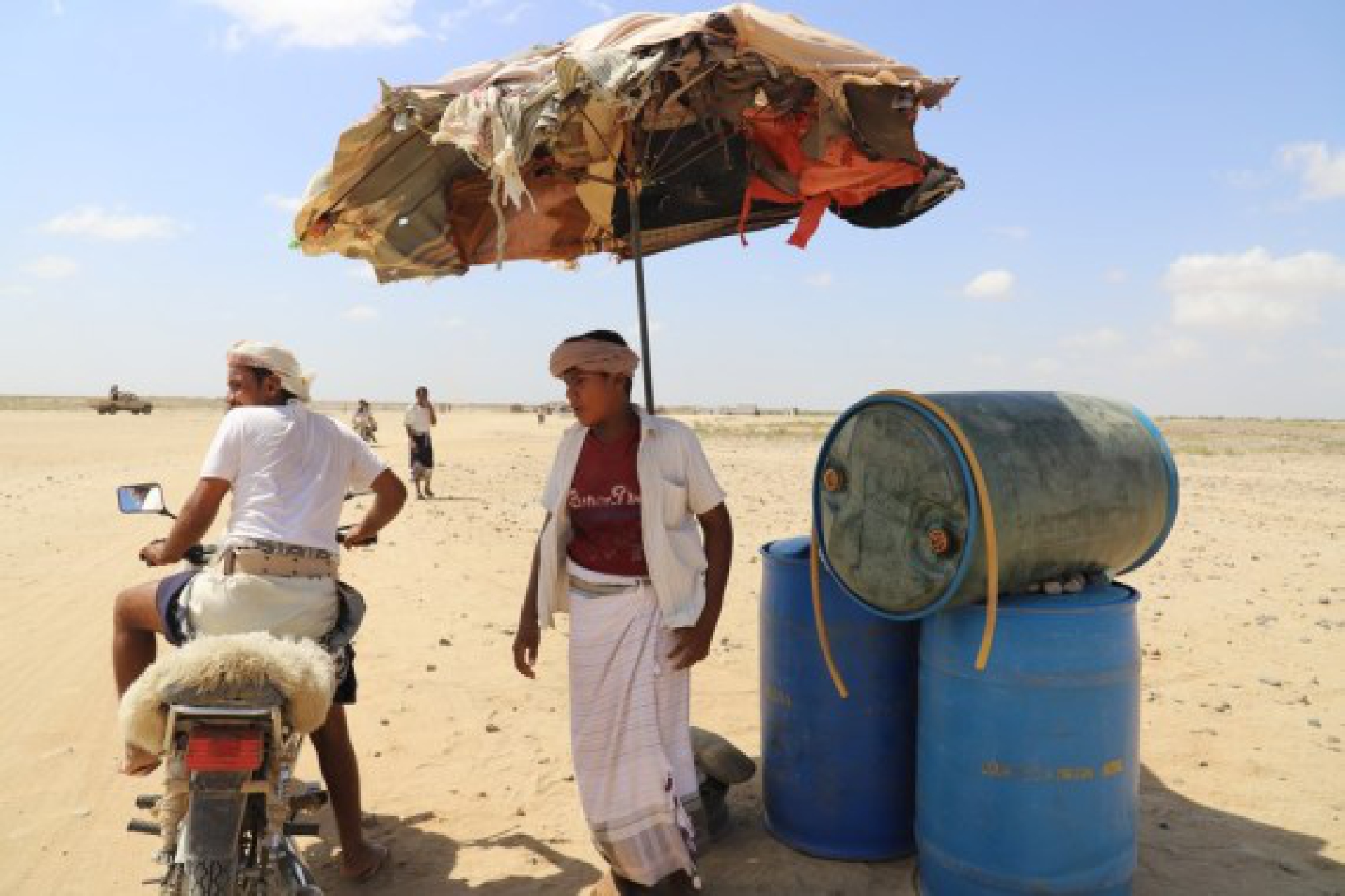
A Yemeni man buys petrol for his motorcycle from a make-shift oil station on Nov. 5, 2021 in Hajjah Province, northern Yemen. (Photo by Mohammed Al-Wafi/Xinhua)A Yemeni man buys petrol for his motorcycle from a make-shift oil station on Nov. 5, 2021 in Hajjah Province, northern Yemen. (Photo by Mohammed Al-Wafi/Xinhua)

Another motorbike taxi driver Abdullah Kadish noted that there isn’t much choice in the war.

“There are no jobs available here and no regular humanitarian aids to reach this besieged city, so I have to work all day long or my family will starve,” the 55-year-old man told Xinhua.

Midi city and parts of the neighboring districts of Hayran, Abs, and Haradh in the northwestern province of Hajjah are under the governmental force’s control, and the Houthi forces control the southern districts of the province.

The civil war flared up in late 2014 when the Iran-backed Houthi militia advanced from its stronghold in the northern province of Saada, seizing control of several northern provinces and forcing the Saudi-backed government of President Abd-Rabbu Mansour Hadi out of the capital Sanaa.

The war has since killed tens of thousands of Yemenis, displaced 4 million, and pushed the country to the brink of starvation.  

A Yemeni man buys petrol for his motorcycle from a make-shift oil station on Nov. 5, 2021 in Hajjah Province, northern Yemen. (Photo by Mohammed Al-Wafi/Xinhua)A Yemeni man buys petrol for his motorcycle from a make-shift oil station on Nov. 5, 2021 in Hajjah Province, northern Yemen. (Photo by Mohammed Al-Wafi/Xinhua)

Published : November 07, 2021

By : Xinhua

Ease of gun control could bring U.S. problems: The Guardian #SootinClaimon.Com

#SootinClaimon.Com : ขอบคุณแหล่งข้อมูล : หนังสือพิมพ์ The Nation.

https://www.nationthailand.com/international/40008498


The U.S. Supreme Court seemed poised to ease gun control regulation, and it may cause problems for the U.S. society, The Guardian has recently reported.

Several justices have recently expressed scepticism over a New York law that tightens the rule on concealed firearms, the British newspaper said Wednesday, adding that the case “could lead to more guns on the streets of New York and California.”

CNN reported that 14,516 people died from gun violence in the United States between Jan. 1 and Sept. 15 this year, a 9-percent increase compared to the same period of time in 2020, according to The Guardian.

Published : November 07, 2021

By : Xinhua

U.S. workforce impaired by COVID-19, guns, drugs #SootinClaimon.Com

#SootinClaimon.Com : ขอบคุณแหล่งข้อมูล : หนังสือพิมพ์ The Nation.

https://www.nationthailand.com/international/40008497


The COVID-19 pandemic, as well as gun violence and drug overdoses, have caused lasting damage to the U.S. workforce over the last two years, media have recently reported.

Almost 4.3 million people quit their jobs in August, the Labor Department said.

Nearly 900,000 people left their jobs at hotels and restaurants, while another 1.3 million quit retailers, and healthcare and social assistance employers, Labor Department data showed.

Since the outbreak of the pandemic, some 747,000 Americans have died of the coronavirus as of Nov. 4, according to the Centers for Disease Control and Prevention (CDC).

Related Stories

In addition, the CDC data showed that a record 93,331 people died of drug overdoses in the United States in 2020, almost 30 percent up from 2019.

According to Gun Violence Archive, gun-related deaths reached almost 44,000 in 2020 and nearly 38,000 deaths in the United States so far this year.

Meanwhile, 2 million more people retired than expected, according to the Schwartz Center for Economic Policy Analysis.

Published : November 07, 2021

By : Xinhua