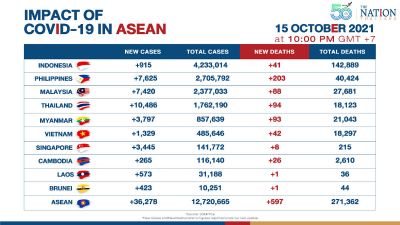
The number of Covid-19 cases crossed 12.72 million across Southeast Asia, with 36,278 new cases reported on Friday (October 15), lower than Thursday’s tally at 37,927. New deaths are at 579, increasing from Thursday’s number of 526. Total Covid-19 deaths in Asean are now at 271,362.
Vietnam Motor Show 2021, the largest annual automobile and motorbike expo in the country, has been cancelled due to Covid-19 pandemic impacts. The event was scheduled for late October in Ho Chi Minh City. This is the second time that a Vietnam Motor Show has been cancelled since 2020. The event is expected to be resumed in 2022.
Meanwhile, Cambodia’s Phnom Penh Capital Administration has announced that it is continuing administrative measures in the capital – however, the number of people allowed to gather has been raised. The new restrictions, which run for a period of 14 days from October 15 to 28, continues the suspension of activities, occupations or businesses that are at high risk of spreading Covid-19 and private gatherings or gatherings in Phnom Penh, such as cinemas, karaoke, bars, discos and all kinds of club business.
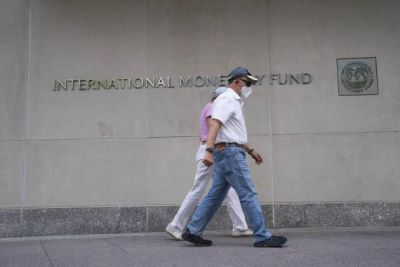
“The global economic recovery continues. But divergences between economies persist, reflecting stark differences in vaccine access and policy support,” the International Monetary and Financial Committee (IMFC) said.
The policy-setting body of the International Monetary Fund (IMF) on Thursday warned of divergent recoveries from the COVID-19 pandemic, pledging to strengthen international cooperation to expedite universal vaccination.
“The global economic recovery continues. But divergences between economies persist, reflecting stark differences in vaccine access and policy support,” the International Monetary and Financial Committee (IMFC) said in a communique during the annual meetings of the IMF and the World Bank.
“The emergence of virus variants has increased uncertainty, and risks to the recovery are tilted to the downside,” the communique said, adding strong international cooperation and immediate action are needed to expedite universal vaccination to stem the spread of the pandemic.
“Against a complex environment, we will carefully calibrate our domestic policies to the evolving pandemic and available policy space. We will continue to prioritize health spending and protecting the most vulnerable,” the IMFC said.
The IMFC also noted that central banks are closely monitoring inflation pressures and they will “act appropriately” if risks of inflation expectations de-anchoring become concrete.
“Clear communication of policy stances can help limit negative cross-country spillovers. We will continue to monitor and, as necessary, tackle financial vulnerabilities and risks to financial stability,” the IMFC said.
The IMF on Tuesday slightly revised down its global economic forecast amid the Delta variant-fueled COVID-19 surge, highlighting the “great vaccine divide,” supply bottlenecks and inflation risks.
In its newly released World Economic Outlook, the IMF projected the global economy to grow by 5.9 percent in 2021, down by 0.1 percentage point from July’s forecast.
The Chinese mainland on Thursday reported 10 new confirmed COVID-19 cases, all imported from outside the mainland, the National Health Commission said in its daily report on Friday.
Among these cases, three were reported in Yunnan, two each in Tianjin and Henan, and one each in Shanghai, Guangxi and Shaanxi, the commission said, adding that three of the new cases were previously asymptomatic cases.
Shanghai reported one new suspected case who arrived from outside the mainland, according to the commission.
There were no new deaths from COVID-19.
A total of 9,367 imported cases had been reported on the mainland by the end of Thursday. Among them, 8,891 had been discharged from hospitals following recovery, and 476 remained hospitalized. No deaths had been reported among the imported cases.
The total number of confirmed COVID-19 cases on the mainland had reached 96,488 by Thursday, including 556 patients still receiving treatment, none of whom was in severe condition.
A total of 91,296 patients had been discharged from hospitals following recovery on the mainland, and 4,636 had died as a result of the virus.
A total of 25 asymptomatic cases imported from outside the mainland were newly reported. There were a total of 376 asymptomatic cases, of whom 366 were imported, under medical observation as of Thursday.
By the end of Thursday, 12,276 confirmed COVID-19 cases, including 213 deaths, had been reported in the Hong Kong Special Administrative Region (SAR), while 77 cases had been reported in the Macao SAR, and 16,321 cases, including 846 deaths, had been reported in Taiwan.
A total of 11,971 COVID-19 patients in the Hong Kong SAR had been discharged from hospitals following recovery, while 66 had been discharged in the Macao SAR, and 13,742 had been discharged in Taiwan
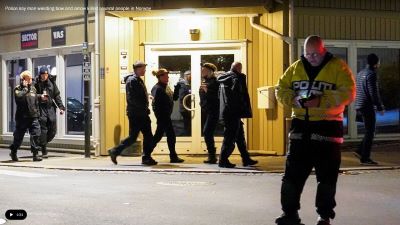
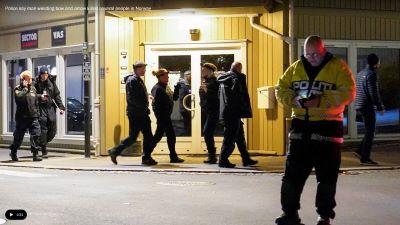
An attack by a Danish man armed with a bow and arrow that killed five people in a Norwegian town appears to be a “terrorist act,” police said Thursday.
The victims, four women and a man, were 50 to 70 years old. Norway’s police security service said the investigation was still looking into the motive behind the rare mass killing, the country’s worst such assault in years.
Three people, including an off-duty officer, were also injured in the Wednesday evening rampage, which Norway’s new prime minister described as cruel.
After reports streamed in of a man roaming the town center shooting at people with a bow and arrow, law enforcement officers in Kongsberg, southwest of Oslo, arrested a 37-year-old man whom authorities later identified as Espen Andersen Brathen. An initial court proceeding was set to take place Friday after police, who said the man appeared to be acting alone, charged him on Thursday.
“The incidents in Kongsberg currently appear to be a terrorist act, but the investigation . . . will clarify in more detail,” said the police security service, known as PST. Its statement added that the threat level in Norway had not changed and remained moderate.
Regional police chief Ole B. Saeverud told reporters Thursday that the suspect was a Muslim convert and that police had received reports in the past flagging that he may have been radicalized, although none came this year. Saeverud did not elaborate on those concerns.
After the attack, police released some personal details about the suspect because of rumors circulating on social media about possible perpetrators who ultimately were not involved.
The confrontation began shortly after 6 p.m. local time in an area of Kongsberg around a Coop Extra supermarket, according to police and local media. Helicopters, bomb squads and police descended on the town, ordering people to stay inside.
When the first patrol arrived, the attacker tried to target officers with his weapons, too, before they arrested him about 30 minutes later.
The next morning, many residents were in shock. “I heard a scream I had never heard before,” Thomas Nilsen told Norway’s public broadcaster NRK. “I will never forget it – it sounded like a death cry.”
Flags in Kongsberg were flying at half-staff, and mourners placed flowers and lighted candles in the town’s center.
Norwegian media reported that a court had granted a restraining order last year for the accused to stay away from two of his family members for six months after he threatened to kill one of them. The police attorney said that psychiatric experts would assess the man Thursday and that he had confessed to Wednesday’s attack.
Police in the Scandinavian country, most of whom are usually unarmed, were temporarily ordered to carry weapons Wednesday night, the justice minister said.
The killings rocked the town hours before acting prime minister Erna Solberg, who called them “gruesome,” was due to leave office. The new prime minister, Jonas Gahr Store, who took over on Thursday, said it was “a cruel and brutal act.”
It was the country’s worst mass killing since 2011, when a right-wing extremist killed 77 people in a bombing and shooting. He was given the maximum jail term of 21 years – but his sentence can be extended indefinitely as long as he is considered a danger to society.
The United States has overtaken China to lead the world with the largest share in global bitcoin mining networks, according to data from the University of Cambridge, published on Wednesday.
The U.S. lead follows China’s crackdown on bitcoin mining in recent months, which sent the worldwide price of bitcoin plummeting. China issued a nationwide blanket ban on crypto mining last month, in a move that has devastated the industry there and pushed many miners overseas.
“The latest data informing our interactive mining map follows the trajectory that we had seen developing over the last two data updates. Clearly, the government-mandated crackdown in China has had a significant impact on the new order of global hashrate share,” Michel Rauchs, digital assets lead at the Cambridge Centre for Alternative Finance, told The Washington Post by email on Thursday.
“It will be interesting to see if the existing trends continue or if shares change as the hashrate settles geographically,” he added. The hashrate is a measure of collective computational power, and therefore of mining performance.
Bitcoin is one of thousands of types of hard-to-visualize cryptocurrency. In its simplest form, a cryptocurrency is a computer code generated by publicly available software that allows people to store and send value online. The code verifies and groups transactions onto a public record known as a blockchain, a large file containing every transaction ever made.
The value of a cryptocurrency is usually expressed in dollars and is set by public trading conducted by exchange houses. It can vary wildly; the cost of a single bitcoin equates to roughly $50,000 today, down from nearly $60,000 in May.
Cryptocurrencies such as bitcoin, dogecoin and ethereum are akin to digital gold, and the algorithm that generates a cryptocurrency is available for download on developer websites and, in theory, available for anyone to use to create new cryptocurrency. But the process is highly competitive because the actual amount of cryptocurrency to be put in circulation is limited. These limits vary depending on the cryptocurrency and are set by whoever created the code. For instance, the bitcoin algorithm limits the number of bitcoin that can be generated to 21 million. At that point, no more will be made.
The energy-intensive computing process needed to create new currency requires enormous computer power to solve the complex mathematical equations that generate a unit of cryptocurrency. Globally, the process devours more electricity than the Netherlands does in a given year, according to the University of Cambridge.
At the bare minimum, running a bitcoin mine requires a strong Internet connection with generous download capacities and usable storage space, with some entrepreneurs operating massive crypto mines for a better chance at grabbing a larger share of new coins entering circulation.
In China, sophisticated computers humming around the clock in specially ventilated warehouses were an increasingly common site amid a cryptocurrency mining boom. At their height in 2018, China’s bitcoin prospectors accounted for 74% of the world’s bitcoin production. However, due to the current political crackdown, many newly minted bitcoin moguls are decamping to places like Texas, South Dakota or Canada, with significant implications for the evolving industry.
According to data from the Cambridge Bitcoin Electricity Consumption Index, the leading share of global bitcoin network hashrate is now in the United States (35.4%) as of the end of August, followed by Kazakhstan (18.1%) and Russia (11%), with the three countries already gaining market share prior to the crackdown in China, it said.
Canada, Malaysia and Iran also have a significant mining presence, according to the data, with China’s restrictions possibly leading to “an increased geographic distribution of hashrate across the world,” the report said, adding that it could be a “positive development for network security and the decentralized principles of Bitcoin.”
In September, Chinese authorities reiterated that all virtual currencies were considered illegal in the country, as it put in place a nationwide ban on crypto mining. In a statement published by China’s central bank, government agencies vowed to “resolutely clamp down” on the industry in the name of national security and social stability. “Virtual currency does not have the same legal status as legal currency,” it said.
Another notice released by China’s National Development and Reform Commission said the ban on crypto mining was part of China’s wider pledge to reduce carbon emissions to meet climate change goals. Bans were previously only ordered by individual provinces. China is, however, planning to launch central bank digital currencies and is piloting a digital-yuan in a handful of major cities.
Elsewhere in the world, El Salvador in June became the first country to formally adopt bitcoin as a legal tender, in a move that would allow citizens to pay taxes via cryptocurrency. In the United States, Elon Musk, the chief executive of Tesla, said that his all-electric vehicle company would return to accepting bitcoin as payment once it confirms that enough miners are using renewable energy to power their networks. A trio of U.S. senators in August proposed new tax reporting requirements for cryptocurrency transactions.
WASHINGTON – An independent advisory panel to the Food and Drug Administration on Thursday unanimously recommended a booster dose of the Moderna coronavirus vaccine for people 65 and older and for adults who are at high risk of severe illness because of underlying conditions or exposure on the job.
The recommendation mirrors the eligibility criteria for the Pfizer-BioNTech booster, which was authorized in September. Nearly 70 million Americans have been fully vaccinated with the Moderna vaccine, and millions of them would be eligible for a follow-up dose six months after vaccination if the agency authorizes the extra shot, which would be half the dose initially given.
The recommendation will now be considered by FDA officials, who are expected to reach a decision on the Moderna booster within days. An advisory committee to the Centers for Disease Control and Prevention that makes recommendations on how vaccines should be used is scheduled to meet Wednesday.
Boosters are a key part of the Biden administration’s plan to manage the pandemic, and the outside advisers agreed they are an important tool for select groups of people. Cases of covid-19 have been declining in the United States as the lethal fourth-wave of the pandemic, fueled by the delta variant, appears to be ebbing. But public health experts remain worried about the possibility of another surge this winter as colder weather drives people indoors, where transmission chiefly occurs.
Some health experts have argued that there is not enough evidence to justify administering boosters to certain populations, especially younger, healthier people who, if they become infected, are likely to have asymptomatic or mild infections. But several Biden health officials believe it is important to reduce cases in vaccinated people, even if they do not result in hospitalization, to bring down the overall caseload.
At the start of Thursday’s advisory committee meeting, Peter Marks, director of the FDA’s Center for Biologics Evaluation and Research, outlined the potential rationale for boosters. He said all three of the vaccines available in the United States remain highly protective against severe outcomes, but added that even milder cases may warrant prevention.
“Vaccine effectiveness against mild and moderate disease does appear to wane over time for the different vaccines, and we do need to account for the fact that mild to moderate covid-19 can be associated with adverse outcomes, such as blood clots and long covid-19, even in those who have breakthrough infections after vaccination,” Marks said.
Several of the advisers pushed back on the notion that extra shots are needed for all Americans and said they worried the emphasis on boosters could distract from the potential of standard vaccine regimens to end the pandemic, which has killed more than 720,000 people in the United States.
“The effect of a booster is much less than vaccinating unvaccinated individuals – that means both here and abroad,” said Eric Rubin, editor of the New England Journal of Medicine and a member of the advisory committee. “If we want to get out of this thing, we’ve got to vaccinate the unvaccinated.”
The vote to recommend boosters for older adults and people at risk because of underlying health conditions or exposures at their jobs came after a full-day examination of data on the safety and effectiveness of a booster. Several experts noted there was only minimal safety data. Moderna presented studies of about 350 people who were given a booster dose, six months after their initial shots.
While the committee gave a thumbs up to boosters for some people, a separate discussion about whether people as young as 18 should be eligible for an extra dose triggered spirited objections from several members.
“I’m not convinced that the epidemiology of the pandemic at the moment in the U.S. supports this request,” said Archana Chatterjee, dean of the Chicago Medical School.
“I worry that we haven’t clearly defined what the goal of this vaccine is. If the goal of this vaccine is to prevent asymptomatic or mild infection, that is a goal that we have set for no other vaccine. . . . That is a high bar to which we hold no other vaccine,” said Paul Offit, a vaccine expert at Children’s Hospital of Philadelphia.
Some outside experts criticized the discussion as shortsighted and warned that cases could climb again, as they have several times throughout the pandemic.
“You can’t just say it’s getting better. The surge is coming down just like the surge came down last winter and last summer. That’s a shortsighted discussion,” said Michael T. Osterholm, director of the Center for Infectious Disease Research and Policy at the University of Minnesota. “I’m incredibly doubtful this is our last surge, and I think some geographic areas are going to get hit again.”
The committee’s acting chairman, Arnold Monto, said he hoped a framework could be developed to determine if a booster is warranted in younger age groups going forward – and to better understand the potential benefits and risk.
“The concern that I have is that we don’t want to wait until we see some more severe infections in the under 65-year-old general population, because getting this vaccine out takes time and requires extreme logistic efforts,” said Monto, a professor of public health and epidemiology at the University of Michigan.
Committee members reviewed data that showed Moderna’s two-shot regimen remains robustly protective at more than five months after vaccination: 93% effective in preventing all virus-related symptomatic illness and 98% protective against severe cases.
To make the case for boosters, Jacqueline Miller, head of Moderna’s infectious-disease therapeutic area, presented data showing that six to eight months after vaccination, antibody levels dropped in vaccine recipients. A half-dose booster at least six months after initial vaccination restored those antibodies in a study of nearly 300 people.
Miller also presented data on breakthrough cases among people in the clinical trial of the company’s vaccine, which began in summer 2020. Among those vaccine recipients, there was a clear uptick in breakthrough infections this July and August.
“Prior to July, the maximum number of cases reported in [vaccinated individuals] in a single month was 23,” Miller said. “This increased to 81 cases in July and 169 cases in August, with 97 percent of these cases due to the delta variant.”
A Moderna analysis showed that protection against infections appears to diminish over time. People vaccinated earlier in the large clinical trial were more likely to have breakthrough cases this July and August compared with the group that received the placebo in the trial and thus were vaccinated more recently.
During the meeting, questions were raised about why Moderna has not made a bigger commitment to supply doses to low- and middle-income countries. The Biden administration is frustrated that Moderna has not made a greater commitment to supplying doses to the rest of the world.
Miller referred to an open letter from Moderna chief executive Stephane Bancel. She said the company was not enforcing its patents during the pandemic and added that a half-dose instead of a full-dose booster will “make more vaccine available for the world, so that frees up a billion extra doses.”
Representatives from Israel presented data on that country’s experience with Pfizer-BioNTech booster doses, showing that as the country faced an uptick in infections this summer, the implementation of a booster campaign – initially targeted at adults 60 and older – helped thwart the rise in infections and severe cases in vaccinated people.
They also presented data showing that across age groups, including younger people, the rate of infection dropped after a booster dose. The rate of severe disease also dropped for people 40 and older. There were not enough severe cases among younger people to estimate a benefit.
Fully vaccinated people “were part of the wave, some of them getting severely ill and dying,” said Sharon Alroy-Preis, director of public health services for Israel’s Ministry of Health. “There is no question in my mind that the break of the curve was due to the booster dose.”
On Friday, the same committee will meet at an all-day meeting to make a recommendation about a possible booster dose of the Johnson & Johnson vaccine.
It will also review data from a National Institutes of Health trial that tested whether mixing and matching booster doses from different companies was feasible. If the committee deems it safe for a person to receive a different booster than their primary vaccination, it could simplify logistics.
Chiles opposition this week moved to impeach President Sebastian Piñera after revelations included in the Pandora Papers shed new light on his offshore business deals.
Piñera, a billionaire businessman now serving his second term as president, has denied allegations of financial impropriety.
But lawmakers have homed in on documents detailing the 2010 sale of a mining company owned in part by Piñera’s children. The company, Dominga, was sold for $138 million to an offshore firm controlled by the president’s close friend, Chilean businessman Carlos Delano.
Last week, Chile’s public prosecutor also announced an investigation into the deal, citing possible tax violations and bribery-related offenses. The Pandora Papers are a trove of more than 11.9 million documents exposing the secretive financial dealings of the world’s elite.
On Wednesday, deputy Tomas Hirsch introduced the accusation against Piñera in the lower house of Congress – a motion known as a “constitutional accusation” that requires a two-thirds majority in both houses, including the Senate.
Piñera used “his office for personal business,” Hirsch said as he presented the charge.
Gabriel Ascencio, a member of the Christian Democrats, also accused the president of exploiting his office to further his own interests “over the common good.”
“Chile does not deserve to have a president like Piñera,” Asencio said Wednesday.
The company sale was finalized nine months into Piñera’s first term in 2010. But according to the International Consortium of Investigative Journalists, which obtained the leaks, the contract included a controversial clause that would halt the last payment if steps were taken to “irrevocably” prevent a mining project under consideration, such as an area of environmental protection.
Any such decision would fall under the authority of the president. According to the Pandora Papers, Piñera and his government decided at the time not to safeguard the area.
In recent remarks, Piñera rejected the accusations, insisting that he “completely and totally detached” himself from “the management and administration of family businesses.”
He said that the sale was previously examined and dismissed by courts, adding that the details of the contract were already reviewed, Reuters reported.
Chile is holding presidential and legislative elections in November. Piñera is not running and his second term ends in March.
Typhoon Kompasu, the 18th typhoon of this year, made landfall in south Chinas island province of Hainan on Wednesday afternoon.
The typhoon landed on the coast of Boao Township in the city of Qionghai at 3:30 p.m., packing winds of up to 118.8 km per hour, according to the Hainan meteorological service.
The typhoon is weakening after landing and is forecast to move across the southern part of Hainan before entering the Beibu Gulf early on Thursday morning.
Typhoon Kompasu, coupled with a cold front, was forecast to bring heavy rains and strong winds to the sea and land areas of Hainan from Wednesday afternoon to daytime on Thursday.
Bracing for the typhoon, authorities in Hainan have canceled all flights at major airports across the province and suspended the local high-speed railway loop line service, as well as ferries across Qiongzhou Strait, which connect Hainan with Guangdong Province.
The island province has adopted an emergency response plan to cope with heavy winds and floods, including suspending classes, work and markets, and closure tourist attractions.
Guangdong Province has also taken precautions to safeguard residents’ lives and property.
Schools, kindergartens, construction sites and tourist attractions in Guangzhou, Shenzhen and Foshan were temporarily closed down Wednesday.
Temporary traffic control is in operation along the fairway of the Hong Kong-Zhuhai-Macao Bridge, and ships are prohibited from passing the bridge.
Chinese Ambassador for Disarmament Affairs Li Song said that AUKUS is an awkward example set by the United States, Britain and Australia in their so-called “leadership” in non-proliferation.
The AUKUS pact among the United States, Britain and Australia, which will enable Australia to build nuclear-powered submarines with technology provided by the United States and Britain, is a “textbook case” of nuclear proliferation based on the Cold War mentality and narrow-minded geopolitical calculation, a Chinese diplomat said Wednesday.
Answering questions at a virtual press conference, Chinese Ambassador for Disarmament Affairs Li Song said that the deal constitutes a serious challenge to the letter and spirit of the Nuclear Non-Proliferation Treaty (NPT).
He told journalists from the United Nations Correspondents Association that AUKUS is also an awkward example set by the United States, Britain and Australia in their so-called “leadership” in non-proliferation.
U.S. President Joe Biden leaves the White House in Washington, D.C., the United States, Oct. 5, 2021. (Photo by Ting Shen/Xinhua)
“As the depositary states of the NPT, the United States and Britain are to help Australia, a non-nuclear-weapon state, to obtain nuclear-powered submarines, sensitive nuclear materials including tons of weapon-grade Uranium, and other relevant technologies and equipment. Such cooperation has never happened in the history of the NPT,” Li said.
“To put it in a nutshell, AUKUS is like a fire, the comprehensive safeguard mechanism is like a piece of paper. You just can’t cover the fire with paper,” he added.
The Chinese envoy further pointed out that such cooperation will lead to a wider range of impacts to regional nuclear-weapon-free zones in South Pacific and Southeast Asia, spur regional arms race, undermine regional unity and cooperation, and therefore disturb regional peace and stability.
“Nuclear proliferation is not welcomed in Asian Pacific,” said the ambassador, noting the recent incident of foreign nuclear submarine in South China Sea further indicated “that those submarines which traveled all the way across the globe will only bring trouble to our region.”
“They are also not welcomed by regional countries and peoples,” Li said.
A nuclear-powered U.S. Navy fast-attack submarine was damaged after it “struck an object” while submerged in waters in the Indo-Pacific region on Oct. 2, the U.S. Navy said in a statement. A U.S. defense official told U.S. Naval Institute (USNI) News that about 11 sailors were hurt in the incident.
The Capitol and a stop sign are seen in Washington D.C., the United States, on Feb. 13, 2020. (Xinhua/Liu Jie)
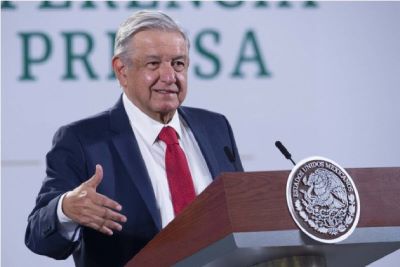
“The northern border will be opened. We will have normalcy on our northern border as of Nov. 1,” Lopez Obrador said during his daily press conference from the National Palace in Mexico City.
The governments of Mexico and the United States agreed to reopen their common border in November, following vaccination progress against COVID-19, Mexican President Andres Manuel Lopez Obrador announced on Wednesday.
“The northern border will be opened. We will have normalcy on our northern border as of Nov. 1,” Lopez Obrador said during his daily press conference from the National Palace in Mexico City.
The Mexico-U.S. border has been closed to “non-essential” traffic since March 2020 due to the COVID-19 pandemic.
The closure imposed restrictions on travel for tourism or shopping, but did not affect trade or other essential crossings, such as transit for goods and for work or health reasons.



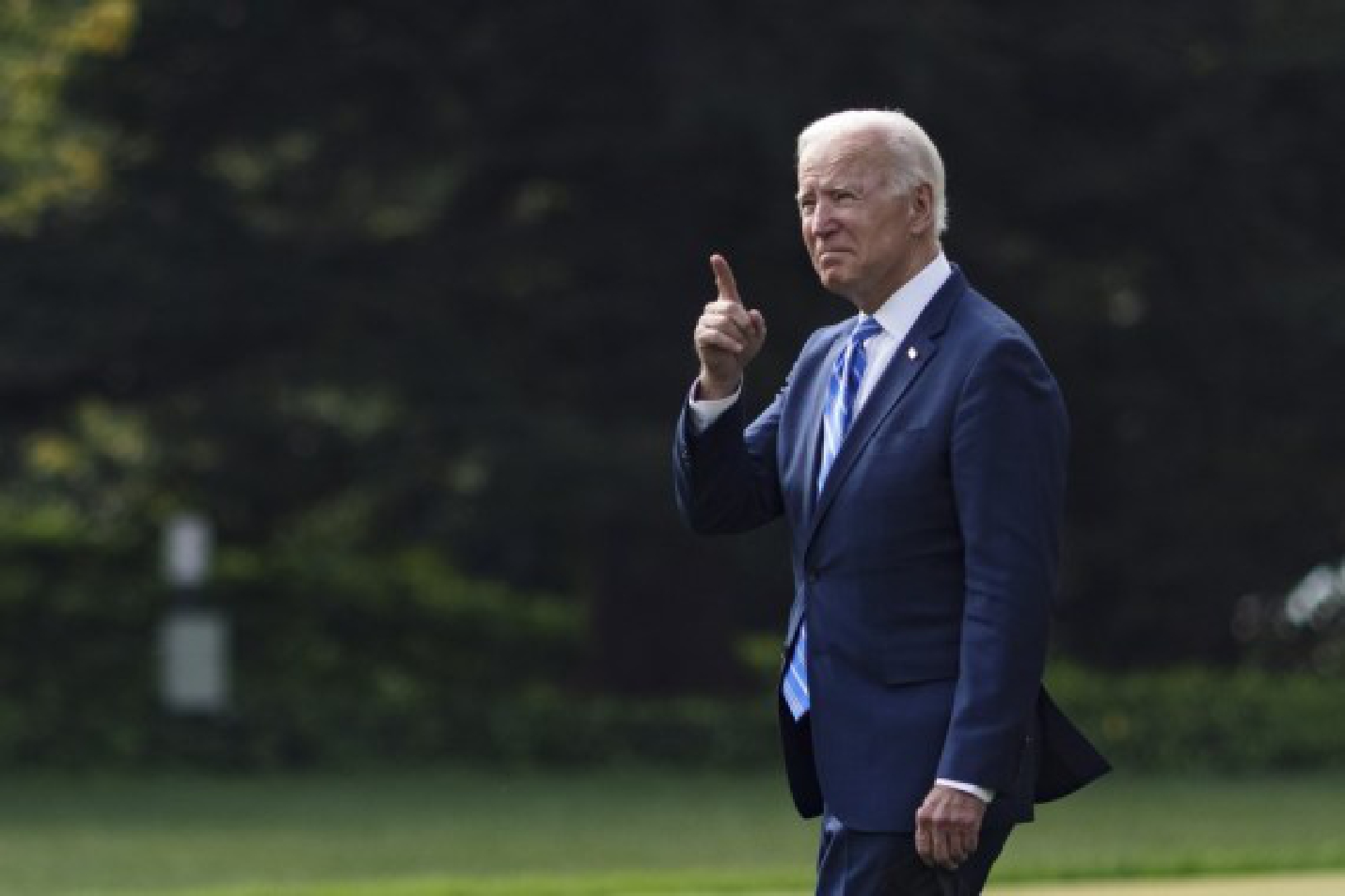 U.S. President Joe Biden leaves the White House in Washington, D.C., the United States, Oct. 5, 2021. (Photo by Ting Shen/Xinhua)
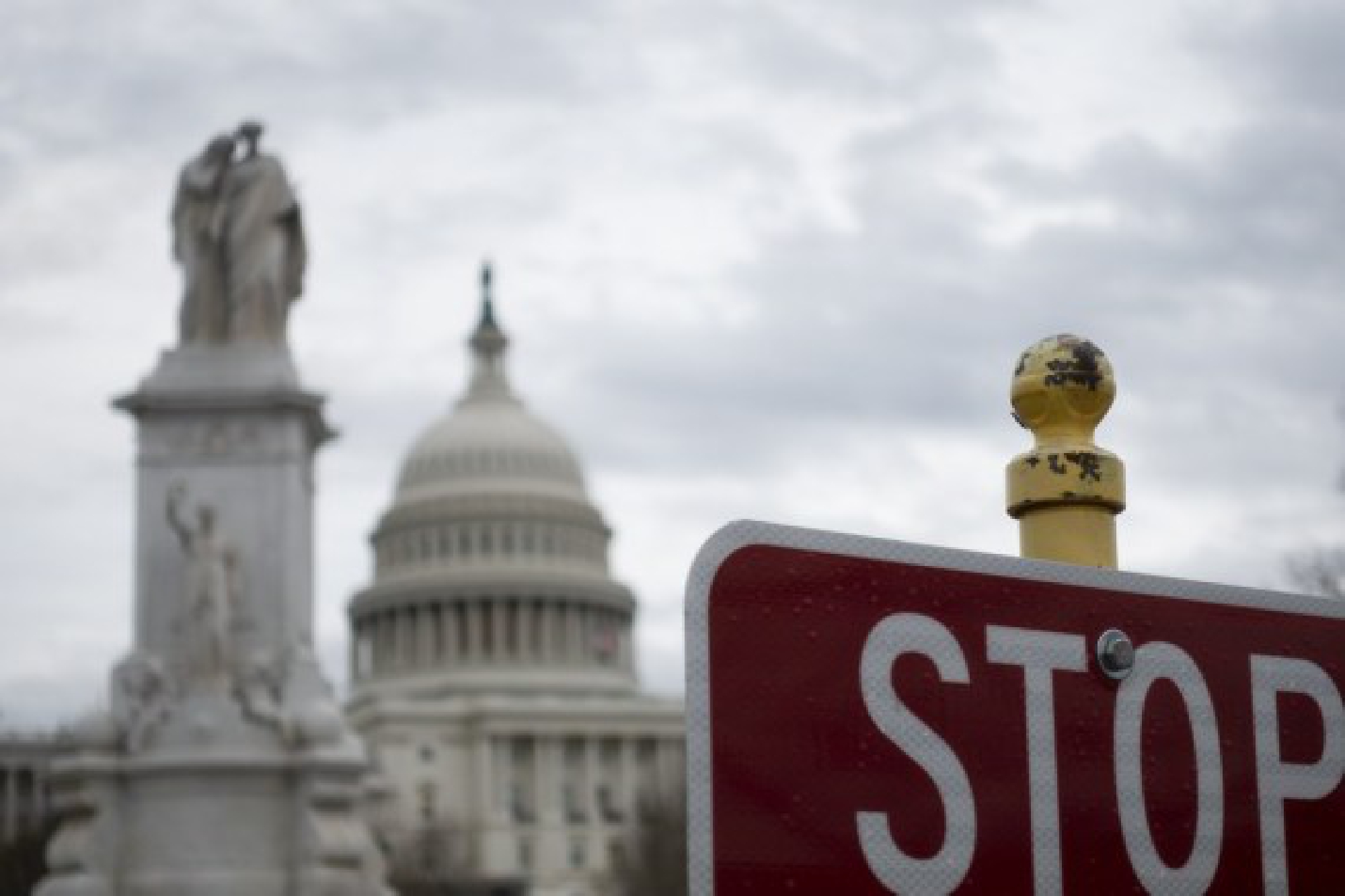 The Capitol and a stop sign are seen in Washington D.C., the United States, on Feb. 13, 2020. (Xinhua/Liu Jie)