US issues “do not travel” advisory for Thailand due to Covid situation
The US Centres for Disease Control and Prevention (CDC) has warned citizens against travel to Thailand due to the Covid-19 situation in the country.
The CDC issued a Level 4 Travel Health Notice for Thailand, indicating a very high level of Covid-19 risk.
“Your risk of contracting Covid-19 and developing severe symptoms may be lower if you are fully vaccinated with an FDA authorised vaccine,” it advised. “Before planning any international travel, please review the CDC’s specific recommendations for vaccinated and unvaccinated travellers.”
Suggestions for those who decide to travel to Thailand include:
▪︎ See the US Embassy’s web page regarding Covid-19.
▪︎ Visit the CDC’s webpage on travel and Covid-19.
▪︎ Enrol in the Smart Traveller Enrolment Programme to receive alerts and make it easier to locate you in an emergency.
▪︎ Follow the Department of State on Facebook and Twitter.
▪︎ Review the crime and safety reports for Thailand.
▪︎ US citizens who travel abroad should always have a contingency plan for emergency situations.
Meanwhile, the State Department said US nationals should also reconsider travel to Yala, Pattani, Narathiwat, and Songkhla provinces in the South due to civil unrest.
“Periodic violence directed mostly at Thai government interests by a domestic insurgency continues to affect security in the southernmost provinces of Yala, Pattani, Narathiwat, and Songkhla,” it said.
“US citizens are at risk of death or injury due to the possibility of indiscriminate attacks in public places. Martial law is in force in this region.”
The US government has limited ability to provide emergency services to US citizens in these provinces as US government employees must obtain special authorisation to travel to these provinces, it added.
The sanctioned are closely involved in anti-Russian activities, the Russian Foreign Ministry said.
Russia said on Monday that it has barred a “proportionate” number of British citizens from entry in retaliation for British sanctions against Russians for alleged human rights violations and corruption.
ADVERTISEMENTx
The sanctioned are closely involved in anti-Russian activities, the Russian Foreign Ministry said in a statement, without disclosing their names and how many people are exactly targeted.
Moscow sees London’s “groundless attacks” as an attempt to interfere in the internal affairs of another state and put pressure on the Russian judicial system, the ministry said.
“We once again call on the British leadership to abandon an unfounded confrontational policy with regard to our country. Any unfriendly steps will meet an adequate proportionate response,” it read.
In December 2020, Britain imposed travel bans and asset freezes against three Russians and the Terek Special Rapid Response Unit “responsible for torture and other human rights violations against LGBT people in Chechnya.”
In April 2021, under the Global Anti-Corruption Sanctions Regulations 2021, Britain announced travel bans and asset freezes against 14 Russians, who were accused of participating in the “theft of 230 million U.S. dollars of Russian state assets via a highly complex tax fraud.”
Canada begins to allow entry for fully vaccinated U.S. citizens, permanent residents
The Canadian government is planning to open its borders to fully vaccinated visitors from the rest of the world starting Sept. 7.
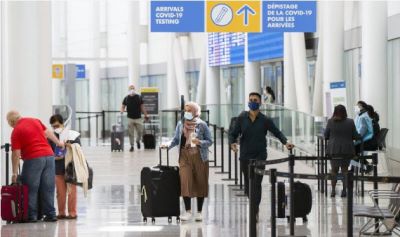
Canada unilaterally began to allow the entry by fully vaccinated U.S. citizens and permanent residents on Monday after the two countries agreed to close the border to non-essential travel due to the COVID-19 pandemic 17 months ago.
ADVERTISEMENTx
Eligible U.S. citizens and permanent residents must live in the United States and have allowed 14 days to pass since receiving a full course of a Health Canada-approved vaccine.
They are also needed to show proof of a negative molecular test for COVID-19 that’s no more than 72 hours old and to use the ArriveCAN app or online web portal to upload their vaccination details.
Fully vaccinated visitors who have recovered from the disease and are otherwise eligible to enter Canada can show proof of a positive molecular test taken between 14 and 90 days prior to crossing the border.
Monday also marks the end of mandatory quarantine hotels. Previously, all travellers flying into Canada from an international destination had to quarantine at an airport hotel at their own expense for up to three days while they await a COVID-19 test result.
Before Monday, international flights were only permitted to land in Toronto, Montreal, Vancouver and Calgary, but under the new rules, international flights can now land in Halifax, Quebec City, Ottawa, Winnipeg and Edmonton.
The Canadian government is planning to open its borders to fully vaccinated visitors from the rest of the world starting Sept. 7. All foreign visitors have to get one of the Canada-approved four vaccines: Pfizer-BioNTech, Moderna, AstraZeneca and Johnson & Johnson option.
The Biden administration extended the U.S.-Canada border closure on non-essential travel until at least Aug. 21, citing concerns over the spread of the Delta variant. Air and sea travellers are exempt, though passengers by rail, ferry and pleasure boat are not.
Death toll from Greece wildfires rises to 2 as PM announces support measures
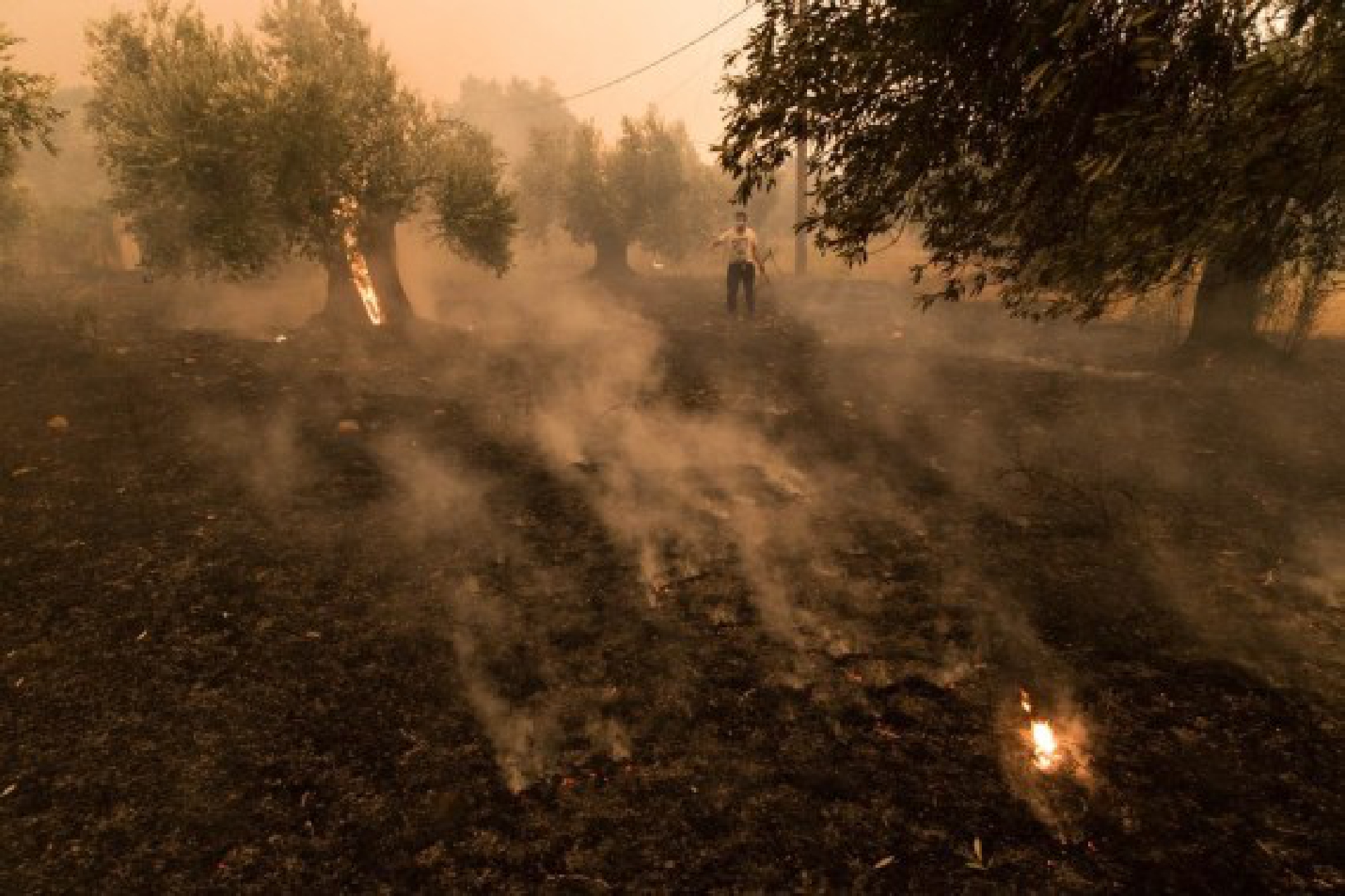
For the seventh day, hundreds of firefighters along with residents, volunteers, and international aid crews were trying to contain the biggest blaze that is still raging in the northern part of Greeces Evia island.
The death toll from the raging wildfires in Greece has risen to two on Monday as devastating blazes continue to wreak havoc across the country.
A bulldozer driver was killed close to where a fire was raging in Fokida region in central Greece on Monday, the hospital where he was transferred said.
ADVERTISEMENTx
The 70-year-old man was assisting with the bulldozer to set up firebreaks in the area when the track fell over a precipice in a depth of 30 meters and died. Last week, another volunteer lost his life in the wildfires in the northern suburbs of Athens, hit by an electricity pylon.
Meanwhile, two volunteer firefighters, who were rushed to a hospital in Athens on Friday, remained in critical condition on Monday.
“In the past few days, 63 organized evacuations took place in 141 villages and settlements. I completely understand the pain of our citizens who saw their homes or property burning,” Greek Prime Minister Kyriakos Mitsotakis said in an address broadcast live on public broadcaster ERT Monday evening, noting that the priority was “to save lives.”
Mitsotakis announced that a supplementary support package of 500 million euros (587 million U.S. dollars) will be distributed to people who have lost homes and property in the fire-stricken areas of Attica and Evia island.
He also thanked the countries that were assisting Greece with human resources, planes and vehicles to battle the fires, expressing his gratitude to all those people who were in the front line of this “unprecedented disaster.”
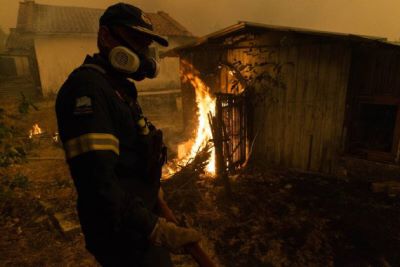
For the seventh day, hundreds of firefighters along with residents, volunteers, and international aid crews were trying to contain the biggest blaze that is still raging in the northern part of Greece’s Evia island.
Nightmarish scenes continued to unfold during the weekend and on Monday as the shifting winds set many resurgent wildfires in large parts of the area, forcing more evacuations of villages and thousands of residents and tourists.
A resident is seen amid the smoke of a wildfire in northern Evia island, Greece, Aug. 8, 2021.
“Everyone here makes their living from tourism activities, local businesses and cultivating oil groves. We are going to starve here in Pefki, and in the whole northern part of Evia island,” Maria, owner of a small hotel and restaurant in Pefki village in northern Evia island, told Xinhua.
“After four family generations that we managed to make something, we left our houses and businesses with a backpack. This is our fortune, with that we have been left,” Maria said, as she was embarking on a ferry boat to escape the fire.
According to Greek Coast Guard, a total of 2,770 residents and tourists were evacuated by sea from the fire-stricken areas of Evia island from Aug. 1 to 8.
On Friday, coast guard vessels assisted by ferries and private boats transferred 1,400 people to safe zones.
After the fire was contained during the weekend, Greek authorities on Monday started assessing the damages of the extended fire fronts that swept through several villages in the northern suburbs of Attica prefecture, on the foothills of Mount Parnitha.
The extensive fires throughout Greece led to the intervention of the prosecutor of the Supreme Court, who requested an investigation, as there were suspicions of deliberate organized criminal activity of arson in forests, the Greek national news agency AMNA reported.
Forest fires are common in Greece over the summer. In July 2018, a wildfire swept through a resort near Athens, resulting in 102 deaths.
Vaccine developer BioNTechs revenues jump to 5.3 bln euros in Q2
The companys estimated net income in Q2 skyrocketed to 2.8 billion euros due to sales from its COVID-19 vaccine.
BioNTech’s revenues jumped to 5.3 billion euros (6.2 billion U.S. dollars) in the second quarter (Q2) of this year, up from 42 million euros in the same period last year, the German biotechnology company announced on Monday.
ADVERTISEMENTx
The company’s estimated net income in Q2 skyrocketed to 2.8 billion euros due to sales from its COVID-19 vaccine, following losses of 88.3 million euros in the prior-year period, according to BioNTech.
BioNTech, together with Pfizer, delivered more than one billion COVID-19 vaccine doses worldwide in the first half of 2021.
“We are proud to have reached this great milestone after only six months and to have made a difference for people with our proprietary mRNA technology,” said CEO and co-founder Ugur Sahin.
BioNTech has signed contracts with Pfizer to supply more than 2.2 billion doses of its COVID-19 vaccine this year, and more than one billion in 2022. The German company thus raised its forecast for this year’s sales of the vaccine to 15.9 billion euros.
The company stressed that the recent acquisition of a TCR cell therapy development platform and a manufacturing facility in Gaithersburg in the United States was an important step towards the “goal to build a global biotechnology company for individualized cancer medicine.” (1 euro = 1.18 U.S. dollars)
Pentagon requires mandatory vaccination against COVID-19 in U.S. military by mid-September
Absent of the FDAs full approval to the Pfizer vaccine, which is now authorized only for emergency use, U.S. Defense Secretary Lloyd Austin will have to seek a waiver from President Joe Biden in order to make inoculation compulsory for the men and women in uniform.
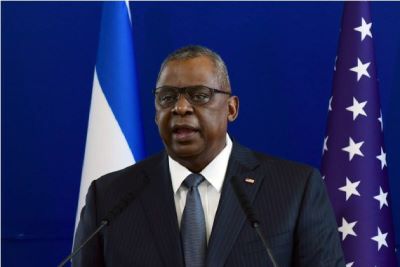
U.S. Defense Secretary Lloyd Austin said Monday that all members of the U.S. military are required to be vaccinated against COVID-19 by Sept. 15, telling troops currently serving the nation that the deadline could be pushed up in the face of changes in regulations or exacerbation of the pandemic situation.
ADVERTISEMENTx
“I will seek the President’s approval to make the vaccines mandatory no later than mid-September, or immediately” upon licensure by the U.S. Food and Drug Administration (FDA), “whichever comes first,” Austin said in a memo released by the Defense Department.
Absent of the FDA’s full approval to the Pfizer vaccine, which is now authorized only for emergency use, Austin will have to seek a waiver from President Joe Biden in order to make inoculation compulsory for the men and women in uniform. The secretary said in the memo that a full FDA licensure is expected “early next month.”
“I will not hesitate to act sooner or recommend a different course to the President if l feel the need to do so,” said Austin, who underscored the need to closely track the development of the pandemic given the current spike in caseloads caused by the spread of the Delta variant.
“To defend this Nation, we need a healthy and ready force,” Austin said, encouraging unvaccinated service members to get their jabs early instead of waiting for the mandate.
The Pentagon’s decision came a little over a week after Biden announced that he had directed the department “to look into how and when they will add COVID-19 to the list of vaccinations our armed forces must get.”
Discussions over mandatory vaccination among active duty troops gained momentum after Biden, while making the suggestion to the Pentagon, announced in late July that all federal civilian workforce in the executive branch were required to attest to their vaccination status, or subject to regular testing, mask-wearing and social-distancing while on the job, as well as restrictions on official travel.
Austin also noted in the memo that the president’s requirements for federal civilian workers “apply to those of you in uniform as well as our civilian and contractor personnel.”
According to the Pentagon, more than 1 million troops have been fully vaccinated and another 237,082 have received one shot. The data, last updated on Aug. 4, also showed that vaccination rates varied widely among different military services.
Covid-19 infections in Asean continue downward trend for fourth day
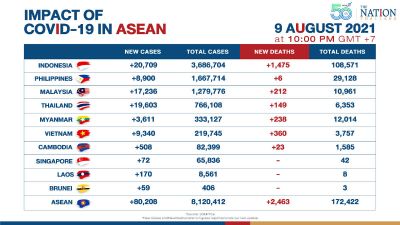
Southeast Asia saw a decline in new Covid-19 cases for the fourth successive day, while deaths were also lower on Monday, collated data showed.
Asean countries reported 80,208 new cases on Monday, lower than Sunday’s 88,376, while deaths were 2,463, lower than the previous day’s 2,940.
Total Covid-19 cases in the region since the outbreak crossed 8.12 million, while the death toll has risen to 172,422.
Philippines reported 8,900 new cases and six deaths on Monday, bringing cumulative cases in the country to 1,667,414 patients and total deaths to 29,128. The Ministry of Public Health reported that new infections had increased across all age groups by an average of 59 per cent in the past two weeks, with those in the 30-39 age group seeing the biggest jump. It also reported that more than 22,000 medical professionals had contracted Covid-19 since the outbreak started. Of these, 102 medics have died.
Meanwhile, Malaysia is allowing residents who have returned from overseas to remain in self-quarantine at home under a digital monitoring system from Tuesday onwards. The government also has allowed people who have been vaccinated at required doses for more than 14 days to participate in religious ceremonies, dine in at restaurants and travel across provinces to see their spouse and children.
Indonesia continued to see improvement with the 20,709 new cases reported on Monday marking the fourth successive day of decline and the lowest in weeks.
Humans have pushed the climate into unprecedented territory, landmark U.N. report finds
More than three decades ago, a collection of scientists sanctioned by the United Nations first warned that humans were fueling a dangerous greenhouse effect and that if the world didnt act collectively and deliberately to slow Earths warming, there could be “profound consequences” for people and nature alike.
The scientists were right.
On Monday, that same body – the Intergovernmental Panel on Climate Change – issued its latest and most dire assessment about the state of the planet, detailing how humans have altered the environment at an “unprecedented” pace and cautioning that the world risks increasingly catastrophic impacts in the absence of rapid greenhouse gas reductions.
The landmark report, compiled by 234 authors relying on more than 14,000 studies from around the globe, bluntly lays out for policymakers and the public the most up-to-date understanding of the physical science on climate change. Released amid a summer of deadly fires, floods and heat waves, it arrives less than three months before a critical summit this November in Scotland, where world leaders face mounting pressure to move more urgently to slow the Earth’s warming.
Monday’s sprawling assessment states that there is no remaining scientific doubt that humans are fueling climate change. That much is “unequivocal.” The only real uncertainty that remains, its authors say, is whether the world can muster the will to stave off a darker future than the one it already has carved in stone.
U.N. Secretary General António Guterres called the findings “a code red for humanity” and said societies must find ways to embrace the transformational changes necessary to limit warming as much as possible. “We owe this to the entire human family,” he said in a statement. “There is no time for delay and no room for excuses.”
But so far, the collective effort to slow climate change has proved gravely insufficient. Instead of the sort of emission cuts that scientists say must happen, global greenhouse gas pollution is still growing. Countries have failed to meet the targets they set under the 2015 Paris climate accord, and even the bolder pledges some nations recently have embraced still leave the world on a perilous path.
“What the world requires now is real action,” John Kerry, the Biden administration’s special envoy for climate, said in a statement about Monday’s findings. “We can get to the low carbon economy we urgently need, but time is not on our side.”
ADVERTISEMENTx
Humans have pushed the climate into unprecedented territory, landmark U.N. report finds
It certainly is not, according to Monday’s report.
Humans can unleash less than 500 additional gigatons of carbon dioxide – the equivalent of about 10 years of current global emissions – to have an even chance of limiting warming to 1.5 degrees Celsius (2.7 Fahrenheit) above preindustrial levels.
But hopes for remaining below that threshold – the most ambitious goal outlined in the Paris agreement – are undeniably slipping away. The world has already warmed more than 1 degree Celsius (1.8 degrees Fahrenheit), with few signs of slowing, and could pass the 1.5-degree mark early in the 2030s.
“Unless we make immediate, rapid and large-scale reductions in greenhouse gas emissions, limiting warming to 1.5C will be beyond reach,” said Ko Barrett, vice chair of the IPCC and senior adviser for climate at the National Oceanic and Atmospheric Administration. “Each bit of warming will intensify the impacts we are likely to see.”
ADVERTISEMENT
Already, we are living on a changed and changing planet.
Each of the past four decades has been successively warmer than any that preceded it, dating to 1850. Humans have warmed the climate at a rate unparalleled since before the fall of the Roman Empire. To find a time when the level of carbon dioxide in the atmosphere changed this much this fast, you’d need to rewind 66 million years to the meteor that killed the dinosaurs.
Carbon dioxide in the atmosphere has risen to levels not seen in 2 million years, the authors state. The oceans are turning acidic. Sea levels continue to rise. Arctic ice is disintegrating. Weather-related disasters are growing more extreme and affecting every region of the world.
If the planet warms much more than 2 degrees Celsius above preindustrial levels – a scenario all but certain at the current pace of emissions – such change could trigger the inexorable collapse of the Greenland ice sheet and more than six feet of sea-level rise that could swamp coastal communities. Coral reefs would virtually disappear.
Heat waves that are already deadly will become as much as 5 degrees Fahrenheit hotter. Parts of the Earth that currently slow the pace of warming – such as the ocean absorbing excess heat and clouds reflecting sunlight back into space – will become less able to help us.
ADVERTISEMENT
“The chances of unknown unknowns become increasingly large,” said Zeke Hausfather, director of climate and energy at the Breakthrough Institute and a contributor to Monday’s report. “We don’t have any great comparable analogues in the last 2 million years or so. It’s harder for us to predict exactly what will happen to the Earth’s systems.”
The evidence for humanity’s influence on the climate system, once a fiercely debated topic, is now “overwhelming,” the IPCC report states. What began as a scientific hypothesis has become “established fact.”
That deepening certainty shows up not only in the changing composition of the atmosphere and the rising temperature of the oceans, but in signs large and small, from the dwindling of Arctic sea ice to the ever-earlier blossoming of Japan’s famous cherry trees.
The report’s 42-page “summary for policymakers” uses the phrase “virtually certain” nearly a dozen times. The words “high confidence” come up more than 100 times. The rate of sea-level rise, the retreat of ice sheets and glaciers, and the acidity of the oceans are all described as “unprecedented” in the past several thousand years.
Georgia Tech climate scientist Kim Cobb, one of the lead authors, said an array of new observational data from satellites and weather stations has given scientists more details about the Earth’s inner workings than ever before.
Equally important are the unmistakable real-world effects of climate change. Last year rivaled the hottest year in recorded history. Communities around the world have been battered by heat waves, droughts, hurricanes and wildfires so extreme that they cannot be explained by mere natural variability.
“The signals are just leaping out of the noise,” Cobb said.
Using sophisticated computer models, researchers are increasingly able to pinpoint the role of climate change in particular natural disasters, sometimes within days or weeks of the event.
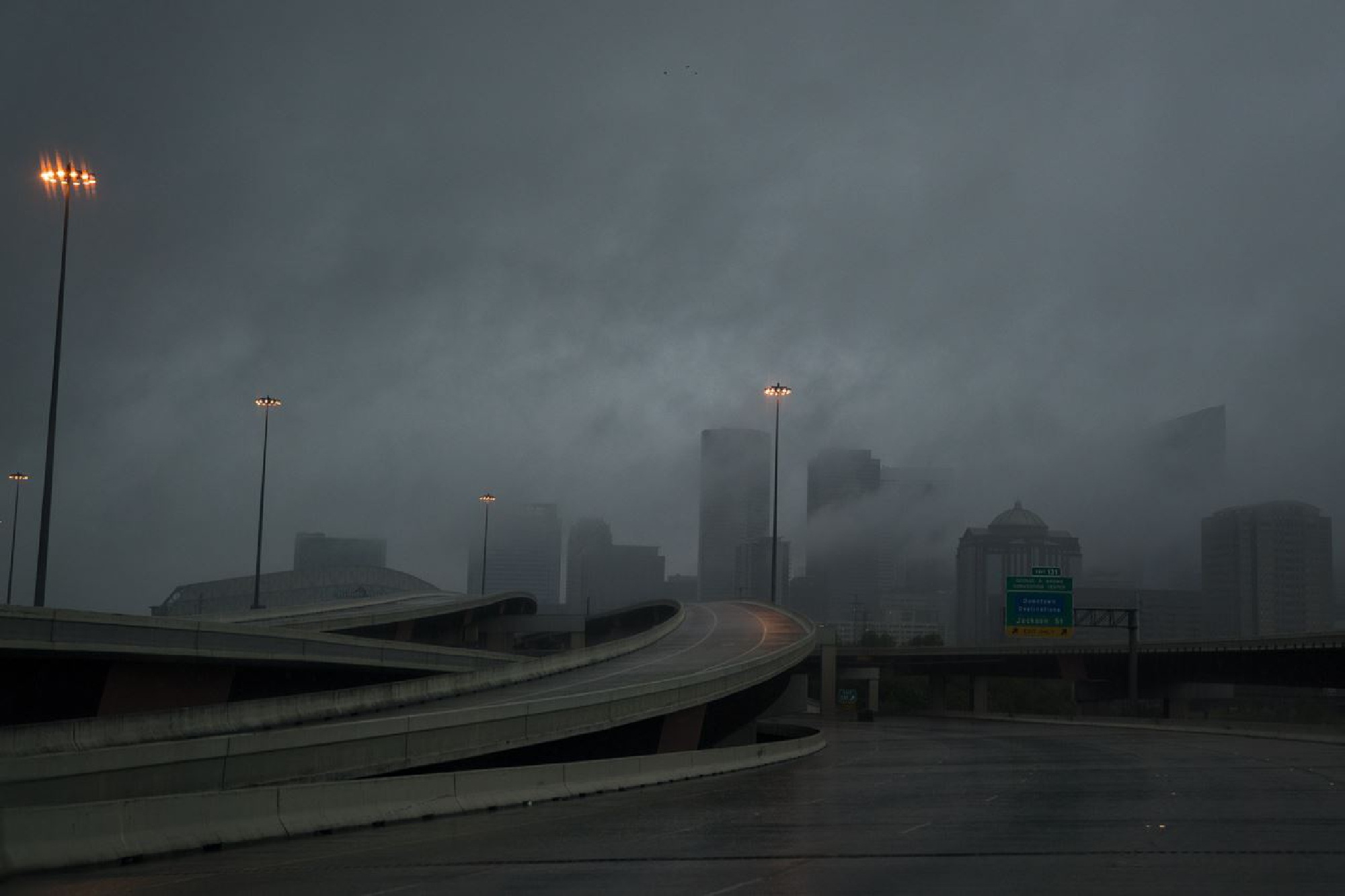
Storms such as Houston’s Hurricane Harvey in 2017 and Tropical Cyclone Idai, which killed hundreds of people in Mozambique two years later, bore the unmistakable fingerprints of human-caused warming. The additional heat in the oceans provides more energy for storms, the report says, making intense Category 4 and 5 hurricanes more likely. Warmer air holds more moisture, increasing the amount of rain that falls during these events.
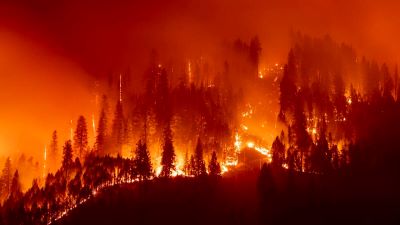
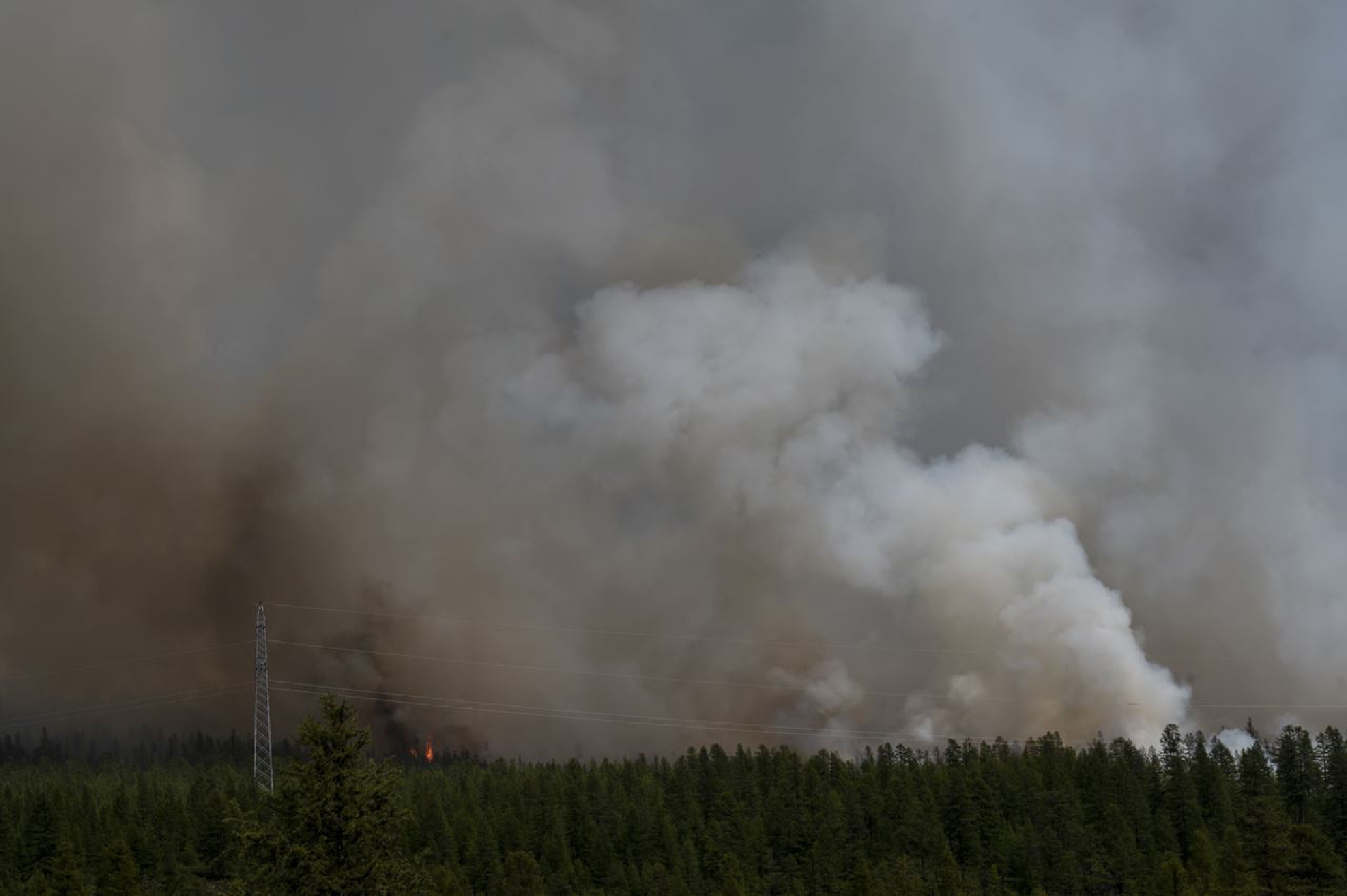
Likewise, scientists say the intense fires and blistering heat waves that have become summertime fixtures in both hemispheres would be almost impossible in a world unaltered by human activities. Warming has increased the “thirstiness” of the air, driving catastrophic wildfires in California and Australia over the past several years.
“It’s now become actually quite obvious to people what is happening, because we see it with our own eyes,” said Corinne Le Quéré, a professor of climate science at the University of East Anglia and a contributor to Monday’s assessment. “You don’t have to have a PhD. You don’t need to be a climate scientist. You just need to be a person who looks out the window.”
The IPCC, a science-focused collection of experts from around the globe, does not issue policy recommendations. Monday’s report is merely the first of several scheduled between now and 2022 assessing the mounting effects of climate change and evaluating what it would take for humans to limit warming.
But Monday’s report does detail the likely consequences of varying emissions scenarios, drawing on decades of meteorological observations, sophisticated computer models and examples of past warming drawn from the geologic record.
In the best-case scenario, the world rapidly phases out fossil fuels, embraces renewable energy on a massive scale and overhauls how humans work, eat and travel.
Humans have pushed the climate into unprecedented territory, landmark U.N. report finds
People eliminate emissions of carbon dioxide from coal, oil and gas. Societies find a way to curb powerful but short-lived greenhouse gases – most notably methane, which largely comes from burping cows and leaky fossil fuel facilities, and nitrous oxide, of which a huge amount comes from fertilizers used on farms. Natural systems such as forests and human inventions such as carbon-capture operations pull more and more out of the atmosphere.
In this scenario, the world reaches “net-zero” emissions around the year 2050, and warming stabilizes at about 1.5 degrees Celsius above preindustrial levels. Eventually, glaciers stop dwindling and sea-level rise slows. Humans adapt to the new planet we’ve created.
But with each degree of temperature rise, the consequences become dramatically more extreme, scientists underscored once again.
At 2 degrees Celsius above preindustrial levels, air can hold significantly more moisture than it does now, making droughts more likely and extreme rainfall worse. At 4 degrees Celsius (7.2 degrees Fahrenheit), intense heat waves that used to occur about once every 50 years will become annual events.
Mercifully, Monday’s assessment shows, the world for now seems to be trending away from the most ruinous potential path, as coal-fired power fades, renewable energy increasingly takes root and investors and voters alike demand climate-conscious policies.
But nations have not yet moved quickly enough to meet the Paris agreement goal to remain “well below” 2 degrees Celsius of warming.
At higher levels of warming, the report warns, it becomes much more difficult to predict how the planet will respond. Sophisticated computer models become uncertain. Scientists cannot easily seek clues in the past, because there is no recorded time in human history when change has been so extreme – and so fast.
“We’re going into uncharted territory,” Cobb said.
The more people emit, the greater chance of changes that take centuries or millennia to undo, Monday’s report warns. Already, ocean acidification will persist even if the amount of carbon dioxide in the atmosphere declines. At a certain point, the Greenland ice sheet will become so weak it moves into a state of irreversible decline.
Warming beyond 2 degrees Celsius also carries increased risk of setting off feedback processes that cause climate change to accelerate. Higher temperatures will thaw Arctic permafrost, potentially unleashing carbon that has been locked in a deep freeze for thousands of years. Methane trapped in the deep sea could make its way into the atmosphere. Wildfires could turn millions more acres of carbon-rich forests into a source of additional greenhouse gases. Air quality in many places could continue to worsen.
The more the climate changes from the one in which humans evolved and modern science was developed, the more likely we are to encounter challenges that exceed our capacity to adapt.
“We really don’t want to experience it,” cautioned lead author Fredi Otto, a climate scientist at the University of Oxford who studies weather extremes.
The IPCC report does not recommend specific warming targets. But as someone who has seen how societies already struggle to cope with climate disasters, Otto urged policymakers to take the difficult steps necessary to limit warming to 1.5 degrees Celsius.
“It will be difficult,” she acknowledged. “But it’s still within our power to do this.”
Monday’s report underscores that humans have a profound opportunity to shape a better future by sharply reducing emissions. But it also spells out how we can no longer avoid some measure of calamity in coming years.
The oceans will continue warming to 2100 and beyond, the authors write. Shrinking seasonal snow cover across the Northern Hemisphere is all but certain. The rate of sea-level rise is increasing and is destined to continue in coming decades. The likelihood and severity of extreme hot weather “will occur throughout the 21st century.”
How rapidly those changes unfold depends on how much humans continue to spew greenhouse gases into the atmosphere, the authors make clear. But even the most optimistic scenarios assume that emissions will continue over the next two decades, leading to higher and higher carbon dioxide concentrations in the atmosphere. And it may take several decades after humans begin shrinking their collective carbon footprint before the impacts of those changes are felt.
Yet greenhouse gases that are emitted now could be more difficult to remove later. The report cautions that declining carbon dioxide levels in the air could cause the land and oceans to release carbon it has absorbed. Efforts to pull carbon out of the atmosphere – using natural systems, like reforestation, or mechanical solutions, like machines that store the gas in rocks – probably will require huge amounts of time and energy.
In 2019, global emissions stood higher than in any other year in human history. The drop in pollution caused by economic shutdowns at the start of the coronavirus pandemic proved to be only a blip. Now the world is back on track to emit as much as ever, careening toward an ever hotter and more unpredictable future.
“Every place we look, we are seeing the evidence of past inaction. That should be a wake-up call,” said Jane Lubchenco, deputy director for climate and environment at the White House Office of Science and Technology Policy. “We need to do everything possible to avoid even worse disaster.”
Meanwhile, the heaviest burdens from climate change have long fallen on the world’s most vulnerable, and on nations that played little role in causing climate change but can least afford to adapt.
For low-lying islands, rising seas present an ongoing and existential threat. Crippling floods have led to deaths and displacement for hundreds of thousands of people, from Sudan to Uganda. People who are unhoused, impoverished or sick are disproportionately likely to suffer in weather extremes. These disparities will only intensify as the planet continues to warm.
But recent disasters also show that climate impacts can hit without regard for national borders, income level and political clout. The Midwest this month is choking on smoke from wildfires hundreds of miles away in Canada. Germany, one of the world’s wealthiest nations, suffered billions in damage from July’s floods that killed scores of people.
Monday’s findings are undoubtedly grim, acknowledged lead author Claudia Tebaldi, a scientist at the Pacific Northwest National Laboratory.
But people should not dwell in regret for the failures of the past, Tebaldi said, or only despair over possibilities that are not yet inescapable. Instead, she urged people to focus on what can still be done, on what can still be salvaged.
After all, the hard math of science shows that a concerted push by governments and the private sector can still bend the world’s troubling trajectory. Each action to slow the pace of emissions gives society more time to adapt to changes we know are coming. Each degree of warming that humans avoid saves us from climate catastrophes that don’t have to happen.
“Things are going to change for the worse. But they can change less for the worse than they would have, if we are able to limit our footprint now,” Tebaldi said.
“Every little bit counts.”
Published : August 10, 2021
By : The Washington Post · Brady Dennis, Sarah Kaplan
China covid-zero strategy risks leaving it isolated for years
As most of the world learns to live with covid-19, China is tethering itself to eliminating the virus over the long term — an approach that risks leaving the worlds second-biggest economy isolated for years to come.
China this month saw the contagious delta variant pop up in more than half of 31 provinces despite watertight border controls, triggering yet another round of targeted lockdowns, travel curbs and mass testing across the country. While the outbreak is the most widespread in China since the initial flare-up in Wuhan last year, the World Health Organization said total cases last Friday were 141 — around .01% of the new infections that day in the U.S.
The aggressive moves to tame a relatively small caseload in a country with one of the world’s highest vaccination rates shows how politically invested the Communist Party has become in achieving zero covid-19 infections. Chinese authorities are increasingly trumpeting their success in containing the virus as an ideological and moral victory over the U.S. and other nations now treating covid-19 as endemic.
In the short term, Chinese leaders have an incentive to maintain strict controls at least through next year: They don’t want any major outbreaks derailing the Winter Olympics or clouding a once-in-five-year Party Congress at which President Xi Jinping is expected to get a third term in office. The problem, however, is the rising economic and political costs in maintaining that policy indefinitely, particularly as the virus spawns new variants that can breach restrictions more easily.
“China will have to pivot from its containment strategy, sooner or later — you can stay covid Zero for a while, but you can’t stay covid Zero forever, because the virus swoops in before you know it,” said Chen Zhengming, an epidemiology professor at the University of Oxford. “My worry is that they won’t actively pursue a tactic change as covid Zero has become an entrenched mentality. Especially when you hold officials accountable, no one dares to go easy on the outbreak.”
Right now it’s nearly taboo in China to even suggest a different approach. In a commentary published over the weekend by a health news app run by the official People’s Daily newspaper, former health minister Gao Qiang called for stronger measures to keep the virus out of China while blasting the U.S., U.K. and other countries for easing too early.
“Their sole reliance on vaccination and pursuit of the so-called ‘coexistence with the virus’ have led to a resurgence of the virus,” he wrote. “This is a misstep in covid decision-making caused by the deficiencies in their political mechanism and the result of upholding individualism.”
After Gao’s piece was published, Chinese social media users began attacking Zhang Wenhong, director of infectious diseases at Shanghai Huashan Hospital, who had earlier called on Chinese authorities to find “the wisdom to coexist with the virus long term.”
China isn’t the only country that’s sought to snuff out the virus, with Singapore, Australia and New Zealand also pursuing the strategy dubbed covid Zero. But as the rest of the world opens up and the prospect of global elimination recedes, others are starting to back away from a playbook that prevented deaths but left them cut off and fixated on case counts.
China’s commitment to covid Zero has implications for investors, many of whom are already been reeling from Xi’s sweeping crackdown on technology firms that at one point erased $1.5 trillion from Chinese stocks. Economic risks are building in the second half of the year, with growth set to slow while inflation pressures are picking up. Goldman Sachs Group Inc. and Nomura Holdings Inc. downgraded growth forecasts for China this month over Beijing’s measures to curb the virus.
While China’s covid policy would lead to a relatively safe domestic environment, “the cost is that China will stay isolated,” Zhang Zhiwei, chief economist at Pinpoint Asset Management, wrote in a note on Sunday.
“The zero tolerance policy is costly for economic growth,” Zhang said. “Mr. Gao’s article shows China is willing to pay the price.”
ADVERTISEMENTx
With 1.4 billion consumers and a tightly controlled political system, China can afford to maintain stringent controls on immigration and internal movement much more than smaller economies like Singapore. The low death toll and massive consumer market allowed China to become the first major economy to recover from the pandemic-induced downturn and boosted the Communist Party’s standing at home just as it plummeted overseas.
Many people like Lilah Pang, a 30-year-old advertising executive in Shanghai, have no complaints whatsoever about the restrictions to contain the latest outbreak. “Everyone should discipline themselves, as it’s beneficial to us all,” she said in an interview.
Yet some Chinese people are increasingly questioning Beijing’s absolutist approach, which sees constant disruption to their lives and no prospect of foreign travel for years. One woman who asked not to be identified described some recent virus control measures as “overkill.” “The whole propaganda makes you feel like it’s dangerous to go anywhere right now, even low-risk areas,” she said.
Foreign businesses that rely on the exchange of people are also concerned, particularly as China’s stringent border controls have seen some executives or their families shut out for months. Joerg Wuttke, head of the European Union Chamber of Commerce in China, warned that China could be left “on its island doing its thing” if it persists with a zero-tolerance approach as other countries open.
One practical concern for China’s leaders is the lower efficacy of China-made vaccines compared with mRNA vaccines developed in the West, particularly in a population with little natural immunity. While the government has discussed booster shots, no decisions have been announced.
ADVERTISEMENT
“The DNA of the leadership is enforcing,” Wuttke said. “As long as they don’t have enough booster shots, I think it’s pretty much going to be more draconian controls.”
China has vilified economic arguments for opening up, with three research groups on Monday releasing a report that described the U.S. objective as “save the stock market, not to save lives.” Authors of the document — titled “America Ranked First?!: The Truth about America’s fight against covid-19” — criticized Bloomberg News’ monthly covid Resilience Ranking. In July, the U.S. was scored as a better place to be than China during the pandemic in part due to progress in opening up, though both are in the top ten among the 53 economies included.
“The freedom of movement and the ‘normal functioning’ of society advocated by Bloomberg’s rankings are not about the safety of the American people,” the report said. “They are only about the need for the free flow of capital, and the desire for excessive profits.”
China’s covid Zero strategy stems in part from a tradition that people would rebel if leaders don’t protect the people, according to Wei Nanzhi, a researcher at the Chinese Academy of Social Sciences affiliated with China’s State Council. The Communist Party also repeatedly emphasizes a need to protect the masses over powerful interests, she added.
“If in the future every country will open the door, but only China will not open the door, can such kind of thing be sustainable? I think we will learn from other countries’ experience,” Wei said, citing Singapore as an example.
ADVERTISEMENT
Still, China’s strong public defense of its covid Zero strategy makes any move away from it more difficult. After 18 months of focusing on single cases, it will take a substantial paradigm and propaganda shift for Communist Party leaders to get citizens to accept covid cases — and deaths — as routine.
“There’s definitely a huge political risk for the government,” said Andy Chen, senior analyst with Beijing-based consultancy Trivium China. “Once it decides to change that approach, a lot of people who believe that the government’s genuinely trying to protect them will have second thoughts. They will be very confused.”
Despite weeks of protests, Frances health pass prompts little drama at cafes and train stations
PARIS – After weeks of protests, France saw relatively little drama on Monday as it expanded its national experiment with coronavirus mandates and began to require that people show a health pass to sit at cafes, eat at restaurants, board long-distance trains and access many other venues.
The tensions were palpable in some moments. A woman at the Gare de Lyon station screamed at safety personnel as her train departed without her because she lacked a valid pass proving she had been vaccinated, had a previous coronavirus infection or tested negative in the past 72 hours. She was shown the way to the nearest coronavirus testing site and eventually headed in that direction.
But at the Gare du Nord, another of the main train stations in Paris, most people appeared to be adapting to the new rules. About a dozen staffers in blue vests were deployed to scan the QR codes on travelers’ phones. Those who could show a valid pass were handed blue wristbands, allowing them to board their trains to the north of France.
Loudspeaker announcements reminded travelers that “your health pass will be checked during boarding.” Posters across the reception hall read: “One ticket, one mask, one health pass.”
Italy has implemented a similar national health pass, though its version has drawn fewer public protests. Since Friday, people in Italy are required to show documentation before getting access to indoor dining, gyms, theaters and museums. The pass will also be required for long-distance travel and of schoolteachers and university students starting next month.
France’s pass only received the final green light from the country’s constitutional council last Thursday, after weeks of public and parliamentary debate.
Both in France and in Italy, the majority of the population approves of the new measures, according to surveys, and the rules have prompted a surge in bookings for vaccination appointments.
But France has seen four weekends of mass protests, some of which have turned violent. On Saturday, more than 230,000 people rallied against the measures, according to figures by the Interior Ministry.
Opposition has come from across the political and societal spectrum, including from nurses who risk being suspended unless they get vaccinated, as well as far-right activists who may be using the protests as a recruiting ground.
In a step toward its critics, the French government announced minor relaxations of its implementation plan: Negative coronavirus tests will be valid for three days, rather than for only 48 hours. And officials are observing a week’s grace period before violations of the rules will be fined or prosecuted.
But the government is not backing down in what amounts to a key leadership test ahead of presidential elections next year.
ADVERTISEMENTx
Customers without a valid pass can be fined more than 135 euros, or about $158. Restaurants and other businesses that fail to check whether their clients have passes risk being closed by the authorities.
For now, unvaccinated French are still eligible to get free coronavirus tests, with results usually delivered within around 15 minutes, but the government has indicated it will begin to charge for tests in the fall. Testing sites are set up in tents across the city, including near stations and in popular bar districts.
At a train station in the northeast of Paris, Rania Ban Aboura, 26, was trying to negotiate access to a Strasbourg-bound train for her cousin, who was still waiting for a test she said she had taken over an hour before.
With the train about to depart, two security officers agreed to accompany the cousin back to the testing site to inquire about the delay. As they ran toward the exit of the train station, Aboura stayed behind and watched over the luggage.
She said the health pass was a good idea. “My grandmother died from the coronavirus,” she said.
Aboura said she had not yet been vaccinated but is planning to get a shot soon.
Although the new requirements are aimed at boosting domestic vaccination rates, they apply to everyone and have created some confusion for tourists who do not have European QR codes.
France has actively wooed vaccinated American tourists this summer, hoping their return would help revitalize the tourism industry. But the government was vague on the question of how they will be able to obtain the QR codes many venues require.
Clotilde Facory, a California resident, stood at a French testing center on Monday, trying unsuccessfully to get more details.
Facory said she is fully vaccinated and arrived in Paris two days earlier, but worried she would need negative tests every 72 hours after the governmental grace period ends next week.
“I wish they would accept the QR from California,” she said. “But that’s not the case.”
Late Monday in France, after the new rules were in effect, tourism secretary Jean-Baptiste Lemoyne announced an email application system for non-E.U. tourists. But his tweet appeared to have been deleted soon after, and the government website providing coronavirus information for foreign nationals in France had not been updated since Aug. 1.
Later on Monday, the U.S. Centers for Disease Control and Prevention issued a warning of high coronavirus case levels in France, and the State Department issued a “do not travel” advisory.
In Italy, CDC cards are being accepted as proof of vaccination.
As the new health pass requirements went into effect on Friday morning, Holly and Tanner Vick, a couple in their early 40s from Washington state, arrived at Rome’s Borghese Gallery more than half an hour before their reserved time, to make sure they had all the necessary documents with them.
Visitors entering the 17th-century Roman villa that houses the gallery were divided into two lines, one for “E.U.” and one for “non-E.U.” citizens.
“Checking E.U. citizens through their apps is faster,” said Marina Minozzi, a museum official and art historian. Minozzi said an estimated 30% of their current visitors are non-Italian, and most of those are American. “I find them quite prepared,” she said of U.S. visitors.
The only problem they had encountered that morning, she said, was caused by two Italian citizens vaccinated only two days before their visit – not long enough to be considered fully inoculated.
Published : August 10, 2021
By : The Washington Post · Rick Noack, Stefano Pitrelli

 A resident is seen amid the smoke of a wildfire in northern Evia island, Greece, Aug. 8, 2021.
 Humans have pushed the climate into unprecedented territory, landmark U.N. report finds
 Humans have pushed the climate into unprecedented territory, landmark U.N. report finds