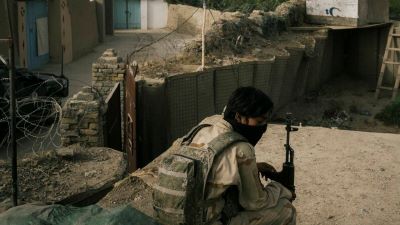
Displaced Afghan families suffer in makeshift camps, hoping to live in peace #SootinClaimon.Com

#SootinClaimon.Com : ขอบคุณแหล่งข้อมูล : หนังสือพิมพ์ The Nation.

https://www.nationthailand.com/international/40004073

Displaced Afghan families suffer in makeshift camps, hoping to live in peace


“My utmost desire in my life is to see peace and to live in peace. This is my dream and what I am praying for,” said an Afghan displaced woman whose house has been destroyed by the ongoing war in the country.
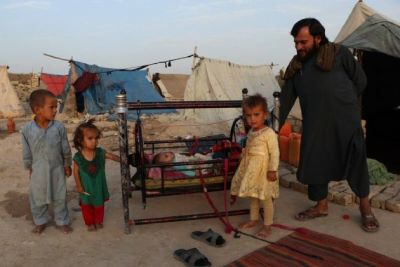
Bibi Maryam, a displaced woman in Mazar-i-Sharif city, the capital of Afghanistan’s northern Balkh province, sits in front of her tent in a makeshift camp with two kids. Her house has been destroyed by the ongoing war in the country.

The 37-year-old woman, who seems much older than her real age, said there had been gunfire almost every day, and she had witnessed the killing of innocent people and destruction of houses.

ADVERTISEMENTx

“My utmost desire in my life is to see peace and to live in peace. This is my dream and what I am praying for. If peace returns I would return to my village and resume my normal life,” Maryam told Xinhua.

Maryam denounced the ongoing war in Afghanistan as the source of all sufferings of the ordinary Afghans and lamented that the war has destroyed their houses, rendered many homeless and left countless children orphaned.

“The war has turned to ash our house, and I am living along with my nephews whose father has gone missing,” Maryam murmured.

Living in a tent in the makeshift camp outside Mazar-i-Sharif where the temperature is usually above 45 degrees Celsius in summer, she had no cooler or fan available.

“We are living on charity and sometimes begging and asking for alms to find food and water. Begging is a shameful act but we have no choice,” she said.

ADVERTISEMENT

Maryam said there are casualties from both the Afghan security forces and the Taliban in the ongoing fighting every day.

“I am praying for returning peace. I am searching for peace and looking forward to seeing the return of lasting peace in Chamtal district and across Afghanistan to resume peaceful life free of fear.”

Afghanistan has been the scene of escalating fighting since the start of the U.S.-led forces pullout from the country in early May. Since May, the Taliban outfit has intensified activities and reportedly has captured some 200 districts including four in the northern Balkh province.

The escalating fighting has left many families homeless, with majority of them having settled in the makeshift camps in and outside Balkh provincial capital Mazar-i-Sharif over the past months.

“Living is very difficult in both the villages and inside the makeshift camps. In the villages people are caught in crossfire and in the makeshift camps we don’t have even the basic necessities of living, and we Afghans have been suffering since our childhood,” elder of the camp Hajji Faiz Mohammad lamented in talks with Xinhua.

ADVERTISEMENT

“We are being killed. We are deprived of our rights. Our children can’t go to school. Nobody seems to pay attention to our sufferings,” Mohammad complained.

Sayed Masoud Qadiri, chief of the Refugees and Repatriation Department in Mazar-i-Sharif, said surveys are being made on the problems of the people living in the makeshifts.
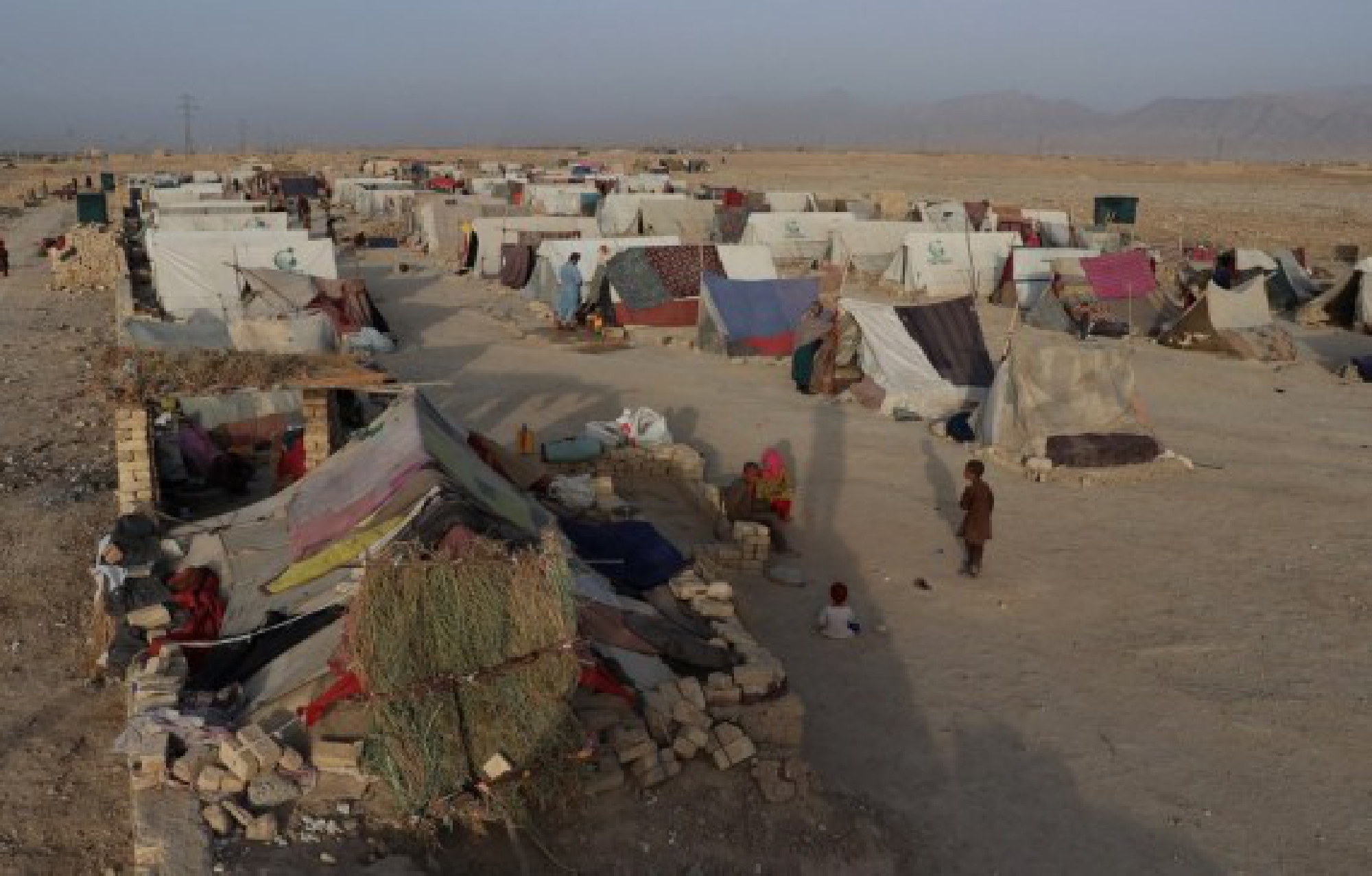
Photo taken on July 31, 2021 shows a makeshift camp site in Mazar-i-Sharif, capital of Balkh province, Afghanistan. Photo taken on July 31, 2021 shows a makeshift camp site in Mazar-i-Sharif, capital of Balkh province, Afghanistan.
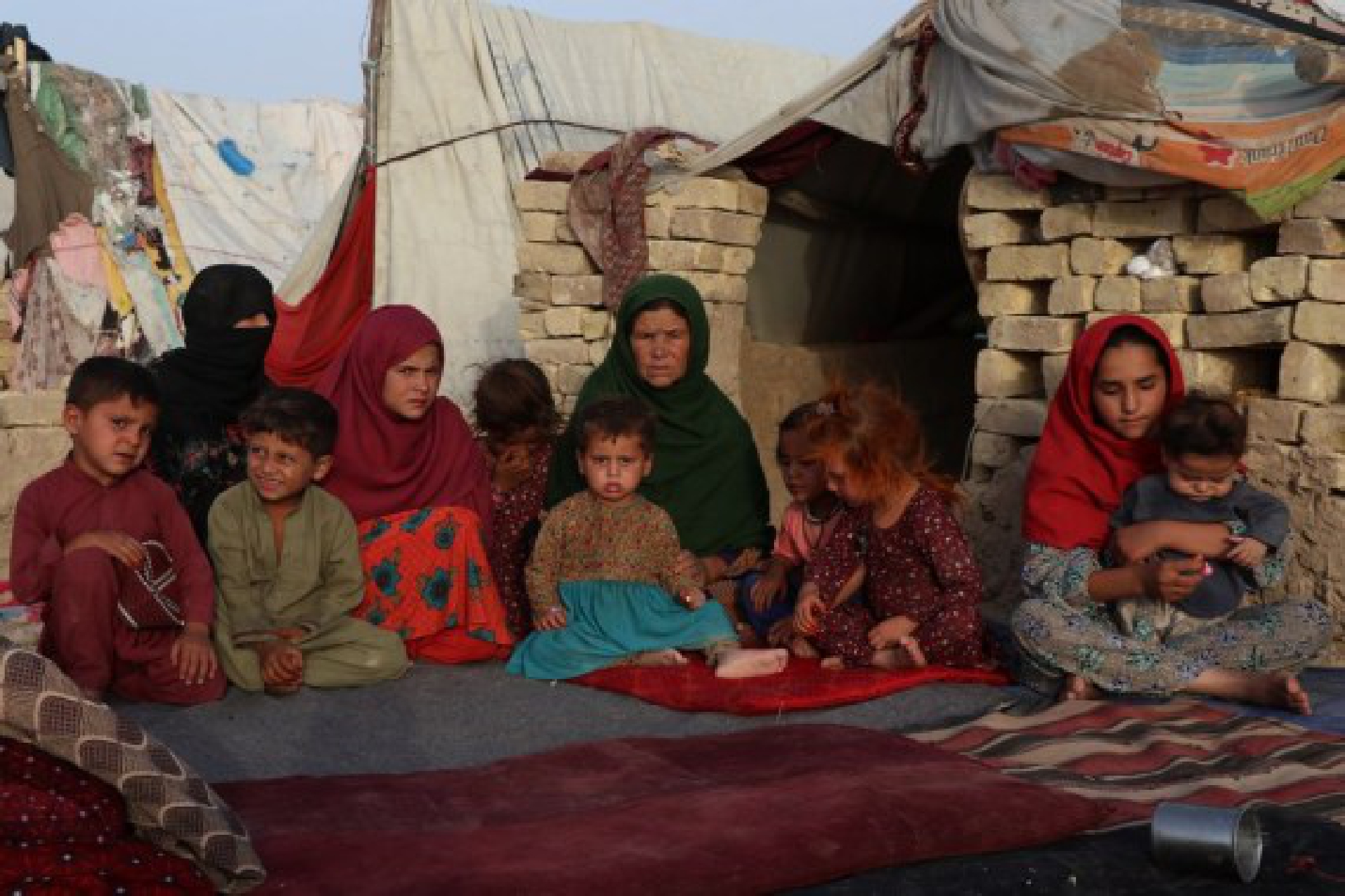
Photo taken on July 31, 2021 shows a makeshift camp site in Mazar-i-Sharif, capital of Balkh province, Afghanistan. 

Photo taken on July 31, 2021 shows displaced people at a makeshift camp site in Mazar-i-Sharif, capital of Balkh province, Afghanistan.Photo taken on July 31, 2021 shows displaced people at a makeshift camp site in Mazar-i-Sharif, capital of Balkh province, Afghanistan.
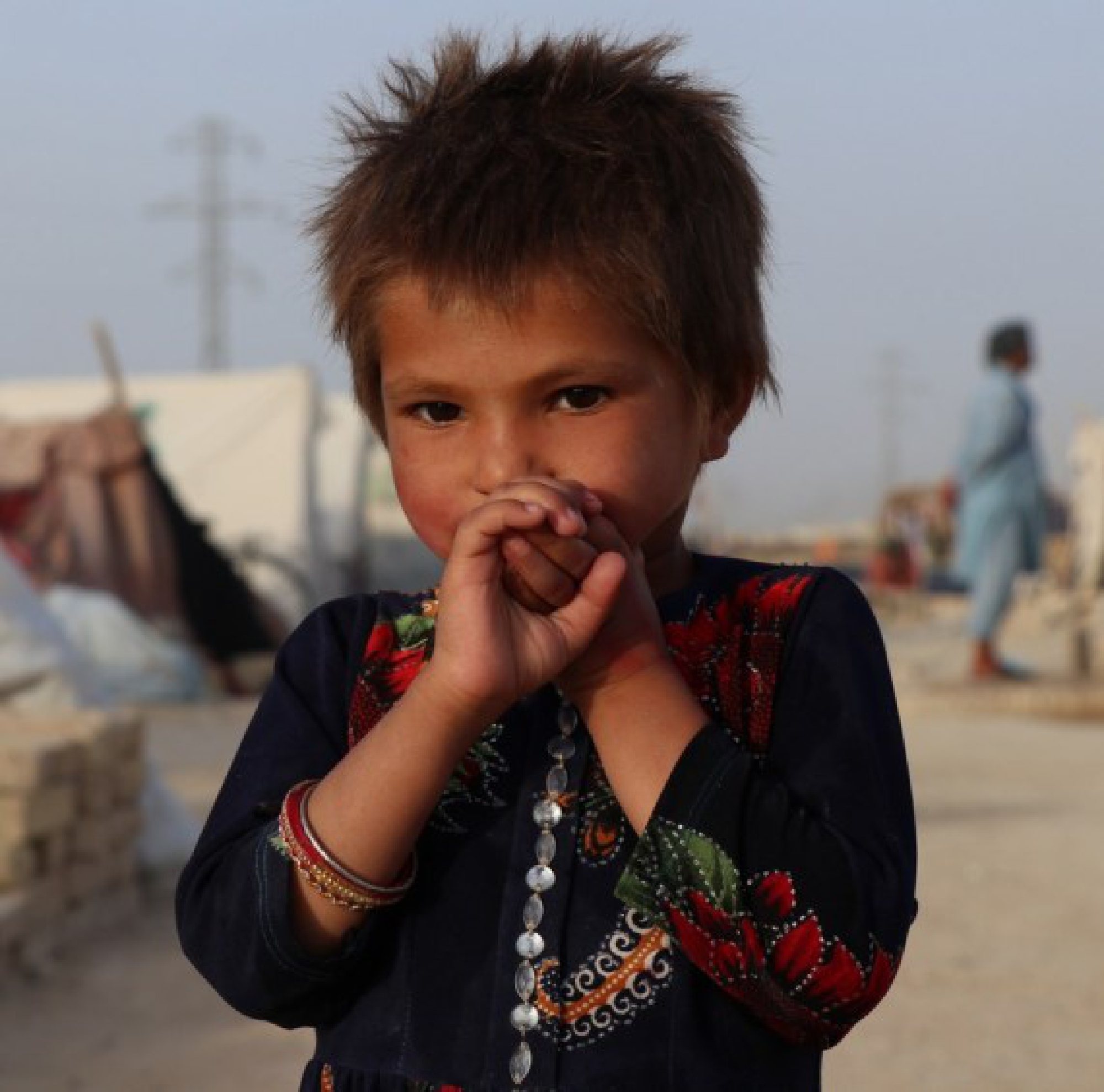
Photo taken on July 31, 2021 shows displaced people at a makeshift camp site in Mazar-i-Sharif, capital of Balkh province, Afghanistan.

A displaced Afghan child is seen at a makeshift camp site in Mazar-i-Sharif, capital of Balkh province, Afghanistan, July 31, 2021. A displaced Afghan child is seen at a makeshift camp site in Mazar-i-Sharif, capital of Balkh province, Afghanistan, July 31, 2021.

A displaced Afghan child is seen at a makeshift camp site in Mazar-i-Sharif, capital of Balkh province, Afghanistan, July 31, 2021. 

Published : August 02, 2021

By : xinhua

Zimbabwe reopens Victoria Falls border to vaccinated #SootinClaimon.Com

#SootinClaimon.Com : ขอบคุณแหล่งข้อมูล : หนังสือพิมพ์ The Nation.

https://www.nationthailand.com/international/40004071

Zimbabwe reopens Victoria Falls border to vaccinated


Zimbabwe has reopened the Victoria Falls land border with Zambia for fully vaccinated tourists to allow the smooth flow of tourists between the two neighboring countries.

Zimbabwe has reopened the Victoria Falls land border with Zambia for fully vaccinated tourists to allow the smooth flow of tourists between the two neighboring countries.

The development follows the successful rollout of a vaccination program that has seen more than 60 percent of residents in the border town of Victoria Falls being vaccinated.

ADVERTISEMENTx

Victoria Falls town is home to the mighty Victoria Falls, Zimbabwe’s prime tourist destination, and one of the world’s seven natural wonders.

The adjacent Kazungula border post with neighboring Botswana has also been opened, with the majority of visitors being vaccinated.

Despite the reopening of tourist activities in Victoria Falls, Zimbabwe remains under Level 4 lockdown and other land borders remain closed.

Earlier this week, following requests from players in the tourism sector, the cabinet resolved to reopen the two border posts to allow tourist activities to resume between the countries.

Before the pandemic, more than 350,000 people each year visited the Zimbabwean side of Victoria Falls which is shared with Zambia to witness the natural wonder.

With global travel restrictions and national lockdowns, however, tourist activities were halted for the most part of 2020.

Due to its heavy reliance on international tourists, Zimbabwe has been the hardest hit with hospitality industry, and the sector is estimated to have lost at least 1 billion U.S. dollars in potential revenue in 2020.

Following the successful rollout of vaccines in the resort town, players in the tourism sector are optimistic that the tourism and hospitality industries will return to normalcy.

Victoria Falls’s vaccination drive was launched in March with Sinovac vaccines purchased from China, and the tourist destination has become the first city in the region to archive herd immunity.

Nick Mangwana, Permanent Secretary for Information Publicity and Broadcasting Services, said Friday night that since Victoria Falls has since achieved herd immunity, President Emmerson Mnangagwa had directed that restaurants in the resort city allow sit-in customers.

Tourists take photos in Victoria Falls National Park, Hwange District, north western Zimbabwe, Feb. 26, 2020.Tourists take photos in Victoria Falls National Park, Hwange District, north western Zimbabwe, Feb. 26, 2020.

Tourists take photos in Victoria Falls National Park, Hwange District, north western Zimbabwe, Feb. 26, 2020.

Published : August 02, 2021

By : xinhua

5-year fishing ban begins in parts of Yellow River, tributaries #SootinClaimon.Com

#SootinClaimon.Com : ขอบคุณแหล่งข้อมูล : หนังสือพิมพ์ The Nation.

https://www.nationthailand.com/international/40004070

5-year fishing ban begins in parts of Yellow River, tributaries


Northwest Chinas Qinghai Province on Sunday initiated a five-year fishing ban in parts of the Qinghai section of the Yellow River and its tributaries.

The ban, which will be effective until July 31, 2026, covers the main stream of the Yellow River in Qinghai, two lakes and nine tributaries of the country’s second-longest river, said the Qinghai provincial agriculture and rural affairs department.

Dubbed “the water tower of China,” Qinghai is home to the Sanjiangyuan (Three-River-Source) area, where the three major rivers — the Yangtze River, the Yellow River and the Lancang River — originated.

Located in the northeastern part of the Qinghai-Tibet Plateau, Qinghai is also home to many rare plateau species of aquatic wild animals that are endemic to China.

ADVERTISEMENTx

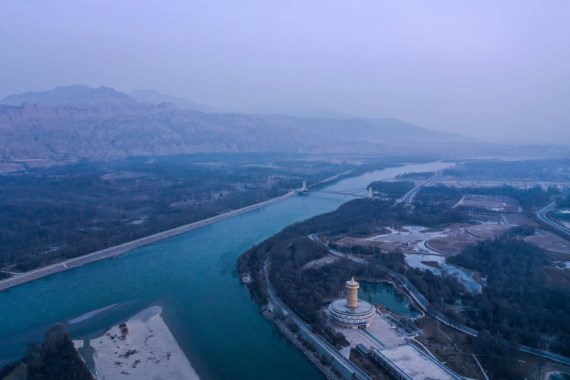
Aerial photo taken on Dec. 16, 2020 shows the view of the Yellow River in Guide County of the Tibetan Autonomous Prefecture of Hainan, northwest China's Qinghai Province

Aerial photo taken on Dec. 16, 2020 shows the view of the Yellow River in Guide County of the Tibetan Autonomous Prefecture of Hainan, northwest China’s Qinghai Province

Published : August 02, 2021

By : xinhua

Chinas space-tracking ship Yuanwang-3 completes new monitoring missions #SootinClaimon.Com

#SootinClaimon.Com : ขอบคุณแหล่งข้อมูล : หนังสือพิมพ์ The Nation.

https://www.nationthailand.com/international/40004069

Chinas space-tracking ship Yuanwang-3 completes new monitoring missions


Chinas space-tracking ship Yuanwang-3 returned to its homeport in east Chinas Jiangsu Province Sunday after completing a new round of maritime monitoring missions.

During the missions, Yuanwang-3 ensured Fengyun-3E meteorological satellite’s entry into planned orbit.

Commissioned on May 18, 1995, Yuanwang-3 is a second-generation Chinese space-tracking ship. It has undertaken more than 90 maritime tracking and monitoring tasks for spacecraft, including the Shenzhou spaceships, Chang’e lunar probes and BeiDou satellites.
 

ADVERTISEMENTx

Aerial photo shows China's spacecraft tracking ship Yuanwang-3 sailing on the southern Pacific Ocean, June 21, 2019.

Aerial photo shows China’s spacecraft tracking ship Yuanwang-3 sailing on the southern Pacific Ocean, June 21, 2019.

Published : August 02, 2021

By : xinhua

Cooperating to trace COVID-19 origins shared responsibilities for countries: Chinese ambassador #SootinClaimon.Com

#SootinClaimon.Com : ขอบคุณแหล่งข้อมูล : หนังสือพิมพ์ The Nation.

https://www.nationthailand.com/international/40004068

Cooperating to trace COVID-19 origins shared responsibilities for countries: Chinese ambassador


Many study reports, including some developed by U.S. researchers, showed that the contagion might originate from several sources and break out in different spots, which is why the probe into the origins should be conducted on a global scale, said Chinas Ambassador to Italy Li Junhua.

“Cooperating on tracing the origins of the virus is everyone’s responsibility,” and such research should be conducted worldwide, China’s Ambassador to Italy Li Junhua has written.

“The COVID-19 pandemic has been raging around the world for over a year, causing enormous trauma to all countries,” the ambassador wrote in an article published Thursday in Diplomatic Journal, an Italian online newspaper.

Noting that both China and Italy have actively shared information and cooperated with the World Health Organization (WHO) to find the origins of the virus, Li urged all countries to take the responsibility to promote origin-tracing work, saying the research should be conducted around the world.

ADVERTISEMENTx

He suggested all countries, where early infections were reported, draw from China’s practice to invite WHO teams for field studies on the origins, or learn from Italy on information sharing to complete origin-tracing work together.

“From the first moment, China reported information and shared experiences in prevention and control with the World Health Organization (WHO) and affected countries,” he said, adding the country has taken the lead in working together with the WHO on origin-tracing, and twice invited international experts to China for research on the source of the virus.

The research on the virus’ source “must be conducted by (WHO) member states, be based on consensus and be undertaken after consultation between the WHO and the member states,” Li stressed.

Meanwhile, many study reports, including some developed by U.S. researchers, showed that the contagion might originate from several sources and break out in different spots, which is why the probe into the origins should be conducted on a global scale, he said.

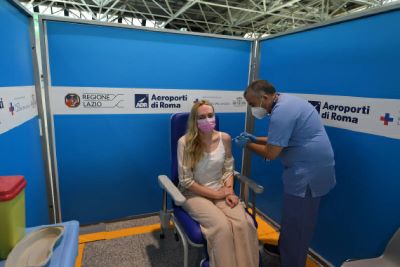
People walk on Via dei Condotti in Rome, Italy, May 15, 2021.People walk on Via dei Condotti in Rome, Italy, May 15, 2021.

Published : August 02, 2021

By : xinhua

Chinese Americans make donations to flood-hit central China #SootinClaimon.Com

#SootinClaimon.Com : ขอบคุณแหล่งข้อมูล : หนังสือพิมพ์ The Nation.

https://www.nationthailand.com/international/40004067

Chinese Americans make donations to flood-hit central China


“When we faced difficulties, we got help from Henan. Now, we should come forward and make our contributions to disaster relief in Henan,” says Frank Zhang.

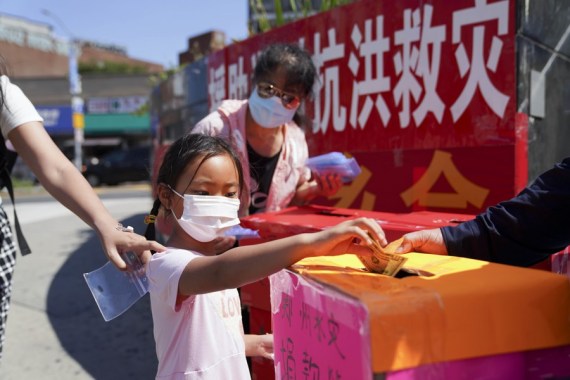
Chinese Americans in New York are donating money to help flood-hit people in central China’s Henan province to restore life and production.

So far, around 500,000 U.S. dollars have been raised by various entities in New York, said Frank Zhang, president of Henan Chinese Associates U.S.A. Inc., a mutual support group for people with Henan origin.

ADVERTISEMENTx

A task force has been established to handle issues related to raising money for disaster relief in Henan with multiple Chinese American groups on board.

The task force alone is expected to raise 200,000 dollars by this weekend, Zhang told Xinhua on Saturday.

More than 200,000 masks were shipped from Henan to New York and handed out to Chinese Americans at the height of the COVID-19 pandemic, according to Zhang.

“When we faced difficulties, we got help from Henan. Now, we should come forward and make our contributions to disaster relief in Henan,” Zhang added.

More than 9.3 million people in Henan have been affected by recent heavy rains and floods. Over 1.1 million local residents have been relocated to safer places.

A girl donates money to help flood-hit people in central China's Henan province to restore life and production, in New York, the United States, July 31, 2021.

A girl donates money to help flood-hit people in central China’s Henan province to restore life and production, in New York, the United States, July 31, 2021.

Published : August 02, 2021

By : xinhua

Sharp decline in new Covid-19 cases and deaths in Asean #SootinClaimon.Com

#SootinClaimon.Com : ขอบคุณแหล่งข้อมูล : หนังสือพิมพ์ The Nation.

https://www.nationthailand.com/international/40004058

Sharp decline in new Covid-19 cases and deaths in Asean


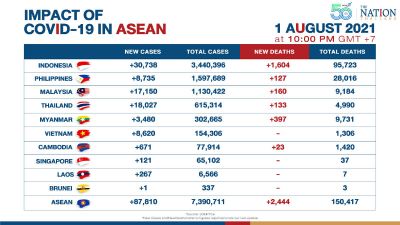
Southeast Asia reported a drop in new Covid-19 cases and deaths on Sunday, collated data showed.

Asean countries logged 87,810 new cases, lower than Saturday’s 96,639, while 2,444 patients died, improving from the previous day’s record 2,877.

The number of Covid-19 cases in the region crossed 7.39 million and deaths climbed to 150,417.

Cambodia reported 671 new cases and 23 deaths on Sunday, bringing cumulative cases in the country to 77,914 patients and 1,420 deaths. Prime Minister Hun Sen announced that the government would provide the third AstraZeneca vaccine jab to boost the immunity of people who have been given two doses of Sinovac, while those who have been given two doses of AstraZeneca will be given a Sinovac or Sinopharm jab as a booster.

Laos reported 267 new cases on Sunday, bringing cumulative cases in the country to 6,566 patients and seven deaths. Of these, 3,529 people have been cured and discharged.

The Laos government on Sunday ordered southern provinces to increase quarantine facilities for workers who have returned from Thailand and ordered hospitals to prepare more beds for infected patients.

Published : August 02, 2021

By : THE NATION

Deep in the forest, Germany fights another virus. This one hits pigs. #SootinClaimon.Com

#SootinClaimon.Com : ขอบคุณแหล่งข้อมูล : หนังสือพิมพ์ The Nation.

https://www.nationthailand.com/international/40004053

Deep in the forest, Germany fights another virus. This one hits pigs.


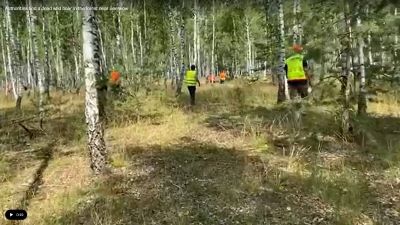
ODER-SPREE, Germany – In the Brandenburg forest, a bounding 4-year-old black Belgian shepherd named Uschi picks up a scent. Wearing a neon high-visibility jacket, she stops by an overturned tree and lets out a series of barks.

In the mud, teeming with maggots, is the rotting carcass of a wild boar. “Hero Uschi,” shouts a member of the search team. It’s exactly what they spent the day hunting.

As the world fights the coronavirus pandemic, teams in Europe are battling another outbreak: African swine fever. Hundreds of miles of fencing have been thrown up in Europe to stop its steady march west across the continent, threatening the major pig farming industries in Germany and elsewhere.

While the virus cannot be passed to humans, it kills almost every pig it infects in about a week to 10 days, and it has been spreading in Europe in recent years.

In fenced off “red zones” – such as those in the forests of the Oder-Spree district southeast of Berlin – teams work to clear the area of the infectious wild boar that have succumbed to the sickness and hunt any still alive in an attempt to break infection chains.

The carcasses of the dead boars lie scattered in gullies and in wooded clearings, sending the putrid scent of decaying flesh through the forest air. The stakes are high for Germany – Europe’s largest pork producer – exporting $4.7 billion in pig products each year.

ADVERTISEMENTx

รูปภาพนี้มี Alt แอตทริบิวต์เป็นค่าว่าง ชื่อไฟล์คือ 7kclqtv9wcqbxbu5zvgm.jpg

The arrival of the virus in the wild boar population in Germany last year triggered bans on pork exports to countries outside Europe, wiping out $867 million in sales to China. Then in mid-July, the first case was discovered in a domestic pig farm in Germany, exactly the spread that the teams picking through the forests had been hoping to prevent.

“We are fighting the pandemic nobody knows about and nobody cares about because all eyes are on corona,” said Christian Tost, a 35-year-old reservist with the German military, one of five on the 17-member search team that spent six hours scouring an area of around a square mile last month.

They found 16 dead or dying boars.

From an office in Beeskow, about 20 miles from the Polish border, Petra Senger, the head veterinarian for the Oder-Spree district, oversees operations to contain the spread. Maps of various infection zones cover the walls.

ADVERTISEMENT

“It’s a huge task,” Senger said. The first dead boars were found in her district on Sept. 10, 2020. They crossed from Poland, where the virus was already rife.

In response, the local authorities fenced off an area of fields and forest the size of Belgium.

But it wasn’t enough. A month later, they found new cases in an area 15 miles away and a new red zone was cordoned off.

Endemic in sub-Saharan Africa, the disease arrived in the European Union in 2014, with the first cases in Lithuania. It slowly spread to neighboring countries.

The more spread there is in wild boars, the bigger the possibility it can infiltrate pig farms, Senger said. Distancing is also important. Traps laid with corn are also set to capture boars in buffer zones.

ADVERTISEMENT

“With people, you can ask them to wash their hands or stay at home,” Senger said. “You can’t tell a pig to stay home.”

More hardy than the coronavirus, the African swine fever can survive in the environment for many months, and it can be spread by people through vehicles, clothing and tools. It can also live for months or years in pork products. Consumption of infected pork doesn’t pose a risk to humans, but it can cause a fresh outbreak if eaten by a pig.

“We think we’ll have a vaccine,” Senger said. “But not until 2023 or 2024.”

Meanwhile, the search teams fan out in the forests several times a week to hunt for their rotten prey, scrambling through dense thickets.

On one scorching day in mid-July, forestry personnel, hunters and dog handlers joined the 17-member team in neon vests to comb the forest, thick with pine and birch. One the dogs, Karl, a 2½-year-old dachshund, struggled with some of the denser undergrowth.

In charge was an easily angered hunter, who occasionally snapped at those lagging behind. “Do you see the people next to you?” he yelled as the forest closed in, making it more challenging to keep sights on other searchers.

They checked gullies and puddles, with dying boars drawn to water as they sicken. Circling ravens can give clues as to where boar carcasses can be found.

Leaning over the putrid remains of a boar under a log, Reiner Favre, a 53-year-old hunter, speculated that it had been there for three or four weeks.

“Maybe it was one of the first ones to get sick around here,” he said. That morning there had been fresher finds, a sick boar piglet that Favre then shot, and what the group assumed to be her siblings and mother, already dead not far away.

The coordinates for each carcass are called in, with a separate team looping back to find them in the thick forest in the afternoon and load them into body bags.

They scoop up soil with the carcasses and cover the area in lime. “(The virus) can stay there for a long time otherwise,” Favre said. “That’s the risk of this virus. It’s not a soft virus.”

Even the presence of the virus in wild boar populations is a major disruption to local farmers. If dead boars are found on a farmer’s land, it can affect their ability to sell their crops due to fear of contagion.

With German pork exports blocked outside the E.U., countries such as Spain have stepped in to help meet China’s pork appetite. China itself has had its own struggles with swine fever, with nearly half its own herds estimated to have been wiped out by outbreaks in 2018 and 2019.

The discovery of the virus at two Brandenburg region pig farms in July was a “huge catastrophe for Brandenburg’s farmers,” said Tino Erstling, a spokesman for the Brandenburg State Farmers’ Association. But Germany is still able to export within the E.U. from regions without the virus.

So more fences are going up. The heartland of Germany’s pork industry lies in states farther west. Germany’s neighbors are already working on their defenses. Denmark has constructed a 40-mile-long, five-foot-high fence along its southern border in attempts to keep out infected boars.

“We will double down on everything we’ve already been doing to try to stop this,” Senger said. “That means finding infected pigs, building more fencing. We have to be stricter about keeping domestic and wild pigs separate.”

Senger said she hopes that lakes and highways might act as natural barriers for infected boar roaming west.

“If it hits where a lot of pig farmers operate, then, of course, they will have a huge problem on their hands,” said Heike Harstick, head of the German Association of the Meat Industry.

Practices in the pork industry have already come under increased scrutiny during the coronavirus pandemic. And the industry was already in decline due to a diminishing appetite in Germany for wurst and schnitzel.

Animal rights groups say that the culls are senseless, with the virus also spread by contaminated food and carried between areas by people.

For dog trainer Michaela Botz, 49, the boar hunts are a good day’s work for Uschi, whose vest is made of Kevlar in case of a run-in with an angry boar. But as for containing the virus, she’s not optimistic, as the group finds dead boar after boar.

“It’s like a bucket without a bottom,” she said.

Published : August 02, 2021

By : The Washington Post · Loveday Morris

Taliban advances into major Afghan cities for first time in two decades #SootinClaimon.Com

#SootinClaimon.Com : ขอบคุณแหล่งข้อมูล : หนังสือพิมพ์ The Nation.

https://www.nationthailand.com/international/40004051

Taliban advances into major Afghan cities for first time in two decades

KANDAHAR, Afghanistan – The Taliban is ramping up pressure on some of Afghanistans largest cities, striking busy transit hubs and pushing front lines deep into urban areas for the first time since the militants were overthrown nearly two decades ago.

Taliban fighters launched rockets Saturday at airports in Kandahar and Herat, two of the country’s largest cities and busiest economic centers. The attacks disrupted commercial travel, though flights in and out of Herat subsequently resumed.

“There was a large blast and the whole room started shaking,” said Massoud Ahmad Pashtun, the chief of Kandahar airport, who was present at the time of the attack. He said three rockets landed within seconds of each other and damaged one of the runways.

The attacks mark a potential turning point in the Afghan conflict. Previously, clashes were largely confined to the country’s rural areas or smaller cities contested by the militants. Large-scale conventional attacks on Kandahar and Herat, the second- and fourth-largest cities in the country, have the potential to endanger millions more civilians.

Initial reports suggested the Kandahar rocket attack came from the eastern side of the city, where Taliban fighters have made advances. Pashtun said he feared more attacks in the coming days, because of the deteriorating security situation and the removal of an American antimissile system that protected the airfield before the withdrawal of U.S. forces from the southern province.

ADVERTISEMENTx

Taliban advances into major Afghan cities for first time in two decadesTaliban advances into major Afghan cities for first time in two decades

Gen. Ajmal Shinwari, a security forces spokesperson, said at a news conference on Sunday that all troops were on high alert due to “the emergency situations” in Kandahar and Herat. Hundreds more Afghan forces have been sent to the southern and western provinces as reinforcements.

Taliban attacks in Kandahar province have been ongoing for months, but in recent days the group began pushing closer into the city center.

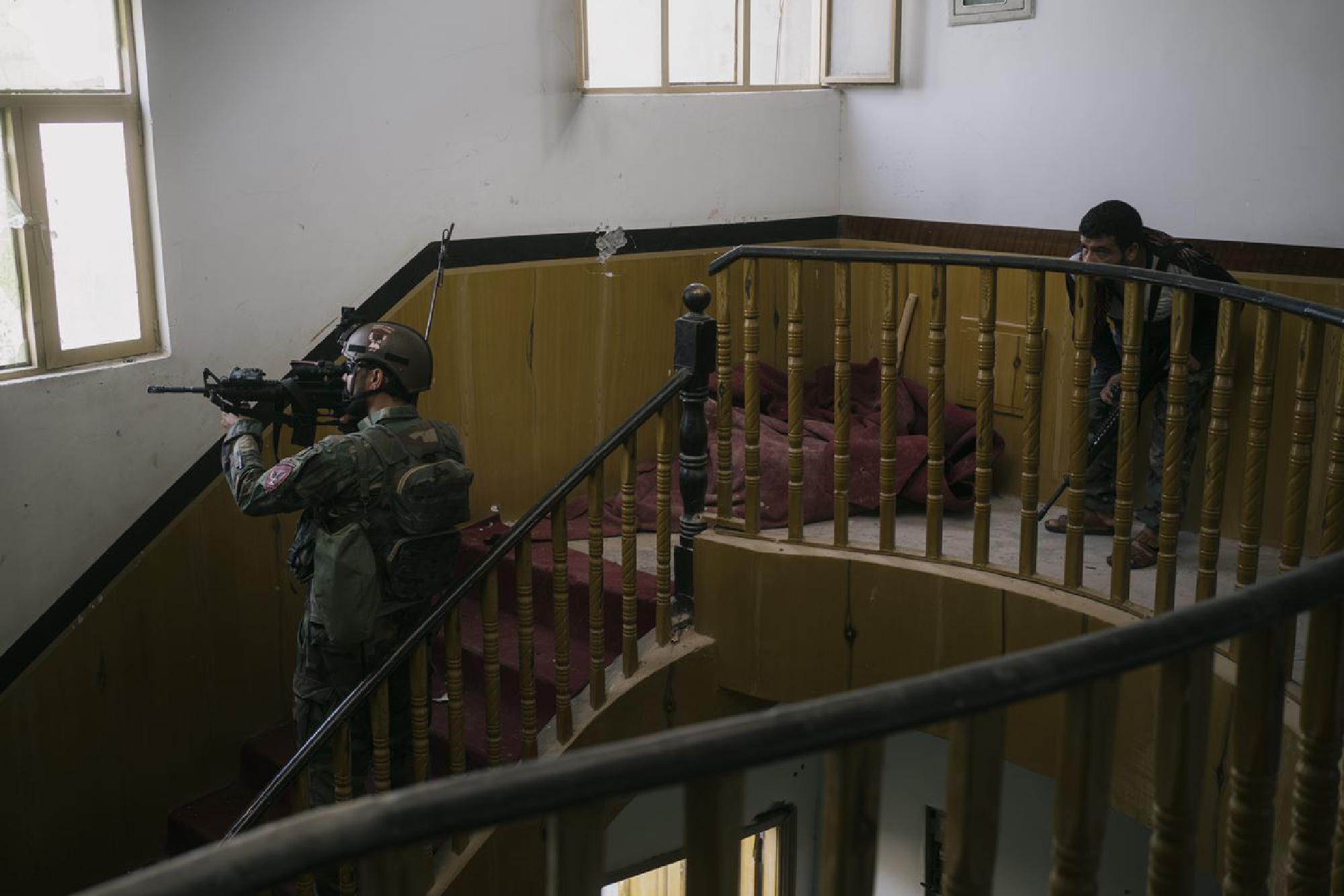
Frontlines that crisscrossed largely agricultural suburbs just weeks ago now span densely populated neighborhoods. Just a few hundred meters from a Taliban-held neighborhood on Kandahar’s western edge, government forces have transformed a wedding hall and an opulent multistory home into makeshift bases.

“They watch us from those houses over there,” said a commando officer, who spoke on the condition of anonymity because he was not authorized to talk to the media. He pointed out a white Taliban flag visible just a few blocks away from a traffic circle.

ADVERTISEMENT

Taliban advances into major Afghan cities for first time in two decadesTaliban advances into major Afghan cities for first time in two decades

The government soldiers said they exchanged fire with Taliban fighters occasionally during the day, but it is at night that clashes grow more intense.

Thousands of civilians are being forced to flee their homes. Deeper inside Kandahar city, makeshift camps have sprung up in empty lots.

Jalil Ahmad, 30, said his house was destroyed by a mortar attack and his ears were still ringing from the blast. He said a police unit took up a firing position on to the roof of his home, and Taliban fighters retaliated with a volley of mortars.

“An entire wall collapsed on my family,” he said. “We have never seen fighting like this in our area before.”

ADVERTISEMENT

In Herat, Afghan special forces were deployed to the city on Sunday to help push back Taliban advances. Taliban fighters breached the city limits and a United Nations compound was attacked, as clashed raged for hours. The U.N. condemned the attack. A Taliban statement described the destruction as “regrettable,” saying the group remains committed to protecting the U.N.

Abdul Rahman Rahman, an Interior Ministry adviser, traveled to Herat on Sunday to calm “the atmosphere of panic” growing in the city, he said. Rahman arrived with a team of Afghan special forces, which he pledged would deal “fiercely” with the Taliban.

Taliban advances into major Afghan cities for first time in two decadesTaliban advances into major Afghan cities for first time in two decades

The Taliban push on major cities comes as the group continues to squeeze much smaller provincial capitals in areas long contested by militants. In Helmand, a province that has been one of the least stable in Afghanistan for years, fighting intensified last week, heightening fears that the province’s capital would fall. Taliban fighters have pushed inside the city’s limits and are steadily closing in on the central government compound.

Afghan forces responded with a punishing wave of air support. One airstrike hit a small hospital on the city’s outskirts Saturday, killing the relative of a patient and injuring four others, including a patient and three members of staff, according to hospital director Mohammad din Naraiwal.

As the airstrikes drew closer in recent days, Naraiwal repeatedly communicated with Afghan government forces, asking them not to strike the facility. He said no Taliban fighters were present in the building when it was hit.

“I’m worried if the government resupplies their forces there will be more fighting,” he said. “There will be more civilian casualties.”

Published : August 02, 2021

By : The Washington Post · Susannah George

China Focus: China moves quickly to contain COVID-19 resurgence #SootinClaimon.Com

#SootinClaimon.Com : ขอบคุณแหล่งข้อมูล : หนังสือพิมพ์ The Nation.

https://www.nationthailand.com/international/40004023

China Focus: China moves quickly to contain COVID-19 resurgence


In the face of new spikes in sporadic COVID-19 infections, governments at various levels across China have promptly taken measures to contain the spread of the coronavirus in an orderly fashion.

This round of infections started in Nanjing, in east China’s Jiangsu Province, when nine airport cleaners at the Nanjing Lukou International Airport tested positive during routine testing on July 20.

The mega-city with a population of more than 9.3 million had reported a total of 190 locally transmitted confirmed cases by Friday, according to local authorities.
 

ADVERTISEMENTx

By Saturday noon, Nanjing had designated 30 areas as medium-risk for COVID-19 and one as high-risk. All tourist sites in the city have been closed since Saturday.

Nanjing authorities also announced a 10-day overall disinfection plan for the Lukou International Airport on Saturday. The city is also drafting a disinfection plan for the residence of airport staff.

In order to enhance its nucleic acid testing capabilities, Nanjing has built six advanced air-inflated testing labs, which can screen up to 1.8 million people every day by using the mixed testing approach.

Three rounds of testing have been conducted citywide. Municipal authorities said Saturday that the city will organize vaccinations for those who are qualified to get the second shot in low-risk areas.

Viral genome sequencing has found all strains to be the highly infectious Delta variant, said Ding Jie, deputy director of the Nanjing municipal center for disease control and prevention, on Friday.

ADVERTISEMENT

Also in Jiangsu Province, the city of Yangzhou has reported a total of 16 locally-transmitted confirmed COVID-19 cases since Thursday, and the first case was a visitor from Nanjing.

On Saturday, the city suspended all inbound and outbound flights at its Taizhou International Airport, and closed major scenic spots, including the Slender West Lake and the Daming Temple.

Sporadic cases and cluster infections have also been found in other parts of the country, and many of the most recent patients diagnosed have recently traveled to Zhangjiajie, a world-famous tourist destination in central China’s Hunan Province.

Zhangjiajie has reported five confirmed locally-transmitted cases since Thursday. The city closed all tourist sites and upgraded 11 neighborhoods to medium-risk areas for COVID-19 on Friday.

All stranded tourists are required to receive nucleic acid testing three times before leaving the city, and all results must be negative.

ADVERTISEMENT

Emergency channels have been set up for them at all testing sites citywide, and local authorities have coordinated travel agencies and hotels to provide essential services to those tourists before their departure.

The central Chinese city of Zhengzhou, which was recently hit by heavy floods, classified one area as high-risk for COVID-19 and three areas as medium-risk on Saturday, all of them are in Erqi District, after one asymptomatic COVID-19 case and several suspicious cases were reported since Friday. The city is also planning to launch city-wide nucleic acid testing for COVID-19 in a timely manner.

Since Wednesday, the national capital of Beijing has reported two confirmed locally-transmitted cases. They are a couple who recently visited Zhangjiajie.

Nine residential compounds in Changping with about 41,000 residents in total have been put under closed-off management, Tong Lizhi, deputy head of the district government said Thursday.

Beijing has urged unremitting efforts to prevent and control the virus spread during the summer vacation and strengthen the management of inbound and outbound tourists.

A series of measures such as flow restriction, temperature measurement, health-code verification and mask-wearing in parks, scenic spots and traffic stations, will be strictly implemented, the municipal government said Friday.

Zhang Wenhong, a renowned medical expert in China, said that no community cases were found outside of the transmission chain of Nanjing airport, which indicates that the epidemic situation is still under control.

According to Shao Yiming, a researcher with the China Center for Disease Control and Prevention, the spikes in cases are limited to a relatively small scale, especially compared with the situation in other countries and regions of the world.

“Judging from our experience since the second half of last year, we are able to detect the epidemic early and take intensive measures to contain it within a few weeks,” said Shao.

Shao said the pressure of imported cases will continue in the future, but China’s prevention and control measures have also been strengthened.

“Last year, we only had routine public-health precautions, but vaccines have been available since the beginning of this year. We can now bring this outbreak under control more effectively and faster with a two-pronged approach,” he added. 

Published : August 01, 2021

By : xinhua