Mideast in Pictures: Commemorate departed in Beirut blast
Lebanon will mark the first anniversary of the devastating explosion of the Beirut port on August 4, in which about 200 families lost loved ones, more than 6,000 people were injured and hundreds of thousands of people lost their homes and property.
Artists create statues and monument to cherish the memory of the departed.
ADVERTISEMENTx
A monument of the Beirut port’s blasts is seen in Beirut, Lebanon on July 29, 2021.
Photo taken on July 29, 2021 shows weeds growing near the Beirut port in Beirut, Lebanon.
Photo taken on July 29, 2021 shows weeds growing near the Beirut port in Beirut, Lebanon.
A statue of a lady is seen near the Beirut port in Lebanon on Oct. 20, 2020.
A statue of a lady is seen near the Beirut port in Lebanon on Oct. 20, 2020.
A statue named “The Giant” made from the remains of the Beirut port’s wreckage is seen on the occasion of the first anniversary of the devastating blast at the Beirut port, Lebanon, on July 29, 2021.
U.S. CDC study shows Delta variant produces similar viral loads in vaccinated, unvaccinated
“High viral loads suggest an increased risk of transmission and raised concern that, unlike with other variants, vaccinated people infected with Delta can transmit the virus,” said CDC Director Rochelle Walensky.
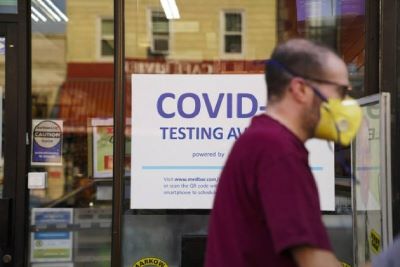
Anew study of the U.S. Centers for Disease Control and Prevention (CDC) shows the Delta variant produced similar amounts of virus in vaccinated and unvaccinated people if they get infected.
The study, published by the CDC on Friday, focused on 469 COVID-19 cases identified among Massachusetts residents who had traveled to Barnstable County, a summer vacation destination, during July 3 to 17.
ADVERTISEMENTx
A total of 346 cases, about 74 percent, occurred in fully vaccinated people, according to the study.
Testing identified the Delta variant in 90 percent of specimens from 133 patients.
Cycle threshold values were similar among specimens from patients who were fully vaccinated and those who were not, according to the study.
The study demonstrated that Delta infection resulted in similarly high SARS-CoV-2 viral loads in vaccinated and unvaccinated people, said CDC Director Rochelle Walensky.
“High viral loads suggest an increased risk of transmission and raised concern that, unlike with other variants, vaccinated people infected with Delta can transmit the virus,” she said.
Walensky said this finding is concerning and was a pivotal discovery leading to CDC’s updated mask recommendation.
The CDC updated its masking recommendation on Tuesday, urging vaccinated Americans to resume wearing masks in schools and in public indoor spaces in COVID-19 hot spots across the country.
“The masking recommendation was updated to ensure the vaccinated public would not unknowingly transmit virus to others, including their unvaccinated or immunocompromised loved ones,” she said.
The CDC suggested jurisdictions to consider expanded prevention strategies, including universal masking in indoor public settings, particularly for large public gatherings that include travelers from many areas with differing levels of SARS-CoV-2 transmission.
The problem was quickly solved and the ISS has returned to its normal position.
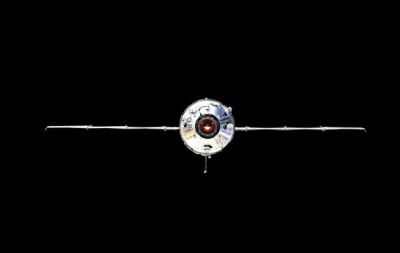
The International Space Station (ISS) is functioning well after Russia’s Nauka module accidentally restarted its engines after docking with the ISS on Thursday, Russia’s state space corporation Roscosmos said Friday.
ADVERTISEMENTx
Due to a short-term software failure, a direct command was mistakenly executed and thereafter reactivated the module’s engines, and changed the ISS’s orientation, Roscosmos said in a statement.
The problem was quickly solved and the ISS has returned to its normal position, head of the Russian segment of the ISS Vladimir Solovyov said in the statement.
Following its launch on a Proton-M carrier rocket from the Baikonur Cosmodrome in Kazakhstan on July 21, the Nauka, or science in English, embarked on an eight-day journey before docking to the Russian segment of the ISS.
Approximately three hours after the docking, the module’s engines restarted, thrusting the space station to 45 degrees out of position.
Asean Covid cases continue at above 98,000 for third day in a row
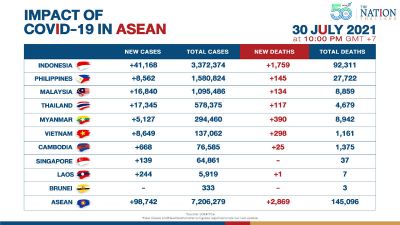
Southeast Asia reported over 98,000 new Covid-19 cases for the third consecutive day and a new high in fatalities on Friday, collated data showed.
Asean countries saw 98,742 new cases on Friday, higher than Thursday’s 98,020, while deaths rose to 2,869, from 2,867 the previous day.
Total Covid-19 cases in the region crossed 7.2 million and the death toll rose to 145,096.
The Vietnam government has announced a plan to increase vaccination rate to cover 70 per cent of the nine million population of Ho Chi Minh City within next month as well as build more field hospitals, as the number of new infections with the delta variant of the virus in the city has been climbing rapidly. Currently Ho Chi Minh City has a vaccination rate of 70,000 to 80,000 doses per day.
Cambodia on Friday received 455,000 doses of the Johnson & Johnson vaccine donated by the United States. The vaccine is the first lot of a total 7 million doses that Cambodia will receive under the Covax programme, which will be delivered within this year. So far Cambodia has been providing jabs to adults aged over 18 years and will start giving vaccine to those aged 12 to 17 years starting next month.
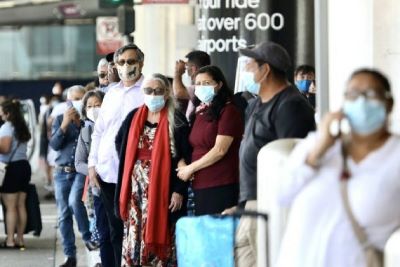
U.S. mask debate re-ignited as Delta variant spreads
“Id expect a lot of resistance this time around. Weve hit a point where over half the population has been vaccinated and many of these folks are not going to just grin and bear it again because delta is spreading largely among and because of unvaccinated people,” said Christopher Galdieri, a political scientist at Saint Anselm College.
The mask issue was heatedly debated at the high point of the pandemic in the United States in 2020, and later subsided as a large part of the nation got vaccinated. But now, the debate has been re-ignited.
The U.S. Centers for Disease Control and Prevention (CDC) on Tuesday recommended that vaccinated people wear masks indoors, if they live in regions of rapid COVID-19 spread amid the transmission of the more contagious Delta variant.
ADVERTISEMENTx
The recommendation has sparked much controversy, as it highlights a sharp shift from the agency’s position since May that vaccinated people do not need to wear masks in most indoor spaces.
Many Americans also worry that this will undermine people’s faith in vaccines, at a time when millions still refuse to get the jab.
Some areas have returned to requiring masks indoors, such as Los Angeles, which has re-instituted a mask mandate amid a surge in cases.
But in other cities, the debate over the issue got heated up. In St. Louis, in the state of Missouri, the state’s attorney general is suing the city for requiring people to wear masks indoors in public places.
Nearly 40 maskless House Republicans on Thursday protested the mask mandate by walking to the Senate, where masks are not mandated by Capitol physician.
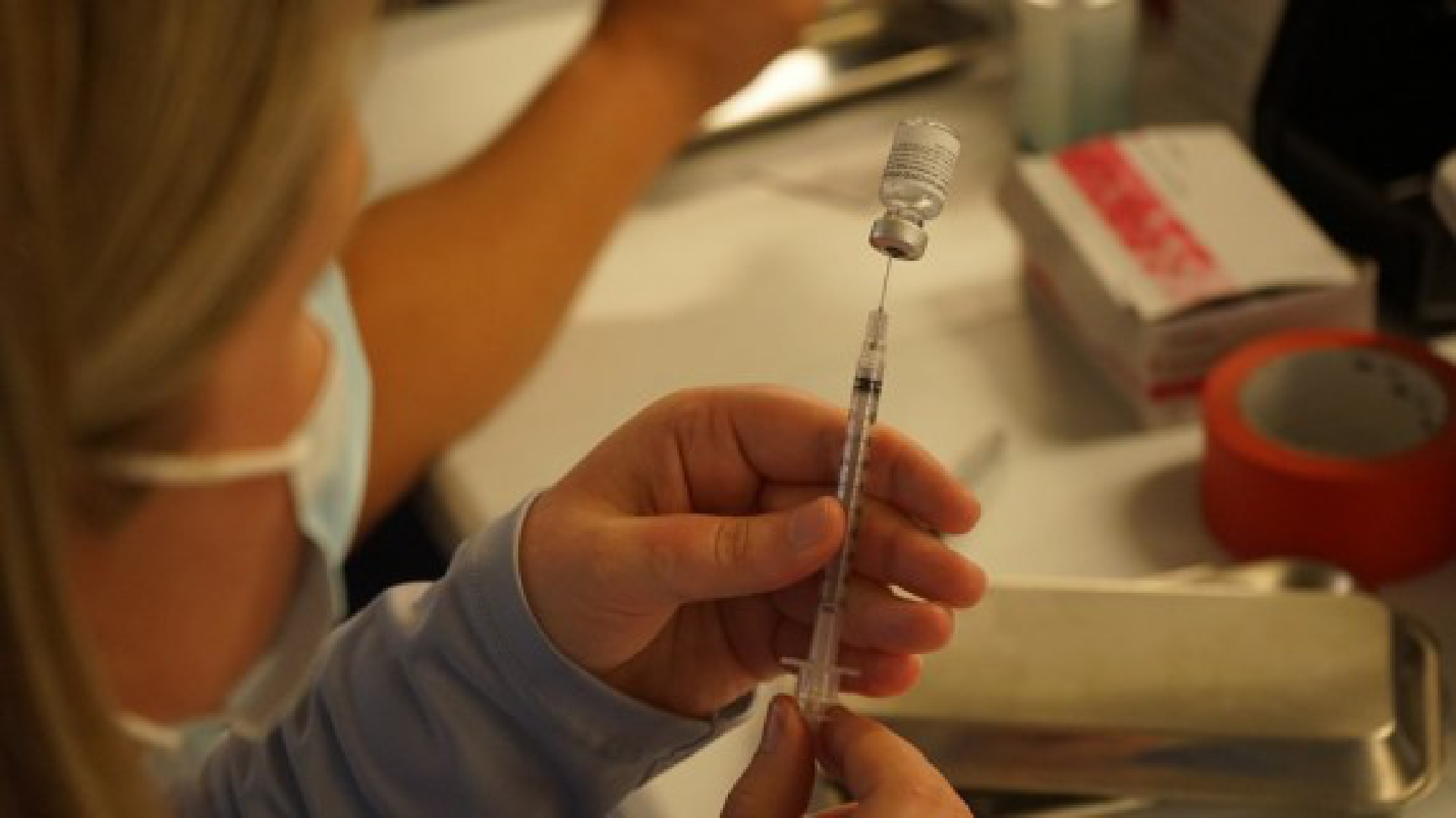
A medical worker prepares a dose of COVID-19 vaccine at the Universal Studios Hollywood in Los Angeles, California, the United States, June 18, 2021.
The final decision on whether to implement mask mandates lies with U.S. states.
Many Americans are reluctant to wear masks again, and contend that the Delta variant is only a threat to those who refuse to get the jab.
Dianne Wilson, in her 40s and a manager in a small company outside Washington DC, told Xinhua she does “not want to wear” a mask, as she has been vaccinated.
The Delta variant has quickly grown from less than 1 percent of cases in May to more than 80 percent now, said the CDC on its website.
Delta variant spreads about twice as easily from one person to another than the previous strains of the virus, according to the agency.
Most transmissions happening around the country are among unvaccinated people and in areas with low vaccination rates.
About half of Americans have not been vaccinated yet, U.S. top infectious disease expert Anthony Fauci warned on Sunday.
Brookings Institution Senior Fellow Darrell West told Xinhua there are “likely to be mask mandates in a number of places around the country.”
“States and localities are imposing them to slow the spread of the Delta variant and help protect the unvaccinated. Conservatives are reluctant to do this but those are the areas seeing the greatest increase in COVID cases,” West said.
Christopher Galdieri, a political scientist at Saint Anselm College, said it is possible the United States will see a mask mandate like those seen last year, but there could be a lot of pushback.
“I’d expect a lot of resistance this time around. We’ve hit a point where over half the population has been vaccinated and many of these folks are not going to just grin and bear it again because delta is spreading largely among and because of unvaccinated people,” Galdieri said.
Experts have maintained that the vaccines are effective against the Delta variant. A recent study from the New England Journal of Medicine found that two shots of the Pfizer-BioNTech vaccine are 88 percent effective in preventing disease from the Delta variant, while two doses of the AstraZeneca vaccine showed 67-percent effectiveness.
People shop in Chinatown in San Francisco, California, the United States, May 22, 2021.
Third shot of Sinovac COVID-19 vaccine gives big boost to immunity: study
Researchers found that the additional shot will lead to a big increase in antibody levels, with geometric mean titers assessed 14 days later increasing to 137.9, or approximately three-fold.
Athird shot of Sinovac COVID-19 vaccine administered six months or more after the second dose will give a remarkable boost to people’s immunity against the deadly virus, a new study has found.
The study was published on Medrxiv.org on Sunday for peer review.
ADVERTISEMENTx
Chinese researchers inoculated over 500 participants with a third dose six to eight months after their second jabs, and they found that the additional shot will lead to a big increase in antibody levels, with geometric mean titers assessed 14 days later increasing to 137.9, or approximately three-fold.
The study also found that although neutralizing antibody levels declined six months after two Sinovac shots, a two-dose schedule generates good immune memory.
The research is consistent with recent studies over booster immunization with the AstraZeneca vaccine, which have showed higher concentrations of total antibodies after a third dose.
Photo taken on Dec. 23, 2020 shows the packing line for inactivated COVID-19 vaccine of Sinovac Biotech, a Chinese biopharmaceutical company, in Beijing, capital of China
Beijing permits self-driving vehicle testing on expressways
Driverless cars will soon take to expressways for testing in the Chinese capital Beijing, as the municipal authority has approved the gradual opening of several expressway sections for unmanned vehicles.
A10-km expressway between the city’s fifth and sixth ring roads will be opened first. Six other expressway sections will be opened later to add another 143-km stretch to the city’s high-speed testing roads for driverless vehicles, according to a workgroup overseeing the city’s innovation for mobility intelligence.
ADVERTISEMENTx
Jiang Guangzhi, deputy director of the Beijing Municipal Bureau of Economy and Information Technology, said that the high-speed test of self-driving vehicles has a high entry threshold. Testing vehicles should be equipped with relevant devices and connected to a cloud platform for real-time data transmission to ensure the safety of expressway passage.
Currently, the city has 226 routes for testing self-driving vehicles, totaling approximately 752.4 km, according to Beijing Innovation Center for Mobility Intelligent (BICMI) Co., Ltd.
Beijing has issued temporary car plates to 99 vehicles from 15 companies including domestic internet giant Baidu and Chinese ride-hailing platform DiDi Chuxing. Among these companies, Chinese autonomous vehicle startup Pony.ai, and Baidu have received permits to test their driverless cars with passengers aboard.
In terms of the number of companies applying for self-driving road tests, total unmanned vehicles and the mileage of such road tests, Beijing ranks first in the country, the BICMI said.
China-ASEAN trade skyrockets by 85 times in three decades
Trade between China and the Association of Southeast Asian Nations (ASEAN) has skyrocketed by 85 times since the two sides established their dialogue relations 30 years ago, official data showed.
China has remained ASEAN’s largest trading partner for 12 consecutive years, said Ren Hongbin, assistant minister of commerce. In 2020, ASEAN also became China’s largest trading partner.
In the first half of this year, bilateral trade between China and ASEAN continued robust expansion, registering a 38.2 percent year-on-year growth, Ren told a press conference Thursday.
ADVERTISEMENTx
On the investment front, ASEAN has become one of China’s major outbound investment destinations and sources of foreign direct investment, with cooperation booming in sectors such as manufacturing, agriculture, infrastructure, high-tech, the digital economy, and the green economy.
Mutual investment between China and ASEAN exceeded 310 billion U.S. dollars as of June 2021, while the business revenue of Chinese enterprises from project contracts in ASEAN countries approached 350 billion U.S. dollars.
Looking ahead, Ren said China would actively promote economic and trade ties with ASEAN by enhancing cooperation against the COVID-19 pandemic and jointly pushing forward the implementation of the Regional Comprehensive Economic Partnership (RCEP) agreement.
The 18th China-ASEAN Expo and China-ASEAN Business and Investment Summit will be held from September 10 to 13 in Nanning, the capital of south China’s Guangxi Zhuang Autonomous Region.
With an exhibition area of 124,000 square meters, the expo this year will set up a special area for RCEP members and has invited more countries and enterprises along the Belt and Road, according to Liu Hongwu, vice governor of Guangxi.
Monsoon flooding affects thousands in lower part of Myanmar
Floods have affected thousands of residents in the countrys Kayin, Mon, Rakhine states, and Tanintharyi and Bago regions so far.
Monsoon flooding has hit the lower part of Myanmar following heavy rainfall since the third week of July, according to state-run media reports on Thursday.
The floods have affected thousands of residents in the country’s Kayin, Mon, Rakhine states, and Tanintharyi and Bago regions so far.
ADVERTISEMENTx
According to the latest figures released by the Ministry of Social Welfare, Relief and Resettlement, over 14,900 people were affected in Kyainseikgyi, Kawkareik, Hlaingbwe and Myawaddy towns in Kayin state as of Tuesday.
Houses are seen submerged in flood waters in Myawaddy town of Kayin State, Myanmar, July 28, 2021.
Also, flooding has affected over 30,700 people in Mon State, over 2,900 in Thandwe town of Rakhine state, the ministry’s figures showed.
Of them, 25,900 residents were relocated to evacuation centers and safer places.
The Department of Meteorology and Hydrology forecast that the monsoon is vigorous over the Andaman Sea and Bay of Bengal.
Squalls with rough seas are forecast to be experienced at times off and along Myanmar coasts, and surface wind speed in squalls may reach 35-40 miles per hour, the department’s weather report said on Thursday morning.
Flash floods and landslides accompanied by heavy rainfall and strong wind are frequent in Myanmar during the monsoon period, especially in hilly areas and low-lying areas.
A rescuer evacuates a stranded child in flood-hit Myawaddy town of Kayin State, Myanmar
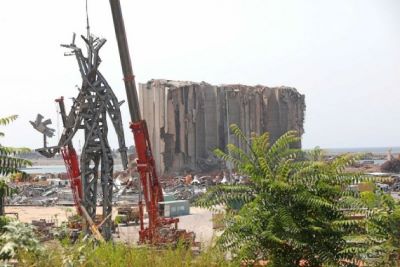

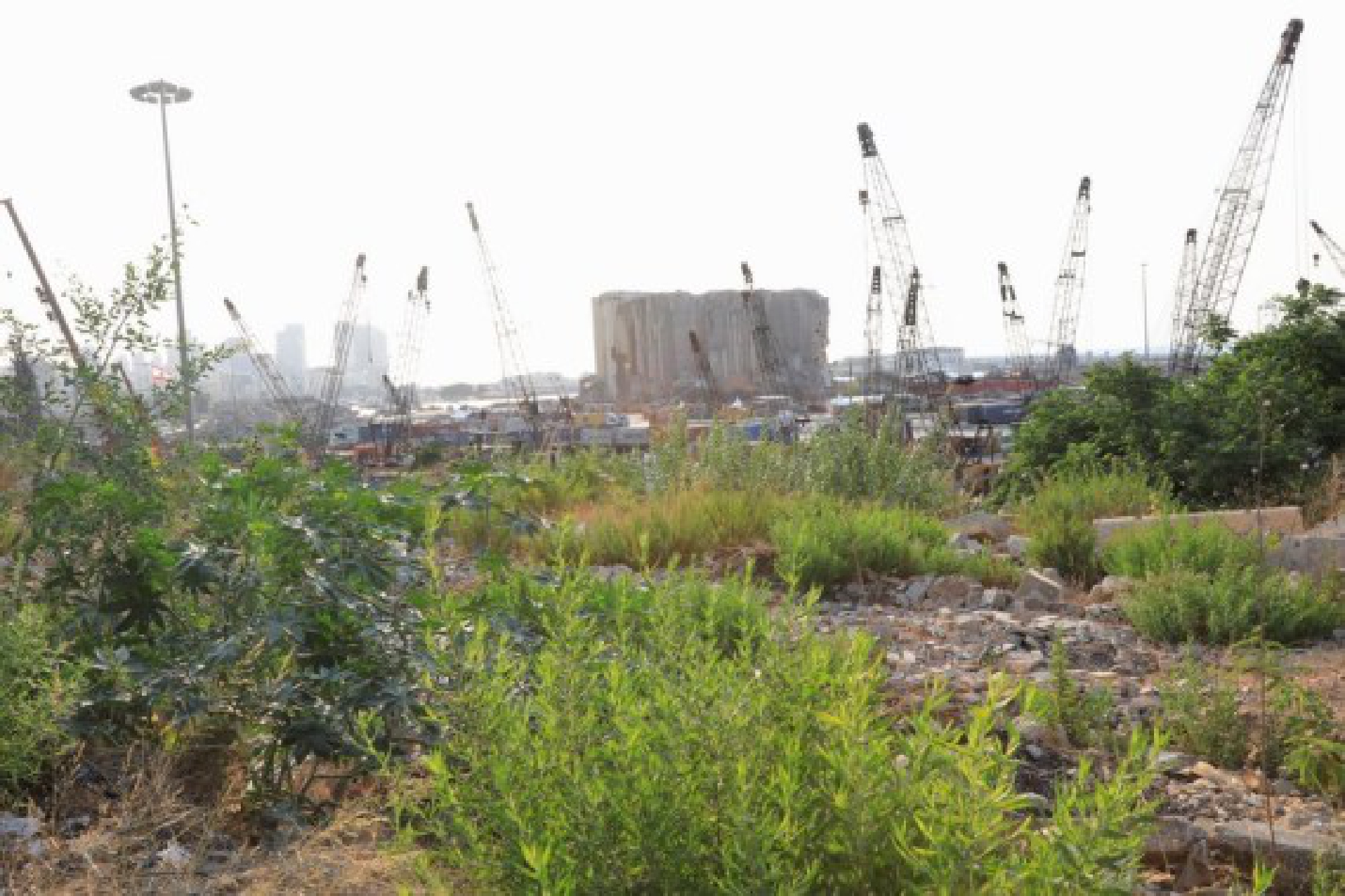 Photo taken on July 29, 2021 shows weeds growing near the Beirut port in Beirut, Lebanon.
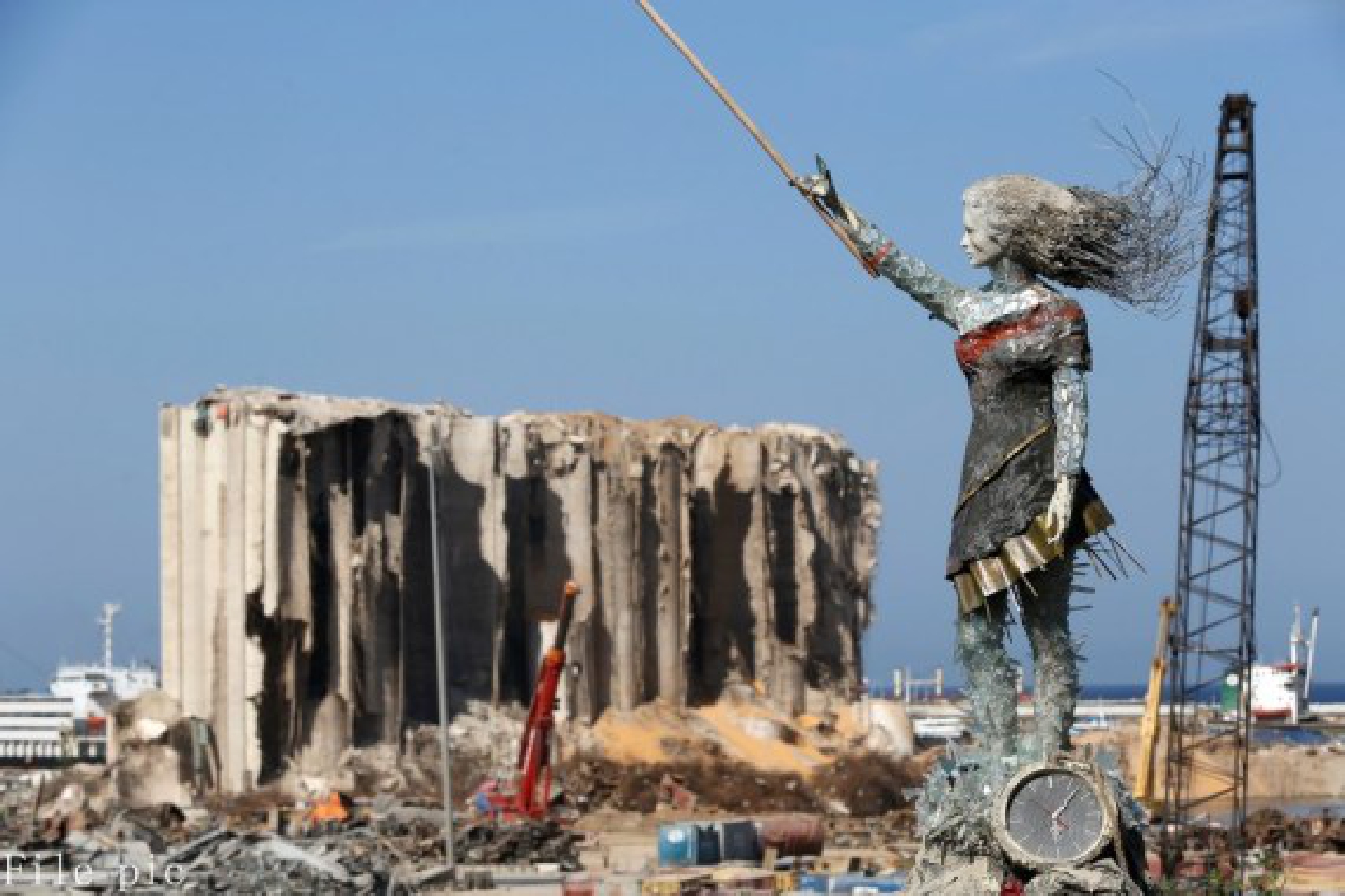 A statue of a lady is seen near the Beirut port in Lebanon on Oct. 20, 2020.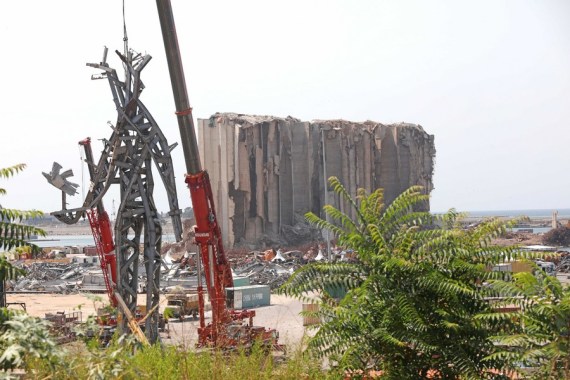
 A medical worker prepares a dose of COVID-19 vaccine at the Universal Studios Hollywood in Los Angeles, California, the United States, June 18, 2021.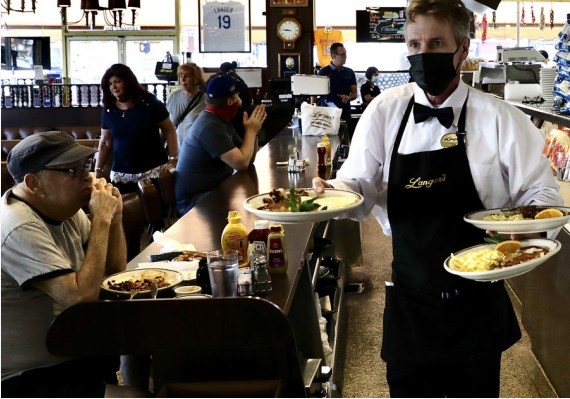
 People shop in Chinatown in San Francisco, California, the United States, May 22, 2021.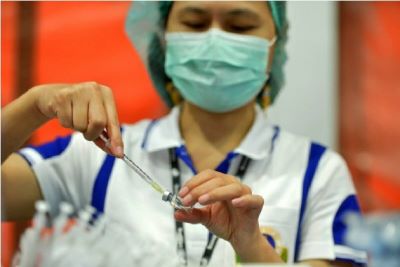
 Photo taken on Dec. 23, 2020 shows the packing line for inactivated COVID-19 vaccine of Sinovac Biotech, a Chinese biopharmaceutical company, in Beijing, capital of China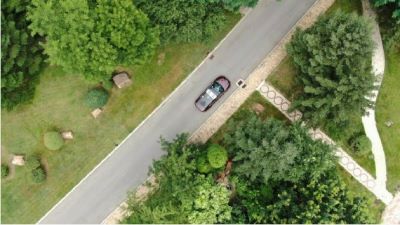
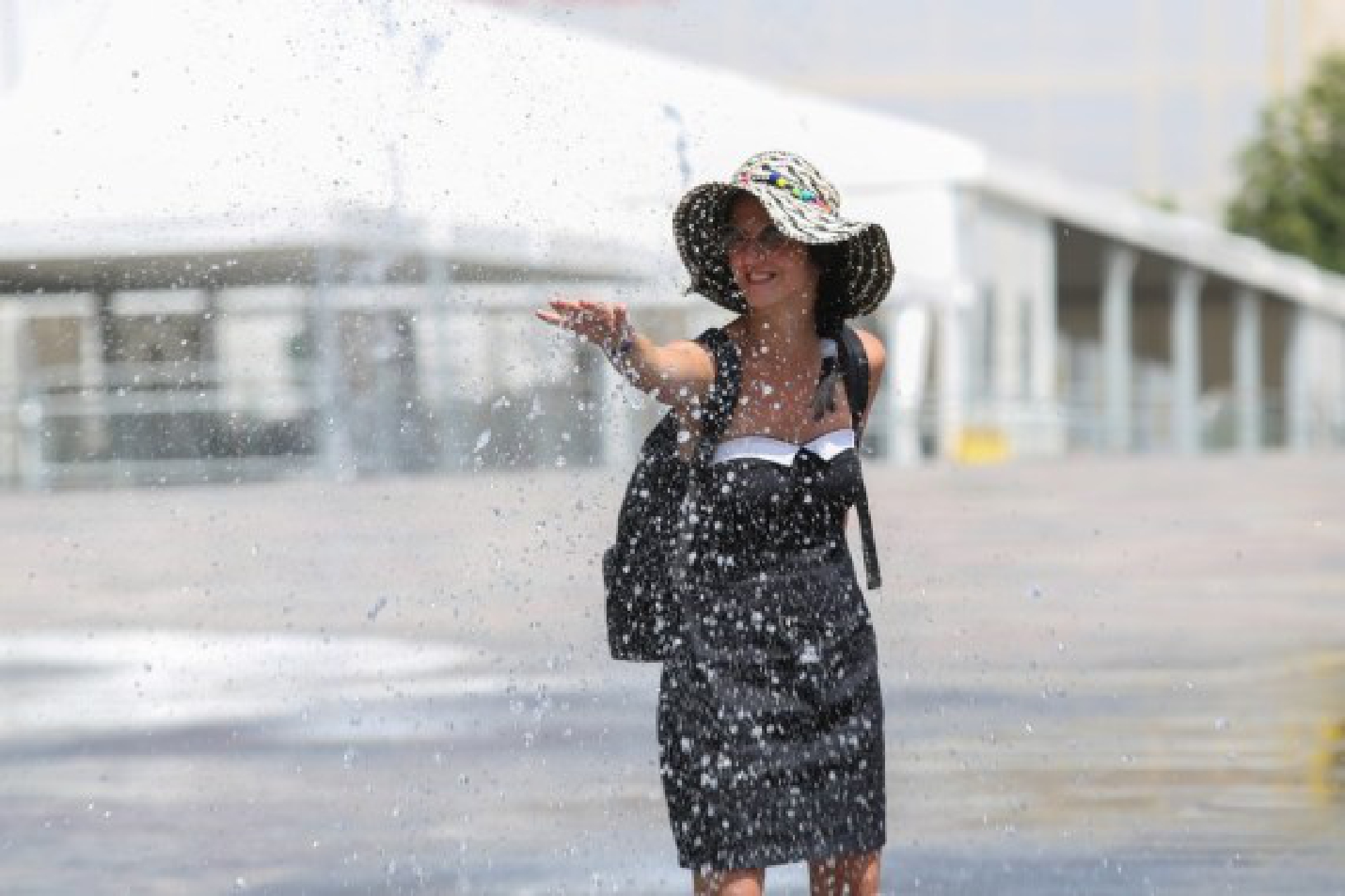 A woman cools off in fountains at Skanderbeg Square in the center of capital Tirana, Albania
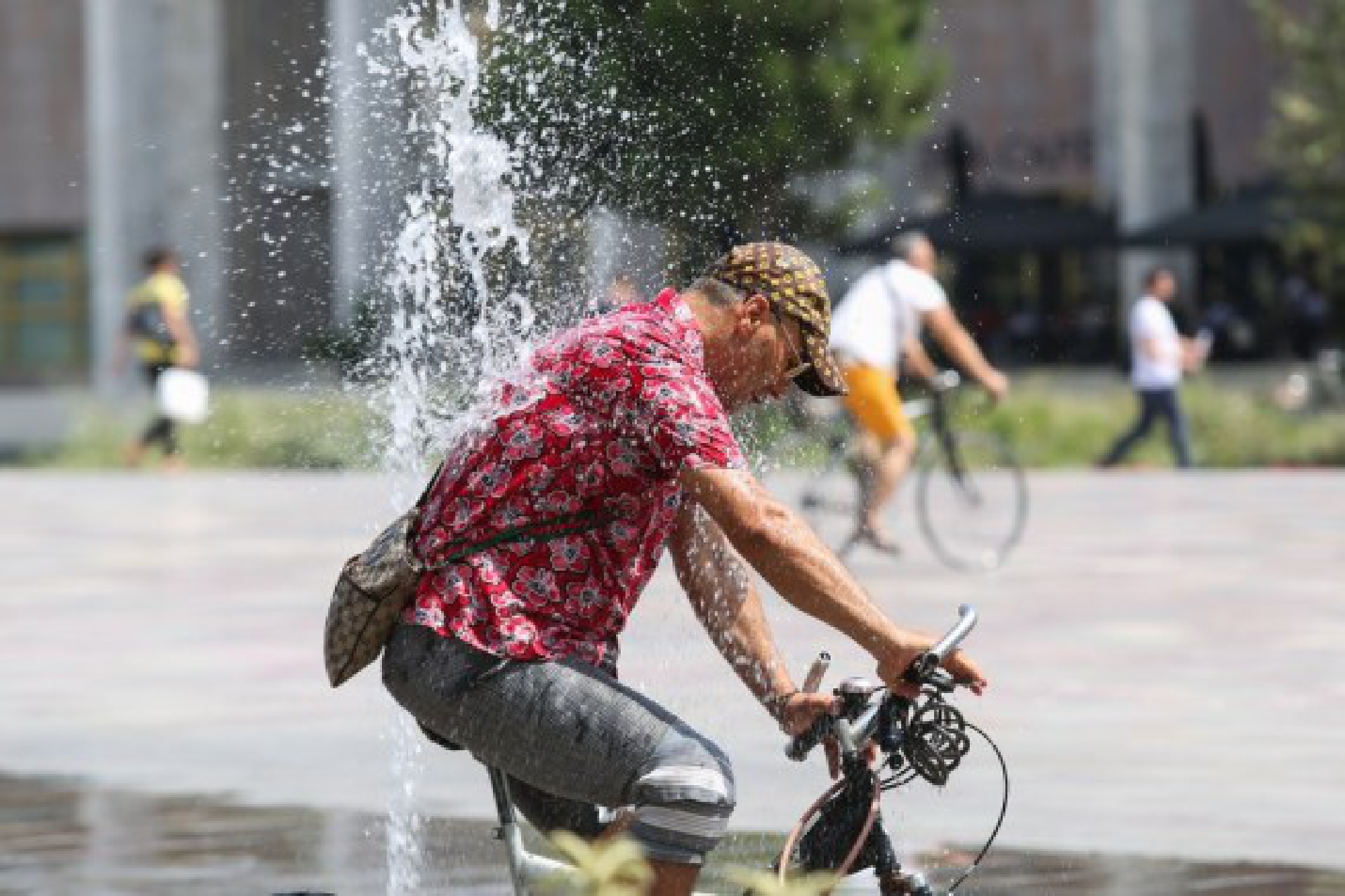 A man rides a bicycle through fountains at Skanderbeg Square in the center of capital Tirana, Albania, July 29, 2021.
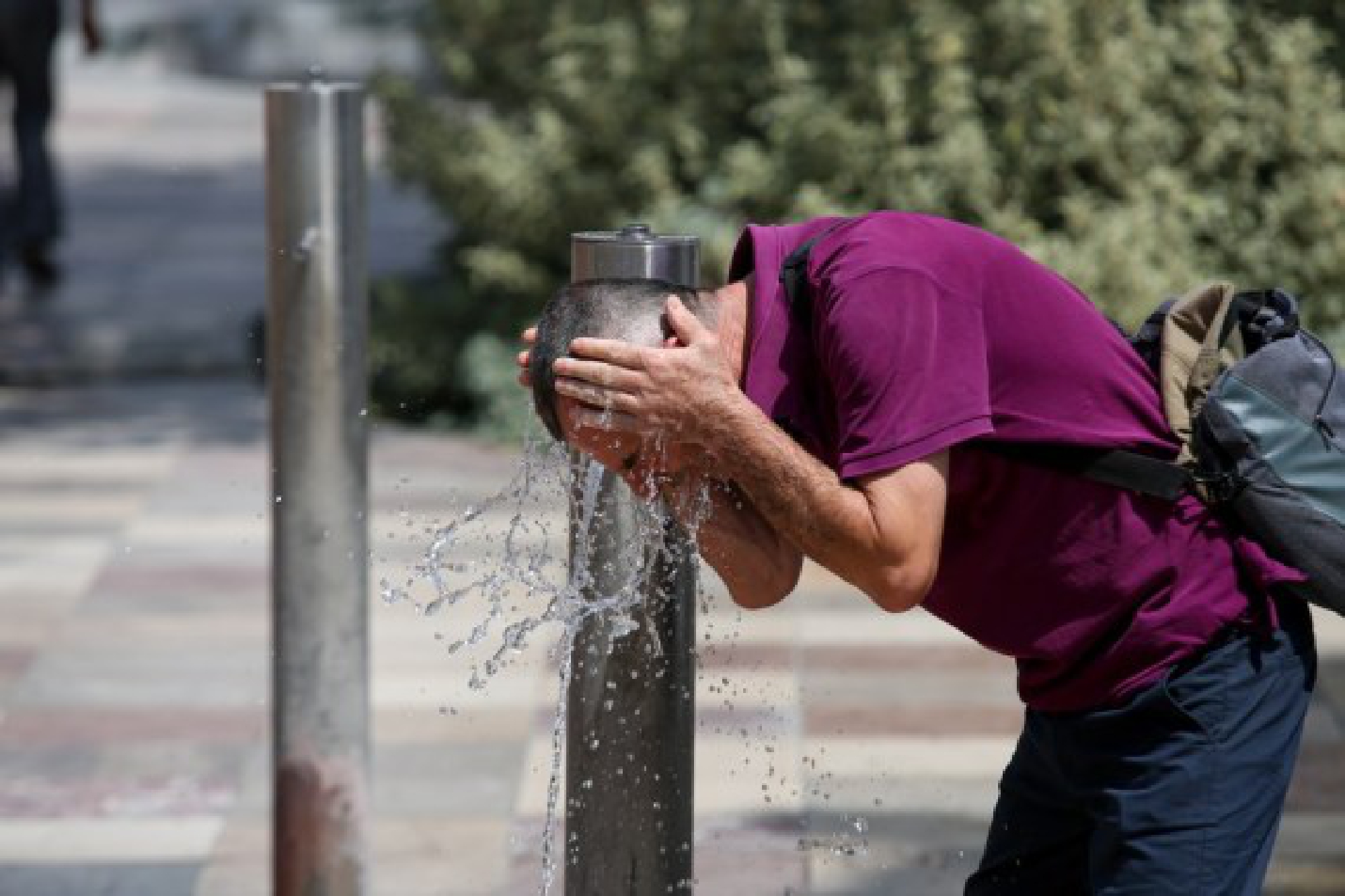 A man cools off in fountains at Skanderbeg Square in the center of capital Tirana, Albania, July 29, 2021.
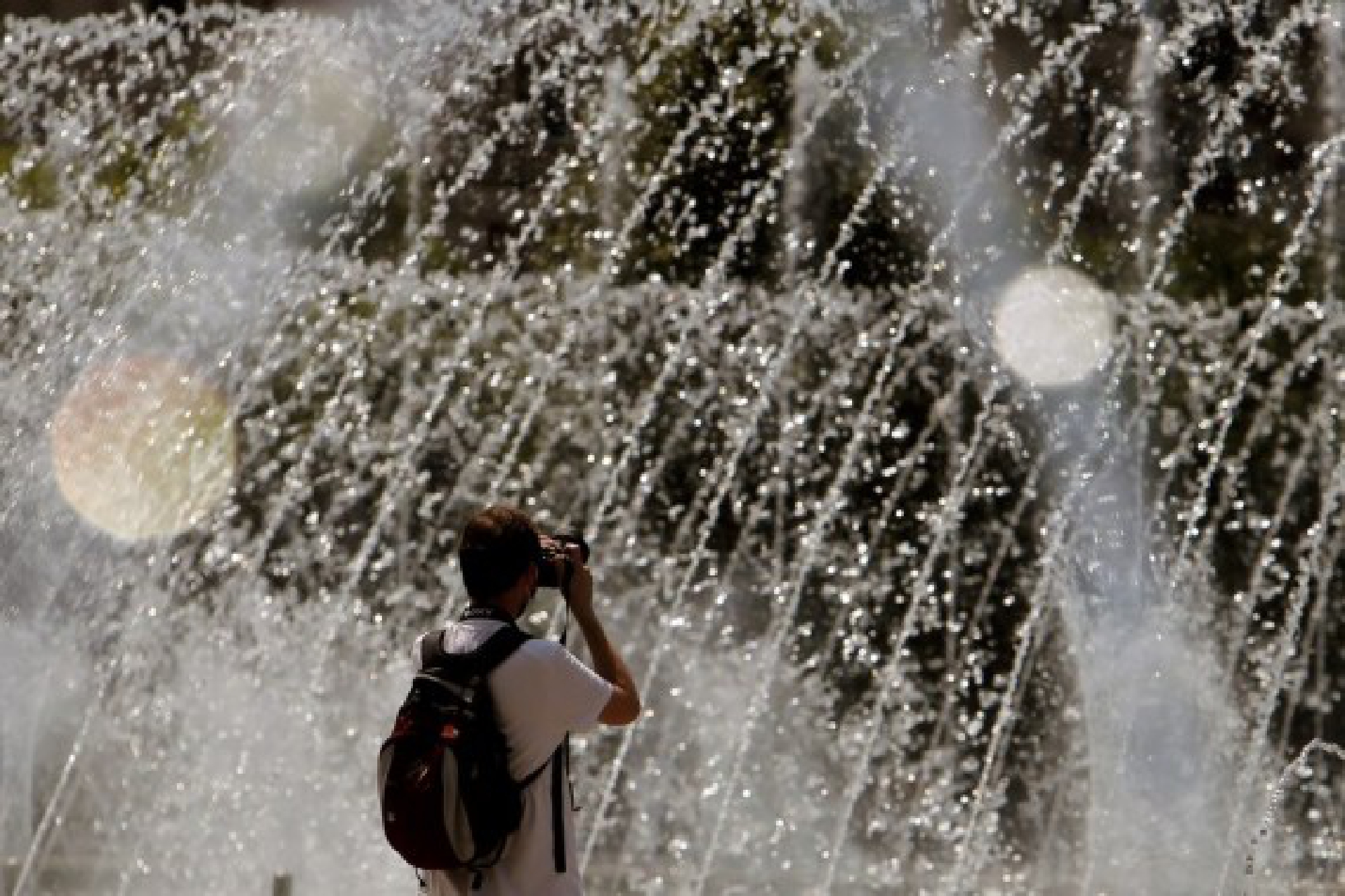 A man takes pictures of a fountain during a hot day in downtown Bucharest, Romania, on July 28, 2021.
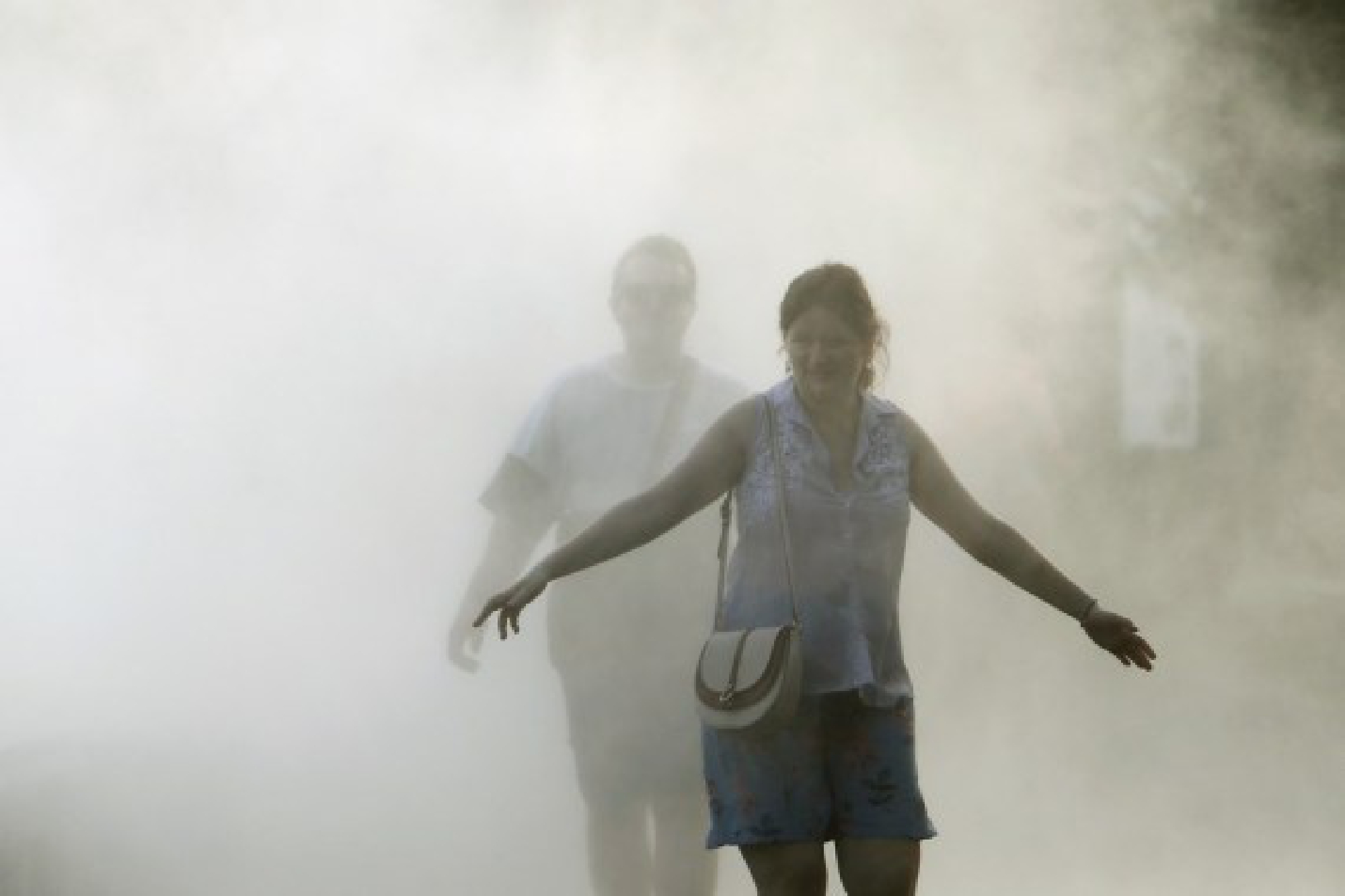 People cool off at a fountain during a hot day in downtown Bucharest, Romania, on July 28, 2021.
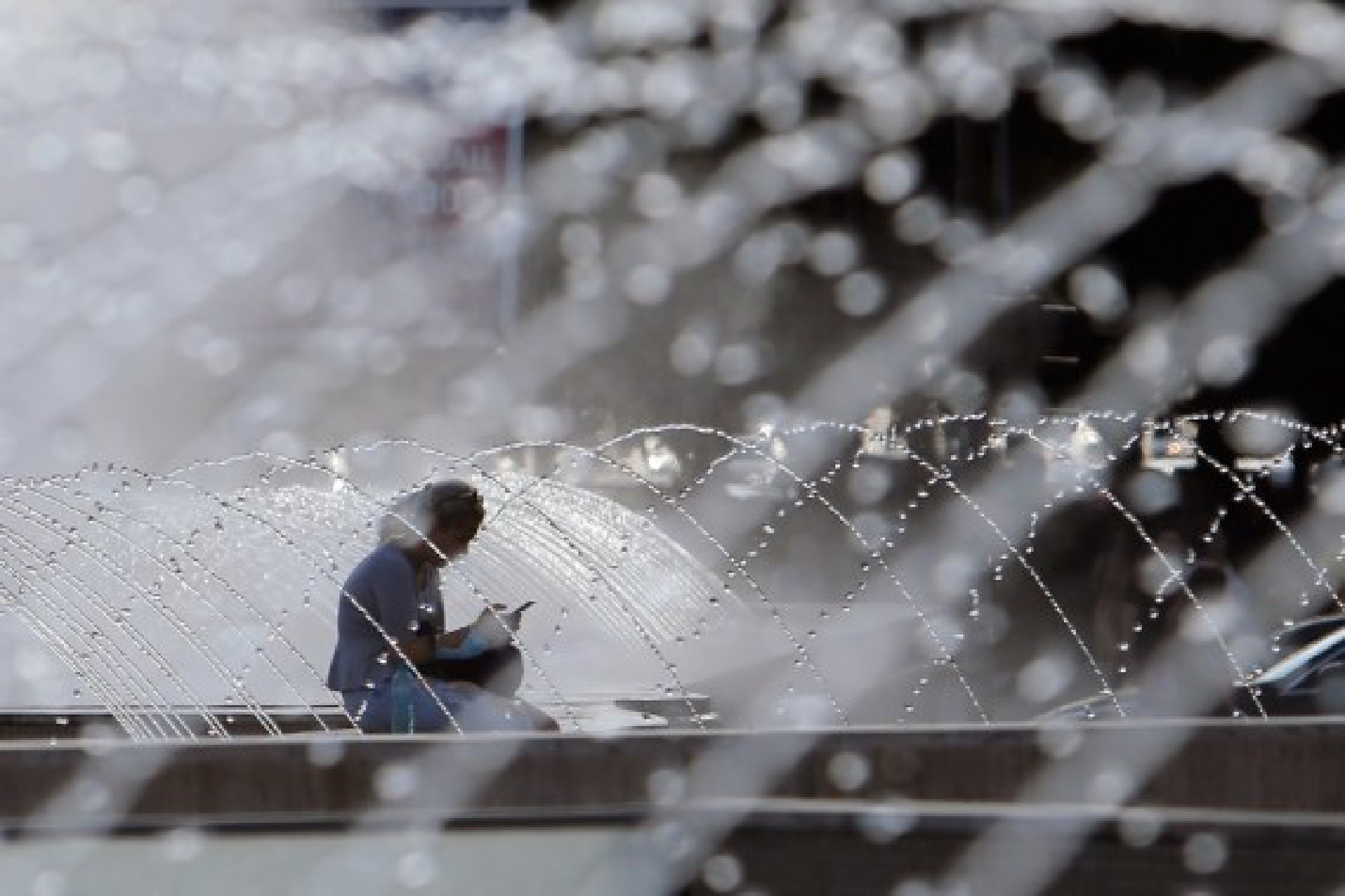 A woman sits near a fountain during a hot day in downtown Bucharest, Romania, on July 28, 2021.
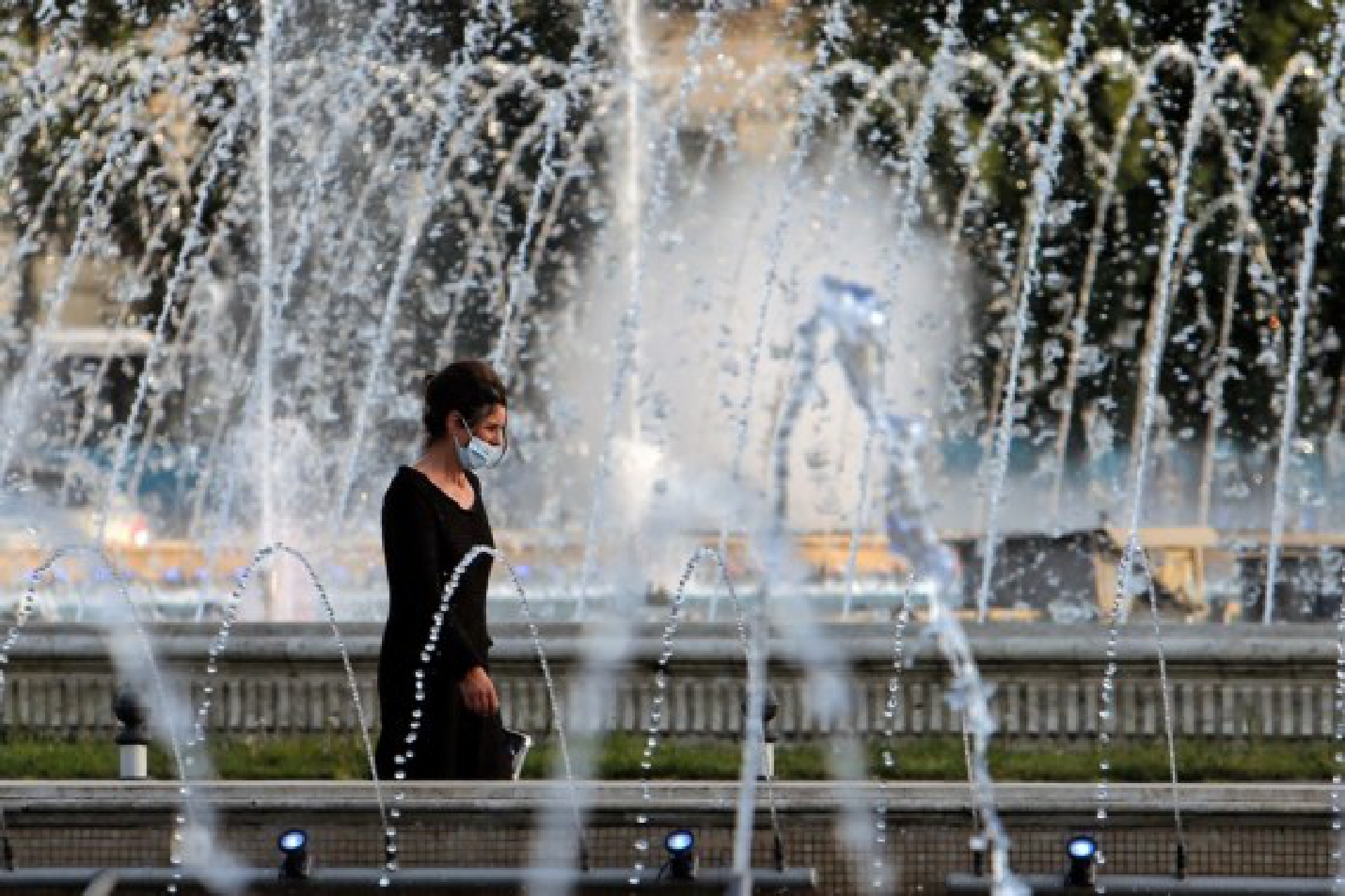 A woman walks past a fountain during a hot day in downtown Bucharest, Romania, on July 28, 2021.
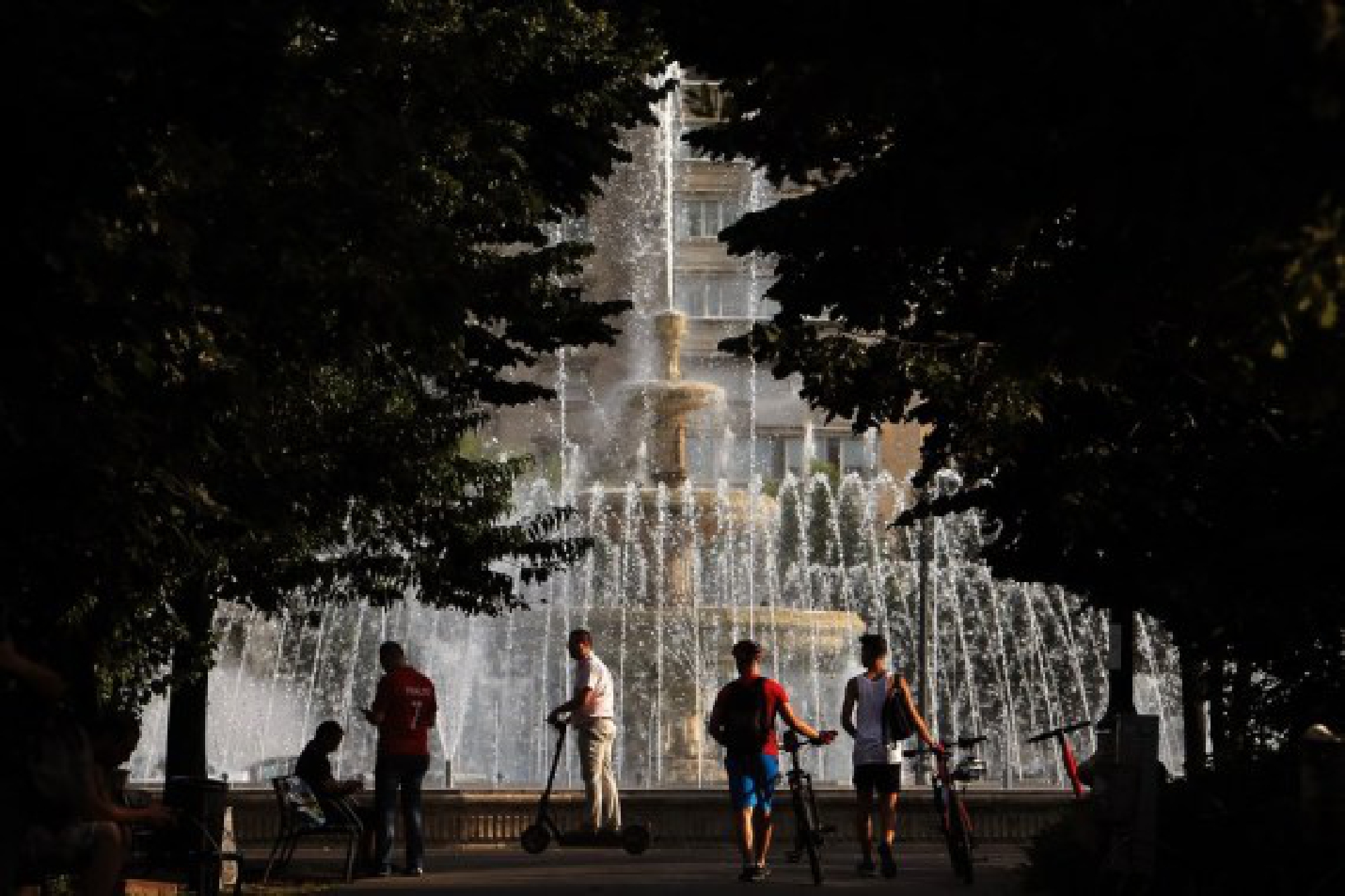 People are seen beside a fountain during a hot day in downtown Bucharest, Romania, on July 28, 2021.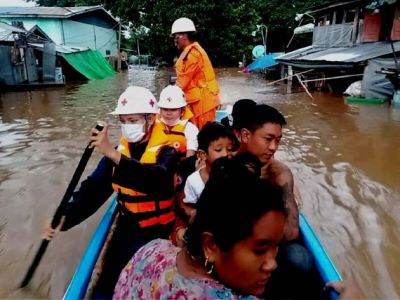
 Houses are seen submerged in flood waters in Myawaddy town of Kayin State, Myanmar, July 28, 2021.
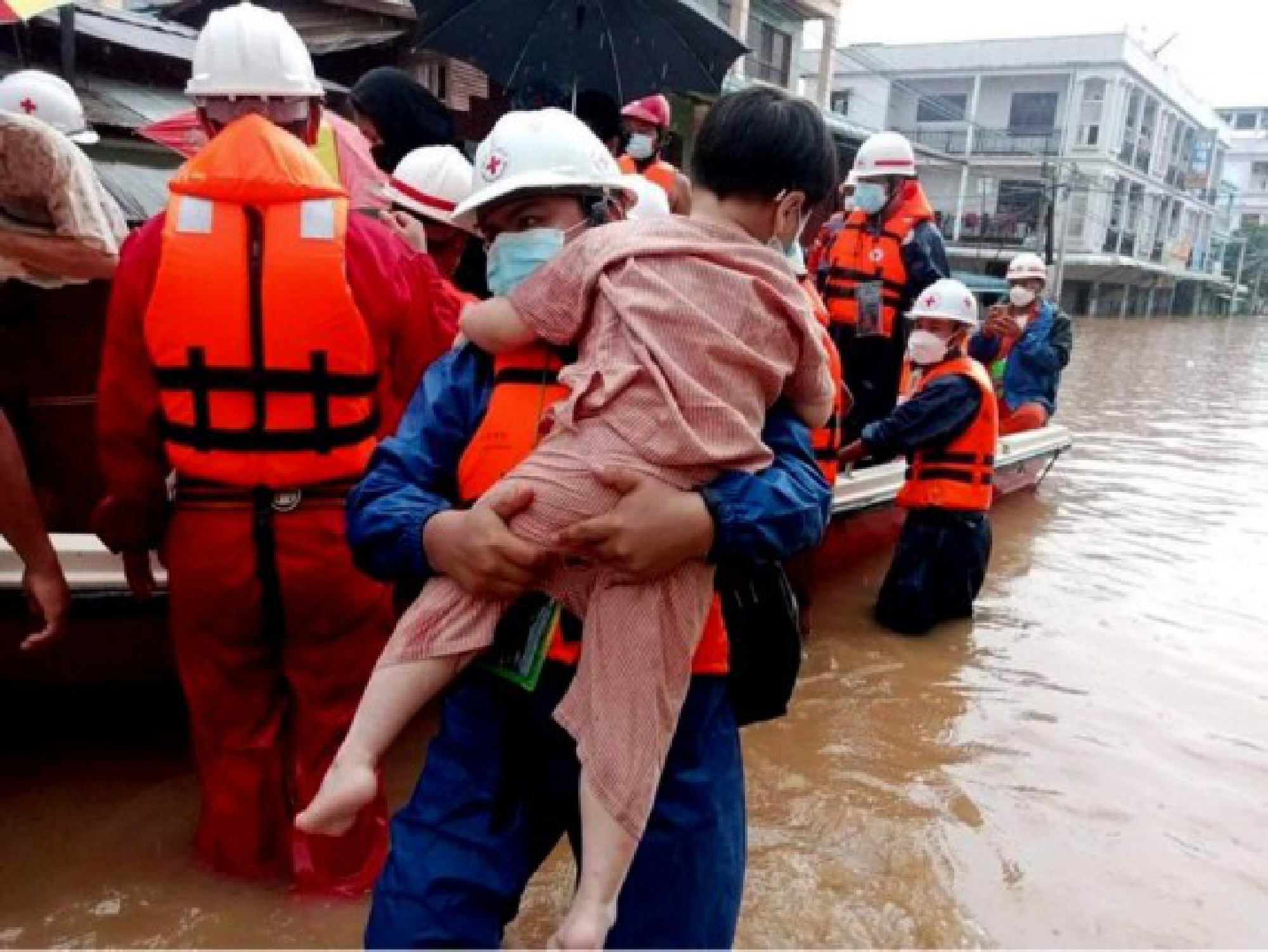 A rescuer evacuates a stranded child in flood-hit Myawaddy town of Kayin State, Myanmar
