Brazilian footballer Ronaldinho visits Lebanon in solidarity with Beirut port victims
Brazilian footballer Ronaldinho visited on Thursday Beirut Fire Brigade Center to lay a wreath and pray for the martyrs of the blasts that rocked Beiruts port on Aug. 4, 2020, the National News Agency reported.
Ronaldinho and a number of players from international football clubs, including Barcelona, arrived on Wednesday in Lebanon, as part of a tour in solidarity with the victims of Beirut port’s explosions, marking the first anniversary of the tragic incident.
ADVERTISEMENTx
Lebanon will mark one year anniversary of the devastating blast at the Beirut port, in which hundreds of thousands of people lost their homes and property, about 200 families lost loved ones and more than 6,000 people were injured.
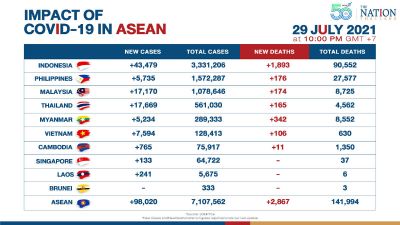
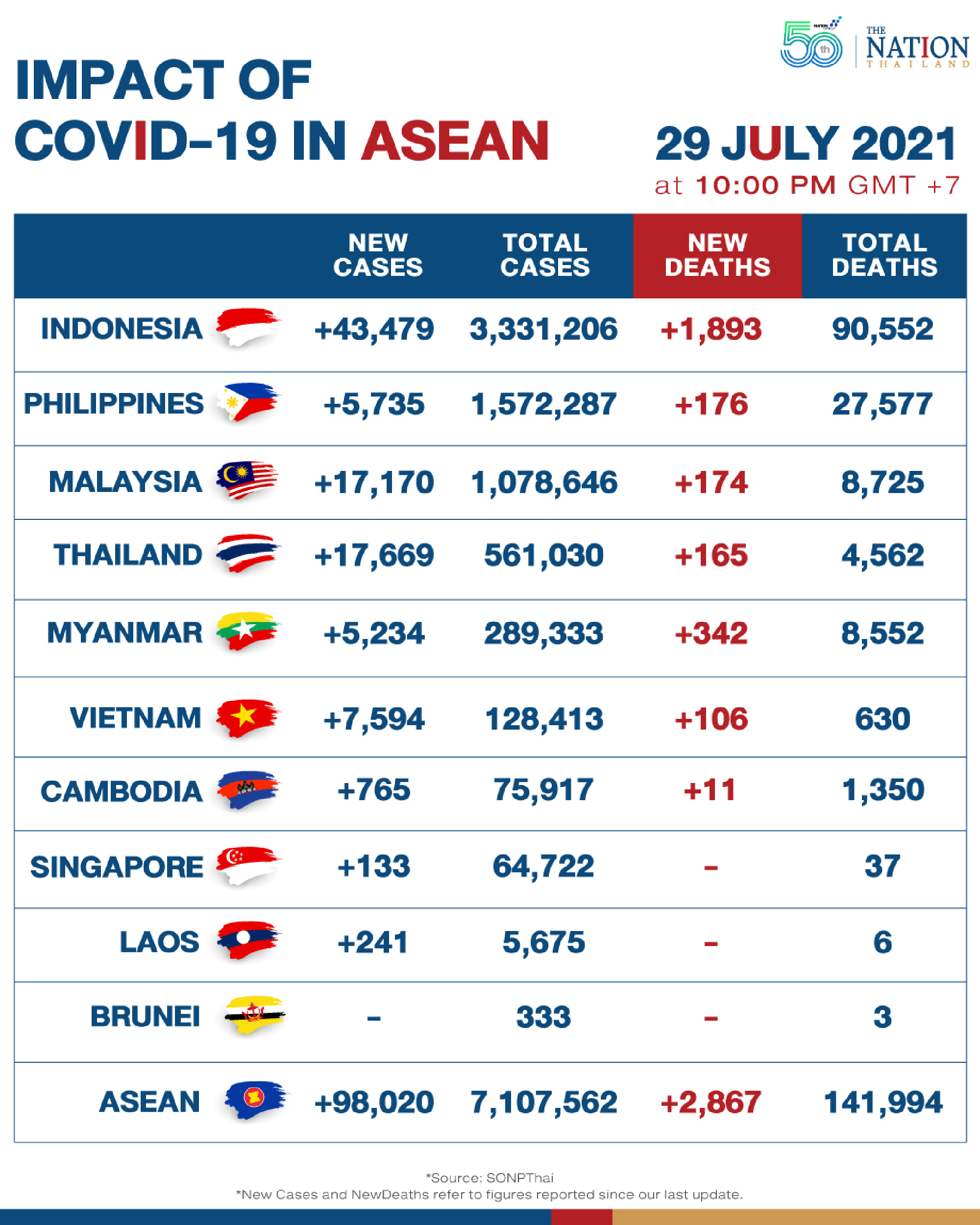
Asean reports record deaths, over 98,000 new Covid cases for second successive day
Deaths in Southeast Asia hit a new high on Thursday while the number of new cases continued to remain high, collated data showed.
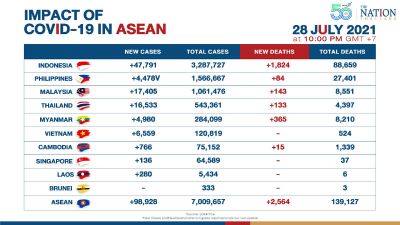
Asean countries reported 98,020 Covid-19 cases on Thursday, slightly lower than 98,928 on Wednesday, but deaths rose to 2,867, up from 2,564 the previous day.
Myanmar on Wednesday kicked off a Covid-19 vaccination drive on inmates for the first time. Myanmar press reported that 2,500 of more than 9,000 inmates had registered for vaccine jabs.
Earlier, the National League for Democracy (NLD) Party revealed that Nyan Win, former party spokesman and senior adviser to NLD leader Aung San Suu Kyi , had died of Covid-19 in prison.
The 78-year-old had been arrested after the February 1 coup and was held in Yangon’s Insein prison on sedition charges.
Meanwhile, a spokesperson for Myanmar Prisons Department said about 200 inmates had been infected with Covid-19.
ADVERTISEMENTx
In Malaysia, opposition parties urged Prime Minister Muhyiddin Yassin to resign after the royal office issued a statement on Thursday, stating that the King of Malaysia was disappointed with the government’s move to end the state of emergency on August 1.
The statement also pointed out that the government’s move was against the Constitution, defamed the monarchy and confused members of parliament.
Asean reports record deaths, over 98,000 new Covid cases for second successive day
Deltas spread is testing even aggressive Covid zero defenses
The rise of the highly contagious delta variant is challenging even the most aggressive Covid-19 containment regimes, an ominous sign as economies look to open up and return to pre-pandemic life.
An outbreak that started at an airport in the eastern Chinese city of Nanjing is testing that country’s zero-tolerance measures, which are some of the most sweeping and comprehensive in the world.
New infections are rising by the dozens and seeding subsequent clusters around China despite well-honed systems of mass testing and stringent quarantines. Beijing reported its first locally transmitted infection in six months Thursday, linked to an outbreak in the southern province of Hunan among people who’d recently been to Nanjing.
The variant is scaling some of the toughest virus defenses, with “Covid Zero” places — countries that had snuffed out the virus within their borders — still seeing outbreaks despite strict anti-virus measures.
Among the hardest hit is Australia, where delta is slipping through the mandatory hotel quarantine system far more easily than past strains and taking advantage of a low community vaccination rate. A delta-fueled outbreak even forced Sydney, despite its efficient contact tracing and testing apparatus, into weeks of lockdown, with cases climbing to nearly 3,000 since mid-June.
In China, the first infections were among nine airport cleaners. The cluster quickly expanded to their close contacts, then to a handful of other locations, leading to nearly 200 confirmed Covid cases as of Thursday. It’s one of China’s biggest outbreaks since a wave concentrated in the country’s northeast saw more than 2,000 infections last winter.
Officials have confirmed that the new outbreak is caused by the delta strain, which has been driving a resurgence in infections across the world.
The variant, which first emerged in India and is more transmittable than other strains, is exposing the limitations of the strategy of virus elimination, which is also favored by New Zealand and Singapore. Taiwan, which went months without any infections at all last year, recently backed away from Covid Zero, saying it was no longer targeting nil cases but transitioning toward a strategy of living with the virus.
ADVERTISEMENTx
Many of the people infected in China, including the Nanjing airport workers, had been fully vaccinated — and only four have developed severe cases of the disease — according to official data. The numbers signal that the immunity generated by China’s vaccines while enough to ward off critical illness and death, is still insufficient to prevent the spread of the variants.
Nanjing is ramping up Covid measures as the outbreak added 18 more cases on Thursday. All residential compounds have been placed under lockdown, and the city is starting a third round of virus testing for its more than 9 million people. The airport has canceled most flights and its staff have been placed under restrictions.
The infected Beijing resident is likely connected to a cluster at an outdoor theater performance in Hunan, where the audience included infected people who had traveled to Nanjing. It’s the first local infection recorded in tightly-guarded Beijing since the start of the year, when an outbreak in nearby Hebei province led to sporadic cases in the Chinese capital.
The cluster has placed every one of the roughly 3,000 theater-goers in Hunan at risk of infection, local authorities said, indicating that the number could grow.
The Chinese vaccines’ efficacy in preventing symptomatic Covid has ranged between 50% to 80% in studies, lower than the more than 90% effectiveness for the potent mRNA vaccines developed by Pfizer and its German partner BioNTech, as well as Moderna.
Countries including Thailand and United Arab Emirates that initially relied on Chinese vaccines have decided to offer booster shots to some fully-vaccinated people to provide better protection against the delta strain. Globally, the variant has already forced the U.S. to institute new mask mandates, delayed a reopening in Singapore and put other Australian cities under lockdown.
Despite its largely closed borders, China has also seen more frequent virus flareups since the beginning of this year as variants from other hotspots around the world get in, often through workers in high-risk areas such as airports and cargo centers.
The outbreaks, while minimal compared to clusters in parts of the U.S. and Southeast Asia, are putting pressure on officials to rethink the vaccination campaign to possibly include booster shots. China’s inoculation drive — the fastest in the world — is just a month away from covering 75% of the country’s 1.4 billion people with two doses.
Sinovac Biotech — whose inactivated virus vaccine has formed the backbone of China’s inoculation campaign, and rollouts in many parts of the developing world — said Wednesday that a third dose of its shot increases antibody levels by three to five times, building a stronger case to give booster shots to workers in China at greater risk of contracting the virus.
Bloomberg also reported in April that China was expected to approve the mRNA vaccine developed by BioNTech. The shot could be used as a booster for people fully vaccinated with Chinese vaccines.
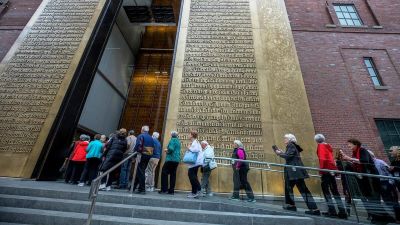
Rare Gilgamesh tablet, once on view at the Museum of the Bible, is one step closer to being returned to Iraq
Federal authorities have taken ownership of a rare cuneiform tablet that craft company Hobby Lobby purchased in 2014 for the Museum of the Bible, a legal move that closes the latest chapter in the ongoing saga of the museums problematic collection.
Hobby Lobby purchased the rare artifact, known as the Gilgamesh Dream Tablet, for almost $1.7 million to display in the D.C. museum built by the company’s chief executive, Steve Green. The six inch by five-inch clay artifact is part of an epic poem that is considered one of the world’s oldest religious and literary texts. Originally from what is now Iraq, the next step will be to repatriate it to that country, experts say.
“This is a mythic story of the origins of the world, this incredibly famous text equal to the ‘Odyssey’ or the ‘Iliad,'” said Candida Moss, a New Testament scholar and co-author with Joel Baden of “Bible Nation: The United States of Hobby Lobby.” “It’s a star because we Christians relate this text to our Bible.”
The Gilgamesh Dream Tablet entered the country illegally before an international auction house arranged for its private sale to Hobby Lobby, according to the federal complaint. Authorities took the tablet from the museum in 2019 and this week the U.S. District Court for the Eastern District of New York ordered the forfeiture.
The court order is the latest example of the government’s commitment to ending the smuggling of international cultural objects, according to Assistant Attorney General Kenneth Polite of the Justice Department’s Criminal Division. “Thwarting trade in smuggled goods by seizing and forfeiting an ancient artifact shows the department’s dedication to using all available tools, including forfeiture, to ensure justice,” Polite said in a statement.
Hobby Lobby, the Oklahoma City-based craft company led by the evangelical Green family, is the primary benefactor of the Museum of the Bible, a 430,000 square-foot building that opened in 2017 a few blocks from the Capitol with a mission to “invite all people to engage with the transformative power of the Bible.” In a statement, the museum said it has been working with federal authorities and that Hobby Lobby is suing Christie’s for the money it spent on the tablet.
“The museum was informed in 2019 of the illegal importation of this item by the auction house and previous owners. Since then, we have supported the Department of Homeland Security’s efforts to return this Gilgamesh fragment to Iraq,” the statement said.
ADVERTISEMENTx
Experts have long questioned Hobby Lobby’s acquisition efforts and the authenticity of some of the items in its collection. Early skepticism about the prominently displayed Dead Sea Scrolls, for example, proved valid when, in 2018, officials acknowledged that five of the 16 fragments were fake. The next year an internal report discredited the remaining 11.
In 2017, Hobby Lobby reached an agreement with the Eastern District of New York regarding more than 3,500 Iraqi artifacts that federal officials said were illegally imported. As part of the settlement, the company agreed to forfeit the objects, pay a $3 million fine and submit to federal oversight. The artifacts were returned to Iraq in 2018.
Last year, Green issued a public statement admitting to early mistakes in building the private collection of about 40,000 objects. He announced that an internal review had identified some 11,500 items from Egypt and Iraq that had “insufficient provenance.” The original number grew by several thousand, according to later comments from museum officials. On Wednesday, the museum announced it completed the return of the objects, totaling 8,143, to Iraq.
“We are grateful for the efforts of the Ambassador of Iraq, Fareed Yasseen, and the U.S. State Department for helping us restore these to the Iraqi people,” the museum said in a statement about the transfer. “Museum of the Bible looks forward to future opportunities to collaborate with Iraq to study and preserve its rich cultural heritage.”
It remains unclear if the government’s actions are enough to fight the illicit trade of cultural objects. “Some of us have questioned if it is effective as a deterrence,” said Patty Gerstenblith, director of the Center for Art, Museum and Cultural Heritage Law at DePaul University. “Criminal proceedings would be more effective, but it is very difficult to prove a criminal case.
ADVERTISEMENT
“I look at the timeline [of Hobby Lobby’s acquisitions] and think if I got caught doing something I wouldn’t keep doing it,” she added.
Hobby Lobby and the Museum of the Bible are not the only ones forced to repatriate objects, Gerstenblith noted. “I wonder what will make a difference,” she said about the recent forfeiture. “Steve Green keeps saying ‘I didn’t know’ [about the rules for importing antiquities]. There is a lot of self-deception going on, conscious or not. People fool themselves.”
Jeffrey Kloha, the museum’s chief curatorial officer, said the museum understands the criticism but wishes to make the “facts and circumstances” clear.
“All of these artifacts were acquired between 2009 and 2014, and almost all prior to 2011. The Museum has taken extraordinary steps since to resolve the issues associated with them. We approached both Iraq and Egypt ourselves in 2017 and early 2018 to inform them of our intention to research and return these objects. All of this was done amicably and directly with the countries of origin along with the awareness of the United States government,” Kloha said. “It is unfortunate that much of the reporting on this subject does not make it clear that this is the completion of a long process and not a new story.”
Experts expect the Gilgamesh Dream Tablet will also be repatriated to Iraq, although how and when are not yet known. Some of the Iraqi artifacts seized by the government and repatriated in 2018 are now at the Iraq Museum in Baghdad, where scholars have had access to them, said Eckart Frahm, professor of Near Eastern Languages and Civilizations at Yale University. Those artifacts are among a half-million or so cuneiform tablets in museum collections around the world and are of interest to scholars and researchers. The Gilgamesh fragment is more significant, he said.
ADVERTISEMENT
“It speaks to us, describes the condition of man, the suffering of humankind, the fragility of the hero,” Frahm said. “If I were the director of a museum, I would put it on display.”
Dozens of Afghan troops killed in insider attacks during U.S. military withdrawal, watchdog says
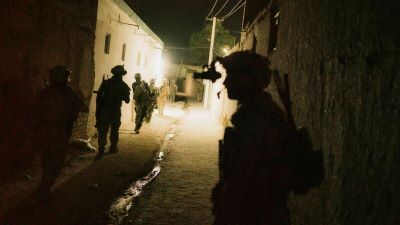
The Talibans offensive this spring included more than two dozen insider attacks during the 90-day period ending June 30, a wave of violence that left at least 81 Afghan troops dead, a new U.S. government report revealed Thursday, highlighting the rapid deterioration of security throughout much of Afghanistan as the United States completes its military withdrawal.
At least 37 Afghan troops were wounded in those attacks, according to the report released by the Special Inspector General for Afghanistan Reconstruction, and American military officials told the watchdog’s investigators that the numbers could be incomplete, citing gaps in knowledge during the pullout, which is now effectively over.
The data underscores the enormous challenges and immense pressure facing Afghan forces, who have been left to fight the militants with little U.S. support. Thousands of Afghan troops are killed annually, and those numbers are on the rise. Others, meanwhile, have abandoned the security forces, cutting deals with the Taliban, surrendering their weapons and allowing a growing number of districts to fall under insurgent control.
Afghan military fatalities “have shown an upward trend, especially during the month of June,” U.S. Forces-Afghanistan told the inspector general, according to the new report, which notes, too, that the Taliban’s aggressive push to retake lost territory continues.
John Sopko, who leads the inspector general’s office, on Thursday took a dim view of the U.S. military’s efforts to train Afghan troops and the 20-year U.S. war effort in Afghanistan. Asked why Afghan security forces are collapsing, he told reporters that people “shouldn’t be surprised,” citing long-running questions his office raised about how U.S. military officials assessed Afghan troops’ capabilities and ensured their sustainability.
“If you don’t have fuel, the Afghan army doesn’t fight. And if they’re not being paid, they don’t fight. And if they’re not getting the bullets and food and other equipment, they don’t fight,” Sopko said. “And I think this is what you’re seeing since the Taliban started their latest attacks.”
Sopko criticized U.S. military leaders for casting the Afghan military in a rosy light for years despite its shortcomings, and for setting unrealistic goals. Then he made a stark prediction.
“Don’t believe what you’re told by the generals or the ambassadors or people in the administration saying we’re never going to do this again,” he said. “That’s exactly what we said after Vietnam: ‘We’re never going to do this again.’ Lo and behold, we did Iraq. And we did Afghanistan. We will do this again.”
ADVERTISEMENTx
The U.S. military has, for several years, mostly withheld detailed information about Afghan military fatalities, citing requests from the Afghan government. In the inspector general’s previous quarterly report, investigators said the number of insider attacks on Afghanistan troops had increased by 82% compared to the same period in 2020, though they did not release specific numbers at that time.
Jonathan Schroden, a military operations analyst with CNA, said that while statistics about insider attacks among Afghan forces for other time periods are not readily available, the data released now shows a problem that is “yet another source of pressure on unit cohesion” and morale among Afghan forces. If the trend continues, two-thirds of an Afghan battalion, known as a kandak, will be killed this year in friendly fire alone, he noted.
The spate of insider attacks came as the U.S. military transferred its remaining bases to the Afghans, sometimes with little or no notice. In July, Afghan officials complained that the United States had departed Bagram air base, the most significant U.S. base in Afghanistan for years, without notice. U.S. military officials have defended the approach, saying the security of American personnel played a role in that decision.
The new report raises concerns about a number of other grim issues.
When the Trump administration in February 2020 signed a deal with the Taliban, setting the stage for the United States’ exit, U.S. officials said repeatedly that decisions about the U.S. military withdrawal would be “conditions-based.” However, while the U.S. military withdrawal ensued, thousands of deadly Taliban attacks targeted the Americans’ Afghan allies.
From March through May of 2021, there were 10,383 “enemy-initiated attacks,” the inspector general’s report said. That’s up from 9,163 and 6,755 during the same time periods in 2020 and 2019.
While senior U.S. military officials have said that the Afghan air force gives the central government in Kabul an advantage over the Taliban, the inspector general assessed that the loss of American contractors who help maintain the Afghans’ aircraft in Afghanistan “could significantly impact” sustainability of their fleet.
In June, the Afghan air force’s ability to fight began to drop, the report noted. The Taliban offensive, coupled with the U.S. military withdrawal, “appears to reduce aircraft readiness rates,” the report said. It noted that Afghanistan’s fleet of AC-208 attack planes had a readiness rate of 93% in April and May, but that it fell to 63% in June. The country’s fleet of Black Hawk helicopters had 77% reported readiness in April and May, but 39% in June.
In shadow of Japans Fukushima disaster, the Olympic message of recovery rings hollow
FUKUSHIMA, Japan – After radiation turned their village into a no-go area a decade ago, an improbable alliance formed between cattle farmer Muneo Kanno and nuclear physicist Yoichi Tao on their frustration over the Japanese governments response.
They decided to take matters into their own hands.
They collected soil samples to measure radioactivity, and developed their own method of decontamination from the fallout of the Fukushima Daiichi Nuclear Power Plant, destroyed after a devastating earthquake and tsunami in March 2011 that killed 16,000 people and forced 165,000 people from their homes.
They urged residents who fled their hometown Iitate to return home and help restore the village. But their community remains gutted.
And they wince at the prevailing theme of the Tokyo Olympics: “recovery.” Organizers stuck with the original packaging – aimed at showcasing how far the country had come since the 2011 disasters – even as the Games were delayed a year and are now underway inside a pandemic bubble with no spectators in the Tokyo area and athletes cocooned from the rest of Japan.
To many Fukushima residents, whose lives were upended by the natural disasters, the Olympics messaging feels tone deaf: a public-relations slogan that ignores the realities of their daily lives.
“It seems nothing more than just taking advantage of Fukushima for political reasons,” said Tao, 80, who lived in Hiroshima during the atomic bomb blast in 1945 and grew up witnessing its aftermath. “It was simply that adding this ‘recovery’ element made the Games more appealing.”
At the Olympics, the symbols intended to emphasize the recovery and reconstruction of Fukushima are hard to miss.
The Olympic torch relay began at the J-Village National Training Center in east Fukushima. It served as the operational base for disaster response workers after the earthquake and subsequent tsunami, and was later renovated into a sports-training facility.
Food served inside the Olympic Village, where athletes reside, train and dine, use ingredients from Tohoku, the coastal region struck by the 9.1-magnitude earthquake in 2011, which was so strong that it actually moved Japan’s largest island east by nearly eight feet. The move was designed to help dispel myths that food from areas affected by the disaster is unsafe.
Olympic officials broadcast a four-minute video showing how they had hosted community and arts projects for children in the Fukushima prefecture to learn about their history and the recovery process.
“We have been making various efforts to convey to the world the image of Japan’s recovery from the earthquake, along with our gratitude for the support we have received from the world,” Japan’s Olympics minister Seiko Hashimoto said in a media briefing after the Games opened.
But such messages ring hollow to many displaced residents.
There is deep distrust toward the Japanese government among residents who feel officials have not made a full public reckoning of the impacts of the disasters with coverups, denials and evasion.
“When the earthquake happened, the next day I wasn’t even aware of the impact of nuclear disaster,” said Kanno, 70, who returned to Iitate in 2017. “Eventually we learned that it was dangerous here, and were told that we couldn’t go out or touch the soil. But in Iitate, since we all live on agriculture, to be told that we can’t touch the soil, it was truly shocking.”
Many evacuees have returned home across the Fukushima region, but others still live in housing units that were meant to serve as temporary shelters.
Sumio Konno, a former nuclear power plant worker, was on a business trip at a nuclear plant in a nearby region when the tsunami hit. After being trapped in the plant for four days, he got a hold of his family and joined his wife and son, then 5 years old, at a temporary evacuation site.
Since then, the family has bounced around to various temporary homes, unable to go back to their town, Namie, just north of the destroyed nuclear plant. Many areas remain off-limits.
Konno, 56, said he was frustrated about the billions of dollars spent on hosting the Games, while families are still financially struggling.
“Why are they wasting all this money on a two-week sports festival, when all that money can be used here where it’s necessary, now more than ever with the pandemic?” Konno said.
The Tokyo Games also have been mired in a series of scandals involving comments by Japanese officials denounced as racist, sexist and bullying. The vast majority of Olympic matches are being held without spectators, to help prevent the spread of coronavirus. Without the influx of foreign fans, local businesses won’t be able to reap the publicity and revenue they had anticipated.
“The Japanese government and the IOC made up the ‘Recovery Olympics,’ but it’s totally different from the reality,” said Kazuko Ito, secretary general of the advocacy group, Human Rights Now. “It makes a torturous situation for people in Fukushima, as well as the internally displaced people of Fukushima.”
ADVERTISEMENTx
The spectator ban has become particularly disappointing at the Fukushima Azuma Baseball Stadium, the Olympics baseball and softball venue that was intended to serve as another symbol of recovery. Initially, officials planned to host a number of celebratory events around the stadium, inviting dignitaries to taste the region’s signature fruits, including peaches, pears and grapes.
Instead of throngs of fans filling the venue in baseball-loving Japan, the vast majority of seats in the stadium remained empty on July 28 when the first official Olympic game was held. The stadium was so empty that organizers played ambient fan sounds to create the illusion of a crowd. Even the surrounding park, with tall, lush trees and a fountain, was closed off to the public.
“The mood I get is people aren’t really interested in the Olympics. And even if they were, they can’t even go anywhere near it,” said Konno, the former nuclear power plant worker.
Toshikatsu Watanabe, who runs a public relations company in Koriyama, a city in Fukushima prefecture, said he was initially excited about the Olympics because he saw it as a way to highlight Fukushima as a safe region with a vibrant culture and delicious produce – a change from its association with tragedy.
Watanabe recalled a recent comment by the U.S. softball coach praising Fukushima’s peaches, which he said were so delicious that he ate six of them in his hotel. Watanabe had hoped for so many observations like those about his region.
ADVERTISEMENT
“With Fukushima associated so much with radiation, the Olympics would have been a great way to showcase the local culture and food,” said Watanabe, 69. “Especially people actually coming here from all over the world, to then share their personal experiences back home.”
The Japanese government has said that it has maintained constant communications with residents and adapted to their needs over the years, and that there are many residents who left their homes voluntarily even without an evacuation order.
Yet many Fukushima residents tell a different story of feeling abandoned and overlooked by the government, and their lasting fears of lingering financial and health concerns from exposure to radiation, said Hiroko Aihara, an independent medical journalist and Fukushima native.
Those residents are worried that once the global spotlight of the Olympics is gone, they would be declared as “recovered” from the disaster, including residents who are bringing lawsuits against the Japanese government to demand more compensation for their displacement, Aihara said.
“By issuing the declaration on ‘completed reconstruction,’ reparations and trials that are currently underway will be abandoned, and the people of Fukushima prefecture will be ignored,” she speculated. “It makes clear that the government declares that, ‘Reconstruction has been achieved because the Olympics have also been successful.'”
ADVERTISEMENT
A column from the editorial board at one of Japan’s main newspapers, the Mainichi, noted that construction firms had prioritized Olympics-related projects over Fukushima recovery-related projects. It noted that one of the towns in Fukushima had requested that the torch relay pass through a section that remains disaster stricken, but were rejected.
“An opportunity to show the reality of recovery was lost,” the editorial read.
“Even after the Olympics, their hard lives do not change and end,” said Aihara. “We and they cannot benefit from the economy with Tokyo 2020. Such conflicts have become complex emotions.”
Published : July 30, 2021
By : The Washington Post · Michelle Ye Hee Lee, Julia Mio Inuma
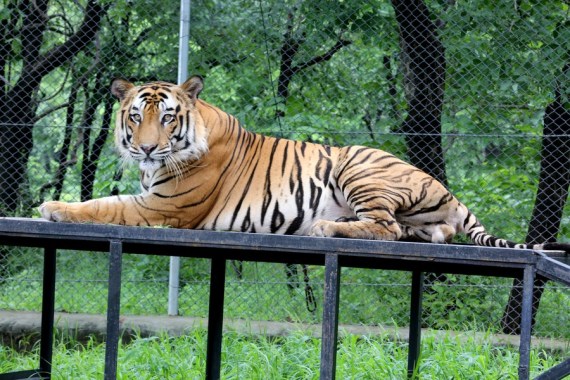
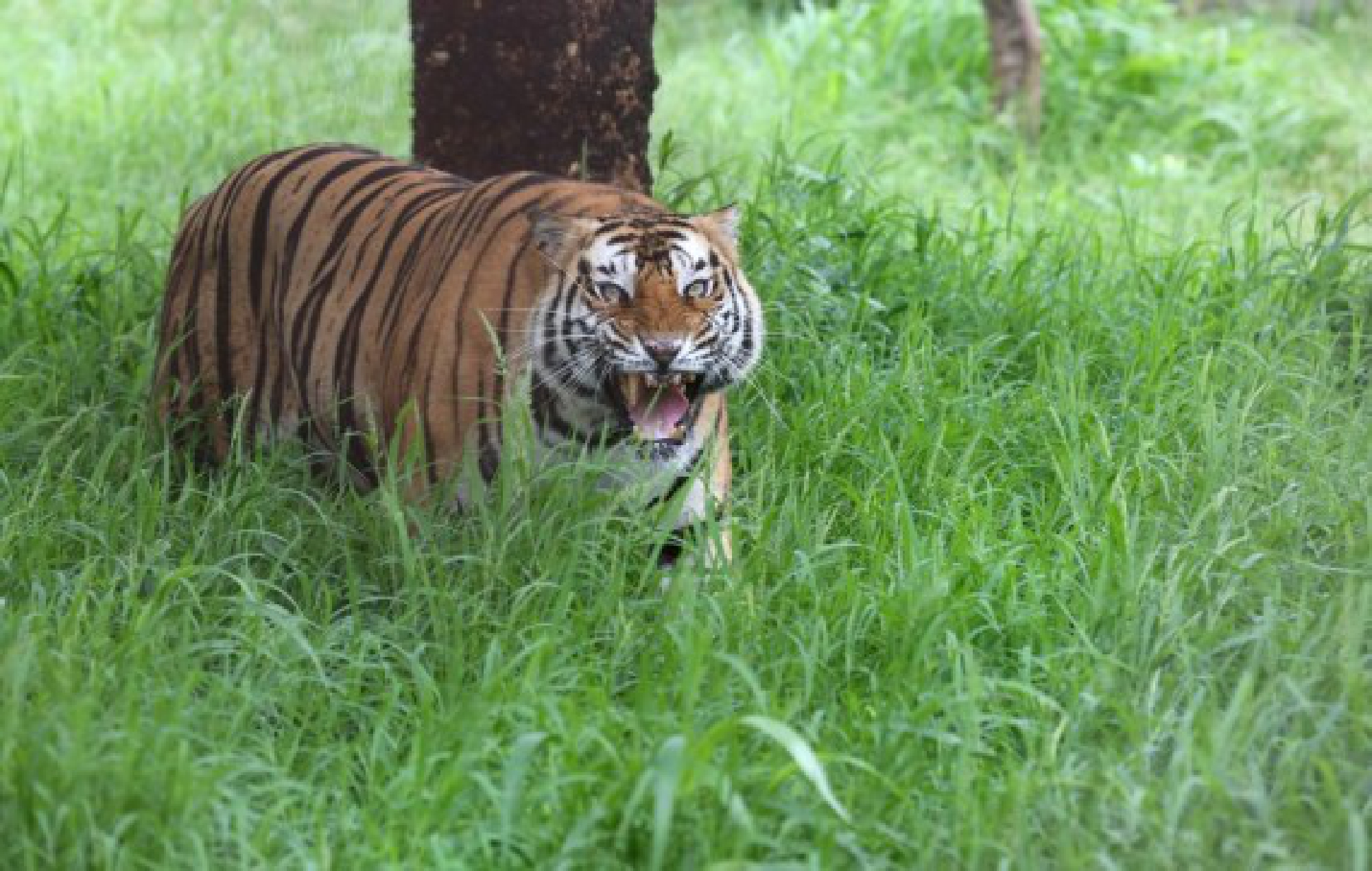
On the occasion of the annual International Tiger Day, take a closer look at the tigers at the Van Vihar National Park in Bhopal, the capital city of Indias Madhya Pradesh state.
ARoyal Bengal tiger is seen at the Van Vihar National Park in Bhopal, the capital city of India’s Madhya Pradesh state
Asia-Pacific Coronavirus News: Tokyos daily cases surpass 3,000 for 1st time, S. Koreas new infections hit new high
The following are the latest developments of the COVID-19 pandemic in Asia-Pacific countries
— Tokyo’s daily cases surpass 3,000 for 1st time;
— S. Korea’s new infections hit record high at 1,896;
— Indonesia reports 47,791 new cases;
— India adds 43,654 cases.
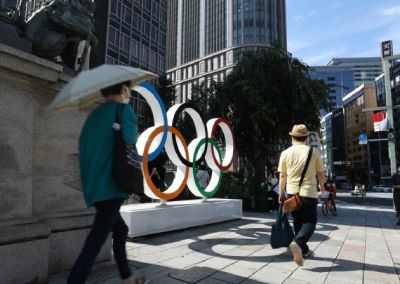
The number of new confirmed cases in Tokyo reached 3,177 for the first time in a single day, the Tokyo Metropolitan Government announced.
The all-time high comes just a day after Tokyo, hosting the Olympics since last week, marked 2,848 daily infection cases Tuesday, topping the earlier record of 2,520 cases logged on Jan. 7.
Olympic organizers have pledged to perform strict restrictions for “safe and secure” games and emphasized that the number of infection cases among athletes and others associated with the sporting events is very low, while a fifth wave of the pandemic stimulated by the highly contagious Delta variant is putting pressure on hospitals in the Olympic host city.
The Japanese government has placed Tokyo under a fourth state of emergency from July 12 to Aug. 22, as restaurants and bars are required to stop offering alcohol and close early.
ADVERTISEMENTx
SEOUL — South Korea’s daily cases hit a new record high as the fourth wave of outbreaks raged both in the capital and non-capital areas.
A police officer works at the entrance of the Main Press Center (MPC) of Tokyo 2020 Olympic Games in Tokyo, Japan
The country reported 1,896 more cases, raising the total number of infections to 193,427, according to the Korea Disease Control and Prevention Agency (KDCA).
Of the new cases, 568 were Seoul residents. The number of infected people residing in Gyeonggi province and the western port city of Incheon was 543 and 101 respectively.
The combined figure of 1,212 spotted in the greater Seoul area accounted for 66.5 percent of the locally transmitted cases.
ADVERTISEMENT
People wearing face masks walk across the street near Yongsan Station in Seoul, South Korea
Four more deaths were confirmed, leaving the death toll at 2,083.
JAKARTA — The Indonesian Health Ministry reported that the coronavirus cases across the country rose by 47,791 within the past 24 hours to 3,287,727 with the death toll adding by 1,824 to 88,659.
Additional 43,856 recovered patients were discharged from hospitals, raising the total number of recoveries from the pandemic in the Southeast Asian country to 2,640,676, according to the ministry.
At present, the Indonesian government is implementing multi-tiered community activity restrictions, known locally as PPKM, on the country’s most populated island of Java and the resort island of Bali as well as several municipalities outside the two islands.
ADVERTISEMENT
NEW DELHI — India’s total tally rose to 31,484,605 with 43,654 newly-registered cases during the past 24 hours across the country, showed the federal health ministry’s latest data.
Besides, as many as 640 deaths due to the pandemic since Tuesday morning took the total death toll to 422,022.
There are still 399,436 active cases in the country with an increase of 1,336 cases during the past 24 hours.
A woman stays for observation after receiving a dose of COVID-19 vaccine in Jakarta, Indonesia,
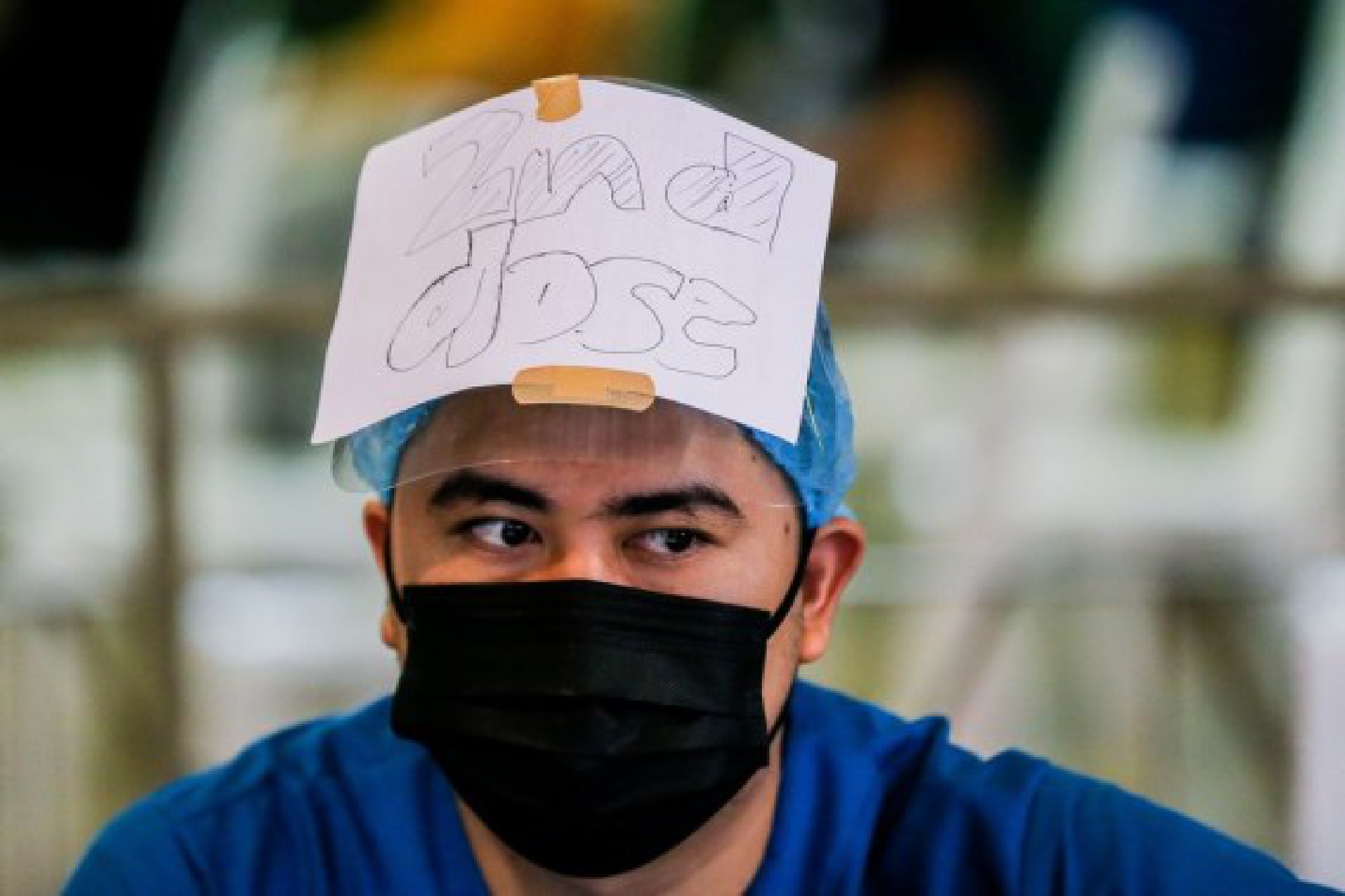
MANILA — The Philippines’ Department of Health (DOH) reported 4,478 new COVID-19 infections, bringing the total number of confirmed cases in the Southeast Asian country to 1,566,667.
The death toll climbed to 27,401 after 84 more patients died from the viral disease, the DOH added.
The confirmed cases in 11 areas in Metro Manila, home to over 13 million people, have increased, the DOH said, adding it is closely monitoring the virus clusters in these areas with “positive two-week growth rates.”
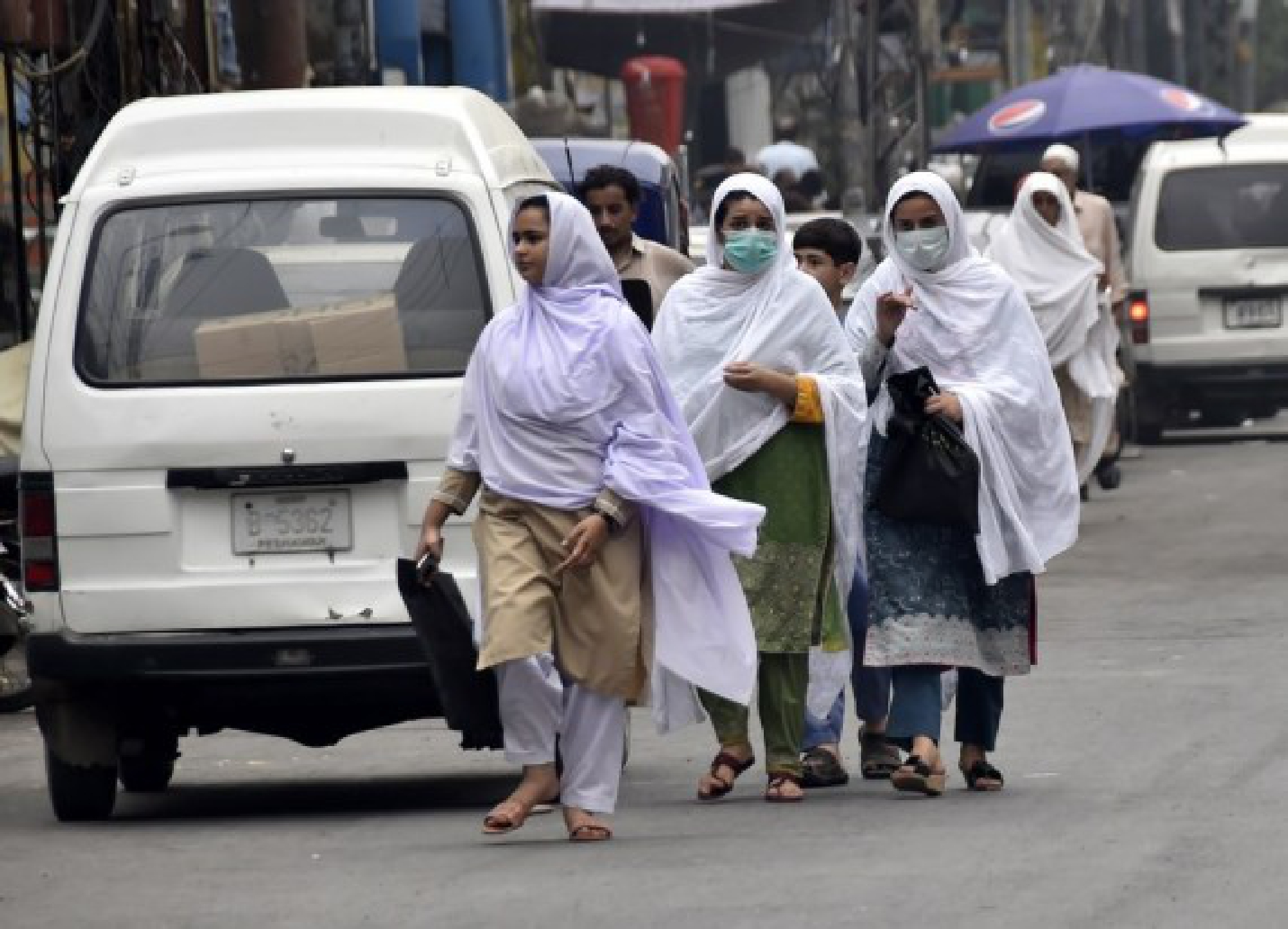
ISLAMABAD — Pakistan reported the highest single-day spike in two months with 4,119 new cases over the last 24 hours, the National Command and Operation Center (NCOC) said.
The NCOC said that the country’s number of overall confirmed cases has risen to 1,015,827, including 935,742 recoveries, adding that the positivity rate of infections was recorded at 7.88 percent.
A health care worker wears a sign that reads “2nd dose” on his head to guide people getting inoculated with the Sinovac COVID-19 vaccine at a school turned into a vaccination site in San Juan City, the Philippines
The COVID-19 claimed 44 more lives across the country in the last 24 hours, taking the death toll from the disease to 23,133, the NCOC said, adding that 2,898 people are in critical condition.
People wearing face masks walk at a market in Peshawar, northwestern Pakistan
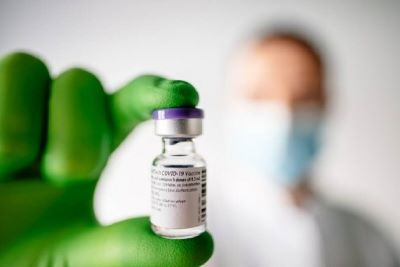
Pfizer says third COVID-19 vaccine dose strongly boosts protection against Delta variant
Pfizer anticipates applying for emergency use authorization for a third dose of its vaccine as soon as next month.
American biopharmaceutical company Pfizer said Wednesday a third dose of its COVID-19 vaccine can “strongly” boost protection against the Delta variant.
Antibody levels against the Delta variant in people aged 18 to 55 who receive a third dose of the Pfizer/BioNTech vaccine are greater than five-fold than following a second dose, according to data posted at the company’s teleconference.
ADVERTISEMENTx
Among people aged 65 to 85, the Pfizer data suggest that antibody levels against the Delta variant after receiving a third dose are greater than 11-fold than following a second dose.
Pfizer anticipates applying for emergency use authorization for a third dose of its vaccine as soon as next month, Mikael Dolsten, who leads worldwide research, development and medical for Pfizer, was quoted by CNN as saying at the teleconference.
The number of Covid-19 cases in Southeast Asia crossed 7 million, with 98,928 new cases reported on Wednesday – higher than Tuesday’s tally of 96,526. There were 2,564 more deaths, decreasing from Tuesday’s 2,824 and taking total coronavirus deaths in Asean to 139,127.
Indonesia reported 47,791 new cases and 1,824 deaths on Wednesday, bringing cumulative cases in that country to 3,287,727 patients and a total 88,659 deaths.
The government said it would allow retail shops, selected businesses and department stores to open under certain conditions this week, but will continue to impose the tightest disease control measures in Java and Bali, which are the epicentres of the outbreak, until August 2.
Meanwhile, Malaysia’s prime minister insisted that the government is not going to extend the state of emergency that will expire on August 1. The country has been under emergency rule since January, with Prime Minister Muhyiddin Yassin arguing it was needed to curb Covid-19 from spreading further.
Despite the emergency and strict lockdowns, the pandemic in Malaysia has only worsened, triggering public anger in the neighbouring country.

 Asean reports record deaths, over 98,000 new Covid cases for second successive day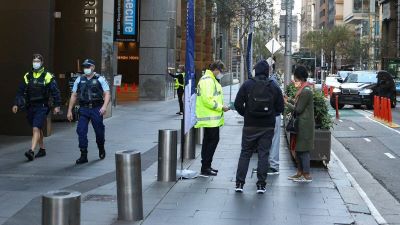

 A Royal Bengal tiger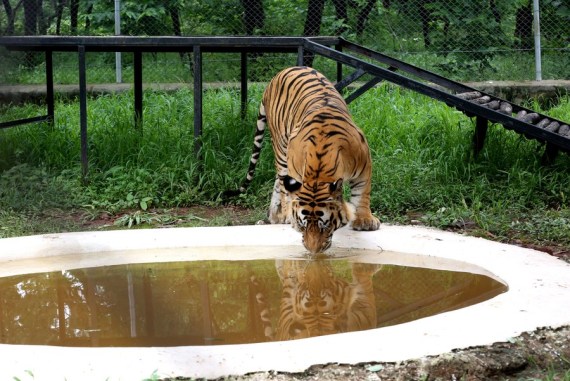


 A police officer works at the entrance of the Main Press Center (MPC) of Tokyo 2020 Olympic Games in Tokyo, Japan
 People wearing face masks walk across the street near Yongsan Station in Seoul, South Korea
 A woman stays for observation after receiving a dose of COVID-19 vaccine in Jakarta, Indonesia,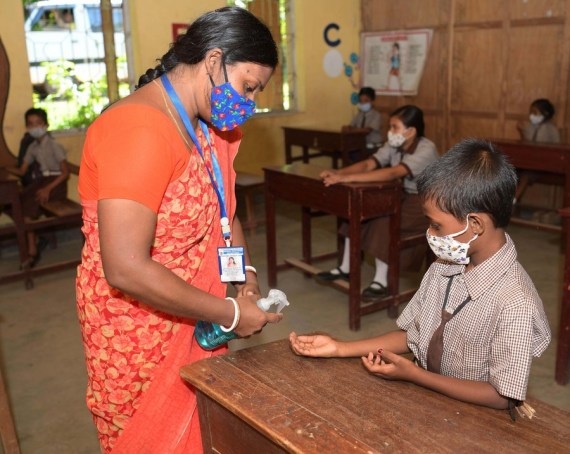
 A health care worker wears a sign that reads “2nd dose” on his head to guide people getting inoculated with the Sinovac COVID-19 vaccine at a school turned into a vaccination site in San Juan City, the Philippines
 People wearing face masks walk at a market in Peshawar, northwestern Pakistan