Tech sends stocks down with inflation angst rising
Technology shares led U.S. stocks lower as surging commodity prices stoked concern about whether inflation will derail a growth rebound in the worlds largest economy and spoil a record stock rally.
The tech-heavy Nasdaq 100 Index tumbled 2.6% amid the growing anxiety over inflation, which can threaten longer-horizon revenue typical of the sector. Tesla and Apple were among the biggest decliners. The ARK Innovation ETF resumed its slide. The Dow Jones industrial average briefly topped 35,000 for the first time. The benchmark S&P 500 fell from an all-time high. Treasury yields edged higher as traders brace for a busy week of auctions.
“Amid these new highs remember that the market doesn’t move only in one direction,” said Chris Larkin, managing director of trading and investing product at E*Trade Financial. “While a full economic recovery may already be priced into the market, the weak employment data could have temporarily eased worries about too-hot inflation and the necessity of interest rate hikes to combat it.”
Copper jumped to a record while iron ore futures surged more than 10%, adding to concern about inflation. West Texas Intermediate fluctuated after a cyberattack forced the closure of a key U.S. pipeline, which operators hope to reopen by the end of the week.
Meanwhile, the pound climbed to its highest level since February after U.K. elections denied Scotland’s main independence party an outright majority and strengthened the grip of the Conservatives.
The run-up in raw materials is intensifying debate ahead of a U.S. CPI report Wednesday that is forecast to show price pressures increased in April. The data will be closely watched by policymakers at the Federal Reserve trying to gauge the speed of the recovery after job growth significantly undershot forecasts.
“People have been gravitating to value — now you can find growth outside of tech,” said Keith Lerner, chief market strategist at Truist Advisory Services. “As inflation expectations continue to move higher, that’s more beneficial for the value side of the trade.”
These are some of the main moves in markets:
Stocks
– The S&P 500 fell 1%, more than any closing loss since March 18 as of 4:01 p.m. EDT.
– The Nasdaq 100 fell 2.6%, more than any closing loss since March 18
– The Dow Jones industrial average fell 0.1%, more than any closing loss since April 30
– The MSCI World index fell 0.6%, more than any closing loss since May 4
Currencies
– The Bloomberg Dollar Spot Index fell 0%, falling for the fourth straight day, the longest losing streak since April 19
– The euro fell 0.2% to $1.2142
– The British pound surged 1.1%, more than any closing gain since April 19
– The Japanese yen fell 0.1% to 108.76 per dollar
Bonds
– The yield on 10-year Treasurys advanced two basis points, more than any closing gain since April 29
– Germany’s 10-year yield advanced zero basis points, climbing for the fourth straight day, the longest winning streak since April 29
– Britain’s 10-year yield advanced one basis point to 0.79%
Commodities
– West Texas Intermediate crude fell 0.1% to $65 a barrel
– Gold futures rose 0.4%, climbing for the fourth straight day, the longest winning streak since Feb. 10
Published : May 11, 2021
By : Syndication Washington Post, Bloomberg · Claire Ballentine, Vildana Hajric
Push to electrify mail trucks gains wide support, an unlikely win for both DeJoy and Biden
House Democratic leaders are lining up behind a White House push to allocate $8 billion in taxpayer funding for the latest iteration of mail truck, paving the way for a fully electric fleet instead of the piecemeal strategy U.S. Postal Service leaders have been pursuing.
The agency, which is generally self-sustaining and does not draw public money, has drawn up a bootstrap plan for new vehicles – the vast majority of which would run on gas – as it wrestles with $188.4 billion in liabilities and faces years of projected losses. The lawmakers’ plan would relieve the agency of the truck expense while significantly advancing one of President Joe Biden’s key sustainability objectives.
Last week, the chairs of the House committees on Oversight and Reform and on Transportation urged members of the Democratic caucus to support the Next Generation Delivery Vehicle program, which would allow the agency to purchase as many as 165,000 trucks in the next decade. But it would come with certain environmental stipulations.
Party leaders had shown little enthusiasm for the program as outlined by the agency, which in February tapped Oshkosh Defense to build the trucks. But postal officials’ plan, worth as much as $6 billion, called for only 10 percent of the vehicles to be electric – exasperating Democrats, given the administration’s sustainability aims. The remaining trucks would have internal-combustion engines that could be retrofitted with electric drivetrains later in their life spans.
But Postmaster General Louis DeJoy had told lawmakers the agency couldn’t afford to make a bigger EV commitment – charging stations and other infrastructure would add another $2 billion to the cost – or wait until it could. The agency’s aging fleet of Long Life Vehicles are barely getting by, and some have infamously burst into flames. Plus, the Postal Service has a history of skepticism toward EVs, due to the length of the procurement process. When agency leaders took the first steps toward purchasing new vehicles seven years ago, the concept of having 100,000-plus electric vehicles was unrealistic.
Committee chairs Rep. Carolyn Maloney, D-N.Y., of Oversight and Reform and Rep. Peter DeFazio, D-Ore., of Transportation are now aiming to provide the full $8 billion for the electric trucks and the infrastructure. Though the dollar amount could get whittled down in negotiations with the Senate, momentum is building for their plan, according to a draft letter House Democrats plan to send Biden and Speaker Nancy Pelosi, D-Calif., a copy of which was obtained by The Washington Post. More than 50 Democrats have signed on.
“To ensure that any federal funding appropriated to the Postal Service for fleet acquisition is used appropriately, we would also include a requirement in legislation that at least 75% of the Postal Service’s new fleet must be electric or zero-emission,” the letter says. “Further, we would require the Postal Service to acquire only electric or zero-emission vehicles after 2040.”
Such an agreement would set up a once-improbable scenario: Democrats and DeJoy in alliance on postal strategy, one that would play well with environmental activists, commercial mailers and package shippers.
“The Postal Service has one of the largest vehicle fleets in the world, but far too many postal vehicles are outdated, guzzle gas, and pose a risk to the dedicated Postal Service employees who use them to serve the public every day,” Maloney said in a statement. “As the Postal Service replaces its aging fleet, it is critical that it purchases electric vehicles to protect our planet. The Postal Service can be at the forefront of electric vehicle technology and set an example for the country and the world, but it needs funding to purchase the necessary vehicles and infrastructure. The Postal Service needs our help to electrify its fleet, and it needs it soon.”
Such a turnabout also would mark a profound shift in the party’s approach to DeJoy: Scores of House Democrats – including Maloney and DeFazio – have called for the postal chief’s removal over historically poor mail service since he took office in June 2020, and agency missteps before the 2020 election.
That imbroglio has made party leaders slow to trust DeJoy and reticent to offer support to the agency while he remains in charge. After DeJoy told Maloney’s committee in February that only a sliver of the new fleet would be electric, Democrats were enraged and confused, according to aides involved with postal policy, who spoke on the condition of anonymity to talk candidly. Was DeJoy asking for congressional funding? Was he negotiating? Was he openly flouting Biden, who by executive order had directed agencies to transition the entire federal fleet to green power? Members were uncertain.
Within weeks, top House Democrats began discussing funding the entirety of the truck program themselves, with stipulations on electrification, putting the mail service in line with its shipping industry competitors and even major automakers. Amazon and FedEx both promise to be carbon-neutral by 2040. General Motors has pledged to stop producing gasoline-powered passenger vehicles by 2035, and Ford has set aside $22 billion for EV development over the next four years.
That the Postal Service has made no such commitment – the agency said in a statement that its “objectives align” with Biden’s Jan. 27 executive order – angered appropriators, according to six congressional officials, who spoke on the condition of anonymity to discuss ongoing negotiations. Lawmakers viewed that as emblematic of the agency’s go-it-alone style since DeJoy, a former logistics executive and GOP fundraiser, and took office last summer.
“The Postal Service fully supports the deployment of electric technology in our delivery fleet,” agency spokesman David Partenheimer said in a statement. “The ultimate extent of our ability to purchase electric vehicles is dependent on congressional financial support. With that support, we have confirmed that we can deploy a majority of our delivery fleet as (battery electric vehicles)] by 2030.”
But Postal Service leaders have long been wary of EV technology, according to current and former agency officials and industry executives involved in the fleet program, because of skepticism over its reliability as well as the higher upfront costs. Some of those tensions could be ameliorated by the prospect of forthcoming funds.
This account of the Postal Service’s struggle to replace its vehicle fleet is based on interviews with 25 congressional aides, current and former postal officials, and mailing and auto industry insiders, many of whom spoke on the condition of anonymity to discuss ongoing negotiations, confidential procurement provisions or private conversations.
“The Postal Service doesn’t have the cash to do this right now at all,” said a Senate aide involved in postal policy. “If Congress has specific ideas about what these vehicles should be, they should step up to the plate and fund it. They have to operate right now like Congress will do nothing. They have to start replacing the fleet.”
The Postal Service has not made a profit since 2006, losing $9.2 billion in 2020 alone, leading to years of deep cutbacks in infrastructure spending. That’s partially why postal leaders prioritized the lower upfront costs of its chosen vehicle over the larger savings that electric vehicles will take years to realize.
The agency also needs to act soon, experts say, given the rapid pace of deterioration of the current fleet.
The vehicle procurement, six former agency officials and industry insiders said, picked up momentum during the latter half of Donald Trump’s presidency. The Postal Service’s bipartisan but Trump-appointed governing board was aware, the people said, of constant overtures from the White House to award the contract so Trump could announce it while he campaigned for reelection.
But funding remained a sticking point. The board’s then-chairman, Robert Duncan, floated making a direct appeal to Trump to secure funding, said one person with knowledge of the conversation. Duncan half-jokingly suggested allowing Trump to design the exterior of the new vehicles – much like his design push for Air Force One – if he pressed Congress to set aside money to pay for them, but it’s unclear whether officials ever seriously pressed the proposal.
Duncan did not respond to a request for comment. Partenheimer said the agency would not “acknowledge speculation or hearsay about internal conversations that may or may not have happened.”
Postal officials told lawmakers in recent weeks that a $400 million grant would provide for 10 percent electrification, and $5.4 billion would provide for half the fleet. Full electrification would cost $8 billion.
Comparable calculations have staggered postal leaders previously, according to five people involved in fleet program discussions. Early on in the procurement process, the people said, agency officials internally expressed a preference for hybrid vehicles, but even then were put off by the cost.
“The conversation was, ‘We want to put a stake in the ground for some technology, but we don’t want to make a bad decision and get stuck with all of these,'” one of the people said.
That thinking led the Postal Service to select a truck design that mailing and automotive experts say fulfills the agency’s requirements, but isn’t revolutionary.
They say Oshkosh’s NGDV will be safer than the LLVs currently in use. At a bare minimum, the NGDVs will have air bags, which the LLV fleet does not. They also have side-entry doors to cargo bays and standing access from the driver’s seat to the cargo area, reducing the need for carriers to unload packages from the back of their vehicles. Mail carriers have been injured and even killed by vehicles crashing into their trucks.
The NGDVs are built to accommodate more packages, with larger cargo areas than LLVs. DeJoy’s strategic plan is built around parcel growth, and the agency estimates its package business will grow 6 to 11 percent year-over-year through 2025.
The NGDVs are projected to cut millions of dollars in maintenance and fuel expenses – LLVs average only 10 miles per gallon, and the new design would be compliant with California’s stringent mileage and emissions standards, Oshkosh officials said – and raise revenue by competing with private-sector shippers on package delivery.
Automotive experts say it’s a prudent choice, but expressed concerns that the internal-combustion platform would quickly grow obsolete. They also questioned why the Postal Service would commit to another long-term fleet rather than – as many international postal services do – purchasing vehicles in five- to six-year cycles to stay ahead of evolving technology and avoid years of maintenance costs.
“There might have been a certain element of American exceptionalism: We have needs different from everyone else,” said one person involved the procurement. “There might have been a sort of marketing need. FedEx and Amazon are all developing their own vehicles, and USPS said, ‘Well, we want one of our own.’ It is important, that relatability, that idea of the friendly local postal worker. That is a major part of what they do to set them apart from nameless Amazon. The USPS knew that. They were looking for that.”
But in selecting Oshkosh, the Postal Service must confront a number of unknowns. Neither the Postal Service nor Oshkosh representatives would say whether the company submitted an EV model for durability testing. Nor would they say whether Oshkosh has preformed a powertrain transition, swapping out an internal-combustion engine and transmission for electric parts, or how much that would cost.
As recently as November, Oshkosh wrote in a securities filing that it lacked the “expertise or resources” to develop electric vehicles.
“If you have a process and you trial a vehicle and then you win that process, and then what you’re awarded is not actually the vehicle that went through the process, that has people raising concerns,” said Greg Lewis, managing director at brokerage firm BTIG. “When we think about this going forward, to deliver a vehicle and then electrify it, one would argue that is not the most cost-efficient way to electrify a fleet.”
Postal Service officials said the agency conducted durability tests on more than 40 NGDV prototypes with various drivetrains from multiple bidders. Mark Guilfoil, the agency’s vice president of supply management, said officials expected suppliers to modify their designs after durability tests, and the Postal Service also evaluated how suppliers resolved technical issues.
“The prototype stage was a statement of objectives,” Guilfoil said. “It was always built into the process where there would be changes and updates.”
Oshkosh’s president and chief executive, John Pfeifer, said in an interview with The Post that drivetrain flexibility was a key advantage of his company’s bid.
“We can take an internal-combustion vehicle and convert it in the future to battery-electric without having to replace the whole vehicle,” he said. “Now, that’s really important because there’s a lot of use cases for the Postal Service where either they don’t have the infrastructure for recharging yet – there will be in the future, but they don’t have it yet – or maybe it’s not conducive yet to battery-electric because it’s long rural routes where you don’t come back to base for a long time for recharging.”
But over time, he said, “the technology will improve.”
“Our ambition is for the most robust electric vehicle mix of fleet as possible,” said Scott Bombaugh, the Postal Service’s chief technology officer. “The challenge for us is the average route is 17 miles in driving distance. And we’re guided by a total cost of ownership model that, absent funding to support infrastructure cost, would point to a significant portion of the fleet being internal-combustion engine.”
That familiar crunch for the Postal Service – price – is where the agency finds difficulty communicating with lawmakers. Postal leaders for generations have boasted that the agency does not draw taxpayer funding, yet still serves every American address six days a week. But at times in the recent past when the mail service has required government support, mailing industry insiders say it has been slow to ask, and appropriators say the agency’s requests have been either political nonstarters, such as eliminating Saturday delivery, or far too narrow.
“Since the mid-80s, the Postal Service has tried to avoid being government, except when it is, and they didn’t see the value of (being a federal agency),” said a former postal leader. “They were never clued into the federal government world. And so with the appropriations process, if they had to get involved, it was a very specific involvement. So when a train went through, they never thought, ‘Can we get something off of it?'”
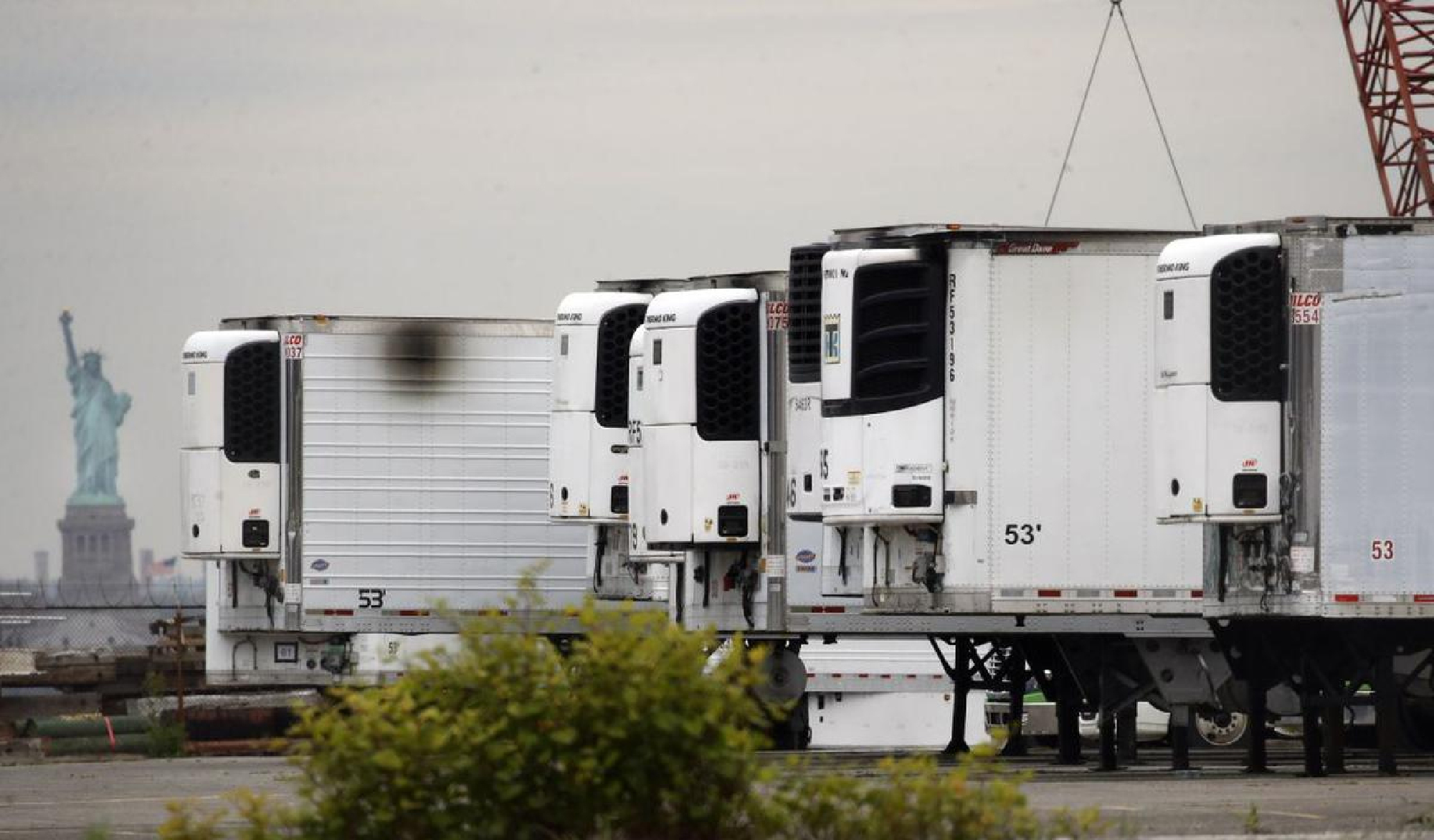
Hundreds of bodies of coronavirus victims lie in refrigerated trucks more than a year into the pandemic
When New York emerged as the center of the coronavirus pandemic last spring, the overwhelmed city began storing the bodies of victims in refrigerated trucks along the Brooklyn waterfront.
More than a year later, hundreds remain in the makeshift morgues on the 39th Street Pier in Sunset Park.
In a report to a City Council health committee last week, officials with the New York City Office of Chief Medical Examiner acknowledged that the remains of about 750 covid-19 victims are still being stored inside the trucks, the nonprofit news website The City reported. Officials said during a Wednesday committee meeting that they will try to lower the number soon.
Dina Maniotis, executive deputy commissioner with the medical examiner’s office, said most of the bodies could end up on Hart Island, off the Bronx, where the has city buried its poor and unclaimed for more than a century.
“We will continue to work with families,” Maniotis told the health committee, according to The City. “As soon as the family tells us they would like their loved one transferred to Hart Island, we do that very quickly.”
With more than a million people buried there, the mile-long land mass in the Long Island Sound is home to the largest mass grave in the United States.
Up to one-tenth of the city’s coronavirus victims may be interred on the island, according to an analysis conducted through a collaboration between The City and the Stabile Center for Investigative Reporting at Columbia University’s graduate school of journalism. The analysis revealed that at least 2,334 adults were buried on the island in 2020 – more than double the number from 2019.
In March and April 2020, New York City was among the hardest hit areas in the world. The medical examiner’s office, equipped to handle 20 daily deaths, was instead flooded with as many as 200 per day, The Wall Street Journal reported.
“Long term storage was created at the height of the pandemic to ensure that families could lay their loved ones to rest as they see fit,” medical examiner’s office spokesman Mark Desire told The Associated Press on Friday. “With sensitivity and compassion, we continue to work with individual families on a case-by-case basis during their period of mourning.”
Between 500 and 800 bodies have been stored in the trucks since April 2020, according to estimates collected by The City and the Stabile Center.
Most families of the victims remaining in the trucks have said they want the Hart Island burial option, Maniotis told the health commission. In some cases, she said, the city has lost contact with families.
The refrigerated trucks, including 85 sent to the city by the Federal Emergency Management Agency, were parked outside hospitals during the city’s deadliest days of the pandemic, becoming one of the most visible signs of its toll.
The news about the bodies remaining in the trucks comes as New York City prepares to remove most of its remaining coronavirus restrictions in a move toward a kind of normalcy not seen since early 2020.
Six dead in Colorado Springs shooting at birthday party committed by man who then killed himself, police say
Six people are dead after a gunman entered a birthday party and opened fire in Colorado Springs, Colo., home before killing himself during the early morning hours of Mothers Day, police announced Sunday.
The mass shooting unfolded about midnight Sunday at the Canterbury Mobile Home Park, about eight miles outside downtown Colorado Springs, police said. The gunman, who authorities said was the boyfriend of one of the female victims, has not been publicly identified.
The Colorado Springs Police Department said in a news release that the man “drove to the residence, walked inside and began shooting people at the party before taking his own life.” The shooter’s motive is being investigated, police said.
The six people killed by the shooter, whose names and ages have yet to be released, were adults. One of the victims was the one celebrating a birthday, police said. None of the children at the party were injured, authorities said. The children are now with relatives.
When police arrived at the scene at 12:18 a.m., they said they found the gunman, an adult male, who was transported to a hospital with “serious injuries.” Authorities confirmed that he died at the hospital.
The Mother’s Day mass shooting in Colorado’s second-biggest city comes less than two months after the state was rocked by a gun attack at a King Soopers supermarket in Boulder that killed 10.
Gov. Jared Polis, a Democrat, on Sunday said he was mourning the victims.
“The tragic shooting in Colorado Springs is devastating, especially as many of us are spending the day celebrating the women in our lives who have made us the people we are today,” he said in a statement.
Colorado Springs Mayor John Suthers, a Republican, promised a “thorough investigation” and asked for the public’s patience as law enforcement seeks answers. Like Polis, he said he was grieving with the families.
“Today we find ourselves mourning the loss of lives and praying solemnly for those who were injured and those who lost family members in a senseless act of violence on Sunday morning,” the mayor said in a news release.
Colorado Springs Police Chief Vince Niski said in a statement that the authorities who responded were “all left incredibly shaken” by what they saw at the mobile home.
“Words fall short to describe the tragedy that took place this morning,” he said. “This is something you hope never happens in your own community, in the place that you call home.”
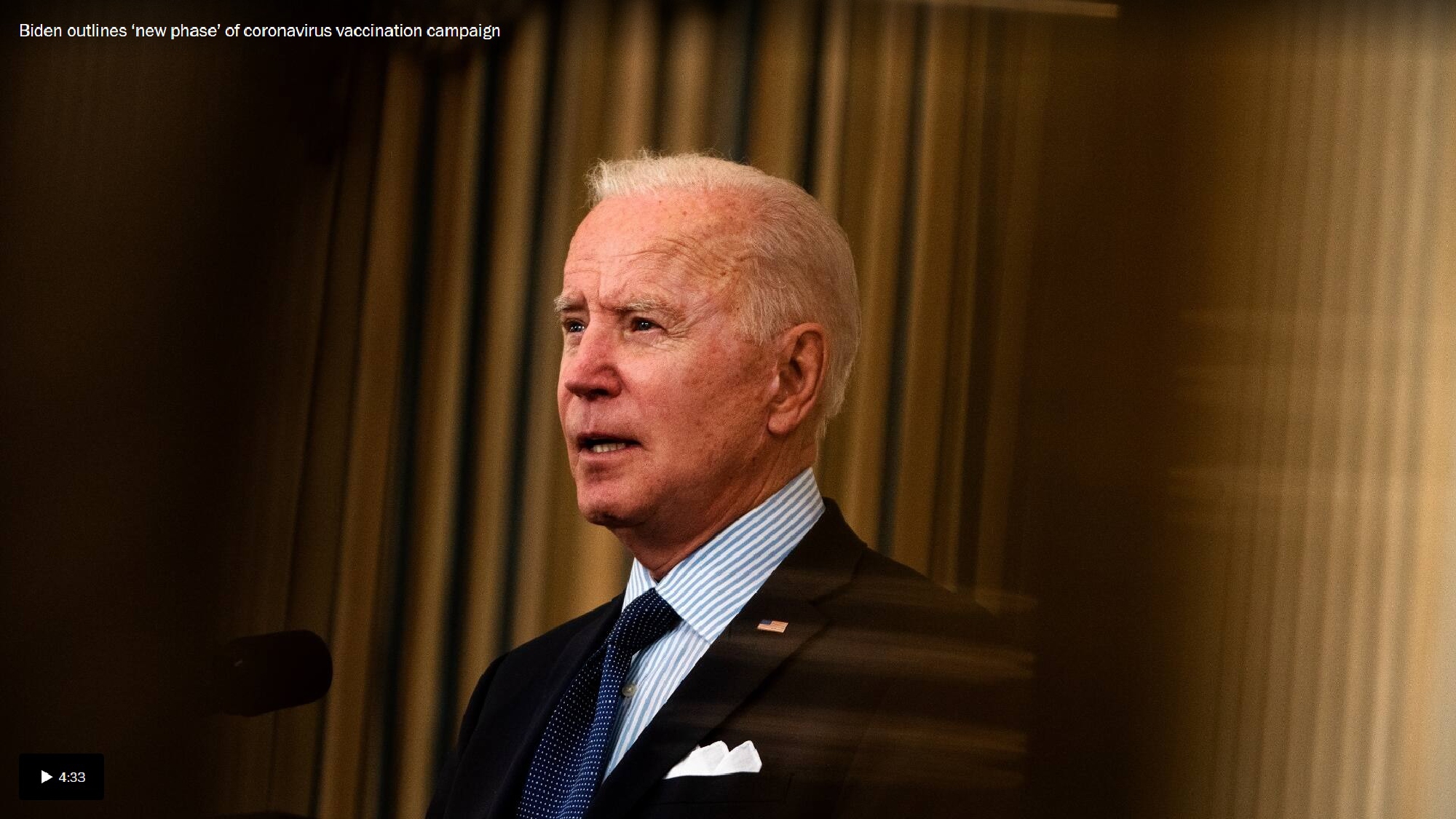
WASHINGTON – Since the day he became president, Joe Biden has looked beyond the nations shores when discussing his strategy to combat the coronavirus.
“History is going to measure whether we’re up to the task. I believe we are,” Biden said on Jan. 21, announcing a seven-goal, 200-page plan that he vowed would curb the virus here and abroad while preparing for future pandemics.
Almost four months later, the last of those seven goals – a vow to “restore U.S. leadership globally” detailed in 11 pages of that nascent plan – remains the subject of intense debate within the administration and of growing concern overseas, with officials still wrestling over how to fill in the many blanks in Biden’s plan as cities in India run out of space to cremate their dead.
Global allies want more clarity on how the United States plans to share its resources, know-how and, especially, its growing vaccine stockpile. Advocates say there’s no time to waste, pointing to virus surges hurting India and other countries that collectively reported more than 5 million cases in the past week.
Even some administration officials concede that Biden’s recent decision to support the developing world’s petition for a vaccine-patent waiver, which led to a disagreement with drug companies that sped hundreds of millions of doses to inoculate America and probably will boost supply this year, shows the risk of dribbling out tactics, rather than setting out a comprehensive strategy to help vaccinate the world.
“Where is the plan?” asked one Department of Health and Human Services (HHS) official involved in the coronavirus response who spoke on the condition of anonymity to discuss private deliberations. “The waiver is not a plan.”
Diplomatic experts say the growing outbreak offers Biden his greatest immediate opportunity to help the United States regain the global stature lost under his direct predecessor. China and Russia have pursued “vaccine diplomacy” – leveraging their homegrown vaccine supplies in donations and deals – in bids to boost global public health and to win favor with dozens of countries.
“We have to acknowledge that the Trump administration was a disaster for America’s image in the world, and for our soft power in the world,” said Bruce Stokes, a senior fellow at the German Marshall Fund. He said the United States should become “the foundry of vaccines” for the globe, riffing off a similar goal laid out by Biden. “If we can do that, it seems to me we can rewin people’s confidence in America, which will redound to the benefit of America across a whole spectrum of issues,” such as climate change and competing with China, he said.
But inside the Biden administration, there is confusion over which agency is leading the effort to craft the country’s global vaccination strategy, which has led to a fragmented rather than strategic approach. While Jeff Zients, the covid-19 coordinator at the White House, has been the person in charge of setting and executing the domestic fight against the virus, five administration officials say there are too many players addressing the worldwide challenge, with not enough direction.
The actors involved in the global response include officials from the White House’s coronavirus response team, the National Security Council (NSC), the Office of the U.S. Trade Representative, the State Department, the U.S. Agency for International Development and HHS.
Several of those officials conceded that the United States does not appear to have an overarching strategy but rather is taking a piecemeal approach. Speaking on the condition of anonymity because they were not authorized to discuss the issue publicly, some framed the government’s recent actions – including sharing 4 million AstraZeneca doses with Canada and Mexico, pledging an additional 60 million doses later this year, and supporting the patent waiver – as incremental steps.
The White House defended its process and said Zients and national security adviser Jake Sullivan were co-leading the global response, with support from NSC senior director Beth Cameron, who oversaw the Obama administration’s pandemic playbook, the State Department’s Gayle Smith, who is coordinating global diplomatic outreach, and USAID’s Jeremy Konyndyk, among others.
“Part of the strength of our response to date is our whole of government, interagency response,” said Natalie Quillian, deputy coordinator of the White House’s coronavirus response. “We’ve roped in almost every agency to help us respond. And we’ll have a similar interagency process, with some additional players and some players that domestically, play internationally in this response.”
Asked about the best tactic to vaccinate the world, Quillian noted the ongoing production push. “We’ve got to produce more vaccine,” Quillian said, touting the “power of American manufacturing” to help scale up the response.
And unlike other governments, the Biden White House is not making commitments it cannot fulfill, deputy national security adviser Jon Finer said.
“There are countries that are overpromising and underdelivering on their global covid-19 response for various reasons, including challenges with their vaccines or underestimating their own domestic needs,” he said. “And we really expect the opposite – to meet and exceed what we’ve pledged to do.”
But with about half of American adults having received at least one vaccine dose and domestic virus cases at their lowest levels in seven months, public health officials say the United States needs to increase its focus abroad.
“It’s time for a more systematic approach,” said Mark McClellan, who served as Food and Drug Administration commissioner during the George W. Bush administration and co-authored a recent report that said the United States could have 300 million or more excess vaccine doses by the end of July, if another vaccine made by Novavax receives emergency-use authorization.
“We have to have a ‘both/and’ strategy at this point – especially since we’re doing so well in terms of vaccine availability in the U.S.,” McClellan said.
The raging outbreak in India, which has vaccinated less than 10% of its residents and where lifesaving oxygen treatments remain in short supply, has exacerbated the contrast with the United States as deaths plunge and U.S. officials move to vaccinate younger and healthier populations.
“It’s not India’s crisis. It’s the world’s crisis,” said Priya Sampathkumar, a Mayo Clinic infectious-disease physician who has been trying to rally support for India through a volunteer organization called INDIA COVID SOS. “If India falls, the world is in danger.”
White House officials insisted that they have made a significant down payment fighting the coronavirus abroad, such as committing supplies to India and pledging millions of doses to Asia as part of the loose four-country “Quad” coalition. Officials also noted steps such as rejoining the World Health Organization and donating $4 billion to the Covax partnership to buy vaccines for developing countries, which were telegraphed in the president’s January strategy. Additional moves are in the works, they said.
“I do think the last week or two has been an inflection point in our global response,” Finer said. “The president’s announcement about the significant vaccine-sharing to come, coupled with the waiver, suggests that we are increasing our engagement globally on these issues from what was already a strong position.”
Players on the international stage acknowledge those contributions but say the world needs more help from wealthy countries.
Biden’s team has “ticked so many of the big boxes,” said the WHO’s Bruce Aylward, crediting the United States for helping boost the global response by pledging billions to Covax, vowing to share as many as 60 million doses internationally, pushing for the patent waiver and coordinating manufacturing partnerships.
“That’s the kind of leadership you need on this thing – but you have a window, and it’s narrow, and [we’ve] got to move fast,” said Aylward, a Canadian physician and epidemiologist who is a senior WHO adviser.
– – –
The coronavirus response is emerging as an early test of Biden’s global priorities after he leaned heavily on his foreign policy credentials to draw a contrast with President Donald Trump during last year’s campaign.
As Trump withdrew from the global fight against the coronavirus – particularly through his decision to leave the WHO – Biden promised a different approach.
“Diseases do not stop at borders. They cannot be thwarted by building a wall,” Biden wrote in USA Today in January 2020. “And here’s the truth – the United States must step forward to lead these efforts, because no other nation has the resources, the reach or the relationships to marshal an effective international response.”
In private, Biden often pressed his advisers for more information about the global state of the pandemic, particularly for Africa, according to one adviser involved in the briefings.
The Biden administration’s decision to back an easing of patent protections for coronavirus vaccines to help speed vaccines to the developing world also fulfills a pledge made by candidate Biden.
“Absolutely, positively,” Biden told liberal activist Ady Barkan in July, saying he supported sharing vaccine technology. “This is the only humane thing in the world to do.”
But the decision to support the waiver petition has angered pharmaceutical companies and their allies, who argue that it will do nothing to boost vaccine supply in the short run, while sparking competition for already-scarce raw materials.
“It will unleash a scramble for the critical inputs we require in order to make a safe and effective vaccine,” Albert Bourla, the CEO of Pfizer, wrote in a letter to employees on Friday, predicting that untested manufacturers would struggle to produce high-quality shots.
Officials in the pharmaceutical industry say they were particularly frustrated by the decision because they say the companies pushed the United States to play a more aggressive role in global distribution of vaccines for months. Opponents of the decision are now resting their hopes on Germany and other European Union countries to nix the patent waiver.
– – –
In addition to calls for sharing surplus doses, global health and development experts urge the United States to take other steps to help vaccinate the world.
Rachel Silverman, a policy analyst with the Center for Global Development, a nonprofit think tank, called for “orders of magnitude” in more U.S. funding, such as committing tens of billions of dollars more to vaccine manufacturers now to build up global production capacity.
“I think we are still in the mode of penny-pinching on the international response, talking in hundreds of millions, maybe single billions, when the globe is continuing to lose tens of billions of dollars a day in value as this pandemic goes on,” she said.
Pharmaceutical companies say their contracts with the U.S. government have, at times, impeded their efforts to sell doses abroad. The U.S. government assisted in the companies’ acquisition of the raw materials to make the vaccines, officials familiar with the matter say, and that has complicated their efforts to ship doses overseas.
A Biden official involved in the coronavirus response disputed that notion, saying that once companies fulfill their contracts with the United States, they are free to send doses abroad, pointing to the Pfizer shipment of vaccines to Canada and Mexico. The official said there are no export bans or other restrictions on the companies’ vaccines.
One official said the White House’s Framework for International Access, which was begun during the Trump administration, could be released soon with further details on global vaccination plans. Another official said the document probably would not lay out specific steps to significantly increase international supply.
Some said more drastic action is needed now, with Mayo Clinic’s Sampathkumar warning that India was a flashing red light.
“Increasing vaccinations further in the United States, even getting to 100%, will not help you if India fails and the virus spreads across the world,” she said, adding that virus variants could pose new challenges. “Anything the world can do to get more vaccine to India would be in the world’s best interest.”
The WHO’s Aylward credited Sweden’s decision last week to donate 1 million of its vaccine doses – roughly one-fifth of its current supply. He added that a senior Swedish official told him that it was “a tough political decision” but that global health was a priority.
“People keep talking about ‘donate surplus doses,’ ” Aylward said. “What Sweden is trying to say is, ‘No, donate doses in real time . . . we cannot have more Indias.’ “
“Political decisions are always tough in wartime,” the physician added. “There’s no easy decisions, and it’s out of these kind of environments that the great leaders emerge.”
Published : May 10, 2021
By : The Washington Post · Dan Diamond, Tyler Pager
Masks could become seasonal after pandemic, Fauci says
Anthony Fauci, the nations leading infectious-disease expert, said Sunday that people may decide to wear masks seasonally after the coronavirus pandemic to help avoid spreading or contracting respiratory illnesses such as the flu.
In an interview on NBC’s “Meet the Press,” the chief medical adviser to the White House pointed out that the public has grown accustomed to wearing masks and added that quantifiable data shows that its use has helped stem the spread of other viruses.
“We’ve had practically a nonexistent flu season this year merely because people were doing the kinds of public health things that were directed predominantly against covid-19,” Fauci said.
Fauci added that it is “conceivable” that during seasonal periods where respiratory-borne viruses such as the flu are prevalent, people might decide in the next year or two to wear masks to diminish the possibility of either spreading or catching these diseases.
Common viruses such as influenza have virtually disappeared this year, partly because of coronavirus restrictions including masks. And a sharp decline of flu infections during this year’s season have led to only one registered pediatric death, compared with dozens in past years, Centers for Disease Control and Prevention data shows.
Fauci’s remarks come about two weeks after federal health officials said fully vaccinated people can go without masks outdoors when walking, jogging, biking or dining at outdoor restaurants. The CDC continued to recommend masking in crowded outdoor settings and venues such as stadiums and concerts where it was difficult to maintain social distance and where many unvaccinated people could be present.
The announcement brought a sense relief to pandemic-weary Americans after more than a year of shutdown measures and mandatory use of masks. But even before the CDC’s announcement, states such as Kentucky had begun easing mask use outdoors; governments in Mississippi and Texas lifted the restriction altogether.
Since the beginning of the pandemic, mask mandates have been a source of political contention, with officials either seeking to require face coverings to help stem the spread of the virus or arguing that they violate personal freedom. Some have questioned the science behind it, alluding to misinformation.
Political standoffs sowed confusion about when and where to wear them.
A day after being sworn in, President Joe Biden signed an executive order mandating mask-wearing in airports and on federal property, planes and buses, breaking from a Trump administration that often dismissed the effectiveness of wearing a mask.
As the nation awaits the end of a pandemic that has killed more than 581,000 people in the United States, Biden is now hoping that 70% of adults will have at least one coronavirus vaccine shot by the Fourth of July to help inch closer to pre-pandemic normalcy.
The United States has administered at least one dose of the coronavirus vaccine to 58% of the nation’s adult population, according to CDC data. But the pace has slowed over the past few weeks and states have reported a decline in demand, prompting state and federal officials to find incentives for people to get the shot.
That decline in demand for the vaccine has coincided with major cities preparing to fully reopen before summer.
On Sunday, Fauci adjusted that timeline for a return to normalcy in an interview with ABC’s “This Week,” predicting that it could be achieved by Mother’s Day 2022. He emphasized that such a timetable would be possible only if an “overwhelming proportion” of the population gets vaccinated.
“I hope that next Mother’s Day, we’re going to see a dramatic difference than what we’re seeing right now. I believe that we will be about as close to back to normal as we can,” Fauci said.
Rare calico lobster found at restaurant heads to Virginia exhibit
Freckles is a rare catch. The odds of seeing a calico-colored lobster like it, with its head, tail and claws dotted with dark blue and bright orange spots, is about 1 in 30 million. And the crustacean was almost dinner at Red Lobster.
But instead of being butter-poached and served alongside cheddar biscuits, the calico lobster is headed to an exhibit in Virginia.
Employees at a Red Lobster in Manassas, Va., discovered the creature on April 25 as part of a shipment from Maine. Recognizing the rare animal, the Virginia restaurant contacted the company. Red Lobster then contacted a zoo that had rescued a different rare lobster from one of its restaurants last summer.
“Calico-colored lobsters like Freckles are so rare, it was almost unbelievable that we received one,” the company said in a statement sent to The Washington Post. “We are so proud of our employees for recognizing that Freckles was so special – and for reaching out so we could make arrangements for rescue.”
After contacting the zoo, the company was put in touch with the Virginia Living Museum, which has a science center, zoo and aquarium in Newport News. It sent a rescue team to Manassas on April 29 to retrieve Freckles.
“We see this as an opportunity to share nature’s anomaly with guests, as well as continue important education about sustainable seafood practices and significant conservation efforts of the American lobster fishery,” Chris Crippen, the museum’s senior director of animal welfare and conservation, said in a statement.
Robert Steneck, a professor at the University of Maine’s school of marine sciences, said it “might be close to correct” to say the calico lobster is a 1-in-30 million discovery.
Steneck said in an email to The Post that about 3.5 million lobster traps are fished in Maine, and that there could be 525 million lobsters seen there each summer. That means “plenty of opportunity for lobstermen” to spot oddities.
They often notice distinctive lobsters – “any variation that is unusual” – and report them to scientists or researchers in the field, Steneck said.
Ellen Goethel, an zoologist who studies invertebrates and runs an interactive oceanarium in New Hampshire, told The Post that she has a calico lobster and two blue lobsters in her tank.
Blue lobsters, Goethel said, are not as rare as calico lobsters. Two kinds that are even more rare than calico are split lobsters – with different colors, split right down the middle – and albino lobsters, she said.
She said people will not often see these kinds of crustacean in a fish market because those who catch them “put them back in the water” instead of selling them.
Goethel also often gets calls about rare finds, like blue or calico lobsters or “things with bizarre claws.”
“They’re conservationists, the lobstermen,” she said. “It shows the great deal of respect the fisherman have for the ocean, the fact that they’re willing to give up a piece of their livelihood.”
For Freckles, the next stop is the permanent lobster display at the Virginia Living Museum. The lobster will be added there in about a month after it clears a 30-day quarantine and a health evaluation, Red Lobster said.
Goethel said that while it’s not imperative to rescue the rare lobsters because of how often they multiply, she said calico lobsters are “gorgeous, and it’s always good to be able to have something extraordinary that people haven’t seen before in an aquarium.”
“It helps them understand nature better and to respect the ocean and the animals that live in it,” she said.
Debris from Chinese space rocket booster reenters Earth’s atmosphere over Indian Ocean near Maldives, China reports
The hulk of the Chinese Long March rocket reentered Earth’s atmosphere around 10:30 p.m. Eastern time and some debris landed in the Indian Ocean near the Maldives, China’s Manned Space Engineering Office reported late Saturday night, ending days of international speculation. There were no immediate reports of damage from falling debris.
Videos on social media showed the 22-ton rocket, which had been drifting uncontrolled in low orbit for days, blazing a trail of light over Oman as it burned up during descent.
“The vast majority of components was ablated and destroyed during reentry into the atmosphere,” the Chinese agency said, putting the “landing” site at 72.47 degrees east, 2.65 degrees, a location in the ocean southwest of the Maldivian capital Malé.
The U.S. Space Command’s Space Track Project said in a tweet: “Everyone else following the #LongMarch5B reentry can relax. The rocket is down.”
At around 100 feet tall and weighing about 22 metric tons, the rocket stage is one of the largest objects to ever reenter the Earth’s atmosphere on an uncontrolled trajectory
The rocket’s reentry had prompted international concern about where it might land. Scientists said the risk to humans was astronomically low, but it was not impossible for it to land in a populated area.
The European Space Agency predicted a “risk zone” that encompassed much of the world, including nearly all of the Americas, all of Africa and Australia, parts of Asia and European countries such as Italy and Greece.
China has been criticized for its handling of the rocket booster, which was launched into space on April 29 to ferry the first module of the Tianhe space station. China did not make the necessary preparations for a controlled reentry, which would have slowed the rocket enough to enter the Earth’s atmosphere over a predetermined remote area or ocean, thus reducing the chance of debris affecting populated regions.
Astrophysicists described China’s decision as potentially hazardous corner-cutting. “There’s clearly a significant chance that it’s going to come down on land,” Jonathan McDowell, an astrophysicist at the Harvard-Smithsonian Center for Astrophysics, told CNN on Saturday.
China’s state media, however, has reacted angrily to the international scrutiny, saying its launch was being unfairly maligned. State media slammed U.S. media outlets for covering China’s “out-of-control space junk,” in contrast with the SpaceX wreckage.
Chinese Foreign Ministry spokesman Wang Wenbin defended the plan as “standard international practice,” saying at a news conference this week that “China is always committed to the peaceful use of outer space,” according to state media.
“China is ready to work with all relevant parties to make joint efforts for the peaceful use of outer space and safeguarding space security,” Wang said.
The size of the rocket made its reentry more unpredictable than others. Most satellites and other man-made objects are small enough to burn up in the atmosphere. But the Long March booster is much larger, which raised concern that pieces could survive and hit the ground.
The rocket’s tumbling motion as it passed through the mesosphere, an outer layer of the Earth’s atmosphere, has also made calculations of its speed tricky to project.
Space has been a point of national pride for China, which is expected to run the only operational space station after the retirement of the International Space Station in the next four years. The country, which has spoken of putting people back on the moon, has completed a flurry of successful lunar and Mars missions in recent years.
But China’s burgeoning space program has contributed to the growing problem of space debris. The Secure World Foundation, a think tank, said that China in 2007 “created a cloud of more than 3,000 pieces of space debris” after the country shot down a dead satellite with a missile.
During the first flight of the Long March 5B rocket last year, the booster passed over populated portions of Earth before pieces of debris landed in Africa. Jim Bridenstine, the NASA administrator at the time, slammed the Chinese space agency for the booster’s return, saying the event “could have been extremely dangerous.”
Matthew Cappucci and Christian Davenport contributed to this report.
Published : May 09, 2021
By : The Washington Post, Timothy Bella and Gerry Shih
Palestinians and Israeli police clash in Jerusalem over planned Arab evictions
JERUSALEM – More than 200 protesters were injured in clashes with police in Jerusalems Old City late Friday as tensions flared over the planned evictions of several Palestinian families from a nearby Arab neighborhood, according to emergency agencies.
More than a dozen police officers received minor injuries, police said. None of the injuries were reportedly life-threatening.
Video from the plaza surrounding the al-Aqsa Mosque showed officers in riot gear deploying stun grenades against a crowd of Palestinians throwing bottles and rocks. The fighting erupted after evening prayers on the final Friday of Ramadan, the Muslim holy month. More than 70,000 worshipers had gathered during the day at the mosque, one of Islam’s holiest sites and the location of frequent clashes between Palestinians and Israeli police who control access to compound.
A police spokesman said officers had entered the complex after some in the crowd began throwing objects. Protesters blamed police for escalating the situation, according to media reports and social media.
“The Israeli occupation will pay the price for its aggression and appalling infringement of the Muslims’ right to perform prayers at the mosque,” Hamas, the governing militant group in the Gaza Strip, said in a statement Saturday.
The group called for protests in Gaza Saturday and police said they expected gatherings in Israel and the West Bank as well. Officials said the potential for further clashes was high in coming days. Sunday will mark another Muslim holy day expected to draw large crowds of worshipers and the beginning of Jerusalem Day, which marks the takeover of the Old City by Israel in 1967.
The clashes followed weeks of building tensions in the city.
Police and protesters faced-off over several nights at the beginning of Ramadan when young Palestinians gathered at the Old City’s Damascus Gate. Militants fired dozens of rockets from Gaza in solidarity, which fell without causing injury. Those clashes eased when police removed restrictive fencing from the site at the behest of city leaders.
But anger has swelled in recent days over a long-running dispute in the Arab neighborhood of Sheikh Jarrah, where dozens of Palestinians in six households face eviction in favor of Jewish Israelis who claim several properties as rightfully theirs. While the legal battle goes back more than a decade, the Israeli Supreme Court is expected to rule definitively on the matter Monday and the standoff has galvanized both sides.
Israel characterizes the dispute as a technical property fight while Palestinians and Israeli human rights groups say it is part of a systematic and growing effort to create Jewish enclaves within the Arab neighborhoods of East Jerusalem. It is just one of several eviction fights being waged around the city.
Dozen of Palestinian activists have been gathering daily in Sheikh Jarrah over the past week, occasionally clashing with police and Jewish counter protesters.
Itmar Ben-Gvir, a parliament member and the provocative leader of far-right party with roots in the banned Kahanist movement, set up a temporary “office” under an awning near the standoff. He removed it after pleas from security officials, and reportedly from the office of his ally, Prime Minister Benjamin Netanyahu.
Following Friday’s clashes, U.S. officials called on Israeli and Palestinian leaders to “de-escalate tensions and bring a halt to the violence.”
“We are also deeply concerned about the potential eviction of Palestinian families in Sheikh Jarrah and Silwan neighborhoods of Jerusalem, many of whom have lived in their homes for generations,” the State Department said in a statement Saturday. “As we have consistently said, it is critical to avoid steps that exacerbate tensions or take us farther away from peace. This includes evictions in East Jerusalem, settlement activity, home demolitions, and acts of terrorism.”
Palestinian Authority President Mahmoud Abbas said Israel was to blame for the flaring tensions in Jerusalem, which both Israelis and Palestinians claim as their capital.
“We hold the Israeli occupation government absolutely responsible for what is happening in the holy city in terms of dangerous developments, vicious aggression, and what may result from it,” Abbas said in a televised address Saturday.
Palestinian analysts said anger in Arab neighborhoods was heightened by Abbas’s own decision last week to cancel parliamentary and presidential elections – the first in 15 years – that had been planned for the spring. Abbas blamed Israel for refusing to facilitate voting by eligible Palestinians in East Jerusalem. But polling showed his faction faring poorly against several rivals.
World awaits Chinese rocket to reenter the atmosphere, not knowing where it will land
A large Chinese rocket booster is plunging back to Earth and expected to reenter the atmosphere sometime this weekend, prompting international concern over where it may land.
The Long March-5B rocket is projected to reenter the Earth’s atmosphere at about 18,000 mph between 11 p.m. Saturday and 5:30 a.m. Sunday Eastern, according to space agencies and experts. At around 100 feet tall and about 22 metric tons, the rocket stage is set to become one of the largest objects to ever reenter the Earth’s atmosphere on an uncontrolled trajectory.
Where the rocket will land remains unclear. Scientists have said the risk to humans is astronomically low, but it is not impossible for it to land in a populated area. The Aerospace Corporation, a nonprofit largely financed by the U.S. government, predicted Saturday that it would splash down in the Atlantic Ocean, with the closest countries being Portugal and Spain.
But the rocket could reenter at anywhere between 41.5 degrees north latitude and 41.5 degrees south latitude, meaning major cities like New York could be hit with debris. The European Space Agency has predicted a “risk zone” that encompasses much of the world, including nearly all of the Americas, all of Africa and Australia, parts of Asia and the European countries like Italy and Greece.
China has been criticized for its handling of the rocket booster, which was launched into space on April 29 to ferry the first module of the Tianhe space station. China did not make the necessary preparations for a controlled reentry, which would have slowed the rocket enough to enter Earth’s atmosphere over a predetermined remote area or ocean, thus reducing the chance of debris impacting populated regions.
Astrophysicists have described China’s decision as potentially hazardous corner-cutting. “There’s clearly a significant chance that it’s going to come down on land,” Jonathan McDowell, an astrophysicist at the Harvard-Smithsonian Center for Astrophysics, told CNN on Saturday.
China’s state media, however, has reacted angrily to the international scrutiny, saying its launch was being unfairly maligned. State media slammed U.S. media outlets for covering China’s “out-of-control space junk” in contrast to the SpaceX wreckage.
Chinese Foreign Ministry spokesman Wang Wenbin defended the plan as “standard international practice,” saying at a news conference this week that “China is always committed to the peaceful use of outer space,” according to state media.
“China is ready to work with all relevant parties to make joint efforts for the peaceful use of outer space and safeguarding space security,” Wang said.
The size of the rocket makes its reentry more unpredictable than others. Most satellites and other man-made objects are small enough to burn up in the atmosphere. But the Long March booster is much larger, raising concern that pieces could survive and hit the ground.
The rocket’s tumbling motion as it passes through the mesosphere, an outer layer of Earth’s atmosphere, has also made calculations of its speed tricky to project.
Space has been a point of national pride for China, which is expected to run the only operational space station after the retirement of the International Space Station in the next four years. The country, which has spoken of putting people back on the moon, has completed a flurry of successful lunar and Mars missions in recent years.
But China’s growing space program has contributed to the growing problem of space debris. The Secure World Foundation, a think tank, said that China in 2007 “created a cloud of more than 3,000 pieces of space debris” after the country shot down a dead satellite with a missile.
During the first flight of the Long March 5B rocket last year, the booster passed over populated portions of Earth before pieces of debris landed in Africa. Jim Bridenstine, the NASA administrator at the time, slammed the Chinese space agency for the booster’s return, saying the event “could have been extremely dangerous.”