Israel, worlds vaccine trailblazer, shows what return to office will look like #SootinClaimon.Com

#SootinClaimon.Com : ขอบคุณแหล่งข้อมูล : หนังสือพิมพ์ The Nation.

https://www.nationthailand.com/international/40000608

Israel, worlds vaccine trailblazer, shows what return to office will look like


Traffic is returning to the city streets. Elevators are getting crowded. Favorite lunch spots are filling up. Two months after Israel reopened its economy, Tel Aviv is moving on from the work-from-home era.

Israel, worlds vaccine trailblazer, shows what return to office will look like

Israel’s lightning-fast vaccine program gave it a headstart in planning for life after coronavirus, and its quick rollout turned it into a global test case on everything from real-world efficacy data to vaccine passports. With commercial activity now heating up in Tel Aviv, employers and employees around the world are watching with interest to see what happens in a country that has come to be seen as a late-pandemic bellwether.

Early signs are that the end of lockdown has flicked the switch on office life. Demand for space is picking up across the board, according to data tracked by commercial real estate outfit Natam Group. Co-working provider WeWork says footfall in its Israeli buildings is up 20% since February, with strong demand for new sales. Google’s mobility data shows a sharp increase in travel to work in Tel Aviv during April, with numbers now close to their pre-pandemic baseline.

Nir Minerbi got the first sign that things were about to change back in December, when he tried – and failed – to renew the discounted deal he struck with WeWork during 2020’s initial lockdown.

Being in the office last year was like “being at a graveyard,” said Minerbi, chief executive officer of quantum computing firm Classiq Technologies. He’s keen to revive the camaraderie of face-to-face working, so has signed an interim contract with a smaller co-working space while looking for a more traditional long-term office lease.

While covid-19 continues to ravage India and cases accelerate around the world, countries with high vaccination levels are taking first their steps towards reopening. Australia and New Zealand kept Covid-19 at bay, though many office-based employees remain at home. In the U.K., where working from home is recommended until at least June 21, some 42% of employees were at their desks in April, according to Morgan Stanley research. That figure is higher in Europe. In the U.S., New York will soon lift many pandemic restrictions, and major banks are planning a resumption of office life.

Tel Aviv offers a glimpse for other economic hubs of what work may look like soon, as workers and employees alike seek to rekindle the sense of community they lost last year.

“There’s a huge bounce back,” Dotan Weiner, chief operating officer at Labs, a co-working firm owned by Israeli billionaire Teddy Sagi, said in an interview. “Companies are telling us that without the office, it’s harder to recruit and maintain their culture.”

Footfall at Labs’ Israel site is now back to over 95% of total capacity, Weiner said, up from a low of 15% in 2020’s first lockdown and 40% in the second. Weiner was five minutes late to his interview, a tardiness he blamed on “elevator traffic.” Labs is in talks to open two more Tel Aviv locations in the next two years, he said.

Labs also operates 12 buildings in London, and Weiner is similarly optimistic for business prospects in the English capital. Weiner expects a somewhat slower return than in Tel Aviv, with Londoners seen as reluctant to flock back onto public transport networks.

The U.K. has broadly tracked Israel’s path through the pandemic, locking down and reopening a few weeks behind the Middle Eastern nation. With case numbers now low and vaccination rates high in both countries, the U.K. appears on course to reopen its economy fully in late June.

Nevertheless, even in Israel many companies are yet to settle on a definitive balance between working from home and returning to the office.

Check Point Software Technologies Ltd., one of the country’s largest employers, has seen attendance double recently to about 35% of its 2,400 workers at its Tel Aviv headquarters, said Nirit Schneider, head of real estate and operations. While that is still a steep drop from before the pandemic it covers a significantly larger group of people, with most splitting their working week between home and office.

More than half the cyber security giant’s workforce is outside Israel, where Check Point has been trying to shorten contracts and swap desks for meeting rooms. Face-to-face contact is now the main reason for people to show up to the office, Schneider said.

The new need for adaptability is driving change in Israel’s commercial real estate sector. Co-working provider Mindspace is shifting towards what it calls a “partnership” model with landlords, handling rental agreements with tenants on behalf of landlords in a bid to minimize the risk of a falling market.

“Companies don’t know what to do with their real estate strategy,” Mindspace CEO Dan Zakai said. “That’s why we’ll see an increase in flexible contracts.”

At Classiq, Nir Minerbi understands that some of his team are still scarred by the pandemic and prefer a more tightly controlled office experience than they can get at a co-working venue.

“People don’t love crowded working areas anymore,” Minerbi said. “Even if it isn’t 100% full, some of our employees want a place where they feel they can breathe.”

Published : May 07, 2021

By : Syndication Washington Post, Bloomberg · Yaacov Benmeleh

Europes vaccine campaign is accelerating. It expects to match the U.S. by July. #SootinClaimon.Com

#SootinClaimon.Com : ขอบคุณแหล่งข้อมูล : หนังสือพิมพ์ The Nation.

https://www.nationthailand.com/international/40000607

Europes vaccine campaign is accelerating. It expects to match the U.S. by July.


ROME – After months of supply shortages and embarrassing blunders, Europes coronavirus vaccine campaign is at last sprinting ahead, renewing hopes that the continent might meet its initial inoculation goals and tame the virus even while relaxing restrictions.

Europes vaccine campaign is accelerating. It expects to match the U.S. by July.

Across the European Union, countries are touting new daily vaccination records. Supply concerns have eased. The EU is now administering roughly the same number of daily per capita doses as the United States, trending up while America trends down.

Some European countries have helped their cause by sorting out logistical problems or enlisting family doctors and pharmacists to administer shots. But the bloc, more broadly, owes its turnaround to a deepened reliance on Pfizer-BioNTech, which has ramped up vaccine production – beyond what was initially expected – as other options have faltered or come too slowly.

Mostly using Pfizer, France’s pace of daily doses has increased 60% over the past month. Italy has accelerated by 90%. Germany by 145%.

While the United States has doses widely available to any adults who want them – and is struggling to find takers – many people in the EU are not yet eligible. But appointments are starting to open up in Europe, even for younger cohorts.

EU officials, noting President Joe Biden’s target of getting at least one dose to 70% of U.S. adults by July 4, say that by midsummer Europeans and Americans will be in roughly the same situation.

“The U.S. has a similar goal, and this shows how much our vaccination campaigns are aligned by now,” said European Commission President Ursula von der Leyen.

The EU has so far administered at least one dose to 30% of its total population, compared to 45% in the United States, 52% in Britain and 60% in Israel.

Even as the EU campaign takes off, the costs of the slow start are being felt. A bruising third wave struck the continent toward the end of winter, leading to scores of preventable deaths among the uninoculated elderly. Lockdowns caused the EU’s economy to contract in the first three months of the year. All the while, the bloc’s leaders were warring with AstraZeneca, the drugmaker that was falling short of delivery pledges, whose vaccine had initially been counted on to play a primary role in the campaign.

“Obviously, it was painful for EU leaders in January and February,” said Jacob Kirkegaard, a senior fellow at the German Marshall Fund of the United States. “There was an acute shortage, while the countries they like to compare themselves with didn’t have that problem. But now, it has changed. The scale-up of production in the EU has been extremely rapid.”

Pfizer has said it will be delivering 250 million doses in the second quarter of the year, a fourfold increase from the first three months. Italy, for instance, received 6.9 million doses of Pfizer in April, compared with 8.7 during the previous three months combined.

The EU expects supplies to be boosted further as additional vaccines start to come online. After a delay to assess concerns about rare blood clots, the rollout of Johnson & Johnson’s one-shot vaccine is underway in Europe.

Another vaccine, made by the German company CureVac, could soon be approved, depending on the imminent results of a late-stage clinical trial. The CureVac vaccine is similar to those produced by Pfizer and Moderna, in that it uses mRNA technology.

The EU has scrambled to make up for lost time after an approach characterized by more caution and less urgency than that of the United States.

While the U.S. Operation Warp Speed spared little expense to help companies build factories and expand their production capacity at an early stage last year, the EU behaved more like an ordinary customer in early vaccine negotiations, haggling with drug companies over the price of doses and leaving it up to the drugmakers to figure out how to produce the promised supplies.

The EU team that negotiated the deals on behalf of the 27-nation bloc had no experience with the issue, since health issues have previously been the responsibility of individual countries. And it was plagued by a mix of demands from rich countries, such as Germany, that wanted to go big with the more expensive, newer technology Pfizer and Moderna vaccines, and poorer ones such as Bulgaria, for whom cost was a major issue and who preferred AstraZeneca’s cheaper and easier-to-store doses.

European policymakers also didn’t fully realize the extent to which barriers to vaccine exports out of the United States, Britain and India would put pressure on EU production to supply the world, leaving fewer doses to supply the Europeans themselves.

The result was that as Britain, the United States and a handful of other countries raced ahead with vaccinations starting in December, the EU badly lagged behind. At the last minute, AstraZeneca also said it would not be able to deliver nearly as many doses of its vaccine as it had promised, further slowing the E.U. effort.

Politicians in every country faced down furious citizens.

“France: Homeland of Permanent Delay,” read one headline in France’s Le Point magazine in early March, atop an angry opinion piece about the molasses-slow vaccination campaign there.

But behind the scenes, a shift was underway. Von der Leyen, a trained doctor, had developed a productive relationship with Pfizer chief executive Albert Bourla, who seemed more capable than AstraZeneca’s leaders of expanding production capacity and meeting new and faster delivery targets, officials said.

And Thierry Breton, the top European Commission official in charge of Europe’s internal market and a former French finance minister and industrialist, started a whistle-stop tour of the continent’s 53 vaccine factories, speaking to workers on the production floor and to leaders of the factories about what they needed to sort out snags and speed doses.

When he was tasked in early February with overseeing the vaccine production effort, his team had little insight into what was happening with the complex process needed to make vaccines from start to finish.

“There was not really a good overview of the numbers, of where are the factories, of what is the capacity of the factories,” said one European official familiar with the situation, speaking on condition of anonymity to discuss the closed-door process. Breton mapped out the process, and realized that there was a good chance that Europe already had the capacity to meet the 70% target in July, the official said.

Companies have gone to him with issues as basic as a shortage of plastic bags used in bioreactors, devices that are crucial for making the substances needed for the vaccines. He found another supplier and fixed the bottleneck, the official said.

Countries have also fine-tuned their strategies, making doses easier to come by. Germany, for instance, has allowed family doctors to administer vaccines, meaning people are no longer obliged to go to government-run vaccine centers. Italy, meantime, under new Prime Minister Mario Draghi, appointed a military logistics specialist, General Francesco Figliuolo, to overhaul the rollout.

Figliuolo has helped create some 1,000 new vaccination centers, nearly doubling Italy’s total. He has worked with the country’s most populous region, Lombardy, on a new vaccine reservations portal, after the region’s initial system kept crashing, leading in a few instances to empty vaccination centers. The general, in March, set a goal for Italy to administer 500,000 doses per day – something that seemed like a long shot at the time, when the nation was administering some 200,000 daily jabs.

Two days over the past week, Italy exceeded 500,000 doses. It has averaged 442,000 daily doses in the latest week.

Figliuolo, in a telephone interview, described his role as, “basically, fine-tuning the vaccination machine.”

“By June, we are counting on having such an inflow that we’ll further increase the speed of the machine,” he said.

Published : May 07, 2021

By : The Washington Post · Chico Harlan, Michael Birnbaum

U.S. announces major conservation effort but offers few details #SootinClaimon.Com

#SootinClaimon.Com : ขอบคุณแหล่งข้อมูล : หนังสือพิมพ์ The Nation.

https://www.nationthailand.com/international/40000606

U.S. announces major conservation effort but offers few details


WASHINGTON – Months after President Joe Biden set a goal of conserving 30% of the nations land and waters by 2030, the administration Thursday laid out broad principles – but few details – for achieving that vision.

U.S. announces major conservation effort but offers few details

The new 22-page document from the Commerce, Interior and Agriculture Departments highlights one of the Biden administration’s central challenges: Having committed to bold environmental goals during their early days in power, officials now face the more uncertain and contentious task of figuring out how to follow through on those ambitions.

The “America the Beautiful” report outlines steps the U.S. could take to safeguard key areas on land and in the sea to restore biodiversity, tackle climate change and make natural spaces more accessible to all Americans.

“This is the very first national conservation goal we have ever set as a country,” White House National Climate Adviser Gina McCarthy said in a call with reporters. “It really reflects the urgency with which we have to respond to a global extinction crisis, the climate crisis and the deep racial and economic disparities that too often dictate who has access to nature.”

But the new report doesn’t identify specific places for enhanced protection, define what level of conservation would be required for an area to count toward the administration’s 30% goal or indicate how much federal funding would be needed to make Biden’s vision a reality.

This ambiguity is partly by design. Some environmentalists said that it would be impractical to make that assessment at this point, and that it will take time to muster the kind of grass-roots support needed to achieve such a sweeping conservation goal.

“I see it as a starting point that’s telling us this is the direction we want to go in, and this is how we want to do this work to ensure we’re going to get the best outcomes,” said Ali Chase, senior policy analyst at the Natural Resources Defense Council. “In terms of just trying to bring the country around to a conservation ethic, I think it’s pretty significant.”

The report is less a road map than a vision statement, painting a picture of accessible parks, ranchlands that double as wildlife corridors and farms that could also store carbon instead of releasing it into the atmosphere. It lays out guiding principles for the program – utilizing scientific research, pursuing projects that create jobs – and calls for a “voluntary and locally led” approach to conservation, in which the federal government provides support and guidance to efforts led by landowners, cities, states and tribes.

As part of the effort, the government will launch and maintain an “American Conservation and Stewardship Atlas” to track the amount of protected land and water, and the Interior Department will be required to publish annual reports on the progress being made.

Brenda Mallory, chair of the Council on Environmental Quality, said the acreage of protected areas is just one metric for measuring success. Progress will have to be judged, she said, “in the lives of people and the health of ecosystems rather than solely by scale.”

At the moment, roughly 12% of U.S. land and 11% of its freshwater ecosystems enjoy some level of official protection. About 26% of U.S. ocean waters are safeguarded, in part because in 2016 President Barack Obama expanded the Papahanaumokuakea Marine National Monument – first established by President George W. Bush – to encompass more than 582,000 square miles of land and sea.

Many private landowners and commercial users of public lands, such as ranchers, anglers and hunters, are leery of Biden’s attempts to more than double that conserved area.

Farmers and ranchers are still seeking reassurance that their property rights will be respected and access to public lands for grazing will be maintained, American Farm Bureau Federation President Zippy Duvall said in an email.

Trout Unlimited president Chris Wood said in an interview that it is important the plan target restoring private lands, rather than just adding new federal protections. “The effects of a changing climate – fire, droughts, floods – don’t respect those boundaries. . . . The devil is in the details, and it’s yet to be worked out.”

Interior Secretary Deb Haaland said the report came out of dozens of conversations with scientists, farmers, hunters and outdoor-recreation businesses as well as city, state and tribal officials, and that the agency will solicit more feedback in the months to come.

Meanwhile, the department has plans to stand up the Civilian Climate Corps, Haaland said, which would employ Americans in reforesting and restoring degraded landscapes. The agency this week also proposed opening more than 2 million acres of public lands for hunting and fishing opportunities. And in the coming days, the National Park Service will announce $150 million in new funding to build parks in underserved communities.

On the aquatic side, Commerce Secretary Gina Raimondo said her agency will be expanding the National Marine Sanctuary System and the National Estuarine Research Reserve program, which protects the places where rivers flow into the sea.

One of the looming questions is how Biden can reconcile the new conservation target, which has received relatively little publicity, with his better-known plans to tackle climate change.

Last month, for example, the president announced the United States would slash its greenhouse gas emissions between 50% and 52% by the end of the decade compared with 2005 levels. The goal of eliminating planet-warming emissions from fossil fuels is backed by roughly two-thirds of registered voters, according to a December poll by George Mason University and the Yale Program on Climate Change Communication. But the administration has yet to spell out specific reductions that would need to take place in key sectors of the economy.

Broadly speaking, Americans also support the idea of conserving 30% of the nation’s land and water by the end of the decade. Recent polls from left-leaning Center for American Progress and Natural Resources Defense Council found large majorities of respondents favor the plan, often abbreviated as “30×30.” Bipartisan coalitions of 70 mayors and more than 400 state and local elected officials have declared support for the goal, as have environmental groups, hunting and fishing organizations, and tribal leaders.

Scientists have identified land and water conservation as a vital mechanism for protecting biodiversity and addressing climate change. The 30×30 target also puts the United States on par with a group of more than 50 “high-ambition” nations that have pledged to set aside at least that much land for nature.

But when it comes to determining which land to conserve and how it should be protected, the issue becomes much more fraught.

The America the Beautiful initiative proposes increasing that protected area through a hodgepodge of efforts, including creating new parks in nature-deprived communities, supporting tribally led management projects and boosting programs that fund conservation efforts on private land.

Though specific policy mechanisms are not included in the conservation plan, it coincides with other steps from his administration to protect biodiversity. The Fish and Wildlife Service on Thursday also proposed reversing a Trump-era rule change that would make it more difficult to hold firms liable for accidentally killing birds in the course of their operations.

But ecologist Dominick DellaSala, chief scientist with the Earth Island Institute’s Wild Heritage project, said he was disappointed by the absence of specific proposals for conservation on public lands, such as expanding national parks and monuments.

“They can do better than this,” he wrote in an email. “The science they seek already says they need to be bolder.”

On the other hand, conservative groups have voiced fervent opposition to what some call “the 30×30 land grab.” Multiple GOP-led Western counties have issued resolutions opposing the goal. And in March, more than 60 members of the Congressional Western Caucus – all Republicans – signed a letter expressing skepticism about Biden’s approach, which they said displayed “dangerous thoughtlessness.”

Biden’s plans to expand renewable energy – which calls for a major expansion of large-scale solar and wind farms onshore, in addition to offshore wind – could also pose a challenge for his conservation goal.

Princeton University’s recent Net Zero America study, for example, estimates that wind and solar projects will occupy roughly 230,000 square miles by mid-century – more than the states of Arizona and Colorado combined.

“The Department of Interior has a role to play in balancing the interests of clean energy development and conservation,” Sean Gallagher, vice president of state and regulatory affairs at the Solar Energy Industries Association, said in an interview. “Because we know it won’t be easy,”

While large-scale solar and wind farms take up a significant amount of space relative to a nuclear or gas-fired power plant, a 2016 article published in PLoS One noted that the disparities between renewable and fossil fuels even out after a number of decades because extractive industries exhaust the resources in one place and have to relocate. Renewable projects, by contrast, can operate indefinitely in the same site. And other forms of renewables, such as rooftop solar, have a much smaller footprint.

Jessica Wilkinson, senior policy adviser for energy and infrastructure at the Nature Conservancy, said in an email that when it comes to addressing climate and conservation: “Our science shows, that we can be successful on both fronts. We do, however, need to get the right policy signals in place now.”

Published : May 07, 2021

By : The Washington Post · Sarah Kaplan, Juliet Eilperin

Biden frames infrastructure debate as choice between needed investments and tax breaks for wealthy #SootinClaimon.Com

#SootinClaimon.Com : ขอบคุณแหล่งข้อมูล : หนังสือพิมพ์ The Nation.

https://www.nationthailand.com/international/40000605

Biden frames infrastructure debate as choice between needed investments and tax breaks for wealthy


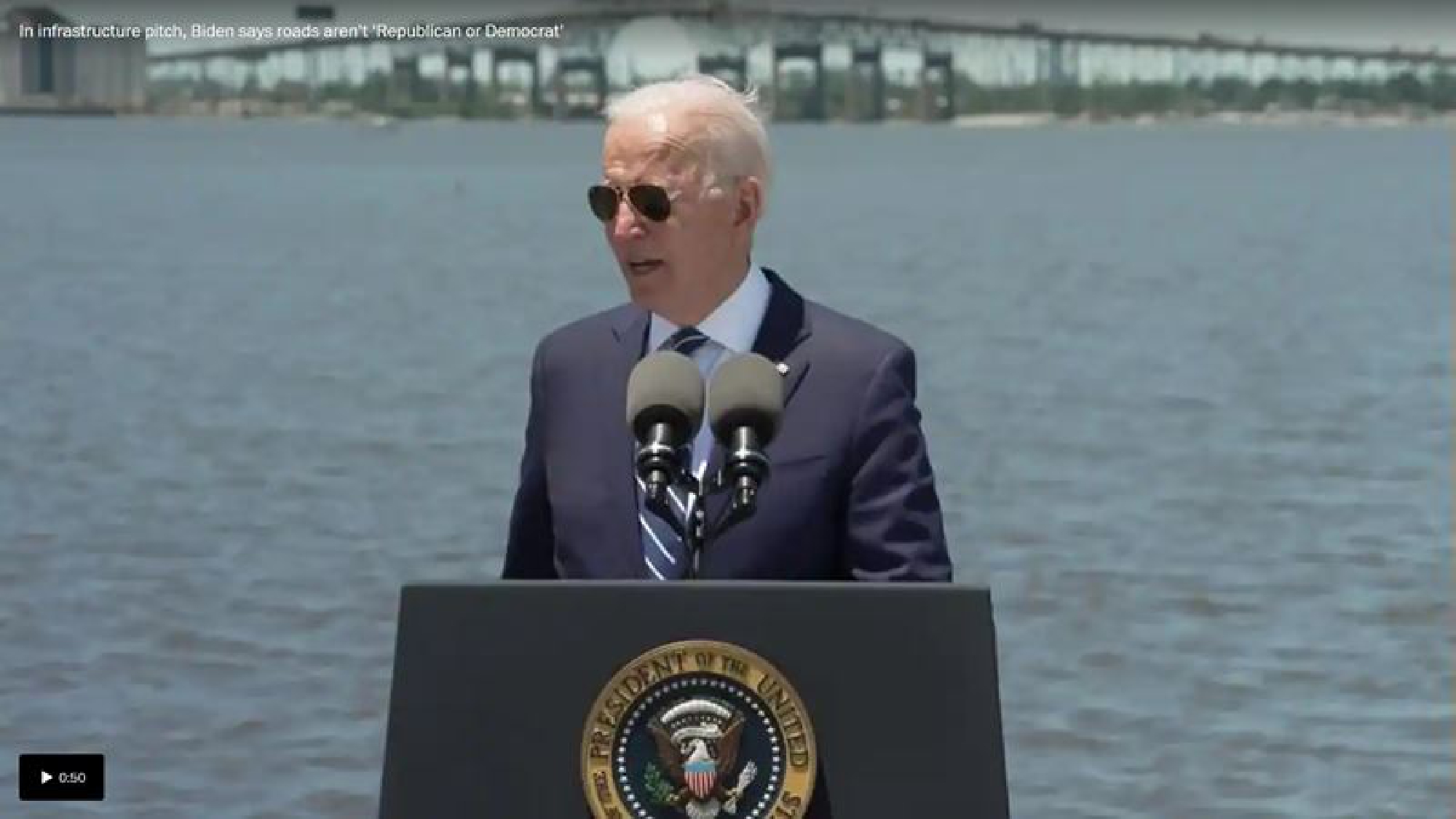
NEW ORLEANS – Backdropped by a dilapidated bridge that has outlived its expected working life by two decades, President Joe Biden sought to define the debate on his $2 trillion infrastructure plan as a question of priorities: overdue investments that would benefit a wide swath of Americans versus tax cuts that would help a wealthy few.

Biden frames infrastructure debate as choice between needed investments and tax breaks for wealthy

“In my view, it’s an easy choice, between giving tax breaks to corporations and the super wealthy and investing in working families,” Biden said in front of the Calcasieu River Bridge in Lake Charles, La.

Biden said the 2017 tax cuts passed by Republicans “created a $2 trillion dollar deficit with the vast majority of that going to the top one tenth of one percent of the wage earners. I don’t want to punish anybody . . . Just pay your fair share,” he said.

“Trickle down ain’t working very well,” he added later. “We’ve got to build from the bottom up.”

Biden delivered a nearly 40-minute speech in a red state he lost by 20 points in November. Most of that speech was aimed at attacking the arguments against the $2 trillion plan, which would undo tax cuts for corporations that were a signature achievement of the Trump administration and use the money to pay for road and bridge repairs, upgrades to electrical grids and water systems and help speed Americans to a future where most cars on the road are electric.

Republicans have argued that Biden’s plan is a costly Trojan horse that would relabel a grab bag of liberal social policies as “infrastructure.” They maintain that low taxes for corporations and the wealthy would accelerate economic growth as the nation climbs out of pandemic-related economic stagnation. Senate Minority Leader Mitch McConnell, R-Ky., said his top priority is to stop Biden’s ambitious agenda.

“One hundred percent of my focus is on stopping this new administration,” McConnell said during an appearance in Georgetown, Ky. “I think the best way to look at what this new administration is: The president may have won the nomination, but Bernie Sanders won the argument.”

In surveys, many Americans support the infrastructure proposal, but prominent business organizations, like the U.S. Chamber of Commerce, oppose it.

Biden stressed that pieces of infrastructure like the Calcasieu River Bridge, a weak link in Interstate 10, are “a perfect example of how we’ve neglected to invest in our economy. It shouldn’t take so long to fix a bridge that is so important.”

Workers started building the Calcasieu River Bridge Bridge three years after the end of World War II. Finished in 1952, it was designed to funnel 37,000 vehicles a day over a five-decade life span. Now, 20 years past that expiration date, it funnels 80,000 cars a day. The speed limit has been dropped to 50 because of safety concerns, and trucks can only travel in the right lane. But the bridge remains a decaying chokepoint in the nation’s southernmost cross-country highway.

Later Thursday, Biden was scheduled to tour the Carrollton Water Plant in New Orleans, a city whose water system has pipes that are in some cases more than a century old. “We are hoping to get funding, and the fact is the system is aged,” New Orleans City Council member Jay Banks told a local television station earlier this week. “It is no longer even repairable. If something breaks, you have to make the part.”

Biden frames infrastructure debate as choice between needed investments and tax breaks for wealthy

Biden has said that his infrastructure plan would create millions of jobs, and that it would help the nation adopt climate friendly policies and address inequity, which his administration has said is an all-of-government concern.

Nearly 60% of the residents of New Orleans are Black, and the aftereffects of Hurricane Katrina remain a searing symbol of the intersection between inadequate infrastructure and racial inequity. The storm’s eye passed to the east of New Orleans, but the levees in the city and surrounding areas failed in more than 50 places, flooding 80% of the city.

In Thursday’s speech, Biden said the infrastructure would help Louisianans recover from the effects of extreme weather – and make cities like Lake Charles more resilient to future storms.

In the past decade, Louisiana has experienced 30 extreme weather events, according to the White House, costing the state up to $50 billion in damages. Lake Charles was shredded by Hurricane Laura in August, then hit again by Tropical Storm Delta a few months later. Local leaders worried that the region had been overlooked in its time of need during a year in which every part of the country was contending with the coronavirus pandemic.

“I’d be willing to break bread with anyone who’s willing to help,” said Nic Hunter, the Lake Charles Mayor, a Republican who introduced Biden. “Everyday that goes by without disaster relief is a day that Washington fails the people of southwest Louisiana.”

Hunter was Exhibit A for Biden’s argument that addressing the nation’s infrastructure has bipartisan support across the nation – if not in the halls of Congress. Louisiana’s Democratic Governor, John Bel Edwards, also spoke before Biden.

“I’ve never seen a Republican or Democrat road. I just see roads,” Biden said.

Biden stressed that he did not want to be the author of another infrastructure plan that is killed by partisanship.

“What I’m not ready to do is to do nothing,” he said. “I’m not ready to have another period where America has another infrastructure month and doesn’t do a damn thing.”

Published : May 07, 2021

By : The Washington Post · Cleve R. Wootson Jr.

SpaceX lands Starship spacecraft for the first time #SootinClaimon.Com

#SootinClaimon.Com : ขอบคุณแหล่งข้อมูล : หนังสือพิมพ์ The Nation.

https://www.nationthailand.com/international/40000572

SpaceX lands Starship spacecraft for the first time


Elon Musks SpaceX stuck the landing of one of its Starship spacecraft prototypes Wednesday, a key milestone in the test program and a dramatic statement coming two weeks after NASA chose the vehicle to fly its astronauts to the surface of the moon.

SpaceX lands Starship spacecraft for the first time

The Starship spacecraft, known as Serial Number 15, lifted off from SpaceX’s launch site near the U.S.-Mexico border in South Texas, firing its three Raptor engines to an altitude of about six miles. It then turned itself sideways in a “belly flop” maneuver and headed back before righting itself, reigniting its engines and touching down softly.

“The Starship has landed,” John Insprucker, SpaceX principal integration engineer, said during the live broadcast.

It marked the second time SpaceX has landed Starship; a previous version exploded a few minutes after it landed harder than anticipated.

Other versions blew up during crash landings, and one exploded before touching down – Earth-shattering fireballs turned the stainless-steel spacecraft into shrapnel.

Despite those setbacks, Musk has said he was optimistic about the chances of the SN15 flight and the spacecraft’s ability to make it to orbit by the end of this year and eventually transport people. But, he added, “obviously we need to, like, not be making craters.”

The lack of a crater this time was a triumph then – not only for SpaceX but for NASA, which is now heavily invested in Starship and will oversee its development after awarding SpaceX a $2.9 billion contract to ferry astronauts to the lunar surface.

The successful test also served notice, coming as SpaceX finds itself under attack by the two competitors it beat out for the NASA contract: a team led by Blue Origin, the space venture founded by Jeff Bezos; and Dynetics, a defense contractor. (Bezos owns The Washington Post.)

Both companies have protested the award with the Government Accountability Office, saying that the process was flawed and that the space agency should have two providers in case one stumbles. They also are lobbying members of Congress and the space agency’s leadership to add funding for another spacecraft that could move astronauts to and from the lunar surface.

While all that happens behind the scenes, SpaceX is pressing ahead with its Starship program. On Tuesday, it launched its Falcon 9 rocket from the Kennedy Space Center in Florida in a mission that hoisted 60 Starlink satellites to orbit. They are part of a constellation of more than 1,000 satellites that SpaceX has put into space to beam the Internet to remote areas.

SpaceX also flew its third group of astronauts to the International Space Station late last month, and on Sunday it returned four astronauts from the orbiting laboratory in its Dragon spacecraft.

Musk, who is set to host “Saturday Night Live” on Saturday, is focused on Starship, a fully reusable system that he is planning to use to take people to the moon and Mars. The Starship prototypes SpaceX has been testing at its facility in Boca Chica, Texas, would serve as the second stage of the rocket and be hoisted to orbit by what SpaceX calls the Super Heavy booster. Combined, the stainless steel booster and the spacecraft would be nearly 560 feet tall, larger than the Saturn V rocket that flew the Apollo astronauts to the moon.

Musk, whose goal is to use Starship to send people to Mars, recently said, “it’s a great honor to be chosen by NASA to return people to the moon. It’s been now almost half a century since humans were last on the moon. That’s too long. We need to get back there and have . . . a permanently occupied based on the moon.”

SpaceX has been funding much of the development, he said. “And it’s been pretty expensive. As you can tell if you’ve been watching the videos, you know we’ve blown up a few of them. So, excitement guaranteed.”

But being able to fly the spacecraft and the booster back so they can be reused would “revolutionize space,” he said. It would cut the cost of access to orbit and beyond “by potentially a factor of 100 or more.”

That, he said, is the formula for the “gateway to the heavens.”

Published : May 06, 2021

By : The Washington Post · Christian Davenport

Pfizer-BioNTech vaccine offers strong protection against key variants of concern, real-world data from Qatar shows #SootinClaimon.Com

#SootinClaimon.Com : ขอบคุณแหล่งข้อมูล : หนังสือพิมพ์ The Nation.

https://www.nationthailand.com/international/40000571

Pfizer-BioNTech vaccine offers strong protection against key variants of concern, real-world data from Qatar shows


The Pfizer-BioNTech coronavirus vaccine provides strong protection against two concerning variants of the virus, including the one that has most worried scientists because it can evade parts of the immune response, according to new data from Qatar.

Pfizer-BioNTech vaccine offers strong protection against key variants of concern, real-world data from Qatar shows

The study, published as a letter in the New England Journal of Medicine, found that the Pfizer-BioNTech vaccine was about 90% effective at blocking infections caused by the B.1.1.7 variant, a more transmissible version of the virus now fueling outbreaks around the world. That encouraging finding was not a surprise, but the study also found that efficacy eroded only slightly, to 75%, against the B.1.351 variant that was first detected in South Africa.

The B.1.351 variant carries mutations that help it elude some antibodies and as a result is considered by many experts the most challenging variant among those that have been identified. Because the Pfizer-BioNTech vaccine and one from the biotechnology company Moderna were tested in clinical trials before that variant emerged, it had remained unclear until now whether protection would be eroded by the variant. While the new study suggests the vaccine is somewhat less protective against the variant, it offered strong protection, particularly against severe, critical or fatal cases of covid-19, the illness caused by the virus.

On Wednesday, Moderna announced results of tests of two booster shot options: one, a third shot of the original vaccine, and the other a third shot tailored against the B.1.351 variant.

In a small study of 40 participants, the company found that six to eight months after vaccination, antibodies to the original strain of the virus remained high, but protection against B.1.351 and another variant, P.1, had dropped in half of the participants.

Boosters of the original shot were effective at topping off immunity, and the B.1.351-specific booster was more effective at boosting antibodies that block that variant. The company is also testing a combination booster shot that contains the original vaccine and the one tailored to the variant.

The shot developed by AstraZeneca and the University of Oxford did not work against the B.1.351 variant in a small study, and South Africa decided not to use the vaccine.

But so far, that appears to be an outlier. The coronavirus vaccine developed by Johnson & Johnson was 72% effective in the United States, dropping to 64% in South Africa, where the B.1.351 variant dominated. An experimental vaccine developed by the Maryland biotech company Novavax was 89% effective in Britain, where the B.1.1.7 variant became dominant, but 49% in South Africa, where B.1.351 accounted for most cases. When excluding HIV-positive people, the Novavax vaccine was 60% effective in the South Africa study.

“We should expect a degree of reduction in protection against B.1.351, but not to the extent we should be freaking out about it,” said John P. Moore, a professor of microbiology and immunology at Weill Cornell Medicine who was not involved in the study.

The Qatar study was not a randomized trial, regarded as the gold standard for medical evidence, but instead used real-world data from a mass vaccination program that began in late December. By the end of March, more than 385,000 people had received at least one dose of vaccine, and the country’s new cases of infection were split almost evenly between the two variants.

Several experts said that although such studies have limitations, the findings were fascinating and important – and also underscored the necessity of getting both doses of the two-shot Pfizer-BioNTech or Moderna vaccine.

People receiving only one shot of the vaccine against B.1.1.7 were provided protection of only 30%, and it fell to 17% against B.1.351.

“It really strongly emphasizes, with the variants, that need for the second dose,” said Kathleen Neuzil, director of the Center for Vaccine Development at the University of Maryland School of Medicine. “Which is a message we’ve been delivering, but now we have human clinical data to support that message.”

For months, laboratory scientists have taken blood serum samples from people who were vaccinated and checked how well their antibodies block virus variants from entering cells. They have consistently found the largest drop-off in protection connected with the B.1.351 variant first detected in South Africa.

What has remained unclear is what the drop-off in a laboratory dish translates into in terms of whether people get sick. While many scientists speculated it might result in a modest decline in efficacy, mostly against milder infections, the new data is some of the first to directly support the idea.

In a news release last month, Pfizer and BioNTech provided the first hint that their vaccine provided protection against the variant, although the number of cases was small, and not enough details were given to draw conclusions. The companies said that among 800 participants in their clinical trial in South Africa, nine cases of illness were reported, all in the placebo group. Six of those cases were related to B.1.351, suggesting that the vaccines were protecting against the variant.

Published : May 06, 2021

By : The Washington Post · Carolyn Y. Johnson

Biden administration commits to waiving vaccine patent protections #SootinClaimon.Com

#SootinClaimon.Com : ขอบคุณแหล่งข้อมูล : หนังสือพิมพ์ The Nation.

https://www.nationthailand.com/international/40000570

Biden administration commits to waiving vaccine patent protections


The Biden administration supports temporarily lifting intellectual property protections for coronavirus vaccines and will move forward with international discussions to waive them, its top trade negotiator said on Wednesday.

Biden administration commits to waiving vaccine patent protections

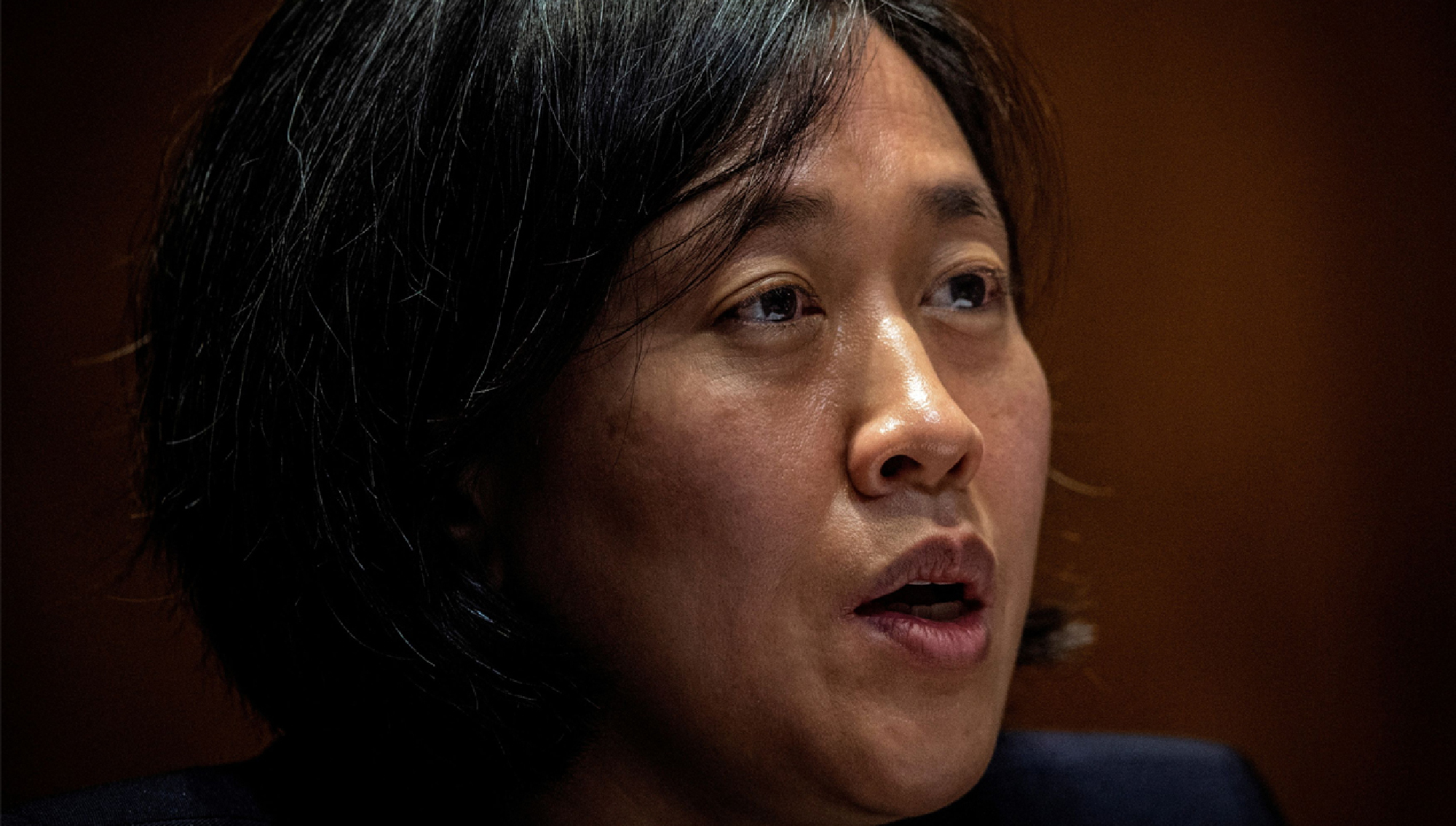
“This is a global health crisis, and the extraordinary circumstances of the COVID-19 pandemic call for extraordinary measures. The Administration believes strongly in intellectual property protections, but in service of ending this pandemic, supports the waiver of those protections for COVID-19 vaccines,” U.S. Trade Representative Katherine Tai said in a statement.

Tai said the United States would participate in negotiations around an international waiver of the protections, cautioning that the discussions would “take time.” The United States had helped block negotiations around the proposal since its October 2020 introduction by Indian and South African officials.

Bloomberg News first reported that the Biden administration would support the waiver.

The matter centers on a proposal in front of the World Trade Organization that would waive a slew of intellectual property protections on medical products for the duration of the pandemic. The pharmaceutical industry has fought the proposal, arguing that it would weaken drug companies’ existing efforts to rapidly produce billions of vaccine doses.

Dozens of developing countries back the proposal, arguing it will allow them to rapidly produce their own generic vaccines, rather than wait months or years for sufficient doses.

Tai, who is attending this week’s WTO sessions in Geneva, has spent weeks meeting with advocates and opponents of the proposal, which had divided the White House. Some White House officials focused on the domestic coronavirus response have warned that waiving protections on the vaccines could spark new competition for ingredients that could disrupt global production. Pharmaceutical companies also have vehemently opposed the matter, warning it could have drastic impacts on their ability to produce vaccine while offshoring American jobs.

The waiver had sparked broader consternation in Washington over the past few months, as progressives have pressed the Biden administration to support it. The debate exploded in recent weeks as the United States administered hundreds of millions of shots to its own citizens while other countries, including India, reeled from the worsening global coronavirus outbreak.

House Democrats on Tuesday amped up pressure on the White House to support the temporary suspension of patent protections on coronavirus vaccines, releasing a letter signed by most of the chamber’s Democratic caucus calling on President Joe Biden to “restore America’s public health leadership on the world stage.”

Progressives cheered the move as a significant step toward combating the pandemic.

“With this waiver, we can share vaccine recipes, largely developed with taxpayer dollars, while assuring reasonable royalties to American manufacturers. The best way to end the deadly global vaccine shortage is to enable more manufacturers to make vaccines,” said Rep. Lloyd Doggett, D-Texas, who chairs the House Ways and Means health subcommittee.

“We turned up the heat and I think the president cares deeply about keeping promises,” said Faiz Shakir, a former chief adviser to Sen. Bernie Sanders, I-Vt., who lobbied senior administration officials about the waiver. “For those of us who are activists, it’s important for us to remember we demand they do what they already promised. And to their credit they did so.”

Published : May 06, 2021

By : The Washington Post · Dan Diamond, Tyler Pager, Jeff Stein

Jeff Bezos Blue Origin will auction a trip to space to the highest bidder #SootinClaimon.Com

#SootinClaimon.Com : ขอบคุณแหล่งข้อมูล : หนังสือพิมพ์ The Nation.

https://www.nationthailand.com/international/40000569

Jeff Bezos Blue Origin will auction a trip to space to the highest bidder


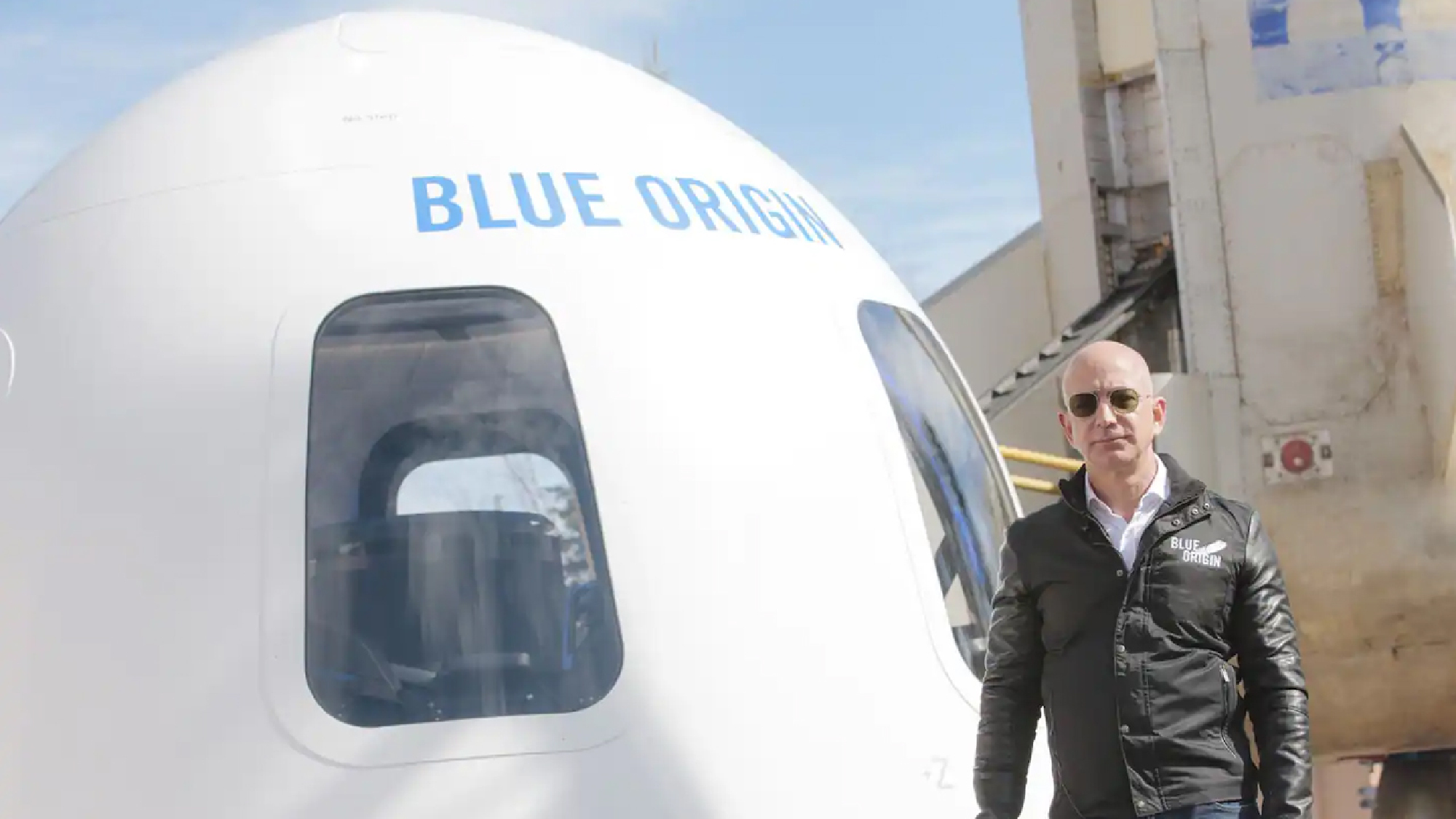
Blue Origin, the space venture founded by Jeff Bezos, said Wednesday that it would fly people to the edge of space for the first time this summer and that one of the seats would go to the winner of an online auction intended to raise money for its nonprofit foundation.

Jeff Bezos Blue Origin will auction a trip to space to the highest bidder

The company, based outside of Seattle, has successfully flown its autonomous New Shepard rocket and spacecraft to the edge of space 15 times through what it said was “a meticulous and incremental flight program to test its multiple redundant safety systems. Now, it’s time for astronauts to climb onboard.”(Bezos owns The Washington Post.)

The launch, from the company’s sprawling facility in West Texas, is scheduled for July 20 – the anniversary of Neil Armstrong and Buzz Aldrin’s Apollo 11 moon landing in 1969. And the announcement came on the 60th anniversary of Alan Shepard’s spaceflight – the first time an American reached space.

Blue Origin’s rocket and spacecraft are named for Shepard and would follow a suborbital flight trajectory somewhat similar to his mission in 1961. Instead of reaching orbit, the New Shepard rocket propels the spacecraft to an altitude of about 65 miles, just past what’s known as the Kármán line, or the edge of space, before the spacecraft falls back to Earth. In all, the flight lasts about 10 minutes, with just a few minutes in the weightless environment of space.

Still, the company says the experience would be transformative.

In the years since Shepard’s flight, the company said that “fewer than 600 astronauts have been to space above the Kármán Line to see the borderless Earth and the thin limb of our atmosphere. They all say this experience changes them.”

Crew members would be able to gaze out of “the largest windows that have ever flown in space,” Arianne Cornell, Blue Origin’s director of astronaut and orbital sales, said in a media briefing. “Perfect from which to gaze out to the see the beautiful stars and the colors of Earth popping back at you.”

Proceeds from the online auction would benefit Blue Origin’s foundation, Club for the Future, which seeks to inspire young people to pursue careers in science, technology, engineering and math “and help invent the future of life in space.” Sealed online bidding opened Wednesday, with the live online auction set for June 12.

Cornell would not say what the company would charge for tickets for regular flights to space or who the other crew members would be on the flight. When asked specifically about Bezos, she declined to comment on when or whether he would go to space. “But obviously if he does, the world will know.”

Virgin Galactic, the space tourism company founded by Richard Branson, has charged as much as $250,000 for tickets on its suborbital spaceplane. But it has recently said that the prices would go up once the company reopens sales. It already has flown two missions to the edge of space and back with crews on board. It plans another crewed flight this month ahead of Branson’s first flight later this year.

If it can fly people successfully, Blue Origin would join the ranks of a growing number of human spaceflight companies. Elon Musk’s SpaceX has now flown three human spaceflight missions to the International Space Station for NASA and has two flights of private citizens scheduled, including one later this year in which two seats were raffled off to members of the public.

Boeing also is under contract from NASA to fly astronauts to the space station and hopes to fly its first crewed mission by the end of the year or early next year.

Bezos and Blue Origin have larger ambitions in space as well. It is working to develop a much larger rocket, known as New Glenn, capable of getting to orbit. It also bid for the NASA contract to build a spacecraft capable of flying astronauts to the surface of the moon. It lost that contract to SpaceX, but is protesting the decision.

Published : May 06, 2021

By : The Washington Post · Christian Davenport

Trump remains banned on facebook, oversight board rules #SootinClaimon.Com

#SootinClaimon.Com : ขอบคุณแหล่งข้อมูล : หนังสือพิมพ์ The Nation.

https://www.nationthailand.com/international/40000568

Trump remains banned on facebook, oversight board rules


Donald Trump remains banned from posting on Facebook, the companys independent content oversight board ruled, extending the former U.S. presidents exile from the largest social network and leaving him without one of his favorite ways to reach supporters and goad opponents.

Trump remains banned on facebook, oversight board rules

Facebook suspended Trump’s account after he encouraged his supporters to march on the U.S. Capitol on Jan. 6 in what became a deadly attempt to stop the counting of Electoral College votes for President Joe Biden. The ban was originally temporary, but was changed to an indefinite suspension the following day. The board’s decision is binding.

Trump is also banned from Twitter, meaning the president who used social media to build his first campaign for public office and who used it to insult rivals, announce major policy decisions and drive the national conversation, is left to issuing press releases and sitting for interviews on conservative television.

Facebook had asked the oversight board, an independent group of academics, lawyers and others, to review its decision to suspend Trump and determine whether it should be overturned. The company had previously committed to acting at the board’s recommendation.

The decision comes at a time when social-media platforms are facing increasing scrutiny over their handling of political content and disinformation, which has prompted lawmakers from both parties to take aim at a prized liability shield that protects the tech giants from lawsuits over content posted by users.

The measure — just 26 words known as Section 230 — now faces its biggest reckoning since it was included in the Communications Decency Act of 1996. Calls to revise it grew in the months before the November election and intensified after the deadly attack on Congress by Trump loyalists.

Trump was also banned from Twitter in January, a move that the company has said is permanent. He was also blocked on Snapchat, YouTube and Twitch, among other networks, following the Capitol riots.

Losing access to social media is a blow for Trump politically — especially from Twitter, which was his favorite means of communicating and where he had 89 million followers — because it meant he was largely silent in the weeks after he left office on Jan. 20.

A return to social media would have given Trump a broader platform as he supports state and local candidates who were loyal to him, or those he’s backing to defeat fellow Republicans who voted to impeach him. Trump is also holding out the prospect he could run for president again in 2024.

Trump said in an April 29 interview on Fox Business that he was “100%” considering running again in 2024 and that he’s “very, very strongly — times ten — considering to do what everybody wants me to do.” He also said on the Don Bongino Show podcast released on April 28 that he’ll announce his decision “most likely right after” the 2022 midterm elections.

In the meantime, Trump is raising money for his political operation through the leadership political action committee Save America and already has amassed more than $85 million, a Trump adviser has said.

The former president has also said he wants to create his own social-media platform that will prevent him from being removed or censured but hasn’t provided any details.

Published : May 06, 2021

By : Syndication Washington Post, Bloomberg · Mark Niquette, Kurt Wagner, Naomi Nix

Canada approves coronavirus vaccine for children ages 12 to 15 #SootinClaimon.Com

#SootinClaimon.Com : ขอบคุณแหล่งข้อมูล : หนังสือพิมพ์ The Nation.

https://www.nationthailand.com/international/40000567

Canada approves coronavirus vaccine for children ages 12 to 15


TORONTO – Canada on Wednesday became the first country to authorize the use of Pfizer-BioNTech vaccine for children ages 12 to 15, a step hailed by officials as a “significant milestone” in the countrys fight against the coronavirus.

Canada approves coronavirus vaccine for children ages 12 to 15

The two-dose vaccine is the first to be greenlighted for use in that age group by Health Canada, the country’s drug regulator. Pfizer has sought authorization for similar use in the United States; approval from the Food and Drug Administration is expected by early next week.

Supriya Sharma, chief medical adviser for Health Canada, said the agency reviewed the data from a Pfizer study in the United States involving more than 2,200 adolescents aged 12 to 15 years old. Half received the two-dose regimen administered to adults; the others were given a placebo.

The study found the vaccine was 100 percent effective in preventing infection among participants who received two doses, Sharma said during a news conference in Ottawa. There were 18 cases of covid-19 among those who received a placebo. The participants given the vaccine produced strong antibody responses, similar to those observed in young adults aged 16 to 25.

Some participants reported temporary and mild side effects, including sore arms, fever and chills.

The announcement was welcome news for the many parents and children whose lives have been upended by the pandemic.

Several provinces and territories began the school year with in-person learning – officials said it was key to reopening the economy, and many pediatricians said that with the appropriate public health measures in place, the risks of keeping children home outweighed those of sending them to class.

But as cases in many provinces have surged, schools have on multiple occasions reverted to online learning, severing children from their social networks, keeping them out of extracurricular activities and putting stress on parents.

People younger than 19 account for about 20 percent of Canada’s coronavirus cases, Sharma said. They have been far less likely to experience severe illness. Nine of Canada’s more than 24,400 deaths have been in those younger than 19, according to the Public Health Agency of Canada.

“While younger people are less likely to experience serious cases of covid-19, having access to a safe and effective vaccine will help control the disease’s spread to their families and friends, some of whom may be at a higher risk of complications,” Sharma said. “It will also support the return to a more normal life for our children, who have had such a hard time over the past year.”

While Canadians are “starting to see the light at the end of the tunnel,” she said, they should continue to wear face masks, observe social distancing and wash hands until a majority of the population is vaccinated. Nearly 35 percent of the population has received at least one dose.

Several provinces are battling a punishing third wave that has triggered new restrictions on businesses and social life. Alberta has the highest rate of coronavirus cases per capita of any Canadian province or U.S. state.

Canada cleared the Pfizer vaccine for use among those 16 and older in December, ahead of the United States and Europe. But its vaccination drive got off to a slow start, leaving many Canadians frustrated as they watched inoculations increase across the border in the United States.

With little capacity to manufacture vaccines at home, Canada has been reliant on deliveries from abroad. The government signed advance purchase agreements with several drugmakers for access to many more potential doses than it needs for its population of 38 million. But supply chain problems, manufacturing delays and backloaded delivery schedules have meant that doses have at times been slow to arrive. Chaotic rollouts in some provinces and seemingly conflicting messaging on vaccines among politicians, public health officials and a panel of scientists that provides advice on immunizations have not helped.

Canada has administered less than 38 doses per 100 people, according to Oxford University’s Our World in Data. That’s less than half the rate in the United States.

The pace of vaccinations has quickened considerably in recent weeks; the country now ranks third among the Group of Seven countries in the percentage of people who have received at least one dose. But less than 4 percent of Canadians have been fully vaccinated, compared to nearly one-third in the United States. That’s in part because Canada, with limited supplies, is stretching the interval between doses to up to four months to get a first shot into as many arms as possible.

Officials here say they’ll be able to offer a vaccine to everyone who wants one by the end of September.

Albert Bourla, Pfizer’s chairman and chief executive, told investors in a conference call Tuesday that he expected the Food and Drug Administration to approve the vaccine for use among 12- to 15-year-olds in the United States “shortly.”

Health Canada said it will expedite reviews of other vaccine manufacturers seeking authorization for children and adolescents.

Published : May 06, 2021

By : The Washington Post · Miriam Berger, Amanda Coletta